Shepherd’s Delight ?
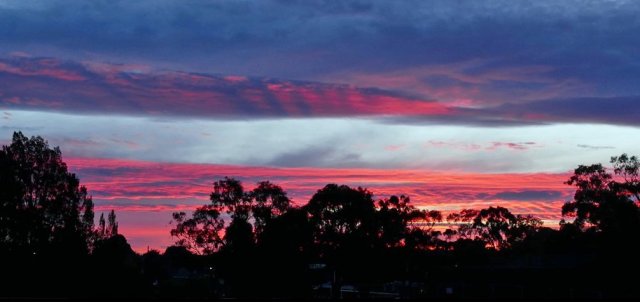
- Ruth captured this interesting sky on the evening of 3rd July taken from Kalang Oval. Proverbially, a red glow at dusk is an indication that the next day will be fine and sunny – great weather for one’s sheep. We’re not so sure whether that applies to hot-pink skies though!
- As it happened, the following day was dry and warmer than usual – however, there was a strong wind coming from the NNE significantly lowering the apparent temperature.
Annual General Meeting Report

- As one of our obligations as an Advisory Committee of Whitehorse Council, every year we provide an Annual Report/Financial Statement for Council. This report is prepared by our Chairman and Treasurer and is adopted at our AGM (this year’s was held on the 24th July).
- Speaking to the Annual Report, our Chairperson Megan noted the following highlights over the past year:
- Continual improvement of the Creeklands through weeding and planting in working bees – the planting of 3,249 plants in 2017/2018 exceeded the impressive 3,121 plants of the year before!
- Our ability to gain funding – our Treasurer Andrea is a wiz at winning funding to pay for for all those plants!
- Our excellent relationships with Council and Melbourne Water – and also the community of park users. Our bird surveys, web-site and monthly newsletter have been working well towards maintaining our relationship with the community.
- In terms of looming challenges, recruitment of Committee members has become an issue for the first time since the Creeklands formed. We have two vacancies and are keen to have them filled. Should you be interested, please get in touch – or come along to a committee meeting !
A Death in the Park
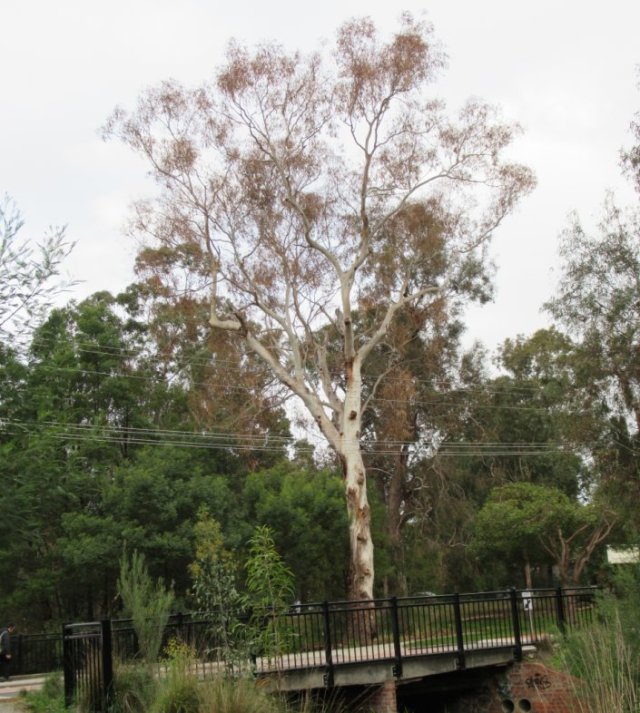
- Sadly, one of the park’s most iconic eucalypts – a Manna Gum (Eucalyptus viminalis) at the entrance to Furness Park near the Main Street bridge on the southern side of the creek – is dying.
- Like all organisms, trees eventually die. Council’s arborist suggested that the most likely cause of death of this tree was the long dry spell over summer. Apparently, many large trees in the municipality have died or are currently dying in a similar way.
- Because some of our trees take 100-120 years to reach full maturity, they cannot be easily replaced. In practice, all we can do is regularly plant out seedlings and wait at least 50 years! The good news is that dead trees continue to provide habitat via hollows for nesting etc long into the future.
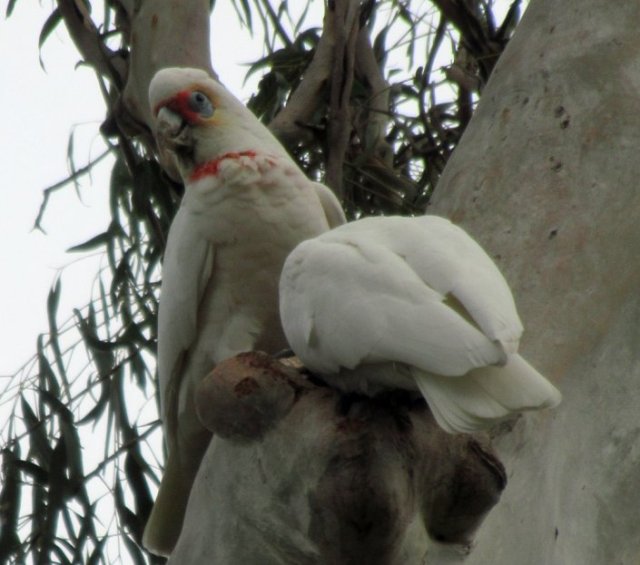
- We’ve met with Council’s Parkswide staff who were well aware that the tree has very high habitat value. The plan for our tree is to prune back all the smaller branches but leave the larger trunks for the birds, microbats etc. Here’s a photo of some Long-billed Corellas performing a home inspection on an adjacent tree:
Bird Survey Database

- We commenced building a Bird Survey database a few years ago which now includes all our observations from 2012 to date.
- The database includes our entire bird list (which goes back to the 1970s) and all the sightings from our 2012-2018 Bird Surveys. This is not a spreadsheet – but a true database which gives us the power to make “queries” as the volume of our sighting data becomes more significant. For example:
- How many different species have we seen in our surveys? Ans=45 How many in our complete list? Ans=96
- What species have we only seen in spring ? Ans=
- Black-faced Cuckoo-shrike (3 sightings)
- White-plumed Honeyeater (1 sighting)
- When did we last see a Silvereye ? Ans=Autumn, 2013 (27/4/2013)
- We are always interested in the details and/or photos of any interesting sightings you may have made of our local wildlife. Please send them to us – we love publishing local contributions!
Working Bee Report
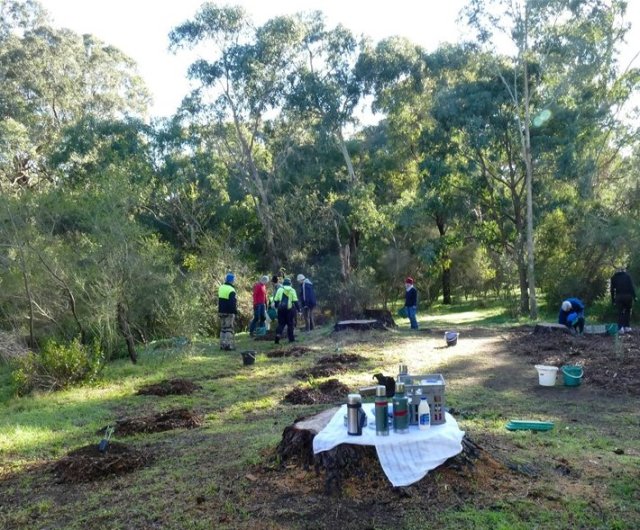
- Following a rather wet and windy wintry day the day before, the weather gods shone upon us and we had a great day basking in the winter’s sunshine while planting up the area behind Molleton and Haydn Streets where Council removed some Monterey Pines over the last 2 years.
- In fact, things went so well that we finished work there and then put more plants in around the Laurel Grove bridge on the south side. Although digging was much harder at the bridge, we still managed to plant 100 more young plants than Mary (our working bee coordinator) had originally planned! Our thanks to all who contributed – especially the very welcome new faces.
- If you are wondering why so many are crowded around a single hole like road workers, we also benefitted from a demonstration of the PowerPlanter tool – a small auger designed to be fitted to a battery powered drill.
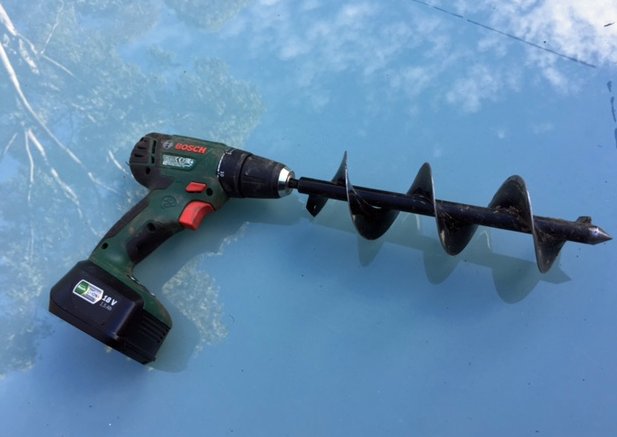
- Although it struggled at times with the tangle of remnant pine roots, it did seem a good option for tube-stock – particularly for people who find digging with hoes etc physically challenging or those with a lot of holes to dig. We think we might obtain one for our community working bees – if and when funding allows. Our thanks to Nicky and Geoff for bringing their equipment along for us to evaluate and sharing their experience with us. Nicky is a local qualified horticulturist who specialises in garden refurbishment, design and maintenance.
- Our next Working Bee is to be on Sunday, 5th August 09:00-12:00 on the north-eastern side of the creek near the Main Street bridge. We will be planting along the top of the creek bank adjacent the track. Please join in!
Plant of the Month
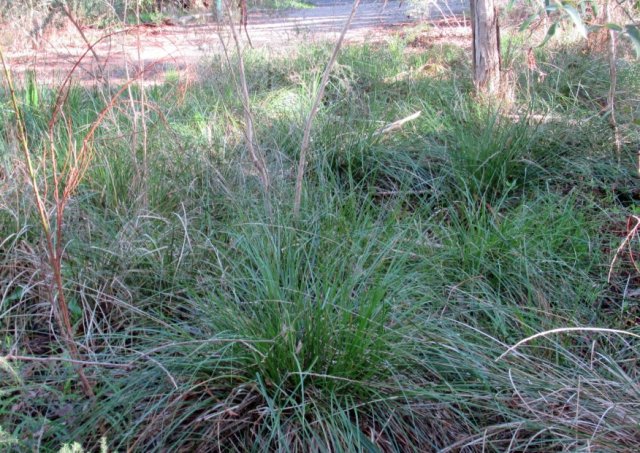
- Our Plant of the Month is Tall Sedge (Carex appressa). This robust and thick sedge likes boggy/swampy conditions – though it can tolerate periods of dryness. Our picture shows it thriving in the ephemeral wetland at the bottom of Laurel Grove North – adjacent the entrance to the park and the east-west track on the northern side of the creek.
- It is a densely tufted and perennial sedge making it wonderful at suppressing weeds. It forms clumps up to 50 cm in diameter and can grow to around a metre in height. It is also a great plant for filtering water – in our case, part of the storm-water from the Laurel Grove North system before it enters the creek.
Weed of the Month
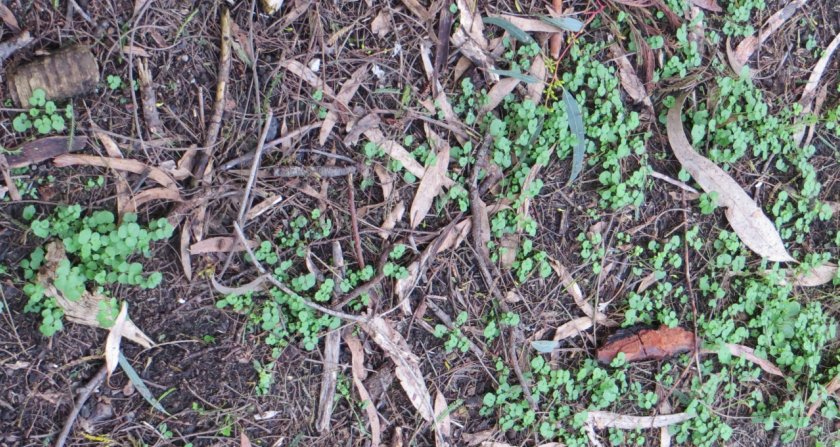
- Our Weed of the Month is Flickweed (Cardamine hirsuta). Flickweed is an annual plant native to EurAsia that can be can very invasive. Our photo shows it beginning to reappear in the park. It shows a cluster in Furness Park north of the bridge. It grows best in damp, recently disturbed soil – eg (ironically) following weeding.
- These conditions are prevalent in plant nurseries and it may be introduced with nursery plants. It produces small white flowers and then thin seed pods. It gets its name from its “explosive” habit of “flicking” its ripe seeds when the plant is touched – so it is much better to weed out before it flowers and sets its seeds in Spring until Autumn.
Sightings
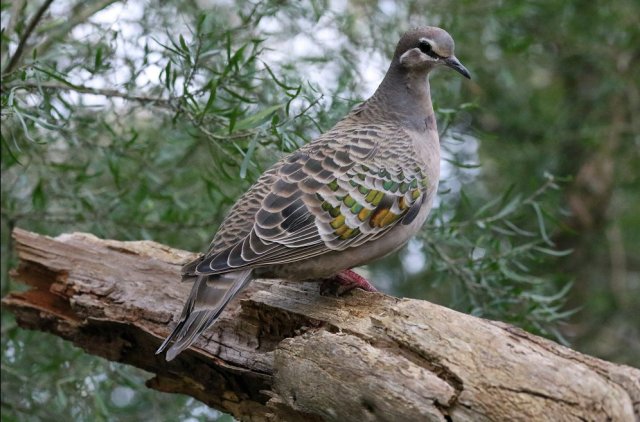
- In last month’s news, we reported that the first sightings of the indigenous Common Bronzewing pigeon for some time. One of our Friends, Michael, took this nice shot of one recently – showing off her (judging by her grey forehead- the males’ are more yellowish) “bronze” wing colourations rather nicely. A pair have since been spotted in Furness Park near Gardenia Street.
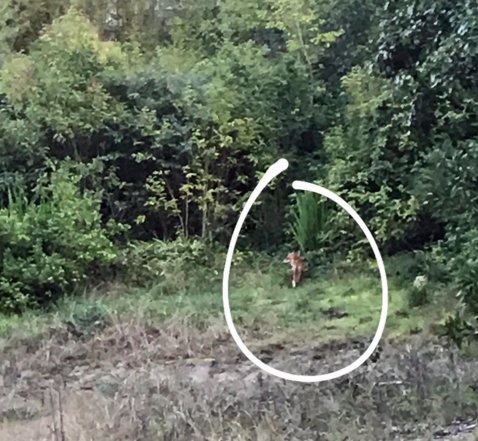
- Foxes continue to be seen – we seem to have quite a bad infestation at present. Here’s a photo near Main Street taken by friend Jacqui:
- Other more pleasing sightings have been the Masked Lapwing (formerly called the Spurwinged Plover) – flying above and calling, Crimson Rosellas (below) and Eastern Rosellas.
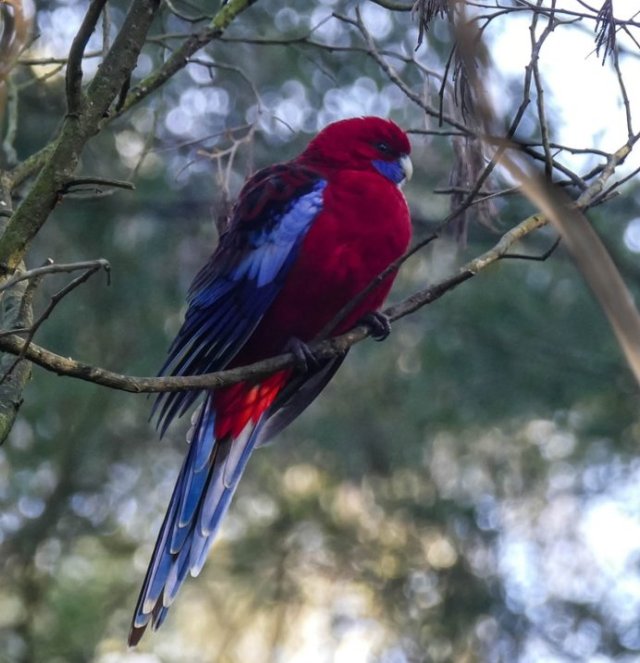
Stay Warm ! (thanks for the photo Ruth)
 Blackburn Creeklands
Pingback: Park News – October, 2018 | The Blackburn Creeklands
Pingback: Park News, June 2020 | The Blackburn Creeklands