Winter is with Us!
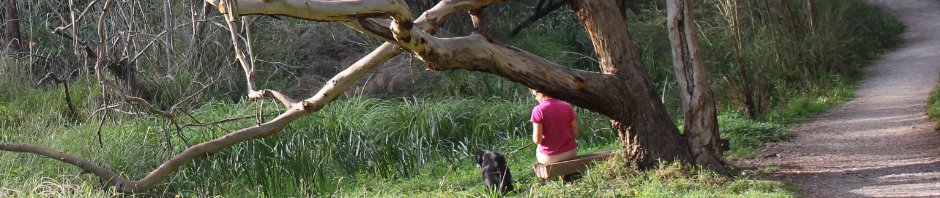
- Our apologies – our May edition is a little late and we’ve bridged Autumn to Winter in the meantime. Winter is indeed with us – following an Antarctic blast for the past week or so.
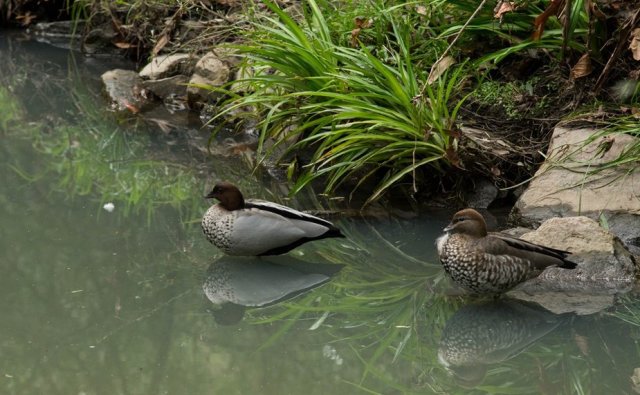
- Mr and Mrs Wood Duck are demonstrating that it’s clearly time to pull one’s head in, reflect and wear the puffer jacket…
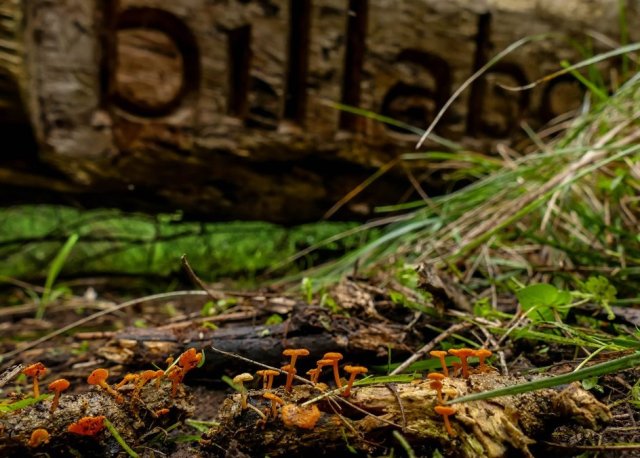
- With the prolonged, very dry conditions preceding our recent rains, our fungi was not nearly as impressive this Autumn. Of course, there are exceptions – the photo below shows an interesting case near our “Billabong” sign in Kalang Park:
Maintenance Report
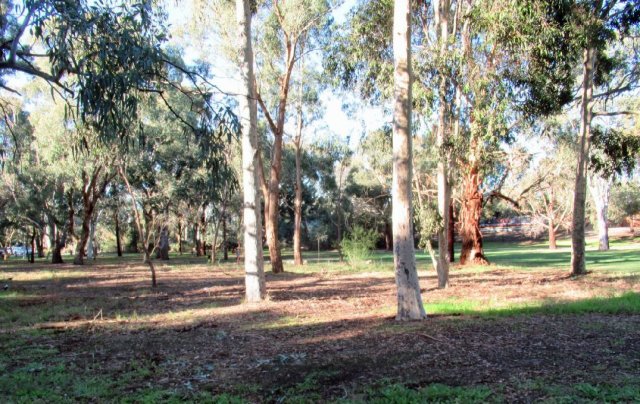
- Council has cleared a significant area in Blacks Walk – removing quite an infestation of the woody weed White Sallow Wattle (Acacia floribunda). Several were dead though quite a few young trees were getting ready to take over.
- It may seem strange that a native wattle is regarded as a weed – but some of the worst environmental weeds we have in Victoria are natives ! In the park’s early days, many native, though not indigenous, plants were planted in the park. The problem is that they can get out of balance being in the wrong place – there are a few problem species in the park we regularly monitor. We will find out from Council as to what they plan to do next there – eg leave it open or replant with indigenous species.
- Council also removed a large dead Queensland Box (Lophostemon sp) in Furness Park.
- Our Monday maintenance team has been busy preparing for the community working bees and weeding and mulching to the immediate west of the Billabong. We’ve welcomed Vicki as a new member of the team and welcomed back Matthew who has been able to return to work with us after a break of 4-5 months. Otherwise Nicky is very busy fining down our plant lists to make sure everything we plant is truly indigenous to the area.
Update on Protecting and Extending our Park
- Last month we wrote about the Bellbird Residents Advocacy Group (BRAG) and others who initiated a campaign for the City of Whitehorse to acquire vacant land at 60 Main Street – to add it to the Blackburn Creeklands park. The money could come from Council’s large fund (reputed to be about $50M) which is reserved to buy lands for parks.
- BRAG has advised us that 675 signatures were collected. In the end, Council accepted 635 signatures as valid – incomplete addresses and people from outside the municipality had to be excluded.
- This seems an extraordinary response and no doubt reflects the local community’s love for our park. Well done BRAG and helpers – thank you for your efforts on behalf of our park!
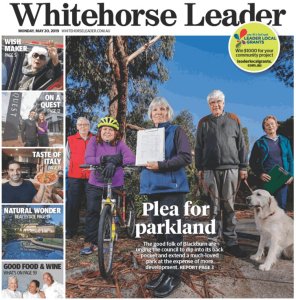
- The campaign has received good publicity from the Whitehorse Leader – this was on the front page of the 21st May edition:
Community Working Bee Reports
- We’ve two working bees to report on this month – last Sunday’s on 2nd June and also the May working bee on Saturday, 4th May.
Saturday, 4th May
- As a by-product of our working bee program, we think we’ve discovered a great way to end the drought in Blackburn – simply run a working bee! Once again, we worked in wet conditions at times – but that didn’t stop one of our best attendances in recent memory!
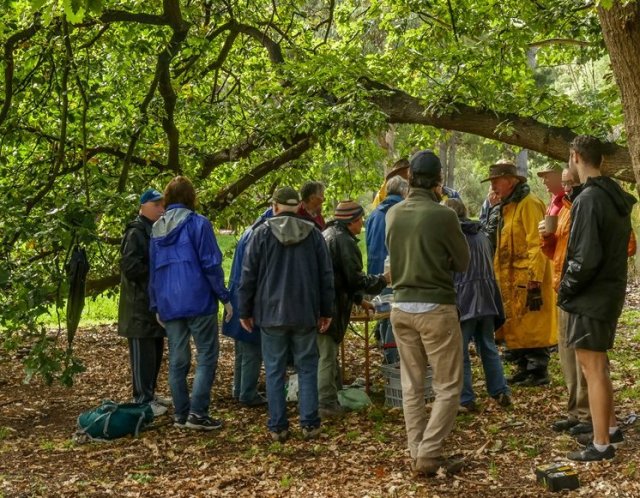
- Luckily our facilities manager was able to set up an outdoor marquee to provide cover for morning tea (aka under the canopy of a nearby tree).
- Of course, one of the reasons we plant up, weed and mulch is to provide habitat for our wildlife which is under increasing pressure from urban development.
Sunday 2nd June
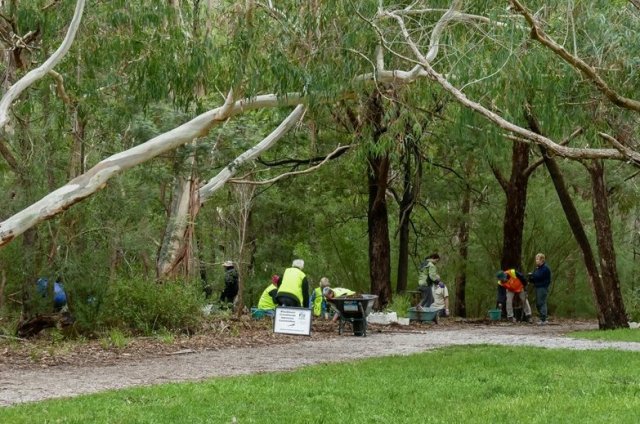
- At last Sunday’s working bee, there was also an excellent turn out with many hands weeding and planting in a very deserving part of the park. We also trialled a new system of having an informal briefing on the day’s tasks at our 09:00 start with an emphasis on safety.
- One friend, Geoff, who has current best practice work safety experience, led the discussion covering four major points: Scope of the work (bounded by our signs on the path), hazards, personal protective equipment (PPE) (eg our hi vis jackets, the First Aid kit) and instructions. He then handed over to John who acted as Site Supervisor for the day. It turned out there was no shortage of site supervisors:
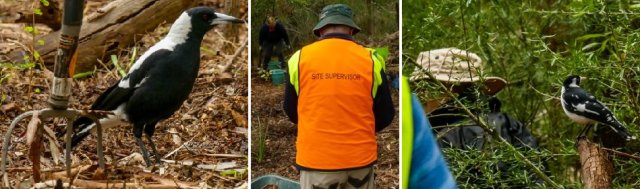
- Special thanks to new starter Clare and to Mary Crouch for making a return appearance! The weather was perfect for working – cool and still as we predicted. The “working bee rain” didn’t come until later in the afternoon – perfect! Those digging noticed that the rain is now starting to properly penetrate the soil in many places.
Next Community Working Bee
- Our next Community Working Bee is planned for SUNDAY, 7th July. Everyone is welcome to work with us for all or part of the morning starting at 09:00 – or simply to join us for morning tea at about 10:30!
Community Education
- Our Chair, Megan, recently delivered a talk to the preps at Laburnum Primary School. The teachers prepared the kids well – having taken them on a pre-talk walk so they knew a little about the Creeklands. Megan was delighted with response.
- Another Committee member, Anthea featured in a recent article on volunteers in the Whitehorse News and in an associated video interview to encourage volunteering.
- By the way, existing Committee members are to be reappointed by Council for another 12 month term commencing 1st July. If you’d like to join Committee as a volunteer, please let us know.
In the Corridor

- Our good friends and neighbours, the Below the Lake Friends, have sent us this message:
We need your help to meet our target hours on our Melbourne Water grant. Please join us on Saturday 8th June any time between 2 and 4pm to plant, mulch or weed – whatever you prefer! Tools provided, together with coffee and cake afterwards. Friends, neighbours, relies, kids all welcome. Access is either from the path at 3 – 5 Naughton Grove or in Lake Rd opposite the lake wall. Any questions please contact Lynette on 0437 294 337.
- The Below the Lake Friends look after Gardiners Creek between our park and the Blackburn Lake Sanctuary at the lake end.
Bird of the Month
- Ruth, our eagle-eyed photographer and keen birdwatcher, noticed this unusual bird flying high over the Creeklands in the vicinity of Kalang Oval:
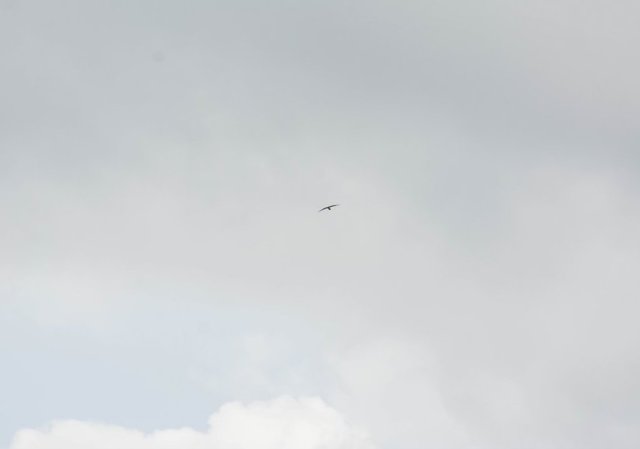
- She was very excited to realise it was an unusual sighting – a Peregrine Falcon:
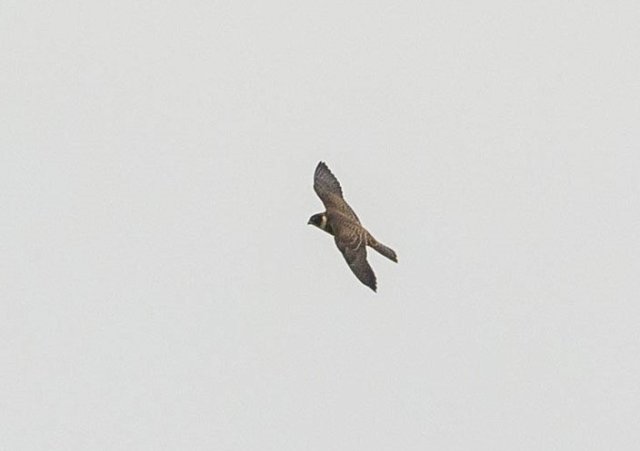
- Perhaps it was the same falcon which had had a luncheon date earlier this month at the Blackburn Lake Sanctuary with a pigeon – who sadly turned out to be the lunch!
- Ian Moodie, one of our regular Bird Survey group leaders, was tipped off that the falcon had been spotted near the top of one of the big Yellow Box eucalypts that lean out over the lake at its northern end and took this great shot using a telephoto lens:
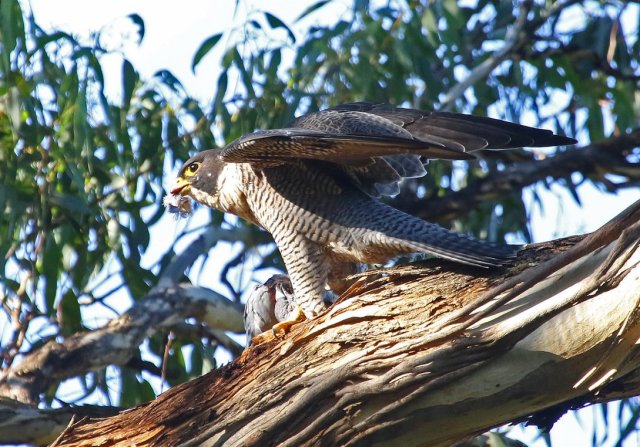
- Look at those powerful legs! The Peregrine Falcon (Falco peregrinus) is an aerial hunter that swoops on its flying prey – clubbing larger birds with its huge feet or snatching smaller birds in flight. As Ian says:
I have never seen a Peregrine in Whitehorse before, although I am aware of various historic anecdotal reports of sightings esp. in the Creeklands area.
They are of course regularly seen in the Melbourne CBD nesting on window ledges high up on office buildings. Peregrines are in fact one of the most widely distributed bird species in the world, and their distribution largely follows that of one of their favourite prey species, the Rock Pigeon.
Blackburn Lake would not seem to be ideal territory for the bird as it prefers hunting in more wide open spaces and prefers nesting on cliff faces (or big buildings!).
- This seems to be an adult female – they’re bigger than the males.
Plant of the Month
- Plant of the Month is the Black She-oak (Allocasuarina littoralis). This is an attractive evergreen tree which automatically mulches itself – reminiscent of pine trees. Its narrow branchlets appear to be leaves. The actual leaves are tiny (usually less than 1mm) and occur on the tips of the branchlets. Interestingly, they are a nitrogen fixing tree – good for plant neighbours.
- They are also a “multi-media” tree – some people especially like the swishing sound the wind makes though their foliage and their leaves hold droplets of water after rain – which can give them a rather bejewelled look once the sun resumes shining.
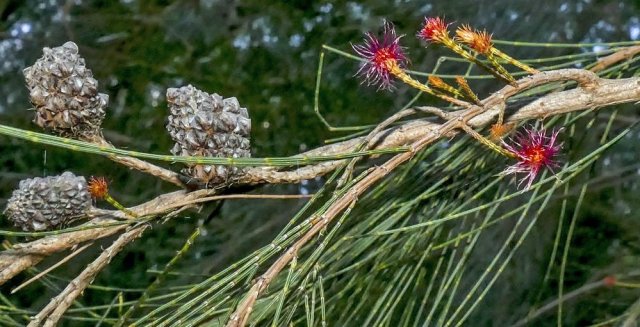
- Although they can grow up to 12m tall, they are usually smaller (4-8m high and 2-5m wide) with an attractive, deeply fissured bark. At this time of the year, the female plants have a subtle red flower which later forms small cylindrical cone 1–3cm long as shown in Ruth’s close-up photo above. The male trees have less obvious dark brown flower spikes.
Weed of the Month
- Weed of the Month is Annual Veldt Grass (Ehrharta longiflora). This is one of the infamous veldt grasses that are serious environmental weeds – being very invasive and disruptive to indigenous ecosystems.
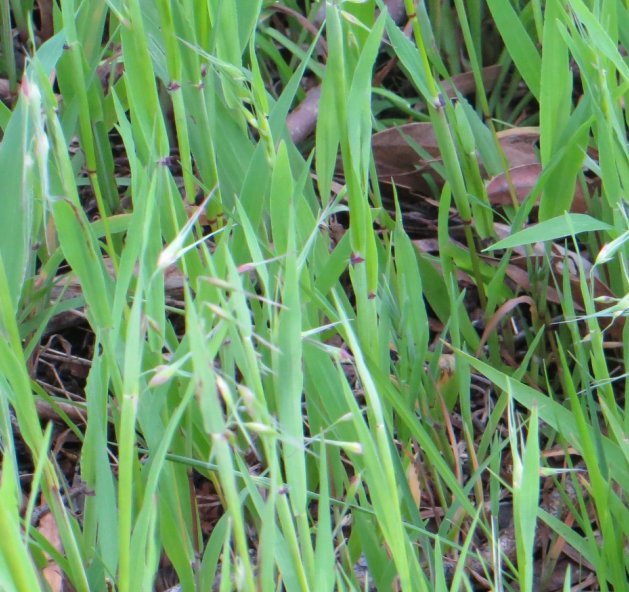
- This particular variety of Ehrharta is an annual – very prolific, setting large amounts of seed. Native to South Africa, it is now widespread and common – particularly in coastal areas and along creek lines.
- At this time of year, it presents as a bright green stalk, often amidst good grasses, with hardly any root system attached – so very easy to remove. Great to do it before the seed heads mature!
 Blackburn Creeklands