Bird Survey Report
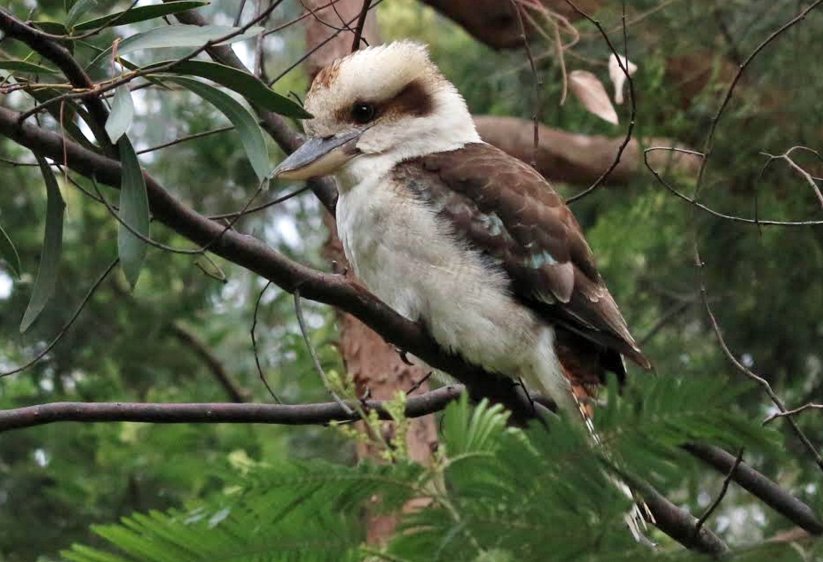
- We had possibly our most successful bird walk on Saturday 19th with 33 people in attendance, including many new faces, and a grand total of 28 bird species sighted. This compares very favourably with our 2018 spring walk – 26 people and 24 species.
- Highlights were:
- The record roll-up occurred despite a quite unfavourable weather forecast (rain and possible hail). Fortunately, though cold, there was no rain and there were occasional sunny intervals giving good light for the bird observations.
- Several nests were observed – including those of: Tawny Frogmouth, Kookaburra, Grey Butcherbird, Mudlark and Noisy Miner (ok – the last maybe not so exciting).
- Lots of sharp-eyed children participated – average age about 9.
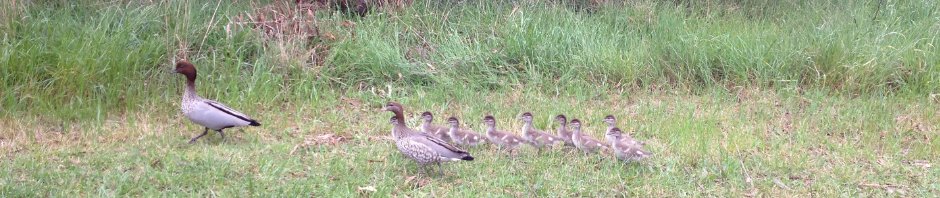
- A family of Chestnut Teal including ducklings was seen. All three of our duck species were observed on the day. However, this year, no Wood Duck ducklings have been spotted so far…
- Only two introduced species were spotted (the Common or Indian Mynah and the domestic dove).
- Short talks on the benefits of the Field Naturalists juniors program (based in Blackburn) for children and the Birds in Backyards program for all.
- Our sincere thanks go to Pat and Ian (who were as engaging and educative as usual), to everyone who participated and to the event organisers and recorders (especially young Luke). Please click here for the result sheet.
- Here are some sample photos to give you a flavour of the day’s surveying…
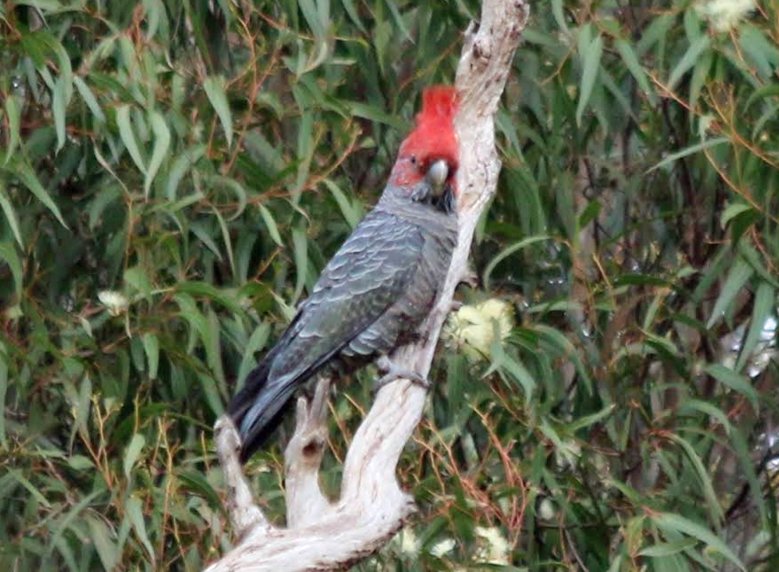
Male Gang Gang – the males have those rather raffish red plumes
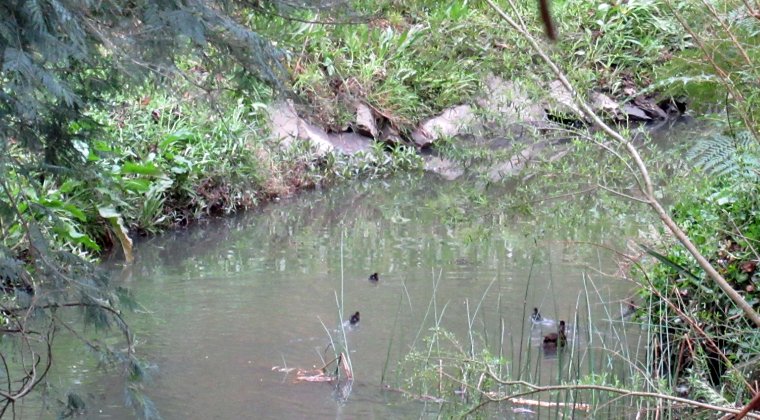
Some tiny Chestnut Teal ducklings scuttling away around a bend in the creek with mum and dad…
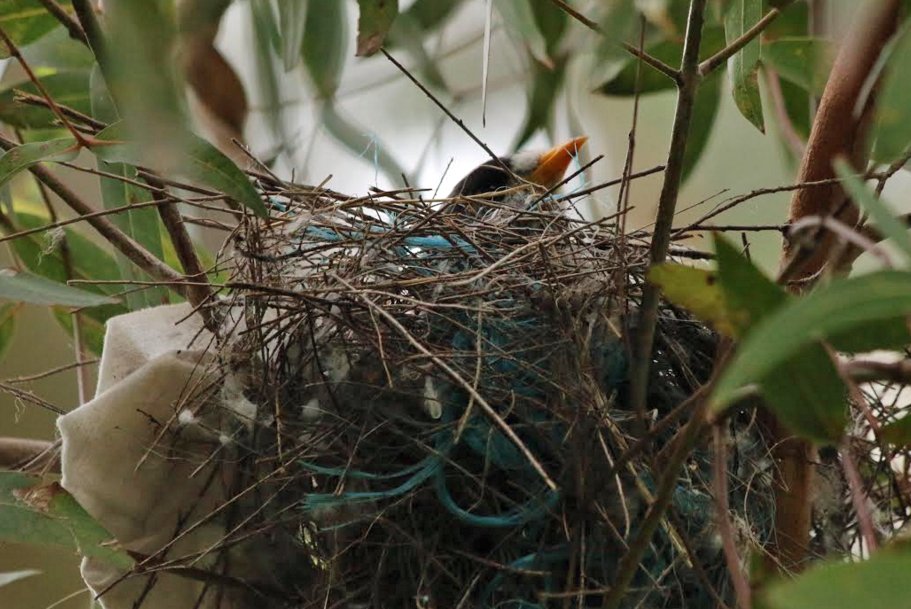
Julie’s telephoto shot of a Noisy Miner nest shows some “foreign” material repurposed
As usual, our “signature” bird, the Tawny Frogmouth …
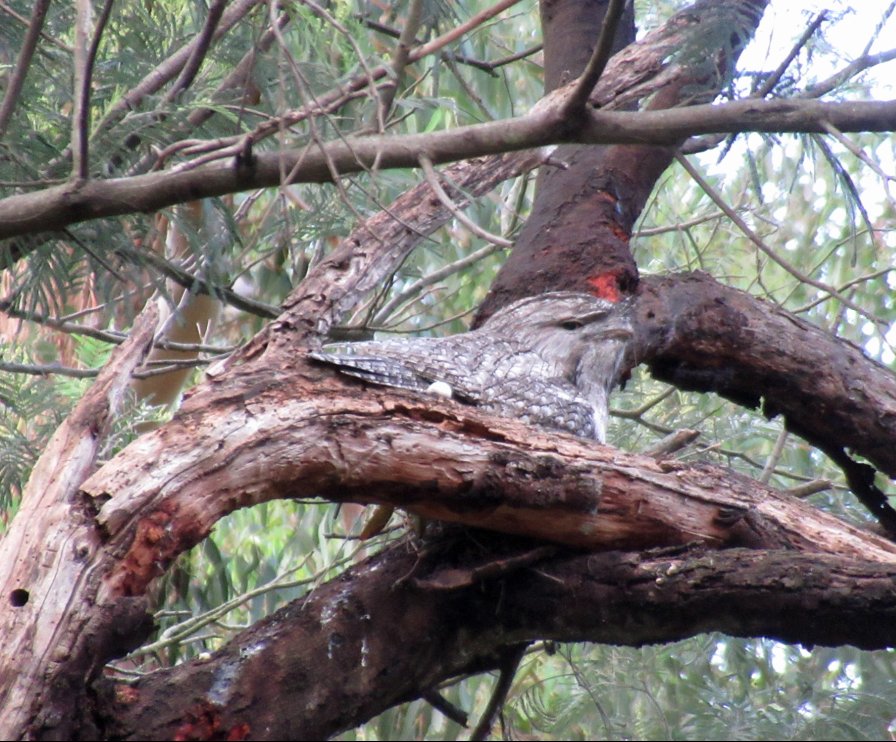
- This shot seems to show an egg peeping out from under dad’s feathers. We guess it is more likely to be a fragment of eggshell with a hatched chick safely warm under dad. We know it’s “dad” because the males and females share nest minding duties – the males during the day, the females at night.
Drones in the Park
- Birds are not the only aviators we see in the park! Drones are rapidly becoming a major part of today’s toolkit for a range of scientific activities – as well as for a range of recreational uses, commercial and military applications.
- This presents challenges in how drone use might impact on nearby wildlife – especially birds that might share the same airspace and/or disturbance of nearby nesting birds. Some birds will attack drones because they perceive them to be hostile.
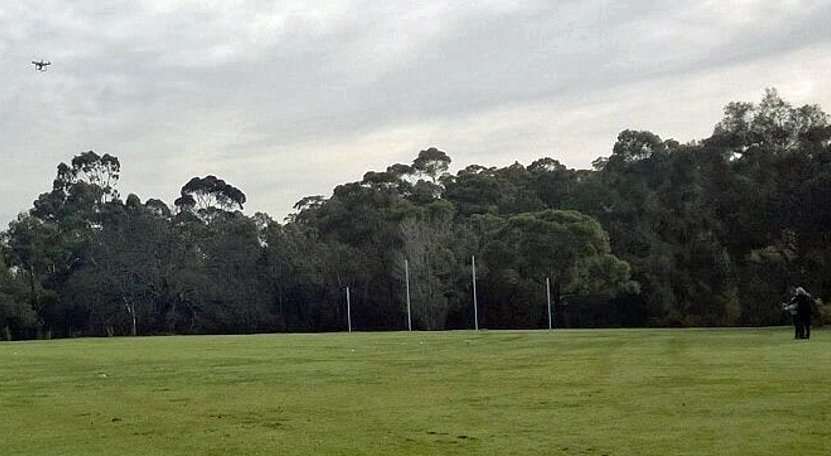
- We encountered two drone “pilots” under training on Kalang Oval during September. A pilot and trainer are on the right – a drone is toward the top left of our photo.
- They were in training for a commercial drone pilot’s accreditation. We spoke to one student who told us he was planning to use his licence in conservation work. The trainers were clearly commercial and professional.
- Drone use is governed by Civil Aviation Safety Authority rules – there are no Local Government controls on their use. We trust that drone operators will do the right thing and relocate should issues with local wildlife become apparent.
Community Working Bee Dates 2020
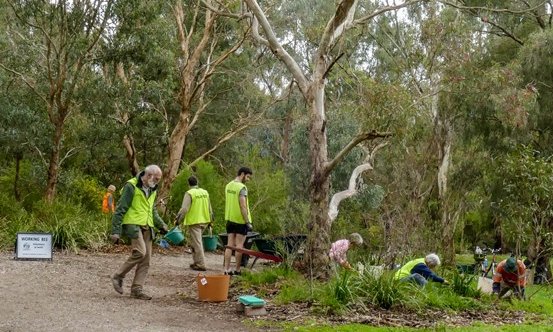
Community Working Bee in Blacks Walk, September 2019
- To make our working bee dates for 2020 more predictable, Committee has decided that our working bees next year should be the first Sunday of each month.
- These run from May to October with the last two potentially being weeding-only events depending on weather conditions. For your diaries, the dates are:
| 3rd May | 7th June | 5th July |
| 2nd August | 6th September | 4th October |
Plant Provenance
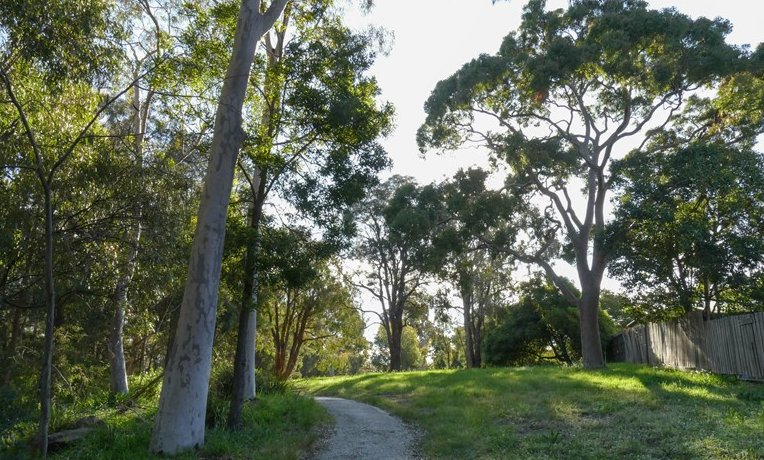
In morning light – the pathway to the future ?
- Speaking of plant purchases, most of our plants are sourced from the local indigenous nurseries who mostly propagate plants from sources in Whitehorse. However, we’ve had a lot of our accepted truths challenged recently. It all started when Nicky looked more closely at the issue of plant provenance for our plant orders and found some surprising anomalies in our accepted references. Then we had reps at the Field Nats’ Biodiversity Symposium – new challenges arose relating to our current practices including provenance (…and also mulching, planning and weed control priorities!).
- Then, Geoff Lodge of Project Regeneration fame, who was on our Committee as a student in the 1980s, visited our last committee meeting. He now works in northern Victoria including running a commercial seed bank for native plants. Geoff contributed that he was an early proponent of ensuring local provenance (eg in setting up Bungalook Nursery) but now believes the popular view of “local indigenous” is far too narrow. Realistically, the distances should be as far as wind borne seed can be blown and as far as a bird can fly for seed spread by birds. He says inbreeding and lack of fertility are consequences of plant communities becoming increasingly isolated.
- Then there’s climate change to throw another spanner in the works – many think we should consider introducing genetics from the same species but adapted to hotter/drier places. For example, as Geoff says, northern Victoria should be looking at the Griffith area for biodiversity!
- So there’s been some serious disruption to our level of comfort with our “business as usual”. These are complex issues and we’re still thinking hard. We’re contining our studies – including sending reps to working bees further afield (eg Kilsyth) to learn from others.
Corridor News
- This year, there may not be as many Tawny Frogmouth nesting pairs as usual in the park. Sadly, one adult was found dead in Furness Park – the cause was unclear.
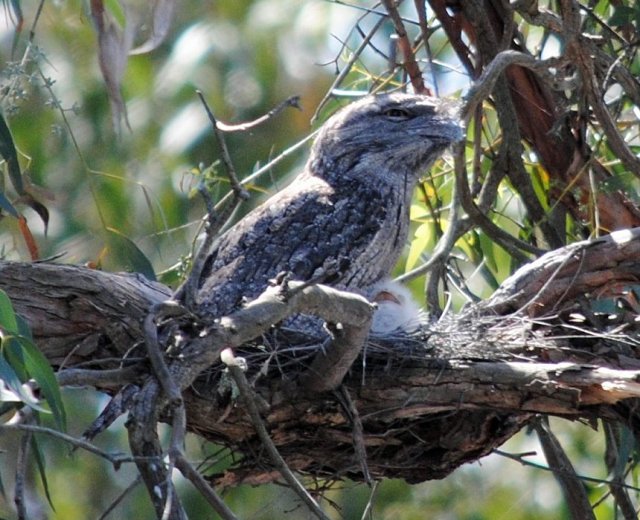
- It seems some pairs may have moved into the park corridor nearby – Alison knows of three in the Linum Street area. Alison’s photo shows a tiny white fluffy chick – possibly looking for a feed judging by the open mouth!
- The photo was taken on one of those recent 30 degree days – dad is not only protecting the chick from predators, but also shading the chick to keep it cool.
Vale Ron Grainger
Special Thanks to Our Photographers
- We all know our photographs make our newsletter so much more interesting – a picture is worth a thousand words after all.
- Many thanks to our contributing photographers in this issue – Ruth, Alison, Julie, John and Michael – some using quality cameras and lenses, some using old phones – everyone capturing something interesting or newsworthy. Please keep it up!
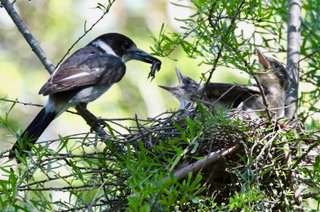
Eeny, meeny…Michael’s photo of a Grey Butcherbird and chicks
 Blackburn Creeklands