Laurel Grove Storm Water Treatment Project
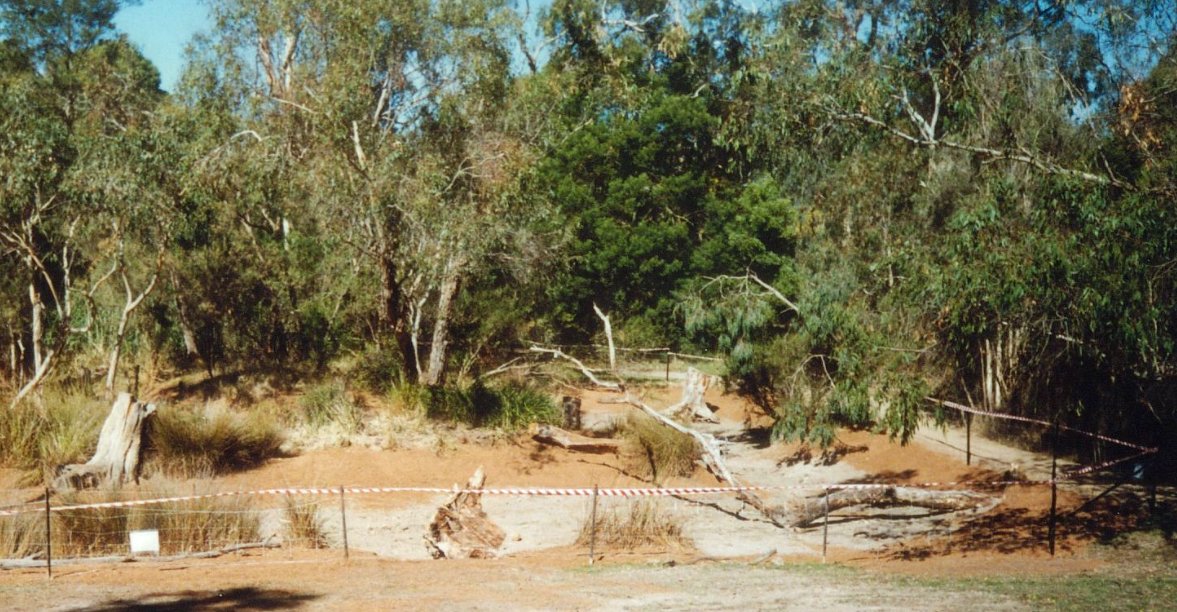
Renovation of the original Waratah Wetland – a Bicentennial (1988) Project
- We published a specific news item on this topic on 28th November which is mostly reproduced below in case you missed it.
- A new storm water treatment system is planned for the Blackburn Creeklands. It will be constructed in Kalang Park just west of the end of Laurel Grove North and will collect storm water runoff from the road system to the north. Most of the site is a boggy grassed area at present.
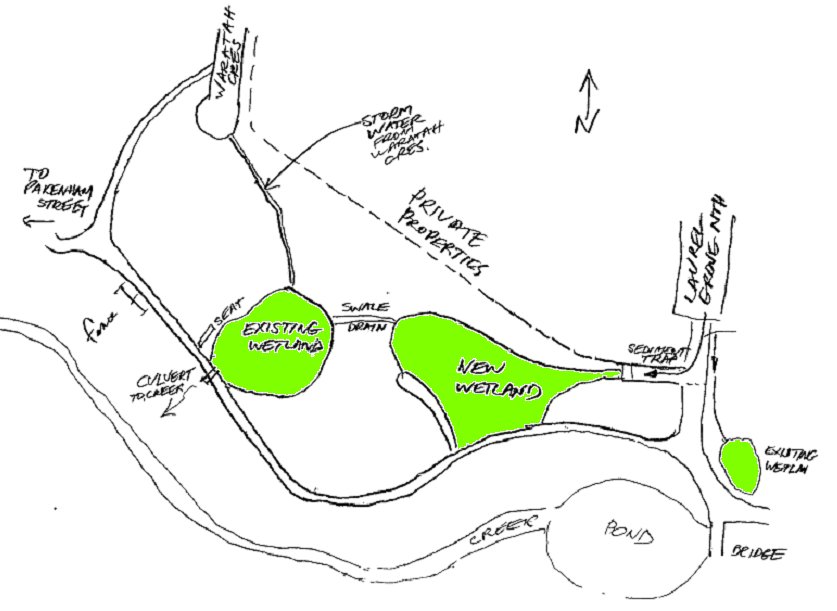
- The water will first be diverted into a concrete “sediment trap” to trap pollutants. Water will then flow into an ephemeral wetland (occasionally wet) where some will soak into the soil and support a rich diversity of indigenous plants and some will overflow into the existing wetland further west. Part of the street storm water flow will continue to reach the mini wetland on the eastern side of the track to the bridge also.
- The first stage involves the removal of four non-indigenous trees and some earthworks. This work will commence soon. Please click here for further information on this Water Sensitive Urban Design (WSUD) feature and its expected benefits. The timing and organisation of subsequent stages of the project have not been announced.
- We are looking at a 2021 project to improve habitat on the southern side of the path which will border the new and old wetlands.
Furness Park Playground Update
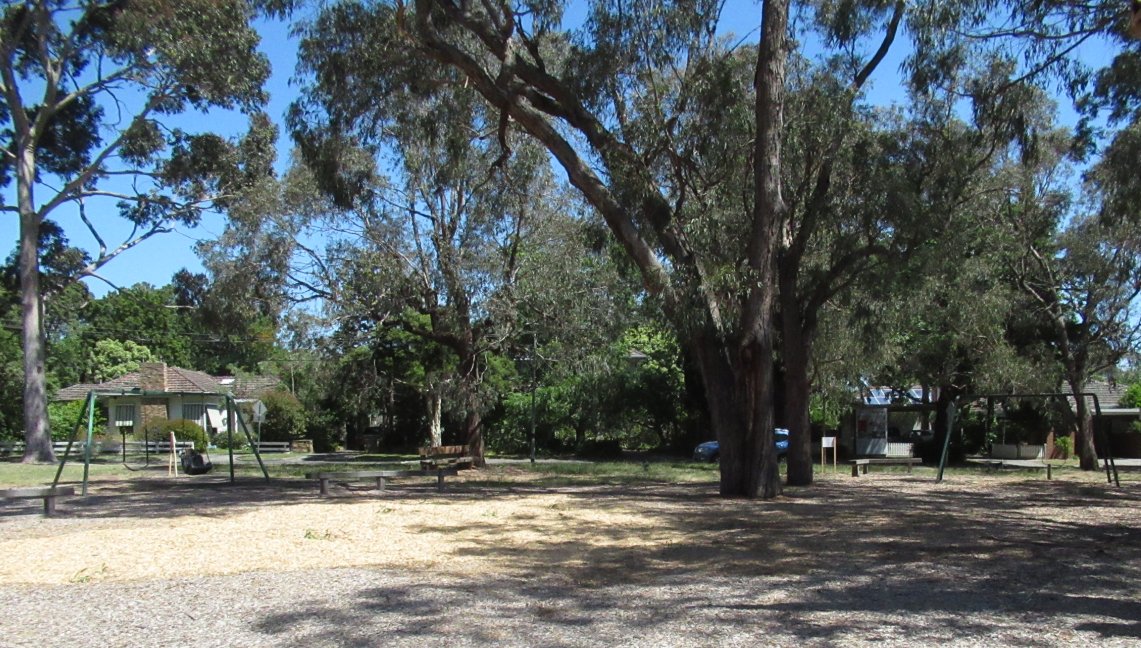
Furness Park playground – notice something missing ?
- There have been plans for some time to upgrade the very popular young childrens’ playground at Furness Park. This work is to consist of equipment renewal, some associated landscaping and new furniture.
- When we learned of these plans, Committee requested that Council also consider upgrading the drinking fountain there as part of the project.
- Council noticed that parts of the wooden equipment had deteriorated to the extent that they could not be maintained in the interim – resulting in removal of the timber structures ahead of schedule for safety reasons.
- We look forward to a better play space being installed in the new year and trust that priority can be given to the project.
- In the meantime, alternatives are the small playground in Kalang Park near the oval, a larger one in Blacks Walk off Garie Street and the excellent playground at the Blackburn Lake Sanctuary:
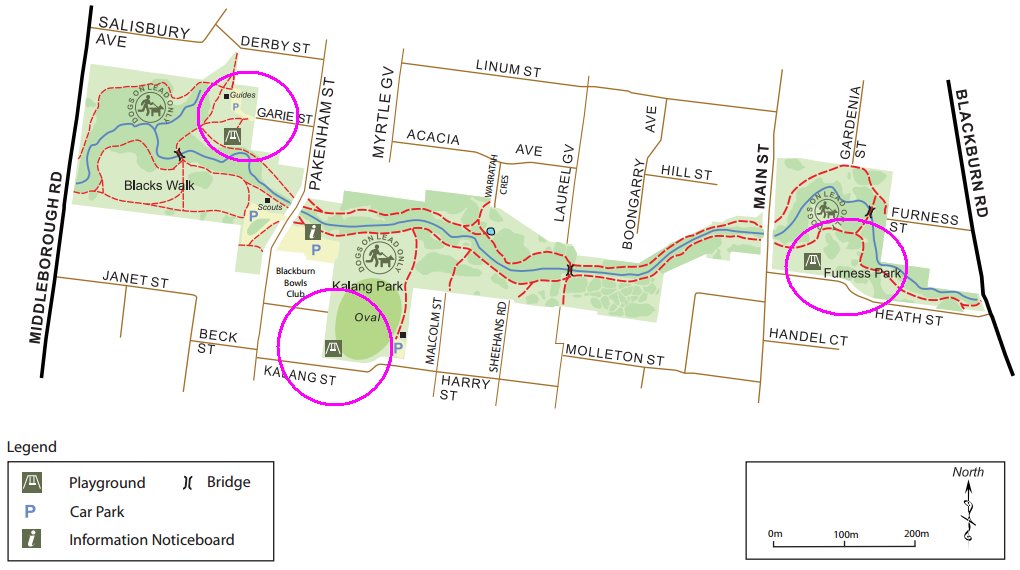
Blackburn Creeklands Playgrounds – Click to enlarge
Upgrade of Bowls Club Car Park
- In further news from Council, the Bowls Club Car Park is to be upgraded in the coming months. BCAC has long advocated for this work and we are pleased that Council has found the resources for the project to be done in-house.
- We have a long history of involvement with that car park – a member of our Committee, Mrs Thelma Osborn, originally designed the current car park in the mid 1980s so as to address the Bowls Club needs while also being a good fit for the park.
Maintenance Team Report 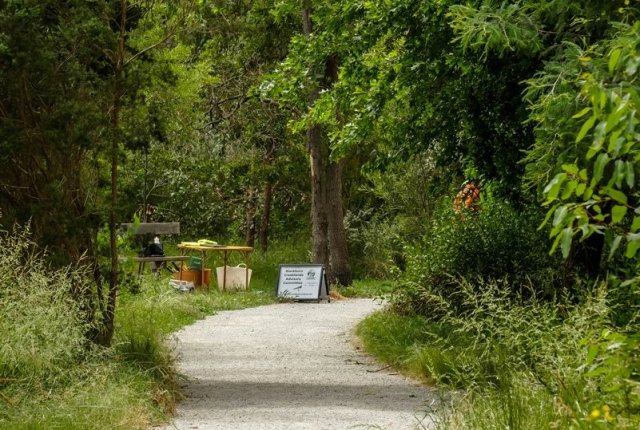
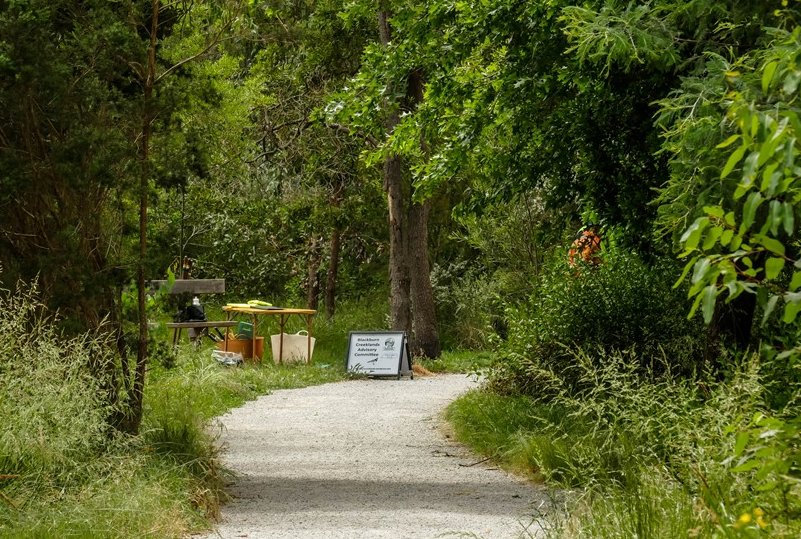
- The warmer (sometimes!) conditions with lots of moisture have really got the plants going – our beloved weeds being no exception! Just in time, we’ve welcomed new starter Lisa from Box Hill who has worked with us for a couple of weeks now. Also, we are delighted to report that Juliet is back on deck performing wonders in Kalang Park. Many will know her from her work in Furness Park over the last several years.
- Otherwise, our Maintenance Team has been busy over the past month or so:
- Two Monday mornings weeding last year’s new plantings in Kalang Park east of the Laurel Grove bridge.
- Then, two Mondays at the Billabong – not quite finished there but the team needed to move on. Due to several of our regulars being unavailable, our resources were down a lot earlier in the month.
- Finally, another two Monday mornings in the land adjacent to 60 Main Street.
- We’ve placed our orders with the local Bungalook and Greenlink nurseries contingent on grant funding. These cover our proposed Billabong project area for next year and general in-fill work. We’re hoping to hear whether our grant application has been successful later in December.
The Mega Mulch Pile
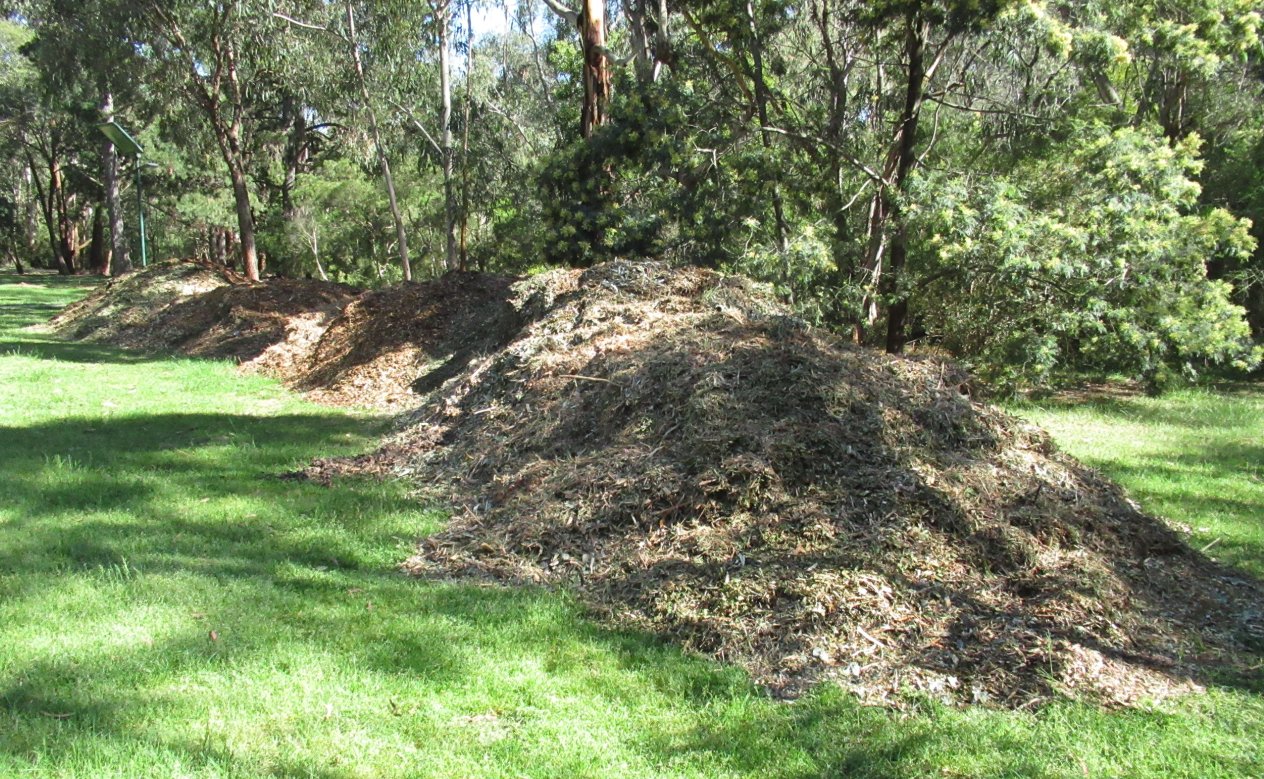
- Several people have asked us about the huge mulch pile near the Laurel Grove South entrance to the park.
- We are pleased to say it is not an illegal dumping – but a legitimate Council supply. Council will move it on in due course.
In the Corridor
Most birds Don’t Care About Fences
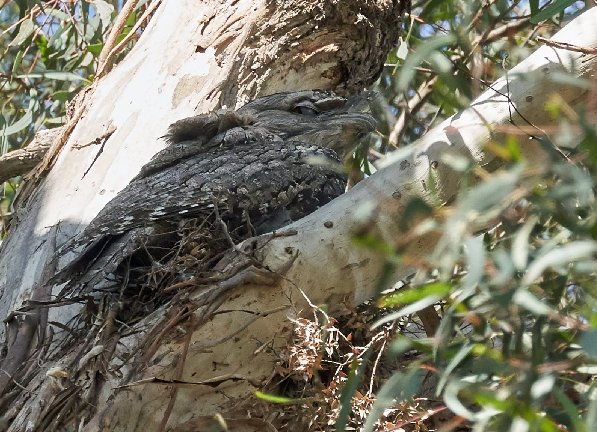
- In November last year, we brought you a story of a Tawny Frogmouth family nesting next door to the park. One of our friends, Rob, had a great viewing spot on his back verandah and provided some shots using a telephoto lens which showed how quickly the chicks grow, fledge and then leave home.
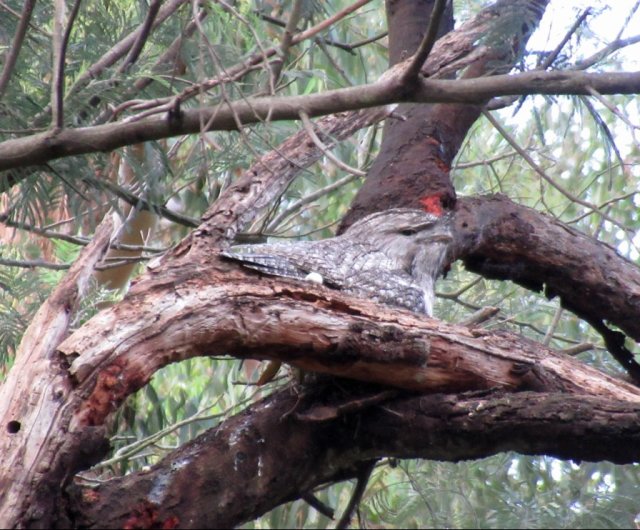
- The good news is that the Tawnies returned to the same nest site this Spring and once again reproduced successfully. On Thursday 21st November, Tawny Dad was sitting on his nest, high up in a Yellow Box in Rob’s back yard (is that a little eye peeking out from under Dad’s wing?):
- A few days later, the pair can be seen resting in a tree just over the fence in our park:
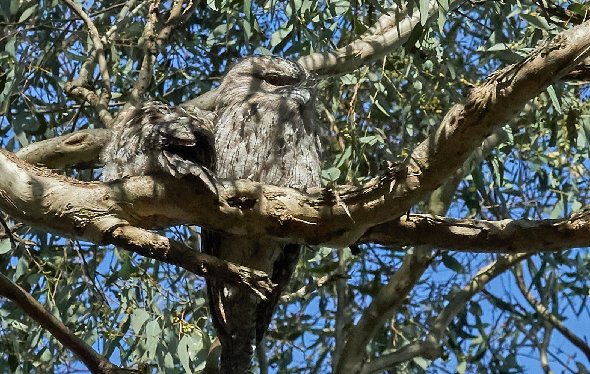
- This behaviour highlights how our local wildlife uses both the park’s and also private resources to go about their normal life. We believe our park is too narrow to form a viable habitat in its own right – the park needs a buffer of private land with compatible habitat and also wildlife corridor links to parts further afield. Good on Rob and other neighbours for maintaining (the, frankly, irreplaceable) canopy trees in their gardens!
Other Sightings from the Corridor
- Ruth has contributed photos from elsewhere around our Corridor:
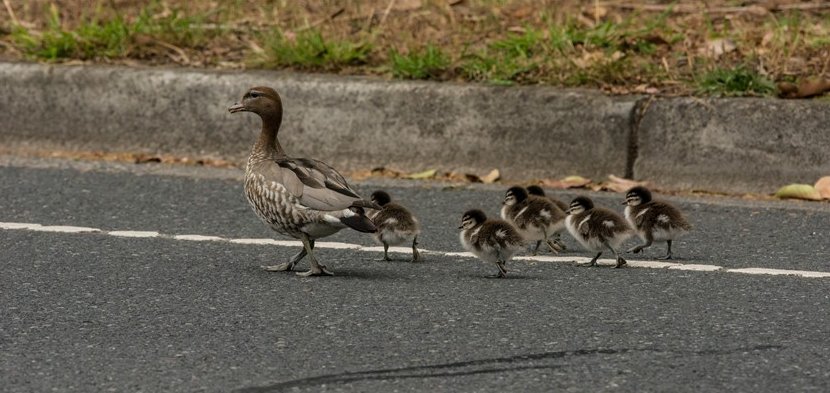
Wood Duck and Ducklings on Blackburn Road – not the safest part of our Corridor for a stroll
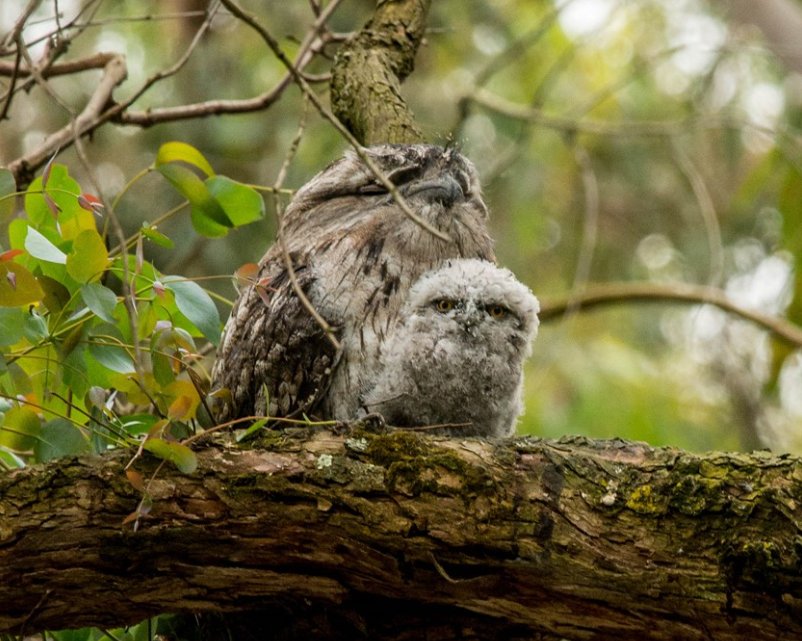
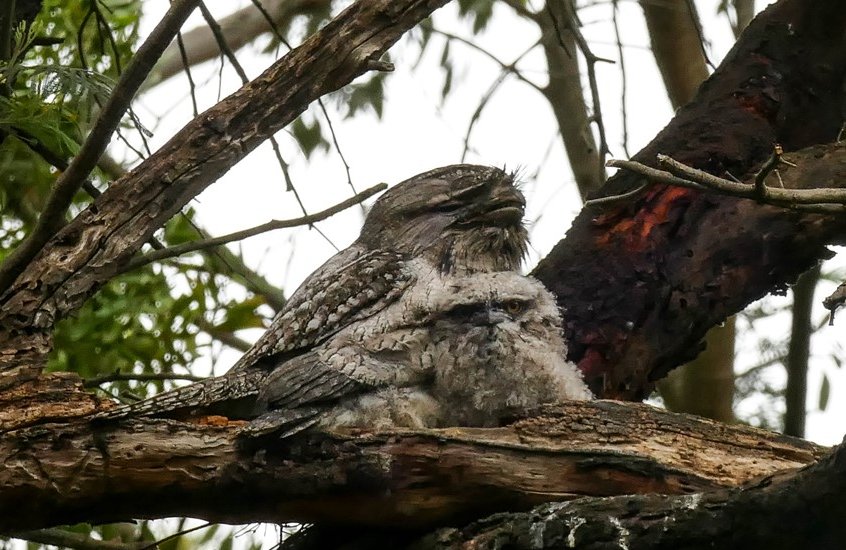
Linum Street: Tawny Frogmouth and very inquisitive, downy chick
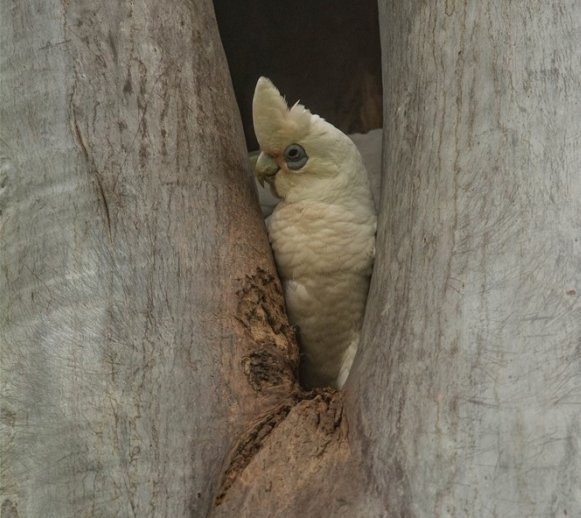
Fuschia Street: Little Corella nest in hollow
Protecting the Corridor
- We understand that the Laurel, Linum and Boongarry Road Association has disbanded because the Council has taken over management of those formerly private roads.
- The Bellbird Residents Advocacy Group (BRAG) is stepping up to more effectively represent residents in that part of our Corridor. We understand that a community meeting is planned for the new year to strengthen its standing (probably around mid-February 2020). Readers will remember that BRAG was the group which petitioned Council to purchase the vacant land at 60 Main Street to have it incorporated into our park. Even though those efforts were ultimately unsuccessful at Council, BRAG is clearly a true Friend of our park. Its members have also done some excellent work in preserving the character of the “BellBird Area” in the planning arena.
Creeklands Sightings
- More interesting photos from Ruth:
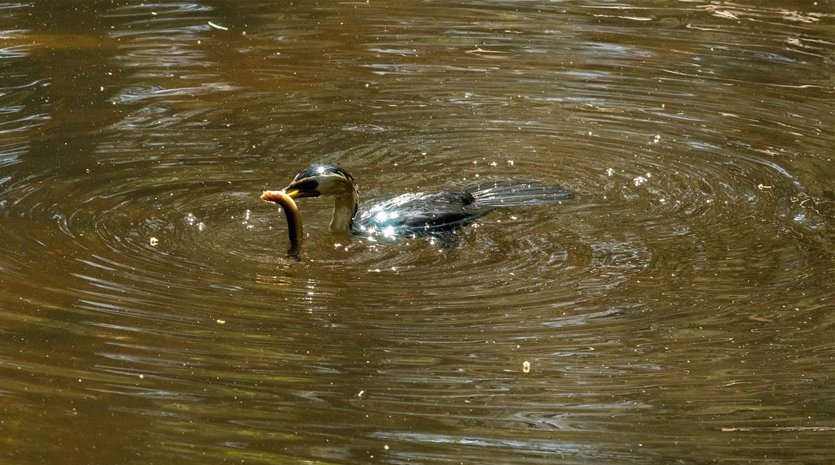
Little Pied Cormorant – successful fishing in the Laurel Grove pond
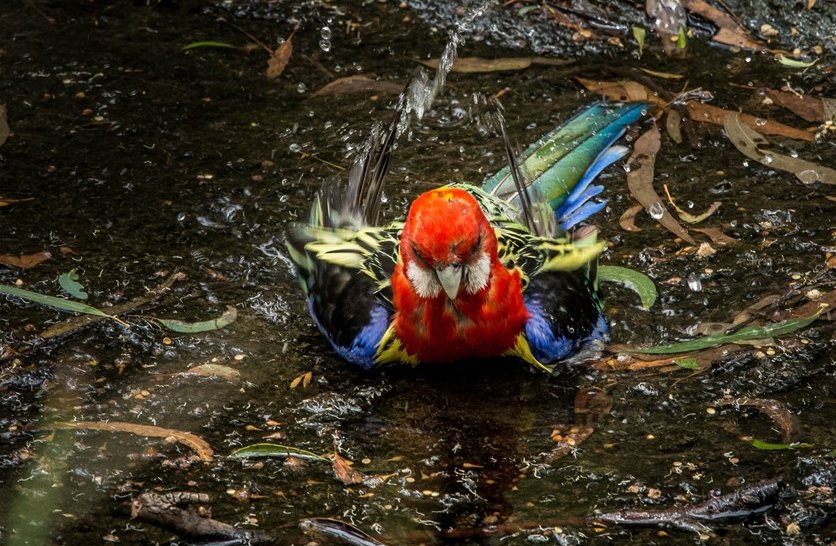
Eastern Rosella: Bath time in the Barrelled part of the Creek
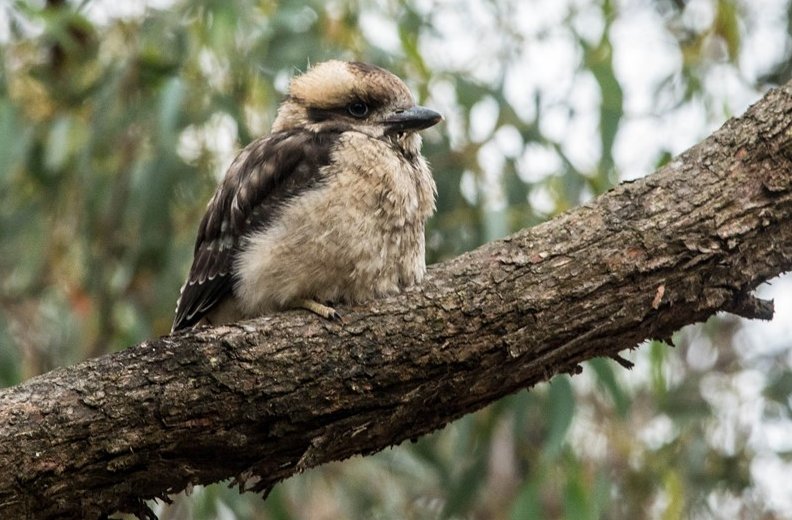
Breeding Success – A Fledgling Kookaburra in Blacks Walk
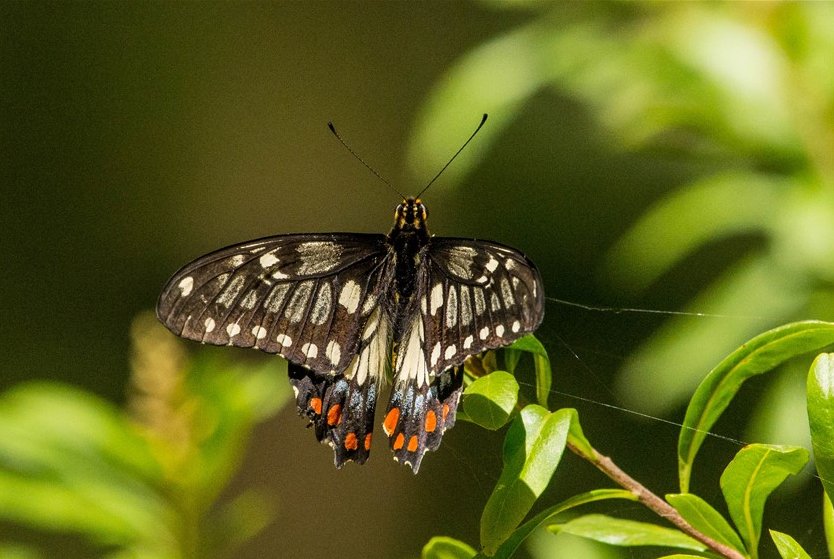
Dainty (or Dingy) Swallowtail perhaps flying too close to spider webs
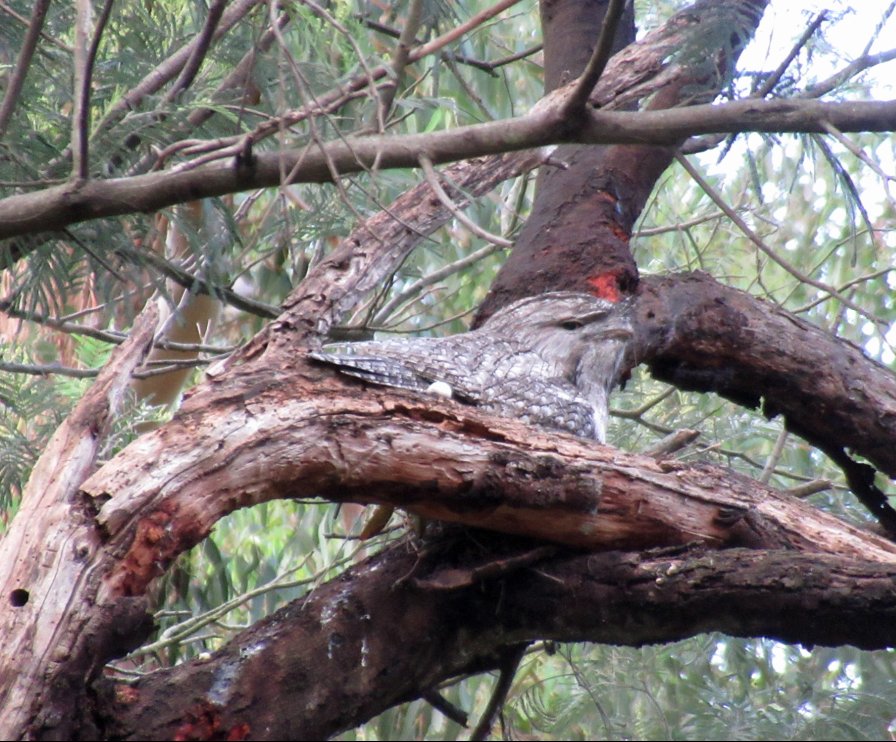
- Finally – some good news: the adult below is the parent photographed in our October Bird Survey report. You may remember there was an egg or egg fragment outside the parent’s protection. It must have been a fragment after hatching as we’d hoped – things seemed to have gone rather well there…
- Here is the October photograph:
Plant of the Month
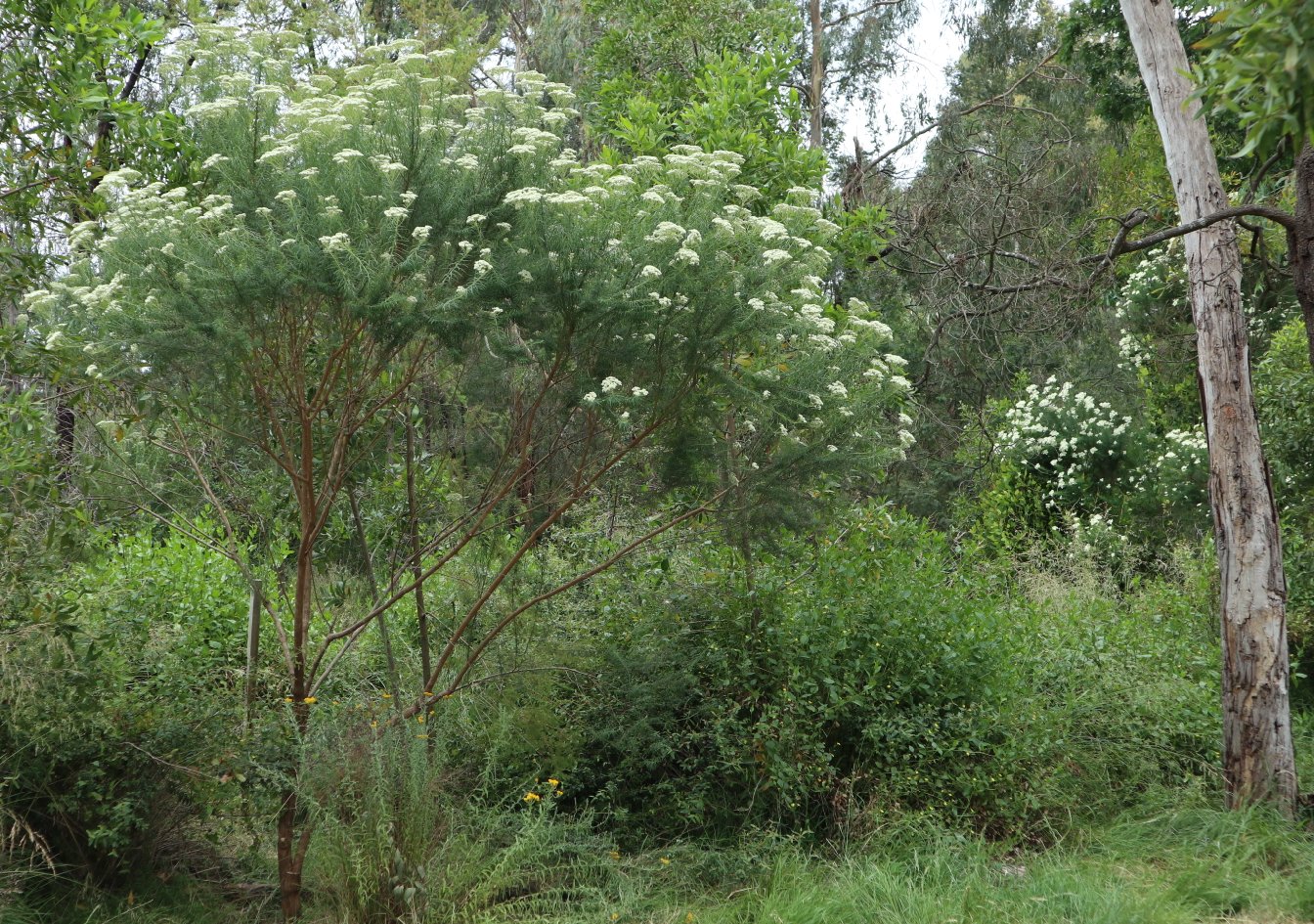
- Our plant of the month is Common Cassinia or Dogwood (Cassinia aculeata). This is a common understorey and erect shrub native to the southern states of Australia and indigenous to the park. Our picture shows specimens in Kalang Park – one in the left foreground and another in the right hand background. It seems to be having an excellent season this year in our park.
- It grows to between 1 and 3 metres high. The creamy-white flower heads are reminiscent of cauliflower heads – appearing in dense clusters from summer to autumn. Here is a close-up view of a “floret”:

Weed of the Month
- Our weed of the month is the Milk Thistle (Sonchus oleraceus)
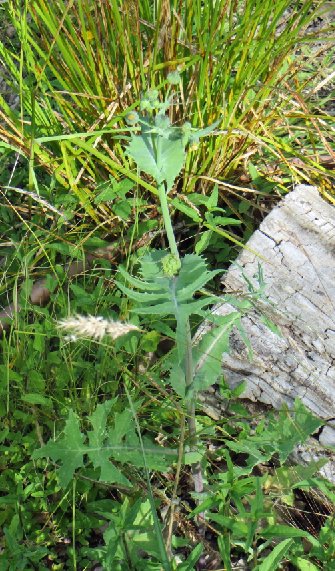
- There is more than one plant called “Milk Thistle” – our enemy is botanically known as Sonchus oleraceus. It is related to the Dandelion and originally comes to us from Europe and western Asia. It has hollow stems that exude latex (a whitish “milk”) if damaged. It has a quite short taproot and is easily pulled out if grabbed from the base of the stem (otherwise the stem tends to break).
- It can grow to more than a metre high (even more than two metres if supported by other plants) – commonly in disturbed soil (eg after we remove other weeds). It is a fast grower that likes full sun and is not fussy about soil conditions. It has yellow flowers that ripen into fluffy white seed heads – seed is then spread by wind and water.
- In Australia generally, it is a very common and widespread invasive species creating significant problems in agriculture. Don’t take our word for it – but the leaves are said to be edible and the plant is also used by herbalists. After blanching, the leaves are eaten as salad greens or cooked like spinach – perhaps a novel Christmas salad idea?
 Blackburn Creeklands