Whitehorse Community Achievement Award 2020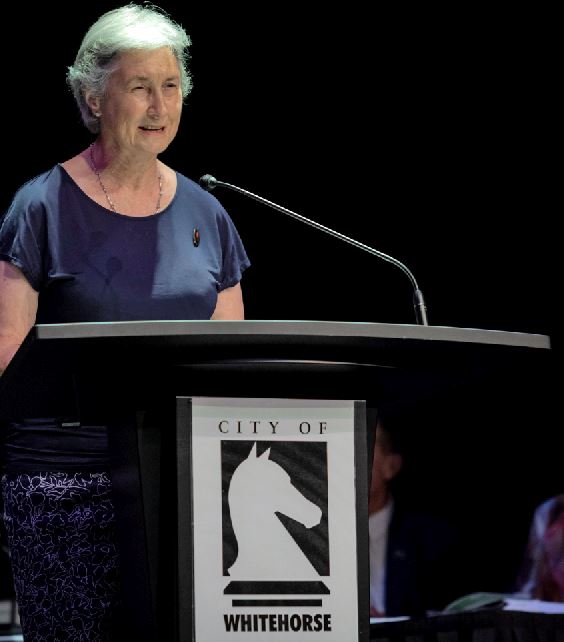
- We are very pleased to report that one of our Committee members, Anthea Swann, was awarded a Whitehorse Community Achievement Award on Australia Day after a very impressive 33 years of service. Among many other contributions, Anthea has managed our Notice Board for many years. Our photo is courtesy of Council’s official photographer for the event.
- In her acceptance speech, Anthea kindly accepted the award on behalf of our Committee and cleverly took the opportunity to encourage the audience to volunteer, to attend working bees and to check out our website!
- Our congratulations to the other award winners and to our new citizens who participated in the day’s citizenship ceremonies. In the past, Alan Lodge (2014), the late Thelma Osborn (2003) and our Chairperson Megan Short (2006) have won the same award.
Upgrade of Bowls Club Car Park
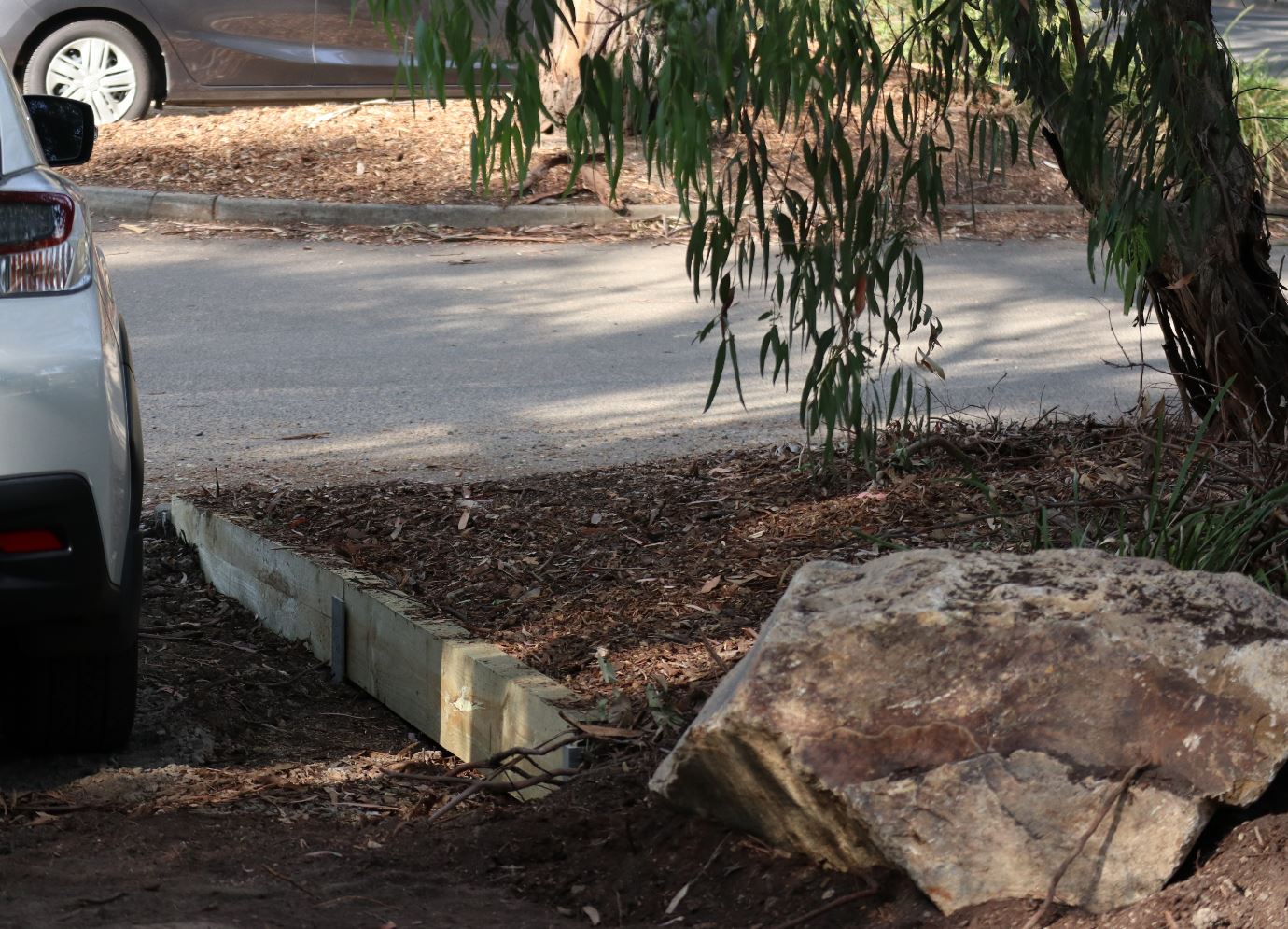
- Speaking of Mrs Osborn, the upgrade of the Bowls Club Car Park is well underway with the installation of pine sleepers and rock barriers having commenced. Mrs Osborn designed the current car park in the mid 1980s so as to address the Bowls Club needs while also being a good fit for the park.
- As we said last month, Committee has long advocated for this work and we are pleased that Council has found the resources for the project to be done in-house.
For your Calendar – 2020 Vision
- An update to our Calendar follows:
Community Working Bees
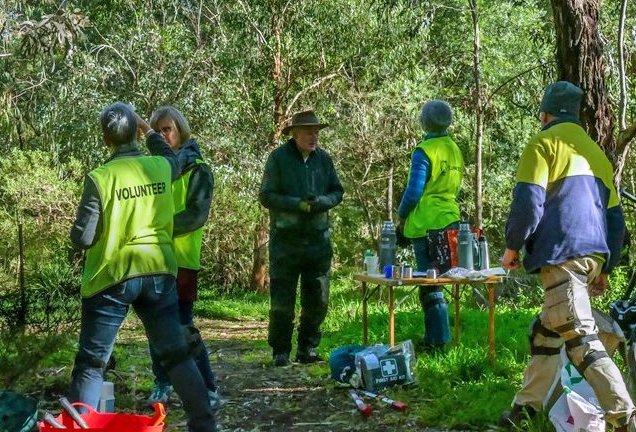
- Our Community Working Bees this year will be the first Sunday of each month 09:00-12:00. These are attended by the general community – typically, we get 20-25 people attending.
- These run from May to October with the last two potentially being weeding-only events depending on weather conditions. The planned dates are:
| 3rd May | 7th June | 5th July |
| 2nd August | 6th September | 4th October |
Maintenance Team Working Bees
- Our Maintenance Team Working Bees occur every Monday morning 08:00-12:00. These are attended by some Committee and a few dedicated weeders/planters – typically we’d get 4-6 people attending.
Bird Surveys
- Bird Surveys are held in Autumn and Spring.
- Our Autumn survey will be Saturday, 4th April 07:30-10:30 at the Kalang Oval Pavilion. Our Group Leaders Pat and Ian have confirmed their availability.
- Our Spring survey will be a Saturday morning in October – date to be advised.
Committee Meetings
- BCAC Committee meetings are held at 7:30 PM on the 4th Tuesday of each month excluding December. Visitors are most welcome.
- Meeting dates for 2020 are: January 28th, February 25th, March 24th, April 28th, May 26th, June 23rd , July 28th (with AGM), August 25th, September 22nd, October 27th and November 24th.
- Venue: Kalang Oval Pavilion, Kalang Street, Blackburn.
Birdbaths and Ponds
- Many believe we should not feed wild birds because they can become too dependent on us. However, there is less opposition to our providing water for our birdlife for drinking and bathing – especially in hot weather.
- This can be done using a pond or a simple birdbath. For best results, the water needs to be kept clean and topped up in extreme heat. You can find detailed instructions on siting, cleaning etc here.
- Friend Hugh, who lives next door to Kalang Park (though not so close to the creek), has sent us some photos illustrating just how popular his birdbath is in this warmer weather:
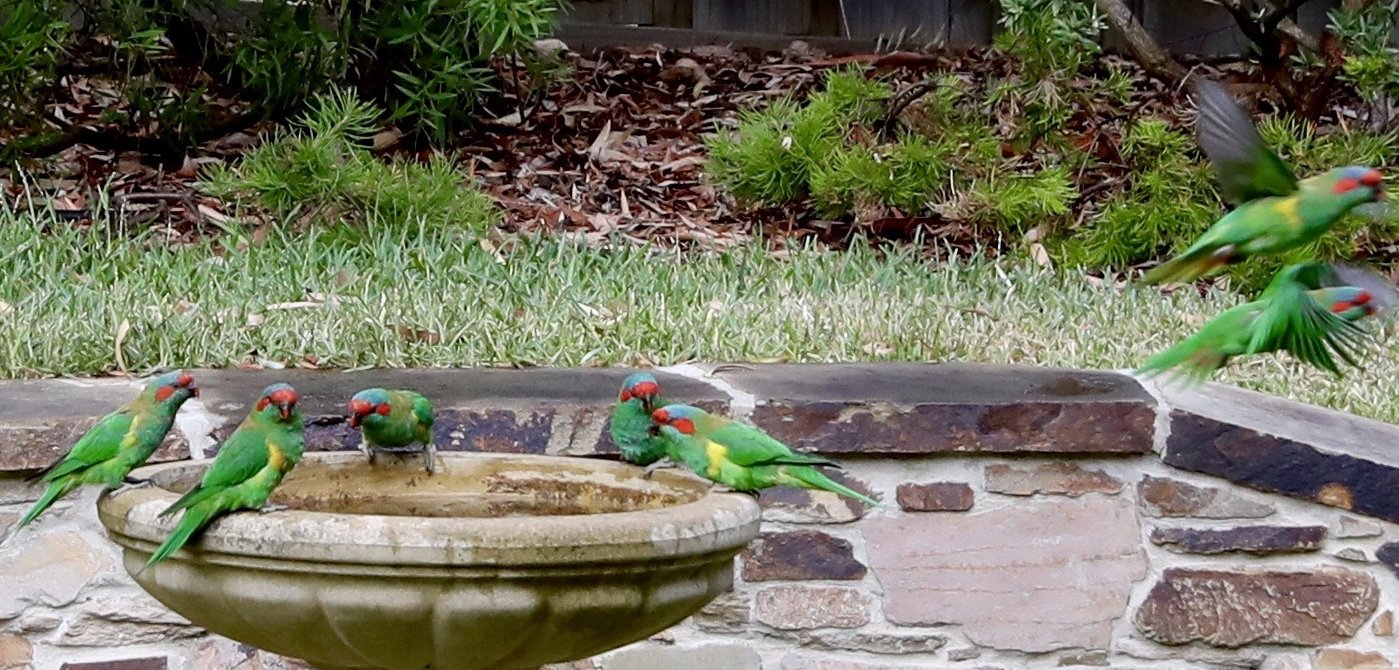
Mob of Musk Lorikeets
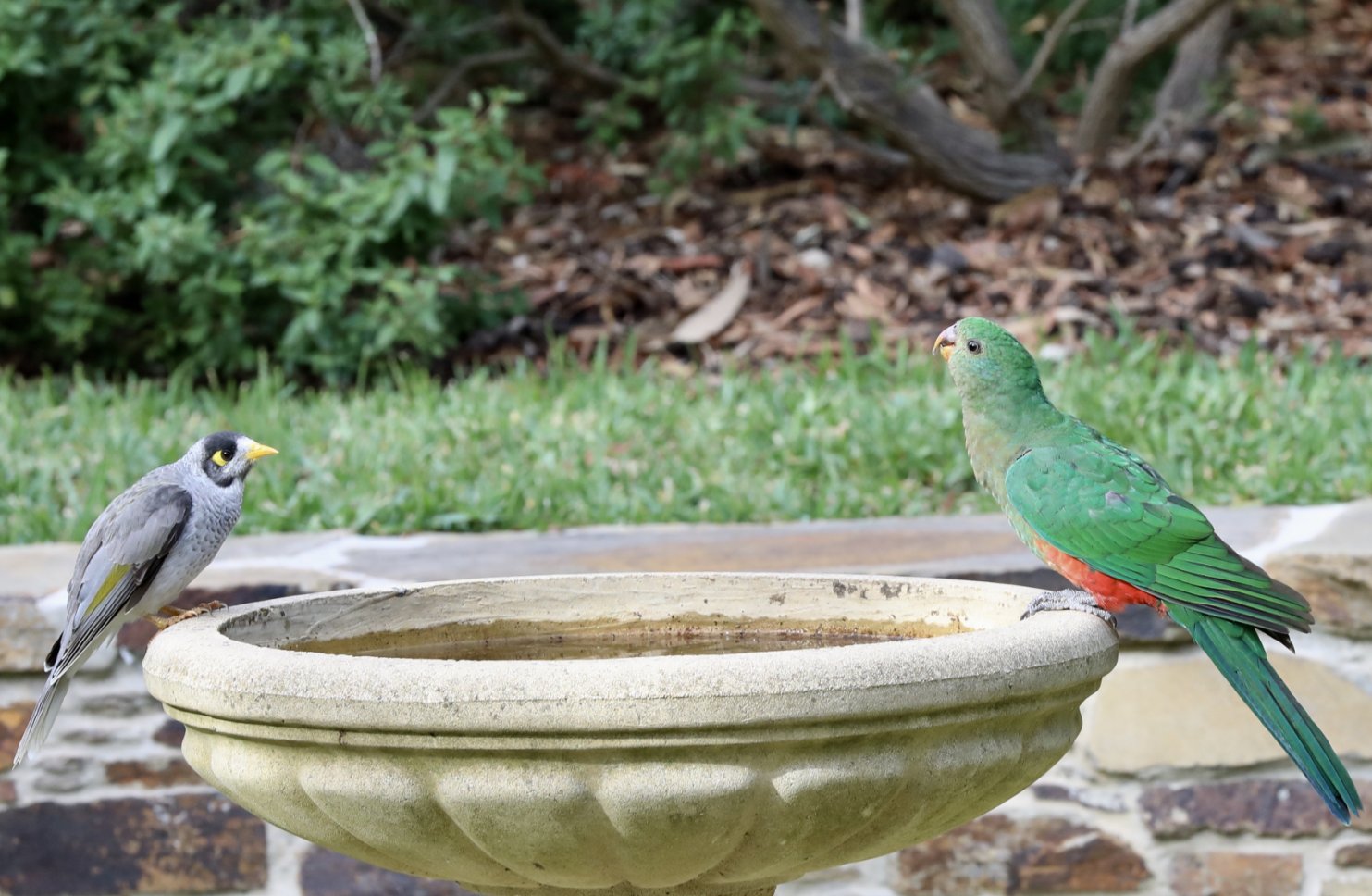
Noisy Miner and King Parrot conducting water rights negotiations
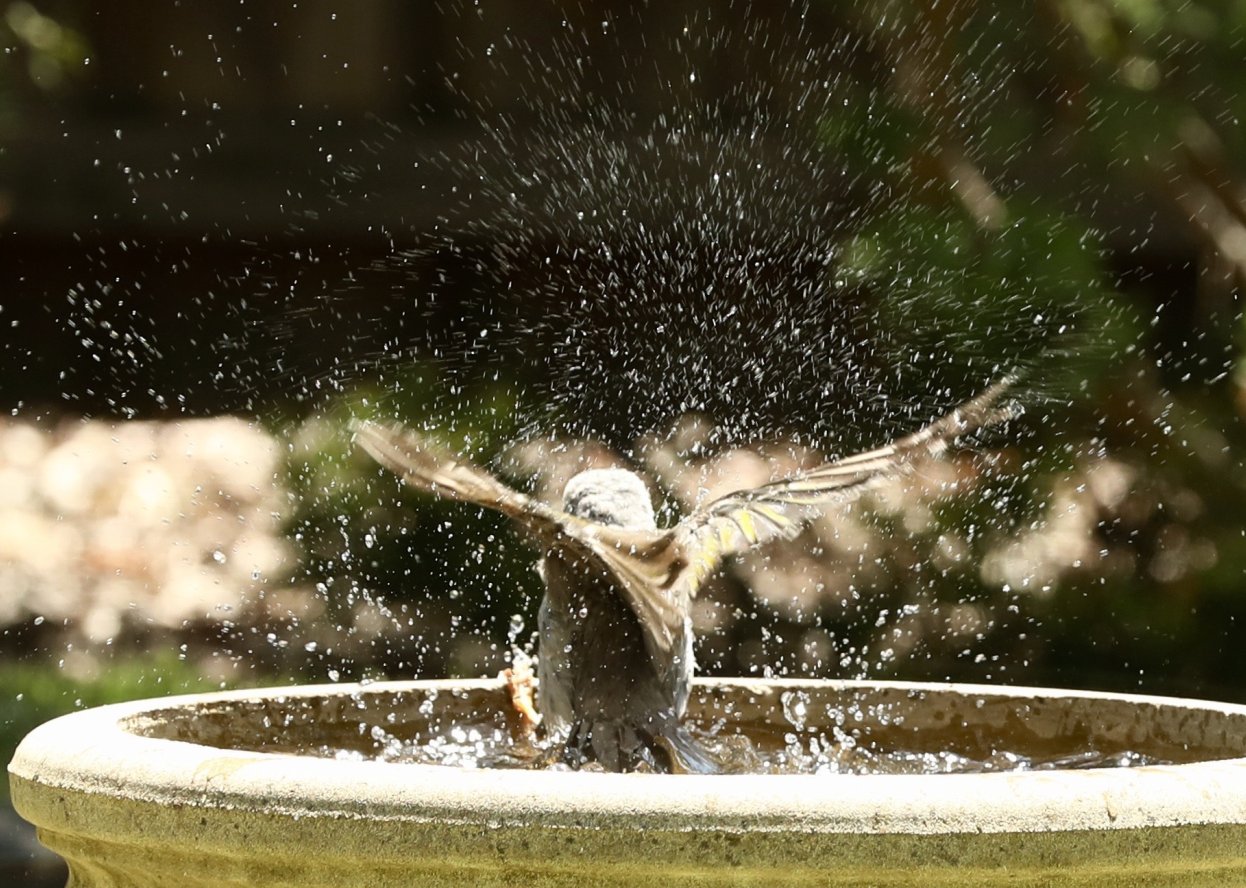
Noisy Miner getting the spa action going – must have won the deal!
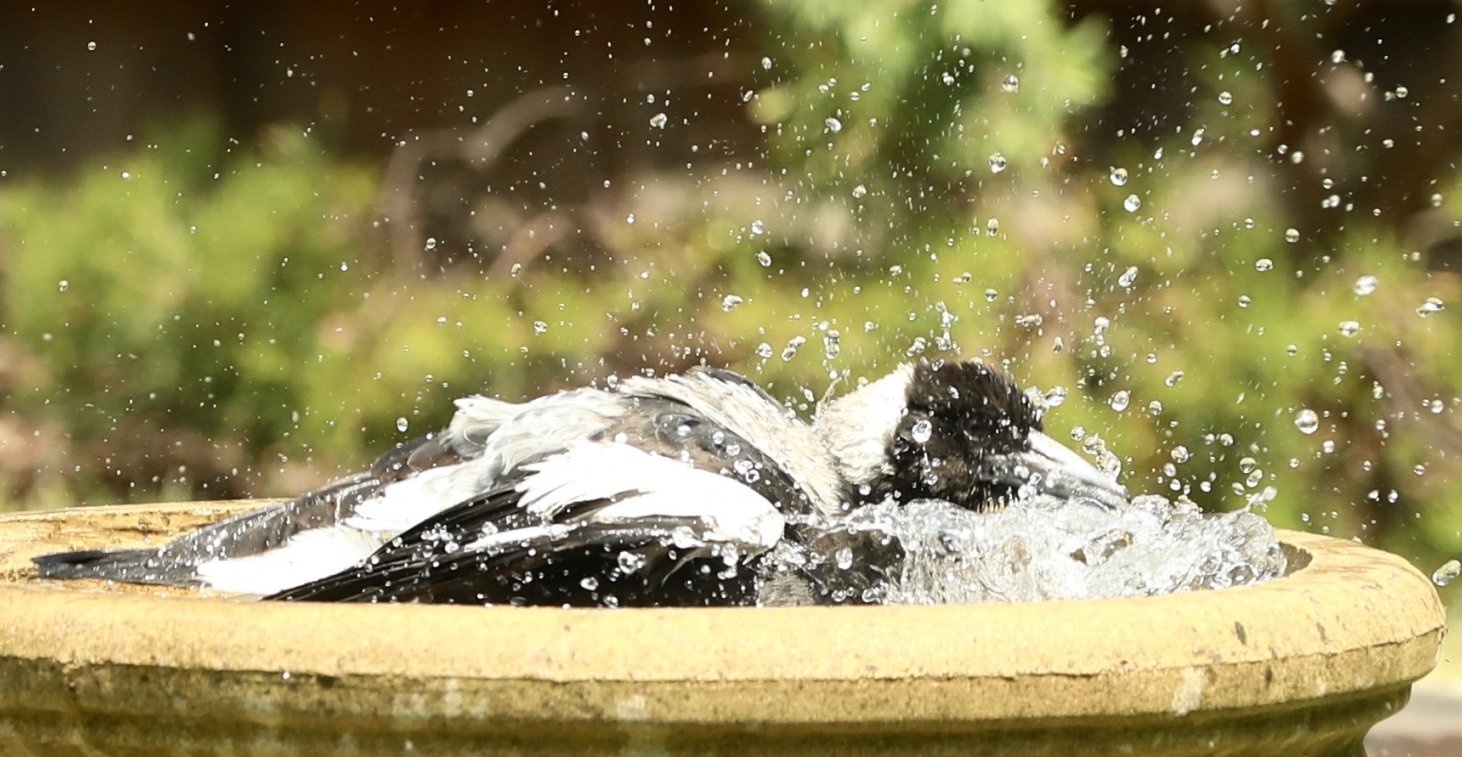
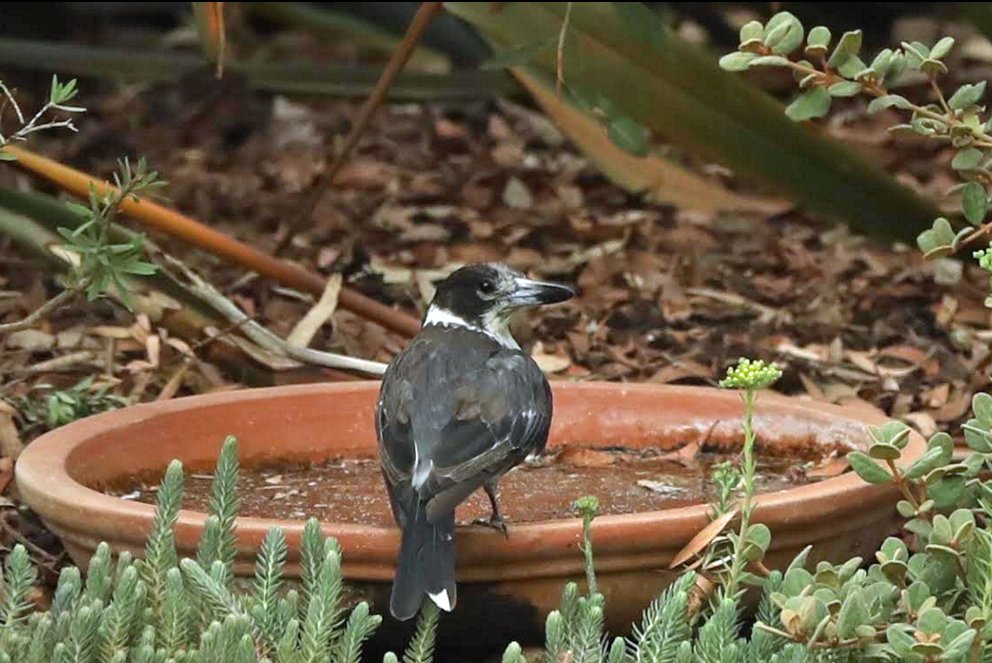
Magpie following suit – though only just fitting into the bowl!
- If you have no cats in your backyard, a pot saucer on the ground can also make a suitable bird bath:
- Another good spot to observe birds bathing is in the concrete “barrelled” section of the creek where the shallow water with a firm and even base for wading often seems popular with Eastern Rosellas, Mudlarks, Ravens and with the ducks of course.
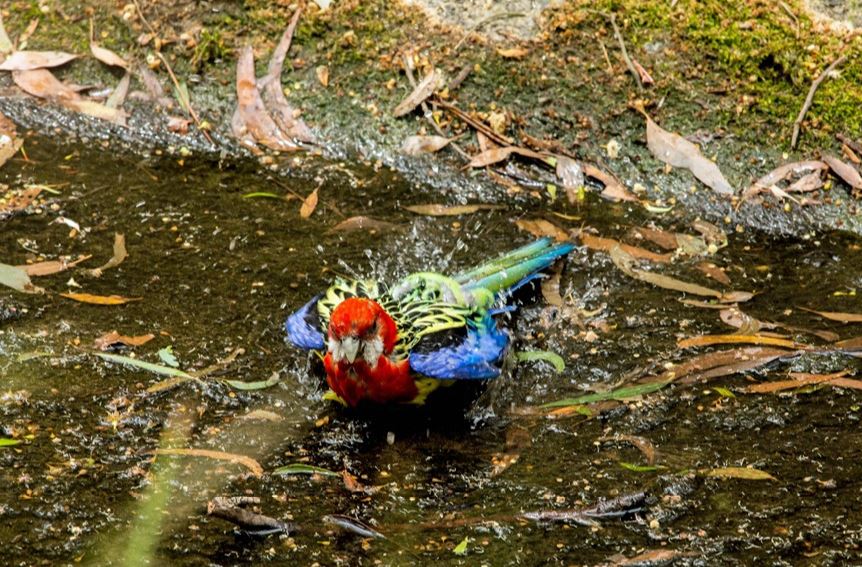
Bath time for an Eastern Rosella in the barrelled section of the creek
- Our birding friends have asked us to keep a lookout for a refugee or two from the fire zones in our park and the surrounding Corridor. Please let us know if you see something unusual and take a photo if possible.
Maintenance Team Report
- In terms of General Maintenance Work over December-January:
- The land adjacent 60 Main Street was targeted in most of the December working bees.
- Work then shifted to the lunettes after that (refer below) and then to the Billabong project area.
Lunettes Project
- As reported in our December news, a new storm water treatment system is planned for the Blackburn Creeklands. It will be constructed in Kalang Park just west of the end of Laurel Grove North and will collect storm water runoff from the road system to the north as an additional wetland. Work will commence quite soon with excavations etc planned to commence in April.
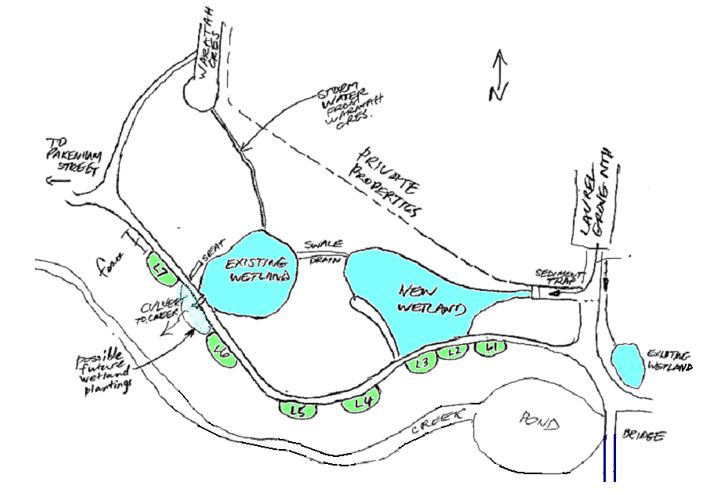
- We anticipate that the new wetland will become a very attractive feature of the park. Therefore, we are planning to complement that work with improvements on the creek-side of the track with appropriate plantings in 2021. You may have noticed that we have started site preparation there – weeding out some small areas opposite the proposed wetland. These are what we are calling “lunettes” – so far, L1, L2 and L3 have been weeded – the rest will be done gradually.
- The area between the existing wetland and the new wetland – and the adjacent area along the creek – is an important habitat for three of our smallest birds: the White-browed Scrubwren, the Brown Thornbill and Spotted Pardalote. They are tiny and hard to spot – here’s what they look like:
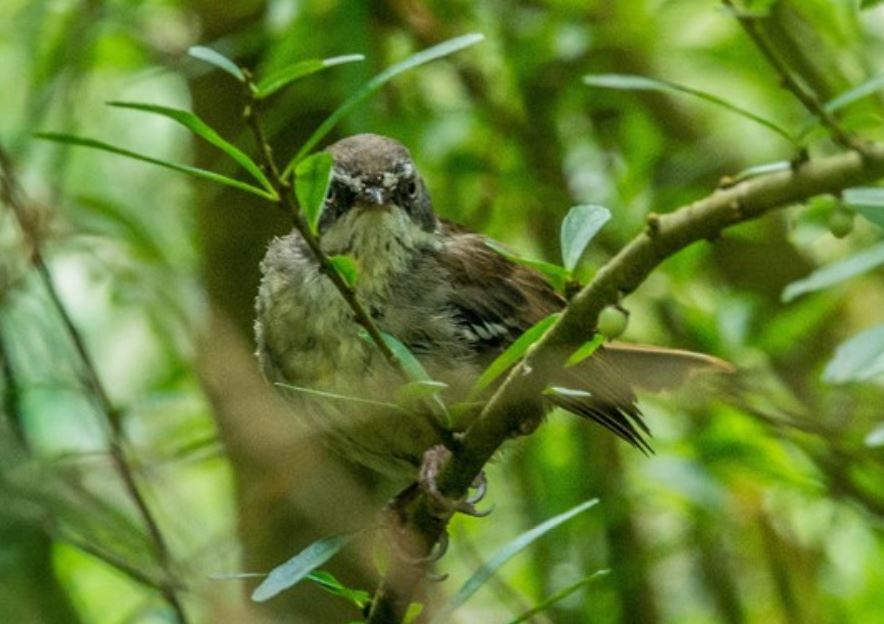
White-browed Scrubwren
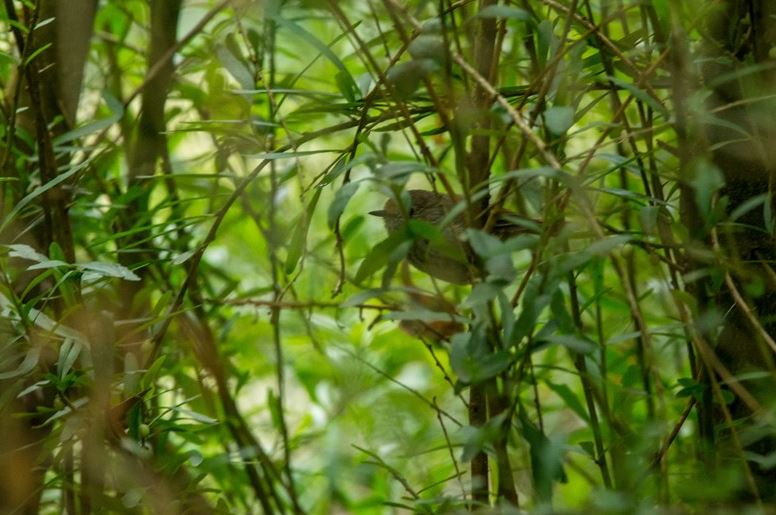
Brown Thornbill
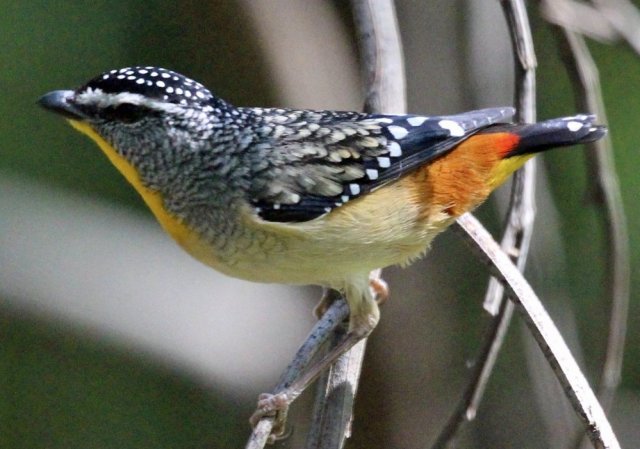
Spotted Pardalote
- These little birds need good cover from predators. That’s why we are tackling the sites in “lunettes” – we want to provide continuity for these birds as the development works are undertaken – by leaving untreated parts in place between them and also behind them along the creek bank.
Bird Studies around the Lunettes and the Proposed Wetland
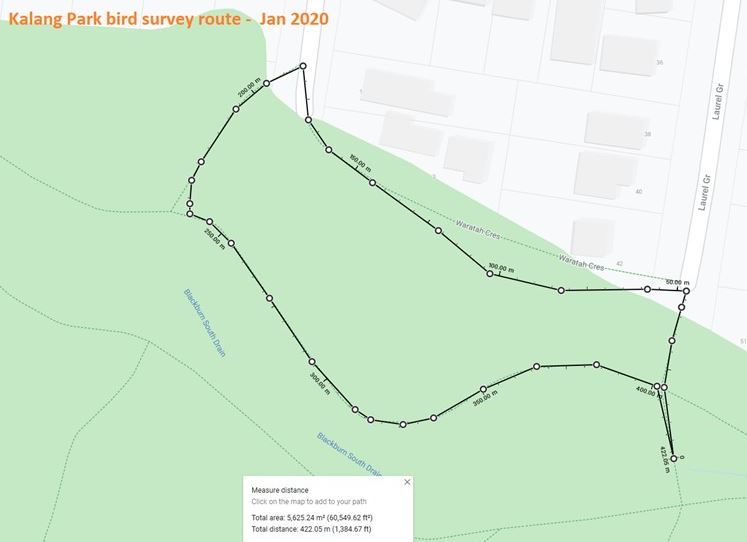
- To monitor the birds in the lunettes area and also around the area of the proposed wetland, our regular photographer Ruth has volunteered to coordinate regular bird surveys at the site.
- The aim of these surveys is to gather detailed data on bird numbers and species present in an attempt to determine if the development projects affect the bird life
- These are 45 minute surveys (to Birdlife Australia technical criteria) – to be conducted weekly at first (to create a baseline) and then at a lower frequency later. This work is in addition to our regular Autumn and Spring bird surveys.
- One regular Bird Survey leader, Pat Bingham, has kindly volunteered to advise and assist with the initiation of this project. The monitoring also includes similar surveying in a “control” area in Blacks Walk which will not be impacted by development projects.
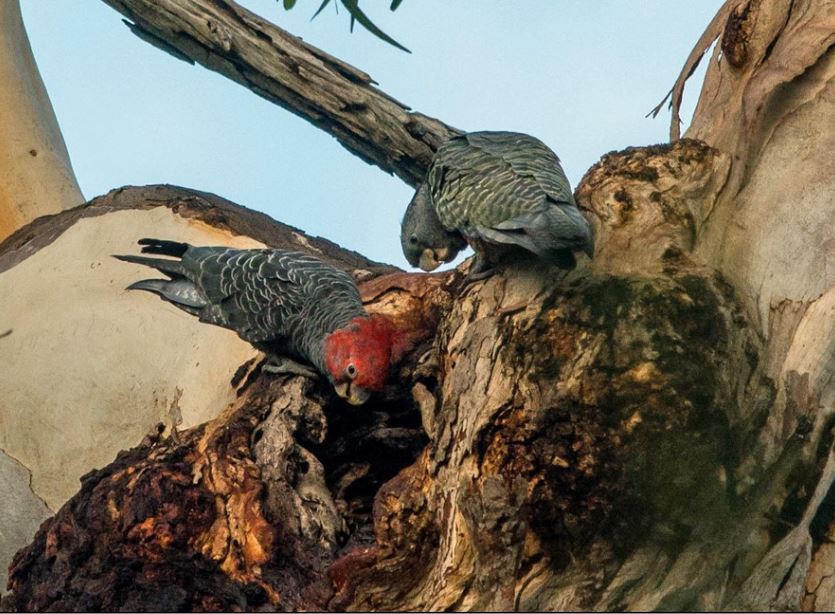
- The first “official” survey was conducted on 21/1 – this was very successful and resulted in a special viewing of a pair of Gang Gangs drinking from a very high tree hollow and then being attacked by a large whitish bird that was only glimpsed – possibly a Goshawk. The male Gang Gang has the bright red head…
- If you are interested in participating in the surveys, please let us know via e-mail at: blackburncreeklands@gmail.com
Furness Park Playground Update
- You may remember that an audit of the Furness Park playground equipment resulted in its immediate closure and then demolition for safety reasons.
- An important point is that the Furness Park playground was (incorrectly in our opinion) rated as a “local” playground – the second lowest classification. Under this rating, Council does not require public consultation re changes and the budget is limited.
- Nevertheless, Committee managed to meet with the City of Whitehorse regarding the proposed replacement playground equipment. Within a very tight time-frame, we were able to influence some changes to the proposed equipment, its siting, protection to nearby remnant indigenous plants and other improvements including to the water fountain.
- Council is also looking at time restrictions to parking there to enable parents access during the day (by sacrificing some all day commuter parking).
Bird of the Month: Nankeen Night Heron
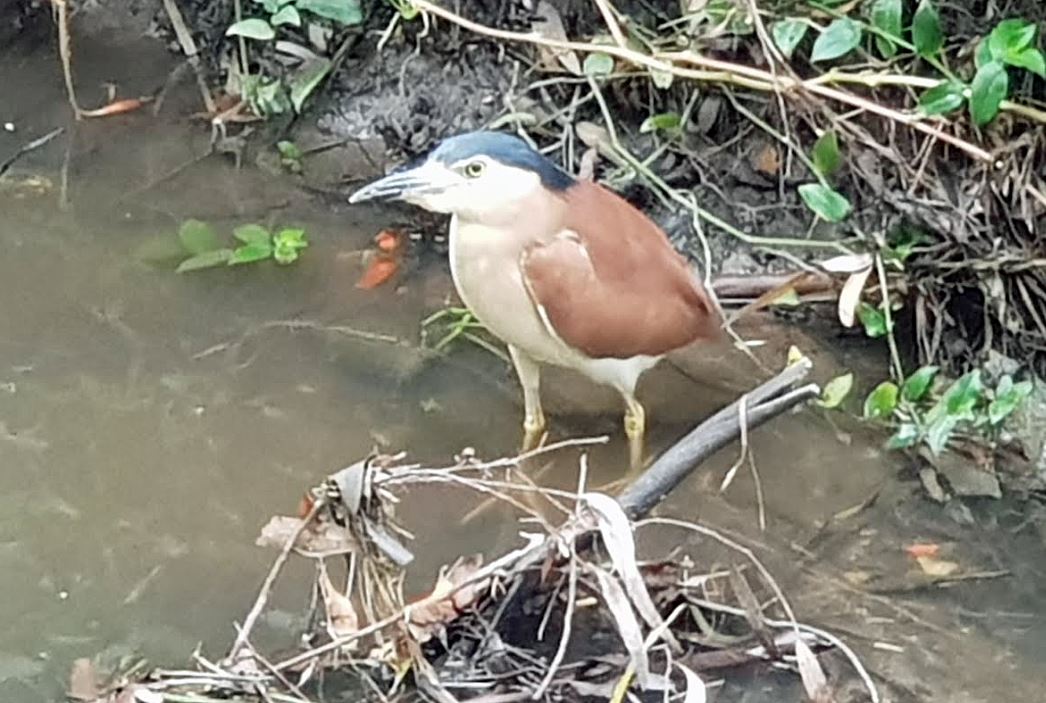
- A couple of Friends have queried what the bird above is. This guy is probably not in the category of a refugee from the fire-zones – but is actually a regular visitor around January. It is a Nankeen Night Heron – a fairly chunky heron with rich cinnamon brown upperparts (upper wings and back), white-buff underparts, a blue-black crown and yellow legs/feet. It has a large head, a short neck and shortish legs giving it a stooped or hunch-backed appearance. Friend Paul says “I’ve lived nearby for 10 years and don’t think I’ve seen one before. A pretty bird, looked out of place standing on the edge of the creek in shallows. I’ll keep an eye open for them now.”
- It ranges right around Australia (rare in Tasmania) and South East Asia. During the breeding season, two or three white nuptial plumes (ours above has only one visible) appear on the back of the head.
- It usually roosts by day in groups but you might encounter this fellow in the daylight hours patiently stalking our frogs at the Waratah Wetland or along the creek. We usually only see a single bird.
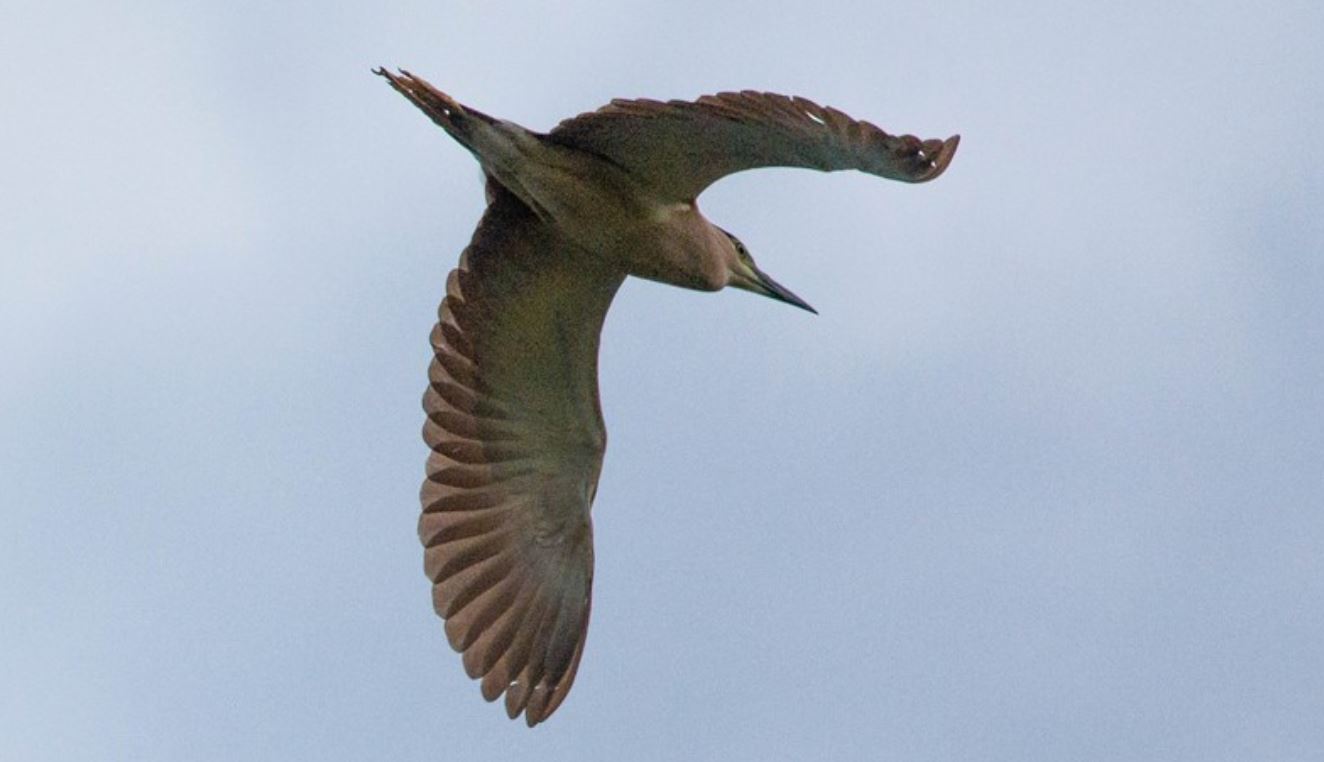
- They are quite impressive in the air – especially in bright sunlight when you can see the cinnamon colours. Here’s a shot of Ruth’s from last year:
- Whether he/she is here because of hearing our frogs or because it needs a new breeding territory, we don’t really know…
Sightings
- Our park seems to be teeming with life at the moment – maybe it’s due to the warmth and rain ? Here are some sightings of two of our indigenous pigeons:
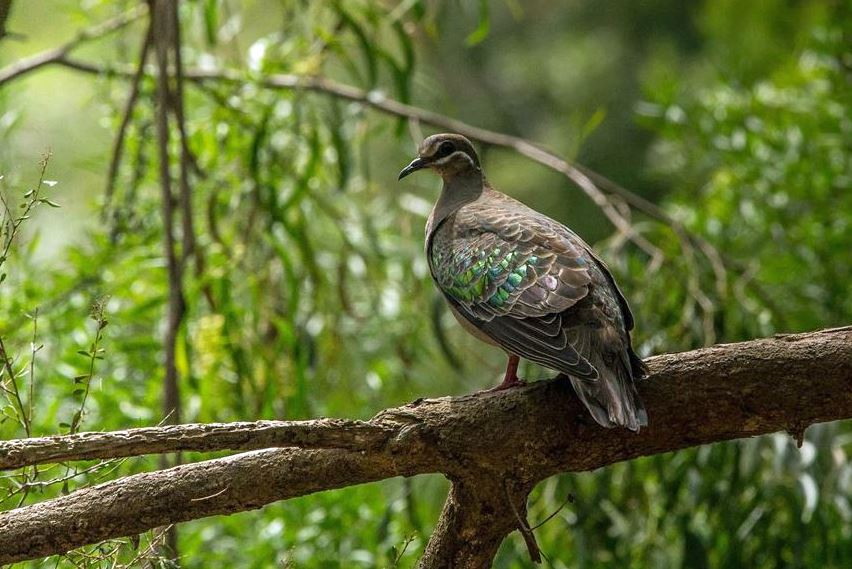
When the light is right, no prizes for guessing why it’s called a “Bronzewing”
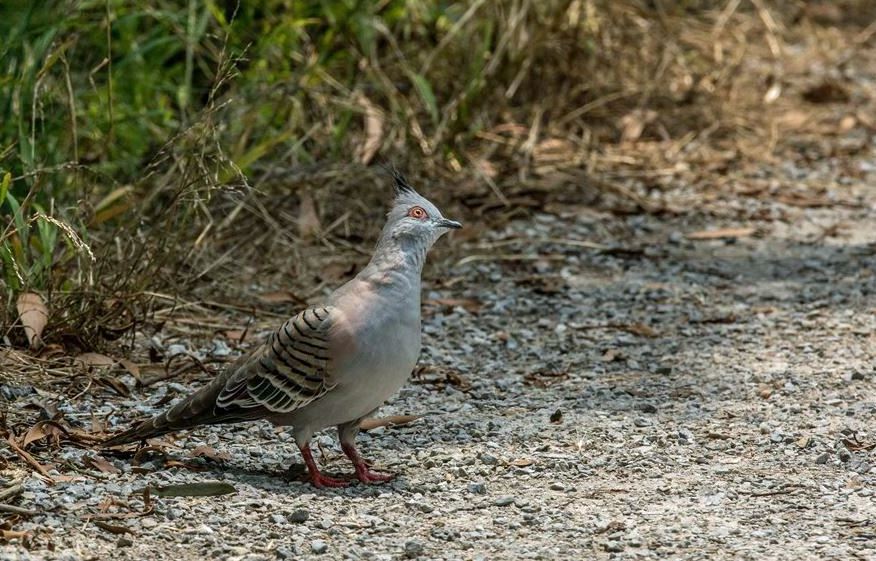
A Crested Pigeon – look carefully!
Corridor News
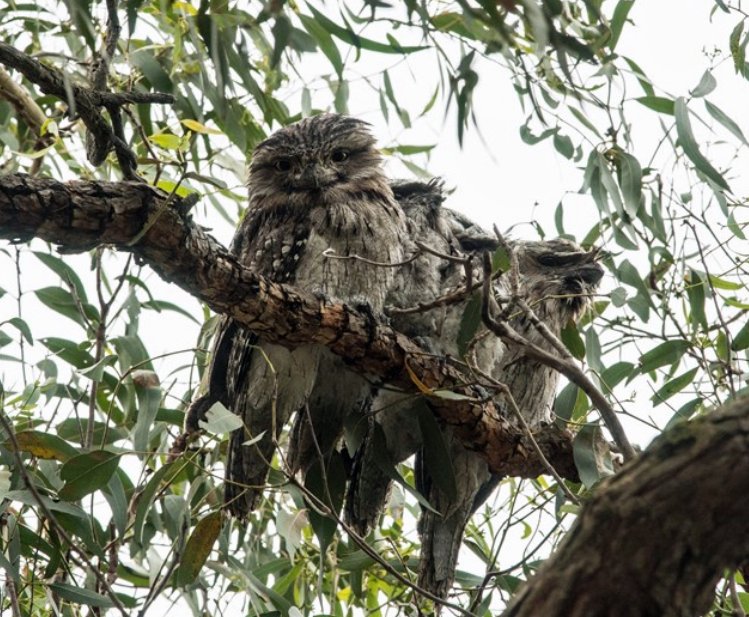
Tawny Frogmouth family in Linum Street
- Planning Amendment C219 proposes to introduce the SLO9 permanent tree controls to protect trees and the landscape character of the municipality – which would be good news for protecting and extending our park’s corridor.
- An Independent Panel Hearing has now concluded – hearings were held in December.
- The Panel has recommended that a modified version of the SLO9 control become permanent. This recommendation will go to Council for its decision and then to the Minister for Planning for approval if adopted by Council.
Corridor Sightings
- Friend Lisa sent us her photo, taken on her iPhone(!), of a Cowboy Beetle (Chondropyga dorsalis) in her garden:
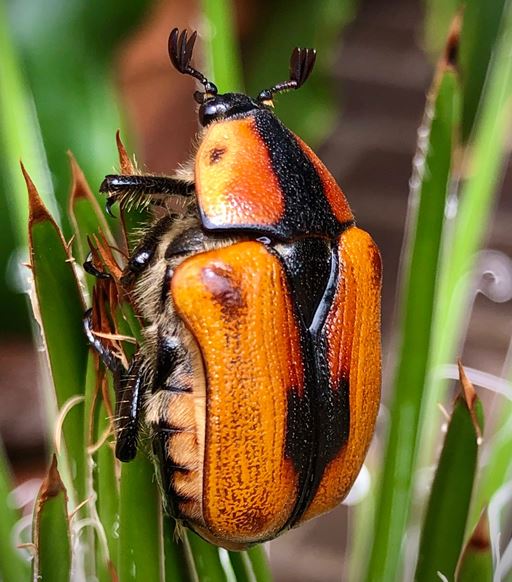
- Strangely enough, the author found one the next day in the park! Although they can be found in dry forests/woodlands and suburban areas, they are most common in coastal areas.
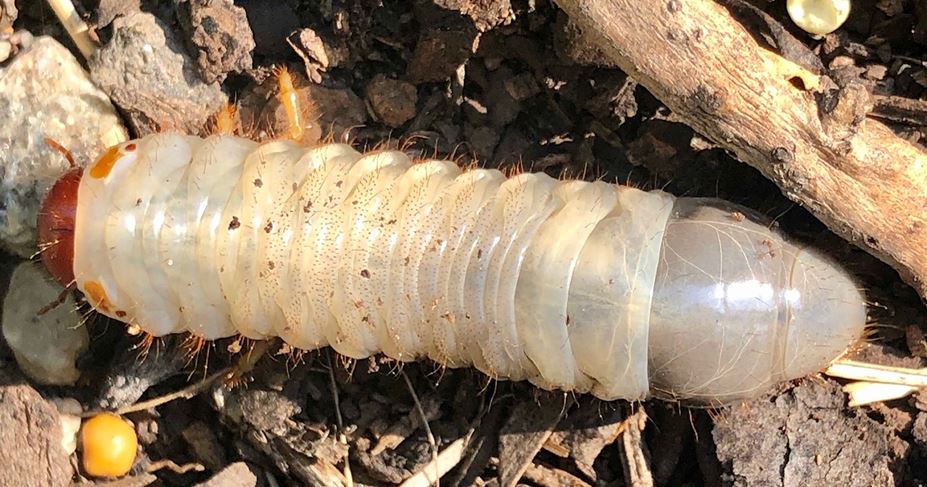
- The larvae feed on dead and decaying wood and the adults feed on nectar. They are an Australian species of scarab beetle and Lisa’s was about 3cm long. They are not dangerous and not considered pests. This is Lisa’s photo of the larva form:
- Our Plant and Weed of the month have been held over this month due to there being too many items on last meeting’s agenda!
 Blackburn Creeklands