Council Projects Underway
- Two of Council’s planned construction works for the park this year started in the last fortnight:
Furness Park Playground
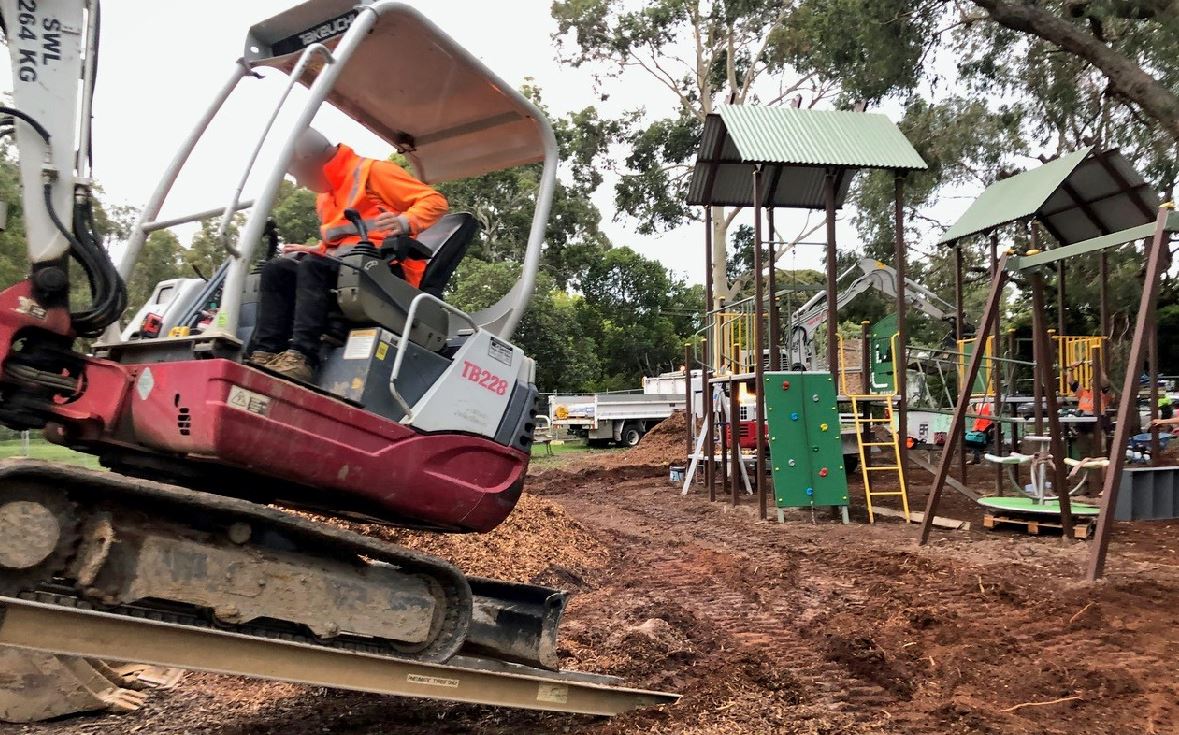
- The Furness Park playground has been fenced-off, the old swings removed and the redevelopment is under way as shown in Andrea’s action shot:
Laurel Grove Storm Water Treatment Project
- Tree removals for the new wetland project (aka Laurel Grove North Drainage Treatment Project) in the area of the sediment trap have also been undertaken.
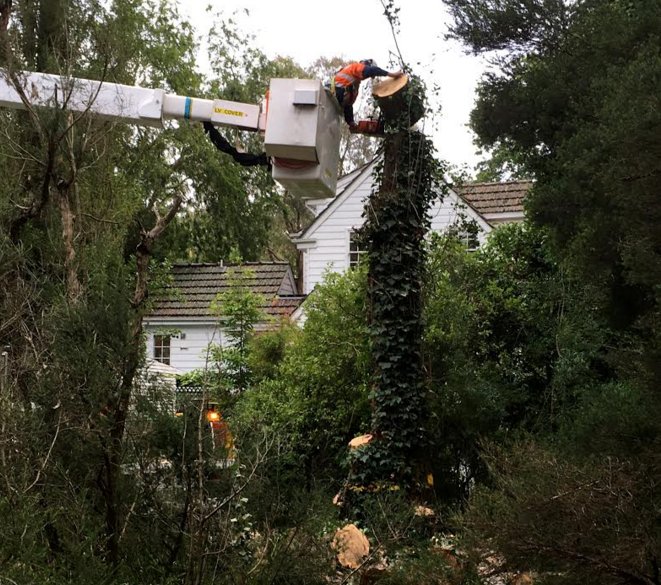
- These included a Poplar and three non-indigenous eucalypts in the area where the sediment trap is to be built. Friend Geoffrey’s photo shows one of the trees being brought down in segments.
- Please see our earlier notification for more details.
Maintenance Team News
- Our Monday morning Maintenance Team has been busy during the month:
- Finishing a first pass of the previously unweeded area just west of the Billabong; then undertaking a sweep from there up to the Noticeboard.
- Weeding around the north side of the Laurel Grove bridge, watering some young plants struggling after those hot days earlier in the month and hand-weeding a fairly recently planted-up bed on the south side of the creek nearby.
- Returning to Blacks Walk – weeding along the Creekside path towards Middleborough Road – mainly targeting the Panic Veldt grass re-establishing itself.
- Attendance has been good – the team seems to have “clicked” really well – and has had welcome extra help from Geoff and Kath as their employment has allowed.
Bird of the Month: Rainbow Lorikeet
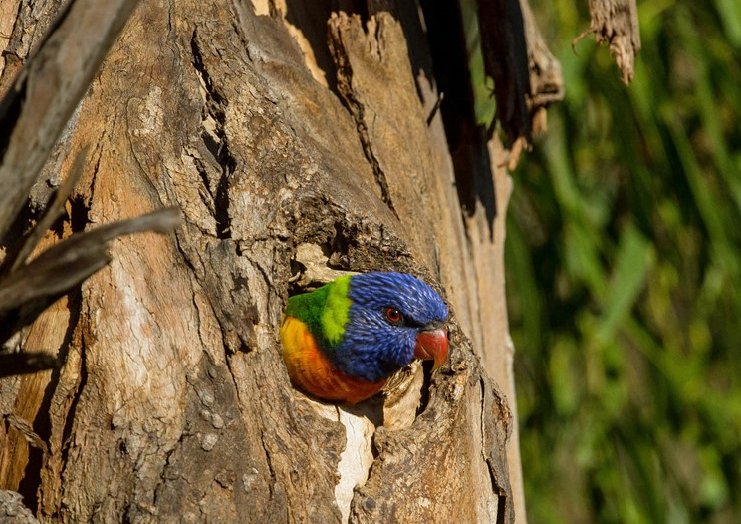
Rainbow Lorikeet nesting in a stag in Furness Park
- The Rainbow Lorikeet is probably our best known and definitely the largest and loudest Lorikeet in the Creeklands. A fairly recent ABC news article quotes Sean Dooley (editor of Australian birdlife magazine) as saying:
“Through the BirdLife Australia’s Aussie Backyard Bird Count each year, [which] we’ve done for six years now, the Rainbow Lorikeet has been the number one bird recorded right across the country“.
- That special status is now at some risk. The article reports that bird experts have now decided there are actually six different species of bird formerly known as “Rainbow Lorikeet” including three in Australia. The other three are in PNG and eastern Indonesia.
- The splitting of the species by bird experts has erased the name “Rainbow Lorikeet” from the north of Western Australia and the Northern Territory. Those birds are now named the Red-collared Lorikeet. Looking at our photo above, the light yellow-green “collar” is orange-red on the Red-collared Lorikeet. Similarly, there is a species in the Torres Strait islands called the Coconut Lorikeet. It has slight colour variations and also has a shorter tail.
- We can “breathe easy” though – our local Blackburn birds are still the dinky-di Rainbow Lorikeet. They range from Northern Queensland to Adelaide around the eastern coast of Australia avoiding the drier areas. The (perhaps) less welcome populations in Hobart and Perth were introduced there in the past.
- Other Lorikeets, less obvious in the Creeklands, are the Little Lorikeet, Musk Lorikeet, Purple-Crowned Lorikeet and Scaly-breasted Lorikeet (introduced to Victoria). The Musk Lorikeets are particularly active at the moment often flying overhead at full pelt – they have a shorter tail than their Rainbow cousins. If they stay still long enough, you’ll see their distinctive “ninja” red mask.
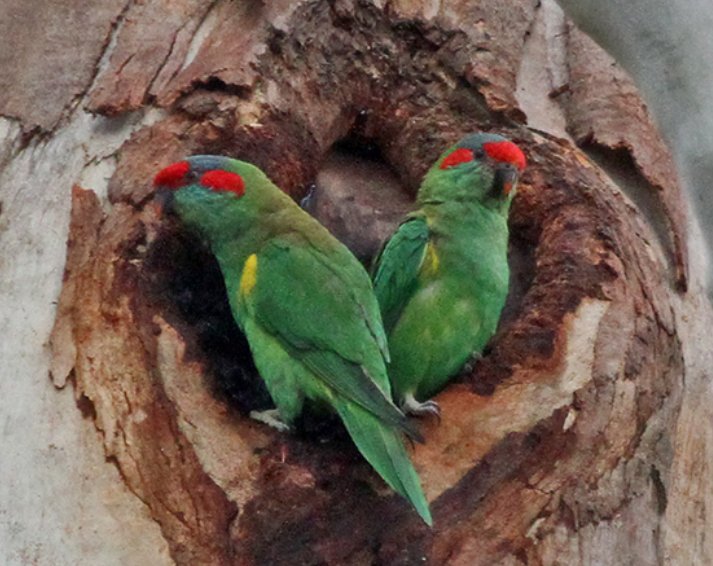
Musk Lorikeets in Hollow (Kalang Park courtesy Ian Moodie)
- We’ve also been lucky enough to spot a pair of Little Lorikeets during the month – who seem to fly even faster but not in larger flocks:
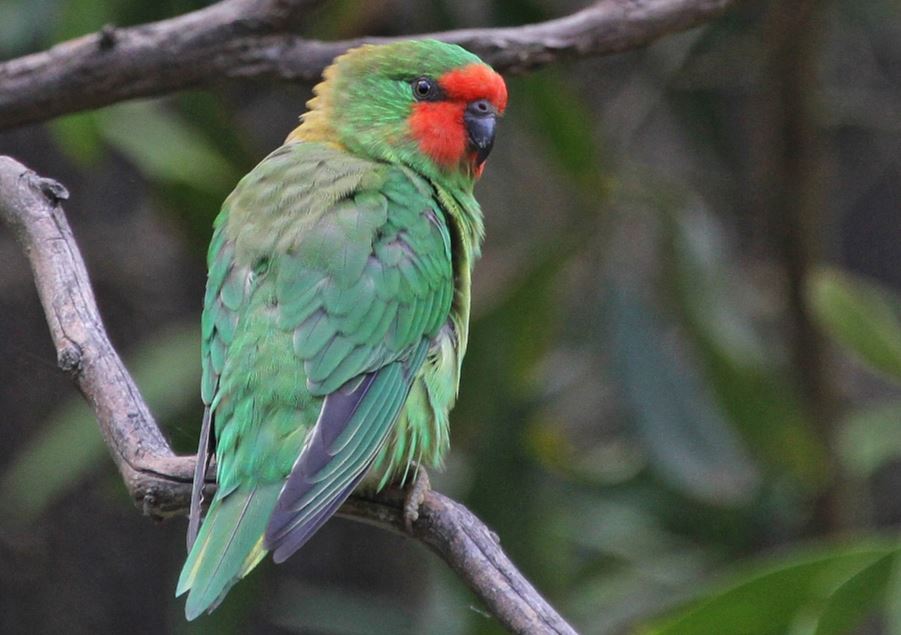
Little Lorikeet (photo courtesy Ian Moodie)
Sightings
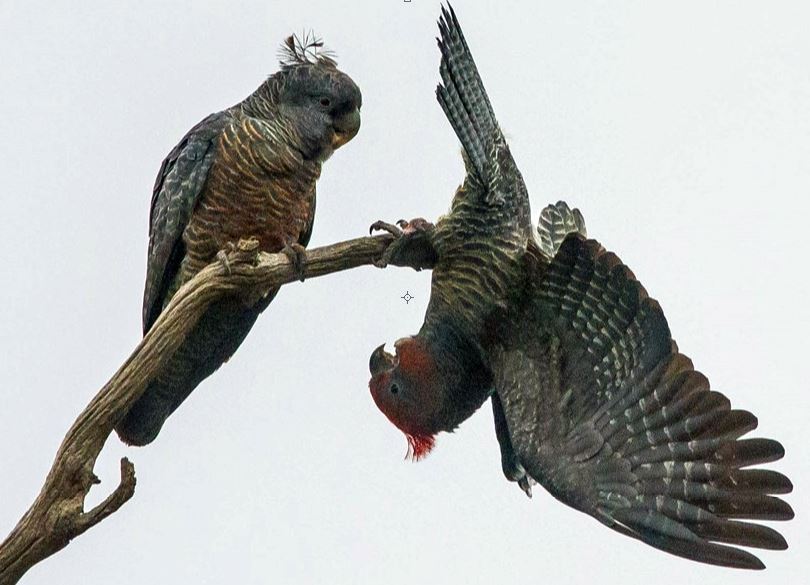
- On a recent project Bird Survey in the park, we were fortunate to be visited by a flock of eight Gang-gang Cockatoos who settled on an old stag in Blacks Walk for a spot of preening and (apparently) play. Luckily, Ruth, our regular photographer was leading the walk with her camera at the ready. This shot seems to show a young male falling head-over-heels for a young female (or is he simply showing off?):
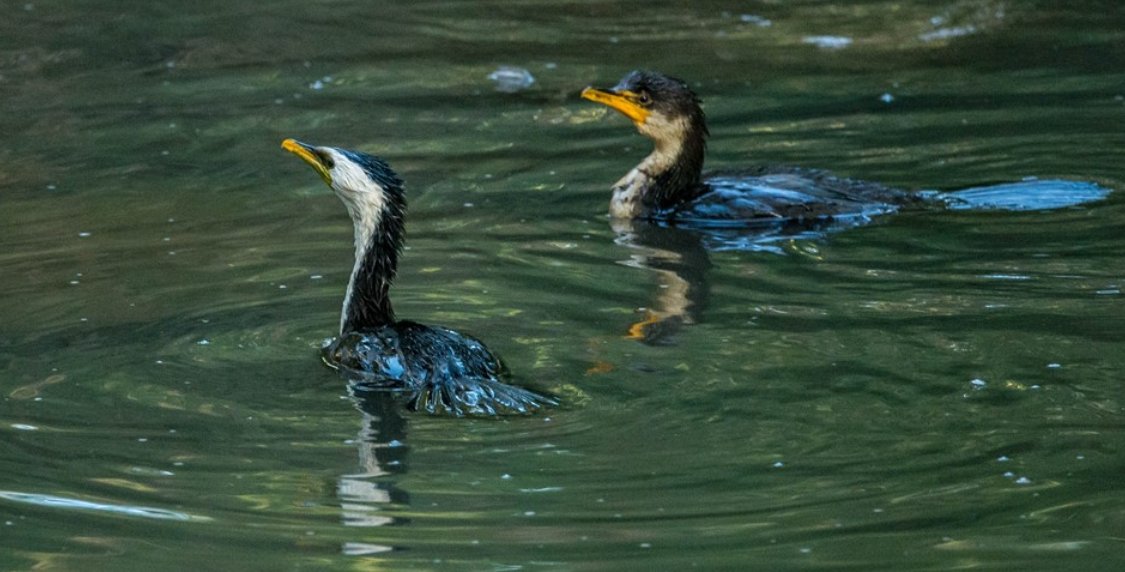
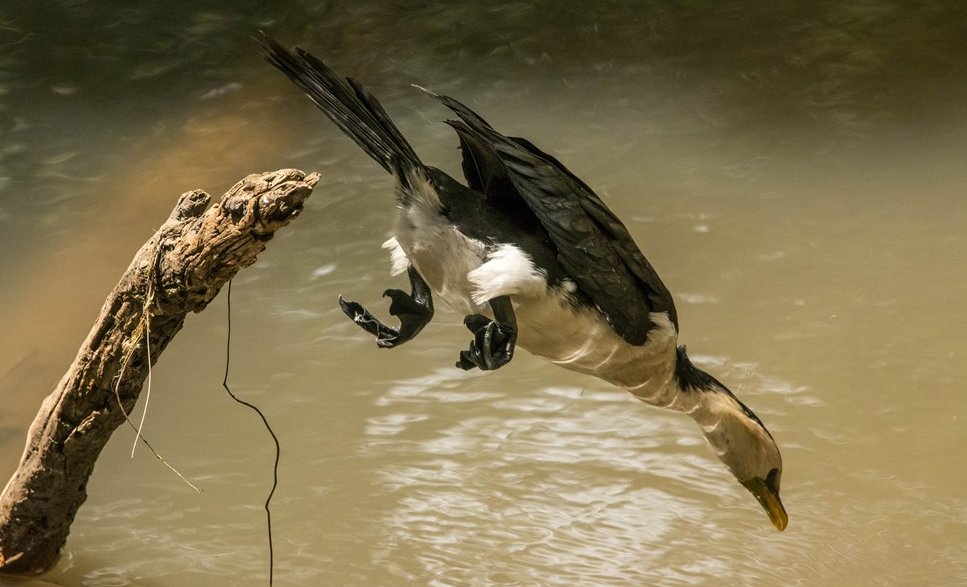
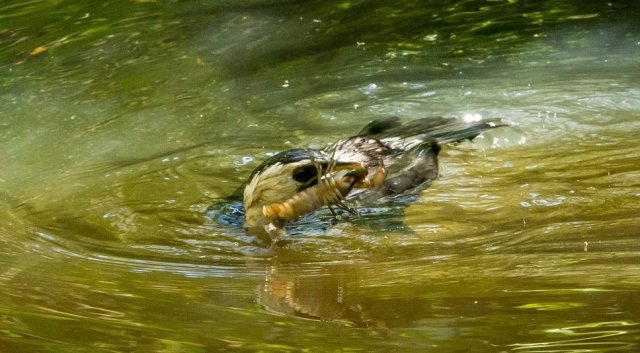
- The Little Pied Cormorant will be familiar to some of our readers – it is quite commonly seen yabbying at the Laurel Grove bridge pond and near the Blacks Walk bridge. The good news is that a juvenile (with the blacker head) has also been spotted recently as Ruth’s picture shows:
- We couldn’t resist showing you her pictures of the adult diving into the creek and also successfully catching a yabby:
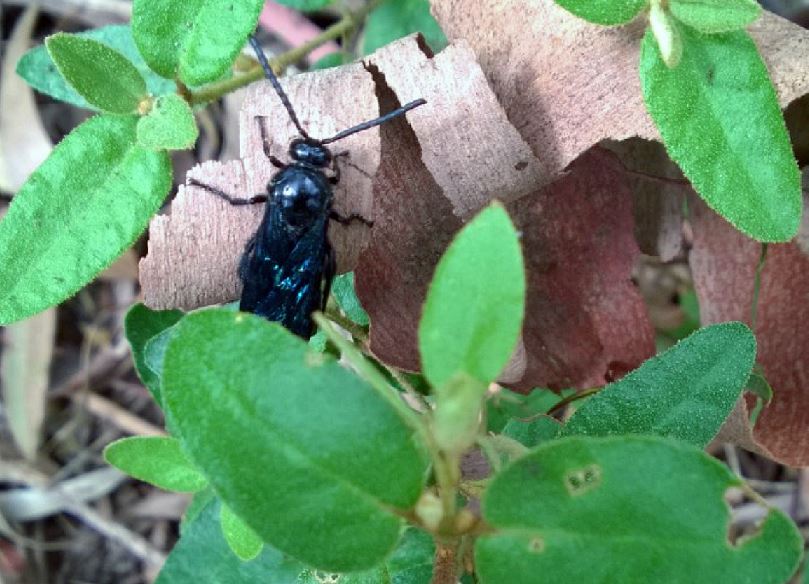
- One of our weeders was attracted to the creature below when he noticed its entire back appearing to be an iridescent sky blue. However, after fumbling around for his trusty mobile phone, the light/direction changed and we can only see hints of the blue. This is a Black Flower Wasp (in Blacks Walk as it happens) – quite a large wasp that usually feeds on flower nectar. The females can sting but rarely do so because they are not aggressive.
- Ruth recently took this shot of another nectar feeder in Blacks Walk:
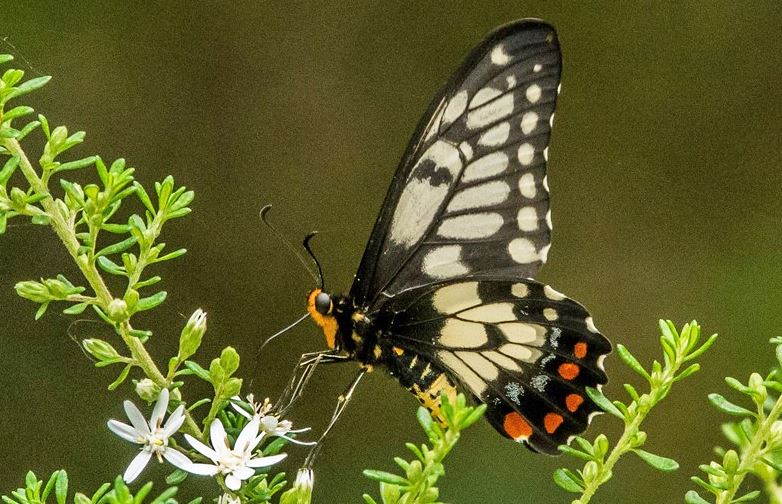
- This is called a Dainty (or Dingy) Swallowtail – they were not recorded in the park until 2018. The range of this species has steadily increased around SE Australia to South Australia because of its liking for horticultural citrus – the larvae feed on citrus trees.
- We’ve been improving our bird sightings database and are now able to record individual sightings – so would welcome reports from the community. If you see something interesting, please do let us know. The database was used to record our Autumn and Spring Bird Survey results. It has been extended recently to record sightings from special projects and we would like to take it to the next level to include ad hoc sightings. Simply e-mail BlackburnCreeklands@gmail.com – preferably with a photo/description and any other details – eg was it feeding?, time of day, weather etc.
In the Corridor
- We have a new “Our Corridor” web page to explain what our “Corridor” is and how the community can contribute. Please take a look – we welcome any suggestions for improvement via e-mail to BlackburnCreeklands@gmail.com .
- For residents lucky enough to live in the “Bellbird area” to the north of the Kalang Park, the Bellbird Residents’ Advocacy Group (BRAG) is reforming. For further information, please visit BRAG’s web-site: https://blackburnbrag.wordpress.com/.
Corridor Sightings
- Bryce, one of our working bee friends, took this shot on his phone of a Black Wallaby (aka Swamp Wallaby) at Blackburn Lake Sanctuary near the Friend’s bridge on the playground side:
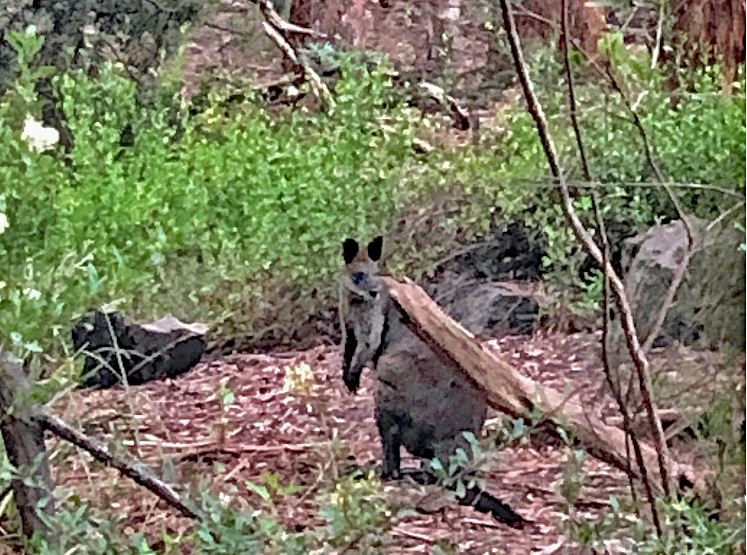
- They browse on some shrubs, ferns, sedges and grasses – active during the day, shy and solitary. He/she will be relocated to a safer home.
- Ruth took this shot of a White-faced Heron in RHL Sparks Reserve after the heavy rains in early February:
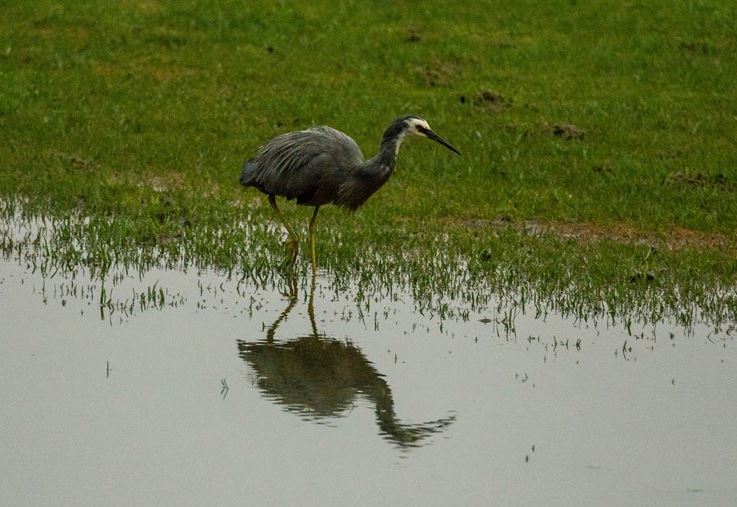
- Sparks Reserve (just over Middleborough Road from Blacks Walk) is a floodwater retention basin and is also used by the local rugby and archery clubs. Of interest to dog owners, it is also a (24 hour) off-lead park – unlike any part of the Creeklands.
Congratulations to our Dog Walkers!
- On the subject of dog walking in the park, a recent Weekend Notes article provides a nice photographic study of dog walking in Kalang Park – please click here to view. We particularly noted the comment “It is strictly a dog on-leash area and all owners complied with that requirement” – our dog walkers should immediately pat themselves on the back …and pat their dogs too! Well done…
- We’ll have to let the author, Mr Neil Follett, know that it is not only our ducks who love the new pond:
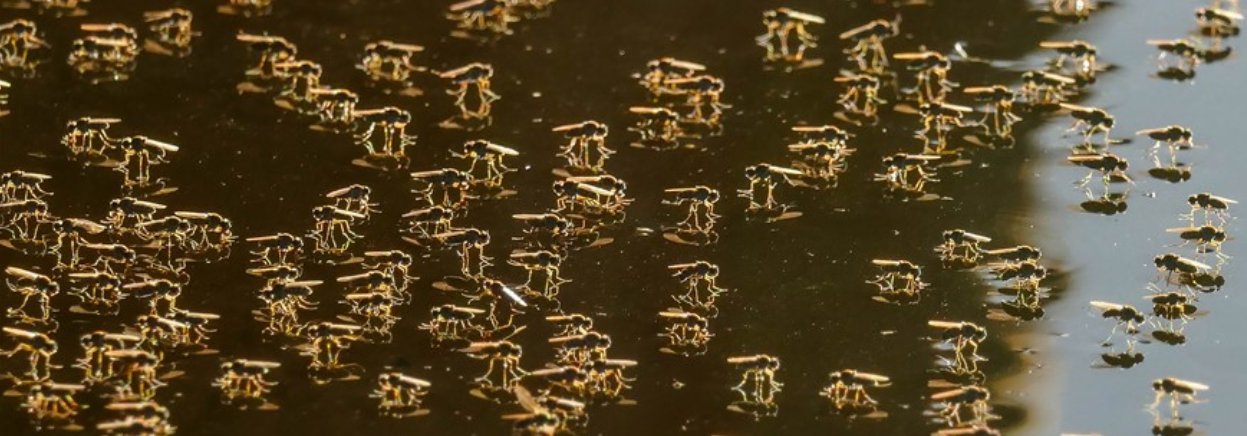
So do insects (and insect feeders!)
For your calendars…
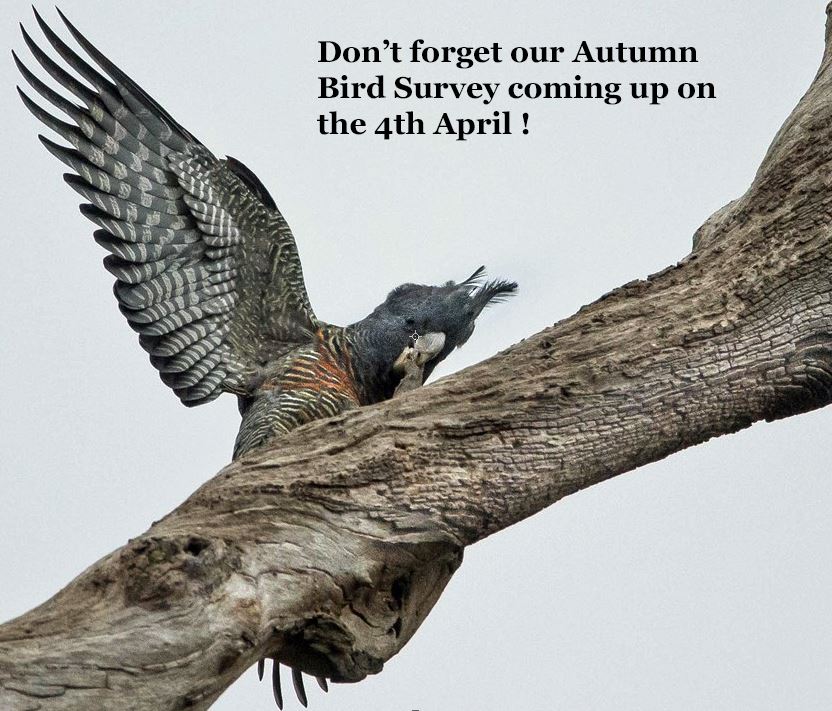
- Come and join the Gang(-gang). Please click here for details…
 Blackburn Creeklands