Covid-19 Impacts
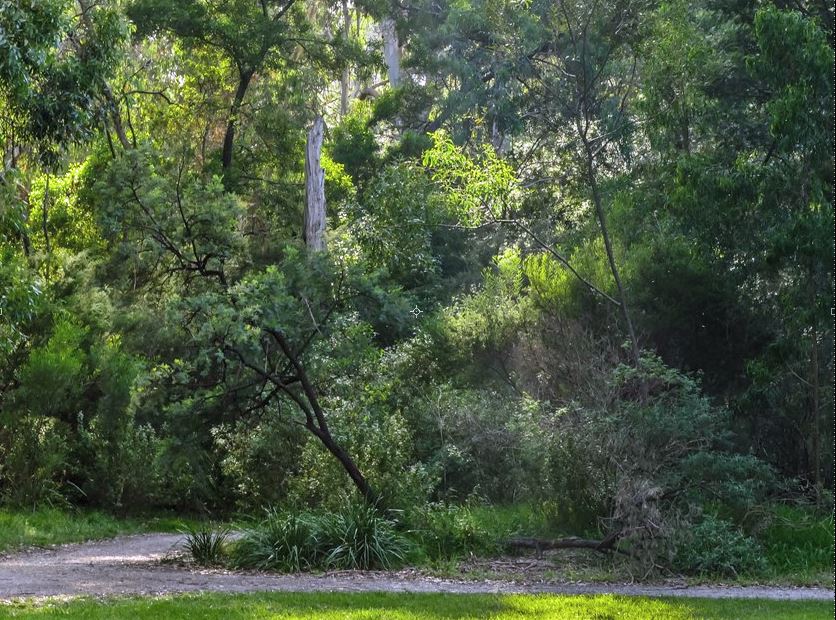
- The park has been (understandably) very popular lately – so much so, it sometimes can be difficult to maintain “social distancing” (1.5m minimum separation).
- Of course, another reason is that the park looks its best as Ruth’s photo above shows. It is great to have the peaceful green of our parks and open spaces for exercise to counter the “stir-craziness” that grows as we stay at home.
- However, we need to use common sense, be thoughtful and considerate of others please – whether cycling, walking or jogging:
- If on a narrow track, step to one side, if you can, to allow the other person past.
- Walk on the grass in the lawn areas.
- Cyclists should cycle on the wider tracks only and use their bells politely.
- Hang back and only overtake someone where it is safe to do so.
- Cross the footbridges one-at-a-time.
- Don’t pat other people’s dogs.
- Unfortunately, the Covid-19 precautions have taken quite a toll on park activities in other ways:
- Regular Working Bees: Suspended for at least two months.
- April Bird Survey: Cancelled (was scheduled for Saturday, 4th April).
- Community Working Bees: Suspended.
- Project bird surveys: Suspended.
- Committee Meetings: Conducted virtually over Zoom.
- Plant nurseries, Bungalook and Greenlink, are operating (for now) on a skeleton team basis. We are in the process of dealing with both nurseries and Melbourne Water to sort out our orders and extending our grant period – given that we can’t plant in the park at present.
- At least we can still publish our web news in a safe way!
- Council, its contractors and Melbourne Water are still working in the park – no doubt using modified work practices to protect worker and community health.
What’s Happening in the Park on Council’s Projects?
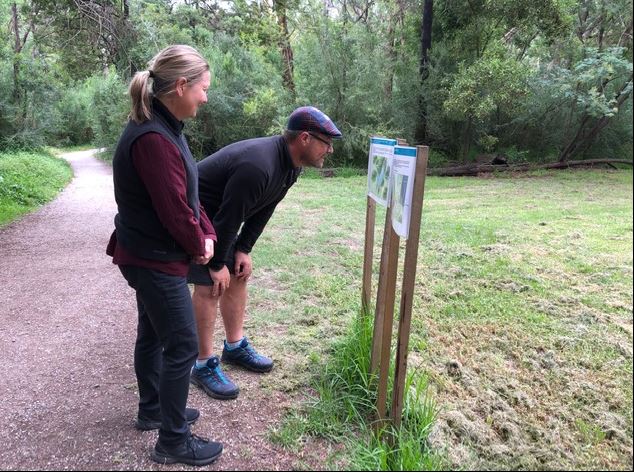
Permission to use granted – thanks Alison
- Council has commenced work on the new wetland project near Laurel Grove North – removing trees in the vicinity of the proposed sediment trap. Some smaller trees have also been removed in front of the Scout Hall ahead of the planned extension to that building.
- The Furness Park children’s playground equipment has been replaced and ready to go. Unfortunately, it can’t be used at the moment due to the need for Covid-19 precautions.
- We are not clear on whether priorities will remain the same in the current situation.
Fungi
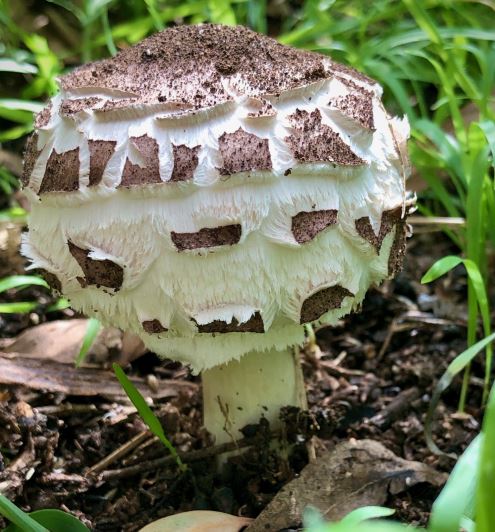
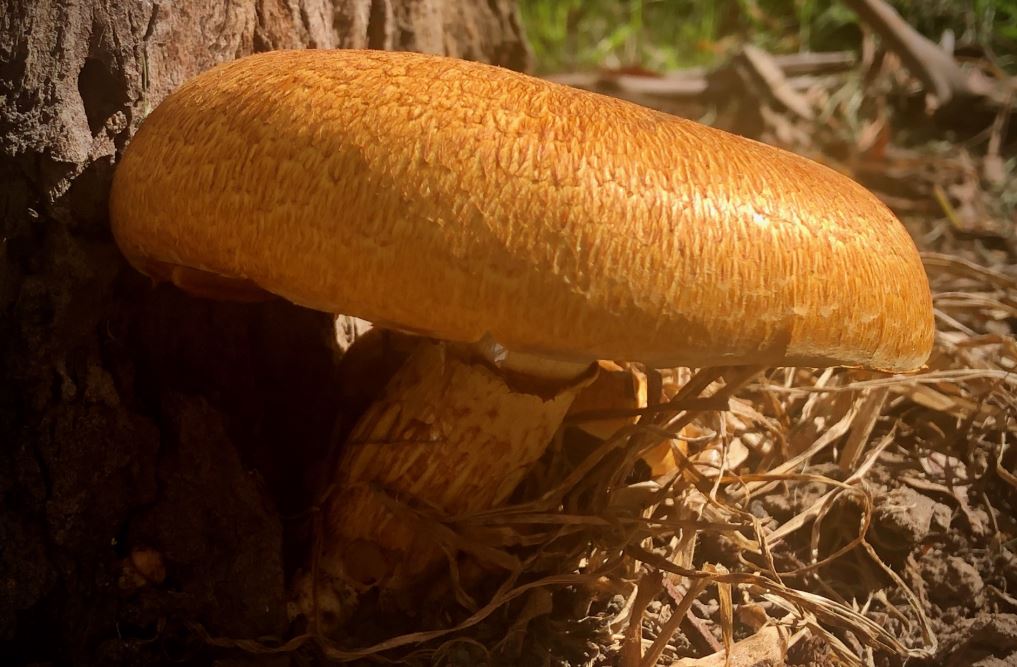
- The warmer and wetter conditions seem to have kicked off the fungi season in the park a little earlier than usual. Here are some of the interesting varieties around snapped by Lisa, Ruth and Mike…
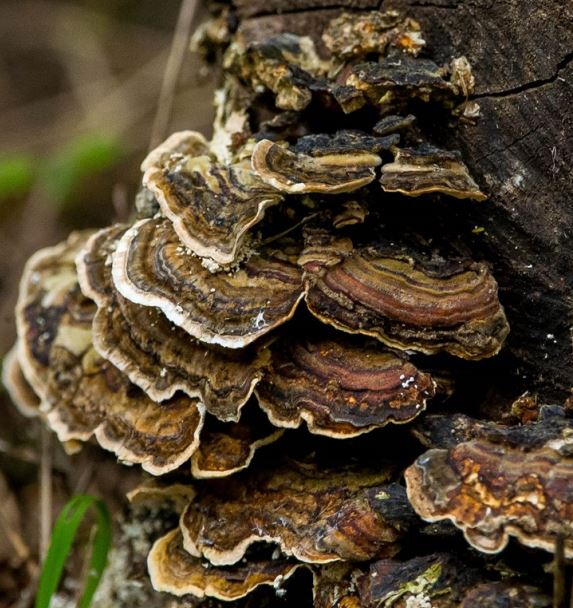
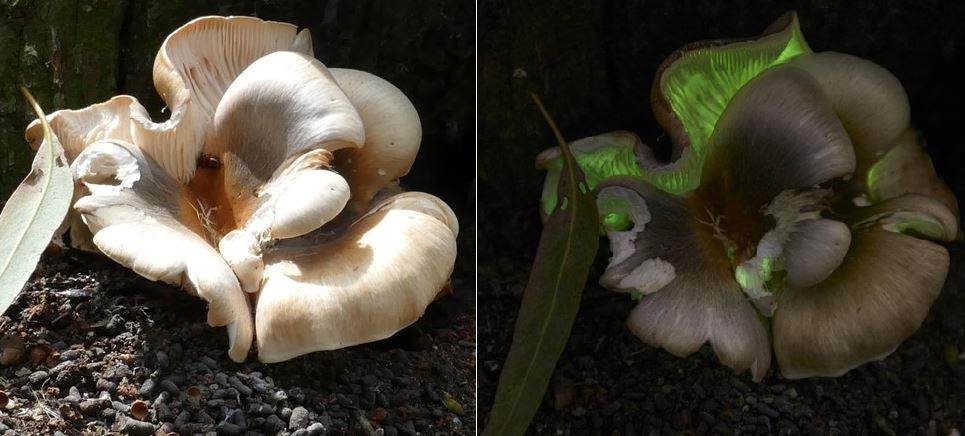
This one (spotted by Mike at Blackburn Lake) lights up at night!
Stags
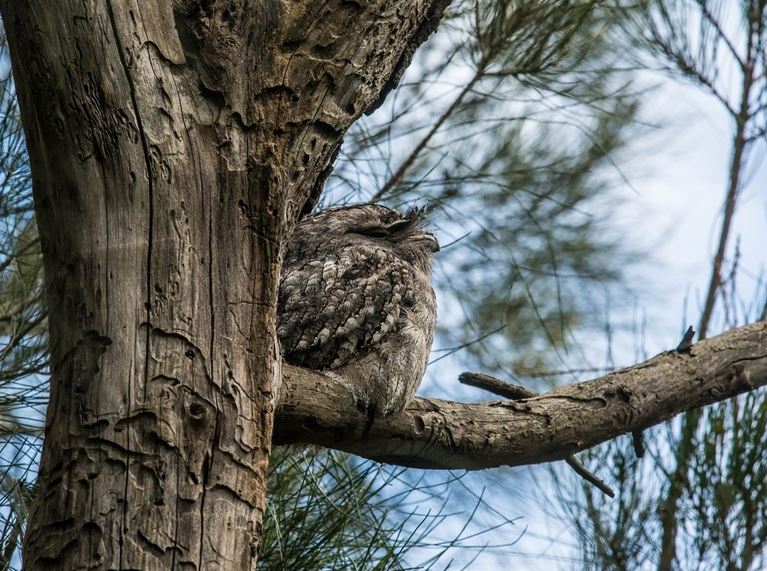
Tawny Frogmouth roosting in a dead Wattle in Blacks Walk
- We have had some trees falling down in the park recently – including one significant part stag/part live tree at the start of the track going northwards towards Gardenia Street near the Main Street bridge. Council quickly cleaned up the fallen tree and grubbed out its roots – Nicky, Megan and John quickly sorted out the damage to several young plants nearby.
- Large, old trees (stags) provide nesting hollows, bark shelter and food for a varied population of birdlife, possums, bats and insects. As the number of old remnant trees decline, so (critically) do tree hollows. As a rough guide, a Eucalypt needs to be about 50 years old before useful hollows develop naturally. It is also the reason dead trees are retained while still standing safely in the park – they continue to provide habitat long after the life of the tree itself is over.
- Because these trees take so long to mature, it is important we continually plant so there are new trees in development ready to take over as our veterans decline.
- In some places (not including our park) where there are insufficient natural tree hollows, artificial “hollows” are cut with chain-saws to assist wildlife.
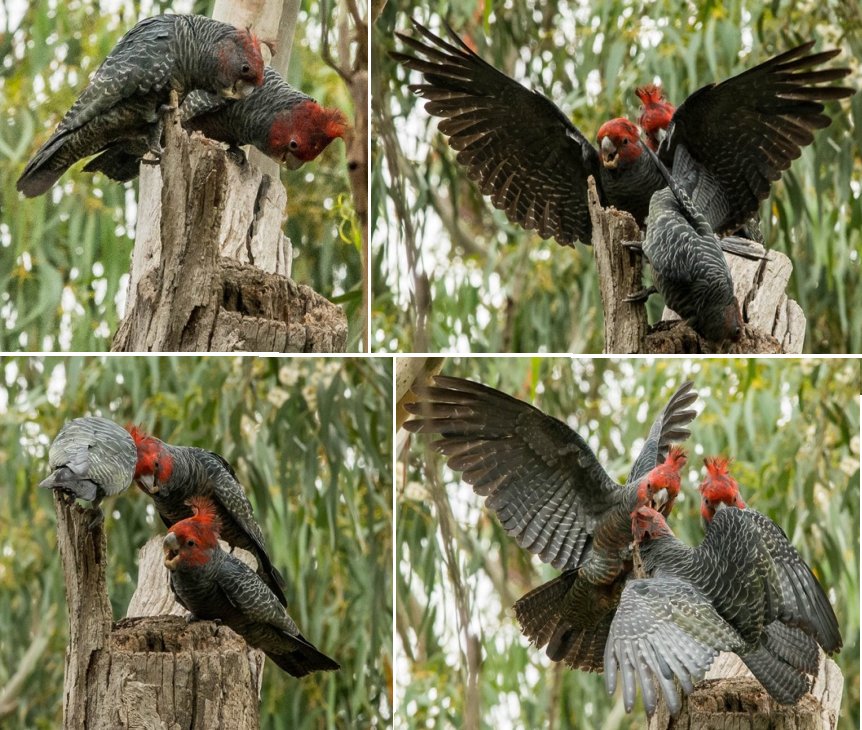
- Finding a good hollow can be exciting! These photos show some interesting reactions to tree hollow inspections by a gang of Gang-gang Cockatoos:
Sightings
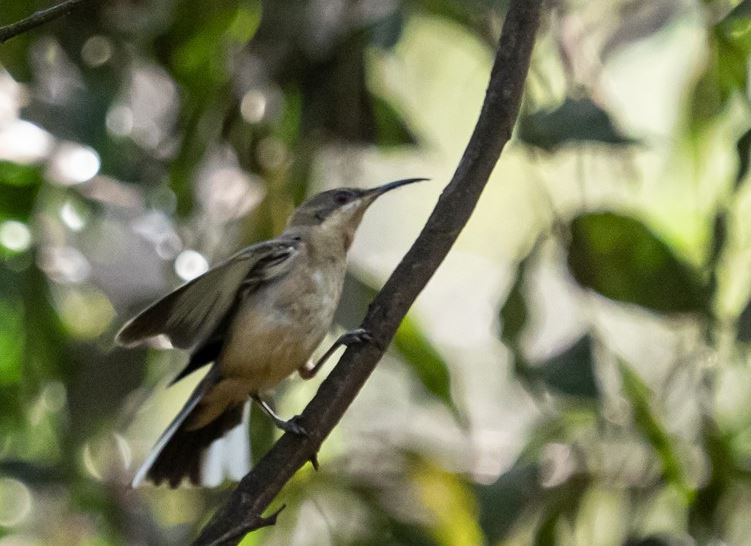
- Greg snapped the above photo of a juvenile Eastern Spinebill in Blacks Walk. Adult plumage is more obvious – generally darker but with brighter highlights. When feeding, they can use their long beak to get into deep flowers for nectar – while flying rather like hummingbirds.
- It’s great to see the Spinebills back in the park – especially if they are breeding here!
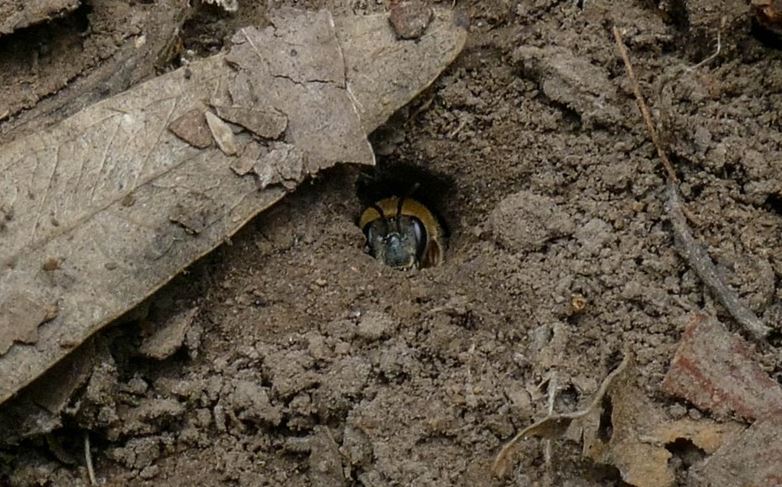
- Eagle-eyed Ruth spotted this native bee, identified as a kind of Leioproctus Bee (Leioproctus fulvus) emerging from her tunnel in Blacks Walk.
- These bees do not live in hives like honey bees – each female has its own personal nest lined with a cellophane-like secretion which hardens after being applied by the female’s tongue.
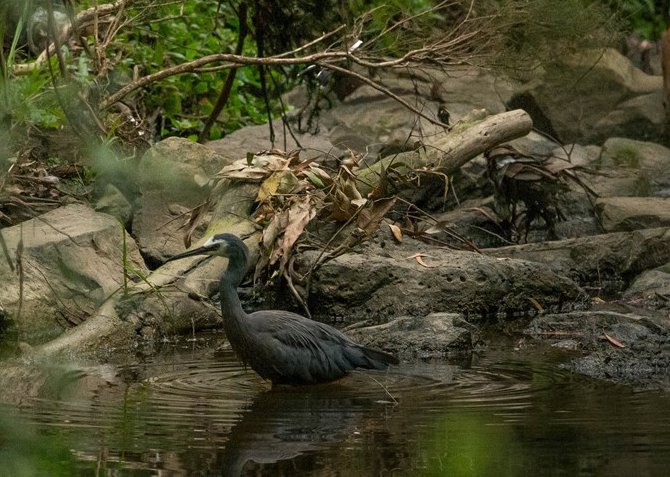
- We seem to have had more than our share of good rains Feb/March – so much so, this White-faced Heron (a wader) – almost needs to grow longer legs!
Late Bloomers?
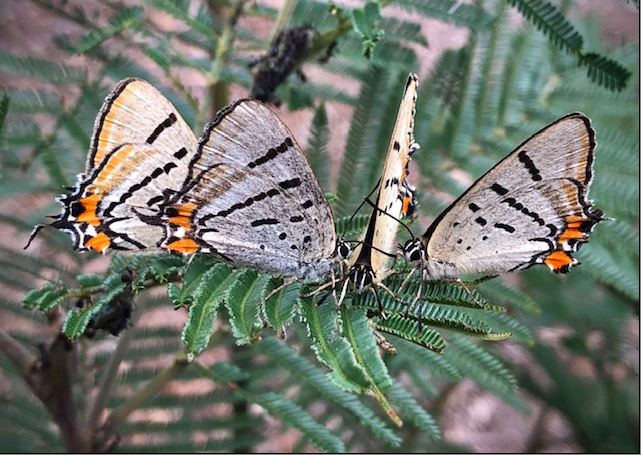
- Wendy, one of our bird watching friends also monitors hatching of our Imperial Blue butterflies. Usually, we see them pupate and hatch around early January – see for example our January, 2019 news. This year, numbers were considerably lower than usual in January.
- Lisa’s photo above shows a later batch of newly hatched butterflies in early March:
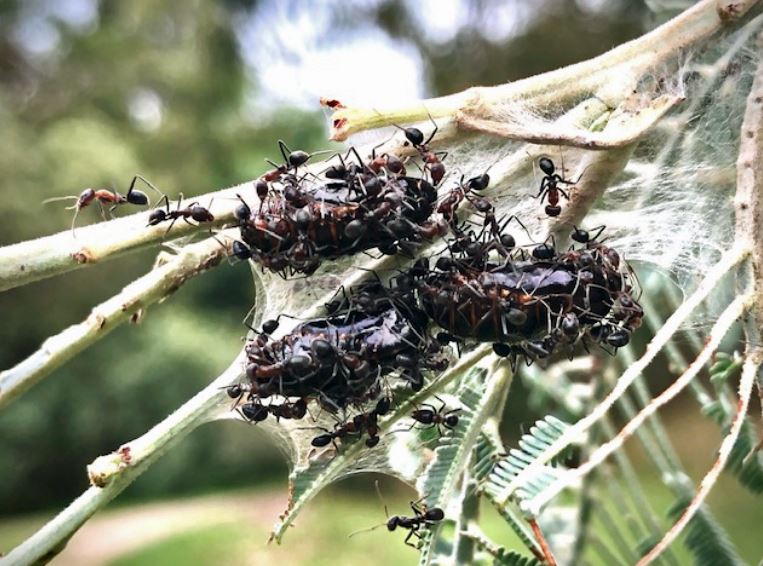
- Another photo of Lisa’s shows the intriguing relationship with ants – they swarm over the butterfly pupae collecting “honeydew”.
- We think that’s amazing enough – but our friend Wendy tells us that two shifts of different species of ants protect the pupae – the Tyrant Ant during the day and the Camponotus Ant overnight! Wendy explains:
The ant that is associated with them is the Tyrant Ant (Iridomyrmex sp.) – an aggressive ant that actively attends them and wards off predators. They are rewarded with a secretion of a sugary substance from the larvae & pupa which is rich in amino acids. This is why the caterpillars feed on nitrogen rich plants such as Silver Wattles. The larvae & pupa call the ants by clicking sounds!
- The name of the butterfly is the Imperial Blue Butterfly (Jalmenus evagoras). Both the male and female have irridescent blue on the inside of the wings.
- Even though we’ve usually seen them in January, Wendy has recorded them hatching as early as December and as late as March. She thinks it is very temperature dependant with hatching usually occurring after hot days. This year, with the heat usually only lasting a day or so, very few hatchings were triggered. She has observed caterpillars around in small numbers throughout the season.
Plant of the Month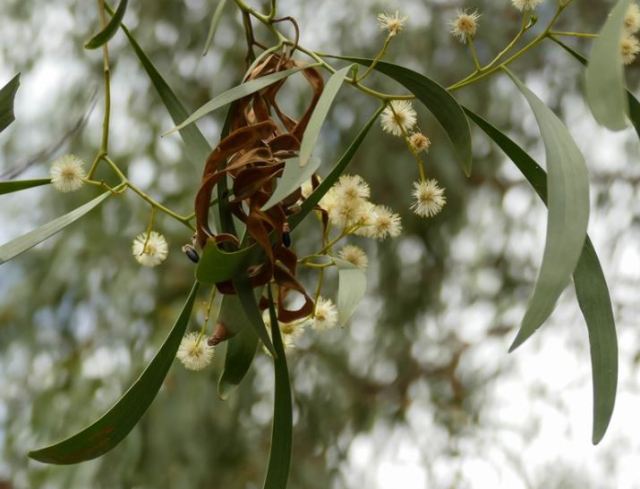
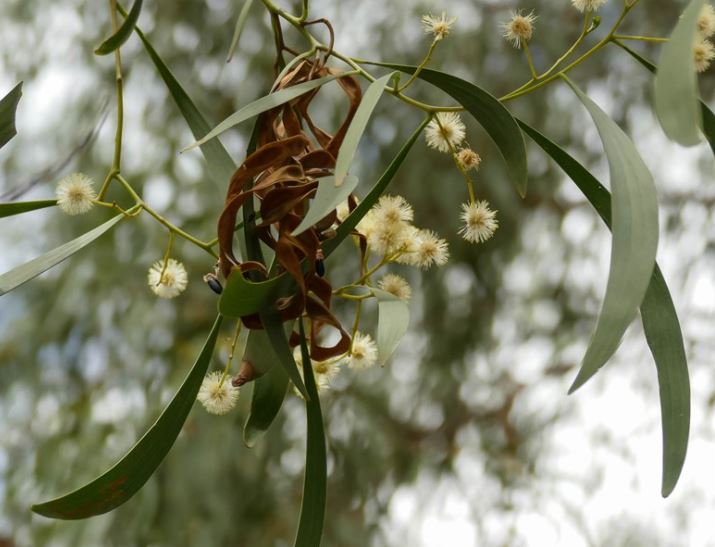
- Many people would know the Blackwood (Acacia melanoxylon) – not to be confused with the Black Wattle (Acacia mearnsii) liked by the butterflies above – from its reputation as a very fine timber for furniture and its prominence in our park. Our plant of the Month is Lightwood (Acacia implexa) which must be fairly closely related – it is also a prized timber for furniture being valued for its finish and strength.
- It was flowering in March – unlike other Creeklands Wattle species which mostly flower in Winter/Spring. Note that its leaves tend to be sickle-shaped, as Ruth’s photo shows.
In the Corridor: Significant Landscape Overlay (SLO9) – Update
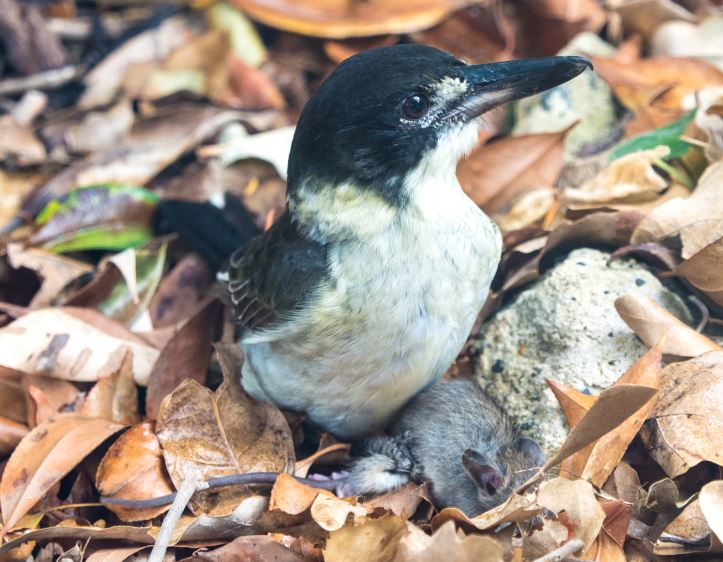
Grey Butcherbird on Pest Control Duty in the Corridor (thanks Greg)
- Planning Amendment C219 to implement SLO9 tree protections in those areas of the municipality not covered by another SLO has been approved by Council. This will be sent to the Planning Minister for approval and formal incorporation into the local planning scheme. Such approvals can take a long time – provision has also been made to extend the current temporary SLO9 control if necessary.
- Based on a Council Officer’s report, fast-tracked planning applications under VicSmart can include arborist advice free of charge.
Vale Bob Whalley
- Friends have let us know that Bob Whalley passed away in hospital during the month. Bob was in his nineties and was one of the 1950s pioneers on the south side of the creek in Dwyer Street.
- Bob was a common sight in the park wearing his hat and carrying a stick while walking his son’s dog. A true gentleman, he occasionally sat in on our Committee meetings and was instrumental in our recommendations to Council that seat heights be raised for the elderly when park seats are replaced (he was concerned for others – not himself). We told Bob’s story and that of the “Dwyer Estate” in our August, 2015 Park News.
The Last Words – Three Thank Yous!
- Thanks are in order for Juliet who has decided to cut back a bit on the work she does in the park. Regular park users will know Juliet as the unassuming lady with the trolley who has done so much in Furness Park (including our “No Mow” area near the playground) – and, more recently, in Kalang Park towards the Main Street end. We thank her for all the work she’s done in our park and for her continuing commitment to the cause.
- Special thanks to our friend Lindy who conducted a very thorough edit of our new “Our Corridor” web page following our request for help in our February edition.
- Thanks too to our friends at Greenlink who wrote a very complimentary article about us in their latest newsletter: https://greenlinkboxhill.files.wordpress.com/2020/03/march-2020-greenlink-news.pdf
 Blackburn Creeklands
Pingback: Park News, June 2020 | The Blackburn Creeklands
Pingback: Park News, January 2024 | The Blackburn Creeklands