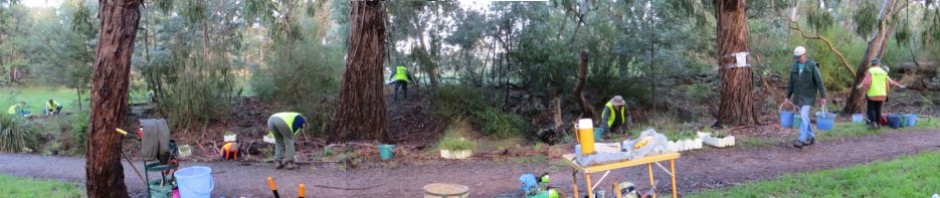
Too Cold!
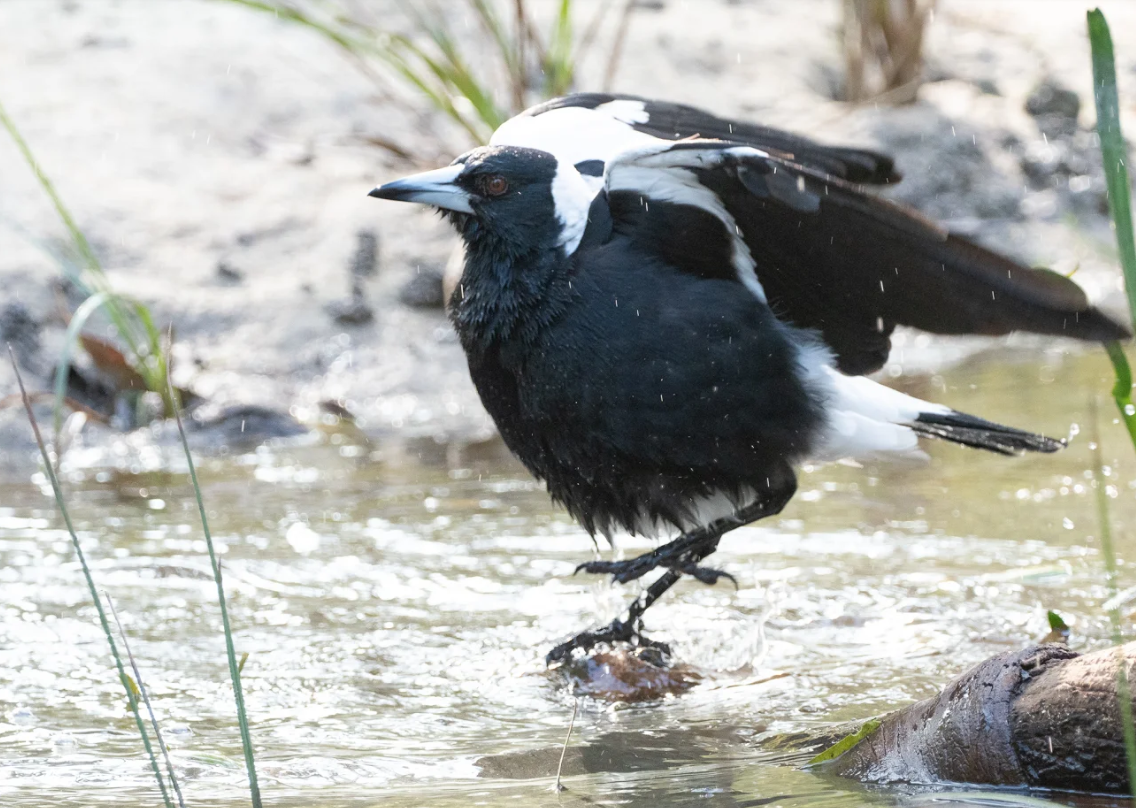
- Welcome to our mid-winter (July) edition of the web news. Greg’s photo shows a magpie “testing the waters” in the new wetland – albeit tentatively apparently…
- Nevertheless, we are turning the corner (hopefully!):
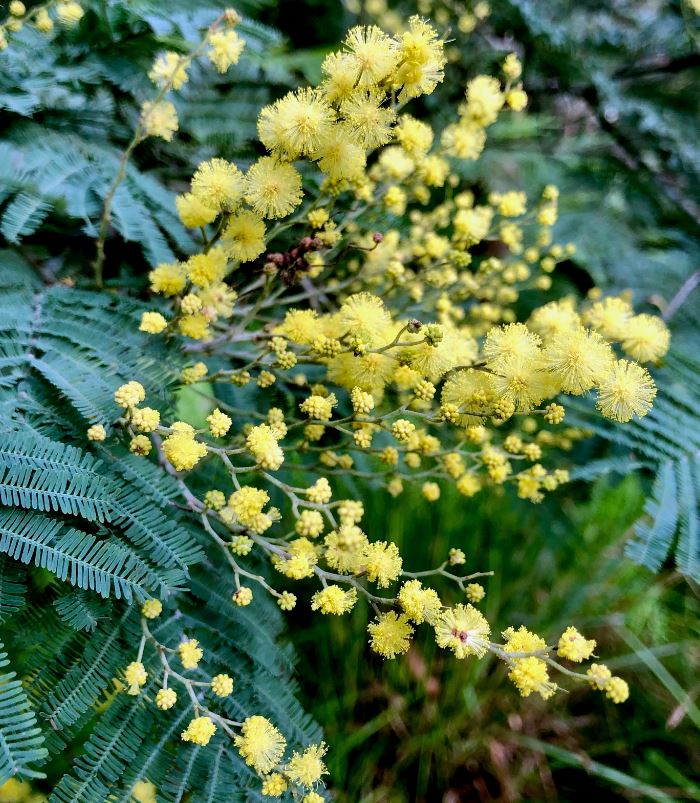
- The wattles are beginning to flower – something to cheer us up mid-winter and from our Covid-19 blues. Lisa’s shot shows one of the early starters – the Silver Wattle (Acacia dealbata) – sometimes also known as Mimosa.
- Please keep an eye on our Noticeboard. The current interesting display on the catchment of our creek and pollution (especially polystyrene) will be replaced soon with samples of our many types of wattles – so you can sort out which is which.
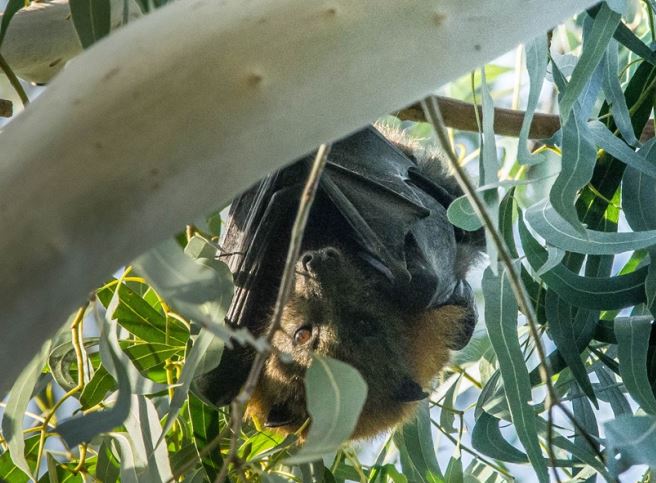
We trust you won’t go batty with the new Stage 4 restrictions
Council Works in the Park
Scout Hall
- Council’s renovations to the Scout Hall are taking (an interesting) shape now:
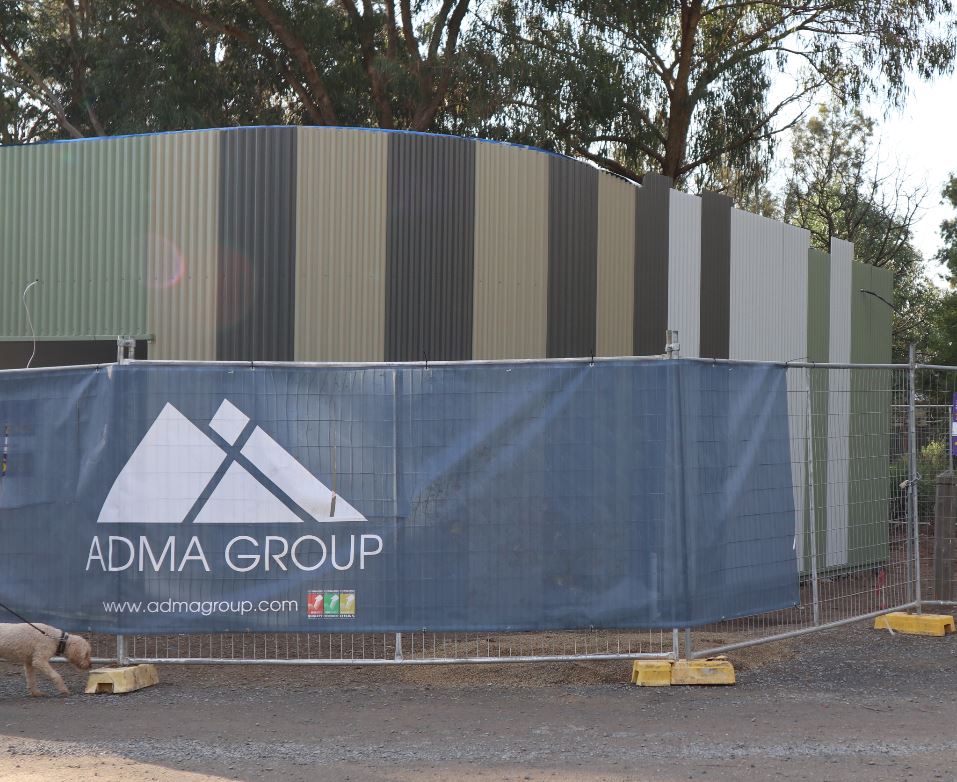
- At least the Covid-19 pandemic has had one bonus – the building process has not impacted upon parking for the Primary School that much!
“Goat Tracks”
- Some tracks have been forged into the park as the park’s usage has increased, social-distancing has been enacted with enthusiasm and kids have sought new BMX challenges.
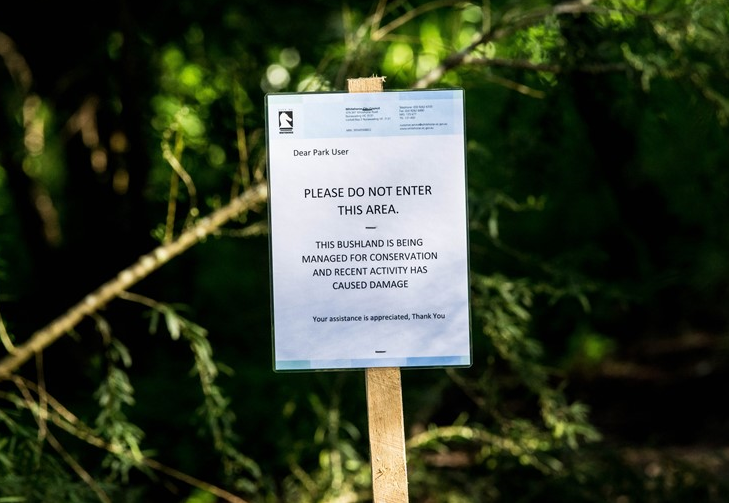
- All this is perfectly understandable – the problem is that some of these “goat tracks” have impinged on areas undergoing regeneration including new plantings. Please be understanding and comply with Council’s advice on these matters.
Rubbish Bins
- Council has relocated and added temporary bins in Furness Park. The increased popularity of our parks in our new Covid-19 world has meant that rubbish bins fill more quickly – so an additional bin has proved necessary in Furness Park. The primary use of our bins is collection of dog poo – there really isn’t a litter problem because most of our park users adhere to the policy of taking their rubbish home and also thanks to our silent brigade of community rubbish collectors.
- We are currently working with Council to optimise the permanent bin locations – it’s a compromise between convenience for park users, convenience for collection by Council as well as minimising the visual and nasal impacts!
Bowls Club Car Park
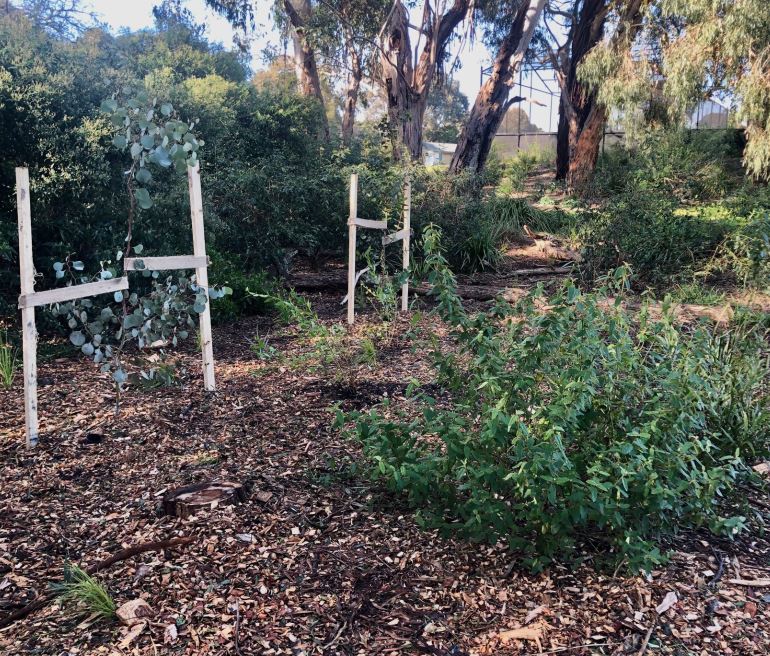
- Council has recently planted up around the car park and tidied up some dead and dying trees following the renovation of the car park earlier this year.
- We are pleased this includes replacement canopy trees as Lisa’s photo shows.
The New Wetland
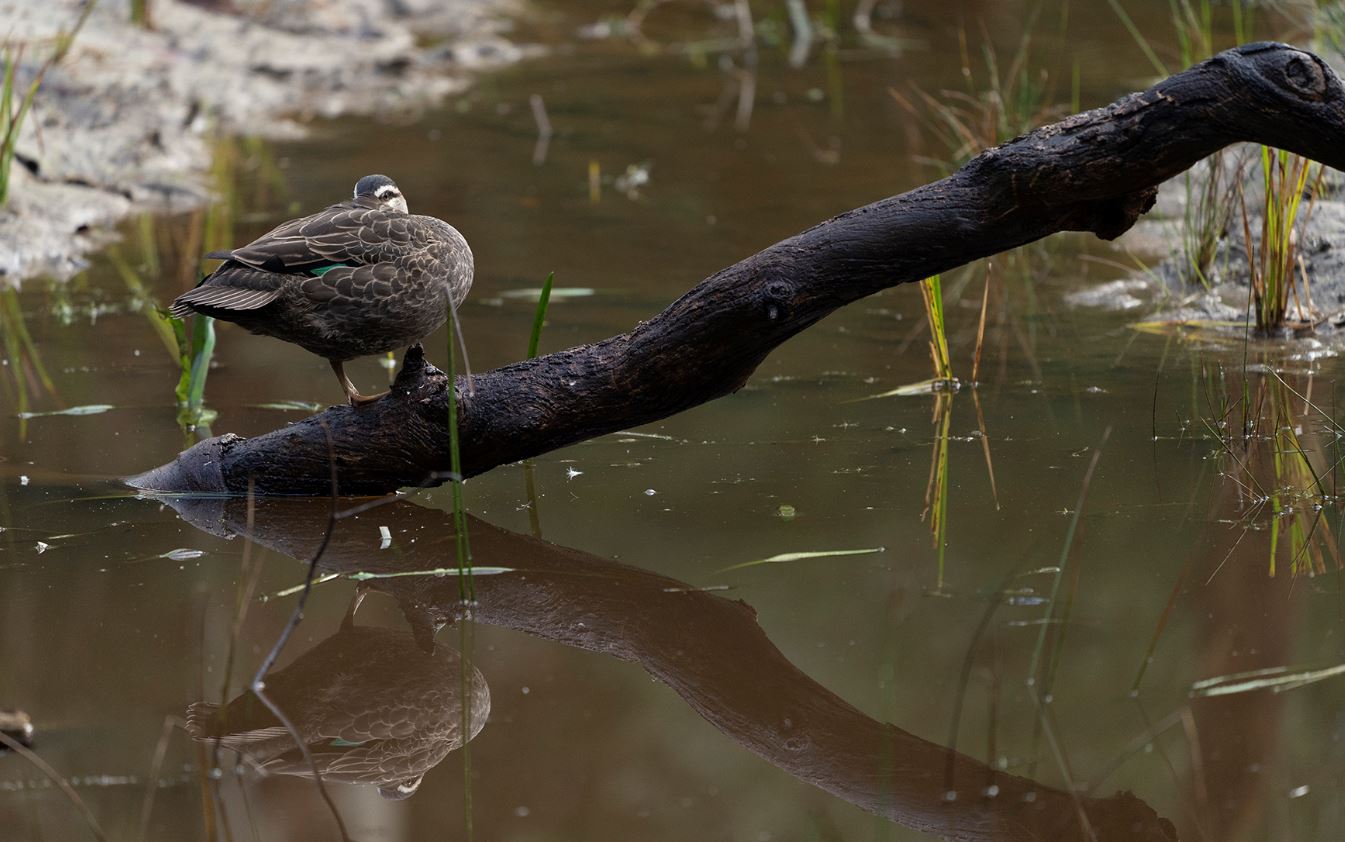
- The new wetland is proving a hit with our local wildlife. Wendy sent this nice shot of a Pacific Black Duck taking advantage of a log “fallen” into the new wetland’s pond – something to reflect on ?
- Wendy reports she’s also seen a Wood Duck pair, a Chestnut Teal pair as well as the Black Ducks on the new wetland. So that’s all of our three duck species taking to it “like a duck to water” as the saying goes.
- Several of our Friends have been concerned that the water level in the old wetland is too low these days. The water level in the combined wetland system (both old and new wetlands) is adjustable at the new outlet. An additional plinth has recently been added there to raise the water level by about 50mm. Further adjustments may be made following further monitoring.
Committee Appointments

- Committee’s formal Annual General Meeting was conducted (over Zoom) on Tuesday 28th July. Our Office Bearers are continuing in their roles as follows:
- Chairperson: Megan Short
- Treasurer: Andrea Ballinger
- Secretary: John McMahon.
- We are pleased to announce that Lisa Groeneveld has been appointed to Committee. Lisa has been involved in our Monday working bees, the project bird surveys and has contributed interesting photos to our newsletters for some time (including this issue). She promises to be a great addition to our team.
- Sadly, Anne Bennett has retired from Committee after 5 years’ service to the community. Prior to joining our Committee, Anne was also a regular attendee at Community Working Bees. Anne has been very creative and supportive – we sincerely thank her for her contributions and wish her well for the future.
Maintenance Team Report
- The Maintenance Team has been stood down again due to the resumption of Covid-19 restrictions. This is not only demoralising for them because they were having so much fun and because there was so much work to do, our site supervisors will have to find their own worms!
- This is what their supervisors look like when monitoring the team’s work:
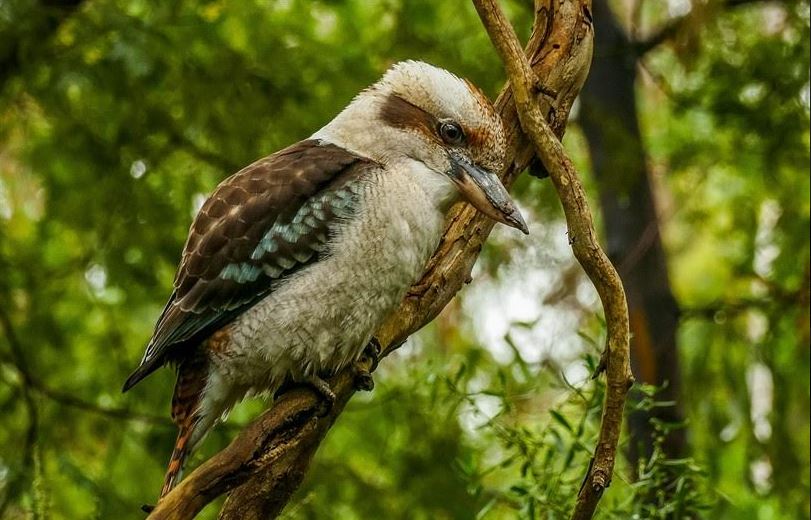
- Have you ever seen a more fixated stare ? They say it’s all about monitoring social-distancing etc – but we know there are other motives…
How do you tell the Sex of a Kookaburra?
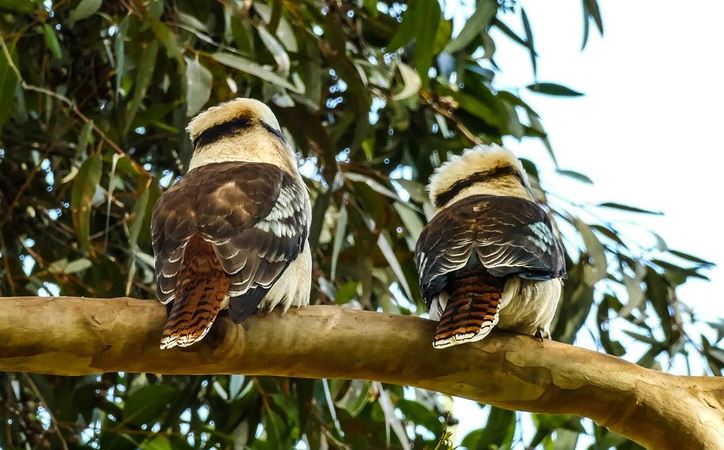
- The differences between male and female Kookaburras are more subtle than in last month’s case of the Golden Whistler. Pat Bingham, one of our Bird Survey leaders has given us the following clues – which Ruth’s side-by-side photo illustrates so well:
- the male is bluer on the wings and blue above rump (see that hint of blue above the tail feathers on the right?)
- the female less blue on the wing and brown above brown rump.
- So, in the photo above – the female is on the left and the male on the right. Also, the male’s coiffure looks a bit scruffier – as you’d expect from any male. Another tip is that young/juvenile kookaburras’ beaks are the same colour (mostly black) – top and bottom. Following Pat’s tips, the “supervisor” pictured in our Maintenance Team Report article above is an adult male – because he has the black/white-pink combination bill.
- Our species of Kookaburra is the “Laughing Kookaburra” (Dacelo novaeguineae) which occurs right down eastern Australia and also in the south of WA. In northern Australia, there is also the “Blue-winged Kookaburra” (Dacelo leachii). The northern male cousins are more strongly blue – including having blue tails – and the females look like our males. The Blue-winged cousins are a little smaller but have bigger bills. They don’t have eye patches and the eyes in adults have white irises – though the juveniles have brown irises like our locals.
Plant of the Month: Cherry Ballart
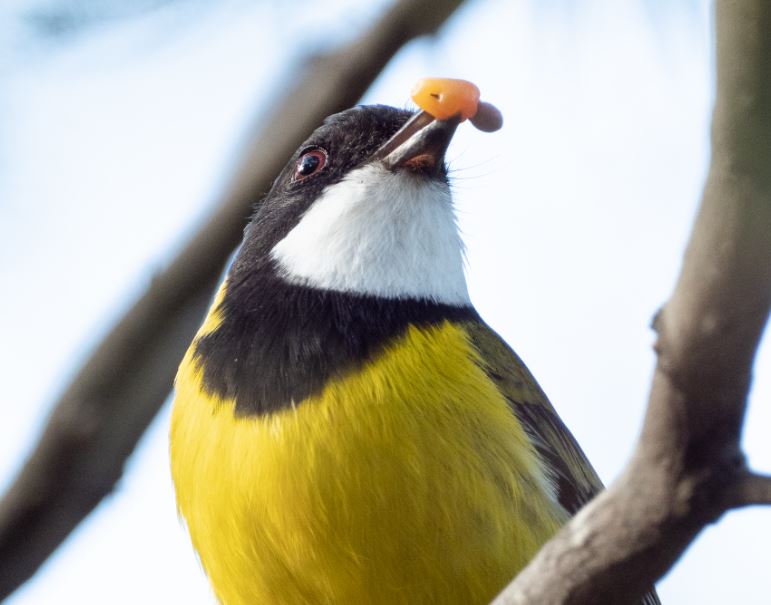
- Speaking of the Golden Whistler, we had a few enquiries as to what food the bird had scored in Greg’s photo from last edition. Well, it is fruit from the Cherry Ballart which is also valued by birds such as the Mistletoebird (when taking a break from the Mistletoe berries).
- The Cherry Ballart or Native Cherry (Exocarpos cupressiformis) is an attractive, indigenous large shrub or small tree which somewhat resembles a conifer. Apparently, early settlers used to use them as Christmas trees for that reason.
- The Cherry Ballart is partially parasitic. It photosynthesises on its own account, but gains extra nutrients by attaching its roots to host trees. Mistletoe tends to grow in the canopy of its host trees – while the Cherry Ballart appears to be a completely separate tree – the parasitic action happening underground.
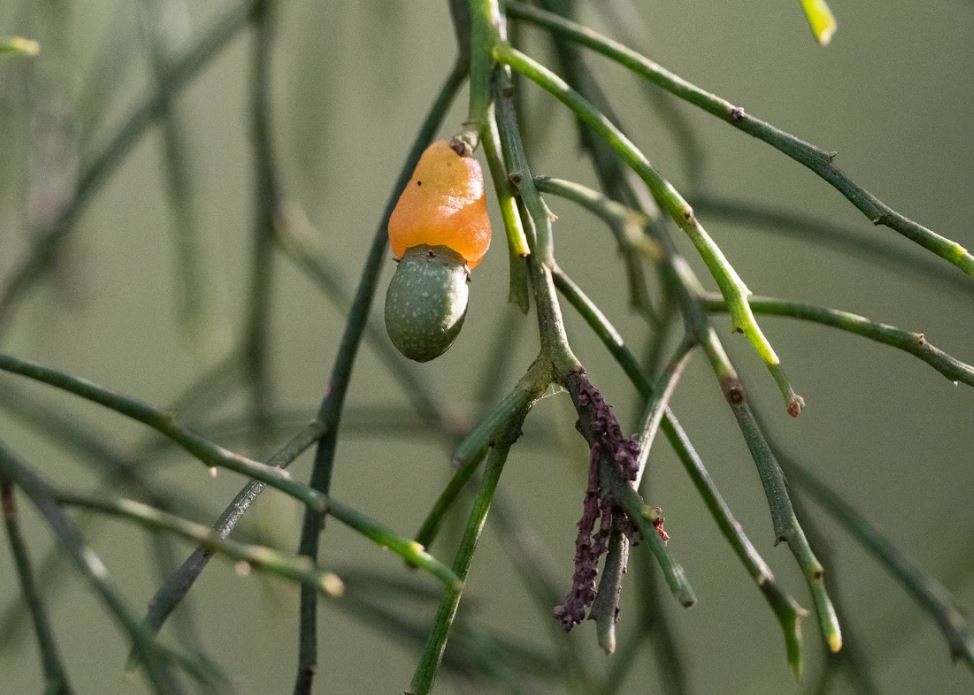
- There are a few in the park – they tend to stand out due to their denser foliage and yellower green colour (rather that blue-green we typically see in the park). The Golden Whistler is holding the “cherry”. Conveniently, the stone of the “cherry” is on the outside of the “fruit”. The real fruit is the round, hard, greenish nut, 4-6mm long, containing one seed at the end of the “cherry”. The sugary, edible “cherry” that the birds want is actually a 5-6mm long, swollen stem (the “pedicel”).
- It turns out that Cherry Ballarts are often biodiversity hotspots. They tend to attract birds, insects such as butterflies, moths, vertebrates such as sugar gliders and foster other plants. This may be because they “improve” their immediate environment. In an interesting article, Gregg Müller, Lecturer in Natural History at La Trobe University, says that research shows they create moderate micro-climates in their foliage, reduce soil temperatures, increase soil water retention, concentrate nutrients in the soil beneath their canopies, and alter under-storey vegetation. They also kill some of their host trees, creating patches with higher concentrations of dead timber providing habitat and more nutrients.
- You won’t be able to get one at our local nurseries or Bunnings – and you are unlikely to have one of these interesting plants in your garden unless it is remnant vegetation or naturally reproduced – because the tree is notoriously difficult to propagate. Just as some plants may need heat, fire or smoke for their seeds to propagate, one (possibly apocryphal) story is that one way to activate the “cherry” seed is to pass it through a chook!
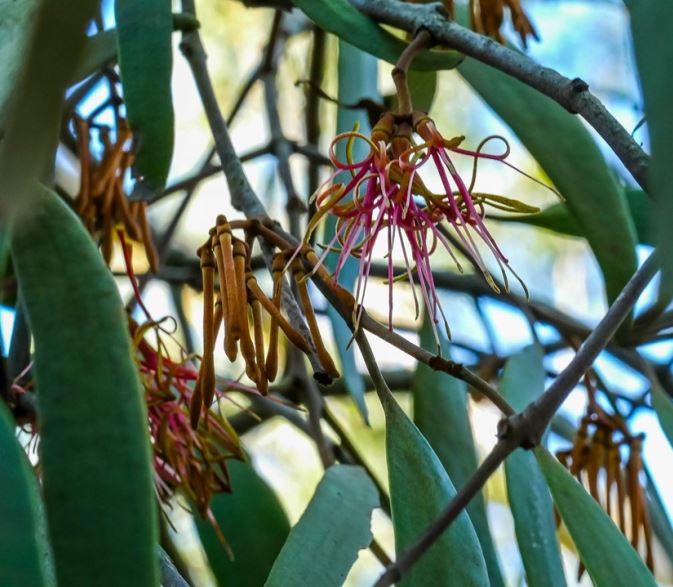
Only known Mistletoe in the park – in Blacks Walk
- By the way, we used to have the Mistletoebird in our park – but most of our Mistletoe disappeared – and consequently so did the bird – losing its habitat and preferred food. Coincidentally, Mistletoe is also a partially parasitic perennial flowering plant, which grows attached to the branches of trees and shrubs in their canopies. The bird mainly eats the berries – other animals enjoy the nectar and flowers.
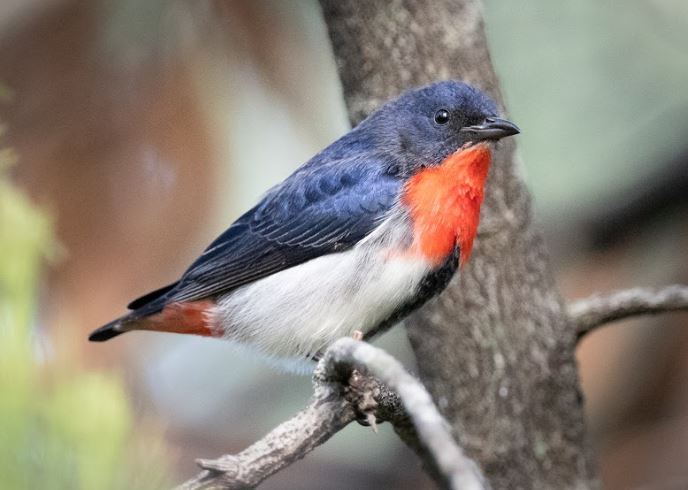
- Both the bird and the plant are still present at Blackburn Lake – Greg’s photo shows what the male birds look like:
-
- Like the Golden Whistler, the Mistletoebird is also strongly sexually dimorphic (the sexes look quite different as we learned last month). The female is mostly grey-brown, paler underneath – though with a red-pink area under the tail similar to the male.
Sightings
- Following our story in last edition concerning the difference between Little and
Long-billed Corellas, clever Wendy managed to photograph both species side-by-side:
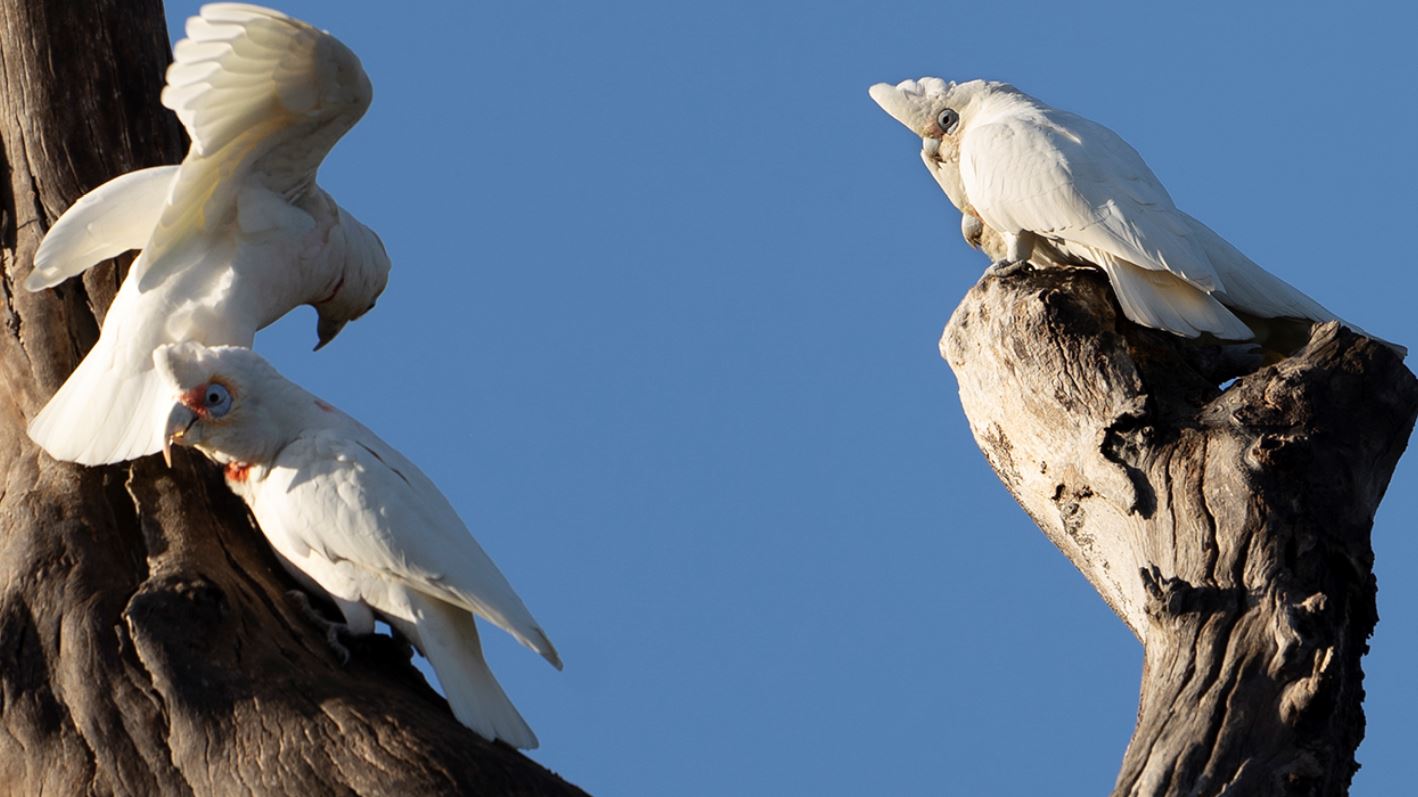
- The Long-billed Corella clearly has a much longer bill. The Little Corella is not necessarily littler in size, but the Long-billed Corella is the beefier, stockier bird. It also has the red “cut-throat” at its neck and more red around the eyes (rather than the softer pink).
- Other interesting sightings during the month have been:
Birdlife
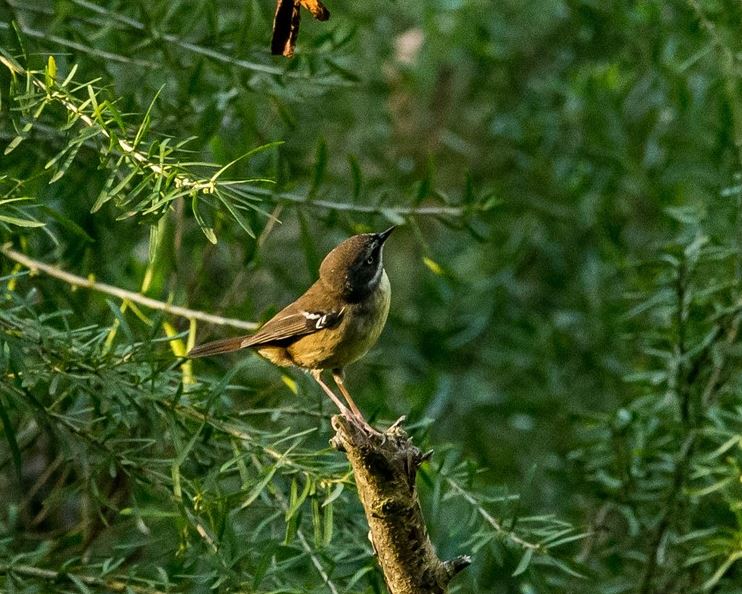
A White-browed Scrubwren in Blacks Walk
Insect Homes (presumed)
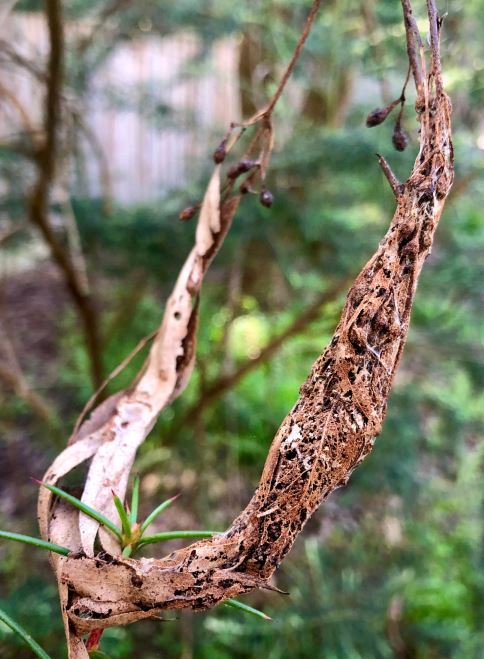
Caterpillars at home ? (thanks Lisa)
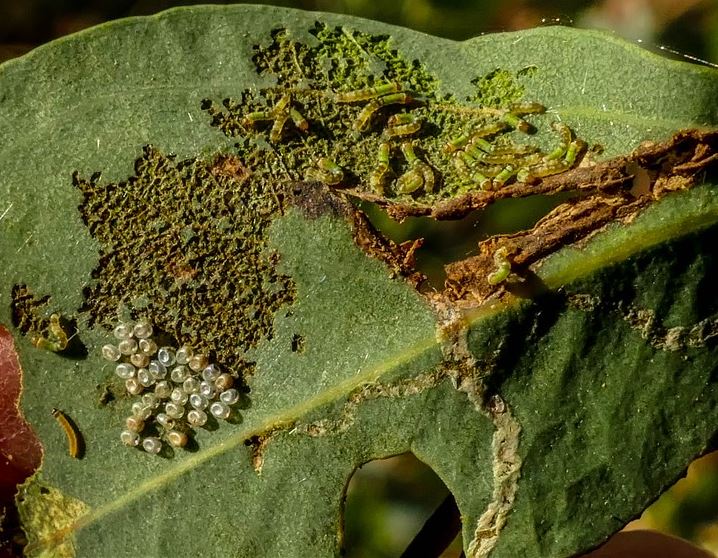
Newly hatched Autumn Gum Moth caterpillars (thanks Ruth)
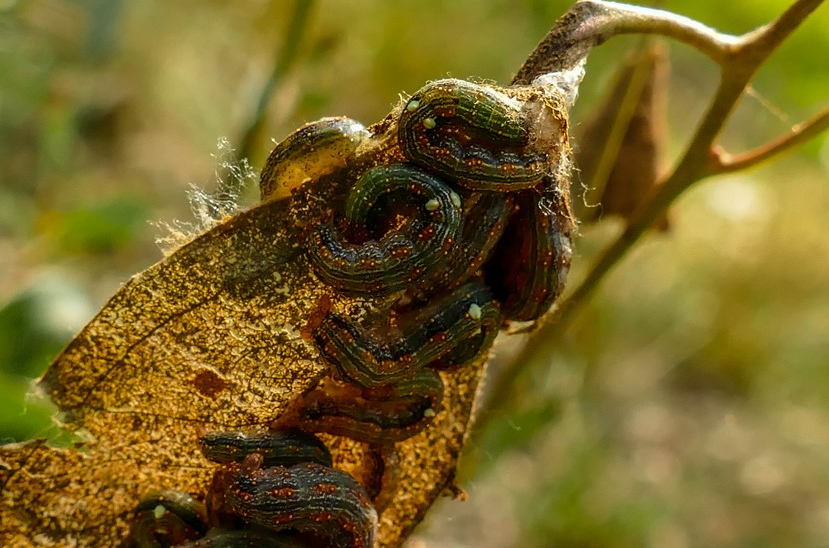
They grow quickly and can eat a lot of leaves (thanks Ruth)
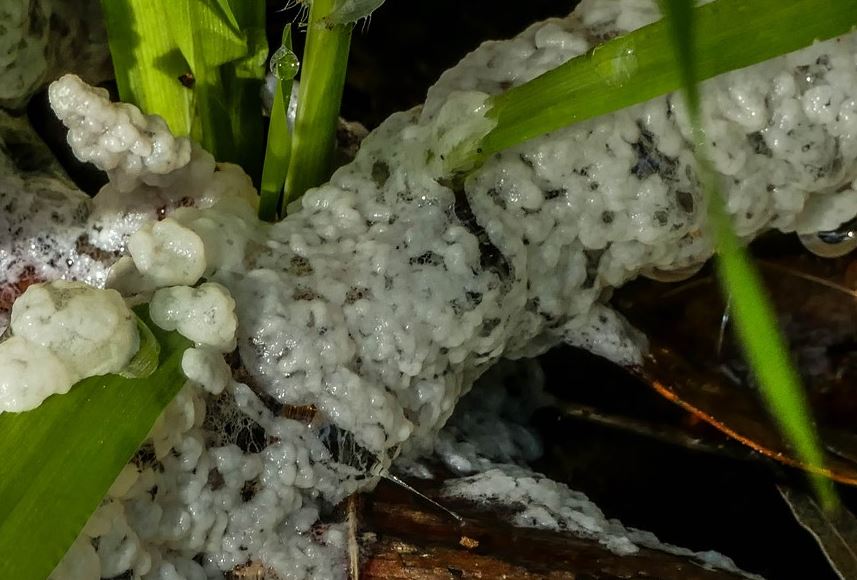
Insect Eggs (thanks Ruth)
Nesting is under way – Spring can’t be far off ! (thanks Ruth for the three photos)
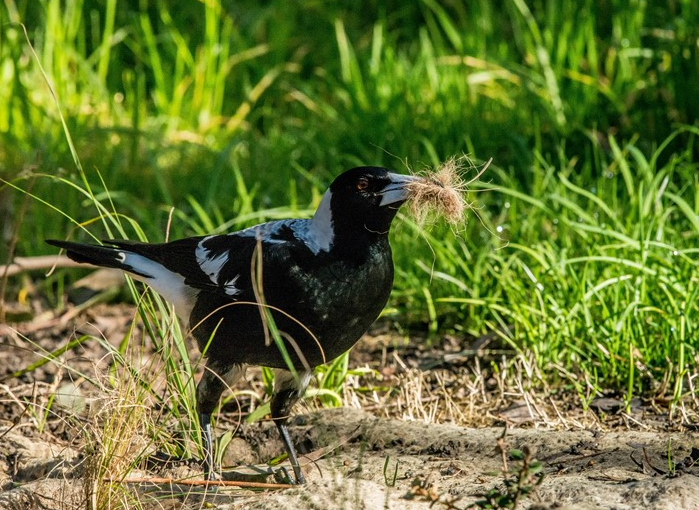
A magpie repurposing some weed mat for her nest
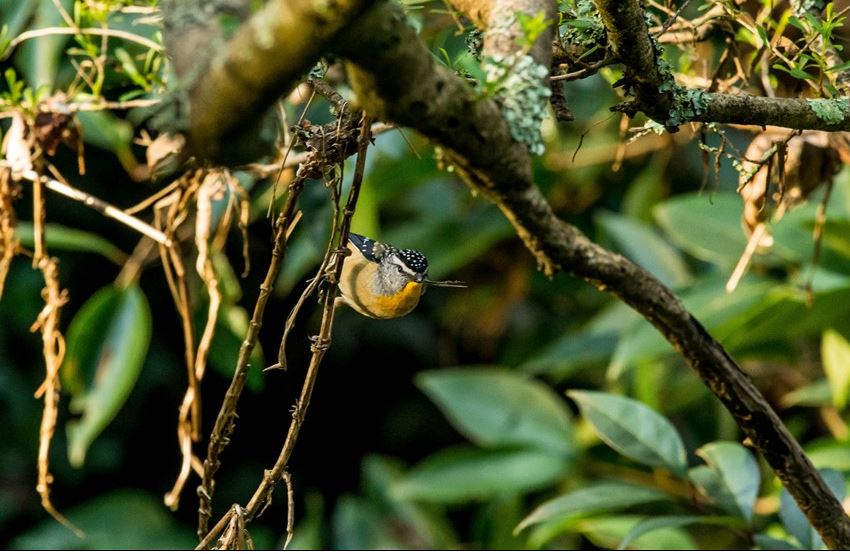
A Spotted Pardalote with nest material
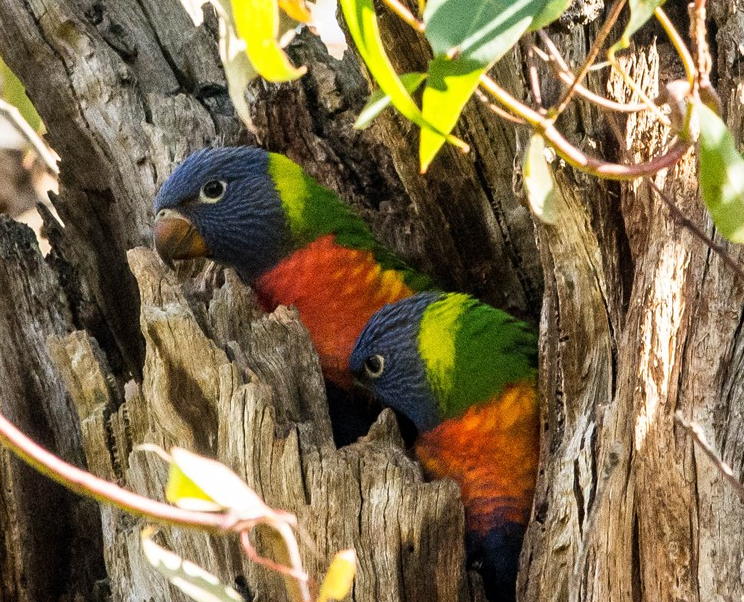
Rainbow Lorikeet nestlings
Fungi – still going strong
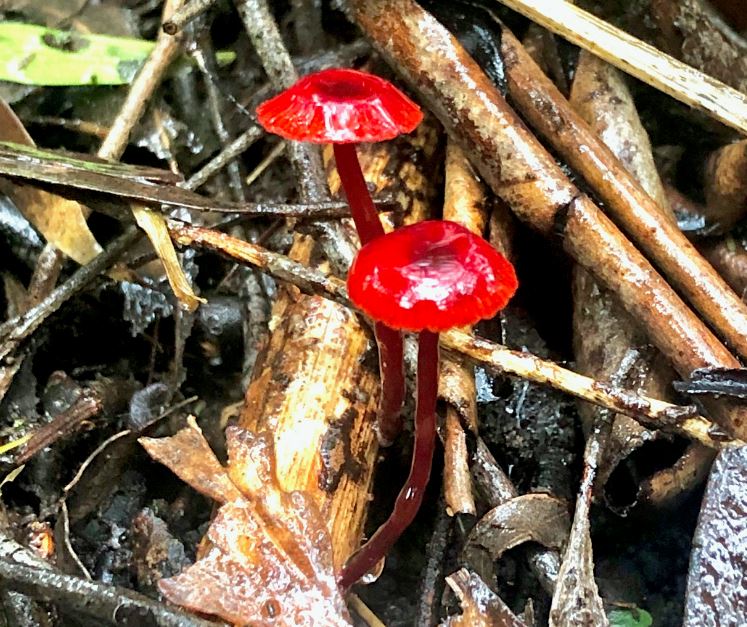
Tiny red fungus – near the Billabong (thanks Lisa)
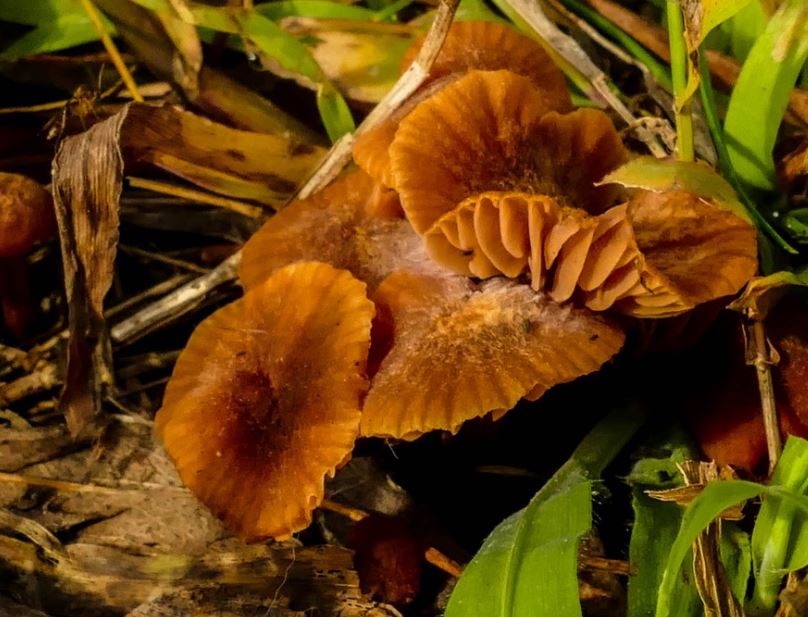
An orange gilled fungus in Blacks Walk (thanks Ruth)
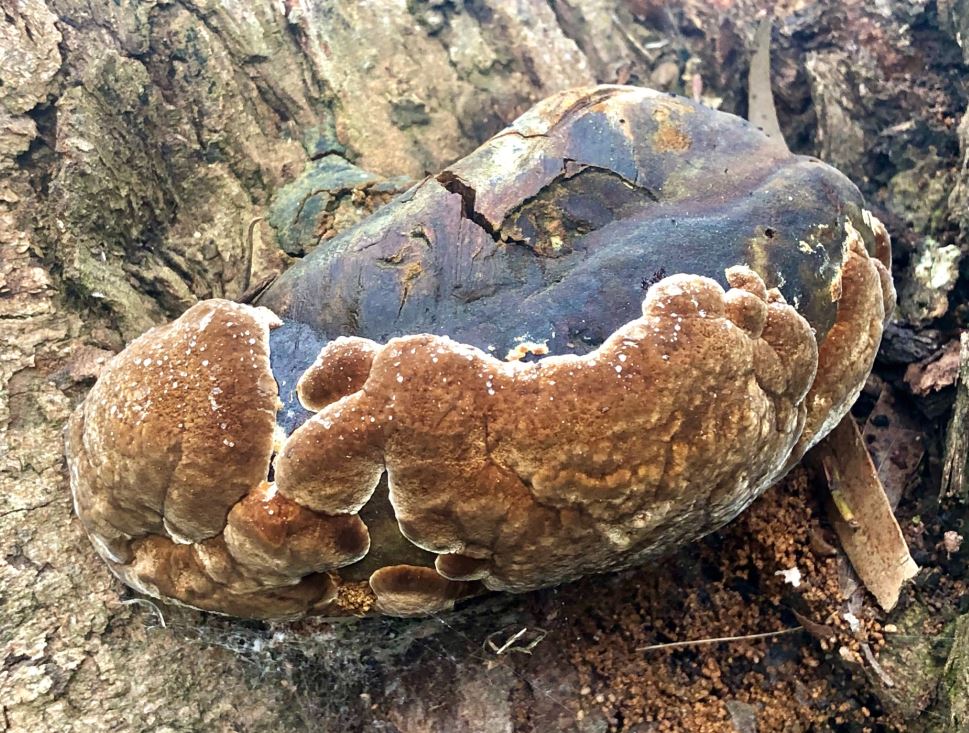
Bracket Fungus on a tree – usually bad news for the tree! (thanks Lisa)
Park features
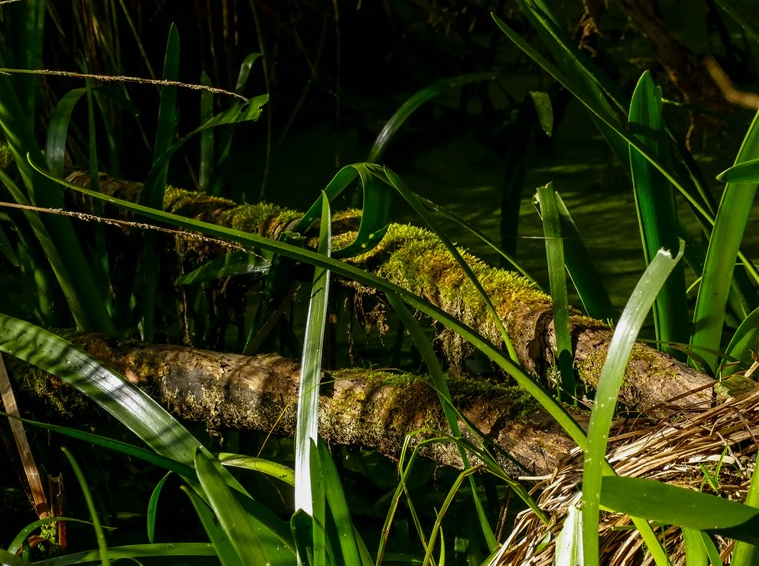
The (old) Waratah Wetland is wet – and green! (thanks Ruth)
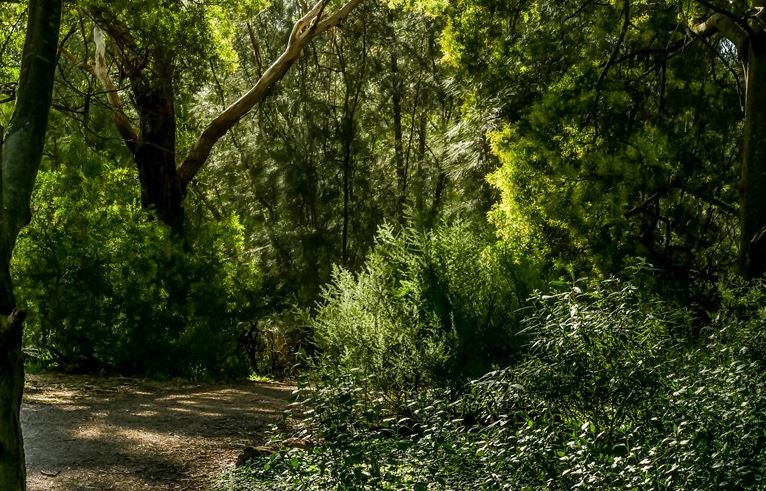
Beautiful Green and Yellow light in Blacks Walk (thanks Ruth)
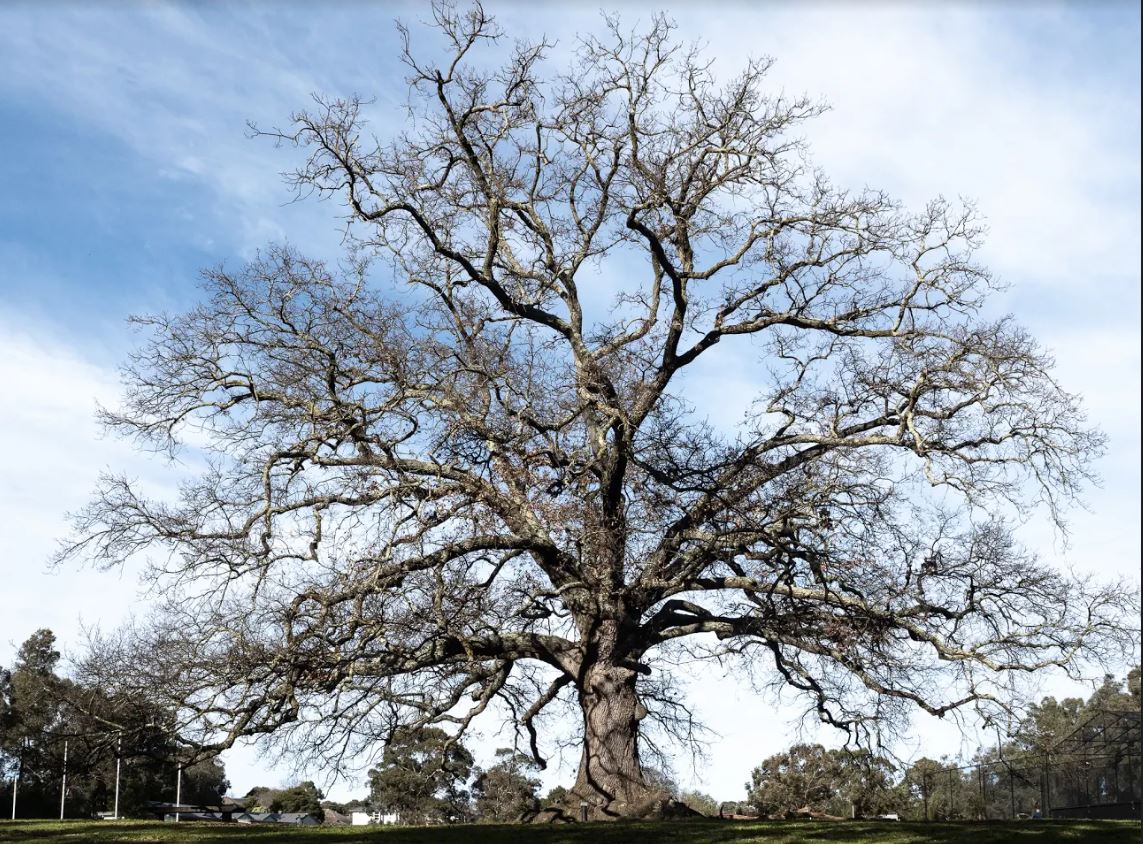
Definitely Winter when the Oak looks like this (thanks Greg)
- A 1928 aerial photo of the area shows a substantial tree even then – planted no later than 1900 and probably a little earlier – making the tree over 120 years old.
- We assume it was planted by one of the early farming families in the area. We know there used to be a chook farm where the oval is now and there were orchards to the east. It is also interesting to note that the creek formerly meandered a lot closer to the oak as it went right through where the Bowls Club and the Scout Hall car parks are now. The Oak therefore would have been almost on the creek bank.
Social Distancing Infringements?
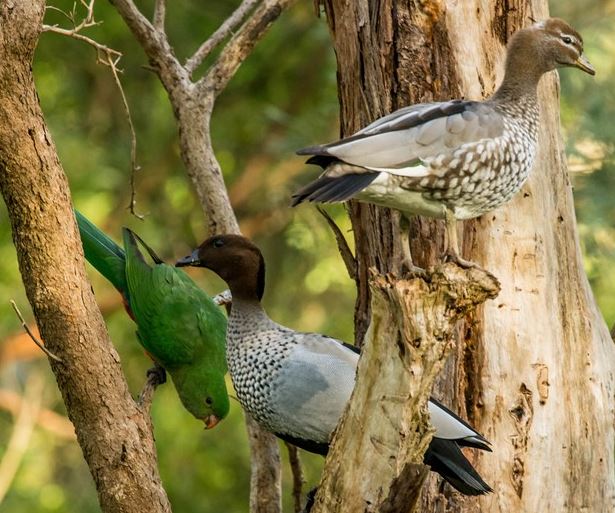
A pair of Wood Ducks and a King-parrot (thanks Ruth)
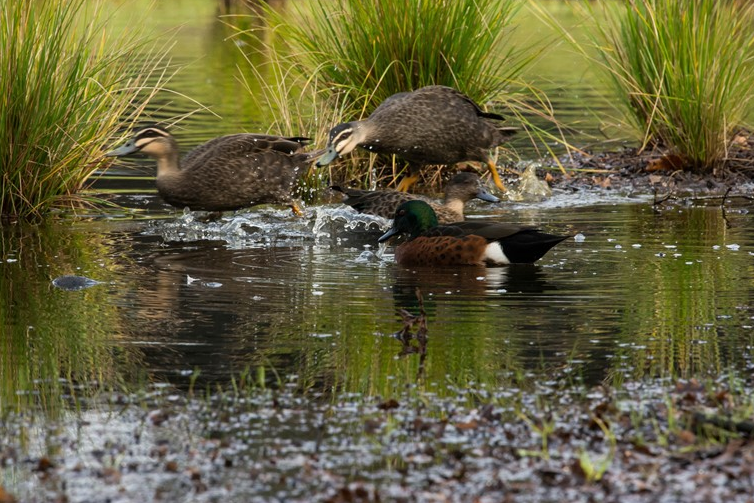
Chestnut Teals and Pacific Black Ducks (thanks Ruth)
Stay Warm and Stay Safe!
- To end off with something completely new (wink!), here’s a photo taken during July of a cuddlesome Tawny Frogmouth pair in Blacks Walk (thanks again to Ruth):
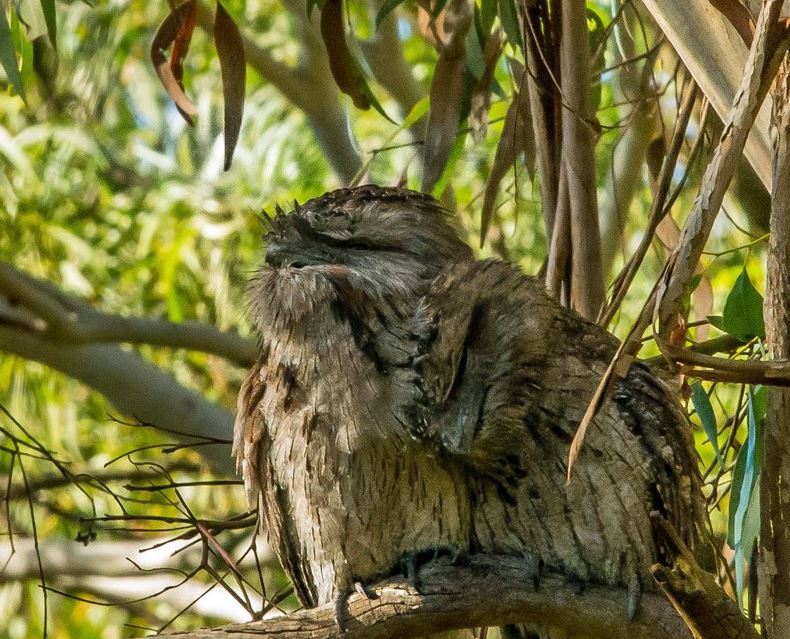
- Fortunately, the social distancing rules do not apply to one’s partner!
- According to field biologist and author Dr Gisela Kaplan, Tawny Frogmouths bond for life. She says they cry and may even die of grief if they lose a partner through some sort of mishap. Gives us pause to think that there may be significant flow-on impacts (apart from the obvious) in culling programs and activities like duck shooting…
 Blackburn Creeklands
Pingback: Park News, July 2024 | The Blackburn Creeklands