Wild and Unusual Times !
- Recent high winds caused quite a deal of damage in the park with trees uprooted, large branches lost and trees blown over in all sections of the Creeklands.
- Strong north winds tend to blow over the top of the Creeklands due to the protective hilly terrain to the north. There is also a measure of similar protection to the south. However, the storm winds on 27th August were strong westerlies varying from WNW to WSW. Tree limbs have the flexibility to bend in the wind in response to strong, steady winds – it tends to be twisting winds that really test their defences…
Hill Street Blues
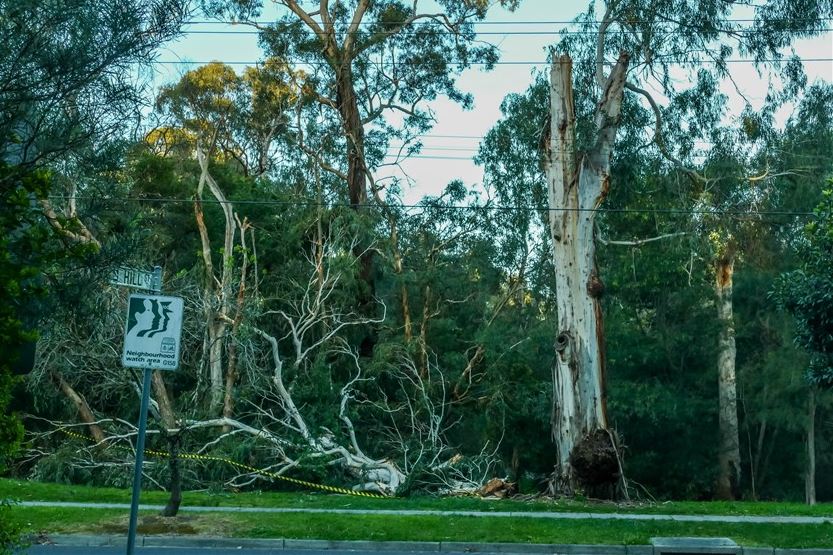
- Perhaps the saddest sight was the magnificent Eucalypt on the edge of Main Street in Furness Park opposite Hill Street having completely lost its canopy.
Lockdown Blues
- There’s no need to tell you we’ve all endured a full month of lockdown – with hopefully less than a fortnight to go… We are into Spring now – many species of birdlife are nesting or already raising chicks, our frogs are warming up – more on these later in this newsletter.
- Once again the park has been extremely popular over the past month with the inevitable signs of further wear and tear:
- Tracks ever-widening and compacting due to increased traffic and social-distancing.
- Pooling of water and drainage problems compounding the widening of tracks.
- Graffiti on trees.
- Bins overflowing with single-use coffee cups.
- Kids making cubbies/humpies, bike jumps and new trails all over the park. Some of the cubbies have been graced with bracken torn out from other locations for roofing. We are sympathetic to kids needing an outlet and building cubbies out of sticks and fallen branches – but have to draw the line at damage to living plants!
- Like us, the park is going to need some rehabilitation after this is all over! Let’s hope our park doesn’t descend to the depths envisaged by Michael Leunig:
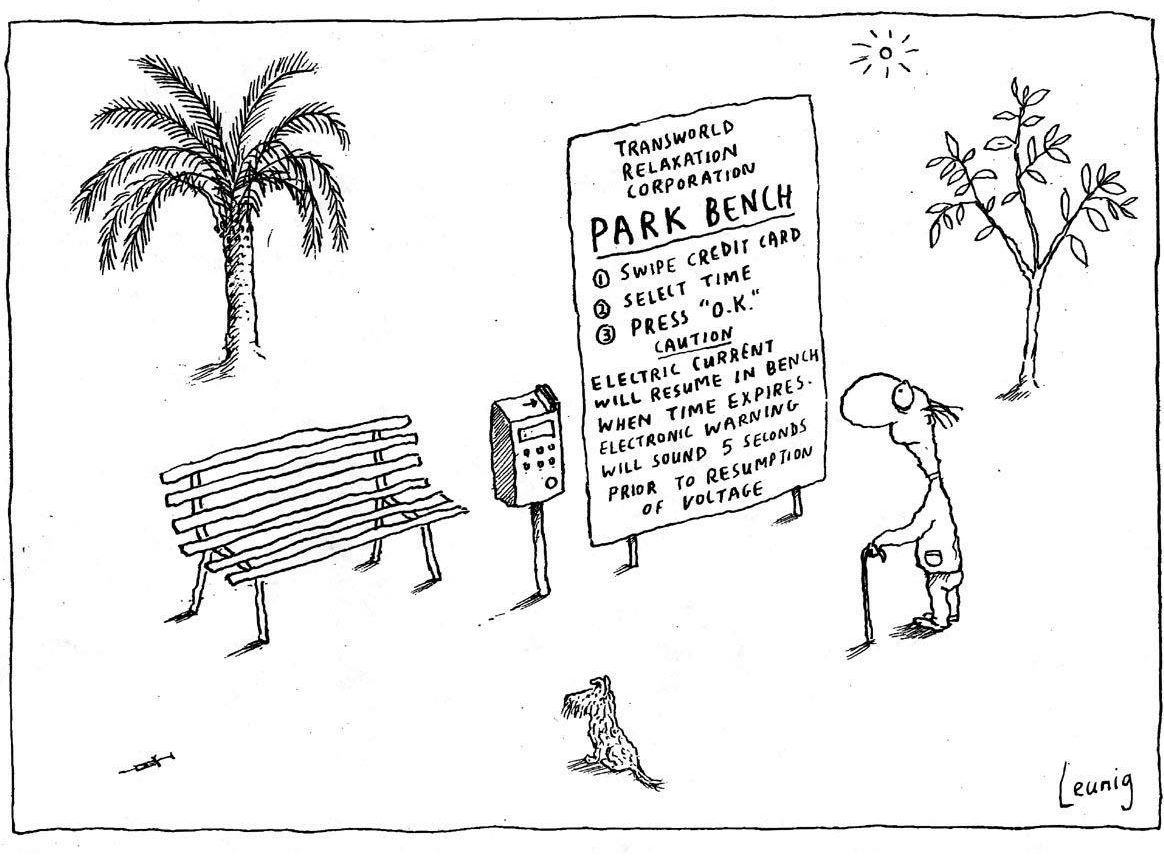
Not for us – timed bench, dog off-lead, dangerous rubbish, intrusive signage, non-indigenous trees…
- Of course, dogs off-lead are even more of a problem in more crowded situations where we are simultaneously aiming for social-distancing. Council has been compelled to add more temporary signage around the park to “remind” dog owners of their responsibilities:
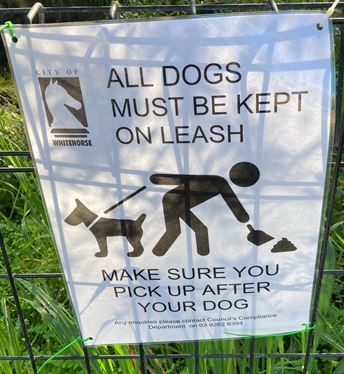
No part of the Creeklands is “off-leash”
- On the positive side, Friday 4th September was planned to be “Walk to Work Day” – which would not be too onerous for those working from home!
- In the meantime, we’ve asked the local wildlife not to continue hogging the park furniture:
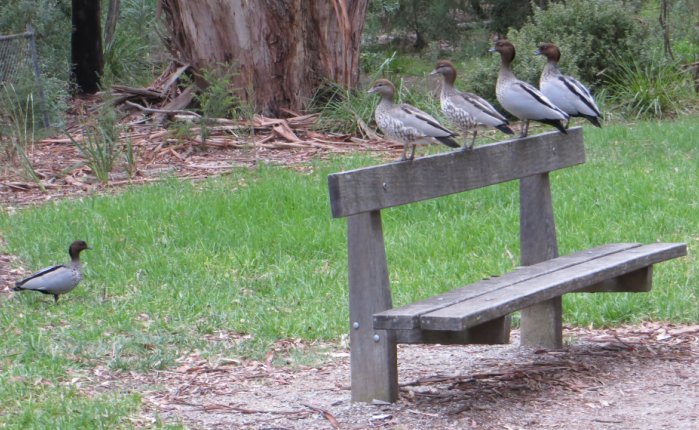
Seats are now reserved for humans
What Wattle is What?
- Speaking of special “days”, Tuesday (1st September) was Wattle Day and the park is blooming to celebrate. It is amazing to see just how many of the plants in the park are wattles and what a variety there is – many flower at this time.
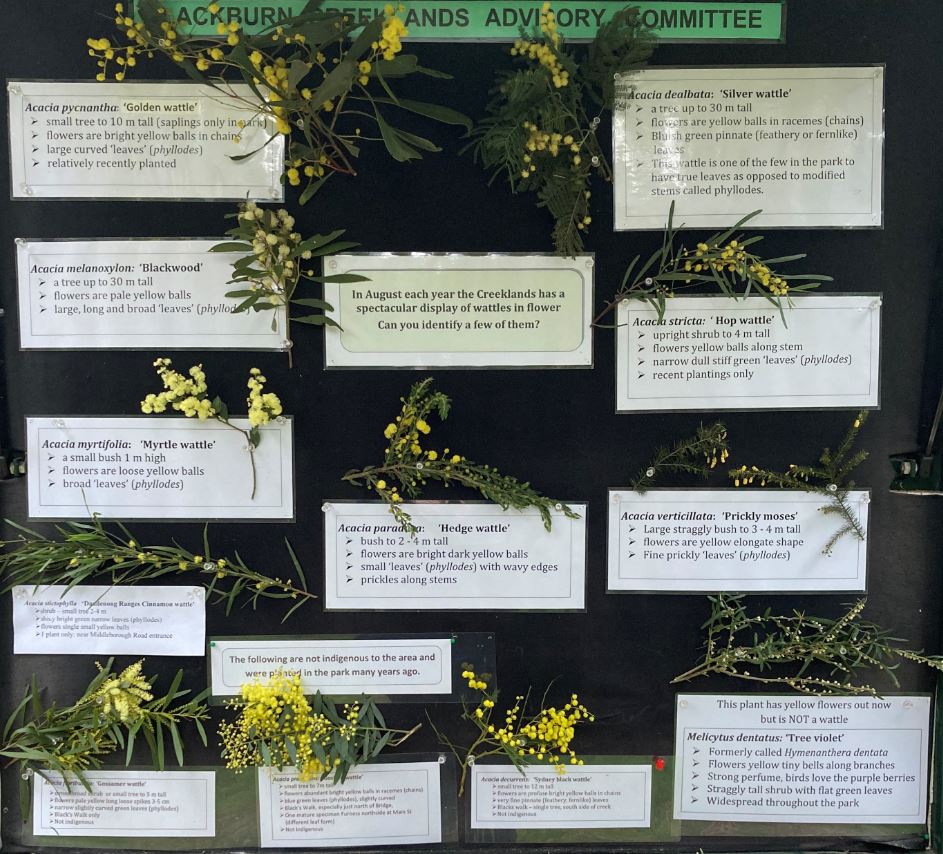
- Our current Noticeboard display (thanks Megan!) features actual sprigs of most of the wattles we have in our park – along with their common and scientific names. A great help if you are wondering “What wattle is what?” or looking for a beautiful addition to your garden.
- This includes a newly identified wattle (Acacia stictophylla), commonly known as the Dandenong Ranges Cinnamon Wattle. The species was first formally described in the botanical journal Muelleria in 2009. We possibly obtained it from one of the nurseries thinking it was a Hop Wattle (A. stricta) – they are similar though the A. stictophylla is arguably a prettier plant with an almost weeping habit.
- Some older wattles in the park are Australian natives but not indigenous to our area – therefore, not available from the local indigenous plant nurseries. Also, some wattles that flower later in the year are not posted: these are the Black Wattle (Acacia mearnsii), Lightwood (A. implexa) and more recent plantings – Gold Dust Wattle (A. acinacae) and Cinnamon Wattle (A. leprosa).
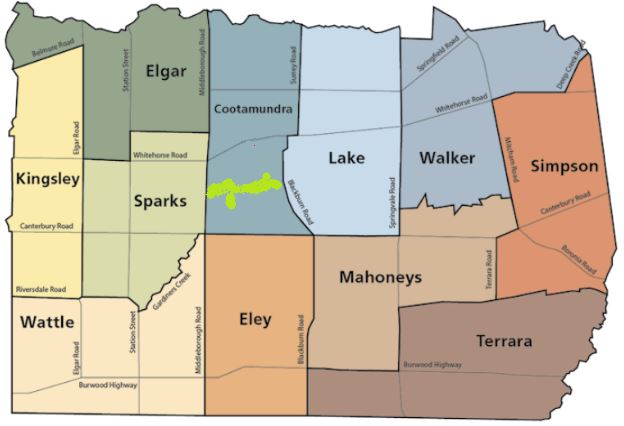
Blackburn Creeklands in “Cootamundra” Ward
- Interestingly, under Council’s new ward structure, the Creeklands park falls within the new Cootamundra Ward which we understand has been named after our sister Cootamundra Walk park to the north. The irony is that the Cootamundra Wattle is regarded as a weed species (!) – it being indigenous to the Cootamundra area of New South Wales and often out-competing local species as it thrives out of place. There is a non-specific Wattle Ward too (presumably named after Wattle Park). The group of plants known as wattles or acacias at the heart of this article is therefore well represented in our new wards!
- In past years, Whitehorse has been made up of five two-Councillor wards – our park falling within the old Central Ward. From October, the community will be represented by eleven Councillors from the eleven single-Councillor wards depicted above.
Frogs in the Creeklands
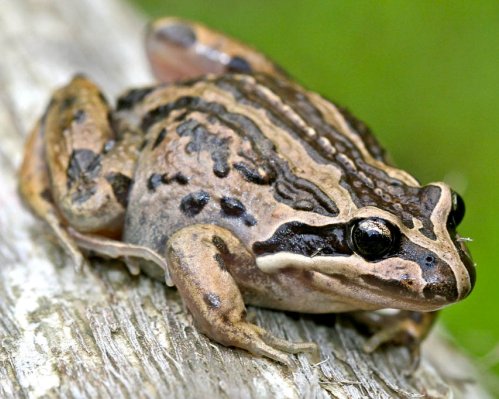
Striped Marsh Frog – Photo courtesy Ian Moodie
- Even though it is still cold, August is generally the time our park’s frogs become more active. Rather like the canaries in the coal mines, frogs play an important role in any waterway ecosystem because they are quite sensitive to changes in their environment.
- Our Frogs page lists the species found in the Creeklands with the Striped Marsh Frog dominating. All frogs, including tree frogs, are dependent on water to some extent – for breeding, for the tadpole stage and, often to a lesser extent, as adults.
- Melbourne Water has been running an interesting community frog monitoring (aka Frog Census) program for some time. This is supported by apps for mobile phones and a Facebook support group. The project also has great guidance available for those interested in where frogs are likely to be found:
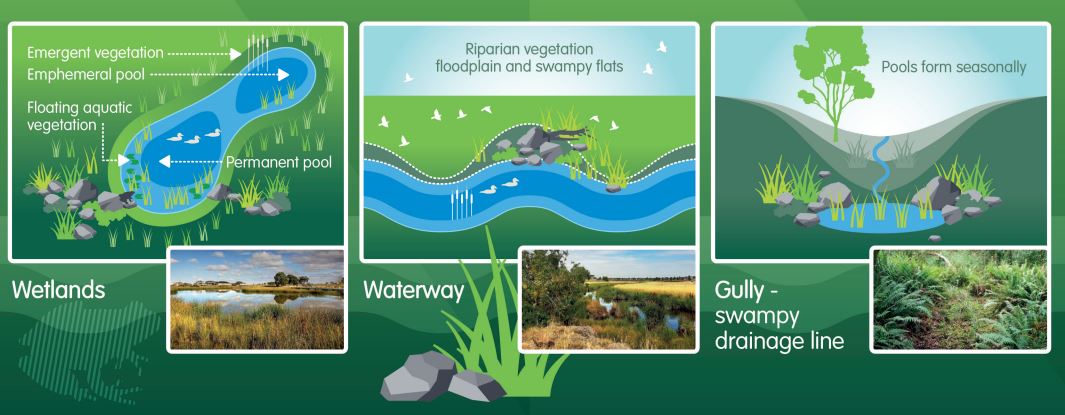
Seasonal Pools
- Following Melbourne Water’s diagram above from right to left, there is a small pond that seasonally fills near the cricket nets near Kalang Oval.
- It probably fills from drainage from the oval and we’ve heard frogs there recently.
- An optimistically named “Frog Bog” was developed a little east of Pakenham Street on the northern side of the creek in an area which receives run-off from Myrtle Grove. It was often soggy – so was scraped out and planted appropriately. However, it tends not to retain water very long – so never quite fulfilled its eponymous promise.
- Although frogs are sometimes heard there, the Billabong on the southern side of the creek is in a similar category – it does not currently hold water long enough to suit the frogs’ full life-cycle. However, settings controlling the flow to the Billabong have been changed a little – we, with Council, are trialling sending more water there.
Floodplain and Swampy Flats
- There are some swampy flats along the creek especially near the Furness Park bridge and in Blacks Walk.
- We occasionally find frogs when weeding along the creekbanks and they can be heard along the creek in fairly small numbers.
Wetlands
- In 1987, the BCAC Committee received a Bicentennial Grant to recreate our Waratah Wetlands wetland habitat below Waratah Crescent and also received a Land Protection Incentives Scheme Grant for its revegetation.
- This project was a great success and created, by far, the most popular part of the park for our frogs.
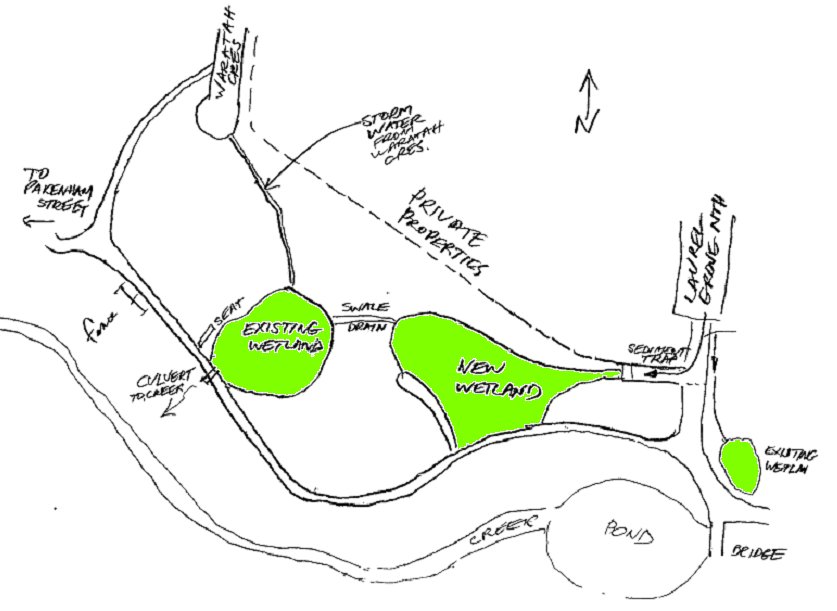
- Looking at our new wetland, there is probably not enough vegetation cover there to protect frogs just yet. However, its design looks good – it has the ephemeral area and a longer-lived pond – so does seem to tick all the boxes. Its proximity to the existing wetland should ensure the ready availability of new settlers once the vegetation cover improves.
- We have participated in the frog census for several years through Megan – one of our Committee people. She is a regular user of its frog app and has contributed ideas for its improvement to the Melbourne Water team. Interestingly, she has recordings made in the area in 1972 which indicate that there have been changes to the species populating that area over time.
- We are hoping to resume work on compatible plantings on the creek side of the two wetlands next year (Covid-19 permitting).
Council Works in the Park
Blacks Walk
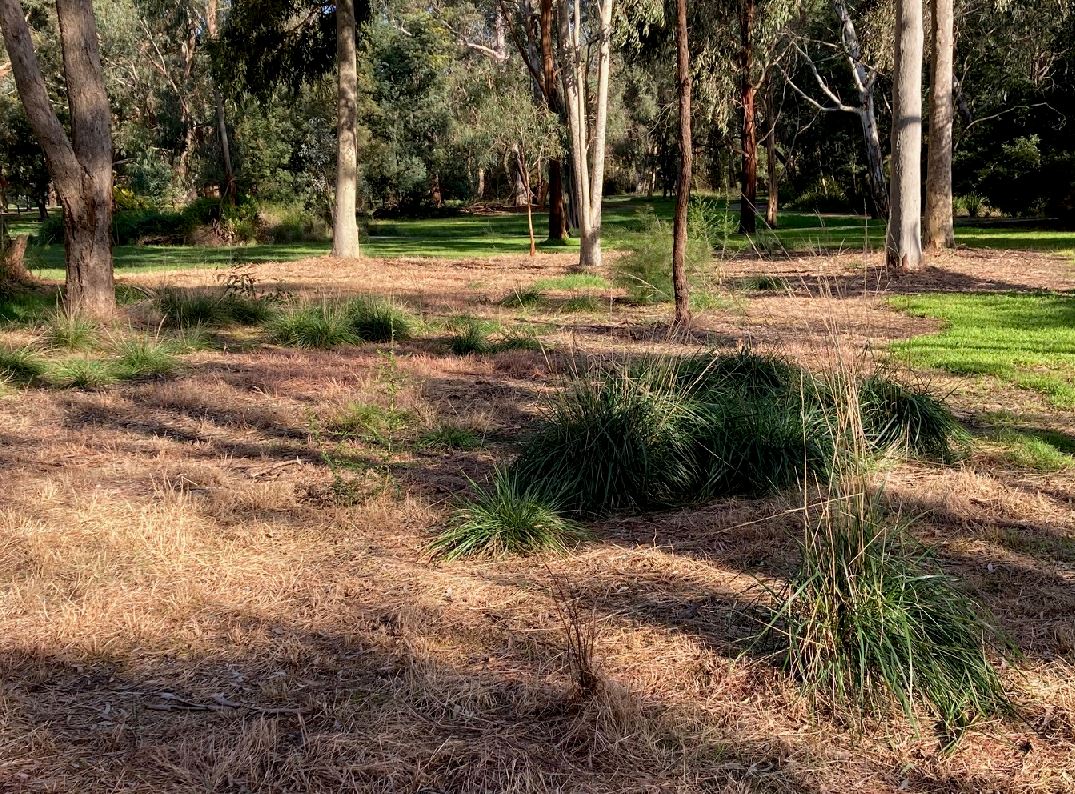
- You may have wondered about the big brown patch in the middle of Blacks Walk south of the creek near Laburnum Primary School. Some 12-18 months ago, this area was covered with weed species (mostly dead and dying non-indigenous wattles and their saplings) that were removed by Council.
- More recently, ground cover weeds have been targeted. At the same time, Council and Committee have been watching to see what indigenous and weed plants appear from seed that might have been in the ground for some years. Our picture shows some indigenous Spear Grass doing quite well without unfair competition from weeds.
- After the pattern of natural regeneration has been determined, Council will add further plants.
Scout Hall
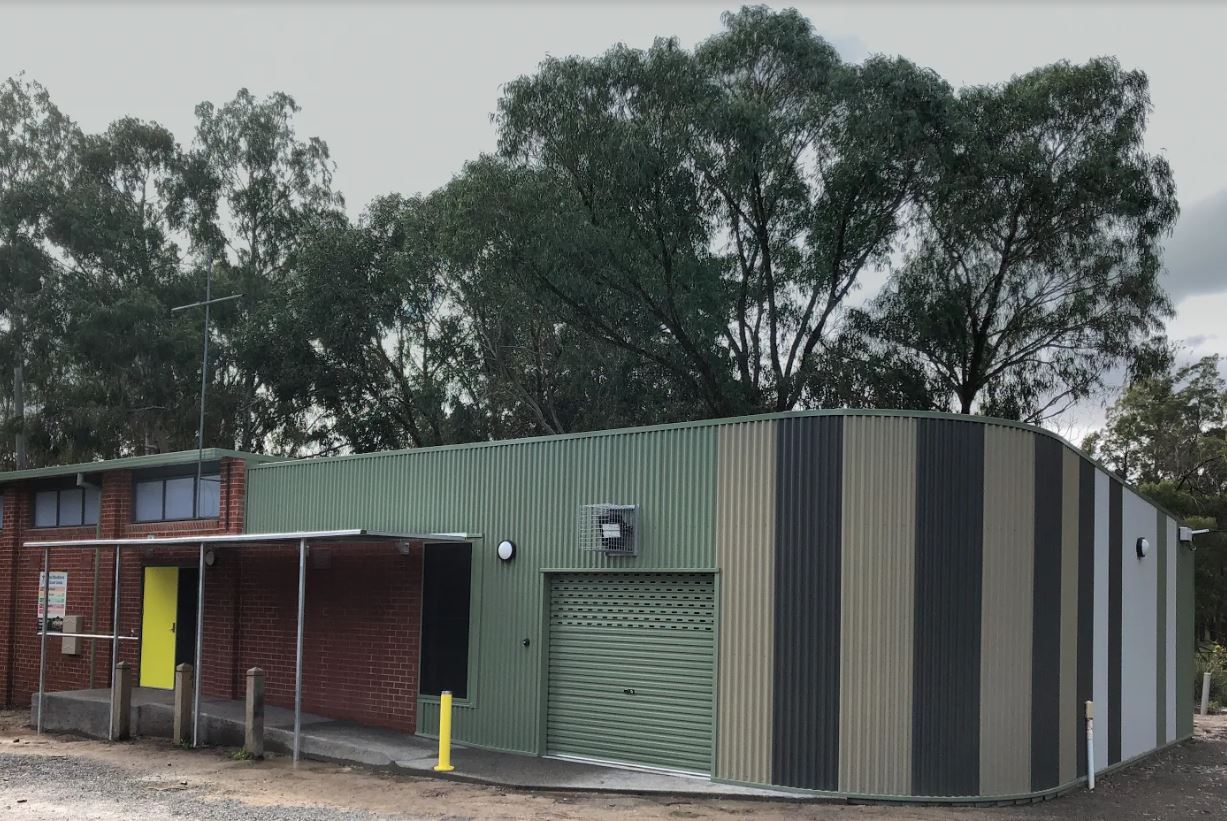
- Greg’s photo shows that the Scout Hall renovations appear to be largely finished with the temporary fence being removed – revealing a ramp access to the doorway and the spiffy new shed.
- Most of the vegetation on the Pakenham Street side has been removed and stumps grubbed out. Some revegetation is needed there.
New Wetlands
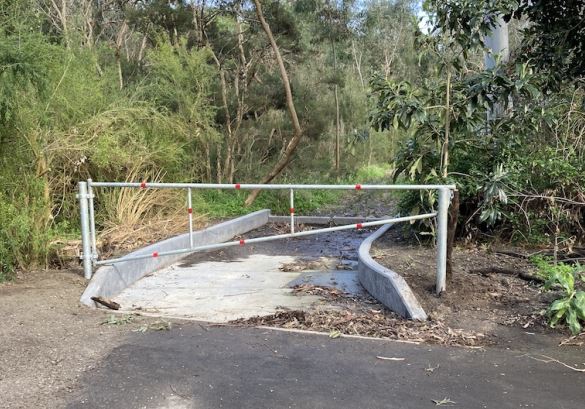
- A gate has been installed in front of the sediment trap to restrict access to Council’s regular removals of sediment.
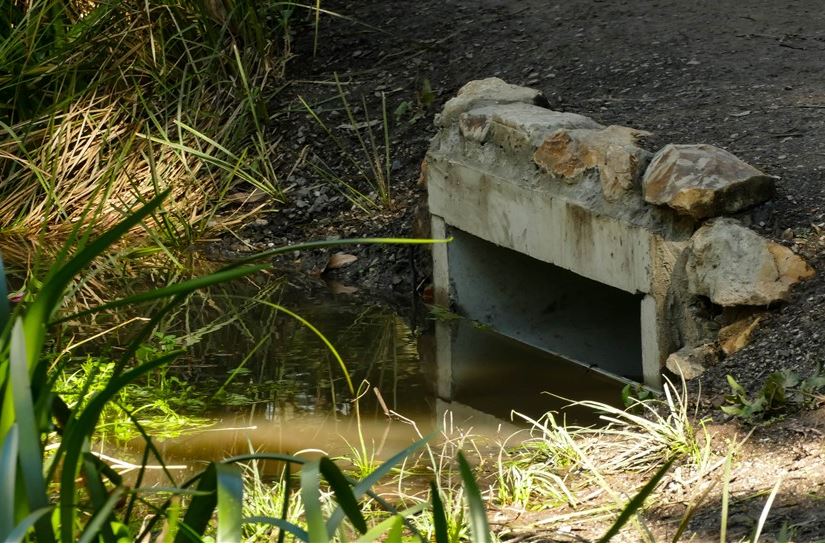
- An extra plinth has been installed at the new outlet of the old wetland. This governs the water level in the old wetland so has raised the water level by about 50mm.
Maintenance Team Report
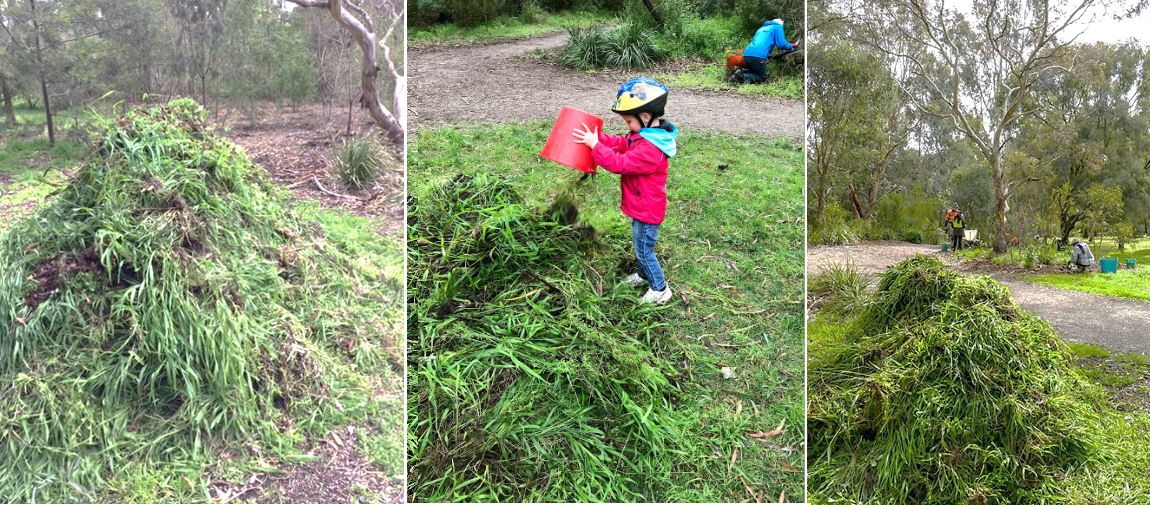
Various Green Mountains that have popped up in the park
- If you were wondering why there have been none of those green mountains around the park recently, the Maintenance Team has been unable to work due to the current Covid-19 Stage 4 lock-down restrictions.
- One of the team, Nicky, has penned the following article which clearly reveals how keen she is to “get back into it” with the team:
Mourning Monday Mornings
-
- Once upon a time, not so long ago, on Monday mornings, showers or sunshine, a Sturdy Band of locals gathered to take care of the Creeklands. X, marked on the map sent to the team earlier by e-mail, by Leader John, was the meeting place. The Band looked forward to the work party, the weekly dose of conviviality, fresh air, sightings of interesting flora and fauna, and the enhancement of the park. Alan, a party man for over 40 years inspired the rest of us more recent party goers – with far fewer years of attendance. It was head down and bum up as we chattered and laughed. Stopping briefly for coffee and shared homemade delicacies, reviewing efforts, solving problems, engaging with walkers and their dogs – Leader John knew all the human and canine characters. Then it was back into it for the final burst of effort. The Band always made an exceptionally large and satisfying mound of weeds.
- As well as weeding, we mulched and planted, assisted by water pumped from the creek, and we would plan for the next party.
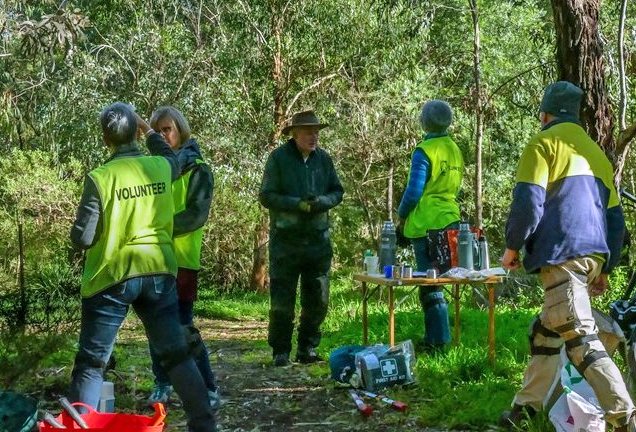
The merry band in “the good old days”
Why plant what we plant and weed what we weed?
-
- The plant list for the Sturdy Band is informed by past flora studies, the Flora of Melbourne by Marilyn Bull, (see https://www.facebook.com/floraofmelbourne/) and other sources. The list of indigenous species varies around Melbourne, depending on the makeup of the local environment. Influences are complex and include topography, degree of exposure, geology and resultant soil types, inundation, salinity, climate, existing species to name a few. Planning for climate change is also becoming a consideration.
- In short, a weed is a plant out of place. Weeds are a real threat to local plants and critters. Weeds outgrow and smother the plants that should be there – the indigenous species. This leads to a decline in biodiversity and potential loss of species. So, weeds need to be removed and local species supported so that habitat can be maintained and hopefully enhanced. The lofty aim is to have planted indigenous species self-sow, become self-sustaining and shade out weeds.
- All the outdoor fun, curtailed this season, means that around 50 !!! cubic meters of weed has not been removed and plans for over 1000 new plants shelved. And so the Sturdy Band has to wait, and mourn Monday mornings but is ready to spring into work party action, once permission is granted.
- One thing some of the team has done during lockdown is to apply to Melbourne Water for woody weed removals at the Blackburn Road end of the creek under its Waterway Blitz program. Melbourne Water has already done some excellent similar woody weed removal work in Blacks Walk under a regular maintenance program.
Bird of the Month
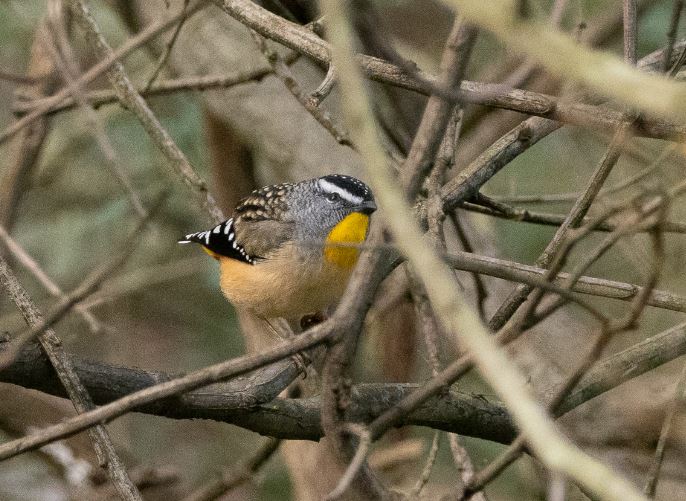
- Our occasional Bird of the Month segment features the Spotted Pardalote (Pardalotus punctatus) this month. These are small, colourful birds that are often heard rather than seen because they tend to spend most of their time high in the canopies of tall trees such as our eucalypts. Perhaps oddly, they nest in small tunnels or burrows they dig into places like creekbanks – so can be seen at our level during the nesting period.
- Luckily for us, Greg spotted a pair in a thicket in Blacks Walk recently and saw them fly in and out of a nest burrow in the creekbank – here is the female partner of our male above carrying nesting material:
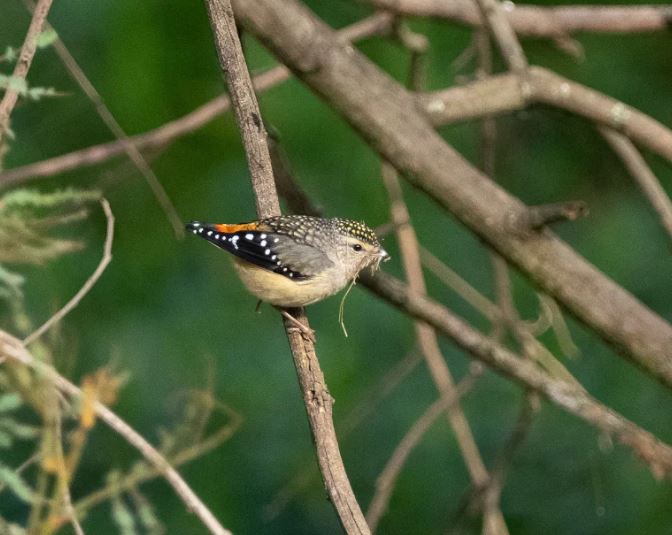
- Greg’s lenses allow him to be a long way from the birds and nest site so as not to disturb them unduly – nesting being a most sensitive time for birds.
- Greg tells us that the word ‘pardalote’ comes from the Greek word for ‘leopard spots’ (λεοπάρδαλη or leopárdali). Once again, there are differences between the sexes which enable us to tell the difference fairly easily:
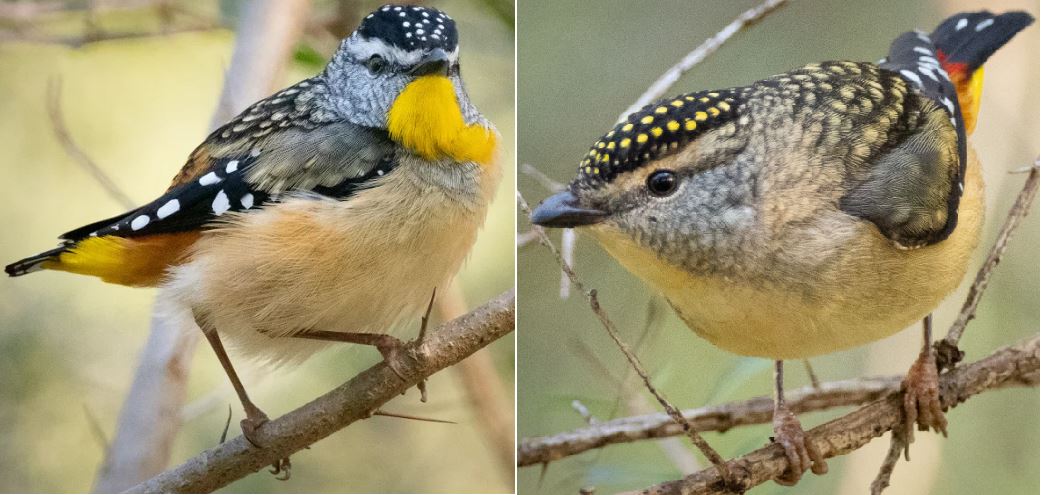
Mr (L) and Mrs (R) Spotted Pardalote from Blackburn Lake (thanks Greg)
- Mr has white spots on his head, a distinct whitish brow and striking yellow neck and chest while Mrs has yellow spots on her head and a more subdued brow and breast. As per the kookaburras in last month’s edition, the male looks a bit scruffier too as you’d expect! The red on the female in the tail/rump area occurs in both sexes – the male is facing the wrong way for us to see that in his case.
- Hugh “spotted” another pair in Kalang Park – also hard at work on nest building:
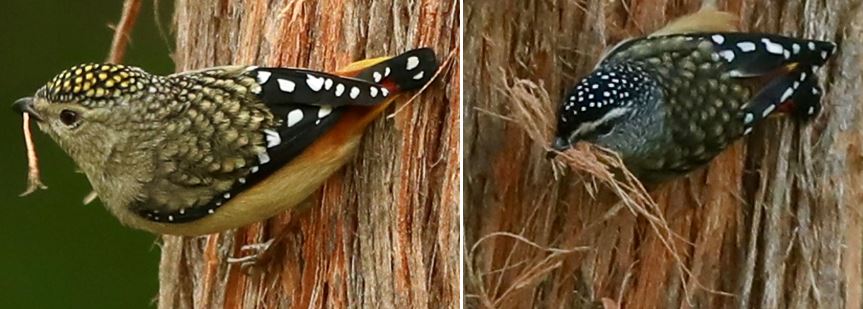
Sightings
- Apart from the spotting of the Spotted Pardalote above, there have been some other interesting sightings around the park – fewer this month due to the tighter restrictions on our movement – the first an incredible close up of the head of a lorikeet showing the intricate layout of the bird’s feathers:
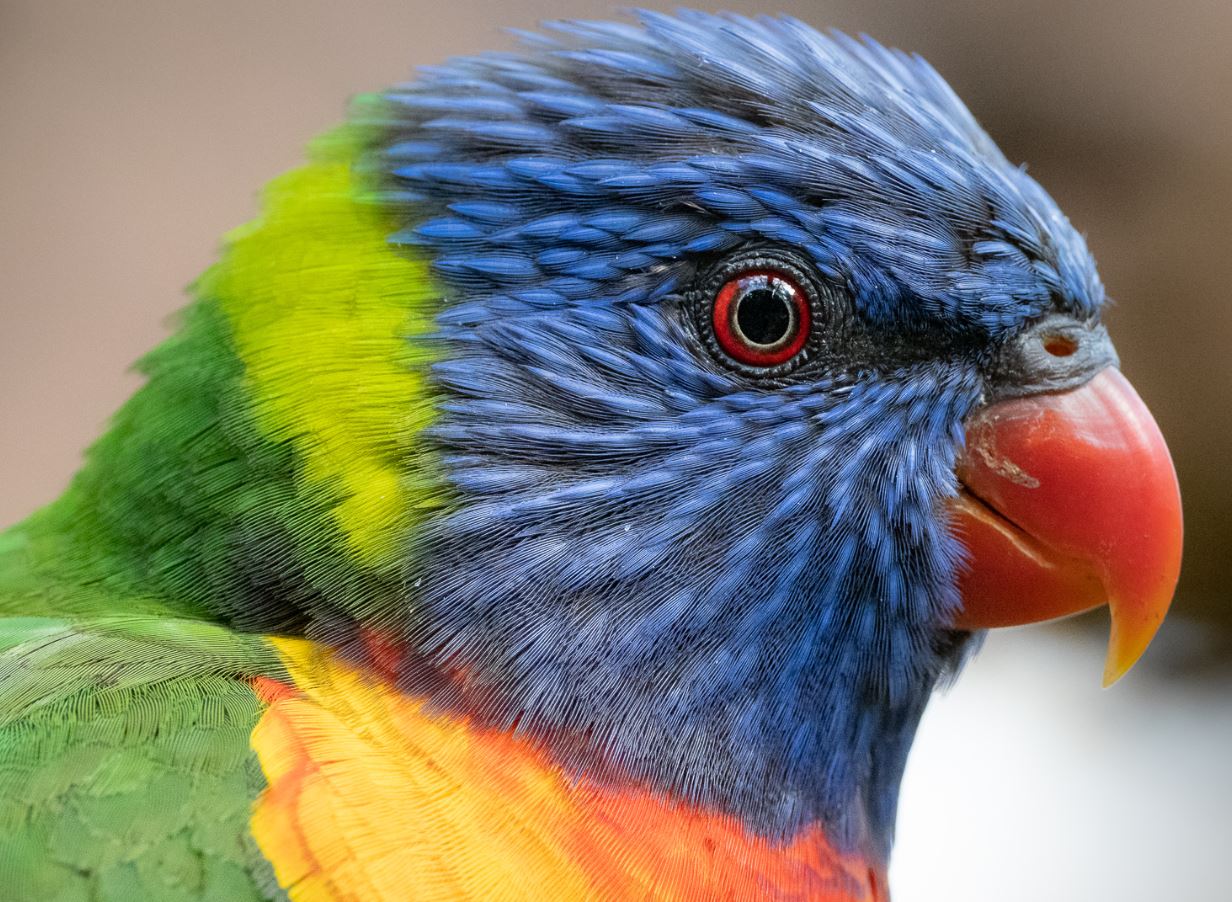
- Do you think each single feather is the same colour all over ? Coincidentally, Ruth took this artistic photo of a fallen lorikeet feather:
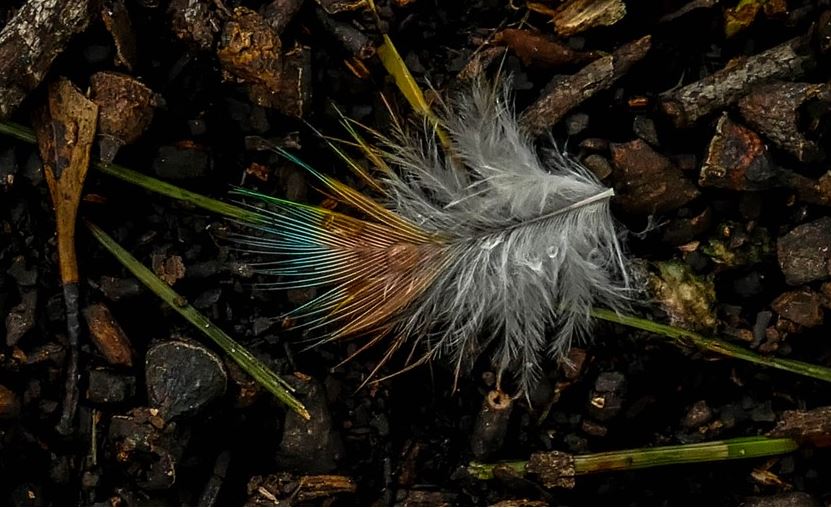
- Other sightings have been:
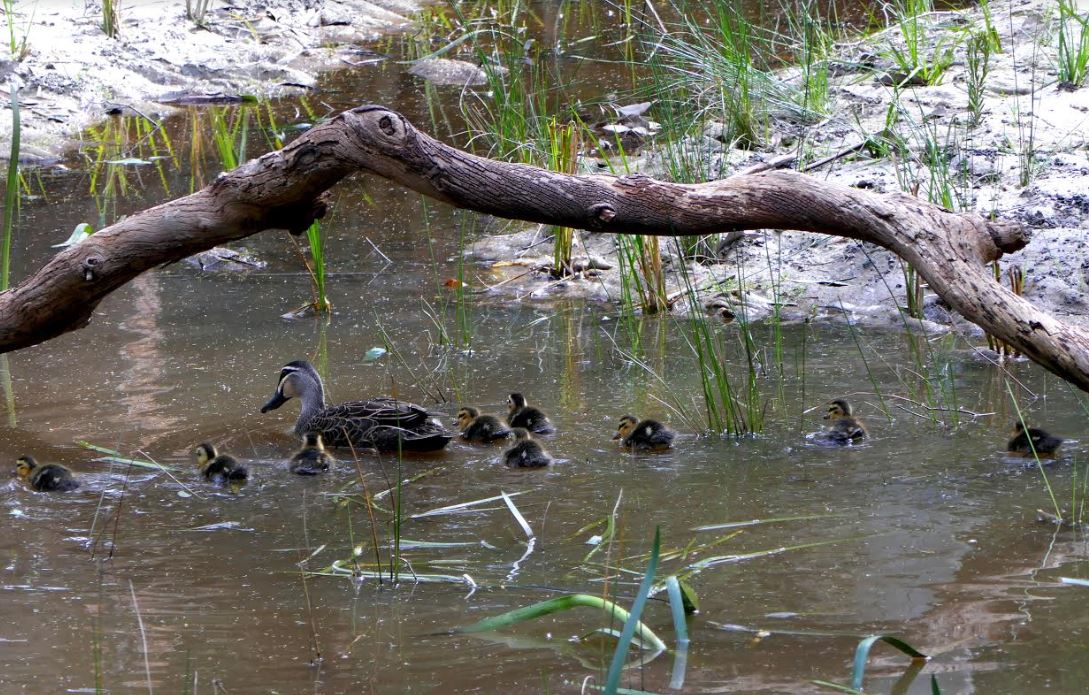
Mother duck and nine ducklings in the new wetland (thanks Geoffrey)
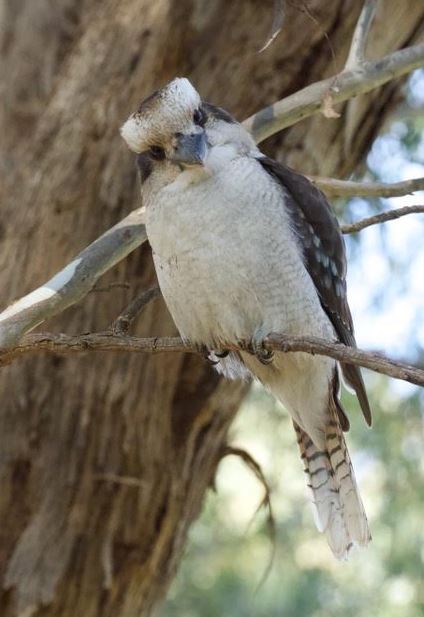
Who is watching whom? (thanks Michael)
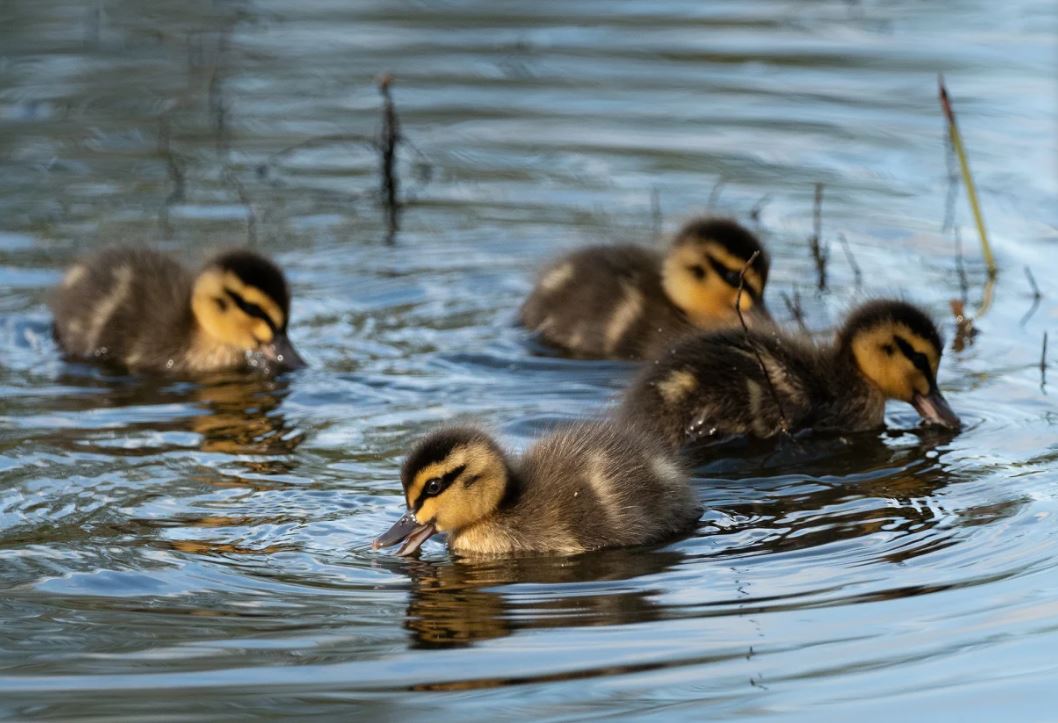
Pacific Black Buck Ducklings on the Billabong (thanks Greg)
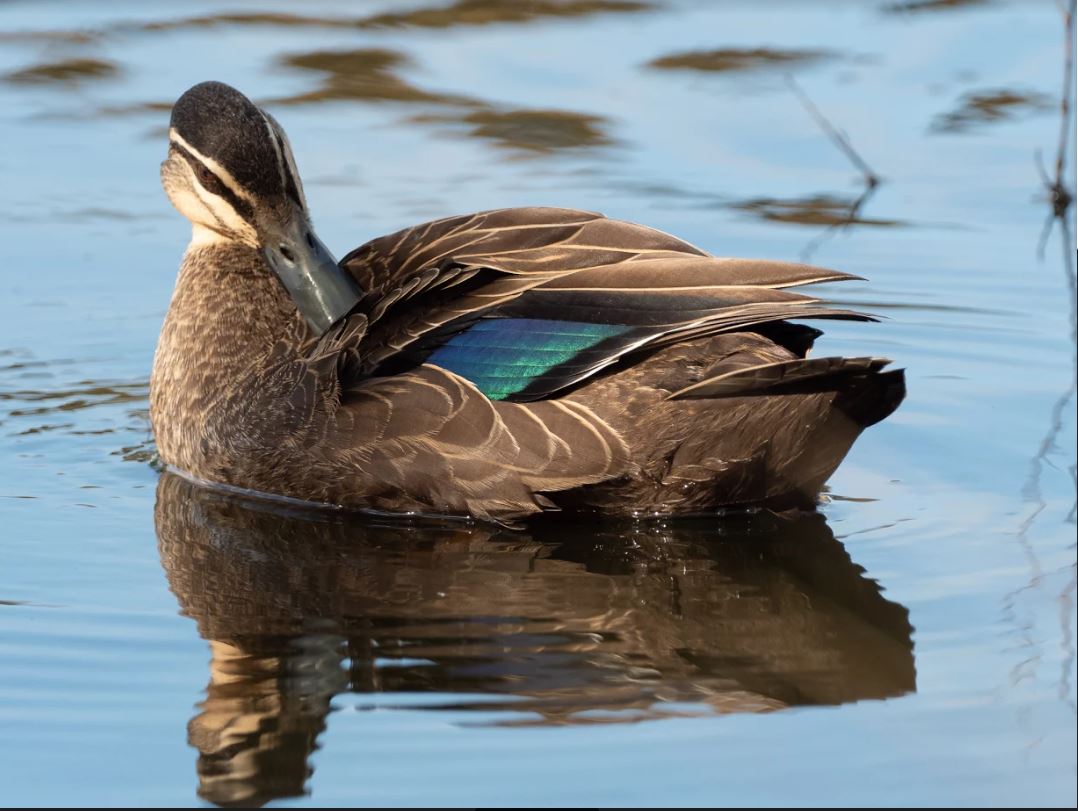
Why are they called “Black” Ducks ? (thanks Greg)
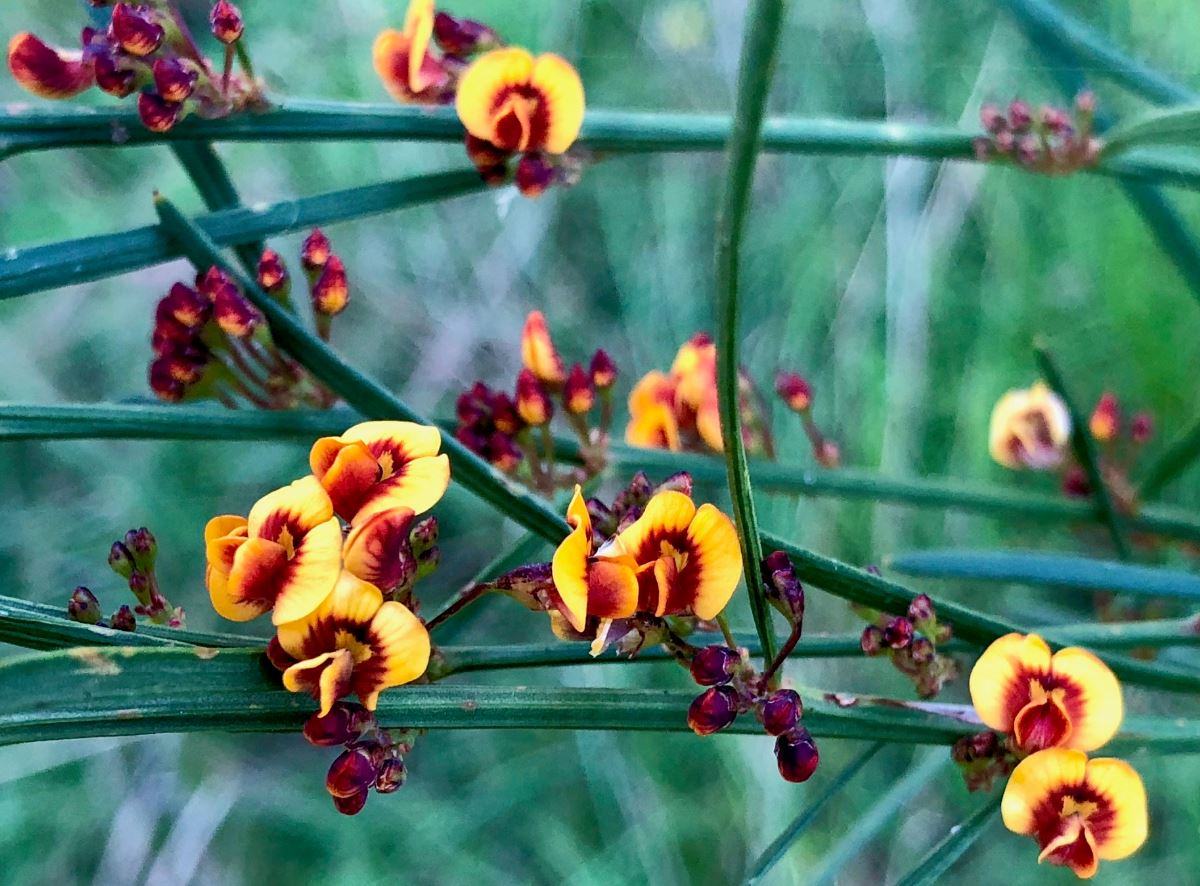
Narrow-leaf Bitter-pea (bacon and egg) flowering in Blacks Walk (thanks Lisa)
Love is in the Air!
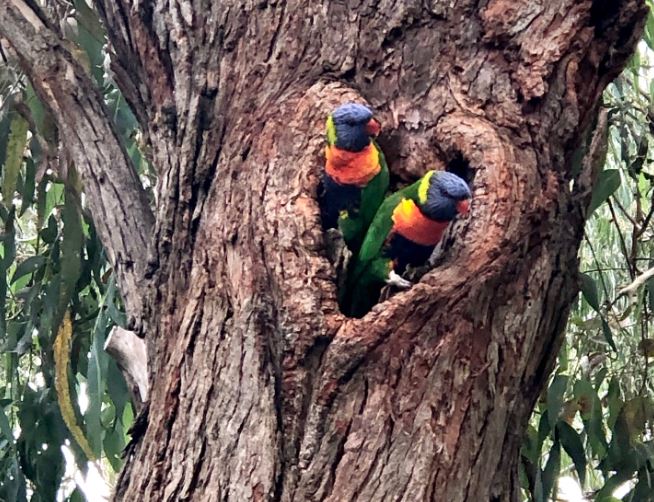
These resourceful Rainbow Lorikeets have found a heart-shaped hollow! (thanks Lisa)
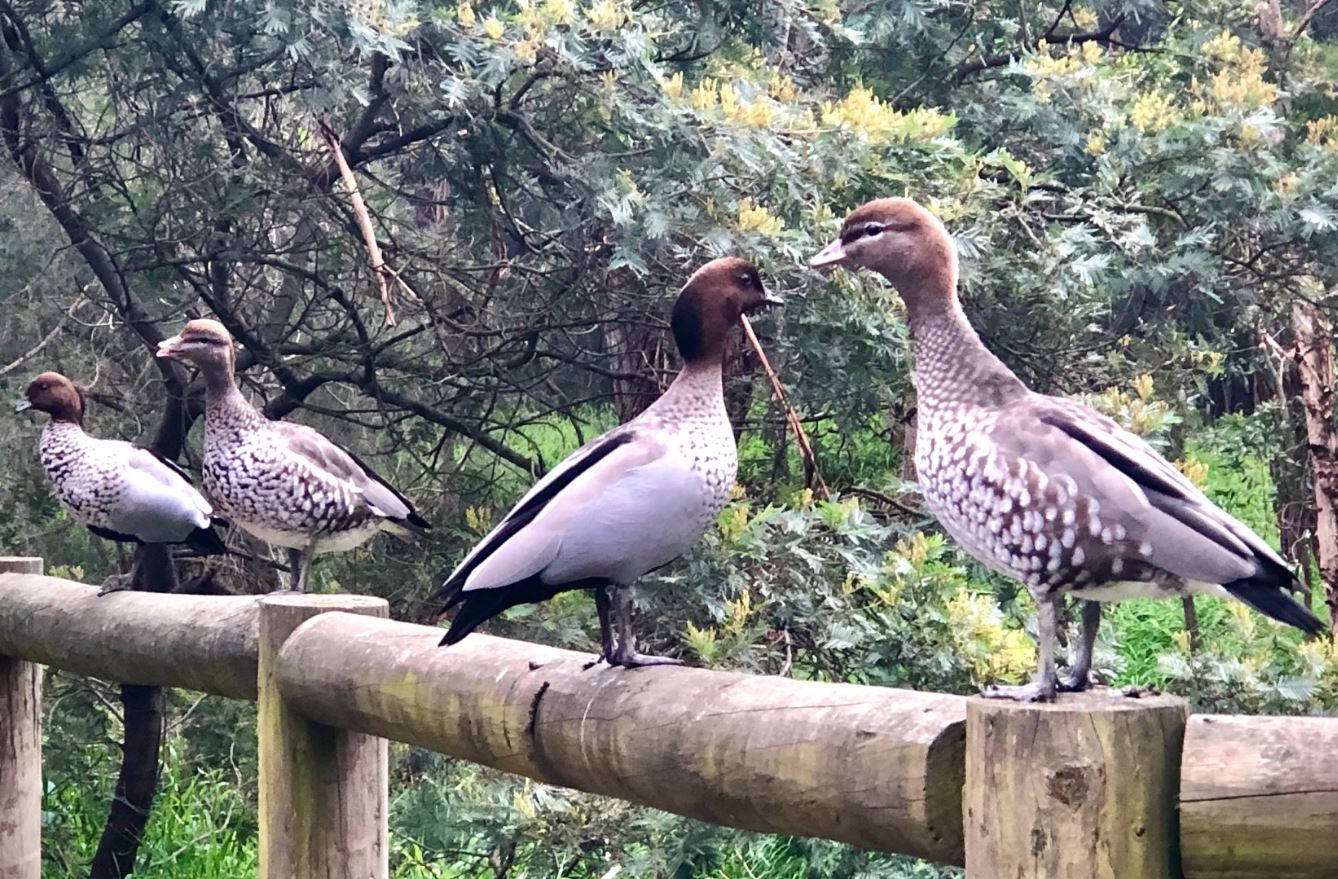
Wood Ducks speed dating ? (thanks Lisa)
- We are very fortunate to have a number of local photographers who take the time and trouble to send us photos of interesting sights around the Creeklands. Once again, we thank them – this newsletter comes alive due to their generosity and skills… However, it is not often we are able to publish sightings from original artworks. The drawing below is from Sophie who is a seven year old student from our neighbouring Laburnum Primary School:
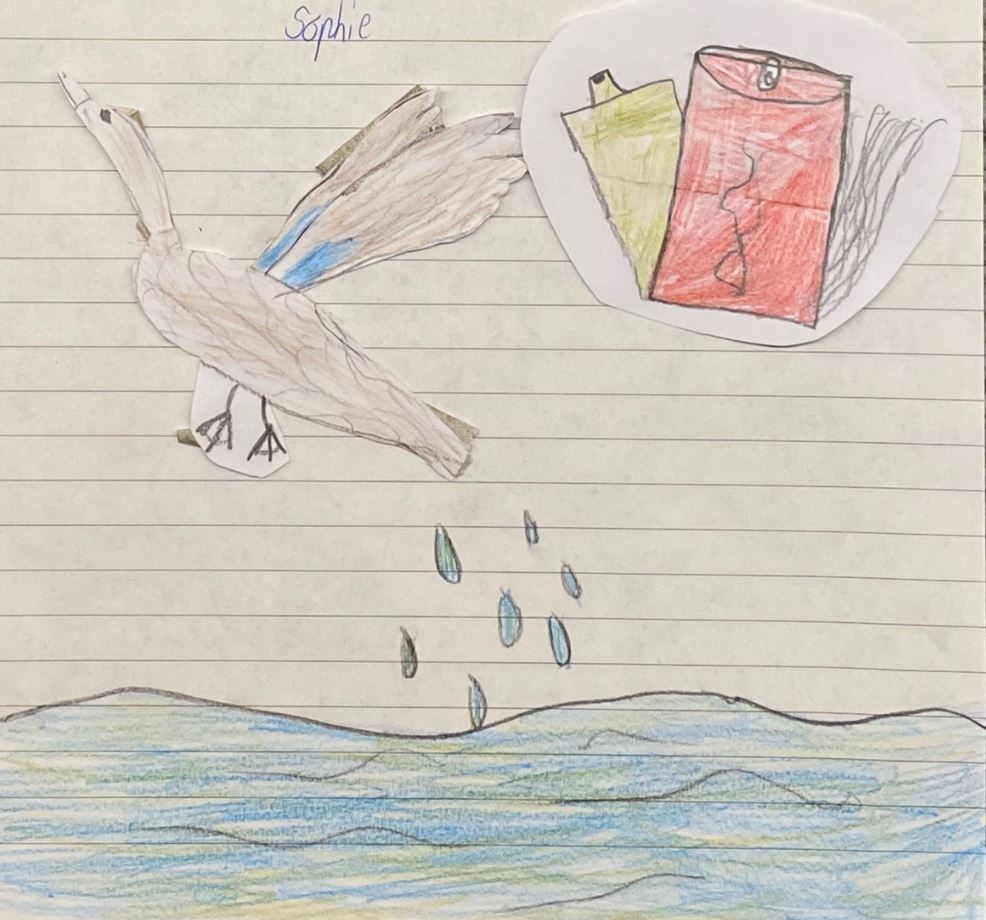
- Sophie drew her picture to accompany a project she was working on about litter in the creek. She and her justifiably proud Dad Justin had surprised a duck on the water – the inset shows some of the rubbish they observed. There is no doubt it is a Pacific Black Duck taking-off – Sophie clearly shows the flash of blue seen in Greg’s earlier photo.
Plant of the Month
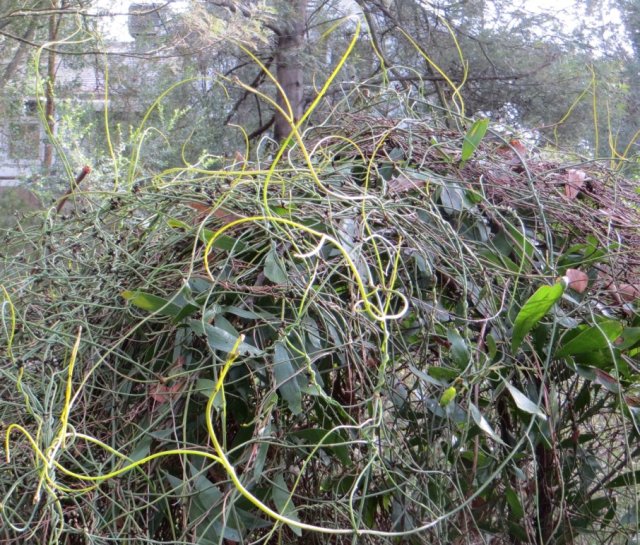
- Our unusual Plant of the Month is Dodder (Cassytha spp). Dodder is a strange plant looking rather like a strangling, tangled, leafless, aerially suspended vine growing well above ground. An appropriate alternative common name for one variety is devil’s twine.
- In fact, it does have leaves – but they are microscopic, being reduced to minute scales on the stem (which occasionally branches). Our example above shows Dodder seriously impacting a host Blackwood wattle in Furness Park.
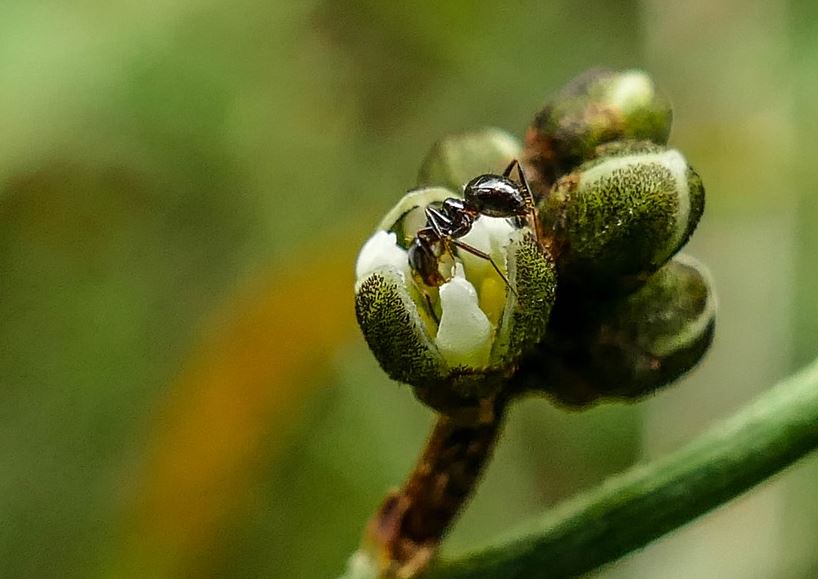
- They propagate by seed after flowering, helped by birds. It flowers at this time of year – they are not obvious but Ruth captured this close up of an open flower – which must be attractive to ants:
- It is semi-parasitic – Dodders attach themselves to a plant and wrap themselves around it. The dodder produces haustoria (a wedge inside attachment cups) that insert themselves into the vascular system of the host tree and the young Dodder’s root in the soil dies off – leaving it up in the air, partly feeding off its host while also photosynthesizing for itself.
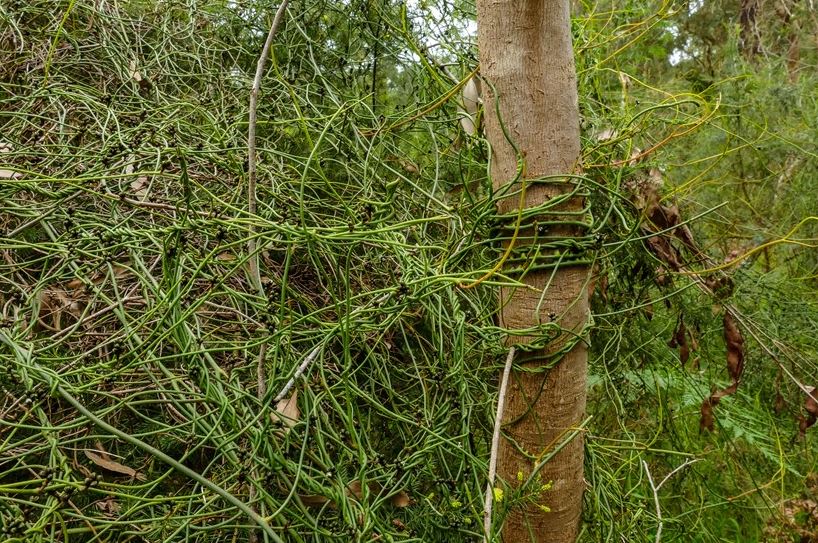
What a tangle ! (thanks Ruth)
- The vine is quite strong. Dodders often end up strangling or breaking their host plants.
- Bottom line: probably not a good choice for your garden – but Dodder is indigenous, so has a right to exist in our park.
In the Corridor
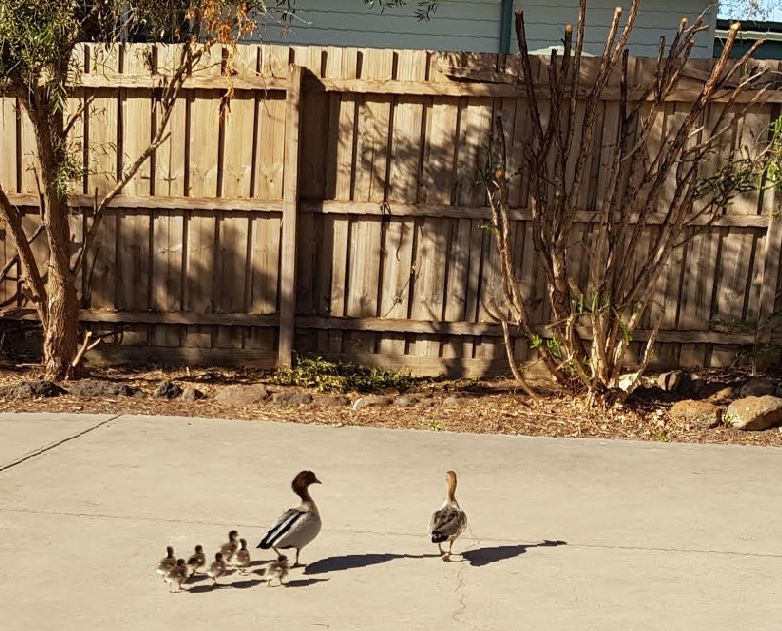
- Victor, one of our Friends, sent us this picture of a young family of Wood Ducks in his driveway in nearby Marian Court. It seems Mother Duck is either taking the family exploring or has lost her sense of direction! Victor has also spotted a family recently swimming with their mother under the Blacks Walk bridge in the direction of Middleborough Road.
We are in it together!
- Once again, please support each other and stay safe!
 Blackburn Creeklands