Weeders back on the Job!
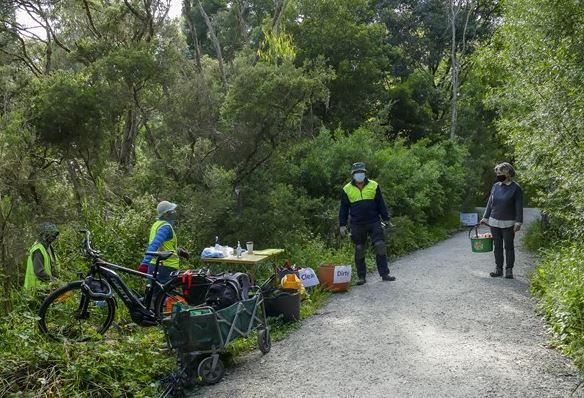
- At last week’s Creeklands Committee meeting following the relaxation of Covid-19 restrictions, Committee agreed we should plan for our regular working bees to resume as of Monday, 2nd November at 09:00. Council confirmed they were “right to go” then.
- Like any workplace, the team has had to formulate its own CovidSafe work plan.
- Beautiful weather and a huge number of weeds greeted the team of six for a fun session in the swampy area adjacent the new wetland on their first day back. They really enjoyed exchanging pleasantries with the park regulars and catching up on all the news. They even planted some excess sedges given the soil was moist enough.
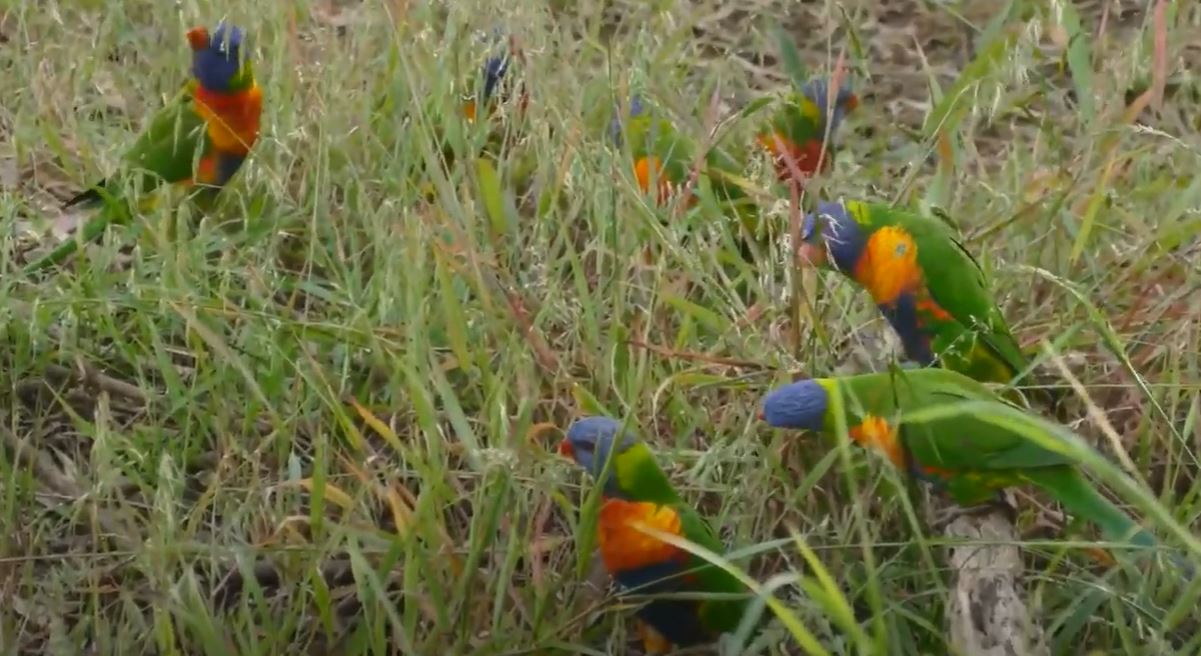
- Here is a still from a video clip of the other working bee team in the park – resplendent in their orange fluoros. They told us they are working on reducing the seed load of weedy grass species…
Good Spring Rains
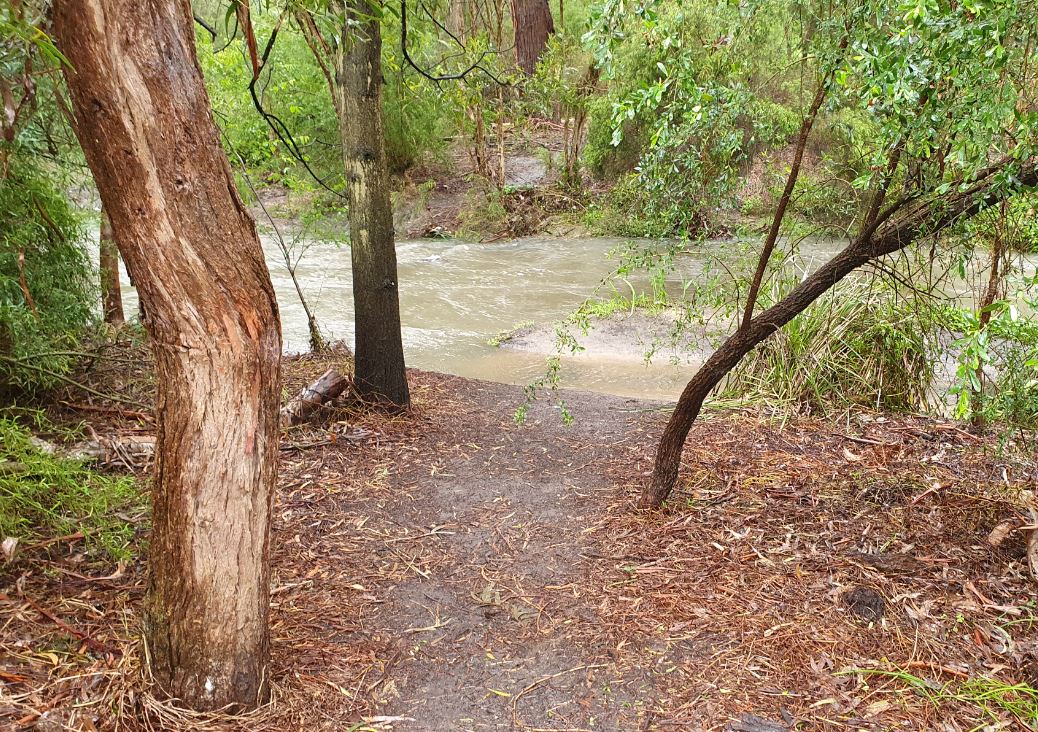
- The park has benefitted from some good rains recently and the warming weather- our picture shows the creek rising impressively near the Laurel Grove bridge.
Did you ever want to see inside a Cockroach ?
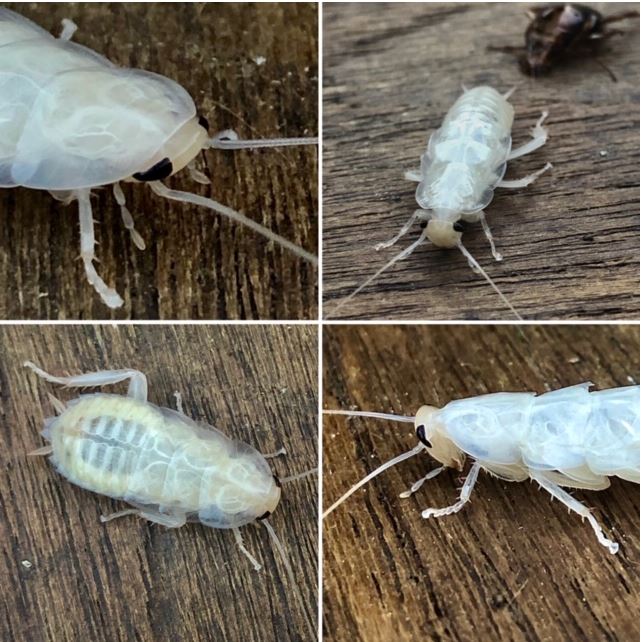
- Cockroaches aren’t always the most fashionable of topics but Lisa, one of our Friends and photographers, shared an interesting story with us:
We had company yesterday evening while enjoying a drink and nibbles on our deck.
Not really the sort of company I usually like to keep, however, it was intriguing. It seems this cockroach had just moulted(?) – can see his previous personality (empty shell) split and left behind. He/she seemed very vulnerable – visually obvious and slow (exhausted and toughening up?!).
- We left out the bit about her squishing it if it returns looking more like the normal insect…
- Interestingly, the fresh outer layer is semi-transparent – so gives us a kind of X-ray view of the insect’s internals. We were reluctant to tell Lisa that her new friend looks a bit legless (unless one leg is folded up underneath) – if so, it seems that the cockroach may have shared her drink to excess!
- We think Lisa’s new pet is a native cockroach of the genus Drymaplaneta. It turns out that the larger, flat, dark cockroaches are likely to be native fauna so squishing our friend would have bad karma! The lighter brown more rounded cockroaches are introduced pest species.
Scientific Names
- What are those “Scientific Names” all about? A Swedish scientist Carl Linnaeus set himself the no small task of inventing a way to classify every living thing on earth in the 1700s– including us (Homo sapiens). Part of this system is a “binomial” name – a name of two parts. It is always italicised or underlined as a matter of protocol.
- The first part nominates the “genus” (a group of related species) and the second, the specific “species” part. The genus should always be capitalised, while the species part is not.
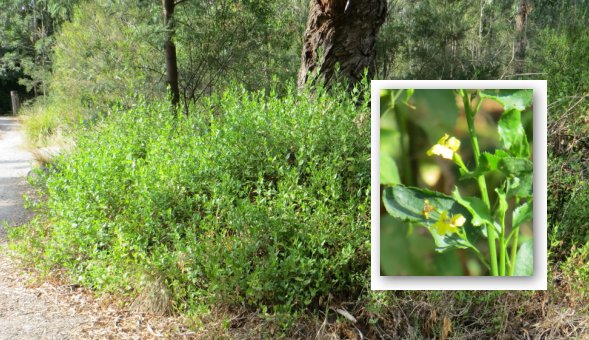
- It takes two to tango – both names are needed to define a particular plant or animal. While genus is unique, the same species part might be used for, say, different plants. For example, our Eucalyptus ovata (Swamp Gum) is a large tree while Goodenia ovata (Hop Goodenia) is a small-medium shrub. The “ovata” alludes to their oval shaped leaves. In relation to plants, the binomial name is often called the “botanical name”.
- Why aren’t the names we use Swedish or English then? The answer is that when Carl worked, “New Latin” was the language of science – Homo=man and sapiens=wise or sensible. That distinguishes our species from one of our predecessors say Homo erectus = standing up man.
- So all the names are Latin ? No – not always – though everything is made to look like Latin. They are often named after their discoverers. For example, the genus Banksia is named after Captain Cook’s botanist Joseph Banks and was “latinised” by adding the “ia”. Shiny Cassinia is known scientifically as Cassinia longifolia where longifolia is Latin for “long leafed” – while Cassinia was named for the French botanist Alexandre de Cassini.

- Sometimes the name refers to where the organism was discovered or lives eg our Laughing Kookaburra’s binomial name, Dacelo novaeguineae, indicates it comes from New Guinea (novaeguineae = of New Guinea). Actually, the Laughing Kookaburra was first described and illustrated by the French naturalist and explorer Pierre Sonnerat in his book Voyage à la nouvelle Guinée published in 1776. He claimed to have seen the bird in New Guinea. In turns out Pierre never visited New Guinea and the bird does not occur there – though other species of Kookaburra do. It is likely he obtained a preserved specimen from one of the naturalists who was with Captain Cook on his 1770 voyage to the east coast of Australia. So, a scientific fraud is basically perpetuated in our Kookaburra’s name! What does Dacelo mean ? It is an anagram(!) of Alcedo, the Latin word for a kingfisher.
- Why don’t we just use the Common Names? One problem with Common Names is that they are not always unique and can vary from place to place. On the other hand, a scientific name always refers to a specific species and not only also tells us something about that species’ relationship with others, it may also describe the species somewhat.
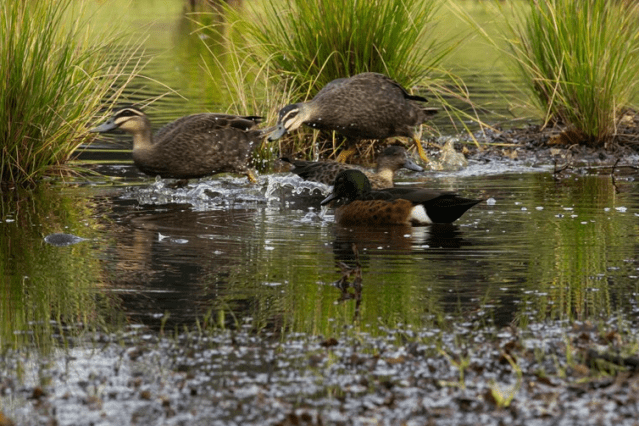
- For example, two of our duck species are the Pacific Black (Anas superciliosa) and Chestnut Teal (Anas castanea). Decoding – Anas=duck, superciliosa refers to “eyebrow” and castanea refers to “chestnut brown colour”.
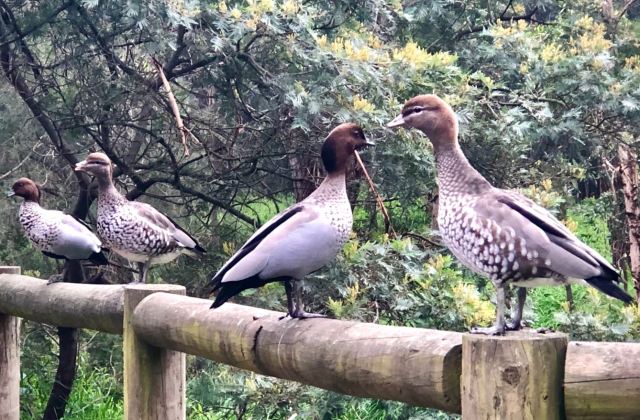
- The third “duck” we see in the park, the Australian Wood Duck (Chenonetta jubata), belongs to a different genus – telling us it is not as closely related as the first two ducks. Chenonetta is from the Greek chen=goose and netta=duck and jubata=maned. Other common names for this bird are maned duck or maned goose:
- On the other side of the coin, sometimes different common names are used for the same species – incorrectly suggesting they are different species. A good example is the case of domestic dogs and Dingoes. Both are Canis familiaris. Leaving aside the tricky question of hybrids, an intrinsic property of organisms of the same species is that they can successfully interbreed – which dogs and dingoes can do. UPDATE: The scientific name of the dingo was recently changed from Canis familiaris (domestic dog) to Canis lupus dingo, (lupus=wolf) to show its relationship to the white-footed wolf of South-East Asia.
- Scientific names for plants, animals etc are regulated by professional codes – such as the International Code of Nomenclature (ICN) for algae, fungi and plants.
- Is there more to this than the Binomial Names? Yes, there are several higher levels in this naming system separating bacteria, plants, animals, mammals and so forth – drilling down to the bottom two levels belonging to a specific organism. A classification system like this is called a taxonomy and has evolved quite a lot from Linnaeus’ original system. More recently, DNA analyses have had a strong impact on classifications.
- There is sometimes a third level of name used for sub-species where variations occur due to differences in evolution eg different colour forms or geographic races. For example Eucalyptus viminalis, is the Manna Gum and E. viminalis subsp. pryoriana is the Coastal Manna Gum – a smaller version found in Gippsland coastal areas. Notice it’s OK to abbreviate Eucalyptus to E. rather than repeat it. The context provides the full name.
- Returning to our example of the Laughing Kookaburra (Dacelo novaeguineae), the full breakdown is as follows:
| Domain: (new in 1990) | Eukaryota | Everything except bacteria and archaea |
| Kingdom: | Animalia | Animals |
| Phylum: | Chordata | All organisms with a dorsal nerve cord |
| Class: | Aves | Birds |
| Order: | Coraciiformes | Colourful birds including the kingfishers, the bee-eaters etc. |
| Family: | Alcedinidae | Kingfishers |
| Subfamily: | Halcyoninae | Tree kingfishers |
| Genus: | Dacelo | Kookaburras |
| Species: | D. novaeguineae | Laughing Kookaburra |
| Sub-species (2x): | D. n. novaeguineae | Laughing Kookaburra- Eastern Australia |
| D. n. minor | Laughing Kookaburra – Cape York Peninsula south to Cooktown |
- Other Kookaburras are:
- Rufous-bellied kookaburra (D. gaudichaud) – lowland New Guinea
- Spangled kookaburra (D. tyro) – Aru Islands (Indonesia), southern New Guinea
- Blue-winged kookaburra (D. leachii) – northern Australia, southern New Guinea.
New Technology
- We use WordPress to host and manage our web-site. This edition of our newsletter is our first to use WordPress’ new “Block” editor. It is considerably more powerful than its predecessor and adds useful new features such as the table handling we used in our article on Scientific Names. However, there may be unintended side effects – please let us know if things don’t work as well on your device (PC, laptop, tablet or smartphone).
Council Works
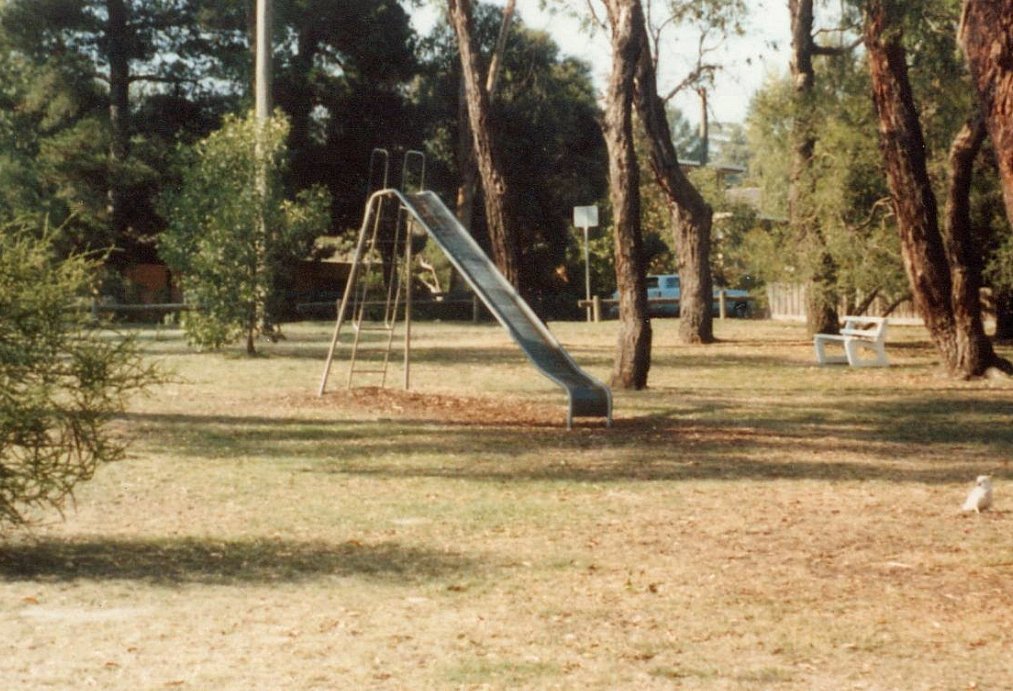
- Council plans to replace the Garie Street playground in the coming twelve months. Fortunately, the Garie Street playground rates as a “neighbourhood” playground as opposed to Furness Park’s lowly “local” rating. This justifies better equipment, more consultation and a higher budget. Three or four major items of equipment and a picnic table are possible.
- We are planning to arrange an on-site meeting with Council as soon as practicable to improve the planting in front of the renovated Scout Hall.
Sightings
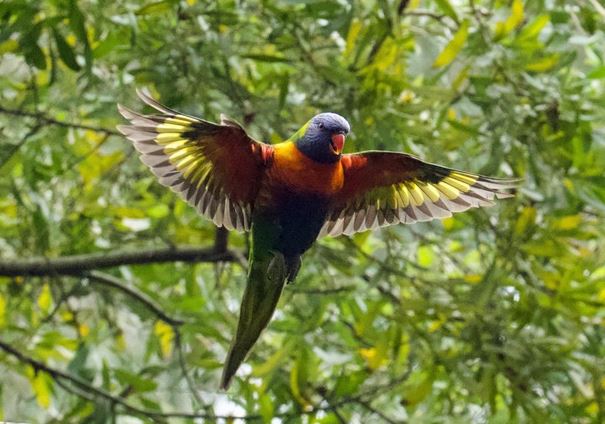
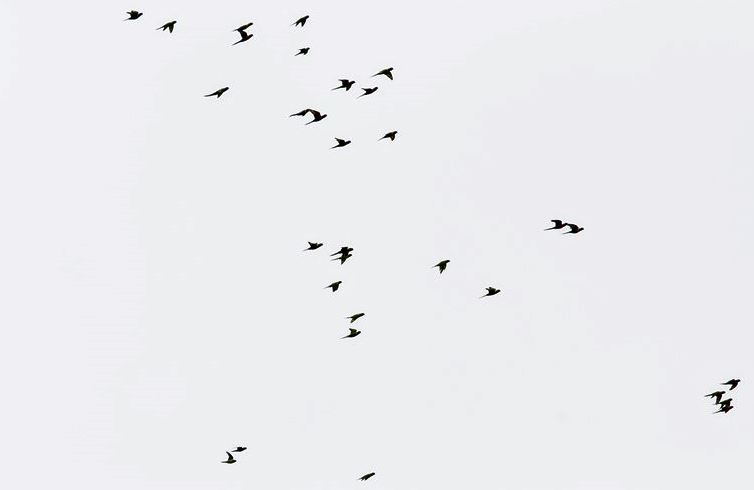
Q: Speaking of lorikeets in flight, what has spooked the flock of lorikeets above?
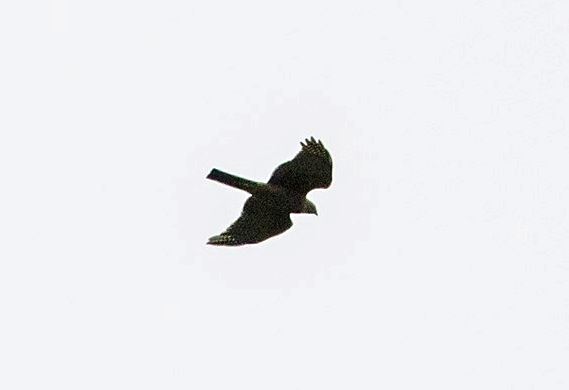
A: It’s one of our raptors, the Collared Sparrowhawk (Accipiter cirrocephalus), a fierce bird-hunting hawk, flying at high speed. Ruth has done a great job capturing its most distinctive feature – its square-tipped tail – so well. That sets it apart from the similar but larger Brown Goshawk (A. fasciatus) – belonging to the same genus – whose tail is rounded at the tip. Pat Bingham says “it’s great for us to be able to see them around the Creeklands (as we have done from time to time) – though their prey (birds up to the size of Rosellas) might not agree with us!“.
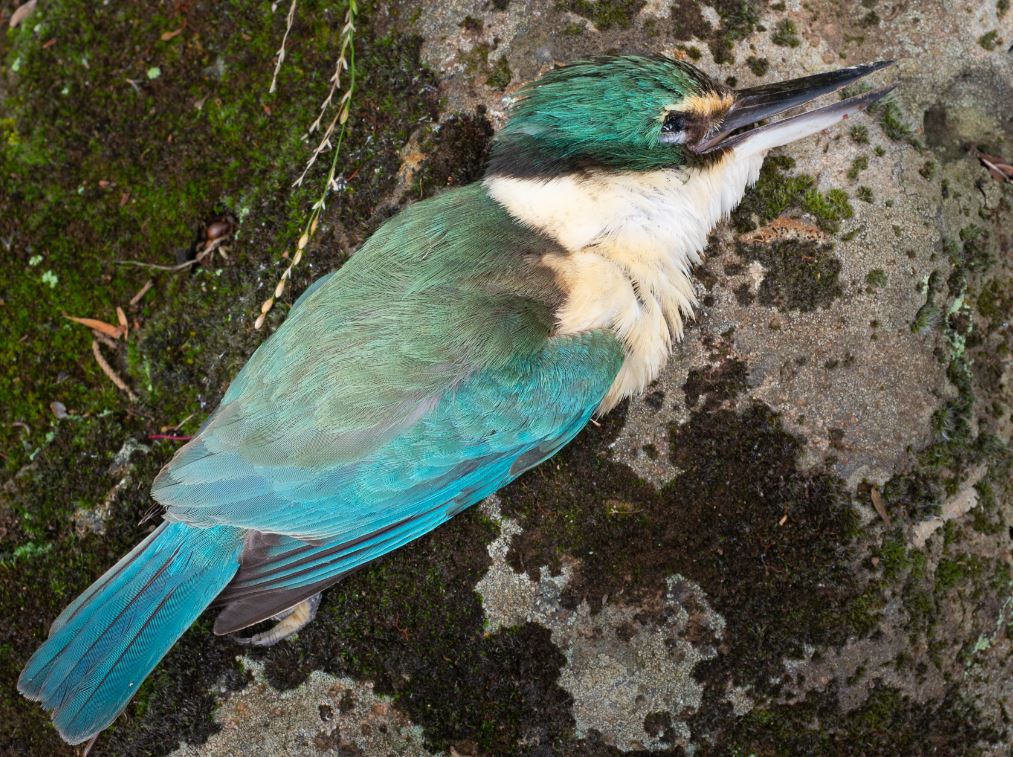
- The above is both a good sighting and a sad sighting at the same time. Greg lives next door to the park and found this recently deceased bird on his roof when clearing out his roof gutters. This beautifully coloured bird is a Sacred Kingfisher (Todiramphus sanctus).
- The species is on our Creeklands list but not seen for quite some time. Megan remembers they were annual visitors for a few years running about 20 years ago. She says: “I can remember sitting on the seat at the intersection of the main path on the south of the creek with the path from Malcolm St … and watching the colourful little bird flying in and out of the nest hollow in the big Euc to the west. They were like tiny Kookaburras“. They are migrants and just arriving in the south east of Australia from Queensland. Perhaps the long flight was too exhausting or perhaps there was insufficient food on the way due to the fires? Did anyone see it flying in the park ?
- With reference to our earlier article on scientific names, this species belongs to a different genus to the Laughing Kookaburra (Todiramphus vs Dacelo) but both belong to the Halcyoninae (Tree kingfishers) sub-family of the Alcedinidae (Kingfishers) family.
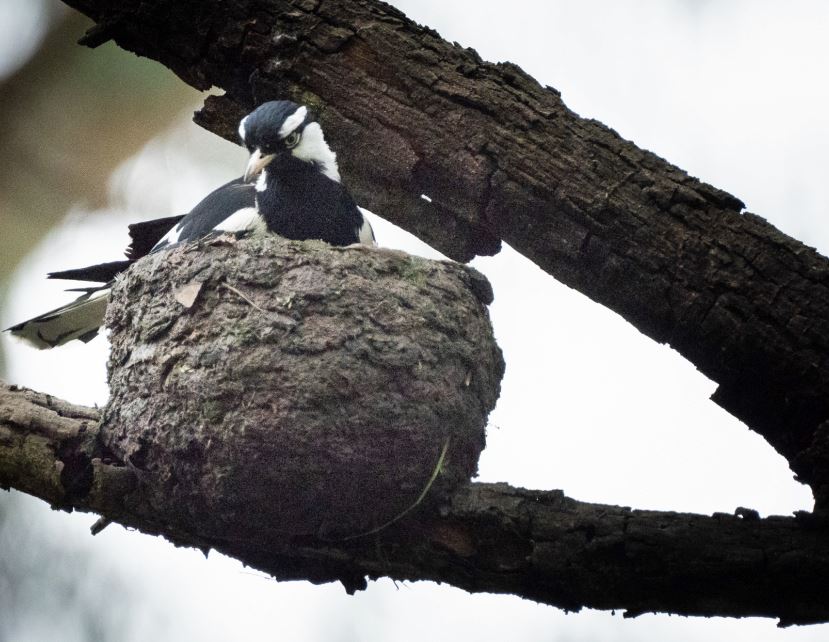
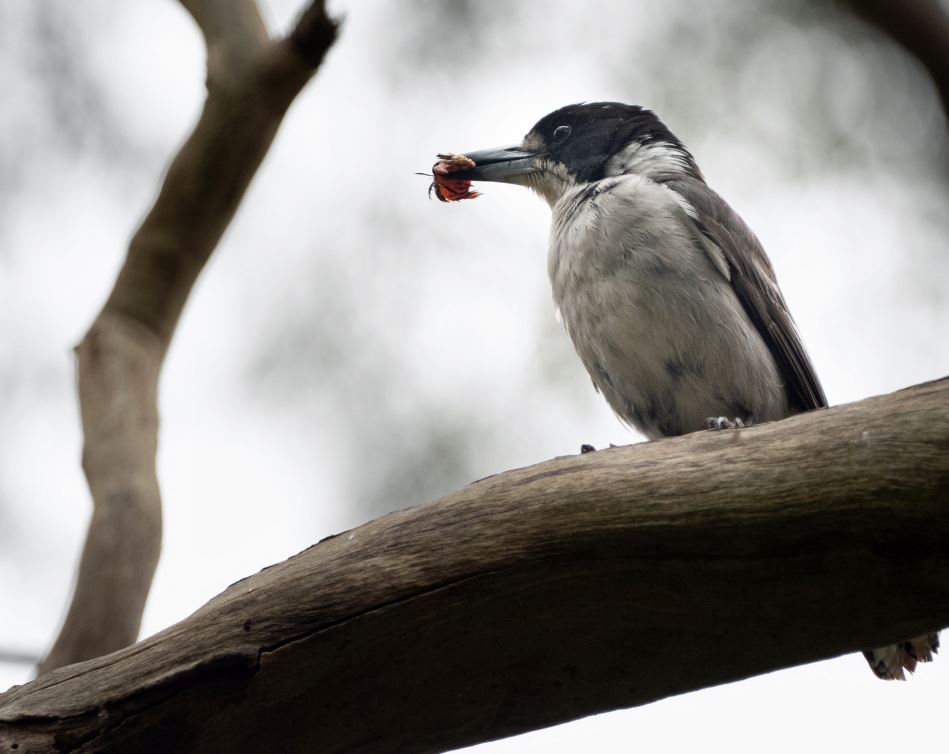
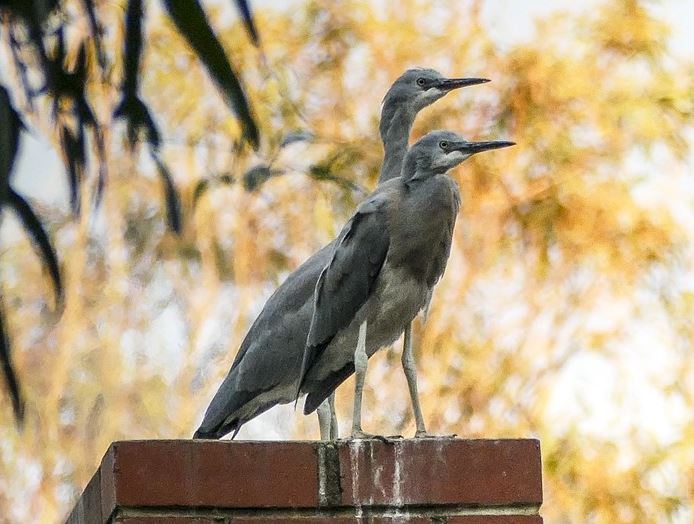
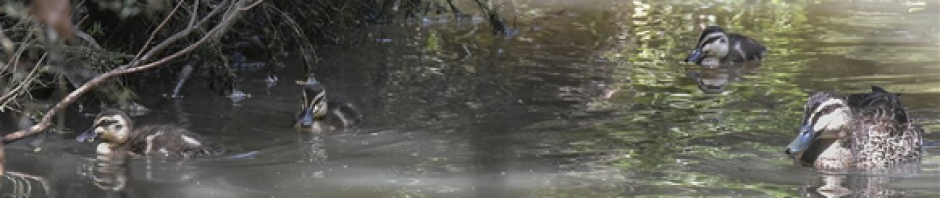
- Other sightings have been ducklings of all three of our local species in the creek, an occasional Spring visitor, the Black-faced Cuckoo-shrike in Blacks Walk (Wendy), possibly grey headed flying foxes (heard only), further nesting of Spotted Pardalotes, Currawongs and Tawny Frogmouths.
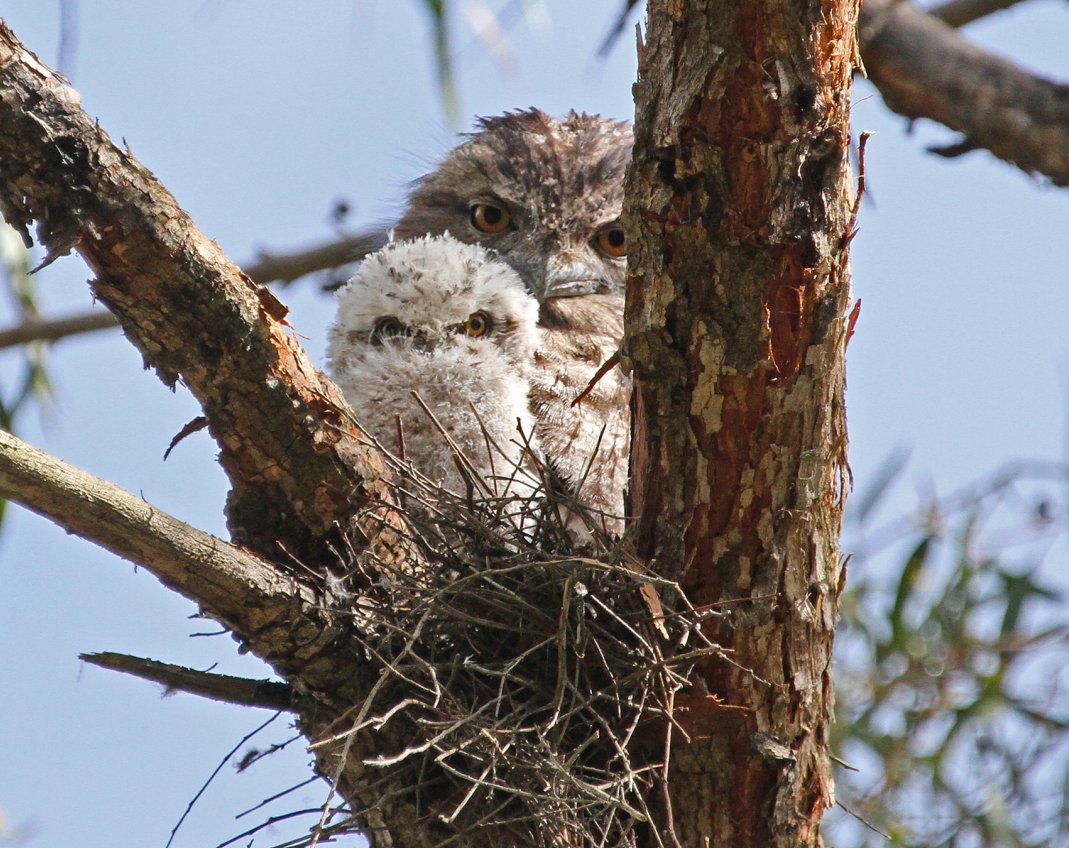
- By now, most of our readers would know that the Tawny Frogmouth (Podargus strigoides) is our “signature” bird species in the park. It is a very special favourite and an interesting article, entitled “Hard to spot, but worth looking out for: 8 surprising Tawny Frogmouth facts“, in The Conversation, notes that the species was the first runner-up in the Guardian/BirdLife Australia bird of the year poll (we suspect our Friends must have done some more “branch stacking” to get that result!).
- Number 8 “surprising fact” claims “They’re not good at building nests” – how rude! – OK, they are not as neatly sculpted as the Magpie-larks’ nest and do somewhat resemble a random pile of sticks like those left behind after a flood – but they do successfully breed in our park! They are excellent parents – and the males do their share of the child-rearing including taking a shift sitting on the eggs.
 Blackburn Creeklands
Pingback: Park News – May, 2021 | The Blackburn Creeklands