We were comparatively lucky in our area compared to locations further east, particularly the Dandenongs, in relation to tree losses and other storm damage during the month.
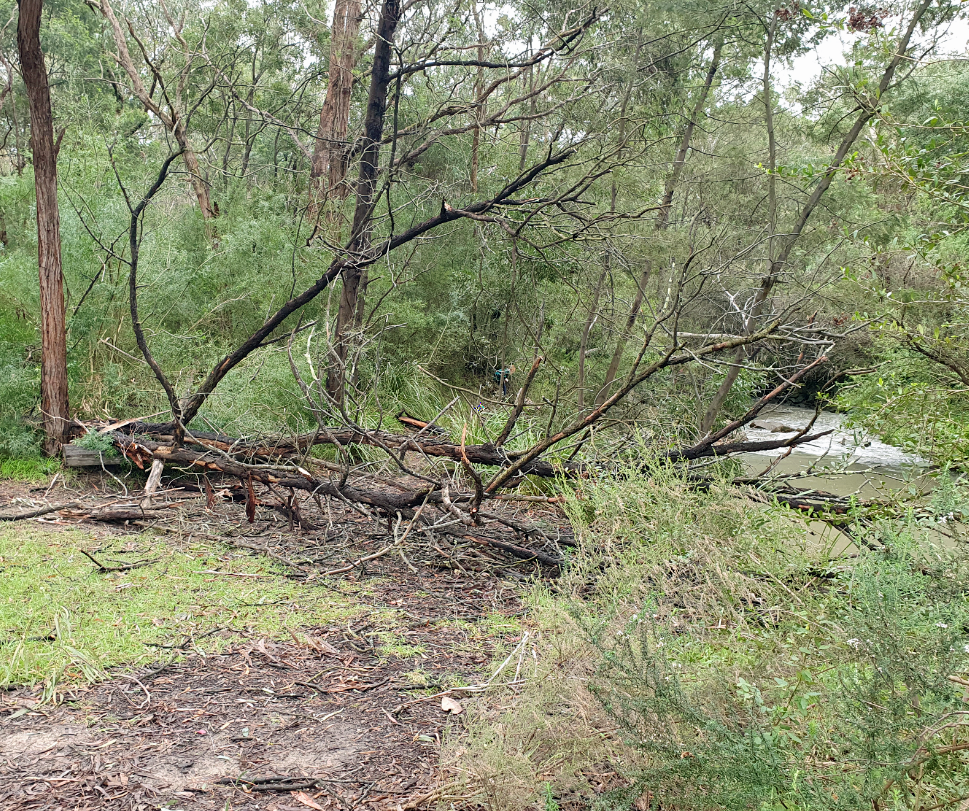
We did lose a few mature trees and stags (dead trees retained for habitat) – as well as many branches and tree foliage. Our photo above shows a fallen Acacia stag near the Laurel Grove bridge which managed to damage the seat underneath (middle left in the photo) when it came down. The seat has since been removed.
Our fourth lockdown caused the cancellation of our Community Working Bee on – a great shame, because we had our best attendance for some years at the May working bee. By way of compensation, we are planning for an interesting day at our next one on the 4th July starting at 09:30 (details below) – Covid willing!
The good news is that we’ve passed the shortest day and we are out of the strictest lockdowns – so things are now on the up…
Next Community Working Bee – Sunday, 4th July 09:30
Our next Community Working Bee is on Sunday, 4th July which is the first day of NAIDOC Week starting at the new time of 09:30 in deference to mid-winter. NAIDOC stands for the National Aborigines and Islanders Day Observance Committee.
The NAIDOC 2021 theme is Heal Country! – which calls for all of us to continue to seek greater protections for our lands, waters, sacred sites and cultural heritage. In our small way, we like to think the work we do protecting and restoring our park aligns with this theme. This not only results in a place we can all enjoy and which heals us in both obvious and subtle ways, but which also provides habitat for native fauna and flora.
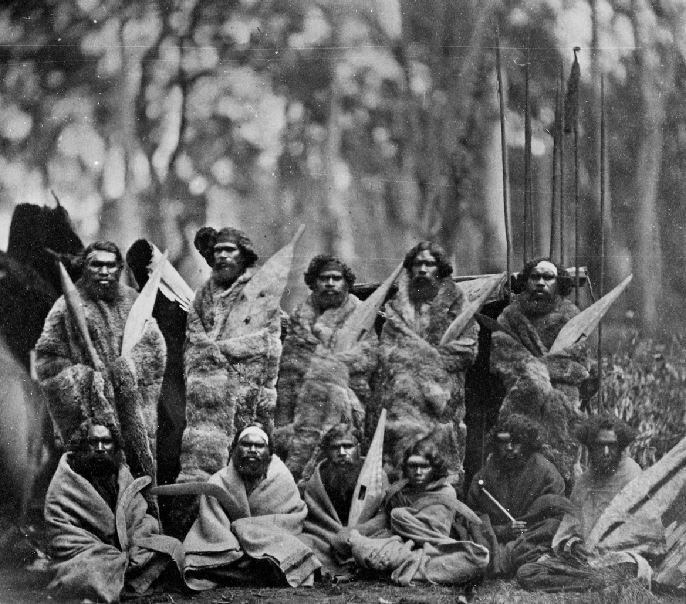
Our First People
The area around Melbourne has been inhabited for an estimated 40,000 years before European settlement – which commenced less than 200 years ago in the 1830s. This is the domain of the Kulin Nation – an alliance of five indigenous “language groups” (or “tribes”) more-or-less centred on today’s Melbourne who shared related languages. Their collective territory extends around both Port Phillip Bay and Western Port – and north into the Great Dividing Range. In terms of today’s place names, the area includes Melbourne, Geelong, Bendigo, Ballarat, Maryborough, Wilsons Promontory and along the Loddon and Goulburn River valleys.
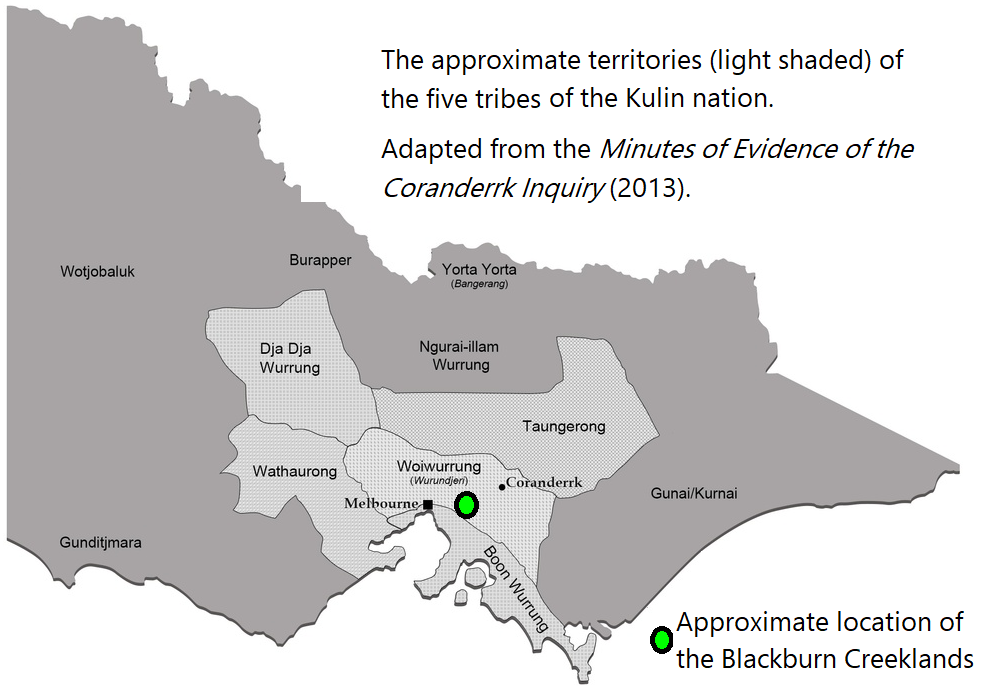
Wurrung means tongue, hence language – about 90% of words were common between the Woiwurrung and Boon Wurrung languages for example.
A number of clans comprised each language group. The clans “owned” areas of territory and were, in turn, comprised of family groups or “bands” who lived within those territories. The Wurundjeri are clans of the Woiwurrung speaking group north and east of today’s Melbourne whose territory included the Birrarung (Yarra) Valley and its catchment including our creek. Our park lies within the Woiwurrung/Wurundjeri area near the northern limits of the Boon Wurrung/Boonurong areas within our region.
These people were “hunter-gatherers” who moved around within their territories relying on local vegetation and animals for their existence. When men married, they were obliged to take their partners from outside their clan and from as far away as possible. Marriages often involved partners from either side of the Great Dividing Range. This had the obvious benefit of limiting in-breeding but also helped maintain relationships with neighbouring groups through kinship ties.
Managing “Country”
Although recently controversial, there is evidence that local aboriginal people engaged in sophisticated land management practices while looking after “country”. One local example is the cultivation and management of the locally indigenous Yam Daisy (Microseris walteri formerly Microseris lanceolata) and lilies whose nutritious tubers were gathered by the women using digging sticks. Managed “cultural burns” (as they are called today) were done in 3-4 year cycles which fertilized the soil allowing for the renewal of plant food sources for both humans and animals – and which maintained an open woodland conducive to hunting by the men.
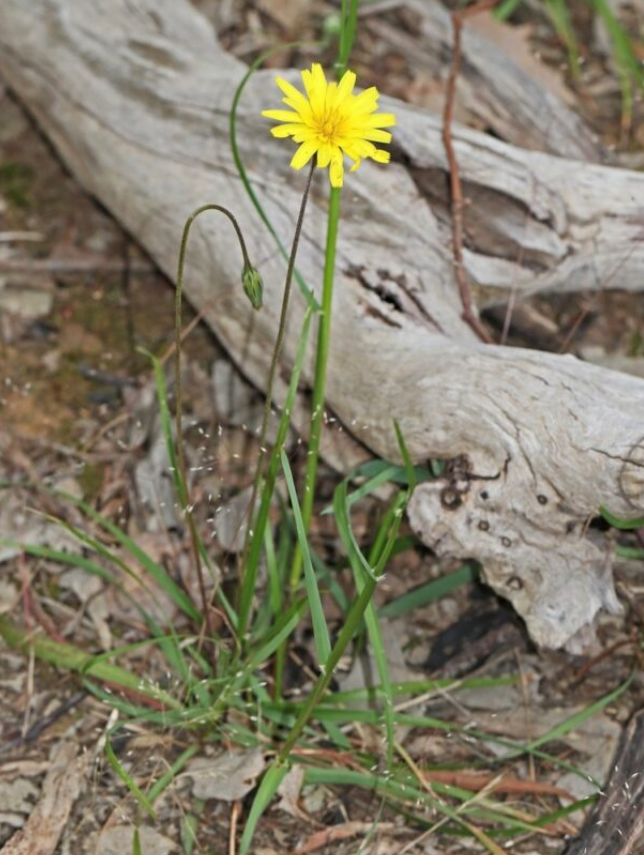
Unfortunately, the flower of the Yam Daisy looks very like that of Flatweed – so we suspect it often gets “weeded” out by mistake. Notice that the grass-like leaves are quite different from the flat leaves of the weed though.
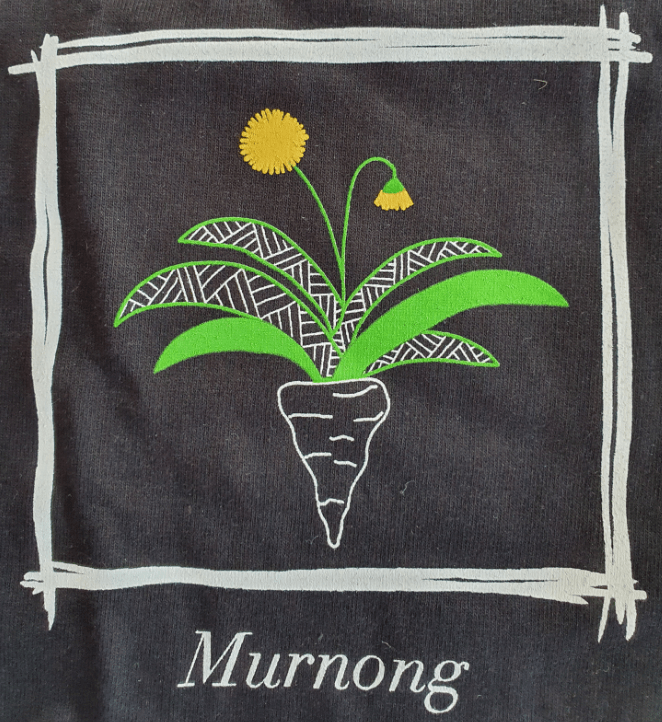
This graphic shows what happens underground.
It comes from a cool t-shirt featuring indigenous plants produced as a fund-raiser by the Willum Warrain Bunurong group based at Hastings.
Bush Tucker Plants
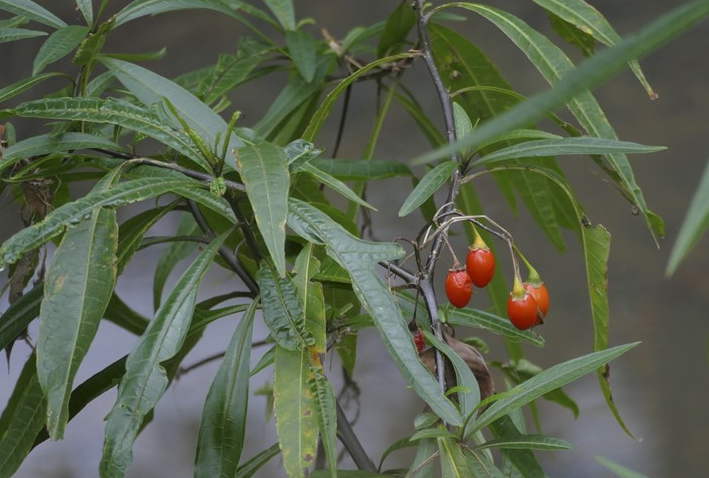
The following is a list (no doubt incomplete) of various locally indigenous plants used traditionally for food. The base data has come from Bungalook Nursery’s list with additions from other sources. In particular, the Woiwurrung names used by the Wurundjeri in our area are derived from the guidebook: ABORIGINAL PLANTS in the grounds of Monash University.
| Botanical Name | Woiwurrung & Common Names | Details | |
|---|---|---|---|
| — Tree gums and sap | |||
| Acacia dealbata | MOY-YAN, Silver Wattle | Gum is edible – sucked like candy; soaked in water to make a jelly. | |
| Acacia mearnsii | GARRONG, Black Wattle | Gum used as a chewing gum that dissolves as you chew. | |
| Acacia pycnantha | Golden Wattle | Roasted seeds and gum eaten. | |
| Allocasuarina littoralis | WAYETUCK, Black Sheoak | The gum chewed or made into a jelly by melting in hot water. The young cones were eaten. | |
| Eucalyptus viminalis | WURUN, Manna Gum | Sugary sap eaten and flowers soaked in water to make a sweet drink. | |
| — Leaves | |||
| Lomandra longifolia | KURAWAN, Spiny-headed Mat-rush | White leaf bases chewed to release starch. | |
| Mentha australis | PANARYLE, River Mint | Leaves used to make tea and also to treat coughs and colds. | |
| Prostanthera lasianthos | CORANDERRK, Victorian Christmas-bush | Aromatic leaves used to make tea or flavour food. | |
| Prostanthera melissifolia | Balm Mint-bush | Aromatic leaves used to make tea or flavour food. | |
| — Berries, fruit, flowers | |||
| Acrotriche serrulata | BURGIL BURGIL, Honey Pots | The small flowers, underneath the plant, are full of a fragrant nectar. | |
| Billardiera mutabilis | GARAWANG, Common Apple Berry | Fruit eaten raw when ripe or roasted when green. | |
| Cassytha melantha | Dodder Laurel | Aromatic and tangy fruit look like small olives. | |
| Coprosma quadrifida | MORR, Prickly Currant-bush | Berries are sweet and high in Vitamin C. | |
| Dianella admixta | Black-anther Flax-lily | Dark blue or purple berries edible. | |
| Dianella laevis | Pale Flax-lily | Dark blue or purple berries edible. | |
| Dianella tasmanica | Tasman Flax-lily | Dark blue or purple berries edible. | |
| Einadia nutans | Nodding Saltbush | Red berries are sweet to eat. Leaves can also be eaten but should be boiled first. | |
| Exocarpus cupressiformis | BALLEE, Cherry Ballart | Small orange berries turn red when ripen to a sweet and palatable fruit. Green seed not eaten. | |
| Rubus parvifolius | EEPAEEP, Native raspberry | Has edible small fruit somewhat like small raspberries but not as sweet. | |
| Solanum aviculare | Kangaroo Apple | Has berries/fruit which are poisonous while green, only edible once fully ripe (orange). | |
| — Tubers/ roots | |||
| Arthropodium milleflorum | Pale Vanilla Lily | Tubers can be eaten raw or cooked. Flowers can be eaten raw. | |
| Arthropodium strictum | Chocolate Lily | Tubers can be eaten raw or cooked. | |
| Bulbine bulbosa | PIKE, Bulbine Lily | Tubers can be roasted and eaten, they are sweet tasting and contain calcium and iron. | |
| Burchardia umbellata | Milkmaids | Tubers can be roasted and eaten. | |
| Clematis aristata | Austral Clematis, Old Man’s Beard | Taproot can be roasted and eaten. | |
| Clematis microphylla | Small-leaved Clematis | Taproot can be roasted and eaten. | |
| Geranium solanderi | Crane’s Bill, Native Carrot | Woody tap root rich in starch can be cooked and eaten. | |
| Kennedia prostrata | KABIN, Running Postman | Nectar is sweet like honeysuckle, stems can be used for twine. | |
| Microseris walteri | MURNONG, Yam Daisy | Tuber can be roasted or fried. | |
| Typha sp | BOURT-DEET, Cumbungi, Bulrush | Rhizome is rich in starch. Also the young flowering stems were eaten raw. | |
| — Seed | |||
| Acacia melanoxylon | BURN-NA-LOOK, Blackwood | Seeds are edible and flowers can be cooked and eaten. | |
| Acacia pycnantha | Golden Wattle | Roasted seeds and gum can be eaten. | |
| Linum marginale | Native Flax | Numerous small seeds eaten. | |
| Themeda triandra | Kangaroo Grass | Seeds can be ground to produce flour. |
Why not try growing your own ?
While we don’t suggest everyone would have the constitution and palate to enjoy bush foods, why not try growing some of your own? Where the plants in our list above are available from Bungalook, we link to Bungalook’s plant page through the hyperlink on the botanical name. Bungalook’s page offers further links to the authoritative VICFLORA and (often) Whitehorse Council information on the species.
Greenlink nursery also carries many of these plants and includes some others you might like to consider in its brochure bush food plants.
For further information, please download the “Indigenous Plant Use Guide” booklet by the Clean Air and Urban Landscapes Hub at the University of Melbourne – authored by Barkandji woman Zena Cumpston. It explores the cultural, nutritional, technological and medicinal use of indigenous plants in more detail.
Park Bark
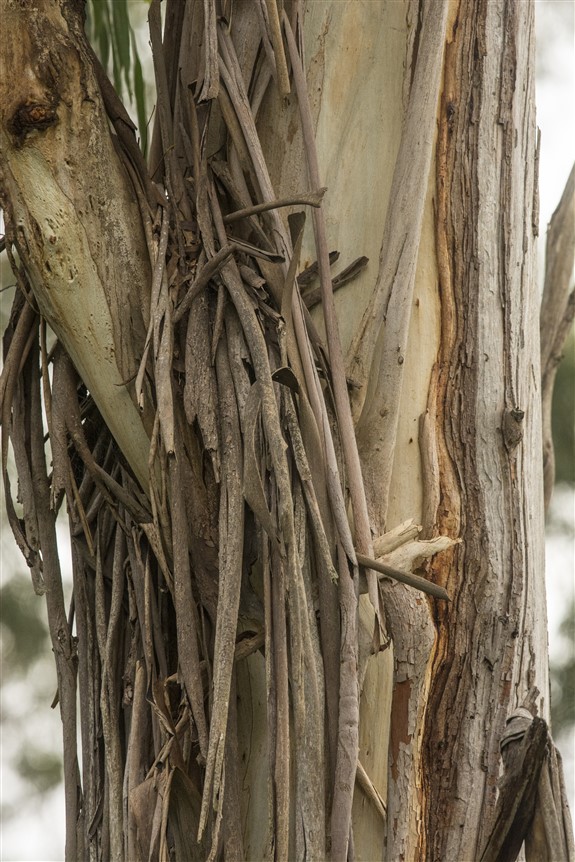
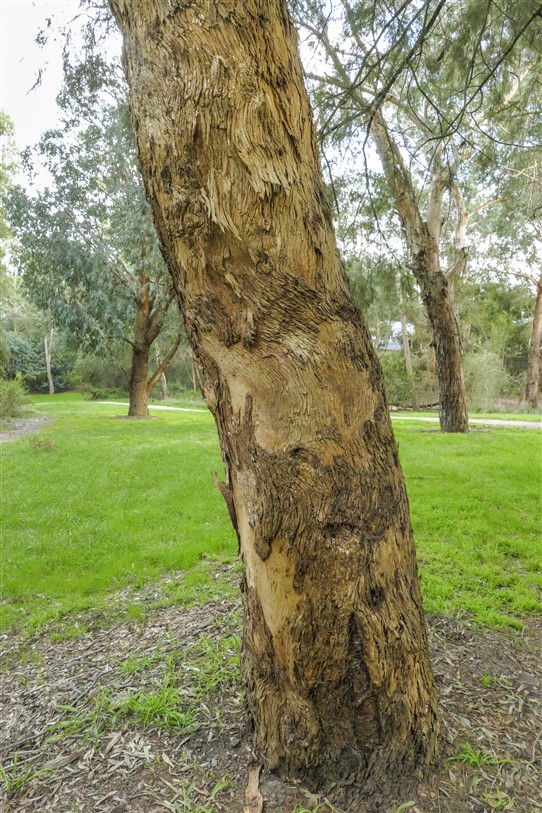
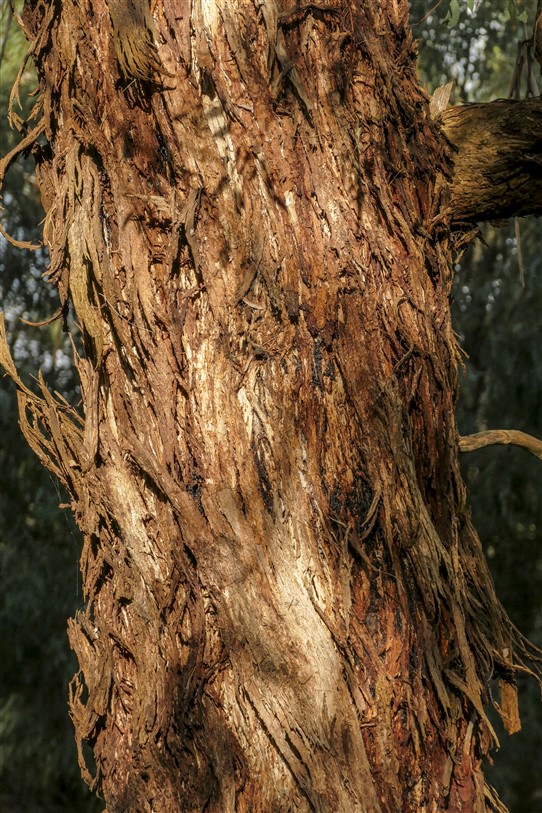
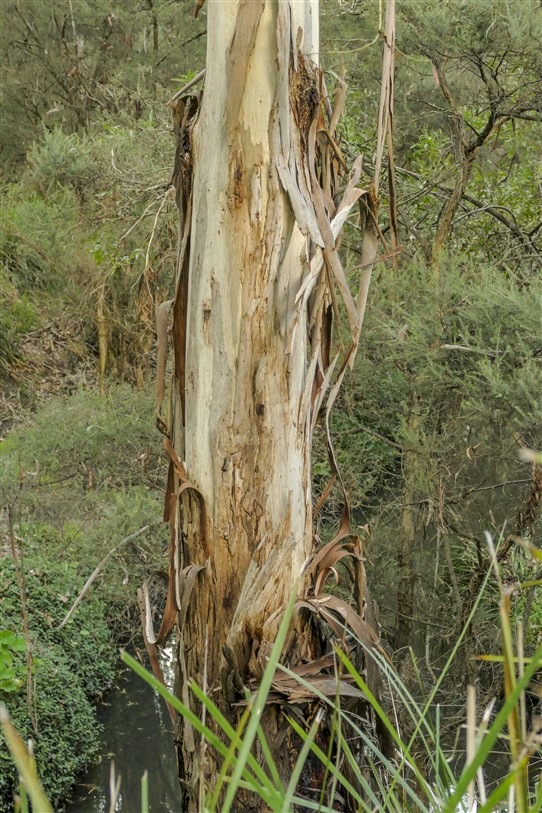
According to the early anthropologist A.W. Howitt , “Wurundjeri” refers to the Manna Gum (WURUN – Eucalyptus viminalis) in the Woiwurrung language. Trees of this species are quite common in our area generally and particularly within the park. Mature trunks often look like this one in Kalang Park on the main track south of the creek festooned with “ribbons” of bark:
In his famous book “The Leopard” set in Sicily in the 1860s, Lampedusa describes them as God’s scruffiest creation. Travellers can find our Australian eucalypts (species of Eucalyptus and Corymbia) all over the world. For example, our eucalypts were used in Italy to help drain swampy areas in attempts to eliminate the mosquito-borne Malaria.
Although there are some exceptions, often in rainforest species, most Australian trees are not deciduous in the sense of losing their leaves seasonally. Many European and North American trees adopt that strategy to cope with the winter cold. In places like England, the climate is too cold for winter growth. So trees drop their leaves to form a mulch that prevents the ground underneath them from freezing over. The mulch later decomposes to provide nutrients for new growth in Spring. Some of our rainforest trees drop their leaves to cope with the “Dry” season in monsoonal climates of northern Western Australia, the Northern Territory and Queensland. The strategy is the same but the tactical objective is to prevent moisture loss from leaves and to retain moisture and nutrition in the ground ahead of new growth – once the harsher conditions pass.
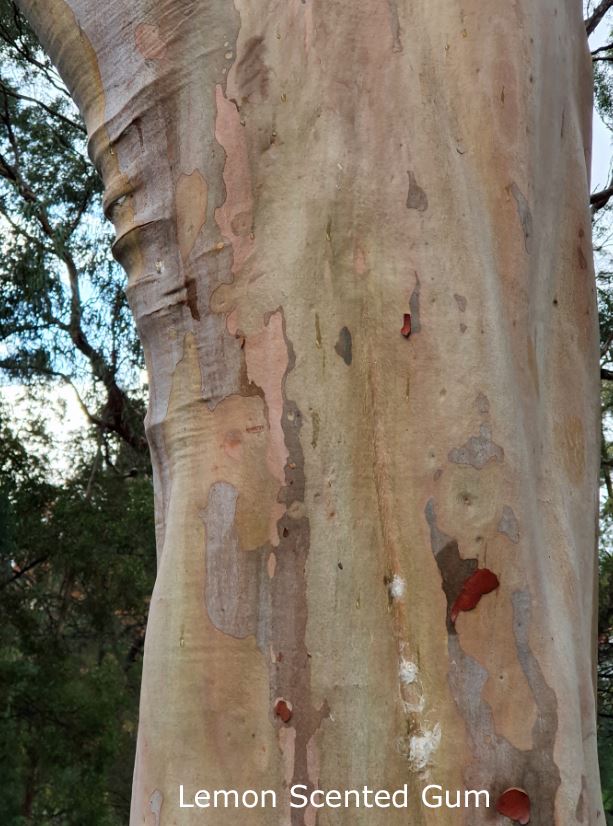
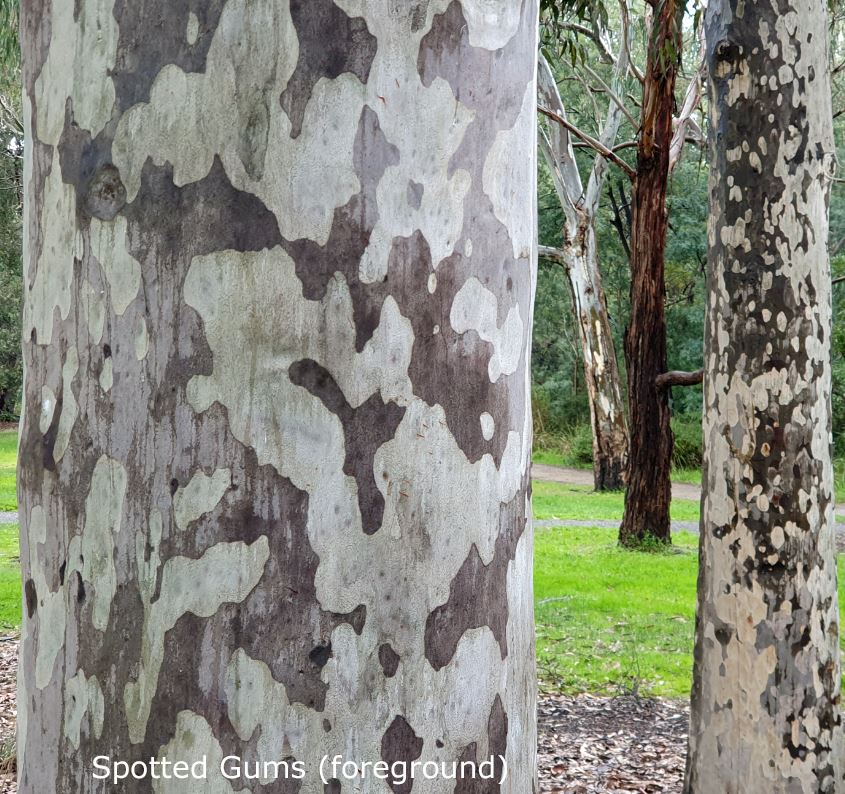
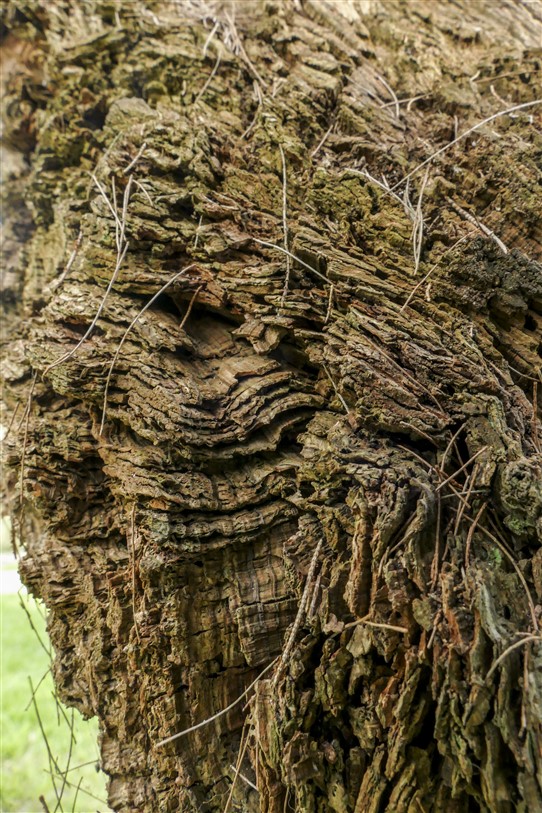
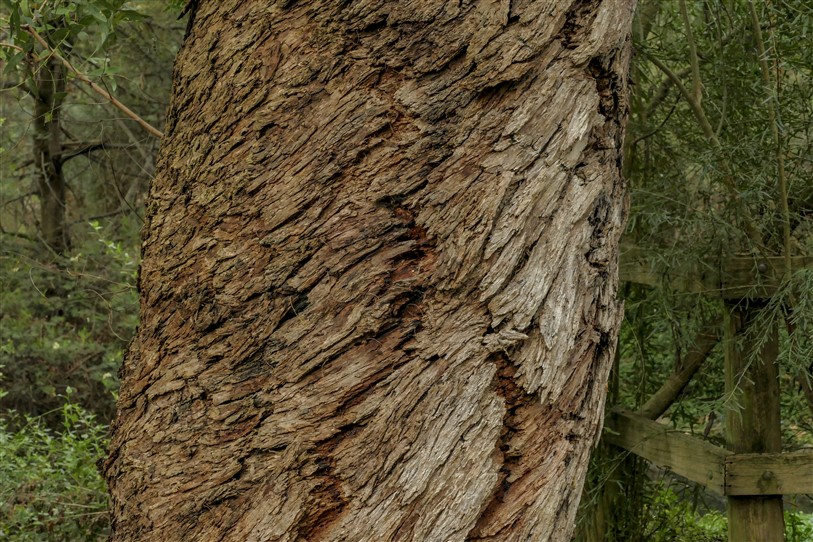
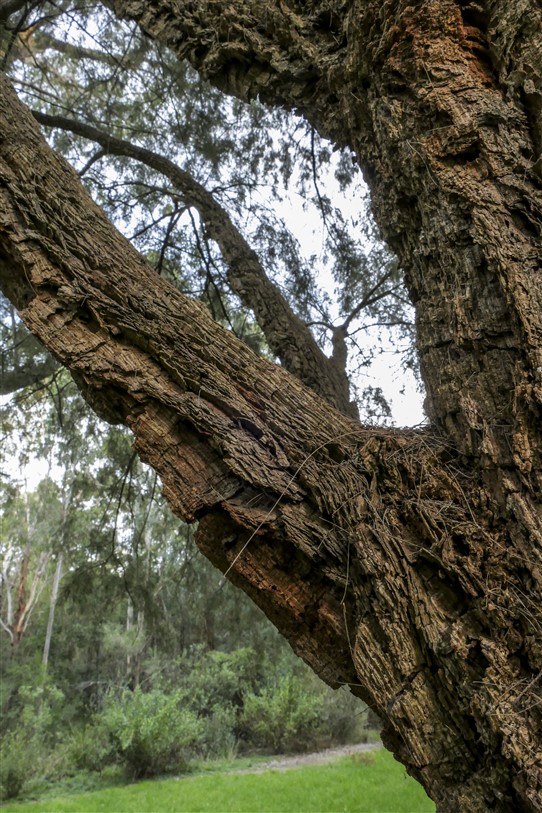
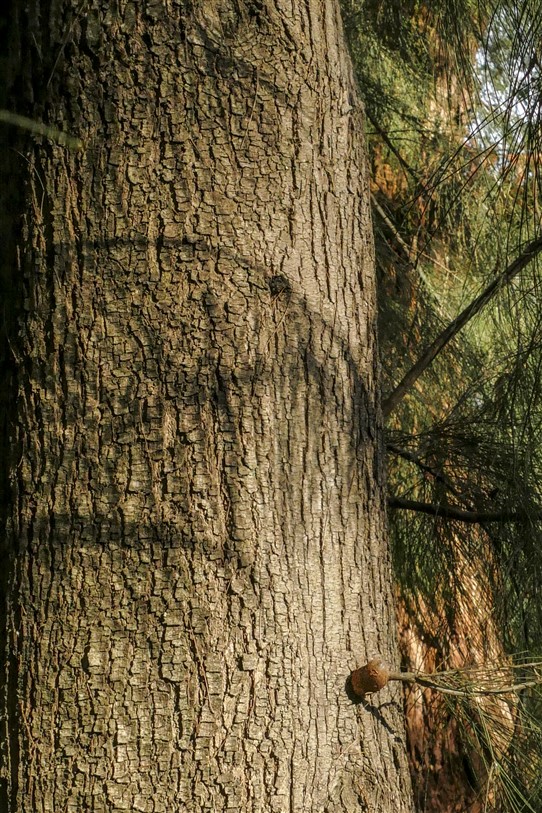
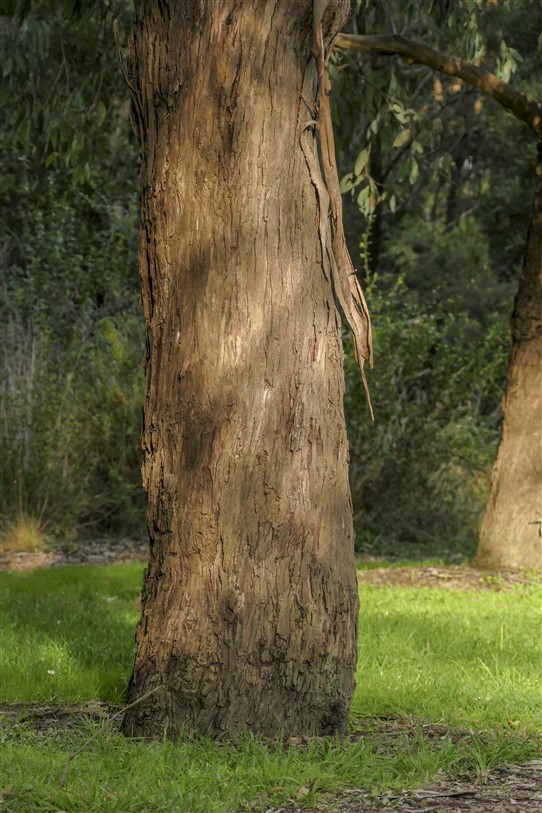
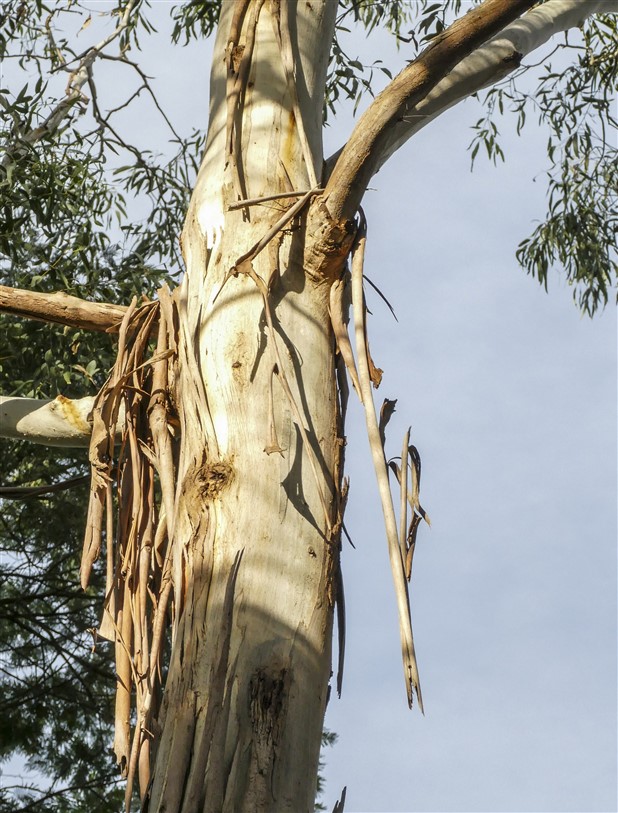
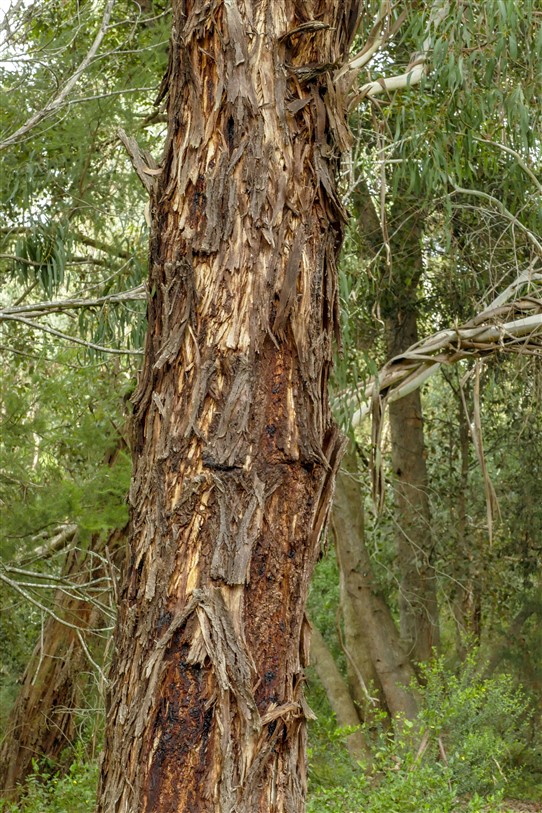
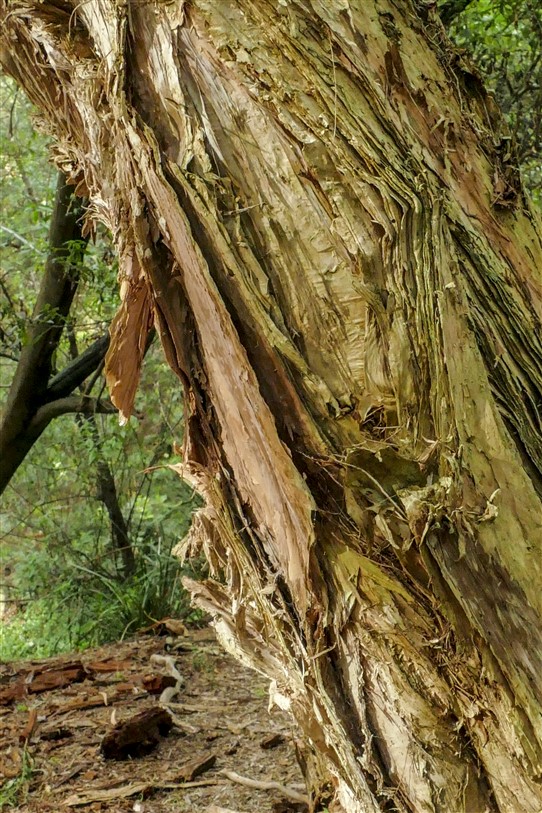
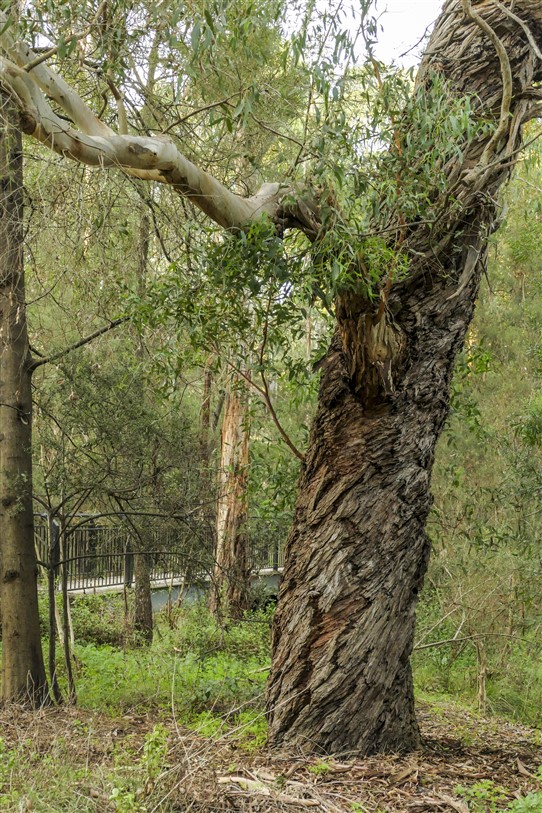
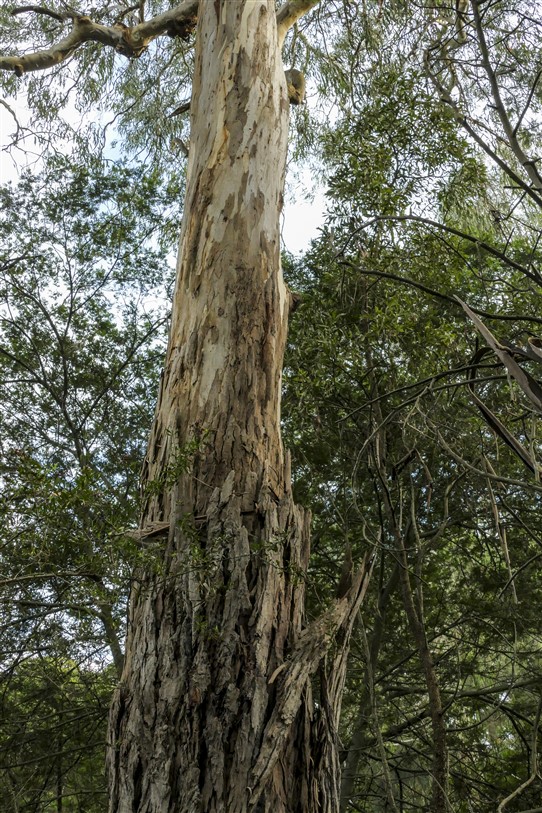
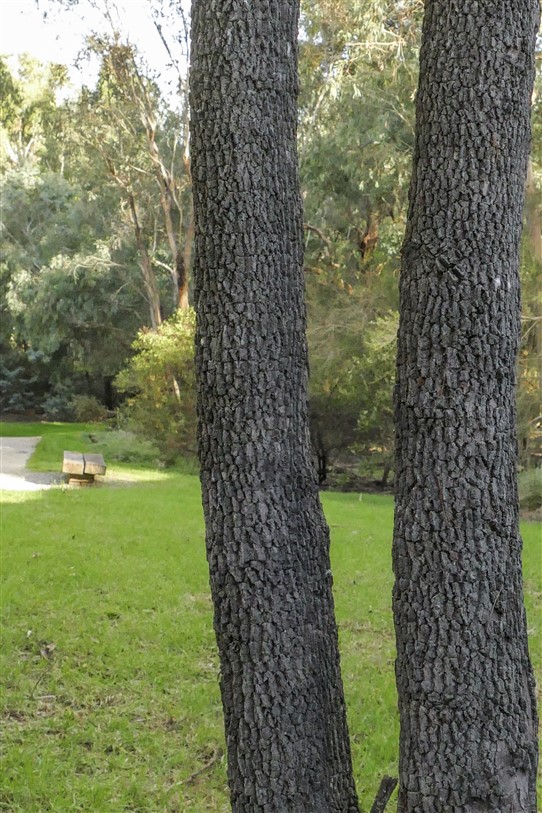
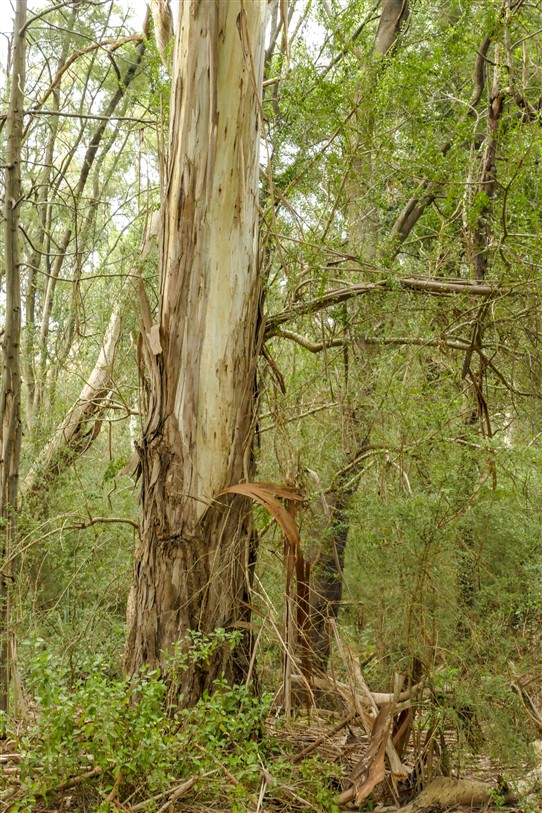
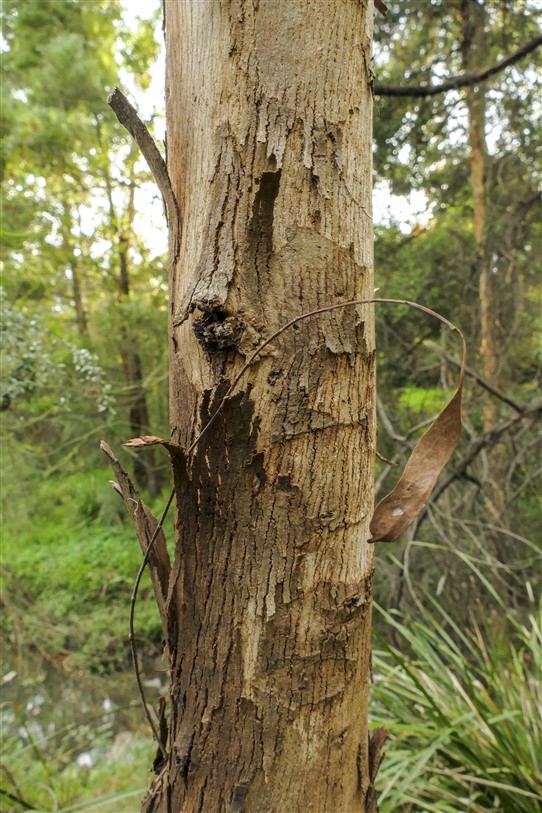
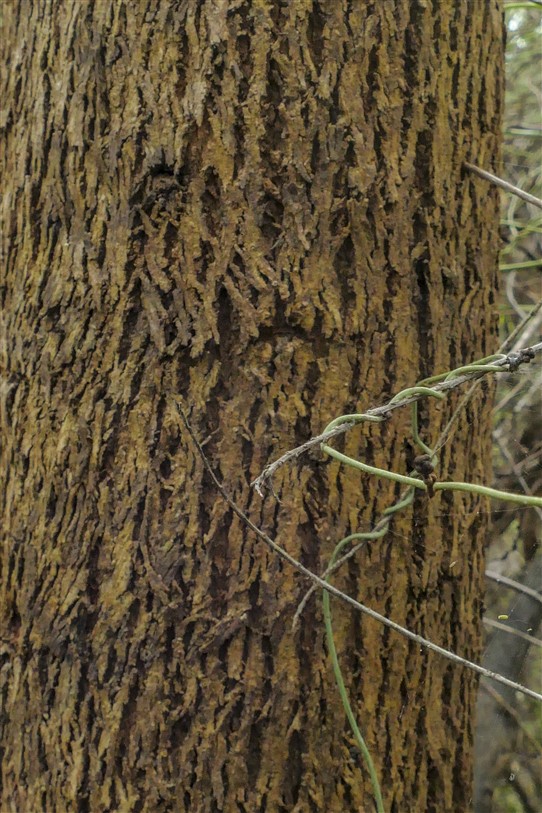
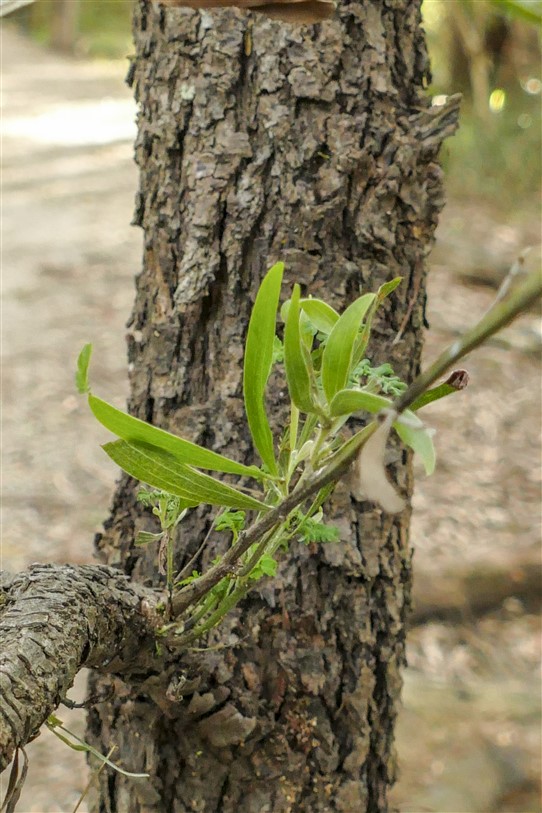
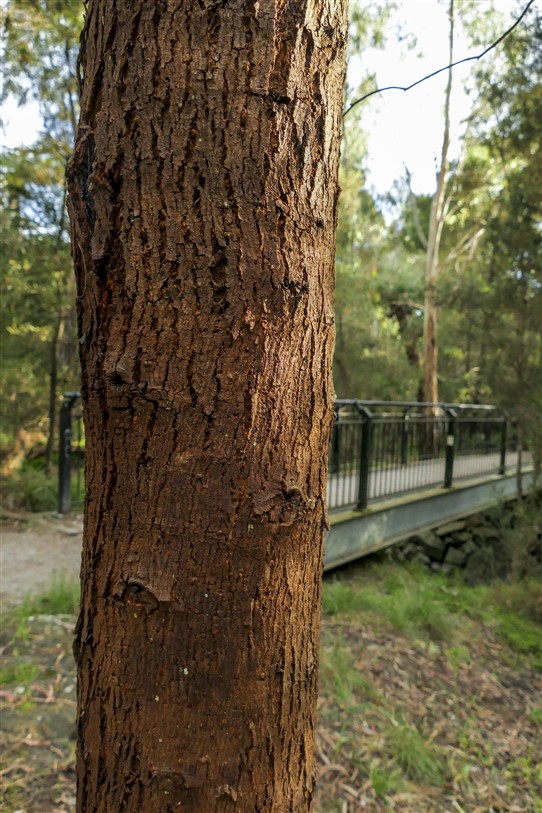
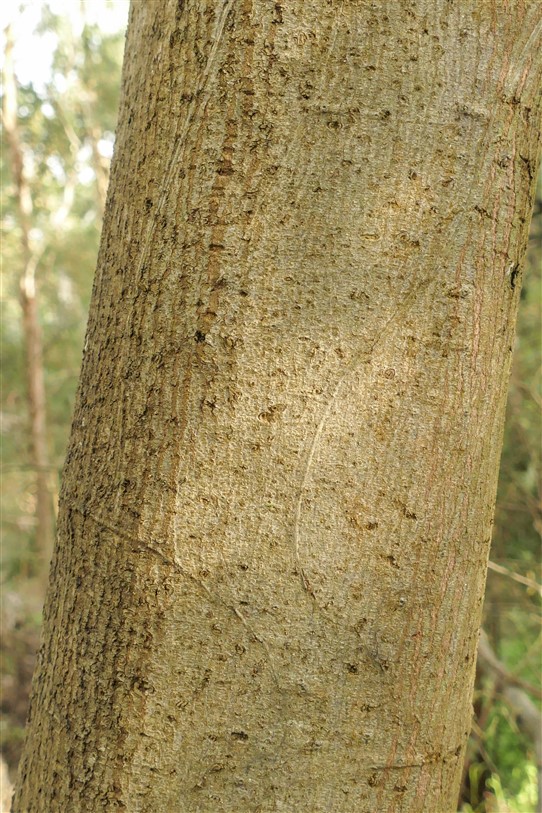
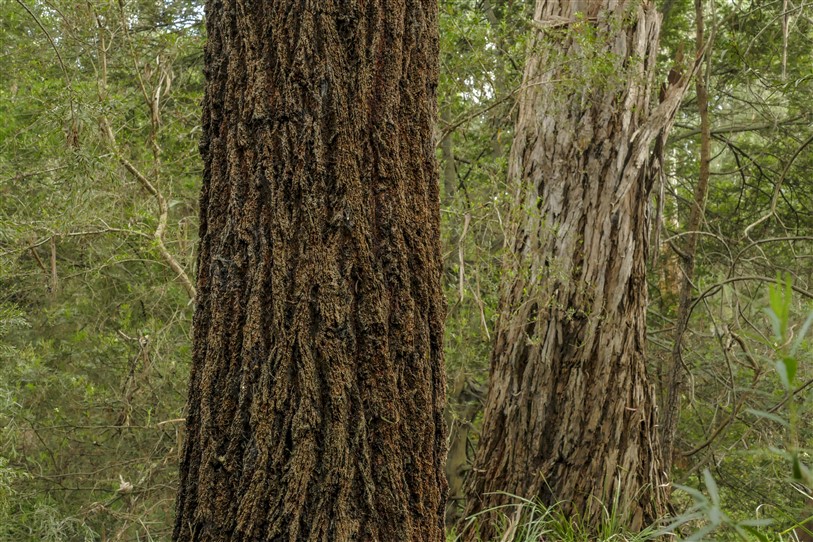
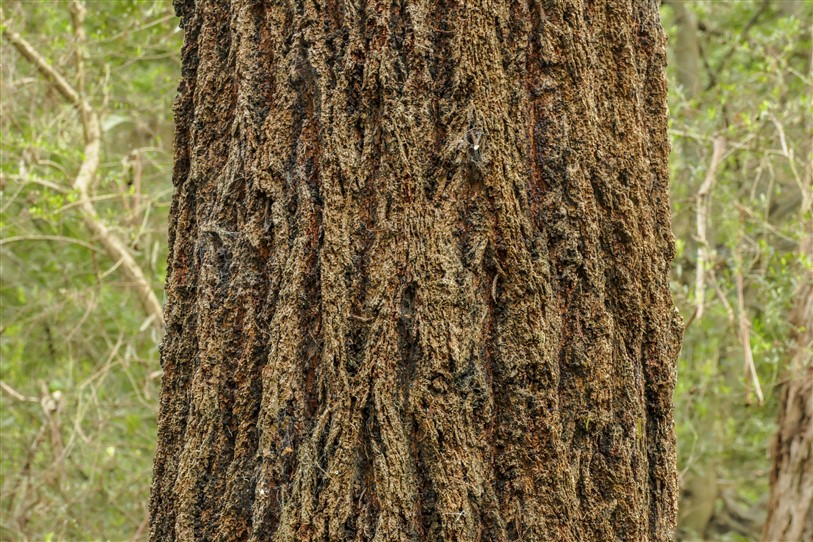
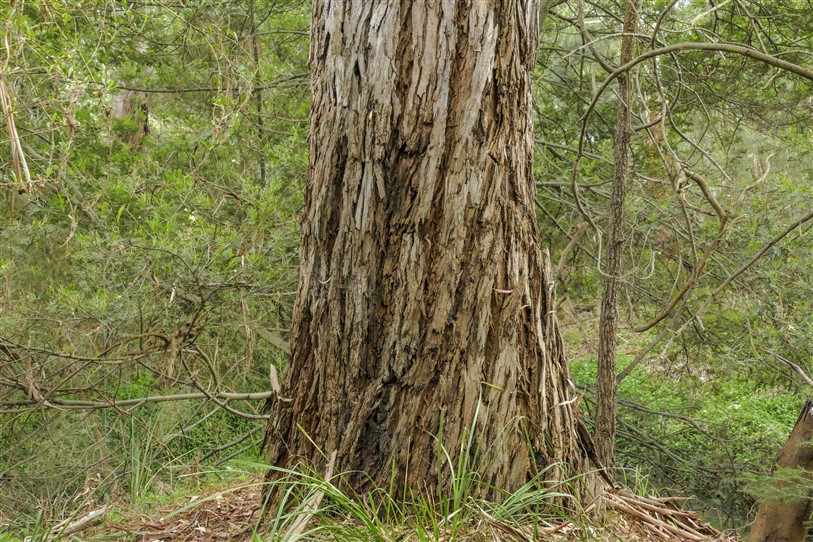
However, some of our park’s eucalypts are deciduous in terms of losing bark and branches. The Lemon Scented Gum (Corymbia citriodora) drops its lower branches and drops its bark in flakes – making for a very elegant trunk. You can see (and smell) some fine examples near where the Guide Hall used to be. The closely related Spotted Gum (Corymbia maculata) behaves similarly (you can find some just to the southeast of the Blacks Walk bridge). The Manna Gum (Eucalyptus viminalis) retains its lower bark but drops its upper levels of bark in “ribbons” as shown in our photo above. On the other hand, trees like the Ironbarks have persistent, thick bark. Of course, there are “shades of grey” in between – but a lot of this gets back to the species’ differing responses to fire – notably whether they “welcome” it or resist it. Here is a small gallery of trees you can find in Blacks Walk:
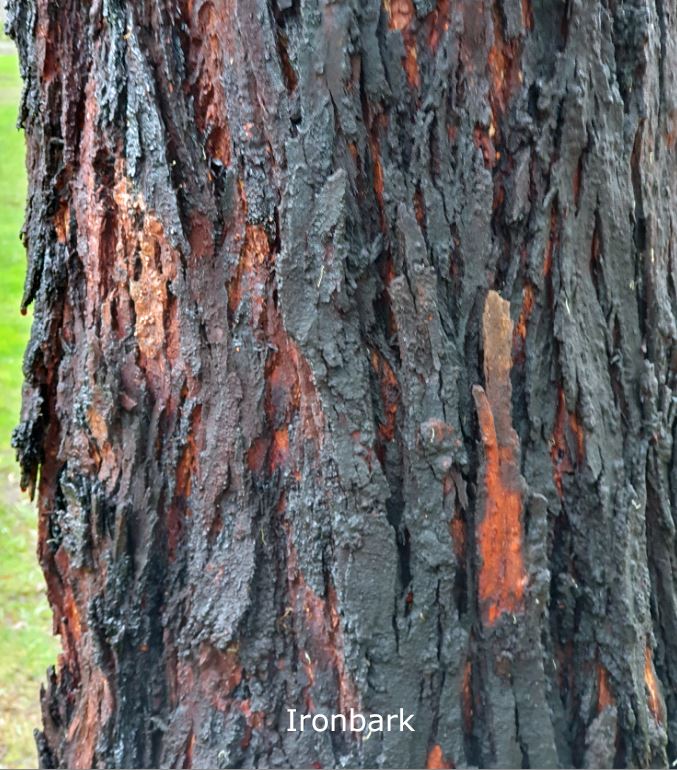
By the way, Ironbark did not get its name from being so hard to axe. It comes from its appearance – looking rather like red hot iron and iron slag at the foundry.
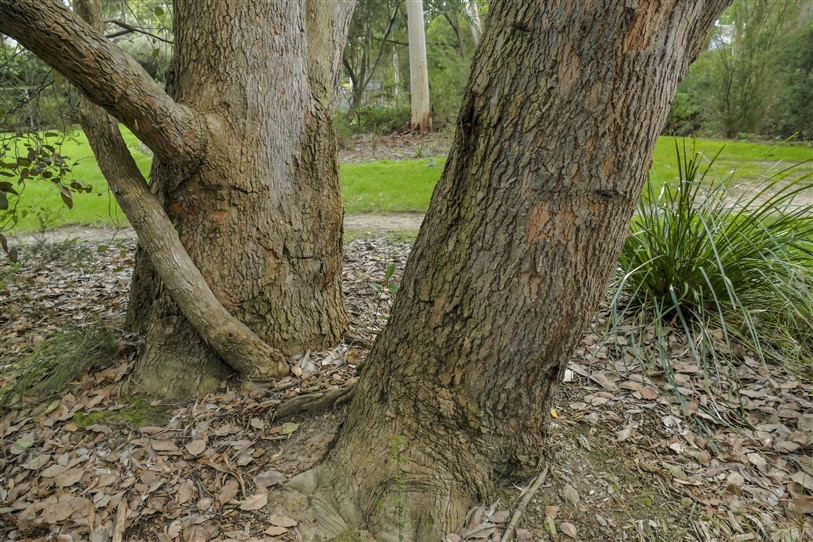
Here’s a series of barks you might find in Furness Park:
Council Works
Guide Hall Demolition
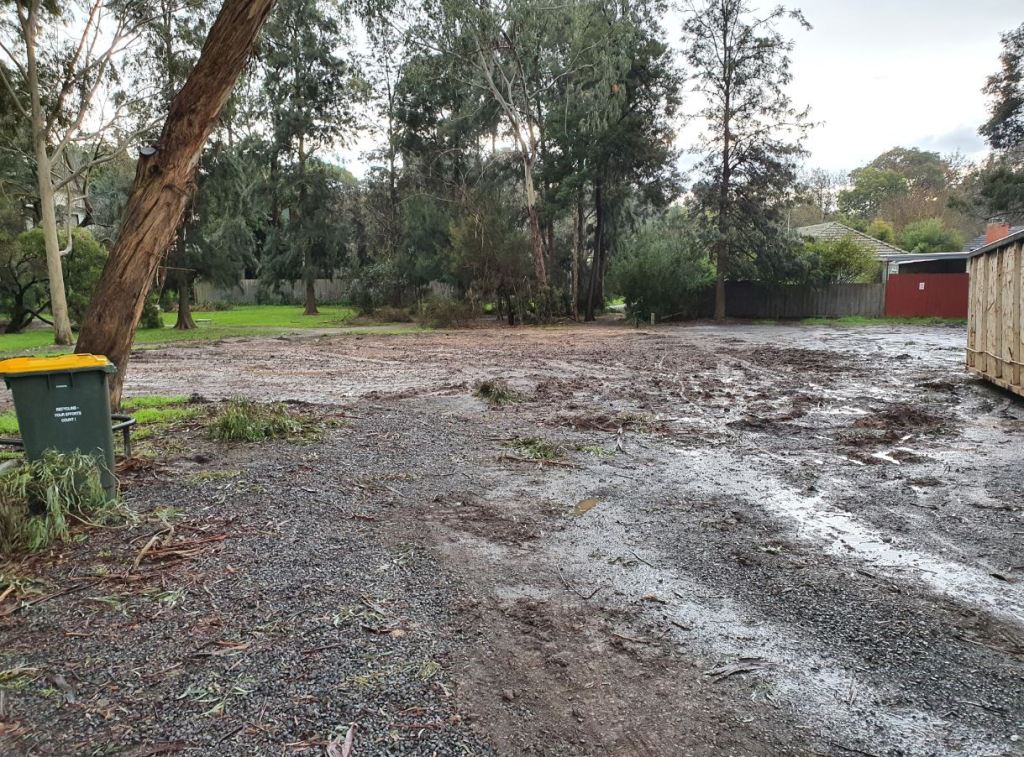
The Guide Hall (1964 – 2021) is no more! It is amazing how its removal has opened that area up.
Furness Park Water Fountain
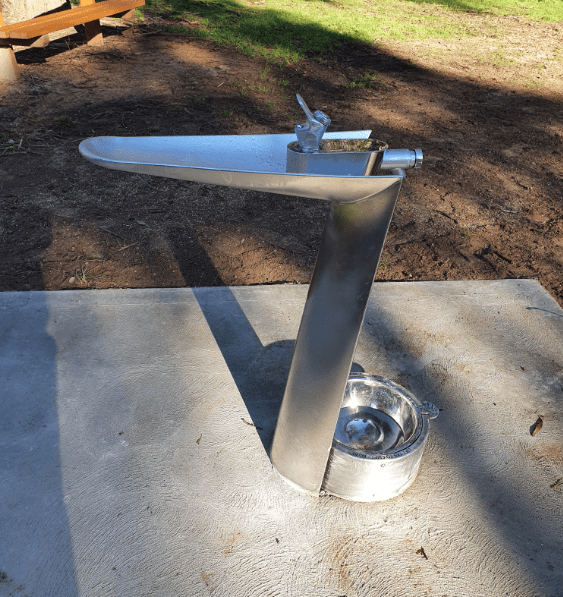
The final stage of the Furness Park playground equipment project was to replace the old water fountain.
Our photo shows the rather spiffy new combination dog bowl, bottle refiller and drinking fountain.
Main Street Bridge Replacement – Latest Updates
Creek Access
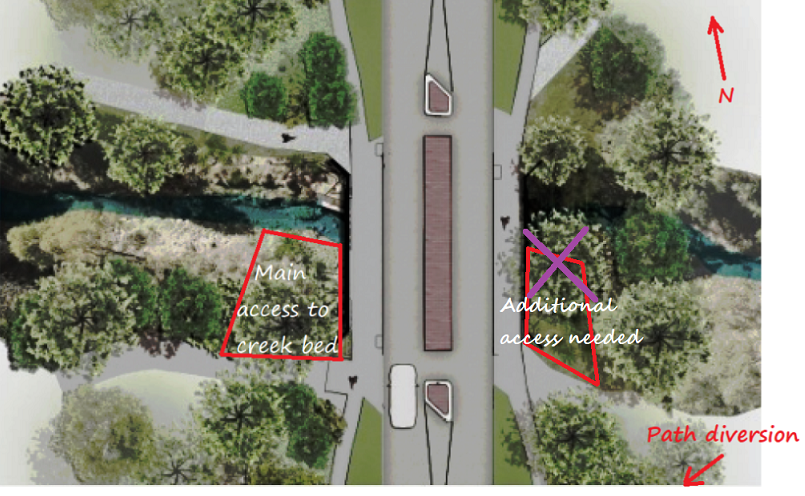
The bridge replacement project recently bumped into a problem that communications infrastructure cannot be temporarily relocated or diverted during the project. This has meant that the project will now need access on both sides of the bridge on the southern side (instead of only the SW side as originally planned). One consequence is that a wattle on the eastern side of the bridge, which has already had its challenges, will have to be removed soon.
Bus Routes
Only the 703 bus route is now planned to be diverted along Heath Street. The other route affected, the 765, will keep to Blackburn Road. Along with time-table fine-tuning, this action will limit the chance of buses passing each other in that fairly narrow street.
A Pedestrian Crossing ?
Some locals have asked whether a pedestrian crossing across Main Street joining the parks on the south side of the creek could be included as part of the project. Council has responded that the crossing cannot be dealt with as part of the bridge replacement project – so would be needed to be dealt with in its own right. Please let us know: Do you think a crossing would be good there?
Maintenance Report
The team had to skip a couple of Monday working bees due to our recent circuit-breaker lockdown. Sadly, our planned Community Working Bee to celebrate World Environment Day was also lost to the Covid-19 restrictions.
Our Maintenance Team responded by taking on planting up a strip along the track on the northern side of the creek and one of the “Lunettes” to the east in the vicinity of the track down from Waratah Crescent.
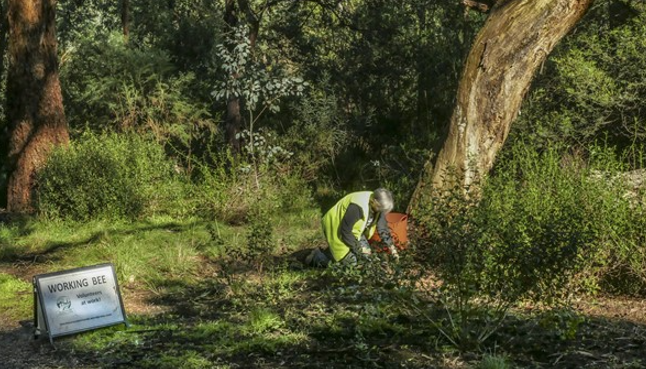
Otherwise, we’ve been weeding some of our maintenance areas. We have been so very lucky with the weather on Mondays (touch wood!).
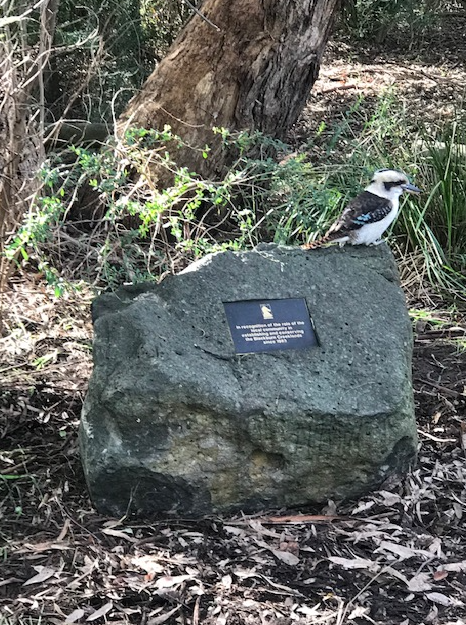
In last month’s article on National Volunteer Week, we meant to publish this photo from Michael who cleverly captured a Kookaburra atop the rock and plaque honouring our volunteers in Kalang Park- but were separated from our mail due to the lockdown:
Sightings
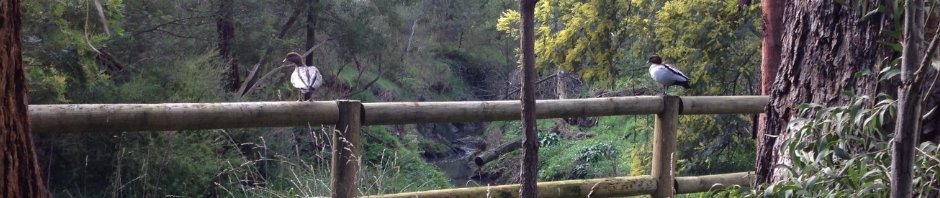
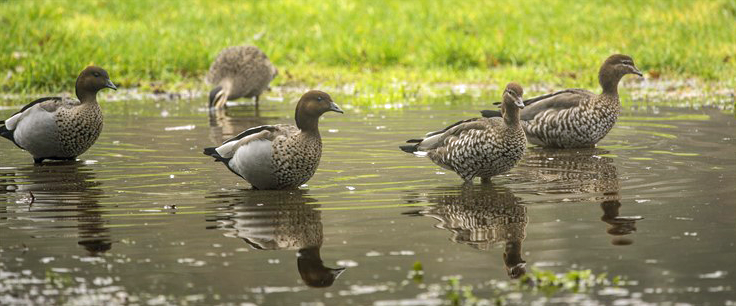
Our Wood Ducks seemed to go missing from the park for quite a while. It’s great to see them back enjoying the mini wetland at the bottom of Kalang Oval:
Other sightings:
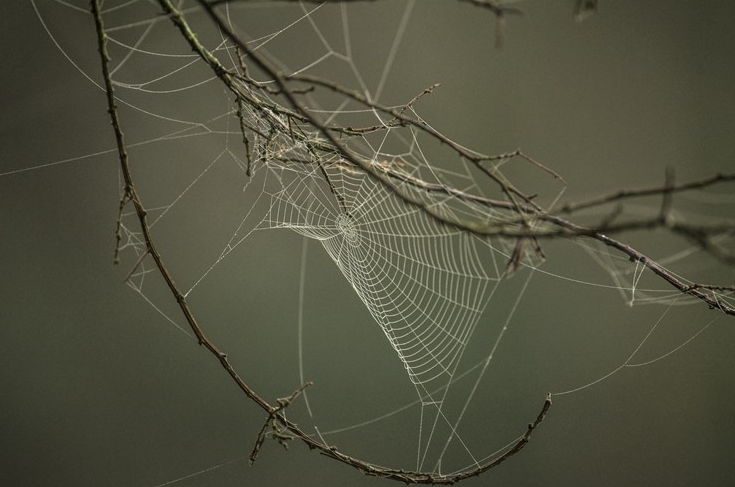
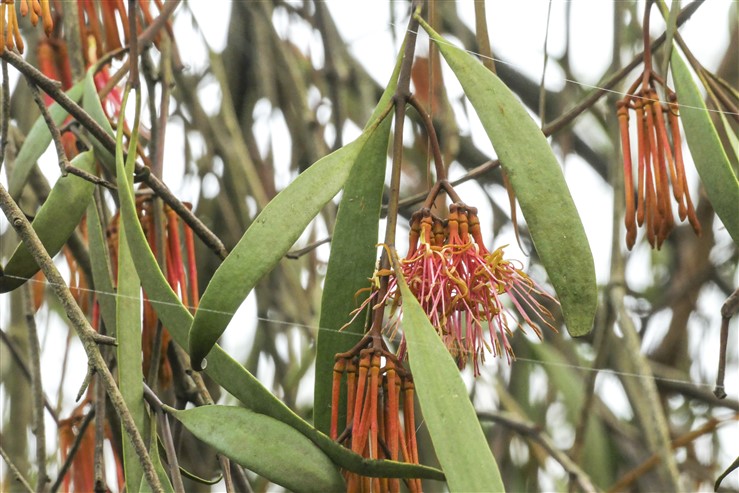
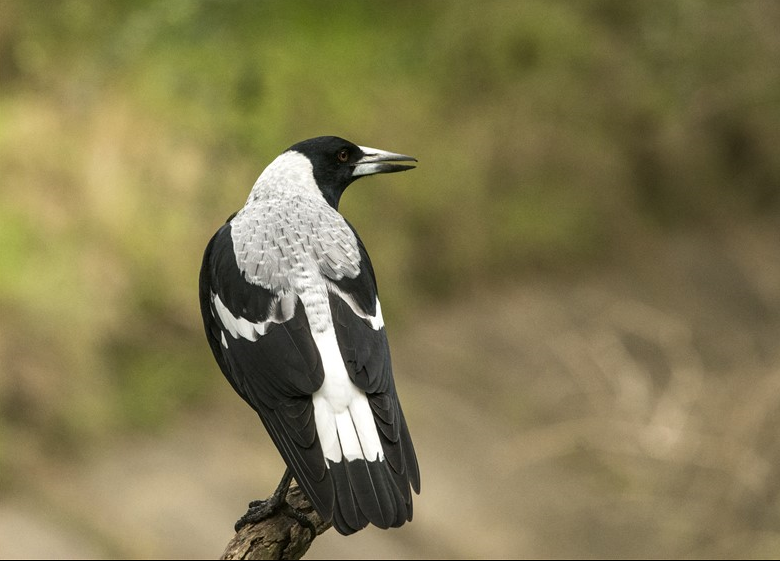
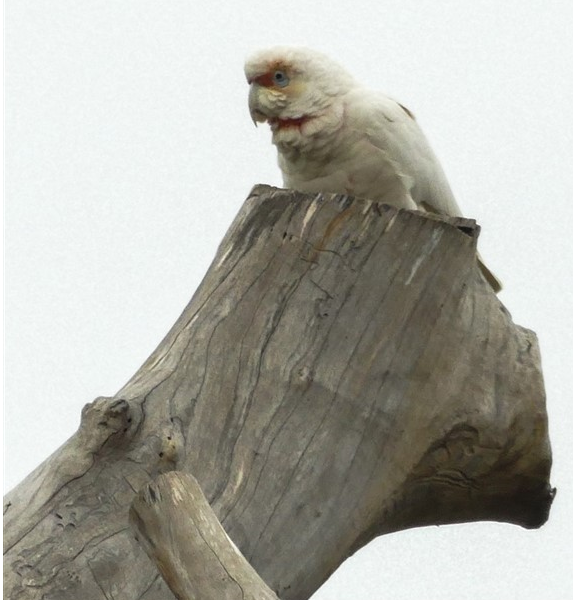
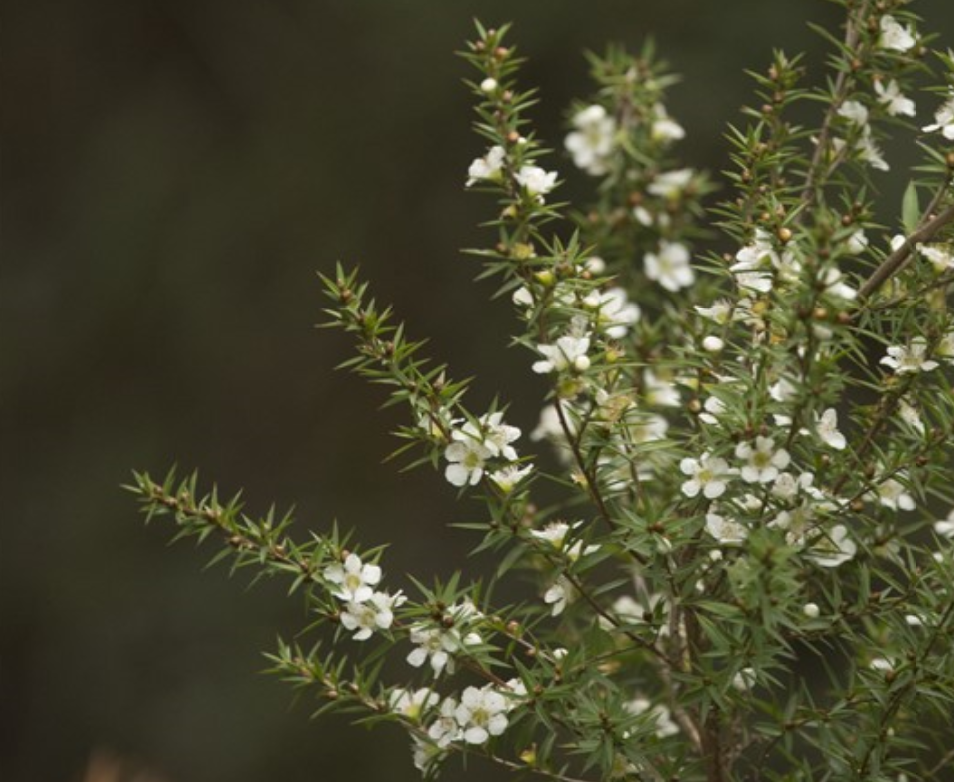
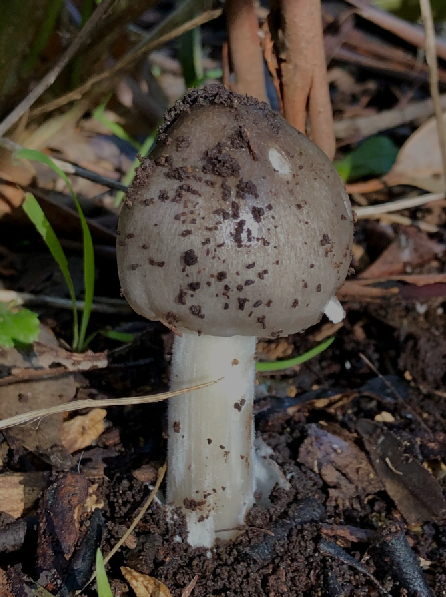
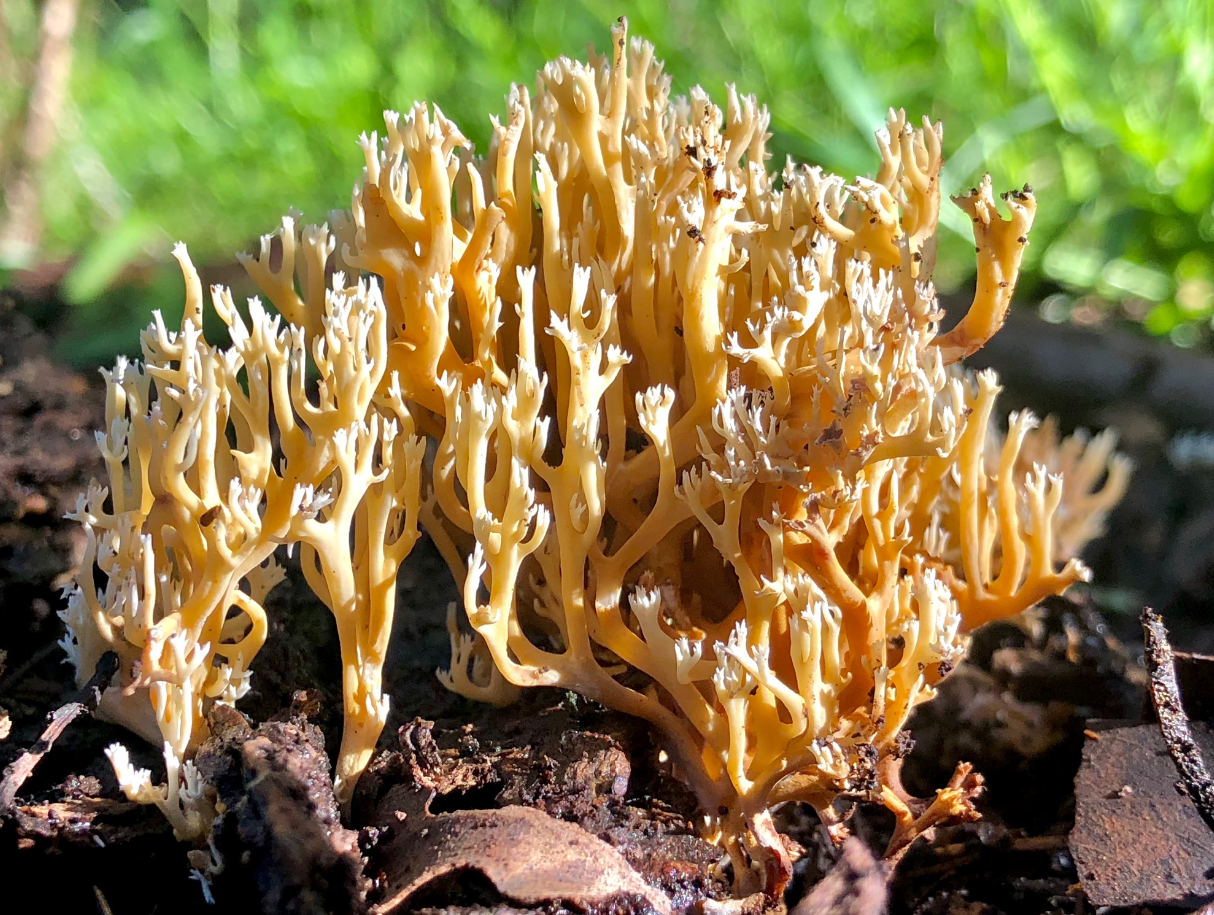
Lisa discovered some interesting fungi during the month at working bees:
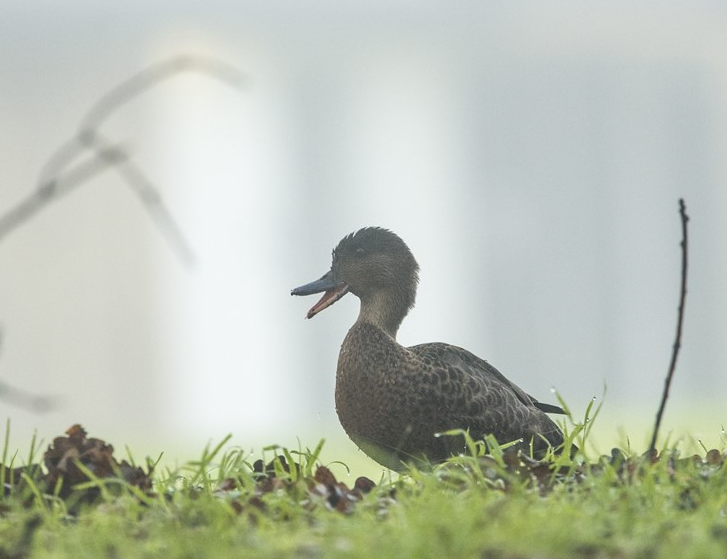
Great weather for ducks… let’s hope you can enjoy our winter at least half as much as this female Chestnut Teal seems to be on a foggy morning in the first half of June:
 Blackburn Creeklands
Pingback: Park News – June, 2022 | The Blackburn Creeklands