The last week of July seemed to show an uptick from our cold winter weather. It all seems to conform to Tim Entwisle’s idea that the traditional (European) four seasons in the southern half of Australia (summer, autumn, winter and spring) are not a good fit. Instead, he says we should have five seasons with two “Springs” Sprinter (an amalgam of “spring” and “winter”) and Sprummer (“spring” and “summer”) – please see our September, 2017 Park News for more details.
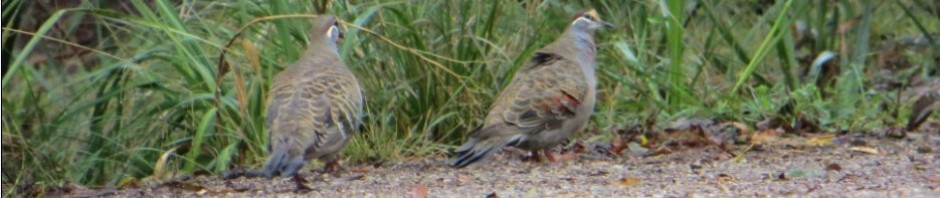
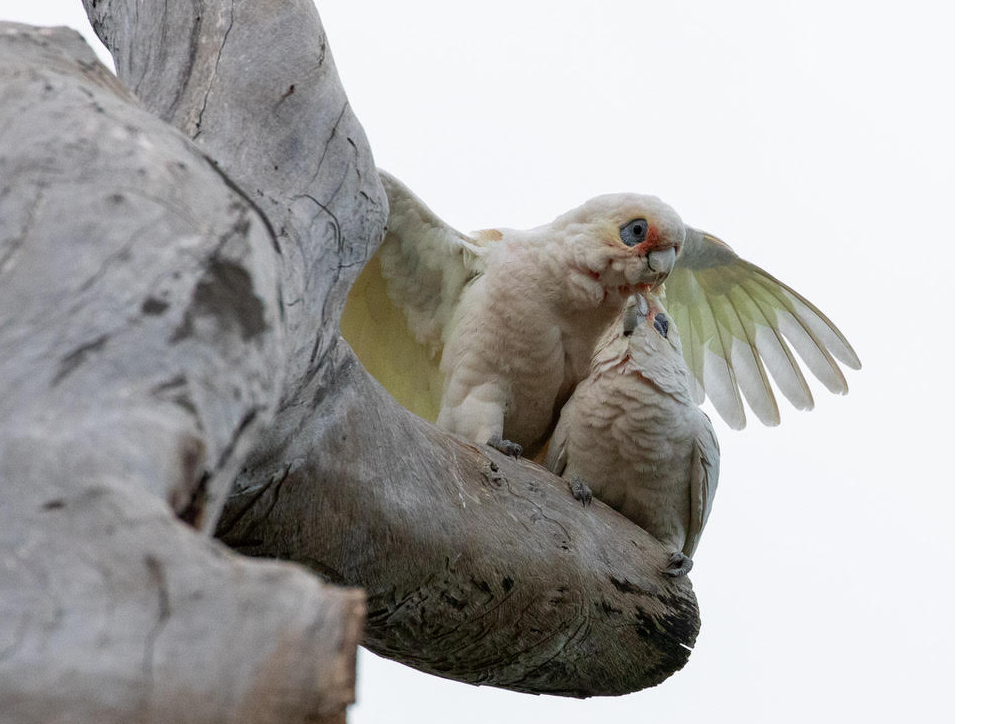
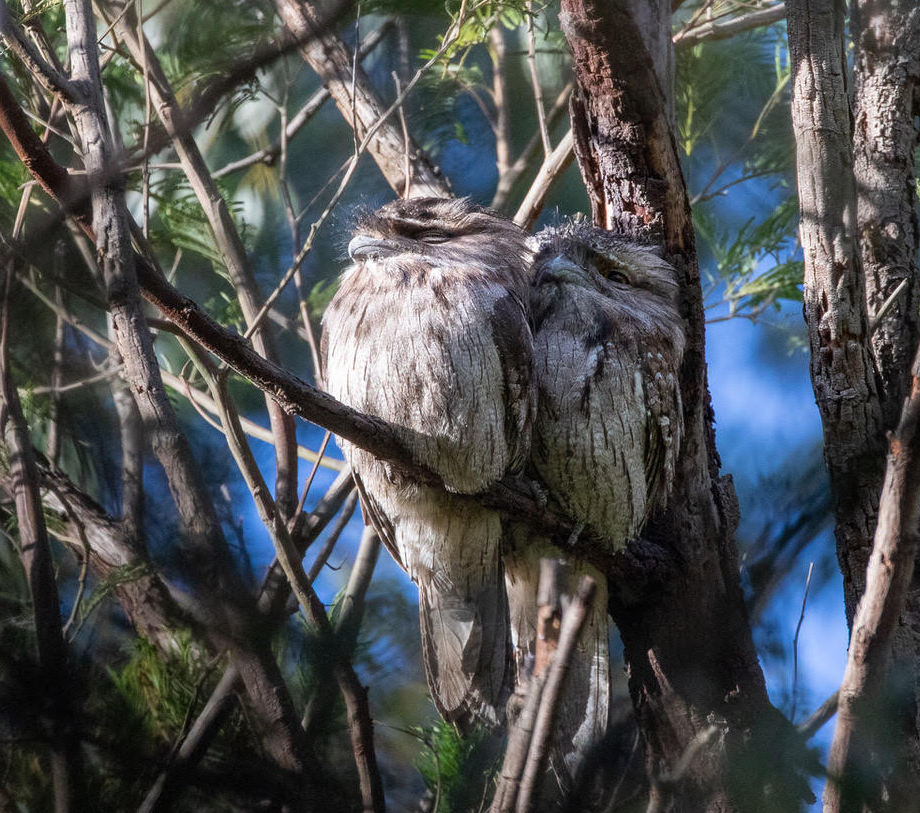
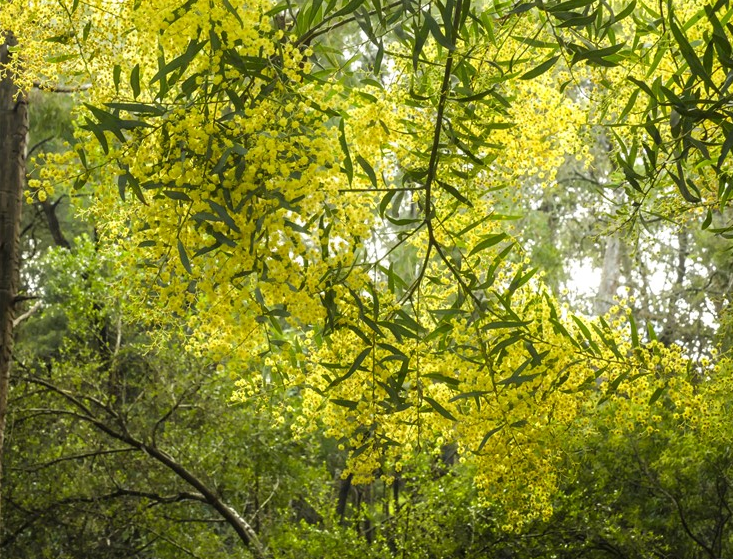
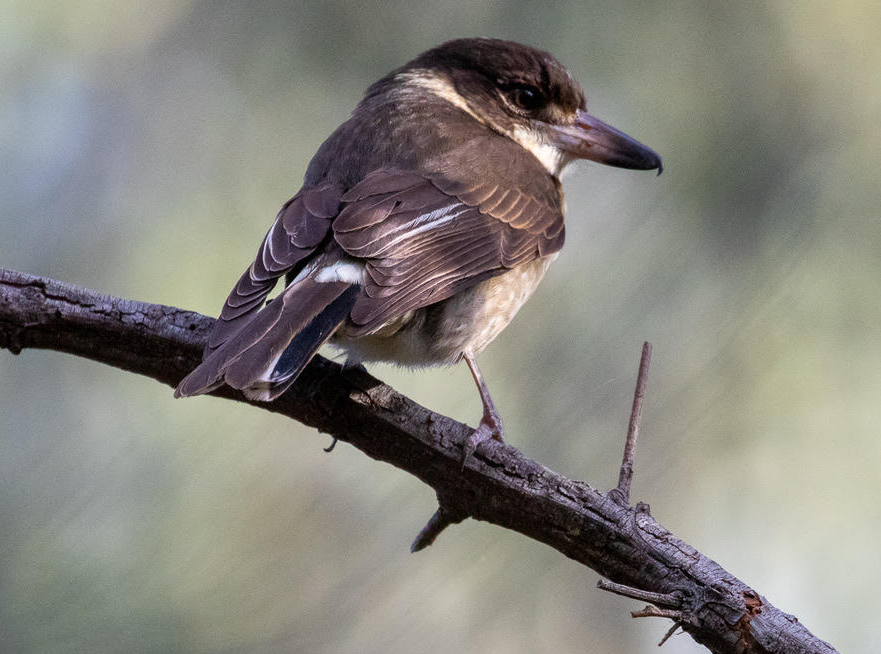
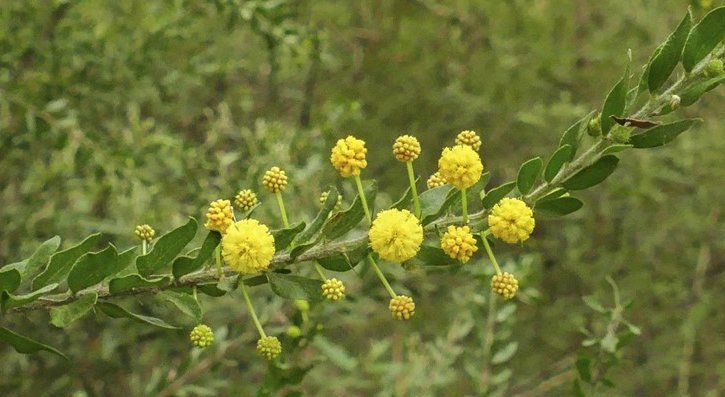
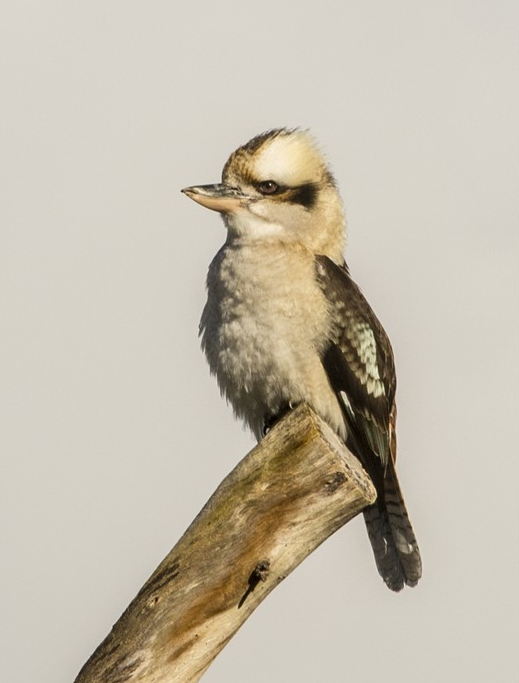
So maybe Sprinter has sprung ? The fauna seem to sense it – see these photos from Lindy – and the flora too:
CHANGE OR DIE !
Those are harsh words – but neatly summarise the position your Blackburn Creeklands Advisory Committee finds itself in now.
The State law controlling local government changed quite radically fairly recently with the enactment of the Local Government Act 2020 replacing the former 1989 vintage laws. Under the old law, “Advisory Committee” had special legislated meaning – effectively, such committees were part of a Council. A consequence was that our volunteers and operations were covered by Council’s insurances.
Under the new Act, there is no longer any concept of an “Advisory Committee”. This has resulted in a situation where Council is no longer confident that our operations are covered by its insurances.
Our Chair, Megan, is a Biologist by profession and sees this new situation as part of our evolution – changing and adapting to threats and changes to our environment as we have to. We want to continue our work, we do not want to fold. So, it seems we must change. One thing to reflect on is that it has been recently discovered that birds evolved from small carnivorous dinosaurs of the Late Jurassic period!
All of the park Advisory Committees in the municipality are in the same position. Currently, we are all being surveyed by Council for our personal and Committee attitudes to a proposed new model. Council’s preferred position seems to be that we should incorporate in our own right and carry our own insurances. If that were to eventuate, we expect that Council would compensate the new group for the additional, significant ongoing costs we would have to bear.
Our Friends will not need to do anything – we will automatically transfer you to the new entity if that becomes necessary. However, we do trust that we can count on your support going forwards!
Green Elephants in the Park ?
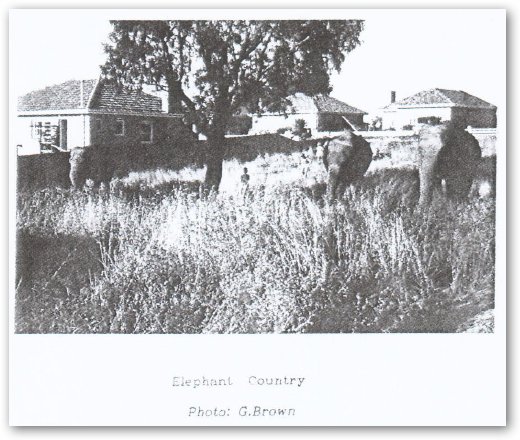
It’s been a while since elephants, in or near the park, have been reported – last occurrence was in Malcolm Street/Sheehans Road (click here for more information):
A more ethereal elephant (or is it a bunyip?) was recently captured on film in Blacks Walk:
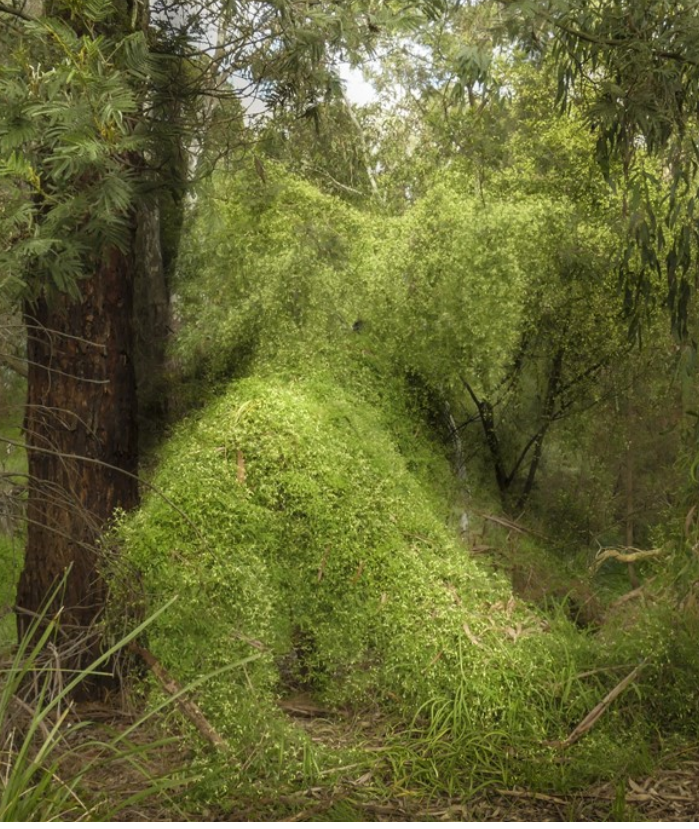
This work of natural topiary is actually built from one of our two Clematis species (Clematis microphylla) that we see in the park. This elephant/bunyip was disappearing into the creek adjacent to the Garie Street playground in Blacks Walk.
Particularly luxuriant this year, this Clematis with large white starry flowers, has long twining branches that tend to climb up and over other bushes and trees. A word of warning though, this clematis can tend to climb vigourously onto neighbouring plants and smother them. Nevertheless, it can work very well on a fence for the same reason. If you are looking for a less vigorous variety, another Clematis is indigenous to the area – Mountain Clematis (Clematis aristata) which has much larger and darker leaves.
Community Working Bees
We were to have a community working bee on National Tree Day (last Sunday, 1st August). Unfortunately, we had to cancel because of the current Covid-19 restrictions – especially those limiting outdoor gatherings to ten people. Instead, we ran a Committee-only event because numbers could be strictly controlled in that context.
Given our current insurance issues (see article above), the National Tree Day connection came in handy – we were able to insure our volunteers for that event and the next two Monday morning working bees through Planet Ark – the group behind National Tree Day.
Our prior Community Working Bee was on Sunday, 4th July – the first day of NAIDOC Week. The event was a great success and well attended given the threatening nature of the weather that day. The rain held off and over 400 plants went in – including some bush food plants such as the Yam Daisy (Murnong).
Web-Site Usage
Our web master is probably the only person in Melbourne who likes lockdowns – because they make his web-site statistics look good! The number of web-site visits over the past three years is instructive:
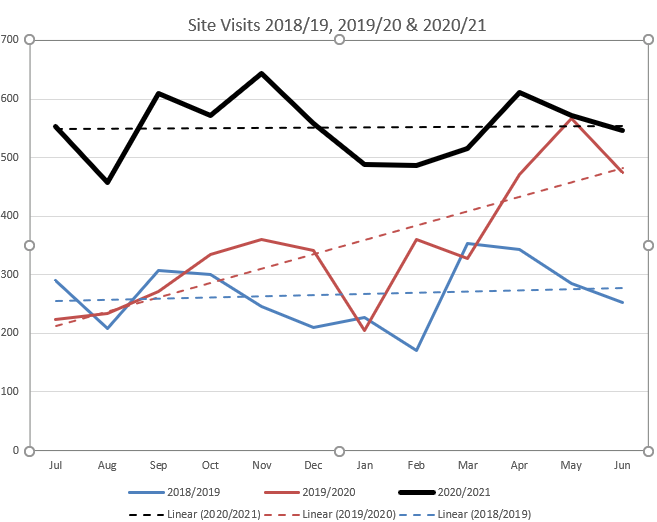
Last year we reported that the fairly stable site visits seen up to 2018/19 had seen incredible growth in 2019/2020 with our web-site activity more than doubling between January and May-June, 2020. We expected that this change was directly or indirectly attributable to increased interest in the park due to Covid-19. We did not expect those effects to remain permanent.
Well… Covid-19 has not gone away (yet!) – but was in abeyance for the first part of 2021. The bold black line shows that we have nevertheless maintained a very high level of interest in the web-site – taking off from where we left off at the end of last year and consistently remaining quite high at more than double the pre-pandemic levels.
We thank our readership for showing so much interest – and also particularly thank our contributors, especially our generous photographers (you know who you are!), who make the newsletter such an interesting mix from month to month.
Vale Nan Anderson
Sadly, long term Creeklands friend and park neighbour Nan Anderson passed away recently. She was a well known identity in the park – a lovely lady who often stopped for a chat when walking around the park. She was always interesting, well-informed, engaged and opinionated. She was in her 90s but didn’t look 70.
Nan was a longtime friend of the park and one of the early settlers in the area. She was always a very strong supporter of Creeklands activities and for many years (decades) was a regular attendee at our community working bees.
Our sincere condolences to her family and friends.
Goodbye Millie Wells
We also need to say thanks and goodbye to Millie who left Whitehorse Council in mid July to further her career in another municipality. She was one of the prime movers behind the Urban Forest strategy and also helped Committee at times navigating the Council bureaucracy.
Urban Forest Strategy
We strongly support Council’s Urban Forest strategy and believe parks such as ours will need to do some of the heavy lifting if Whitehorse is to meet its ambitious targets. Council data show a trend of rapid loss of tree canopy over recent years and just how challenging that project’s targets are. The losses from 2014 to date are indeed alarming – we expect due to current housing trends / State Government planning which is designed to increase population density in middle suburbs.
Council’s Projected Budget
Perhaps paradoxically, Council’s budget for parks, open spaces and streetscapes is reportedly going to diminish by about 11% over the next four years with a projection of $5.3 million allocated in the 2024-2025 year (down from $5.9 million in this year’s budget). We think Covid-19 has triply underscored the benefit of parks for our physical wellbeing and mental health. Possibly, there needs to be a rethink on the value to the community as a whole of ‘big ticket’ items such as the $80M Whitehorse Centre over the city’s parks, open spaces, streetscapes and passive recreation.
In the Corridor
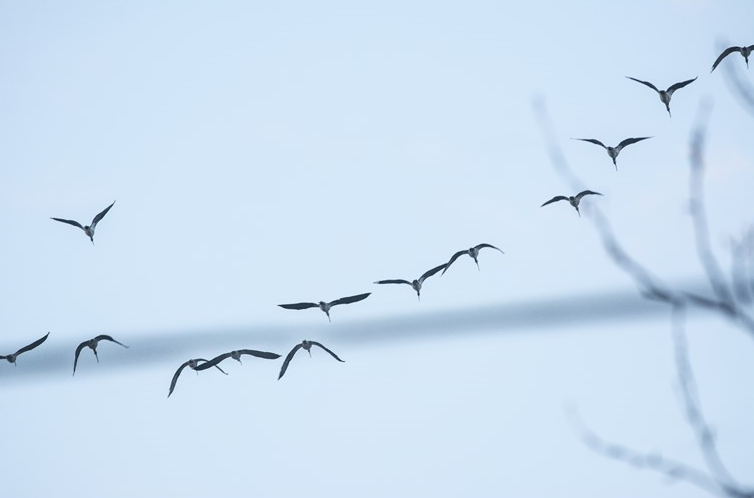
One of our Friends, June, had some interesting visitors to her lush garden in Laburnum Street:
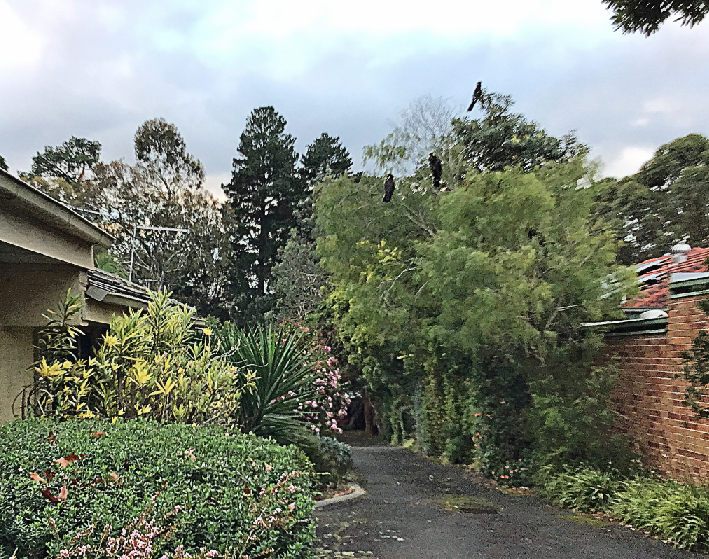
Yes, those black birds that look like oddly out-of-scale stickers stuck on the photo, are Yellow-tailed Black-cockatoos. These endangered cockatoos are seasonal visitors to our area (often the park) and feed on seeds and grubs. June says that one of the four was interested in munching a Banksia cone while the other three sort-of mounted guard..
They are one of Australia’s largest cockatoos and have a strong beak for gouging wood to a depth of several centimetres to find grubs. In fact, their beaks and claws are strong enough to tear anything like a hard green pine cone apart and can completely shred small branches looking for grubs.
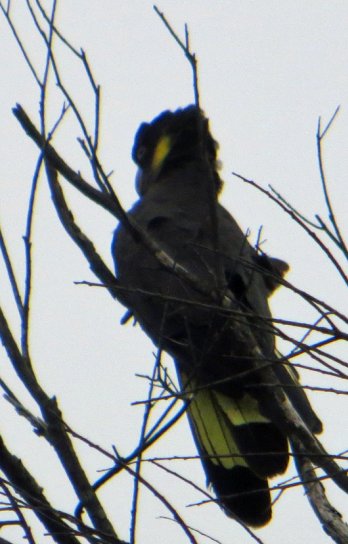
As their name suggests, they have large pale yellow panels in their tails. They also have a yellow spot on what bird-people call their “ear coverts” – as shown in the photo above. The females have a bright yellow spot – the males have a dull yellow equivalent. Other differences between adult sexes are that the females have a pale grey eye-ring (the males’ are pink) and the females have a grey-white upper bill (the males’ are a darker grey-black).
Here is a short movie showing one of these magnificent birds breaking open very tough Hakea seeds and finding grubs in small wattle branches in the park:
Our Catchment
The diagram below is an annotated snapshot from the Yarra Catchment Atlas. It shows our section of the Gardiners Creek (Kooyongkoot) catchment – which is part of the much greater Yarra River catchment. By showing planning overlays, the extent of our creek’s catchment is well highlighted like an X-ray.
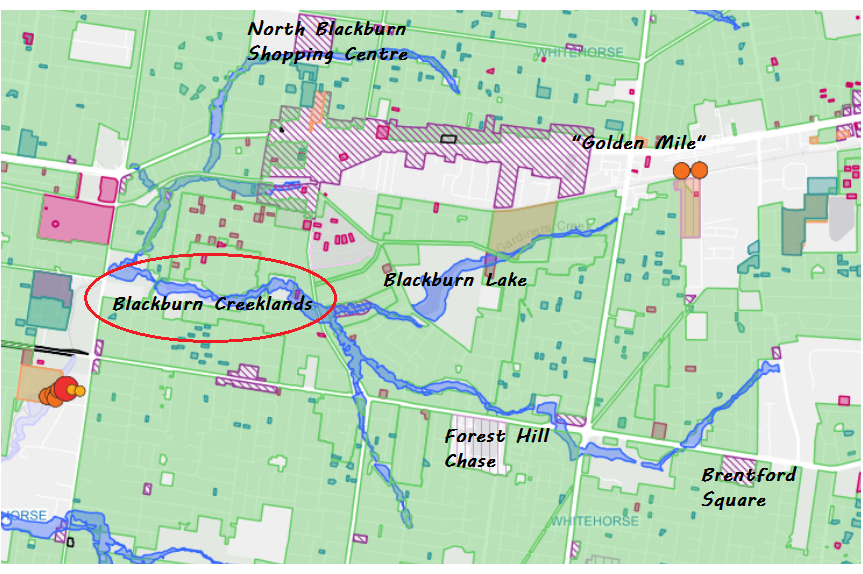
Drainage into our creek serves several large shopping centres, higher density housing zones and industrial areas. Buildings and hard surfaces (like driveways, car-parks and roads) result in a lot of storm-water run-off that is collected by drains and then piped into our creek.
The orange and red circles in the Golden Mile and downstream from our park show the sites of Polystyrene Field Inspections Phase 1 – 2019/20. Common sources of the polystyrene pollution, quite evident in our creek, are packaging (eg around “big box” items) and the construction industry.
Polystyrene is very problematic in that it is very light, often single-use or short-term packaging that does not readily decompose. However, it is inclined to blow out of rubbish containers or truck trays onto roads and then disintegrate into smaller particles after it has been run over or otherwise stressed. Eventually, it enters the drainage system and our creek – on its way via the Yarra, to the bay and then to the ocean – unless it’s left tracing the high-water mark along the creek!
Council Works in the Park
Main Street Bridge Replacement
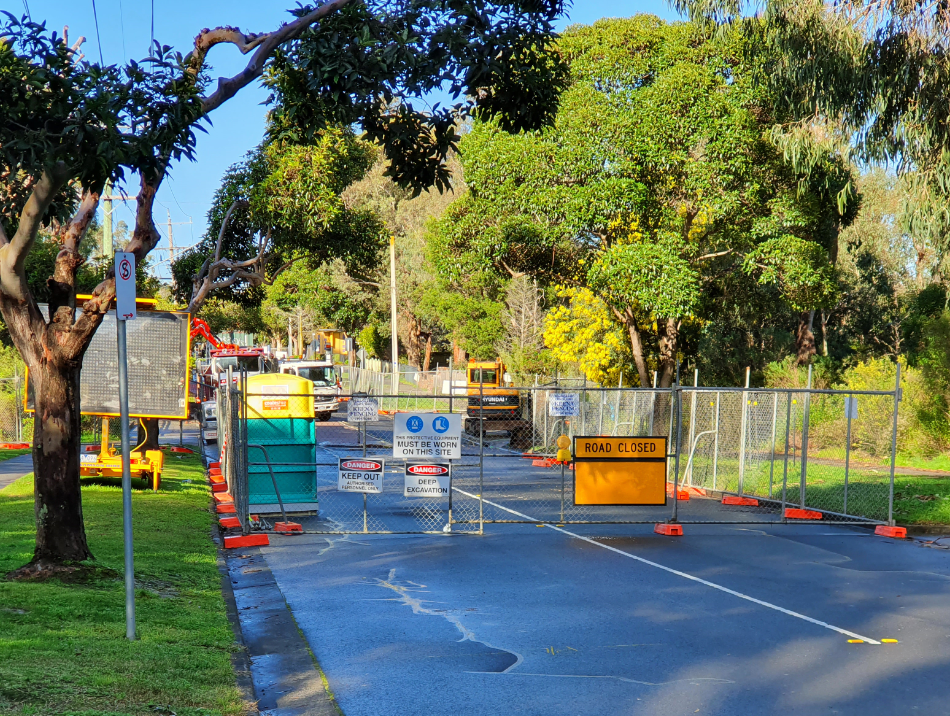
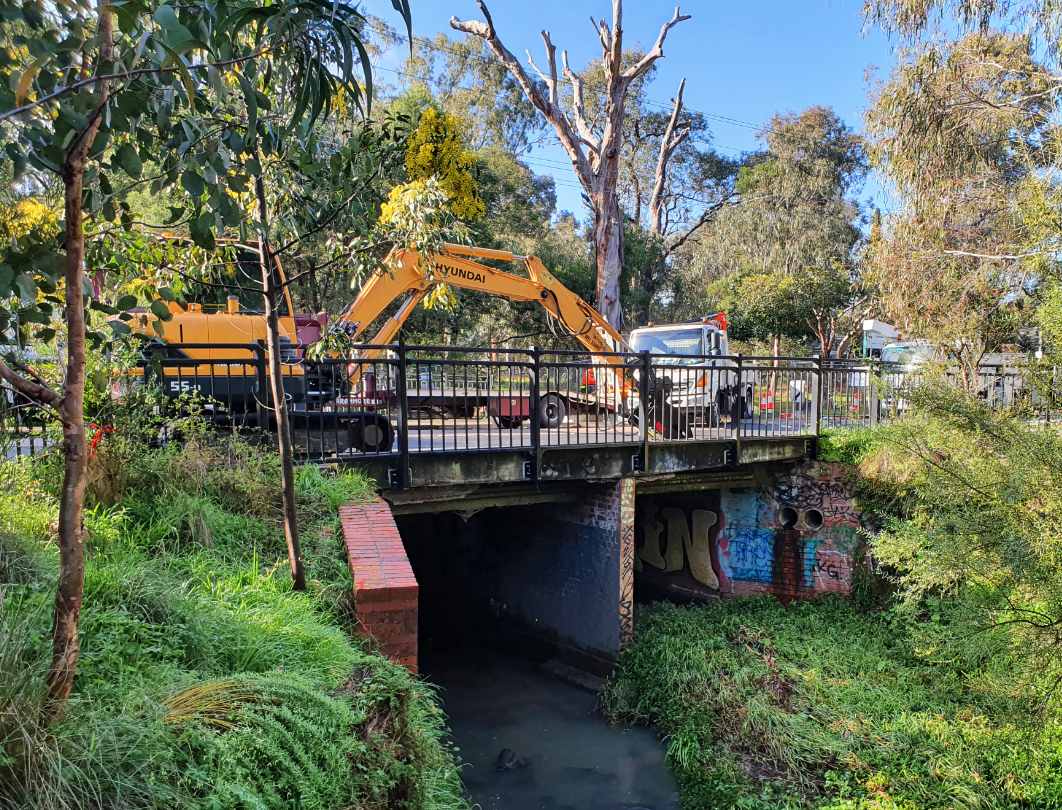
Council’s Main Street Bridge project commenced on Monday 2nd August – turning Main Street into two cul-de-sacs until December (subject to weather and Covid-19 delays).
Two of our Friends of the park, Hugh and Meg, cleverly took the opportunity between lockdowns to transplant 40 or 50 indigenous plants elsewhere in the park – which would have otherwise been lost on the right-hand side of the bridge in our photo below:
Logs

Another of our vigilant Friends acted quickly to follow up the matter of a gardener who she found was removing logs from the park in ignorance of the local laws.
It is definitely not OK to remove logs. Logs, fallen branches, twigs and leaf litter are needed in a bushland park like ours to provide habitat for insects and lizards, to rot down returning important nutrients to the soil and to contribute to the natural functioning and appearance of the park.
Council acted very quickly to ensure the rapid replacement of the logs.
Path Maintenance
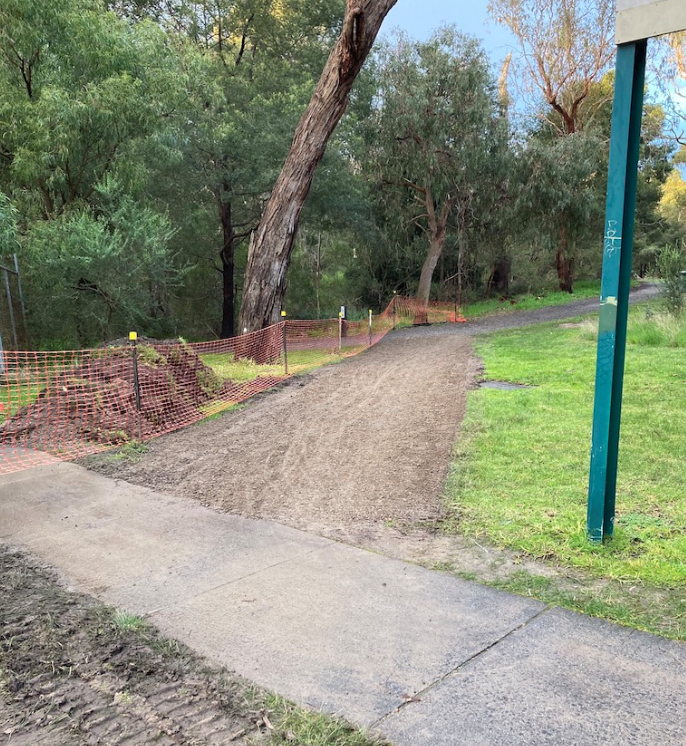
Several patches of damaged paths have been repaired during the month. The combination of wet months and extra foot traffic due to Covid-19 having taken its toll…
Guide Hall Removal Project
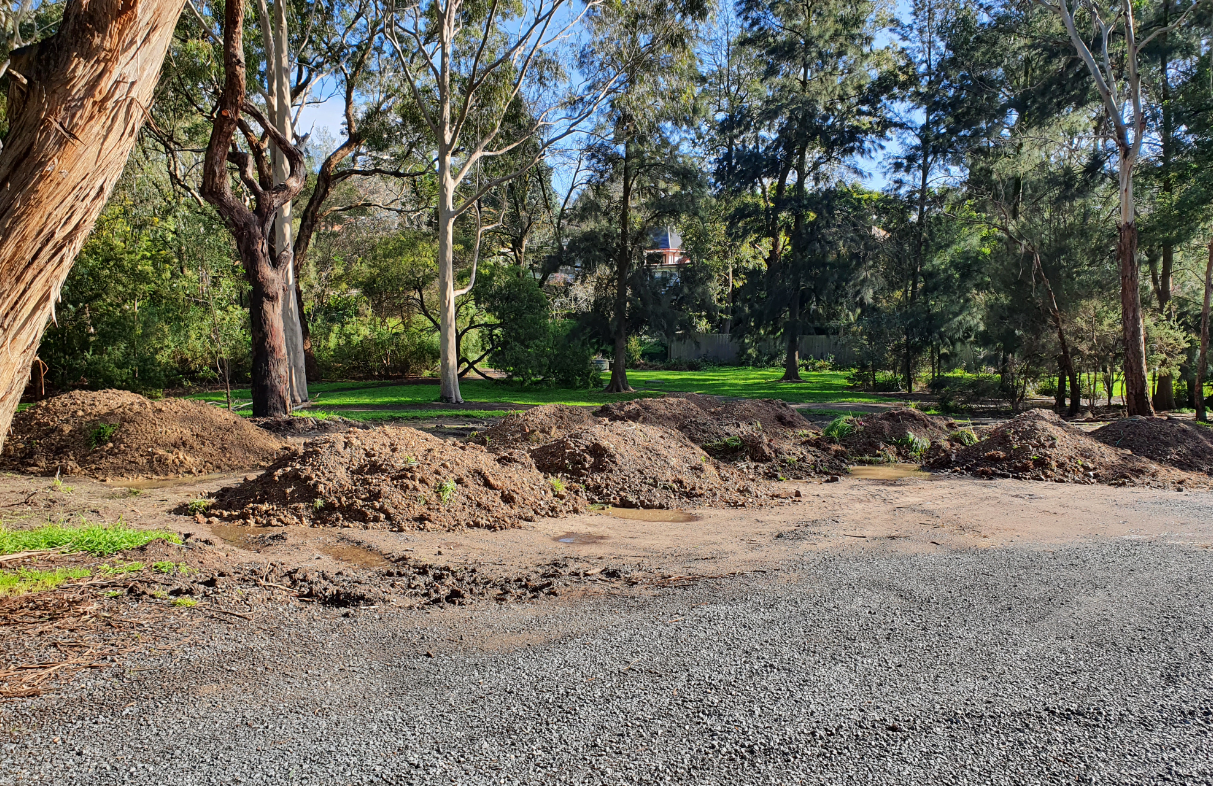
Soil has been dropped on the site of the former Guide Hall to be spread to level the site following the recent demolition. Once done, Council will top dress and lay indigenous grass seed. Tree planting will follow once the soil settles.
Follow-up works will include:
- Replacement of the old pine fencing with new Cypress Pine post and rail fencing.
- The location of the new fencing will narrow the car entry to the area. This will allow return of a section of the car park back to parkland and will reduce the need for walkers to access the car park area.
- A path will connect the Derby Street footpath to the playground – again designed to keep pedestrians out of the car park.
- Existing paths will be refreshed where damage has occurred during the demolition.
- The large wooden power pole “logs” will also be removed.
Sightings in the Park
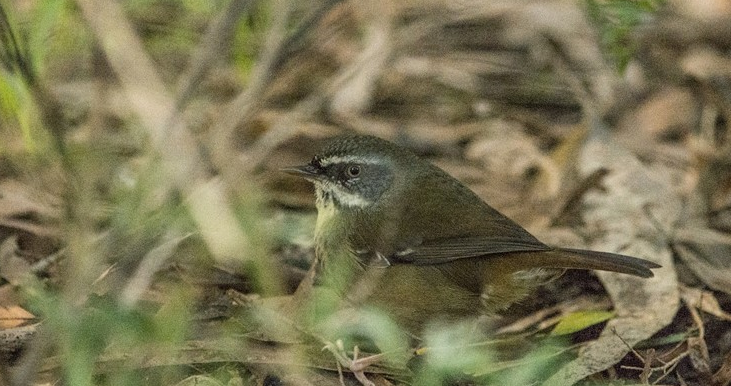
Here’s a little bird spotted in Furness Park – the White-browed Scrubwren – however did it get that name? Hmmm- but why not white-jowled ?
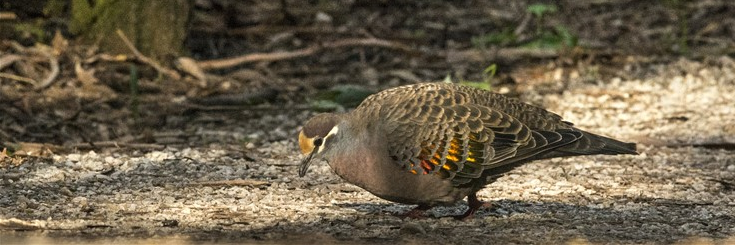
Here’s another frequent flyer or visitor at least:
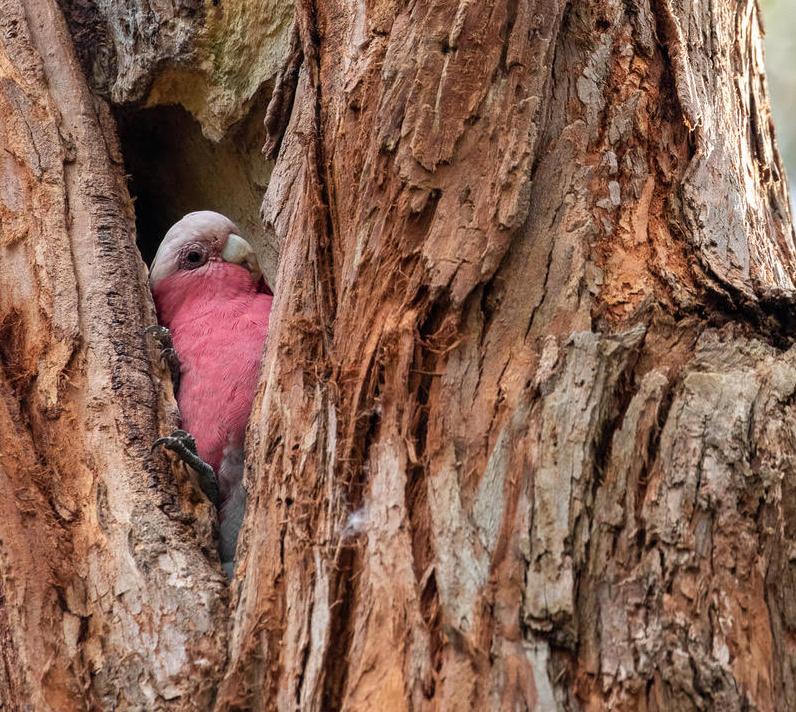
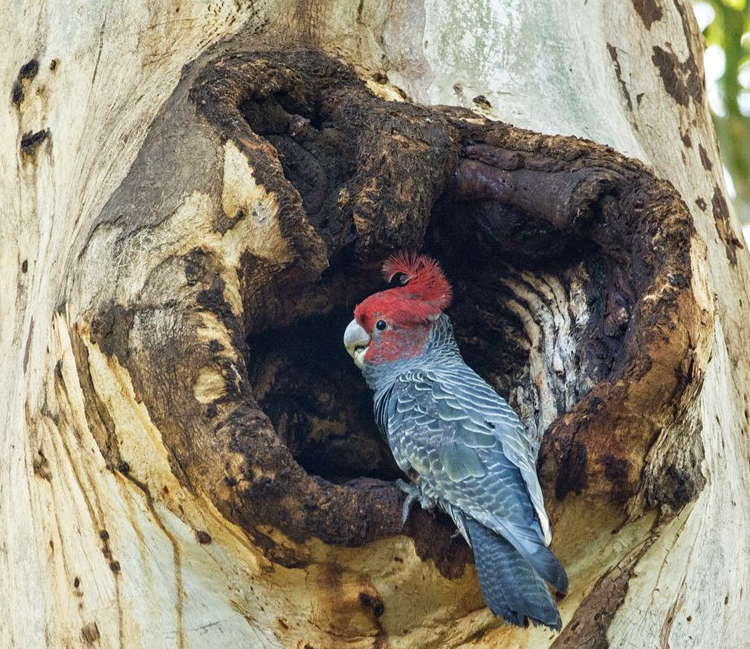
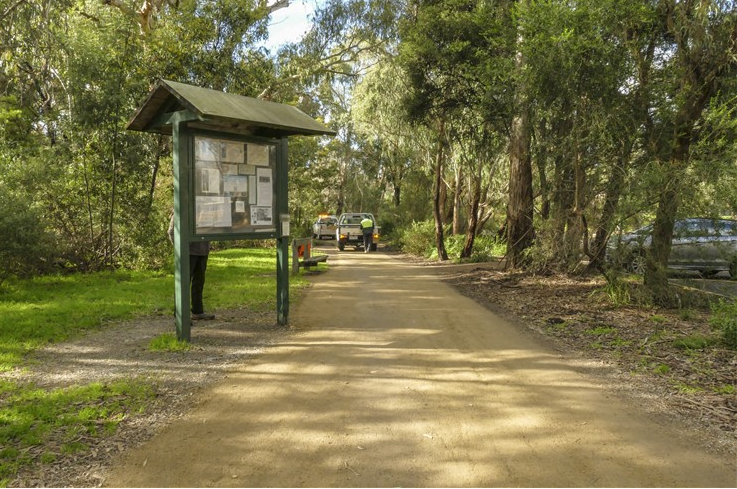
This fellow seems to be sussing out a nest site at the big tree near our noticeboard. If you’d like to see his appraisal technique, shooing away the Lorikeet competition (his voice is the lower pitched “creaky door”), – please visit:
 Blackburn Creeklands
Pingback: Park News – October, 2021 | The Blackburn Creeklands
Pingback: Park News – November, 2021 | The Blackburn Creeklands
Pingback: Park News – May, 2022 | The Blackburn Creeklands