Once again, we find ourselves in a long lockdown at this time of year. While the park suffers from being “over-loved” again, we’ve also had disturbing reports of vandalism, people forcing their way into revegetation areas (teenagers with parents!) and worse… Right now though, we need to be tolerant given the stresses families and others are under. Hopefully, we and the park will have time to recover once this pandemic passes!
On the positive side, we can still get our newsletter to you – to keep you informed, especially if it’s been too busy at the park for you to visit, or you’ve been tied up at home, or you are too distant to visit.
The World Wide Web (WWW) as a publicly accessible resource turned 30 years old on the 6th August. It’s hard to comprehend that the WWW could spring from an easy way for scientists to share information via the Internet to such a mature and ubiquitous technology over such a relatively short time.
By “mature” we mean something that has gone through many stages of growth and refinement in its evolution – nothing to do with the WWW’s content (!) – our web-site excepted of course. It is great we can bring our news to you on your smartphone or tablet or at your desk, in full colour, anywhere in the world at very low cost.
Our Wattles
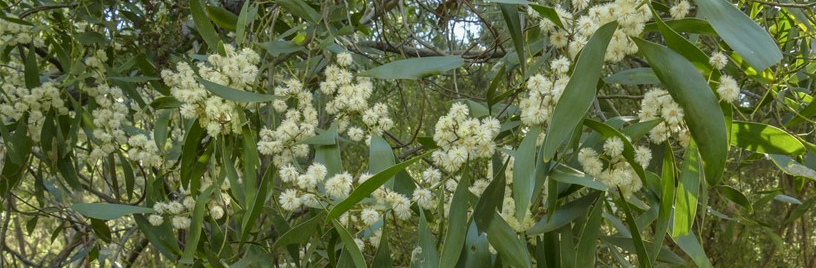
Another completely unrelated WWW stands for Which Wattle is Which ? In the lead up to Wattle Day (1st September) yesterday, many of the park’s wattles are flowering spectacularly with their cheery yellow blossoms – just the tonic we need as we emerge from Winter in these challenging times.
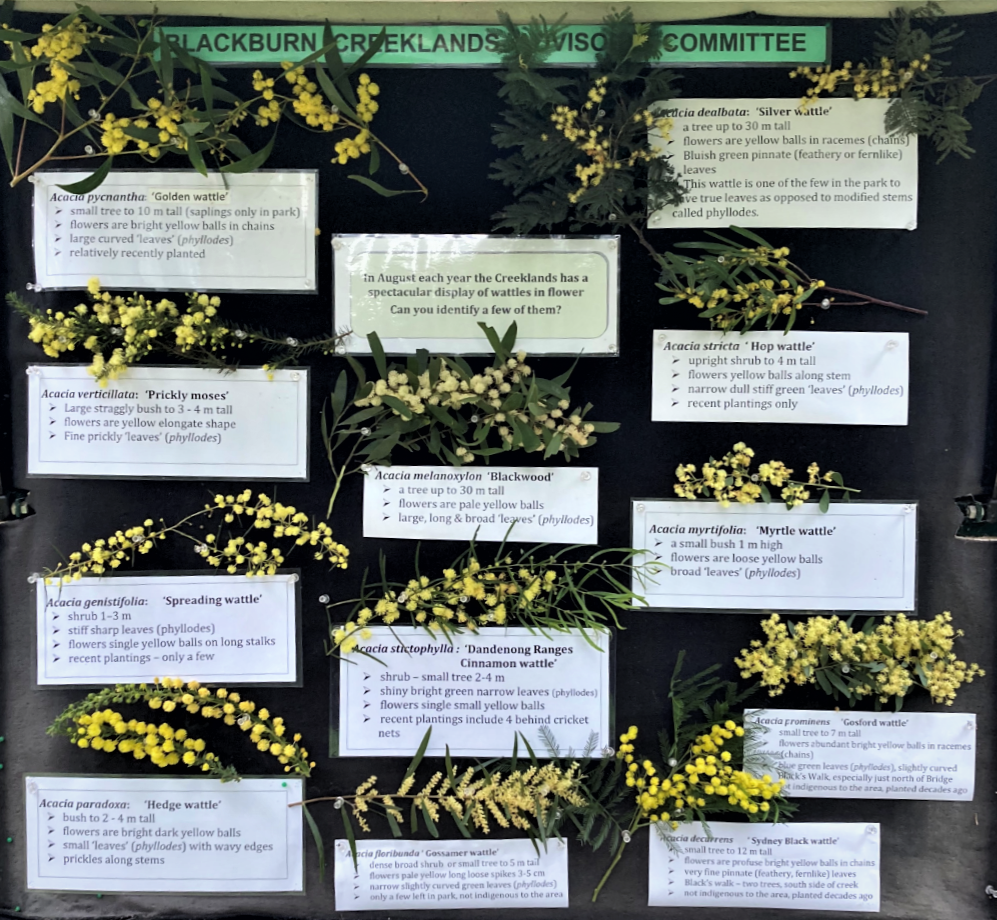
As is the tradition at this time of year, the Blackburn Creeklands’ noticeboard display features actual sprigs of most of the flowering wattles we have in our park – along with their common and scientific names. You’ll be surprised by the variety of foliage and flower colours /shapes. That’s Australia’s national floral emblem in the top left corner.
Most are indigenous to the area – though there are also some older wattles that are not – they are Australian natives but belong elsewhere in the country.
So please come and have a look on your walk (if we are within your travel limits!). You can find our noticeboard just off Pakenham Street – close to the car park adjacent to the Blackburn Bowls Club.
A great help if you are looking for a beautiful addition to your garden. Our two indigenous plant nurseries would stock most of them.
Environmental Volunteering
The State Government’s Department of Environment, Land, Water and Planning has an Environmental Volunteering group which conducts an annual survey of environmental volunteering groups.
The following graphic summarises the results from last year:
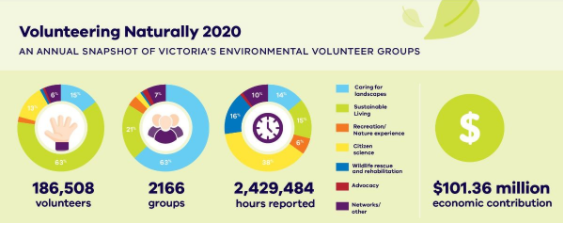
We are one of the 2100+ groups. It is interesting to note that volunteers contributed more than $100 million to the economy in 2020 – even in a year when volunteering in the field has been severely impacted by Covid-19 restrictions.
For reasons best known to our politicians, funding for the environment and parks is difficult to obtain even when the Covid-19 pandemic has underscored just how important our natural resources are for physical and mental health.
Park Volunteering
It is probably fair to say that park volunteer groups do work, such as time-consuming hand-weeding, that could not be economically justified for paid employees or contractors. Our local parks would look very different indeed if it were not for the contributions of volunteers.
Last month we talked about the evolution of the Park Advisory Committees (PACs) – with Whitehorse Council officers proposing that we should incorporate in our own right and carry our own insurances. The current situation is that our legal position is unclear and that the position of Council’s insurances covering our park volunteers is very doubtful at best.
All of the municipality’s PACs have met twice (over Zoom) to share our opinions, concerns and ideas. There is still a fair amount of confusion and difference of opinion between the Committees. For example, some would prefer to remain part of Council and its decision-making processes, others would enjoy more independence. The sad news is that some of the PACs are struggling for numbers and would be unlikely to survive on their own. However, there was unanimity on one thing – Council should arrange for our insurances or at least pay for them!
Research on how other Councils handle their environmental volunteers has also been conducted – surprisingly, there is quite a lot of difference between their approaches and no common “best practice”. Whitehorse Council’s survey of personal and Committee attitudes has closed but no results have been published as yet.
Working Bees
Community Working Bees
We’ve done our best to keep things going despite the problems described above with our status and insurances. However, the Covid-19 restrictions continue to severely impact both our monthly Sunday Community Working Bees and our weekly Monday morning working bees:
- Sadly, the National Tree Day Community Working Bee on 1st August had to be converted to a limited committee-only planting day to ensure the number of volunteers remained under ten. We worked north of the Kalang Oval on the creek side of the main east-west path.
- The good news from that misfortune is that we were able to secure insurances for our volunteers through Planet Ark – the organisation behind National Tree Day. We’re very sorry our Friends could not participate – we know there was considerable interest out there.
- On the following Monday (2nd August), we continued weeding and planting in the same area. We haven’t been able to work since !
- Now, the next Community Working Bee planned for Fathers’ Day (5th September) also has to be cancelled! Perhaps we’ll have to let the fathers luxuriate with breakfast in bed instead!
Our Plantings
One thing we are very proud of this year, is that we did not have to cancel any of our orders for plants from the nurseries because of Covid-19 impacts. All our plants are in the ground.
However, we did mess the nurseries about – having to change orders and pick-up dates when, for example, we had to change intended planting sites because needed preparation could not be done. We thank both Bungalook and Greenlink for their patience and understanding in those trying circumstances.
We thank our community and Committee volunteers for their participation when we could run the planting bees. We also owe special thanks to Nicky for managing the orders with the nurseries, collecting the plants and nursing them until we could plant them.
Rescue Story
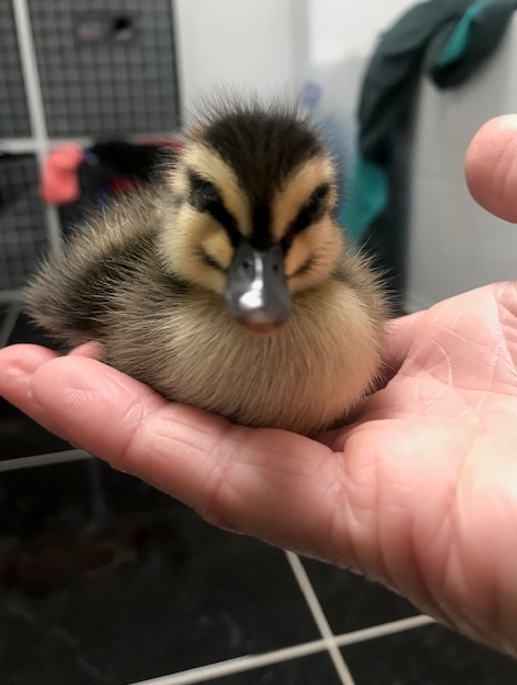
This little fellow “Phil”, a newly hatched Pacific Black Duckling (and our first duckling photo for the season!), was found in Furness Park totally lost and disconnected from his parents and siblings.
He is far too young to be on his own. His rescuer got in touch with Warriors 4 Wildlife who have been able to “home” him with a group of eight recently collected ducklings. Hopefully, he has learned his lesson about straying too far from his “responsible adult”…
With the duckings and other young wildlife about, dog owners should please make doubly sure that their dogs are securely on their leads to help protect our wildlife.
Council Works in the Park
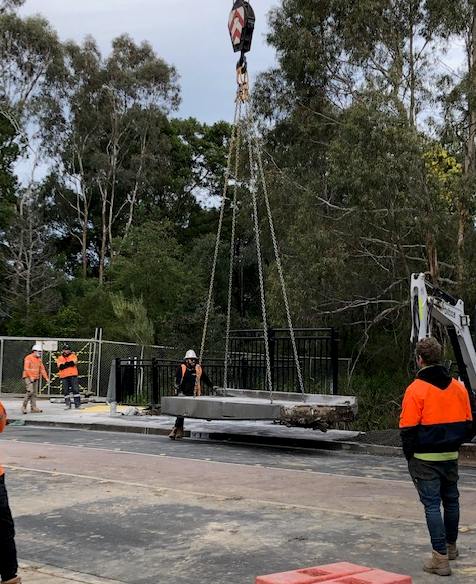
The Main Street Bridge Replacement has been proceeding apace seemingly unaffected by the lockdowns – putting the bridge back would be essential!
Other works Council is considering are:
- Thinning the Phragmites in the Waratah Wetland. This is the plant you might think is a type of Bamboo – it is indigenous but is becoming too dominant – probably due to a build up of nutrients there – captured from street run-off.
- Using its contractor to perform more regeneration work on the Acacia Avenue hill.
Corridor News
The BioBlitz is coming!

One for your diaries – and, no doubt, of special interest to those who participated in the City Nature Challenge (30th April to 3rd May, this year). Whitehorse City Council has chosen to participate in the Great Southern BioBlitz, running from Friday 22nd of October to Monday 25th of October.
The purpose of this event is to highlight the immense biodiversity of the southern hemisphere flourishing in Spring, as well as to engage the public in science and nature learning using the iNaturalist app.
We’ll publish more details in our next newsletter – closer to the event.
Source of Gardiners Creek
Our Committee has been continuing to participate in meetings of the Kooyongkoot Alliance. The Alliance is planning to develop a strategic plan for the whole of Gardiners Creek involving Melbourne Water, the local councils, Friends and parks groups such as ours.
The guest speaker at the last meeting (over Zoom) was the well known Melbourne historian Dr Gary Presland discussing the history of Gardiners Creek. Interestingly, Gary believes the Gardiners Creek commences in Blacks Walk at the junction of two streams. He contends that “Blackburn Creek” leads to Blackburn Lake while another unnamed stream heads north to Whitehorse Road and beyond. The latter is nowadays piped underground near the site of the former Guide Hall.
Gary’s view conflicts with another view in Robin da Costa’s history of Blackburn (Blackburn, a picturesque history) that it is “Blackburn Creek” which flowed northward past a farmhouse on “White Horse” Road. This house also served for a time as the Blackburn Creek Hotel and Blackburn Creek Post Office. The name for the area was shortened to Blackburn in 1882 when the railway was put through. In this view it is the unnamed stream, in more recent times often referred to as Gardiners Creek, that continues to Blackburn Lake and a little beyond ( Blackburn Lake was man-made by damming the creek in 1889).
The alliance now has its own web-site under the River Keeper site. You can view Dr Presland’s presentation there.
Seen down the Corridor
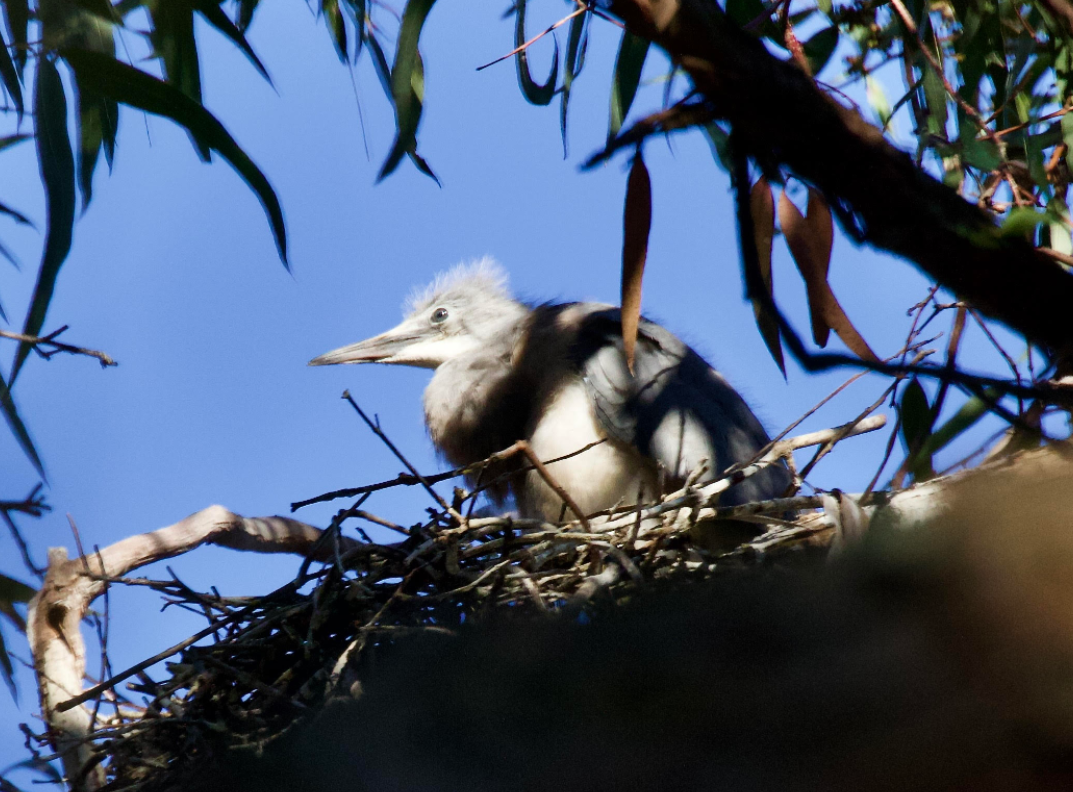
Friend Michael has managed to get a photo of our first White-faced Heron chick for this year – enjoying the sunshine in Linum Street (above). Normally there’d be two or three chicks – unfortunately, there is only one this year.
Sightings in the Park

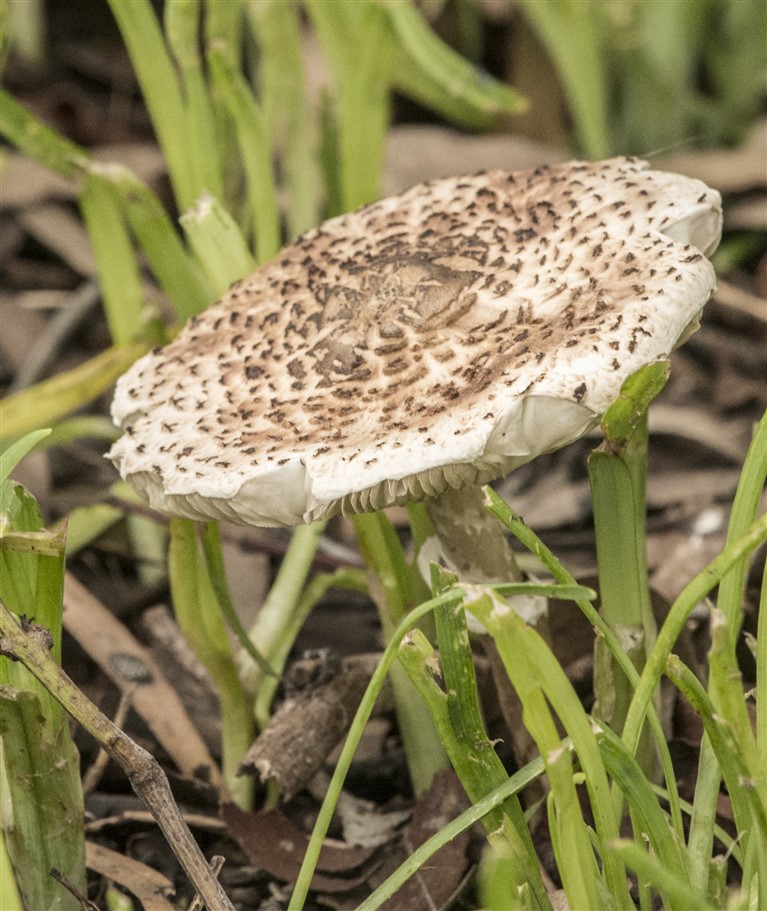
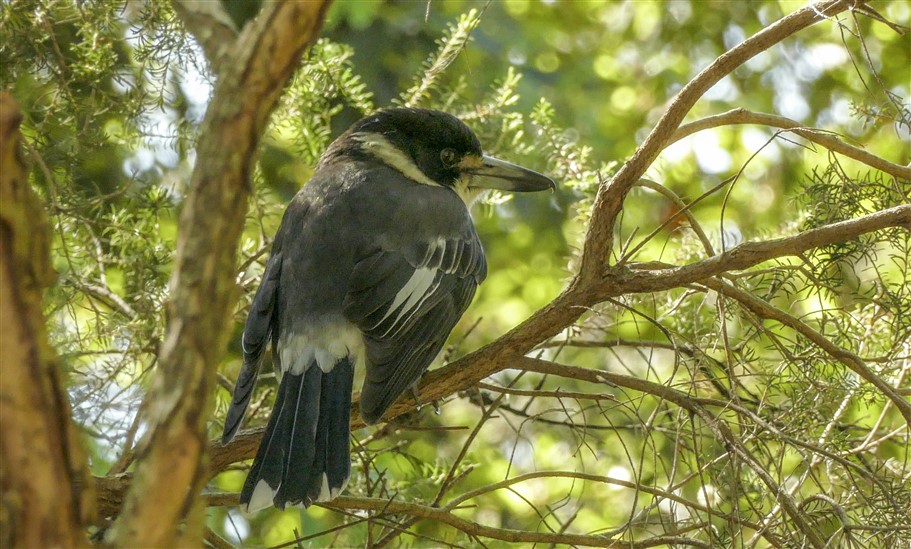
What’s flowering in the park ?
Lisa has sent us photographs of a variety of plants flowering in August in the park – which we show in a “light box”:
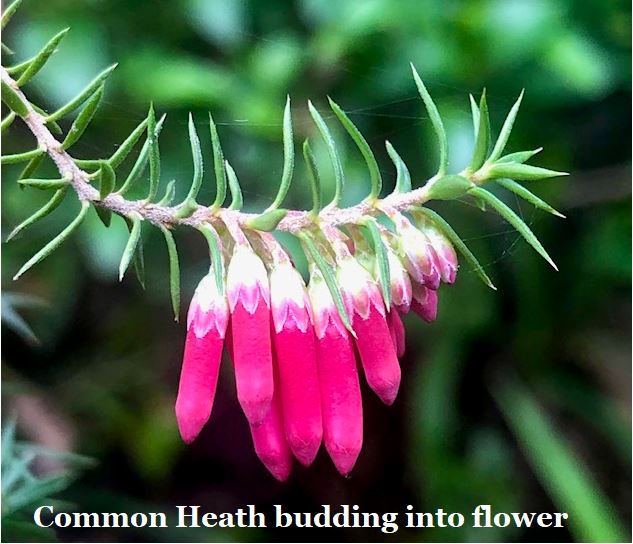
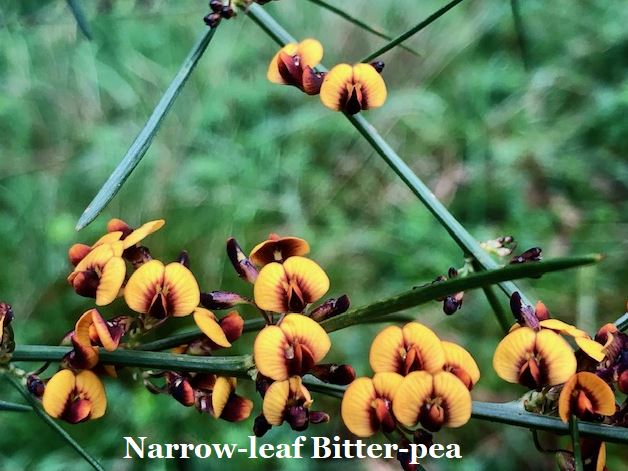
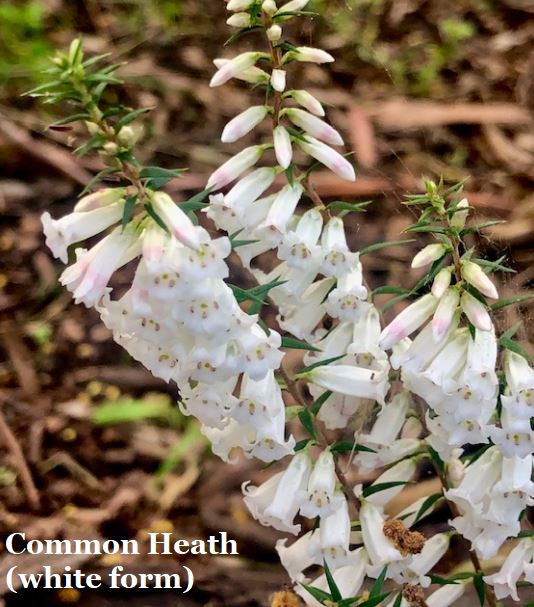
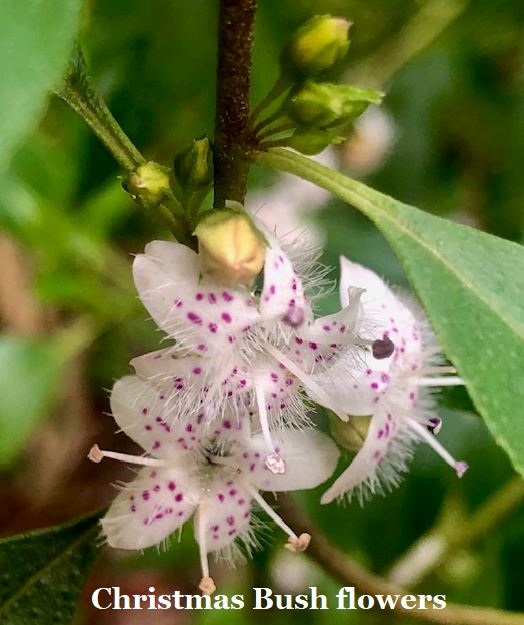
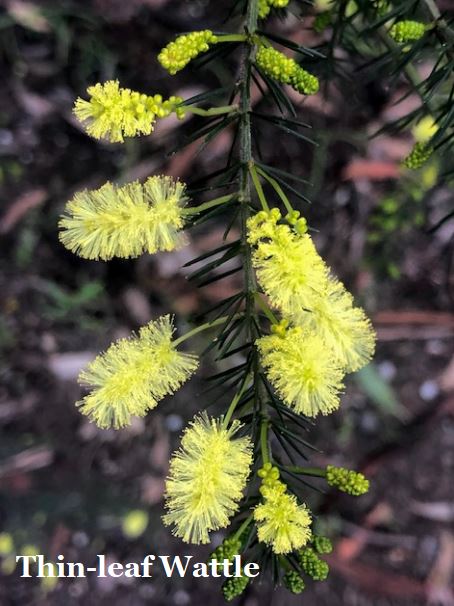
We’ve saved (arguably) the best until last:
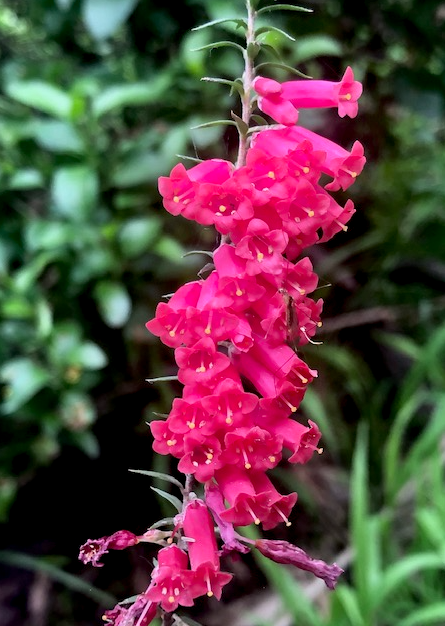
This is the pink form of the Common Heath – the floral emblem of Victoria – photographed in Kalang Park. The white form is shown in the “light box” above – as is the pink form budding into flower. There is no mystery as to how the second part of its botanical name came about!
 Blackburn Creeklands
Pingback: Park News – October, 2021 | The Blackburn Creeklands
Pingback: Park News – December, 2021 | The Blackburn Creeklands