September was quite a month in the Creeklands in both the fast and the slow lanes. We have had sudden heavy rains and a jolting earthquake – while our COVID-19 lockdown restrictions are being slowly eased – with schools soon to return in a staggered way, shops and restaurants to reopen and for all of us to reunite with family, friends and the activities we love in due course.
Sadly, our final two Community Working Bees planned for the year have had to be cancelled due to the continuing lockdown. There is such a backlog of weeding and other maintenance work in the park!
On the other side of the ledger, with the Community and Monday Working Bees that could be conducted this year and last, we were able to fulfill the obligations of our Melbourne Water Grant – even if it took us 12 months longer to get there! Our sincere thanks to Melbourne Water for their continuing support and understanding of the impacts the lockdowns have had on our work plans.
Monday Working Bees to Resume Soon ?
It seems that the State Government’s indicative roadmap out of lockdown would allow working bees of up to 10 double-vaxed people from late October – provided all goes to plan.
Together with the other Park Advisory Committees, Council is still working on our status as a group and now looks like putting in a temporary facility to provide public liability and personal accident insurances while things are sorted out.
We are therefore hopeful that our Monday Working Bees may be able to resume from early November. Our Spring Bird Survey is also a possibility too – though it would also be likely to run in November (instead of the usual October).
Our Wildlife
In the meantime, the local wildlife has been going about its normal business – with Spring being a common time for breeding.
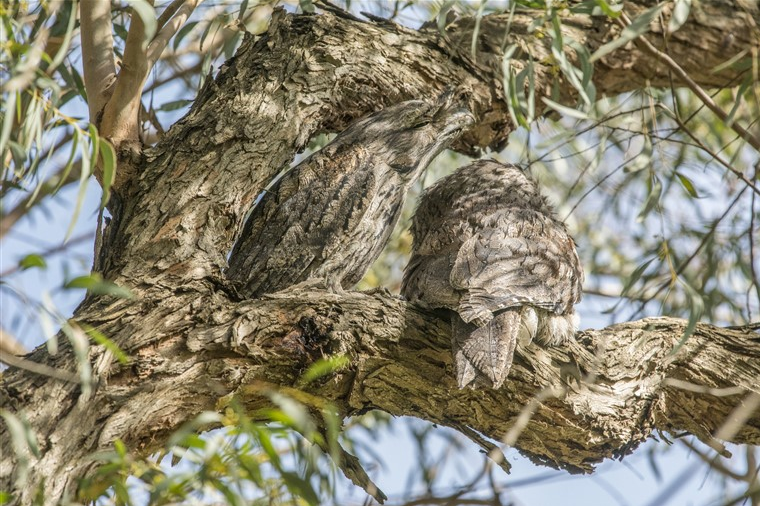
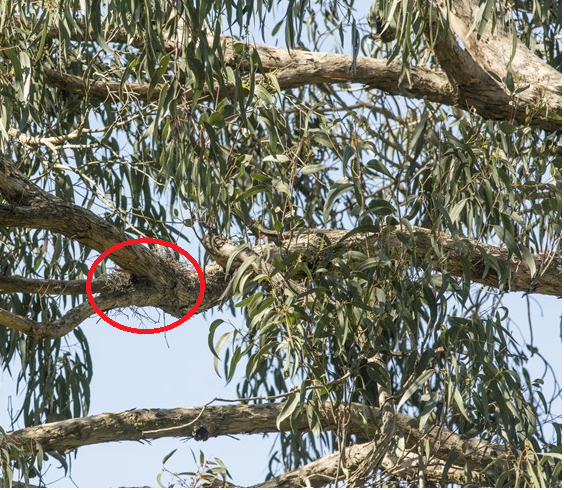
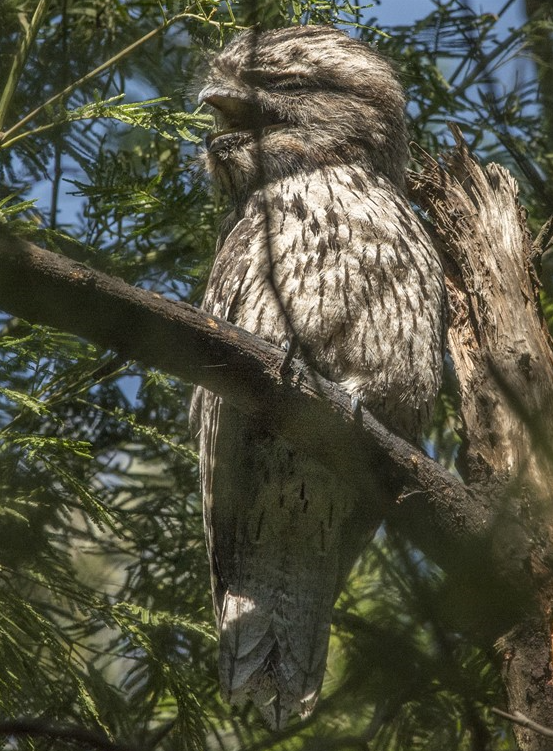
Most of our readers would know that the Tawny Frogmouth (Podargus strigoides) is our “signature” bird species in the park. Despite being very good parents, Tawny Frogmouths have been accused of being quite slack when it comes to nest building. As one writer says: “They simply dump twigs and leaves in a pile and that is it”.
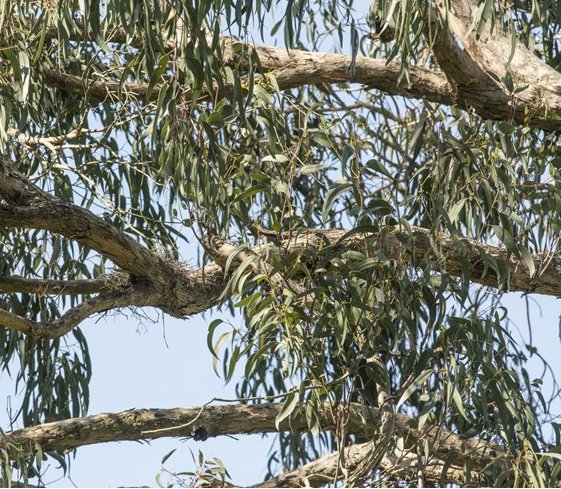
Can you spot the Tawny Frogmouth nest in our photo? The slider may help:
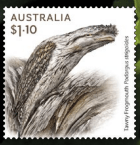
By the way, we’ve managed to convince Australia Post to feature the Tawny Frogmouth on a postage stamp – by promising that Blackburn PO will be inundated with orders from our Friends!
These will be issued on 5th October 2021 as part of a set called “Nature’s Mimics”.
Tawnies can be difficult to spot in trees at the best of times given their natural colouring. However, when they feel threatened, they ramp up their camouflage skills to mimic dead branches – as the postage stamp shows.
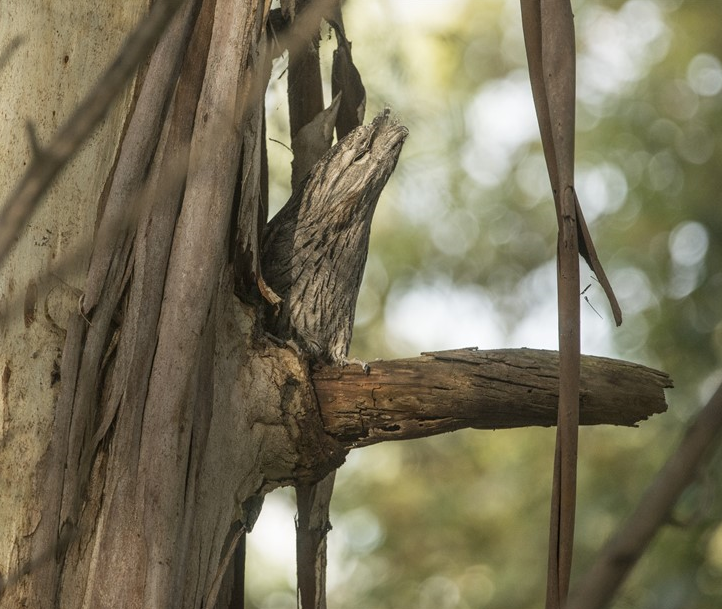
They stretch their head and bodies upwards to give a convincing impression of a broken off stump. If you see this behaviour, something (possibly you!), has alarmed the bird and it is no doubt very stressed. The best thing to do is to back off and don’t stare or point at the bird. We like our tawnies relaxed – feeling safe and comfortably breeding in our park!
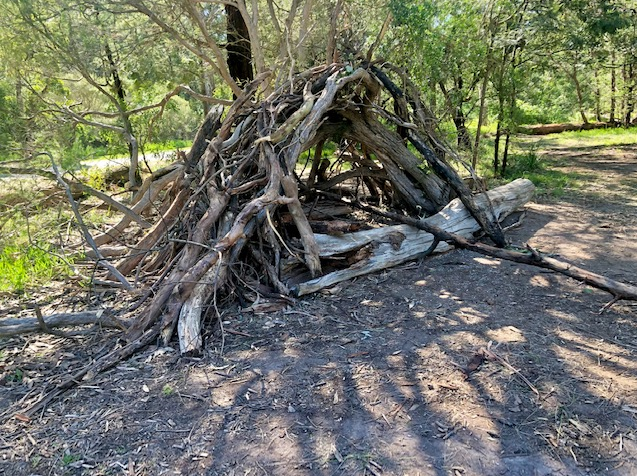
Here is another “nest” in Furness Park near the playground – this one constructed by Noisy Minors:
Conditions Ganging up on the Gang-Gangs
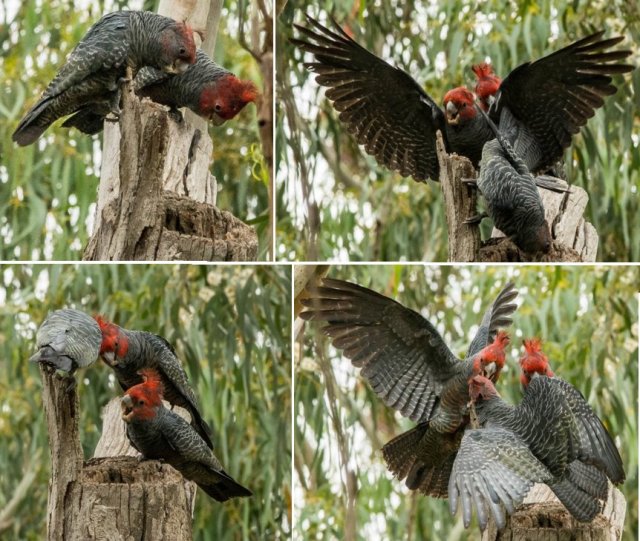
The always “smiling” Gang-gang Cockatoo (Callocephalon fimbriatum) is a favourite avian visitor to our park. We’ve learnt from Birdlife Australia that the species is in serious trouble after last year’s devastating Black Summer bushfires. Over the last 18 months, Australia’s Gang-gangs have lost more than a third of their habitat and their population has declined by 21 per cent. So much so, the Australian Government’s Threatened Species Scientific Committee is recommending that the species be listed as Nationally Endangered due to the population and habitat losses. Worryingly, the Gang-gangs are now at increased risk from climate change, with the associated impacts on the frequency and severity of fires.
We do hope they continue to visit us.
Our Changing Park
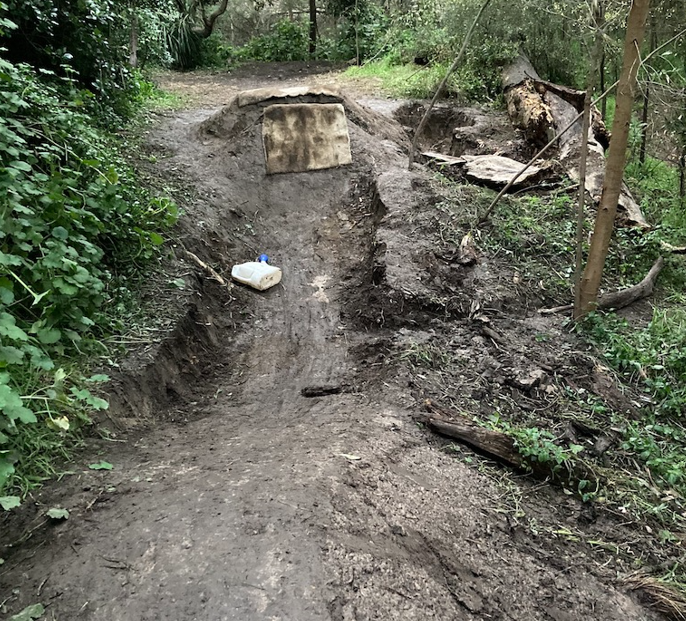
Under the protracted lockdowns, we have noted significant changes to use of our park which have implications for future planting and management. The park has been reborn as an “adventure playground” with children becoming “free range” as they were decades ago. Clearly, parents have become stretched – trying to manage their employment, their children’s education, the need to counter excess “screen time”, provide for socialization – all while running their households as usual. It may be that some of these changes will become entrenched.
New plantings have suffered badly due to inadvertent trampling and high traffic. Young plants will need more protection in future. We’ve been brainstorming various ideas such as temporary fencing that might help – something we’ve generally managed to avoid – though common in many other parks.
The Blacks Walk Time-Machine
Change in the park is always occurring of course – but usually at a gentler pace. Whitehorse Council has a mapping facility which allows 1945-2021 aerial photos to be overlaid on a map. The following snapshots in time show Blacks Walk and surrounds over that period. Here is a potted history:
- Blacks Walk was not acquired as parkland until 1960 (Middleborough Road block) and 1962 (Pakenham Street block).
- The Blackburn Creeklands, merging Blacks Walk with Kalang and Furness Parks, was created in 1983 following a strong community campaign.
- In 1945, the area was mostly devoted to agriculture with Blacks Walk reserved for grazing and the Dwyer poultry farm shown at the bottom right connected by a path fording the creek to the family house at the end of Myrtle Street. Pakenham Street did not exist.
- By 1951, housing was beginning to encroach from the north in the post-war housing boom. Pakenham Street and Derby Street are visible as dirt roads.
- By 1956, the roads are more formalised and a foot track heads south from the end of Pakenham Street towards Canterbury Road.
- By 1963, Garie Street exists and housing was being developed. The former Guide Hall is under construction (opened 1964). Laburnum Primary School is visible at the bottom left of centre – it opened to students in 1964. Pakenham Street was fully made connecting Blackburn with Blackburn South. Shortly afterwards (1965) a Concept Plan was prepared for Blacks Walk by Ellis Stones, the famous landscape designer.
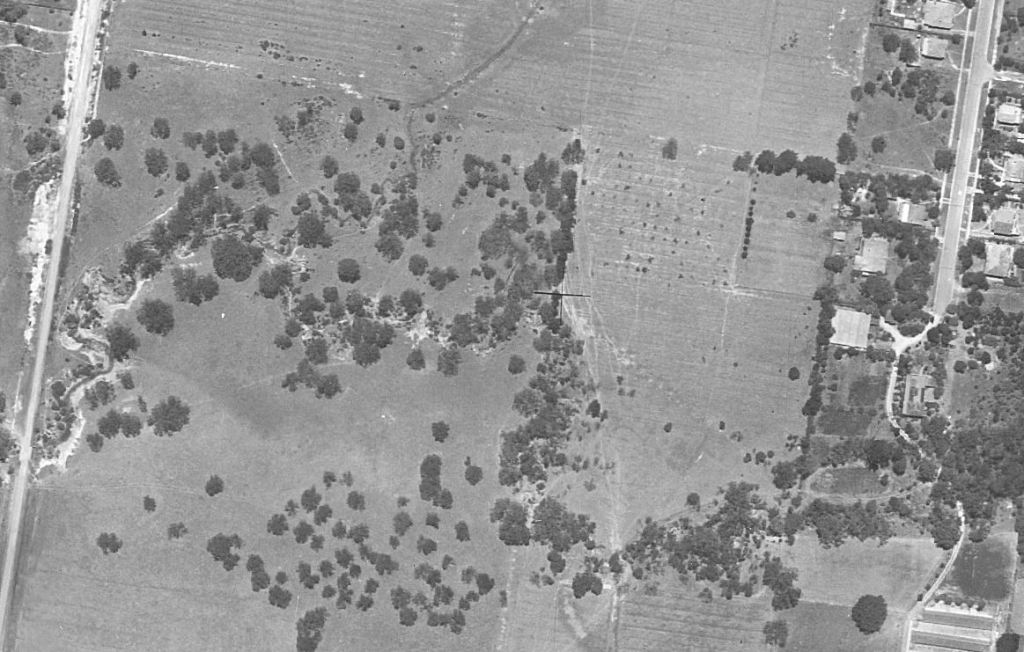
1945 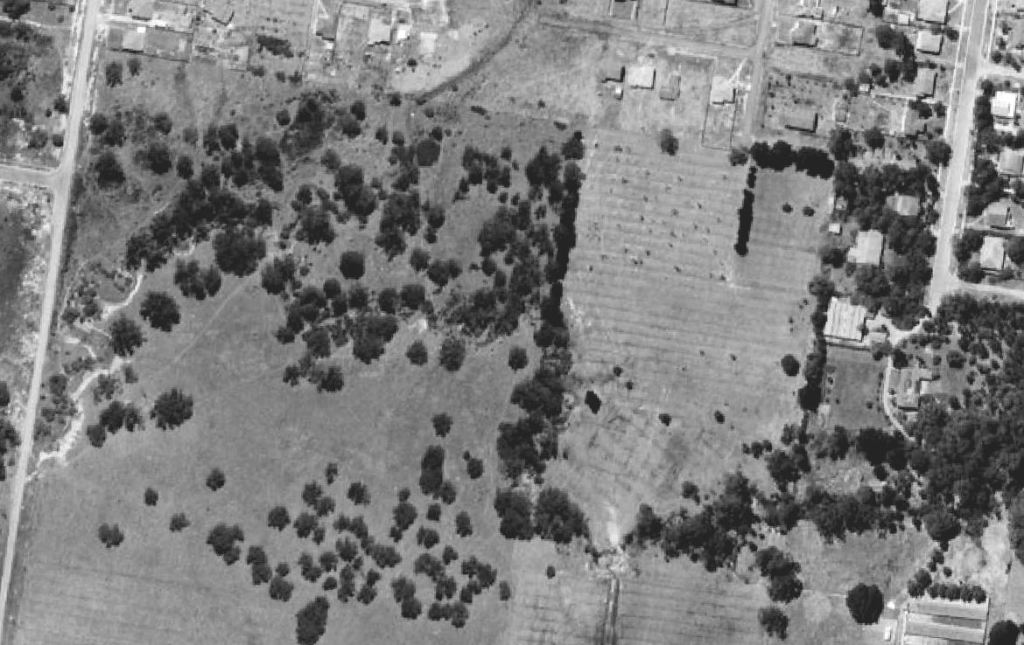
1951 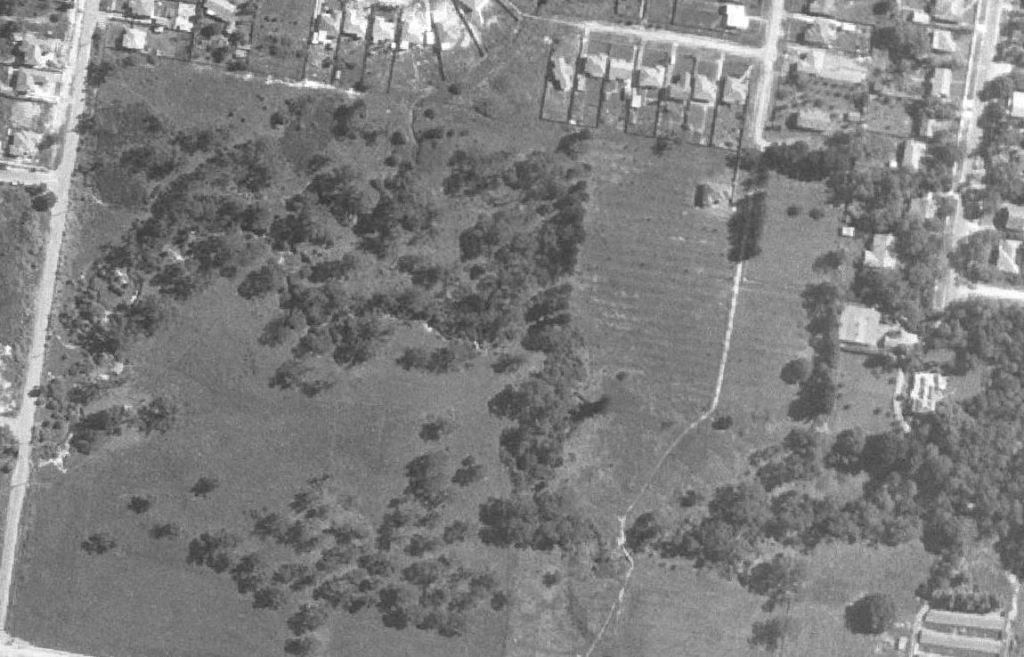
1956 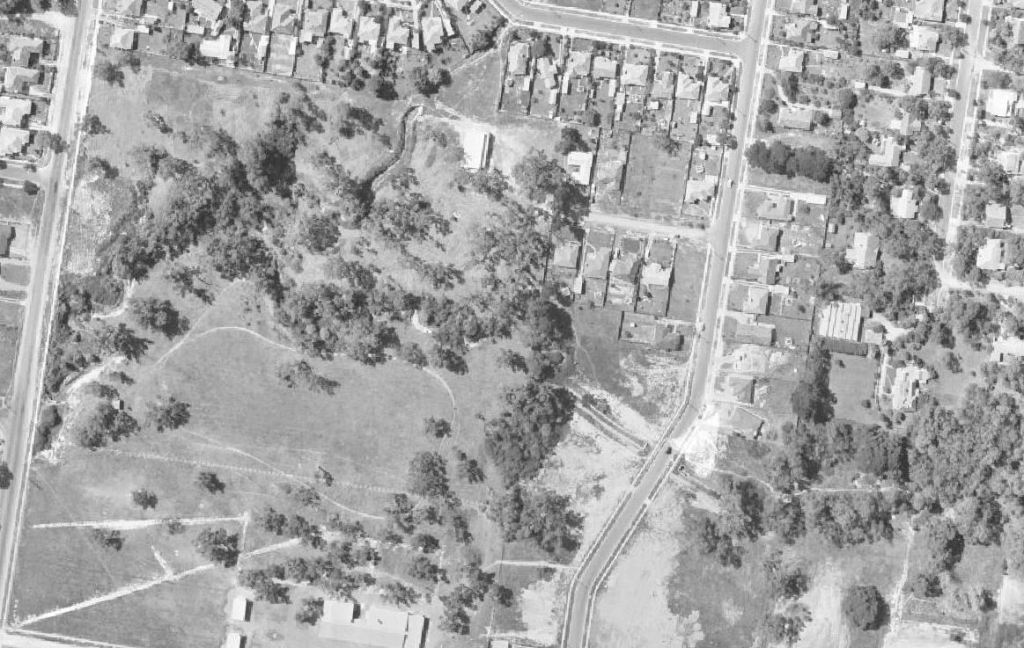
1963 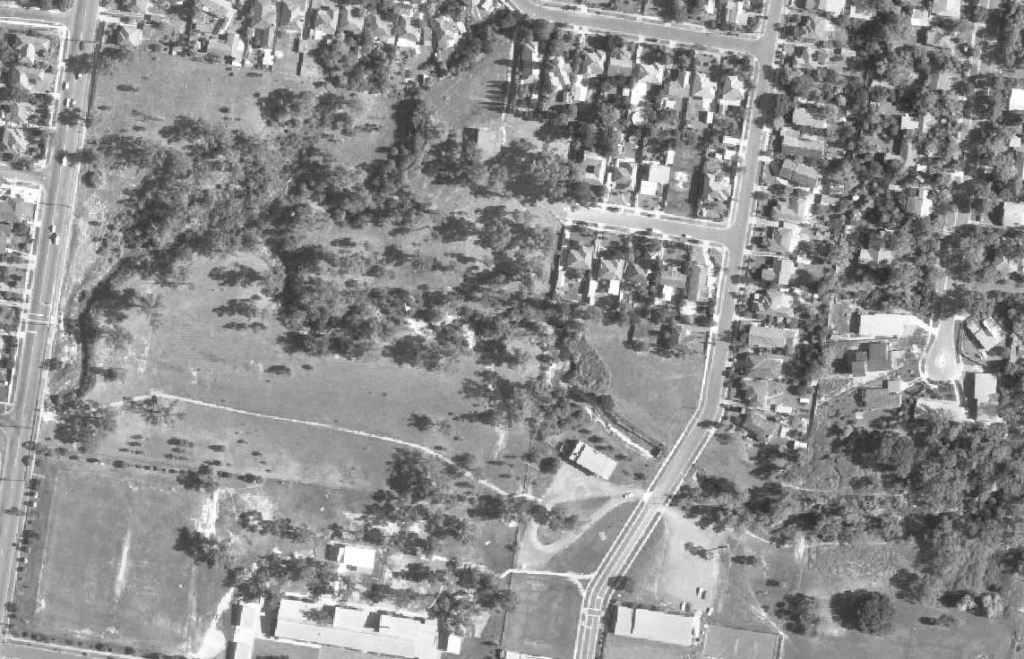
1975 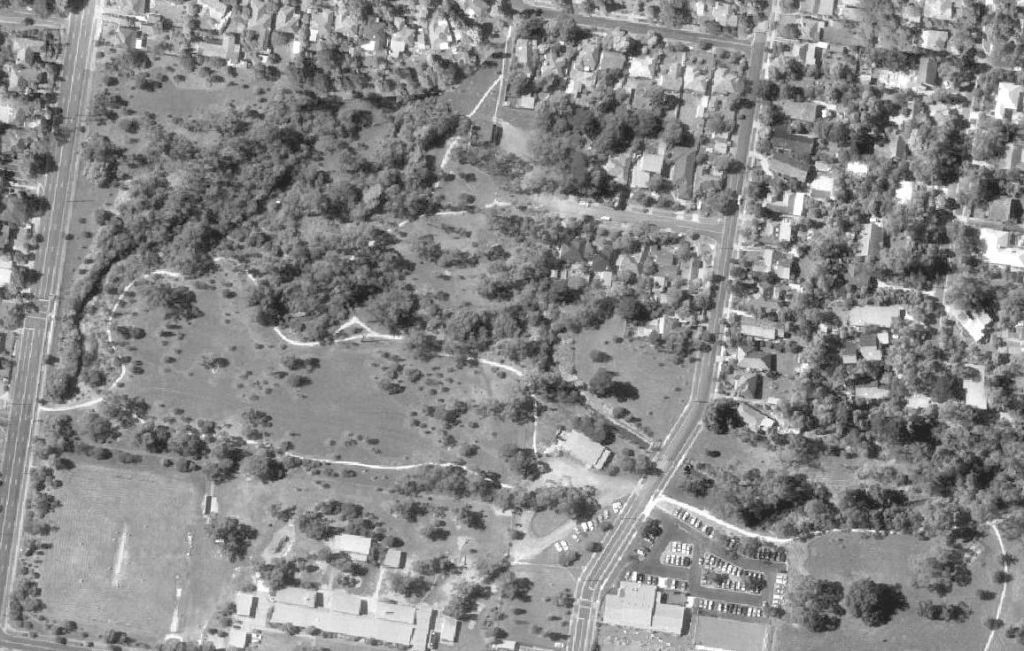
1987 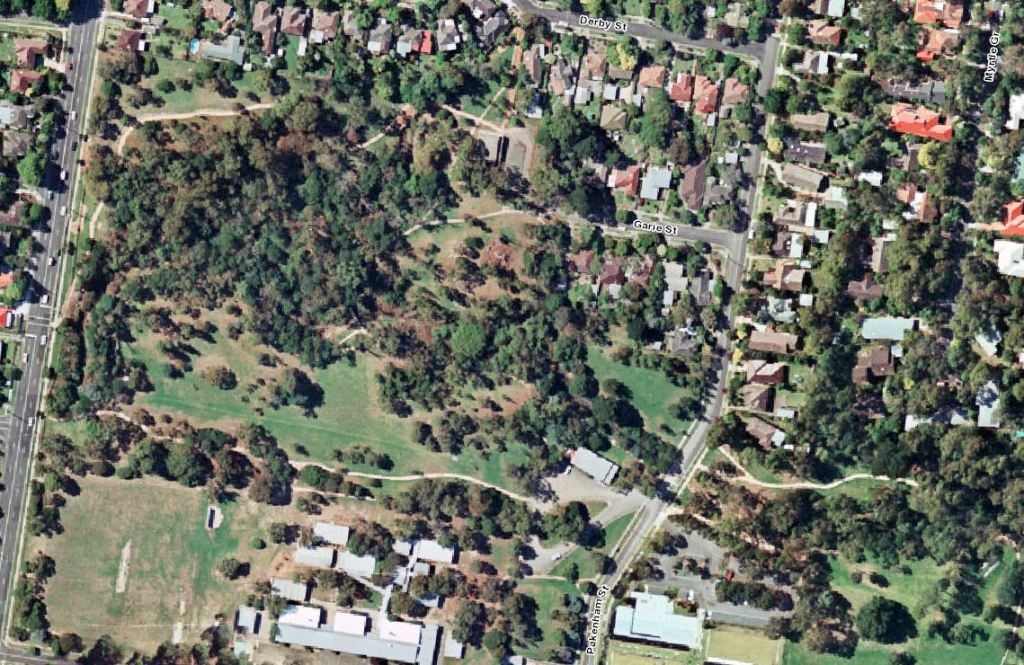
1996 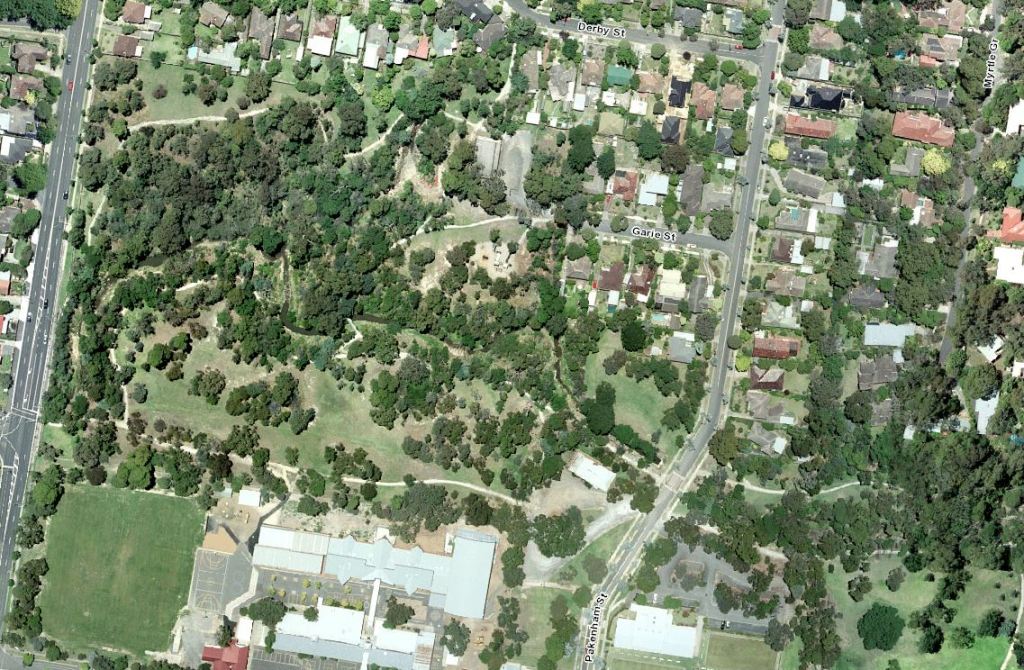
2005 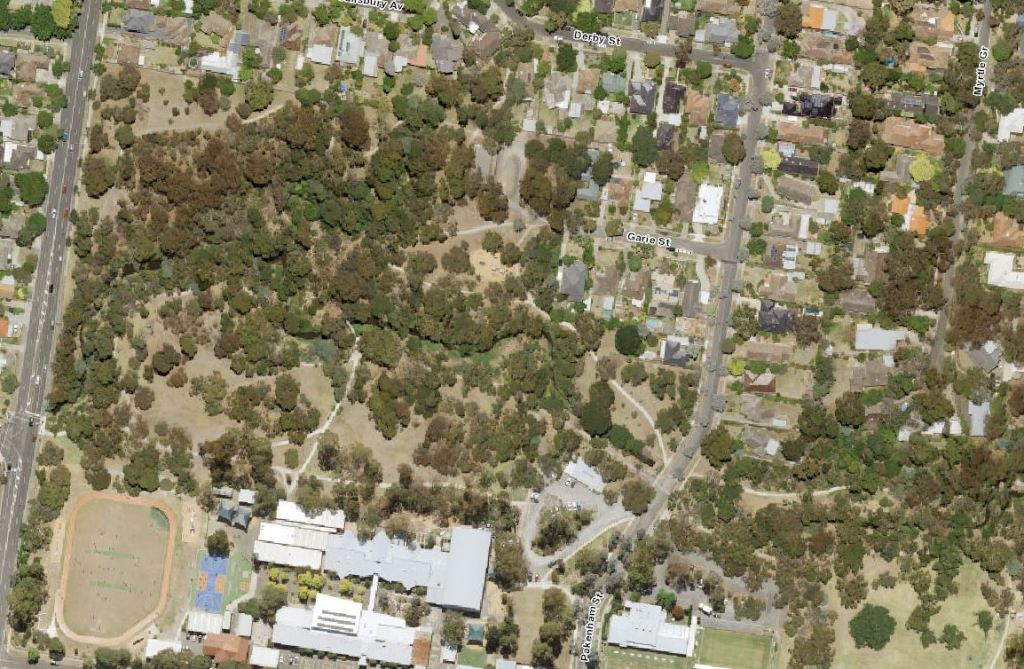
2015 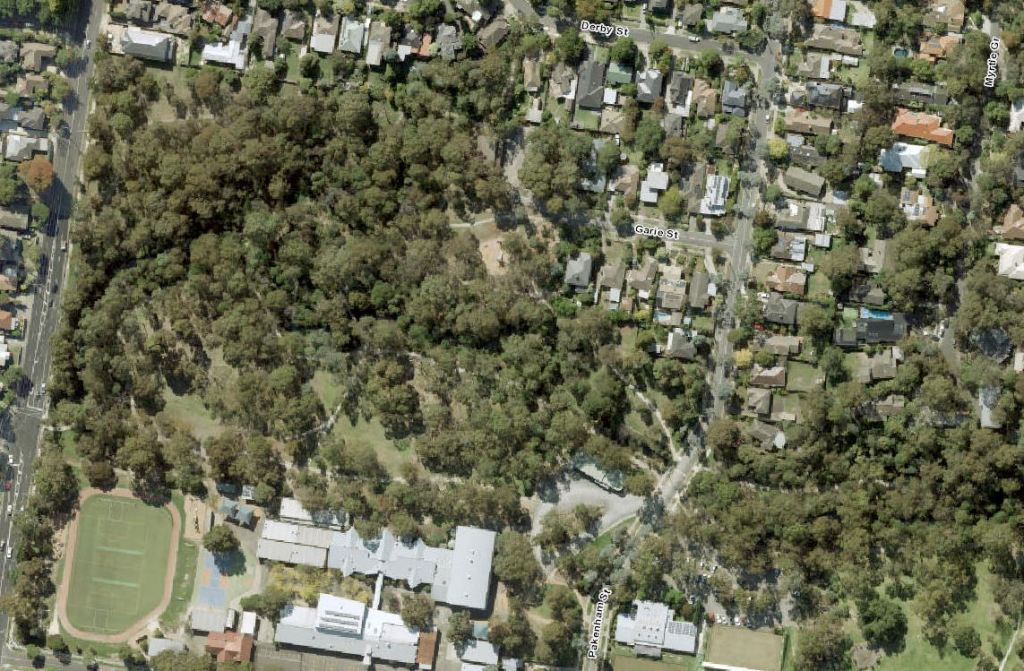
2021
- There’s a significant time span to 1975. By then, the Bowls Club (1967) and Scout Hall (1968) had been built. The Dwyer house and poultry farm had been subdivided for more housing.
- By 1987, most of today’s walking tracks and the Blacks Walk footbridge (1985-86) had been built and the Bowls Club car park reconstructed- based on a design prepared by Mrs Thelma Osborn of the Advisory Committee. The Bowls Club was extended too.
- By 1996, one can see the primary school had grown quickly. The Blackburn South Primary School in Canterbury Rd was closed in 1989 no doubt increasing pressure on enrolments. The school was significantly redeveloped by 2005.
- The 2015 photograph seems to show the enduring effects of the Millennium Drought (1996 – 2010). The new path recommended by Committee from the school gate to Blacks Walk bridge (2013) is also obvious.
- By 2021, we can see the remarkable improvement in vegetation in the park over the decades compared to the limited remnant vegetation we see in the 1945 photo. We thank Council and our dedicated volunteers over the years for this remarkable transformation.

If you’d like to look at your own property this way, click this link to the map. Search for your address or navigate to your property. The aerial photos are available under the Change Map icon.
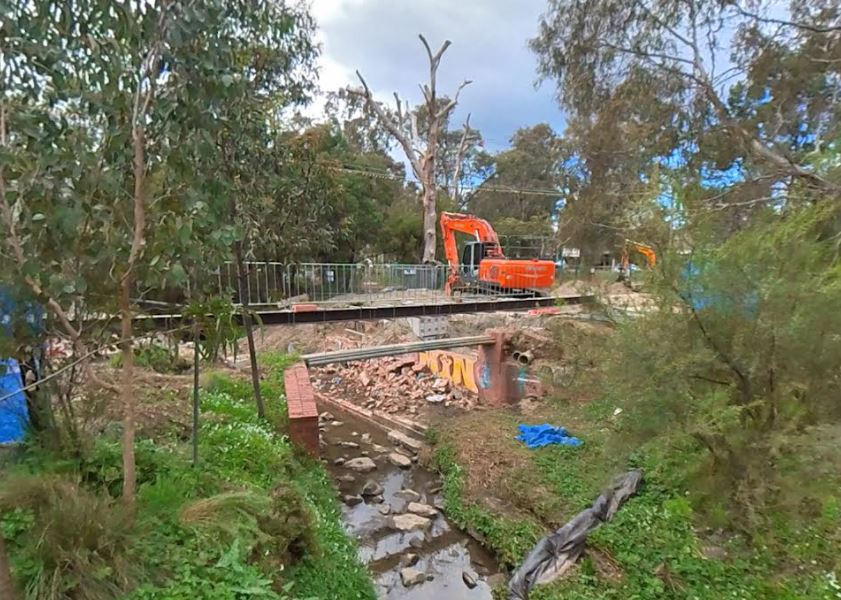
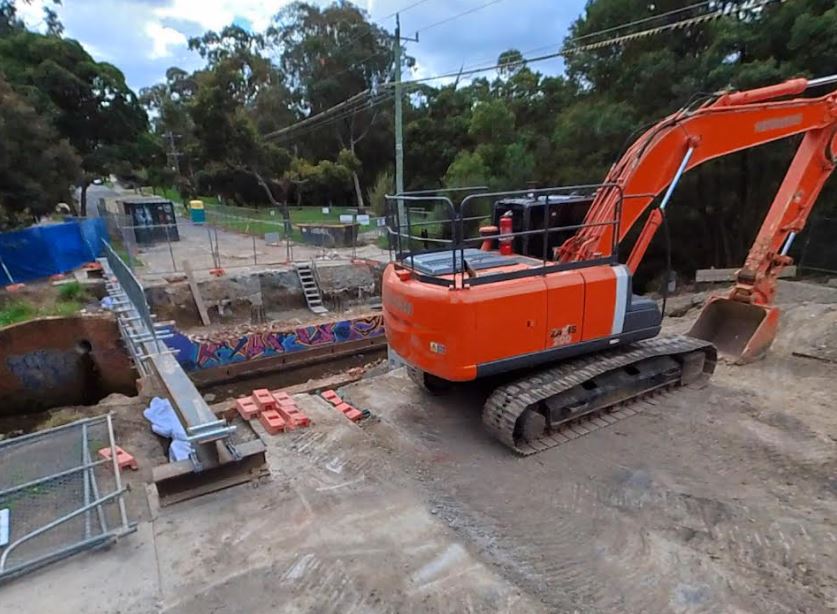
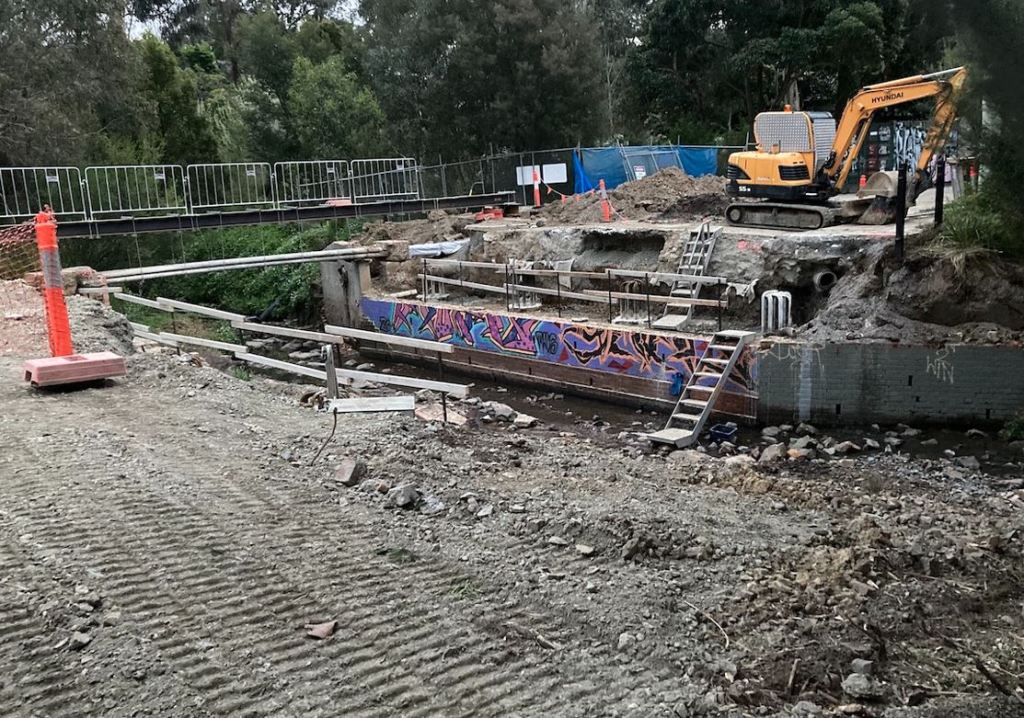
Council’s Main Street Bridge Project
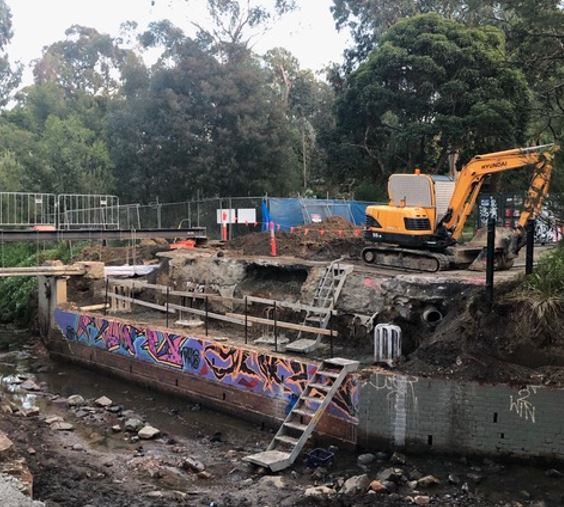
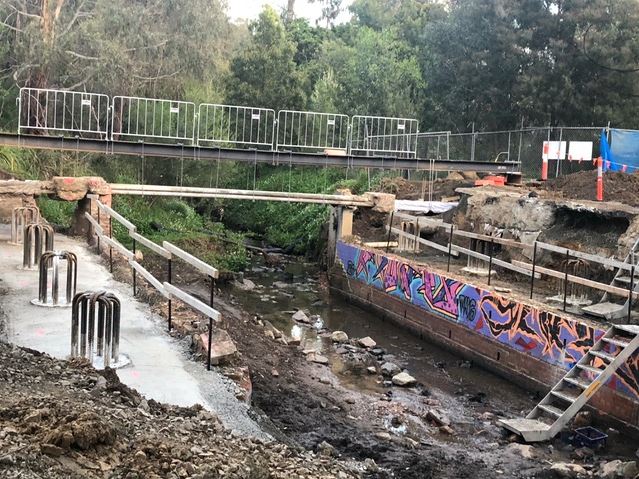
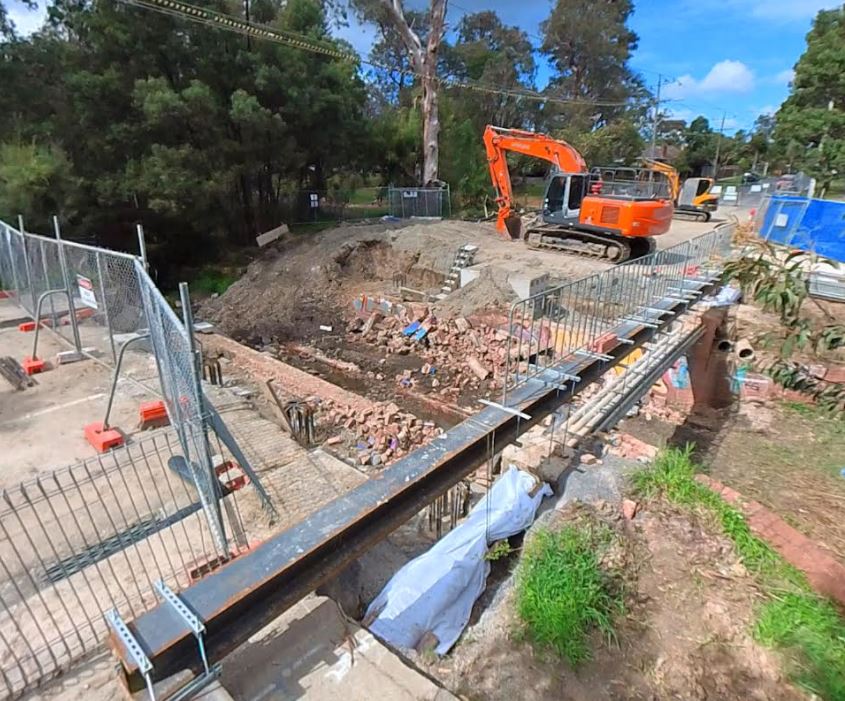
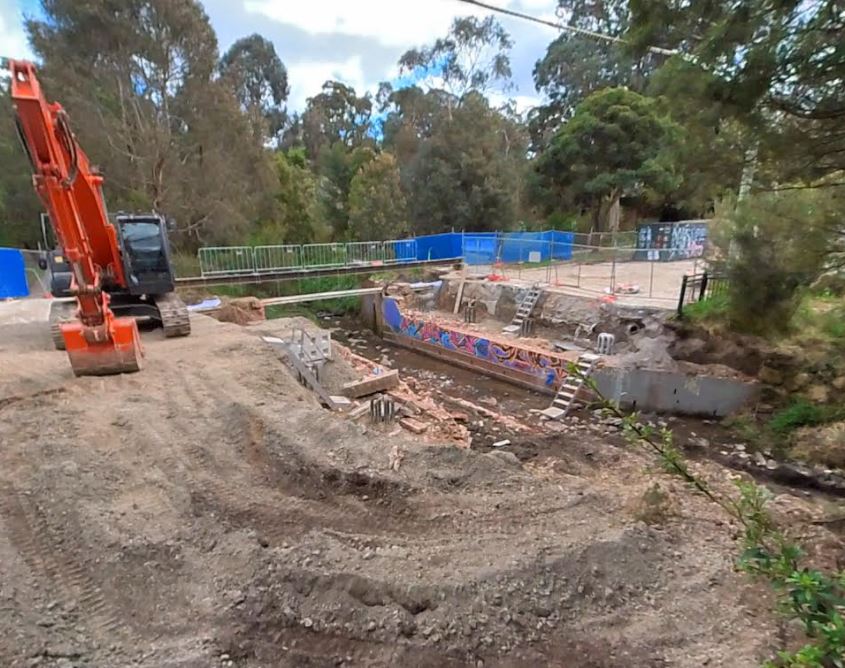
Thanks to photos from Geoffrey, Andrea and Megan, we can track the month’s progress on the Main Street Bridge Replacement project. They also reveal a bright, though unexpected, mural underneath:
No Nails in Trees Please!
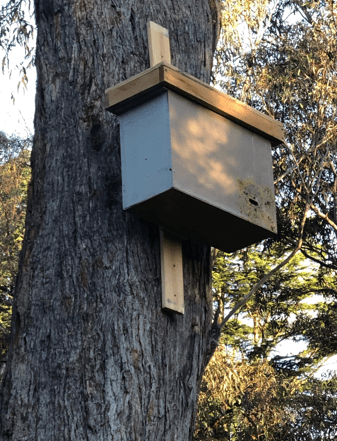
Council acted quickly to remove this Honey Bee Swarm Trap nailed to a tree in Furness Park in the “no-mow” area.
Typically, these swarm traps contain a pheromone lure to capture bee swarms. We’re told a swarm is worth $200 these days!
We certainly do not like to see traps like these, nest-boxes etc nailed to living trees.
Attracting swarms to areas near children’s playgrounds may have its problems too!
Sightings
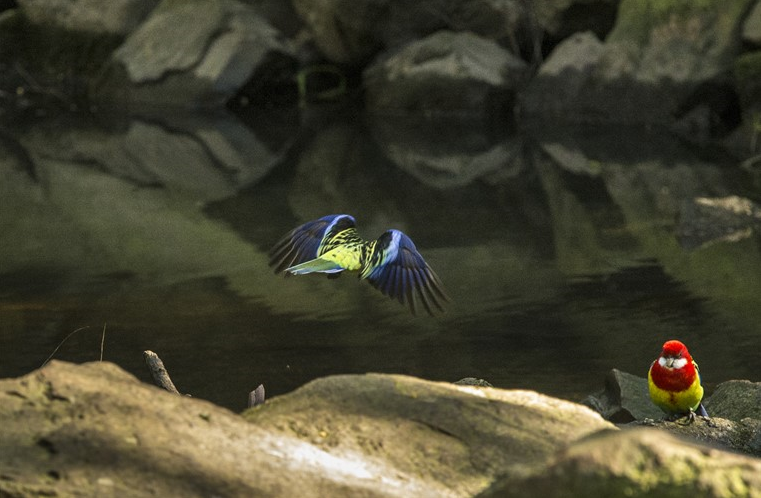
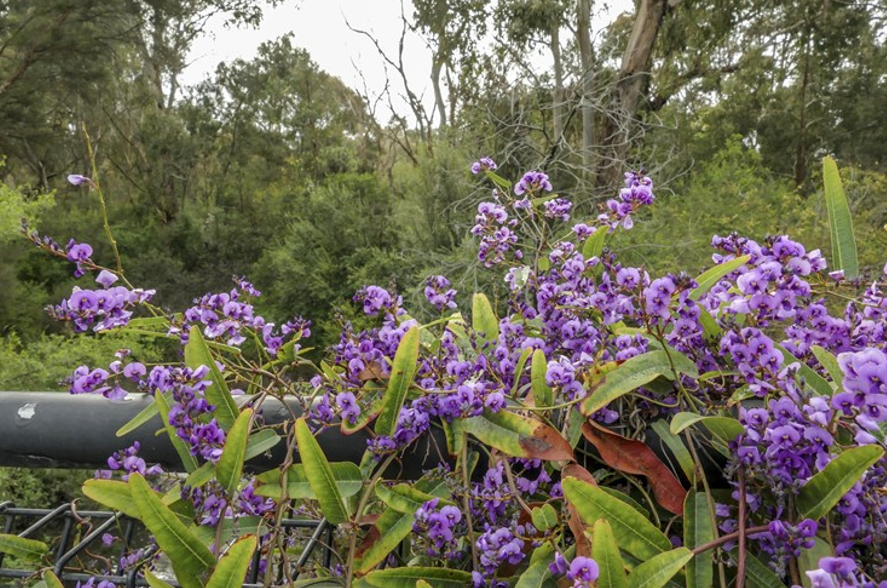
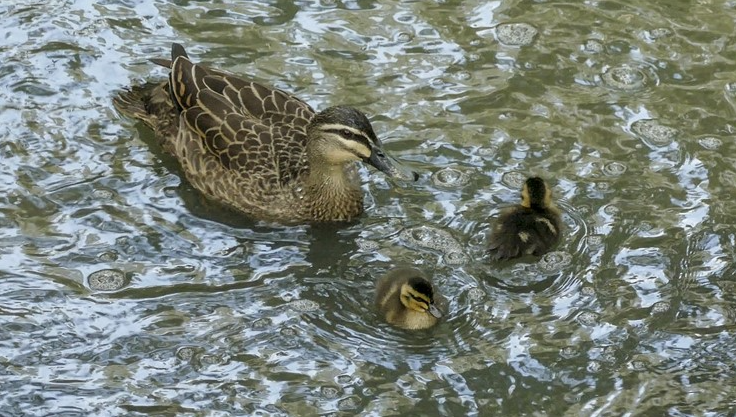
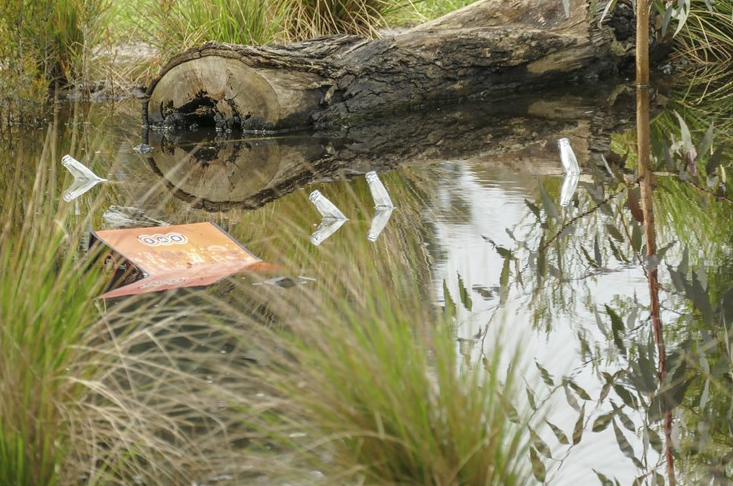
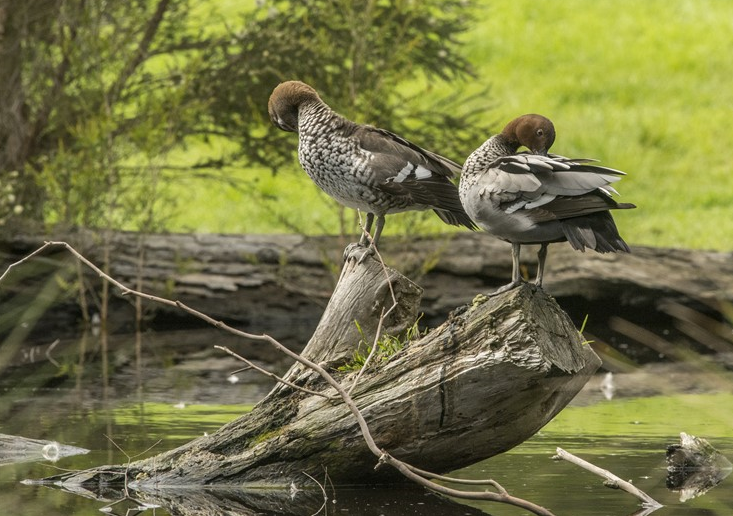
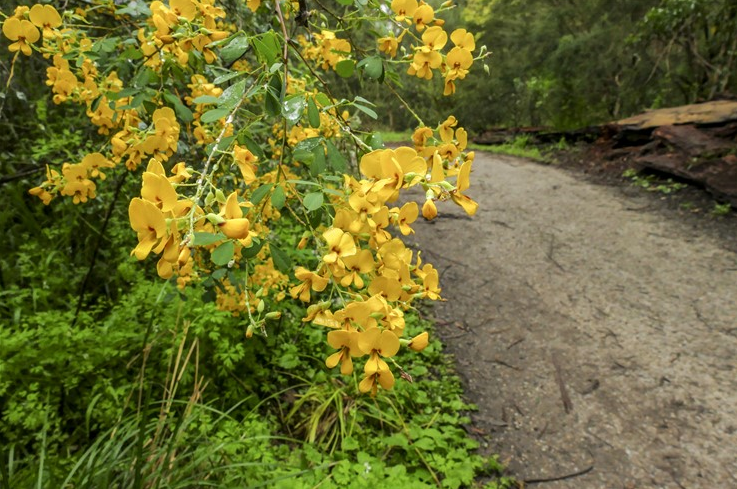
Unfortunately, due to the lockdown, we don’t have as many interesting photos to share in this month’s newsletter as we do usually. Here are some people have taken on their limited walks:
 Blackburn Creeklands
Pingback: Park News – October, 2021 | The Blackburn Creeklands
Pingback: Park News – November, 2021 | The Blackburn Creeklands