We’re Back!
We are very pleased that our regular park activities are getting back to normal following Lockdowns #5 and #6. Our working bees have restarted and our usual October “Spring Bird Survey” was replaced by a Bird Walk hosted by Council (Ian Moodie) in November. More on those in the next couple of articles.
We were also pleased as a committee to be able to meet face-to-face for the first time in five months for our last meeting for the year. Although Zoom meetings in the interim were both necessary and sufficient to keep essential business going, they’re not everyone’s cup of tea (and you have to provide your own thereof!).
Thursday Morning Working Bees
Our Maintenance Team’s regular Thursday morning working bees restarted again from the 4th November. There’s plenty of work to do – given the good rains this season and there being two years of weed seed in the ground! So much so, restoring order will have to be the priority for the coming year rather than new planting projects!
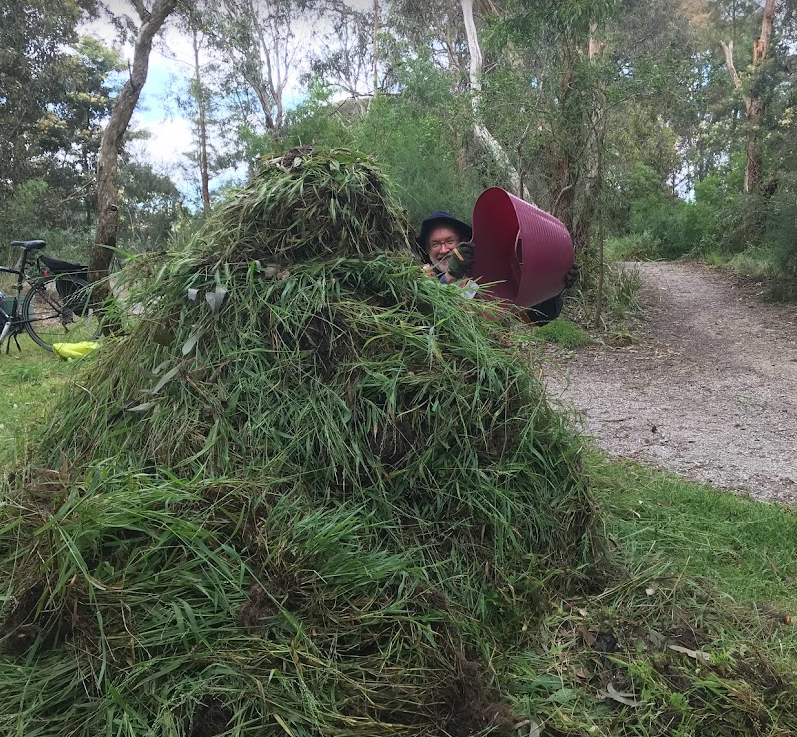
The Team reports it was not only great to make a start on the weed backlog but also to catch up with the group – all the family news, personal milestones, park happenings and the backlog of ideas everyone has hatched.
The group would like to thank Planet Ark for providing insurance cover for our events since doubt was cast on Council’s insurance. Unfortunately, all our weekend Community Working Bees since the 4th July had to be cancelled due to the lockdowns. Hopefully, Community Working Bees will resume in March/April 2022 – pandemics willing!
Bird Walk
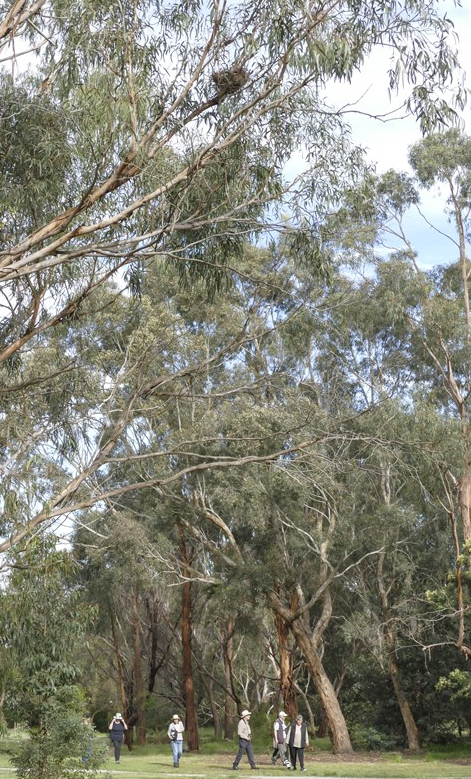
We could not run our regular Spring Bird Survey at its usual time in October due to lockdown #6. However, Ian Moodie from Whitehorse Council ran a “Bird Walk” on 6th November which turned out to be a very close approximation of the Committee’s usual Spring Bird Survey – albeit a little later than usual and under a more restricted format due to the need to control numbers and social-distancing. We were fortunate, once again, to have Pat Bingham from Birdlife Australia also acting as a group leader to share the group leadership role with Ian.
We were very sorry the event could not be opened up fully to the community. Several of the attendees including Ian, Margaret and Michael are great photographers and generously supplied some photos for our readers to share:
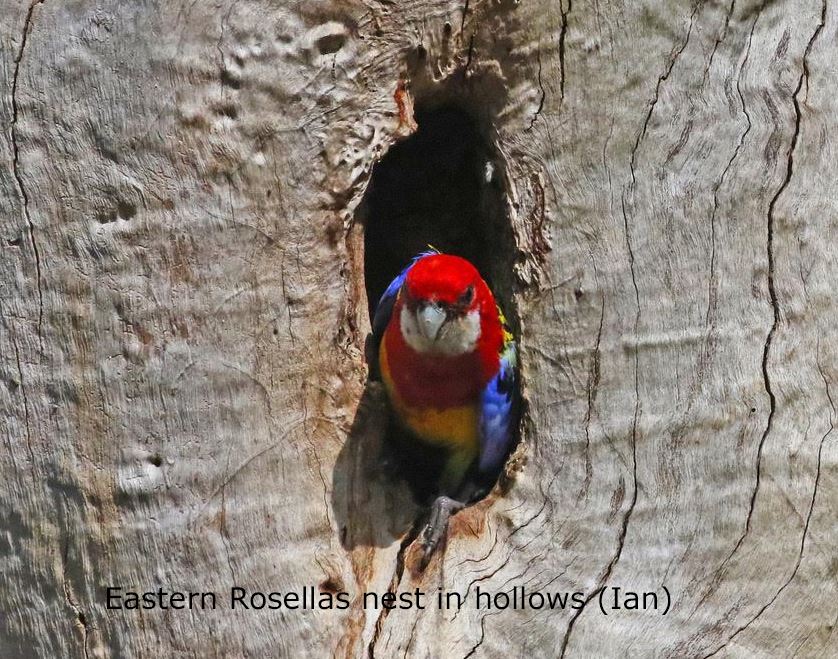
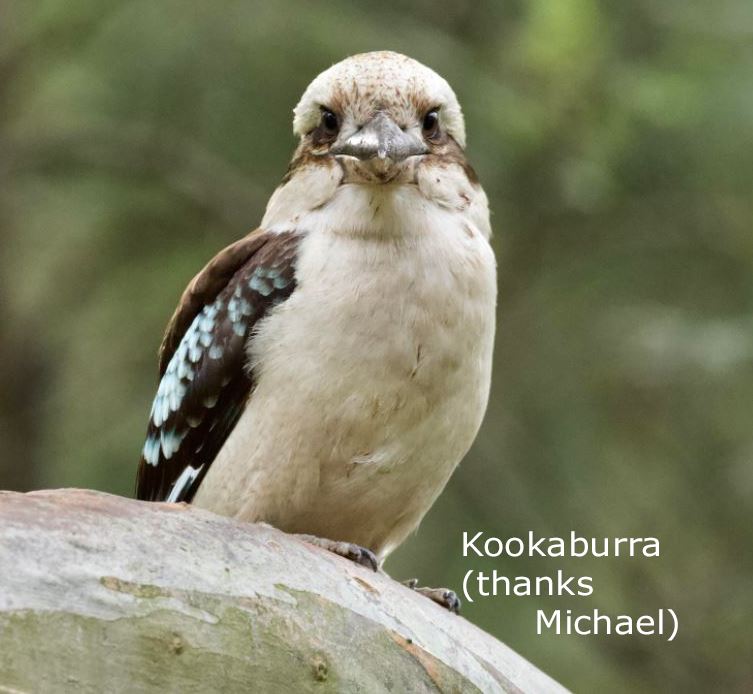
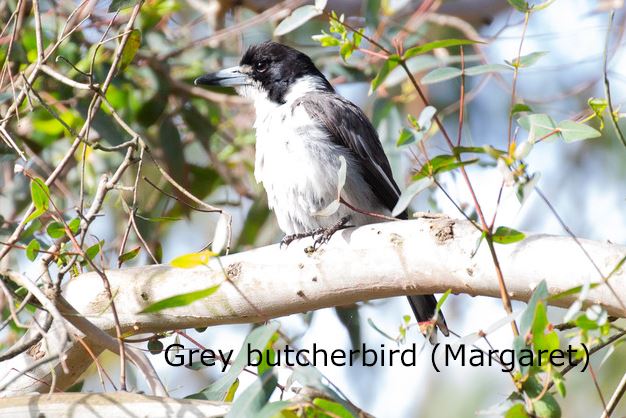
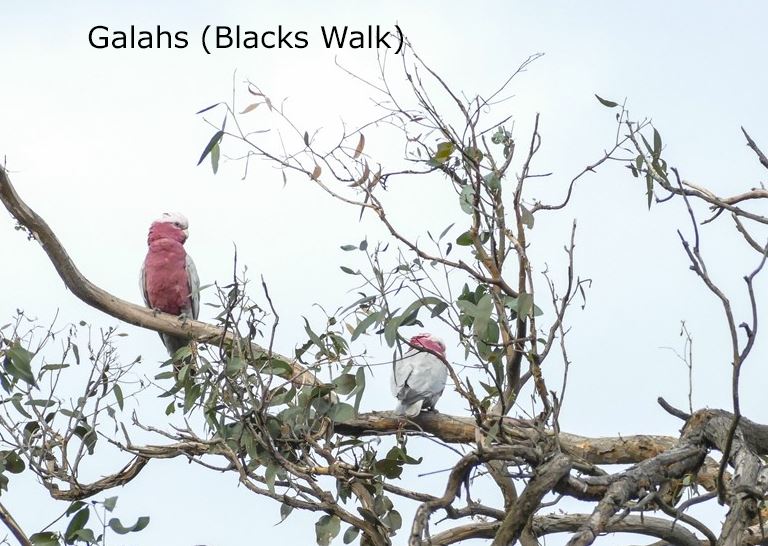
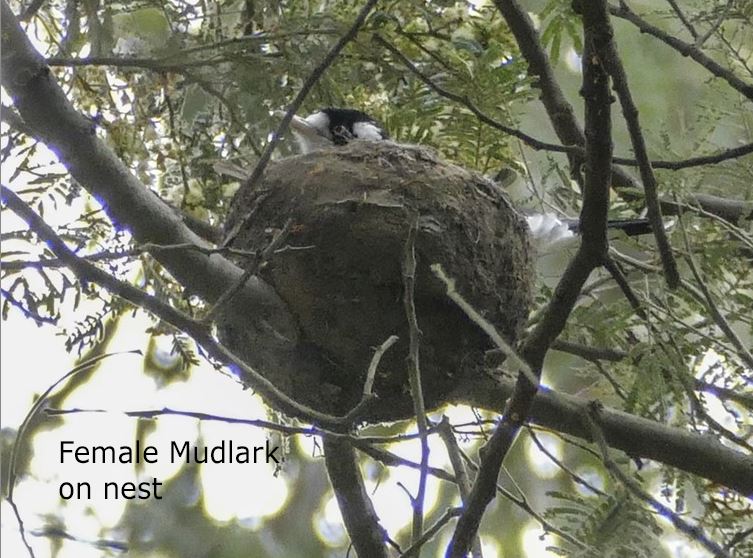
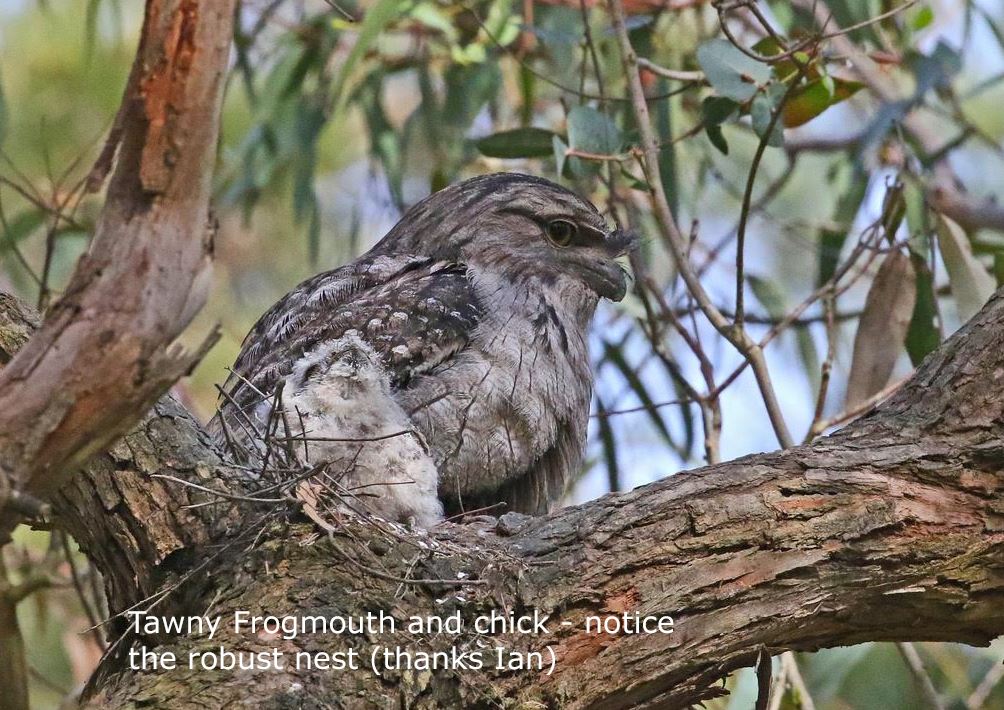
To scroll, click on one of the photos and scroll using the < > arrows. Click X when finished.
As the photos show, “bird watching” is sometimes done BY the birds as well as the human participants!
All of the photos were taken on the day during the walk or shortly afterwards when some of our photographers snook back to get another shot. For the survey results, please click this link: Spring 2021.
Nina’s Rescue Story
Friend Nina has kindly supplied the following captivating article – acting as a reporter on the scene.
In these times of doom and gloom all over the news, a lot of local community members have enjoyed a good news story unfolding in the Creeklands before their eyes, the survival of a Tawny Frogmouth chick following some human help.
The wild weather of the first November weekend which left large parts of Blackburn without power also had terrible impacts on a lot of wildlife. On his Bird Talkback on ABC Radio Melbourne’s 774, Birdlife Australia’s Sean Dooley received numerous calls about young birds falling out of nests, especially Tawny Frogmouths. Wildlife Victoria’s Twitter feed told a similar story.
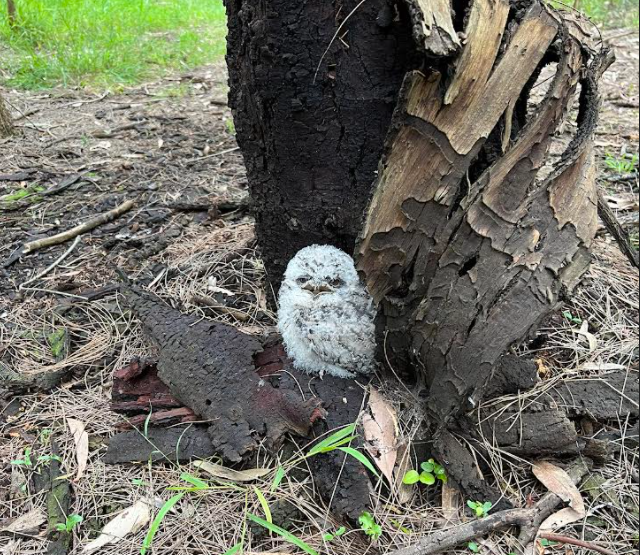
One of our own resident pairs had built a nest in a tree near the Garie Street play space in which a chick was observed on Friday, November 5th before the wild weather hit. On Sunday evening, following wild winds, this chick was first seen on the ground underneath that same tree. On Monday morning, several families walking their children to Laburnum Primary School noticed the chick on the ground below a different tree, with both parents in the tree above, eyeing the concerned humans suspiciously. The knowledge of foxes in the area and the rather obvious location the little one was sitting in, clearly visible from the path frequented by lots of people and dogs, had many people concerned for the chick’s welfare.
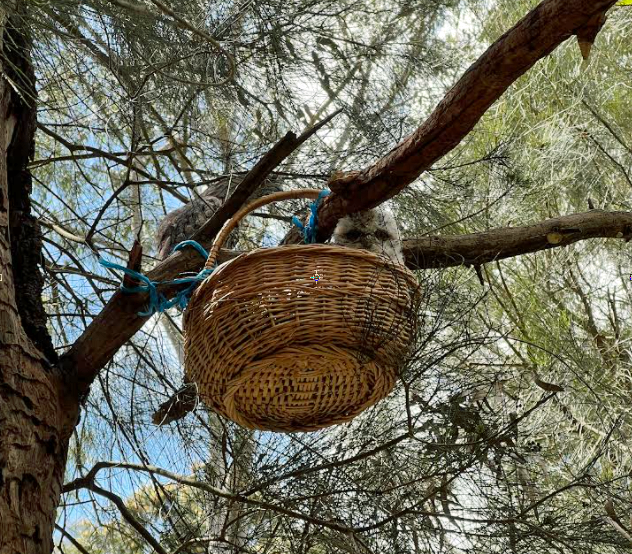
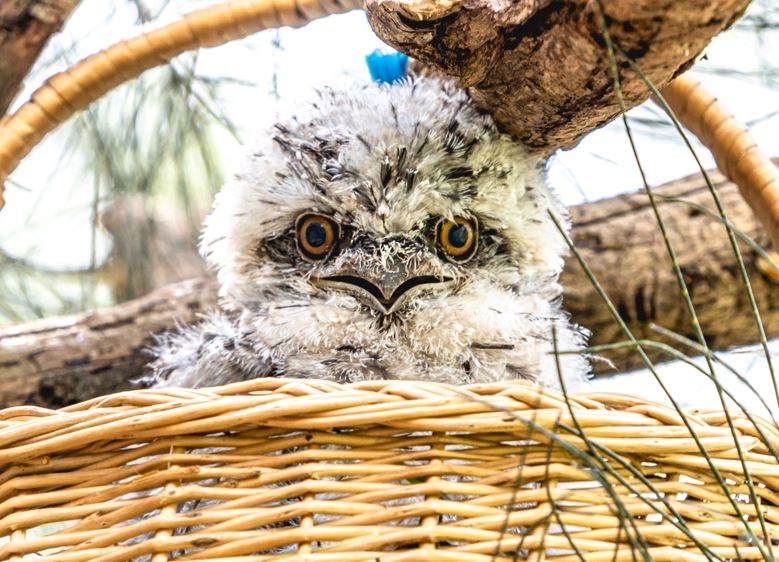
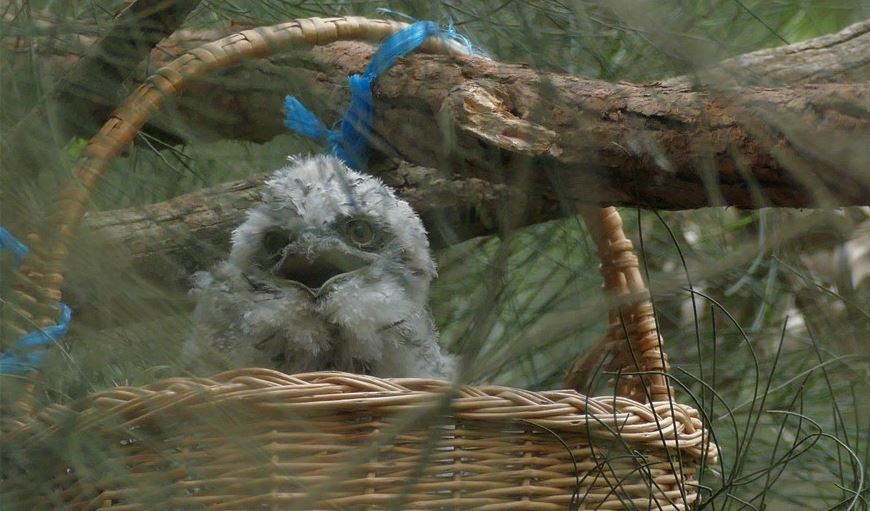
Local resident Melanie called Wildlife Victoria who suggested attaching a makeshift nest in this tree and placing the chick inside it, with the hope that the parents would resume their care. Melanie and husband Tony set to work and installed a wicker basket about 2m above ground into which they deposited the chick – despite its noisy and wing flapping protestations. The manoeuvre proved successful, the parents were observed near the chick soon after, at times defending it against inquisitive Pied Currawongs. These were nesting nearby and will readily eat the young of other birds, so even though the young Tawny Frogmouth was off the ground, it was far from safe.
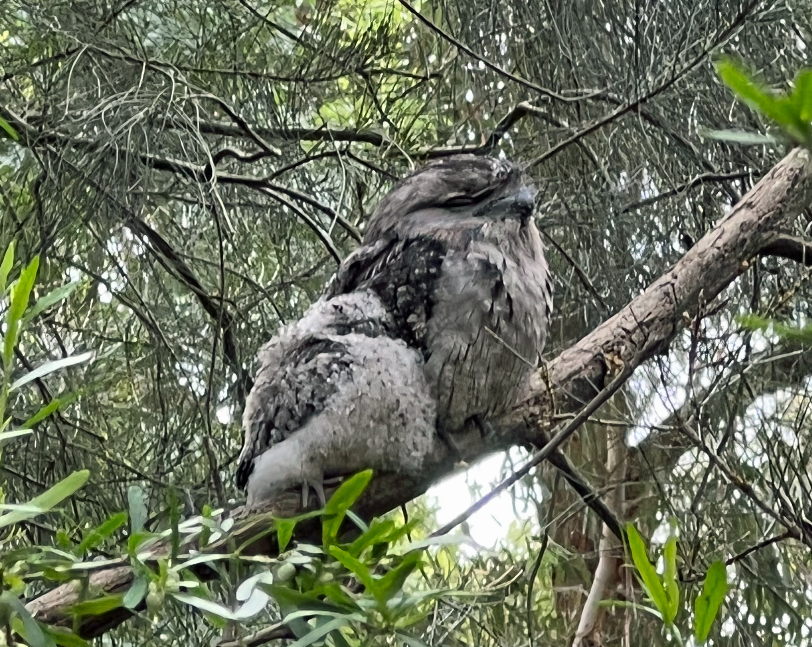
In the following days, the pair of adults kept taking very good care of their young, staying close and watchful, feeding it and keeping it warm. The chick moved from the basket onto a branch where it remained, usually cuddled up to one parent while the second parent remained nearby.
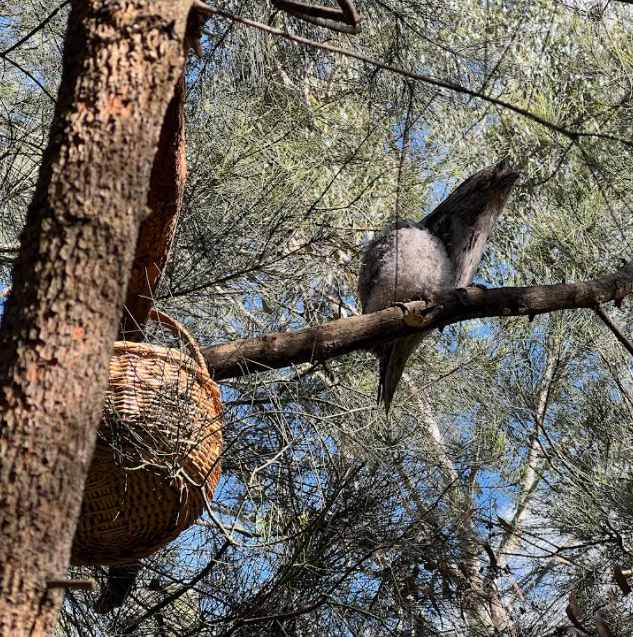
The white downy fluffball in its obvious location attracted a lot of attention. The parent often stretched out and assumed its camouflage – position, trying to look like a stick, while the young bird seemed less perturbed by the enchanted collection of people under its tree, pointing smart phones at it for photos. [When people get too close, the parent becomes alarmed and assumes that posture to stay beside its chick and defend it – see https://blackburncreeklands.wordpress.com/2021/06/03/park-news-may-2021/ for further information]
The author struck up numerous conversations with interested members of the public about the basket and the birds in the tree. Over nearly two weeks, the young bird’s development was on very public display, with its tail and wing feathers growing noticeably.
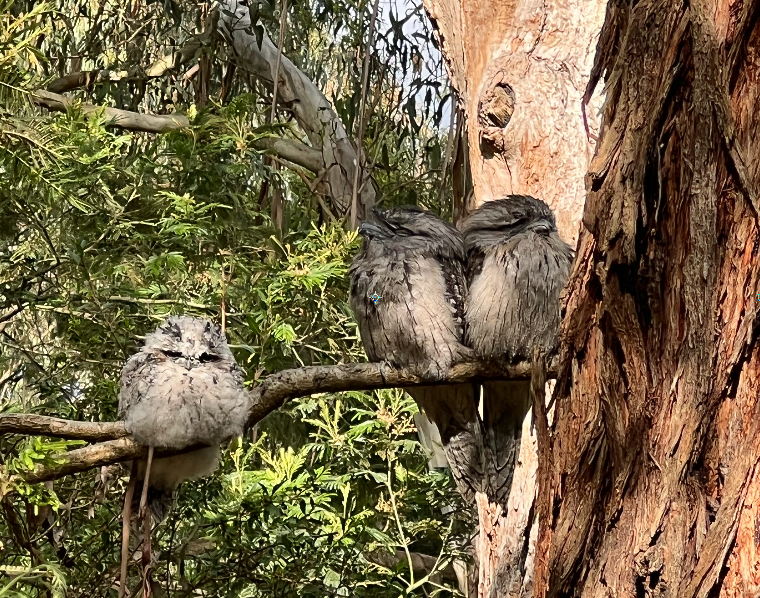
On Thursday, November 18, after nearly two weeks on the same branch, the tree was found bird-less, much to the disappointment of some of the regular human visitors. A local resident spotted the family a bit further into the bush, hidden from most prying eyes. Worryingly, what was probably the chick’s first attempt of flight had led it to a log only one metre above ground, again raising concerns amongst the humans for its wellbeing. The frogmouth family then moved further into the bushland, where the adults were observed still feeding and watching over their fledgling on the monthly Blackburn Creeklands bird survey on Wednesday, November 24 – thankfully much higher above ground by now.
It has been heart-warming to see both the Tawny Frogmouth’s success and the interest its development has garnered in the local human community. We wish our local Tawnies all the best and will keep an eye out for them in future bird surveys.
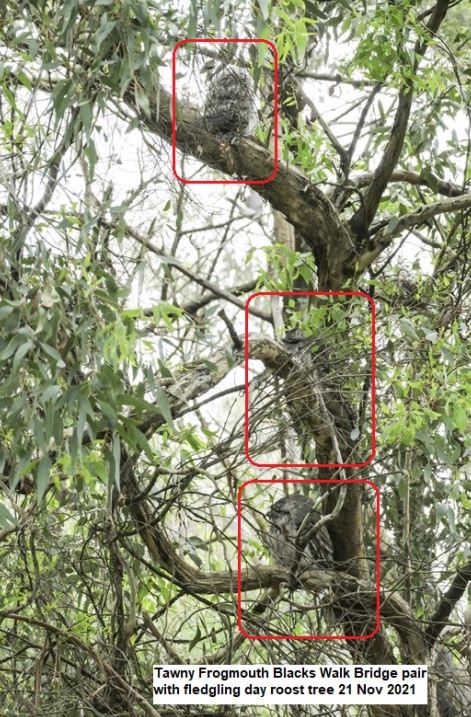
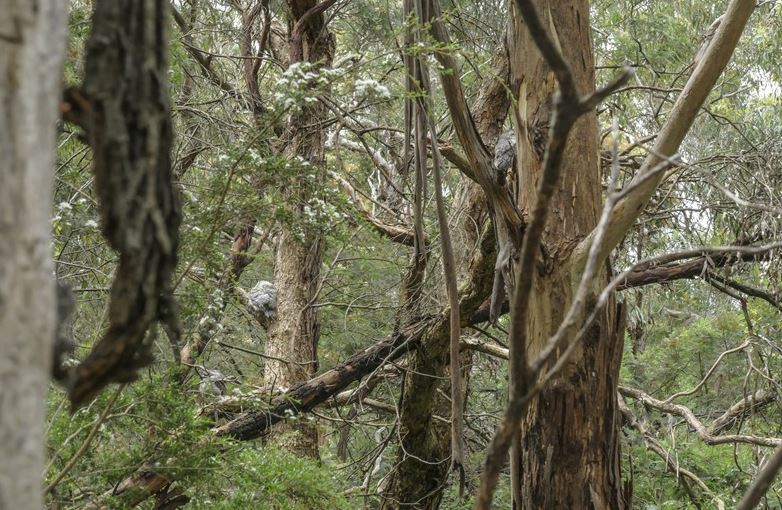
Our sincere thanks to Nina for her engaging story and for her accompanying photos. We think the chick was too young to survive long on the ground. We also highly commend the locals for having the “smarts” to observe the problem, seek advice and create a clever response. This fledgling is the only successful Tawny Frogmouth nest outcome for Blacks Walk this year! Tawny Frogmouths pair for life. It’s interesting to note that this same pair had all that trouble with a chick needing rescuing last year too!
We also thank the other folks who kindly sent in photos – we’ve put them into the lightbox below:
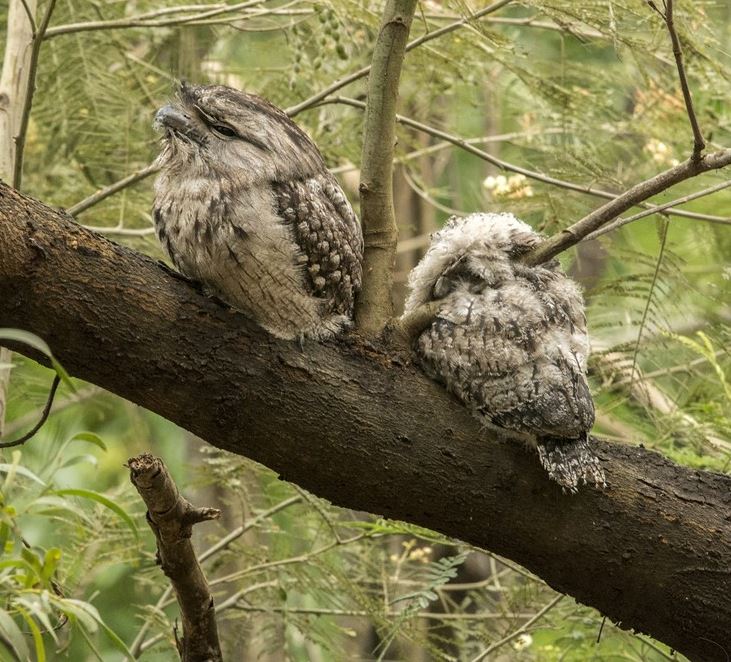
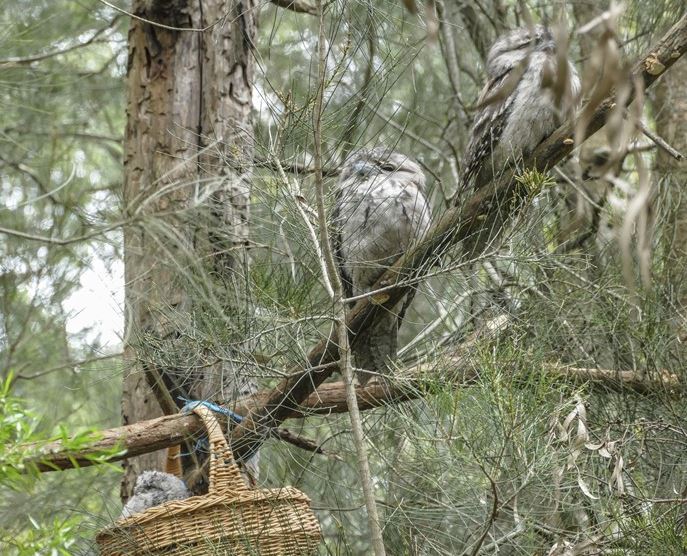
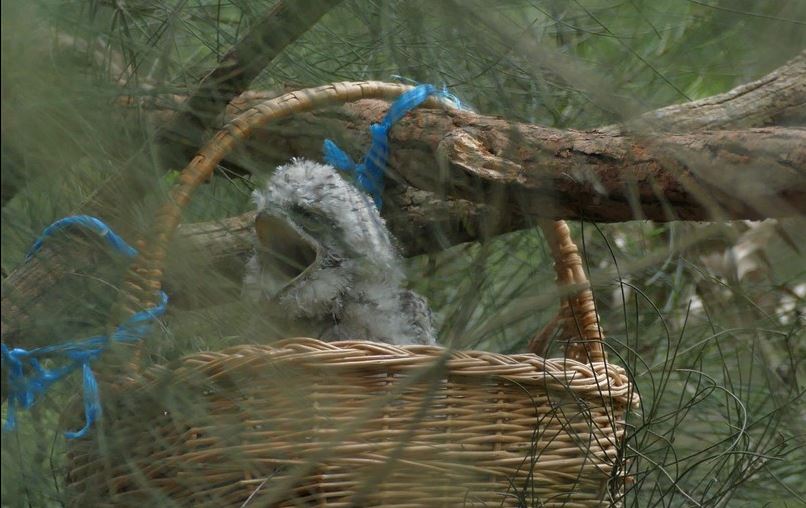
To scroll, click on one of the photos and scroll using the < > arrows. Click X when finished.
If you need to report wildlife in trouble, please try:
- DELWP help finder: https://www.wildlife.vic.gov.au/sick-injured-or-orphaned-wildlife/sick-injured-or-orphaned-wildlife
or - Warriors 4 Wildlife: https://warriors4wildlife.org/
First Flight
Ken, one of our local photographers and a very well-known bird-watcher, thinks he captured the first flight of another junior Tawny Frogmouth. He (unnecessarily) apologises for the quality of these photos – taken in low light at dusk:
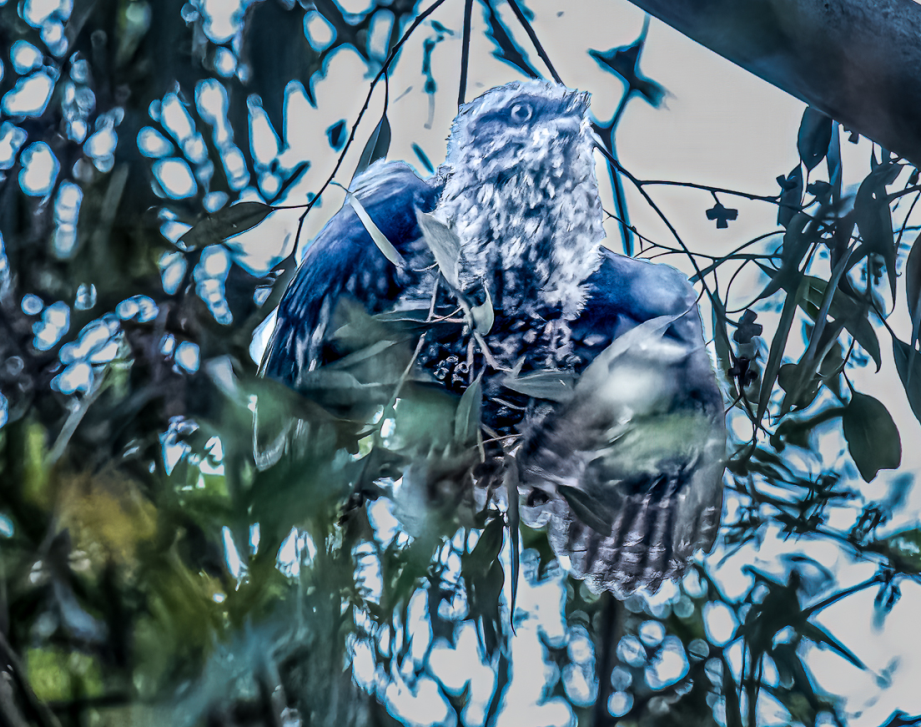
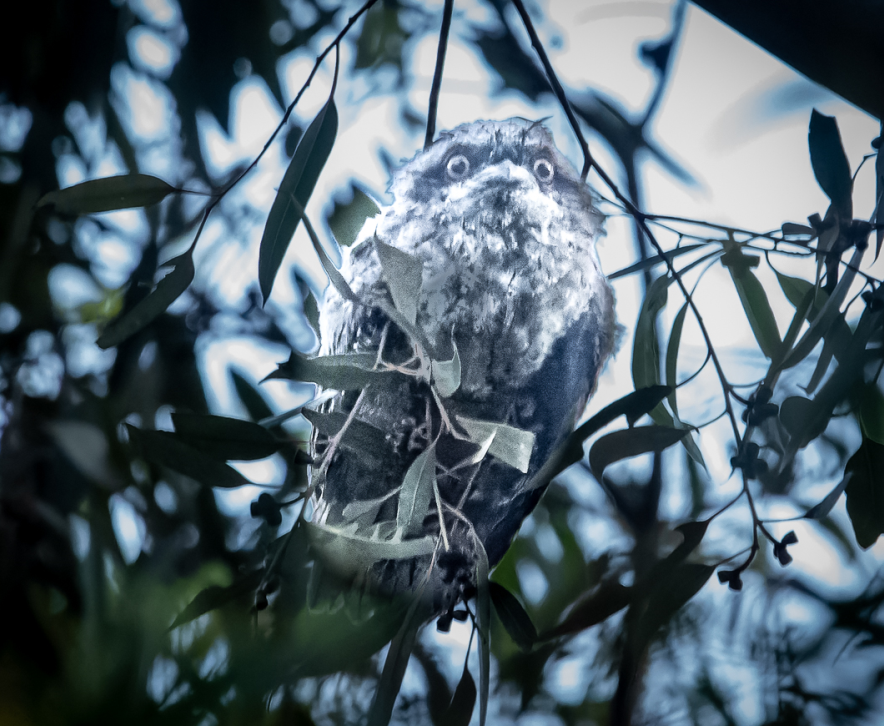
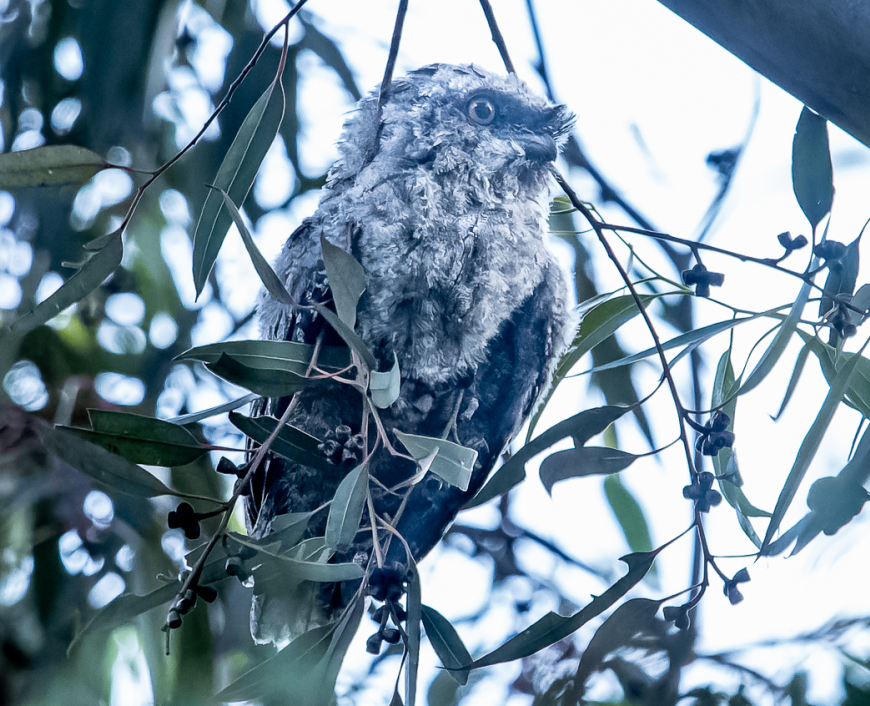
That second picture does seem to capture a moment of wide-eyed, white-knuckle astonishment doesn’t it?
Main Street Bridge
Progress
There has been no further update to Council’s news last month that the reopening of the bridge is now not likely to be before February. The deck is in place now though:
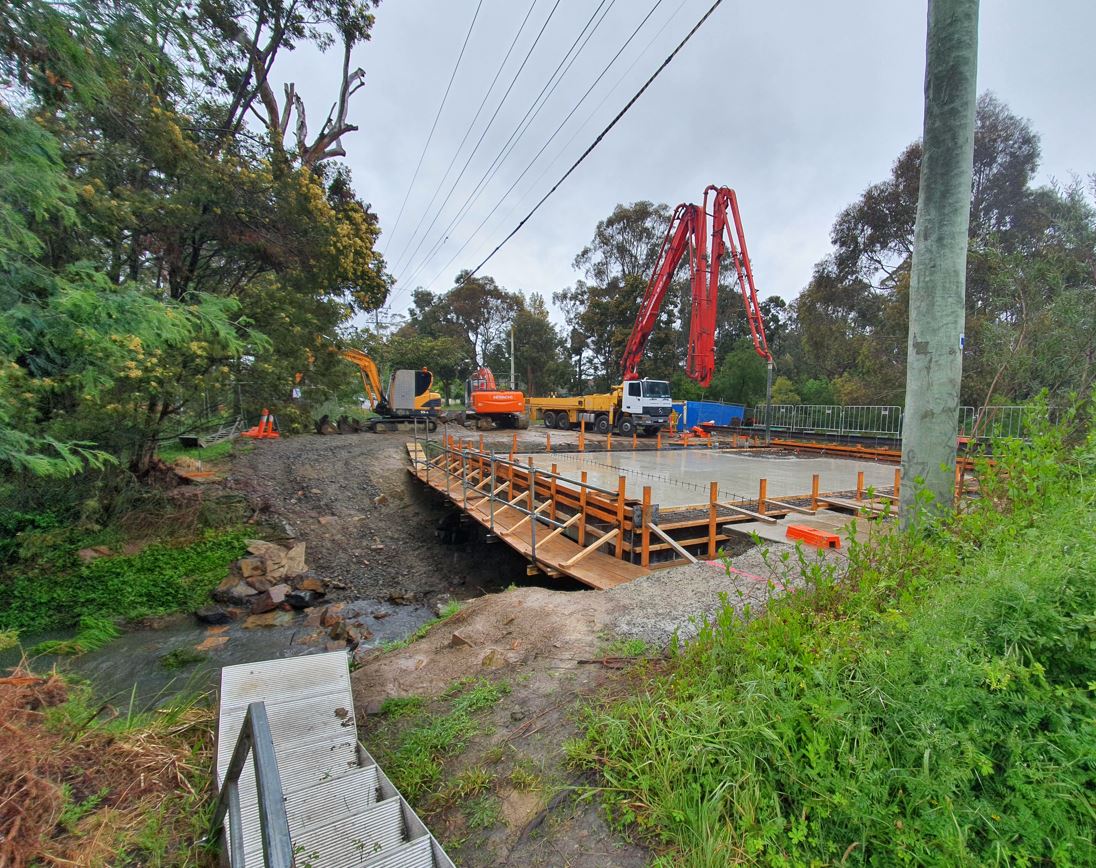
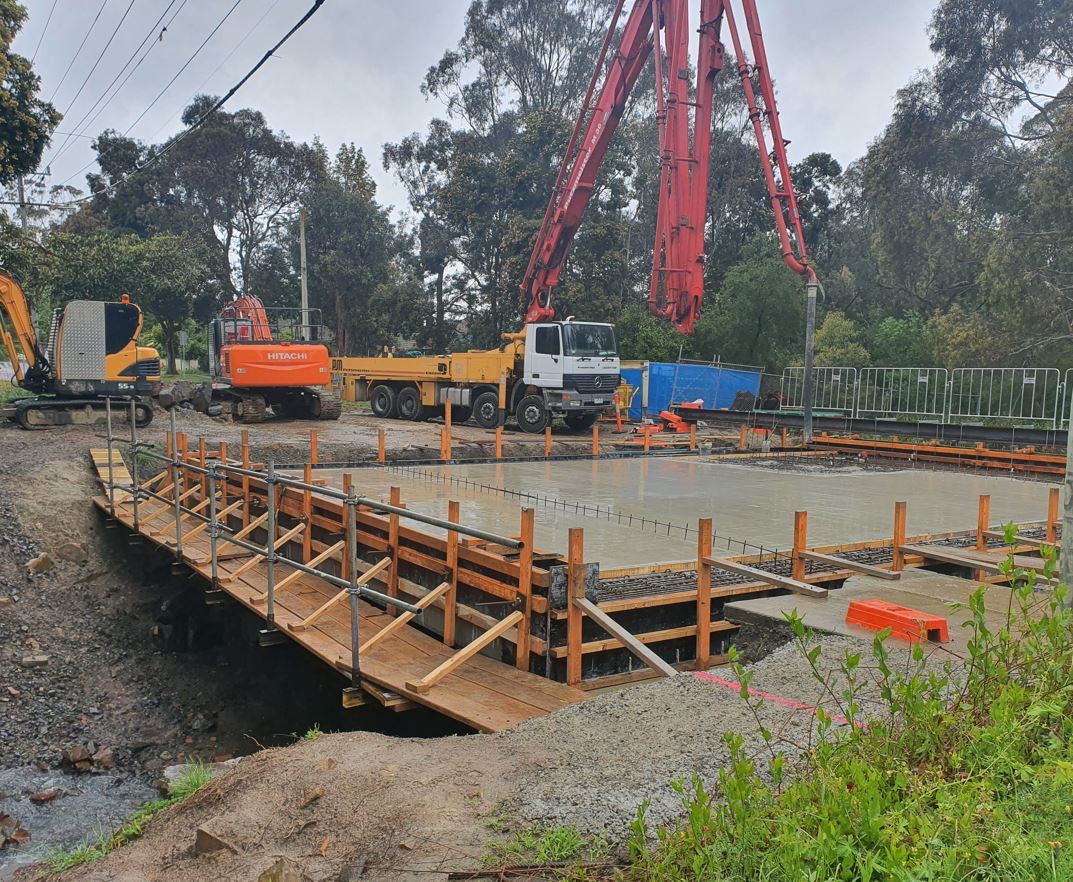
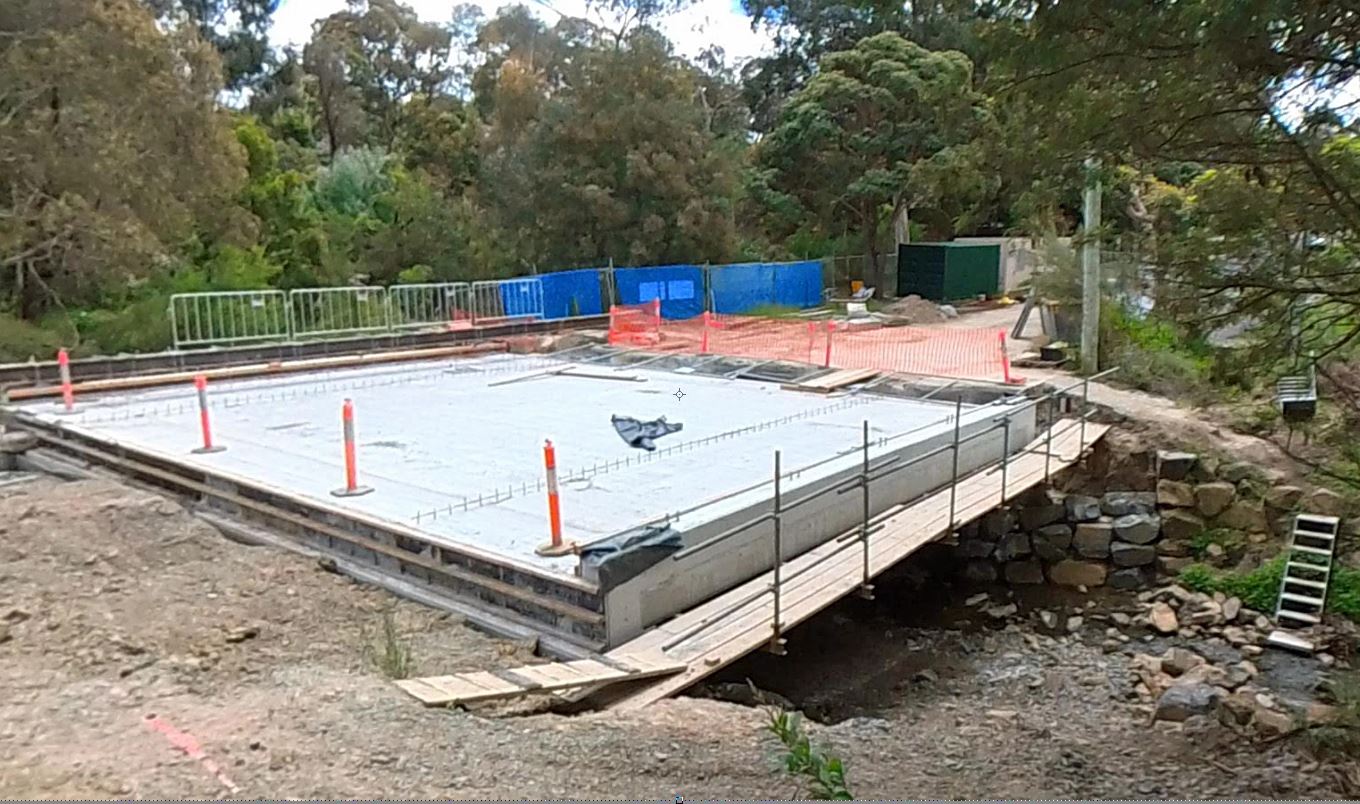
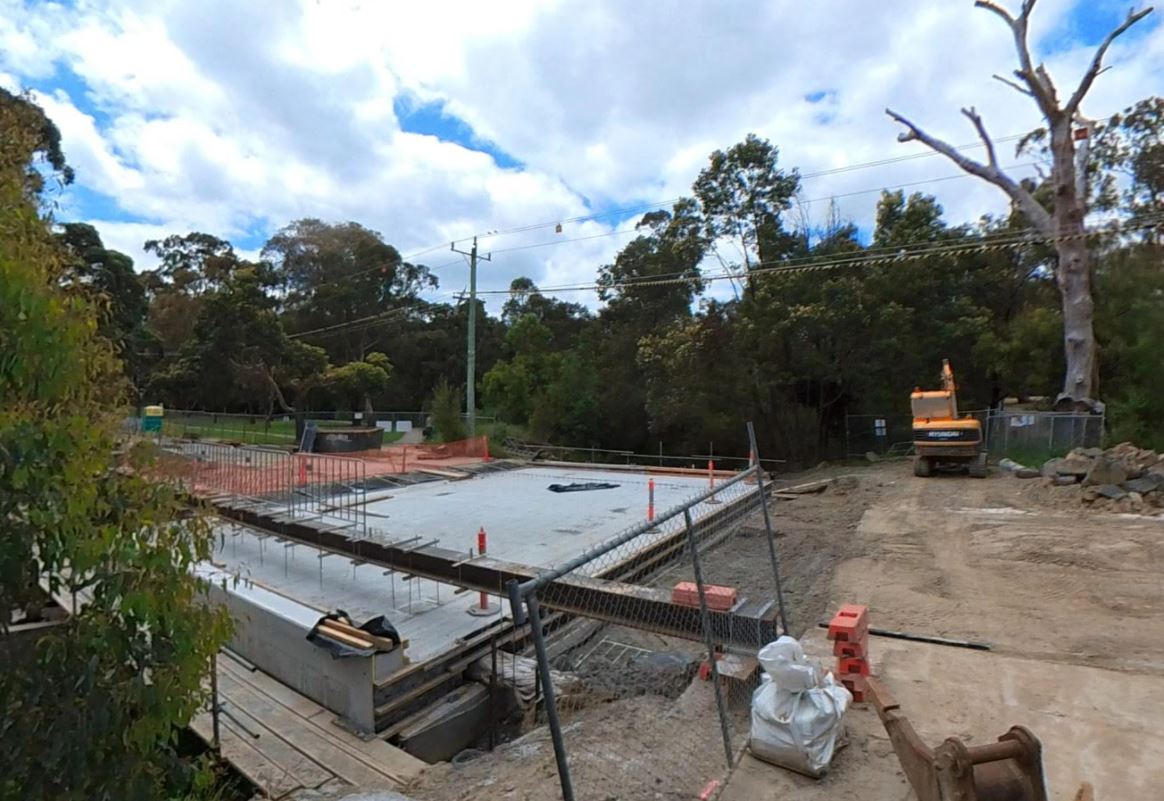

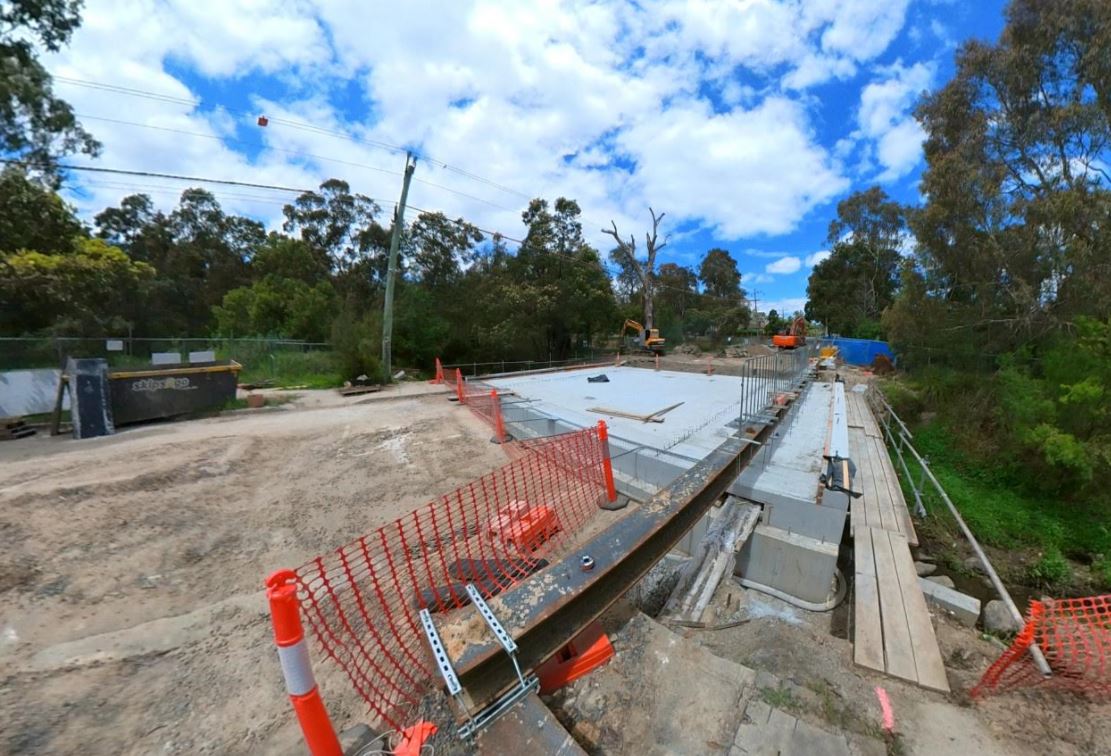
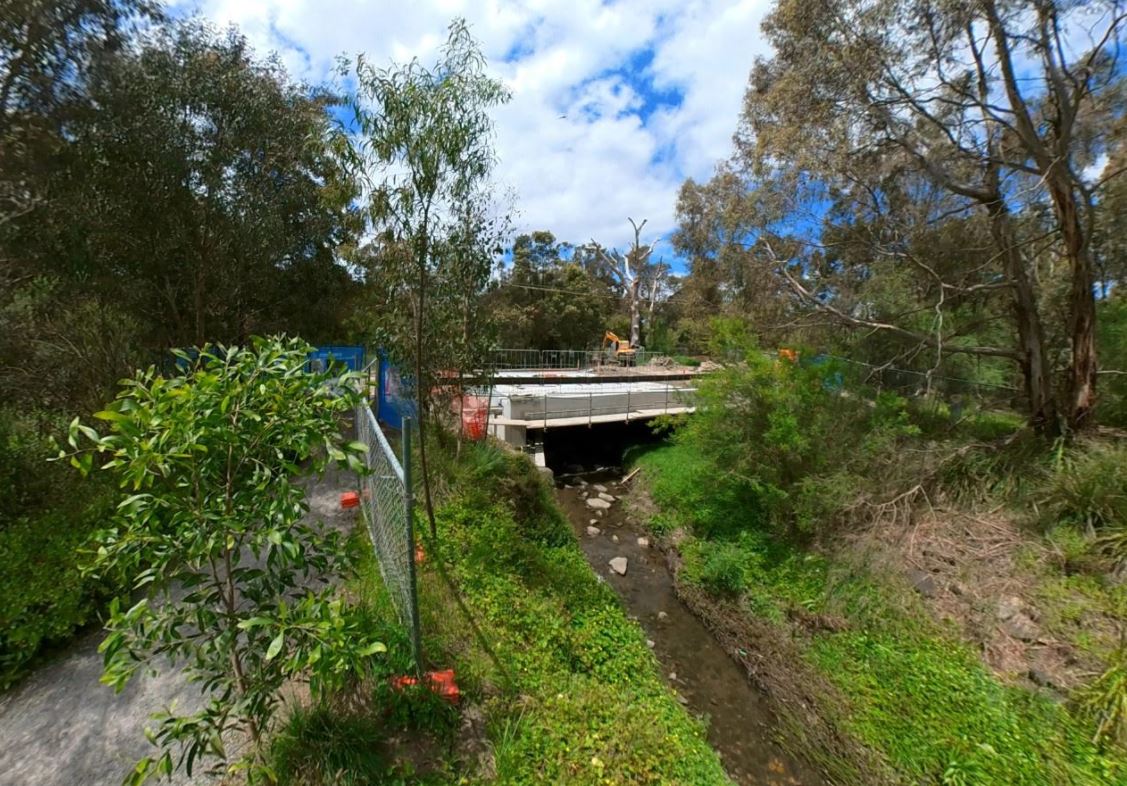

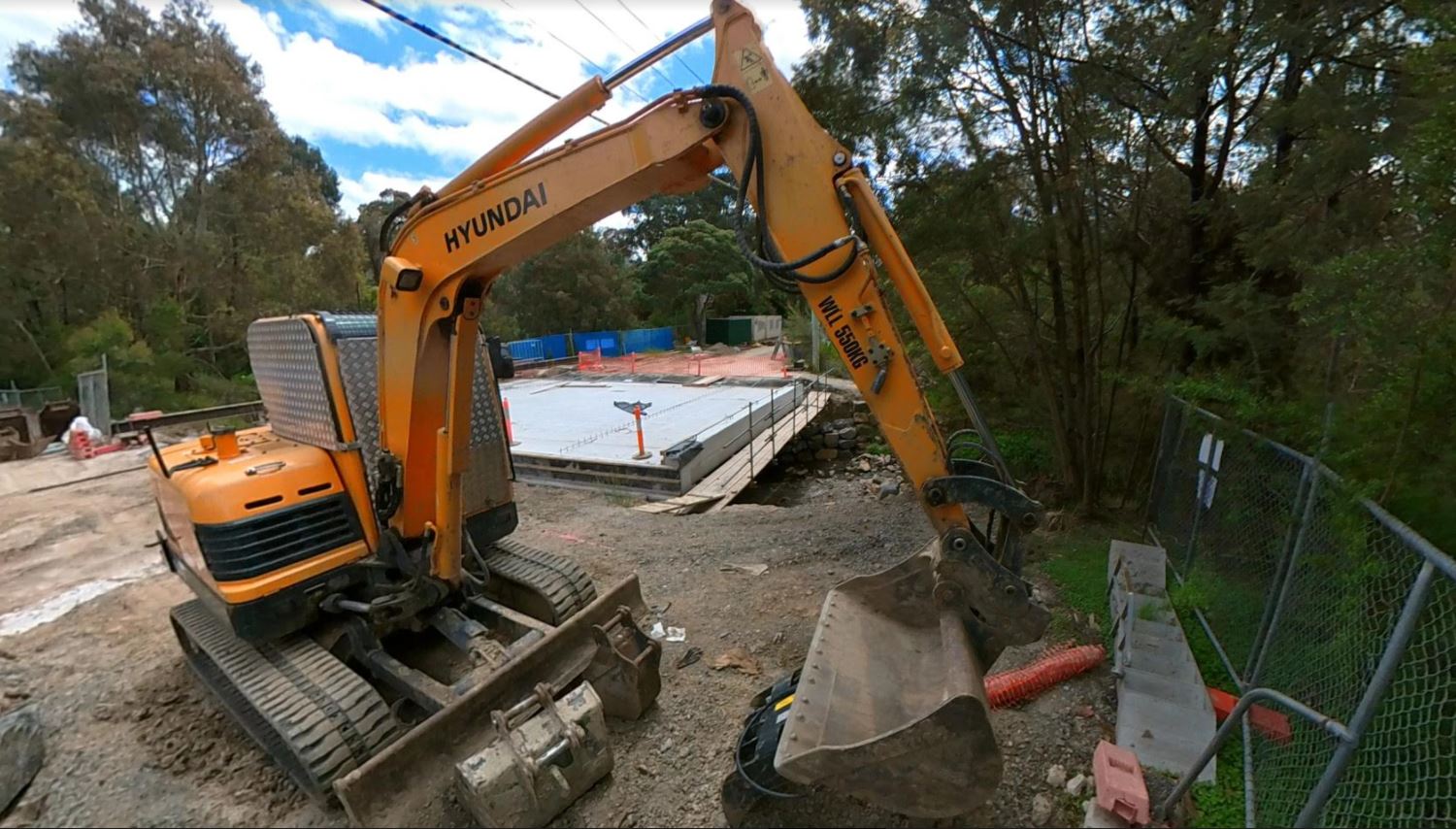
To scroll, click on one of the photos and scroll using the < > arrows. Click X when finished.
Our thanks to Geoffrey and John for their photos taken during the month.
Proposed Zebra Crossing

Council has proposed a preliminary crossing design at the bridge that we approve of. It is similar to the former crossing with both north and south track crossing points – but with the following improvements:
- The southern crossing point would be a signed zebra crossing.
- Traffic calming road humps would be added just south of Heath Street and, symmetrically, about 60m to the north. Traffic studies indicate that speed there is undesirably high for a place where many pedestrians and cyclists cross.
- A new street light over the zebra crossing and upgraded lighting where the humps are to be located would be installed.
We’ll let you know when we hear what decision has been made.
Pollinator Week
Life on earth depends to a significant extent on our pollinators. Pollinator Week (13 – 21 November this year) acknowledges our important insect pollinators during the southern spring. We hope some of you may have participated in events such as the Wild Pollinator Count. Here are some interesting shots from Blacks Walk:
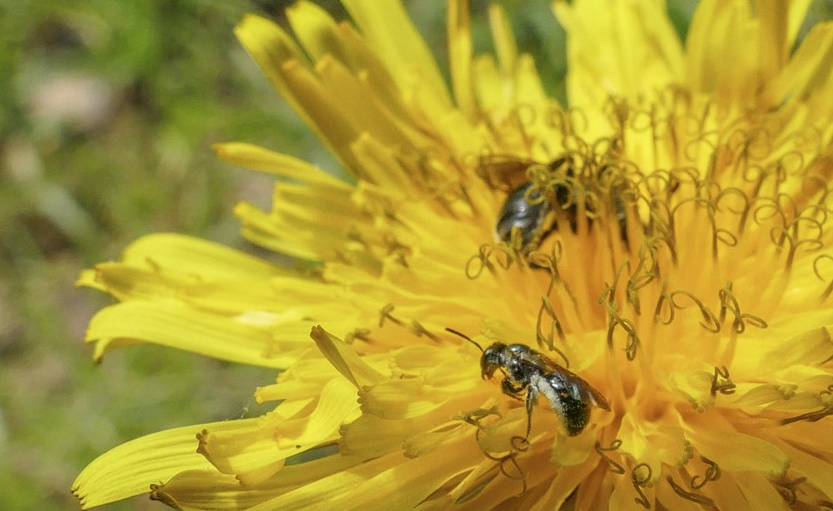
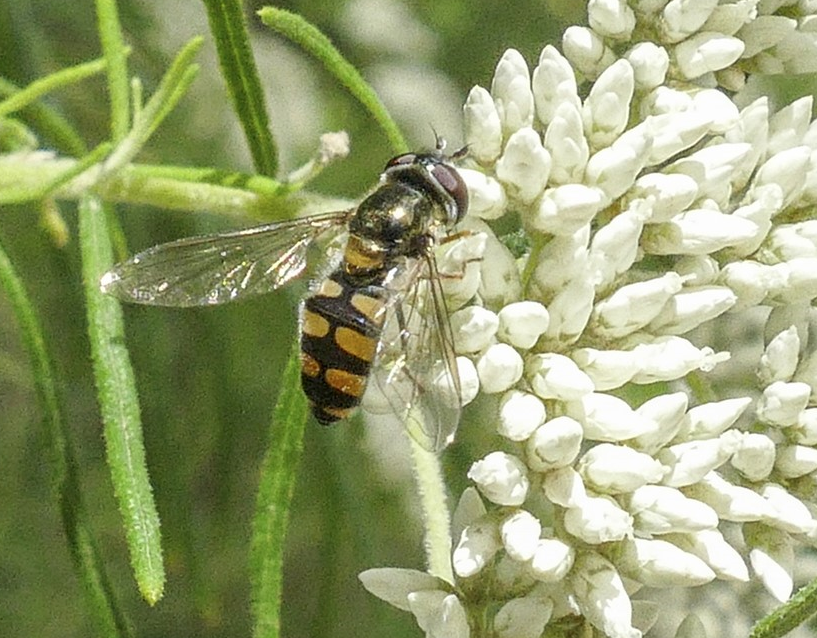
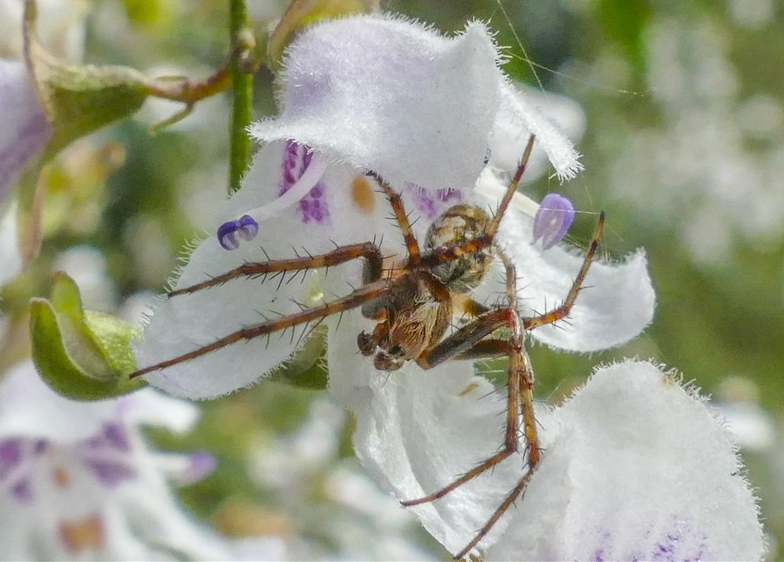
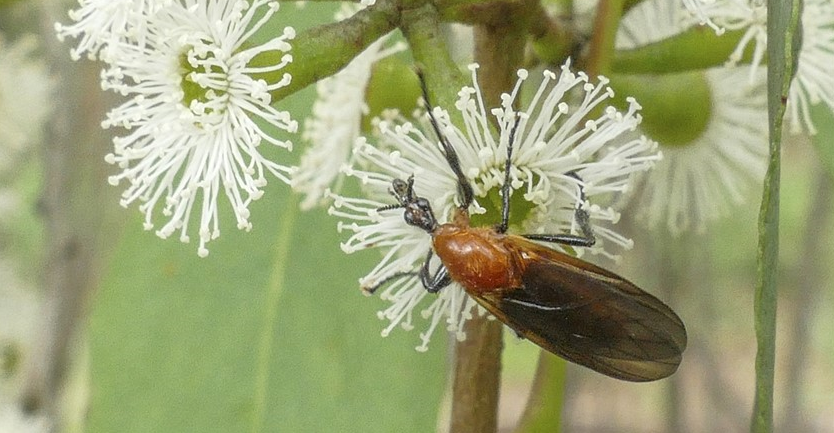
Not all pollinators are bees. Wasps, ants, sawflies, butterflies, moths, beetles and flies are others. The Bibio Imitator is a fly in the order Diptera and family Bibionidae. They are suggested to be pollinators of several plant species.
Anthea is assembling resources on the subject for a relevant display on our Noticeboard soon – so please watch out for that!
Our Future

Many parks in the municipality, including ours, have Advisory Committees. Others include the nearby Blackburn Lake and Wandinong Sanctuaries – further afield, Yarran Dheran (Mitcham) and Bellbird Dell (Vermont South). There are 13 in total. As reported in our July edition, changes to State Government legislation relating to Local Government, to Council’s insurance/risk management practices and in volunteerism generally have put pressure for change on the Advisory Committee structures.
Resolution of the risk and insurance governance issues raised by Council in relation to the municipality’s Park Advisory Committees (PACs) continues slowly. In the latest developments, motions raised by Cr Davenport and seconded by Cr Stennett in support of requests by the PACs were passed at the Whitehorse Council meeting on 22/11. These request:
- a report by Council officers on the implications of retaining the current structures until at least 30/6/2022,
- a workshop between Council and the PACs to work through the concerns,
- a stay on changes until the report and workshop have been completed.
Council officers are currently modifying changes to works management procedures, performing risk assessments and are working towards a report to Council which will follow a meeting with the PACs. All this will be completed during the first quarter of 2022.
In the meantime, we are happy to continue our activities such as working bees and bird surveys – as long as participants and the public are covered by personal accident and public liability insurances. We have requested a full disclosure of the “weaknesses” which we currently operate under to make sure we are all adequately protected.
We congratulate our new Mayor, Cr Tina Liu, and Deputy Mayor, Cr Denise Massoud, on their election to their respective positions on Whitehorse City Council. We know both are generally supportive of our parks and volunteers.
Action Movies
Here’s a movie of Kookaburras queuing up to feed nestlings. The lucky young ones were being fed, not only by their parents, but also by a young Kookaburra from last years clutch – helping (and learning?):
Our Maintenance Team wants to make these Pacific Black Ducks honorary members given their assiduous removal of Panic Veldt (weed) seed:
STOP PRESS: Tawny Frogmouth family feeding at dusk – this is the rescued chick-in-a-basket family as at the last day of November – clearly the young one is thriving and keeping its very attentive parents quite busy:
Kalang Park in the Time Machine
We’ve had the Blacks Walk and Furness Park bookends in our series on historical aerial photos of our creek and surrounds from 1945-2021 in our September and October newsletters respectively. There’s no prize for guessing that Kalang Park is the final piece of the puzzle to analyse.
Of the three parks within the Blackburn Creeklands, Kalang Park is the largest and substantially the newest. The first part of Kalang Park to be acquired was the Pakenham Street block in 1962. Then followed the Harry Street block in the 1960’s with other additions going through to the mid 1980s.
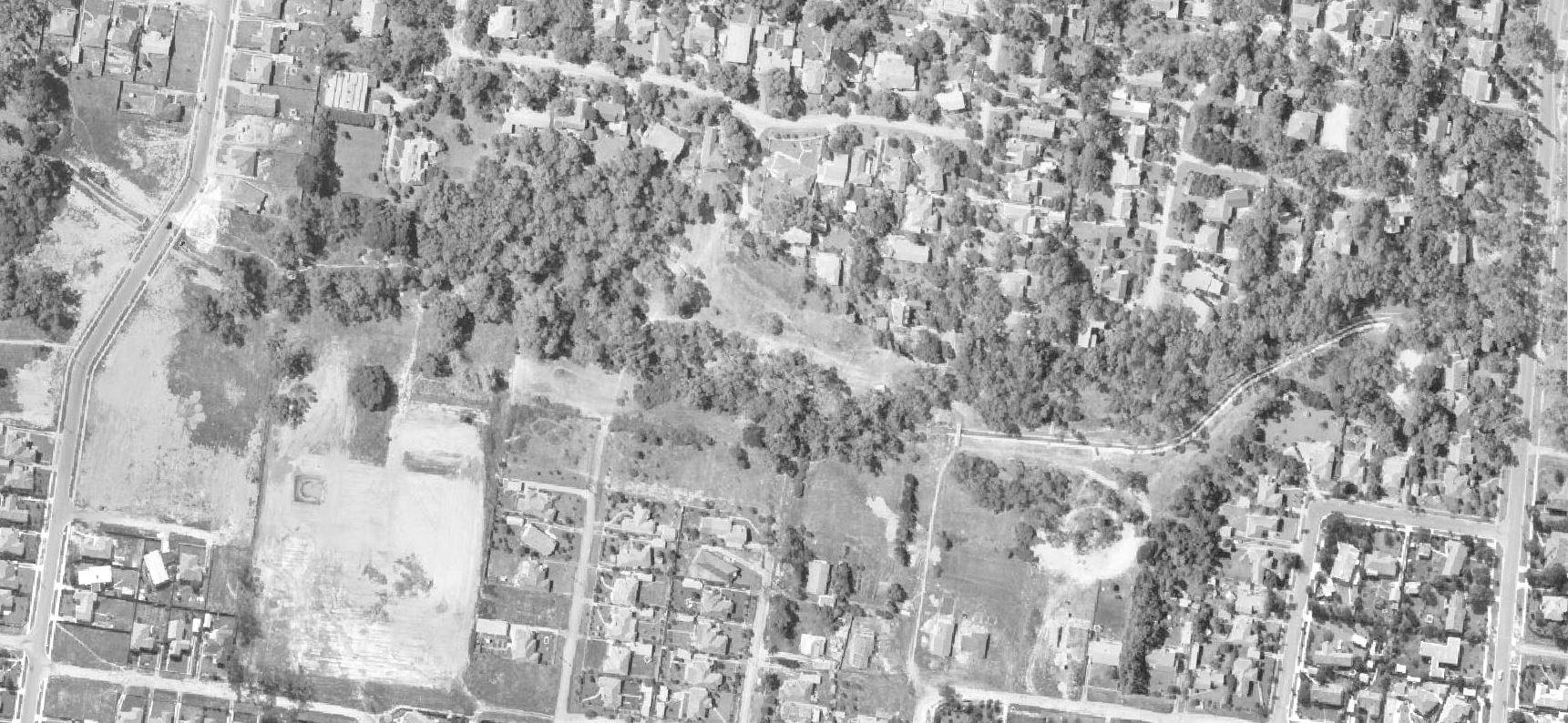
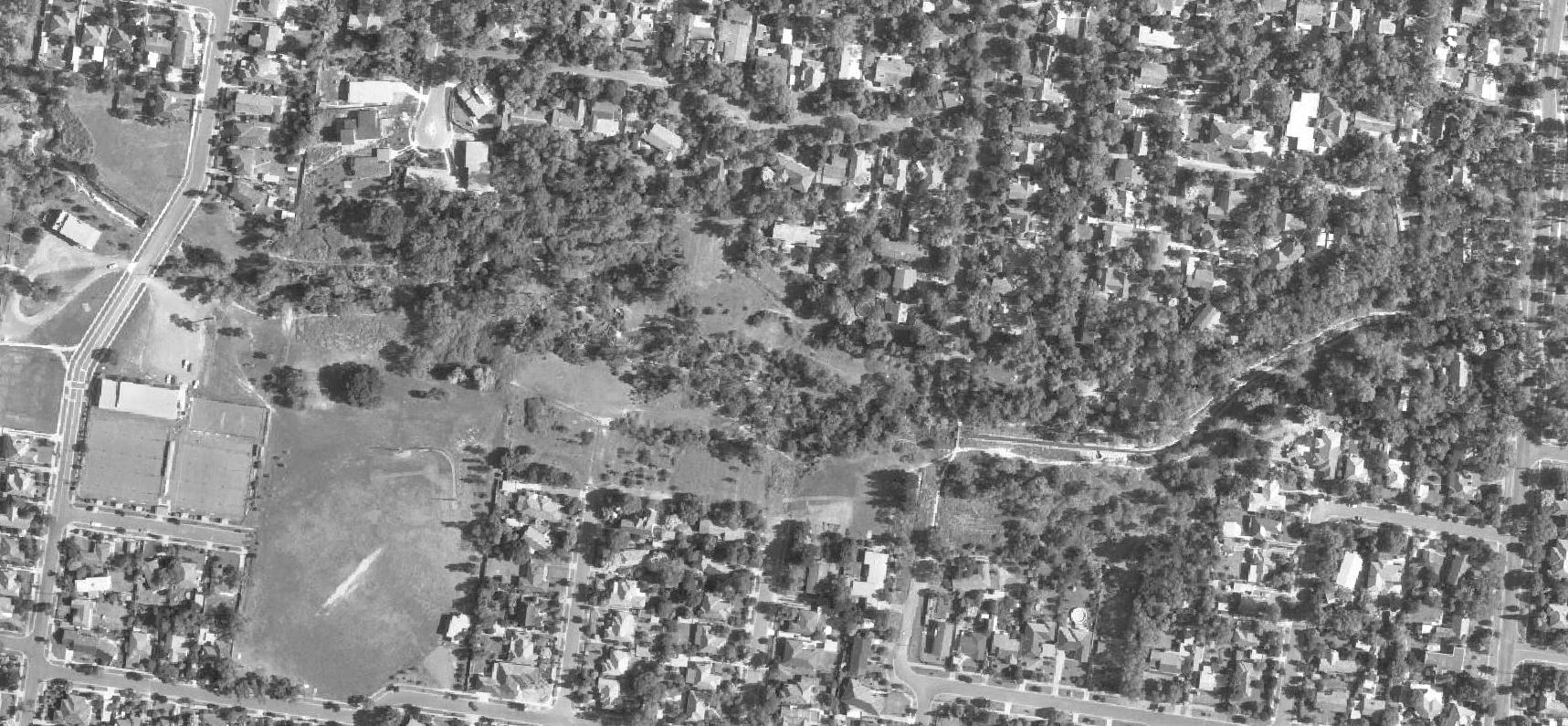
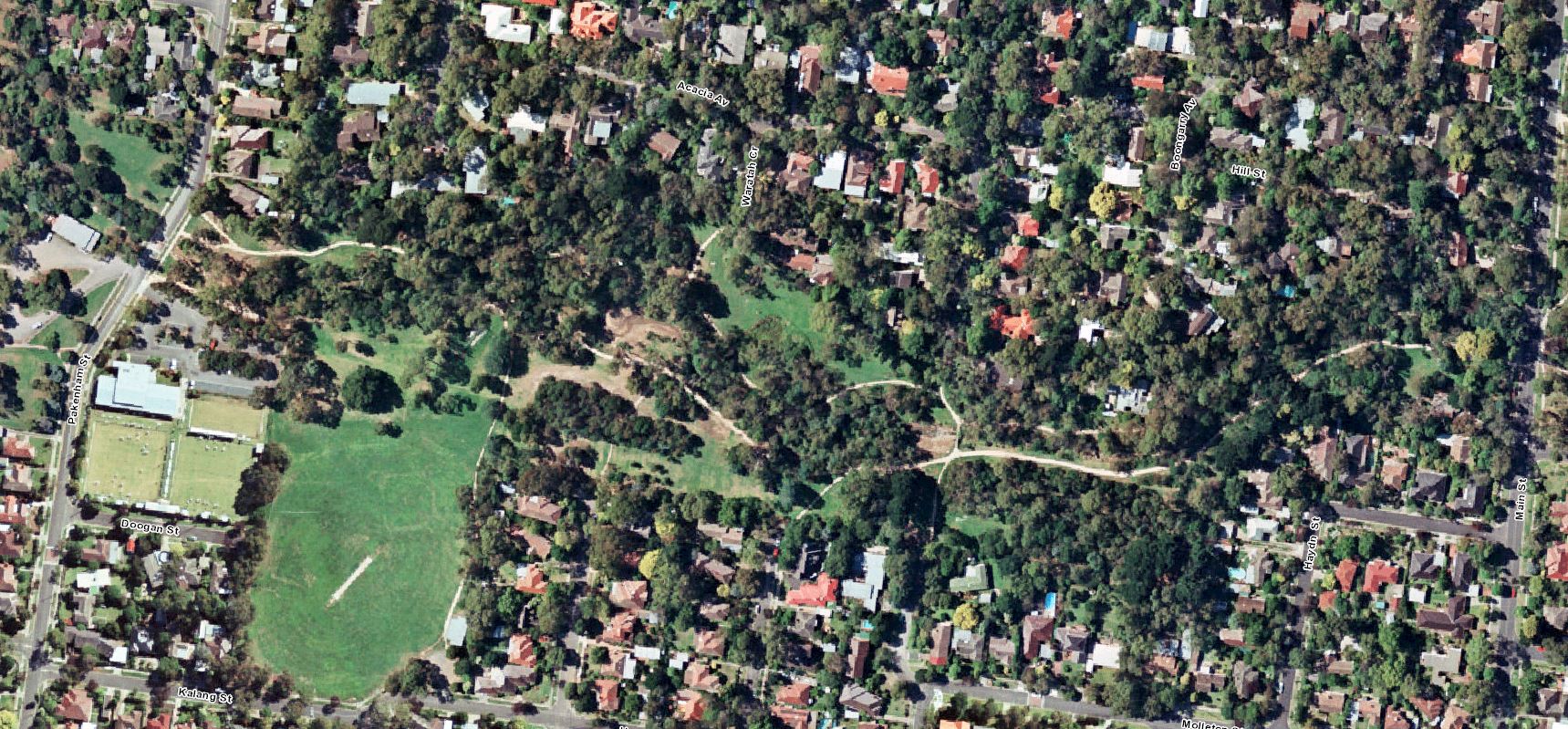
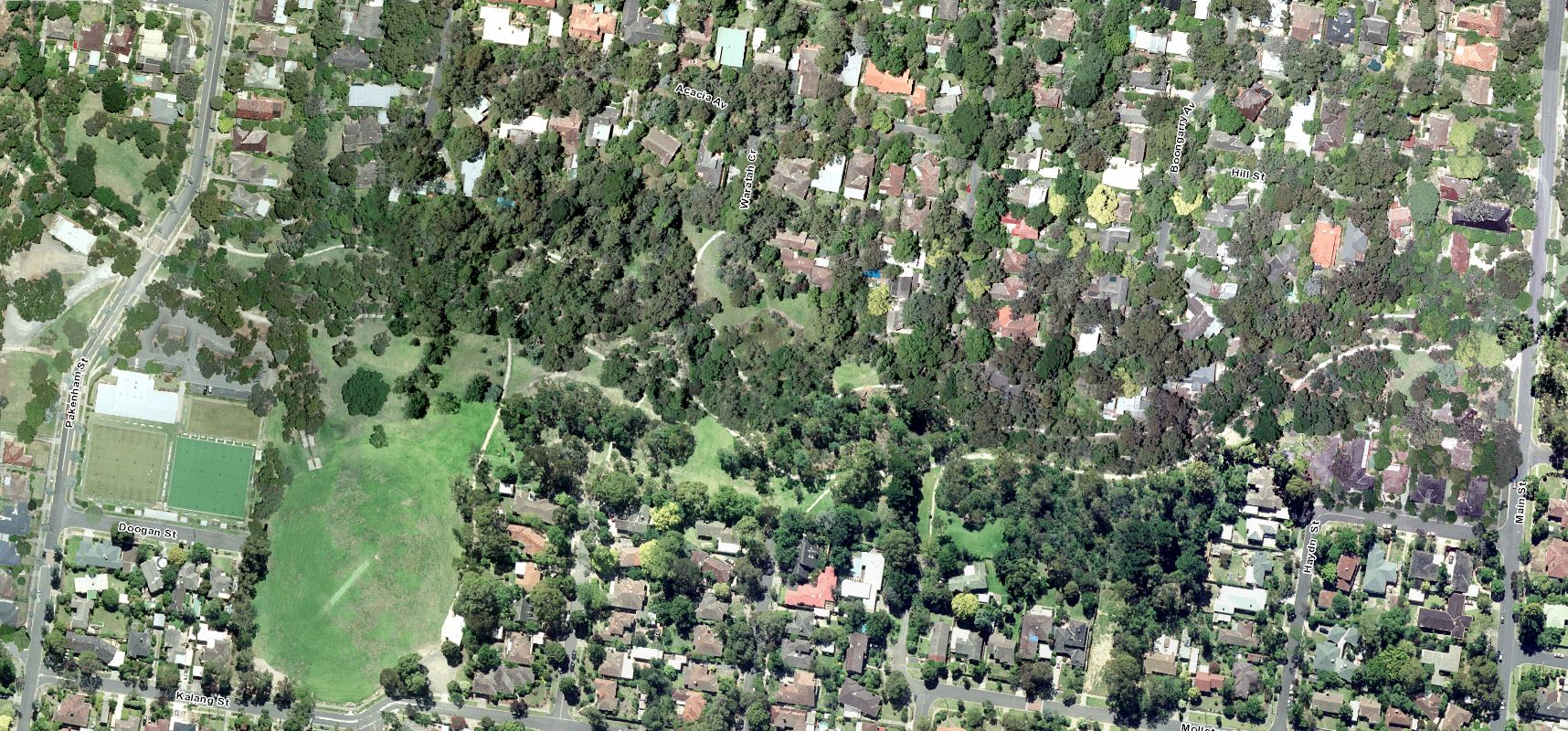
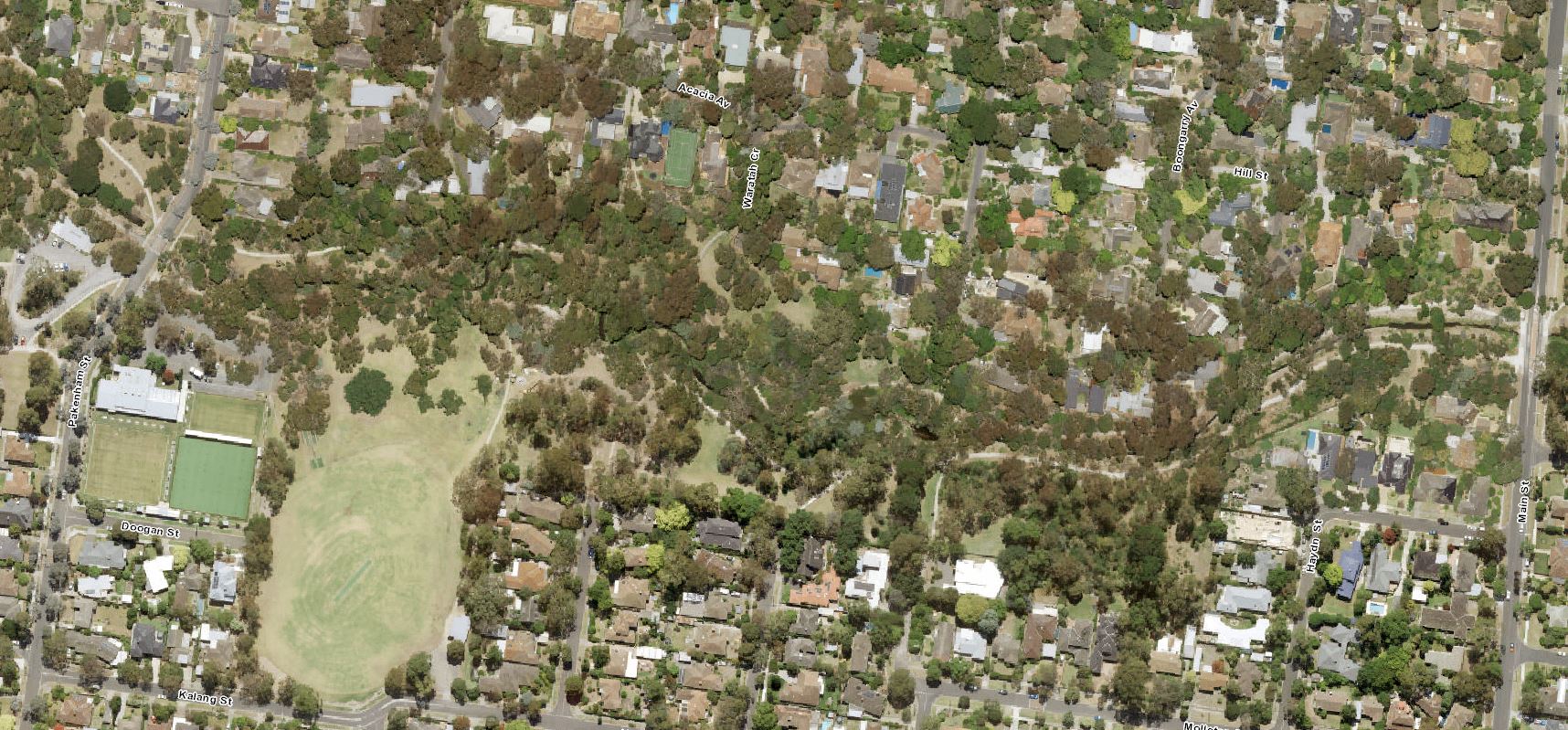
Here is a short chronology following the changes obvious in the aerial photos below:
- In 1945, the areas to the south of Linum Street including today’s Creeklands were mostly devoted to agriculture while the area to the north had already been subdivided for housing. Trees follow the creek as it wends its way between the orchards and pasture areas. The creek seems to fork to the west of Main Street. Fittingly, Main Street is the only made road. Laurel Grove North didn’t go much further south than the first house excepting as tracks. Myrtle Grove finished at the Dwyer’s house while a track continued over the creek to their poultry farm. There’s no sign of Pakenham Street, Malcolm Street, Sheehans Road or Boongarry Avenue. Part of Acacia Avenue is a farmers’ track. The first leg of Hill Street seems as significant as Linum Street.
- By 1951, housing was beginning to surround the park in the post-war housing boom – at first, along Haydn Street and coming down the hill from the north. Remnant agricultural land is still evident – especially to the south of the creek. The west remained mostly untouched.
- By 1956, more housing had continued to encroach from the north and south on the eastern side of the park. Acacia Avenue and Waratah Crescent had been created. The original plan for the latter was for it to curve around to Laurel Grove hence “crescent”. Land for the tail end was formally added to the park in 1985. The beginnings of Pakenham Street are evident with a foot track fording the creek between drivable sections to the north and south. Other than Main Street, all of the roads remained unmade. For an example of the housing subdivisions, please see our article on the 1953 Dwyer Estate here. Land for our park began to be formally acquired in the early 1960s.
- By 1963, the last of the agricultural land had been subdivided for housing and there were comparatively few vacant blocks left. The Dwyer’s poultry sheds and surrounding orchards had been cleared on the western side of the park. Malcolm Street and Sheehans Road have emerged from farm driveways. To the east, the creek had been “barrelled” – seeming to take its concrete self through the middle of the two natural streams. The Laurel Grove bridge is clearly visible at the western end of the concrete barrel. Pakenham Street was fully made including its bridge over the creek. You can see hints of the first walking tracks through the park – especially off Pakenham Street north of the creek heading east and then, possibly, south across the creek. We know there were no tracks through the steeper bushy area further east. The tree canopy cover along the creek and to the north had noticeably improved. The Blackburn and District Tree Preservation Society had formed in 1959 to “save our national heritage of native trees and plants”.
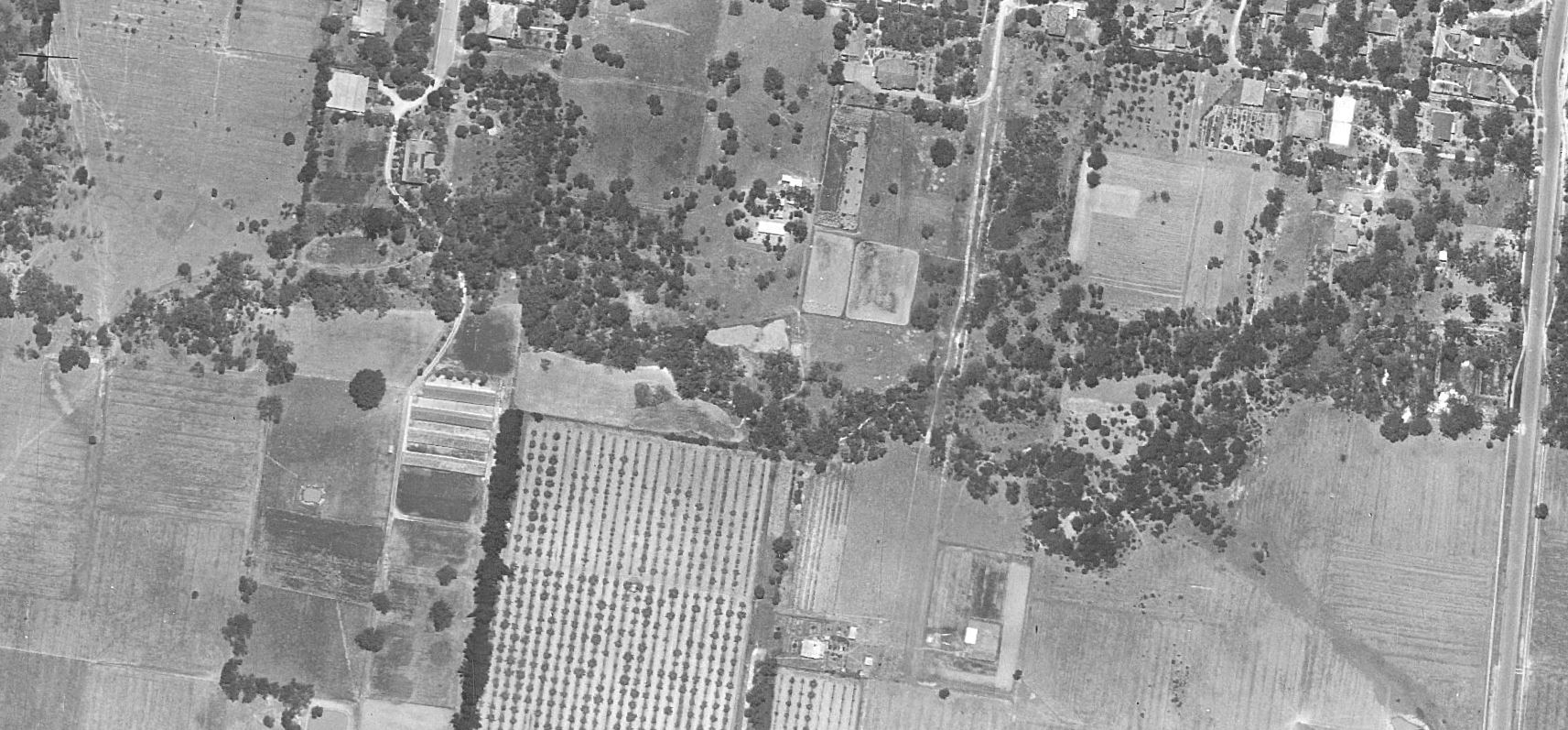
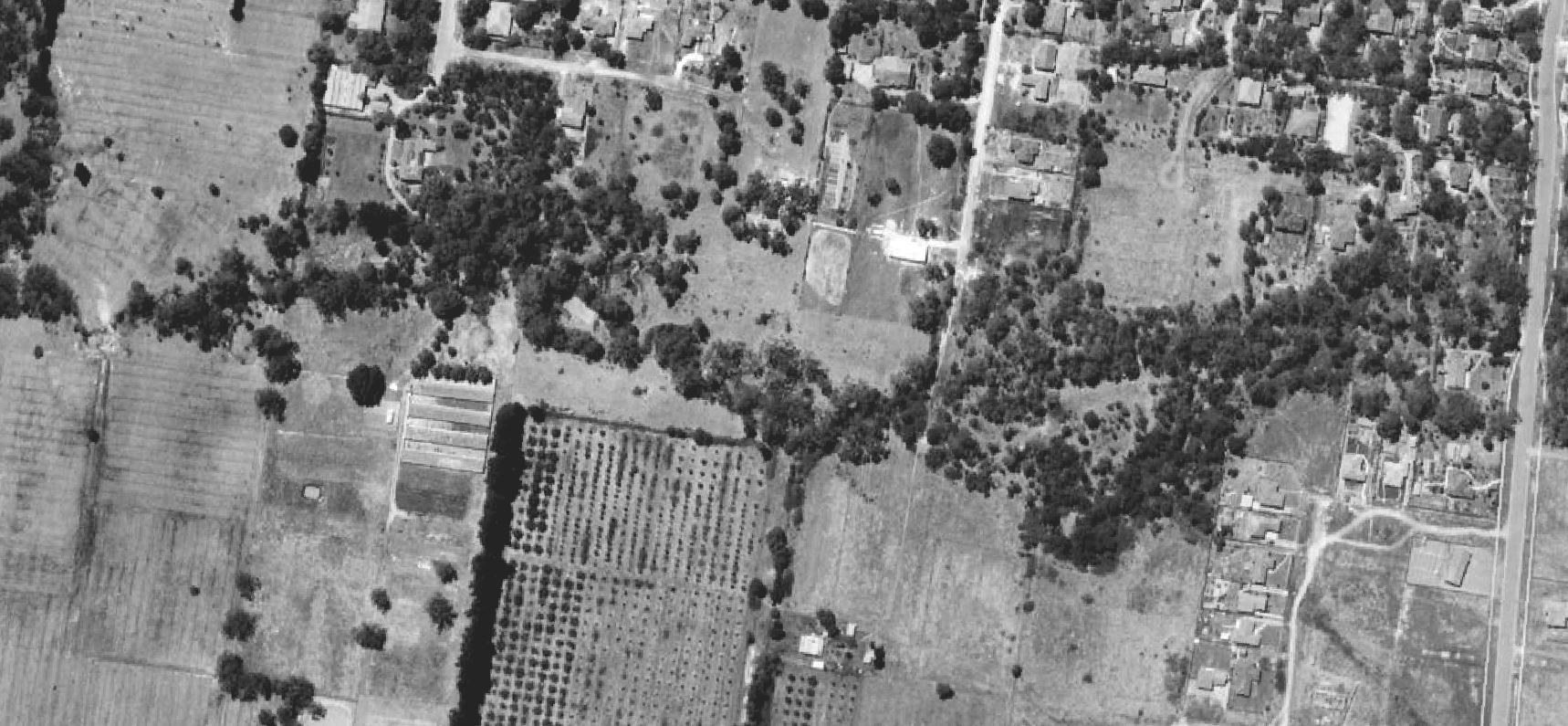
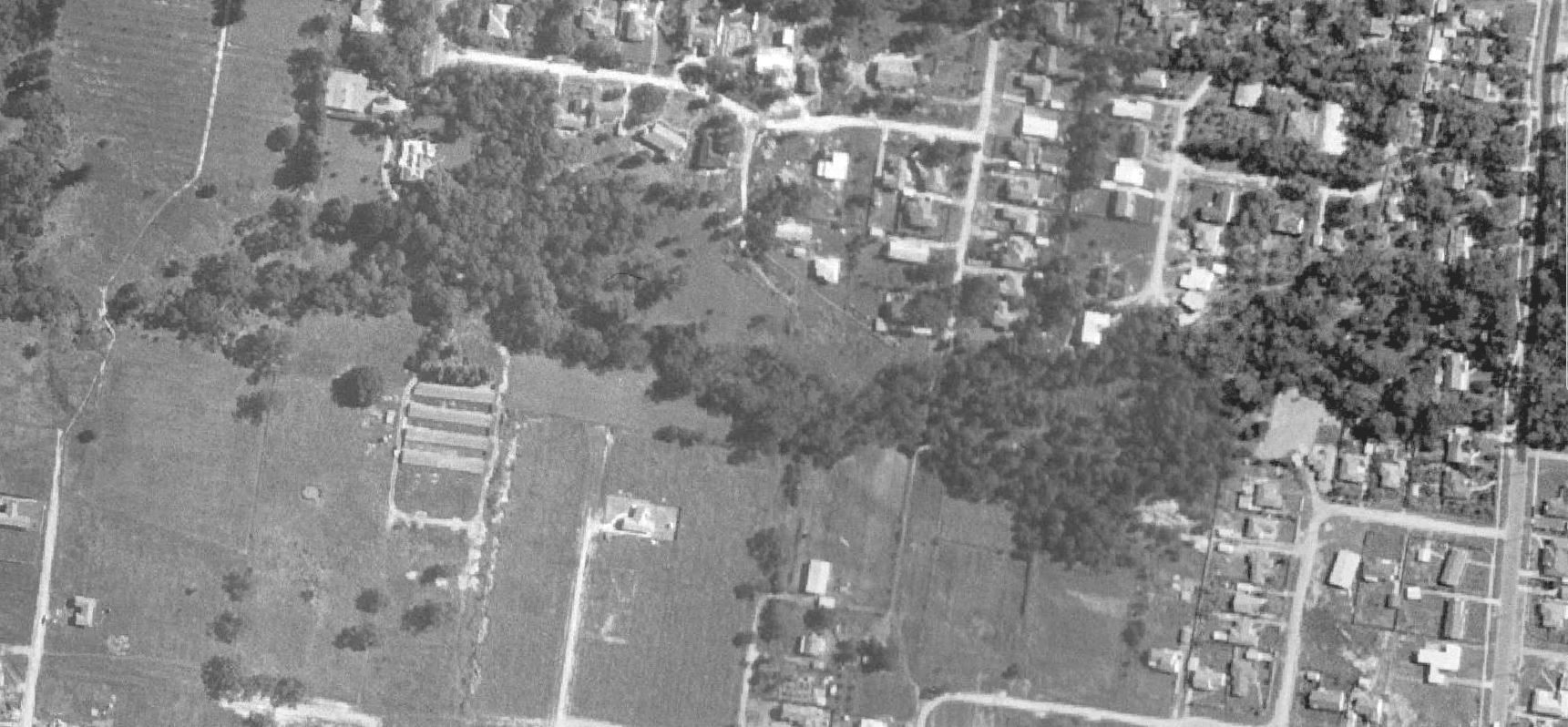
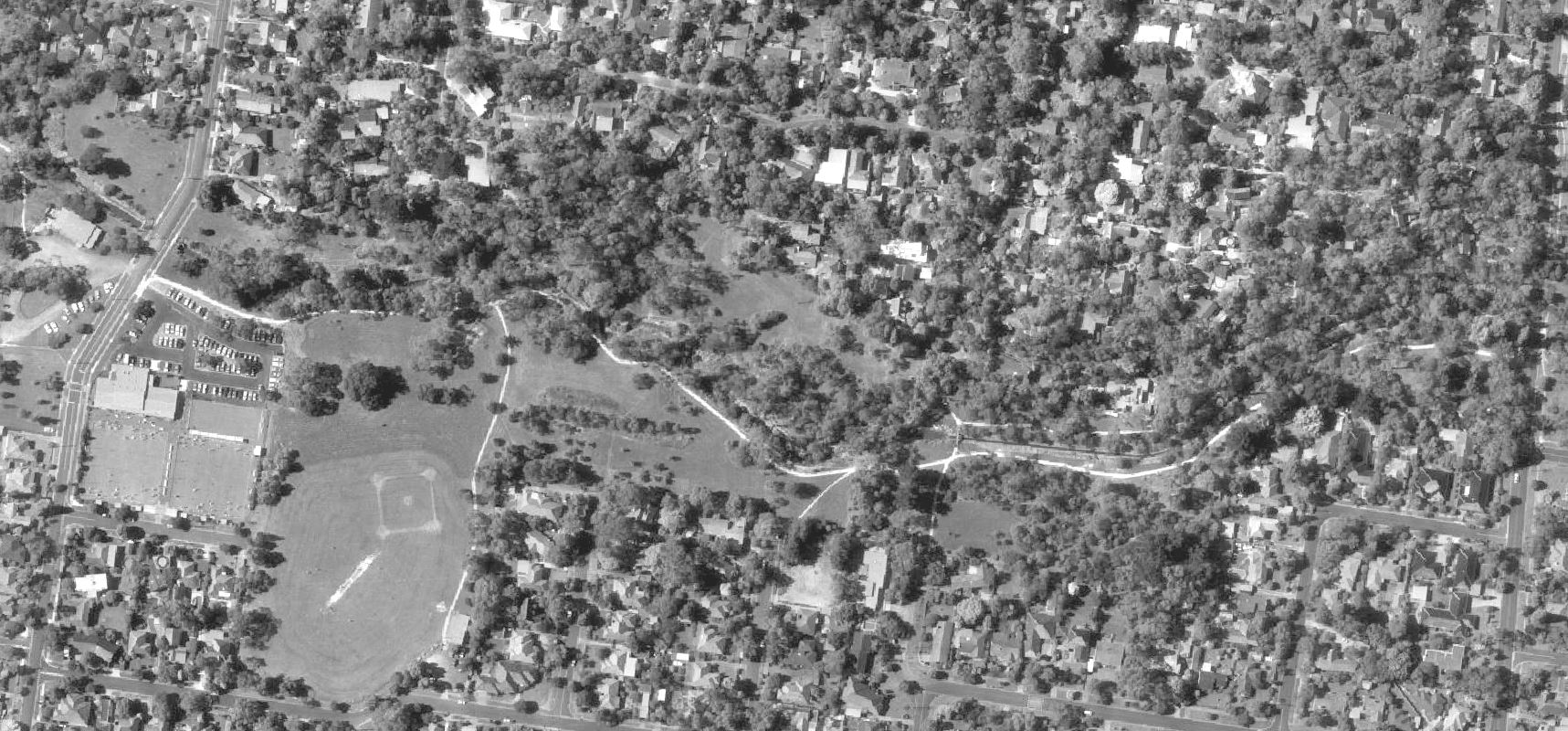
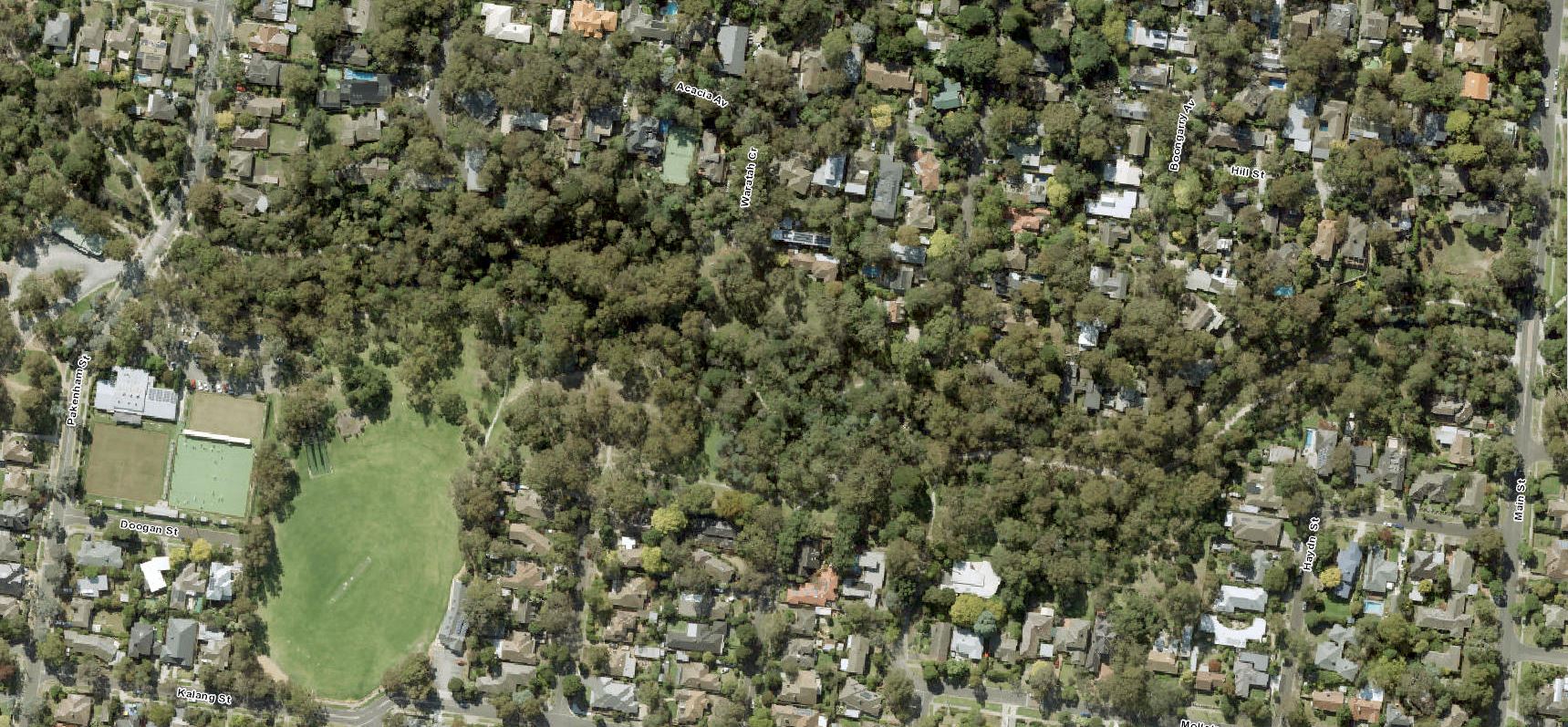
- A lot happened in the 12 year gap to 1975. Kalang Park oval was established in 1964. The oval became used over the years for football, cricket, athletic training, baseball, gridiron and horseshoe pitching. The baseball diamond and wire “igloo” behind it, constructed in 1971, are just visible in the north-east corner of the oval. The children’s playground was constructed in 1966 in the south-east corner with financial contributions from neighbours. The first pavilion was erected in 1965. Walking tracks either side of the creek are visible. The surrounding roads had all been made – possibly excepting Hill Street. The Bowls Club leased its site on the east side of Pakenham Street in 1966. Other than the oval, much of the central area of today’s Kalang Park remained under the ownership of the MMBW. It was fenced and used for horse agistment.
- By 1987, the general ambience of the area was taking shape and being recognised as rather special. In 1976, the National Trust of Australia had placed a landscape classification on Furness Park, Blackburn Lake – also, road reserves and front gardens in some local streets such as Linum Street. There were well formed paths through the park south of the creek and on the northern side east of Laurel Grove North.
- The Blackburn Creeklands, merging Blacks Walk with Kalang and Furness Parks, was created in 1983 following a strong community campaign – called “Up the Creek!”, which avoided the MMBW selling off some its land in today’s central Kalang Park for subdivision as private housing. The MMBW had performed extensive drainage works from 1955-75 along the central, most flood-prone section of the creek. Once completed, the MMBW was ready to divest land it no longer needed.
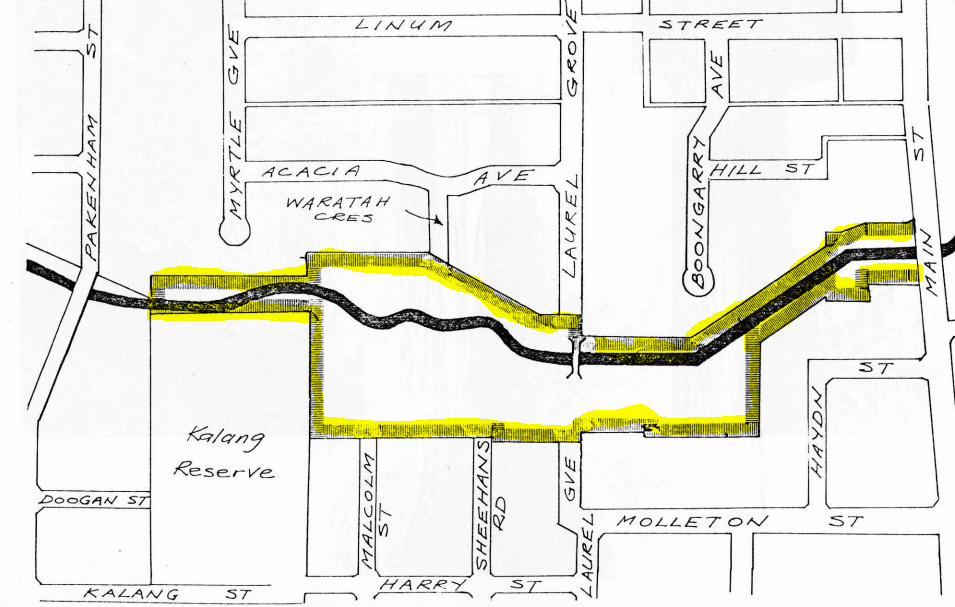
- In 1984, the Linear Park Committee of Management had been formed – the predecessor of today’s Blackburn Creeklands Advisory Committee. The Bowls Club car park was reconstructed in 1985-86 based on a design prepared Mrs Osborn of the Advisory Committee and the Club House was extended. An MMBW house at 62 Main Street was demolished in 1984 to improve park access. In 1987, Committee won a Bicentennial Grant ($4,000) to recreate a wetland habitat below Waratah Crescent.
- By 1996, the park and surrounding streetscapes had substantially assumed their current look-and-feel. Popular walking paths existed on both sides of the creek for the full length of Kalang Park linking and integrating Blacks Walk to the West and Furness Park to the east. In 1996, the original Laurel Grove bridge was replaced – there also seems to be signs of the construction of the pond adjacent in the photo.
- By 2005, development of the park had stabilised and the emphasis was switching to maintenance. The Waratah Wetland was further enhanced in 1997. The children’s playground equipment adjacent Kalang Oval was substantially upgraded in the year 2000. Not quite visible from above, our very popular Noticeboard was installed in 1999 near the Pakenham Street entrance.
- The 2015 photograph seems to show the enduring effects of the Millennium Drought (1996 – 2010) with significant loss of canopy density. Fortunately, extensive rehabilitation work had been conducted by Melbourne Water along the creek between Blackburn Road and Pakenham Street in 2006-2007. This work reduced the threat of erosion and consequent loss of mature eucalypts and other large indigenous trees on the creek banks. In 2013, the path in the northeast corner of Kalang Park was realigned away from the creek along with significant rehabilitation works there.
- By 2021, we can see the remarkable recovery of the park’s vegetation after the drought. Of course, volunteers had steadily improved the vegetation in the park since the mid 1980s. In 2015, restoration of the Billabong from a storm-water feed from Malcolm Street and the pavilion area was completed. The new duck pond and cricket nets (2018/2019) are clearly visible to the north west of the oval. In 2020, a new wetland (Council/Melbourne Water) was created west of Laurel Grove North implementing a Water Sensitive Urban Development design connected with street drainage improvements to the north. The old pavilion adjacent the oval was demolished in 2015 (after our 2015 photo was taken) and the new pavilion was opened in 2016. Local residents petitioned Council in 2019 to acquire the land at 60 Main Street (top north east corner of Kalang Park). Unfortunately, Council decided against adding more land to the park. The house was demolished in 2016 after having being unoccupied for many years – and the block still remains vacant.
Vale Philip Brentnall
Sadly, long term Creeklands friend and former committee member, Philip Brentnall, passed away recently. Philip was a member of the Creeklands committee from 2000 until 2010 and our Treasurer for nine of those years.
A celebration of his life was held at the Blackburn Bowls Club in Pakenham Street last Friday. His wife Sally predeceased him in early January, 2019 – she was also an active member of our committee having served from 1999 to 2005.
Our sincere condolences to Philip’s family and friends.
Sightings
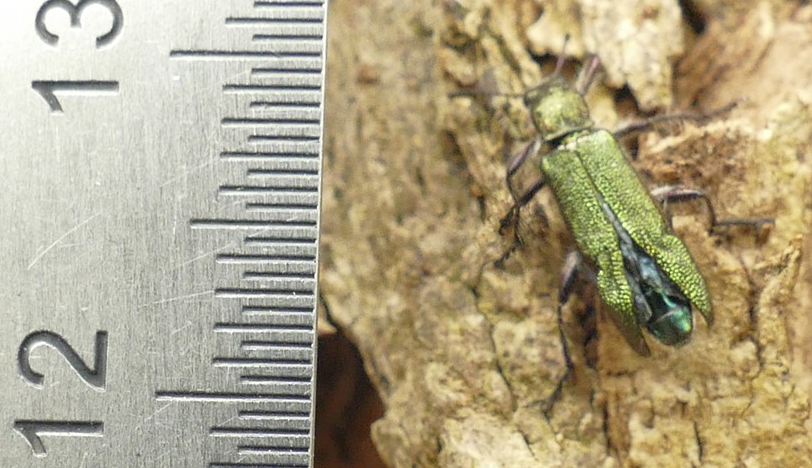
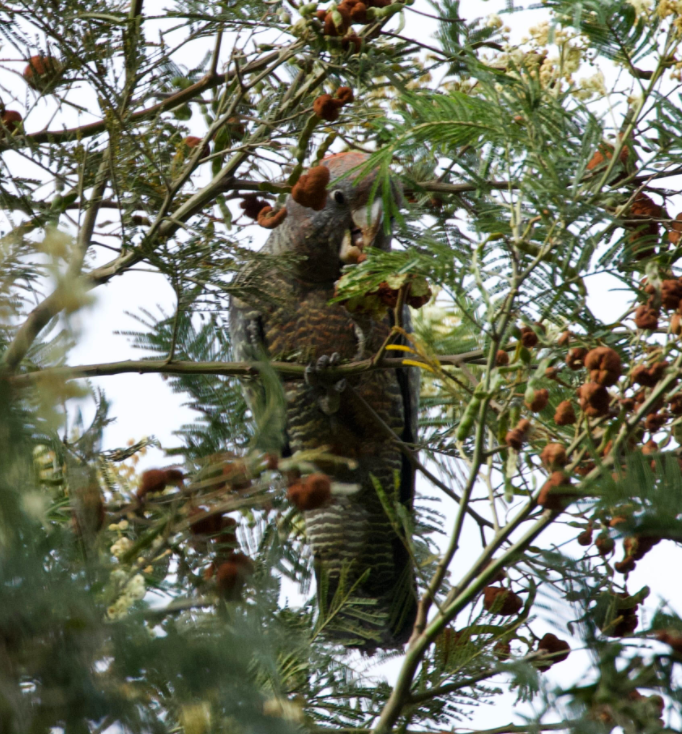
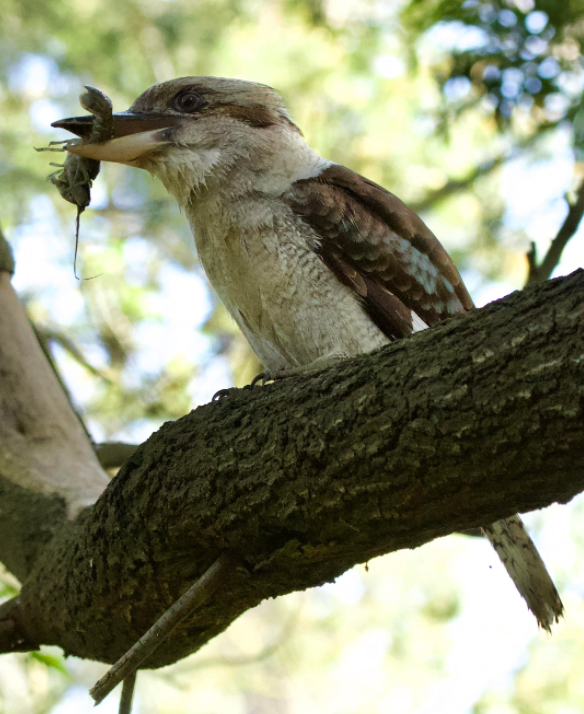
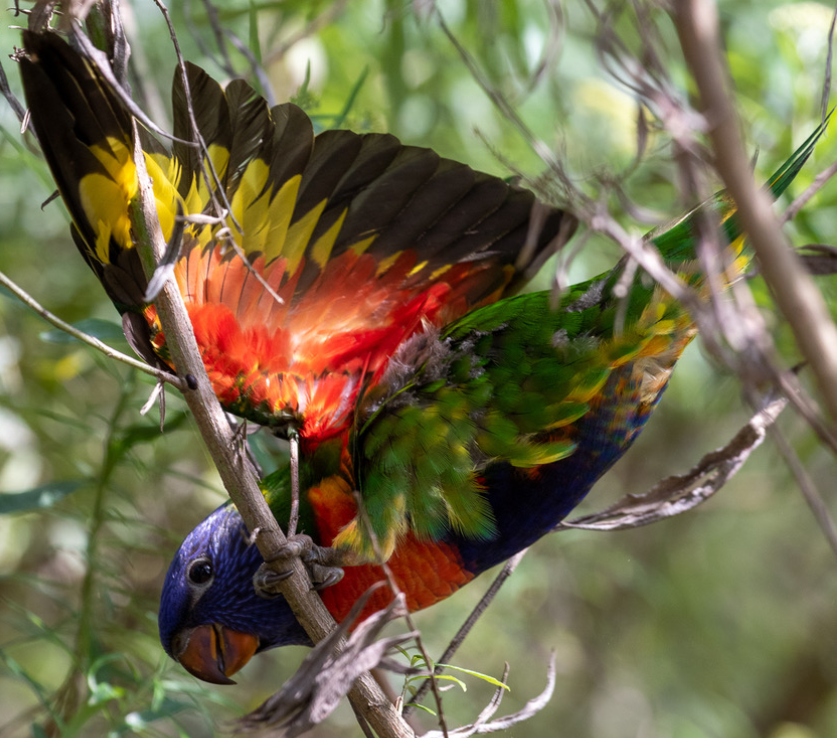
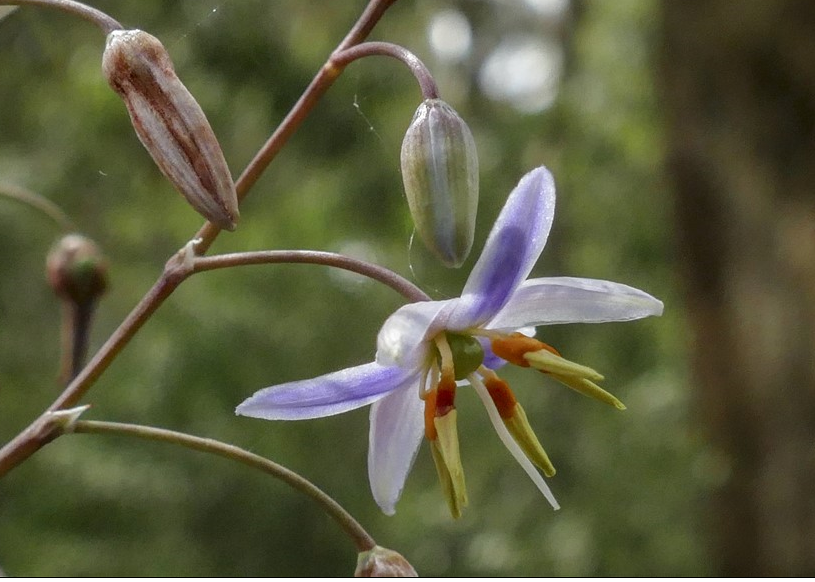
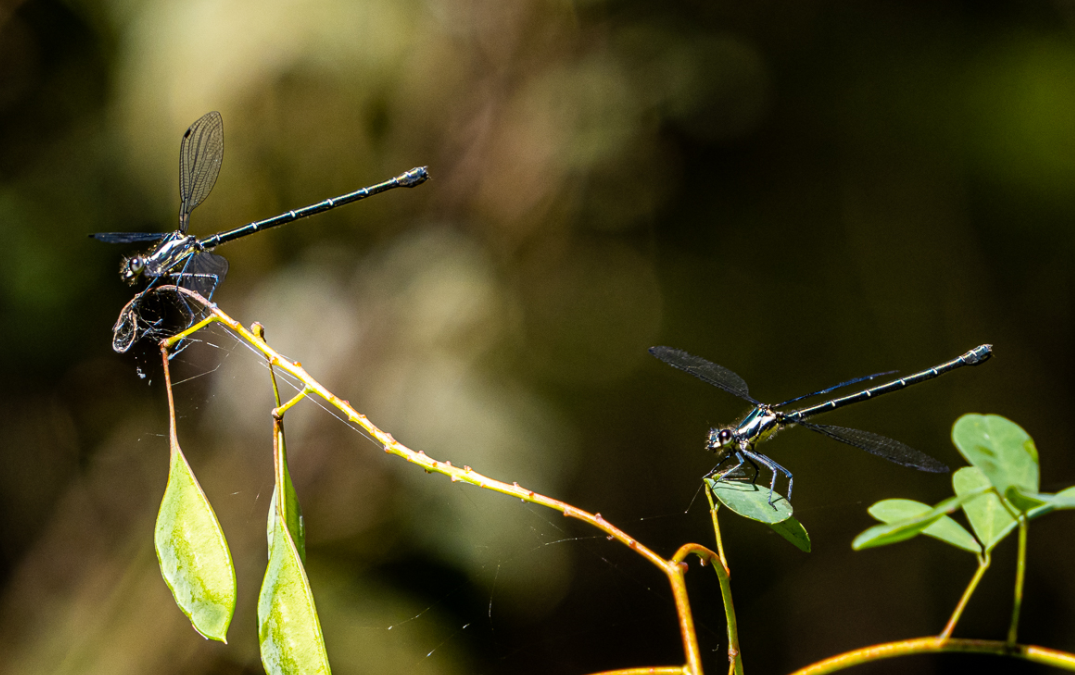
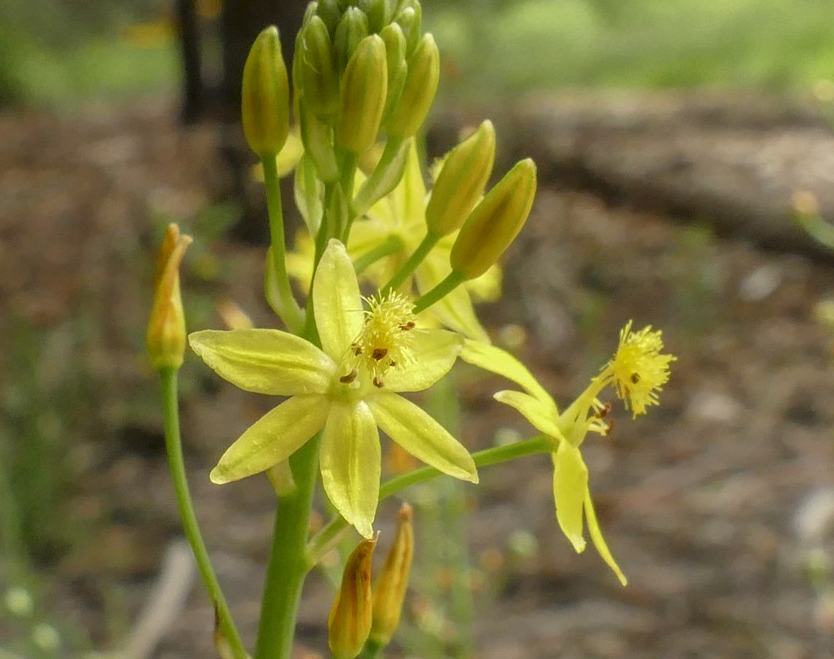
Here are some sightings in the park from this month courtesy of local photographers:
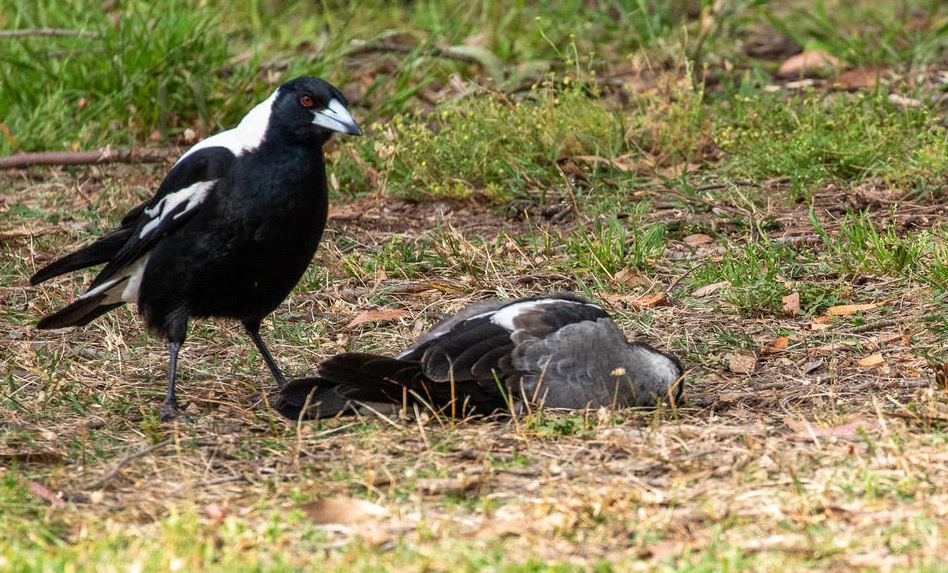
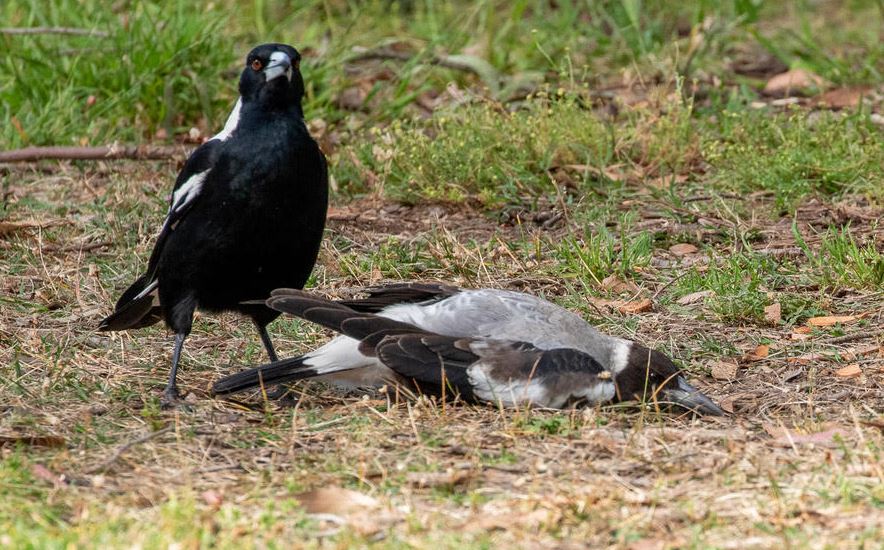
An odd behaviour – a juvenile magpie pretending to be dead for parental attention ?
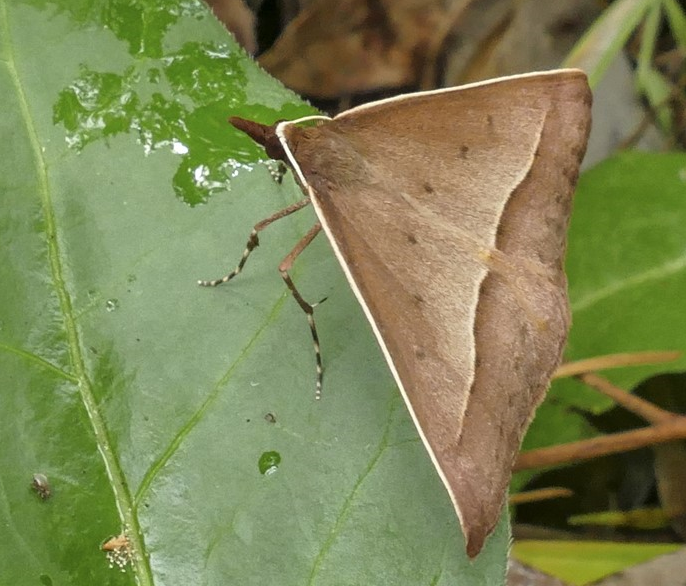
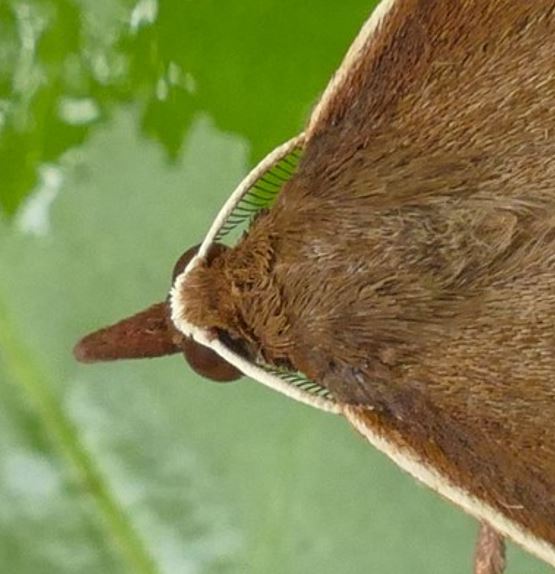
Notice how the cream coloured antennae align with the cream edge of the wing.
The moth is found in the south-eastern quarter of Australia. The larvae feed on Eucalyptus and Callistemon species.
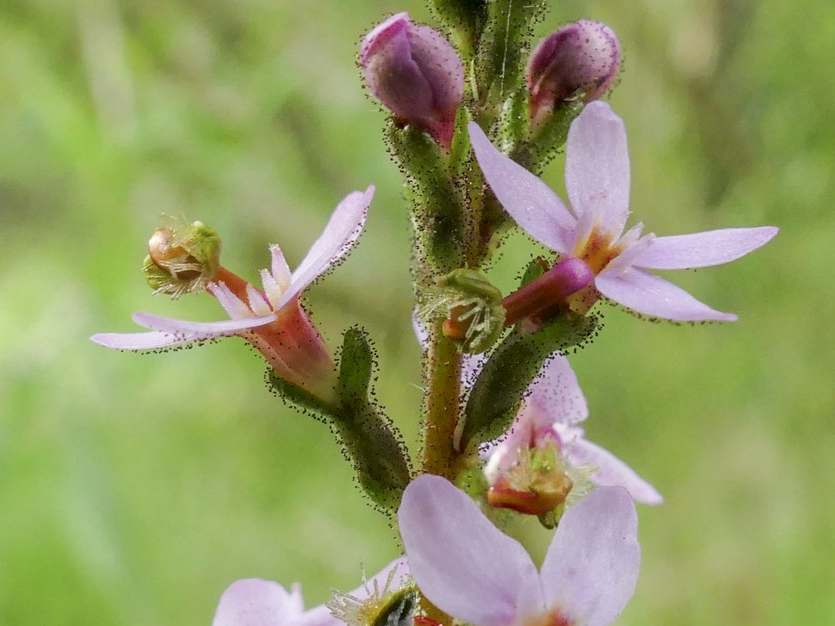
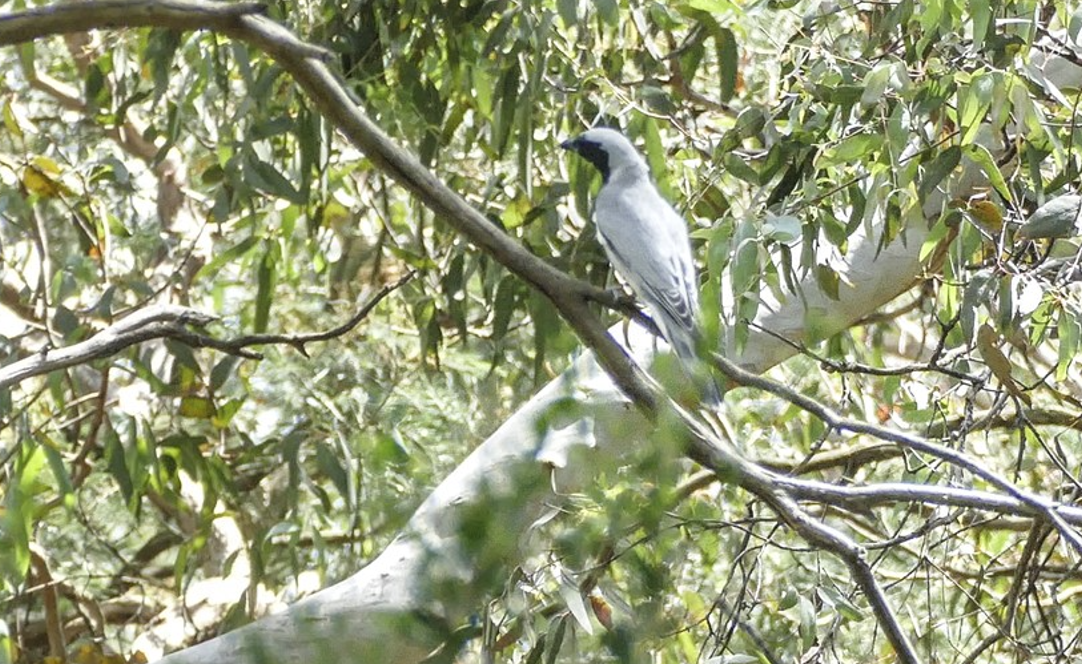
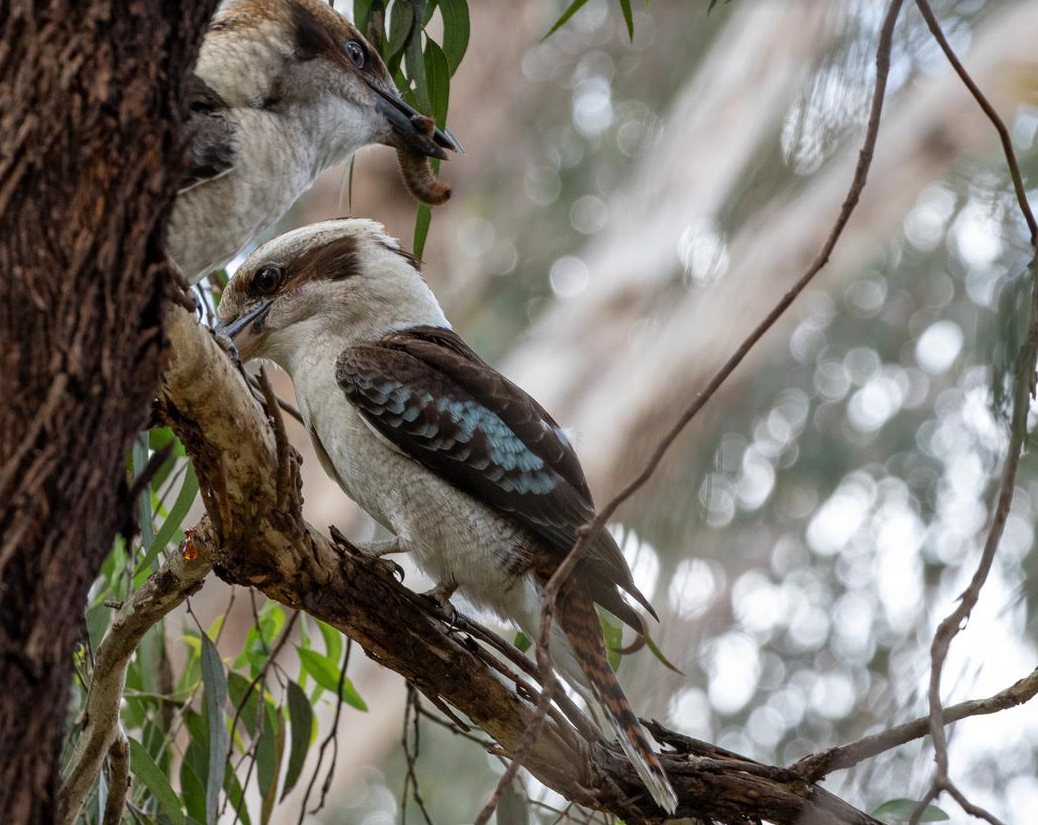
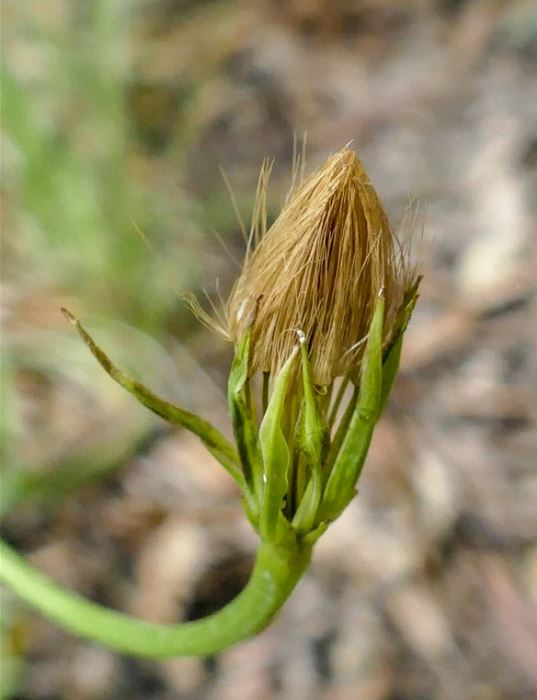
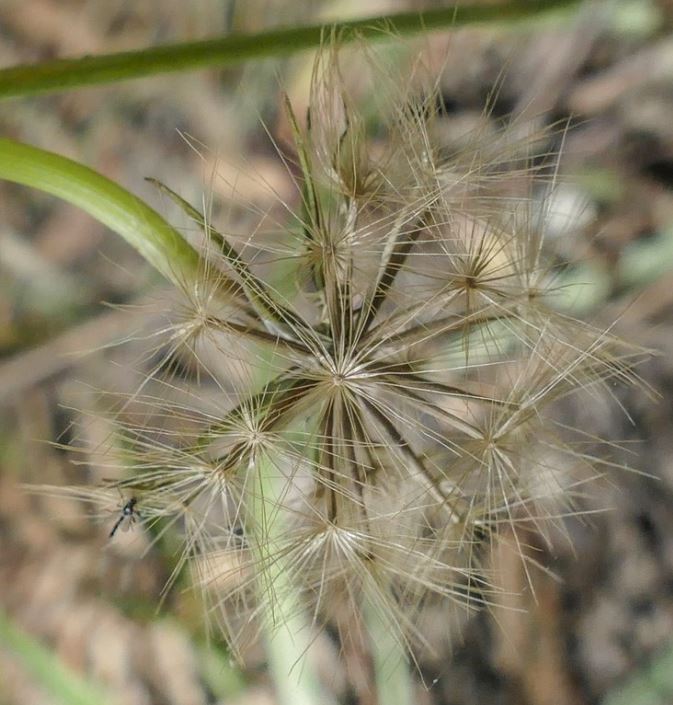
We planted some Yam Daisies (Murnong) at our weekend Community Working Bee on Sunday, 4th July – a traditional bush food (see our June edition for more details). It’s interesting to see how its flowers change over time:
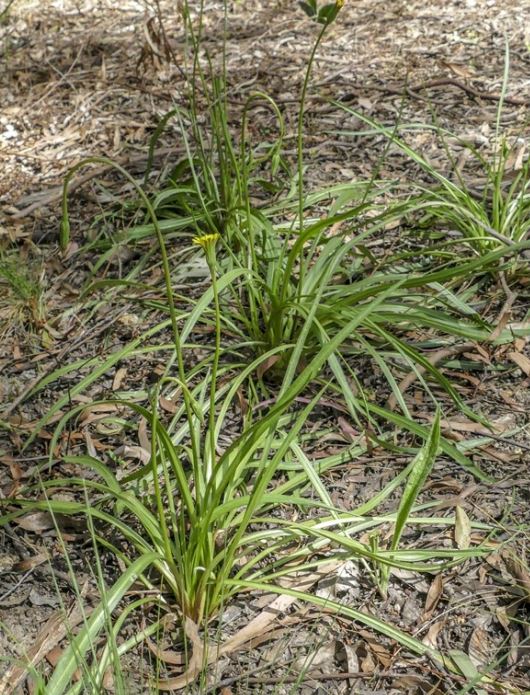
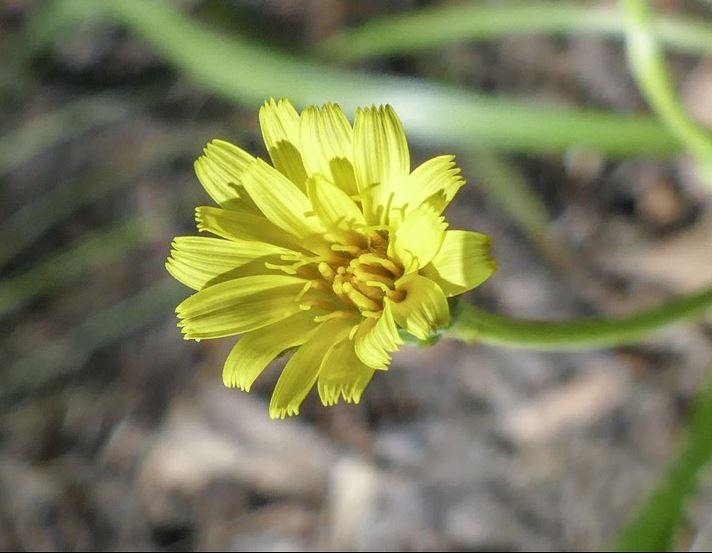
To scroll, click on one of the photos and scroll using the < > arrows. Click X when finished.
 Blackburn Creeklands
Pingback: Park News – February, 2022 | The Blackburn Creeklands