Owl be watching you!
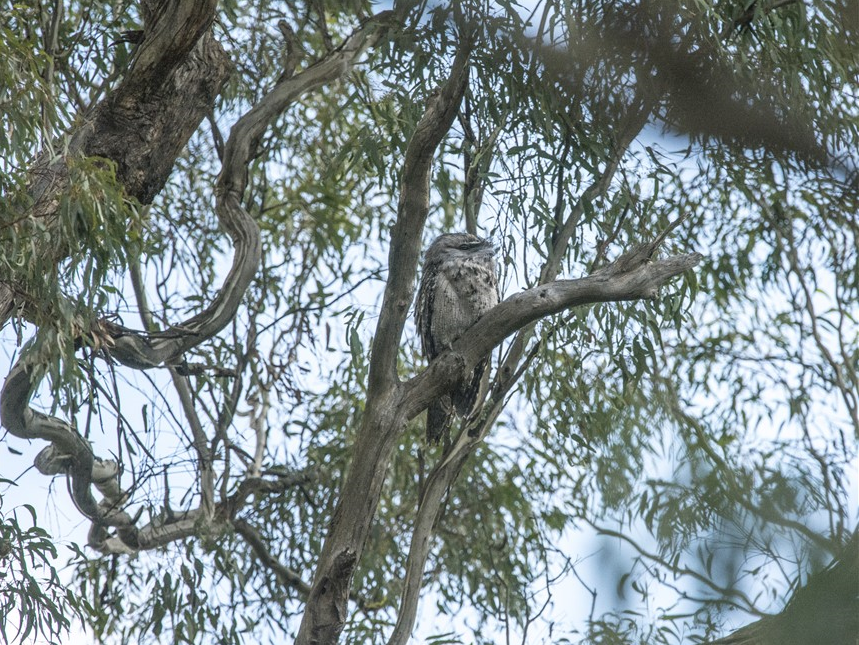
Just a few days late for our Bird Survey, our friend Barb was the first to spot this impressive bird in the Blackburn Creeklands:
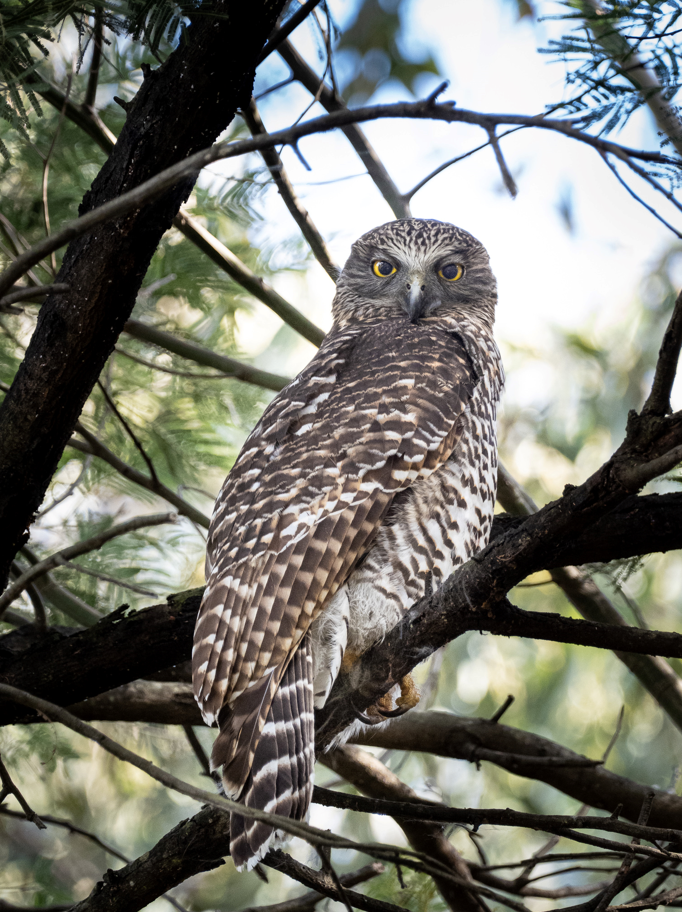
Her husband Greg, raced back home to retrieve his camera and took these very fine shots from different angles (above and below).
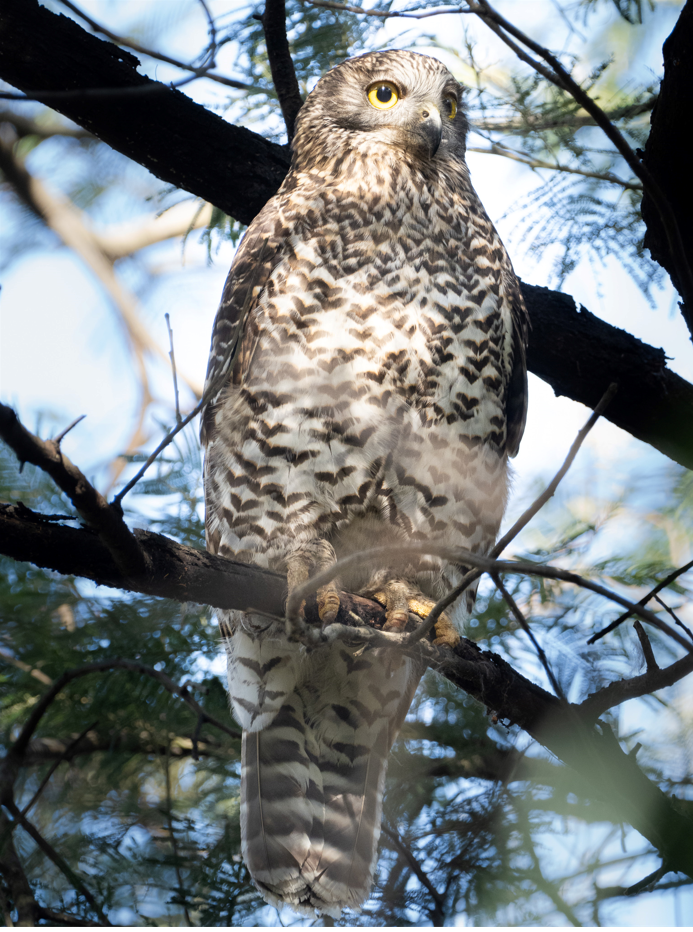
The first shows the darker “barred” plumage on the back of the bird and highlights its piercing yellow-orange eyes which combine with the whitish forehead lines to produce a rather fearsome “frowning” impression. The bird’s yellow feet with formidable talons are also visible. The second photo shows its lighter front and the characteristic brown-black “chevrons” (V-shaped patterns looking like a child’s drawing of a dense flock of birds in flight).
These are Australia’s largest owls – measuring up to 65 cm in length, with a wingspan up to 135 cm and weighing up to 2.2 kg. They are fearsome predators – possums (including the larger brushy-tailed) and birds like Magpies, Cockatoos and Tawny Frogmouths are all fair game. We suspect cats disobeying the night curfew had better watch out too!
Several of our local birdos had been on the lookout for the bird after a site containing a lot of “wash” under a potential roosting point was noticed:
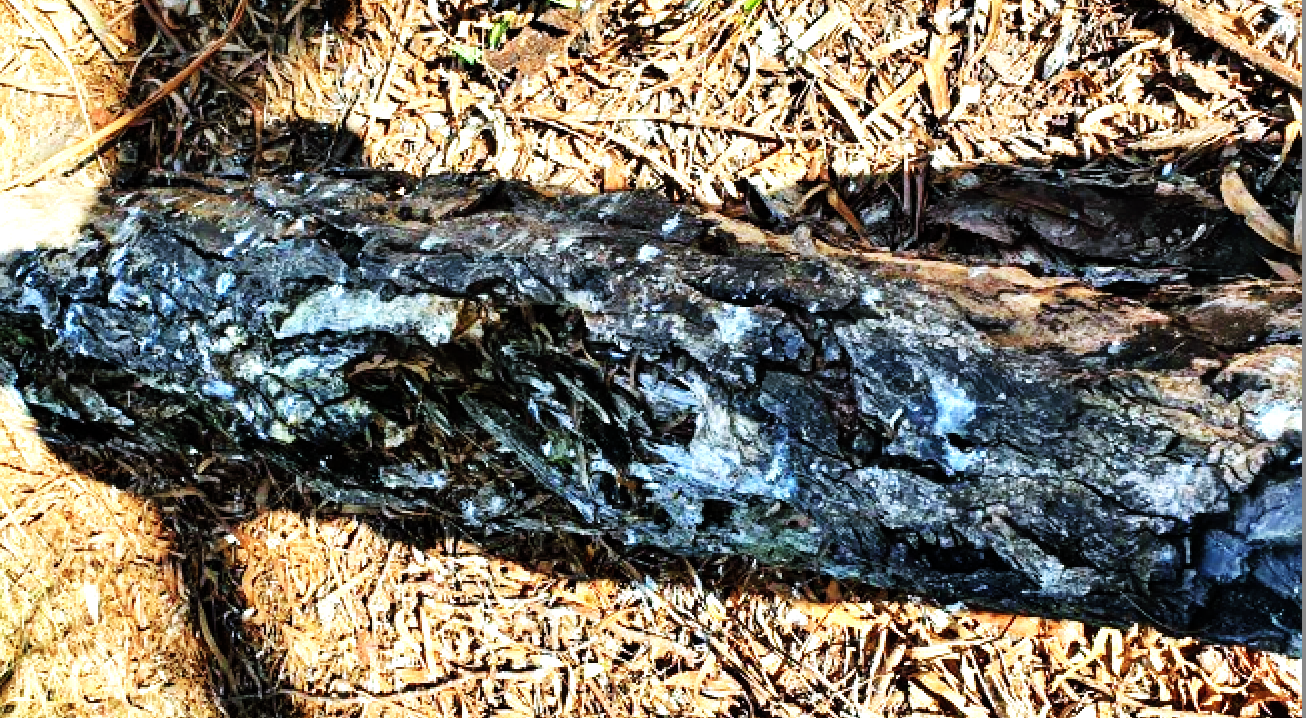
While we have had what was considered to be a visiting Powerful Owl a couple of years ago, this owl may have stayed longer (?).
SGARs- Second Generation Anticoagulant Rodenticides
Upon hearing the news above of a visit by a Powerful Owl, some of our Friends immediately started to worry about the bird taking local rats. Some household rat baits contain poisons called Second Generation Anticoagulant Rodenticides (SGARs) which break down very slowly and remain in the food chain for long periods.
The problem is that birds such as owls might eat a poisoned rat or mouse and then become lethally poisoned themselves by the residual poison in their prey. SGARs are banned in many countries. If you’d prefer to use wildlife-friendly rat poisons, please visit this link to Birdlife Australia for information on how to choose the right product.
A Deakin University researcher is concerned that Tawny Frogmouths and Possums might also be being killed by SGAR poisoning !
Tawny Frogmouths?
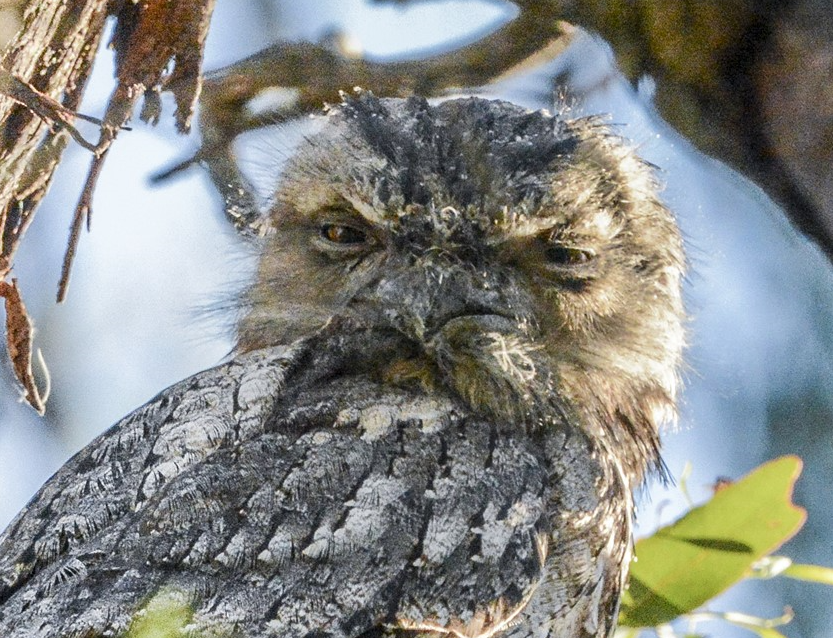
A Deakin study last year found that over 80% of dead Powerful Owls contained rodenticides – so it is possible that Tawny Frogmouths are also exposed through their prey. For the non-squeamish, the researchers want to collect any dead Tawny Frogmouths that you may encounter. If you find a dead Tawny Frogmouth, please put the whole bird in a plastic bag, make a note of date and address/GPS where found and contact Raylene Cooke via e-mail at raylene.cooke@deakin.edu.au or phone (03) 9251 7608.
Tawny Frogmouth feathers are also being requested by Raylene for a Deakin University DNA study. Please put the Tawny Frogmouth feather in an envelope with address/GPS of where the feather was found and the date. The Tawny Frogmouth feathers collected for DNA analysis are being stored through Deakin Uni waiting for a PhD student allocation. Please contact Raylene via the means above.
Possums too?
Raylene thinks Common Ringtail and Common Brushtail Possums might be taking SGAR rat poison baits – so she also wants to test any fresh possum corpses you may find and can bag. The livers are needed for testing – so a possum run over by a truck may not be useful because all of the possum becomes “blended” (!). Raylene is fairly local – so she can usually do a same-day pick-up. Once again, please make a note of date and address/GPS of where it was found.
Maintenance Team Report
All Thursday morning Working Bees during the month have been at the Middleborough Road end of Blacks Walk and just north of the Blacks Walk bridge – weeding, infill planting and mulching. We welcome two new recruits, John and Jen, who first attended the recent Community Working Bee.
Bull-ants!
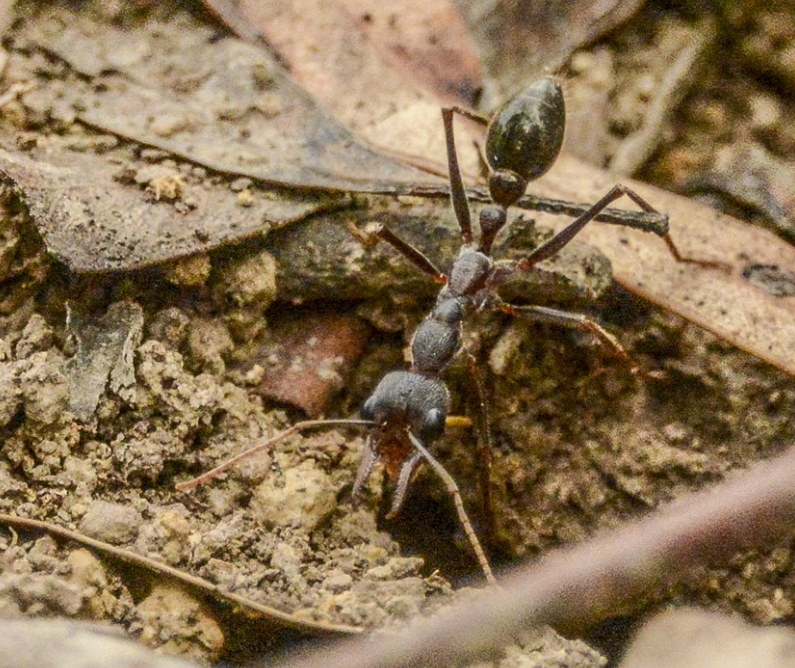
Ants are a very important part of the local ecology. For example, their tunnelling aerates soil and improves water penetration and drainage. They also improve soils by storing large amounts of food (ie organic matter) underground – in and around their nest sites. This includes seeds – effectively “planting” them in safer, deeper, nutrient-rich places. They are sometimes flower pollinators too.
There are about 1,300 species and subspecies of ant in Australia. We believe there are over 50 species of ants living in our park.
Beware though that bull-ants pack a powerful punch and that different people have wildly differing reactions from an annoying itchy bite through to anaphylaxis requiring medical treatment.
We are unsure why, but we have recorded an unprecedented number of bites to our maintenance crew this year. One problem is that, even though we do site surveys before we start work, ant nests are sometimes not obvious until a nest is disturbed and its defenders rush out to repel “aggressors”.
Covid-19 has also taken a toll on our crew (and our Photography Department!) with a couple of our members falling victim during May. Because we work outside in the open air and in a socially distanced way, we expect that infections did not occur during our working bees! We wish all victims a complete recovery and a swift return to their “business as usual”!
Council Support
Council has been providing us with quality mulch in situations where weeding has left patches of bare earth (given the density of the weeds… some of them rather got away during lock-downs!). Typically, we’re doing in-fill planting and mulching as we go.
We are also very grateful to Council for the first installment of some top-ups to our tools and supplies Some of these were immediately put to good use in our first Community Working Bee for this year (see below). Some tools have been hard to get – we’re hoping for a further installment shortly.
Community Working Bee Report

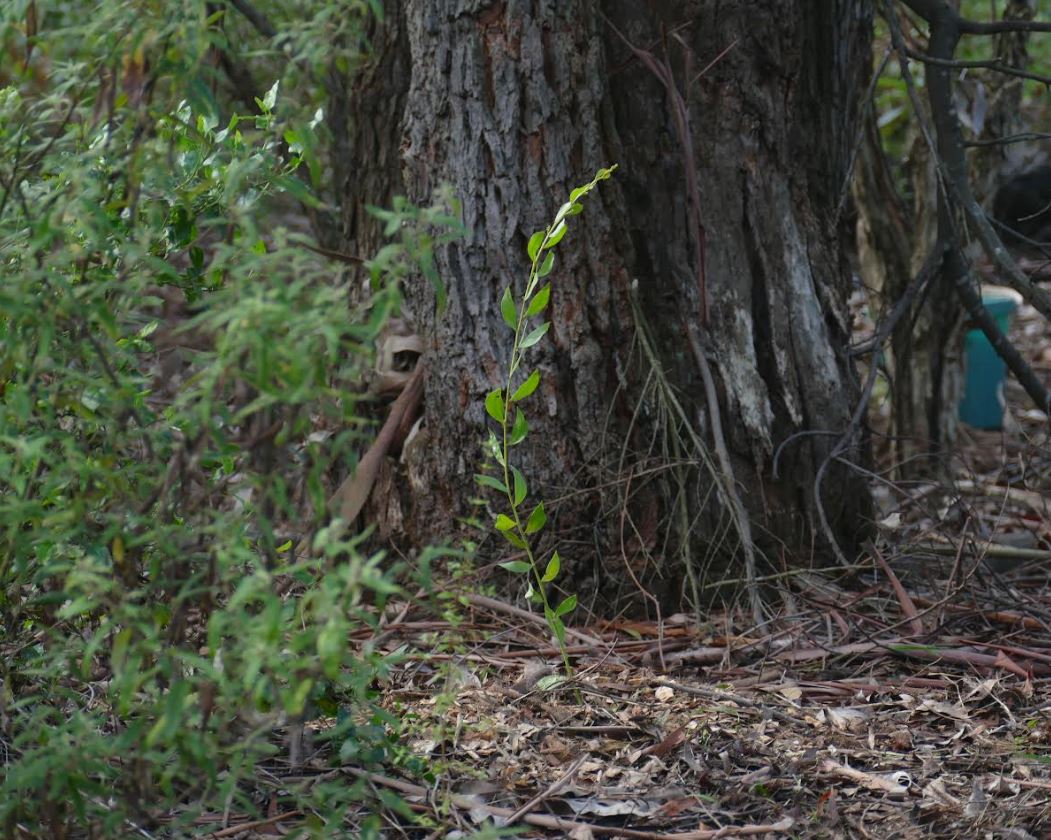
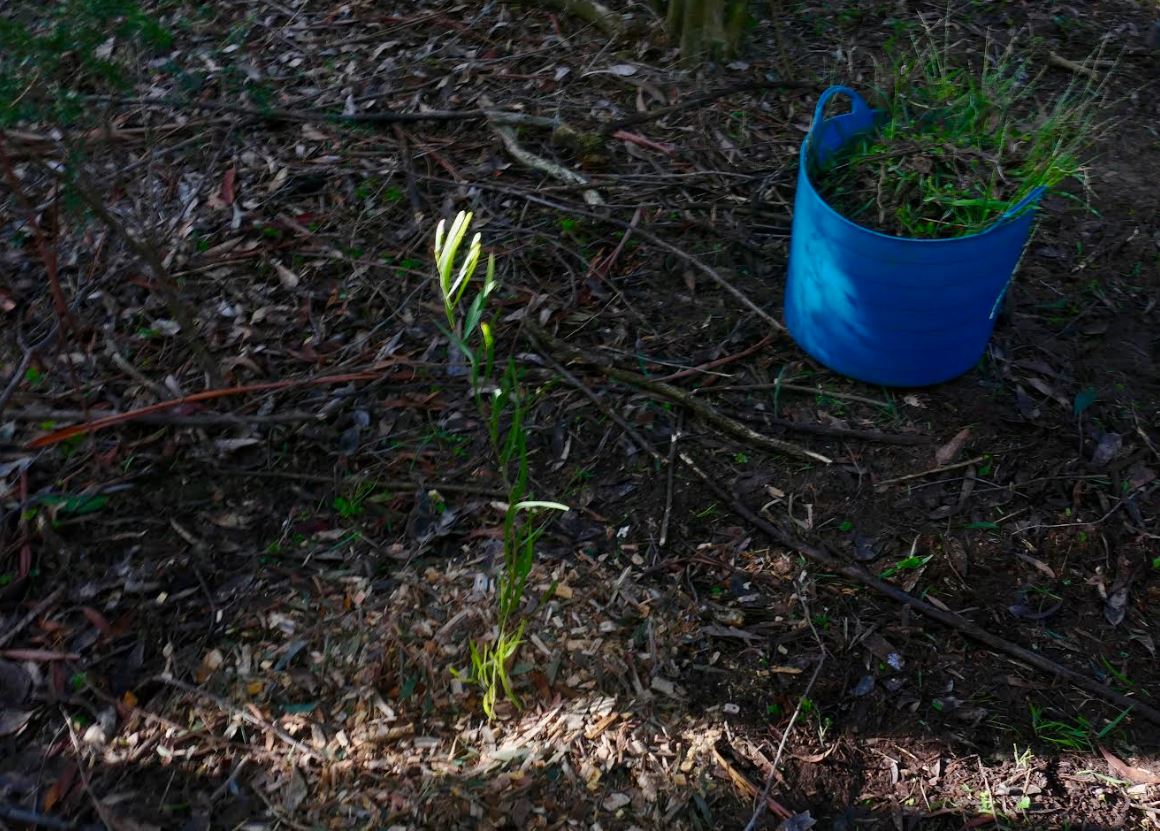
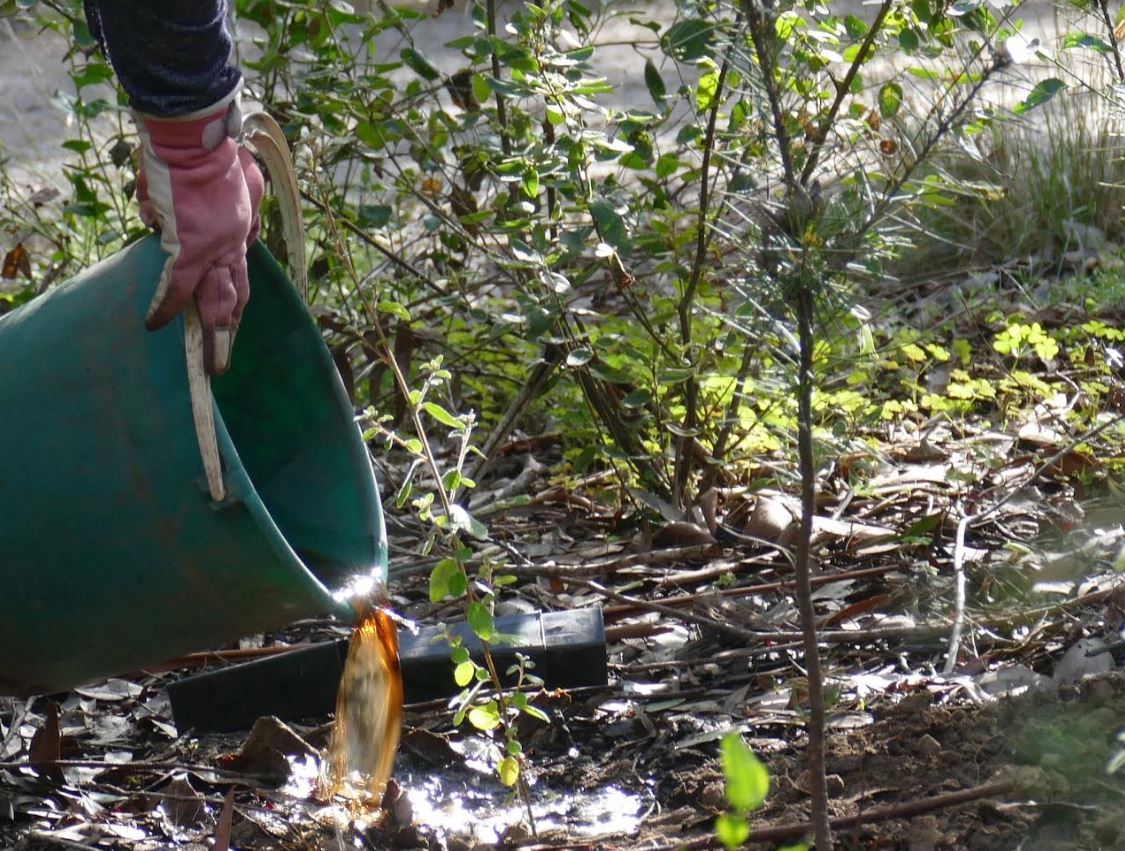
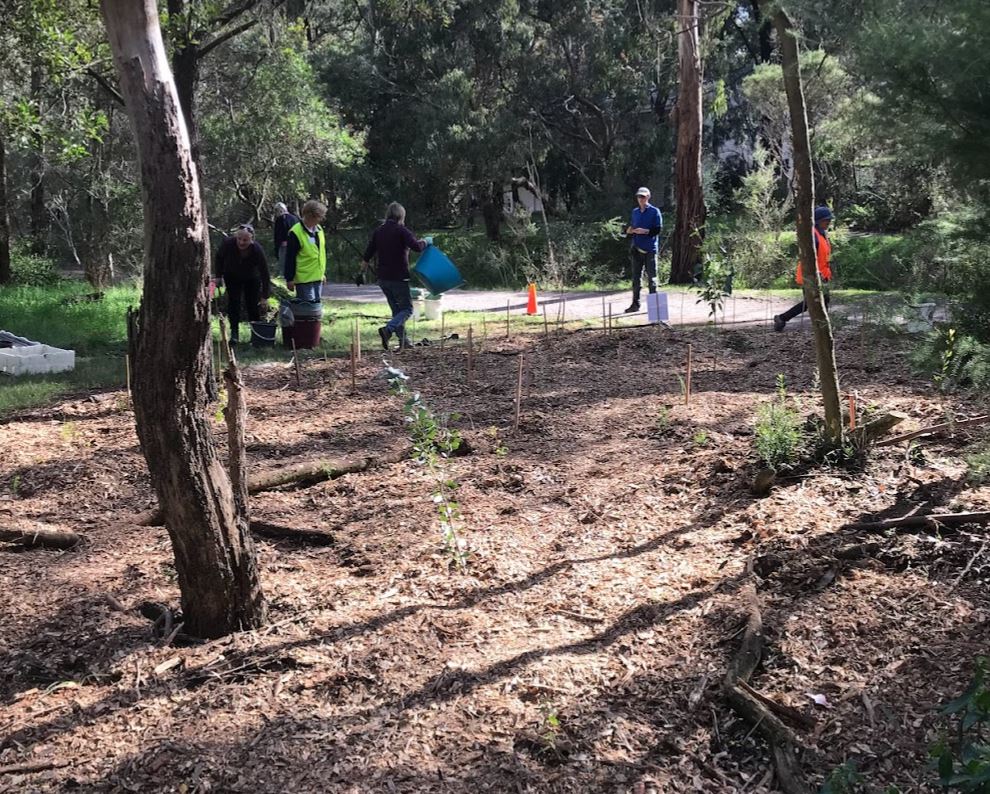
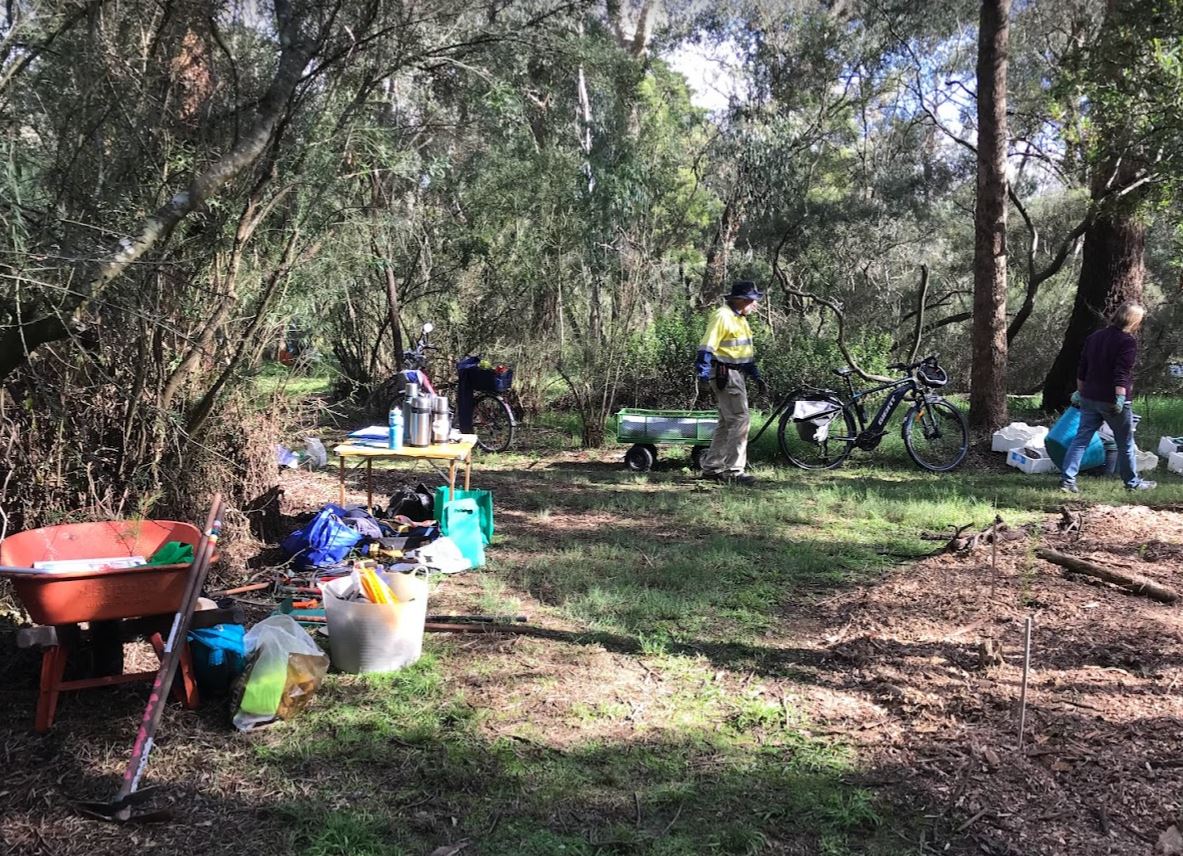
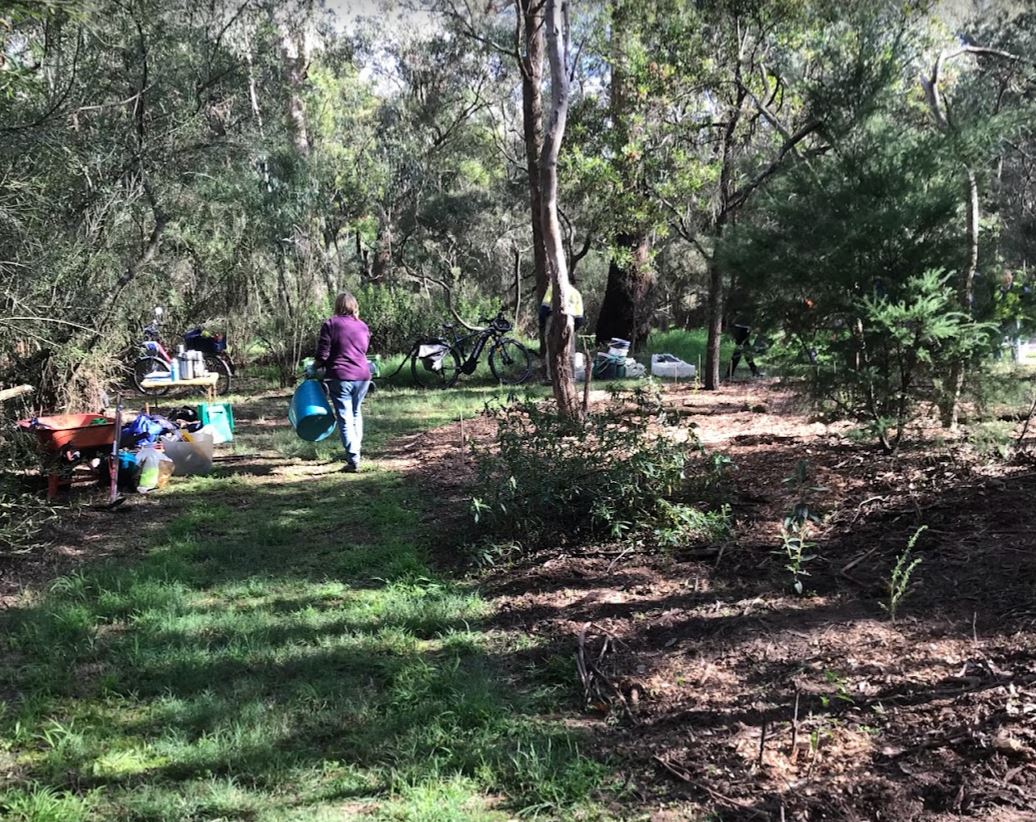
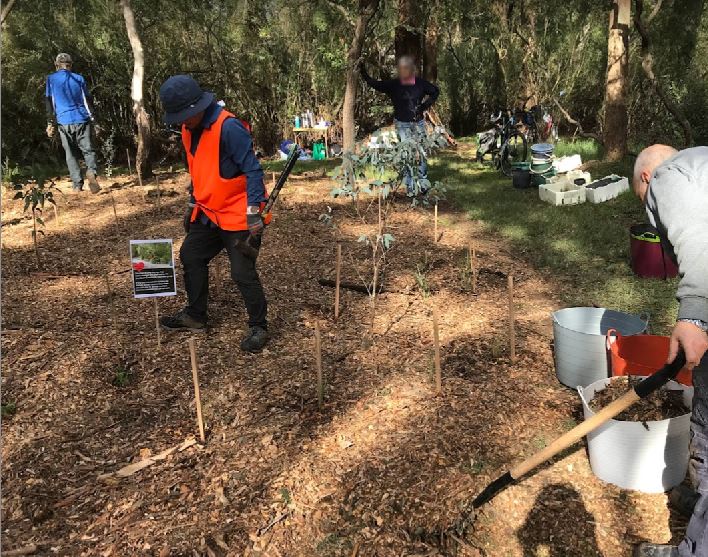
Just ahead of Volunteer Week, we ran our first Community Working Bee for 2022 on the 15th May, 2022. The work site was beds adjacent the main E-W track on the south side of the creek about 30m east of the Laurel Grove bridge:

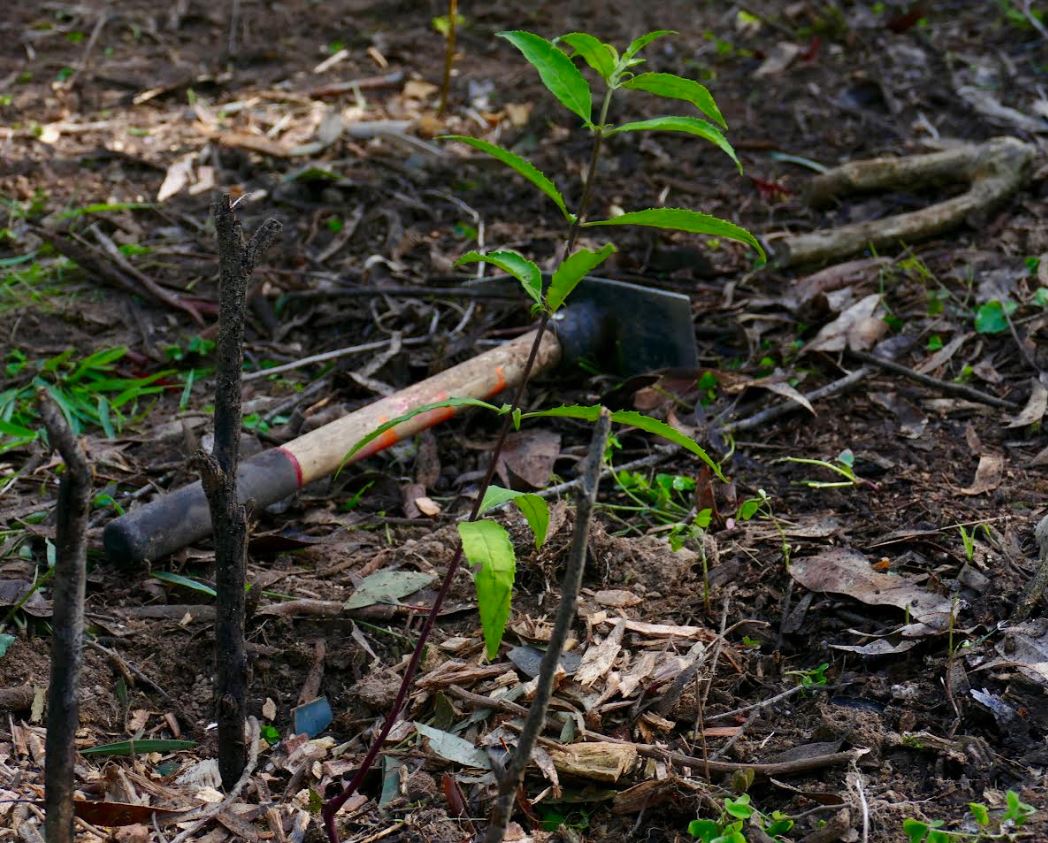
Activities were weeding, planting, mulching and rubbish collection. The full gamut was proposed to show the end-to-end process with weeding-planting-mulching as well as a separate rubbish collection activity throughout Thelma’s Maze (KP-5) – to allow people to be separated for safe social-distancing.
We were pleased to have a good roll-up with several new faces participating in excellent weather for the time of year. Here are some photos of the action – thanks to Rita and Graeme…
We sincerely thank our Community volunteers, our Thursday working bee volunteers and our volunteers on Committee for the generous donation of their time, expertise, effort, ownership and ideas – which are definitely not taken for granted by us or our community. Well done!
Next Community Working Bee (26th June)

One for your diaries – our next Community Working Bee will be on Sunday 26th June – at the start of the Winter school holidays. The site is to be at the eastern end of the main grassed area in Blacks Walk. We’ll send a reminder in the week beforehand with the details.
Our Future
Readers may remember our Change or Die article in last year’s July edition of our newsletter. We reported that Council was seeking a restructure of the bushland parks’ Park Advisory Committees (PACs) to address issues with Council’s risk management and to better adapt to changes in the Local Government Act.
At the time, Council’s preferred position was that we should incorporate in our own right and carry our own insurances. There was resistance to that idea from several of the 13 Advisory Committees eg because some of our park groups are too small to incorporate and because separation from Council was viewed negatively. There were also concerns about ongoing funding and increased costs.
On Thursday 26th May, Council hosted a workshop between Councillors, PAC representatives and Council Officers to take a first look at an alternative proposal from Council which retains the Park Advisory Committees – though incorporated groups are still possible too. We are now working through the implications of the changes and the restrictions imposed by Council’s insurances.
Council is currently surveying volunteers and will review all feedback to determine outcomes and/or the need for further discussion. Ultimate outcomes will then be provided to the PACs and a final report will go to Council in due course.
Wins for the Park
Kooyoongkoot (Gardiners Creek) Masterplan
One big win for the park and our Corridor in the recent state budget is that the State Government is providing $250k to establish the Kooyoongkoot-Gardiners Creek Masterplan. This will bring together over twenty friends groups and associated groups (including our committee) in the KooyongKoot Alliance, traditional owners, four councils , Melbourne Water, Deakin University and other stakeholders in a Regional Collaboration towards improving the long-term health and amenity of Kooyongkoot/Gardiners Creek from Blackburn Lake to the Yarra.
We congratulate our colleagues and friends within the KooyoongKoot Alliance Inc (KKA) whose strong advocacy no doubt accounts for the project attracting attention in the budget. We know our KKA friends have also been very busy recently seeking funding for a major litter trap in the creek, developing their own web-site and revegetation work along Gardiners Creek Reserve in the vicinity of Deakin University and at Markham Reserve in Ashwood.
By the way, there is a Master Plan for our Park (2002). It remains a valuable and useful document – but was designed to be a ten year plan (not twenty!). We are certain a Masterplan for the entire creek would not only be very useful at the local level, but also provide a useful framework and foundation for a revised Master Plan for the Creeklands.
Greenlink Donation

Greenlink is one of our two local indigenous plant nurseries (along with Bungalook). Greenlink has generously made a significant donation to our group – on condition that we don’t spend the money on plants (!).
We thank our volunteer friends at Greenlink for their generosity and assure them that we will rise to the challenge of not spending all our money on plants. We are currently looking at emergency medical equipment and training courses as possibilities.
Blacks Walk playground update
Council contractors have begun the upgrade to the playground near the end of Garie Street in Blacks Walk.
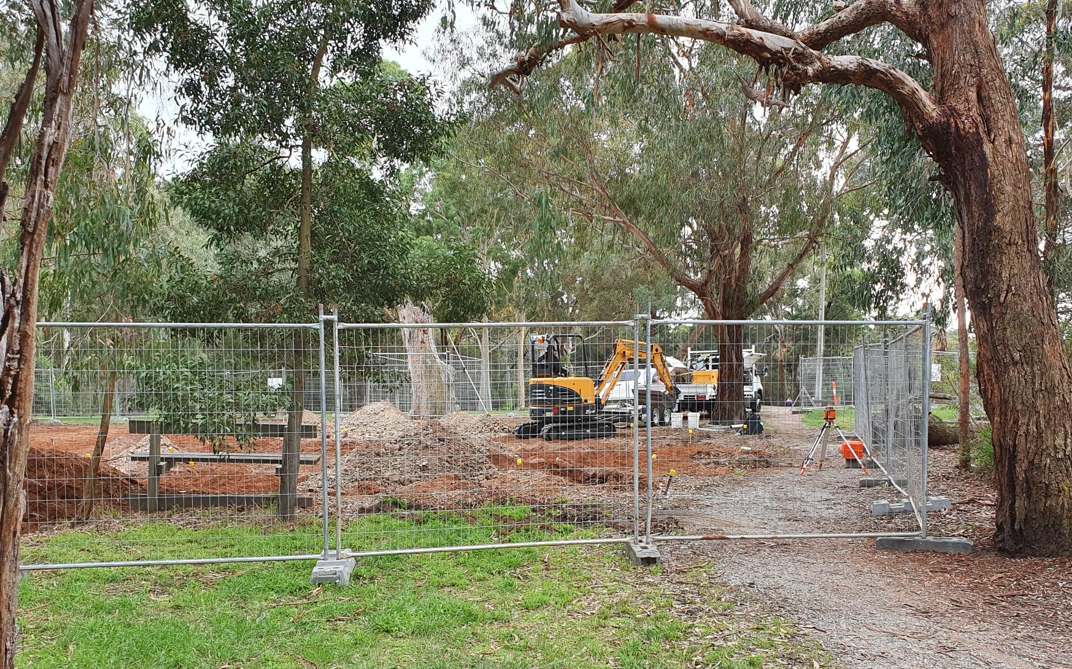
Work is expected to be completed by the 30th June – subject to weather and any Covid restrictions.
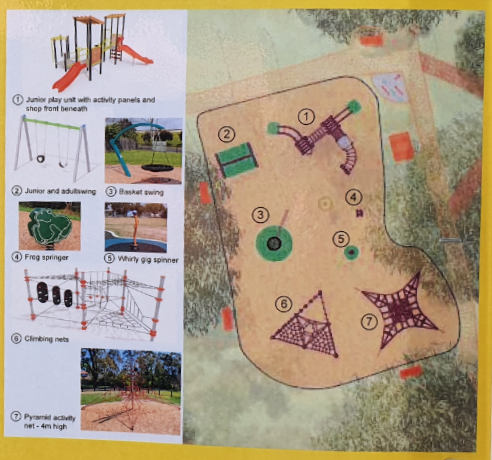
In the meantime, there are playgrounds within the Creeklands at Furness and Kalang Parks – both fairly recently renovated.
Sightings
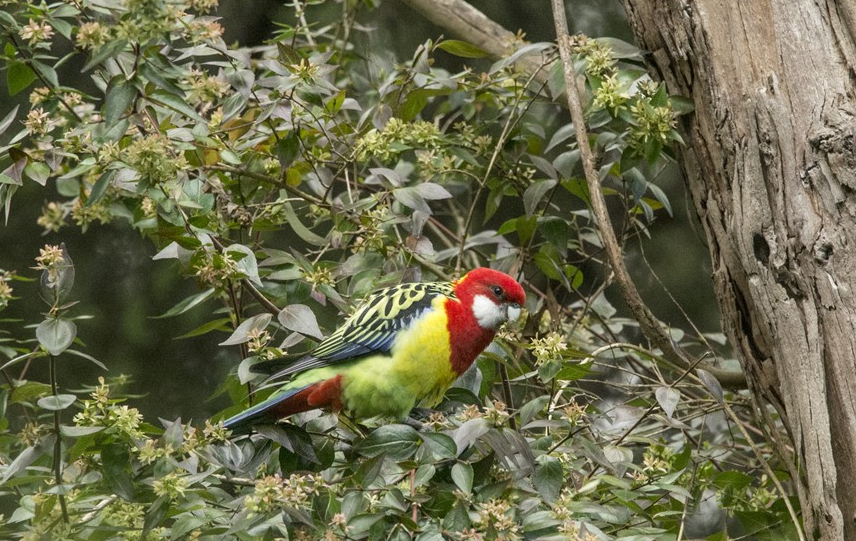
Birdlife
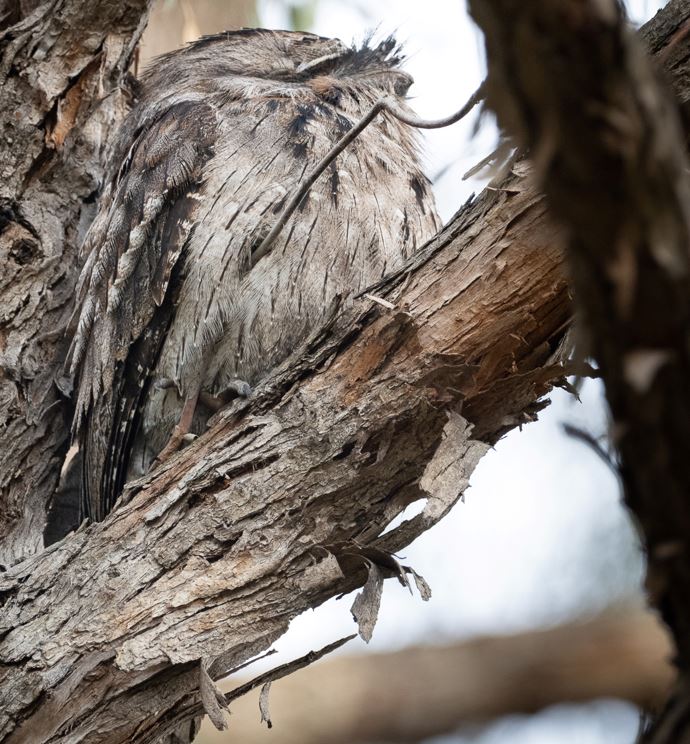
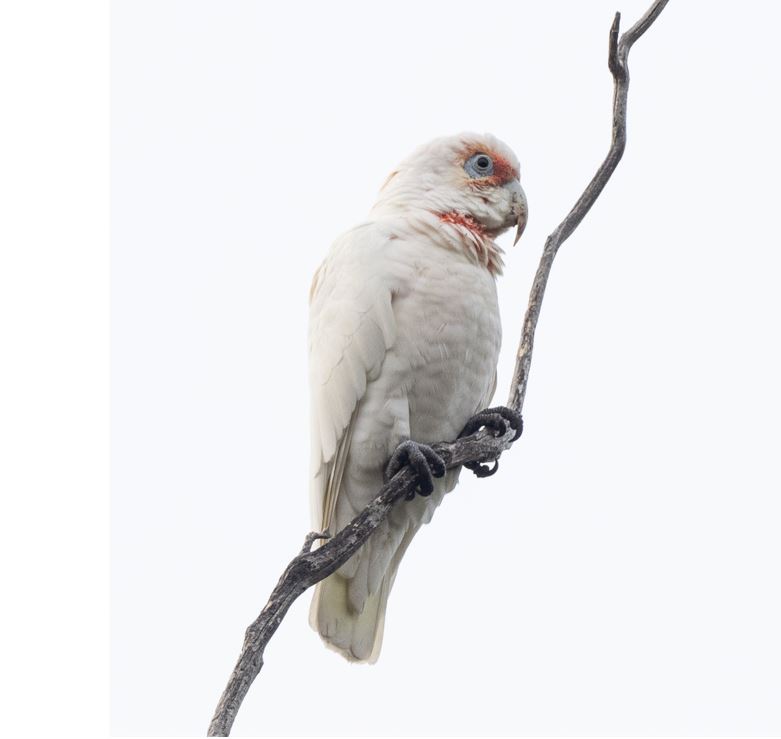
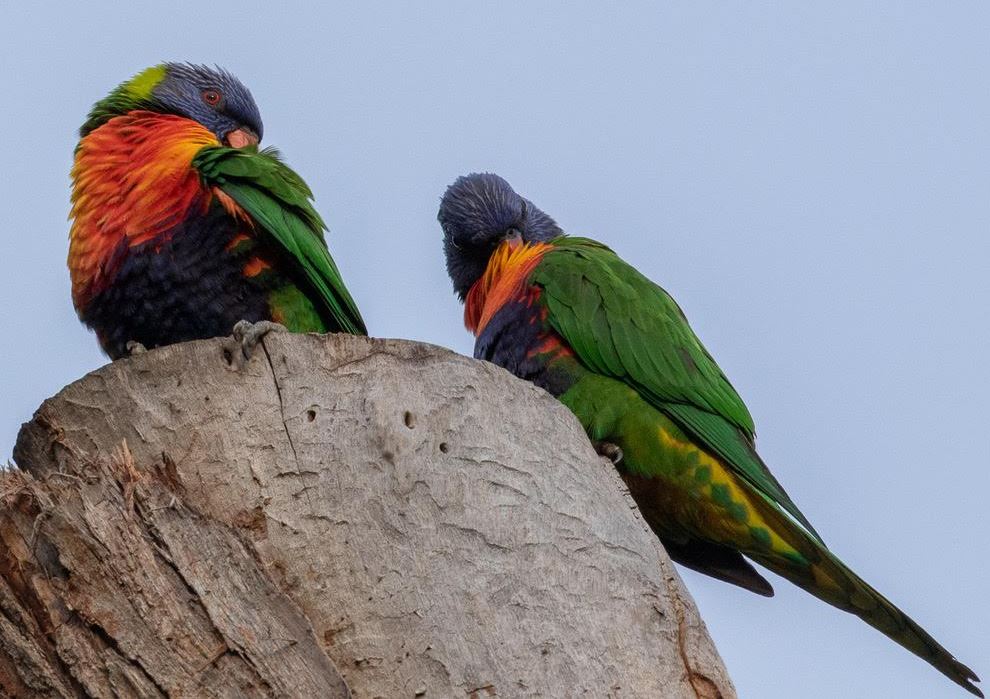
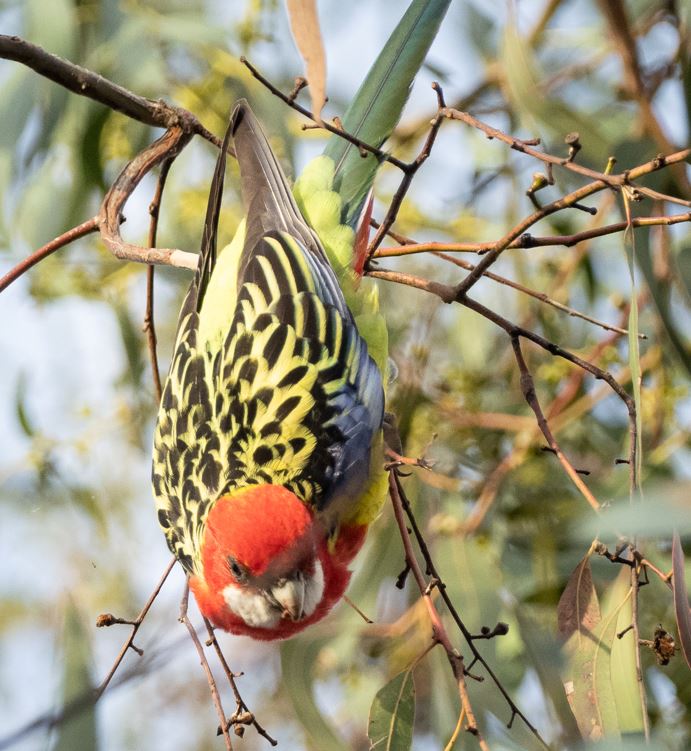
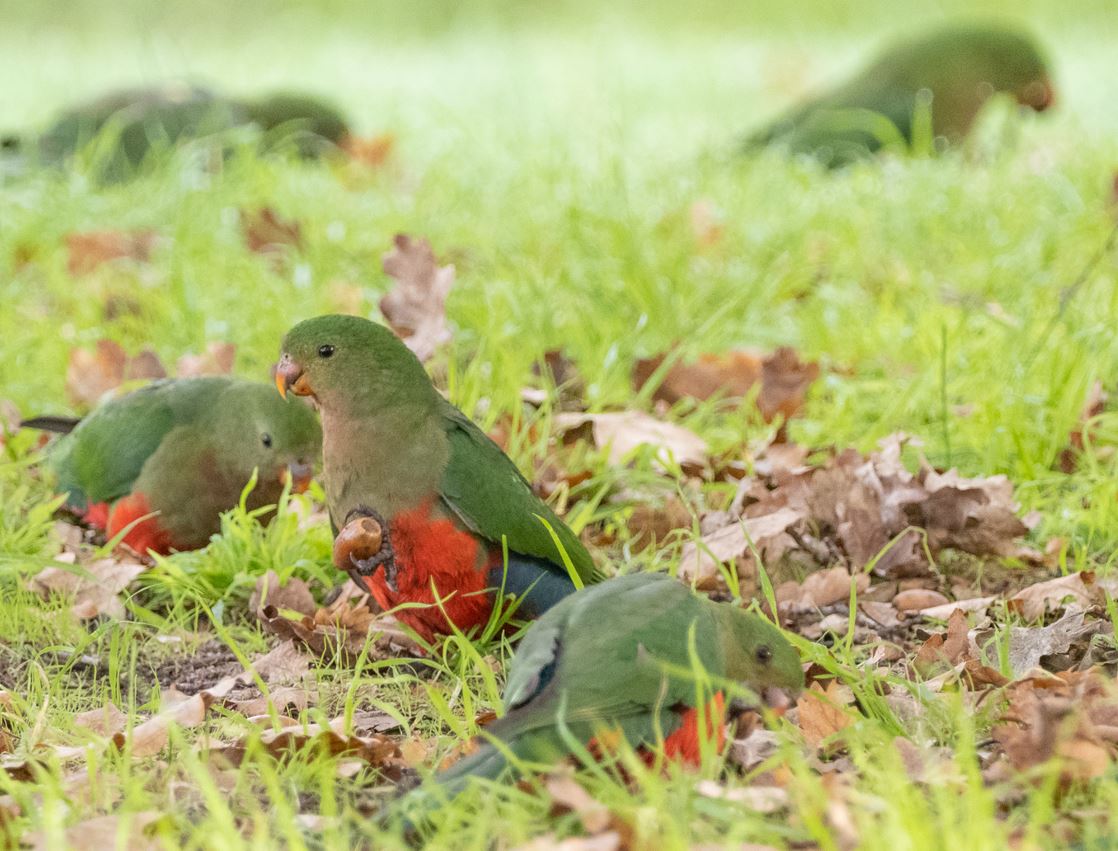
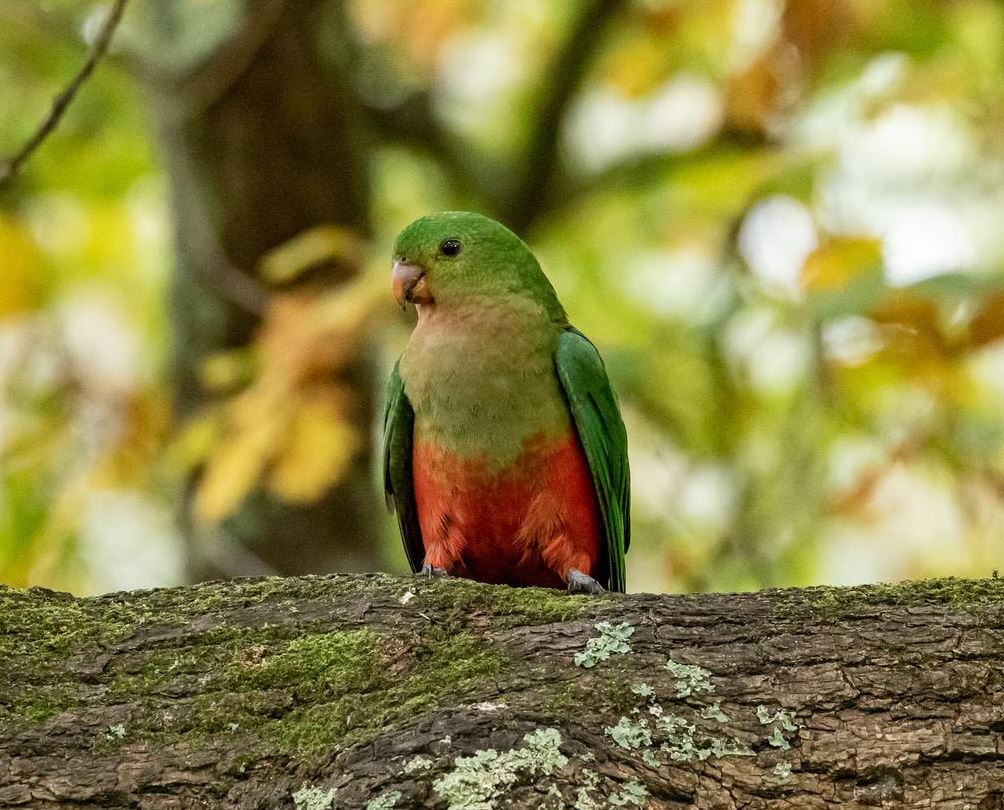
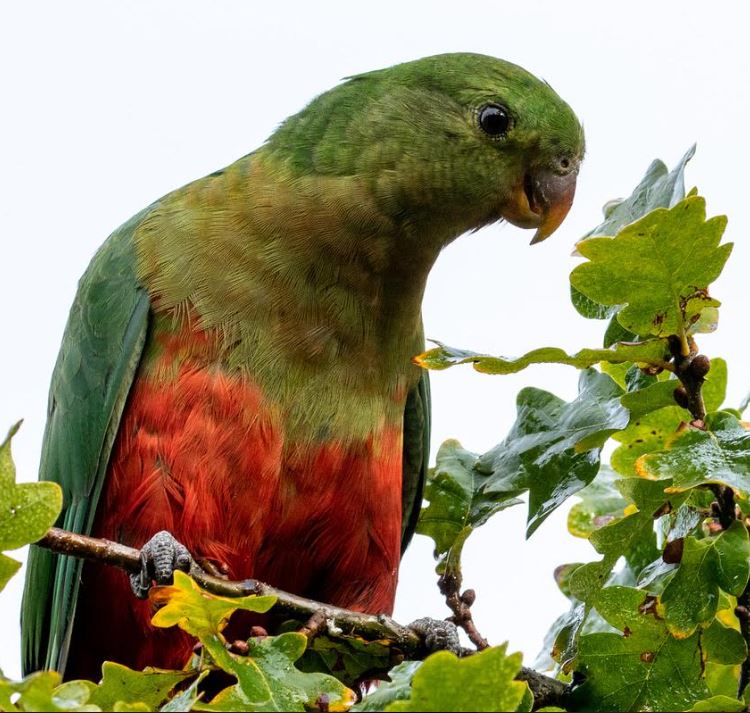
At the best of times, it would be difficult to trump the Powerful Owl sighting shown in our lead article. To make matters worse, our Photography Department has been decimated by Covid-19! Fortunately, Greg and Lindy have filled the breach by sharing photos from their May photo survey walk.
Subjects include a Tawny Frogmouth, a Long-billed Corella, a pair of Rainbow Lorikeets, an Eastern Rosella feeding and a series of shots showing King-parrots cleaning up acorns around the old oak tree amongst the 16 species they logged on 25/5 from 08:00. Click on an image to view it in the “light box”, scroll with the < and > controls and click the X when you are finished.

Fungi
As mentioned last month, Autumn is fungi time. Recently, reports in the media have emphasised that many of our fungi are poisonous, even lethal, so park users should not collect, eat, or otherwise consume mushrooms and other fungi growing in the park. Not so long ago, a woman passed away after eating mushrooms picked in a park in Box Hill – unfortunately, she was with a group who thought they looked like a variety they knew in another country. Parents should be particularly vigilant in relation to children in this respect. Just in case: the Poison Information Centre’s phone number is 131 126 (available 24/7).
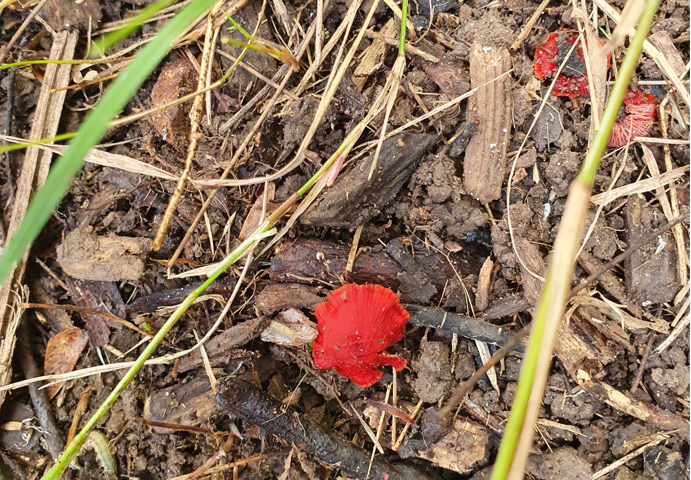
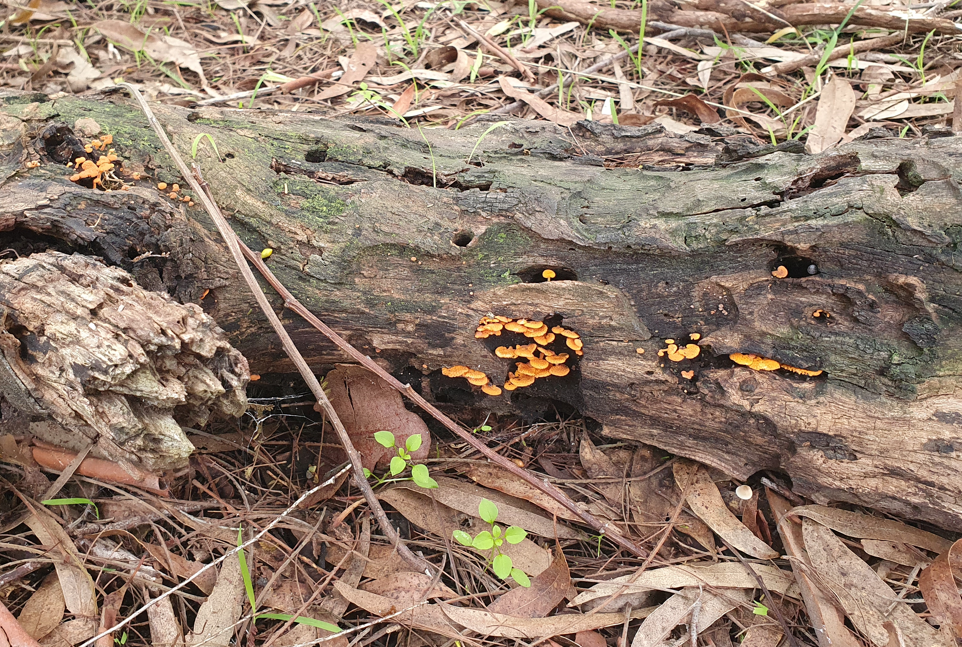
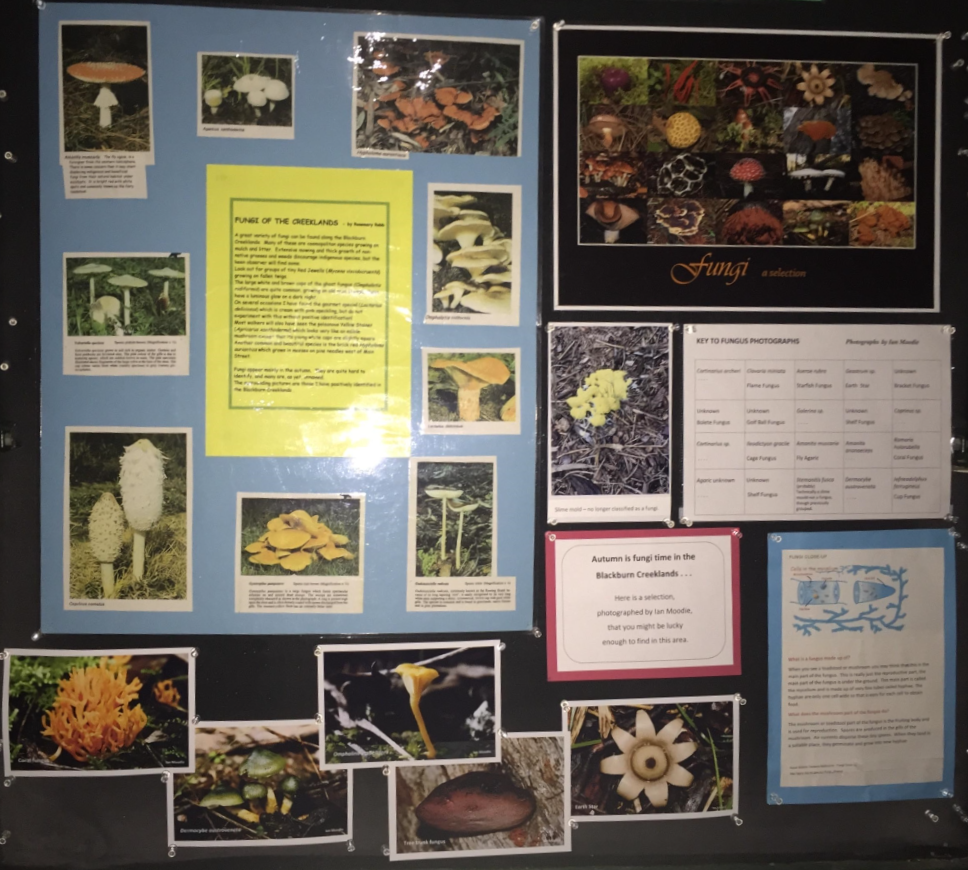
Out noticeboard is also featuring these interesting life-forms:
Corridor News
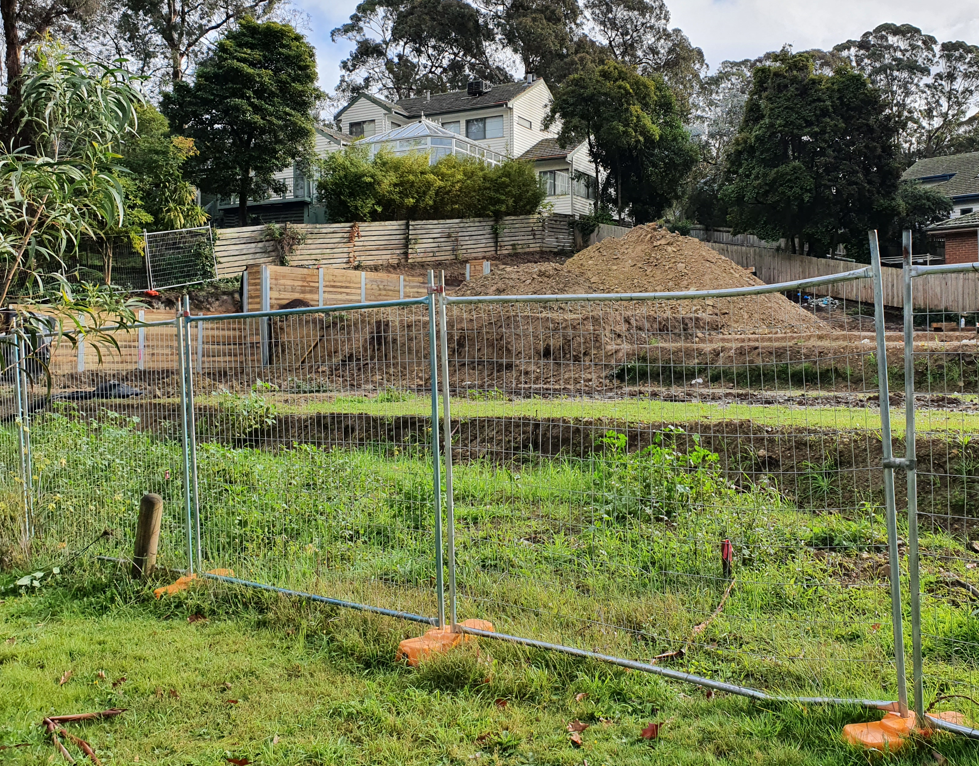
Quite deep excavation works continue at the neighbouring property to the park at 60 Main Street. Three two-storey units are planned for the property. It seems screening plantings on both sides of the property boundary will be needed to maintain park amenity.
While climate change is considered the great crisis of our age, the rapid loss of species and the rapid degradation of ecosystems is said to be as great a threat to humanity as a warming planet. There is a biodiversity crisis and Whitehorse Council has developed strategies to maintain biodiversity – also to develop an Urban Forest. However, the fight to save six mature Sugar Gums at 32 Laburnum Street has failed – continuing an alarming pattern where Council has consistently voted to destroy sound trees having good habitat value within the SLO2 areas in Blackburn.
 Blackburn Creeklands
Pingback: Park News – July, 2022 | The Blackburn Creeklands