Our Wattles
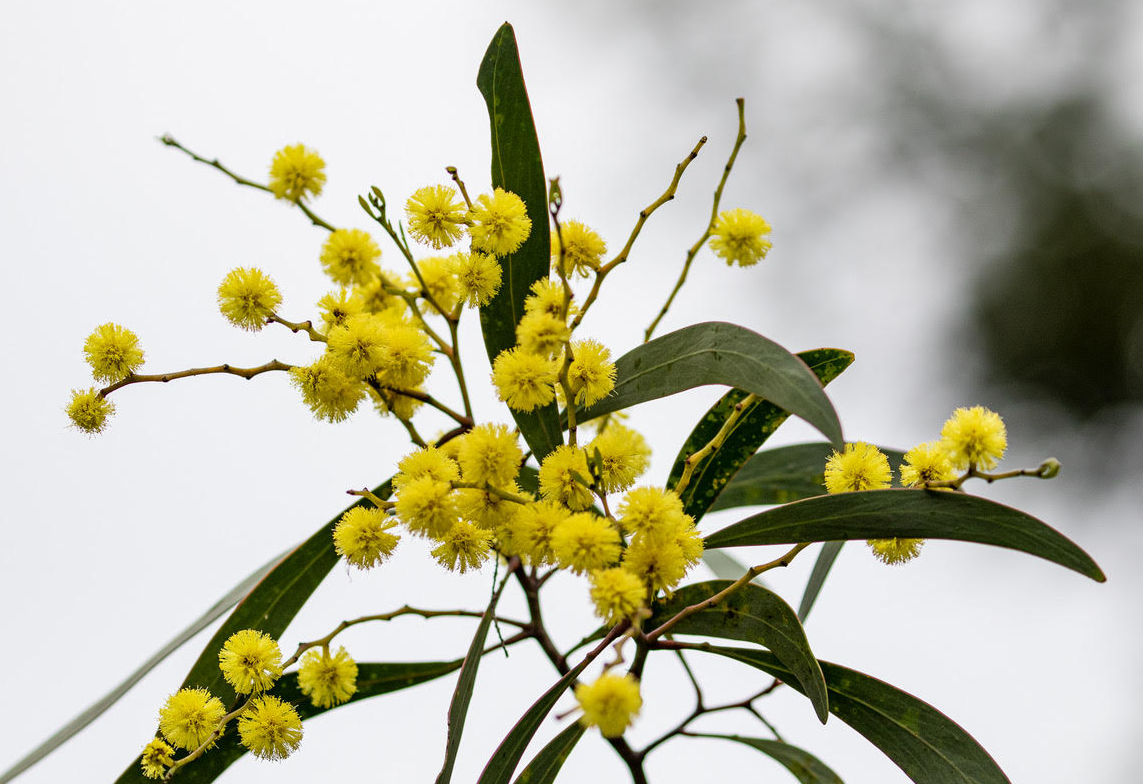
In the lead up to Wattle Day (1st September), many of the park’s wattles were flowering spectacularly with their cheery yellow blossoms in August after a July start – just the tonic we need as we emerge from a cold and wet Winter into (hopefully) a sunny Spring.
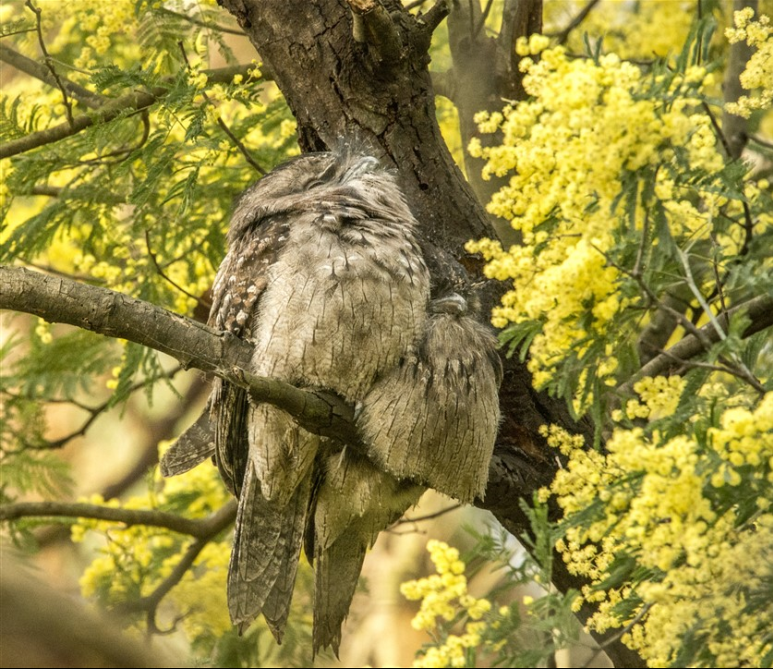
This poem, ‘Sunny country‘, which seems to neatly describe our park, is/was often recited on Wattle Day:
I dreamed of a sunny country last night, a golden dream
Of wattles down the gully, and of gum trees by the stream;
Of dancing haze and sides of blue, no other land can show
Save this, our sunny country, where the golden wattles grow.
Will H. Ogilvie (1869–1963)
We can only speculate as to whether the poem counterpointed the “Sunburnt County” of My Country by Dorothea Mackellar (1885-1968) – or the other way around – both poems being roughly contemporary (early 1900s).
Our Noticeboard Display
As is the tradition at this time of year, the Blackburn Creeklands’ noticeboard display features actual sprigs of most of the flowering wattles we have in our park – along with their common and scientific names. You’ll be surprised by the variety of foliage and flower colours /shapes.
Australia’s national floral emblem, the Golden Wattle is positioned in the top left corner. The wattle has long held a special place in the Australian psyche beginning in pre-federation times. Sprigs of wattle were sold in cities to raise money for the World War 1 war effort. Our national sporting teams proudly wear “green and gold” – the colours of the wattle.
Most on the Noticeboard are indigenous to our area – though there are also some older wattles that are not – they are Australian natives but belong elsewhere in the country – eg the Gosford Wattle pictured in the bottom left corner. There are said to be more than 1,000 species of Australian wattles, of which there are 13 in our park. Two species (Acacia mearnsii and A. implexa) do not flower until later in the year.
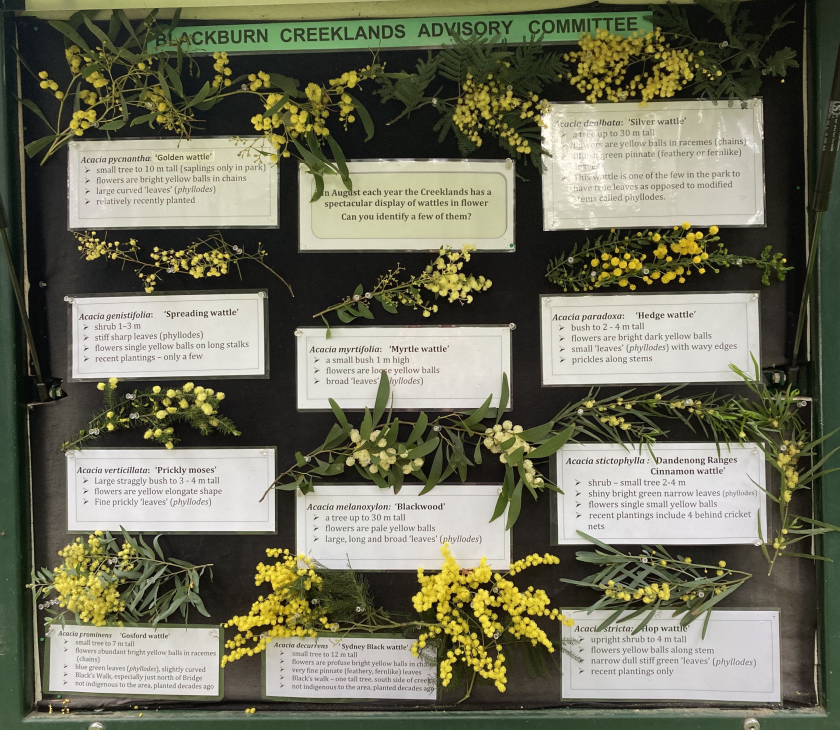
So please come and have a look on your walk and perhaps choose an Acacia tree or shrub for your garden from our indigenous nurseries. You can find our noticeboard just off Pakenham Street – close to the car park adjacent to the Blackburn Bowls Club.
It’s Nesting Time!
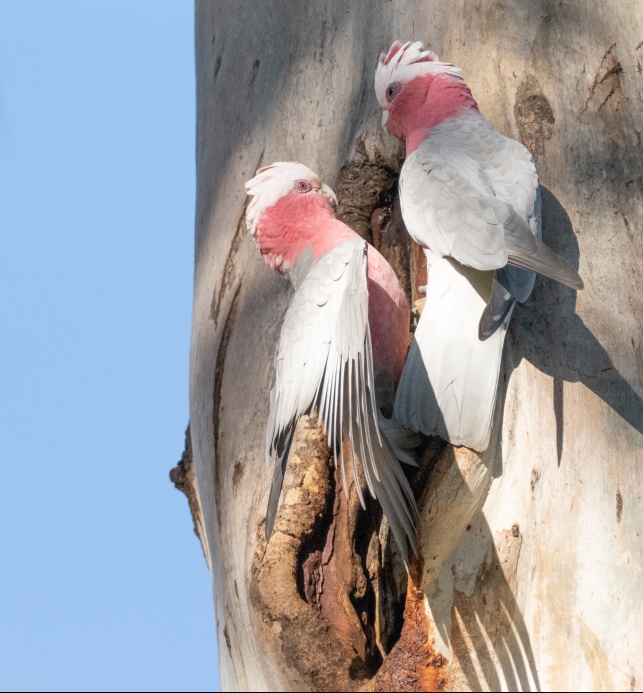
Wood ducks nest in tree hollows – along with many other species including Cockatoos, Kookaburras and Brush-tailed Possums. Lindy provided the following shots from a recent bird survey in the park. In her words:
As you can see it was a busy day in the real estate market.
Some may have been tyre kickers but others seemed to be looking closely at renovation possibilities. One couple seemed to have jumped the gun and were intent on providing eggs to decorate their new home.
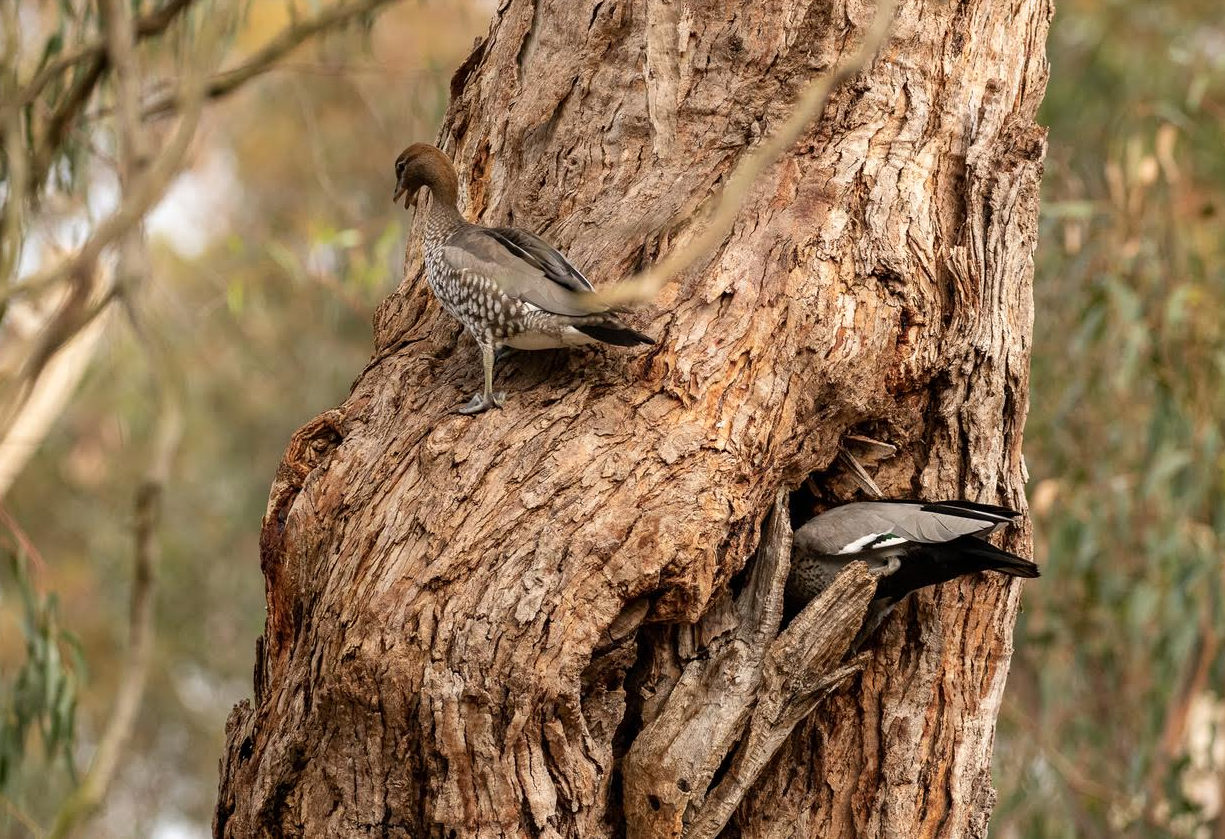
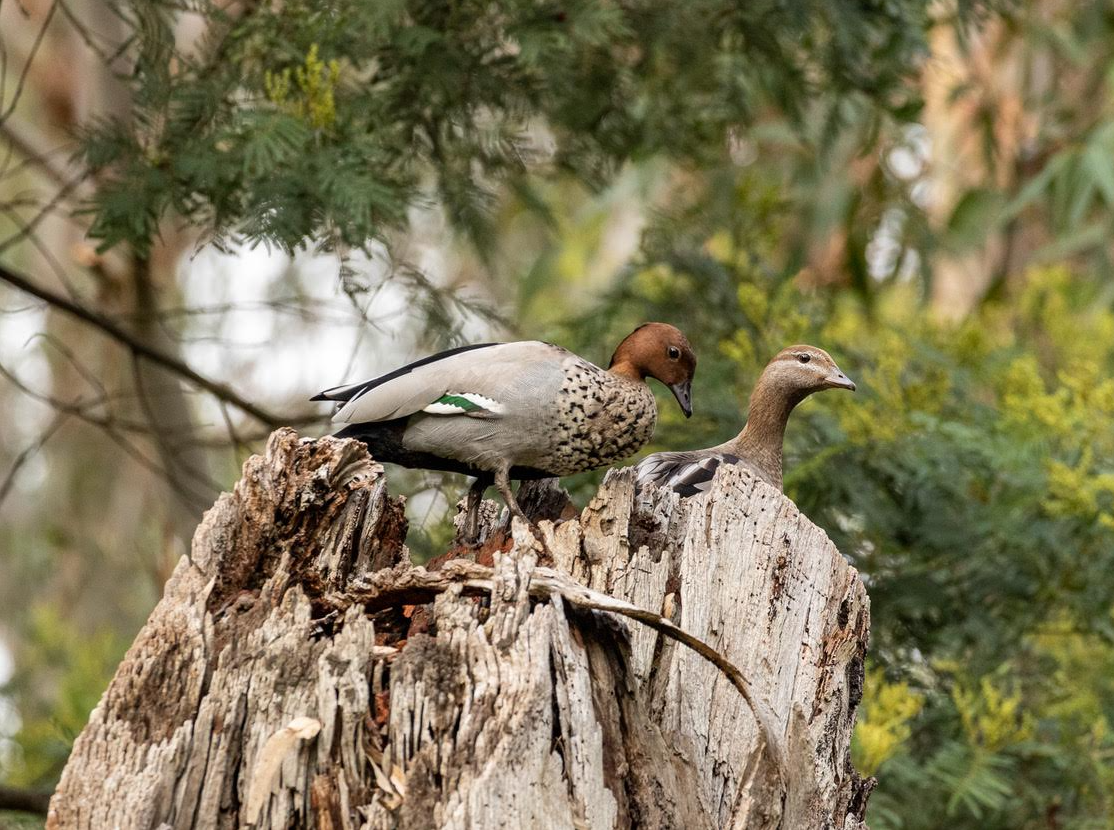
There tends to be a scarcity of tree hollows in our park. As the number of old remnant trees decline, so (critically) do tree hollows. As a rough guide, a Eucalypt needs to be at least 50 years old before useful hollows develop naturally. It is also the reason dead trees are retained while still standing safely in the park – they continue to provide habitat long after the life of the tree itself is over.
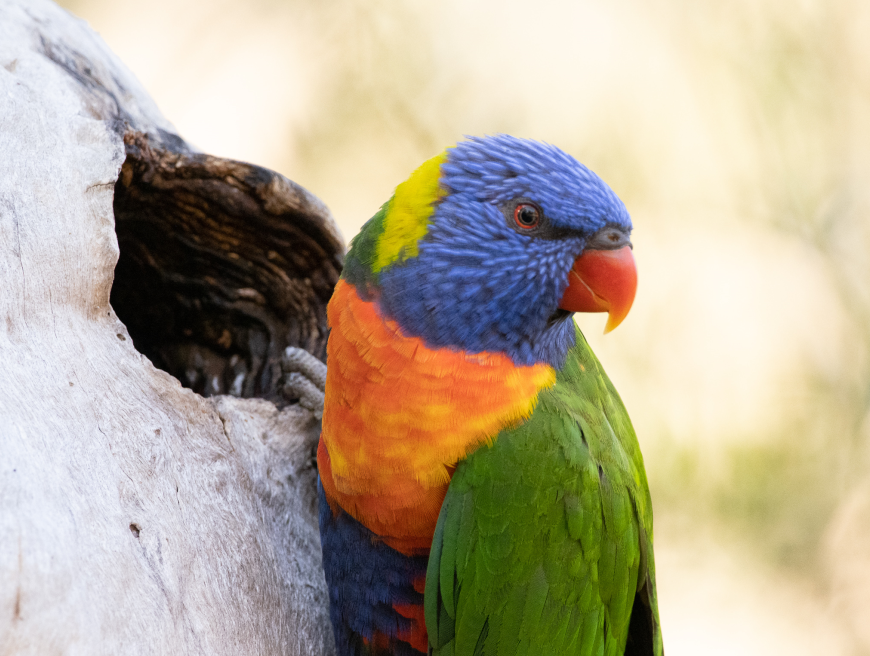
Because these trees take so long to mature, it is important we continually plant so there are new trees in development ready to take over as our veterans decline. In some places (which may soon include our park) where there are insufficient natural tree hollows, artificial “hollows” are cut with chain-saws to assist wildlife in gaining a foothold (or beakhold!).
The following interesting interaction shows what happens when a Kookaburra evaluates a tree hollow – that just happens to hold a resident possum:
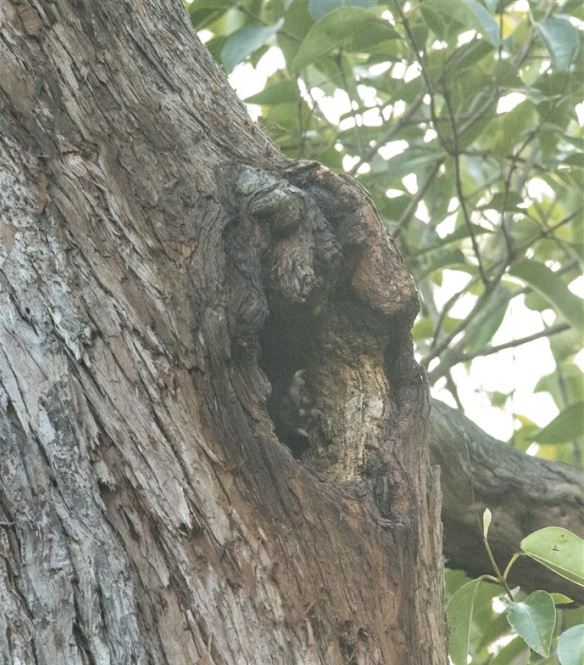

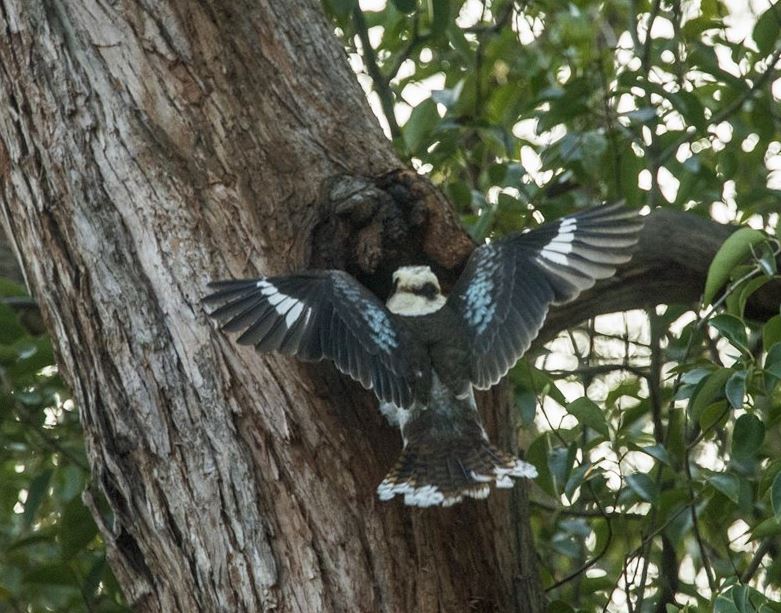
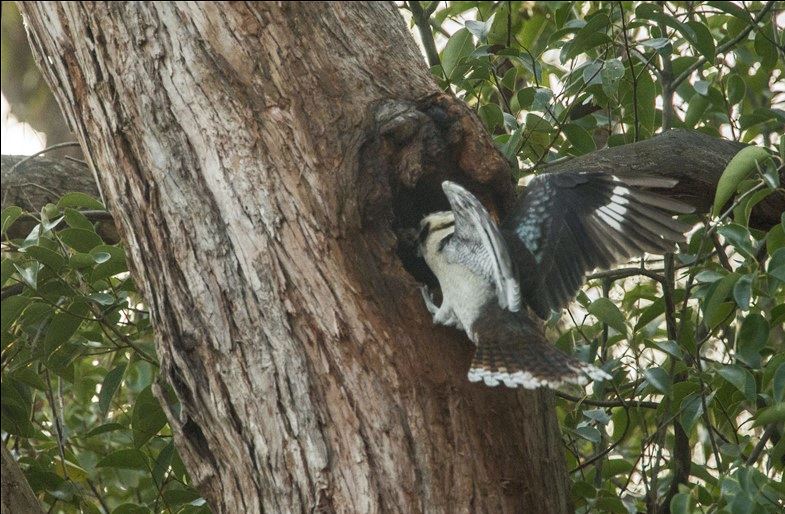
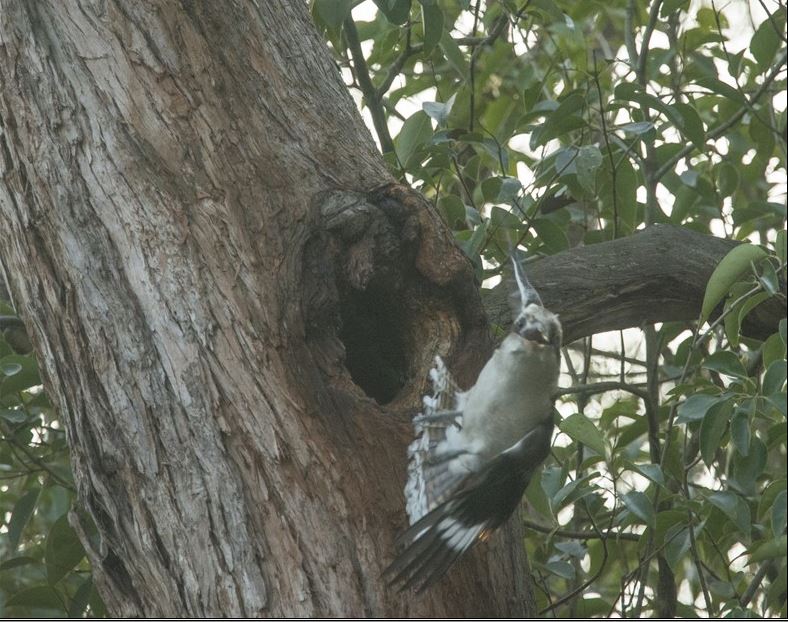
It seems this was (eventually) a case of repossession in Naughton Grove. Kookaburras have nested in this front garden tree hollow before and seem to have since successfully moved the Brush-tailed Possum on. A pair of Kookaburras has since been spotted near the hollow with one going right into it.
This tree might be a bit of an apartment complex – it is also a Tawny Frogmouth nest tree with new nesting material having been put up onto the same branch platform site as last year’s nest. It remains to be seen whether the Kookaburras taking up residence will affect the Tawnies nesting higher up in the same tree…
Gang-gangs
Gang-gang Cockatoos also nest in tree hollows – but we don’t have records of them nesting in the park (yet!). One of our keen observers found Gang-gang Cockatoos in the Corridor just north of our Creeklands. It seems that they are feeding on psyllids/lerps on the gum leaves. In her words:
There were possibly 2 family groups as there were 7 of them including two adult males. One of the adult males was feeding an adult female so now we need to look out for nesting sites!
Recent bushfires throughout the eastern seaboard of the country have wiped out a lot of Gang-gang habitat – leaving the species endangered. We suspect this might make the Creeklands more attractive to the species for breeding – rather than just a place to visit.
Gang-gangs become very active around hollows they are examining as possible nest sites in the weeks before egg-laying commences in Spring. At this time, they are easy to spot – often being quite noisy, socialising with their “creaky door” calls and defending their new homes from competitive take-overs. Once eggs have been laid, Gang-gangs become very quiet around their hollows and therefore much more difficult to locate.
Community Working Bee – Sunday 28th August
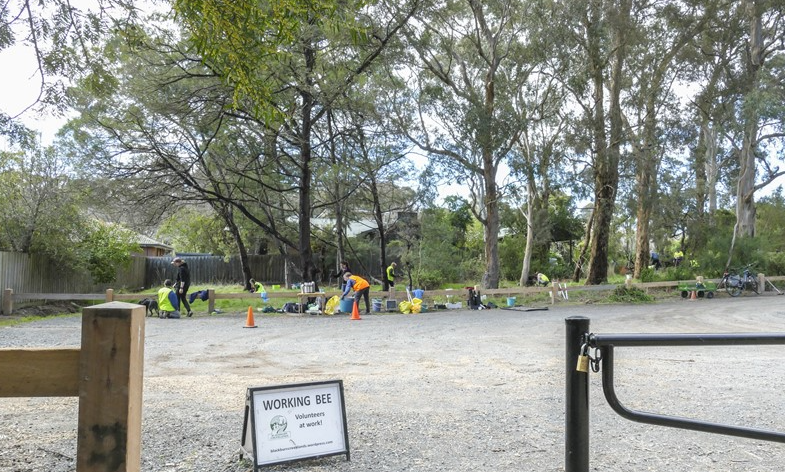
Our Community Working Bee on Sunday 28th August was a great success on one of the warmer days of the month. We were pleased to work alongside some of our old Friends as well as welcoming some new ones. About 270 plants went into the ground and most of the remaining weeds were removed.
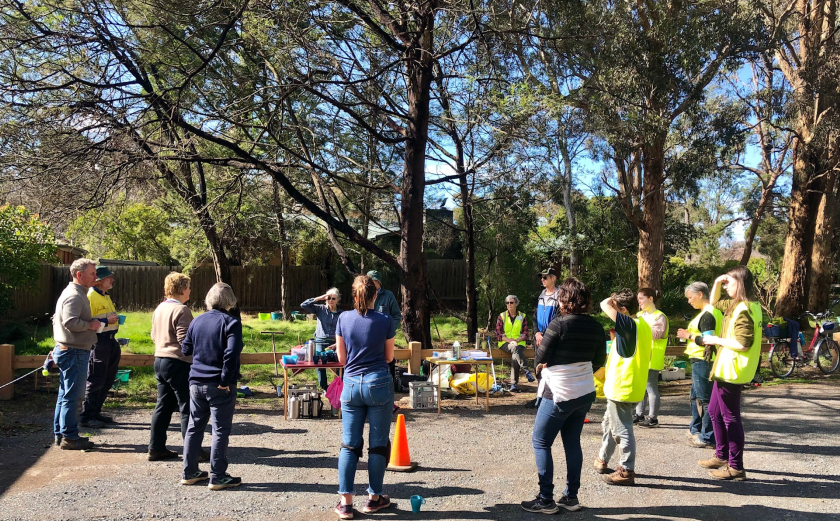
While we are saying “thanks”, the event itself was conducted as a National Tree Day event which covers our registered participants for Public Liability and Personal Accident insurance. We thank Planet Ark for putting those facilities in place to help protect our volunteers. We thank everyone who participated and are also very grateful to Dympna, our neighbouring friend, who donated water for the plants (creek water being a fair distance away) and to Evelyn who assisted with serving morning tea.
On the subject of volunteer insurance, we’ve had an informal meeting early in the month with Council Officers on the way forward for our group which provides insurance cover for our regular volunteers without deterring casual volunteers. We think they’ve developed a good plan – though it requires Council to put more resources into first aid training and so forth. We hope to have further news next month.
Litter Collection
Another part of the event was that a small group (Mark, Anthea and Sarah) went litter collecting along the adjacent streamline. Here’s what they collected in record time – a computer monitor, recyclables and assorted rubbish:
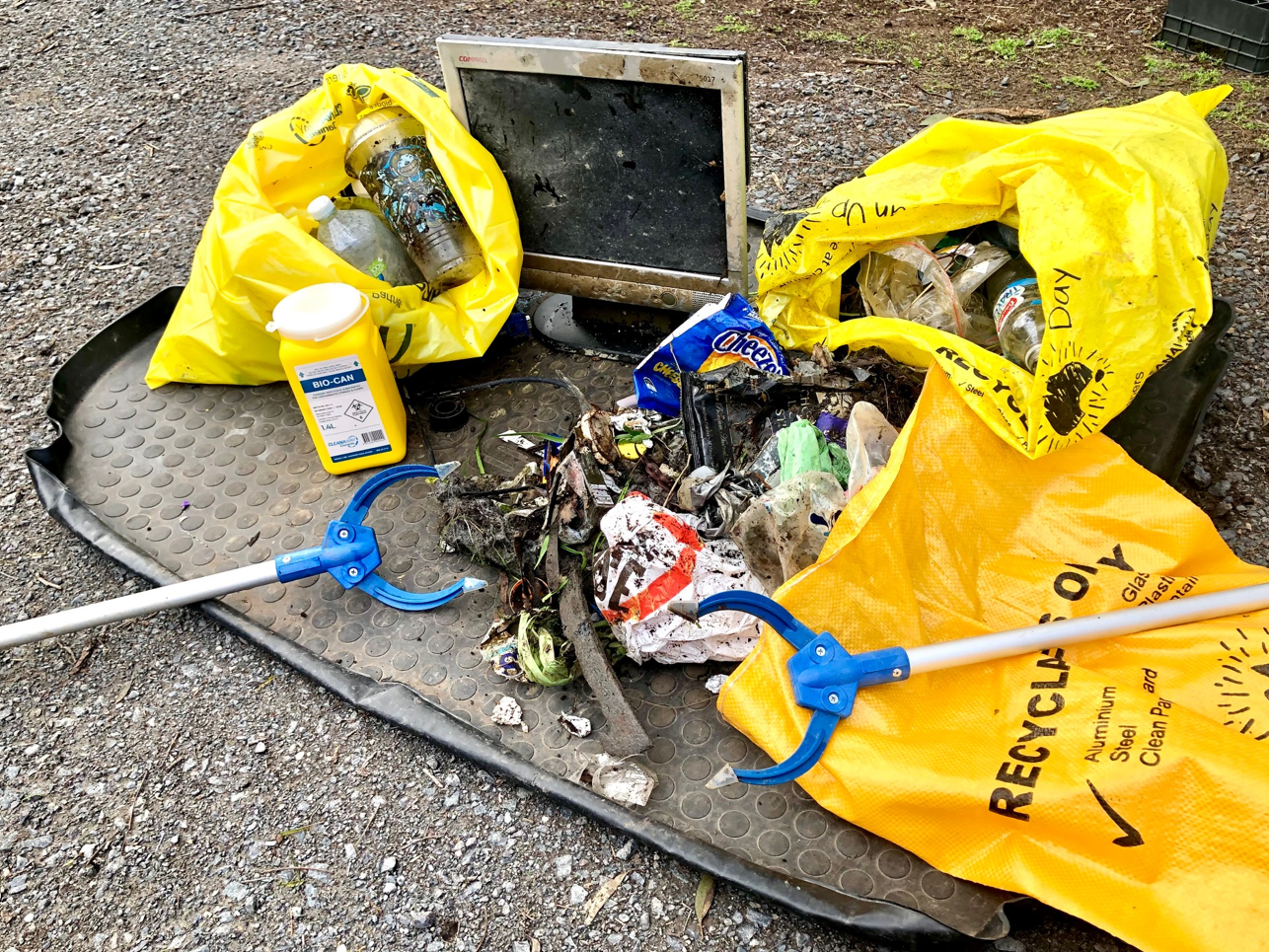
Actually, we shouldn’t joke about electronics being dumped in the creek. There’s no excuse for that – you shouldn’t put it in your bin, but any e-waste (computers, mobile phones, old electrical appliances etc – basically anything with a plug, cord or battery) can be left at the tip for free! Electronic devices can contain hazardous materials including heavy metal pollutants (including lead, mercury and cadmium), CFCs and flame retardants. Definitely not chemicals we want leaching into the environment – our creek, then the Yarra, the bay and the ocean! They can also contain valuable metals including copper, silver and gold – all well worth recovering.
Next Community Working Bee
We’re planning our final community working bee for the year on Sunday, 25th September. This is likely to be at another patch in Blacks Walk. Please watch out for further updates closer to the event.
Thursday Maintenance Team
The weather wasn’t quite as good at the last Thursday working bee at the “no mow” patch in Furness Park.
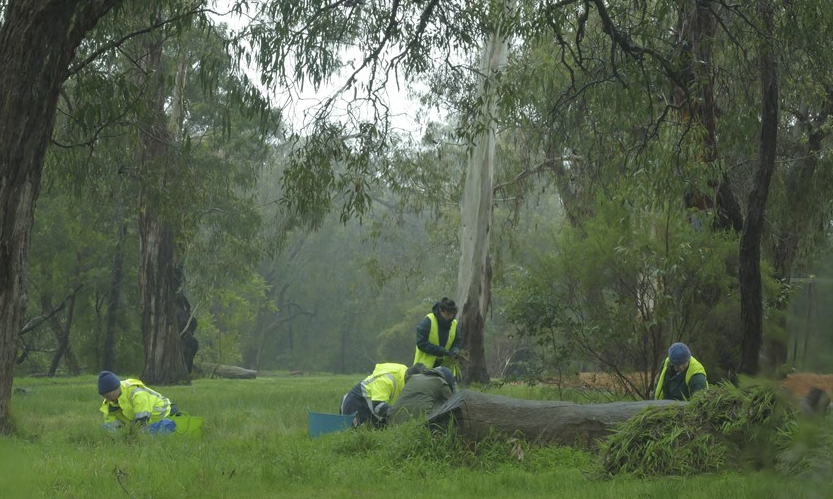
The cold, light rain ended an incredible run of dry Thursday mornings throughout our otherwise wet winter. The work there was very fine level weeding – trying to correct a year or two’s neglect during the Covid lockdowns. The team is hoping that the head start given to the good grasses and lilies there will enable them to out-pace the return of the weeds when spring’s warmer weather arrives.
Prior to that event, the team spent four enjoyable Thursdays doing site preparation (mostly weeding) ahead of the Community Working Bee at the Garie Street site described in our prior article.
Defibrillator

Our Committee has decided to purchase a ~$2,000 portable defibrillator using a $1,000 equipment grant from Council with the balance coming from a grant from our great friends at the Greenlink indigenous nursery. The defibrillator will beef up our first-aid capability in the field – to help protect our volunteers and others.
Committee also committed to fund on-going CPR/AED training for our team leaders and AED equipment maintenance costs going forwards.
We thank Council and Greenlink for their generosity in making this initiative possible.
Council has also donated a small tipping hand-cart suitable for carrying tools, mulch etc on site.
Council Works
Blacks Walk North – Paths Reconstruction
Council plans to refurbish paths in the Blacks Walk area north of the creek. This project will include improving access to the refurbished children’s playground from Garie Street. Concrete paths will stop at the entrance to the park. Internal park paths will continue to be gravel – using the reddish Castella topping. Paths to Derby Street will also be included.
Tree Maintenance Works
An extensive program of tree removals and pruning has recently been completed in the park. Hazardous trees are assessed by Council arborists and removed if potentially dangerous. Trees in about twelve locations were removed. Many were Acacias (Wattles) which were either dead or nearing end-of-life. Problematic limbs were also removed in the process.
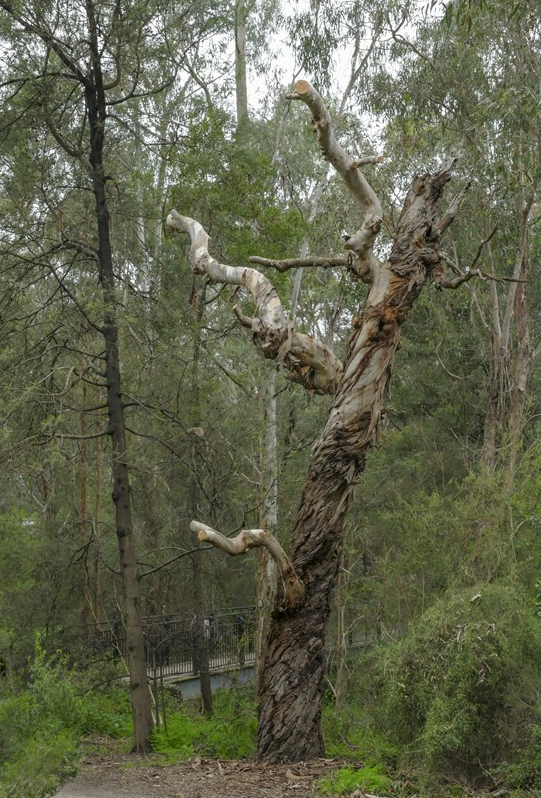
Committee continues to be disappointed that very few trunks were left in situ for habitat purposes, which is Council’s policy. Part of the problem has been miscommunication to the crews in the field. However, Council notes that logs are not left at sites where there are already a sufficient number of logs nearby.
The numbers of trees affected in this round of removals/pruning reflect that the work has not been done for several years – presumably due to Covid-related interruptions.
Possum Collars
For the first time we can remember, Council arborists have recommended possum guards on trees they believe are being over-grazed by possums:
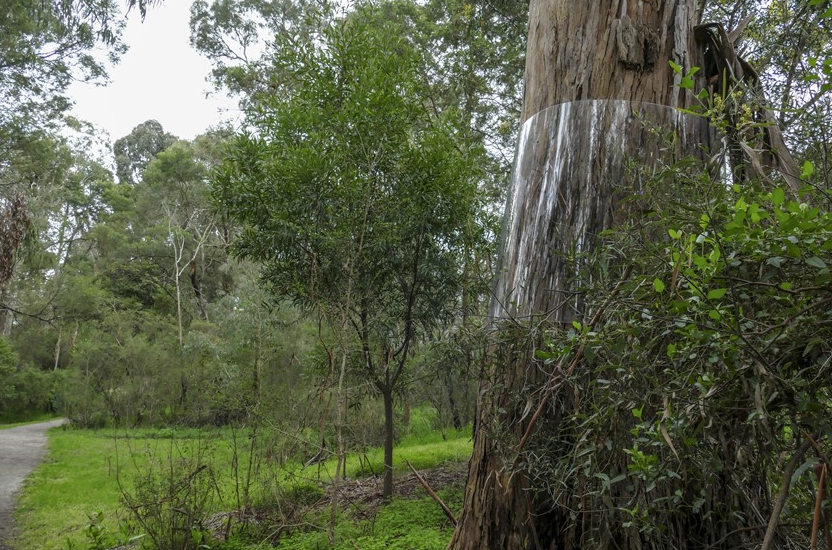
Former Guide Hall site plantings
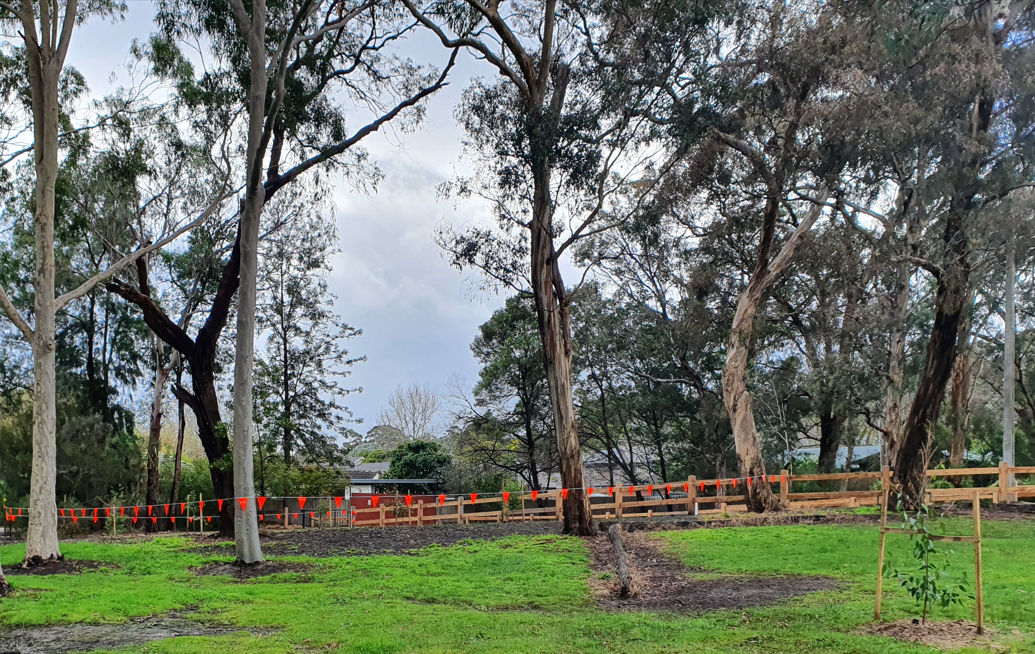
The former Guide Hall site has been planted up with advanced Eucalypts and protected by hi-vis bunting where open to incursions. It does not appear that the plan to sow native grass seed there has been enacted – possibly too cool just yet (not to mention the danger of the seed being washed away!).
Sightings
Here are some more shots from the monthly bird survey provided by Lindy:
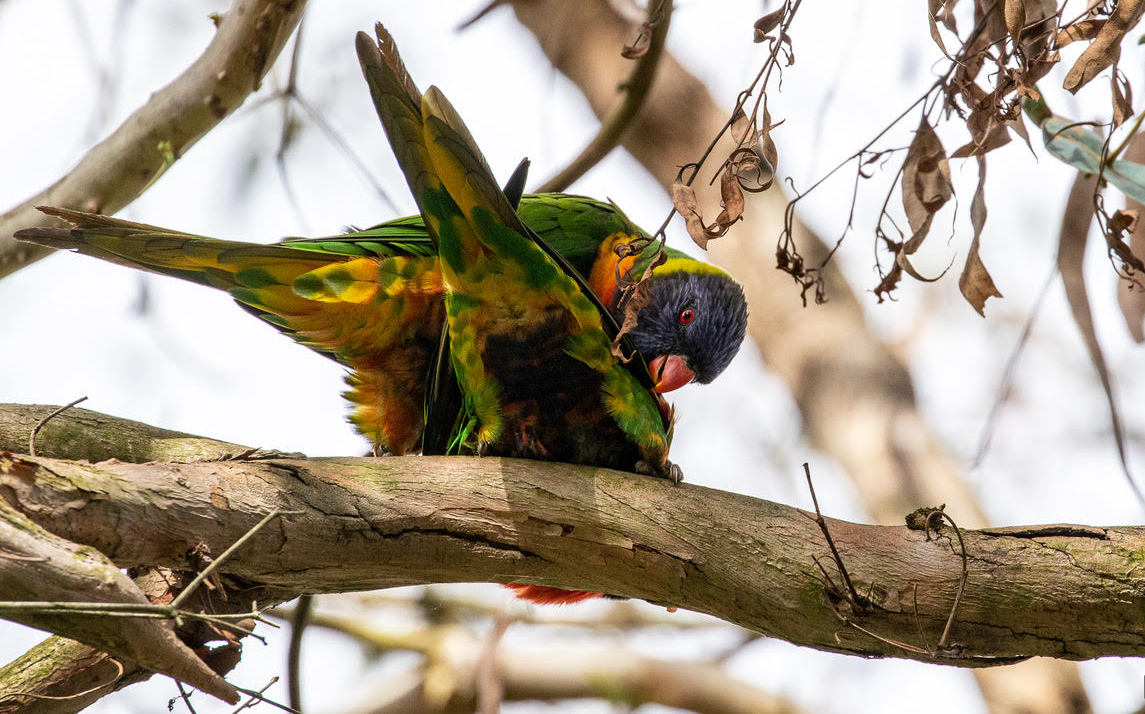
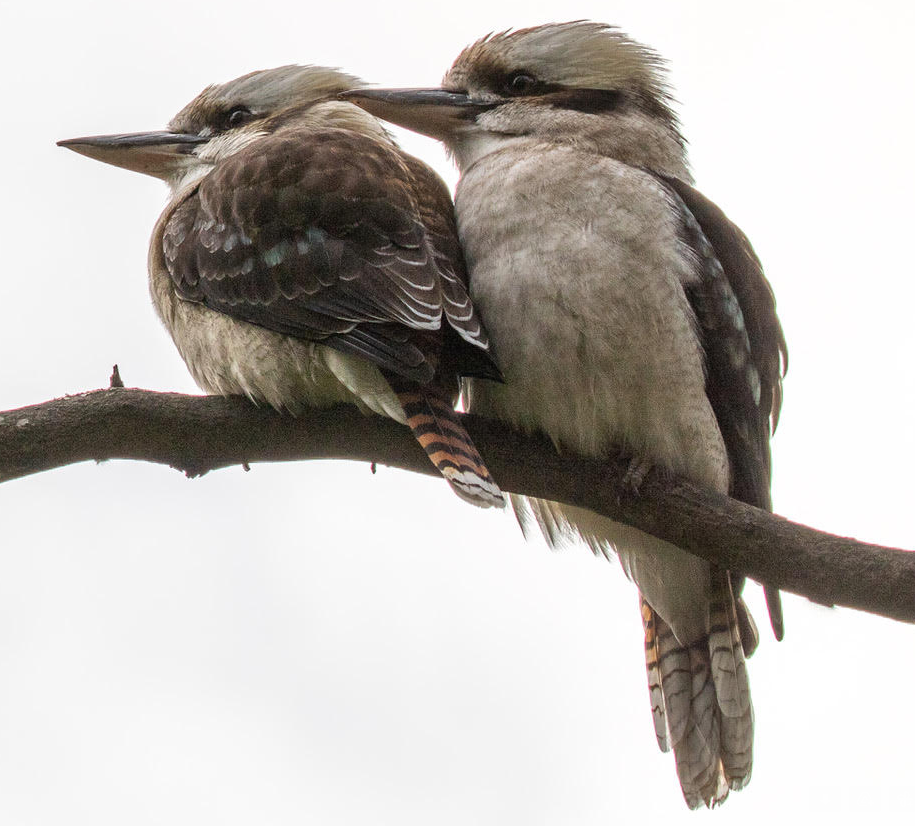
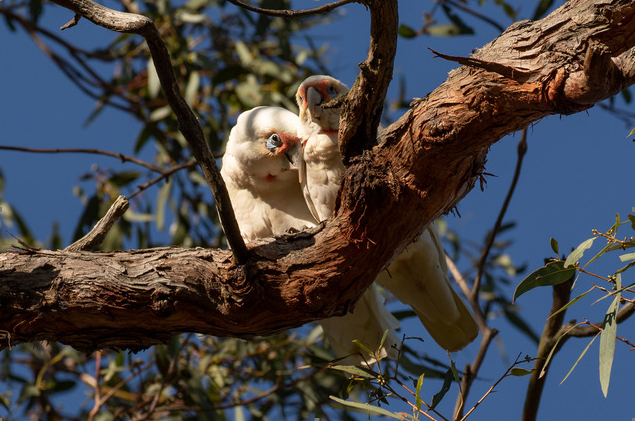
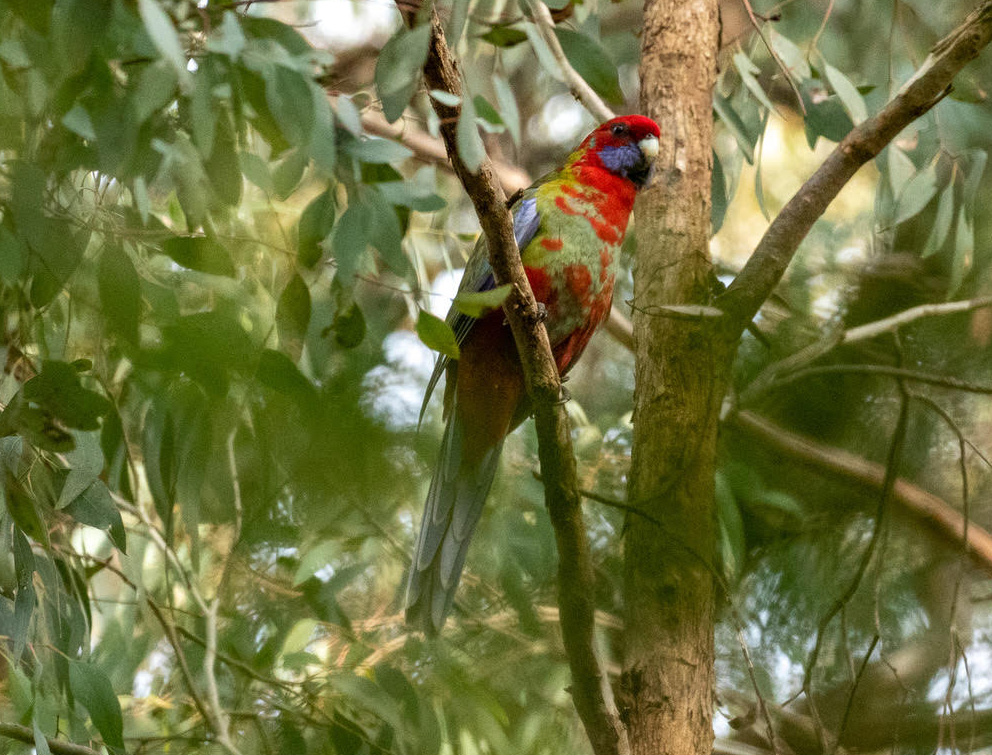
Here are some other photos people have sent in this month :
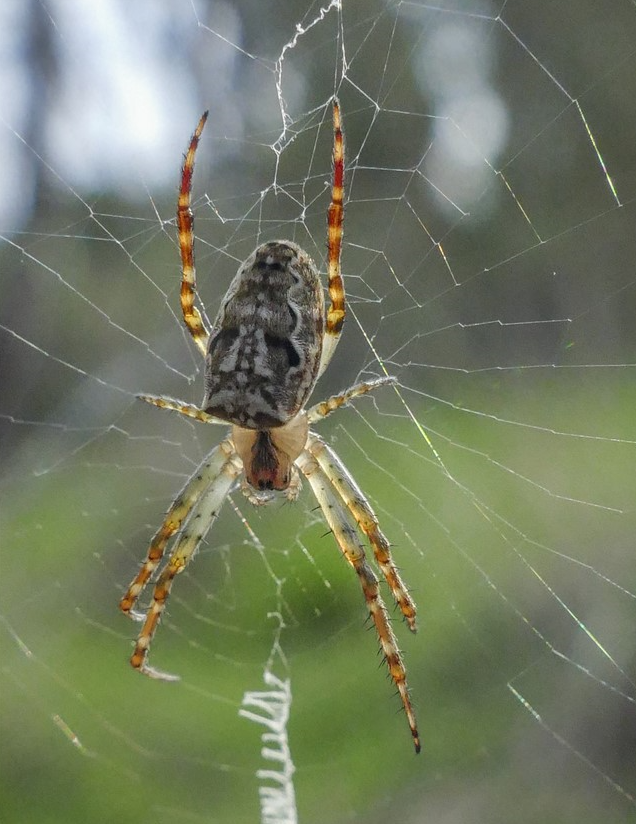
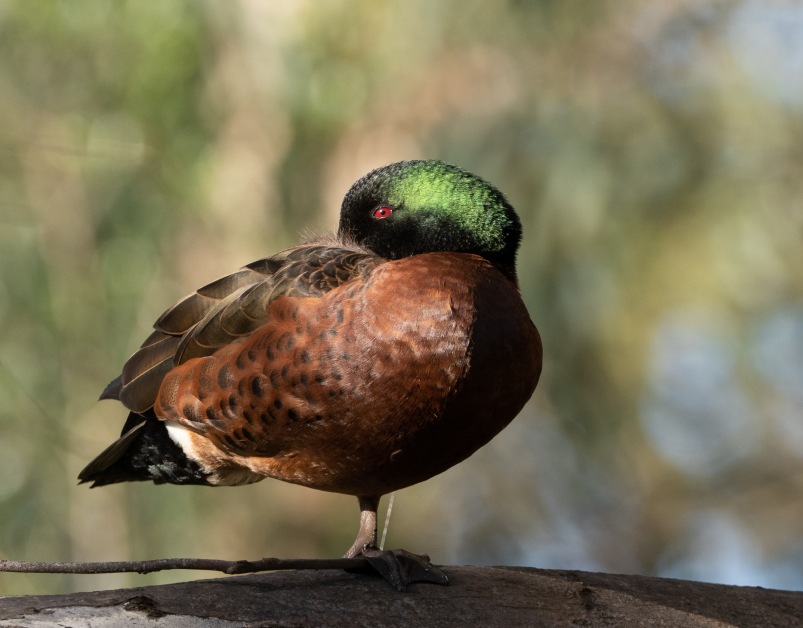
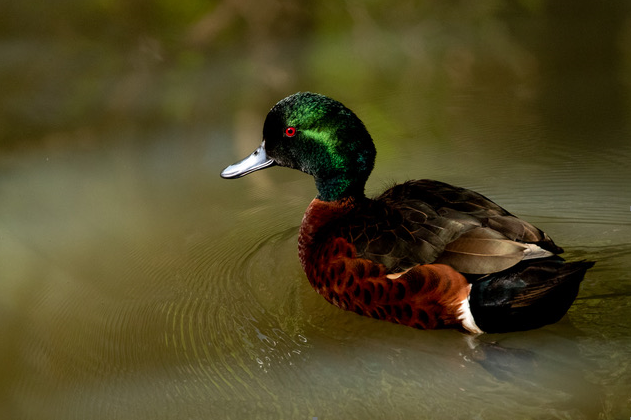
This is what he (male, Chestnut Teal duck) looks like swimming:
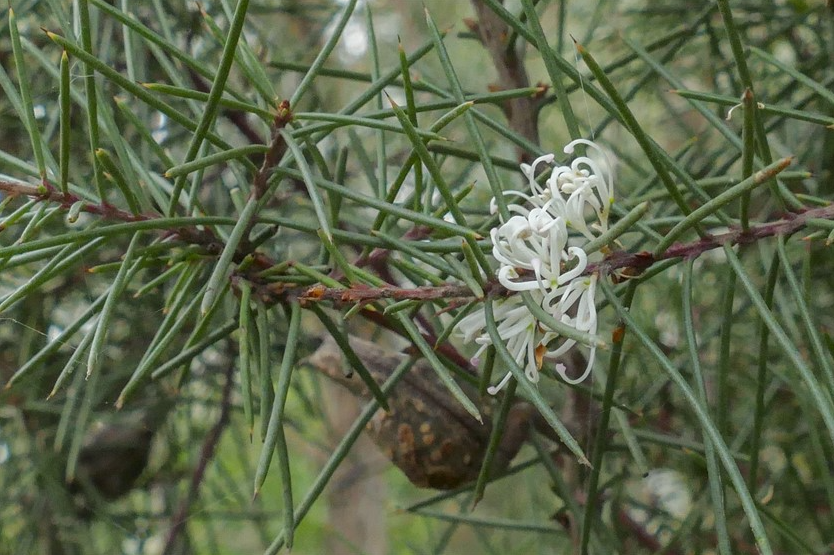
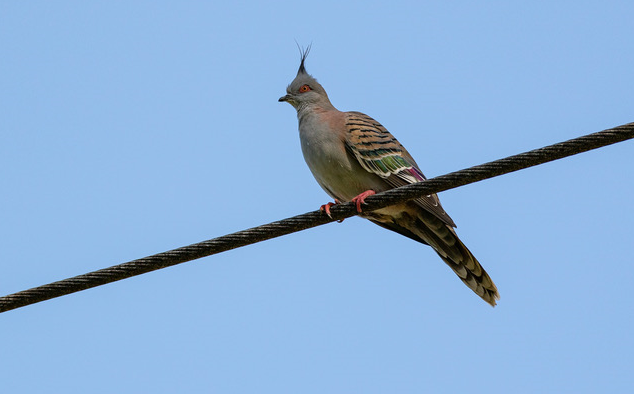
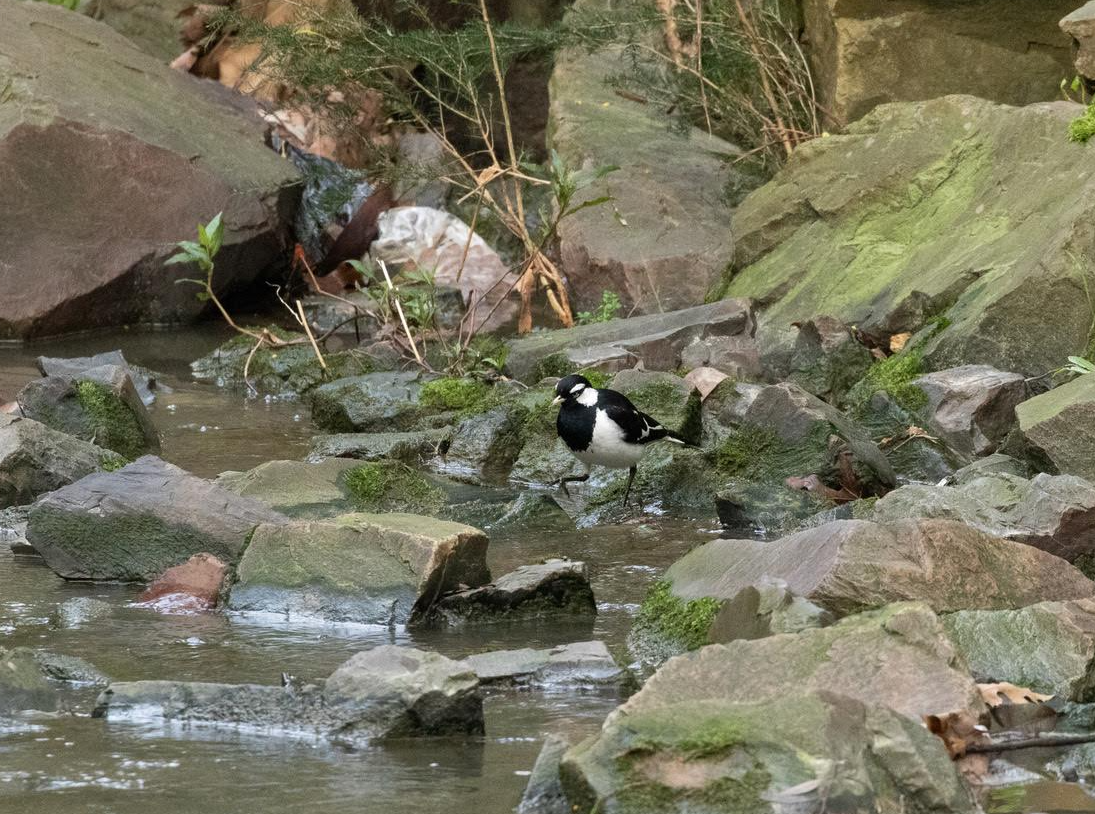
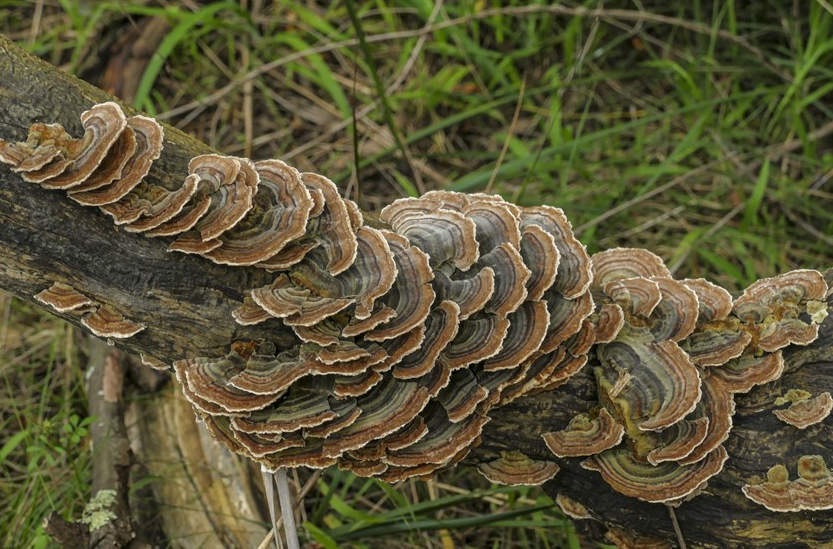
We’ve put some of those photos into the light-box to let you see them better:
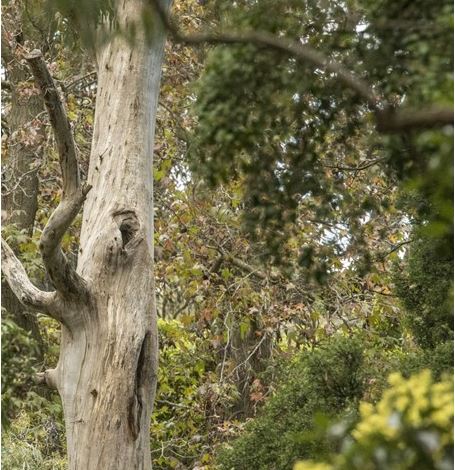
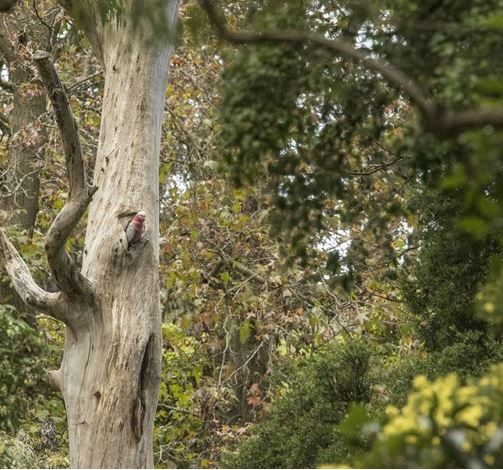
Who nests in this stag in the Corridor in Linum Street? (please move the slider to find out)
Other sightings
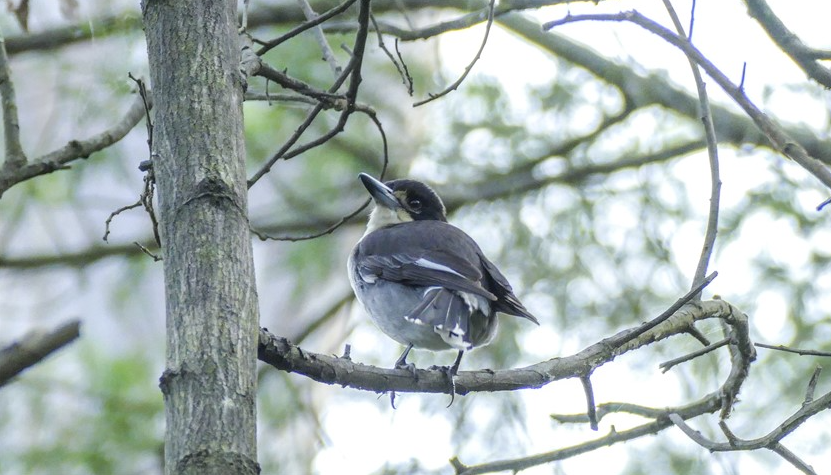
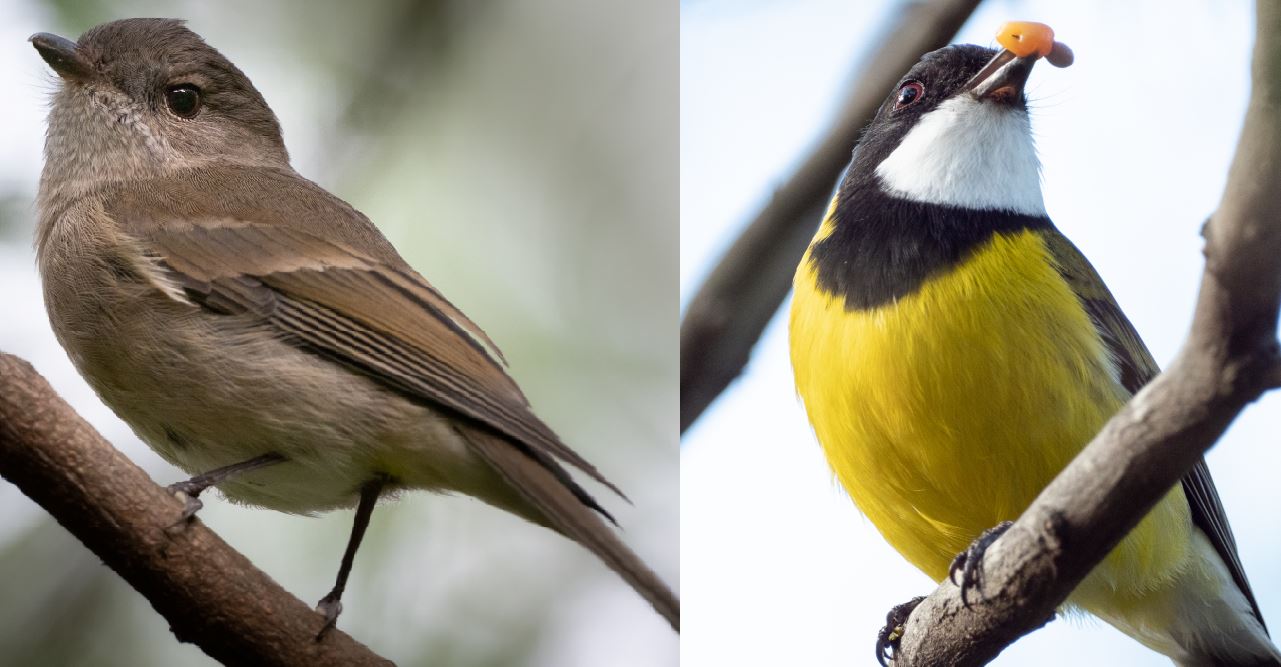
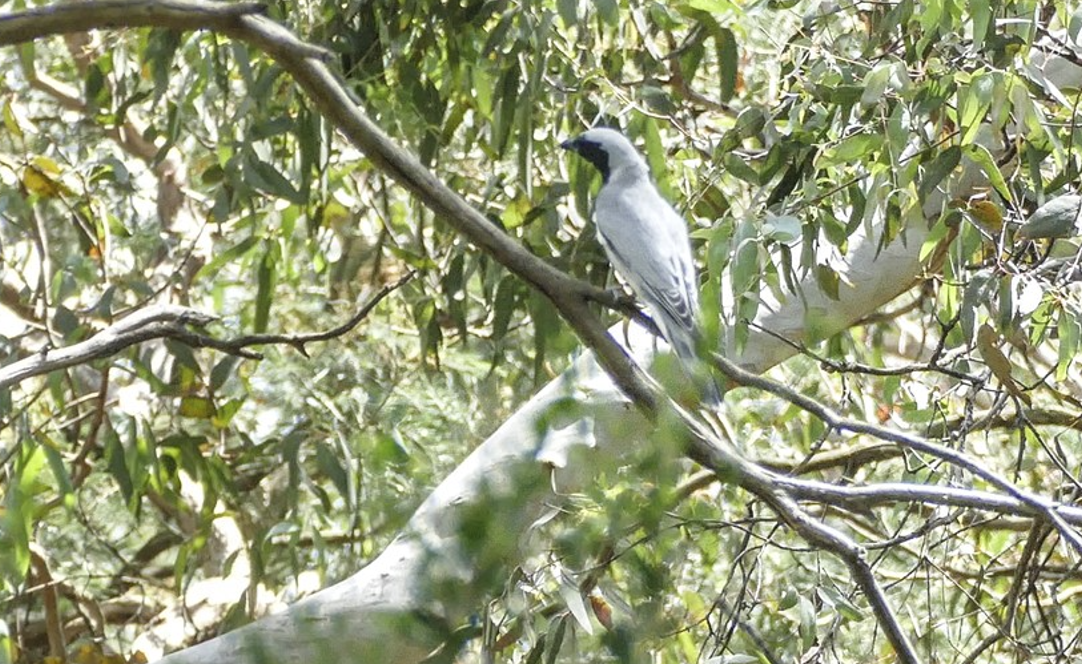
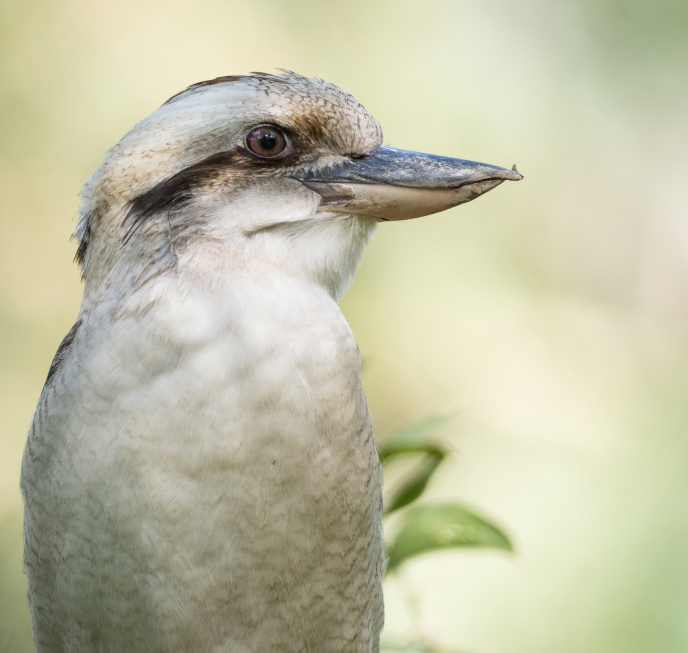
Friends Greg and Barb sighted a Black-faced Cuckoo-shrike in Blacks Walk and a female [mostly grey/brown] Golden Whistler has been sighted in Furness Park. Only the male Golden Whistler is actually “golden”. We don’t have photos of the sightings, so here are a couple of old shots to help you identify them:
Weed of the Month
Annual Veldt Grass (Ehrharta longiflora)
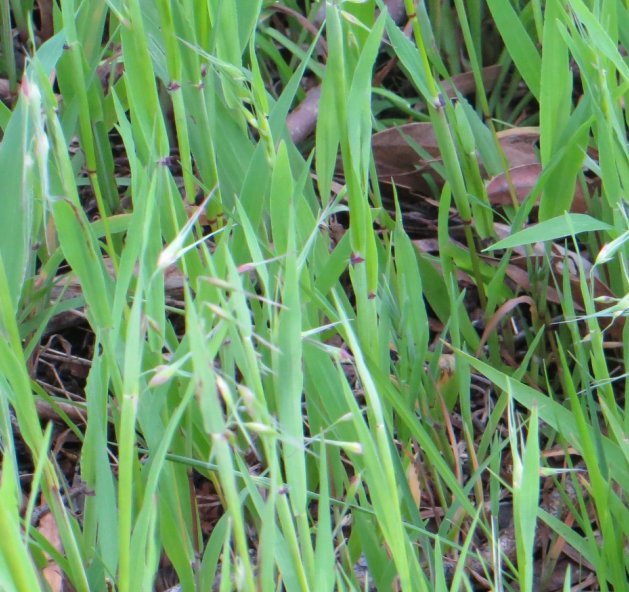
Annual Veldt Grass (Ehrharta longiflora) is one of the infamous (South African) veldt grasses that are serious environmental weeds – being very invasive and disruptive to indigenous ecosystems. This particular variety is an annual – very prolific, setting large amounts of seed. Native to Africa, it is now widespread and common particularly in coastal areas and along creek lines.
It has been a problem in the south-east corner of the “no-mow” area in Furness Park where there was some soil disruption some time ago (perhaps, a log being dragged out). The pest has now spread throughout the patch – probably due to lockdowns combined with its prolific seeding when not weeded and the current moist conditions. Our Thursday Team is keen to get it out before it seeds again.
 Blackburn Creeklands
Pingback: Park News – September, 2022 | The Blackburn Creeklands