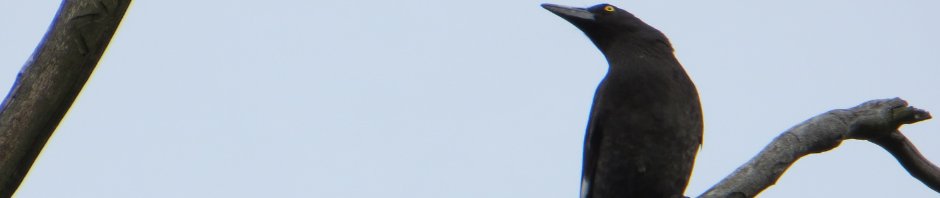
What happened to this little chick?
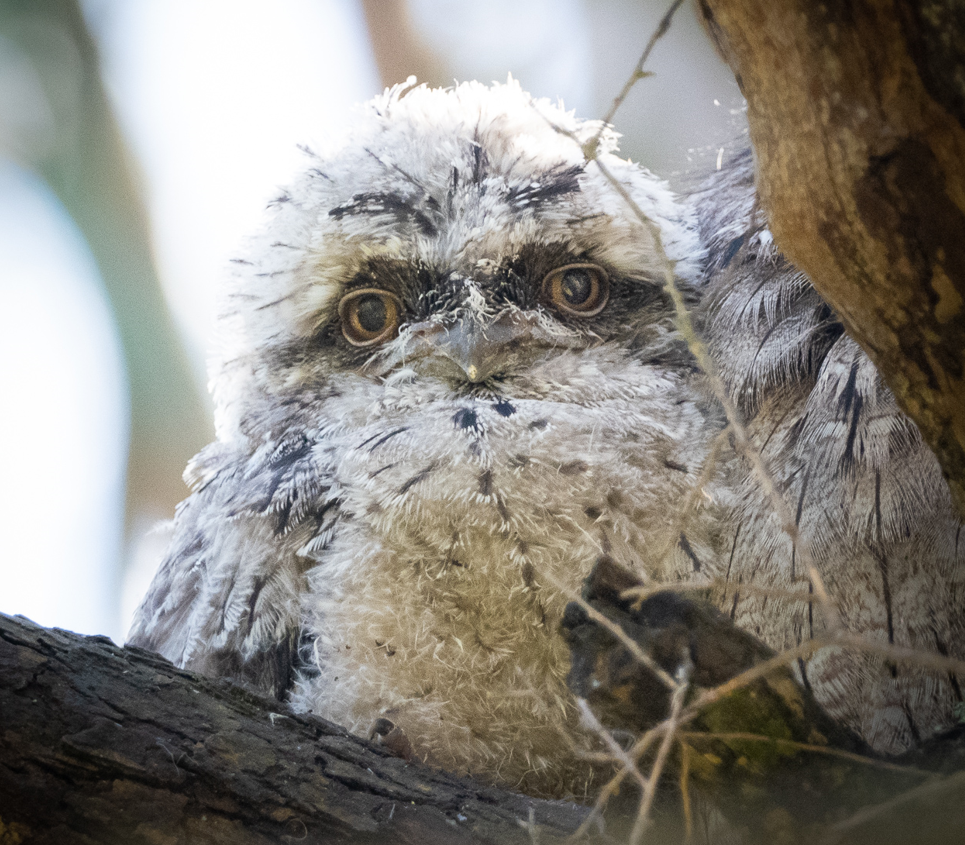
For the third year running, one hapless Tawny Frogmouth couple (Tawny Frogmouths mate for life) has had issues with a chick falling out of the nest and ending up in trouble on the ground. Two years ago, one chick was taken away by a carer for treatment of an injury before being returned to the wild in Blacks Walk after its recovery and when old enough to survive on its own.
Last year, there was the case of the “chick in a basket” where some enterprising locals rigged up a cane basket as a temporary nest so the parents could continue to care for their wayward offspring. A similar problem (and solution) occurred this year with the chick “returned’ to a wire-framed hanging basket lined with bark and similar material.
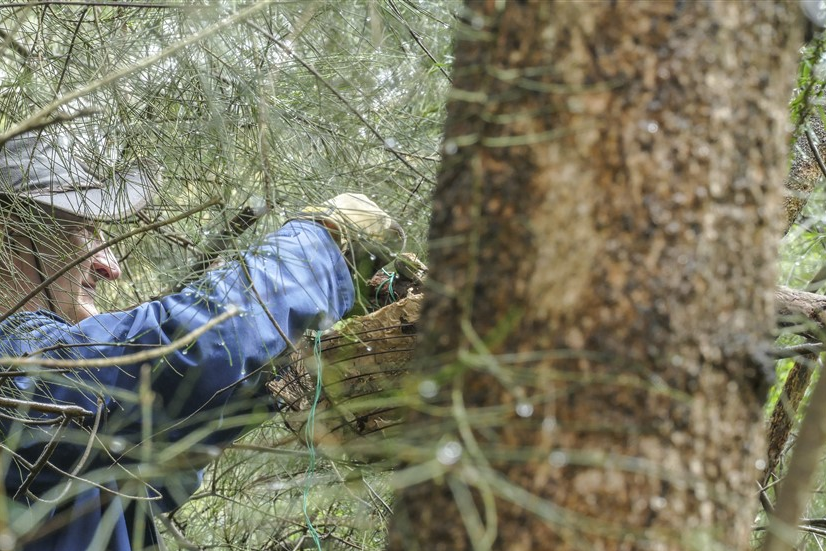
Greg, the rescuer tells the story:
I’ve never thought of myself as a wildlife rescuer, but here I am returning a pre-fledged tawny chick that had found itself on the ground to a make-shift nest. I got a call from my old friend Rohan that there was a tawny frogmouth chick on the ground. I called another friend (who is a friend to all tawnies in Blackburn!) who guided me in this exercise.
By the time we arrived, another passerby had already placed the chick on a low branch, better than the ground but not out of harm’s way. First, we made a new nest from a basket, some bark and casuarina needles. We hung the basket out of reach.
Under both mother and father tawny’s scornful gaze, I then carefully grabbed the chick and placed it in the new nest. Father tawny quickly settled down next to it, resuming his guardianship against the currawongs, kookaburras and butcherbirds in the area which would otherwise make short work of the chick. If you want to know, they are twice as soft as a plush toy and warm!
Greg 16/11/2022
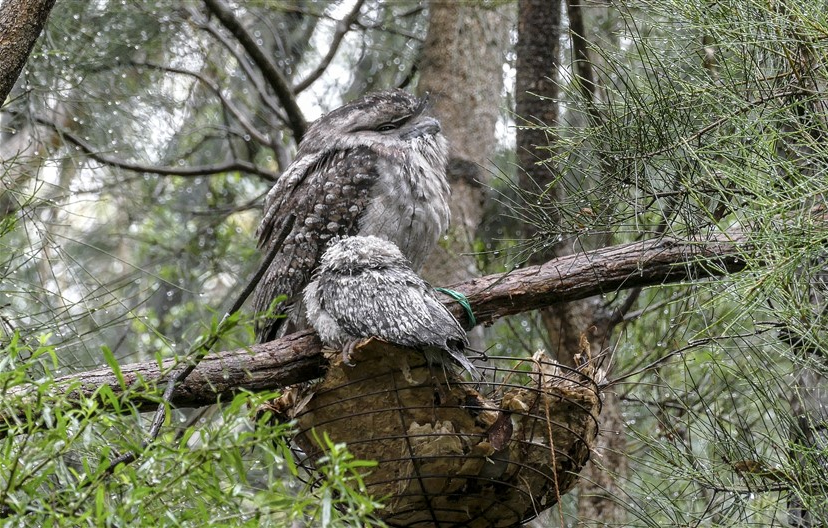
Sadly, that chick appears to have been since taken by a predator some days later.
What predator? Well the feathers found nearby were clearly bitten off so it could have been a Brushtail Possum, a domestic cat, or, if on or near the ground, a fox or dog.
Some wags have suggested that the avian parents need to take a Remedial Nest Building 101 course. Tawny Frogmouth nests don’t seem to be the most robust of structures – but, to be fair, this year’s windy and wet conditions have been extreme. Furthermore, we need to question whether there are enough suitable trees in the Creeklands for Tawny Frogmouth nest building – given there are several pairs in the park. We think we need to hedge our bets and plant more trees. All we have to do then is to wait 50 years for the trees to mature enough to provide the sought-after habitat!
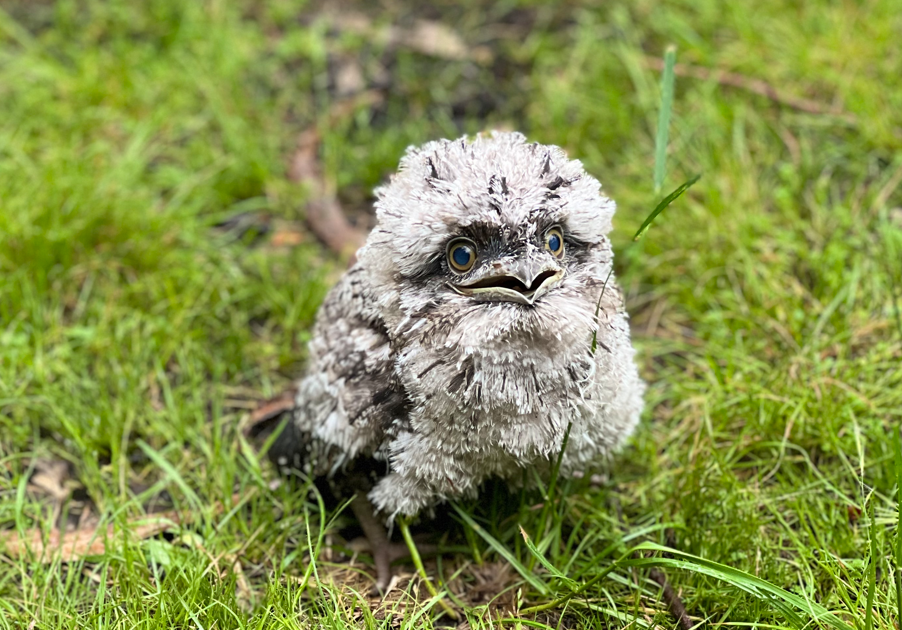
Some question the ethics of the situation. Should we be interfering – or simply let nature take its course? Others would say we do need to intervene to compensate for the damage we’ve done to their environment already.
We suspect that the cuteness and vulnerability of the creature tends to trump the ethical concerns!
Wildlife Victoria
We recommend seeking Wildlife Victoria’s advice if you find any of our wildlife in apparent trouble. Our Useful Links page contains this link: https://www.wildlifevictoria.org.au/ .
Given recent strong winds and heavy rain, several chicks have found themselves in trouble. This “flow chart” from Wildlife Victoria explains key decisions to be made when you find a chick on the ground:
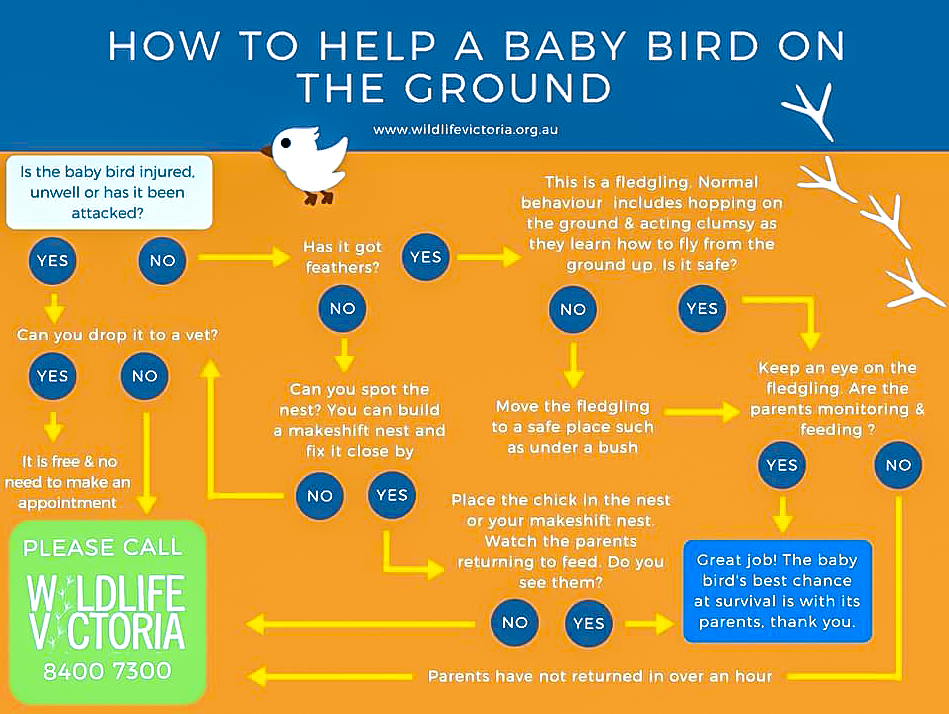
Be aware though, nocturnal birds such as our Tawny Frogmouths, generally do not feed their chicks during the day, but the parent birds should be close by to protect the chick.
New Terms of Reference

As part of the development of a revised governance regime for Park Advisory Committees, your committee has been negotiating new Terms of Reference (ToR) with Council. The Terms of Reference govern how a committee operates, its membership, how it should manage its finances, meeting rules and so forth. These are based on older versions but take into account the structural changes and insurance considerations that require change from the old regime. We’ve been doing our best to help Council officers by reviewing new versions of the ToR, trialling proposed new forms and giving feedback.
The new governance regime goes to a Council meeting on the 12th December for approval. The changes were intended to be fully in place by the end of this calendar year but, realistically, this seems to have slipped to the end of the first quarter, 2023.
Helping to Keep Our Volunteers Safe
A couple of editions ago, we reported that we intended to purchase a portable AED (Automated External Defibrillator) to help keep our volunteers safe in the park.

As part of Council’s new training regime, Council has run two first aid courses using St John Ambulance – which included AED training.
Five committee working bee leaders have now been trained. Normally, Council provides up to 4 leaders from each Committee with training – but we were fortunate to have people on stand-by in the event of students having to pull out – as happened. We have one or two more leaders to be trained, we hope there will be further opportunities in the New Year.
Given that we have trained operators, we now always carry our portable AED to working bee events.
We thank Council and the Greenlink indigenous nursery for generously providing the funds which enabled purchase of the device and Council for providing the relevant training.
Maintenance Team Report
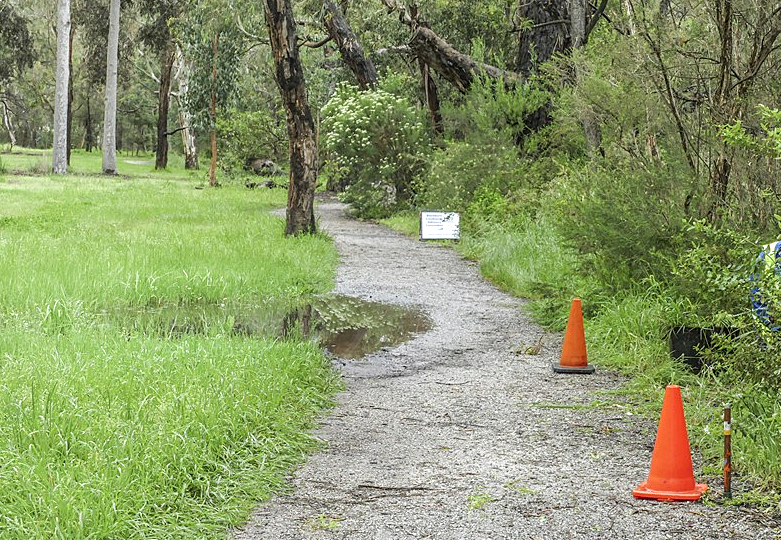
Our work in November has been focused on Blacks Walk with several sessions adjacent the Garie Street carpark and the most recent being on the south side of the creek, west of the bridge. Given the volume of weeds this year, we are trialling a more cooperative approach, sharing work with Council’s contractor. Basically, we do the time-costly hand-weeding – leaving the contractor to do the heavy lifting with herbicides to tackle bad infestations where hand-weeding is out of the question.
Numbers of volunteers vary somewhat – we had a record 14 at one event despite unfavourable weather being predicted – but have been down to 5 during the month. We still consistently average 8 or 9 people on Thursday mornings. We welcomed Kerryn from Box Hill South as a new participant in November.
Covid has reared its ugly head again – so we are careful to socially distance when working. We are fortunate that the work we enjoy is still relatively safe – being outdoors in the open air.
Our Tallest Tree

Strangely, we haven’t been overwhelmed by citizen science entrants to our Tallest Tree competition in last month’s edition – with the winner having naming rights for the tree.
The tree shown at left is not ours. In rather a nice coincidence, the ABC has run an article on a 500yo giant Blue Gum (found in a southern Tasmanian logging coupe!) called Lathamus Keep.
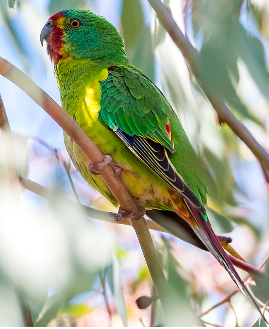
We are certain you could come up with a better name than that – though its name comes from the Blue Gums being a stronghold for the endangered Swift Parrot (Lathamus discolor). That species was occasionally seen in our park during annual migrations to the mainland. There was an unconfirmed sighting about ten years ago – no others for a long time.
Our snip from the ABC article attached shows the scale of the tree – with people climbing it circled in pink.
Please check it out the ABC article for better appreciation – it has larger scale photos which show the scale of the actual tree so well. Even more amazing is the fact that the Mountain Ash trees described in last month’s article were half as tall again!
In case our measurement technique has been the problem, here are two other ways of estimating a tree’s height:
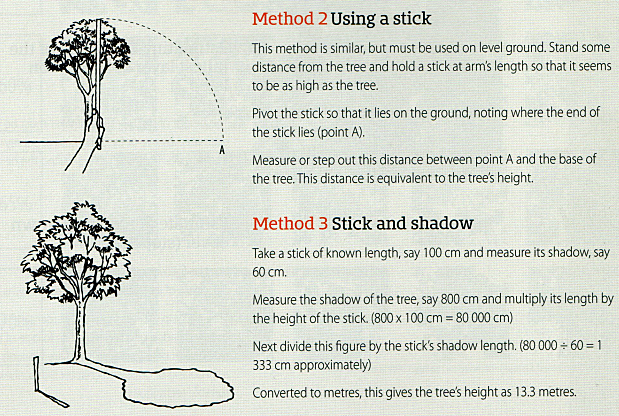
Please don’t try #2 across roads though!
New Beginnings
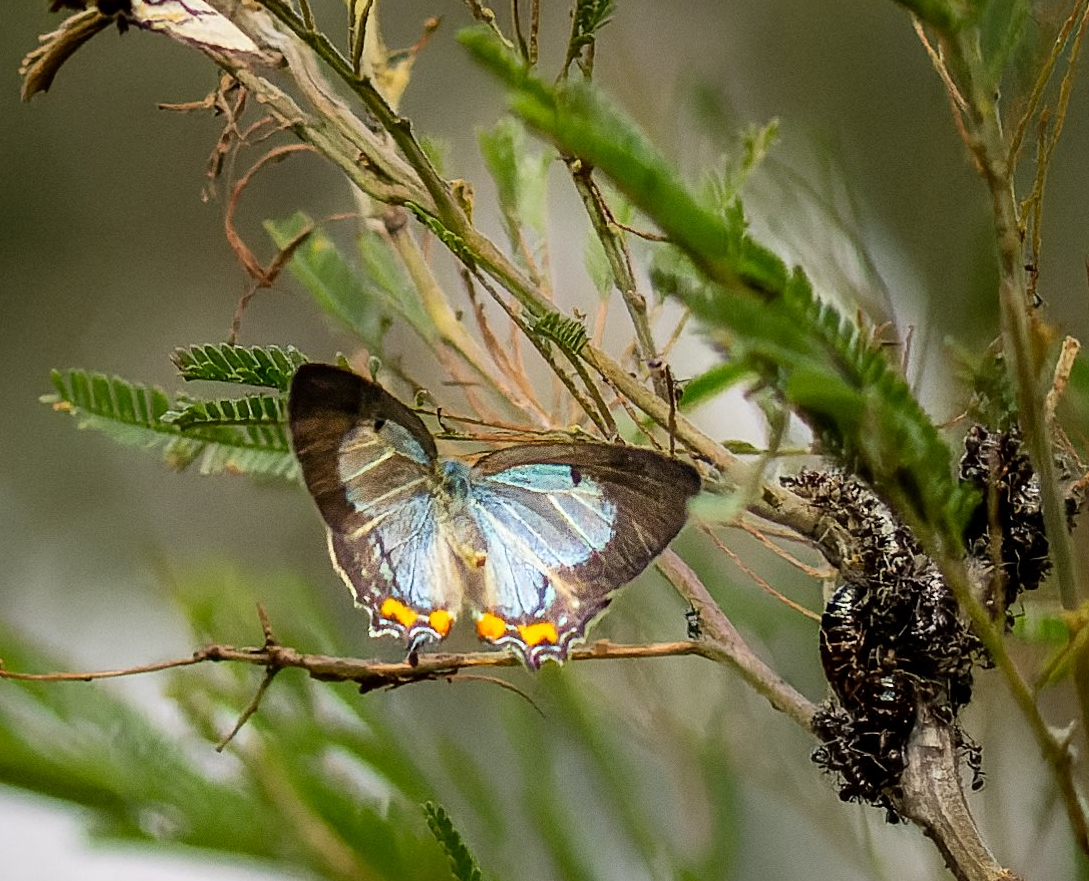
Ken has captured the metamorphosis of the Jalmenus evagoras butterfly which started recently in the park.
These beautiful butterflies have a unique association with ants. The female butterflies lay their eggs on wattle trees – but only trees that have the scent of the Tyrant Ant. When the caterpillars hatch, they call the ant by clicking hard parts of their bodies. The ants come and protect them – and, as a reward, the caterpillars secrete a sugary substance (“honeydew”) that the ants feed on. The ants stay with the pupae until the butterflies hatch and even the pupa can communicate with the ants.
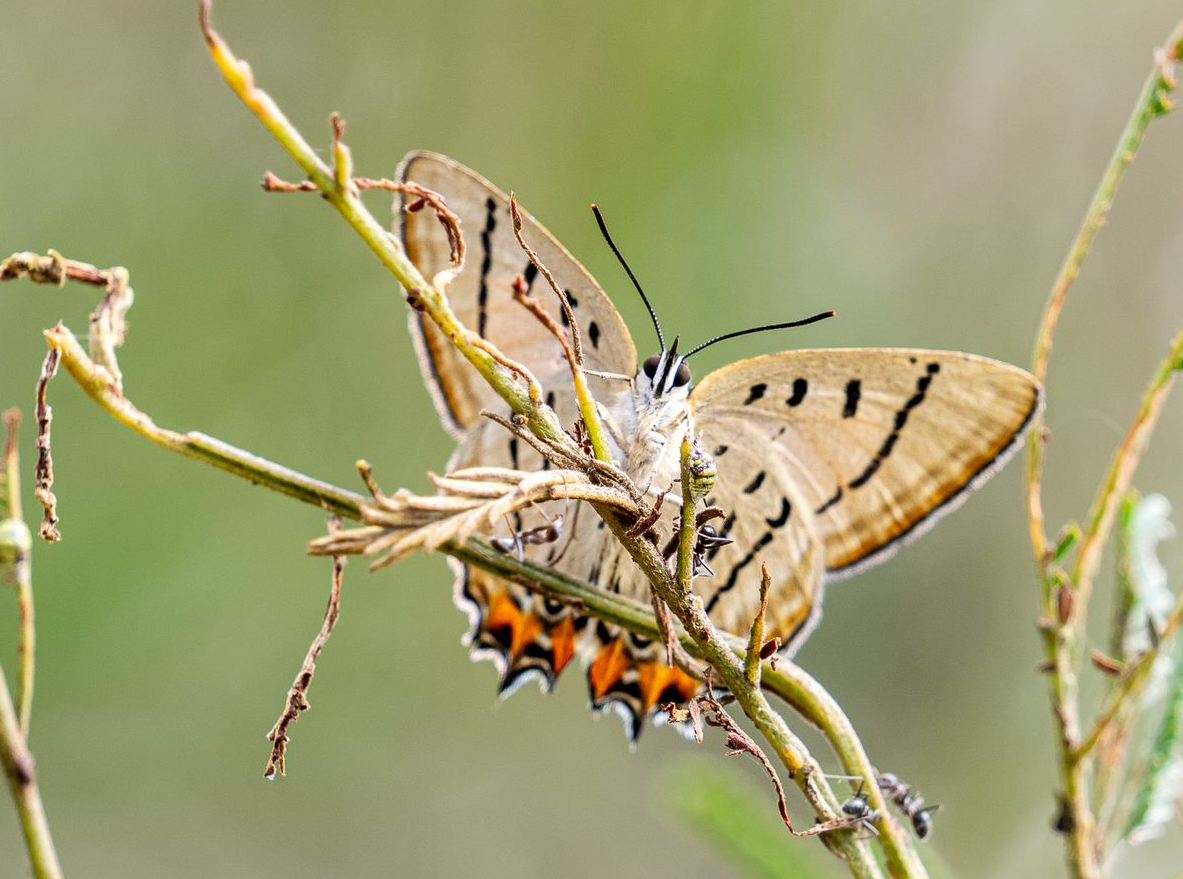
In his e-mail to us, Ken named this butterfly species the “Imperial Hairstreak” which may refer to their colouration on the underside – buff with black streaks – along with the orange on the hindwings which occurs on both sides. We know them as the “Imperial Blue” which obviously refers to the dorsal view shown in Ken’s first photo above.
In our park, they are usually found on two different varieties of wattle – the Black Wattle (Acacia mearnsii) and the Silver Wattle (A. dealbata) and often seem to prefer saplings to mature trees. Maybe the ants don’t like heights?
Another interesting fact about its lifestyle is that the species exhibits protandry. This means that the males emerge before the females. The male butterflies then wait around the pupae for the females to hatch so they can mate immediately – not wasting any time in preserving the species!
Hatching of the butterflies is usually initiated by a spell of hot weather with the season running from October to March. This year’s commencement of hatching has been rather late – probably due to the La Niña cool conditions prevailing through most of Spring.
Council Works
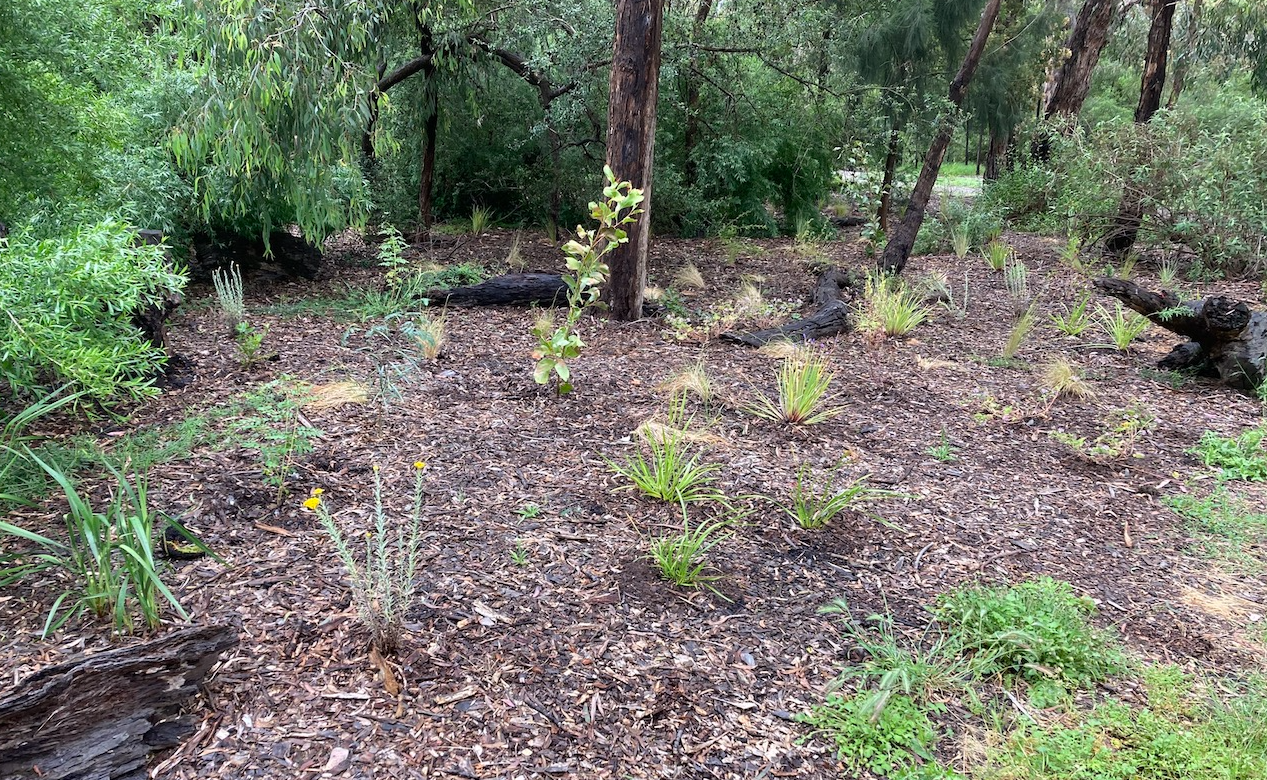
Council and contractors have done a nice of job of planting up a small area near the new Garie Street children’s playground.
Council sowed the former Guide Hall site with native Weeping Grass (Microlaena stipoides). The grass is coming up now – inside the orange flag bunting.
Along the Corridor
Sightings
It has been reported to us that, once again, there has been poor nesting outcomes for the Tawny Frogmouths in the Blackburn Creeklands this season. Predators, cars and weather conditions all seem to be contributing to the lack of success. This movie shows a Tawny Frogmouth fledgling with parents active at dusk (13 November 2022):
In the movie, the adult female has the browner plumage. The amount of Currawong (a potential predator) activity in the background is especially obvious.
Mosquitoes excepted, there is general acknowledgement that the weather conditions have had a serious effect on invertebrates hatching. This is quite apart from the drastic reduction in invertebrates in southern Australia in general. This indicates the likelihood of food shortages for invertebrate feeders such as Tawny Frogmouths.
Kooyongkoot Alliance (KKA)

The KooyoongKoot Alliance Inc (KKA) brings together over twenty friends groups and associated environmental groups (including our Committee) along Gardiners Creek and its catchment.
The KKA has won funding of $20K from the Australian Government as part of the Planting Trees for the Queen’s Platinum Jubilee program. Seven commemorative trees have already been planted at Markham Reserve, Ashburton in the Jubilee year – one for each decade of the Queen’s reign. The funding will also enable planting a further 3,000 plants in 2023.
In addition, the group has secured funding from the State Government sufficient to employ a part-time KooyongKoot Catchment Keeper – a role similar to the Yarra Riverkeeper for those familiar with the Yarra Riverkeeper Association. There will also be funds to initiate the KKA’s contribution to the strategic plan for the catchment.
The KKA has also won two other grants through the State Government Suburban Rail Loop Authority Community Projects Fund. One will provide nearly $17,000 towards the KKA building a web-site for the organisation plus marketing materials, the second grant is for $15,990 to fund a revegetation program for Gardiners Creek Reserve involving The Urban Guerrillas, The Friends of Gardiners Creek Reserve, Whitehorse Council, Deakin University and a number of other community organisations.
We congratulate the KKA on its successful fund-raising – 2023 promises to be an exciting year for the Alliance.
Park Sightings
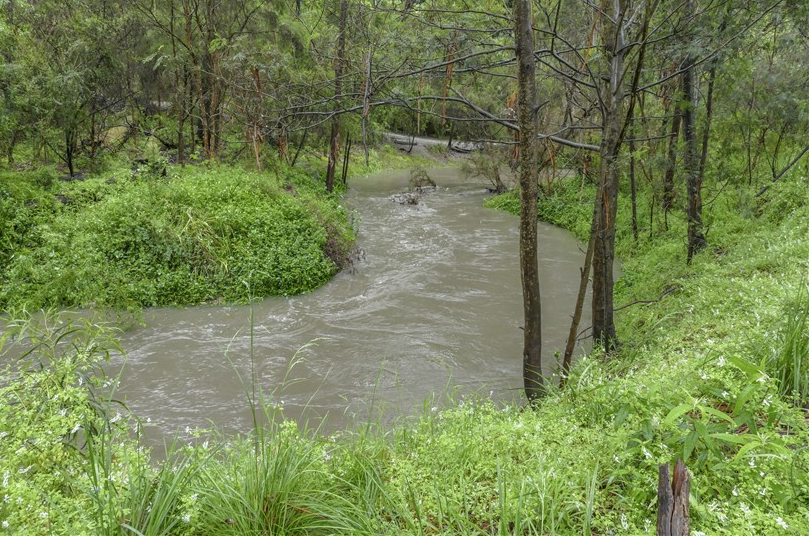
Wasn’t November wet ? This photo shows the creek almost full on 14th November:
This movie shows a Pacific Black Duck and her brood having some frenetic feeding, swimming and preening activity in the creek followed by nap time afterwards as the ducklings try to fight off sleep as children are wont to do:
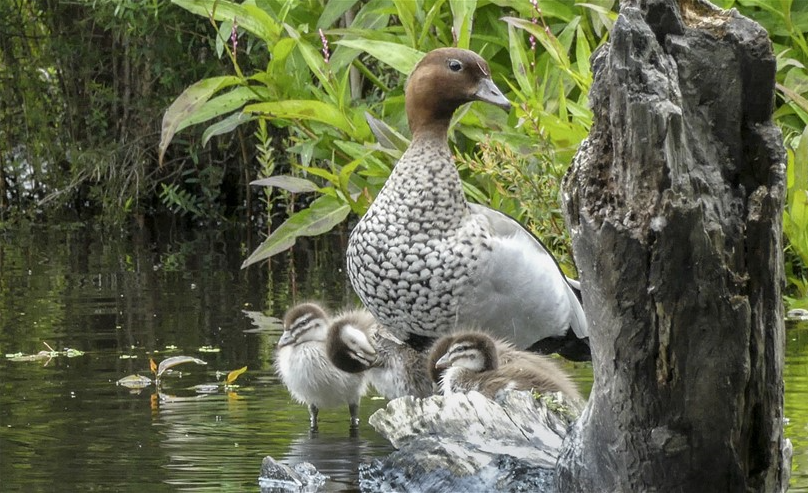
Not to be outdone, here’s a Wood Duck family preening in the pond near the “Old Oak Tree”:
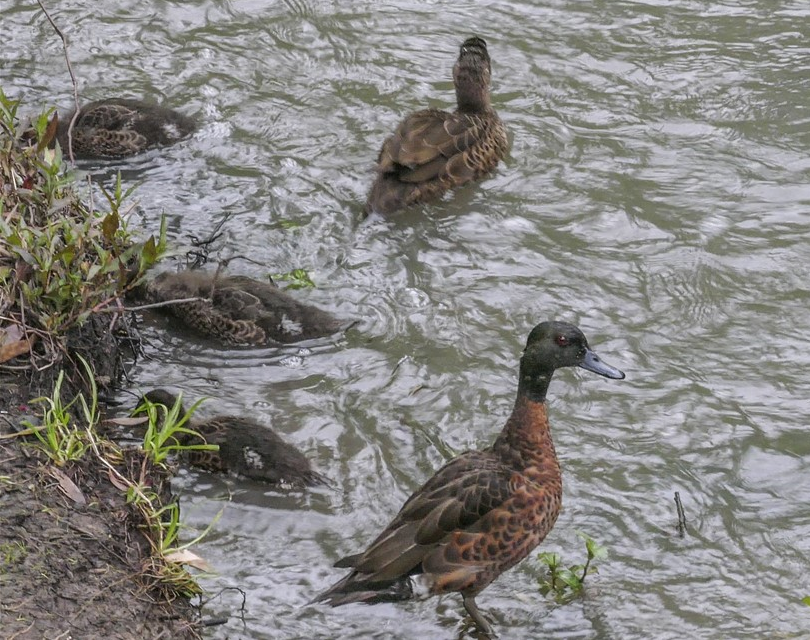
…and to complete our set of the three varieties of duck in the Creeklands, a Chestnut Teal family foraging on one of those grey days:
“Teal” was recently announced as Macquarie Dictionary’s word of the year. Oddly enough, that does not honour our duck species – but apparently has something to do with politics.
Here are more sightings from our photographers taken during the month:
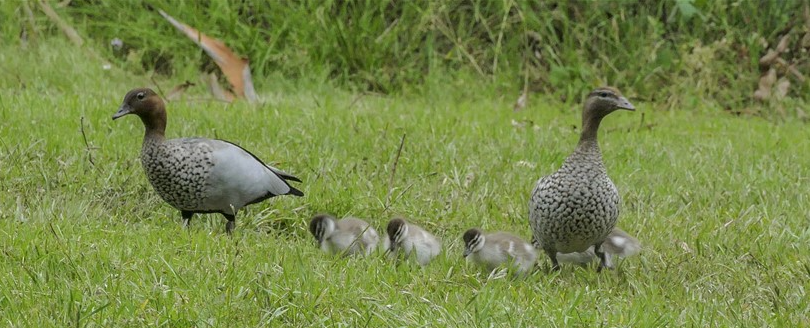
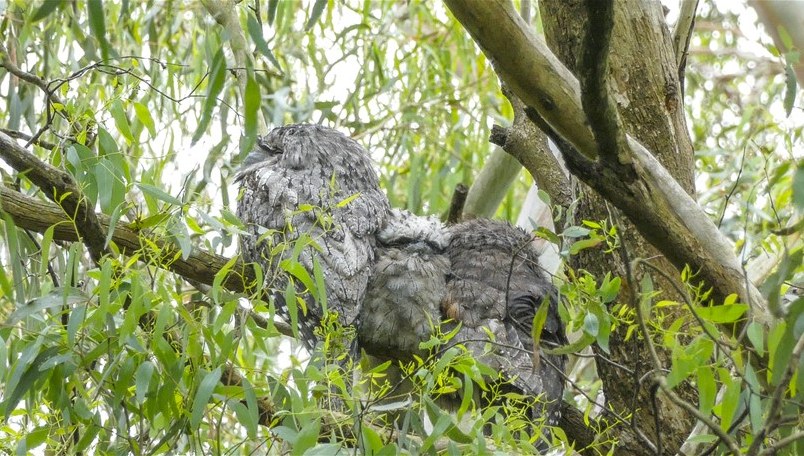
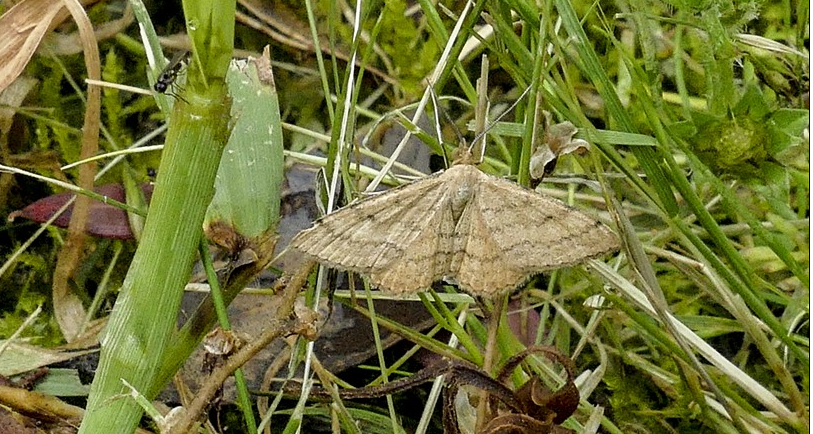
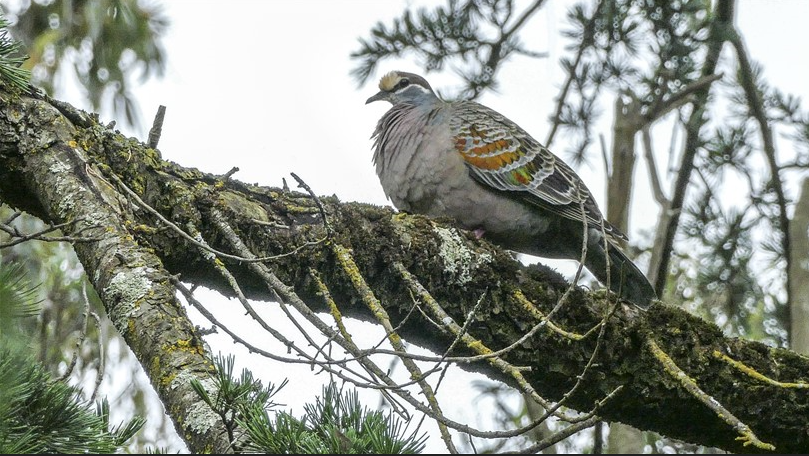
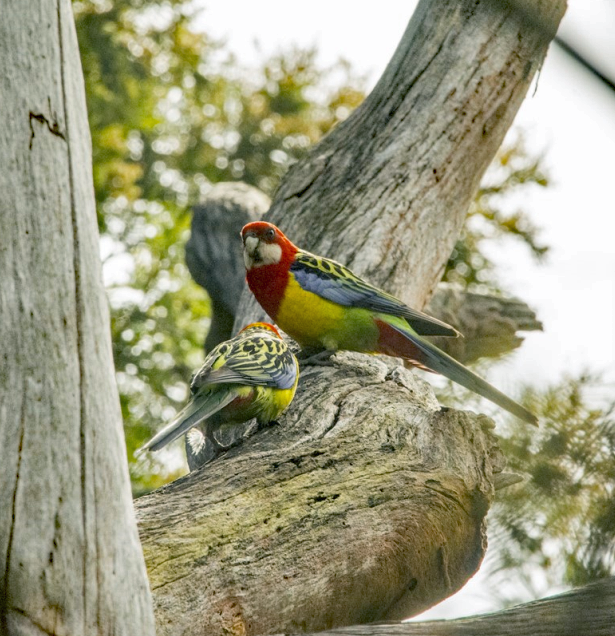
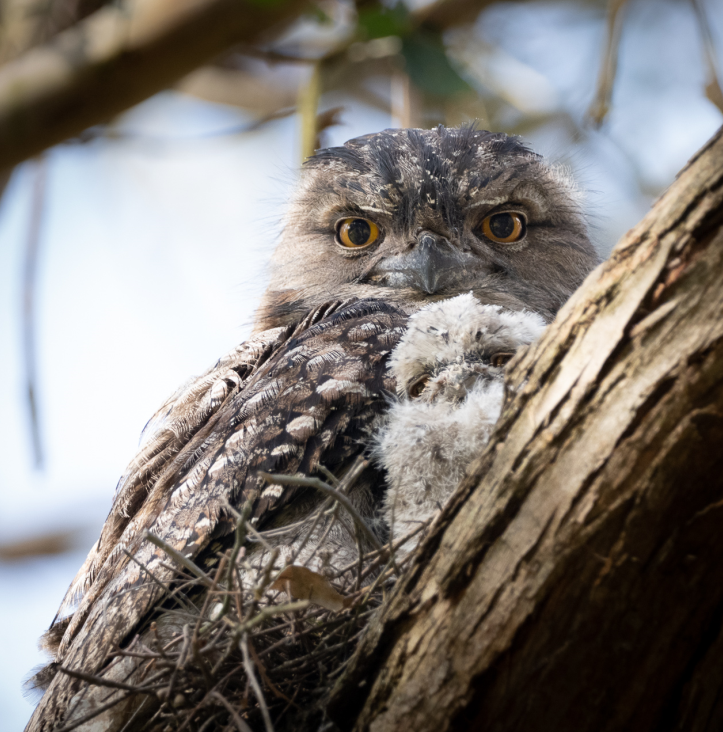
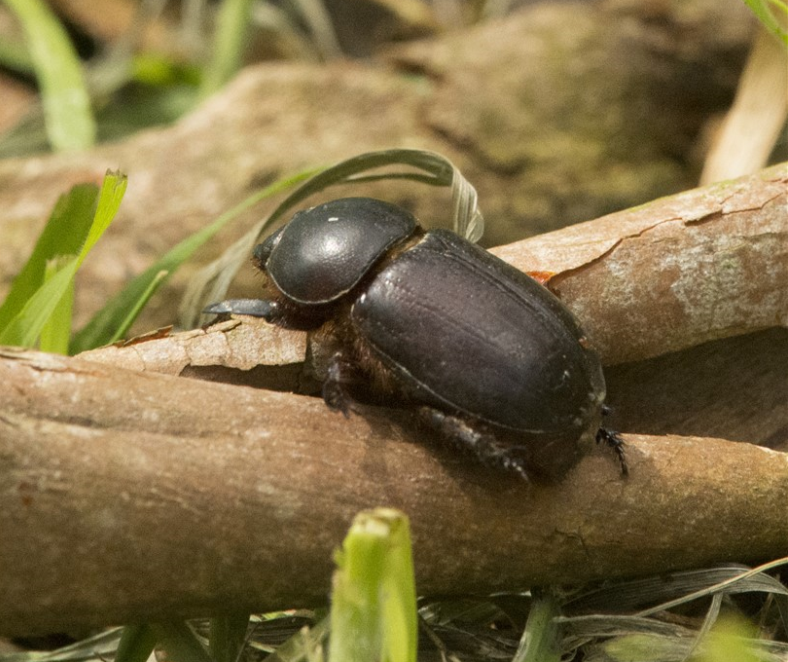
Click on photo to enlarge and then scroll. Click the X when finished.
Ken sent us this picture of the Common Flatwing Damselfly (Austroargiolestes icteromelas):
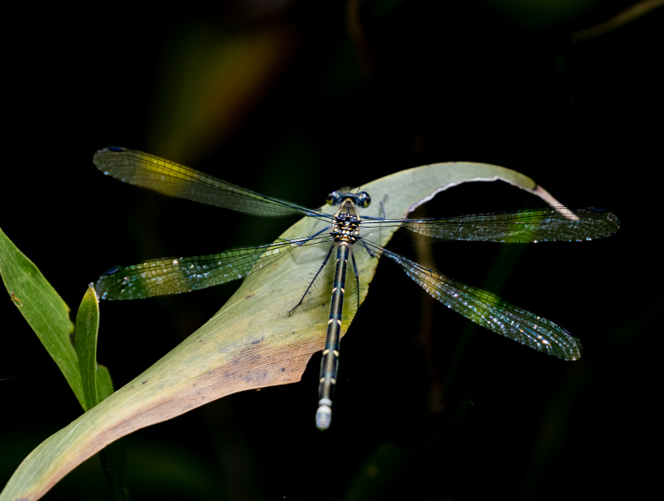
As Ken says:
This is one of the very few damselflies that perch with their wings held flat (much like a dragonfly). It is very common in the Creeklands at this time of year.
In addition to their elegance and the shimmering iridescence (which is a delight to see and very clear in Ken’s photo), they are serious mosquito predators – something we truly need at present! Along with bats, dragonflies and damselflies have been described as “the mosquito controllers of the world”.
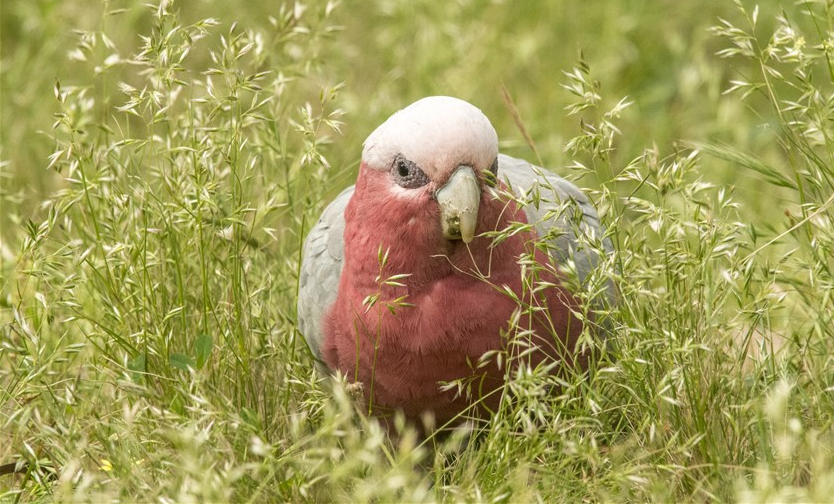
Here’s a Galah having a field day feeding on grass seeds in the “no-mow” area near the children’s playground in Furness Park:
Sun Orchid
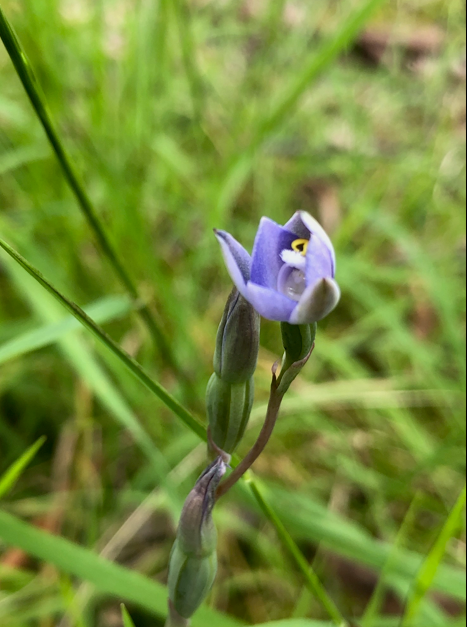
Probably testament to our unusually wet conditions, a couple of Sun Orchids were spotted in Blacks Walk for the first time. One was unfortunately quickly knocked over and the other (shown above) did not flower fully. The problem was that Sun Orchids only flower in direct sunlight and November was so dull!
A Black-shouldered Kite (Elanus axillaris) flying over Kalang Oval.
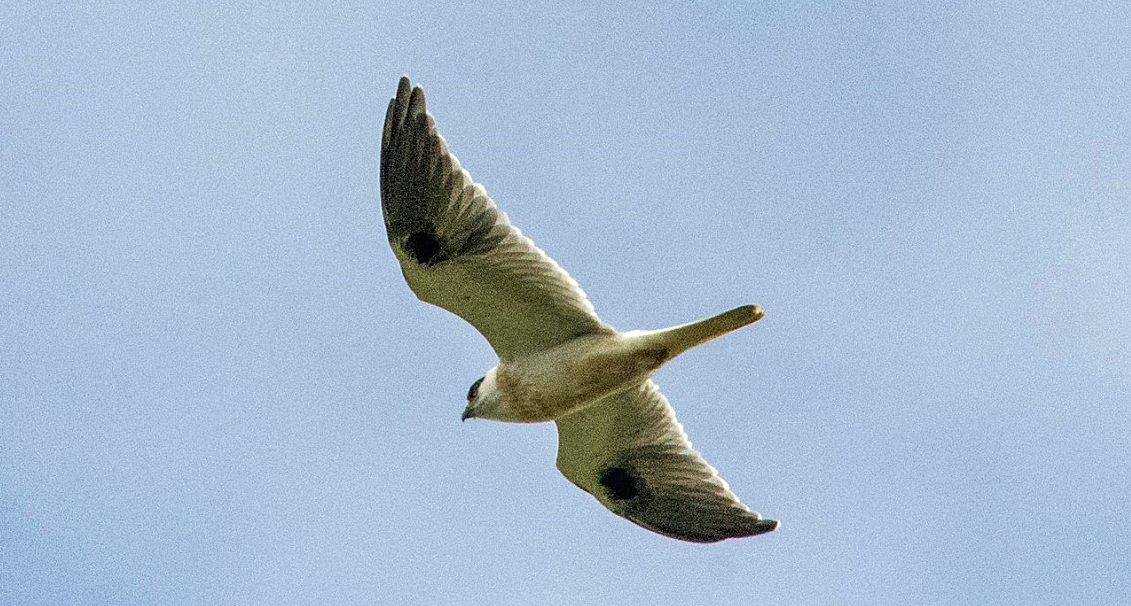
This is a new species for the Blackburn Creeklands bird list which has been running since the 1970s! It is a small falcon-like hawk that likes to hunt over grasslands. It eats mostly rodents, insects and small lizards.
We’ve had reports of a Rufous Fantail being sighted next to the new wetlands 80 metres north west of the Laurel Grove bridge on the ground with a flock of White-browed Scrubwrens. That species is on our list but very rare. Its Grey Fantail cousins are common enough though. No photo for you as yet!
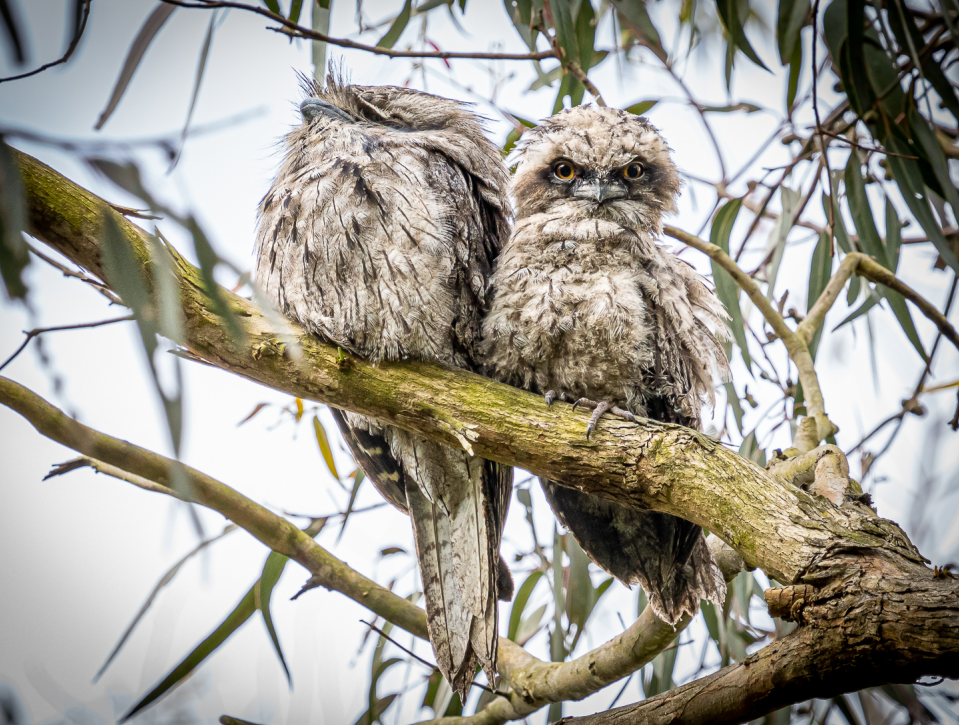
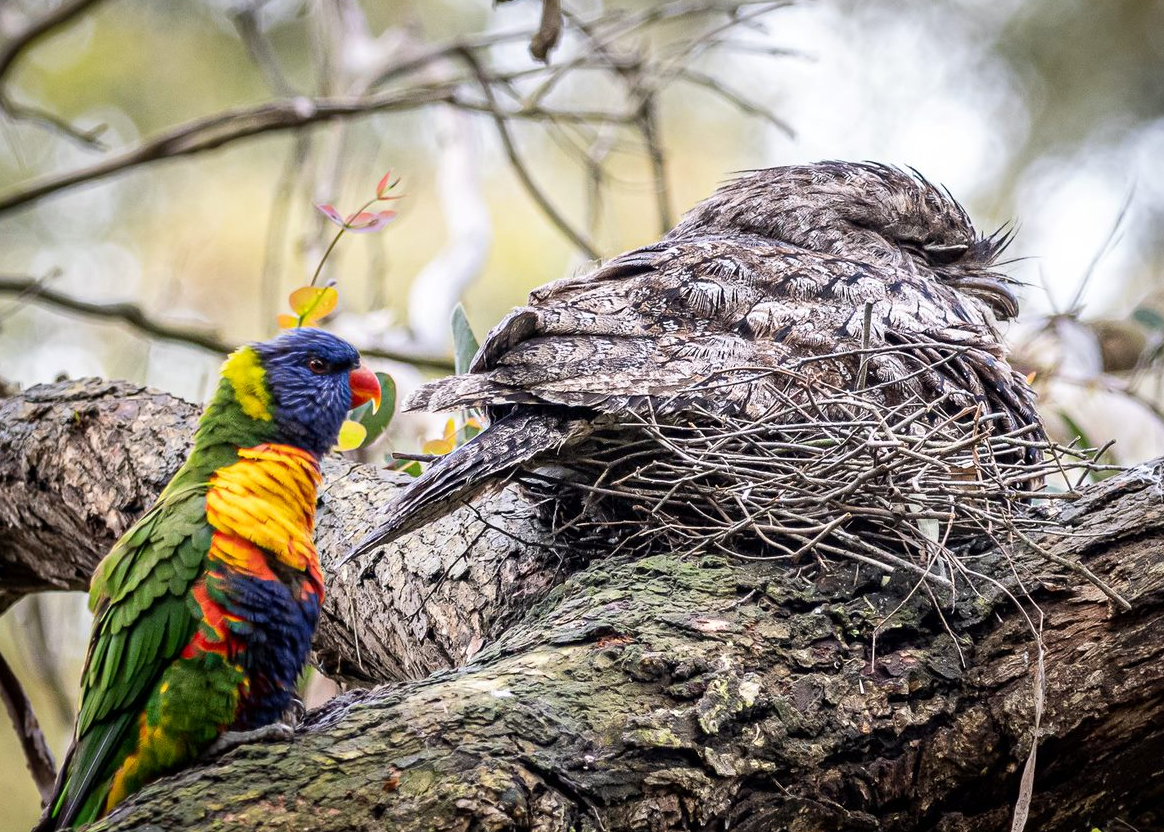
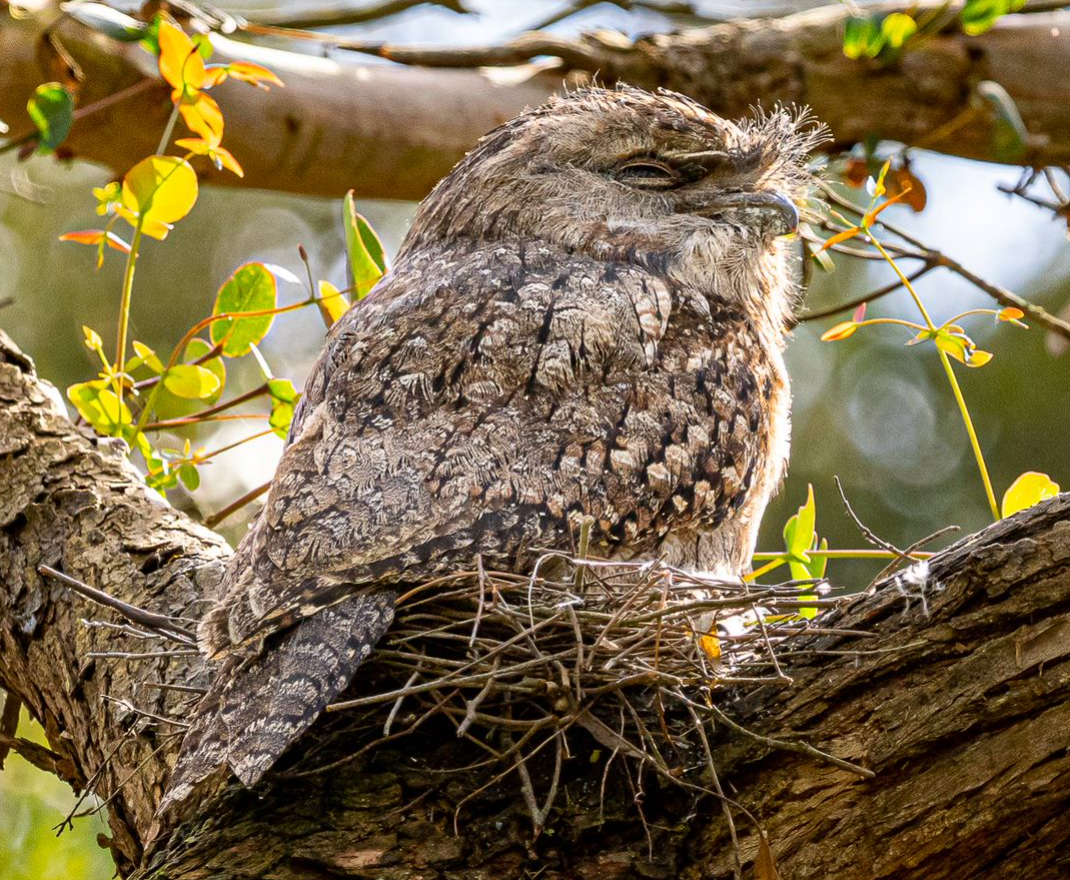
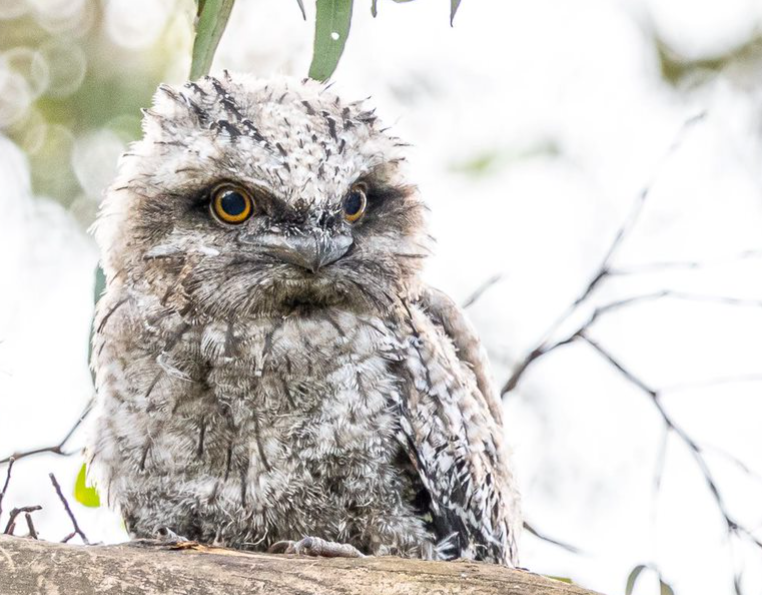
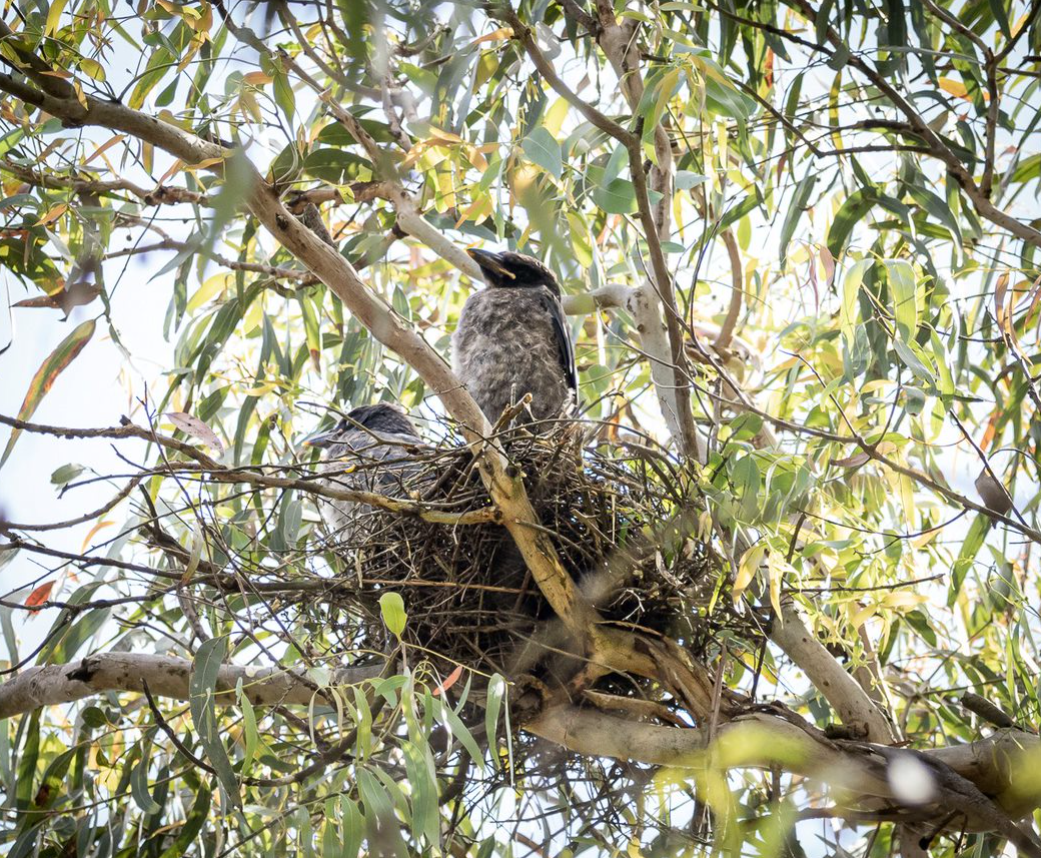
Here are some interesting photos in the Light Box that Ken sent us – including nesting activity and some amusing shots of acrobatic grass seed feeding, Lorikeet photo-bombing and Tawny Frogmouth chicks trying to out-stare the camera’s eye:
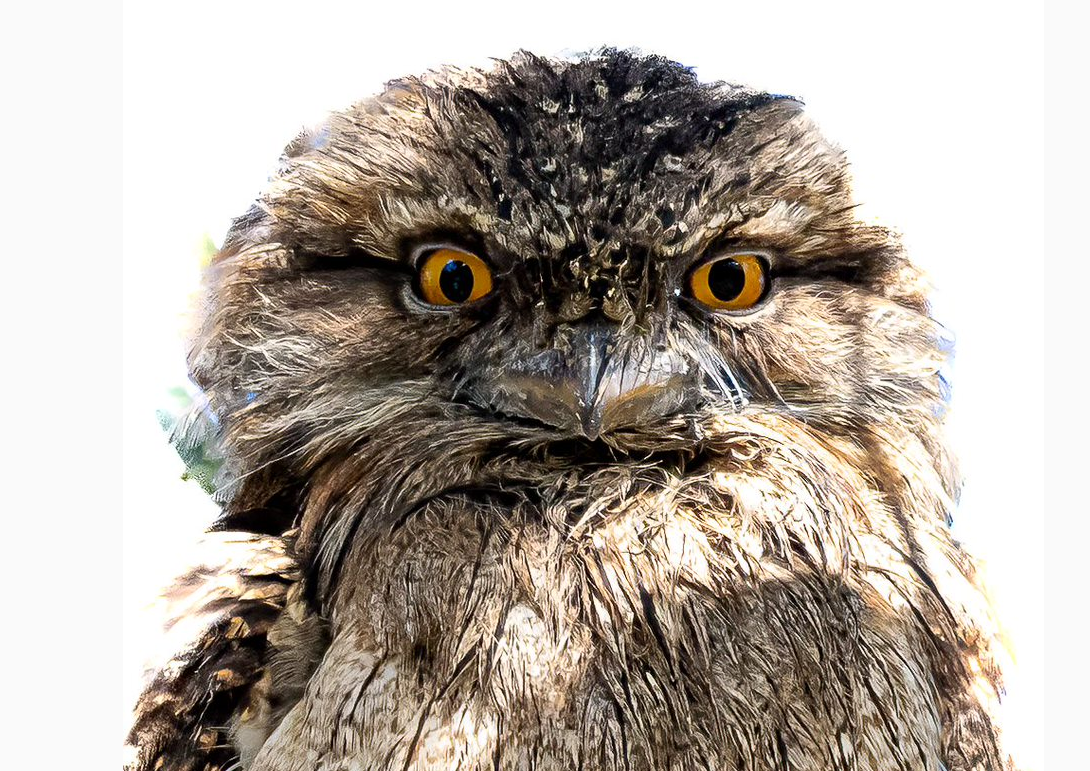
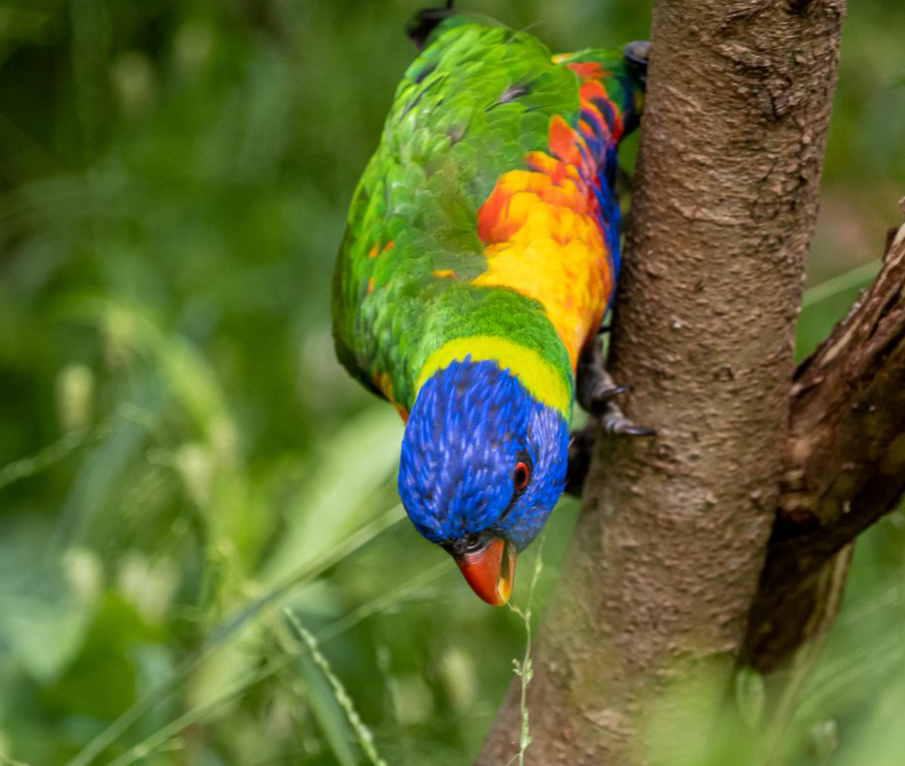
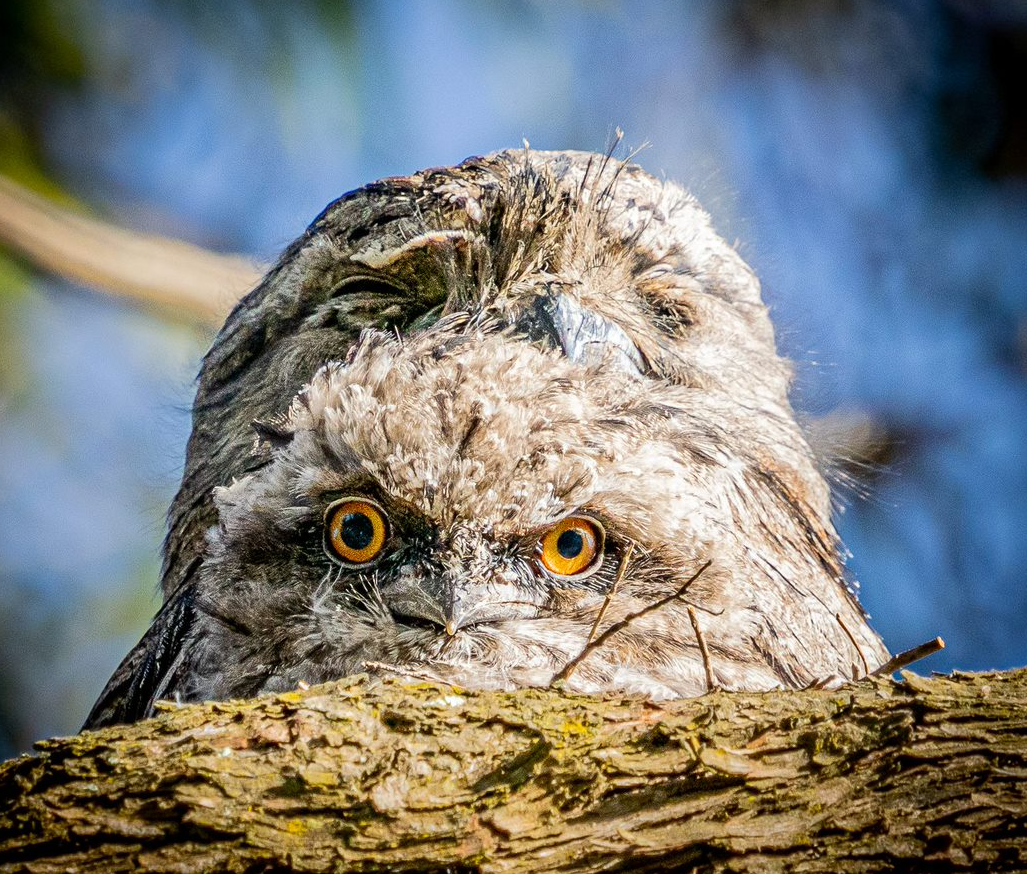
Click on photo to enlarge and then scroll. Click the X when finished.
 Blackburn Creeklands
Pingback: Park News, January 2024 | The Blackburn Creeklands