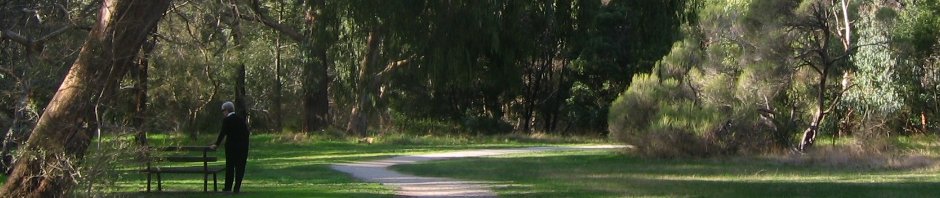
Local Kookaburras have adopted the dreadlock fashion ?
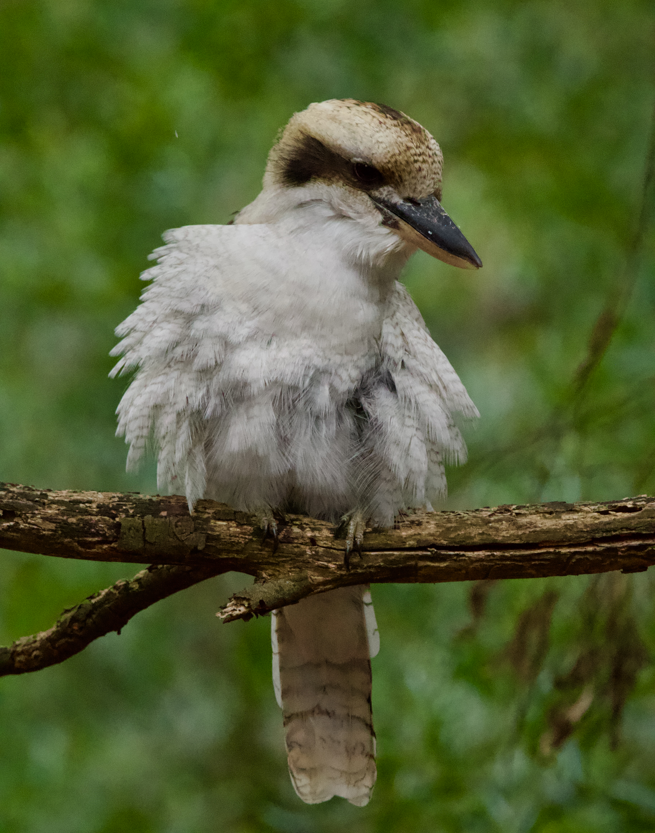
No – we don’t think we have “Rasta” Kookaburras within the Creeklands – this bird is finishing their preening for the day – before smoothing everything down again.
But why not come to our Autumn Bird Survey on Saturday 29th April at 7.30 am to make sure?
Maintenance Team report
The Maintenance Team has been busy working in some of its new areas – one in Furness Park (in its top northeast corner) and another in Blacks Walk adjacent the children’s playground as well as two nearby sites. The team normally works on Thursday mornings – but couldn’t on the 23rd March for safety reasons – the event was called off due to the weather bureau’s storm warning (see below) showing a severe storm headed straight for us, which proved spot-on!
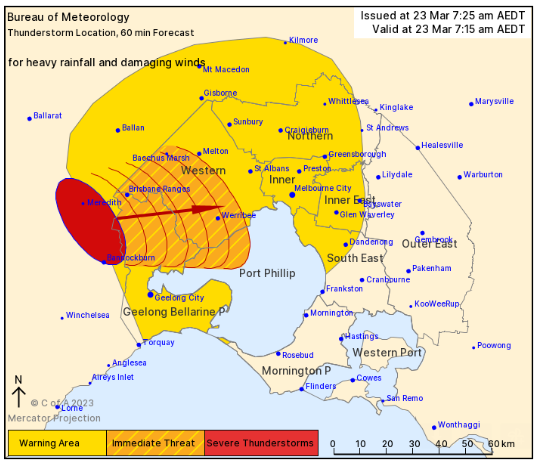
Our team always carefully monitors the weather conditions for safety – in addition to Bureau of Meteorology storm warnings, they look for extremes in heat and coldness, heatwave conditions, the possibility of Thunderstorm Asthma events, strong winds and air quality prior to actually running an event.
The new work sites have come from a new Annual Maintenance Plan agreed with Council. Other outcomes of the plan are:
Site priorities in 2023
- Pakenham Street – western side at the location of the crossover from Kalang Park
- Improvements in Kalang Park on the north eastern side of Thelma’s Maze – the area southeast of the Laurel Grove bridge. If you’d like to know more about Thelma and her maze, please click here.
- Improvements in Kalang Park around the Malcolm Street entrance.
- Tree Canopy – infill planting – throughout the park.
Planned Activities for 2023
- Weekly maintenance team working bee events (usually on a Thursday)
- Autumn and Spring Bird Surveys
- Community Working Bees as follows:
- Laurel Grove North to the east of the footbridge (28/5/2023)
- Blacks Walk – Planting up along the creekline in from Garie Street.
- Furness Park – replacement planting in the top northeast bed
- Kalang Islands (if site preparation progressed significantly)
Our Autumn Bird Survey is all set to run on 29th April at 07:30 from the Scout Hall. We’ll send you a reminder during the week prior to the event.
Adios La Niña!
Speaking of weather events, the monthly analysis reported by the National Oceanic and Atmospheric Administration (NOAA) states that the La Niña event has ended.
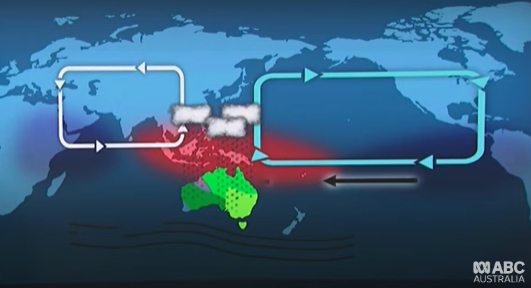
Stronger and longer than usual La Niña events, from 2020 to 2022, brought record rainfall to parts of south-east Australia resulting in widespread major flooding. After three consecutive years of dominating weather patterns around the globe, the La Niña event has now officially ended.
Impacts in our park have been:
- The conditions led to increased weed production.
- Very damp soil means that tree roots are less supportive particularly when storms and strong winds occur.
- Some tree species are less tolerant of damp feet for too long than others.
Given we have lost a significant number of trees over recent years, planting replacements has become a priority for the committee.
What’s next ?
During a La Niña event, the probability of rain on the eastern half of Australia is increased – leading to more humid, cooler summers. Some warn of the current neutral conditions being replaced by an El Niño event – which would have opposite effects on our climate – drier than normal and even drought conditions. There hasn’t been an El Niño since 2015-2016.
What about recent rain?
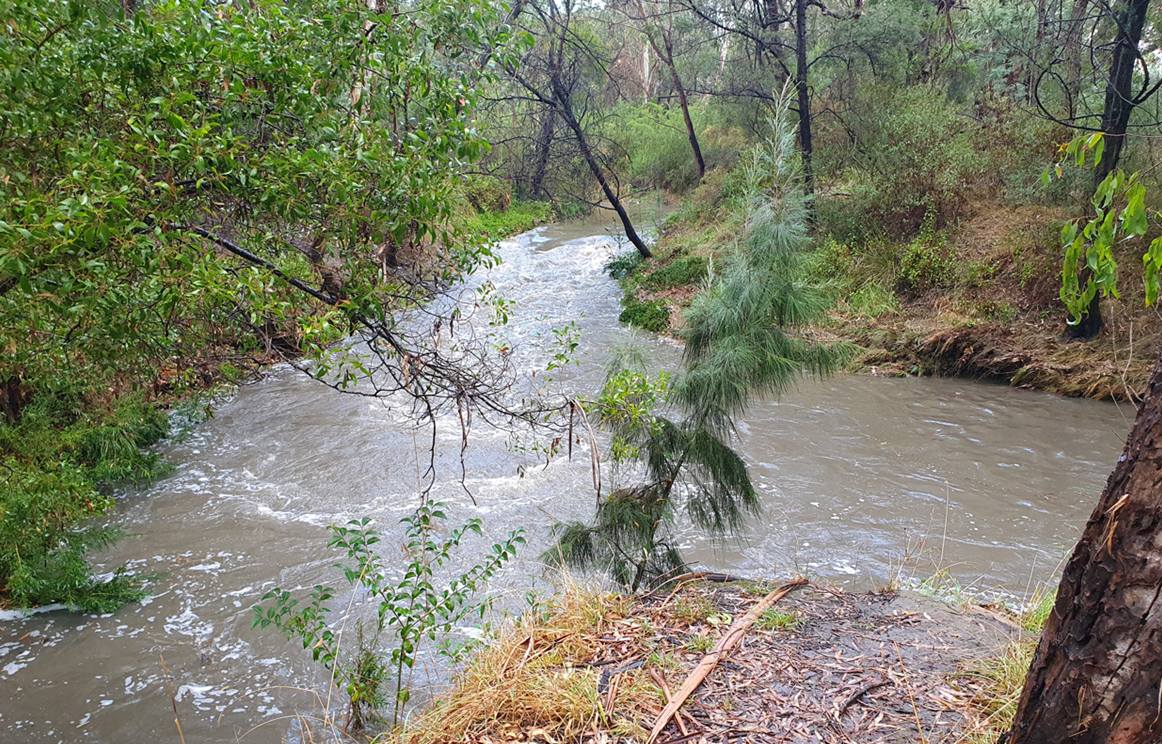
Despite La Niña‘s demise, there were very heavy falls during the storm that hit Melbourne on 23rd March. Our photo shows our creek where Blackburn Creek flows into Gardiners Creek from North Blackburn (circled in red on the map below):
Where does our Stormwater come from ?
Here is a snapshot of the catchment that feeds the creek in our park:
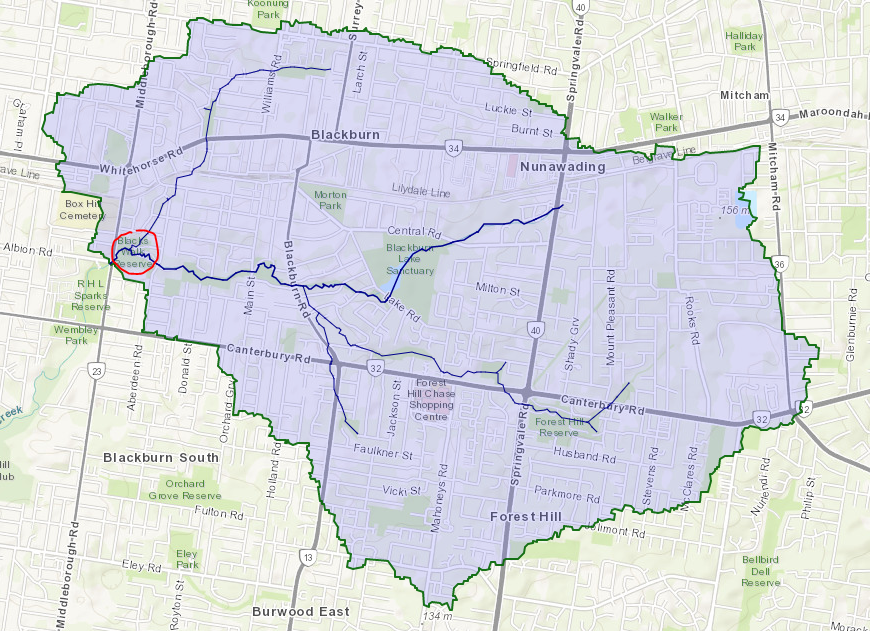
The map shows the surprising reach of our part of the Gardiners Creek’s catchment with the stormwater system extending east to Mitcham through Nunawading including the “Megamile”, north to Springfield Road including the Blackburn North shopping centre, west into Box Hill and southwards into Blackburn South, and a substantial part of Forest Hill, including the Forest Hill Chase shopping centre, down to East Burwood.
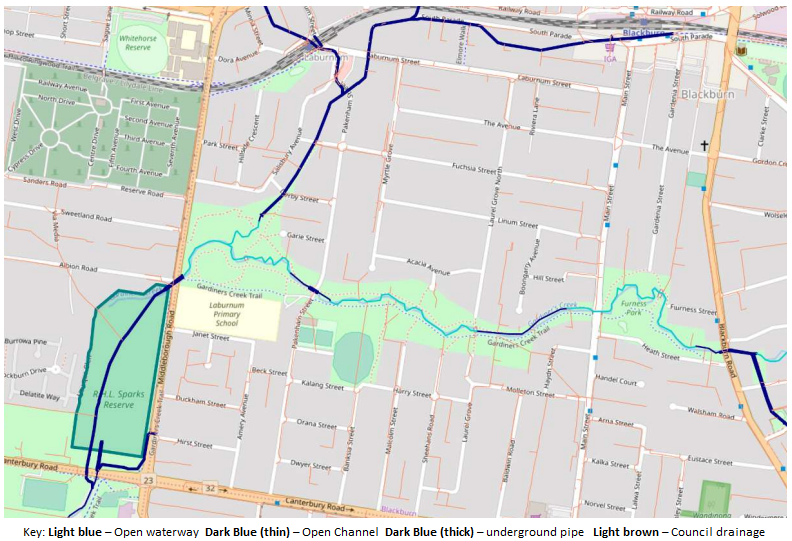
This map from Melbourne Water shows how drainage from houses and roads is fed into the creek in our patch:
Where does it go?
As many would know, Sparks Reserve (just downstream from our park) is a “retarding basin” that slows down the rush of creek water by flooding itself when needed. There are many retarding basins in Melbourne’s stormwater drainage system to calm the flow of water after significant heavy downpours such as the recent event.
Here are some photos taken at Sparks after the storm:
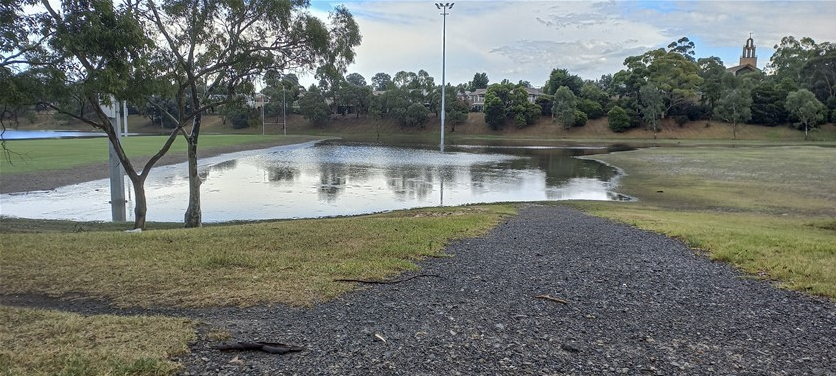
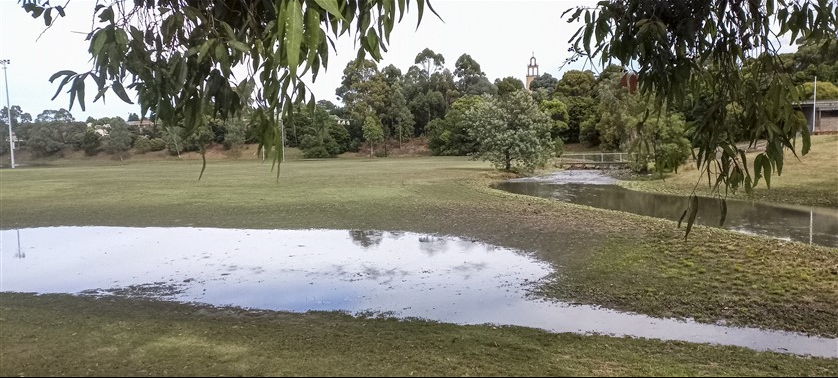
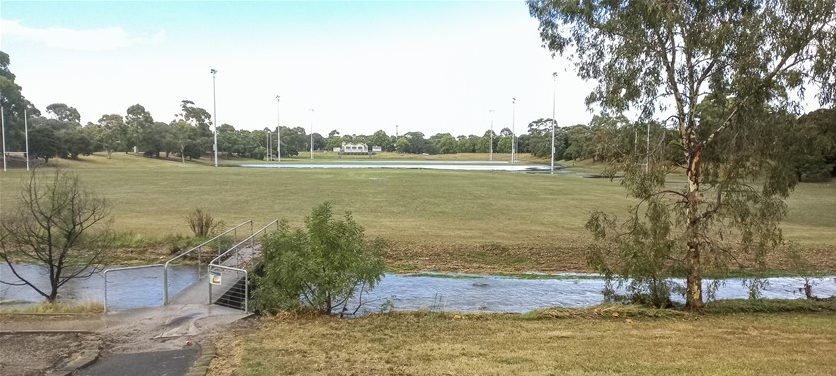
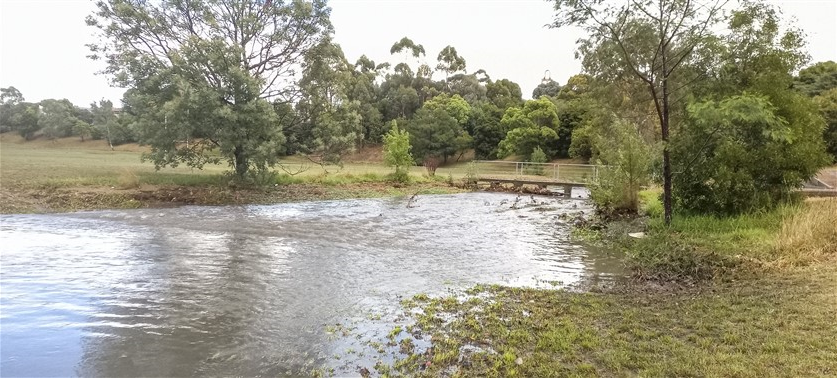
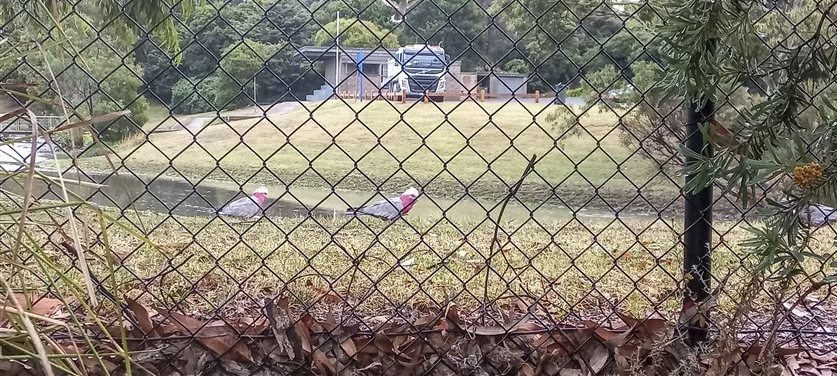
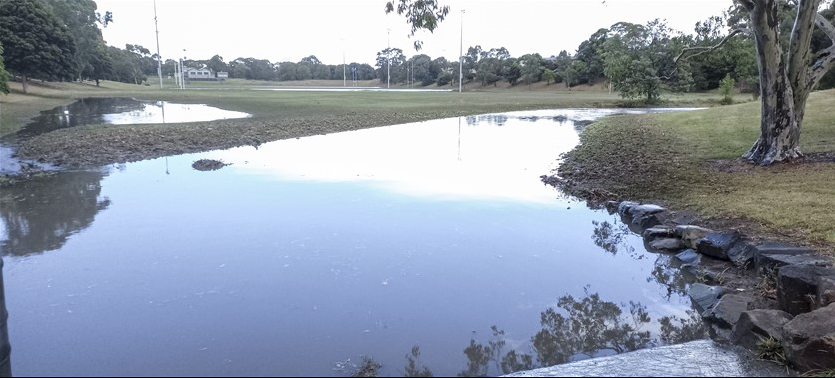
Please click to enlarge and hit the ‘X’ to exit.
How good is the creek?
A report card for the Gardiners Creek (KooyongKoot) sub-catchment (of the Yarra River), under the Healthy Waterways Strategy 2018-2028, indicates that the overall quality of our creek is not good. While it scores well on access, community connection, recreation and amenity – that’s all about us as humans. On the other hand, the scores for nature – fauna & flora and water quality are low.
Although the scores for nature are likely to be better for our small section of the creek, it does indicate that we need to give nature more priority in our thinking and projects. We know this is something the KooyongKoot Alliance has taken on board too for the whole catchment.
Agies – Off with Their Heads!
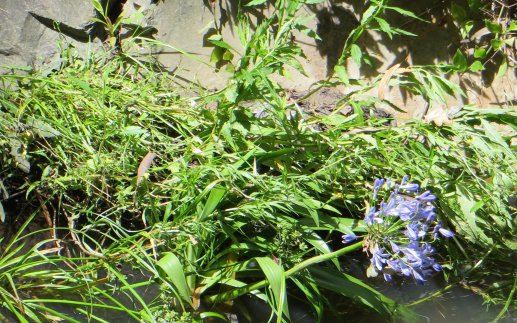
Our photograph shows an Agapanthus plant growing at the creek water’s edge in Furness Park (since removed with gusto!).
Just a reminder to please dead-head your Agapanthus plants to prevent seed entering our park via the storm-water system. As our map above shows, your place is connected to the creek a bit more directly than you might have thought…
You might consider replacing them with an indigenous plant of similar habits (eg a species of Dianella or Lomandra). Please see our Useful Links page for details of the local indigenous plant nurseries who will be able to help you with choices.
For those interested in removing their Agapanthus completely, here is a link to a very welcome and interesting article from the Southern Dandenongs Landcare Group about removing the pests – without herbicides, machinery or hard labour.
Council Works
Cricket Safety Nets at Kalang Oval
We don’t have much to report except that we know that Council is fine-tuning the proposed location of the nets and has reassured us that there will be access points through the nets at oval entry points and either side of the playground – rather than an uninterrupted barrier as shown in last month’s newsletter. Also, the picnic table may be relocated to a safer position.
We also know Council is looking into solutions to a problem we raised concerning the need (hopefully, avoidable) to remove a major limb from one tree. That particular tree is important to local birdlife.
Dogs Off-Lead Proposals
We’ve been informed that over 1,200 written submissions and survey responses were received (about 50 would be typical for a “Your Say” survey). The sheer number of responses indicates the degree of passion for-and-against within the community. Notably, there was significant feedback provided in relation to the Kalang Oval proposal.
Work is progressing with initial results presented to the Domestic Animal Management Plan Advisory Committee (DAMPAC) a fortnight ago. Next step is for a report to go to Council for consideration. There has been no indication of when that action is planned.
Ghost Fungus
Autumn is usually our best season for fungi – although La Niña has blurred that in recent years.
One of our most interesting – Ghost Fungus Omphalotus nidiformis – is probably Australia’s best known luminous fungus. Lisa found a specimen in Kalang Park and returned to try her hand at catching the luminescence on camera. Lisa’s photo shows that the fungus looks quite spectacular by day:
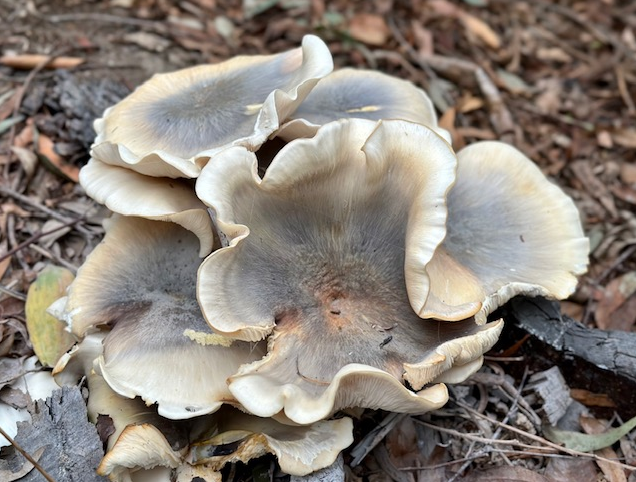
In her words:
Located [the above specimen] on the base of an old pine trunk, near the path, south of creek, between Main St and the maze.
Tonight I drove back with my trusty assistant wanting to try to catch the bioluminescence.
I didn’t realise it is underneath on gills where most of the bioluminescence occurs, so the angles of shots are not quite the same (day/night comparison).
Full disclosure – I manipulated the night images by enhancing the saturation slightly. I am excited with my first green images 🙌.
I was interested in how the fungus seems to have lit up some of the edges of the old trunk white. I also included smaller fungi in second shot as they seemed to be quite bright (believe they shine brighter when young?). We were eaten alive by mozzies – the lengths we go to!
Lisa
Here is the night time view:
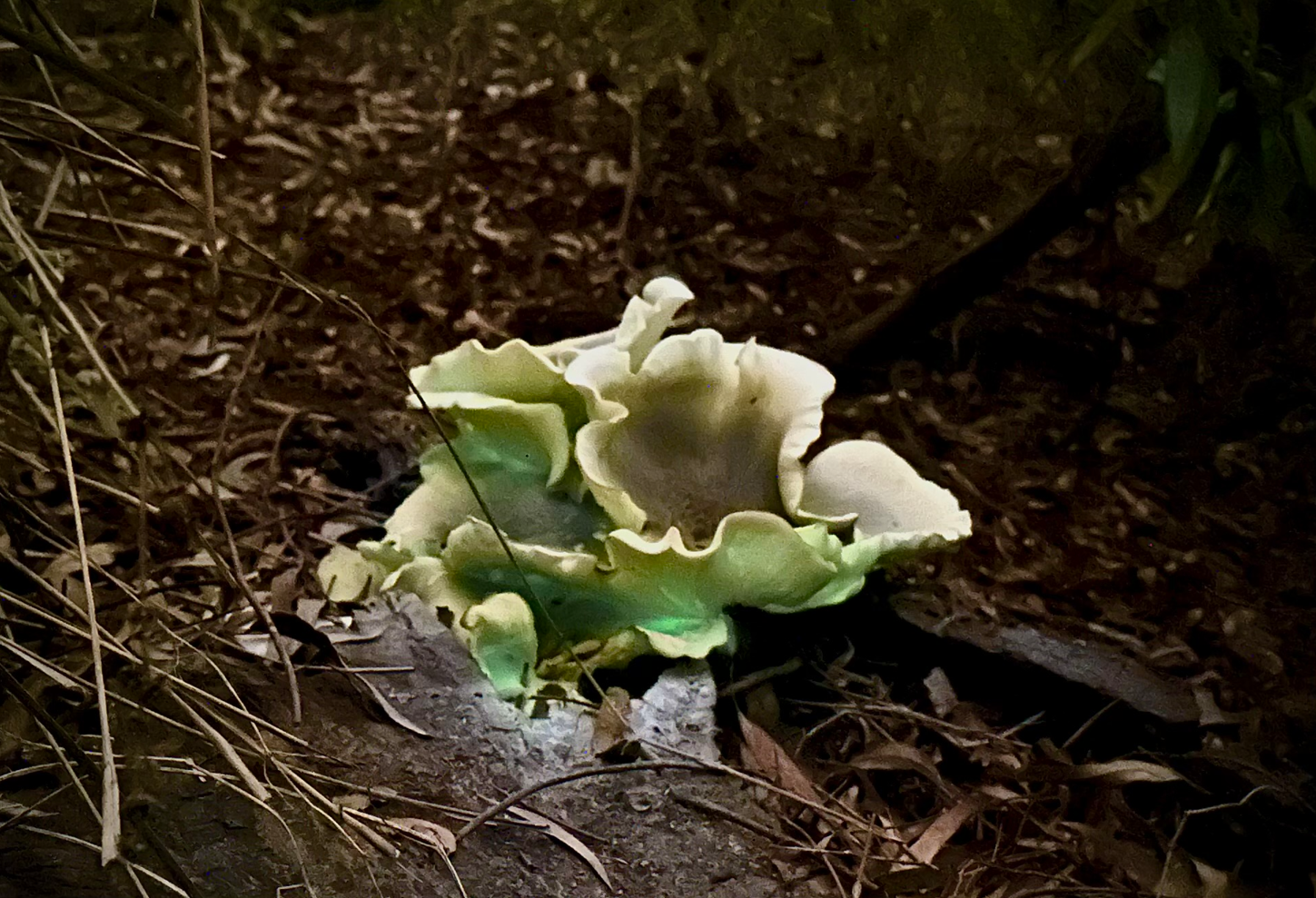
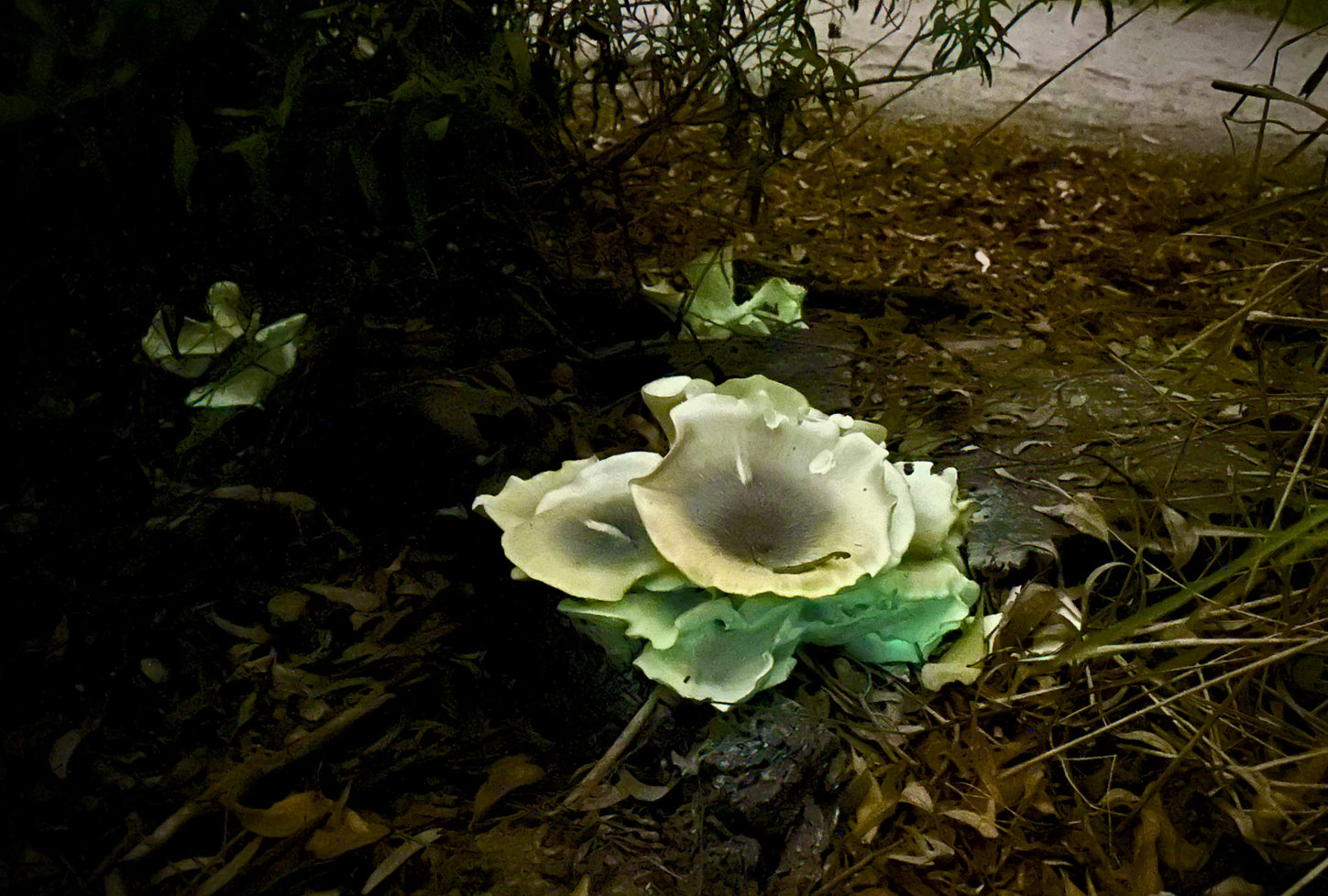
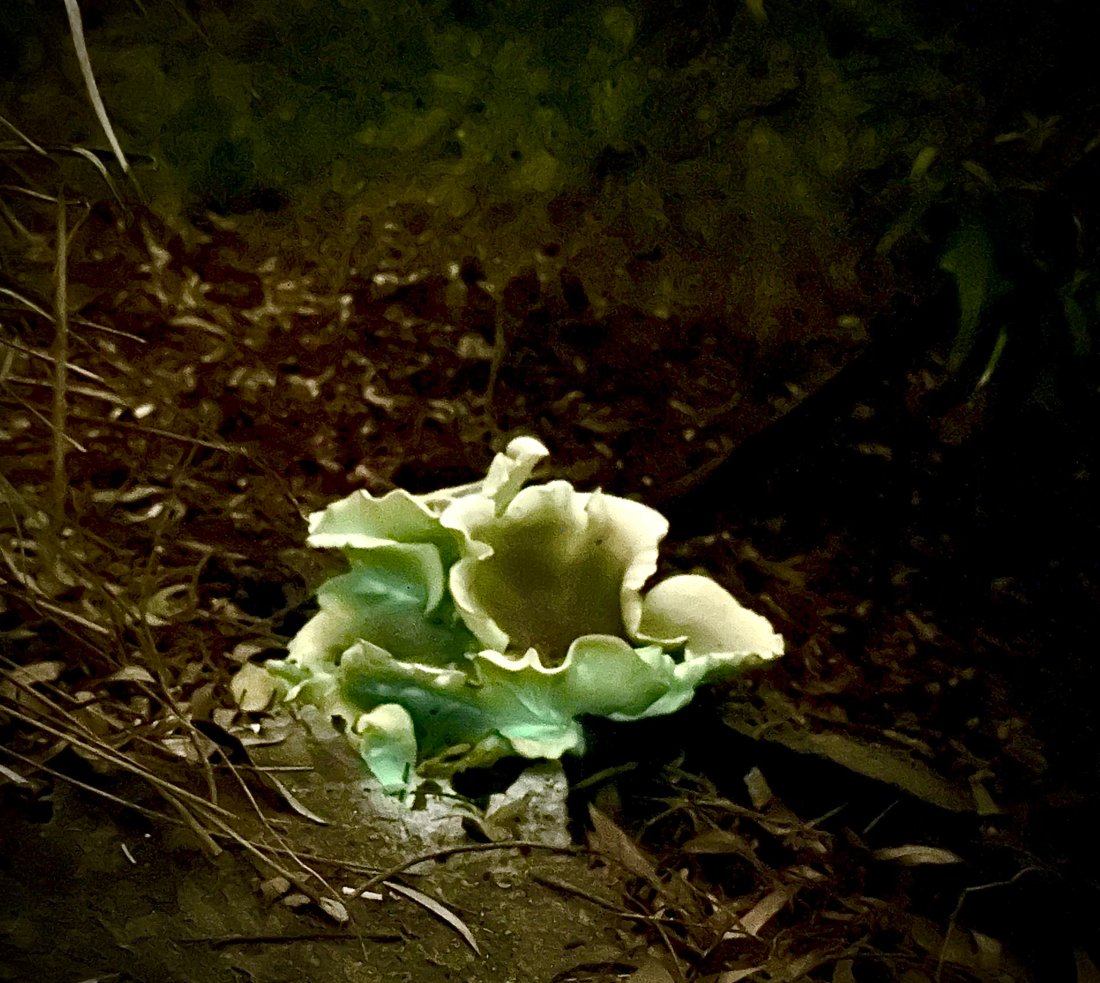
To enlarge, click on one of the photos and scroll using the < > arrows. Click X when finished.
We couldn’t resist trying a day and night slider version even though the camera angles are not quite the same:
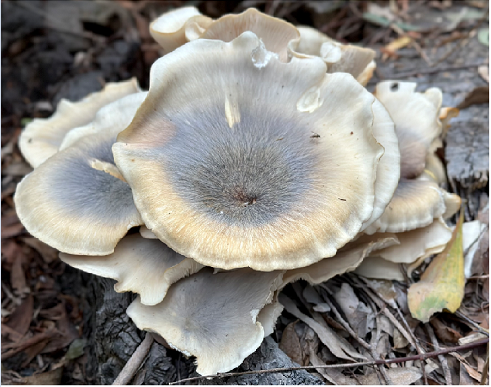
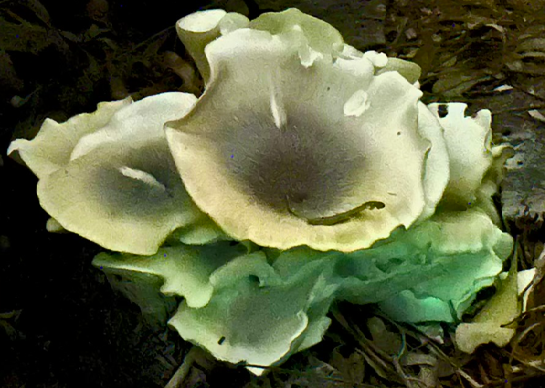
These funnel-shaped fungi start out looking like orange-ish toadstools and eventually flatten out with age. They are found on both living and dead wood (especially Eucalypts) – often in overlapping clusters. Lisa’s second photo shows some new ones forming in the background. Once mature, their colour can vary from white or cream with blue-black centres, yellow tinges and tones of purple or pink. Their soft green luminescence is due to a reaction between enzymes inside the fungus and oxygen (ie they don’t need to be exposed to sunlight during the day to absorb light).
Interestingly, Lisa could only see faint white light herself. Her camera picked up the spooky green.
Forest Therapy
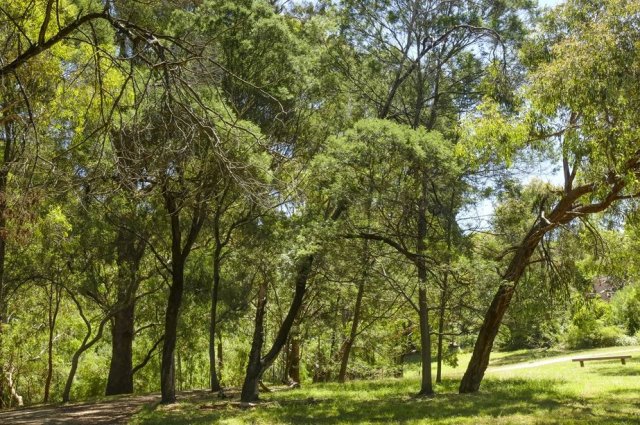
“Forest bathing” or Shinrinyoku (森林浴) has become quite a “thing” in the years since we first wrote about it in 2017 and 2018. The Japanese say it’s all about walking in treed areas and experiencing the combination of green light and breathing in/smelling phytoncides. Phytoncides are volatile organic chemicals produced by trees and other plants. There are said to be mental and physical health benefits. For example, Japanese researchers have found that forest bathing increases human immunity and even the expression of anti-cancer proteins in some subjects.
Nowadays, there are courses in Australia which qualify practitioners in “forest therapy”. Phytoncides are plant-produced “killers” which work by inhibiting or preventing the growth of attacking organisms. Thousands of volatile substances have been identified which defend the plants which produce them from bacteria, fungi and insects. Basically, plants have evolved complex immune systems that include producing an armoury of these volatile substances that have antibacterial, antifungal, antiviral, anti-inflammatory and insect-repellent properties. Trees need these broad-spectrum defences – they can live a long time and are “sessile” – they can’t run away from an attacker and can’t swat an insect having a go at them!
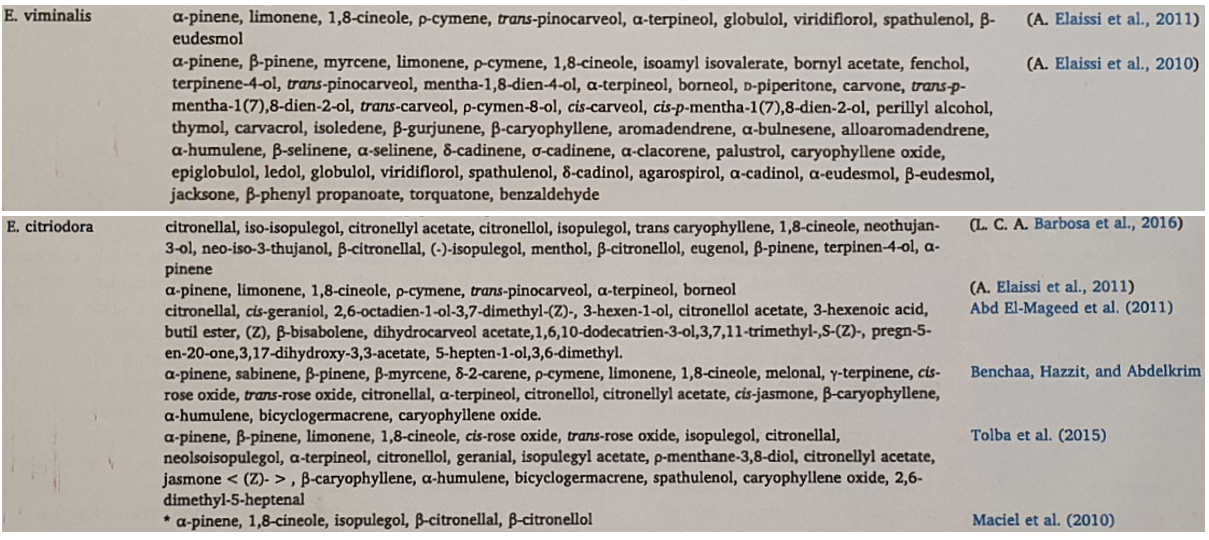
At the time of writing those earlier articles, we wondered whether Australian plants produce similar phytoncides to those found in Japanese forests. It turns out that recent research has identified a lot of the compounds produced by eucalypts. Here are the lists found by researchers for just two – the Manna Gum (Eucalyptus viminalis) and Lemon-scented Gum (Corymbia citriodora) – specimens of both can be found in our park. They are remarkable chemical factories:
Many of you will know that rain seems to trigger a strong “immune response” in the Lemon-scented Gums in particular (fending off rot or fungus?) – a walk under them after rain can be a very rewarding sensory experience.
It’s no surprise that our indigenous plants have long been used in traditional medicines. The benefits might also suggest why bushwalking is a consistently popular activity and why a walk in our park seems so good for us!
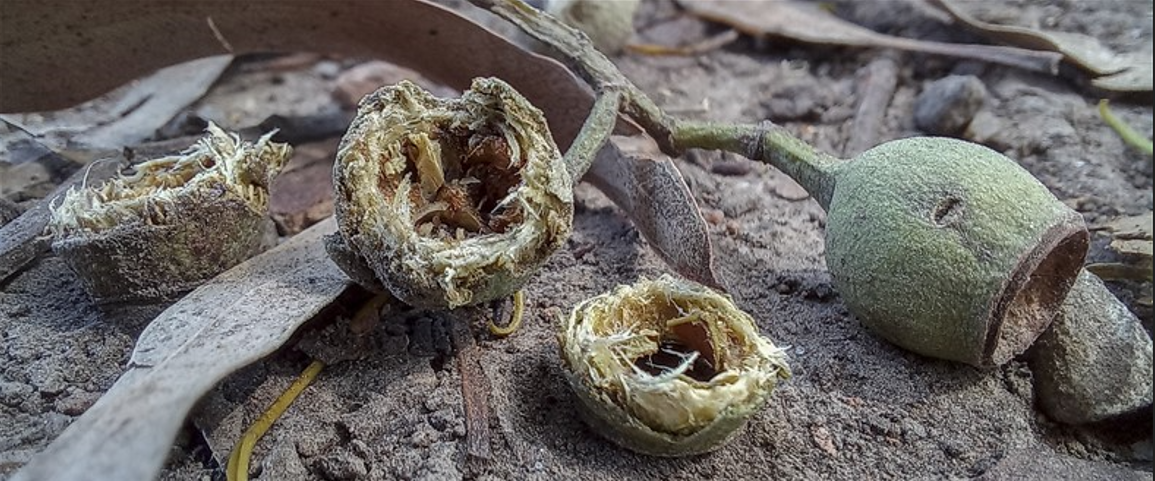
Of course our native fauna have evolved to be able to consume their products – whether leaves, flowers, seed and so forth. For example, Gang-gang Cockatoos regularly return to the park and were spotted earlier in the month foraging in the stand of Lemon-scented Gums in Blacks Walk near the former Guide Hall site. A number of the gumnuts dropped by the Gang-gangs while feeding in the canopy had their tops neatly chewed around and taken off by their strong beaks (as if by a can-opener) – presumably to get into the seeds more easily.
Rat Poison Impacts on Wildlife
Tawny Frogmouths
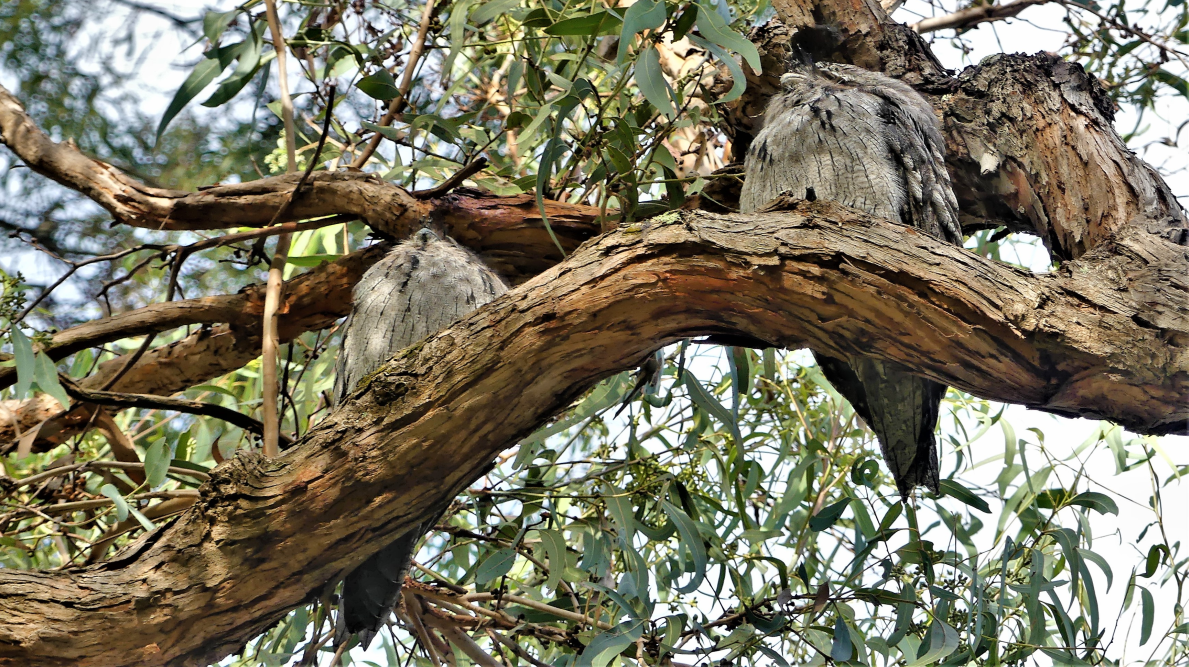
We have had preliminary results from Deakin University about the deaths of two Tawny Frogmouths in our local corridor with no external injuries evident. Both birds analysed had rodenticides in their systems and one was at lethal level.
Some household rat baits contain poisons called Second Generation Anticoagulant Rodenticides (SGARs) which break down very slowly and remain in the food chain for long periods.
Sugar Gliders too ?
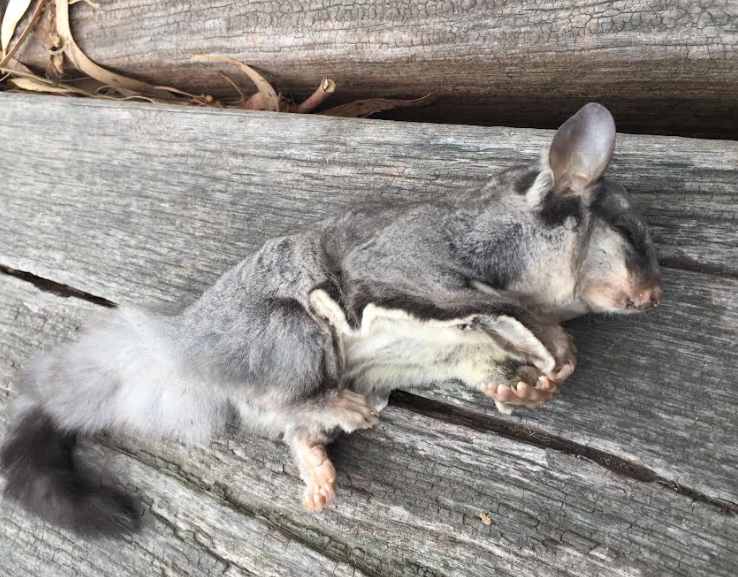
We also had a recent unexplained death of a Sugar Glider (shown above, found in Kalang Park near the Malcolm Street entrance) in similar circumstances (no obvious injuries) – however, the body had been removed before it could be collected for analysis.
How does it happen?
The problem happens when our wildlife, such as owls and kookaburras, eat a poisoned rat or mouse and then become lethally poisoned themselves by the residual poison in their prey. SGARs are banned in many countries because they just keep on killing up the food chain. If you’d like to join the campaign against these poisonings, please visit this link to Birdlife Australia. Here is their handy brochure that helps with selecting safer products.
Other considerations
It doesn’t make sense for us to be killing off birds and other wildlife that naturally control pest rodents! They do it safely and for free… all we need to do is to be discerning with our purchases.
Avoiding SGARs is also safer for pet dogs and cats – and children…
In the Corridor
Rescue Story
Steve, one of our Friends, discovered this clearly unwell, lethargic and distressed juvenile male Gang-gang Cockatoo on the road in The Avenue a few days ago. Possibly following a collision with a car?
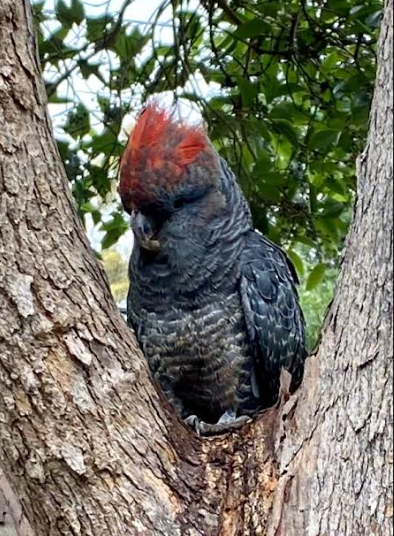
Wildlife Victoria was very quick to give advice and the young fellow ended up at the RSPCA for treatment.
Sightings
Welcome Swallows have returned in numbers to the Kalang Oval:
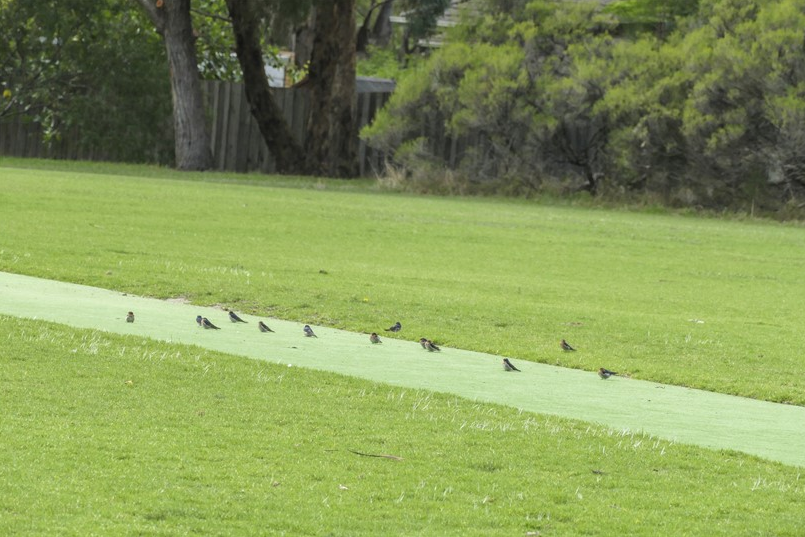
We understand they are forming a cricket team (do they eat crickets?). They already have a first eleven and a couple of spares.
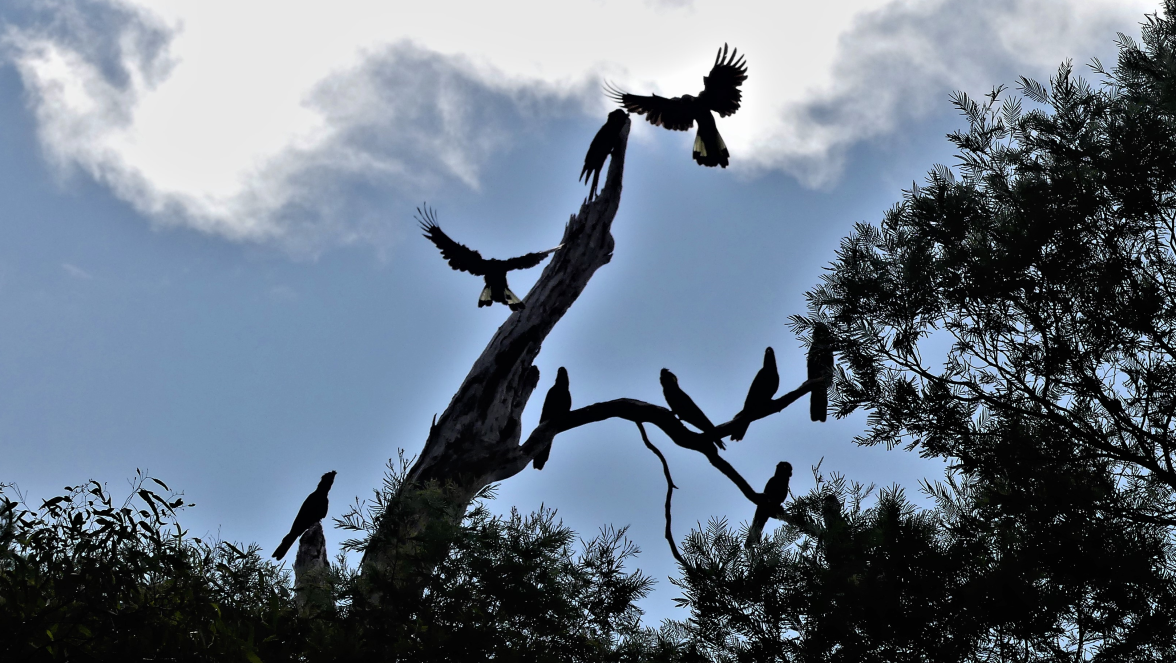
The Yellow-tailed Black Cockatoos are also back in numbers – 22 were counted in this flock that visited recently:
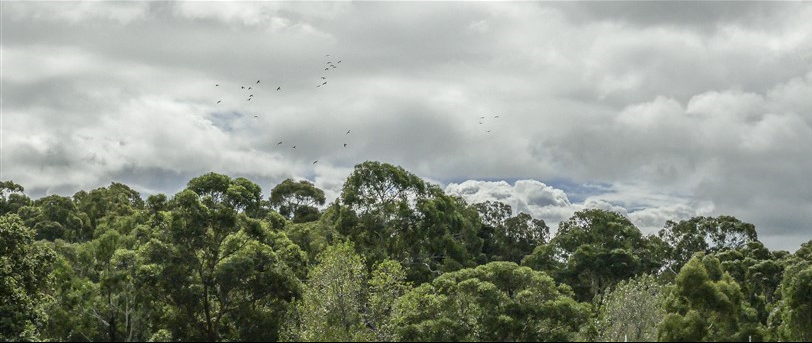
Here they are congregating around a stag and an acacia (where food can be found):
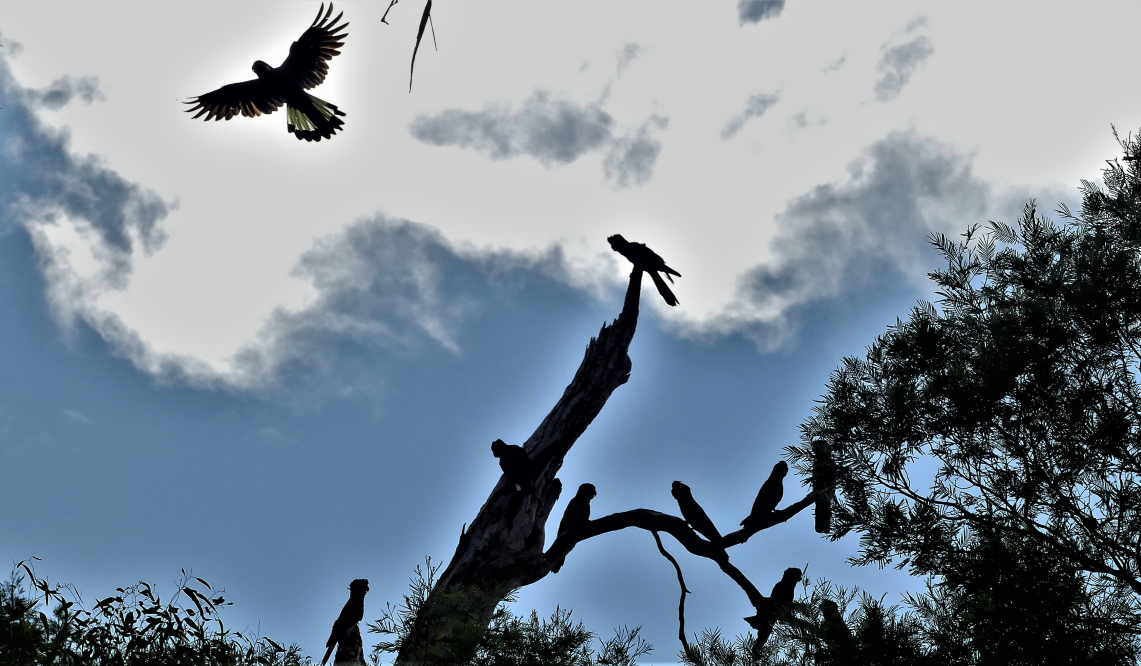
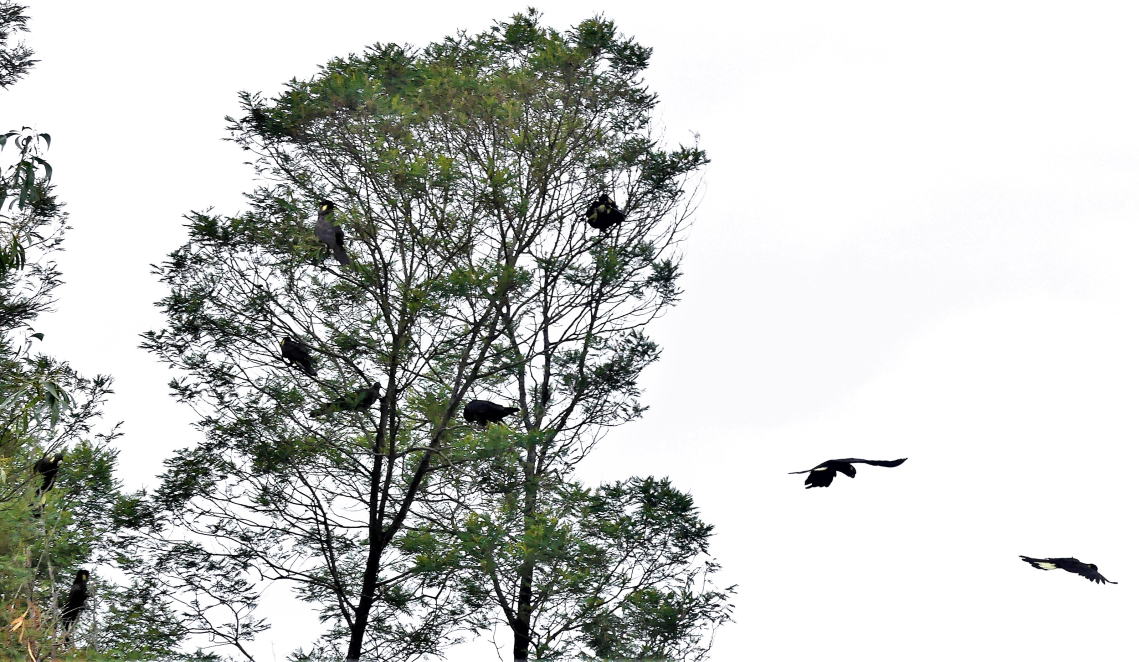
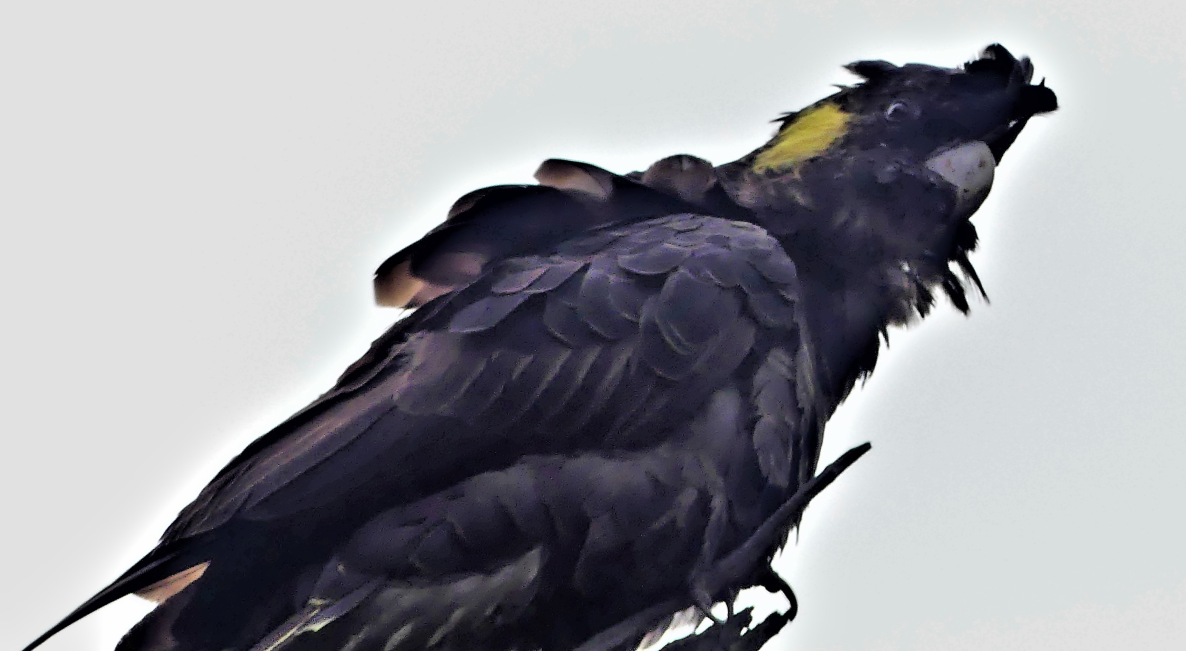
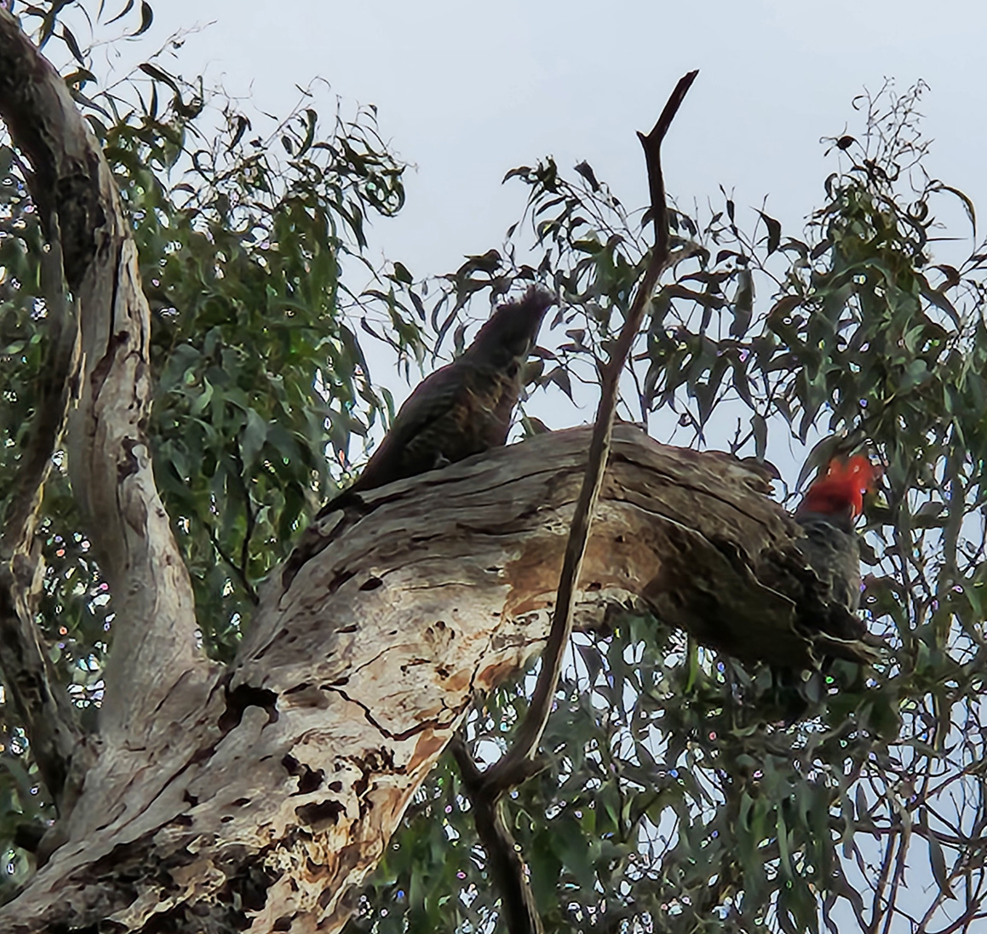
Gang-gang Cockatoos have also been sighted in smaller groups of 2-6 members:
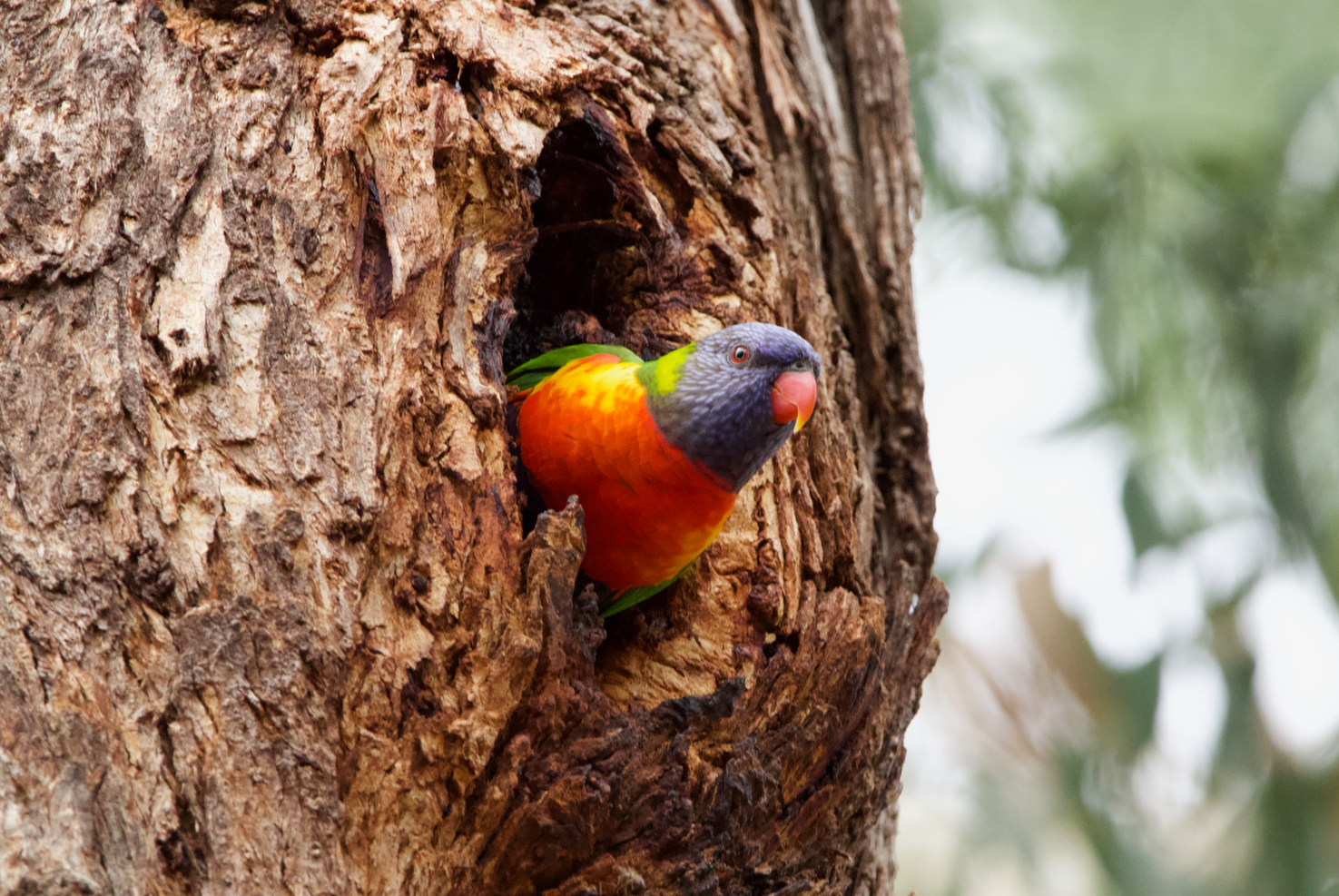
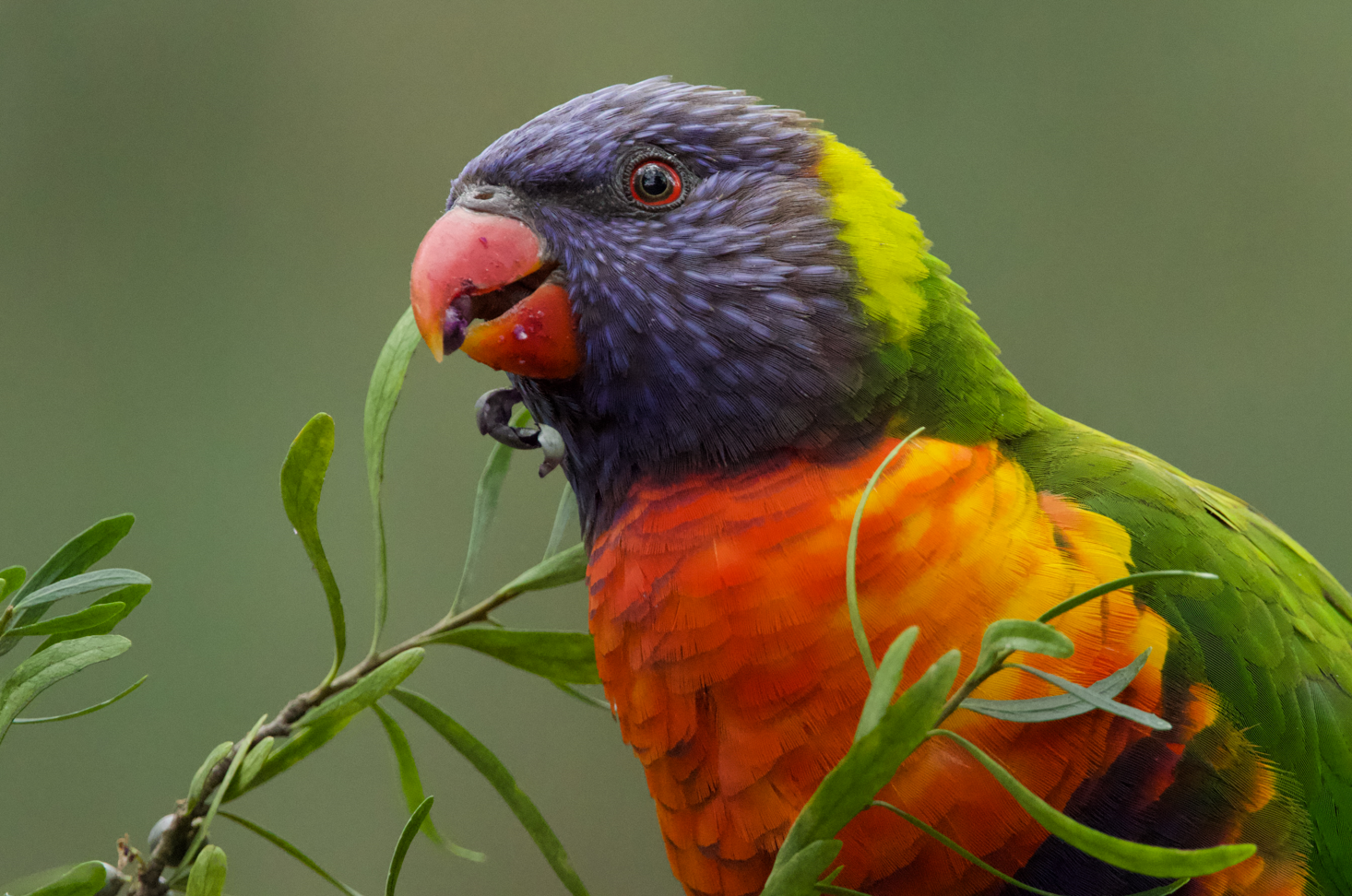
The same Michael who provided our opening photo of the possibly dreadlocked Kookaburras has been active observing our local birdlife – we’ve thrown some of his shots into the lightbox for your enjoyment:
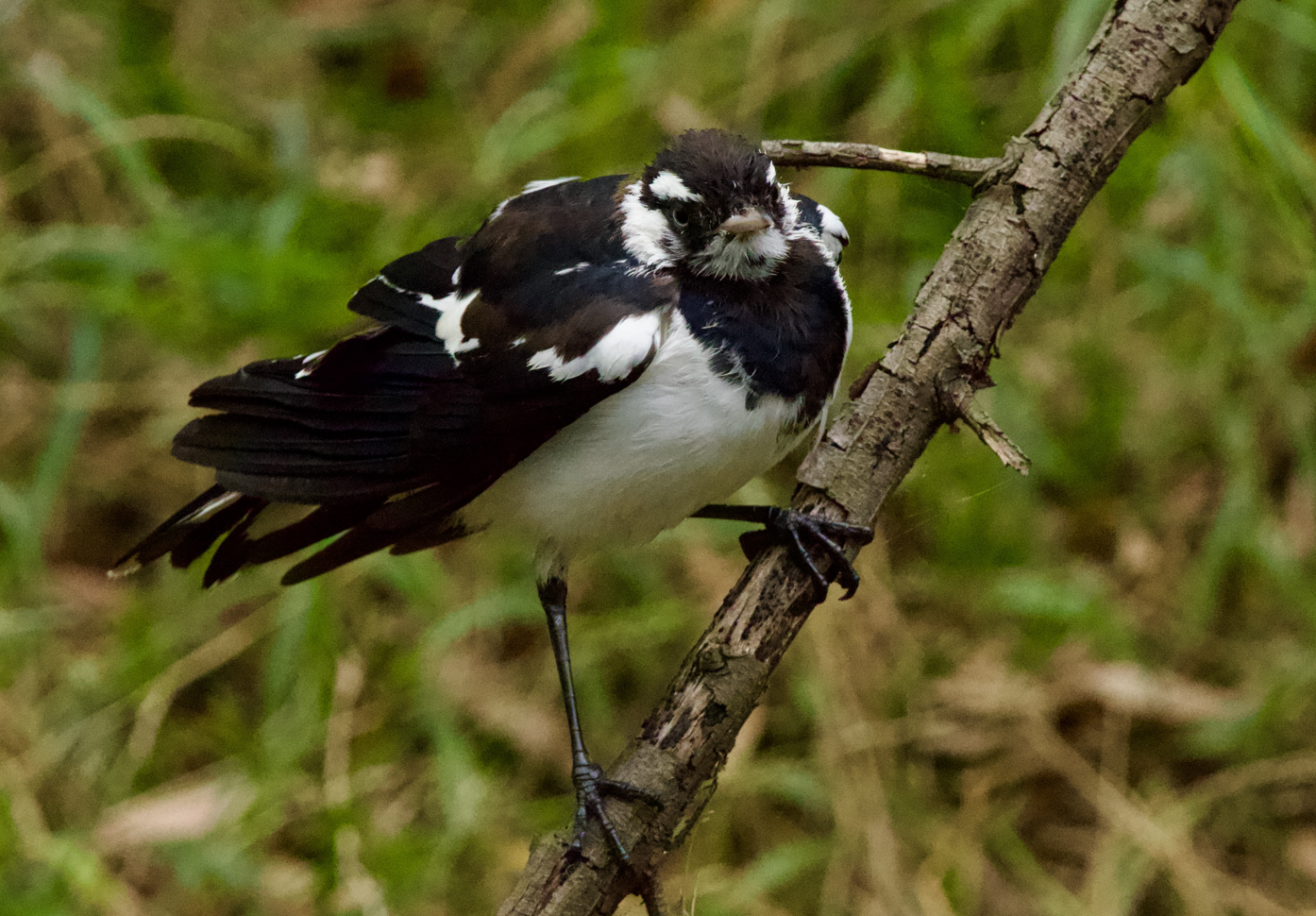
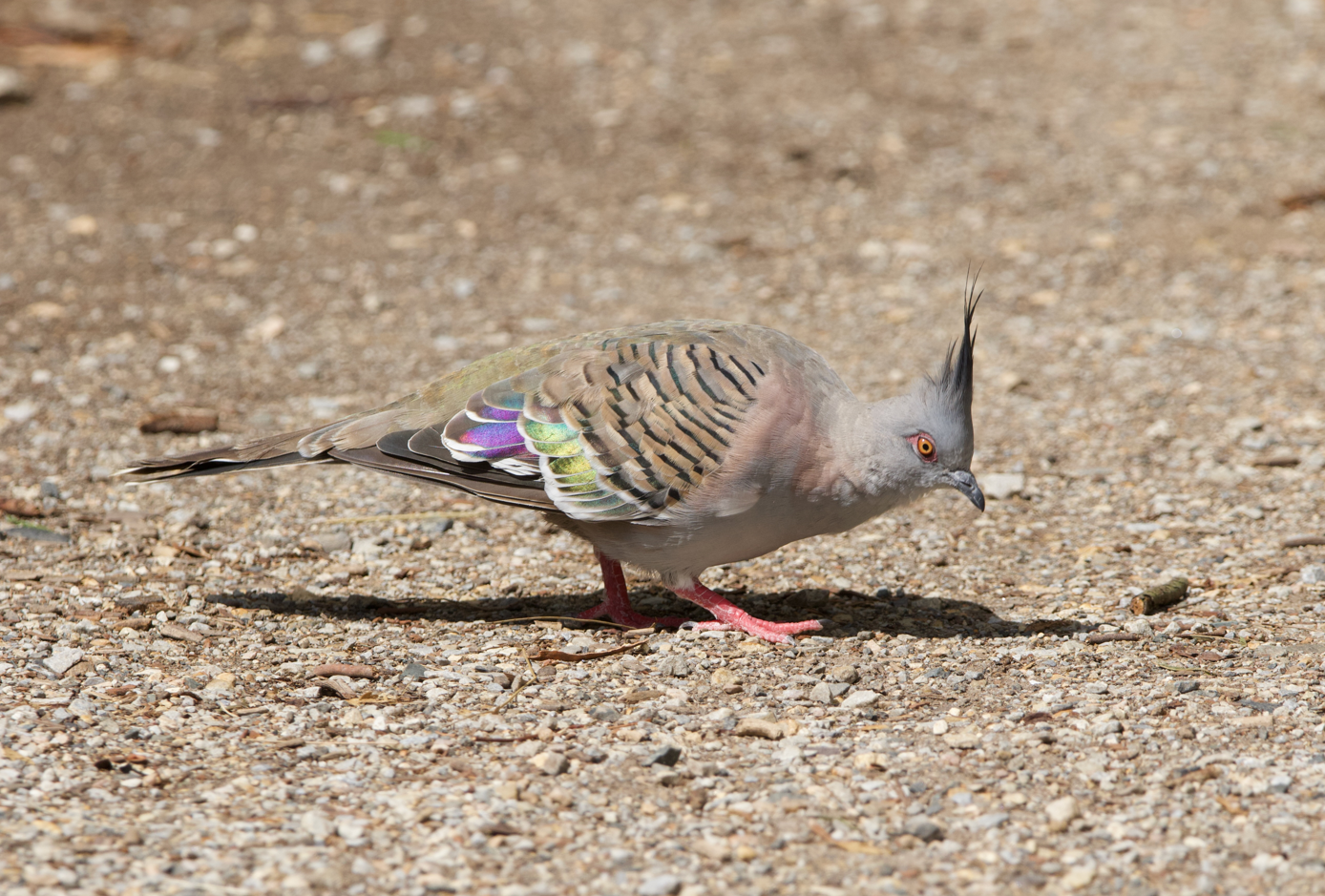
Please click to enlarge and hit the ‘X’ to exit.
For those who read last month’s news, it seems the interloping tenant has been successfully evicted and that order at Lorikeet Hollow has been happily restored! Here’s another pair, checking out another hollow:
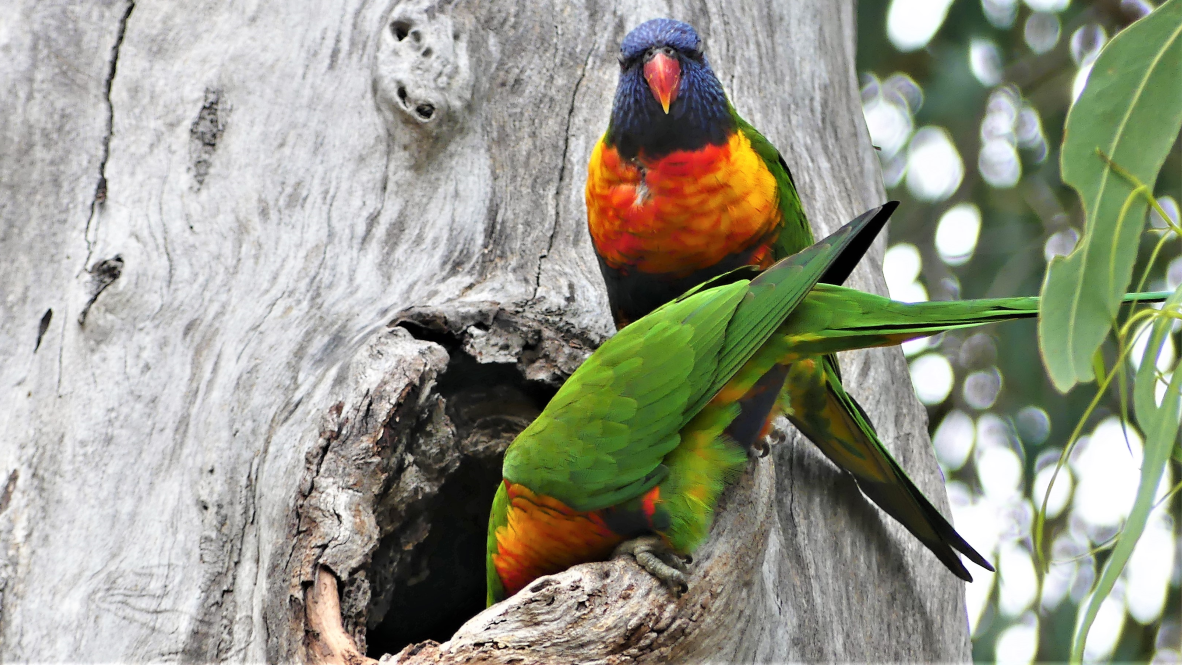
Hollows are in short supply because you need large, old trees or stags (dead trees left standing).
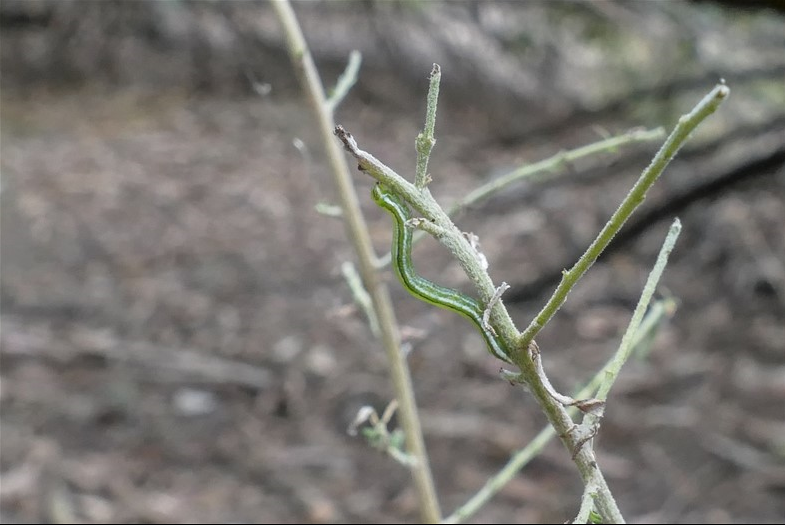
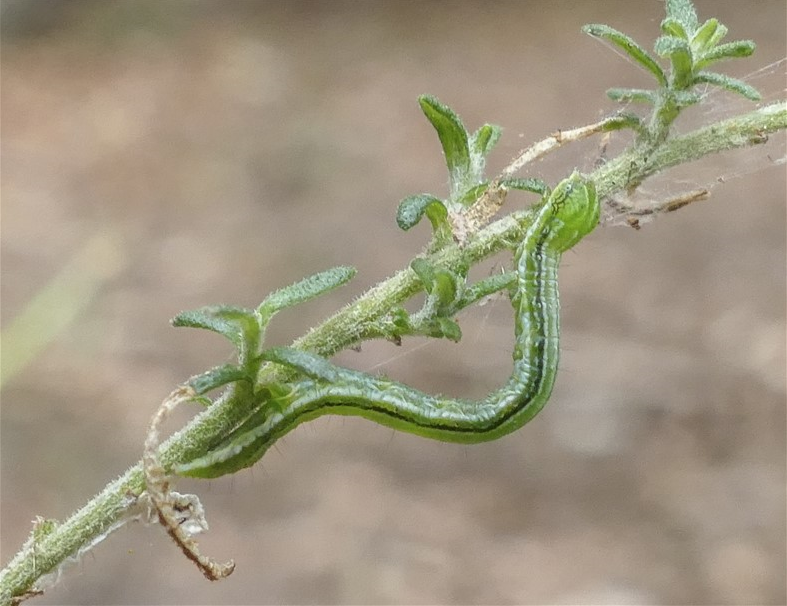
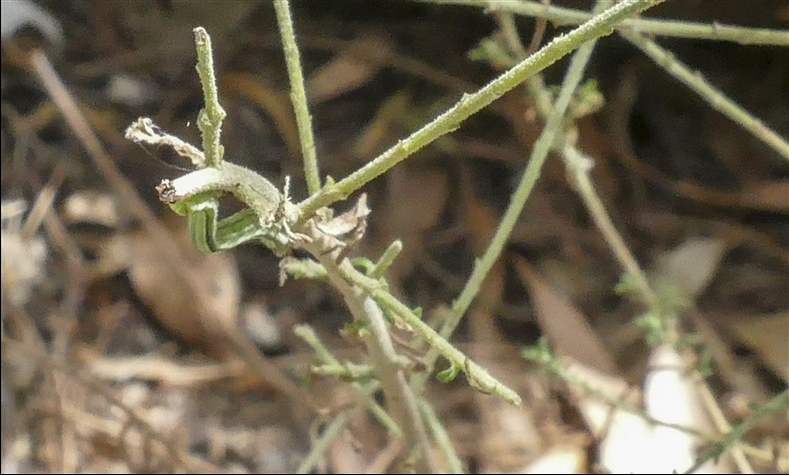
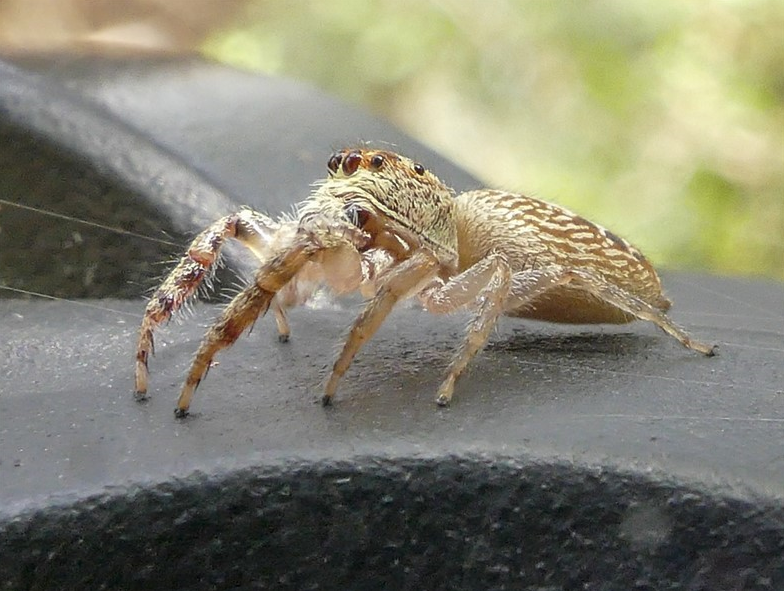
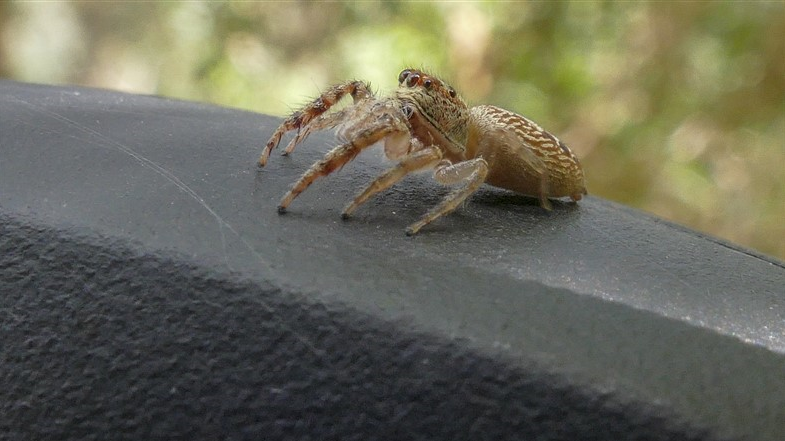
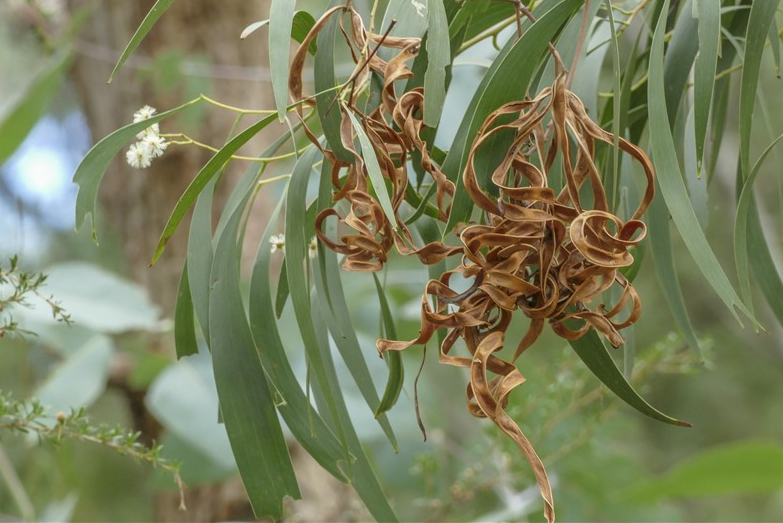
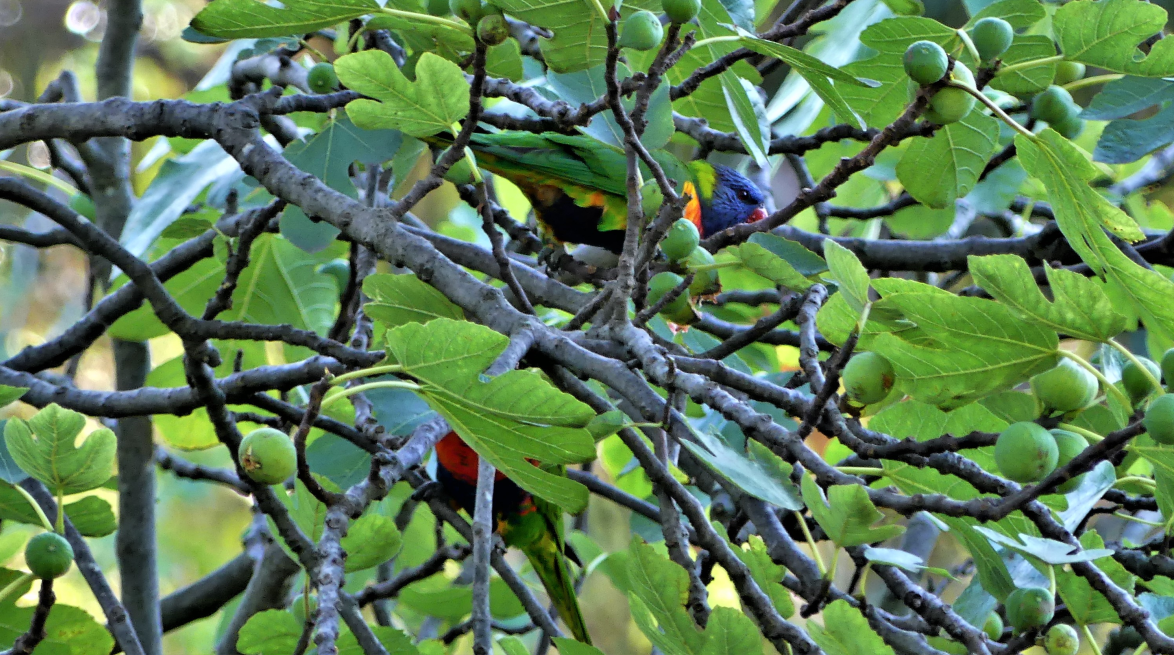
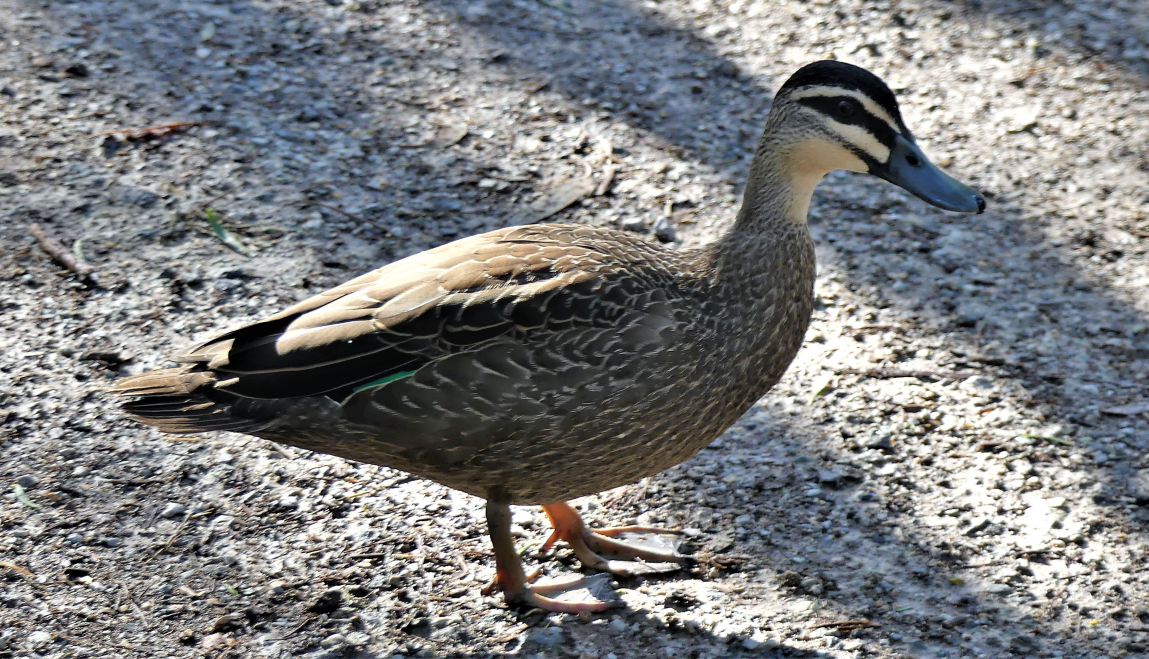
Here are some other sightings for your enjoyment including three view of a green caterpillar, one of another green caterpillar captured by a Kookaburra, two view of a jumping spider, the seed pods of a Lightwood, Lorikeets among the figs and a Pacific Black Duck :

Weed of the Month
Wandering Trad / Creeper (Tradescantia albiflora or T. fluminensis)
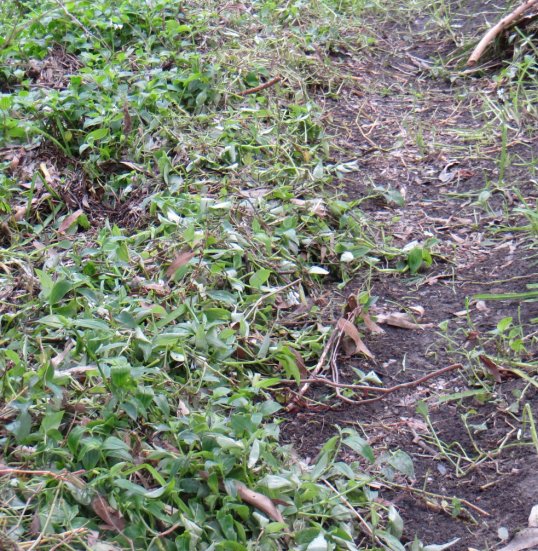
Wandering Trad comes to us from South America and is an environmental weed which has invaded several areas within the park especially along the creek – and also many home gardens.
It tends to proliferate along waterways as broken plant fragments readily take root in moist soil. Its stems have weak points designed to break off naturally! It also spreads easily from garden waste dumped (illegally) in the park.
In the past, we have had some success in controlling its inexorable march up the creek banks by raking it up and rolling it onto itself (shown in the photo) – leaving it to smother itself and (hopefully) die. On the positive side, its thick presence along the waterline does have the benefit of reducing erosion. For that reason, its eradication is not a high priority of Melbourne Water and others.
Birthday coming up!
It has been 40 years since the former Nunawading Council voted in May 1983 to purchase land to create the linear park we all now enjoy. Watch out for coming events to celebrate!
 Blackburn Creeklands