This edition of our newsletter covers May and June in the Blackburn Creeklands. June is the first month of our traditional Winter. The good news is that there are only two more months of Winter to go now – and we’ve already passed the shortest day of the year!
Fairy Ring in Kalang Park
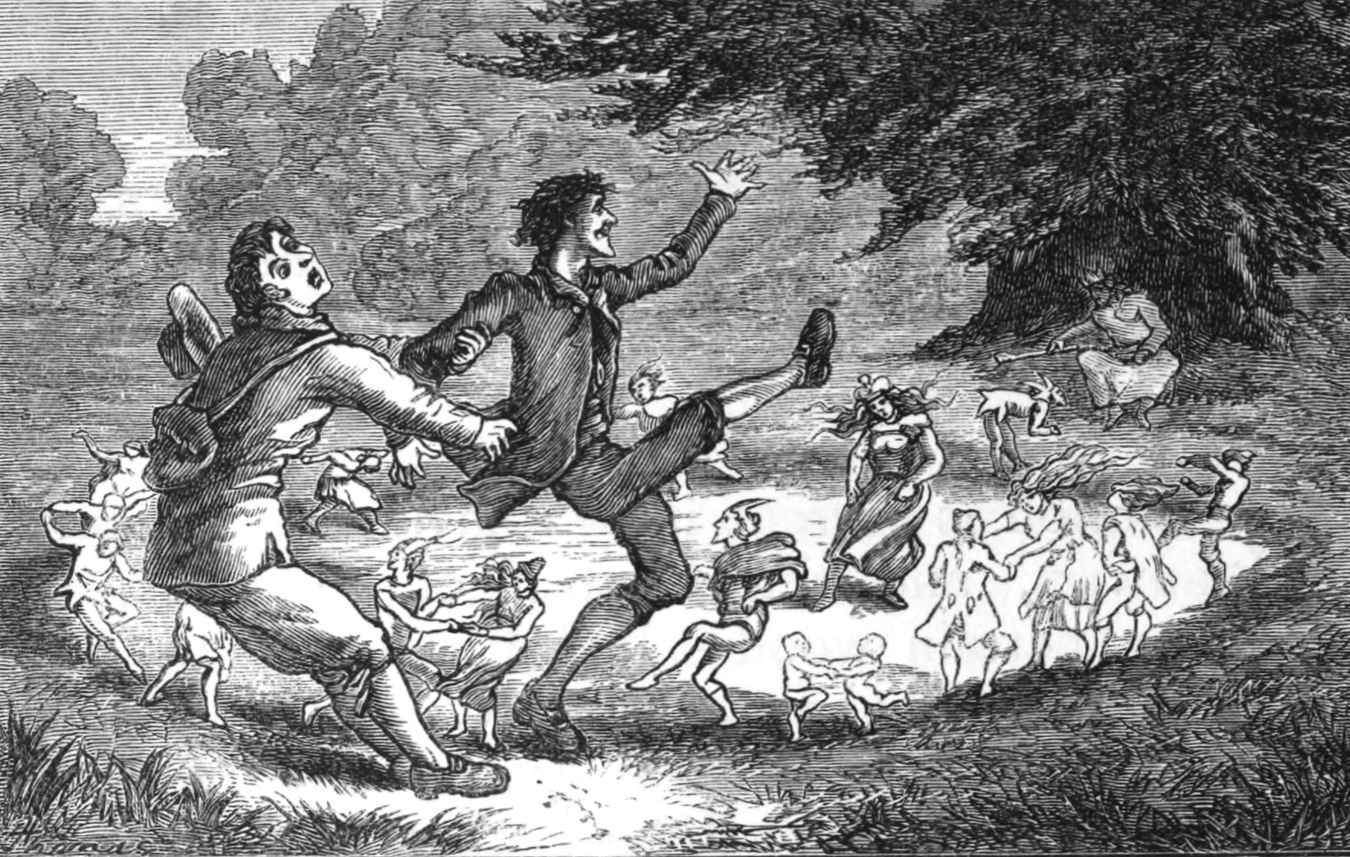
A fairy ring (also known as a fairy circle, elf circle, elf ring or pixie ring !) is a naturally (as opposed to supernaturally!) occurring ring of mushrooms. They are often found in well treed areas – but even sometimes on lawns. On lawns, sometimes the ring is marked by largely dead grass as the fungus competes with the normally occurring grass. Conversely, in the case of other species of fungi, the grass grows more luxuriously as the fungus supplies nutrients to the grasses.
Fairy rings are the subject of much folklore and myth worldwide—particularly in Western Europe. They are often seen to be dangerous places linked with occult menaces in folklore. On the other hand, they are sometimes linked with good luck!
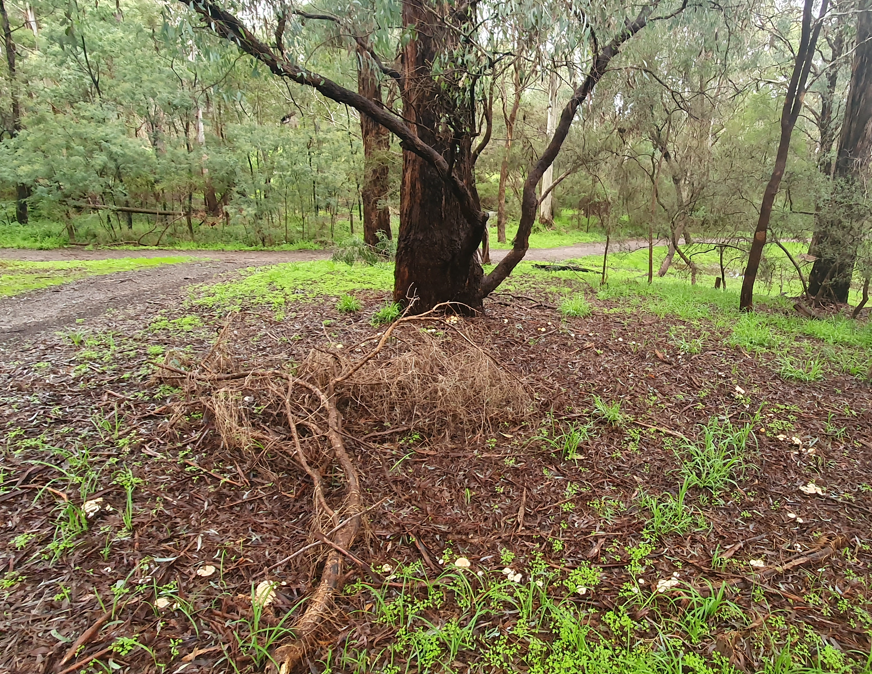
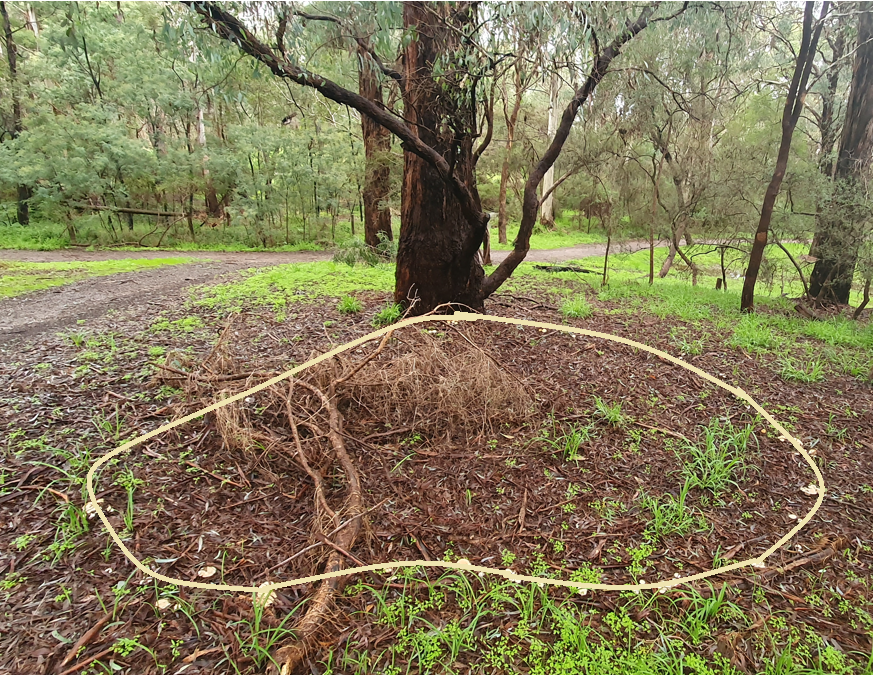
Fairy rings are actually caused by an individual fungus growing underground. The fungus sprouts lots of small strong but brittle threads underground, called hyphae growing in all directions. Hyphae grow at their tips – hence the tendency for a roughly circular shape. The part of the fungus that we can see – the mushrooms (which are the flowering part of the fungus) – spring up at the edge of the hyphae, creating the roughly circular “fairy ring”.
The gallery below shows gilled fungi found in Blacks Walk and Kalang Park and a “polypore” found in Blacks Walk:
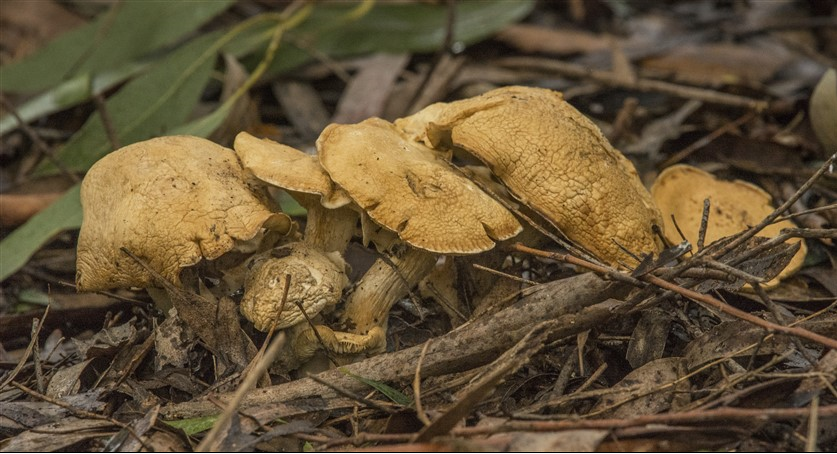
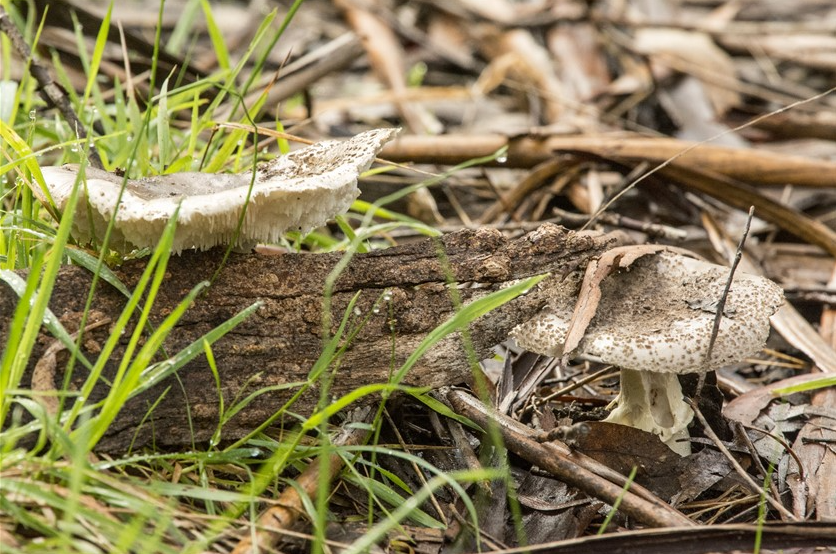
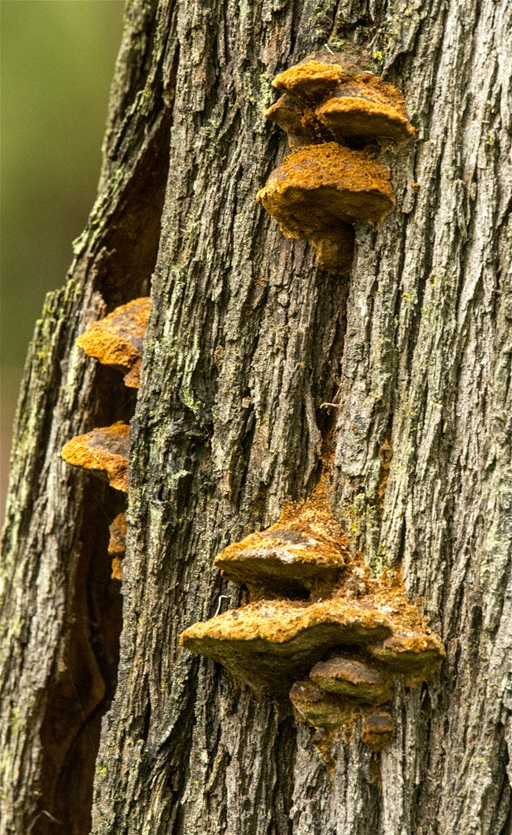
The most common mushrooms (ie fungal fruiting bodies) have gilled structures underneath. The gills are used by the mushrooms as a means of spore dispersal. They are often called “agarics“.
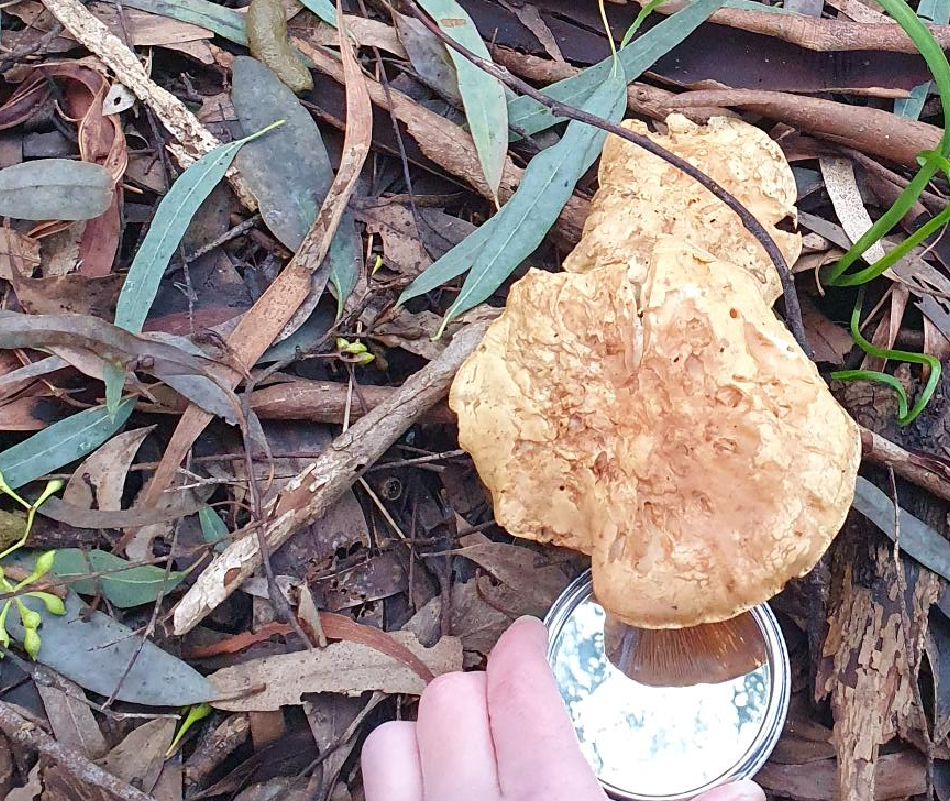
A bolete is another type of mushroom. It can be identified by its mushroom cap which is clearly different from its stem. On the underside of the cap there is usually a spongy surface with pores instead of gills. A similar pored surface is found in polypores, but those species generally have a quite different physical structure from boletes – having much firmer, often hard, woody, flesh.
How do you tell the difference between a bolete and a gilled mushroom? One way is to have a look underneath – we recommend that you use a small mirror so as not to disturb the fruiting bodies:
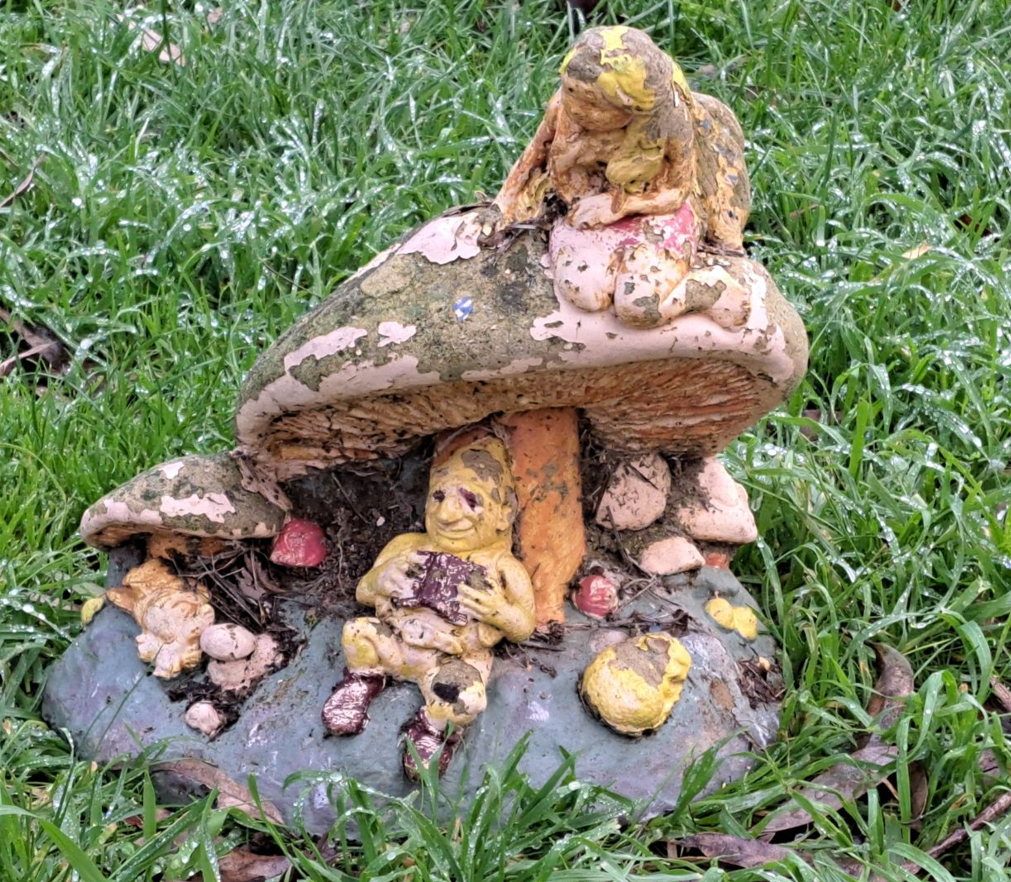
Oddly enough, this statuette recently turned up in Kalang Park on its Pakenham Street boundary near private properties to the north:
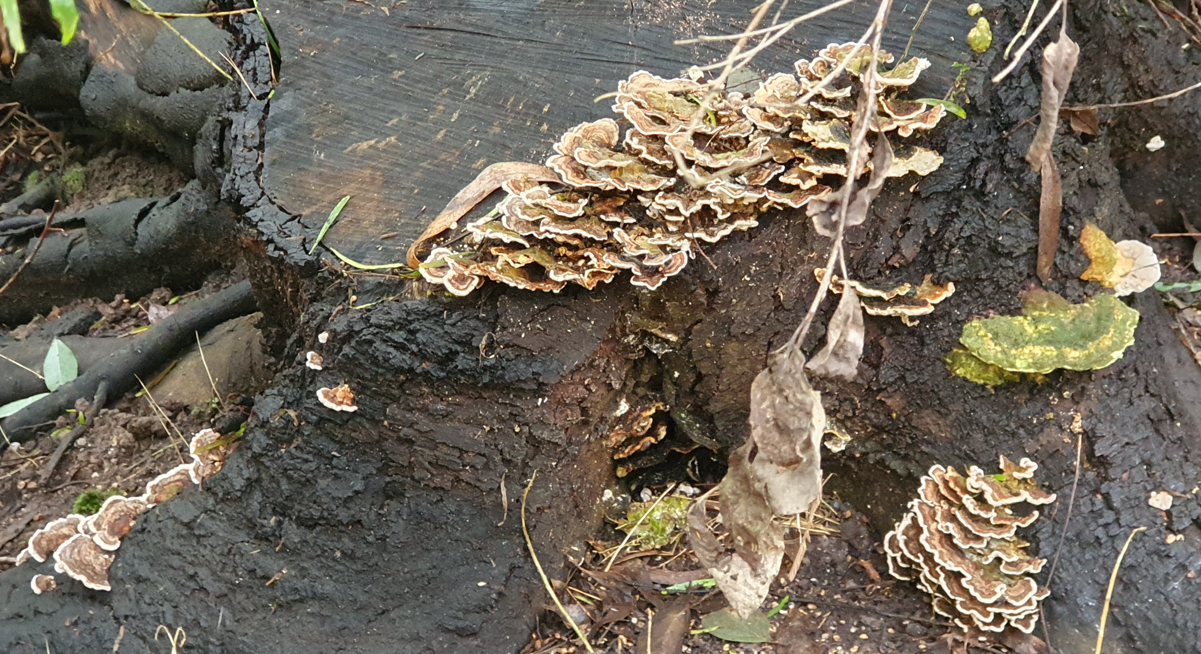
Polypores are a group of tough, leathery or woody fungi that usually form large fruiting bodies with pores or tubes on the underside. Polypores are much more diverse in old natural forests with lots of old dead wood than in younger managed forests or plantations. Consequently, a number of species have declined drastically and are under threat of extinction due to logging and deforestation.
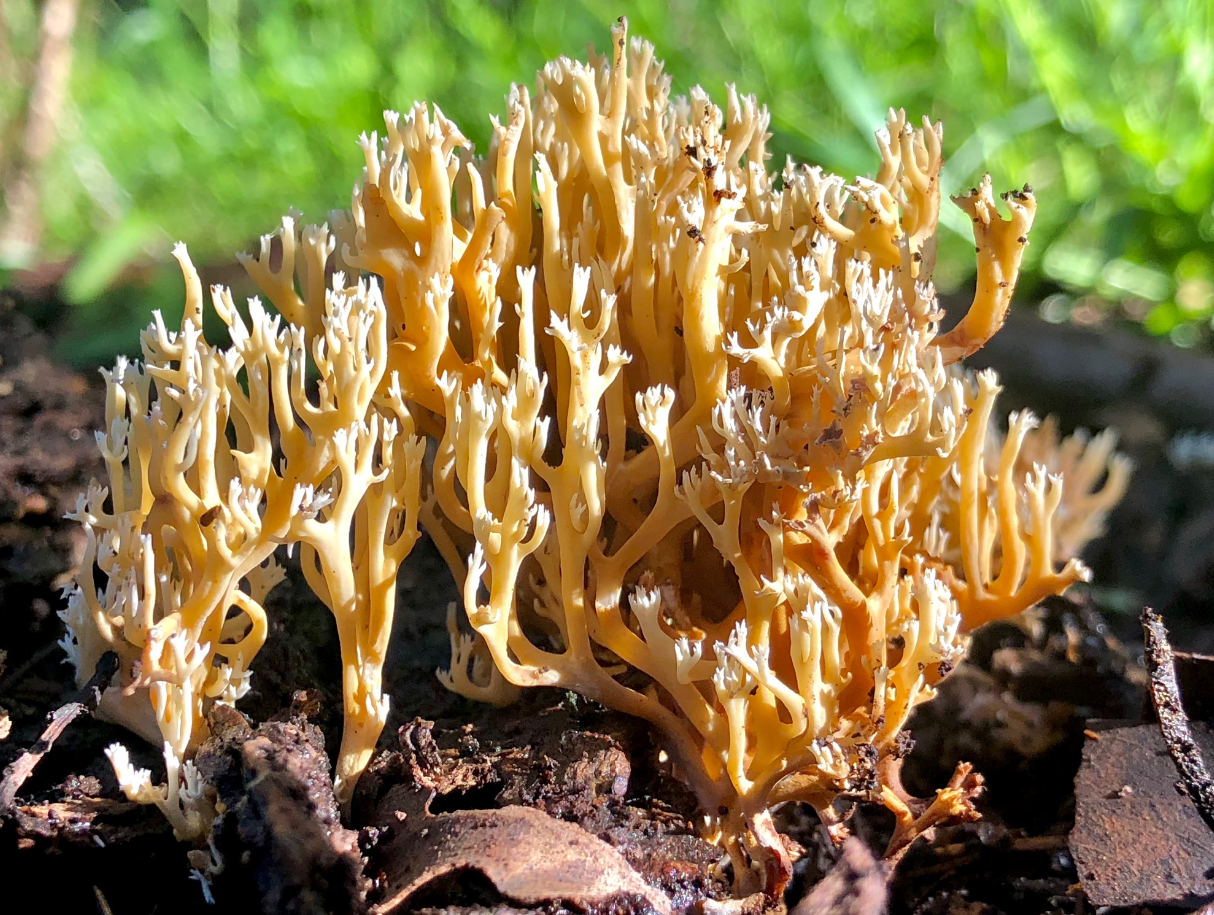
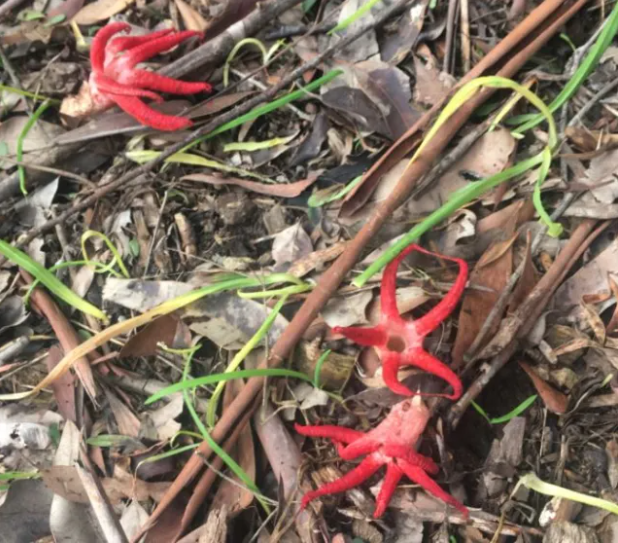
Other types of “mushroom” are morels, puffballs, stinkhorns, coral and bracket fungi among others. Here are some photos from our records:
Despite our now being well into winter, there are still plenty of mushrooms to see in the park:
Our Noticeboard currently features a display of some of the varieties you might find locally…
Volunteering
National Volunteer Week

National Volunteer Week (15-21 May) was especially recognized by Council this year – registered volunteers were sent an email with a voucher for 10 plants and also received a letter of thanks from the Mayor.
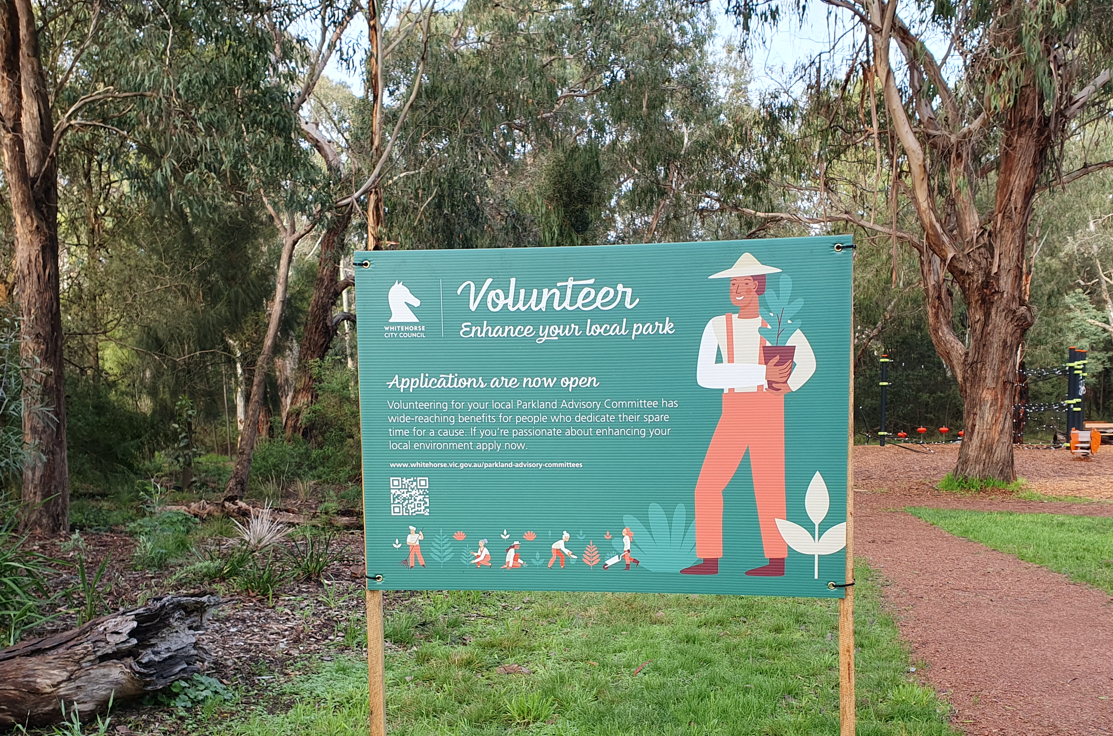
In the meantime, Council ran a strong campaign encouraging people to volunteer for park committees or as general volunteers. The campaign ended on 9th June and since then, our committee has been provided with the initial contact details for several people interested in volunteering on our committee and/or in working bees.
We have welcomed their interest and invited them to attend a committee meeting and/or working bee to experience our work first-hand. Many have been able to – and we are still to meet one or two who have been unavailable. We are very pleased that we seem to have three or four new Committee members in response. Another 2 or 3 more members would ensure our future – it’s not too late to join us! Just contact us via our gmail account if you are interested.
The term of the current BCAC Committee completed on the 30th June. Sadly, three of our existing Committee are not renewing and we have already lost some great contributors over the last couple of years. So we need the new recruits to keep us thriving. It’s also great to have new blood on the Committee for fresh ideas and enthusiasm.

Our Annual General Meeting (AGM) is coming up on July 25th followed immediately by the usual monthly meeting. These will be the first meetings of the new committee and Office Bearers will be elected at the AGM. Visitors are most welcome!
Maintenance Team Report
In May:
- The first two working bees were spent in Kalang Park sites weeding, mulching and doing some in-fill planting.
- The 18/5 working bee was spent weeding in preparation for the second Community Working Bee on 2/7.
- The 25/5 working bee was spent preparing for the first Community Working Bee for the year on 28/5.
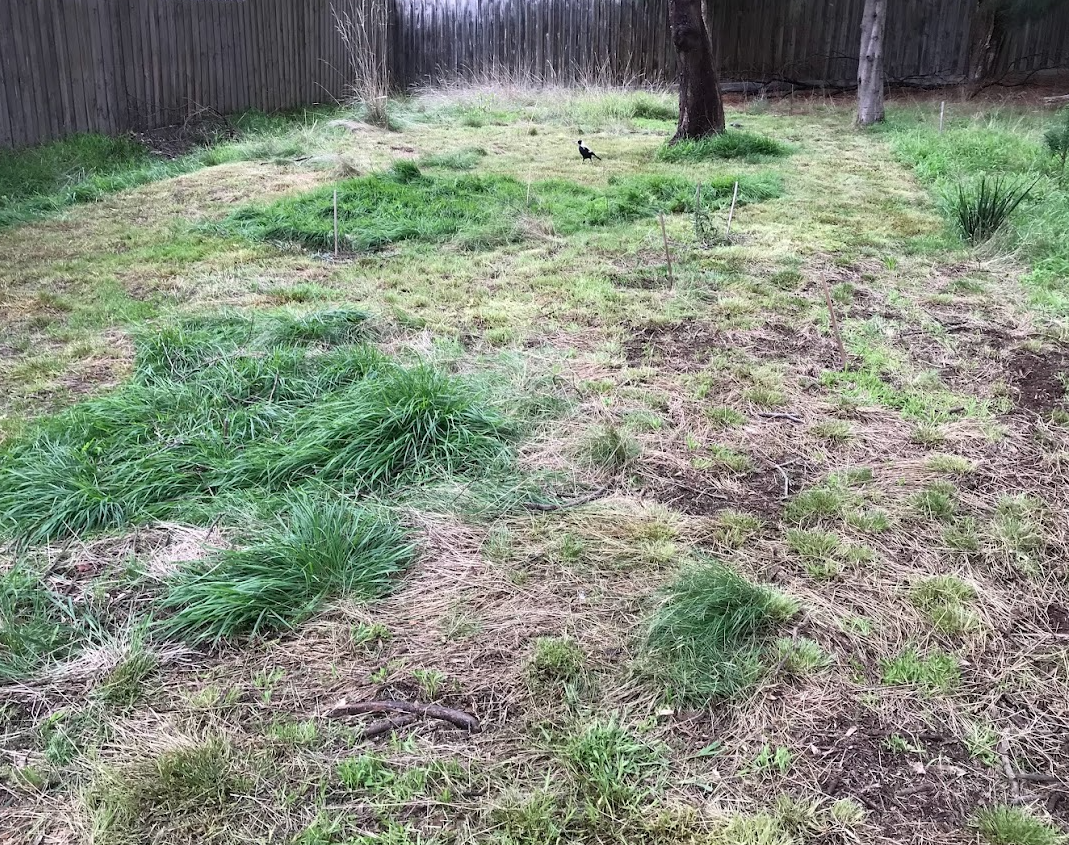
The team spent most of June continuing work in Black Walk in the two areas either side of Garie Street and most recently, to the north of the bridge and to help prepare for the 2/7 Community Working Bee. The work in Blacks Walk included arranging for Council to sensitively mow the northern part of the grassed area. This is to encourage new growth as there would be after fire.
Our first Community Working Bee for the Year
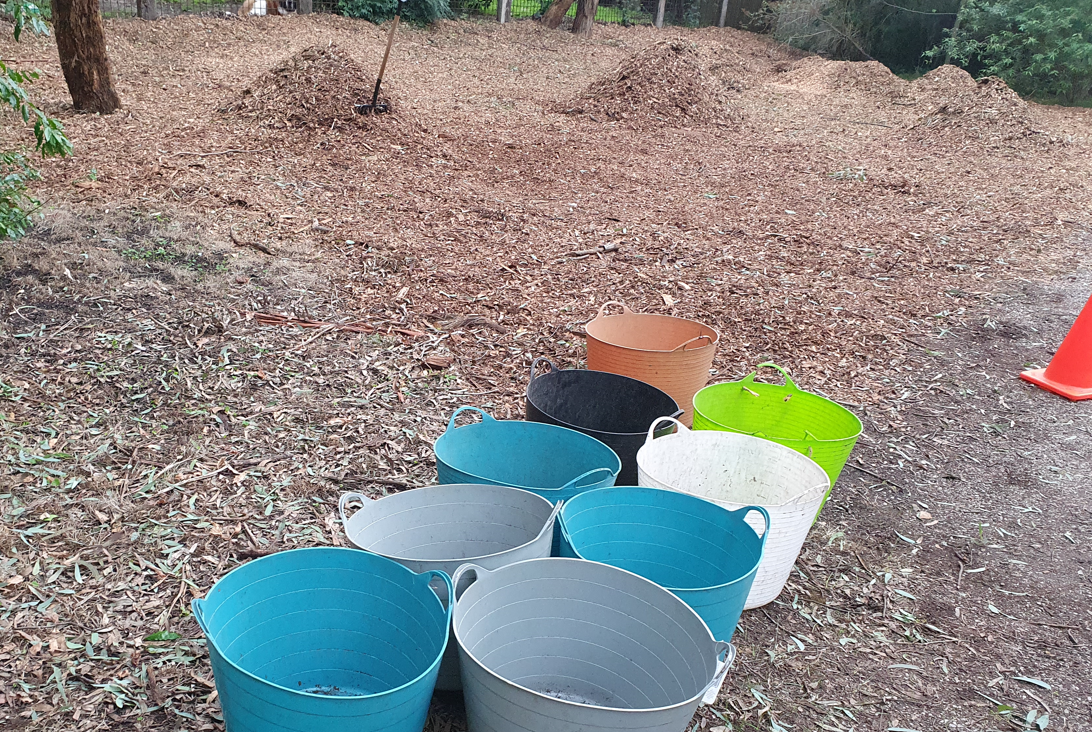
The day started out fairly bleakly – cold and wet – but gradually improved as the morning wore on – just as the Bureau of Met RADAR had promised to our crew monitoring conditions well before commencement of work on site. The project was to plant up what was formerly a quite weedy grassed area hosting a few weedy trees. Council and Committee preparation resulted in the apparently barren, (over) mulched area ripe and ready for planting that you see above.
We are very grateful to the indefatigable neighbours, friends and Committee members who all worked together to make the day a resounding success. This includes the people planting, staking, digging, weeding, laying out plants, managing, speech making, providing water, offering shelter and excellent muffins for morning tea, the tea itself of course and other beverages.
It is truly amazing what can be done with many hands in just a few hours in non-cooperative weather! About 170 plants went in – mostly into a fairly tight site. Hole digging by the Thursday crew in advance proved very helpful.
The next stage of development of the site (to the west) should be ready in about 12 months. Council is ready to remove more woody weeds on the western side of the site.
Last Sunday’s Community Working Bee
Our last Community Working Bee on Sunday (2/7/2023) also had its challenges. Not so much the weather – not too cold and nor was rain forecast to put people off. However, we had a disappointing turn up with no new faces and only 2 non committee – both of whom are long time regulars. Maybe the school holidays or end-of-financial year sales-explain things ?
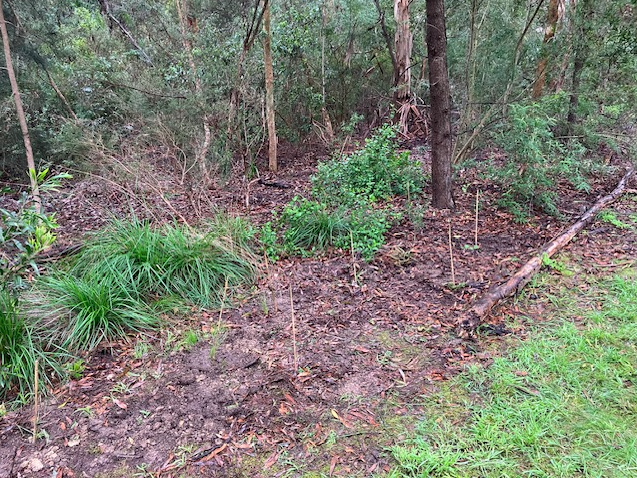
Nevertheless, the number of plants put into the ground (182) was astounding considering there were only 8 of us in total and not all planting. Special thanks go to the Thursday weeders Peter and John D who prepared lots of holes last Thursday and a former committee person John M who was there for 4 hours digging holes as well as planting. Everyone worked just so hard. Our thanks to all who participated.
Unfortunately, our battery operated pump for accessing water from the creek refused to work. Fortunately, we were able to fall back on water supplied by a generous local to save the day.
If you can help us with any feedback of our choice of day, date or any other issue, please contact us to let us know.
What’s Next?
We have two more working bees planned for the planting season: one in the northwest corner of Furness Park on Sunday, July 30th and another planned for August 29th (no target site as yet).
If you haven’t been able to participate so far this year, hopefully we’ll see you on one of those dates! By the way, we fully understand that not everyone can dig and plant. No matter, please come along for a yarn and cup of tea in any event.
Platypus in the Creek Update
In a coincidental segue to the article in our last edition on the possibilities of having platypuses (ok, platypi for the purists!) in our creek, the ABC TV ran a fascinating story filled with pathos and hope during the month called The Platypus Guardian – that was recommended to us by several Friends.
It’s about platypus in an urban creek including some degraded environments in Hobart – a great story on so many levels!
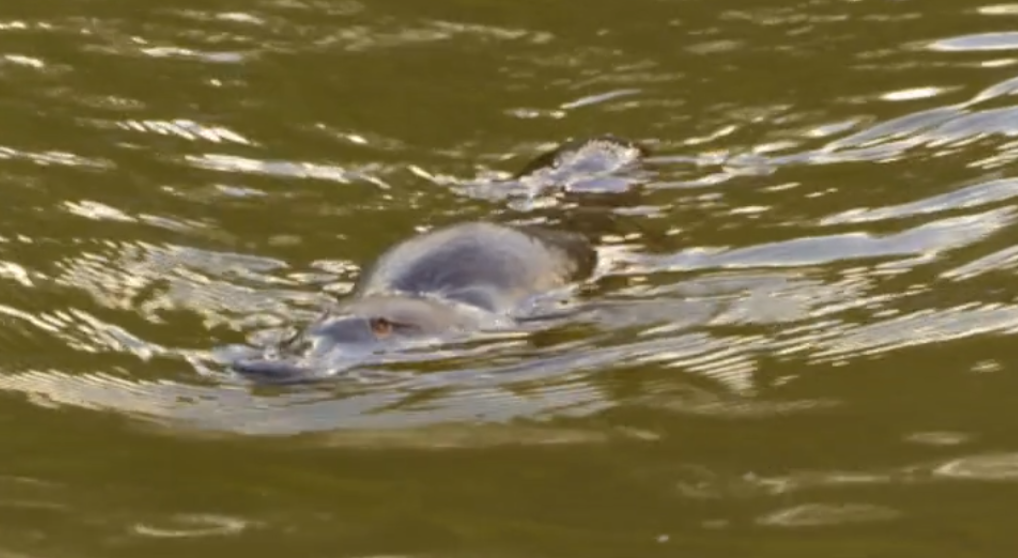
You can find it on ABC iview here.
Feeding Birds with Bread and Biscuits in Park

We’re aware that some folks are still feeding bread to wild birds – this is not a good thing to do!
There are lots of good reasons not to feed our wildlife in the park:
- Bread and biscuits do not contain the nutrients our indigenous birds need.
- This can cause birds to become sickly and less able to escape predators.
- Birds become dependent on junk-food handouts and no longer forage for their own natural foods.
- Bread on the ground attracts pests like foxes which prey on wildlife and/or compete for other food and nesting sites, forcing more timid native animals out.
- Left-overs attract vermin such as mice and rats.
What can you do to help ? If you are able to, collecting and binning bread scattered on the ground would be great – that’s what we do when we see it!
Corridor Matters
KooyongKoot Alliance Web-site
Our Blackburn Creeklands Advisory Committee is a member of the KooyongKoot Alliance (KKA) as are another 20+ Friends Groups within the Gardiners Creek catchment – including our patch and our corridor. KooyongKoot is the original aboriginal name for Gardiners Creek.
The KKA has recently launched its own web-site at https://kka.org.au/ with the assistance of funding from the Suburban Rail Loop Authority’s Community Projects Fund.
By all means, have a look – we have our own page there at https://kka.org.au/blackburn-creeklands/#Friends – as do many other groups along the creek and on its tributaries Scotchmans, Damper and Back Creeks.
60 Main Street Development
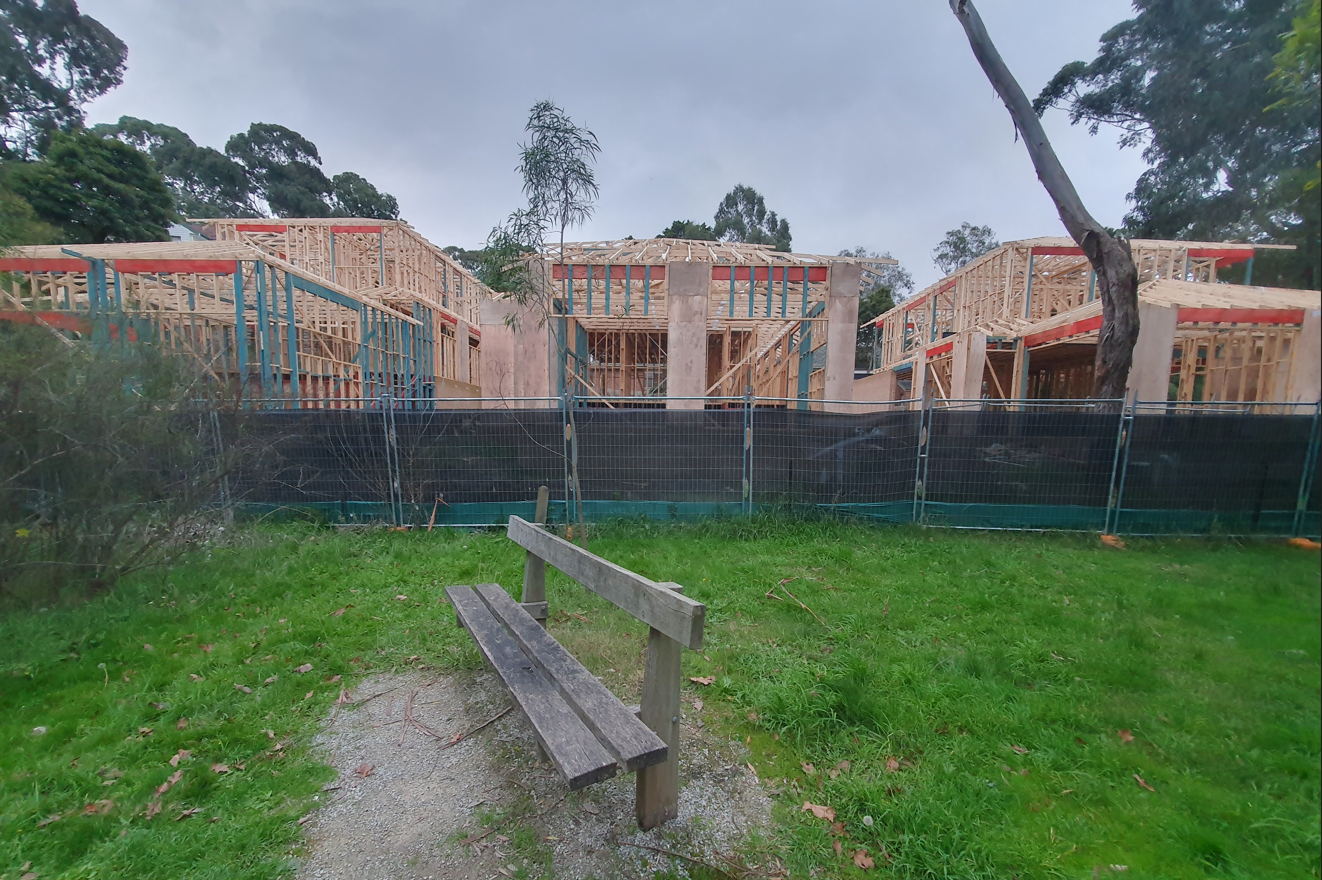
The development project adjacent the park at 60 Main Street is well advanced now with its framing largely completed and a sewer connection point recently remade in the park requiring excavation work. As predicted, the units have an imposing presence on the adjacent parts of the park – exacerbated by the narrowness of the park at that point.
Readers may remember the popular and well-supported BRAG (Bellbird Residents’ Action Group) campaign to have the then vacant block of land added to the park in 2019. The campaign culminated in Whitehorse Council’s rejection of a plea by petition to purchase the property. An incredible opportunity lost forever…
Development at Laburnum Primary School
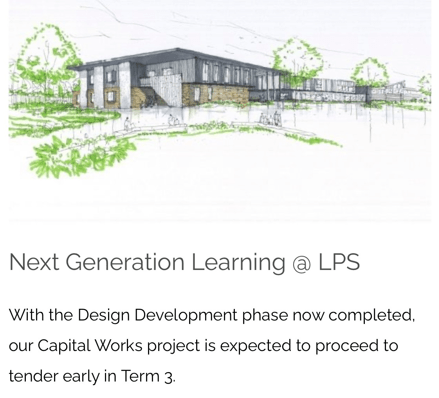
Through Friends who are parents of Laburnum Primary School kids, we have learnt that LPS is planning to construct a new building overlooking Blacks Walk.
We are unclear on where the building is to be sited – perhaps where the vegetable gardens are now (?).
Government schools are not bound by the usual planning laws that apply to most of us.
Recent communications from State MHR Paul Hamer indicate that the project is significant – costing $8.8M and comprising 10 classrooms. We trust that we don’t have another unwelcome imposition like that from the 60 Main Street project…
Sightings
On their June walk, the monthly birdwatching group found a hot-spot of several species of small birds feeding in Blacks Walk. They included Brown Thornbills, White-browed Scrubwrens and a Golden Whistler; Spotted Pardalotes could also be heard in the canopy above.
Author and photographer Chris Tzaros has written about the phenomenon of mixed species of insectivores (insect eaters) feeding in flocks – sometimes including 15-20 species and 50-60 birds. We didn’t see those numbers – but it is thought that there would be additional safety for flock members with more eyes looking out for predators and that birds of mixed species actually benefit from feeding “cooperation”. Each species feeds in its own niche – so shrub level feeders such as the Thornbills and Scrubwrens flush out insects that might end up being taken by high shrub feeders such as the Golden Whistler who might disturb insects eventually being taken by canopy feeders such as the Pardalotes.
The mixed flock slowly moves through the vegetation foraging on insects at all levels. Insect numbers are lower during winter so feeding opportunities may well be improved this way. Once Spring arrives, the birds become territorial and their location becomes more fixed around nesting sites and insects become more abundant.
Here’s a photo of the Golden Whistler (taken in low light):
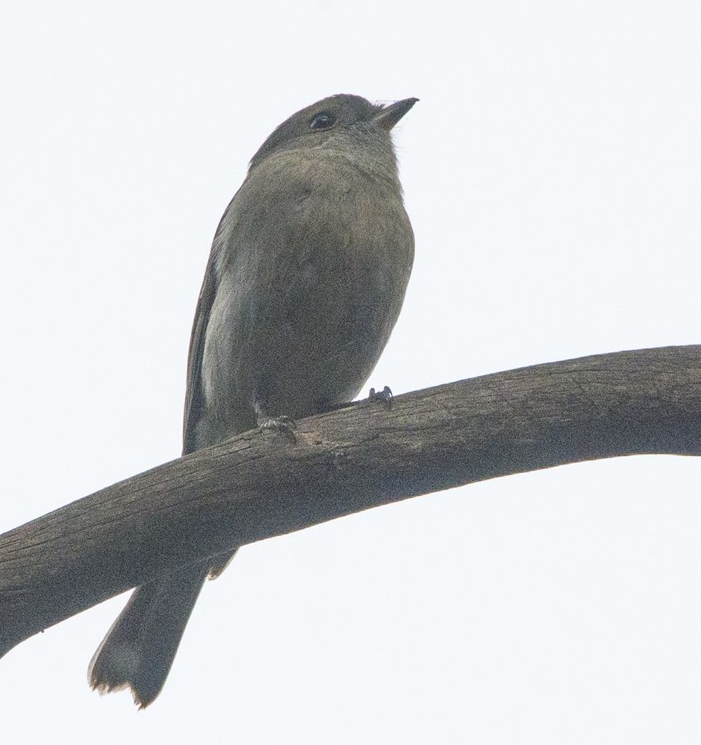
Just last weekend, another Golden Whistler was spotted feeding in Kalang Park under unrelenting harassment by Noisy Miners.
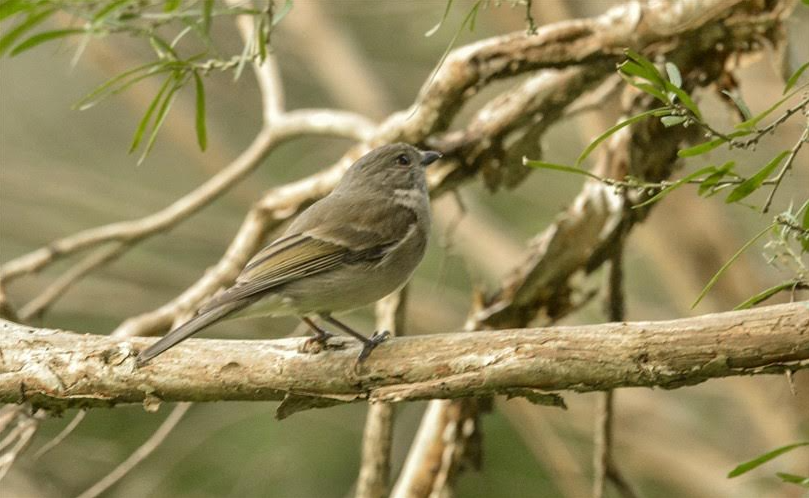
“Where’s the gold?” we hear you say… well, the bird in our first photo is a female – it’s the adult male that has the striking golden plumage. The second photo shows an immature male – our experts tell us the stripey wings give his gender away.
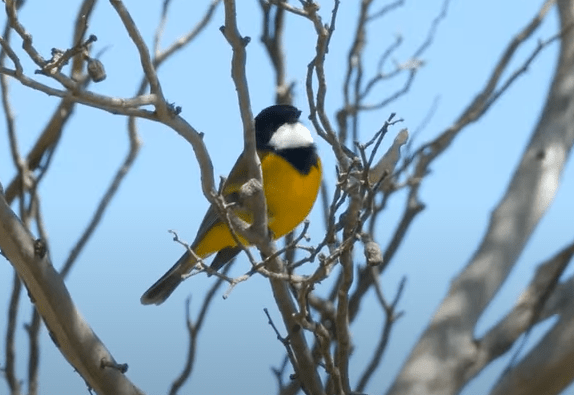
Let’s hope one of the females whistles up a mature male partner before too long! The photo alongside is from elsewhere to help you recognise the male bird when it shows up. You can visit this link to see more and even hear his whistle too !
A mature male has recently been seen on multiple occasions at Blackburn Lake…
Miscellaneous Sightings
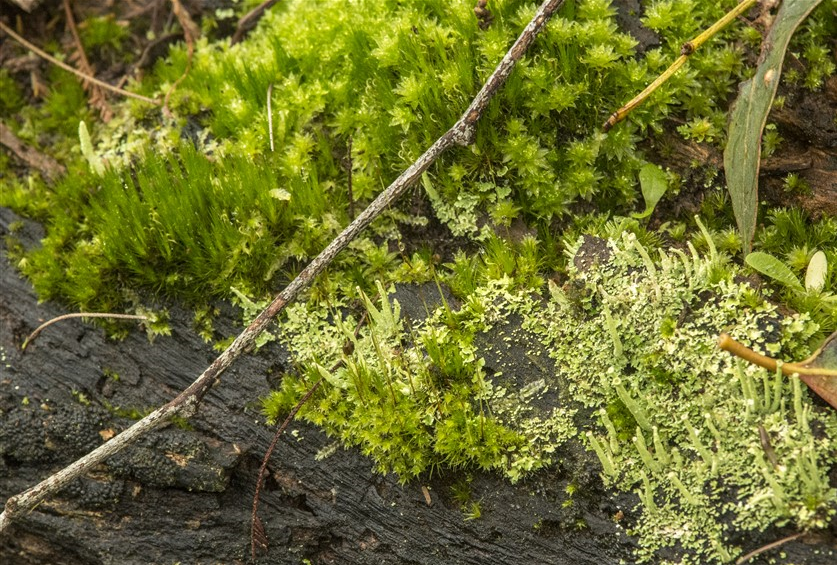
These mosses in Kalang Park look like part of a dense miniature forest:
Correa reflexa (local green form) flowering nicely in Kalang Park:
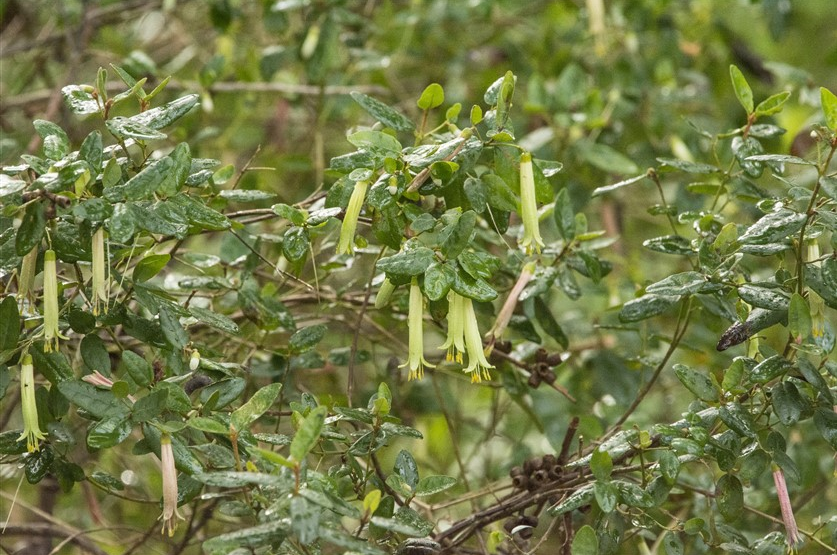
The “nuts” present (above) are gumnuts fallen from the canopy above.
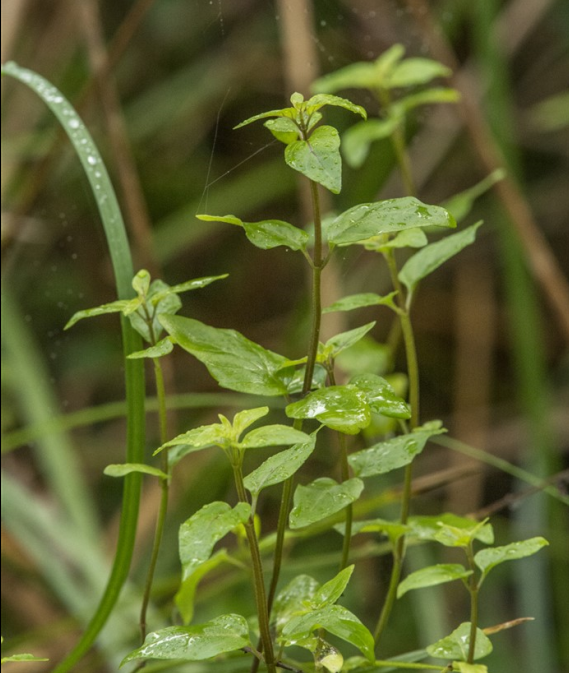
Here, is some River Mint (Mentha australis) in Kalang Park:
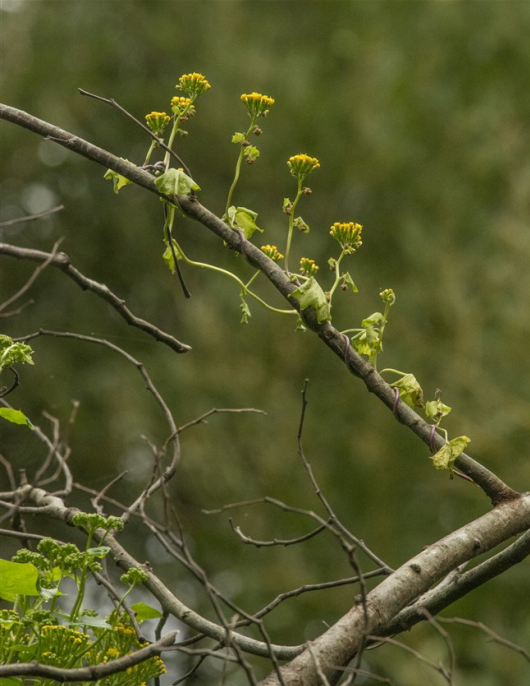
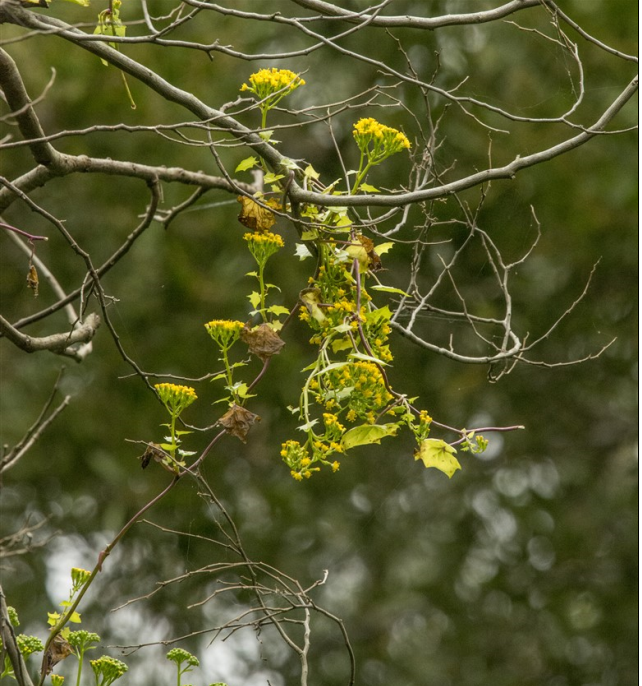
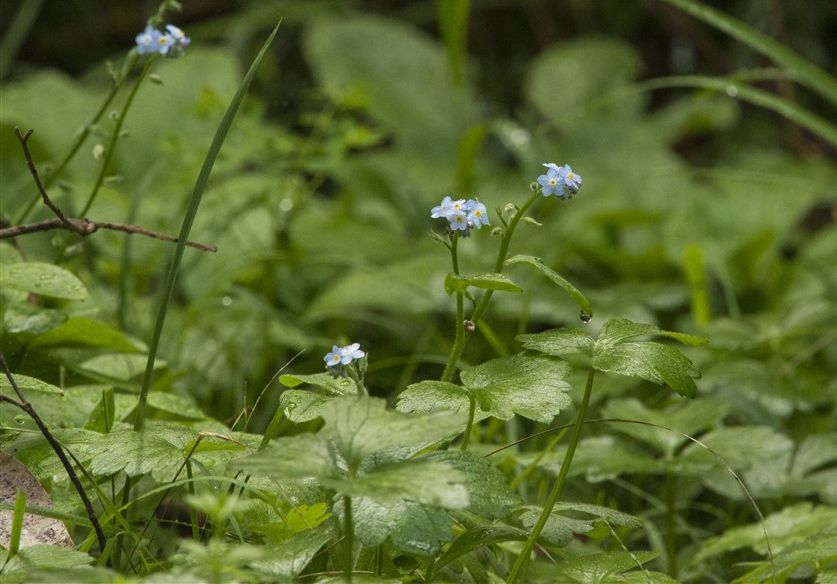
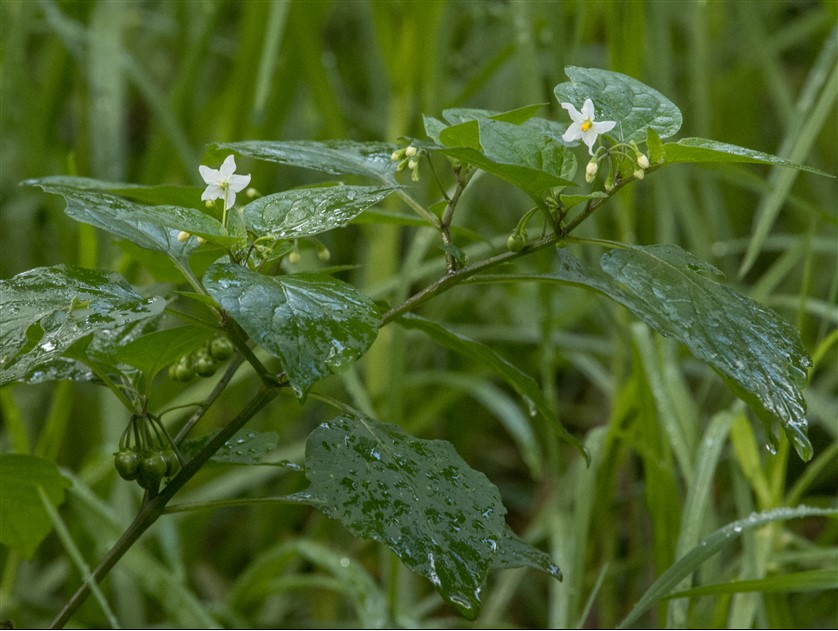
Winter may be a quiet time – but we’ve noticed weeds flowering and producing seed nevertheless. This gallery of mid-June photos shows two shots of Cape Ivy (Delairea odorata), Forget-me-nots (Myosotis sylvatica) and European Black Nightshade or Blackberry Nightshade (Solanum nigrum):
 Blackburn Creeklands