Welcome to the August, 2023 edition of our monthly newsletter. Many species are nesting now in what seems to have been an early Spring.
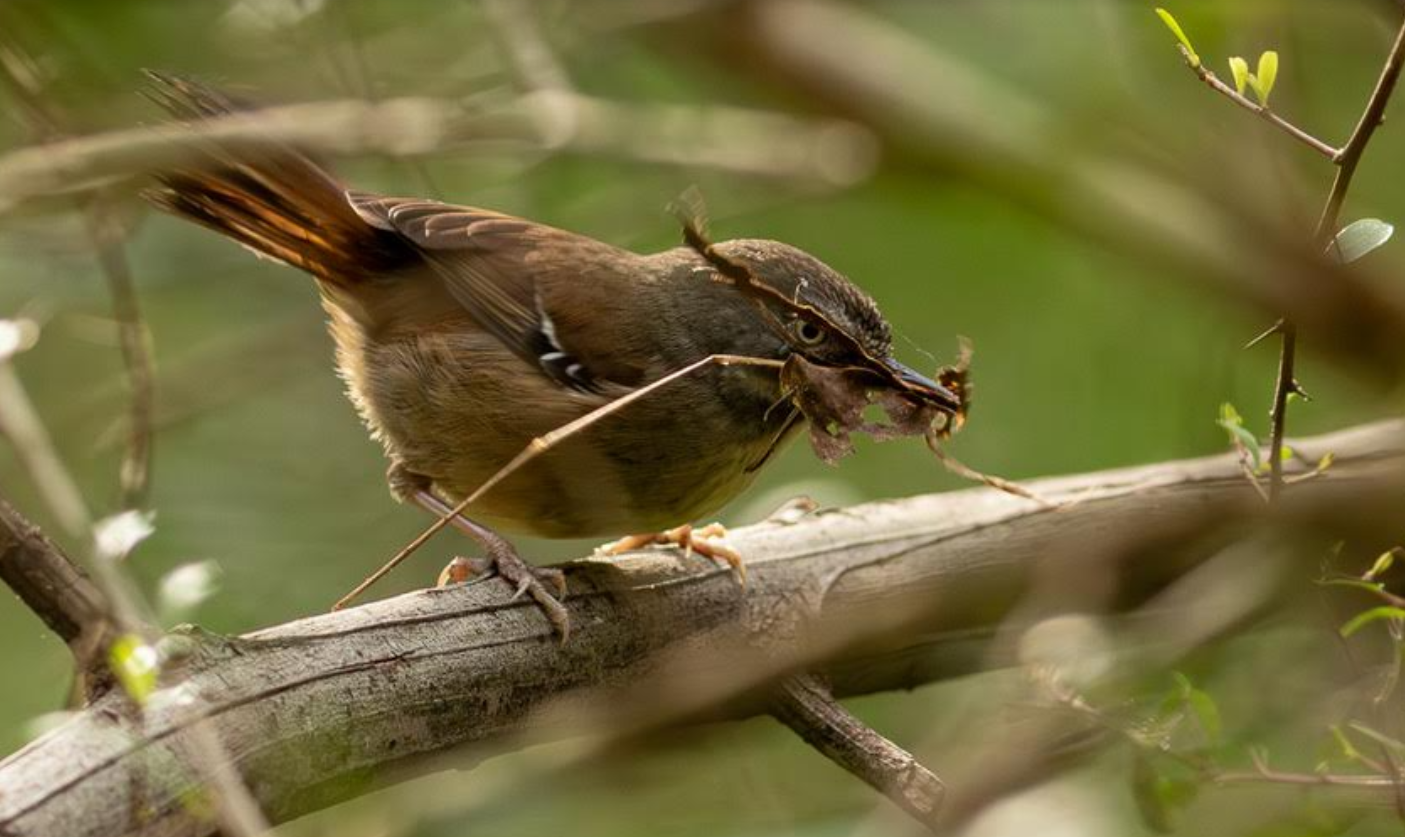
Our picture shows a White-browed Scrub-wren loaded with nesting material – hard at work with its partner building this season’s nest. Note: the “white brow” is obscured by a piece of bark in Lindy’s photo…
We’re told that birds of this species often build their nests on or near the ground in thick vegetation – although they could be in a tree fork a few metres high. This example underscores why dogs should be kept on-lead and on the paths in the park.
Kalang Oval – not a dog park
Council voted on Monday, 24th July to approve the Domestic Animals Management Plan Advisory Committee’s recommendations which included that Kalang Oval should remain a dogs on lead area – ie no change to the existing position.
The vote followed a proposal earlier in the year to significantly extend the number of parks in the municipality where dogs are allowed off-lead (from 22 to 38) including a significant part of Kalang Park around the sports oval and beyond.
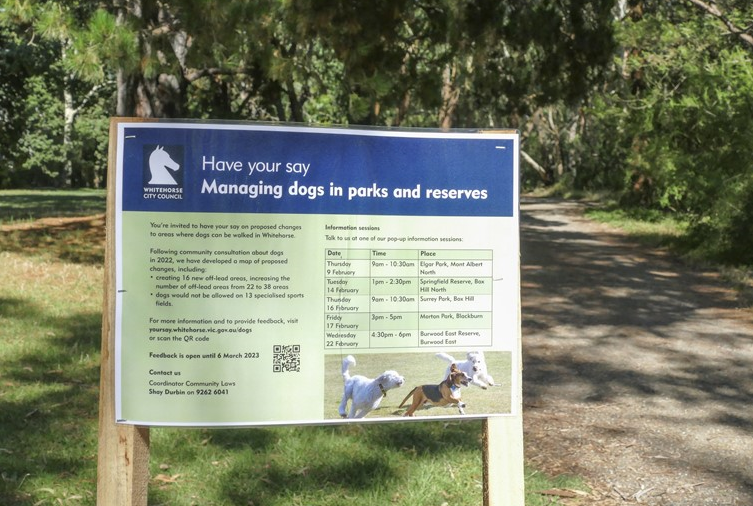
There was an extensive “Your Say” campaign via a survey (6 February – 6 March, 2023) including five pop-up consultations in parks, sports club information evening(s), a social media campaign, 1,600 letters distributed to surrounding properties and a large distribution of signage in reserves (like the above in our park).
The analysis reported to Council showed that children and safety were the main theme that participants raised for agreeing or disagreeing with the proposal. Other themes were that the community was concerned about poorly behaved dogs and dog owner behaviour, dog faeces not being collected and impacts on wildlife.
A conclusion from the responses was that two of the original proposed locations were not supported by the community. These were Kalang Park in the Blackburn Creeklands and the Pipe Track Reserve (Nunawading). Due to this feedback, both locations were removed from the Council Officers’ recommendations.
In the interests of our fauna and flora, we certainly agree that dogs should not be off-lead in bushland parks ! The close by Sparks Reserve remains a significant dog-off-lead area.
Please click here for a Council map of the off-lead parks in the municipality. This does not show the new locations yet.
Hollows
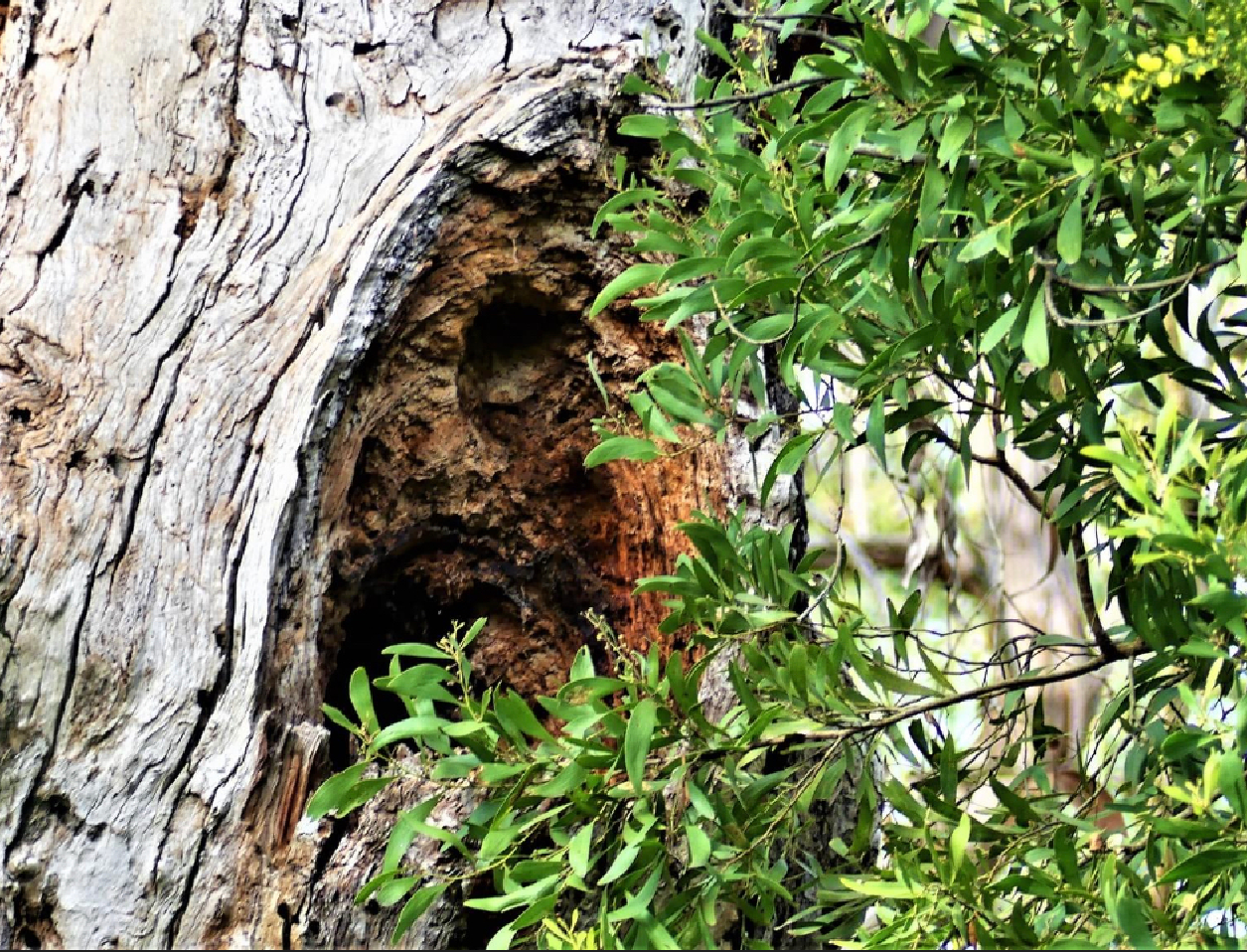
At least the Scrub-wrens of our first article have options when building their nests. However many birds and other fauna require hollows for nesting. Larger hollows only form in old trees (both live and dead). We are quite fortunate in our park that that we have several large, old remnant trees that do have suitable habitat for such animals – which include our parrots, kookaburras, possums and even feral bees.
Russell’s picture shows how a hollow can form when a large branch drops:
To give you an idea of how large some hollows need to be – we know of a park in St Kilda hosting a pair of Powerful Owls but which had no suitable hollows for nesting. The park’s volunteers – a very enterprising group – reportedly created a nest box made from a discarded wheelie bin (!) suspended up in a tree. They are Australia’s largest owl after all!
Young Couple Choosing a Site (?)
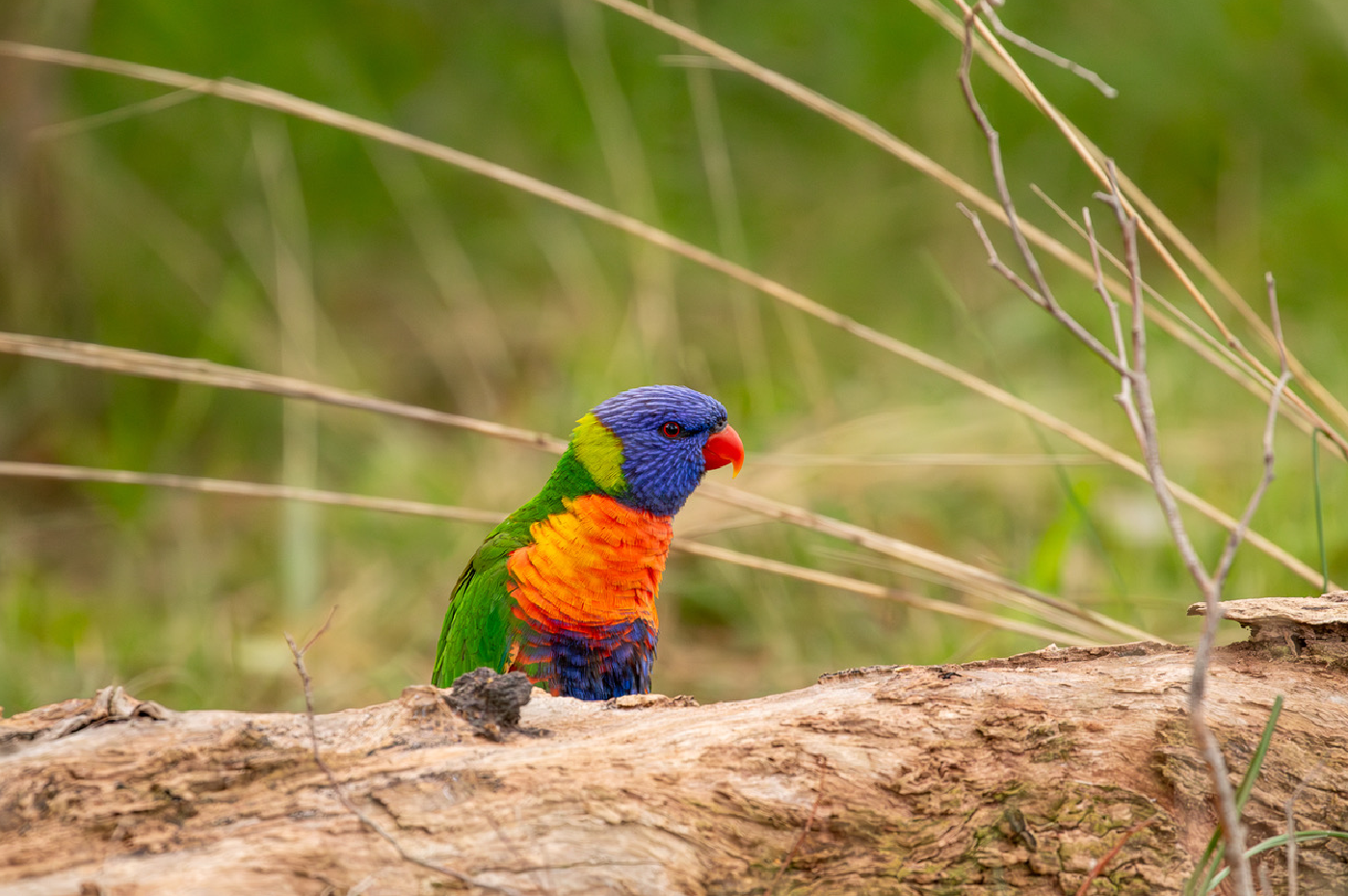
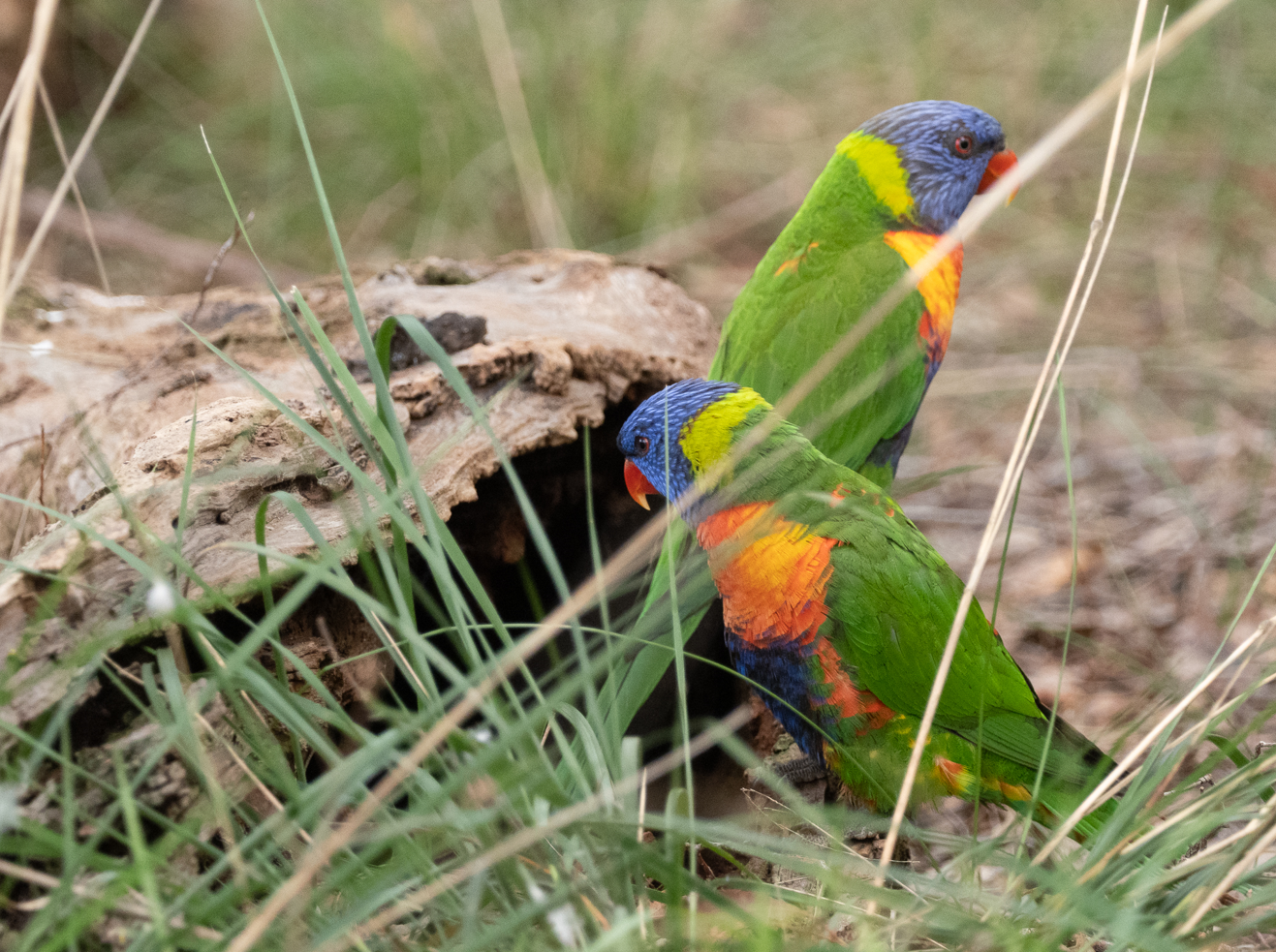
Lorikeets need nest holes – and will even nest at ground level if they can’t locate a better option despite higher level risks with predators. Lindy (#1 and #3) and Greg (#2) took these shots when doing a bird survey earlier in the month which seem to capture that decision making…

Click to enlarge. Click X to return.
OK, we tend to go over the top anthropomorphizing these things, but we could supply captions as follows:
- What do you think darling ? Pretty cosy eh?
- There’s no way I’m raising a family in there – it’s too dark and on the ground floor!
- Fuss-pot! We’ll have to ask your mum and dad for another loan for anywhere else…
Maintenance Team Report
Our Maintenance Team has been busy on the western side of Furness Park (near the site of the National Tree Day event) before moving on to Kalang Park for one week prior to the Community Working Bee/Wattle education event discussed below.
We’ve recently decided to publish the details of our working bees online. For example, please see:
Working Bee Thurs 31/8/2023 08:30-11:30AM
Please feel free to come along and join us working or simply for a chat !
July’s Community Working Bee
Congratulations to Megan on leading a very successful Community Working Bee last Sunday (27/8) replete with Wattle education. There was a good turn-out of folks and it was particularly good to catch up with old friends Tom and Kath after a long break – and fantastic to have Marlene back in town! It was also great to welcome some new participants as well as many of our regulars.
All-in-all, there were 23 participants registered, another 6 who came for the talk only and a family of kookaburras who came for a laugh and a feed. We also thank the Blackburn Bowls Club for providing the water for our demonstration plantings.
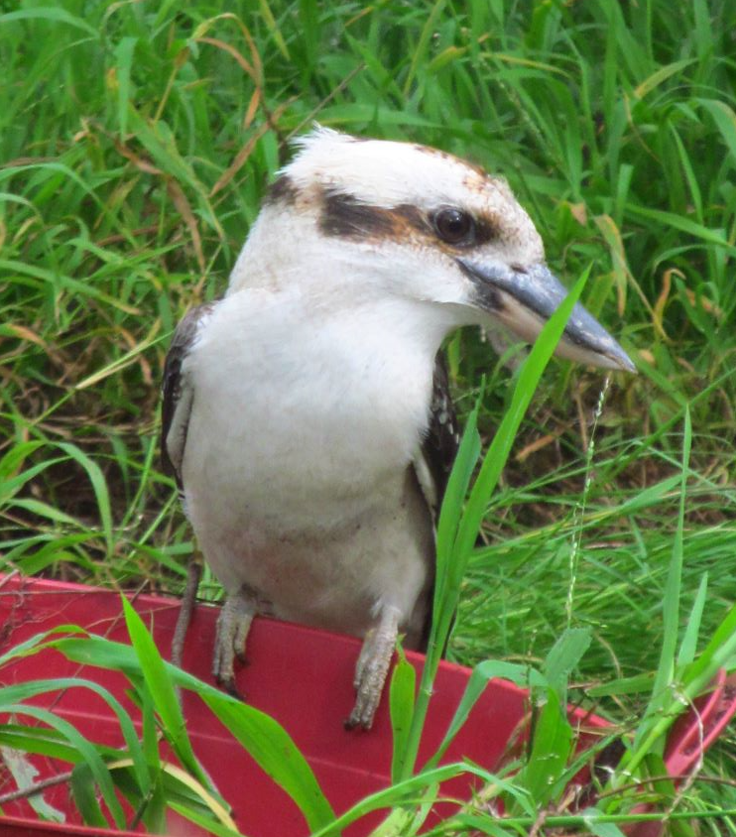
There is no truth in the rumour that we are training the local kookaburras to pick up our weed buckets and fly them to the weed pile for emptying – before returning them to their owners so the latter don’t have to stop weeding….
Education
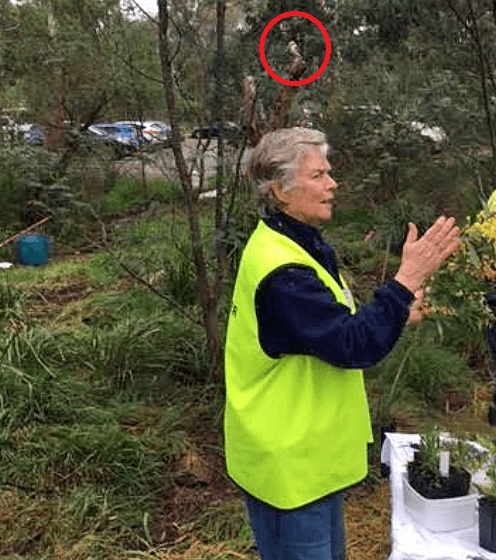
Megan gave a very interesting talk on the key differences between our local species and what features to look for in identifying the species including the colour and style of foliage, colour and shape of the wattle blossom, size of plant, spikiness and so forth.
Andy’s photo shows that even the kookaburras tuned in for the presentation from special vantage points.
One important fact we learned is that all wattles have “true” leaves when young – but some species replace them with “phyllodes” as they get growing – whereas others keep their leaves for life. Megan explained that phyllodes are an adaptation for our hot, dry conditions – they are actually modified stems that behave like leaves – but are tougher structures with less surface area and less prone to water loss.
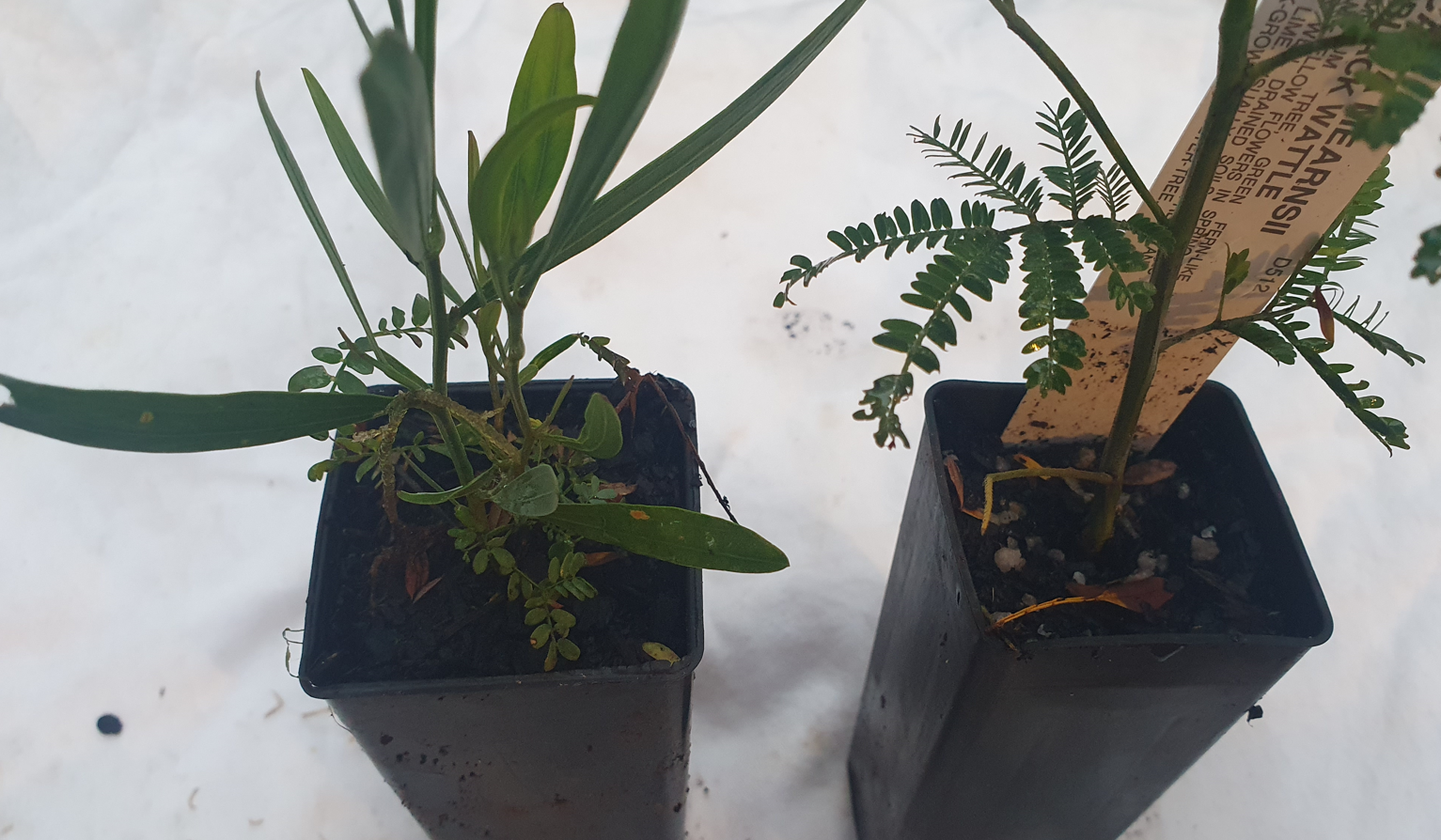
The photo above compares the foliage of the Myrtle Wattle (Acacia myrtifolia) at left and the Black Wattle (Acacia mearnsii). The small true leaves can be seen at the Myrtle Wattle’s base and its phyllodes are developing above (the large green “leaves”). In contrast, the Black Wattle’s similar small leaves are not replaced by phyllodes as it grows.
Both leaves and phyllodes have “stomata” which play an important role in gaseous exchange and photosynthesis. These are like tiny mouths that control the plants’ “breathing in” air from the environment (including carbon dioxide) and “breathing out” air enriched with oxygen. In phyllodes, the stomata are located in grooves below the surface which shelter them from drying winds and direct sunlight.
As usual, our Wattle Display in the Noticeboard has attracted much interest for many weeks. It is soon to come down – it’s your last chance to see it if you’ve missed out so far!
Council Works
Pakenham Street Crossover
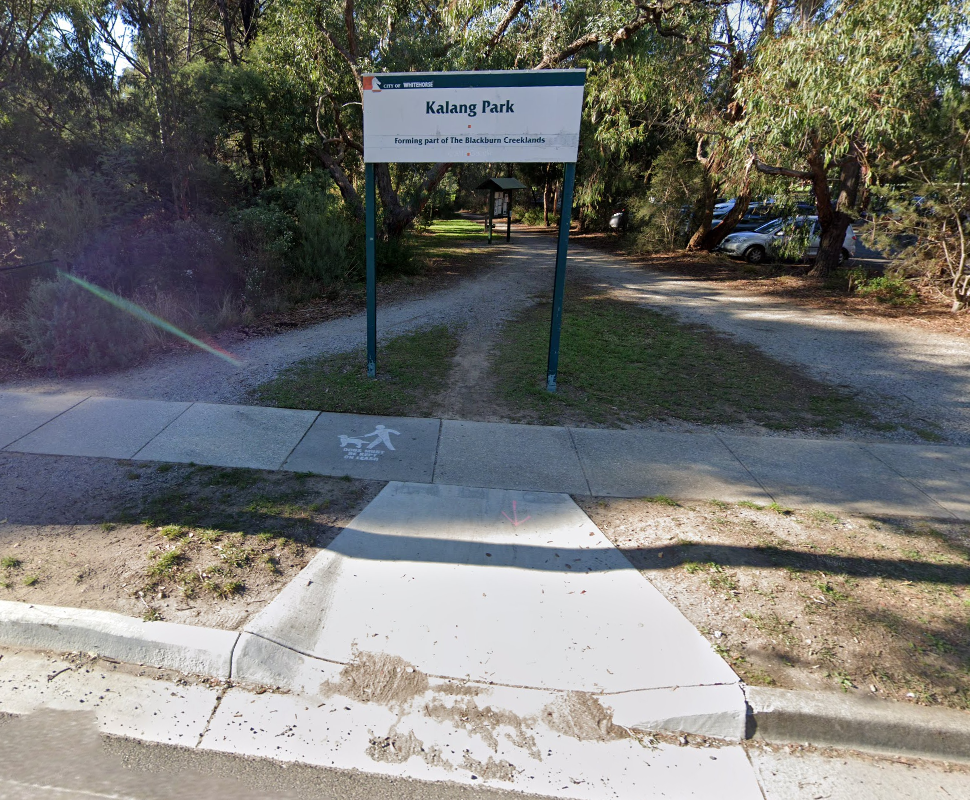
To improve safety, Council intends to realign the paths at Pakenham Street to better align with the gutter crossings to the immediate south of the creek. This will include moving the existing Kalang Park sign and improving plantings in beds near the pathways on both sides of the road.
You may have noticed that the water meter on the Scout/Guide Hall side has recently been securely caged – this is also a work item for this project.
Next Year’s projects
Next Year’s projects are likely to include :
- The second stage of the plantings on the plot north-east of the Laurel Grove bridge.
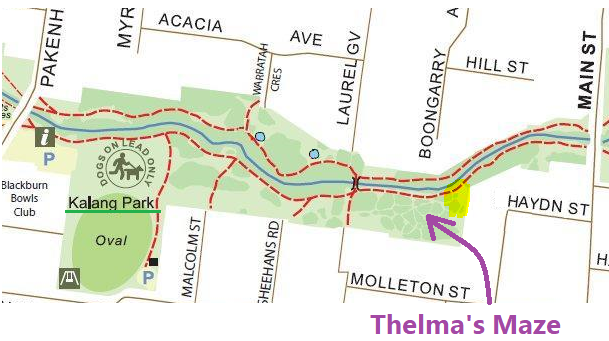
- Reinstatement of the mid and under-storey plants at the eastern end of “Thelma’s Maze”.
- These projects will be finalized and an additional site might be identified when we work out the Annual Maintenance Plan for 2024 with Council.
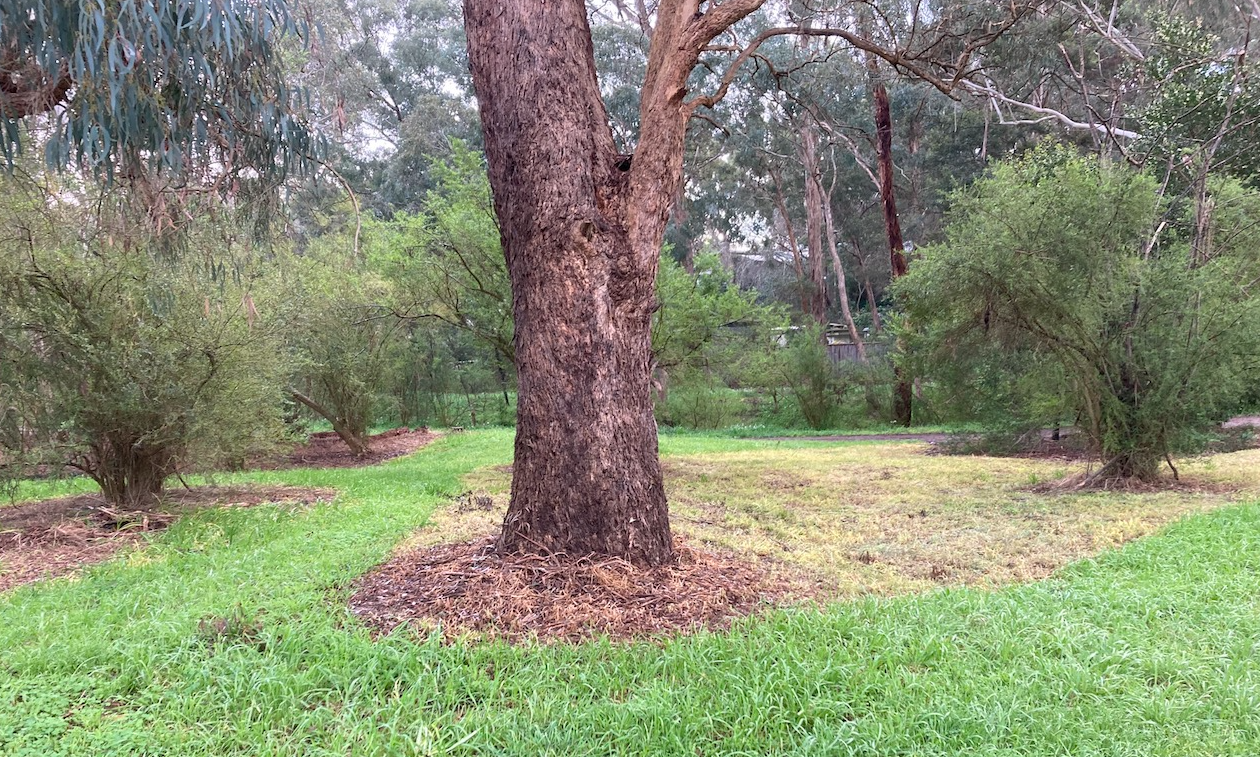
In relation to the “Maze” project, for several reasons including the “Millennium Drought (1996 – 2010)”, a lot of the maze has reduced to a monoculture of middle-storey Tree Violets under the canopy of larger eucalypts as shown in our photo below:
Preparation of the beds for the site has commenced with treatment of the weedy Kikuyu grass under way.
This is what the plantings looked like in the Thelma’s Maze during the 1980/90s with Christmas Bush at Thelma’s right and thriving Cassinia and perhaps a Kangaroo Apple in the background:
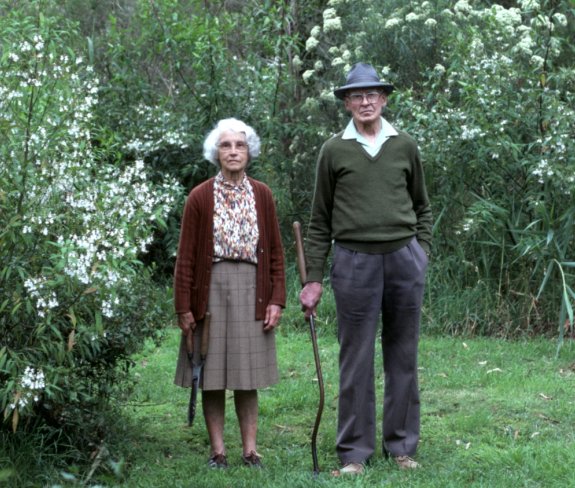
We are hoping to restore the area to something like its former glory in due course.
Sightings
Last Month’s Collective Nouns Debunked?
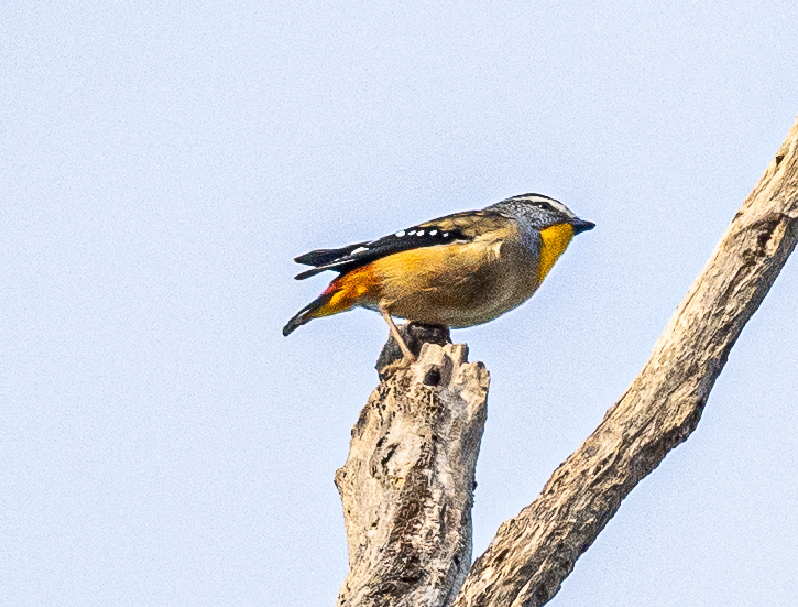
Last month, we listed the collective noun for Pardalotes as being an “Invisibility of Pardalotes“. They are usually “invisible” because they feed high up in the canopy, they are small (wing 53-60 mm, weight 6-12 grams) and yet make a lot of loud calls – so you know they are there. Not to be deterred, our staff photographers managed to take a photo of a pardalote at high magnification:
Ken’s shot shows the bird in glorious detail:
Russell’s shot shows what you might see by eye if you are lucky:
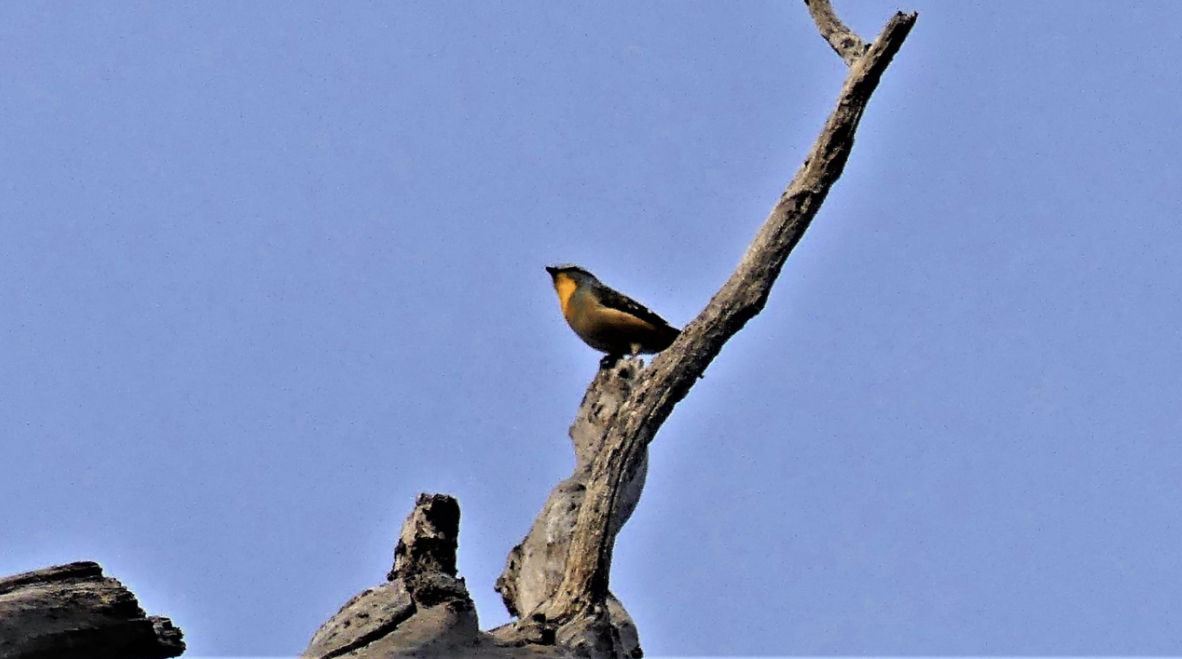
The Spotted Pardalote (Pardalotus punctatus) is quite a pretty species – the males having a distinctive yellow throat and flashes of red in their stubby tails. Males and females both have black wings with white spots and black spotted “caps” on their heads.
Oddly enough, despite living in the canopy most of the time, they nest at ground level – often tunnelling into the creekbanks – so you might see one when looking at the creek if you happen to be near a nest site during their nesting period.
We have also had rarer sightings in the past of the Striated Pardalote (Pardalotus striatus). This is a similar, though larger bird (wing 62-69 mm, weight 9-15 grams) which has stripes instead of spots on the wings and dashes rather than dots on its cap. The males and females look similar to each other and are less colourful than their male, Spotted, relatives.
Lindy managed to get a good shot of a Migraine of Lorikeets:
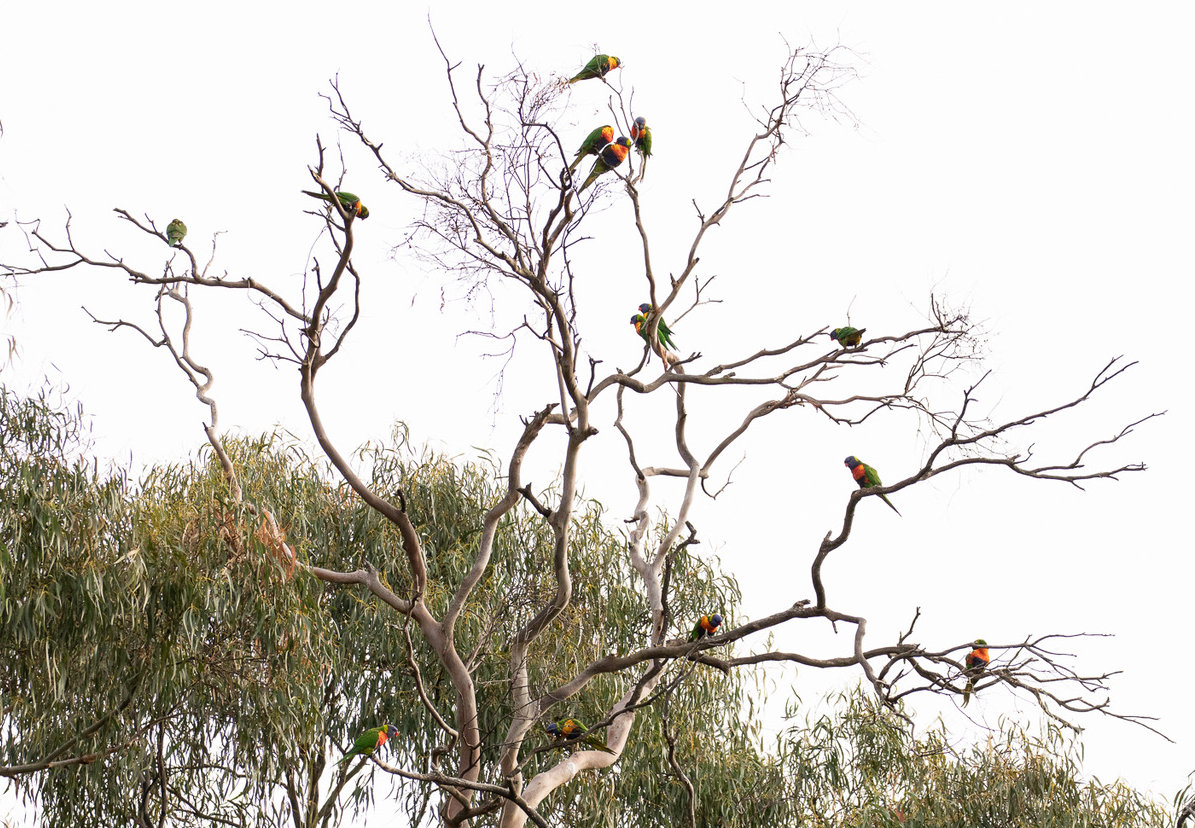
However, Lindy’s interpretation is that it was a “Christmas Tree of Lorikeets“.
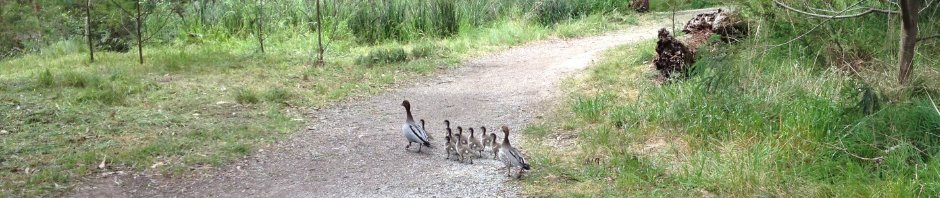
Our first ducklings for the season
Danika wins the coveted prize for the first photo submitted of ducklings for the season:
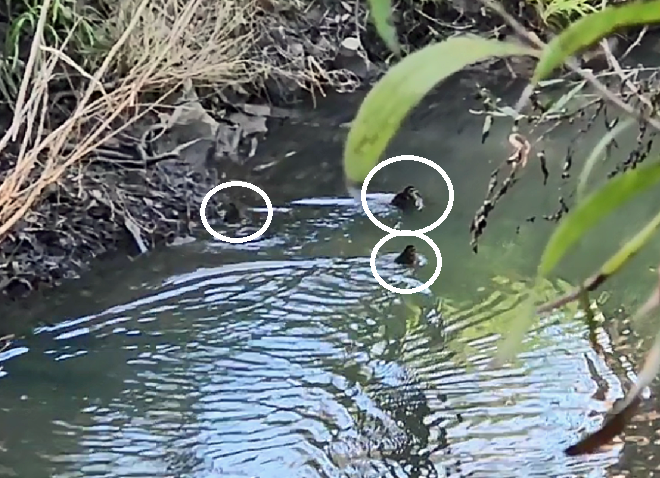
The above is a still from a short movie she took last week which shows three Pacific Black ducklings darting about apparently outside parental control. Interestingly, she also spotted a Wood Duck chick in an unexpected spot not ideal for “ducking and weaving” – in her words:
Also nearby, a single Australian Wood duckling being frantically herded by agitated parents right by the road on the corner of Blackburn and Canterbury roads!!
Danika 29/8/2023
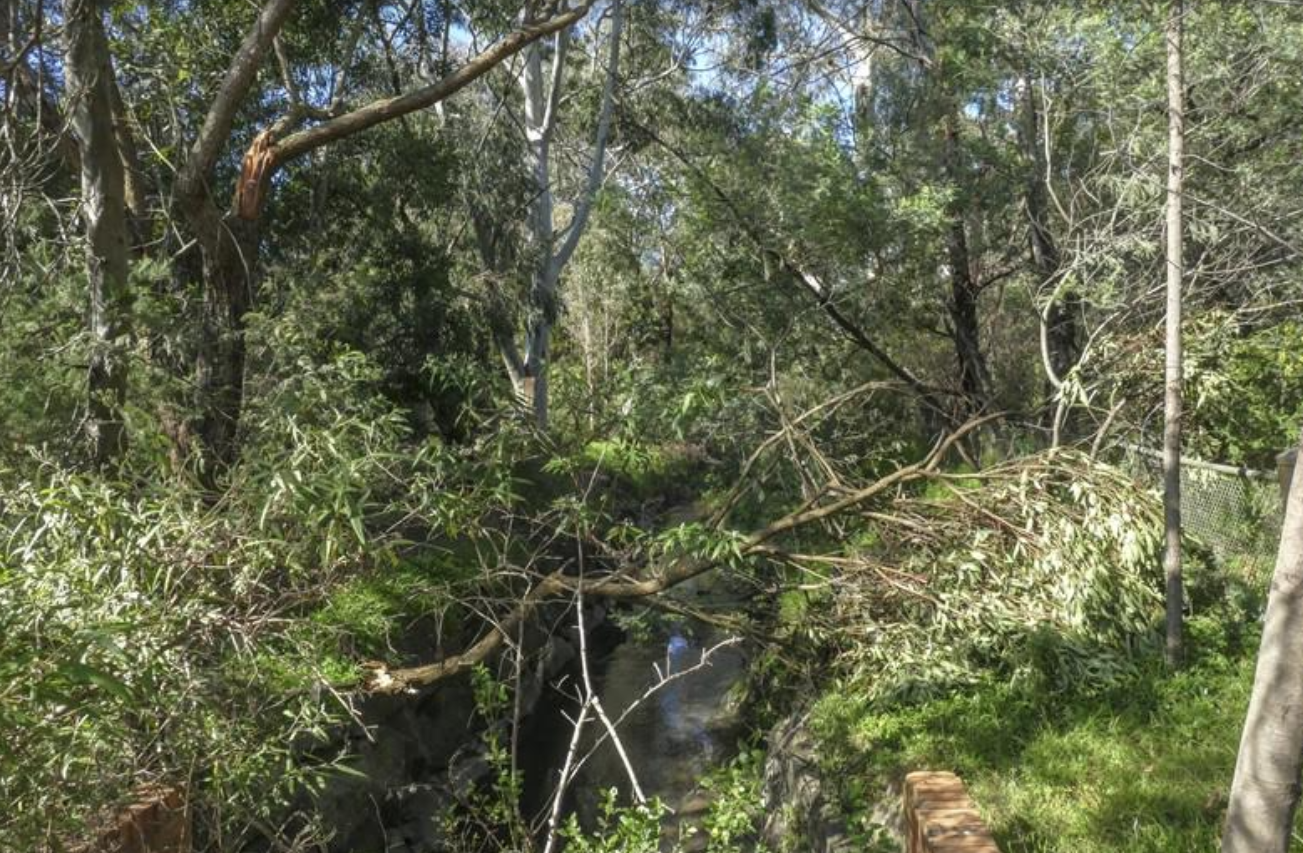
Storm Damage
Strong winds early in the month caused damage in the canopy (near the Pakenham Street bridge):
Other sightings
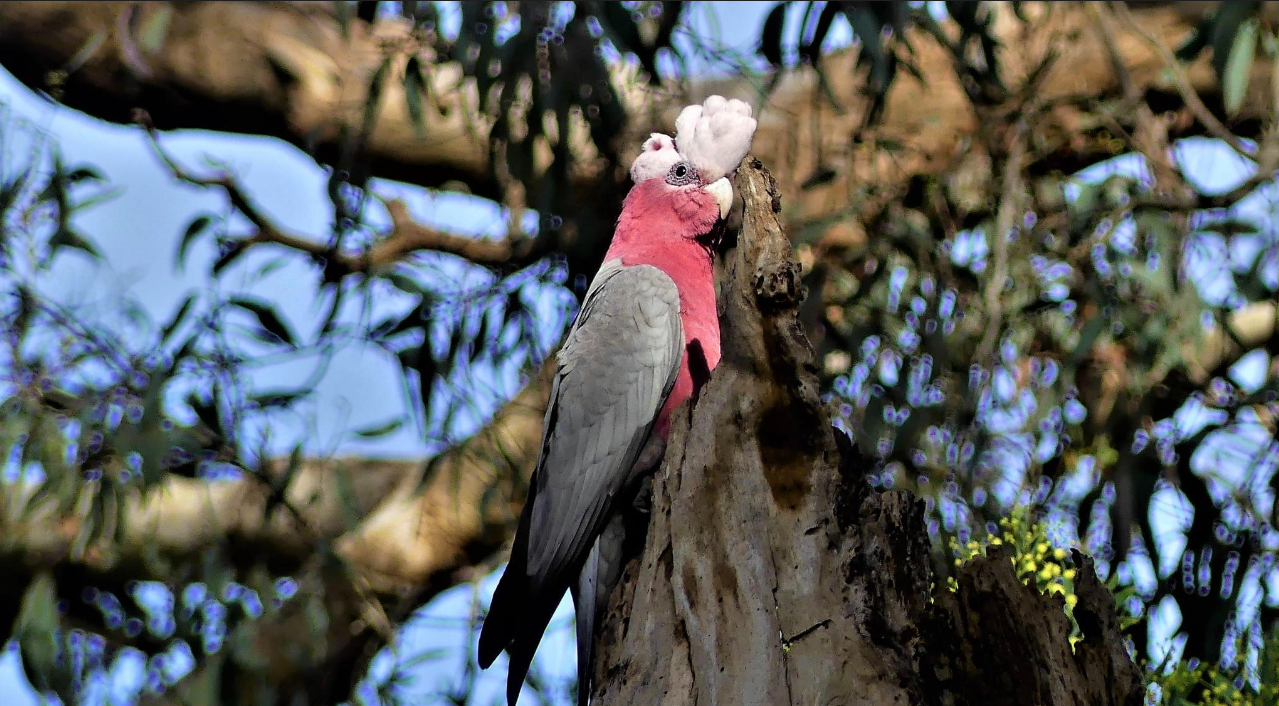
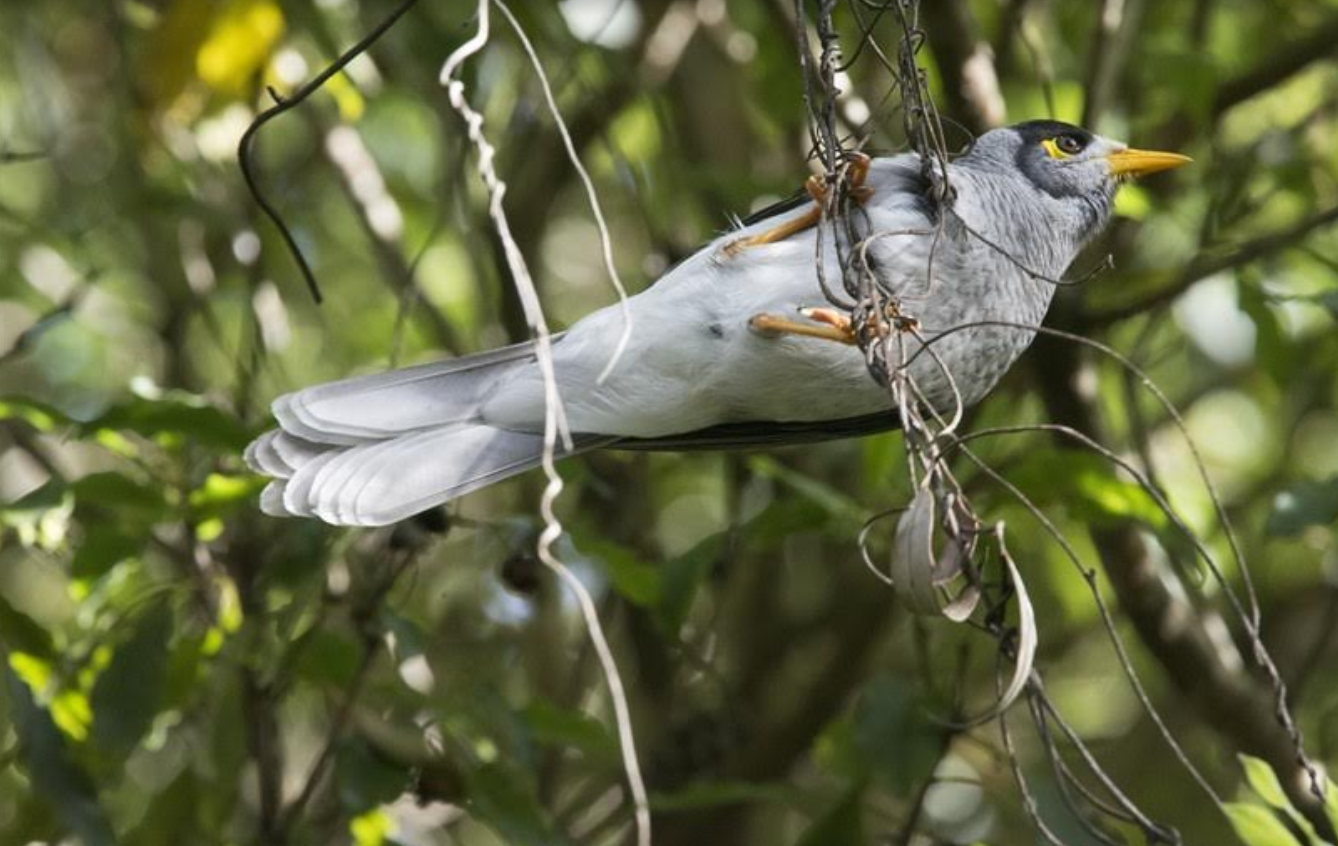
The regular birdwatching group had a great day with excellent light for photography on 9th August. As usual, they have generously shared their spectacular work with us giving us a great idea of the birdlife in the park to be found in August:
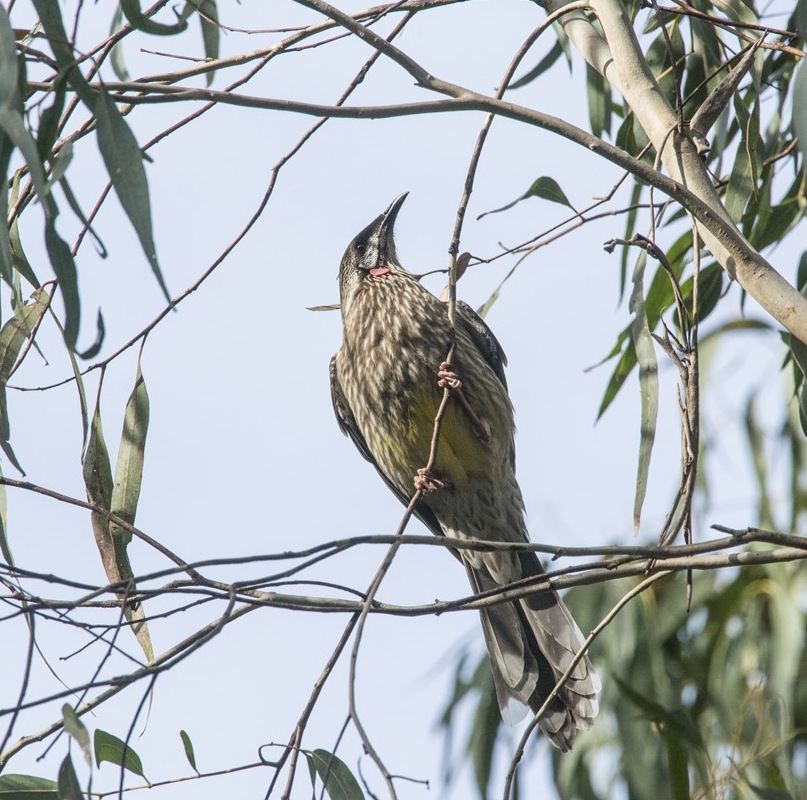
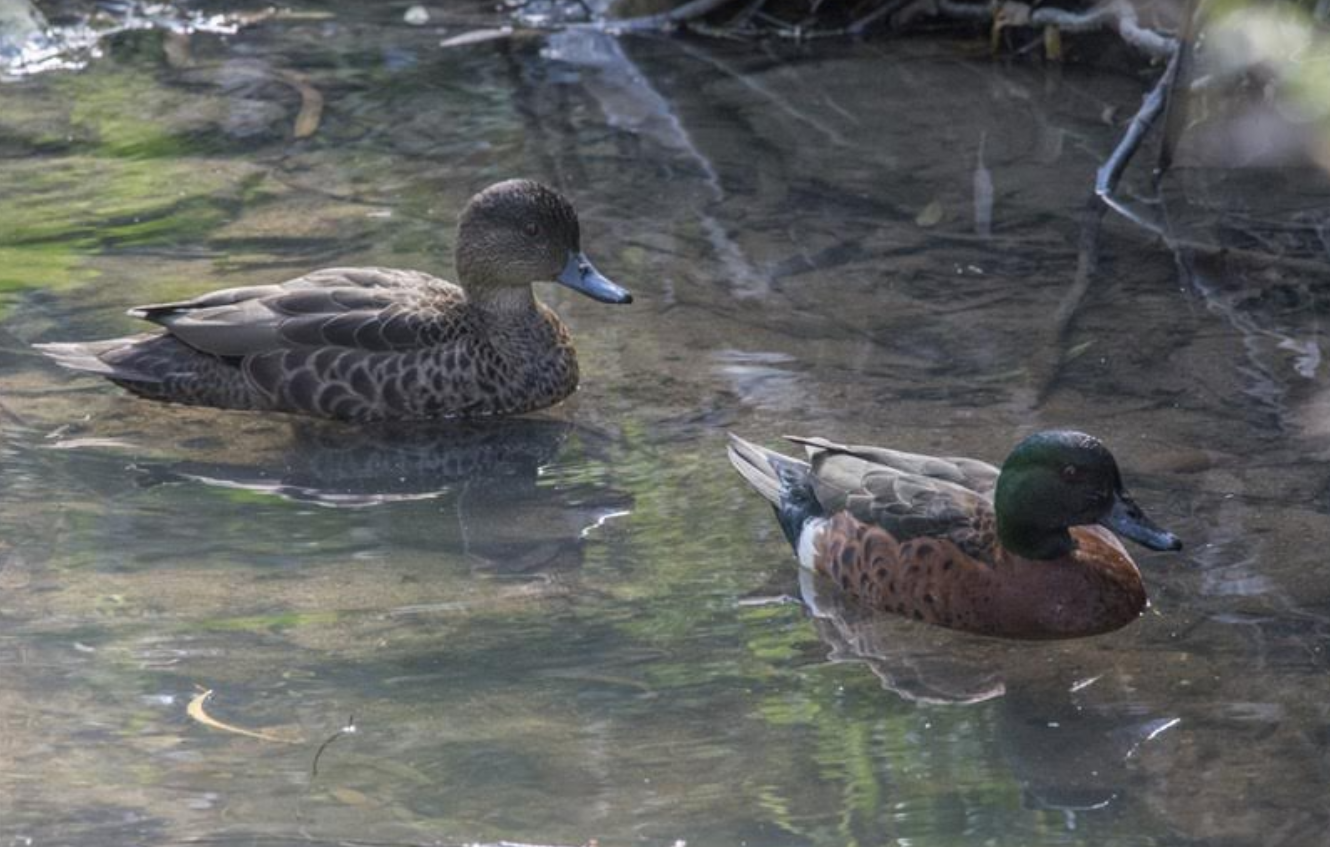
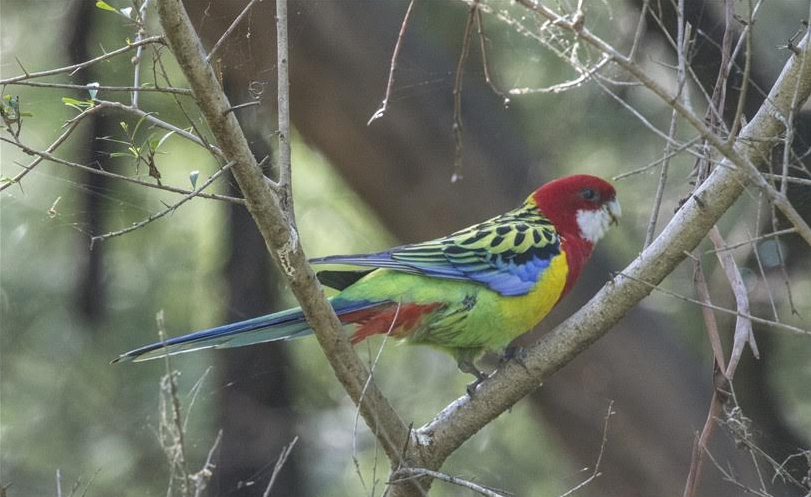
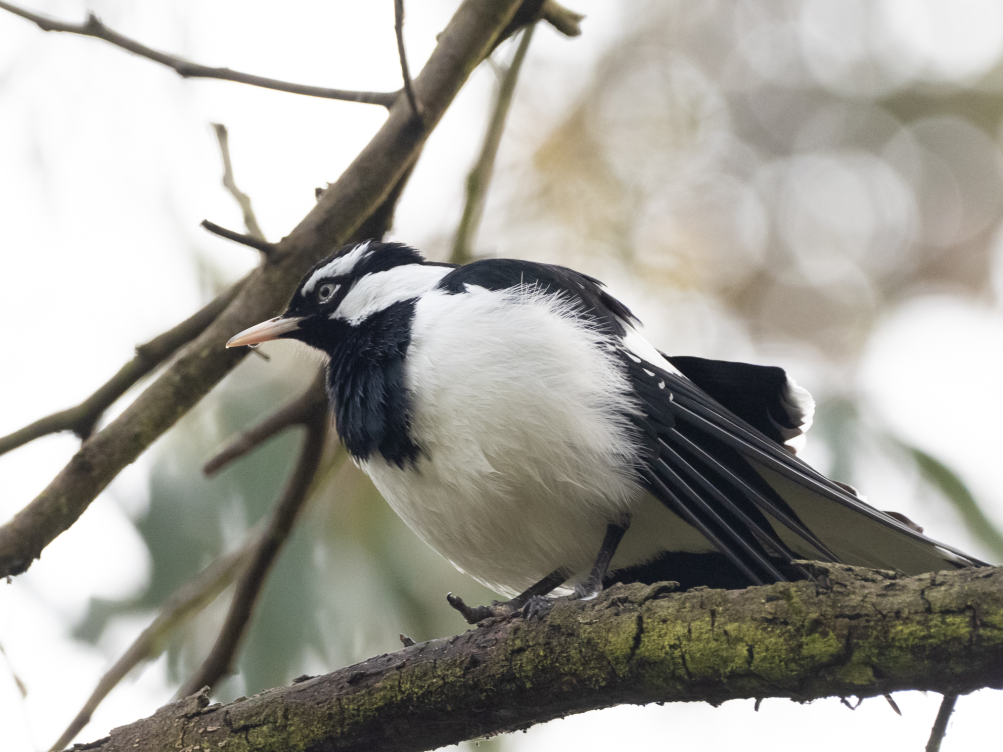
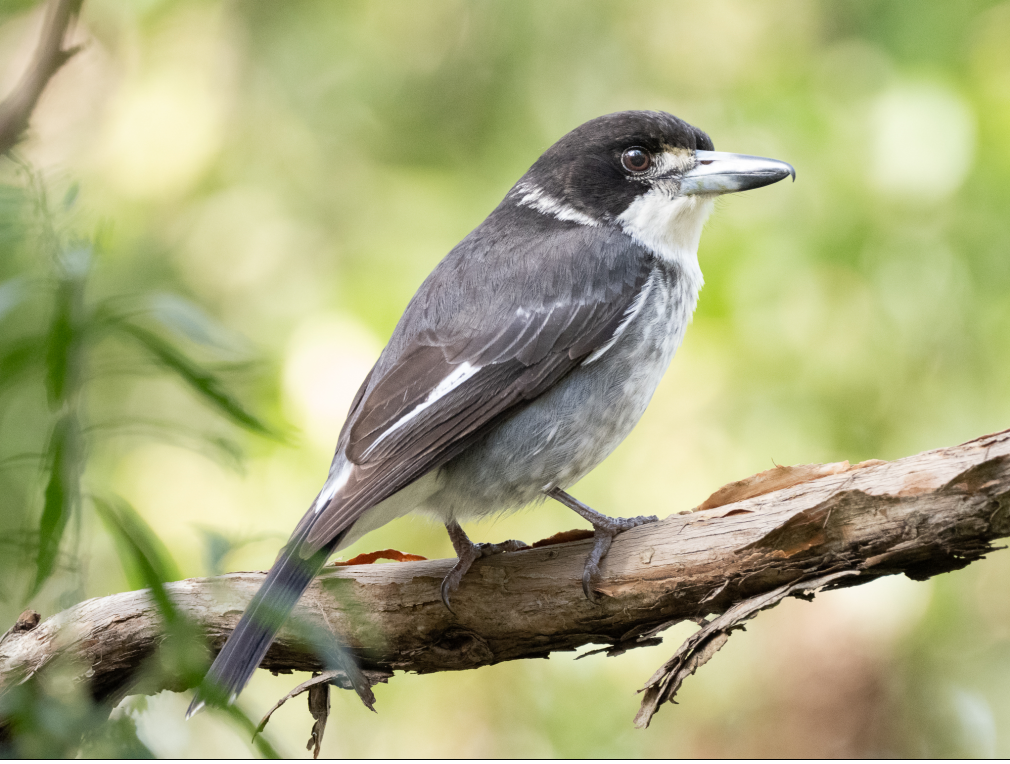
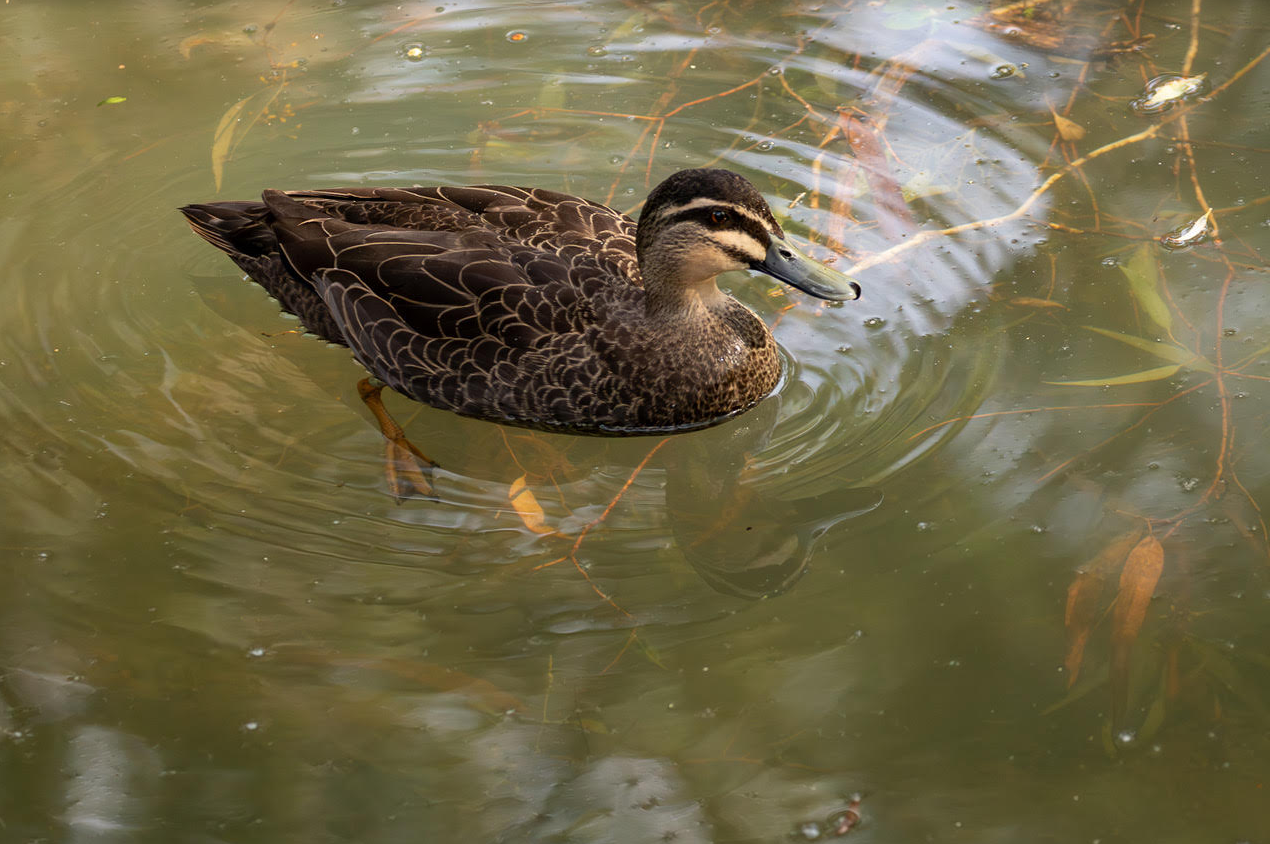
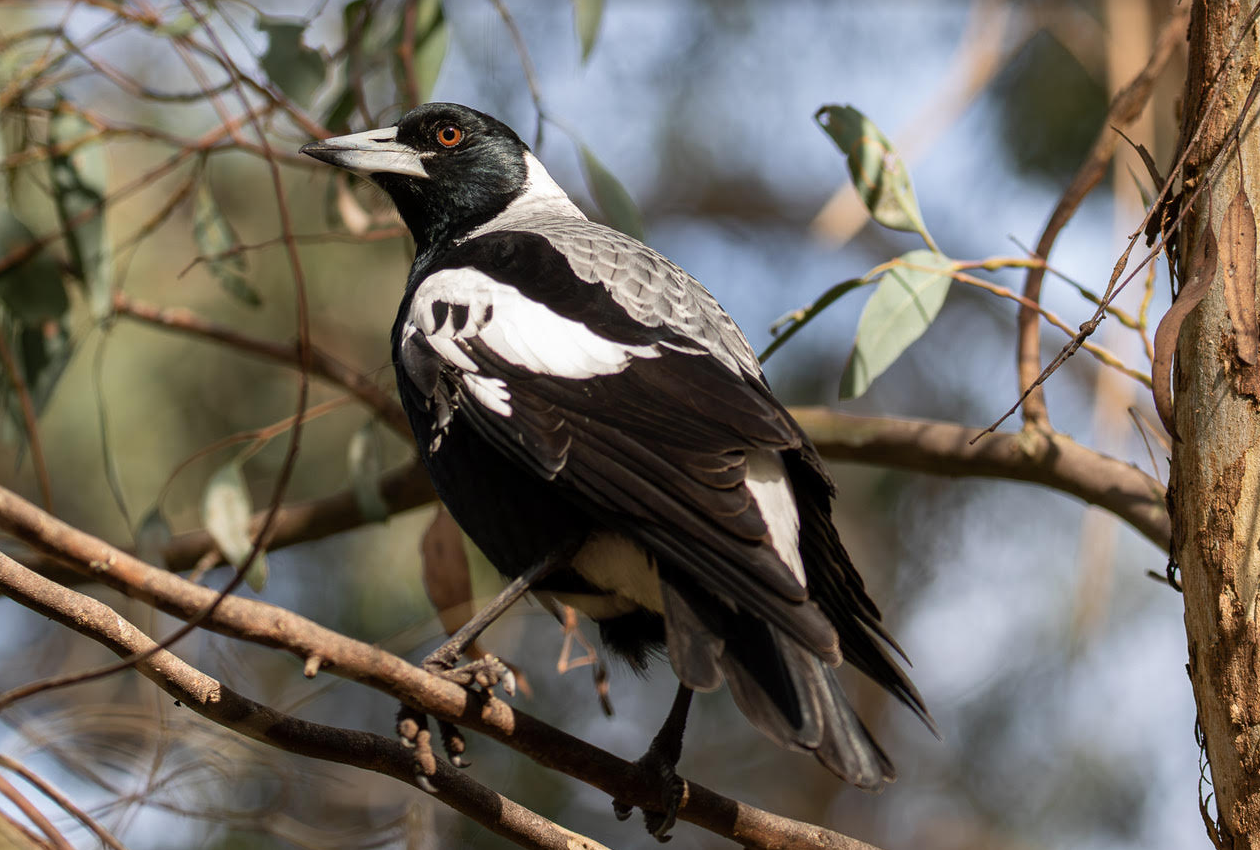
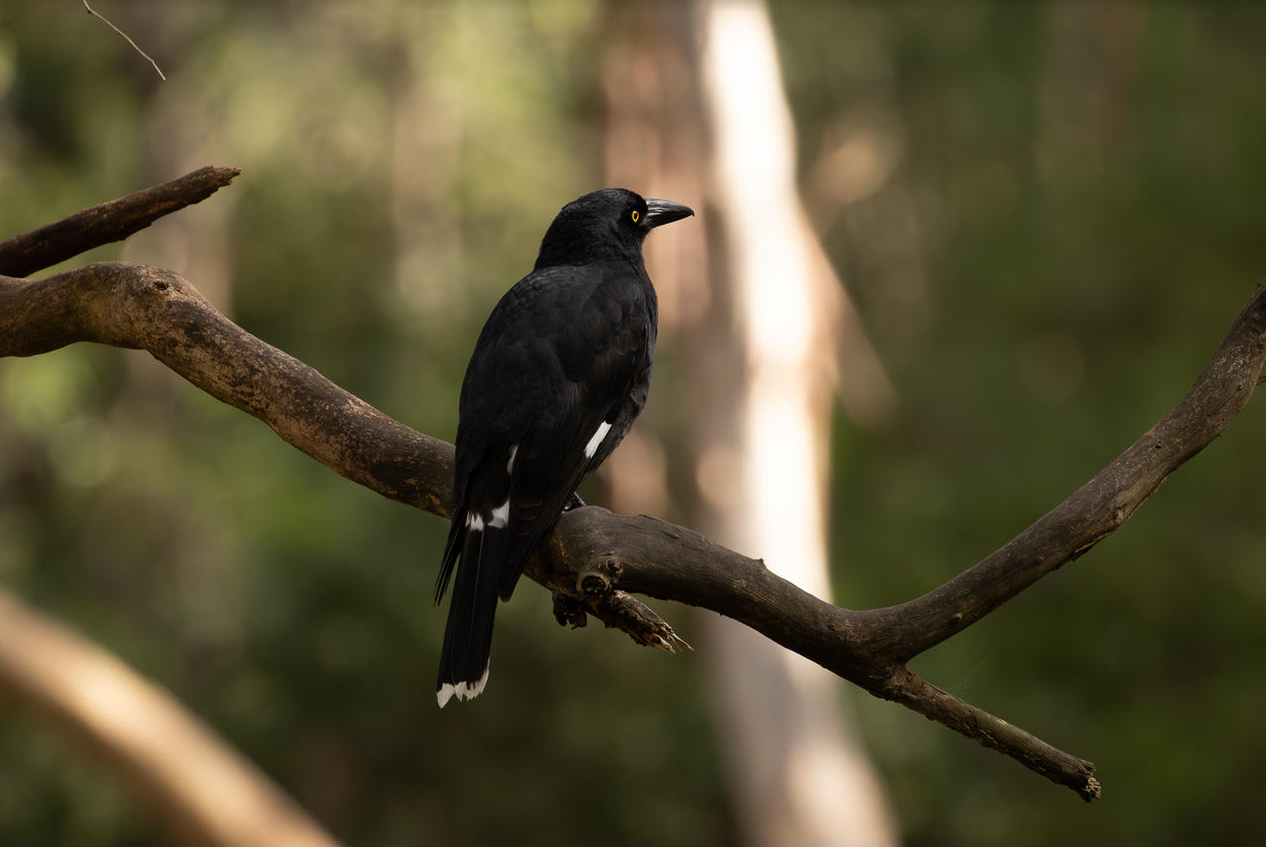
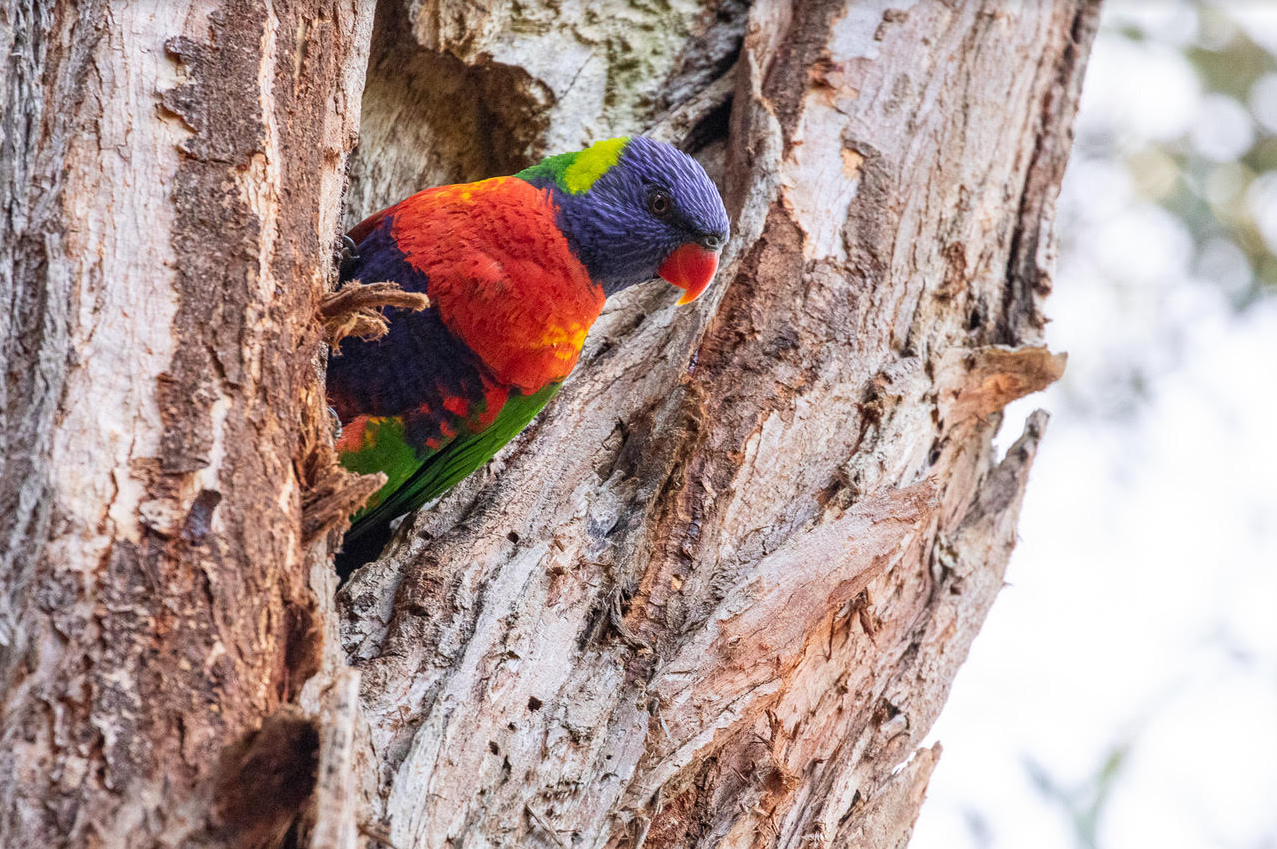
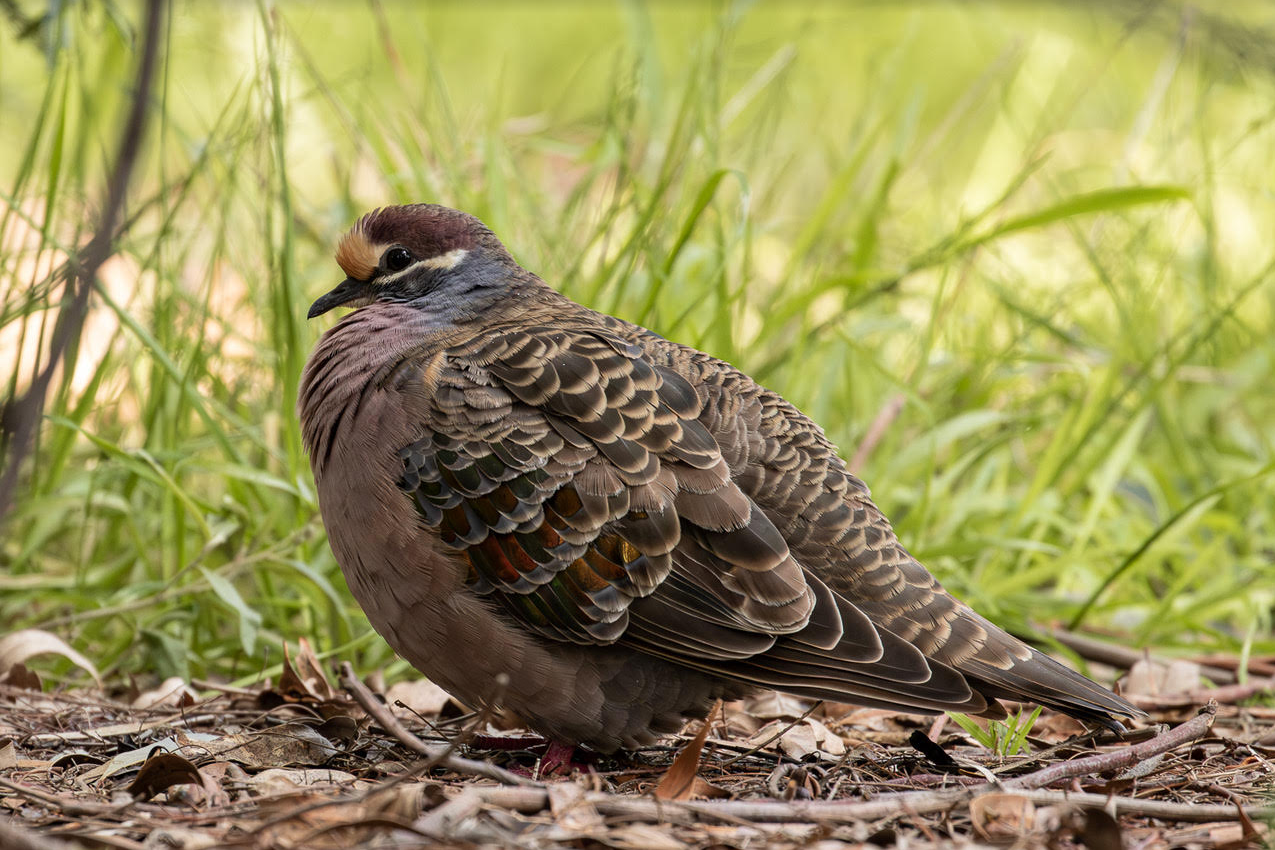
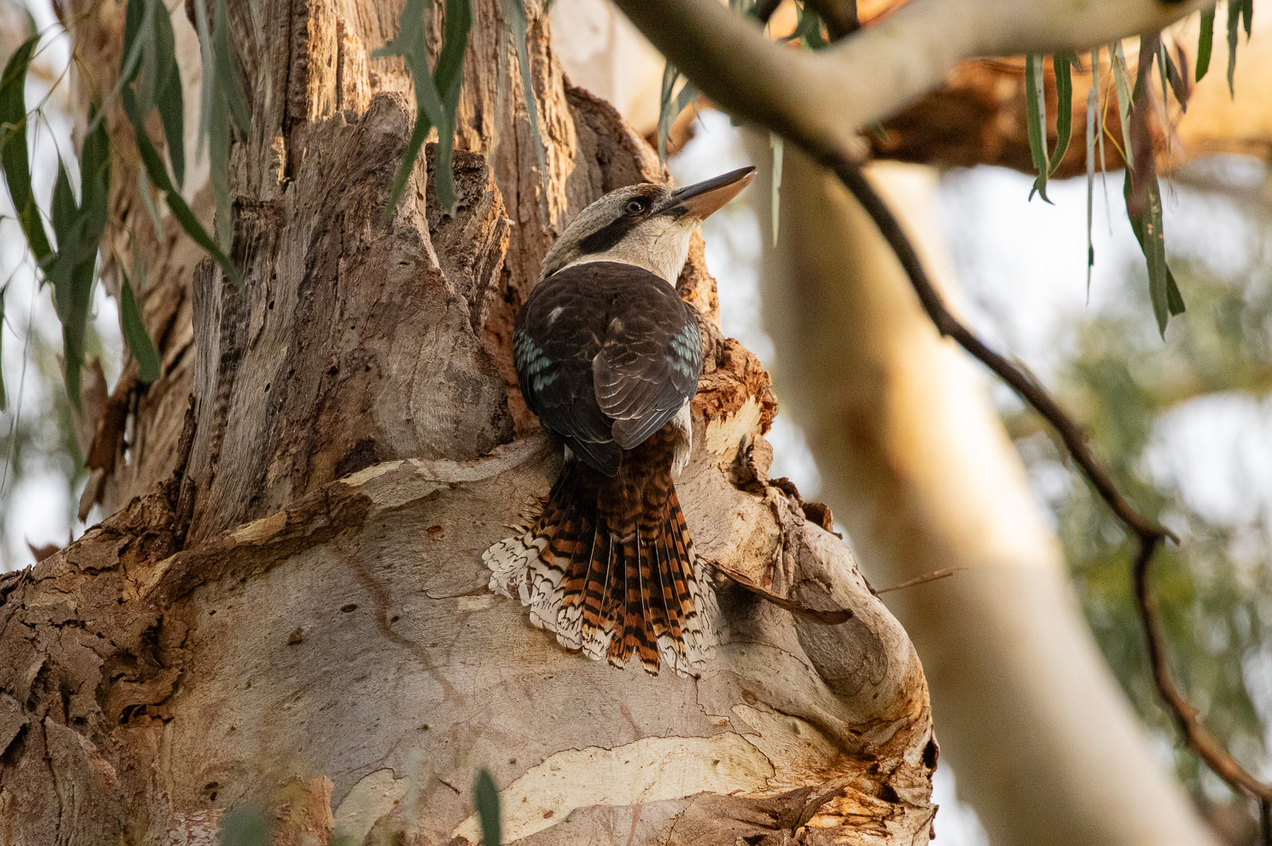
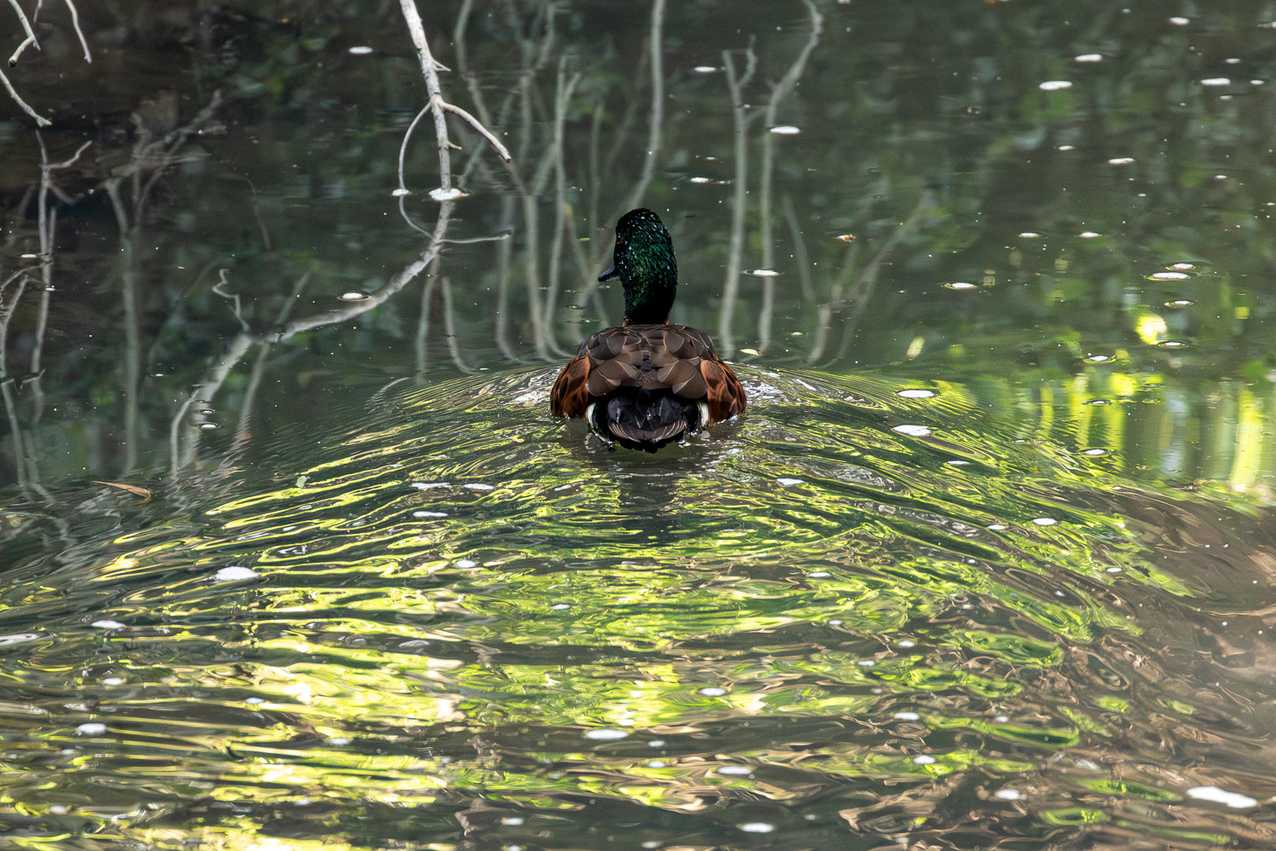
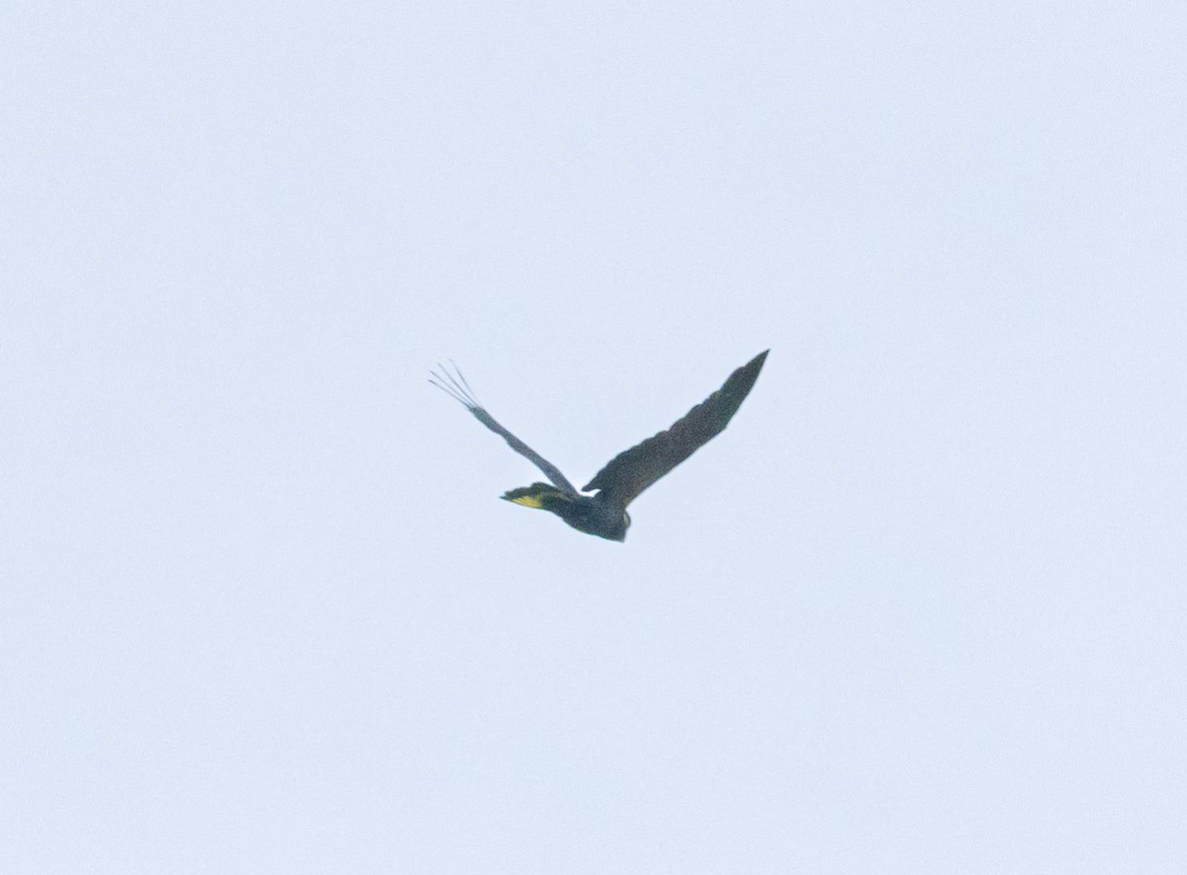
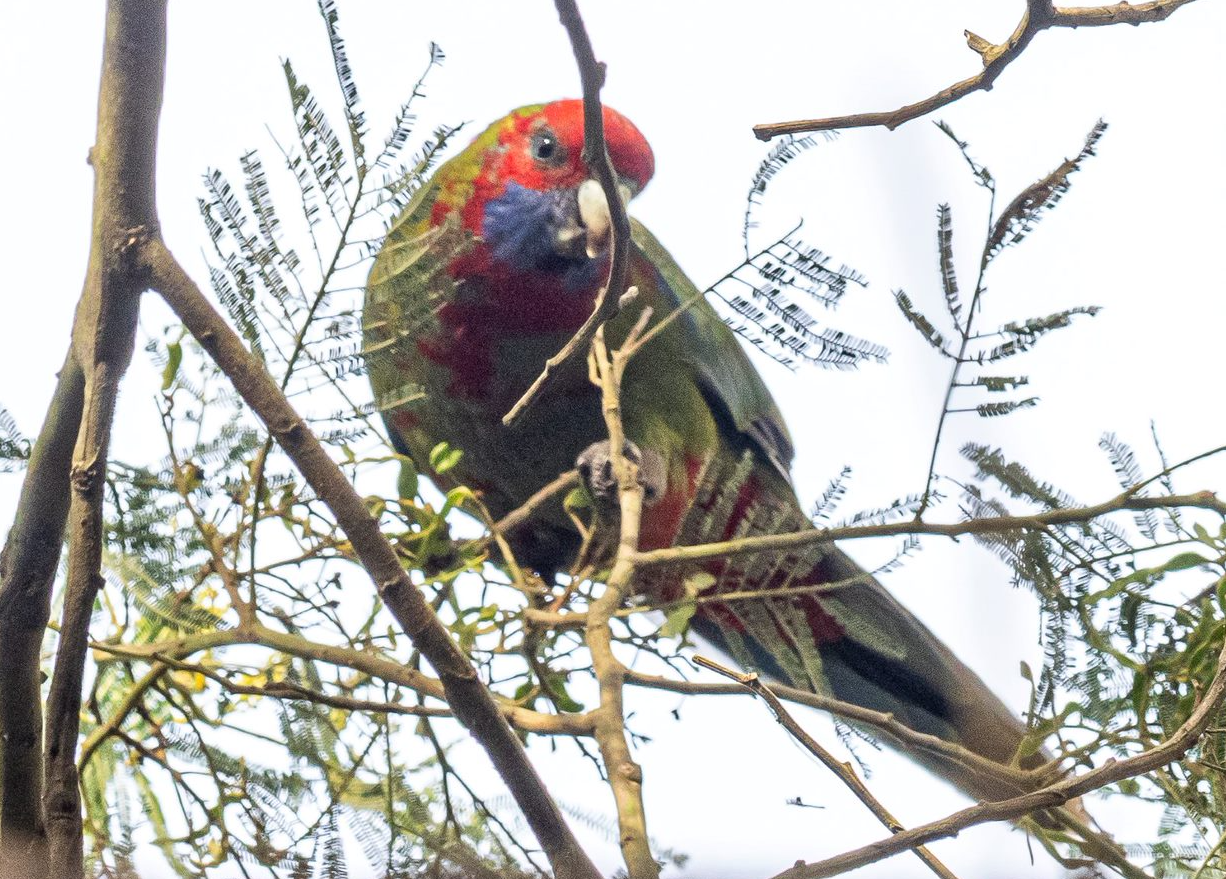
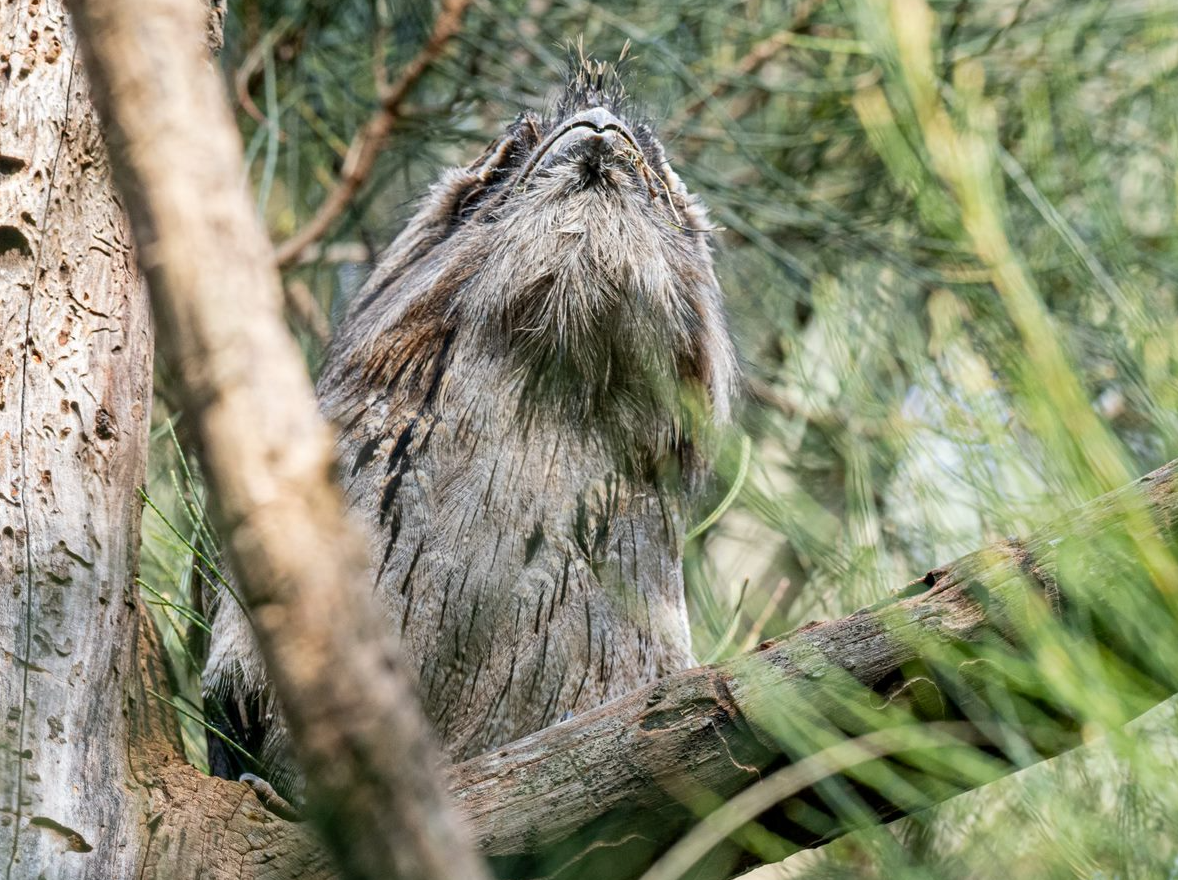
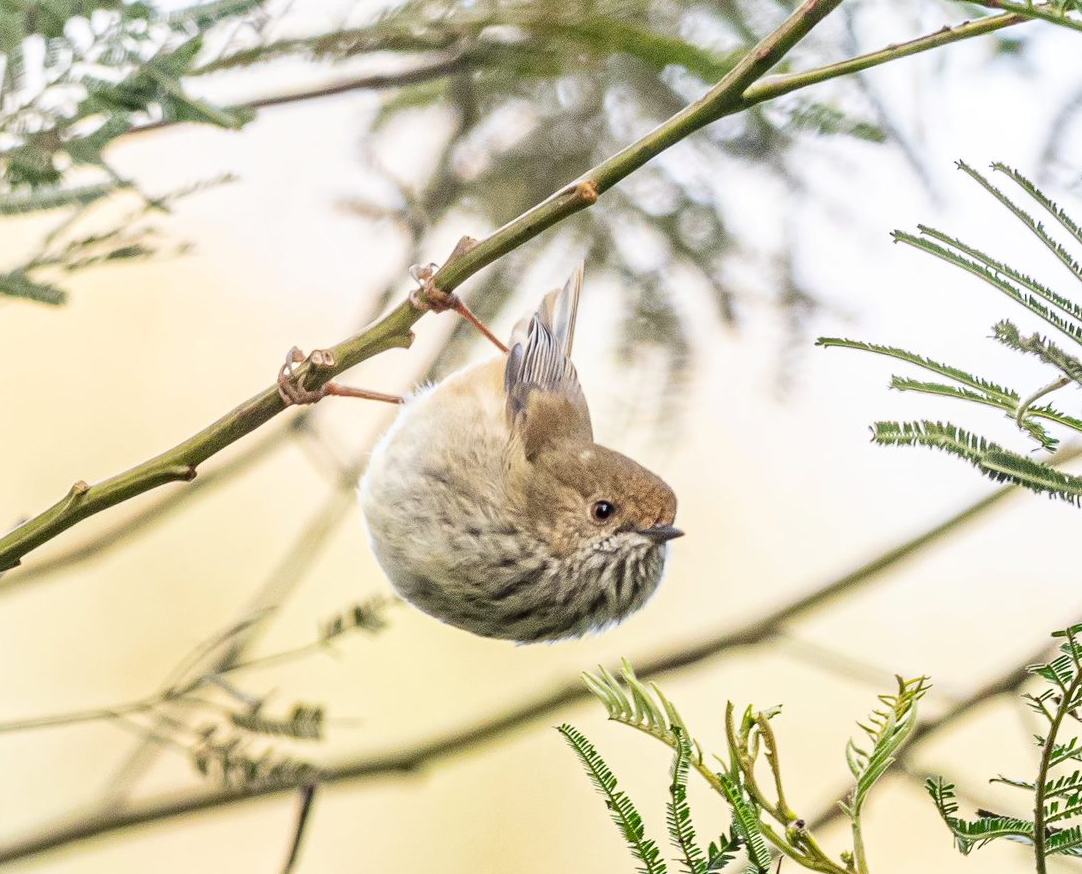
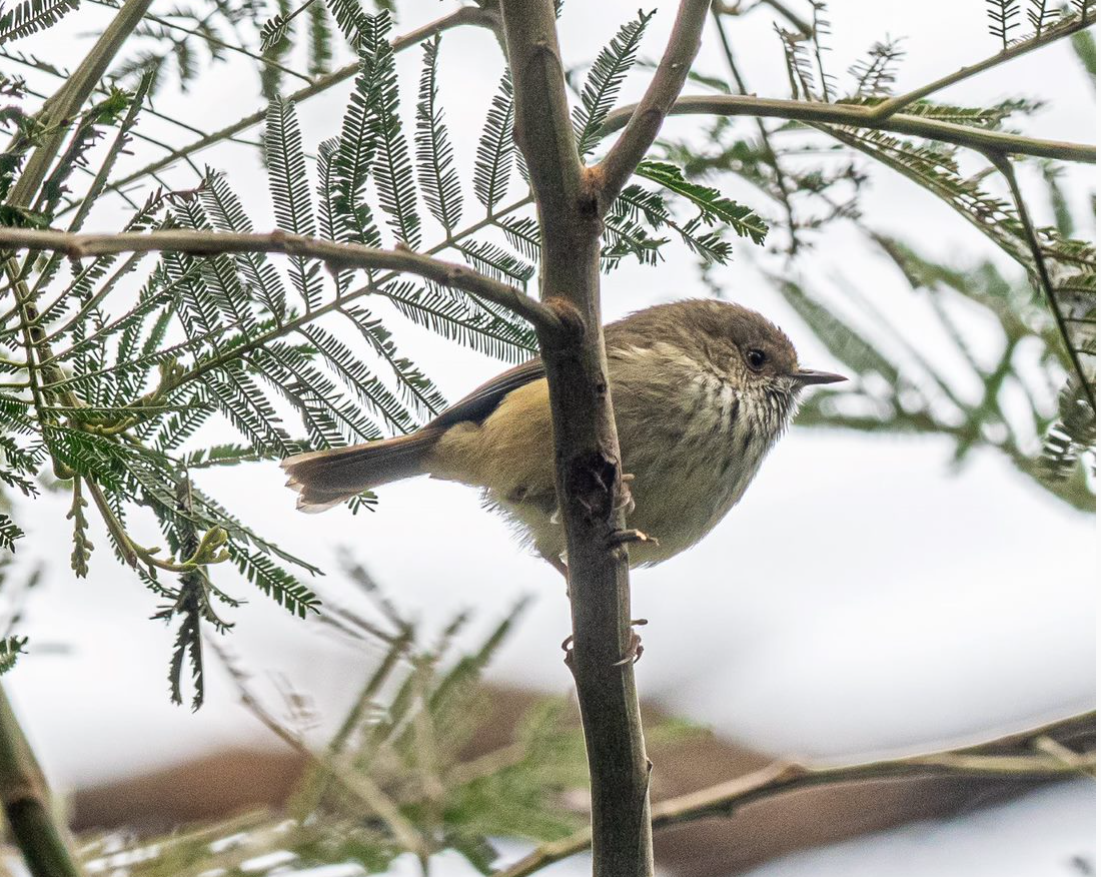
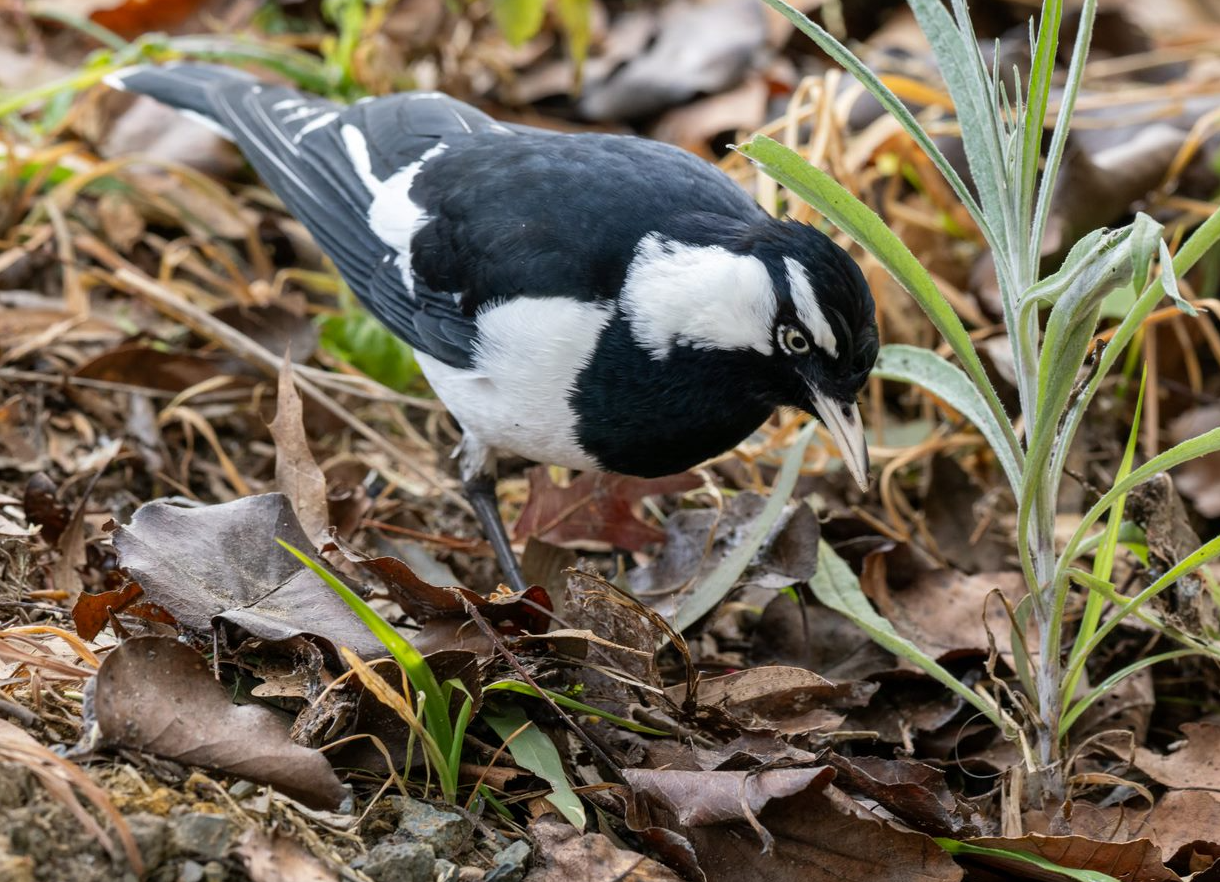
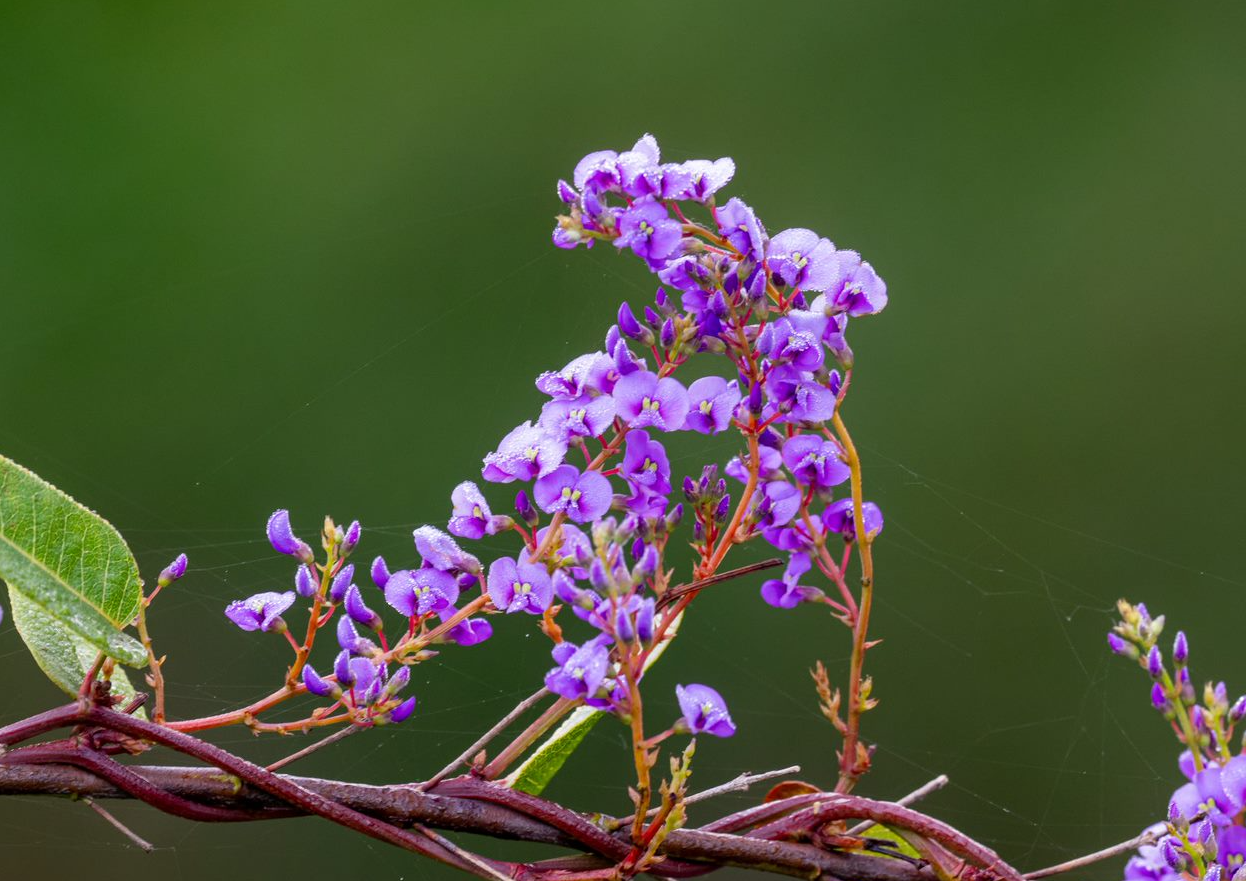
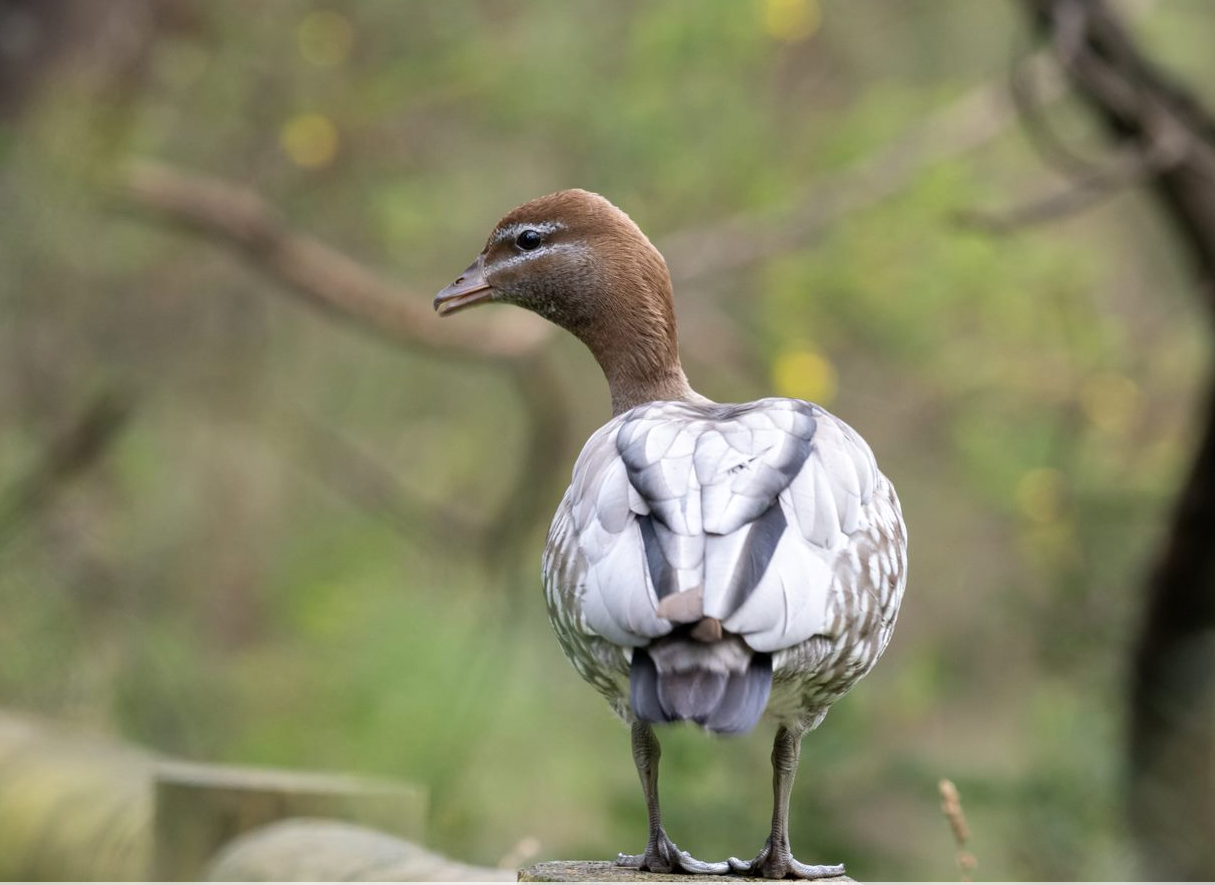
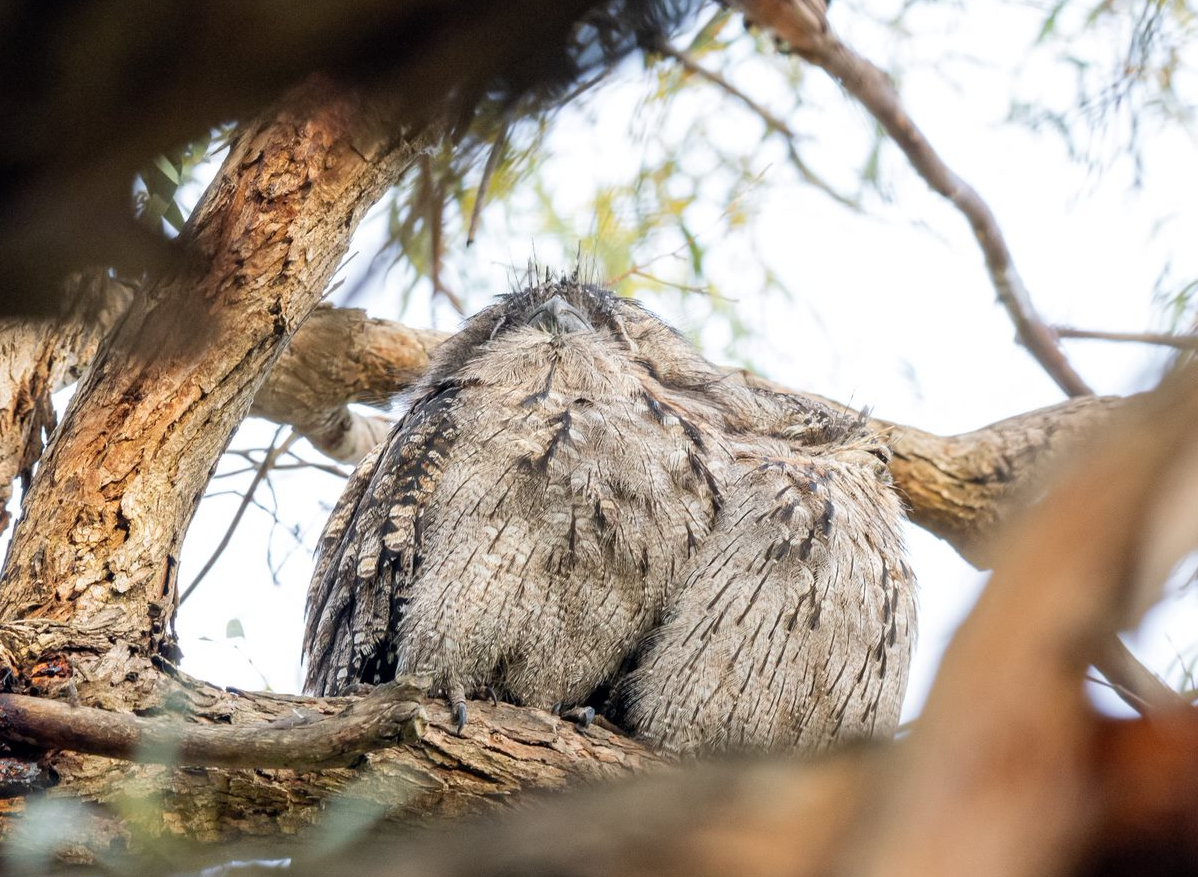
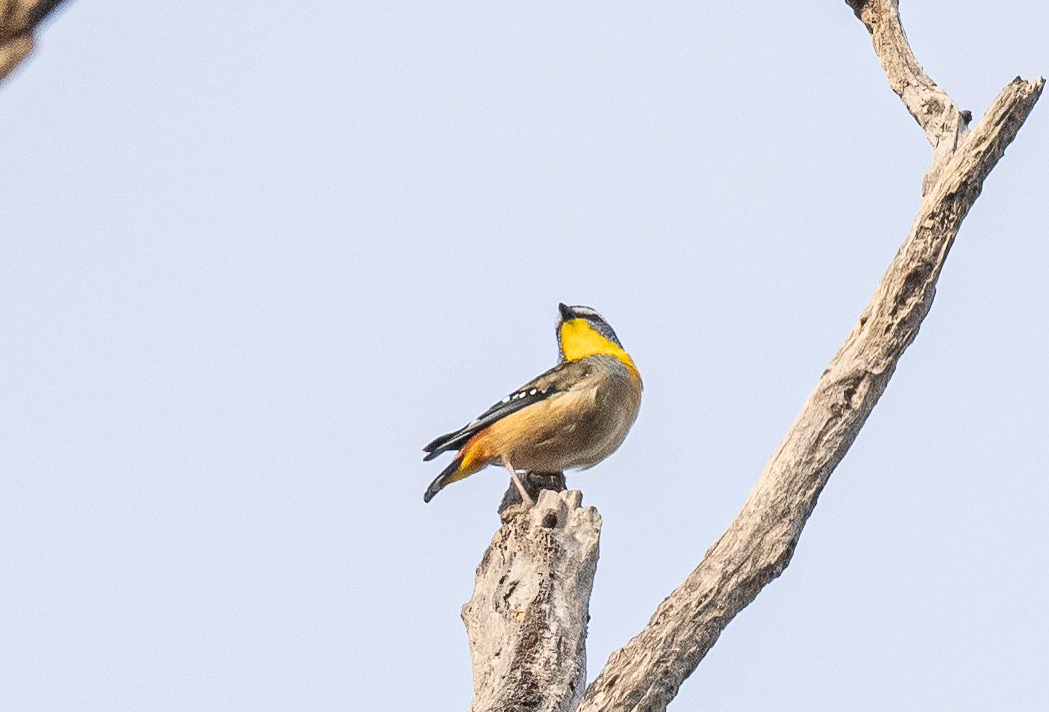
Click to enlarge. Click X to return.
We thank Ken, Lindy, Russell, Greg and other local photographers for sharing their fantastic work this month.
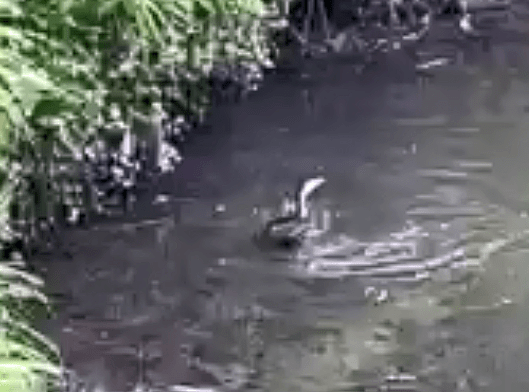
Stop press: Adrienne and Victor have both reported seeing the Little Pied Cormorant feeding in the creek recently on separate occasions.
This is a still from a short movie Adrienne took.
Our Spring Bird Walk has been confirmed for Saturday, 21st October – fortunately, not clashing with the referendum !
Down the Corridor
We know several of our Friends in the Corridor like to have a bird bath available for our avian friends (see upper right in the photo below) – especially in summer when suitable drinking and cooling water can be scarce – but this new one takes things to a new level:
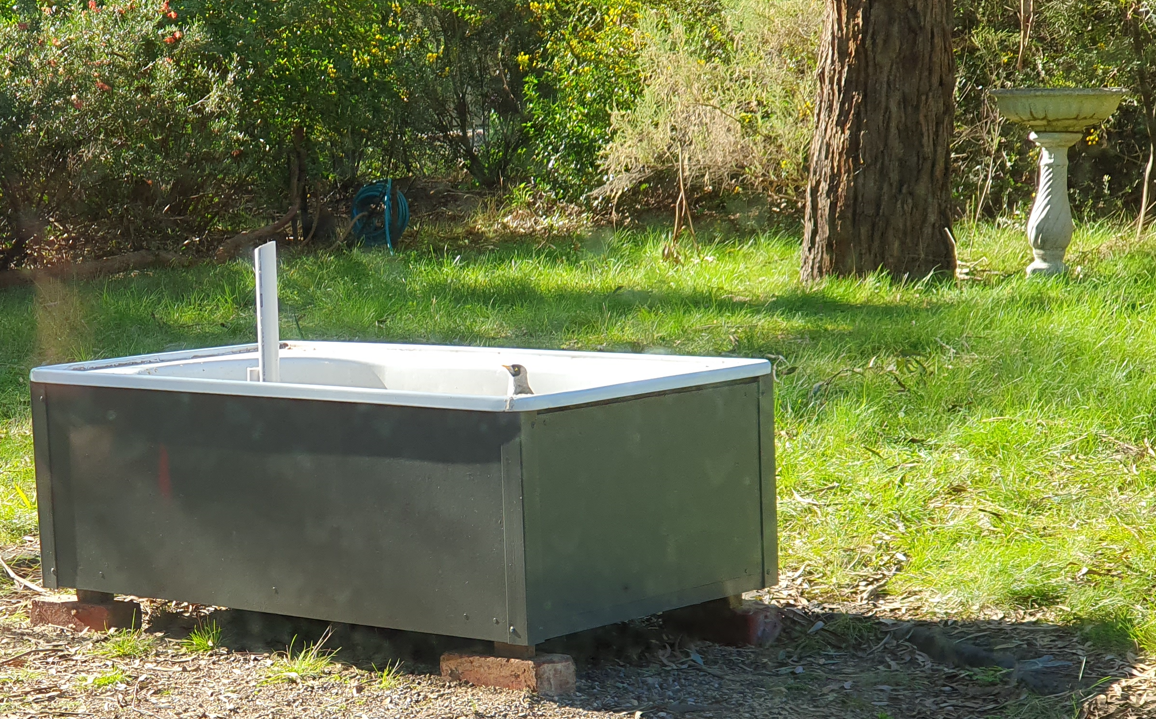
Oddly, the lonely Noisy Miner testing the new facility seems to be avoiding a co-resident submarine!
 Blackburn Creeklands
Pingback: Park News – September, 2023 | The Blackburn Creeklands