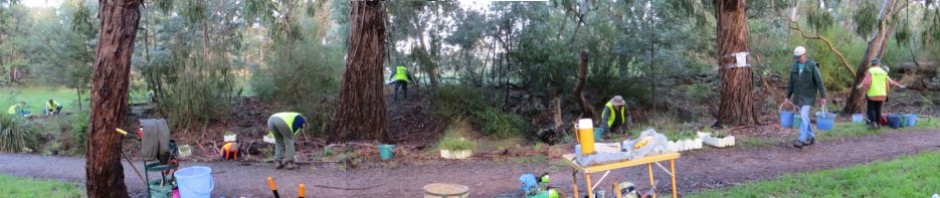
Welcome to our September Edition !
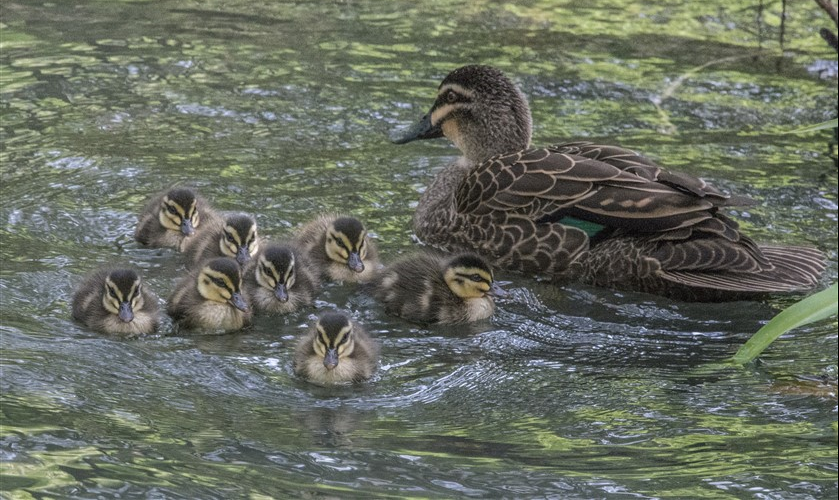
Welcome to our September newsletter. We’ve seen our first clutches of ducklings and other evidence of nesting and reproduction.
Notice there are 8 ducklings in the photo above. Danika may have spotted the same family a little earlier in the month when there were 10 ducklings:
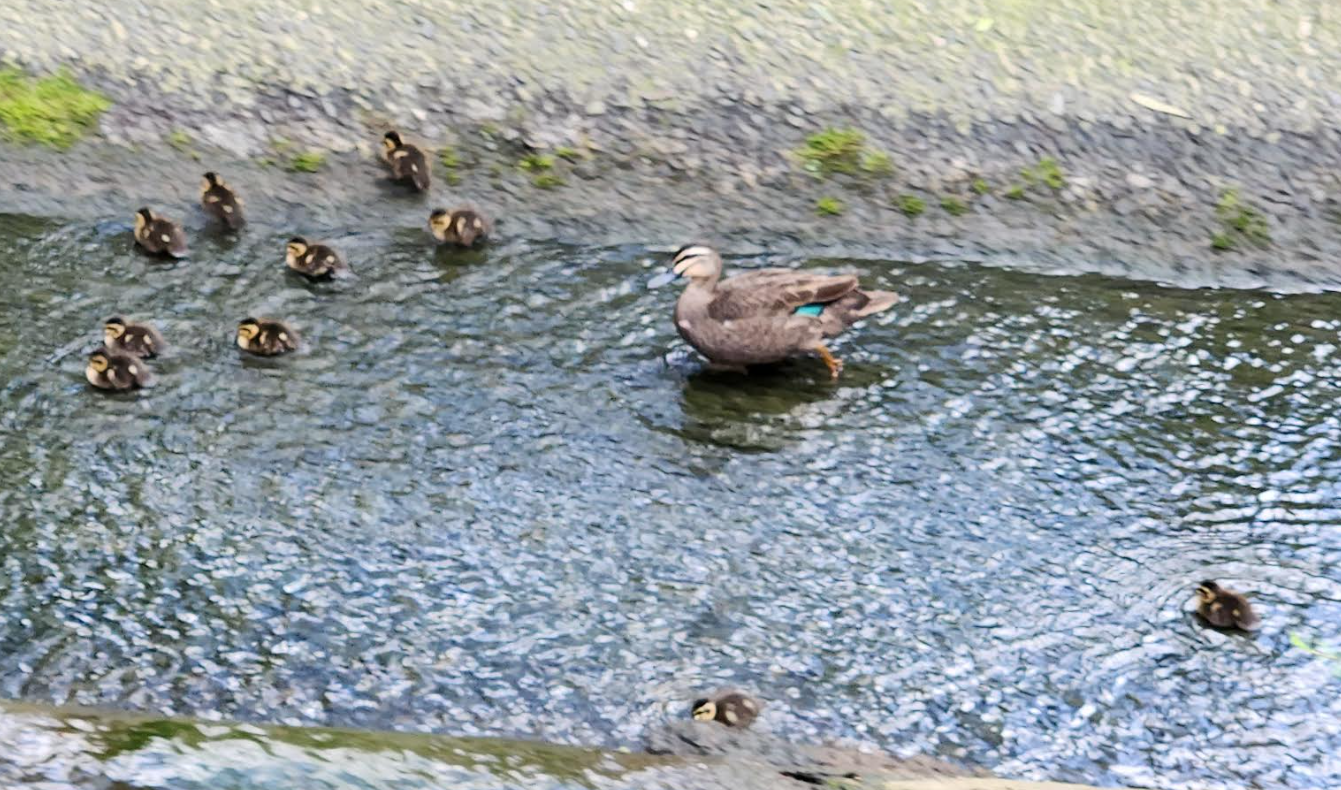
Sadly, there was one duckling having trouble keeping up with its siblings:
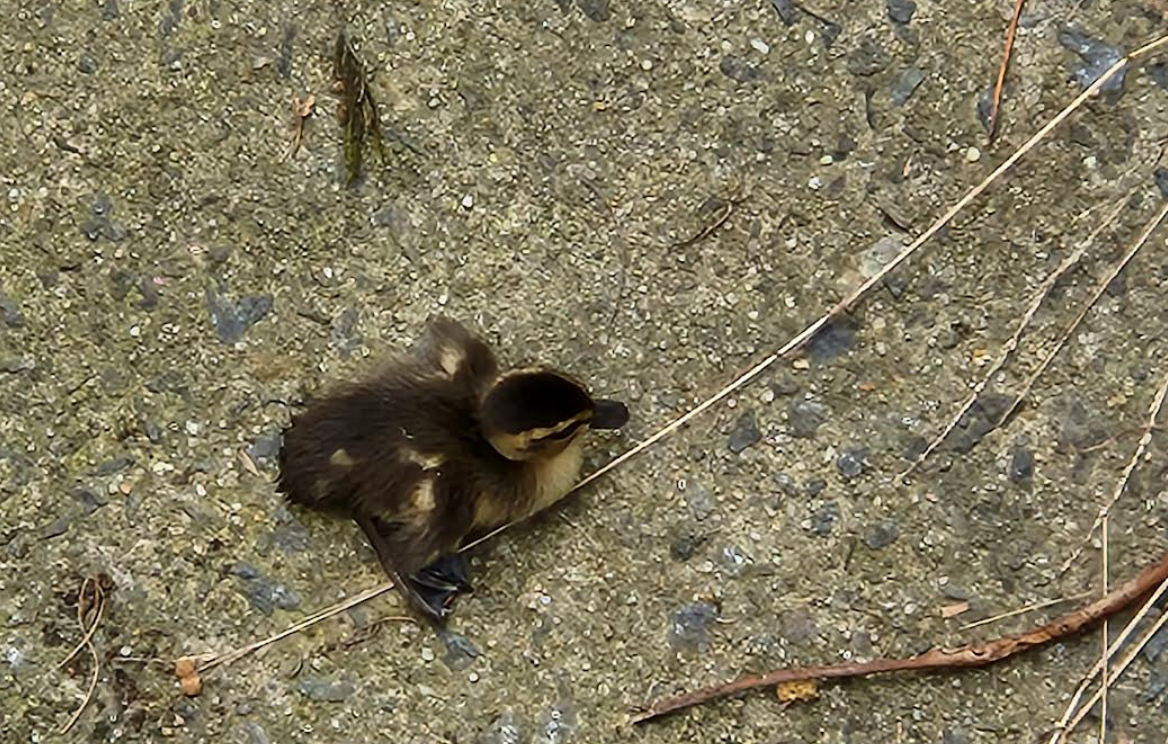
In Danika’s words:
But as I was watching a straggler struggled to keep up with the rest and, wondering how it would survive, it stopped to take a rest maybe 10 metres back from the group and was snatched up by a Pied Currawong!! A bit of a shock! No wonder the other birds hate Currawongs.
So now there are 9 ducklings!
Danika
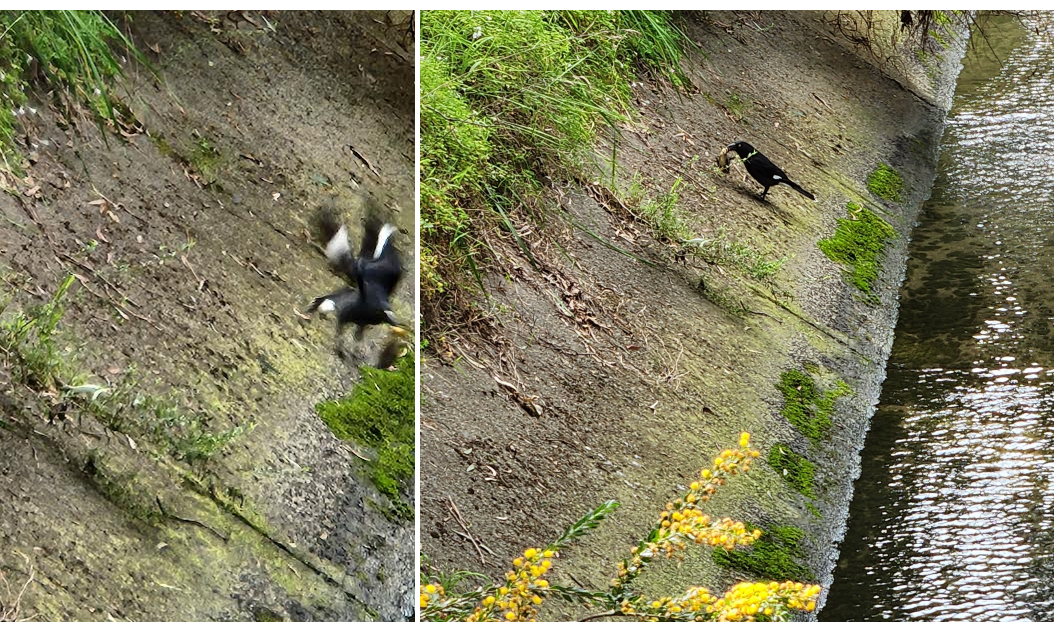
Nature can seem cruel – but we have to respect the right of the Currawongs to survive too. In a way, we are seeing natural selection at a micro level – the weakest duckling has not survived to pass on its genes. Ducks have evolved to have large clutches of ducklings to counter predation by the Currawongs, foxes and losses crossing roads…
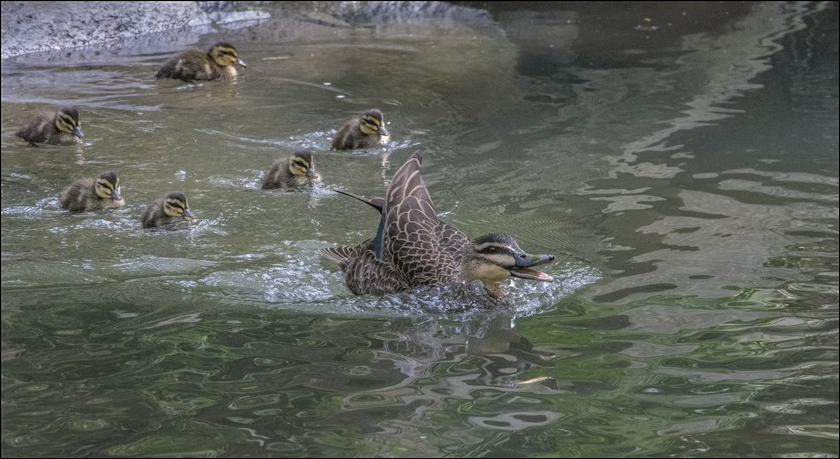
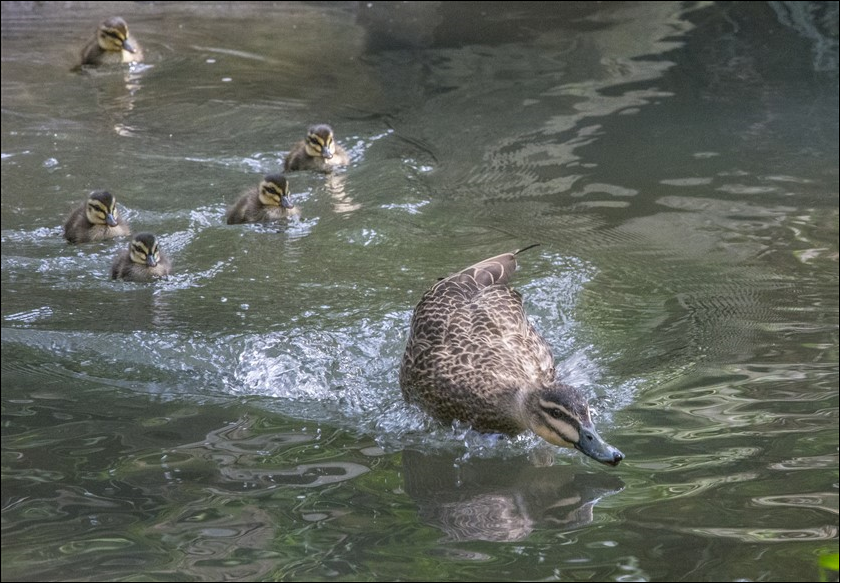
Another of our marvellous local photographers seemingly captured moments when a mother duck was educating her ducklings in fast pursuit swimming – possibly to evade Currawongs! (or is it surfing?):
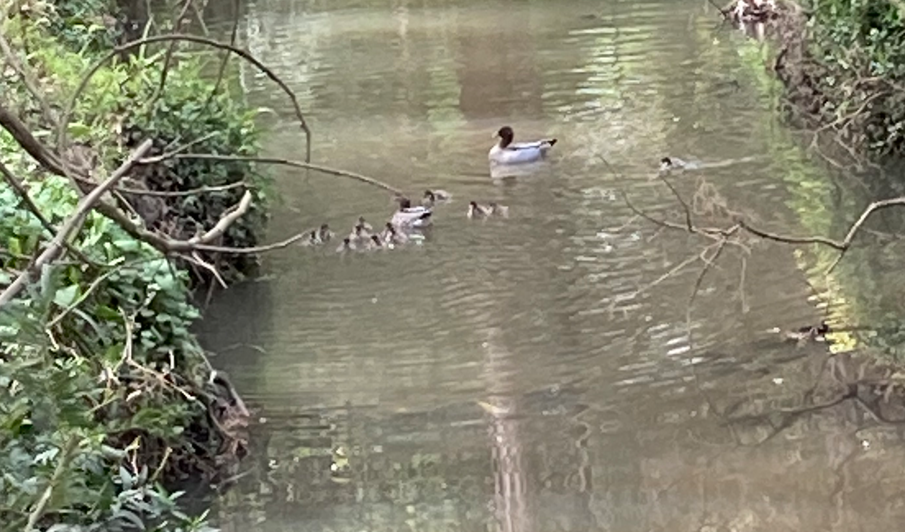
Lachlan sent this photo in of a Wood Duck family early in September:
El Niño
We’ve already experienced unseasonably warm weather in September. As we predicted was likely, the Bureau of Meteorology (BoM) has now declared an El Niño event in the Pacific Ocean, the first called in Australia since 2015-16. This heralds quite a change after the wet weather we’ve had during the cooler/wetter La Niña events over the past three years. Our part of the world is hotter, drier and more volatile during El Niño years.
Indian Ocean Dipole
Unfortunately, we are up for a double-whammy this year – the BoM has also announced that a “positive” Indian Ocean Dipole (IOD – sometimes known as the Indian El Niño), has also developed. From 2006 to 2008, there were three consecutive positive IOD events which preceded the Black Saturday bushfires. Note that there was no El Niño to assist then!
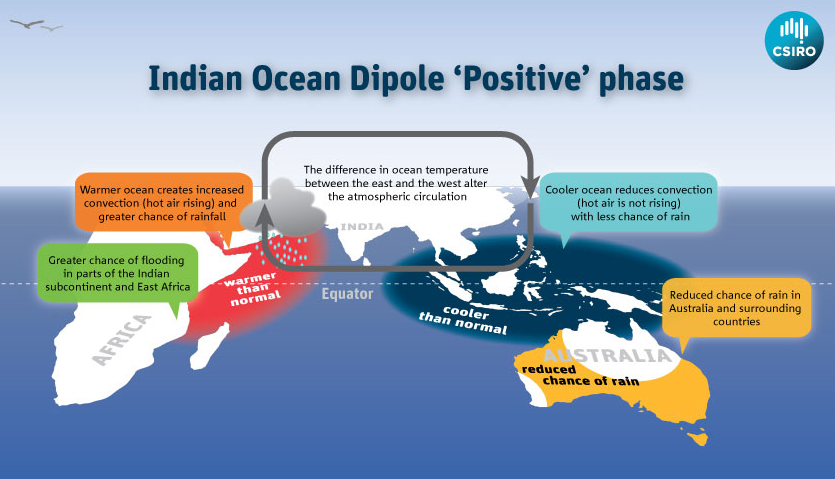
When the two drivers occur together (a rare event), the severity of rainfall deficiencies is further increased in eastern Australia. The onset of the two major climate events means the remaining months of 2023 in Australia are predicted to be hot and dry, particularly in the eastern states.
Our Thursday Team folks have recently commented on how dry the ground already is. Recent reports say that Victoria recorded its hottest September and the driest month ever, with daily maximum temperatures 3.3C higher than the month’s average and rainfall 67.1% below average !!
So the answer to the question:
What could be worse than an El Niño event for our climate this Spring and Summer?
is:
An El Niño coupled with a positive Indian Ocean Dipole event !
They are bad news when they reinforce each other. Things can go the other way too: A strong, negative IOD developed in October, 2010 combined with a strong, concurrent La Niña, to cause the 2010–2011 Queensland floods and the 2011 Victorian floods !
Heatwaves
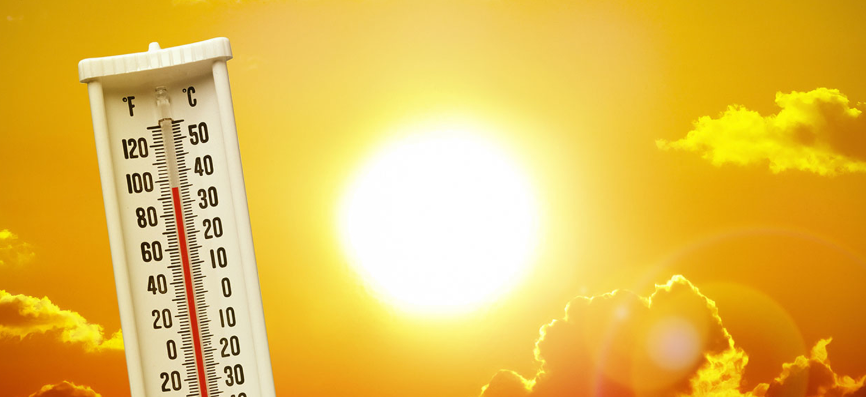
Lower rainfall and higher daytime temperatures can result in heatwaves and an increased probability of dangerous bushfires.
Cities like Melbourne are vulnerable because of the variability of our climate – people are not accustomed to long spells of very hot weather. So much so that we understand Melbourne now has “Chief Heat Officers” along with only 5 other cities in the world (including Miami and Athens).
Trees and Parks “Lower the temperature”
To counter heatwaves, it is crucial that we maintain as much tree canopy as we can for shade – especially in public spaces like footpaths. It is ironic that we remove trees to protect ourselves from bushfire – yet heatwaves kill more people than bushfires and floods do. Parks like ours are also very important to counter the “urban heat island” effect:
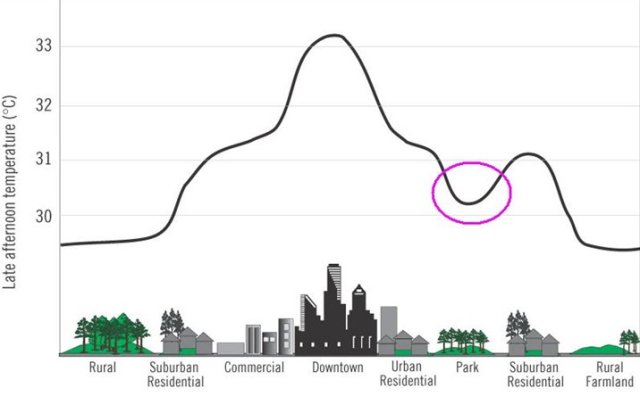
An urban heat island is an urban area that is significantly warmer than its surrounding rural area due to human impacts. The temperature increase tends to be larger at night and is most noticeable both when winds are weak and during summer and winter. The main cause of the effect is the modification of land surfaces with waste heat from energy use a secondary contributor. Nearly 40 percent of the increase is believed to be due to the prevalence of dark roofs, with the remainder coming from dark-coloured and unshaded pavement/roads and the declining presence of vegetation overall.
It’s nesting time
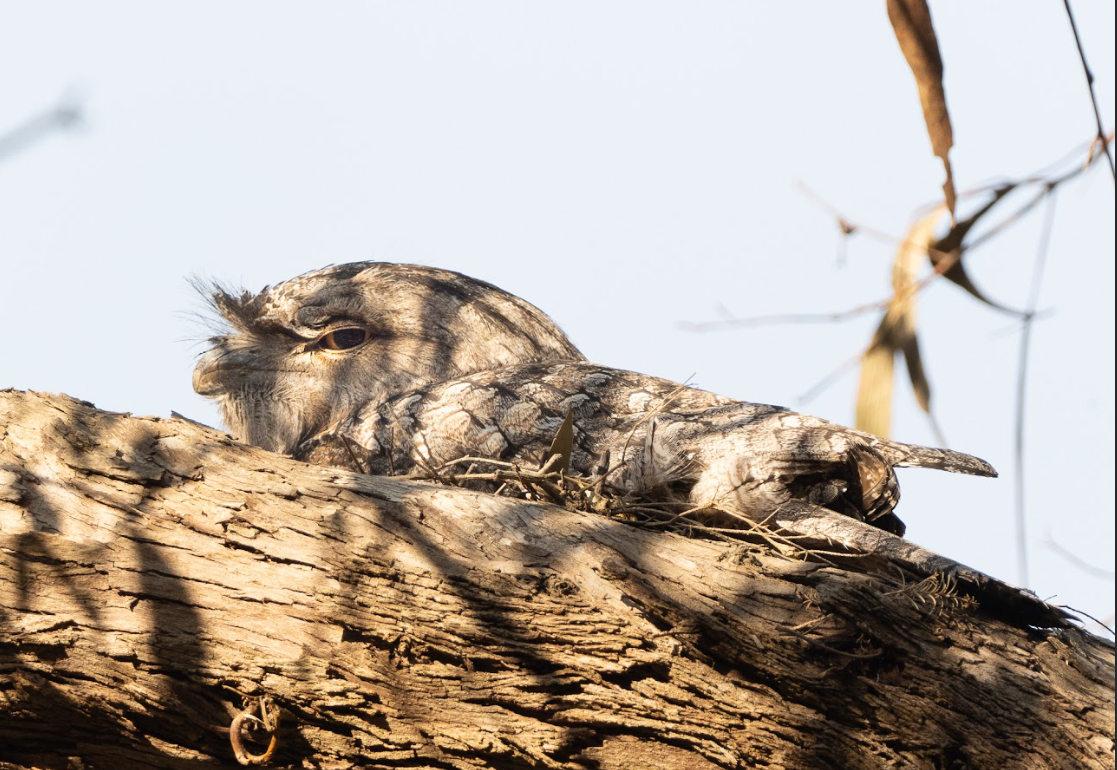
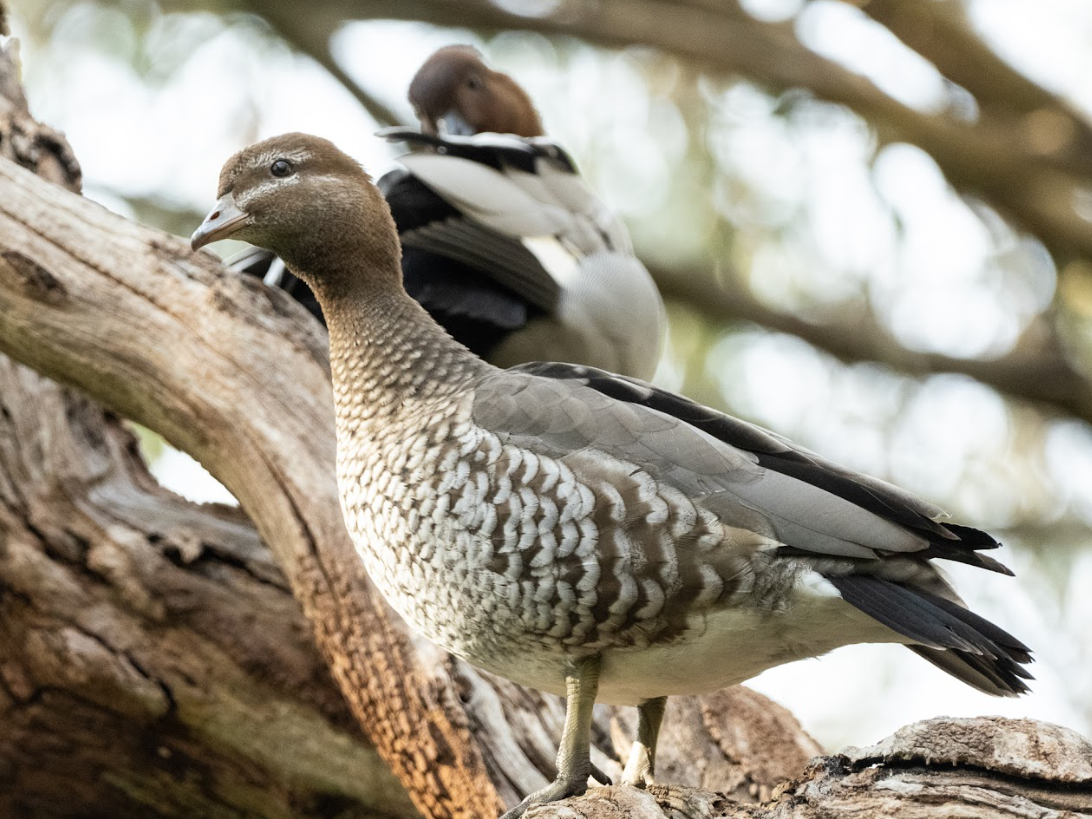
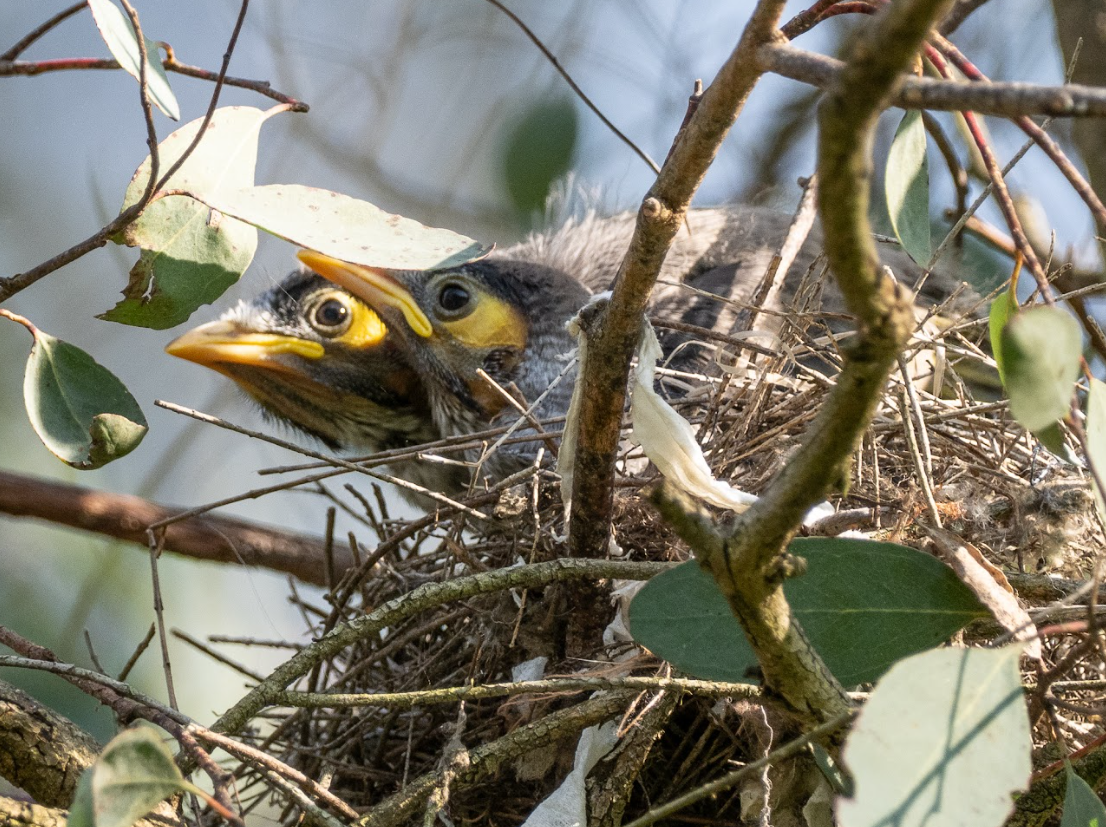
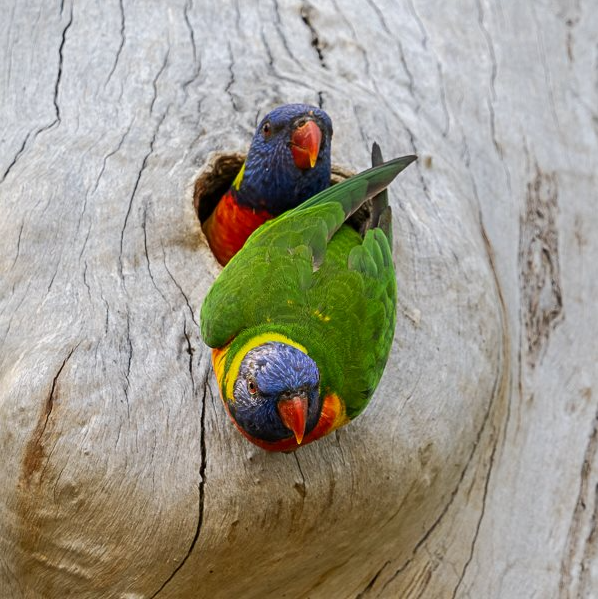
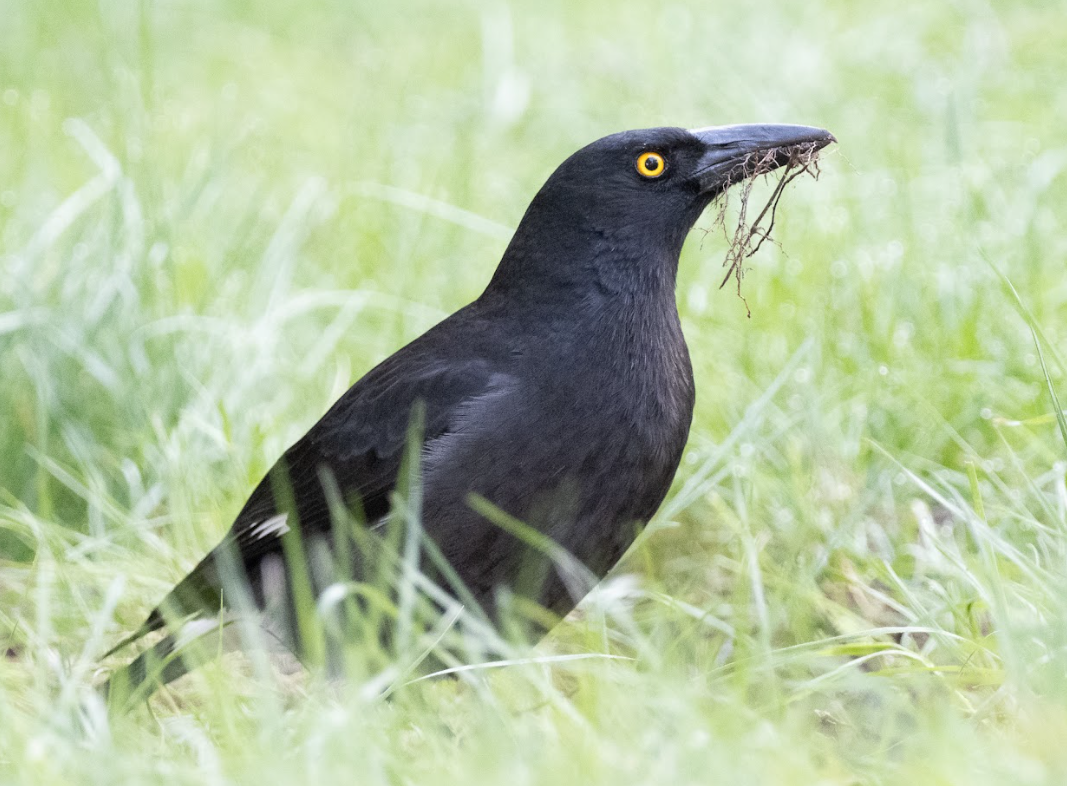
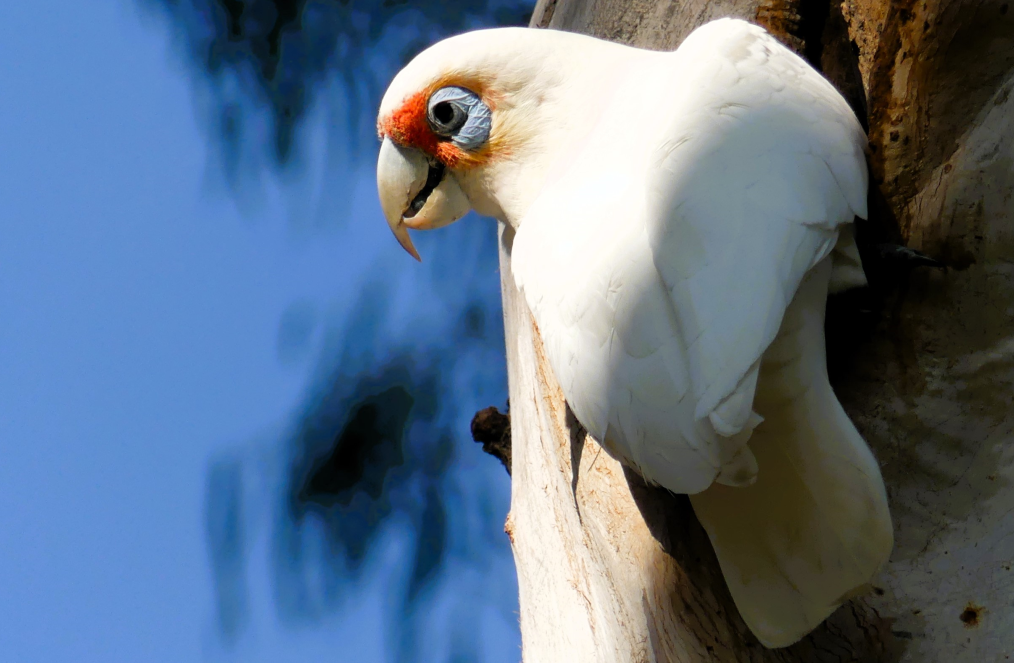
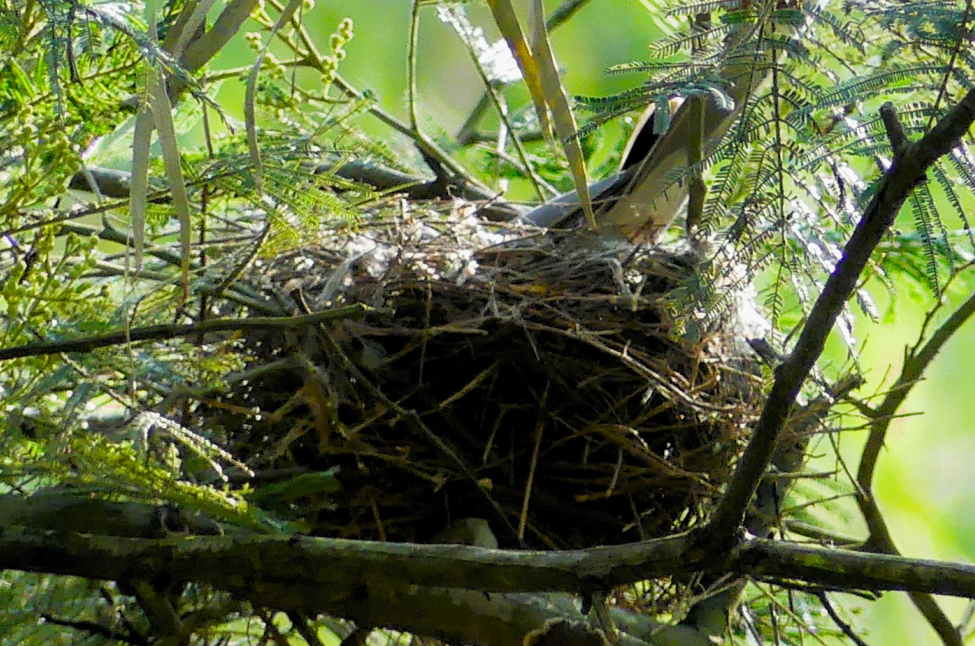
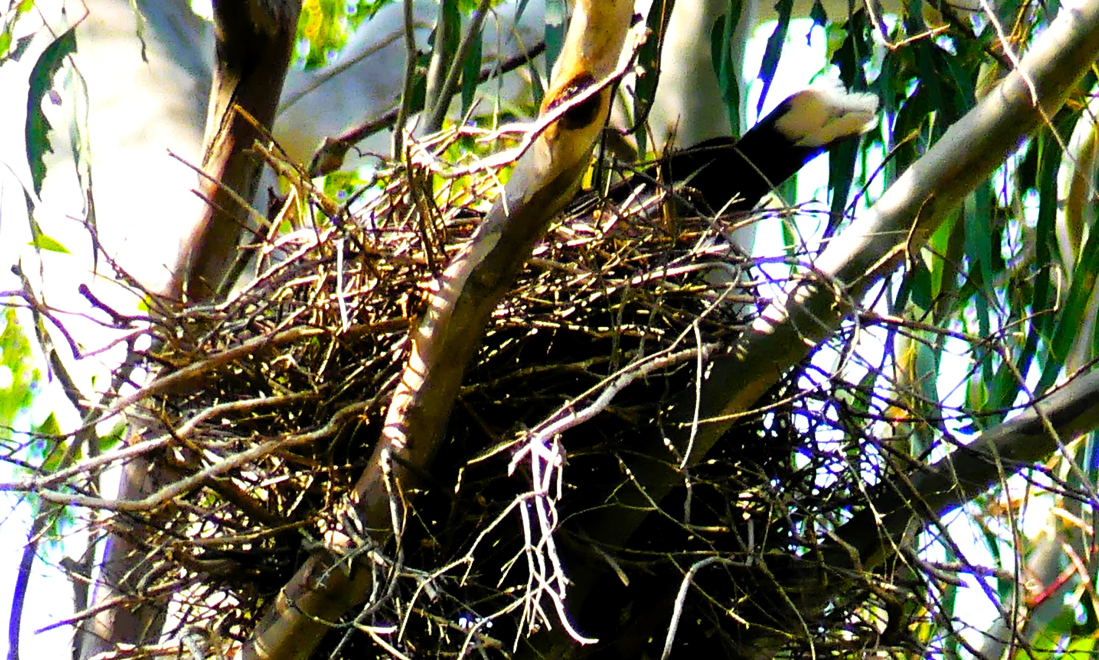
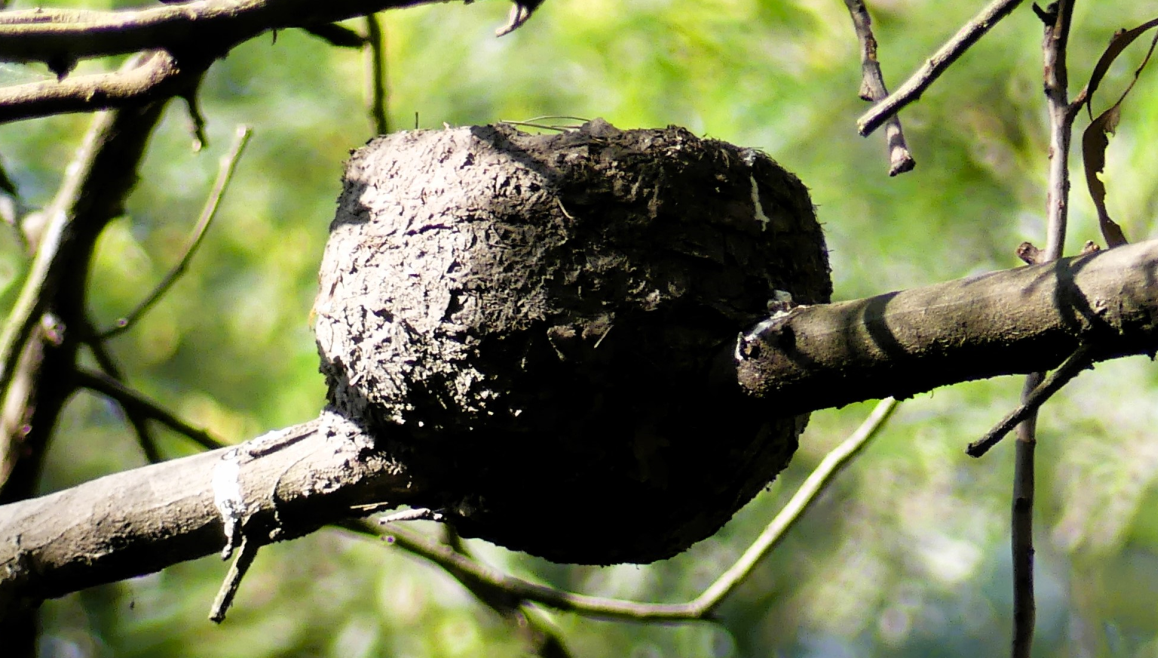
As we reported in last month’s edition, Spring nesting is well underway in the Creeklands. It’s interesting to look at the different variations in nesting style among the species – some being nest builders, others nesting inside tree hollows. This gallery shows some of the options captured by Ken, Russell and Greg in mid September:
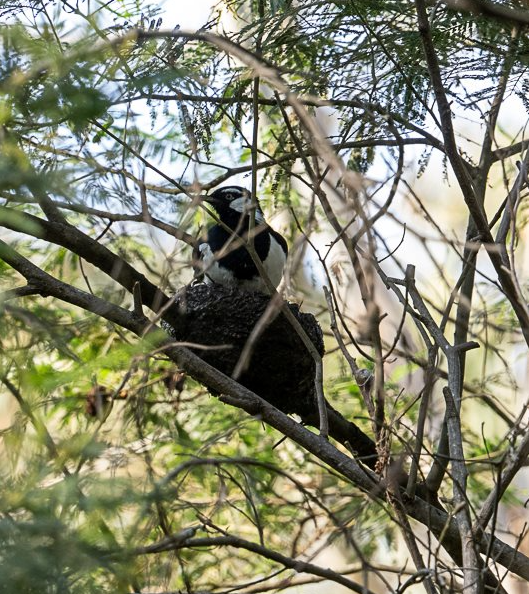
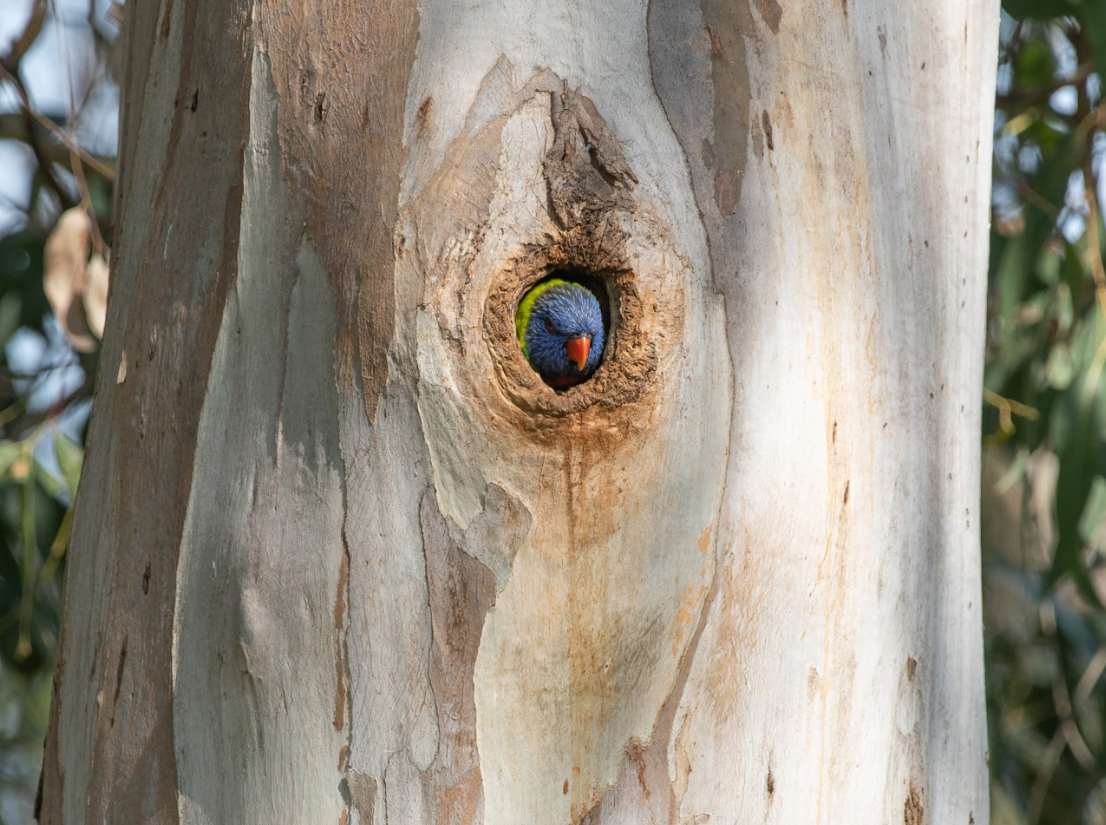
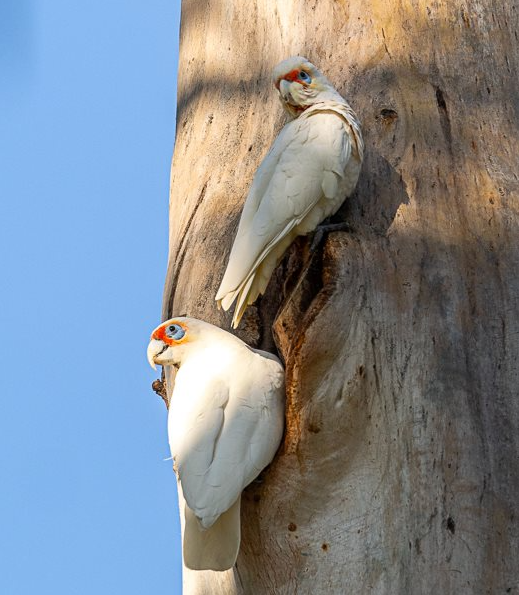
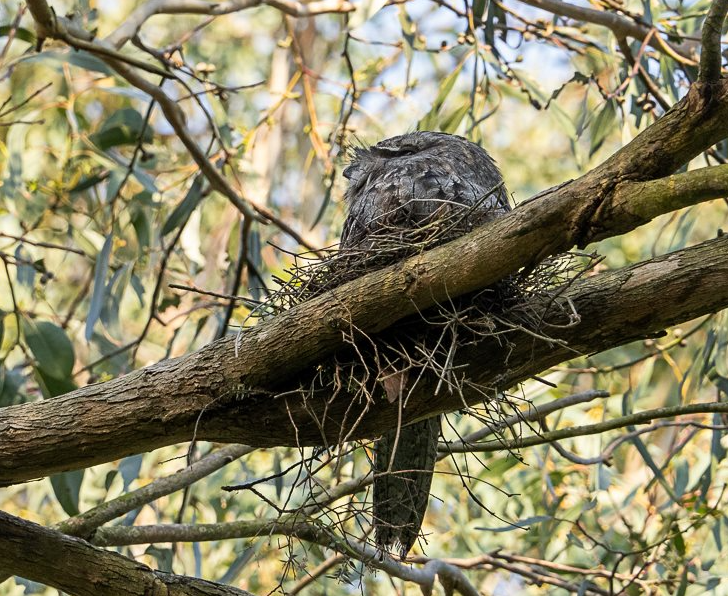
According to our Wednesday morning birdo crew’s surveys, Rainbow Lorikeets are the most populous species in the park – easily outnumbering the Noisy Miners whose numbers seemed to have declined somewhat. Who could forget this “Branch Stacking” by the Miners in 2017 ?:
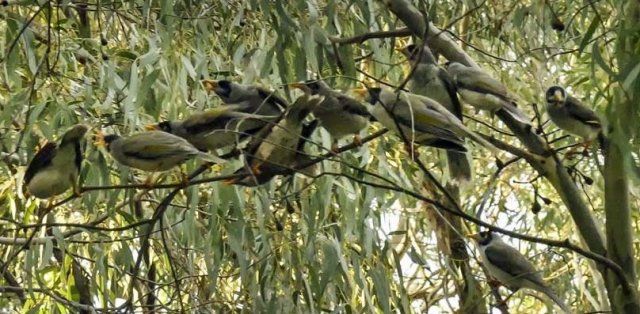
Because the Lorikeets nest in hollows, there must be a severe shortage of suitable hollows – which leads to pairs nesting at ground level as we surmised in our August edition.
KKA Report
The Creeklands is a member of the KooyongKoot Alliance (KKA) – as are another 20+ Friends Groups within the Gardiners Creek catchment.
The KooyongKoot Alliance has been busy in the KooyongKoot (Gardiners Creek) catchment facilitating working bees just downstream from us in the Gardiners Creek Reserve and at Markham Reserve in Ashburton. The group has also invested in signage and produced a new brochure as part of its publicity campaign.
The KKA is a member of the Gardiners Creek (KooyongKoot) Regional Collaboration (GCRC) – a peak body that includes the various Councils, Melbourne Water, the Yarra Riverkeeper Assocation, the Field Naturalists Club, Deakin University and others. The KKA is also participating in GCRC projects – a pilot data project has begun on litter and waste assessment for the catchment. The group has much larger aims in the data area – where to host the data is currently being considered.
The KKA’s AGM is planned for 6.45PM, 17th October at the Blackburn Lake Sanctuary Visitors’ Centre. The guest speaker is Dr Greg Moore who will speak on the topic “Your Trees are Worth Fighting For”. Dr Moore is an incredibly positive and entertaining speaker – don’t miss him! For further information, please visit the KKA web-site at https://kka.org.au/ .
Thursday Team Activities
Our Thursday Team has been busy looking after the eastern end of the Billabong precinct (two Thursday mornings) and two beds – one immediately west of the Laurel Grove bridge and another bed to the east (both on the south side of the creek) in the other two.
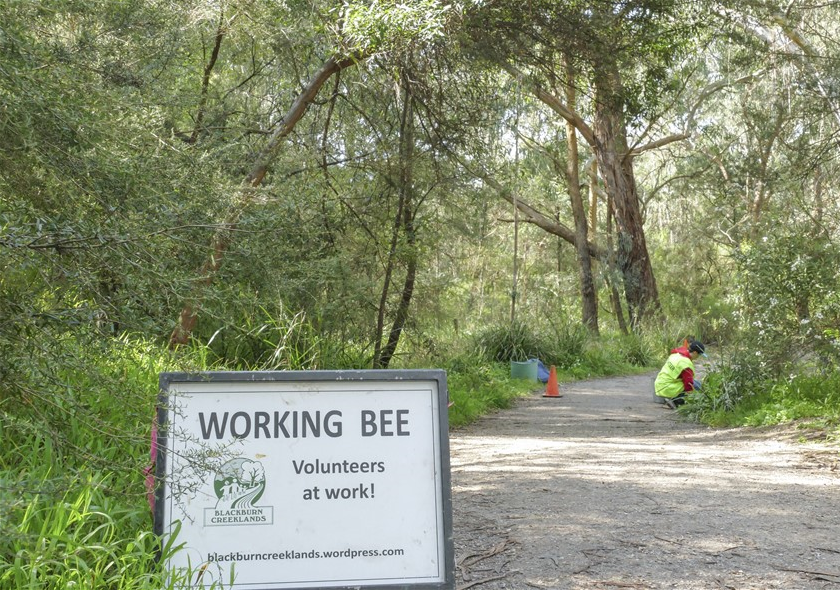
It was very nice indeed for the team to reconnect with their great friend Kath when she was (too briefly) between work contracts. They hadn’t worked together since pre-Covid times!
They’ve also finished planting the last of their plant stock for 2023. Conditions will be definitely too dry from now on.
Sightings
We can report two unusual bird species in the park which appeared during the month.
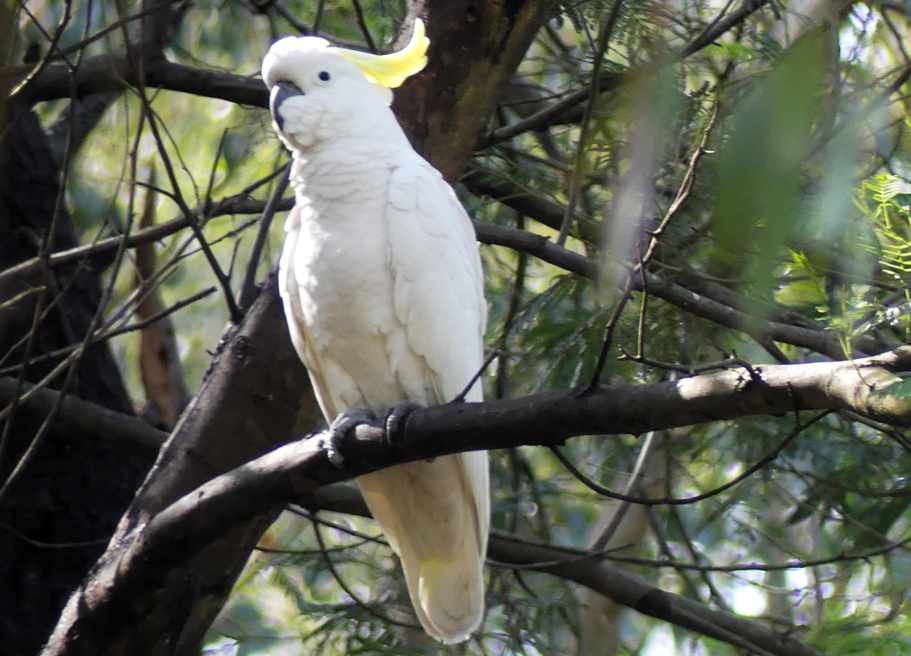
Firstly, this Sulphur-crested Cockatoo (Cacatua galerita) travelling solo is an unusual sighting in the Creeklands – in the Waratah Wetlands (thanks Russell):
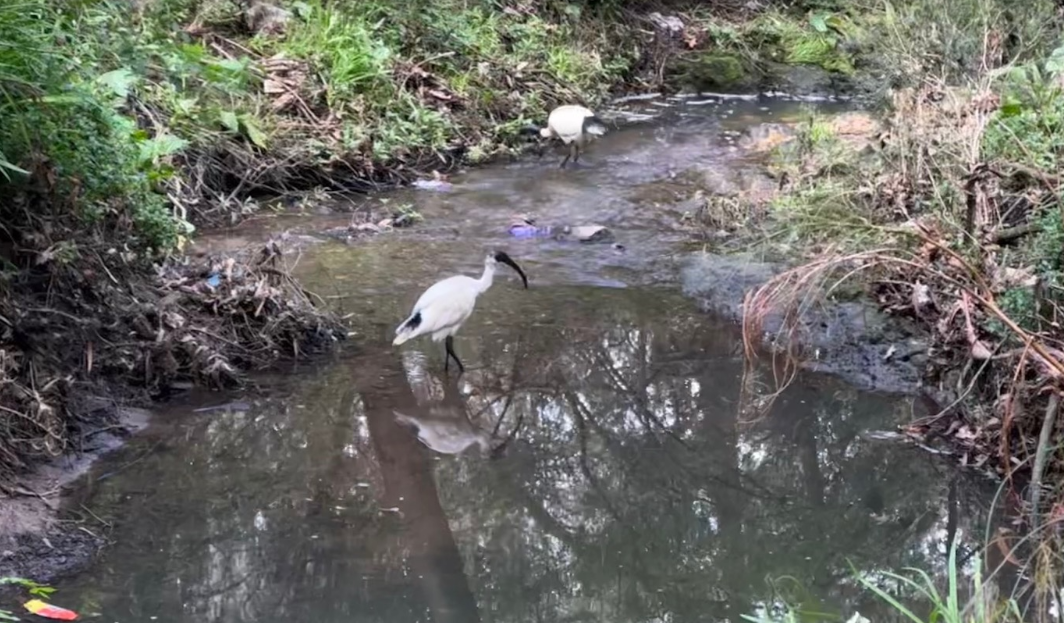
Lisa spotted this pair of White Ibis (Theskiornis molucca) feeding in the creek (dare we say it, probably having lost their way to the tip!):
Ghania flowering in Furness Park
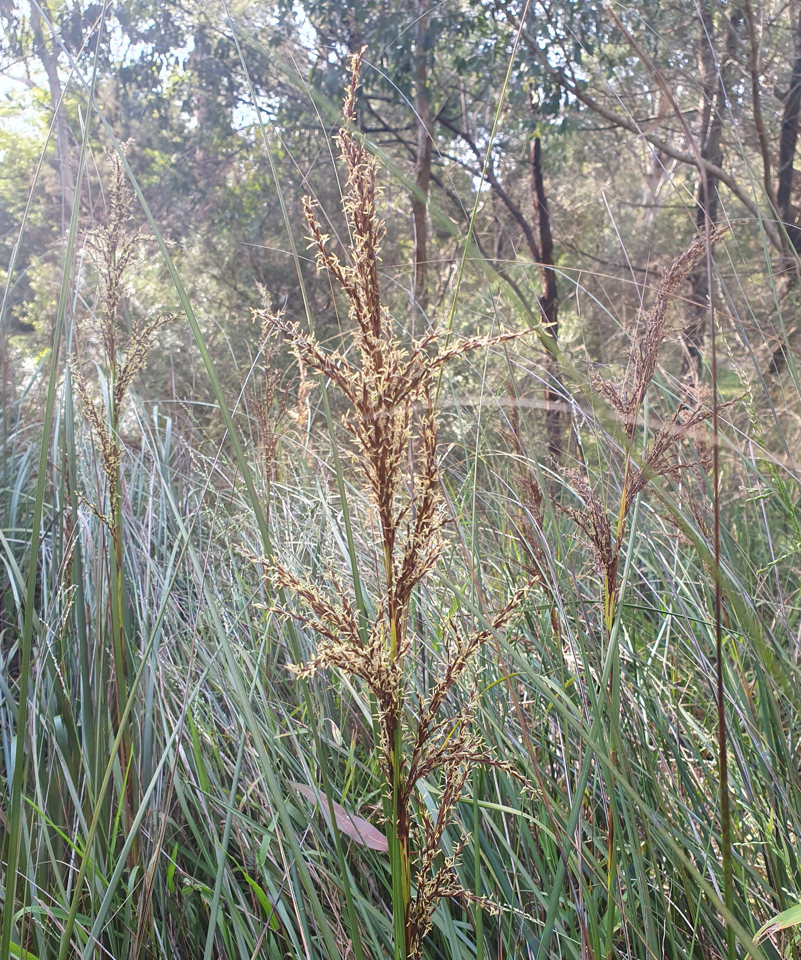
Ghania (or Thatch Saw Sedge, Gahnia radula) is one of those anonymous, strappy indigenous plants that tends to fly under the radar. It is a tufted perennial sedge native to south-eastern Australia and seems to like growing under eucalypts. We think this clump in Furness Park shows residual indigenous vegetation.
Its leaves are long, flat and rough with quite sharp edges (beware – they can easily cut you!). At this time of year it brightens up – it has a distinctive yellow and brown inflorescence (a group or cluster of flowers), which darkens to a very dark brown as it dries off. It grows up to a metre in height, spreads through rhizomes and is found in eucalypt forest and grassy woodlands.
Miscellaneous Sightings
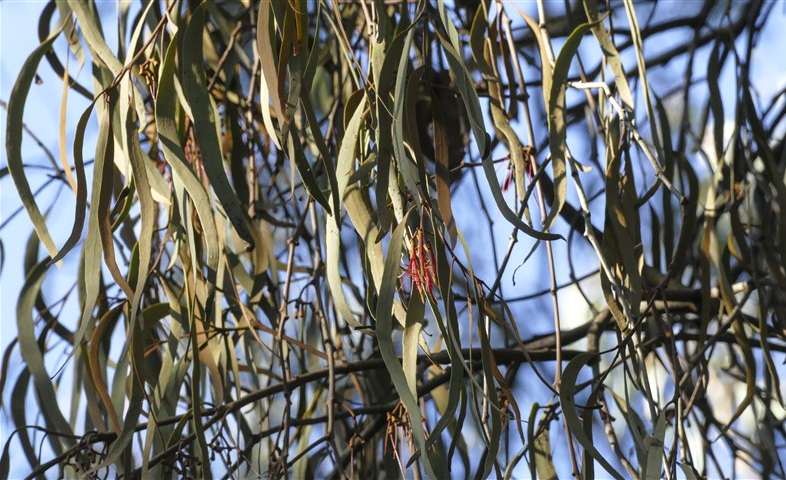
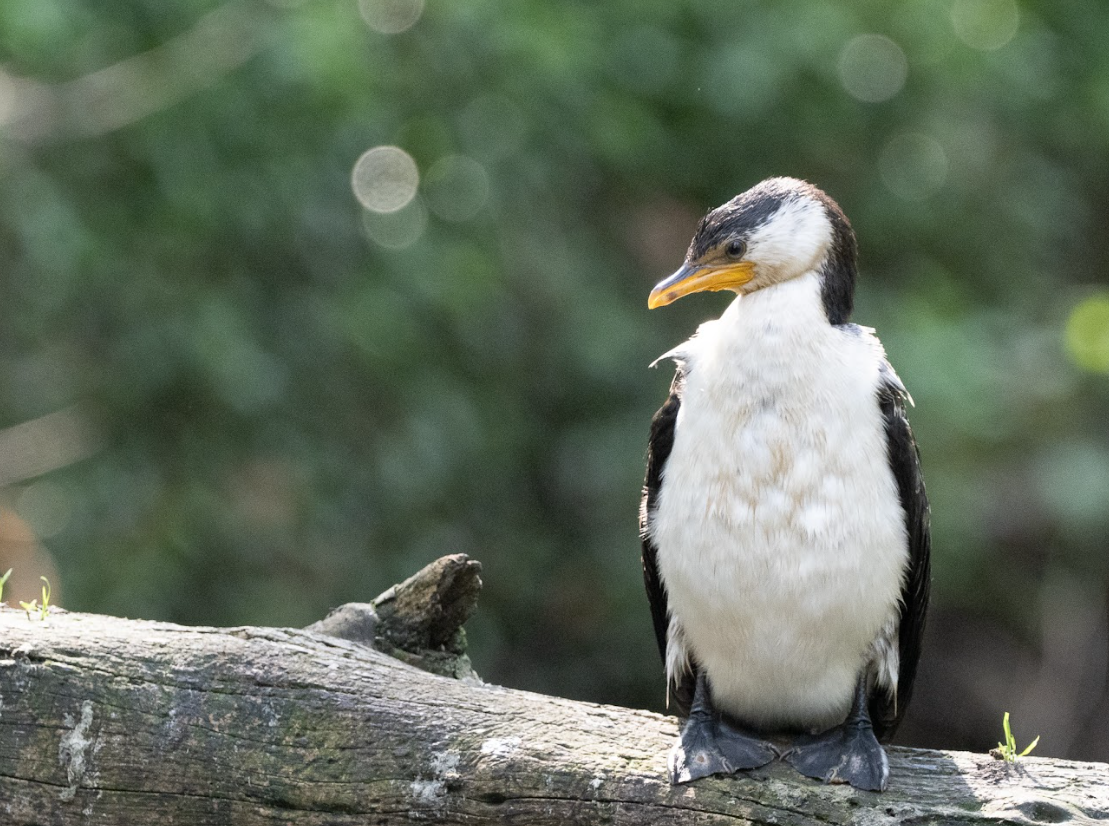
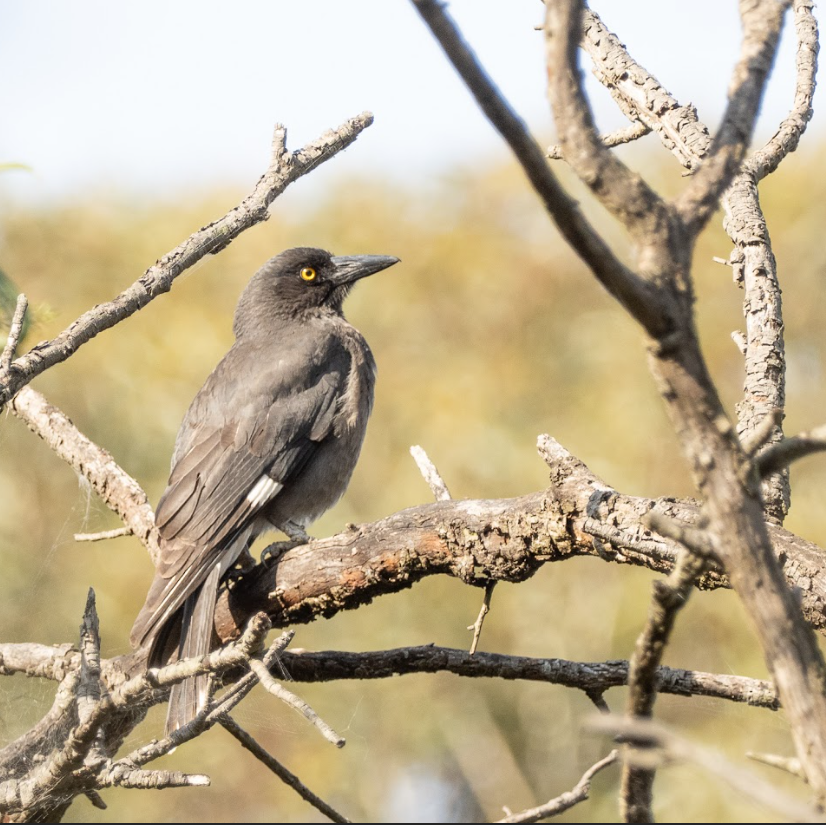
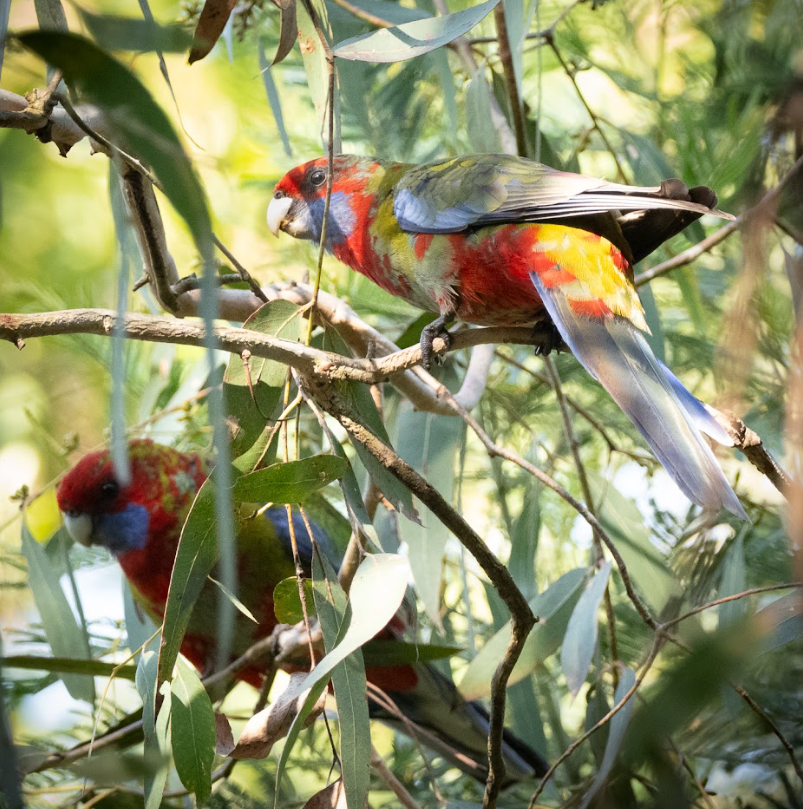
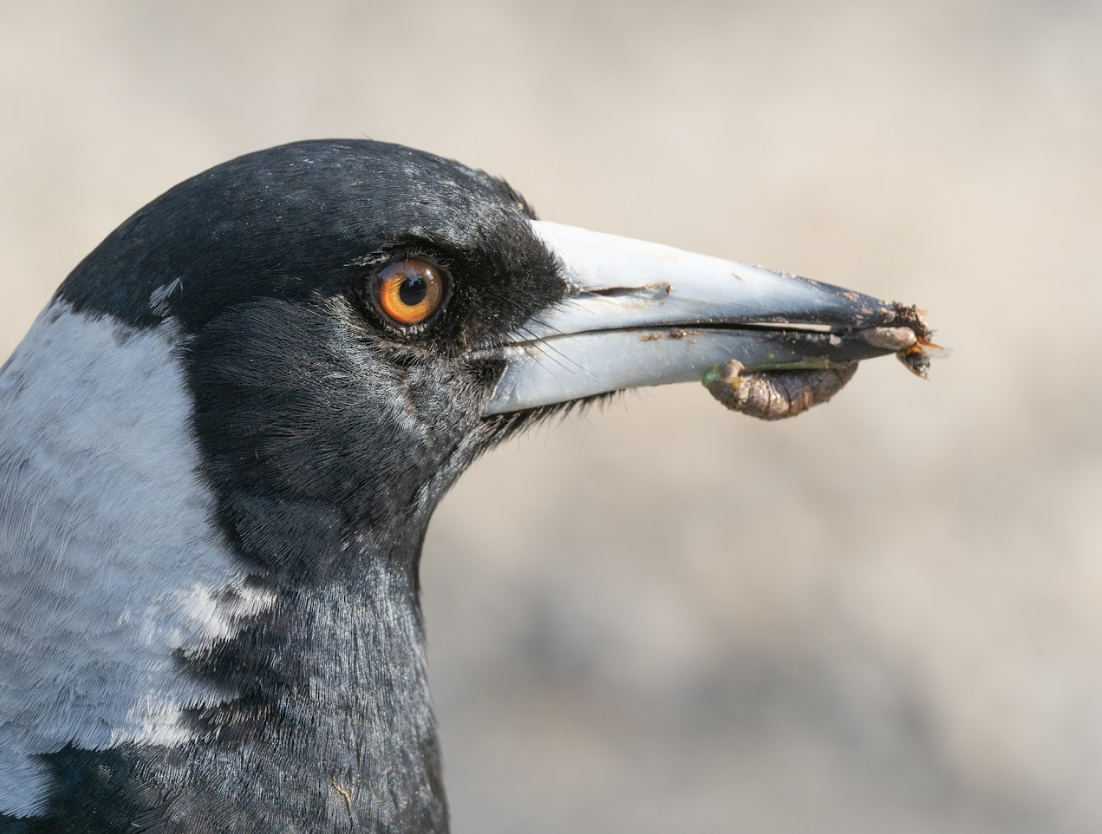
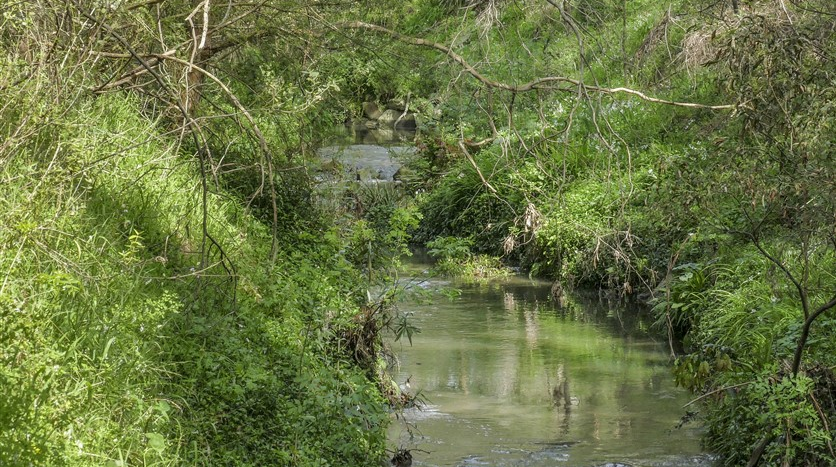
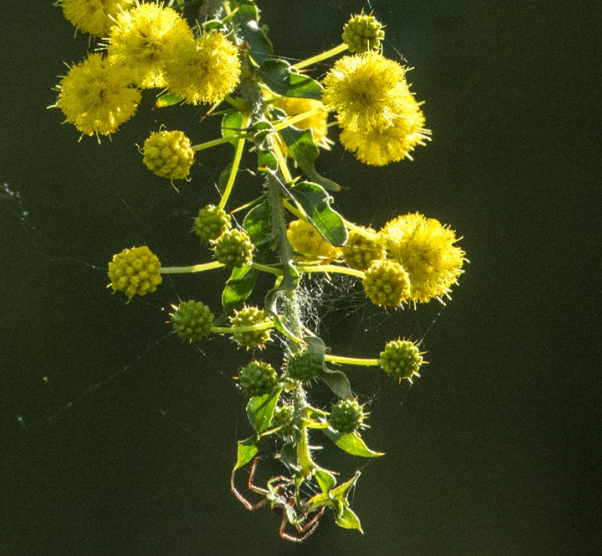
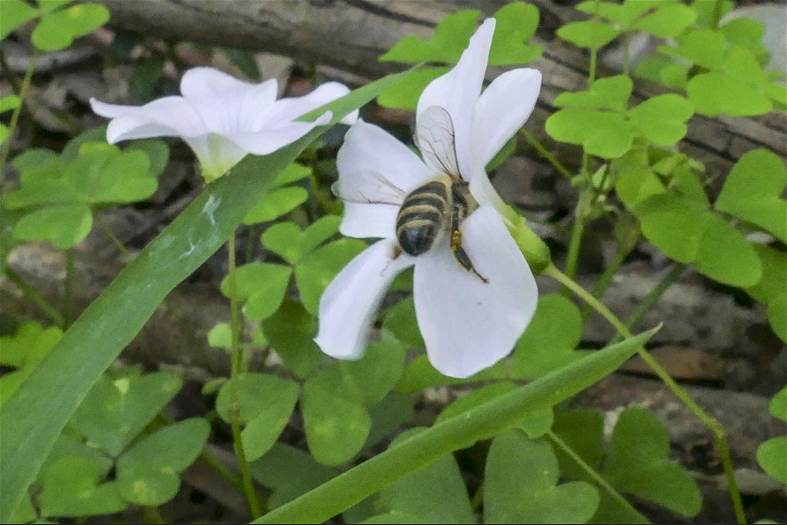
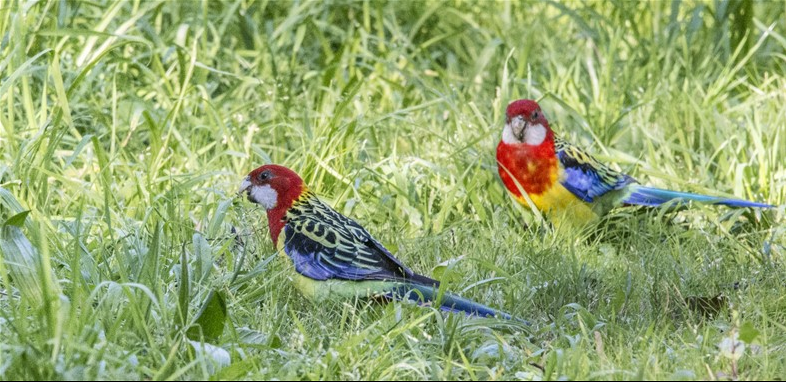
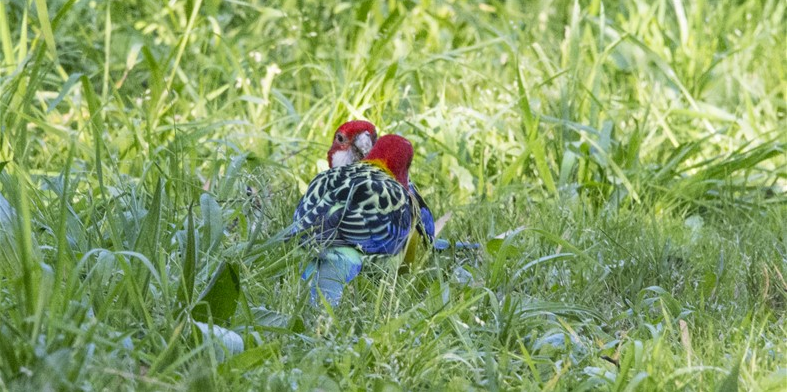
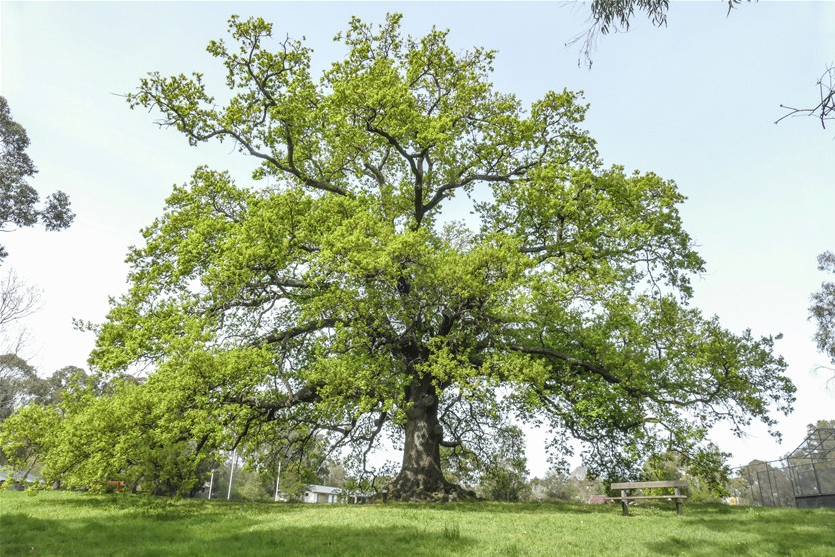
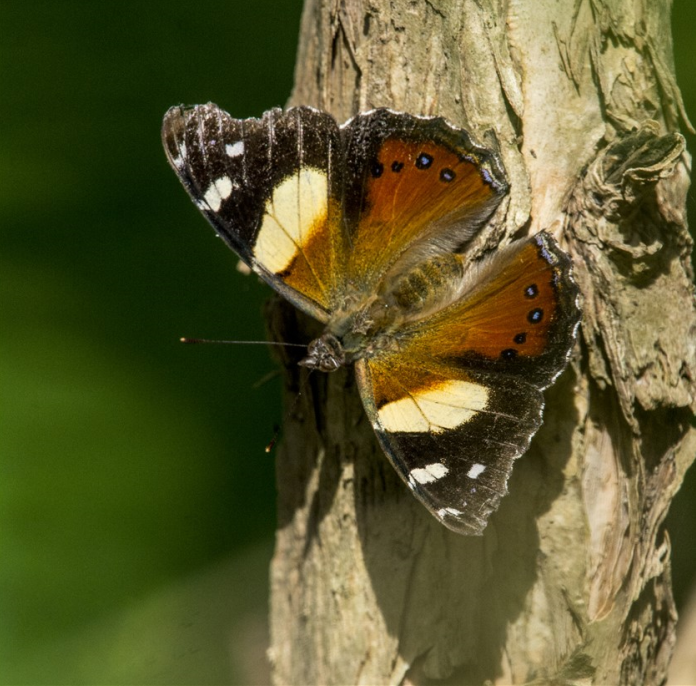
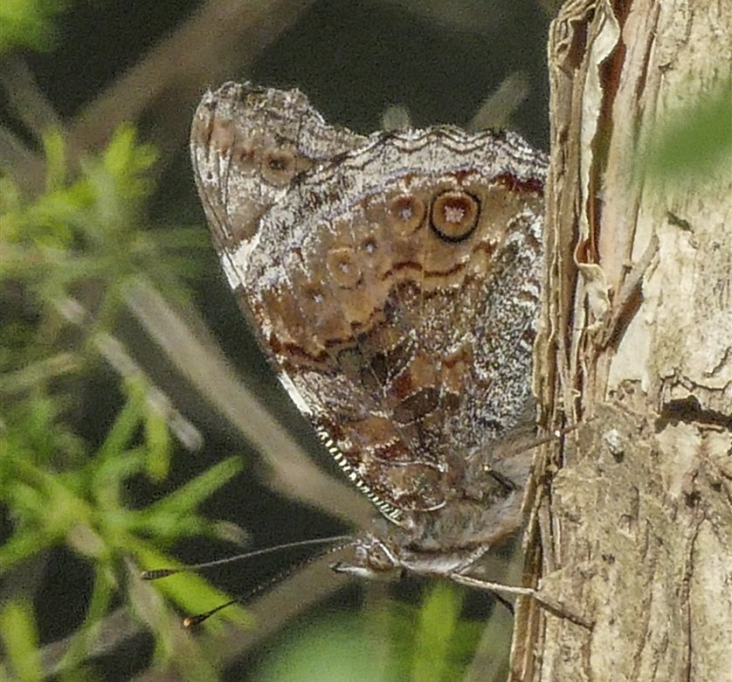
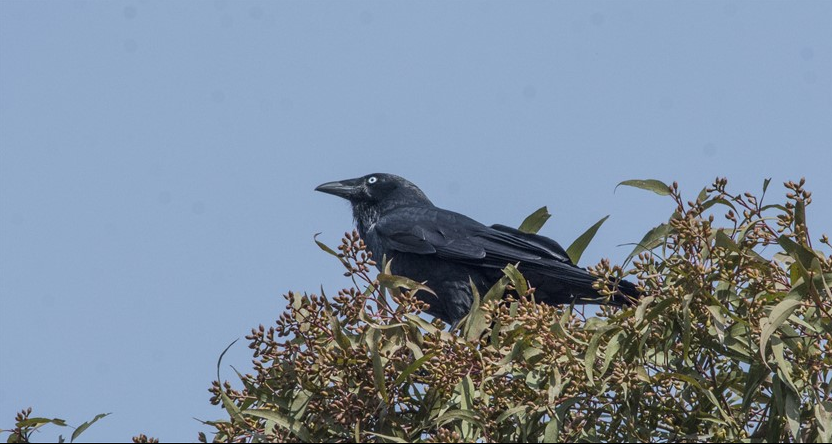
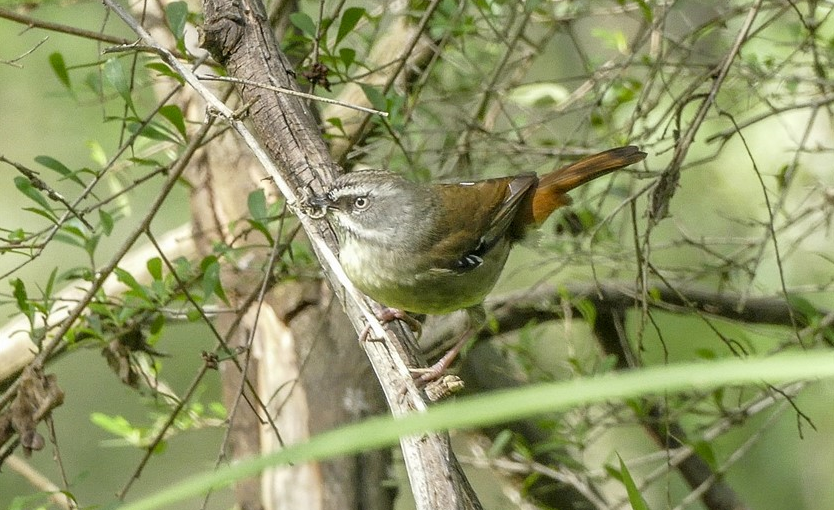
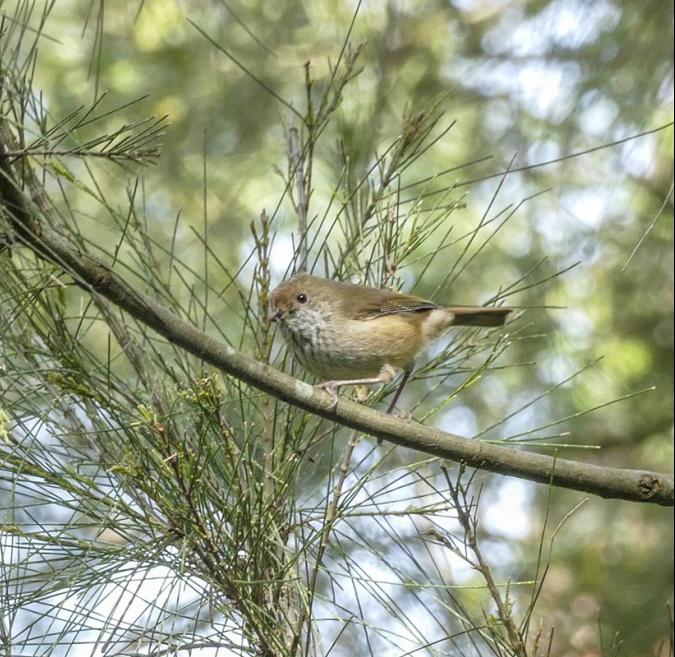
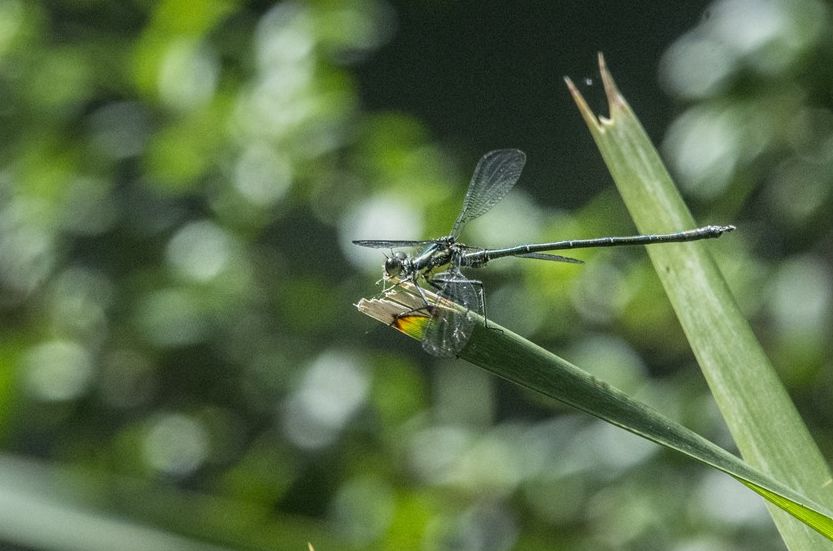
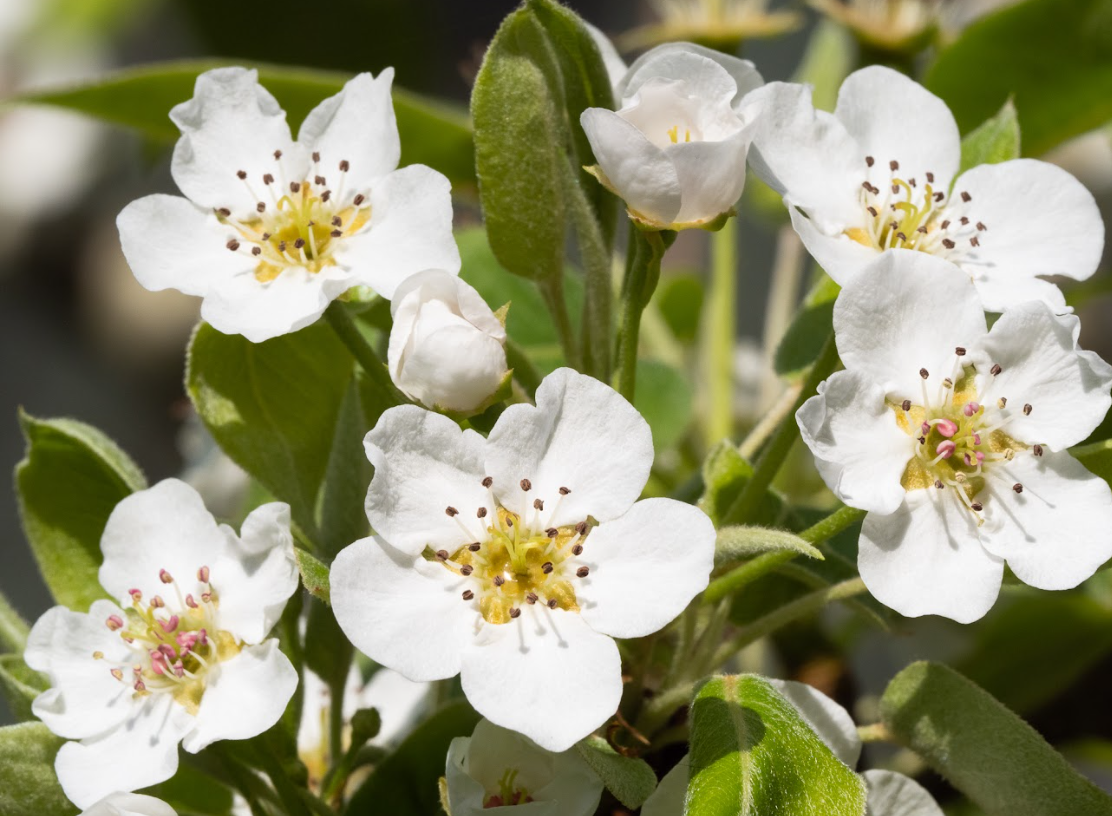
Thanks to our prolific photographers, we have many more photos to show you including more birds you are likely to see at the October Bird Walk (see next article), including a Grey Currawong (or is it a juvenile Pied Currawong?), flowers, Eastern Rosellas foraging with one feeding the other (nesting nearby?), spiders, an Australian Admiral butterfly with wings open /closed and even pear blossom in the old orchard.

Garden Rubbish
It’s hard to believe we’d have someone like this in Blackburn, but someone, presumably local, seems to have dumped several barrow loads of garden waste into Furness Park along with plastic weed-mat scraps.
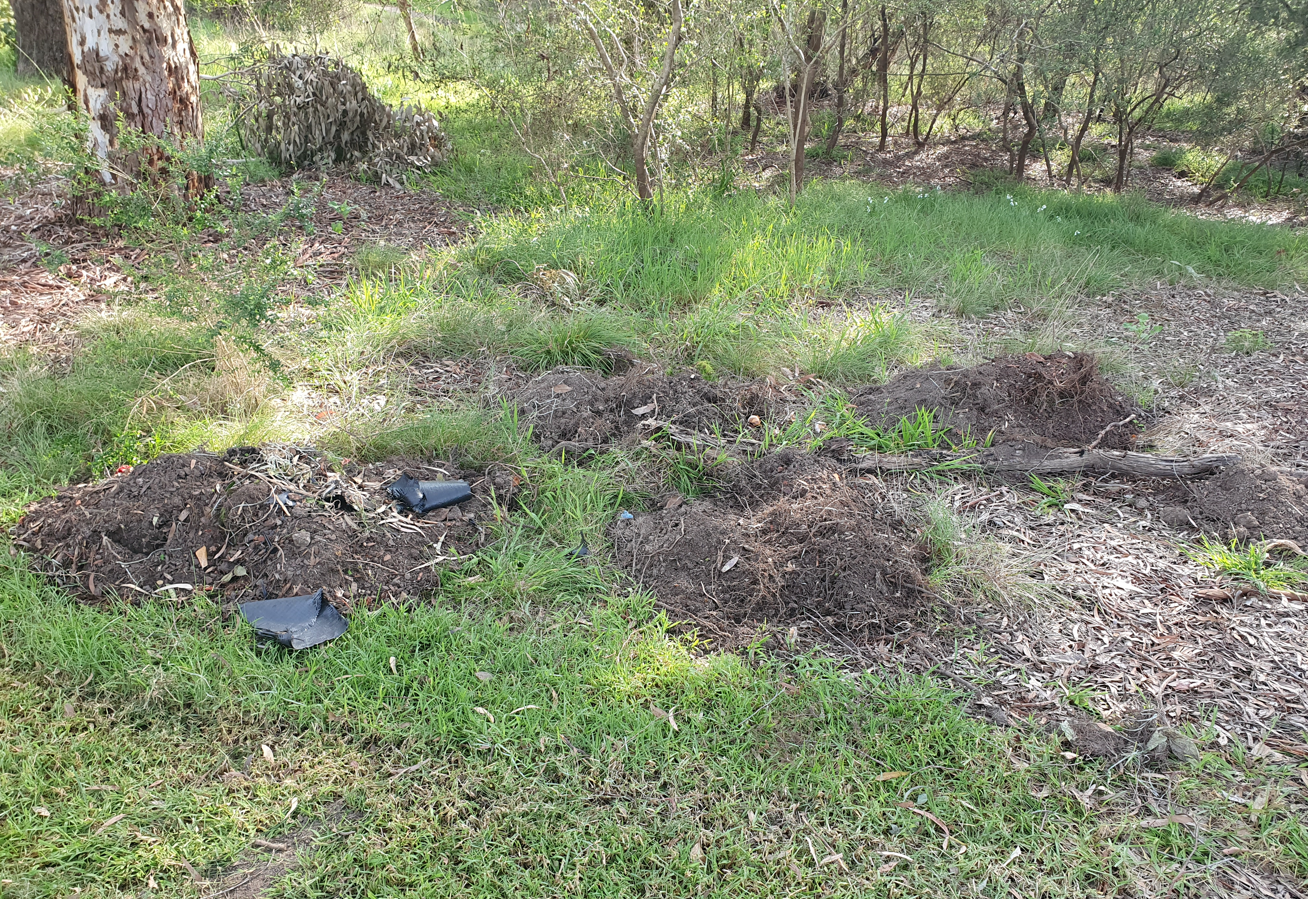
The problem was quickly reported to Council by a Heath Street resident – unfortunately, the offender’s number plate was not recorded (this time).
Though it may seem a fairly trivial matter, it’s not! Our Council contact tells us that, these days, waste transfer centres have tightened their requirements and won’t accept soil without knowing what’s in it. So the soil has to be tested before it can be removed from the park so it stays in place until that’s done. Of course the removal, dumping and soil testing all have to be done at the expense of rate-payers.
Another unpleasant sighting in Furness Park
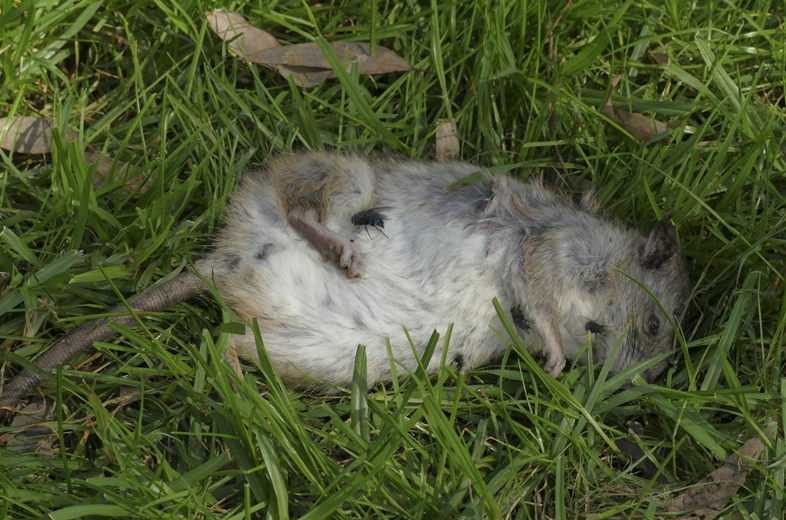
These finds are worrying – the rat showing no sign of death by a predator. If the rat has died of poisoning via SGARs, the dying or dead rat could be taken by a predatory bird which will consequently be poisoned. Click here to visit our July edition for more information on SGARs and how to best handle rat issues.
Hear ye! – Environmental Events coming up
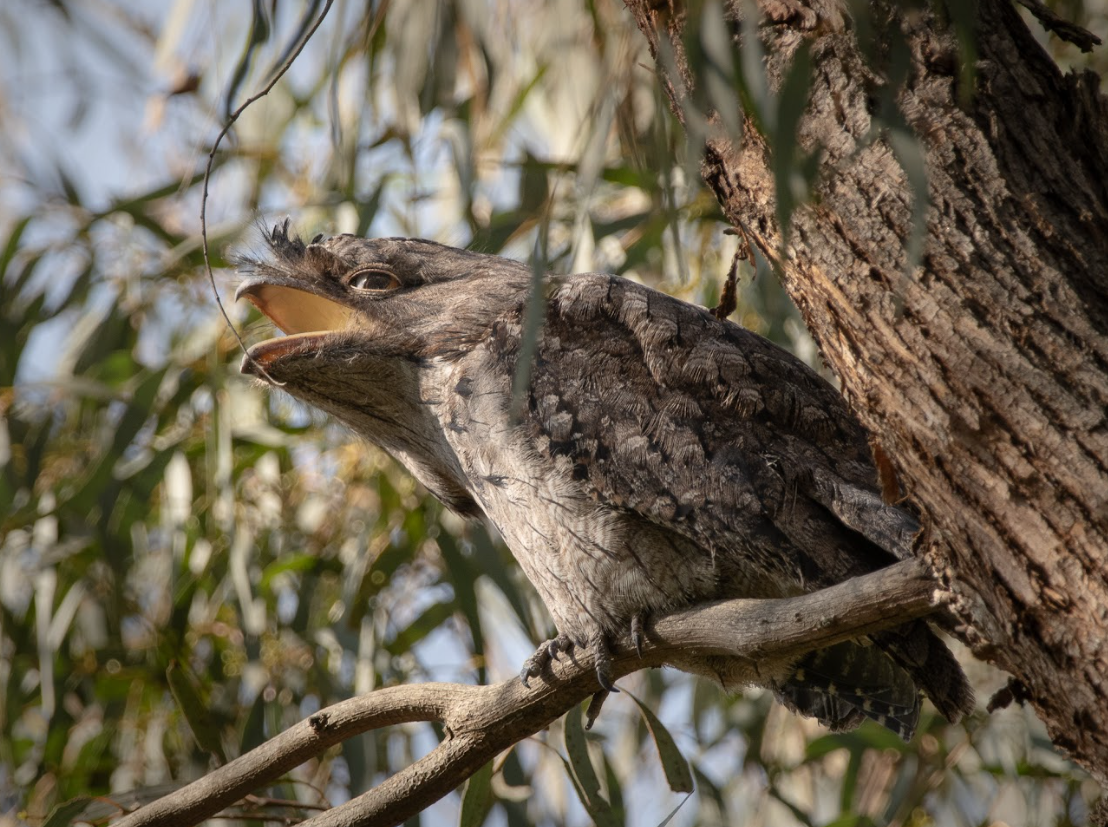
As we’ve seen throughout this newsletter, Spring is a great time to be out and about learning about nature (photo credit: Greg).
Our Blackburn Creeklands Spring Bird Walk is planned for 07:30AM on Saturday the 21st October. We will start and finish at the Scout Hall in Pakenham Street. The survey is followed by (an optional) morning tea to correlate group results. It’s a great way to learn about our local birdlife. The community is encouraged to join in – no special knowledge or experience is needed to participate. Children are welcome. We’ll send out a reminder closer to the day.
You could use our survey to hone your skills for these events later in the month:
- BirdLife Australia is running its Aussie Bird Count between 16th – 22nd October. It’s another great way to take some time out in nature and learn about the birds in the area – whether in the park or your own backyard – or anywhere else you might like to count.
- The Great Southern BioBlitz is on again late November – between 24th – 27th November. Events in our area are being coordinated by Whitehorse Council. It’s an international period of biological surveying – aimed towards recording all the living species (including birds, plants, animals) within designated areas across the Southern Hemisphere in the flourishing springtime. The purpose of this event is to highlight the immense biodiversity across the Southern Hemisphere, as well as to engage the public in science and nature learning using the citizen-science iNaturalist platform.
 Blackburn Creeklands
Pingback: Park News December, 2023 | The Blackburn Creeklands