Welcome to our October news!
Because October is traditionally the month of our Spring Bird Walk, this edition is heavily weighted to our birdlife with photos from the event itself, other sightings and exciting news about the return of a species not seen for many years – and breeding at that!
Spring Bird Walk
The official Blackburn Creeklands Spring Bird Walk is one of the highlights of our calendar. The weather on the day (21st October) was warm and humid with no wind or rain – but the sky was overcast.
A fantastic community event
There was an excellent turn-up with 25 attendees – including several new faces along with some of our veterans enjoying the event – not to mention the sumptuous morning tea (thanks Anthea!). We also thank Bronwyn from the Scouts (for facilitating our use of the Scout/Guide Hall for tallying up the results from our two groups) and our group leaders Ian Moodie and Greg – each walking in a different direction. Our great friend Pat Bingham was unavailable to lead a group this Spring – fortunately, local resident Greg (who is one of our very valued regular photo contributors to this publication) was able to fill the breach ! A big thank you to Greg and Ian.
What was seen ?
The survey results are available here.
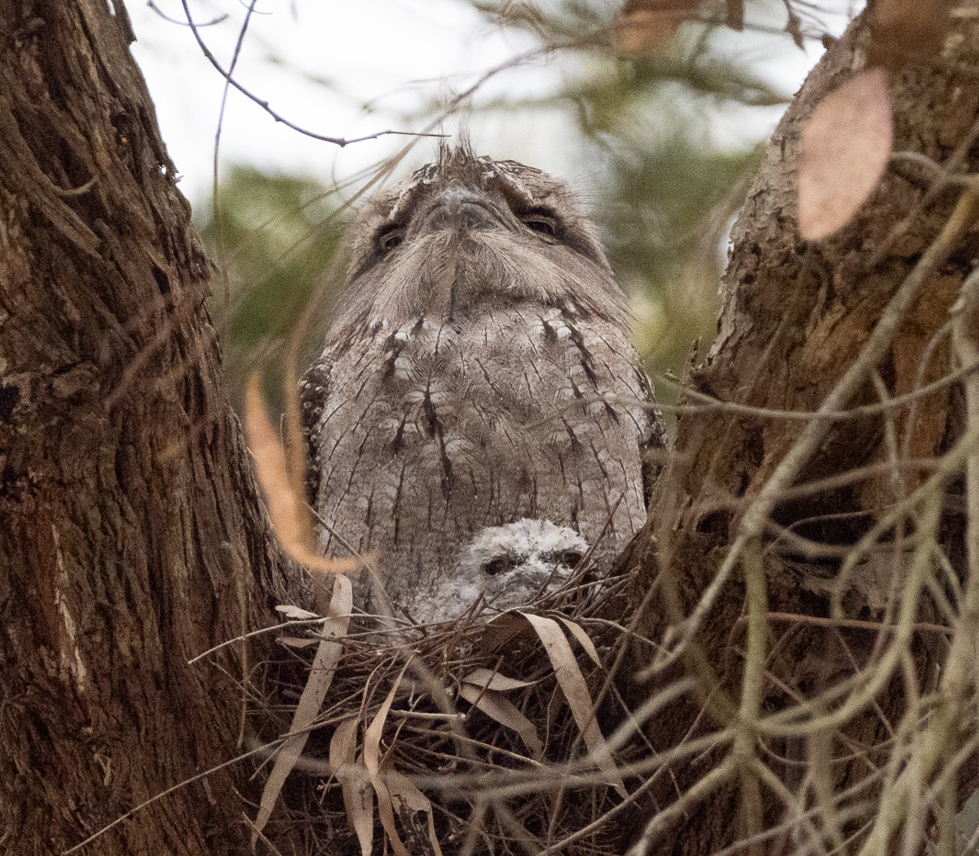
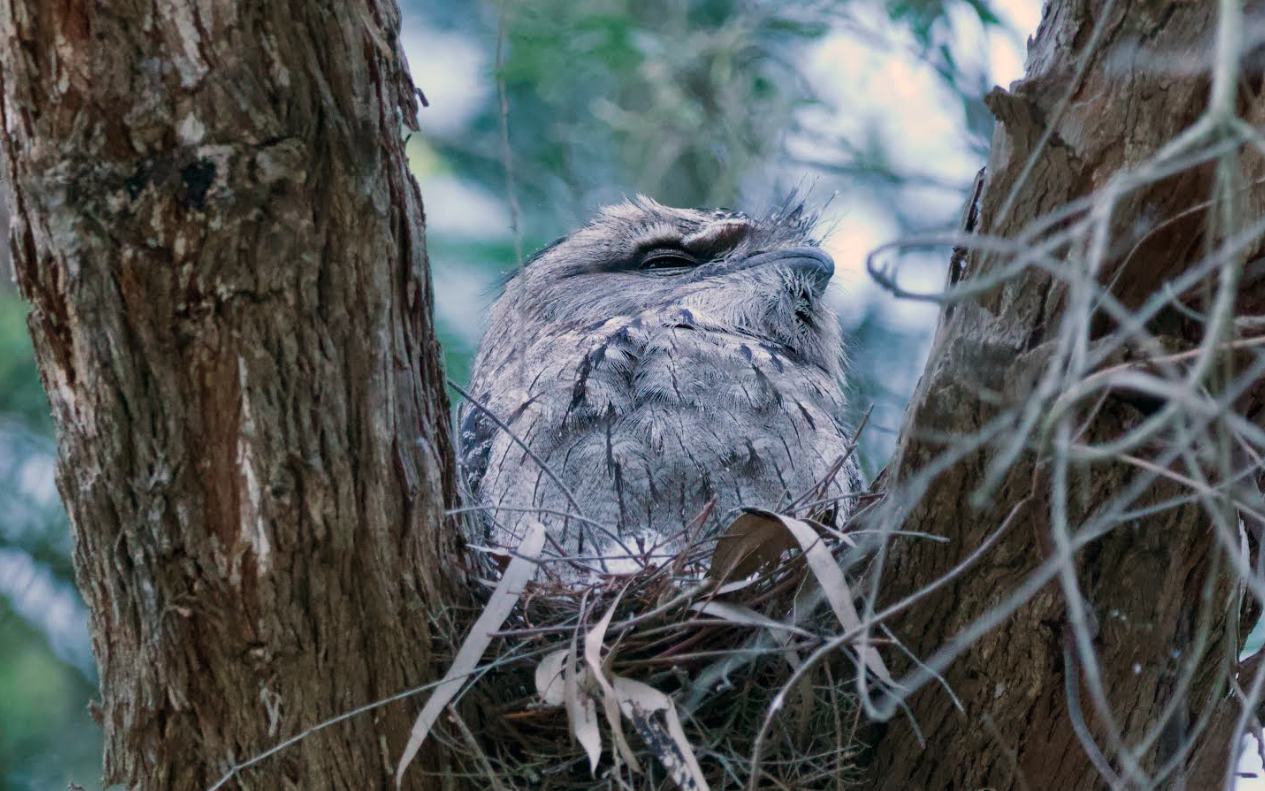
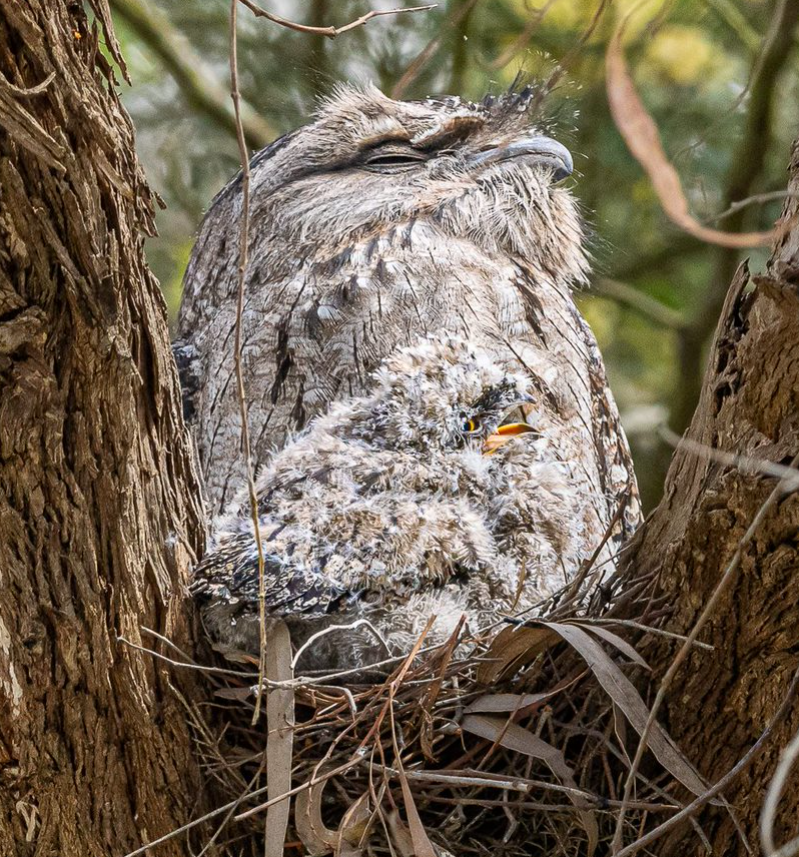
Participants were rewarded with a sighting of the first Tawny Frogmouth chick for the season – pictured by Greg below – being protected by its proud dad:
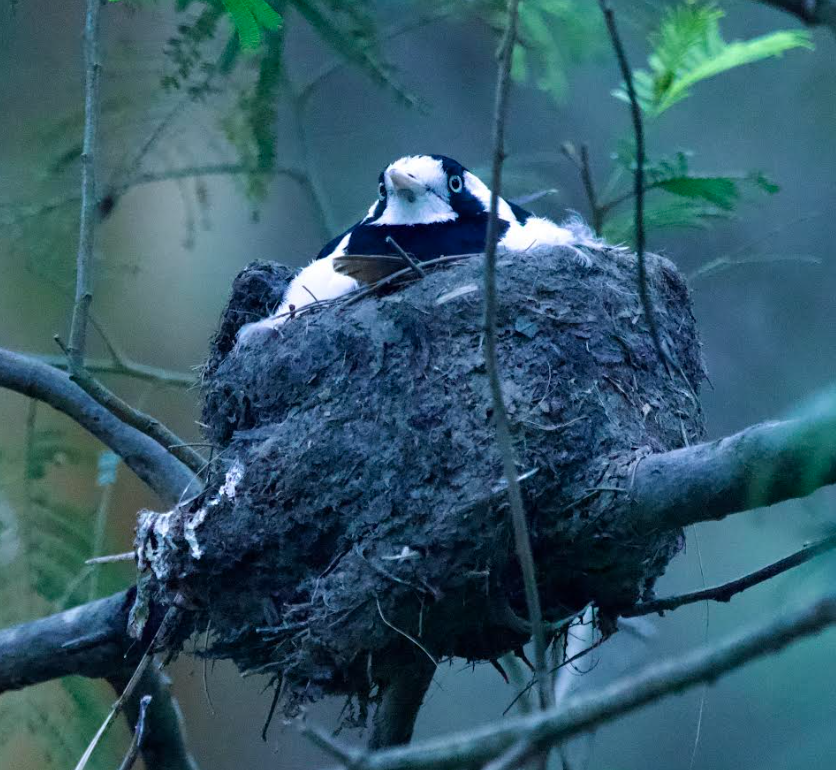
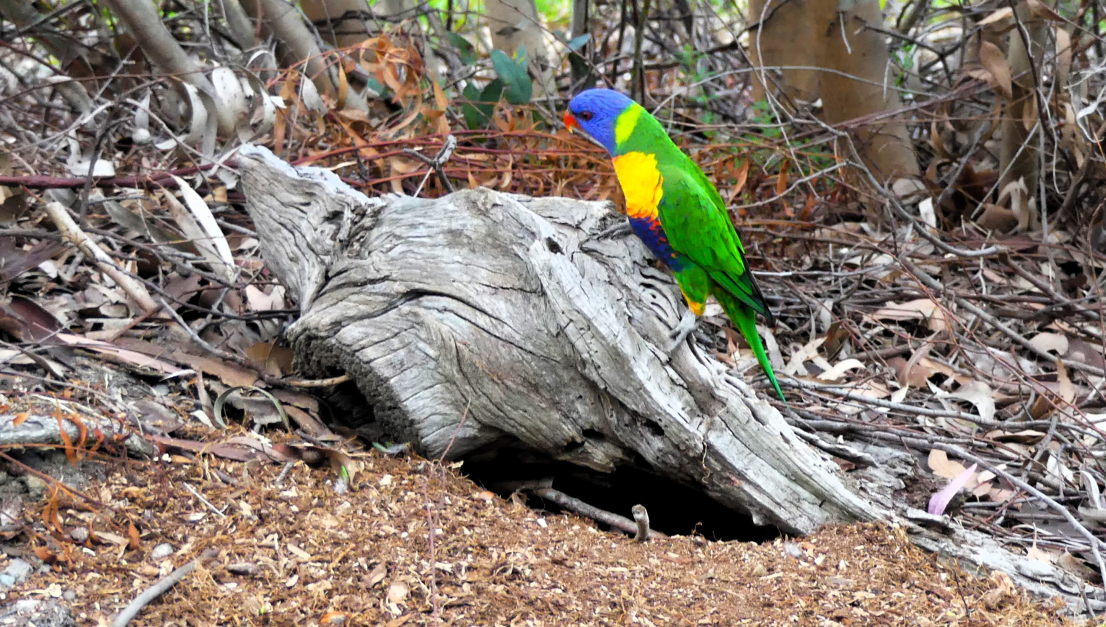
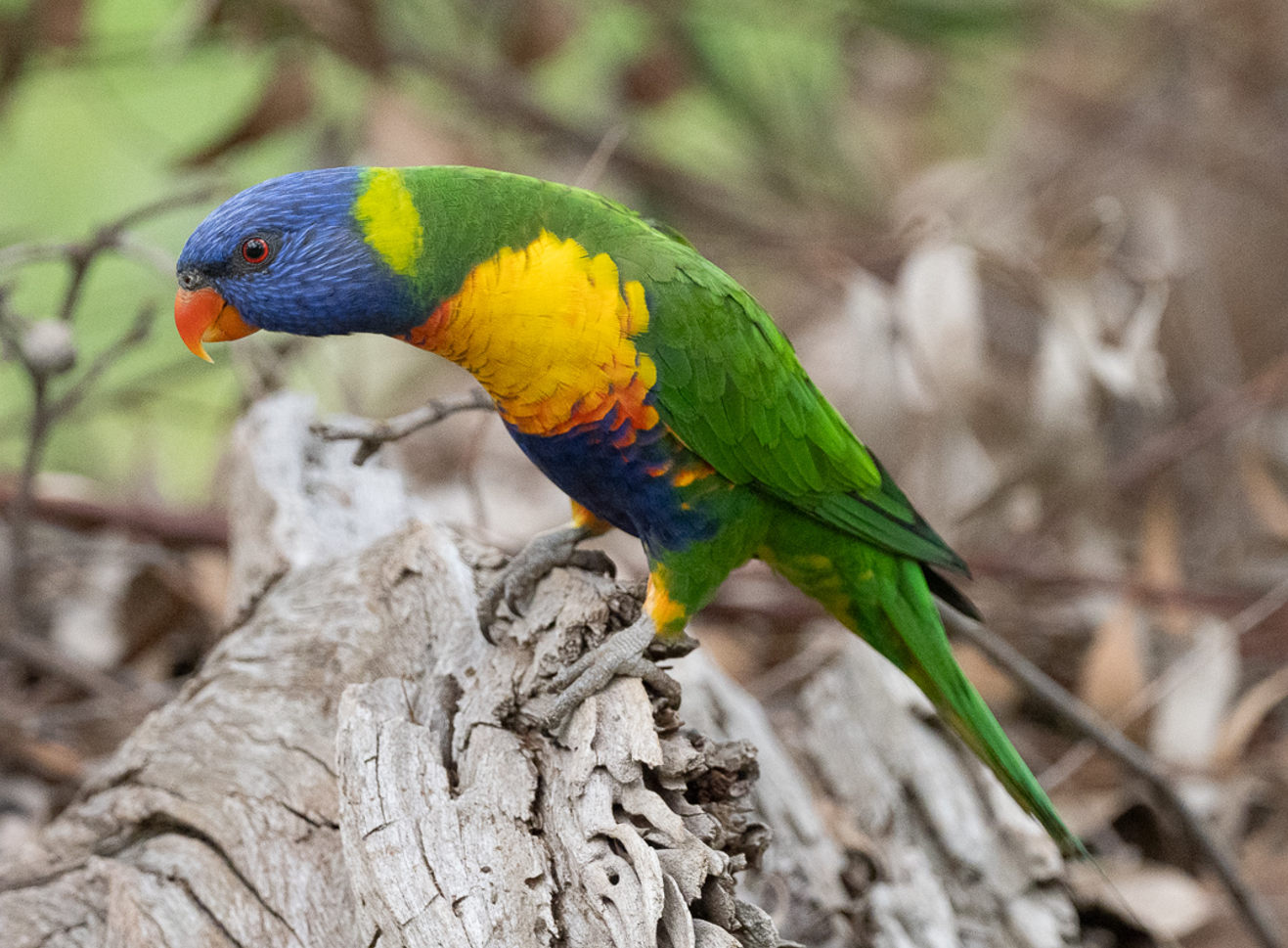
The only “negative” on the day was that the dull light made it hard for the photographers to take decent shots and for the rest of us to distinguish colours. Nevertheless, our photographers (Greg, Russell and Michael) have done a great job taking photos for the record and for those who could not make the event:
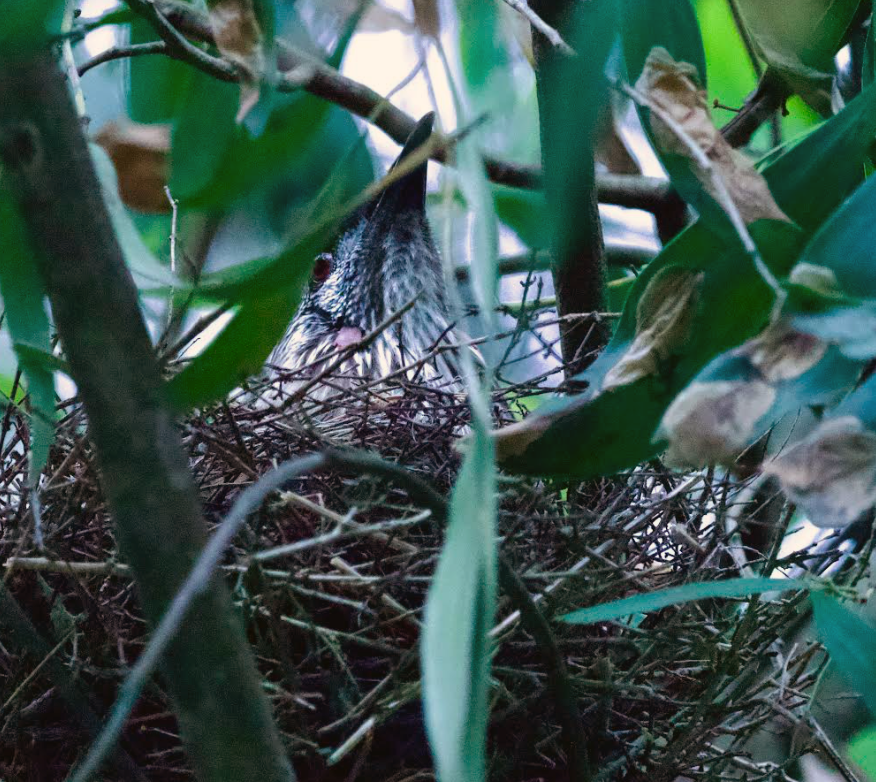
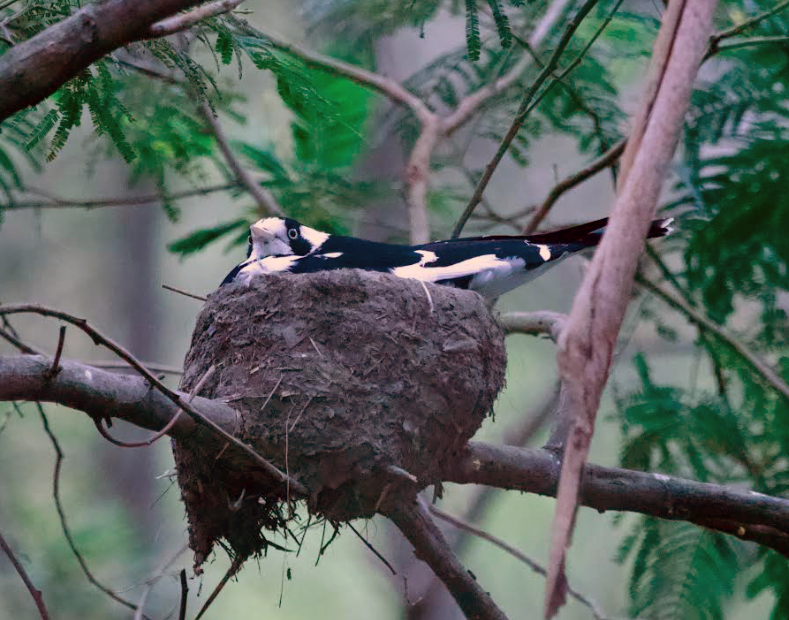
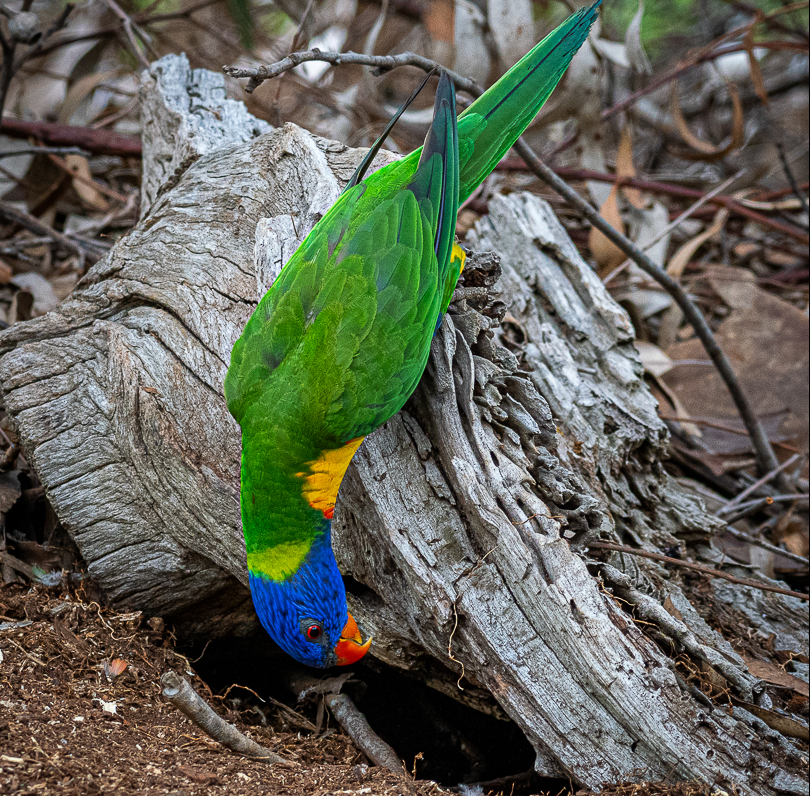
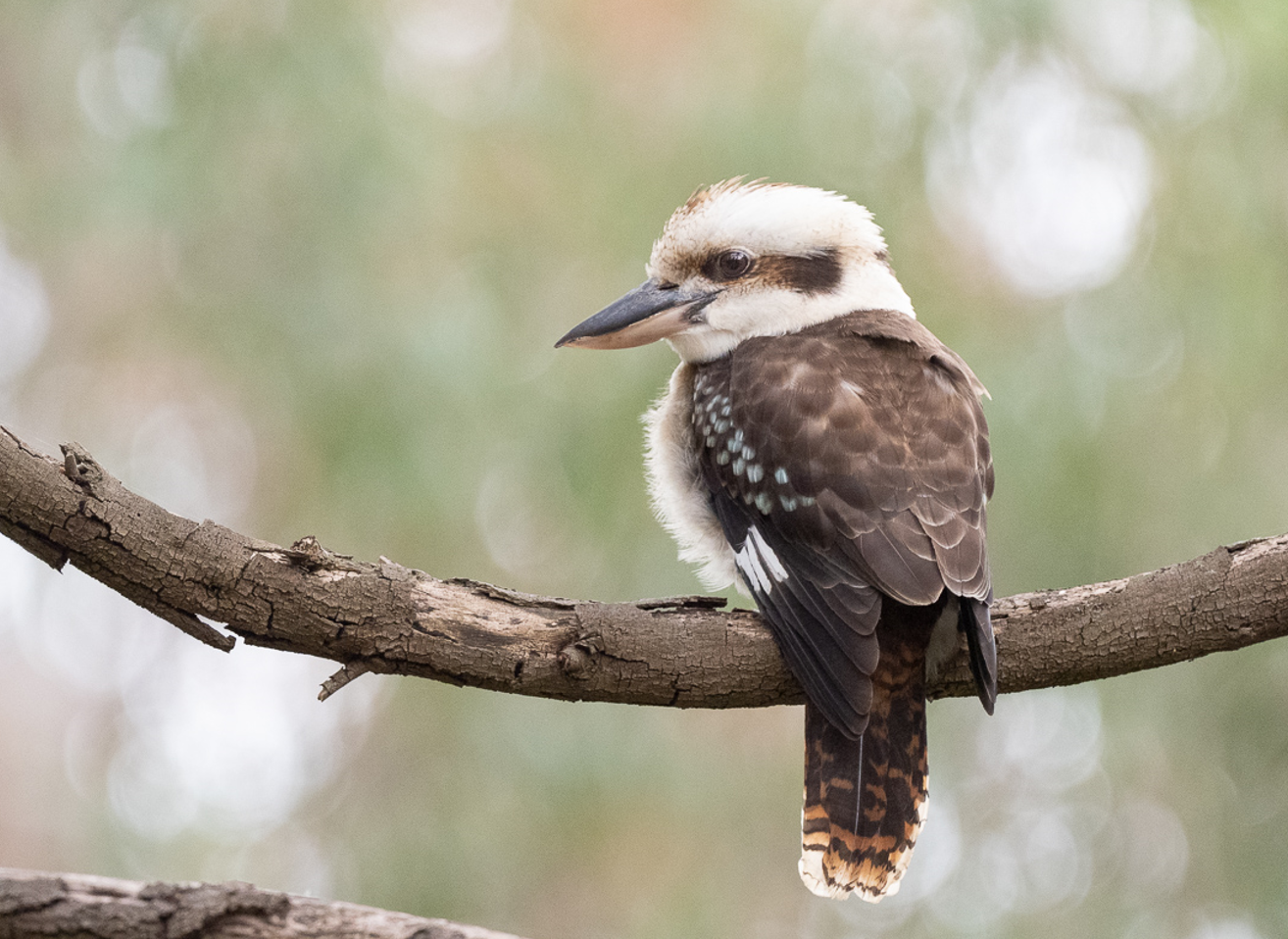
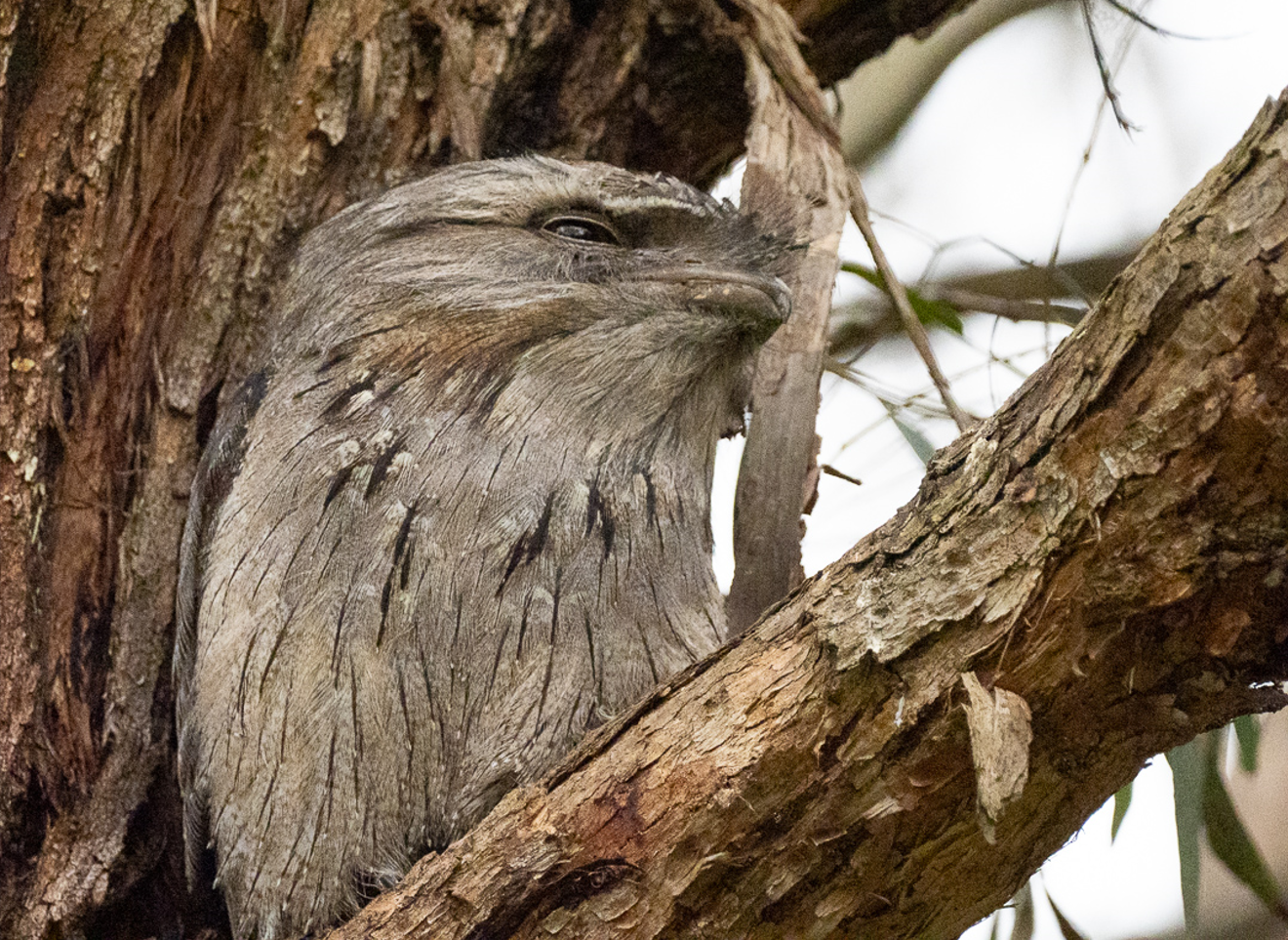
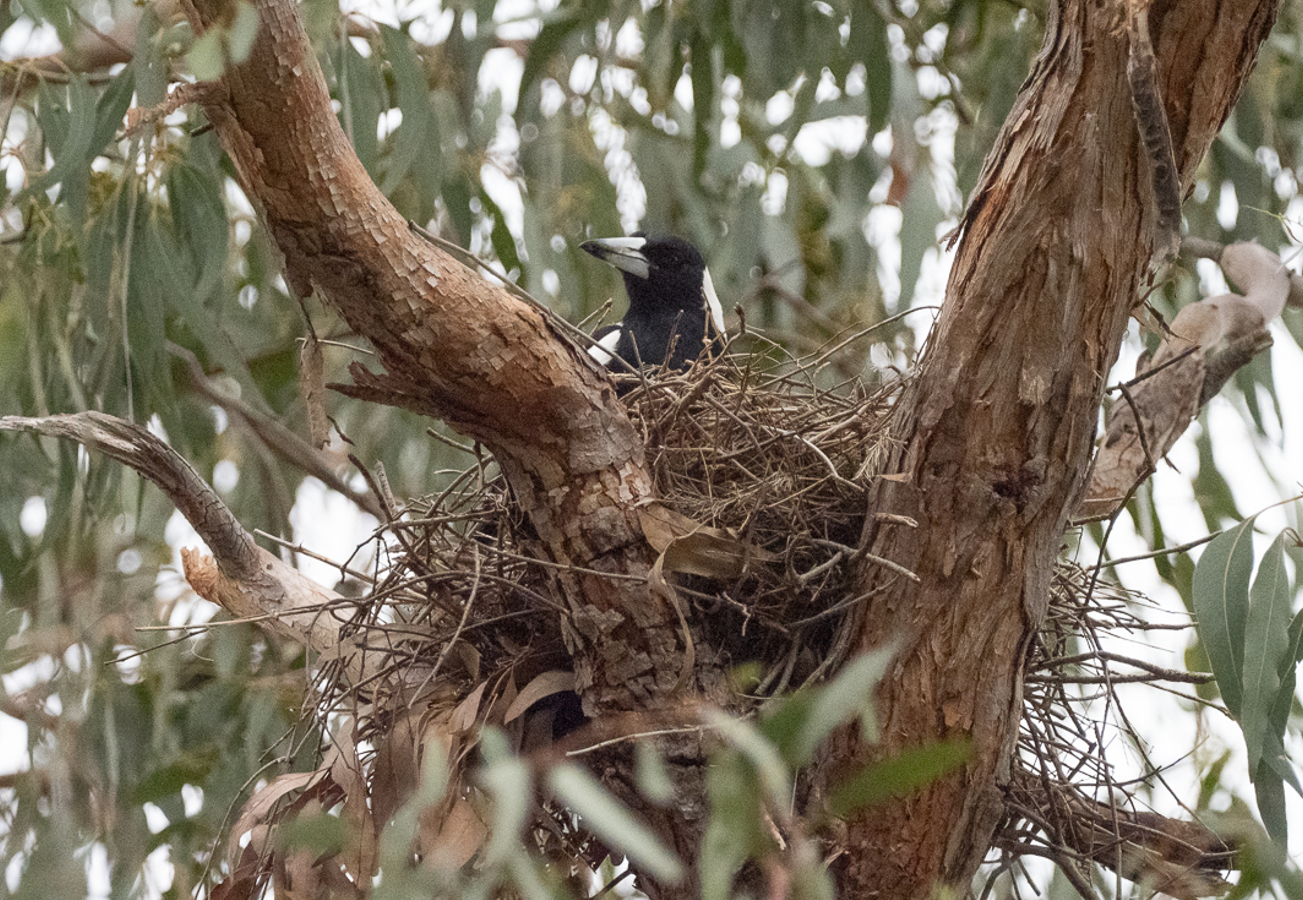
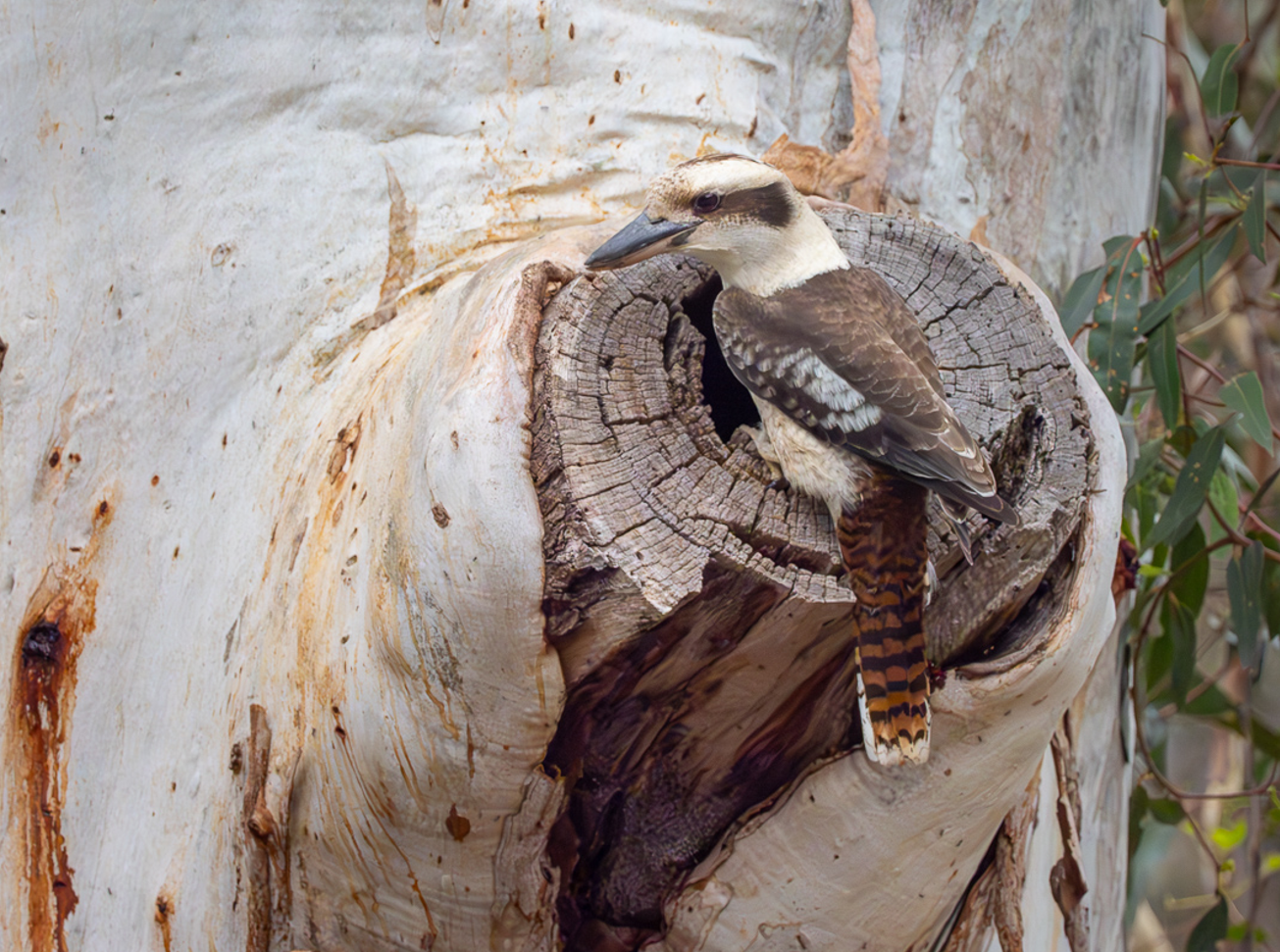
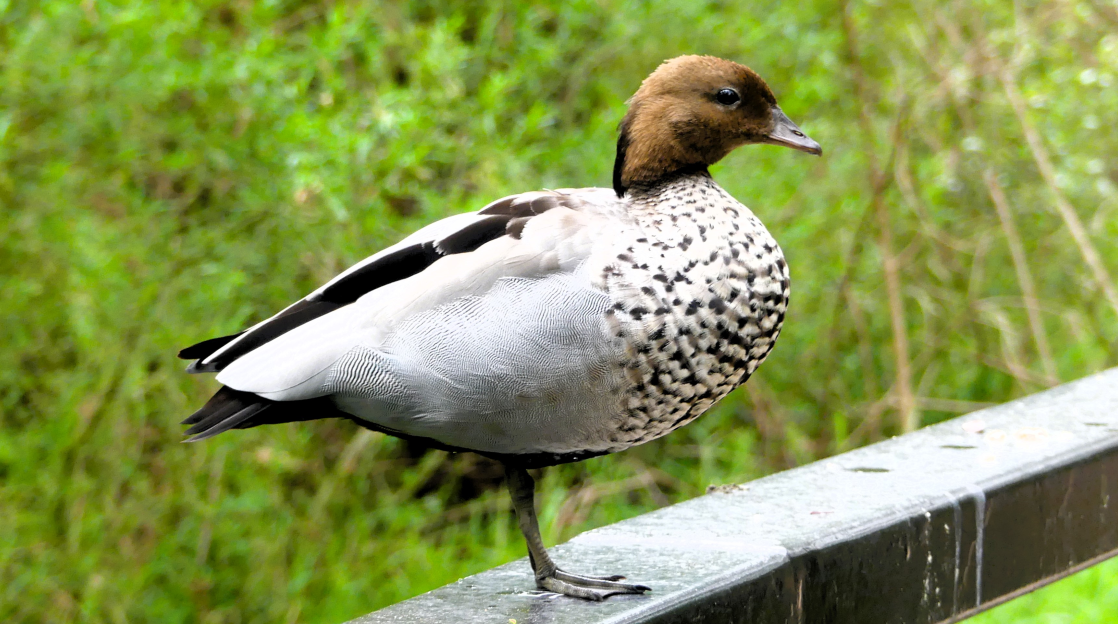
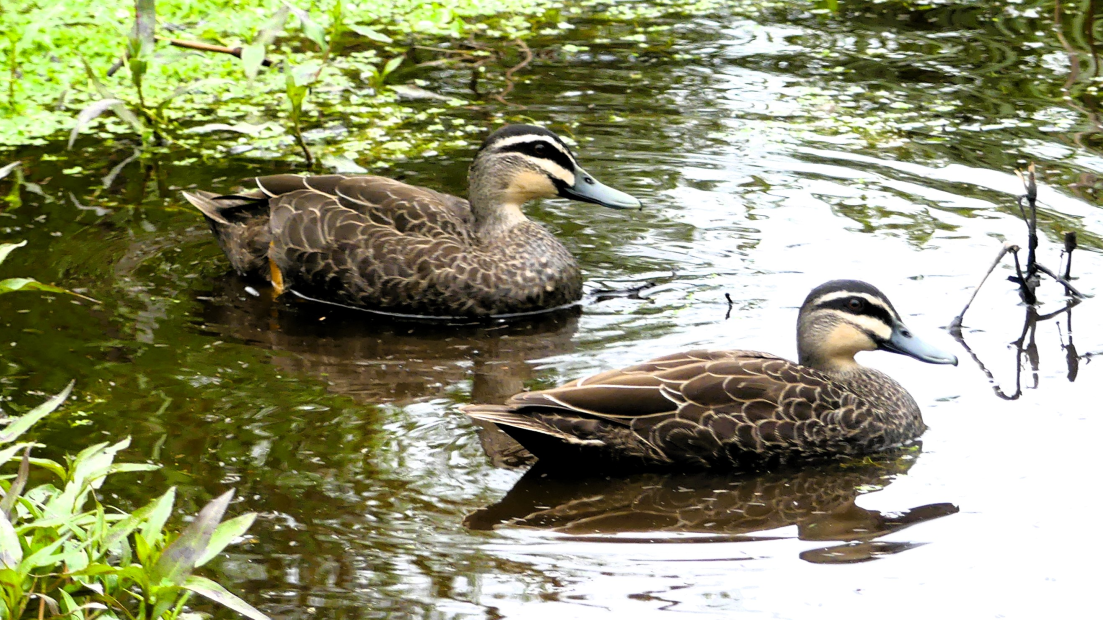
Click image to enlarge. Click X to return.
Are we losing biodiversity?
Interestingly, the number of species observed was down a little on the usual – we saw 21 (but 23 last year).
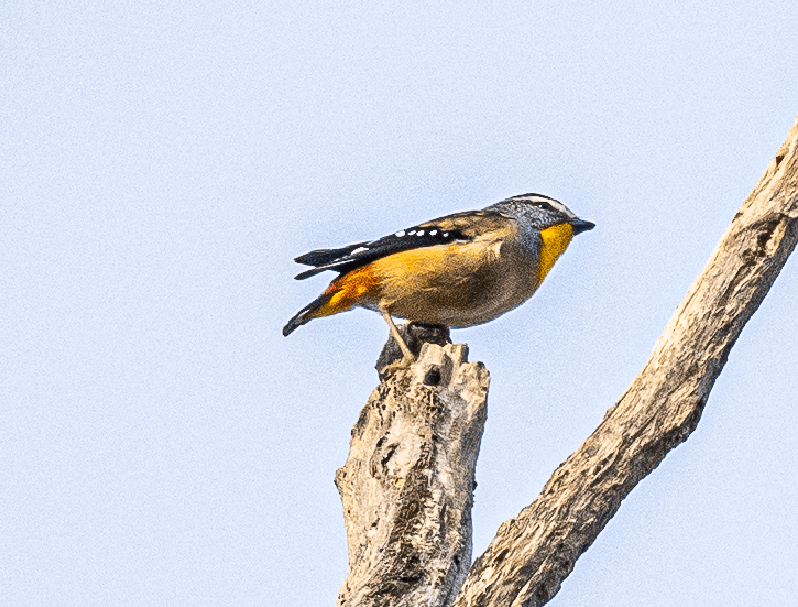
While a small drop on a single day is not statistically significant, we’ve crunched the numbers and discovered that the stand-out non-appearance (or hearing) this Spring was the Spotted Pardalote. However, we do know they are about – we showed Ken’s photo at left in August.
Birds like these are crucial for our trees’ health – they control insect invaders. Maybe they like sunshine? Please let us know if you see one!
Another missing species was the Wood Duck – but this species was spotted shortly after the walk – so is not a concern. The next most commonly occurring species not seen this Spring were the Blackbird and Common Myna. This is actually very good news – both those species are not indigenous! The only introduced species observed in the walk was the Spotted Turtle-Dove.
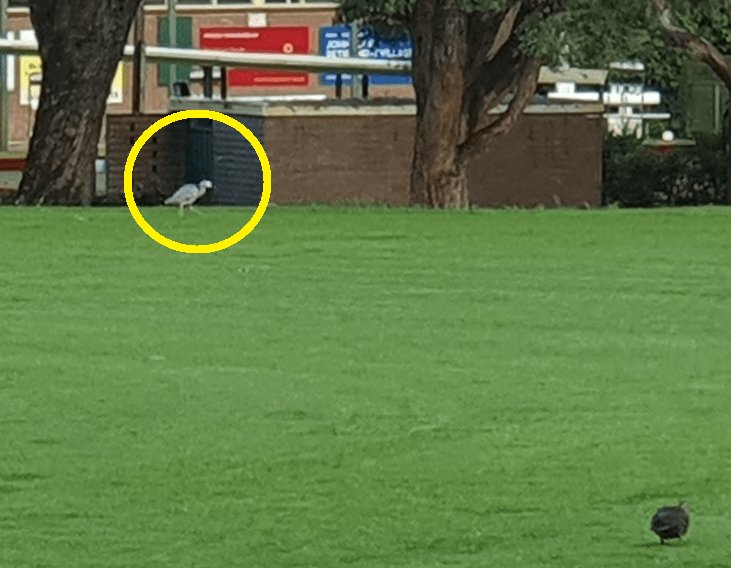
Next down the list was the White-faced Heron – this tall, elegant species is a concern. Normally, they nest in the Linum Street/Acacia Avenue/Laurel Grove North area – but they don’t seem to be present this year!
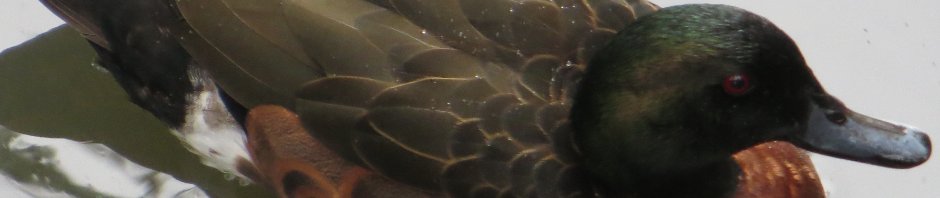
However, one was spotted patrolling Kalang Oval on the Thursday after the Bird Walk – so they haven’t deserted us completely! [That’s a tubby duck in the bottom right corner.]
Thursday Team
Our Thursday team has been busy:
- in Kalang Park – weeding and mulching a bed a little to the west of the wetland down from Waratah Crescent and
- in Furness Park – the northern areas adjacent Main Street and to the east of Gardenia Street. The latter included planting out some Carex sedges donated by the Greenlink nursery to improve boggy areas around storm water drains.
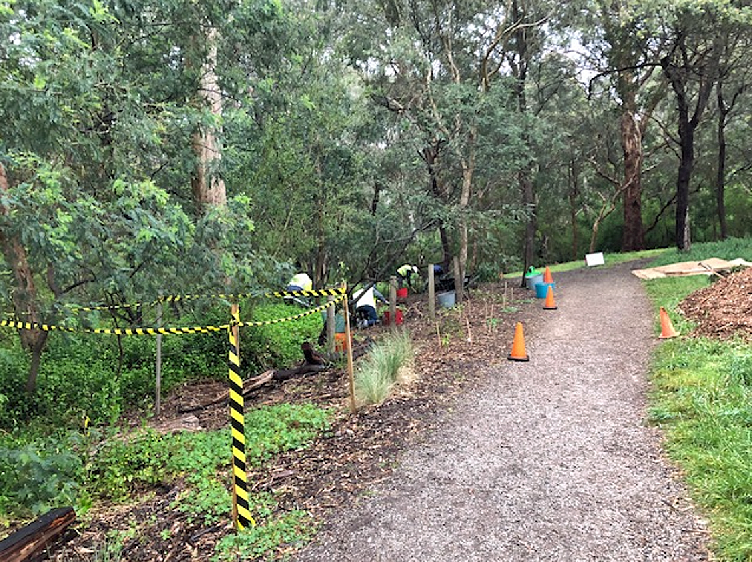
This is our Thursday group mulching a site below Waratah Crescent in the heavy rain on 12/10/2023 – doing some site preparation for planting next year. The hazard tape fence surrounds a bull-ant nest – the team has had three bites already since August! The team put in a big effort in a shortish time in wet and trying conditions that day to mulch the bed there – before having to cut short the working bee due to a thunderstorm.
Bull ants
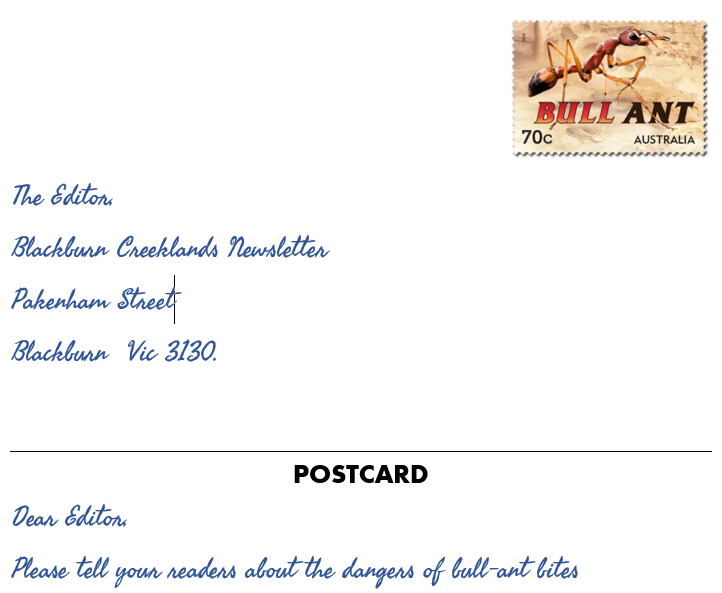
Bull ants are alert, aggressive, large ants that can grow up to 40 mm long. There are about 90 species in Australia. Typically, they have large eyes, good vision and a venom-loaded sting. Many species of bull ants have red or orange colours on the head and/or abdomen as per the Aussie Post stamp. However, the main culprit in our park is completely black and “only” about 25-30mm long.
There are several nests in the park – particularly in Blacks Walk and Kalang Park. Bull ant nests are usually underground and can extend several metres below and beyond their concealed entrances. The latter are sometimes hard to spot until ants come streaming out when nearby soil is disturbed. An ant can deliver multiple stings. They attack intruders of any size including our weeders who come too close to their nest. Their vision is good enough for them to actually chase intruders away!
The incidence of bites to our Thursday Team seems to be on the rise. The bites affect different people to a different extent. Some feel the painful sting and the bite later behaves much like a mozzie bite. Others experience severe swelling and itchiness that can last days. At the worst end of the spectrum, some people can suffer dangerous anaphylaxis requiring urgent medical attention. Bull-ant bites should not be underestimated.
Thunderstorm Asthma
Another potential hazard we need to guard against is Thunderstorm Asthma. The grass pollen season generally runs from October through to the end of December. During this season, many people experience an increase in asthma and hay fever – and the possibility of thunderstorm asthma also arises.
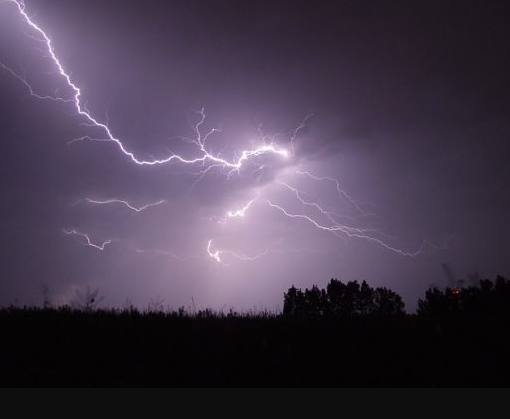
Thunderstorm asthma is believed to be triggered by the combination of high amounts of grass pollen in the air, high temperatures, moisture and a particular type of thunderstorm. They can trigger severe asthma symptoms in some people including people who have not had asthma before.
Melbourne experienced the world’s largest epidemic thunderstorm asthma event in November, 2016. Ten people, aged 18 to 57, died during or soon after the storm after developing severe breathing difficulties. Introduced Rye Grass seems to be particularly suspected. November in Melbourne is a world hot-spot with events occurring in November 1987, 1989, 2010 and 2016.
We’ve reinstated our monitoring of the Thunderstorm Asthma forecasts as part of our regular Thursday working bee “conditions” monitoring for the next few months. We will also restart heatwave monitoring shortly. We take the safety of our volunteers very seriously !
Council Works
Annual Maintenance Plan
Council has reviewed the Annual Maintenance Plan for the Creeklands with reps from our Committee. That plan documents the areas our Thursday Team maintains, the Community Working Bee projects for the coming year and planned events such as our Bird Walks. No major changes are envisaged for the coming year. Future project areas are likely to include development of the area to the north of Malcolm Street and a new bed on the north side of the track near Waratah Crescent.
We were delighted to meet Council’s new Team Leader Karen – it’s good to know that Council is adding resources to its team. Karen has been responsible for bushland management on some of Whitehorse’s highest quality sites, including Antonio Park, Bellbird Dell and Yarran Dheran.
Although there is some overlap, the three different groups that operate in the park do different types of work. Our team conducts hand-weeding, mulching, planting, rubbish collection and Community Working Bees. Council and its contractor do chemical spraying, brush cutting and limited hand weeding and planting. Development of new areas for planting by us and the community typically requires advance work from the Council and/or its contractor – so careful planning is required.
Garie Street Playground
After a pause, the Garie Street Playground update in Blacks Walk is being completed.
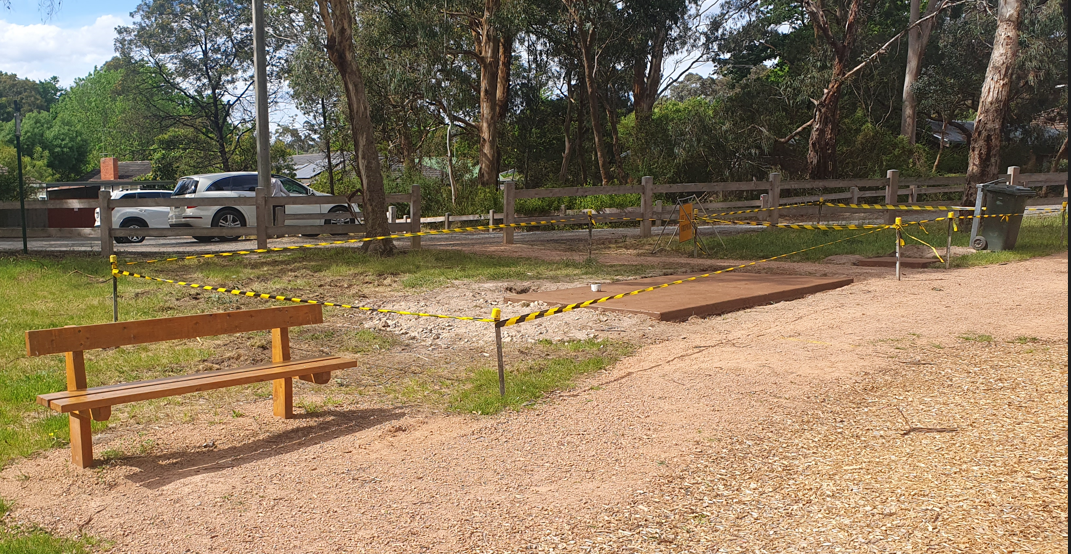
A drinking fountain, pathway improvements and two bike racks are currently being added in the playground area.
Council’s Play Space and Social Recreation Action Plan
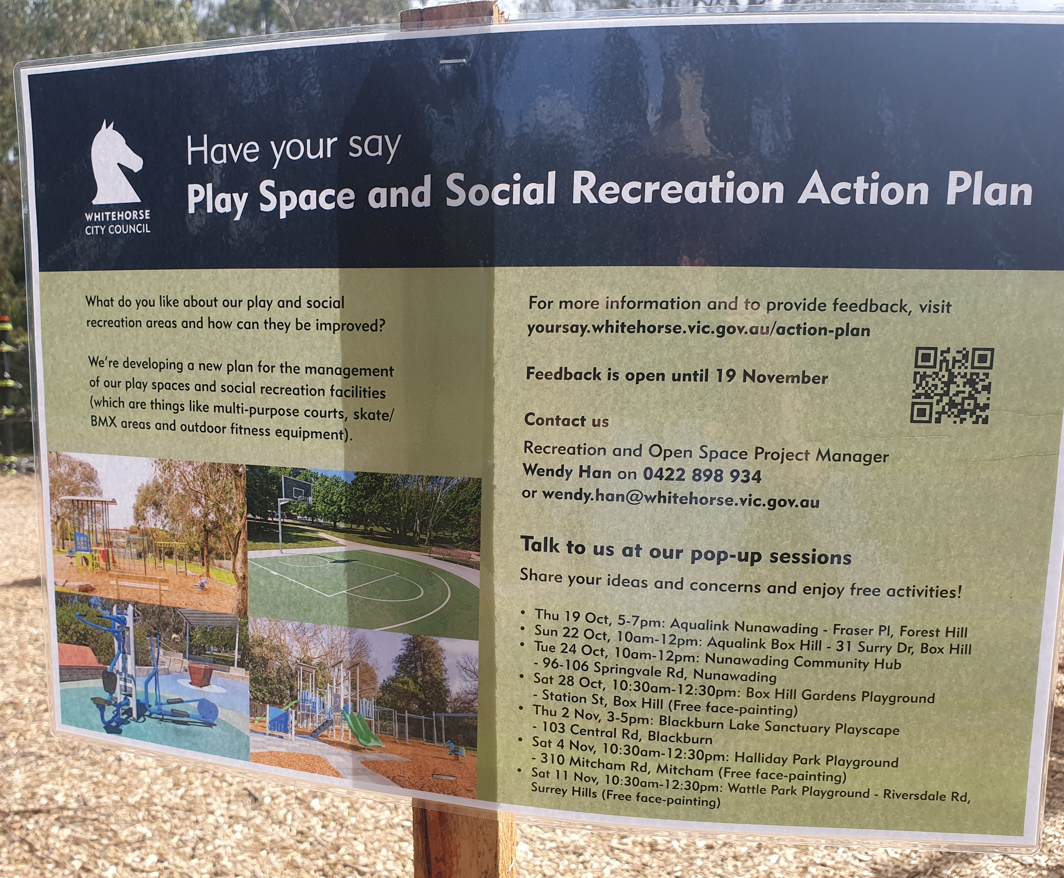
Council is currently seeking community input on its Play Space and Social Recreation Action Plan. Council says that plan will guide the development, upgrade and management of play spaces and social recreation facilities for the next 15 years. Social recreation facilities include multi-purpose courts, skate/BMX areas, outdoor fitness equipment, parkour setups, outdoor table tennis and rebound walls.
We trust that bushland parks will continue to be primarily devoted to passive recreation, the enjoyment of nature and the protection of biodiversity, our vegetation and wildlife. Please click here to learn more and/or to complete the survey.
Corridor News
Michaela was very pleased to take this picture of a male King-parrot in her garden:
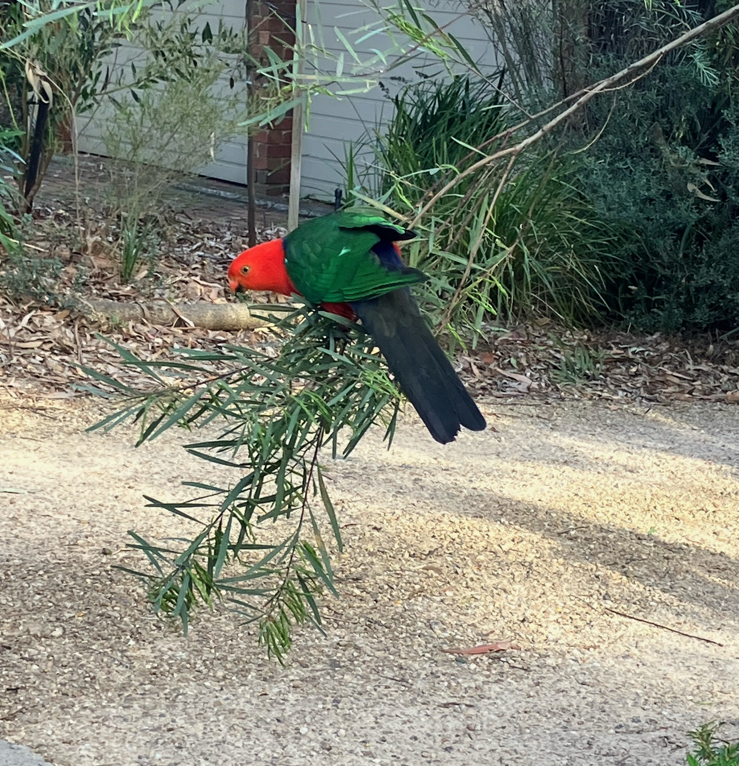
If you would like to welcome similar guests to your garden and contribute to the quality of our environment, the Gardens for Wildlife program may be ideal for you!
The Gardens for Wildlife program is active in our municipality to support local residents setting an area aside in their gardens for local wildlife – the benefits including assisting bio-links and corridors.
KKA – Catchment-wide Strategies and News
Our Blackburn Creeklands Advisory Committee is a member of the KooyongKoot Alliance (KKA) as are another 20+ Friends Groups within the Gardiners Creek catchment – including our patch and our corridor. KooyongKoot is the original aboriginal name for Gardiners Creek.
The KKA recently held its AGM with Greg Moore delivering an outstanding talk entitled “Your Trees are Worth Fighting For”. Our congratulations go to Rex Dusting (Valley Reserve/Scotchmans Creek) who is the new KKA President. His appointment enables Graham Ross to be wholly focussed on his role as the KooyongKoot Creek Keeper.
Congratulations to Wandinong
Our congratulation also go to our friends and colleagues at the nearby Wandinong Sanctuary – they celebrated 50 years as a sanctuary on the 21st October.
Sightings
In exciting news, Russell has sighted a Buff-banded Rail – not seen in the Creeklands for about 7 years! He was able to get some quick shots of this elusive rascal:
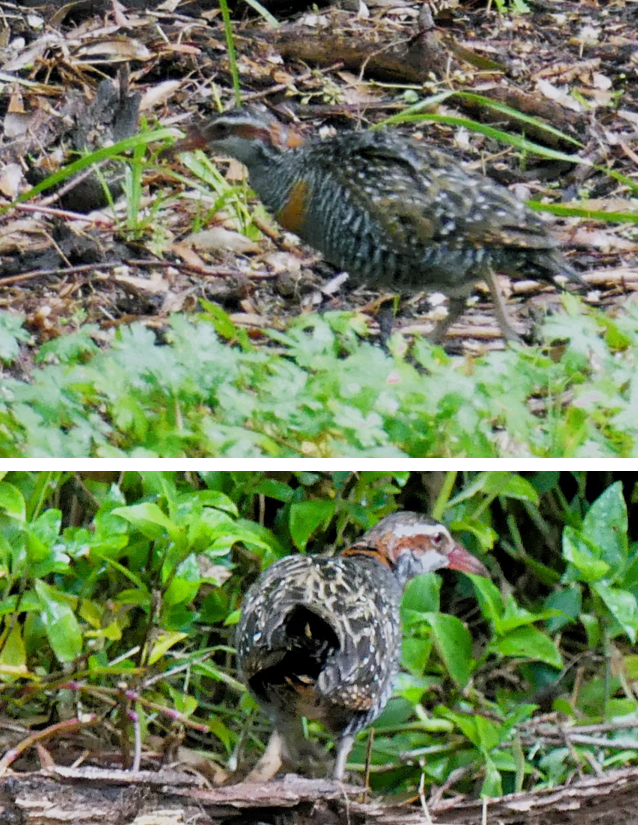
The Buff-banded Rail (Hypotaenidia philippensis) is an unusually coloured and medium-sized member of the rail family, the Rallidae. Although it is mostly terrestrial in nature, it is widely dispersed – covering latitudes from the tropics to the sub-Antarctic. The species has several subspecies found throughout much of Australia and the south-west Pacific – including New Guinea, New Zealand and, as the scientific name suggests, the Philippines (where it is known as Tikling).
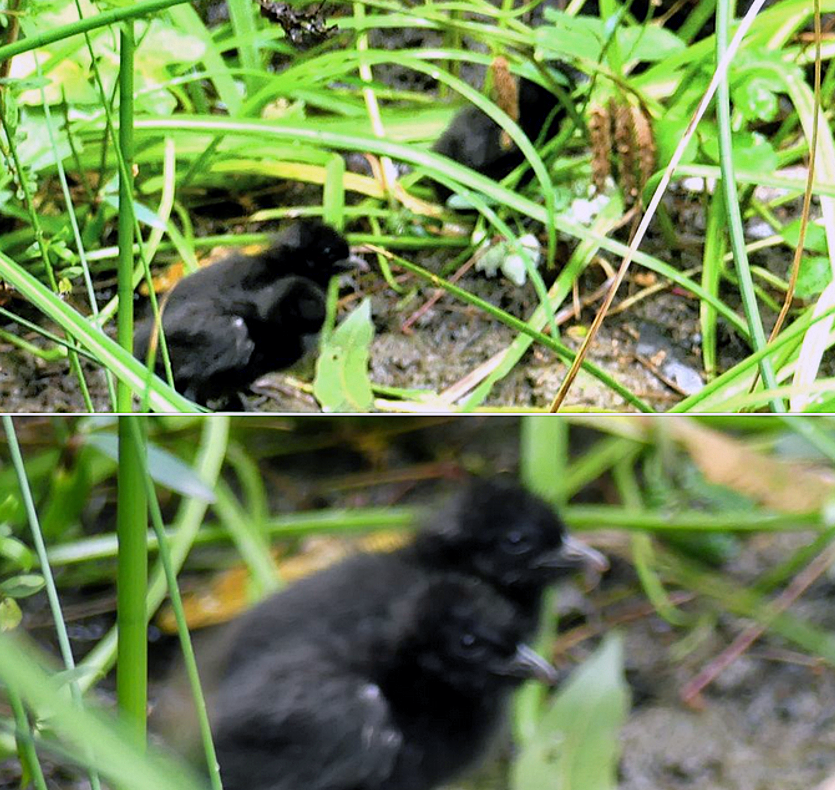
Not only that, Russell managed to also see Buff-banded Rail chicks a few days later! In his words:
I stumbled across a Buff-banded Rail with at least 3 baby chicks this morning…
They did not hang around long so my photos are a bit out of focus – 3 little tiny black fluff balls
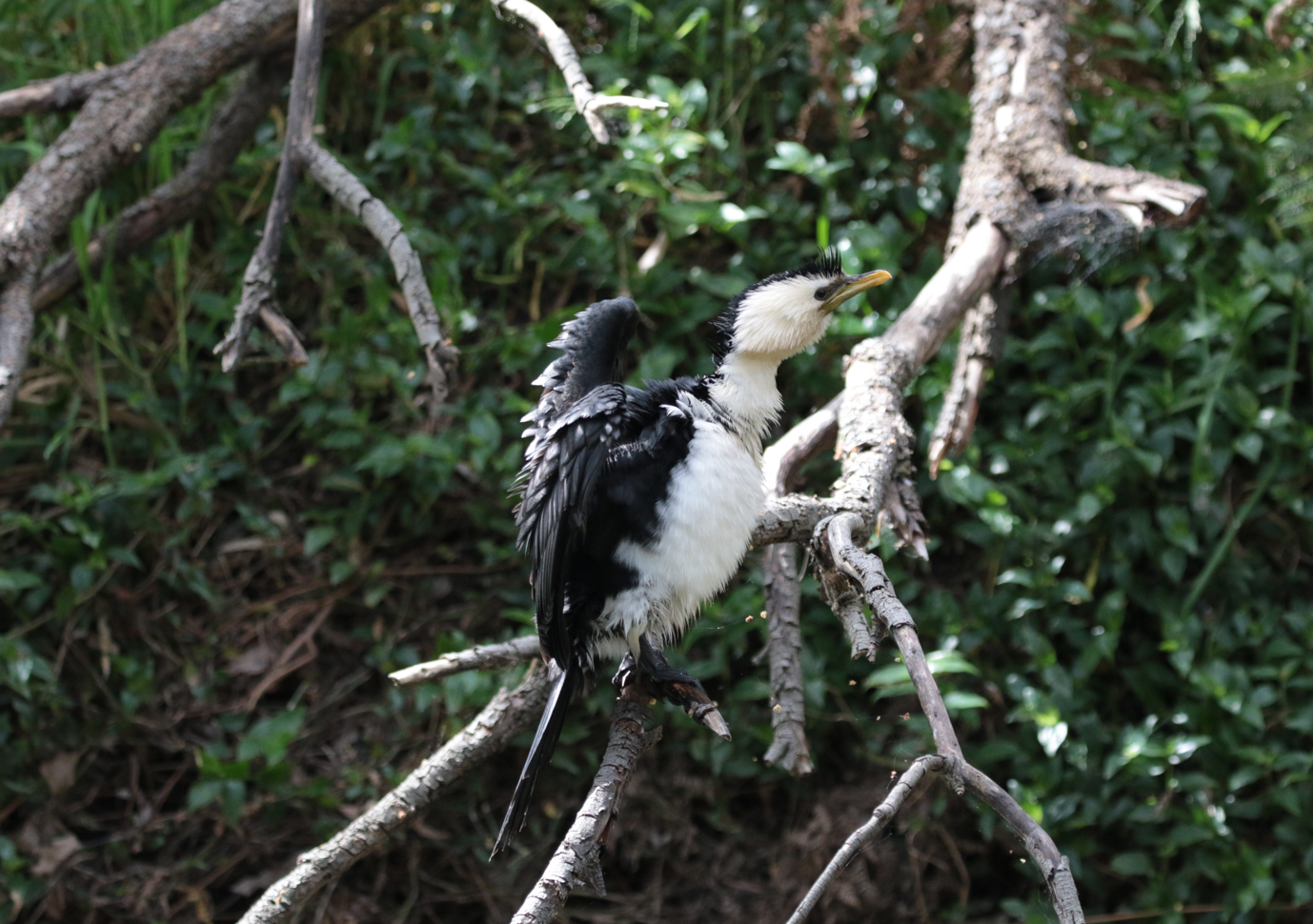
Michael took this nice shot of a Little Pied Cormorant neatly showing its characteristic yellow beak and long wedge-shaped tail – not to mention its very flexible neck(!) :
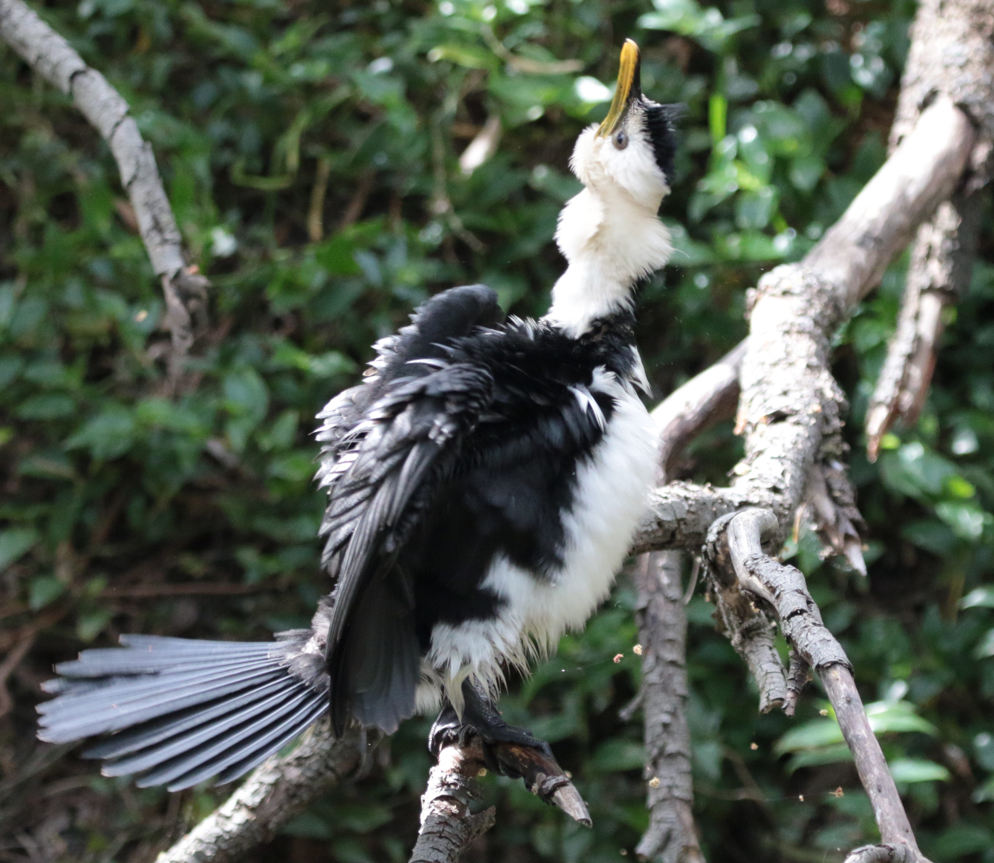
The Little Pied Cormorant or Little Shag (Microcarbo melanoleucos) is a an occasional visitor to the Creeklands (often to go yabbying!). It is a small short-billed cormorant and similarly dispersed to the Buff-banded Rail (above). It is found around the coasts, islands, estuaries and inland waters of Australia, New Guinea, New Zealand, Timor-Leste, and Indonesia (but not the Philippines) – as well as the islands of the south-western Pacific and also the sub-Antarctic.
Here are some further sightings during the month:
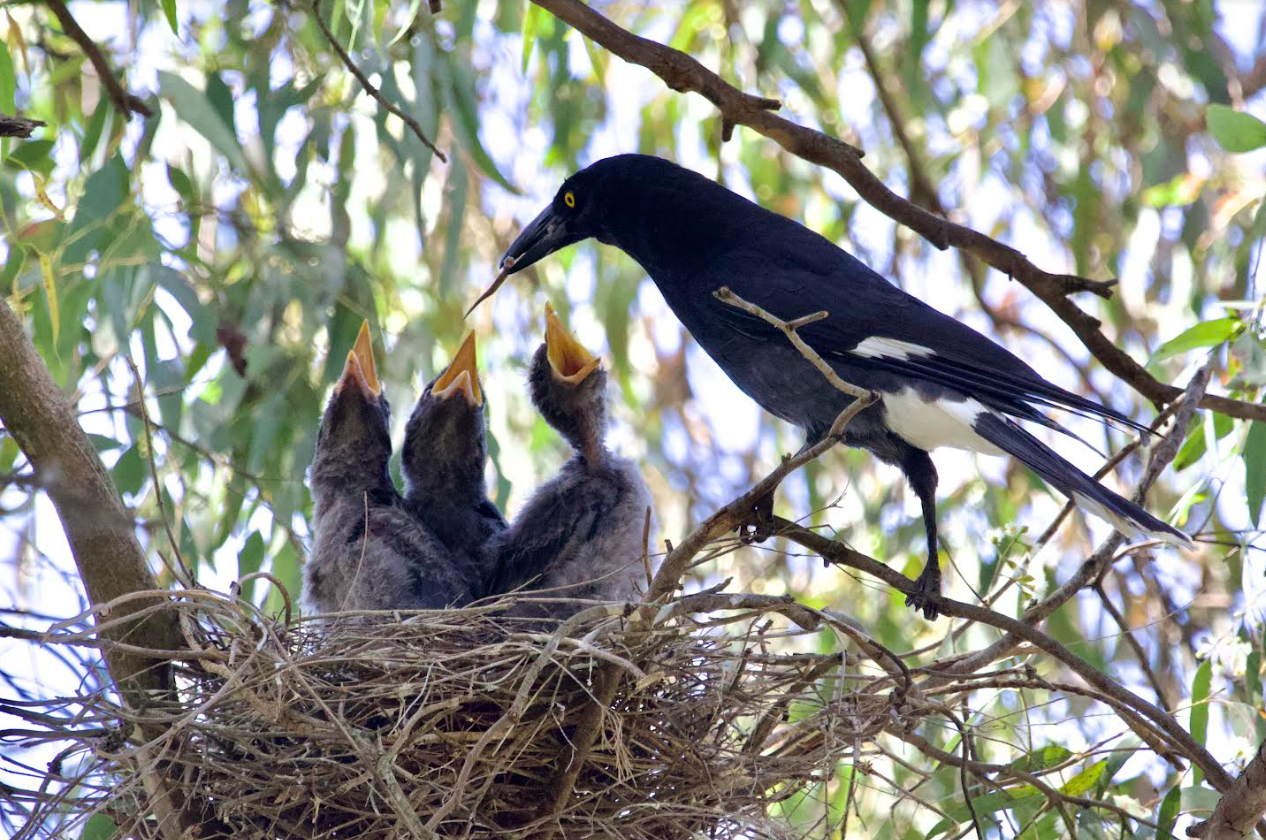
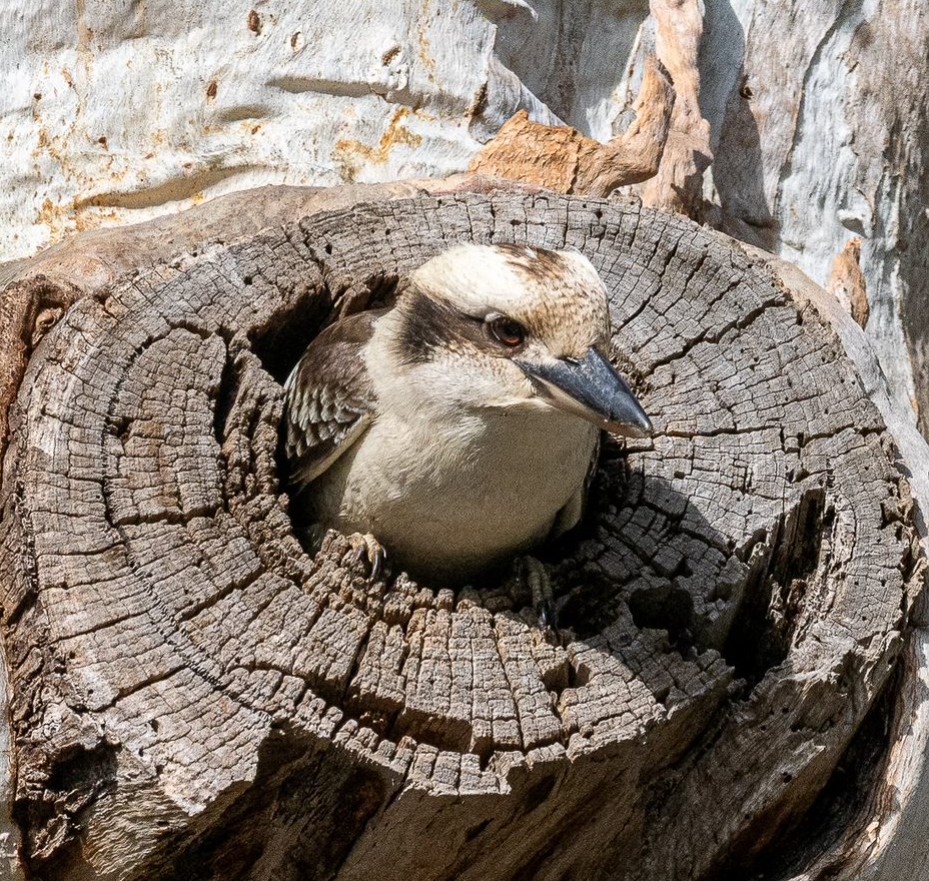
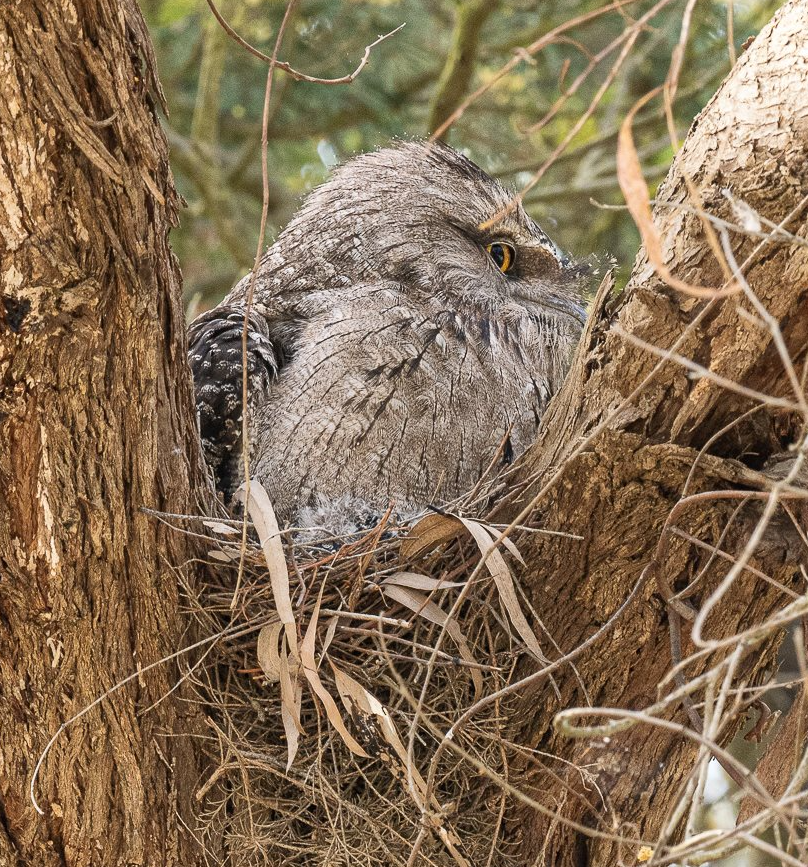
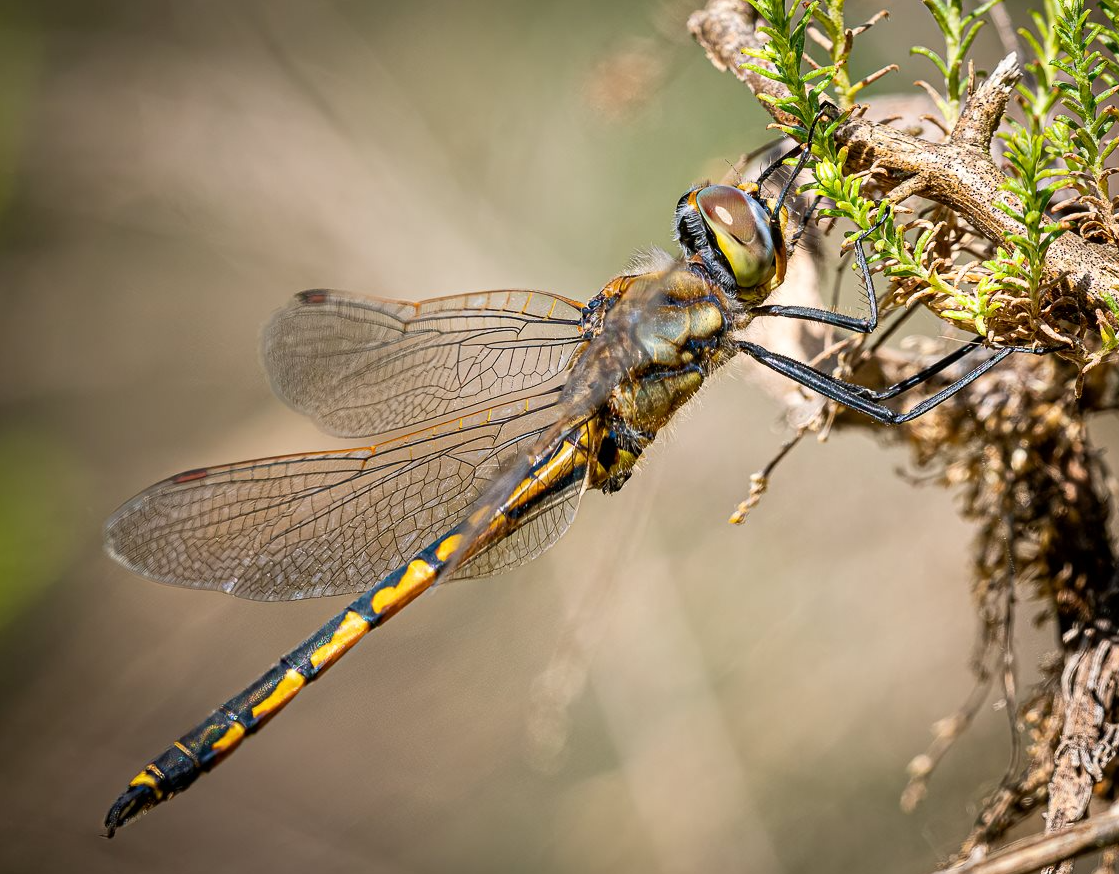
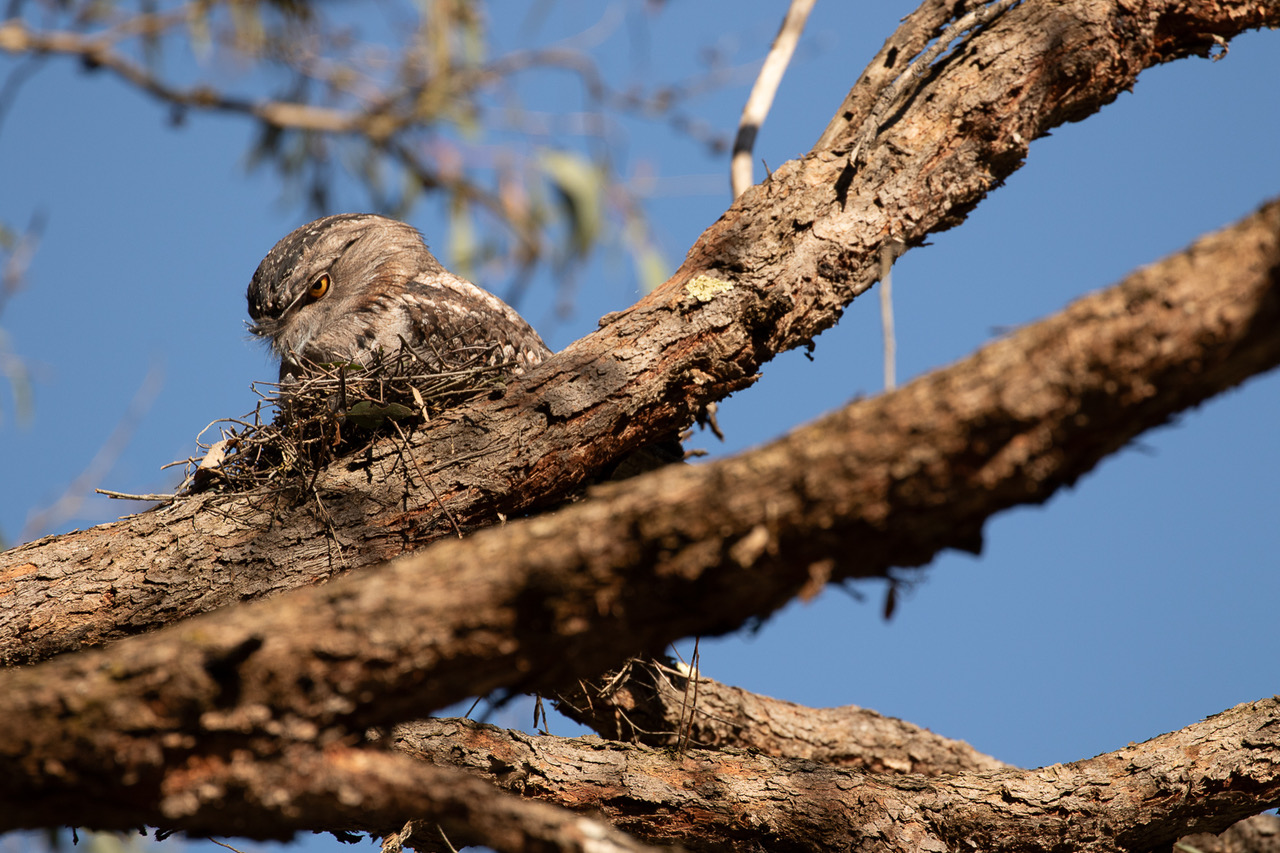
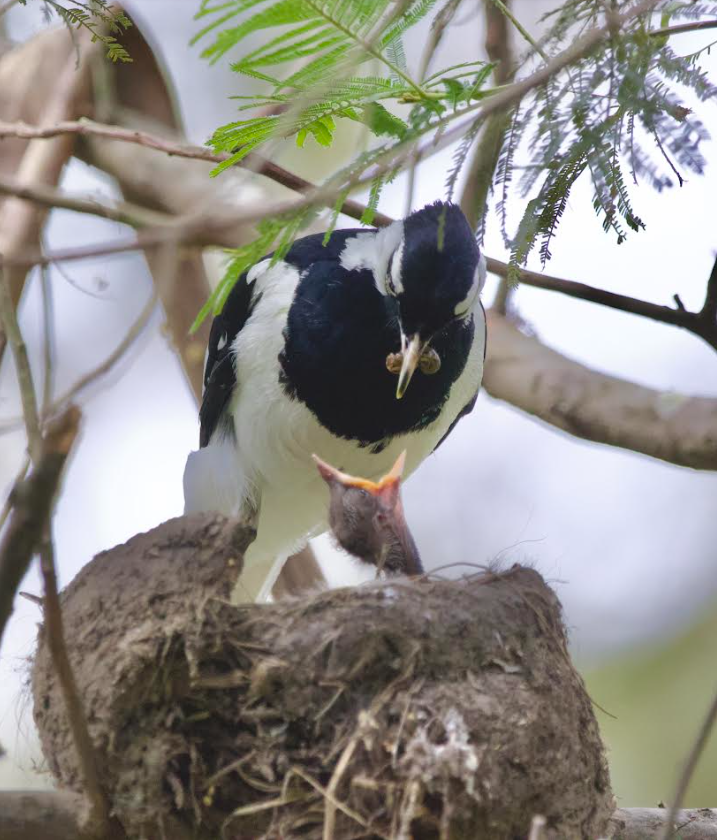
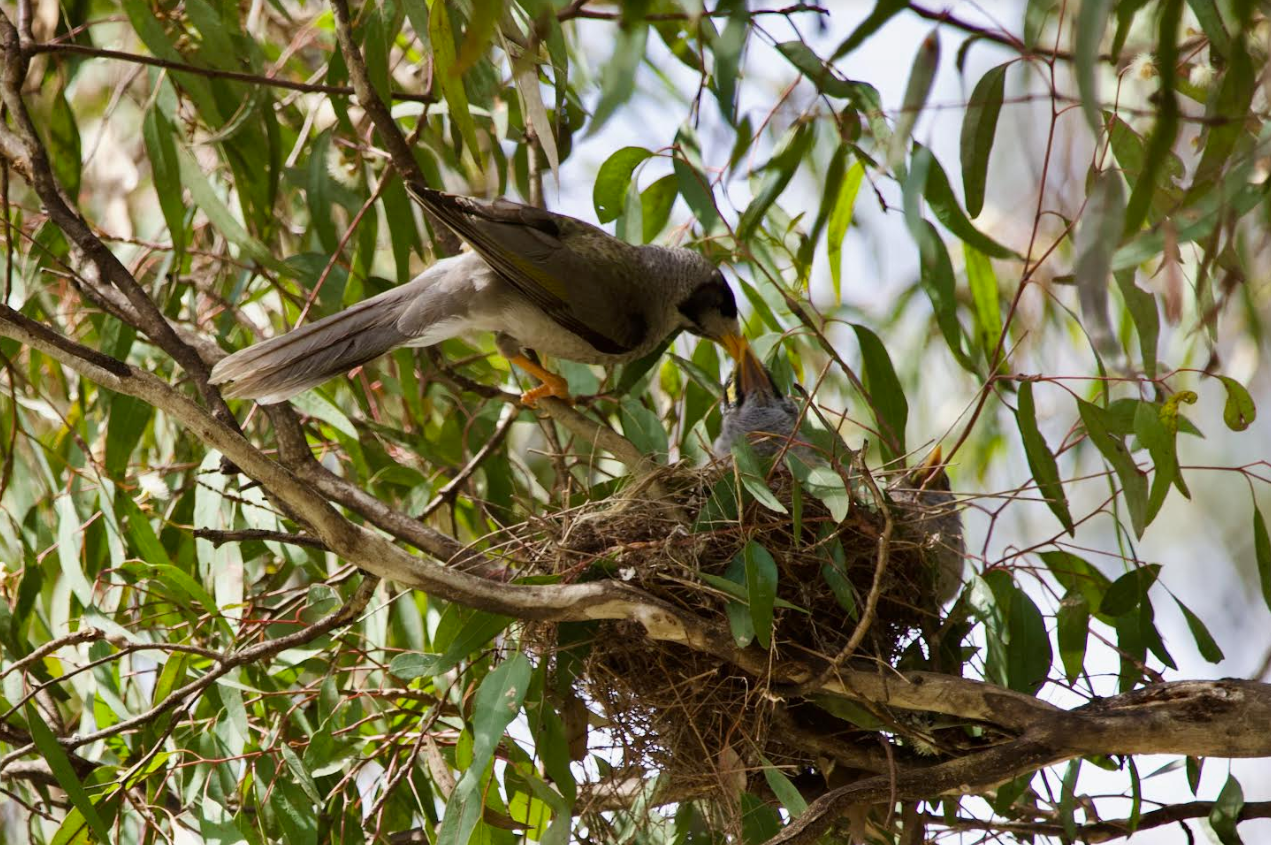
Click image to enlarge. Click X to return.
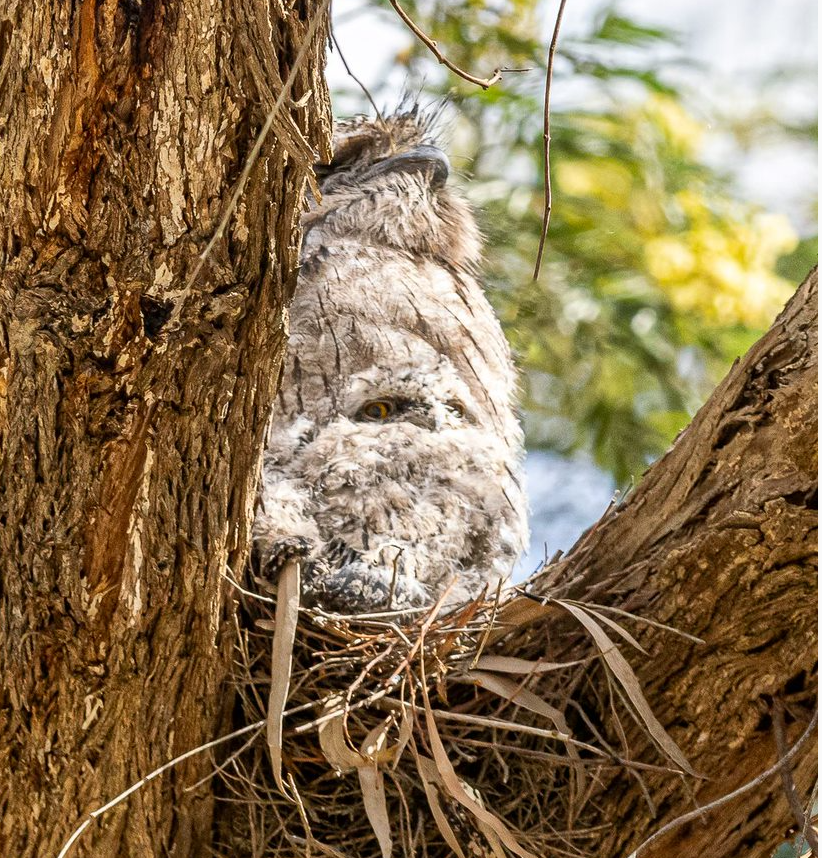
The Mudlark chick (bottom left) is in the same nest as shown in the Bird Walk photos – about a week later. Interesting that the Mudlark’s black and white starts out more of a brown and white to match the nest’s colours…
We’ve had reports of turtle sightings in the creek – but no photo to confirm the id as yet. Please send one in if you have one. If you see something big and swirly like this:
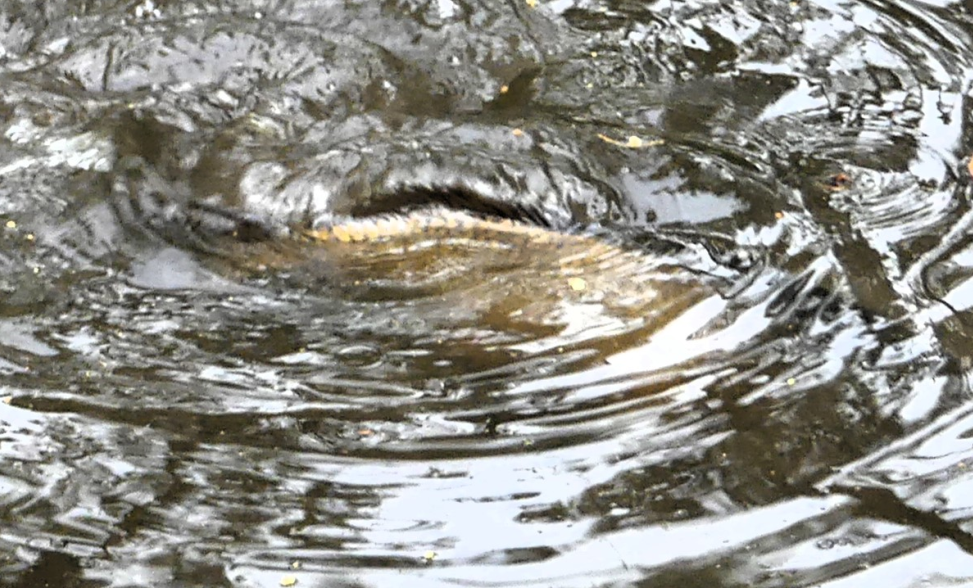
the culprit is likely to be a monster carp!
Kookaburra in Flight
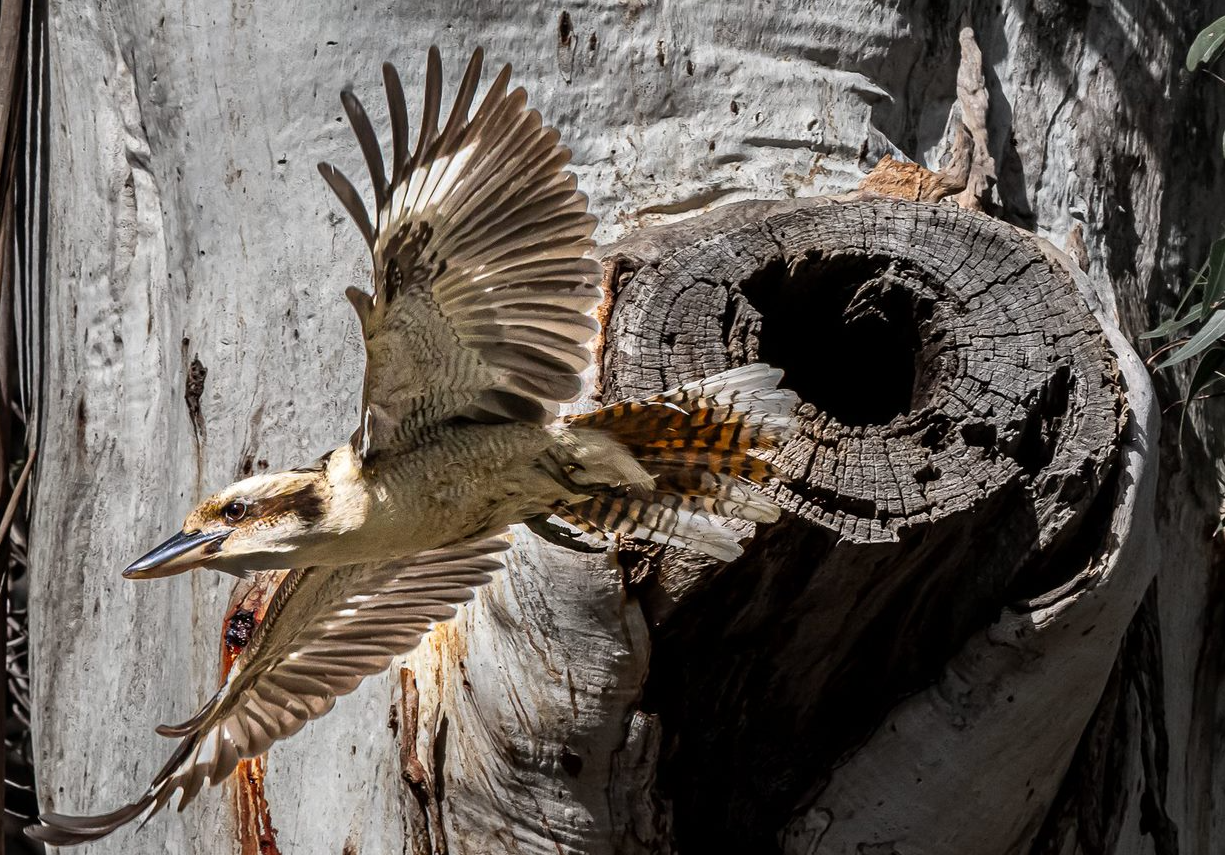
Ken took some amazing photos of a Kookaburra in flight earlier in the month. In his words:
There is a Kooka nest hole relatively close to the carpark… I have been swooped by this bird for 2 days running. Yesterday it swooped me 3 times as I just stood in the carpark. As I always wanted a photo of a bird coming toward me I just stood in there. Yes, it came at me again, this time I was ready with the camera – hence these results. A bit of a risky business – like photographing hippos in Africa!
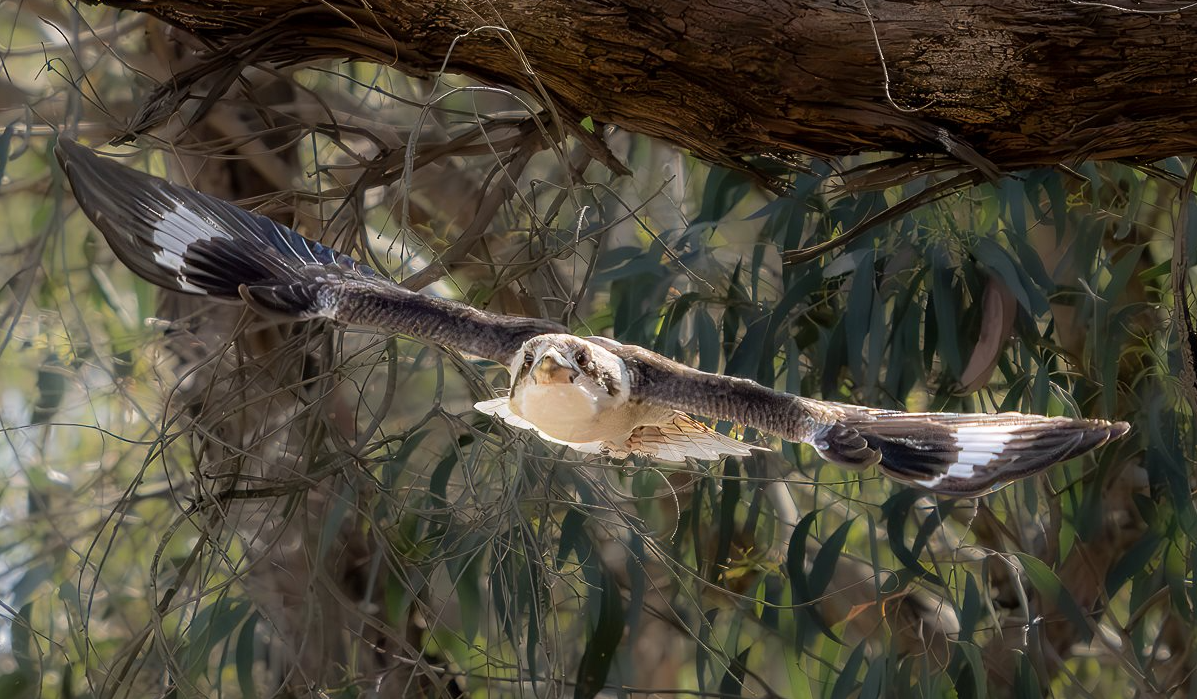
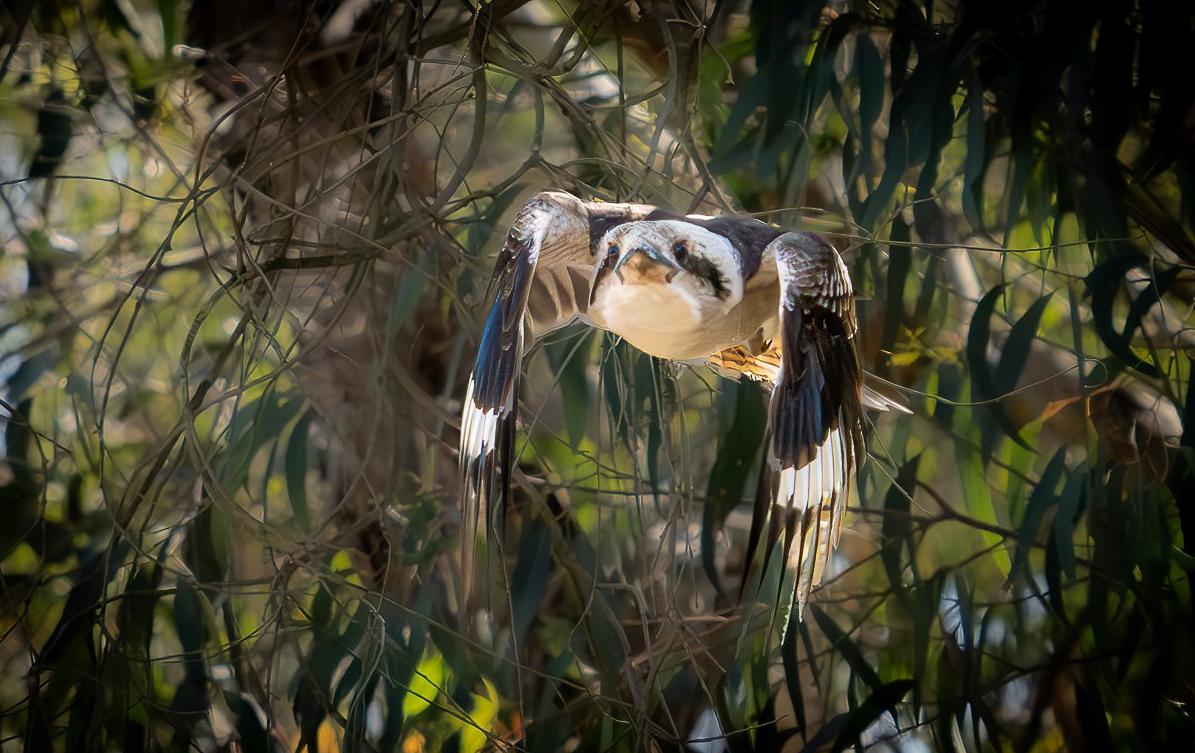
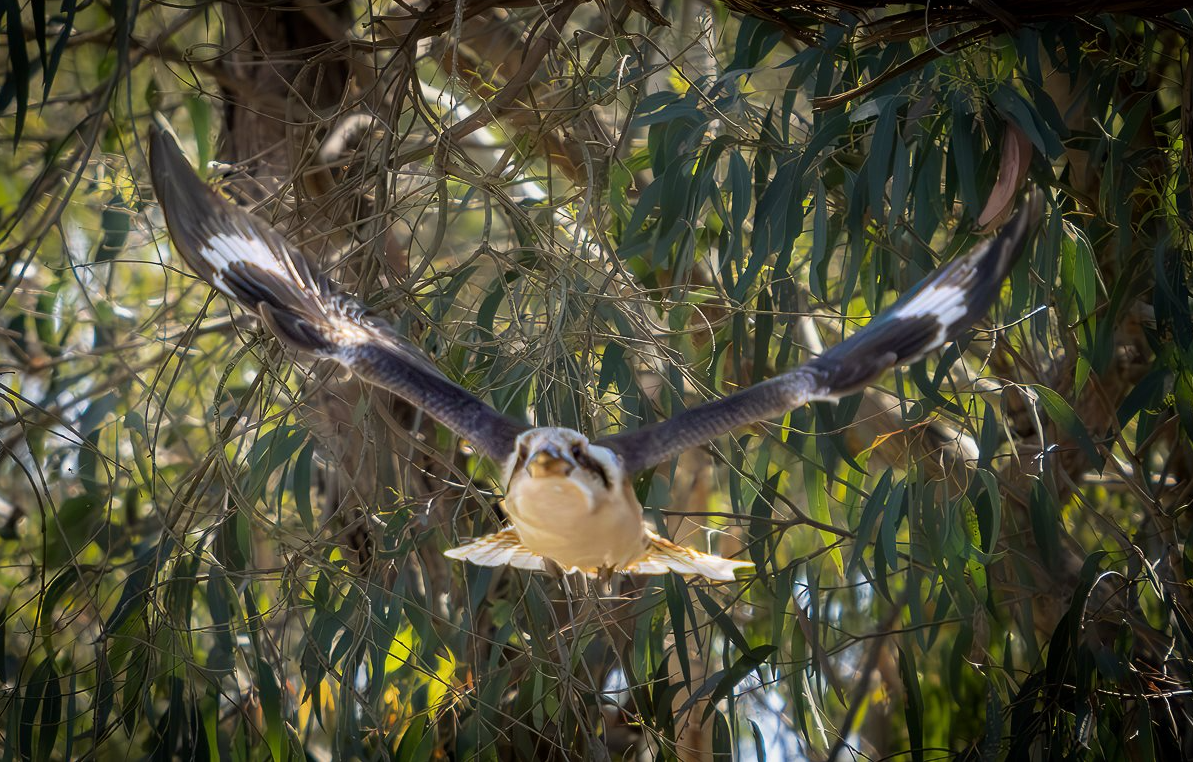
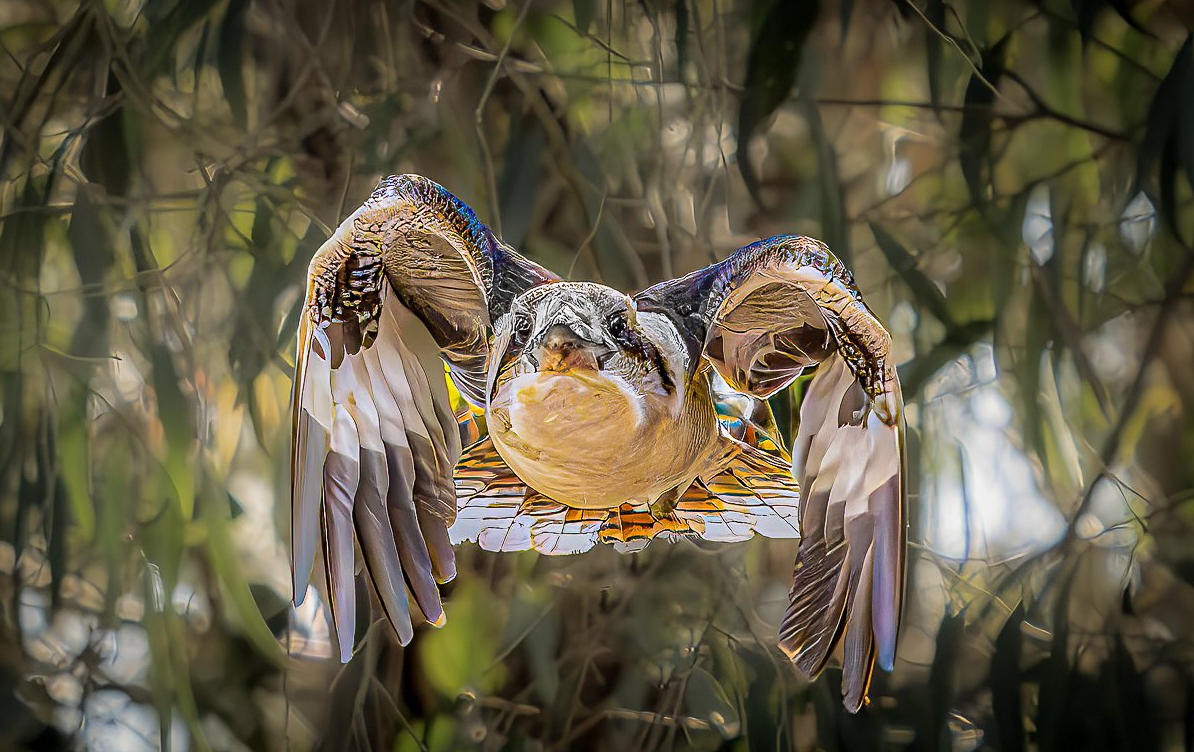
Click image to enlarge. Click X to return.
Finally, it looks like we are going to have to suggest that Raylene and John’s Deakin Uni research team look at the incidence of SGARs (dangerous rat/mouse poisons) in Kookaburras as well as in the likes of Tawny Frogmouths and Powerful Owls:
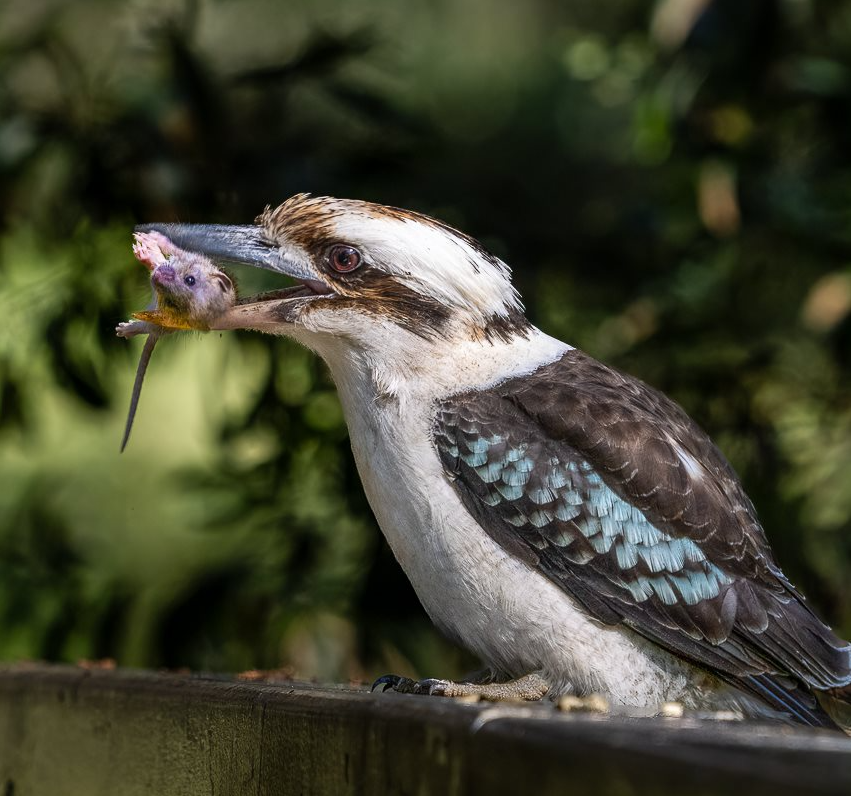
Please see our July article for further information on which rat poisons to use which avoid adverse impacts on wildlife.
 Blackburn Creeklands
Pingback: Park News December, 2023 | The Blackburn Creeklands