Welcome to our November news!
In this edition,
- we present lots of “baby (animal) photos” this month – thanks to the prodigious skills of our photographic contributors
- we’ve added two new wildlife species to our list
- our regular features tracking goings on in the park.
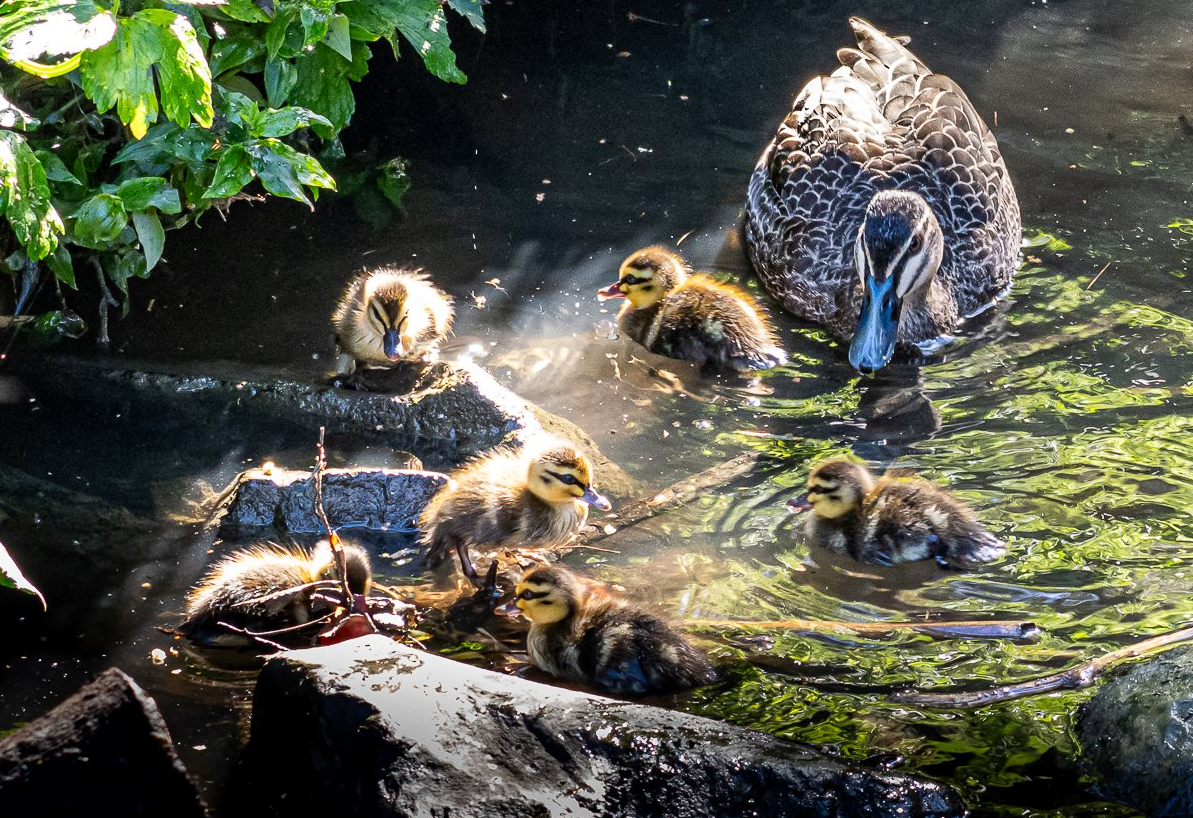
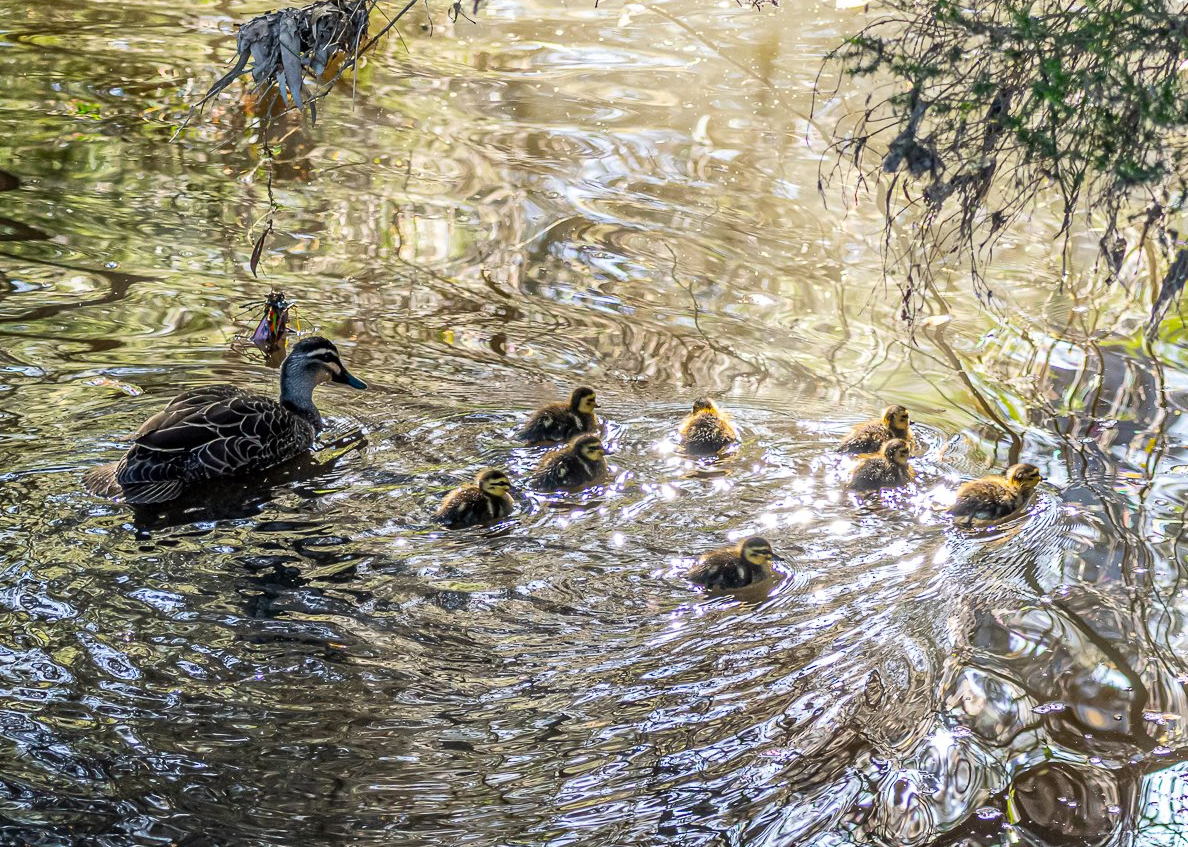
To give you a taste, we welcome this batch of ultra-cute ducklings above. We have more photos of these and young Mudlarks, Tawny Frogmouths and Kookaburras later in the newsletter.
Thursday Team
Our Thursday team has been busy:
- In Kalang Park – weeding and mulching along the main track in from Pakenham Street headed east past the Noticeboard and the beds abutting the car park. The team was rewarded with two sightings of the Buff-banded Rail – photos later in this edition.
- Three weeks working in Blacks Walk, focusing on the two areas adjacent to Garie Street neighbours.
The team also welcomed new member, Jane, to the group. They are on the look out for new volunteers – please come and give a working bee a try one Thursday morning if you are interested.
Council has invited all our registered Committee and working bee volunteers to its 2023 Volunteer Celebration to be held early in December. This will include a welcome from the Mayor, an award ceremony, afternoon tea and a live jazz band. It’s good of Council to recognise and reward the efforts of its volunteers – both old and new.
Because many of our regular volunteers are not registered with Council, we will also hold our own little “thank you” event for all our volunteers for their great work in 2023.
Council and Melbourne Water Works
Park Seat Renewal
In response to enquiries from the community, we’ve followed up Council regarding replacement of the broken seat along the northern track in Kalang Park near “The Cutting”.
Council has advised that the seat will indeed be replaced. The delay has been caused by the need to “walk in” the replacement due to vehicle access constraints. We expect the replacement seat soon!
Cubby House to be Removed
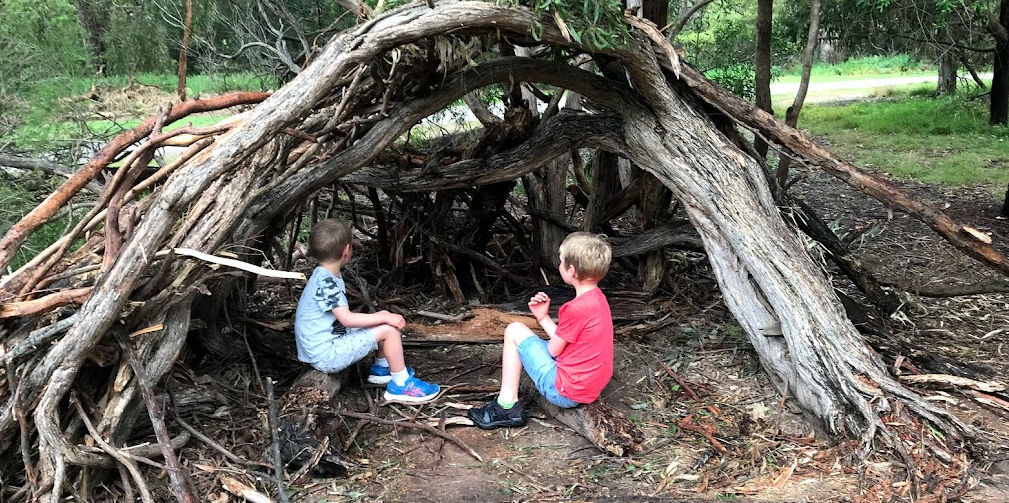
We’ve been notified that Council has decided to again remove the cubby house constructed by kids adjacent to the Furness Park playground as a fire prevention precaution.
Dead/Dangerous Trees in Blacks Walk
Council has flagged removal of dead/dangerous trees in Blacks Walk, west of the Scout Hall, in the open grassed area. There are no significant habitat loss issues.
Melbourne Water
Melbourne Water has had a contractor team working along the streamline over the month removing weeds.
Vale Earle McGary
Well-known park identity Earle McGary passed away early this month. It isn’t so long ago that Earle was stationed on his usual bench seat with a couple of mates enjoying morning banter with passers-by.
Our sincere condolences to his wife Betty, his family and friends. He was nearly 95 and looked at least ten years younger – testament to the health benefits of a regular walk in the park ?
Sightings
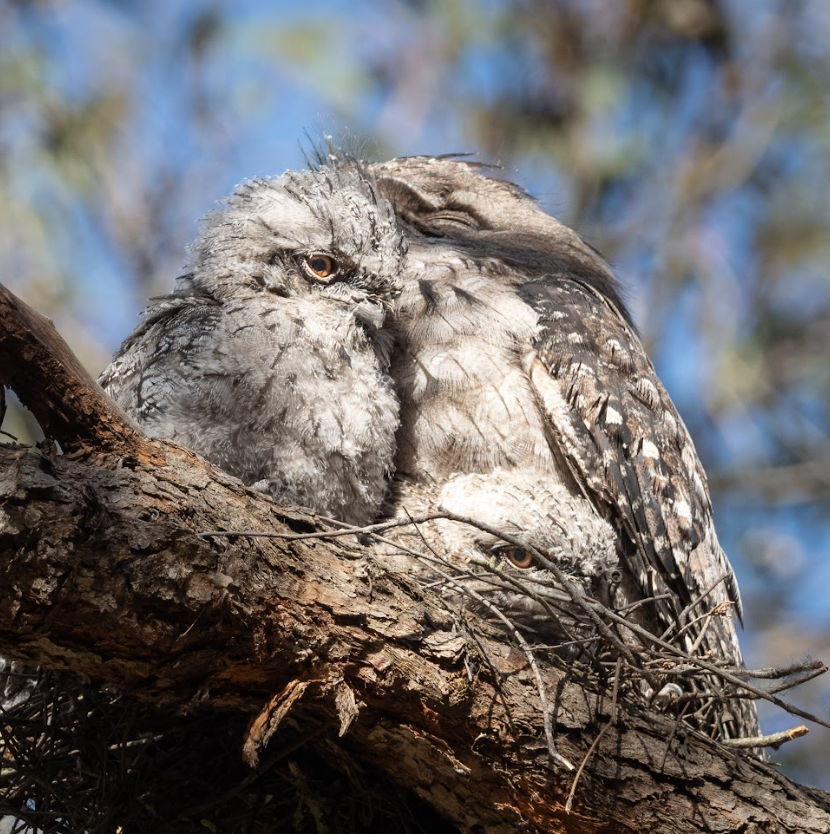
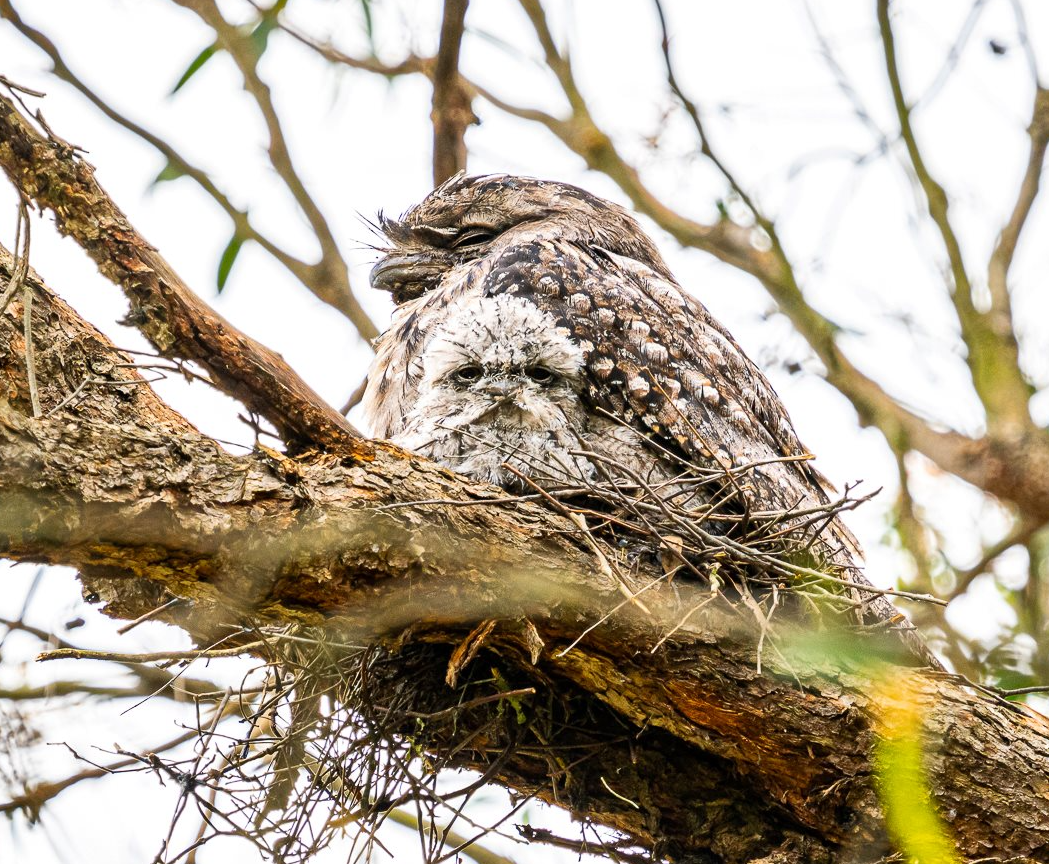
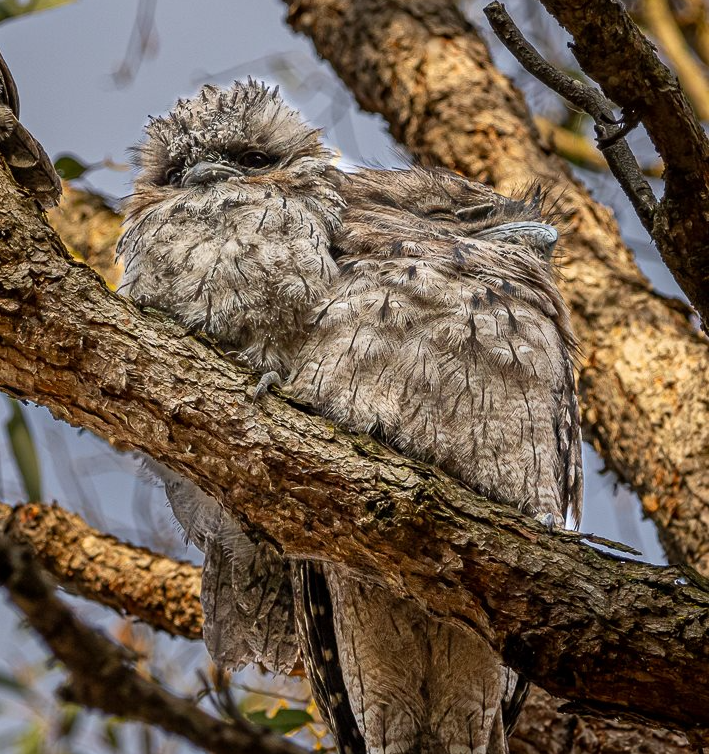
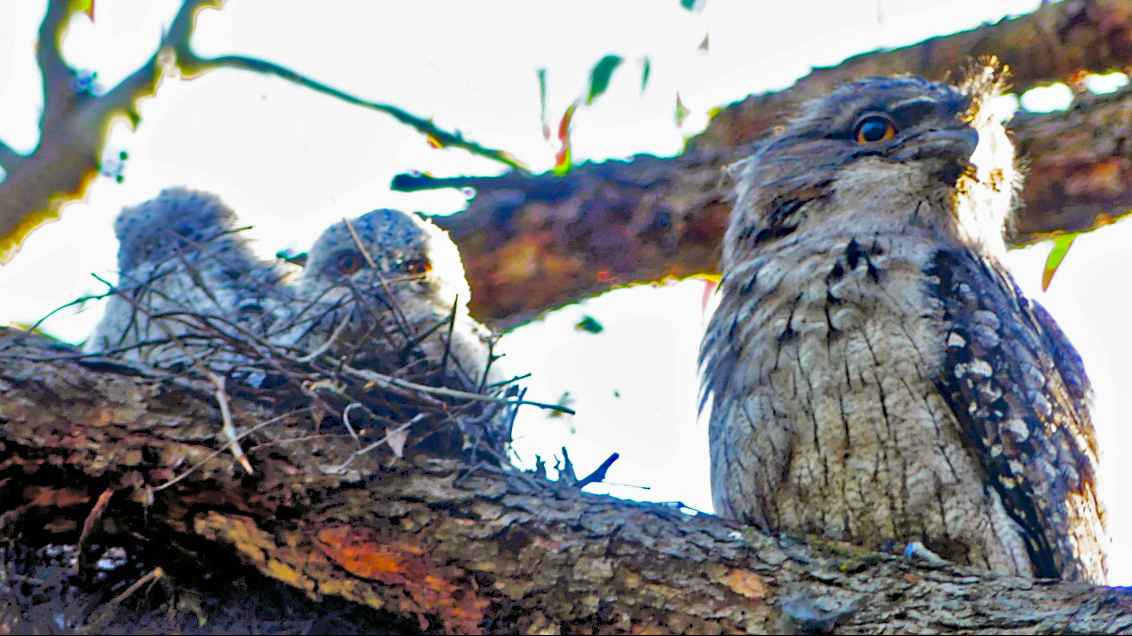
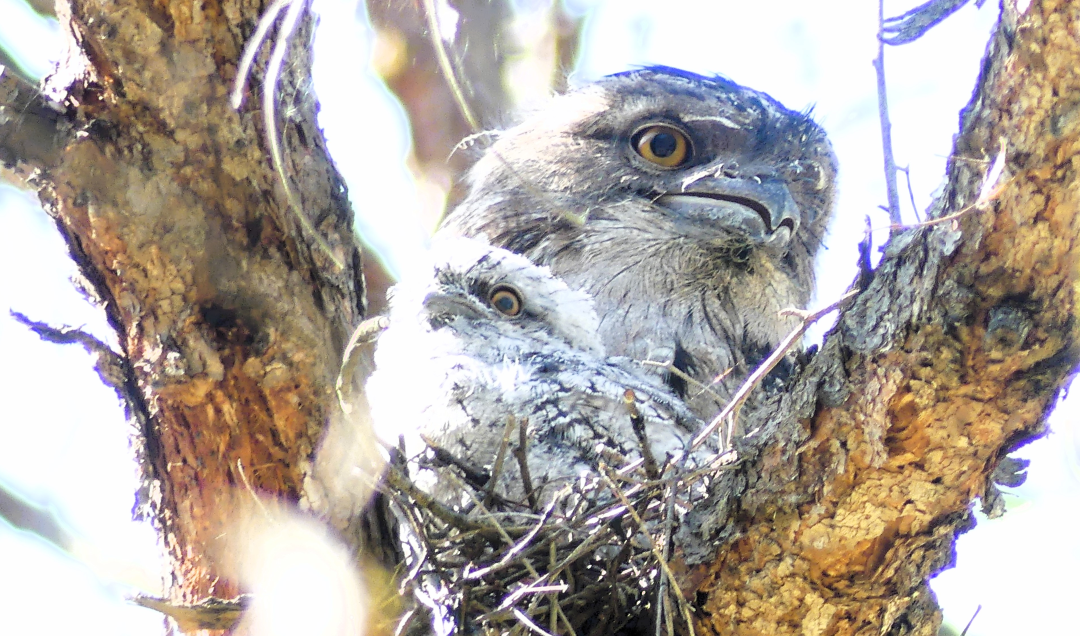
Many parents will identify with this adult Tawny Frogmouth – who seems exhausted looking after two fast-growing chicks, both of whom are wide awake, raring to go (by comparison):
Buff-banded Rail
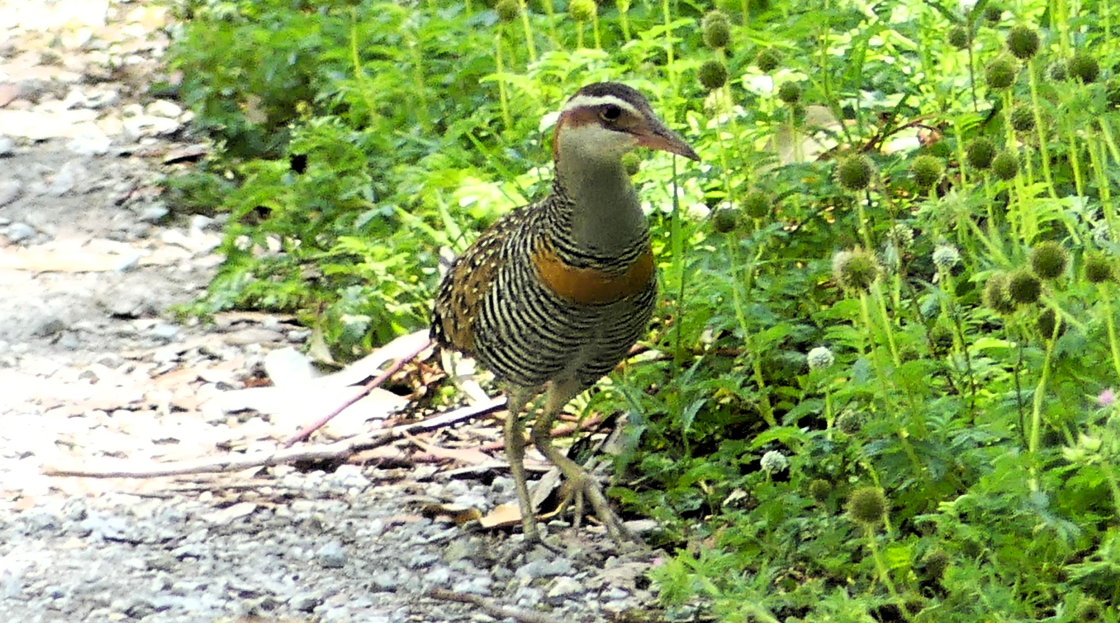
The Buff-banded Rail(s) are still about – and seem to be becoming a little less shy. Russell’s shot taken in Kalang Park along the northern track shows off the bird very well indeed. Greg also got a great shot in a similar location a day or two later (mid-November):
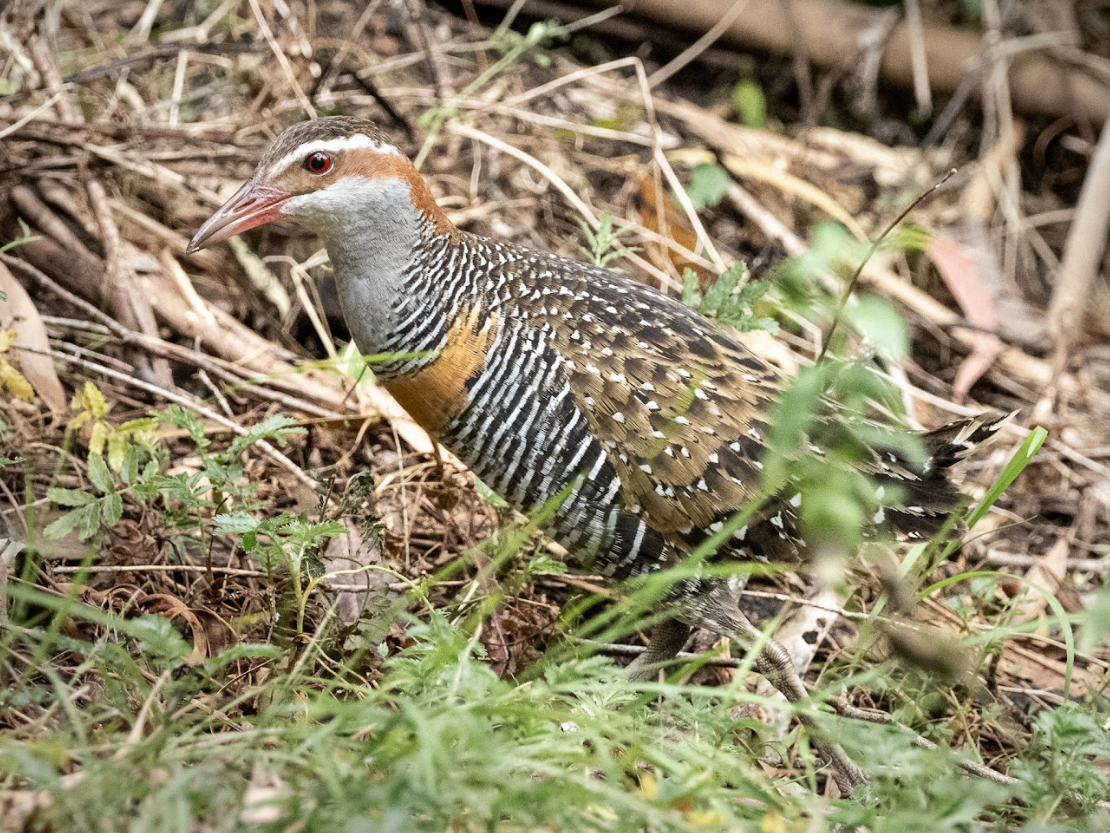
There’s a lot happening in the bird’s plumage isn’t there ?:
- dark brown, finely streaked crown
- thin white supercilium (band above the eye)
- brownish-red facial stripes “masking” the eye which meet behind the neck
- plain light grey throat and fore-neck
- orangey-brown (is that the “buff”?) breastplate over finely barred black and white chest
- white spots on two-tone brown mantle and wing coverts.
It may seem an odd mix – but the birds are definitely hard to spot once in fuller cover.
Interestingly, Greg and Barb have recently seen a juvenile Buff-banded Rail (27/11) near the billabong which may be one of the chicks Russell snapped last month having grown up! The juveniles do not have the “buff” chest markings.
A First for the Park – Woodswallows
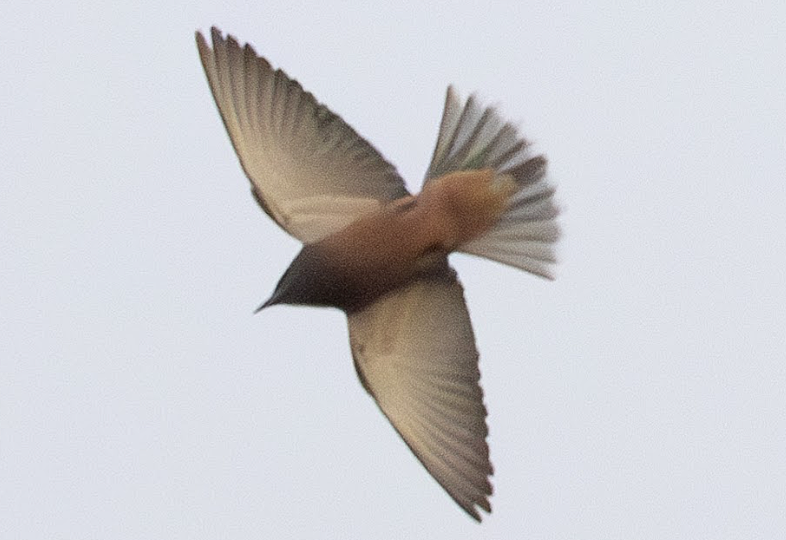
Greg and Barbara came across an interesting sighting and managed to take a shot of the birds flying overhead:
In Greg’s words:
We were surprised to see perhaps 40-50 woodswallows circling in a large group over the Garie St playground on Tue afternoon (7 Nov). Its not a great photo, but there was no doubt from the way they flew that that was what they were.
We’ve searched our database and there’s no record of any Woodswallow sightings in the Creeklands since our records began in the 1970s.
Woodswallows (genus Artamus) are strongly social birds with very good aerial skills which enable them to feed on insects on the wing for hours at a stretch.
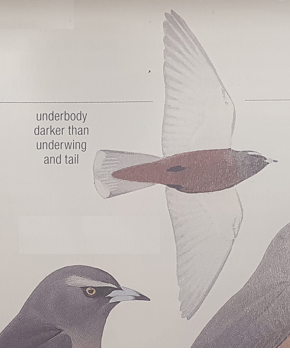
There are a few different species that our birds could be – but the colours of the underbody only match the textbook identification of the White-browed Woodswallow (Artamus superciliosus) – as in the illustration, left, from the excellent The Australian Bird Guide by Peter Menkhorst et al.
The Latin superciliosus means “severe” or “gloomy” – not really today’s “supercilious” as you might expect. The species does seem to have a rather strict or cross look about it doesn’t it ?
Thank goodness for the unique colouration of its underparts – it would be difficult for Greg to identify a “white brow” from underneath – even though it occurs in the sketch!
We’re not sure why they’ve suddenly turned up in the Creeklands. One of our experts thinks it may be an overabundance of the species in the drier, more northern parts of the state due to them having had a very good breeding season. Another says they are known to appear away from their normal distribution areas in association with large storm events – possibly the storm around Cup Day was responsible.
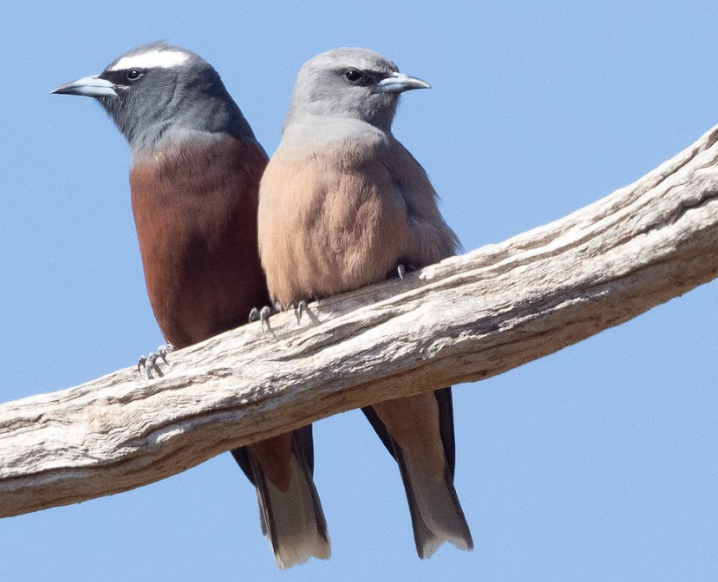
Coincidentally, Greg was able to capture a shot of a pair at Wedderburn shortly after the sighting in our park:
Nankeen Kestrel
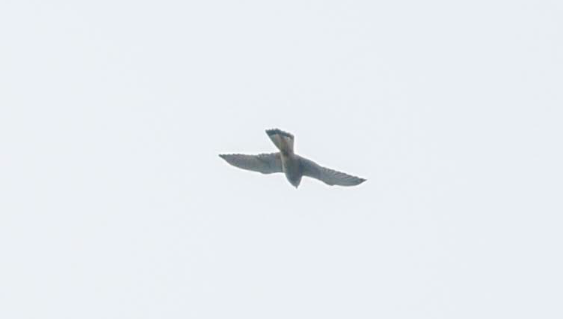
In another first for the Creeklands, the bird above noticed circling over Blacks Walk on 28/11 has been identified as a Nankeen Kestrel (Falco cenchroides). They are brown/nankeen coloured on top, white below and have a black tail tip. As a small falcon, it is a bird of prey and is widespread in Australia – usually in open country such as grasslands and farmland. They hunt a variety of prey, including mice, small birds, lizards and insects.
Sacred Ibis
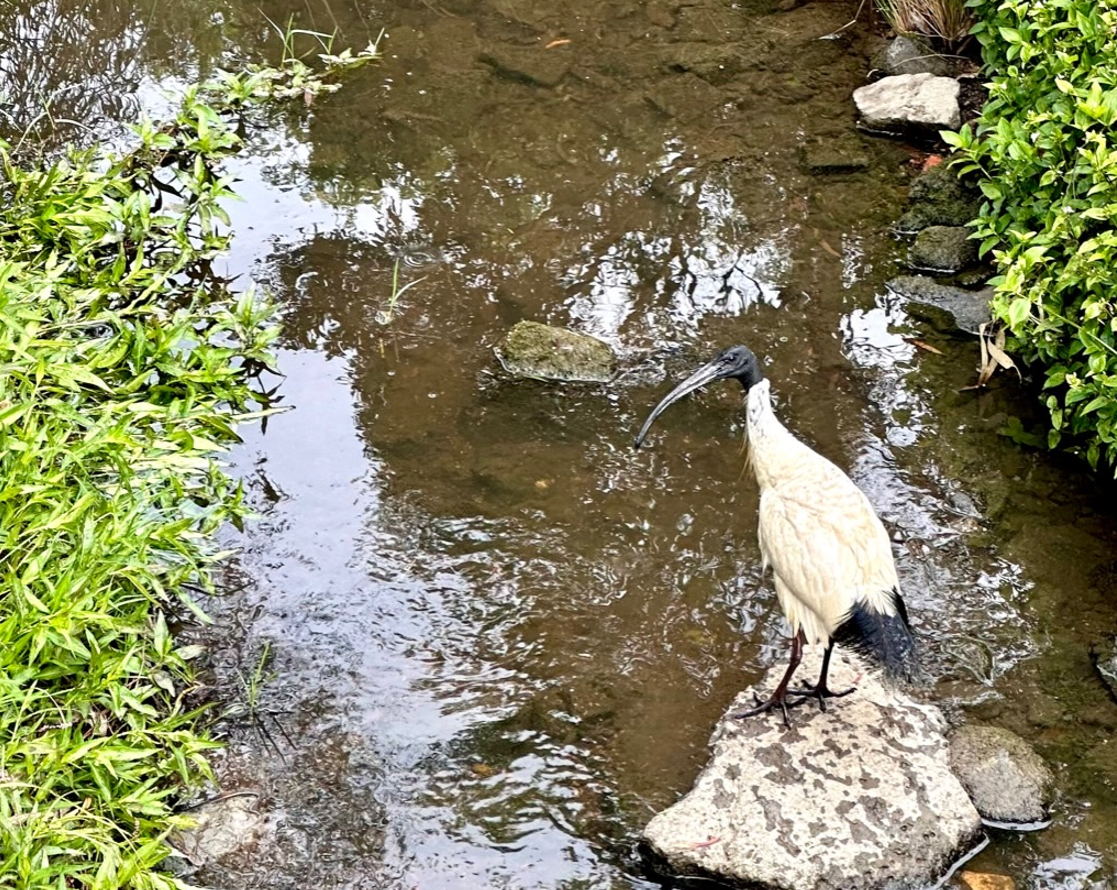
Lisa has spotted an Australian White Ibis in the creek again:
The ancient Egyptians believed the Ibis was connected to the god Thoth.

He was the god of the moon, wisdom, knowledge, writing, art and judgment.
In ancient Egyptian art, he was often depicted as a man with the head of an Ibis.
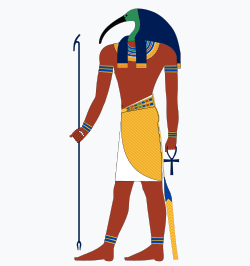
We noticed that another common name for the species is “Sacred Ibis” (ok – also “Bin Chicken” or “Tip Turkey” – but we’ll ignore those distractions).
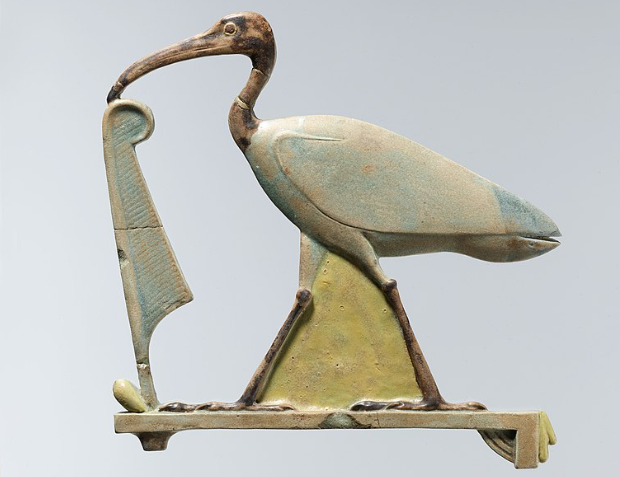
So, we wondered whether the bird the Egyptians venerated might be the same as ours ?
It turns out that the African Sacred Ibis (Threskiornis aethiopicus) is very closely related to the Black-headed Ibis (T. melanocephalus of south and south-east Asia) and also our Australian White Ibis (T. molucca).
[T. is scientific shorthand for Threskiornis in this case – once the full name is used, it can be abbreviated to its first letter and a full-stop in context for brevity and clarity]
In a comprehensive review of plumage patterns in 1970, it was observed that the three species were extremely similar and that the Australian birds resembled T. aethiopicus in adult plumage and T. melanocephalus in juvenile plumage. It was then proposed they all be considered part of a single species. At the time, this was generally accepted by the scientific community. However, later work – including chromosome studies – cast doubts and, by the 1990s, they were considered separate species again.
So the answer to our question is “not the same, but very, very similar”! We notice that the Menkhorst et al book referred to in our article on the Woodswallows cleverly and diplomatically calls our Ibis “the Aus equivalent of the Sacred Ibis“. Hmmm… but maybe our birds had not diverged as a separate species 3,000 years ago ?
Note: Very rarely, we might see a Straw-necked Ibis (T. spinicollis) in the park too. They are roughly the same size – but have dark wings that are iridescent in sunlight. Adults have distinctive straw-like feathers on their white necks. These do not have an African equivalent – though are seen in New Guinea, Indonesia, and New Zealand.
Imperial Blue Butterflies “Hatching”
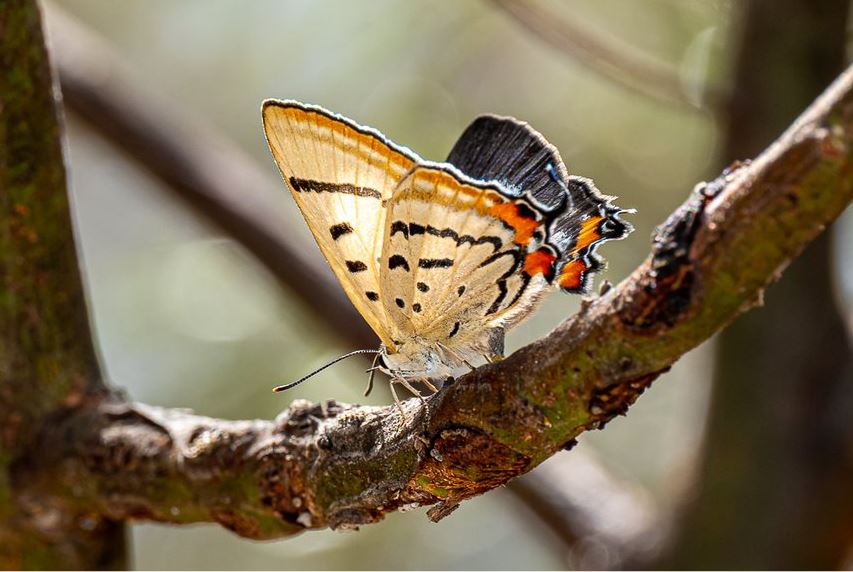
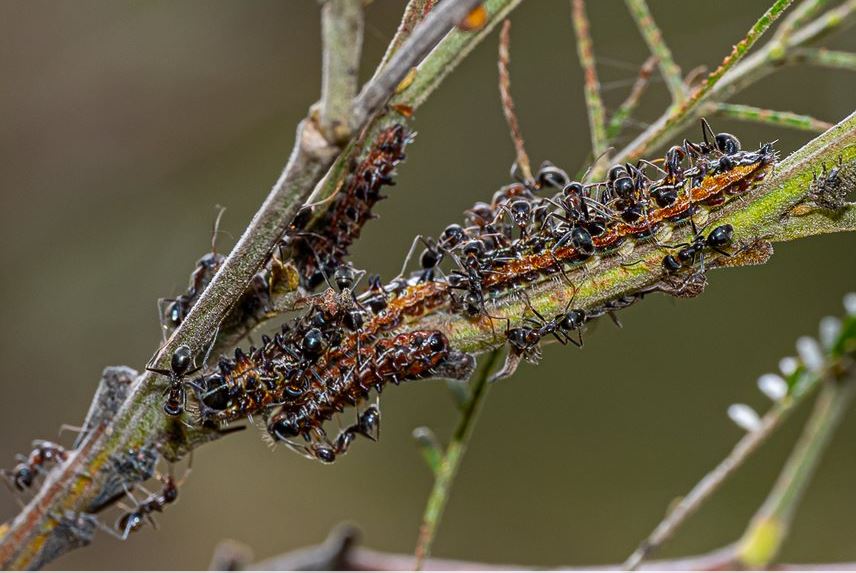
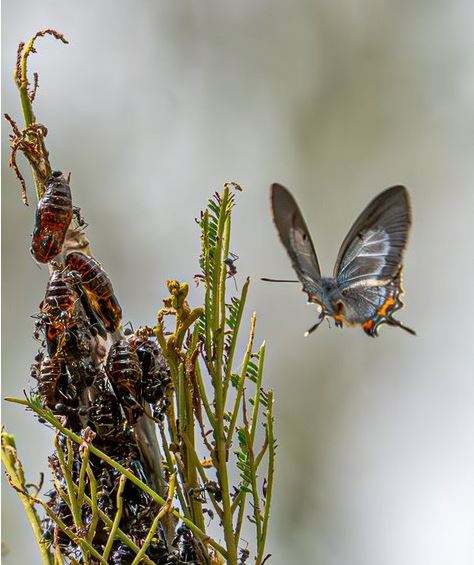
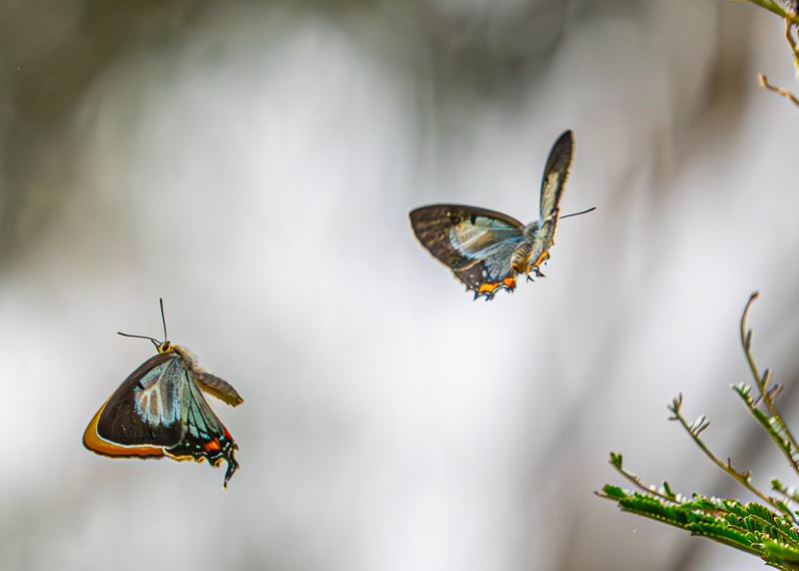
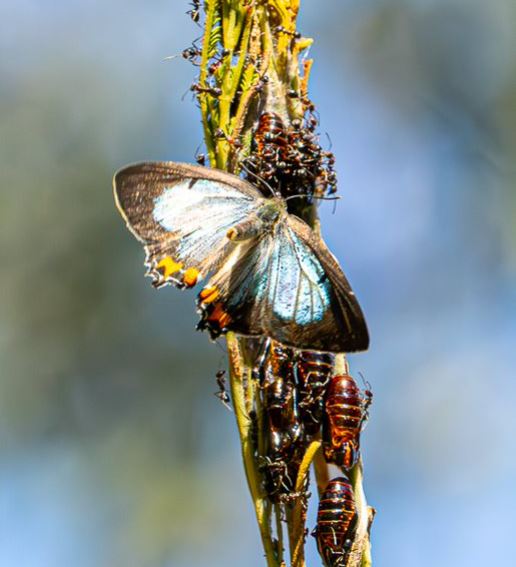
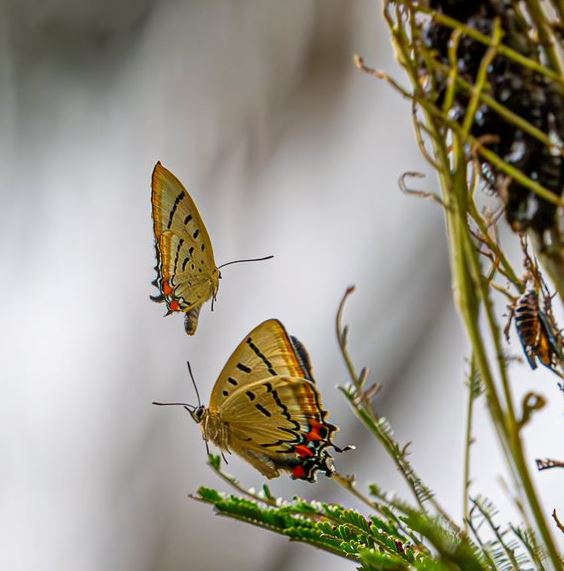
As he often does, Ken has captured the metamorphoses of the Imperial Blue (Jalmenus evagoras) butterfly which began recently in the park.
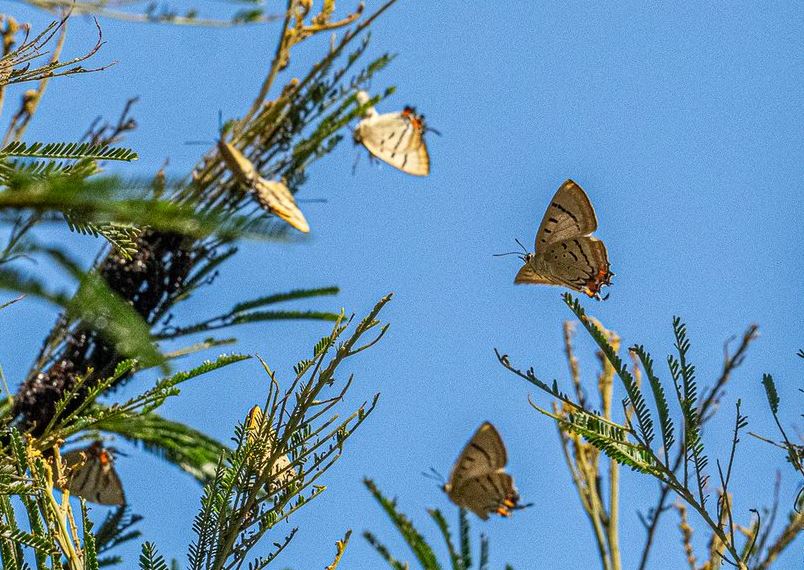
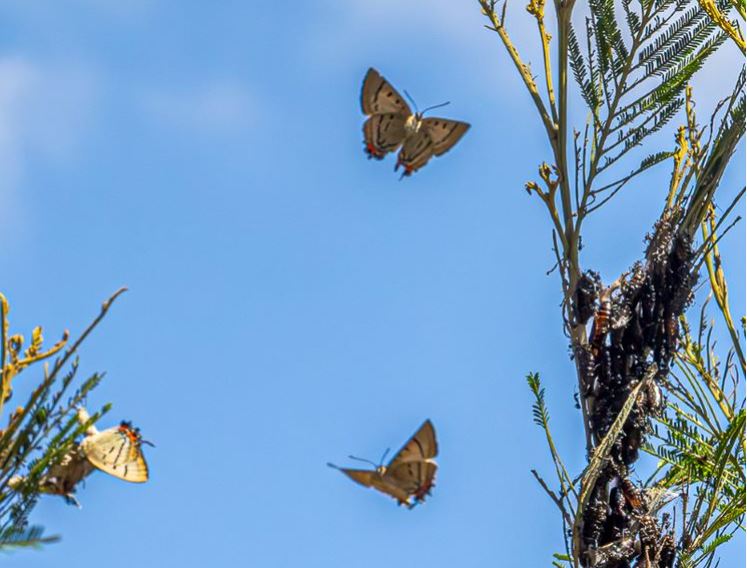
Please click to enlarge
These beautiful butterflies have a unique association with ants. The female butterflies lay their eggs on wattle trees – but only trees that have the scent of the Tyrant Ant. They tend to favour smaller (younger?) trees – especially the Silver Wattle. When the caterpillars hatch, they call the ant by clicking hard parts of their bodies. The ants come and protect them – and, as a reward, the caterpillars secrete a sugary substance (so called “honeydew”) which the ants feed on. The ants stay with the pupae until the butterflies hatch – even the pupae can communicate with the ants.
The male butterflies wait around the pupae for the females to emerge so they can mate immediately. Consequently, the small tree often has a cloud of butterflies flying around it when the sun warms up the air. The season usually runs from October to March. Hatching of caterpillars and butterflies is usually initiated by a spell of hot weather and started in our park only a week or two ago this year.
How come the Imperial Blues are both blue and brownish ?
They appear brown from underneath and when resting with their wings folded up. Only the tops of the wings are the beautiful blue – one needs to see them flying to see their colour. Ken has done a great job capturing both aspects of this beautiful creature!
Myxomycete
No – not rabbit poison or a construction material – Lisa also passed on this photo:
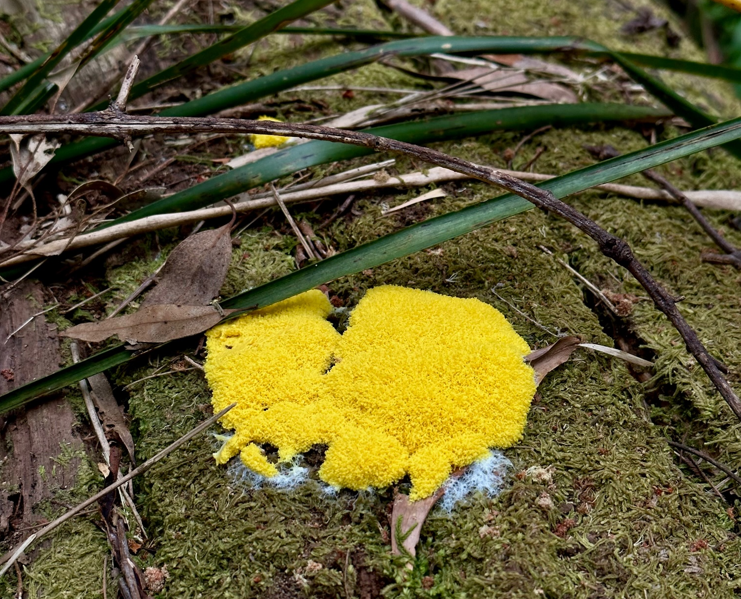
In January last year, we asked: What is it ? Plant, Animal, Poo or ??? The answer was that it has been considered all three at various times (!) – but these days it is recognised as a Myxomycete – which is the biological name for a plasmodial or acellular Slime Mould. Slime moulds are not animals (even though they move to feed), plants or fungi – they belong to a “kingdom” (biological super-category) of their own.
The scientific name of the particular species in Lisa’s photo is Fuligo septico. Its common names reflect its appearance and size: Dog Vomit or Scrambled Egg Slime Mould. Occasionally, slime moulds are sighted in the park – often on a dead or dying tree stump which they are feeding on. They usually only last a few days before they harden, fade in colour and disappear.
We followed up the January, 2022 article with a photo in February, 2022 of a white slime mould escaping the park (by literally passing through a fence) and with a further article in March, 2022 featuring an amazing macro photo supplied by Tasmanian researcher Sarah Lloyd.
Miscellaneous Sightings
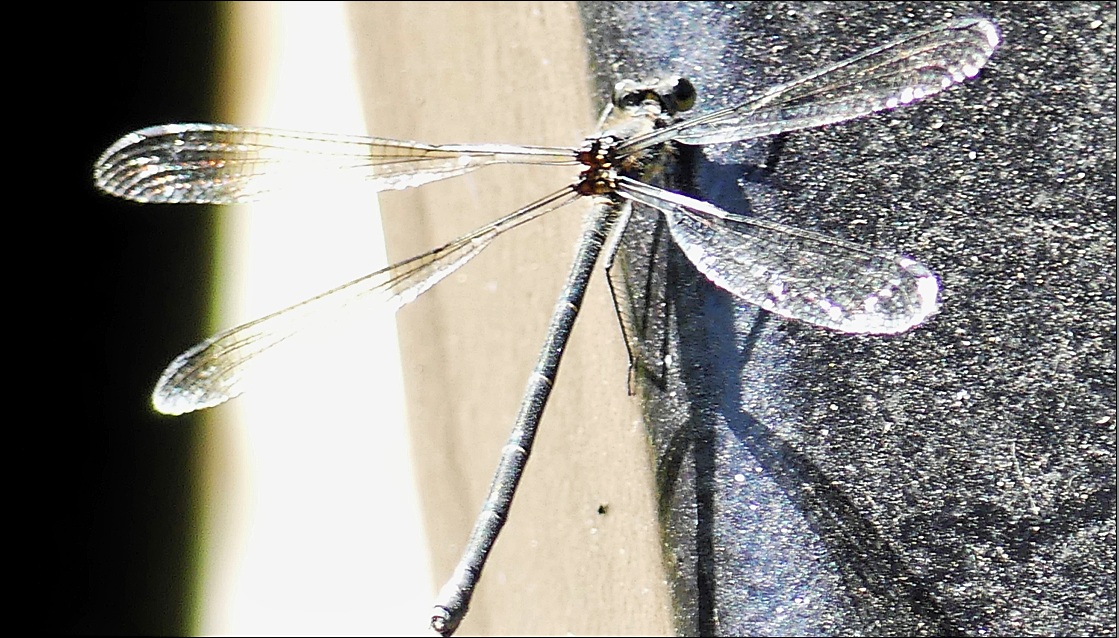
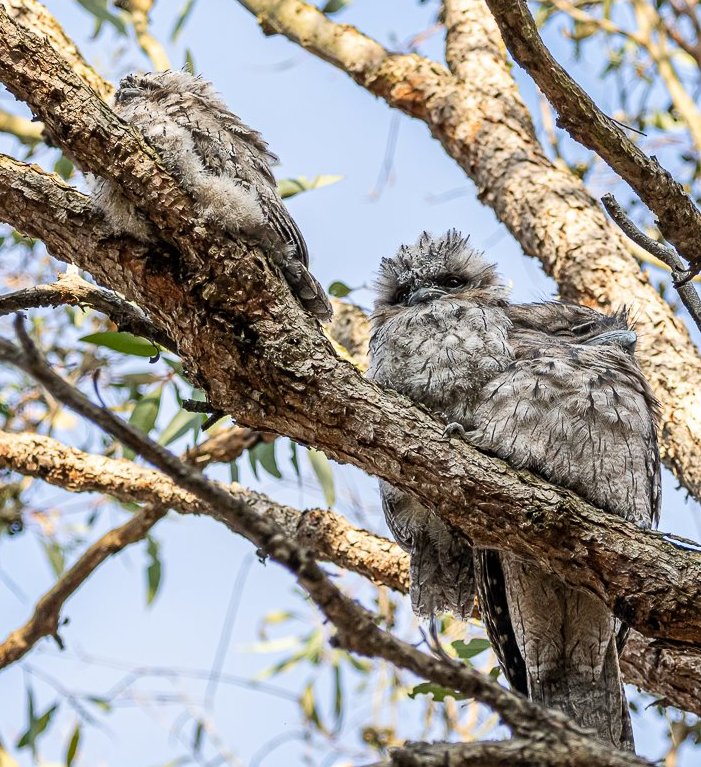
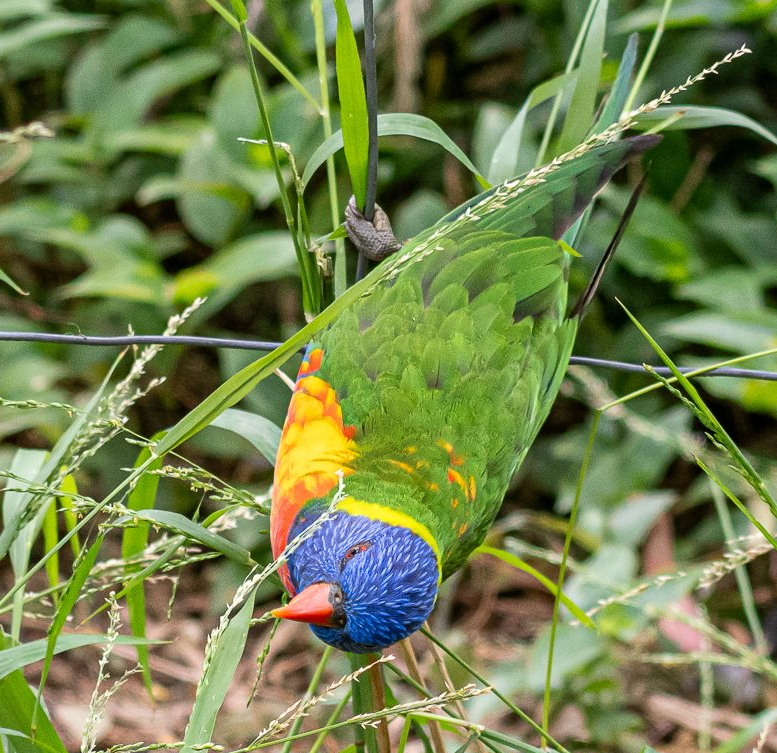
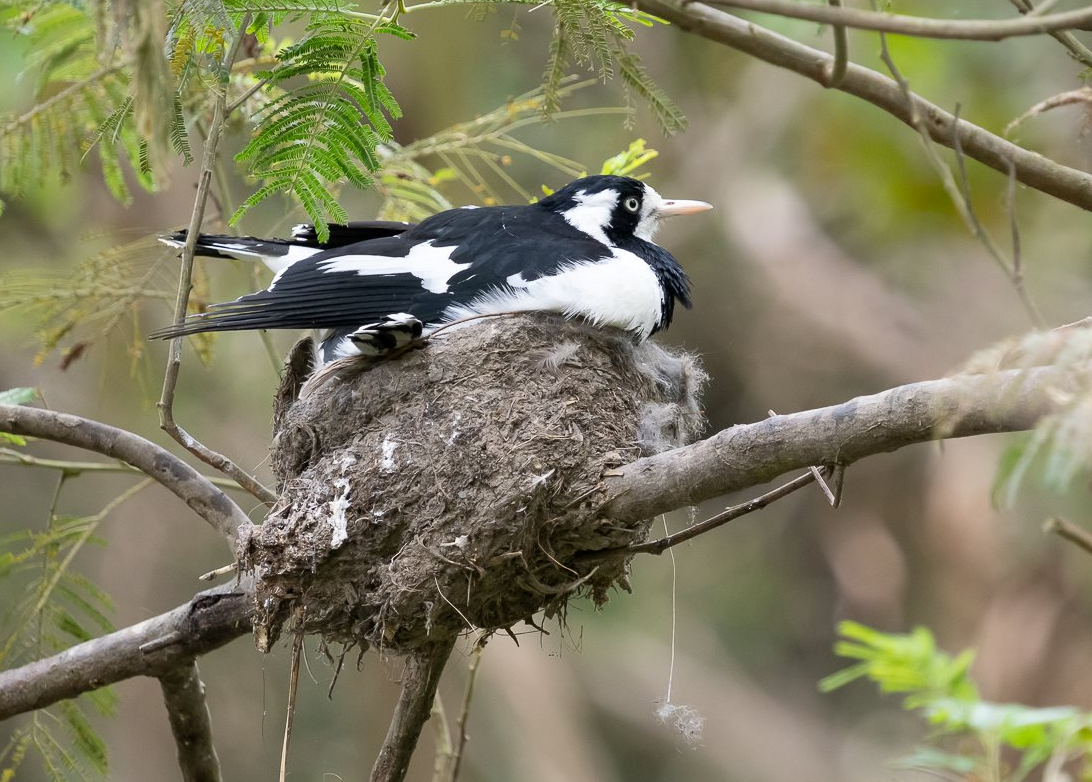
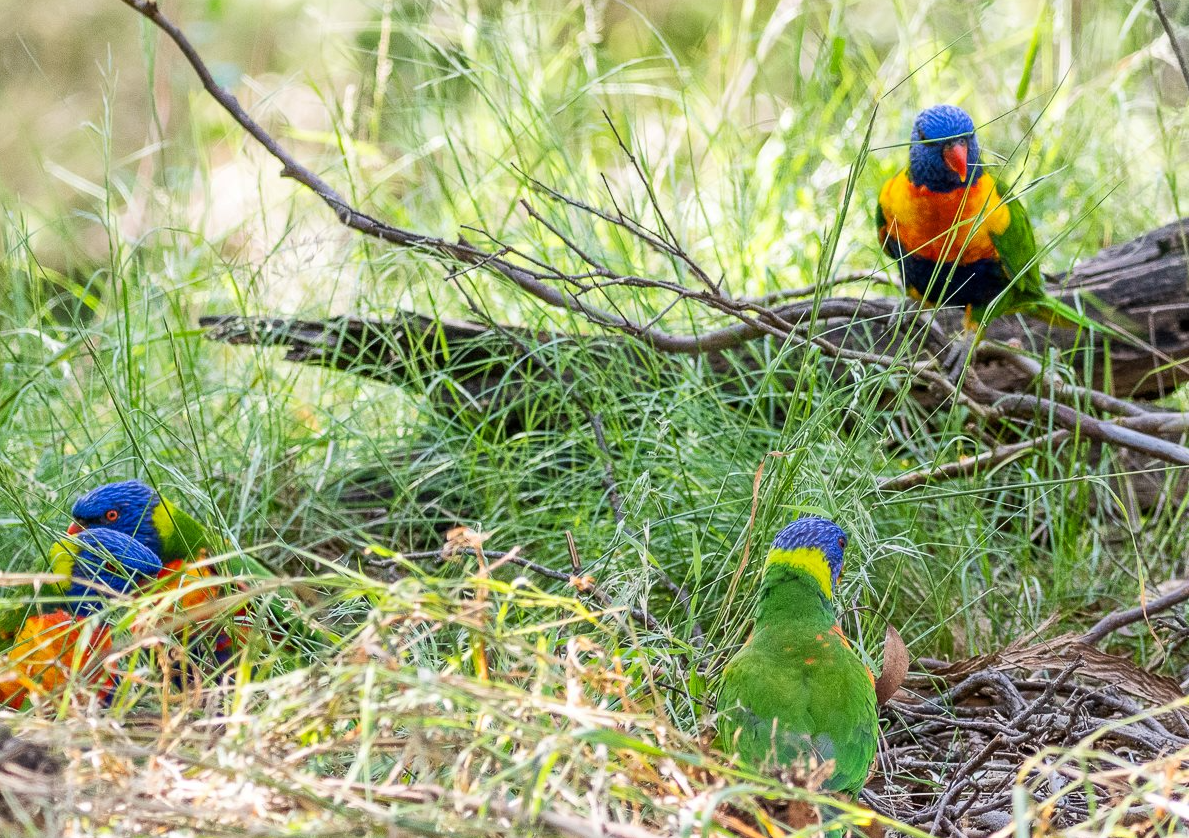
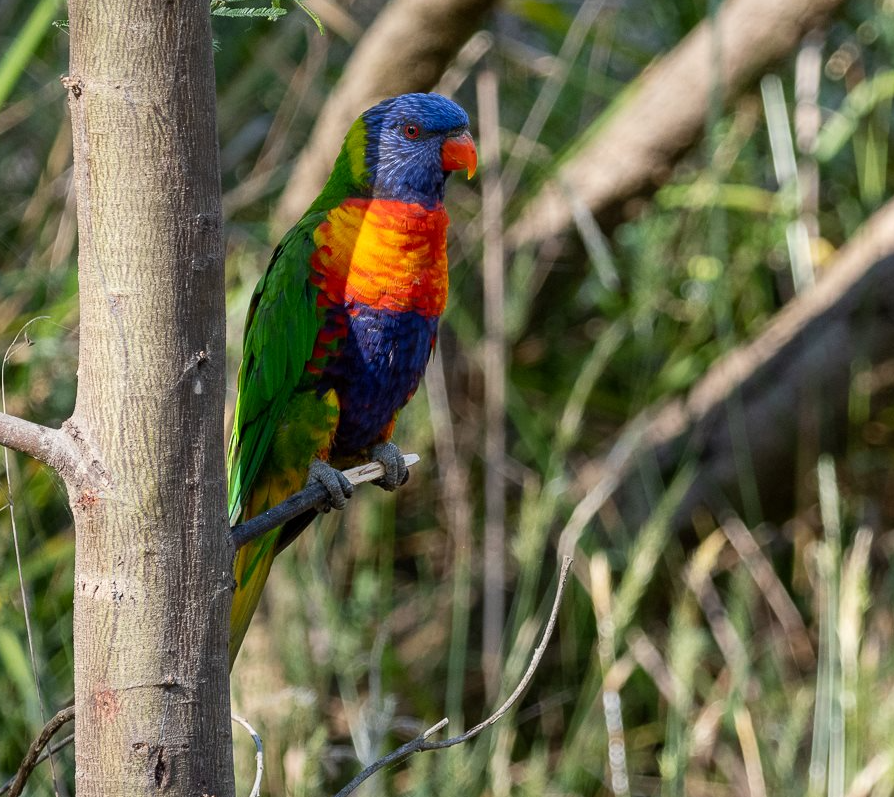
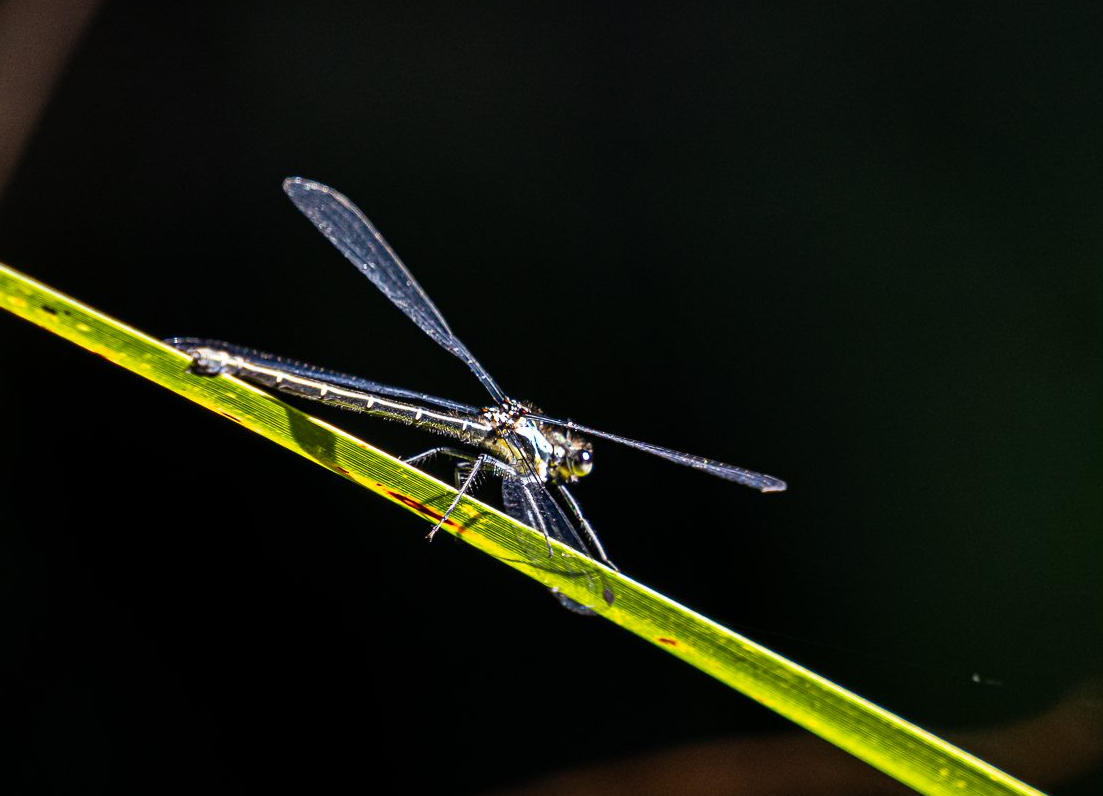
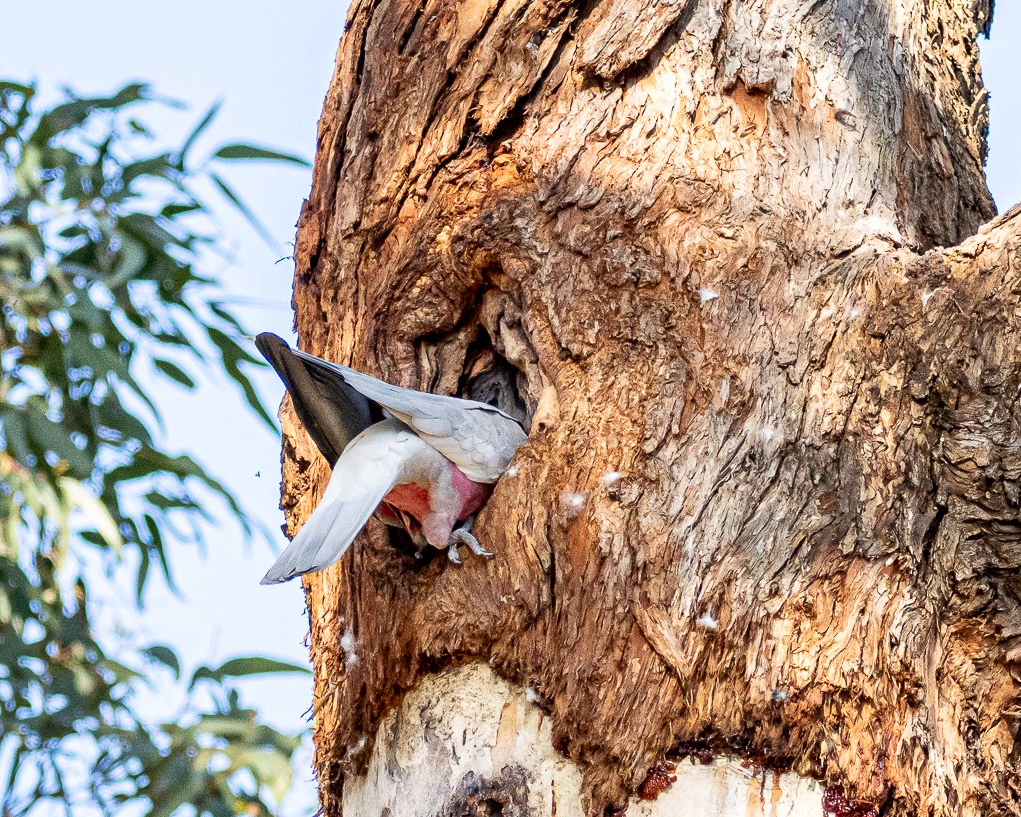
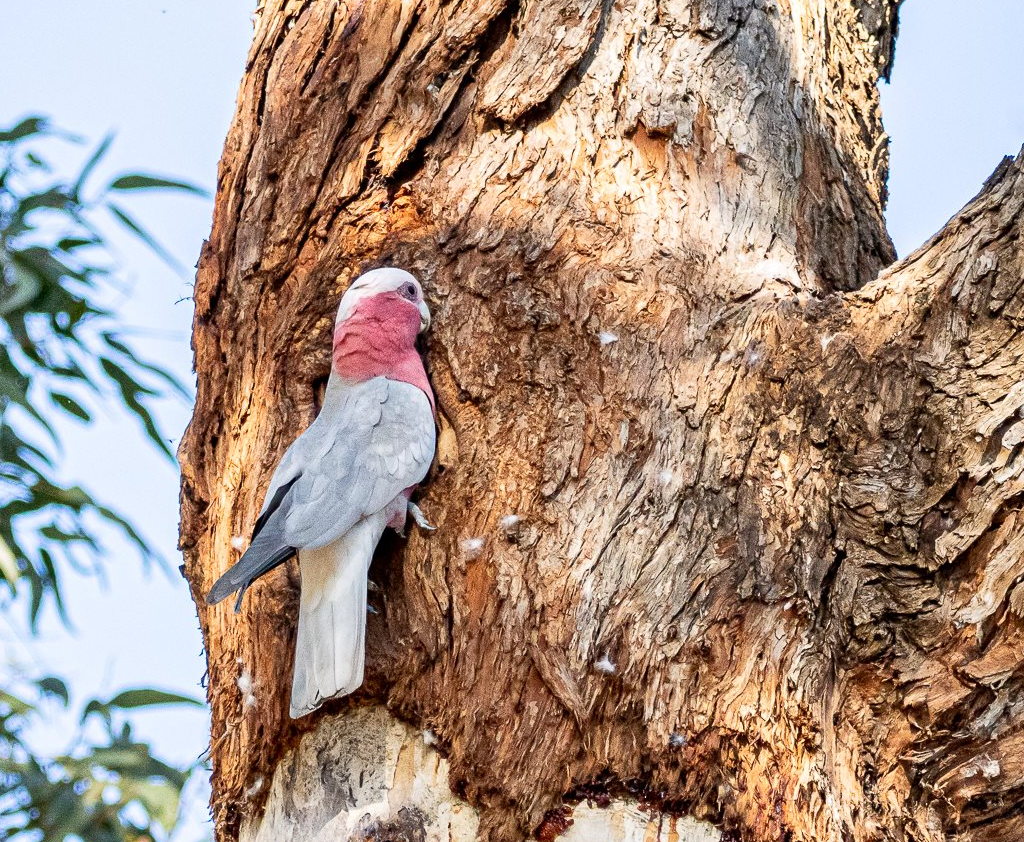
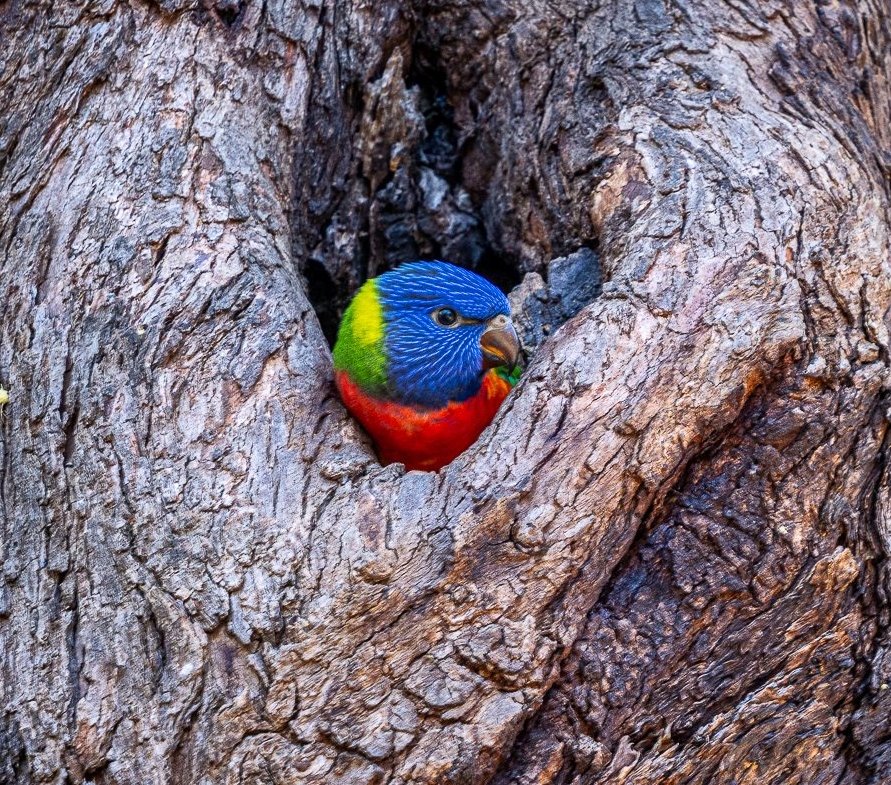
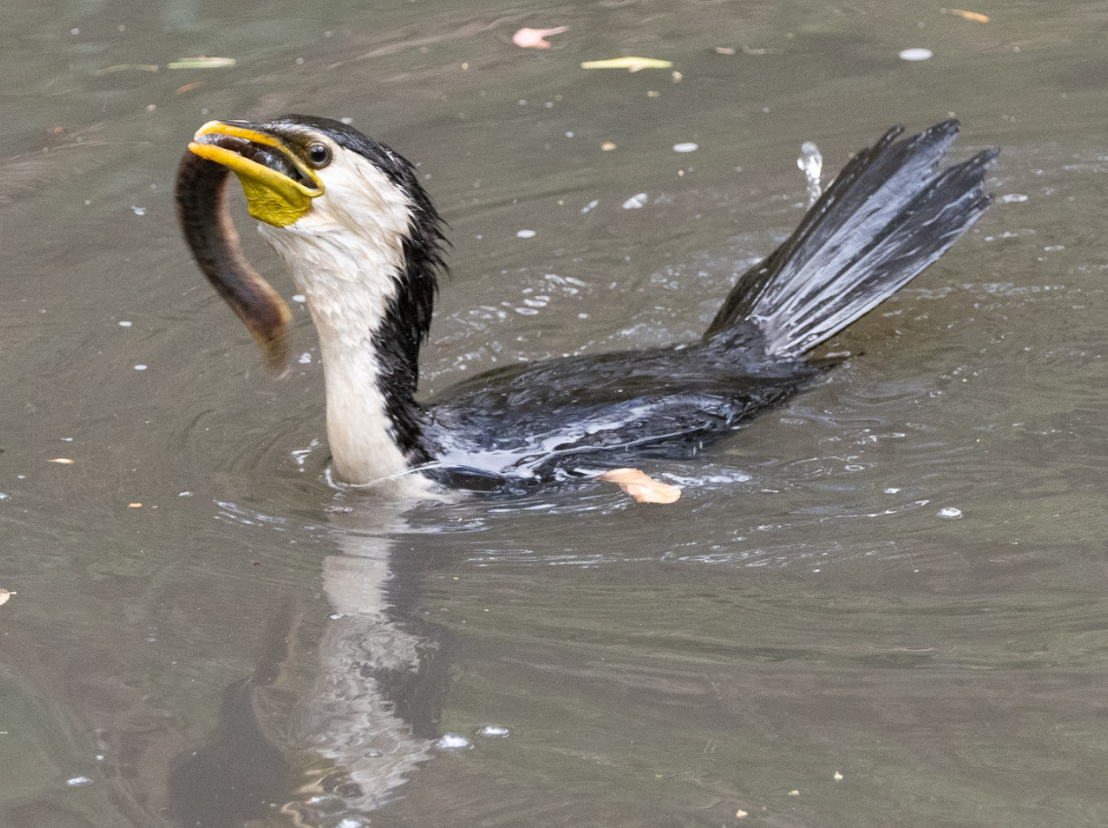
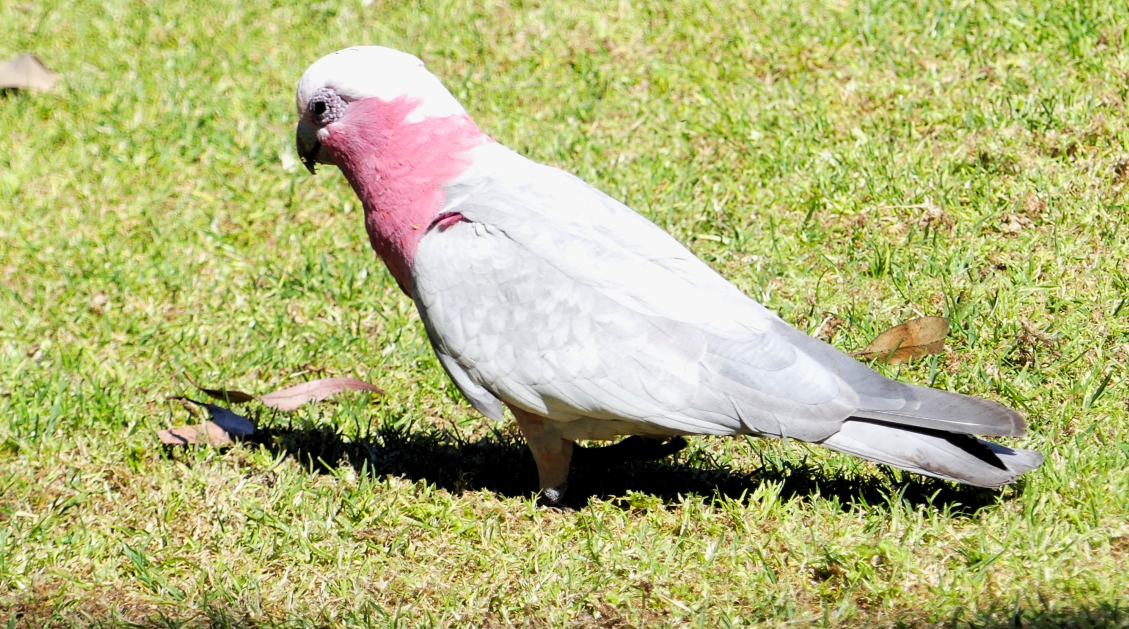
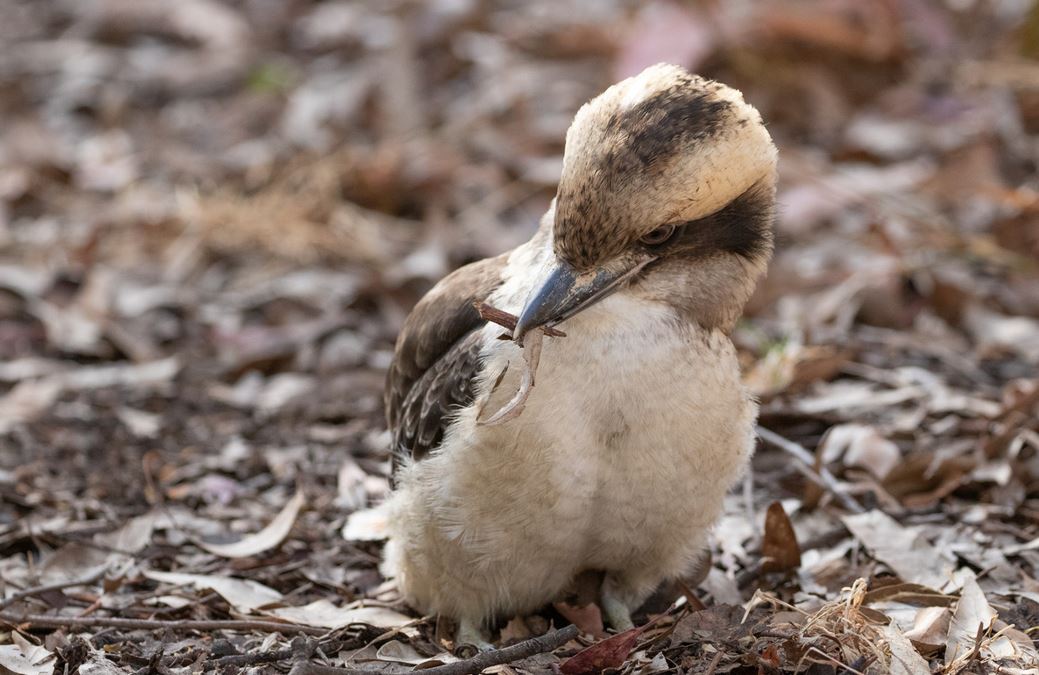
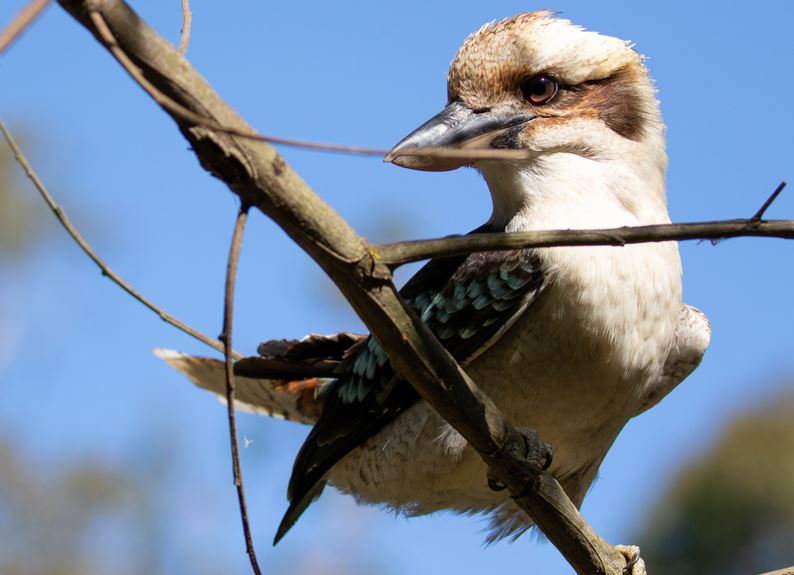
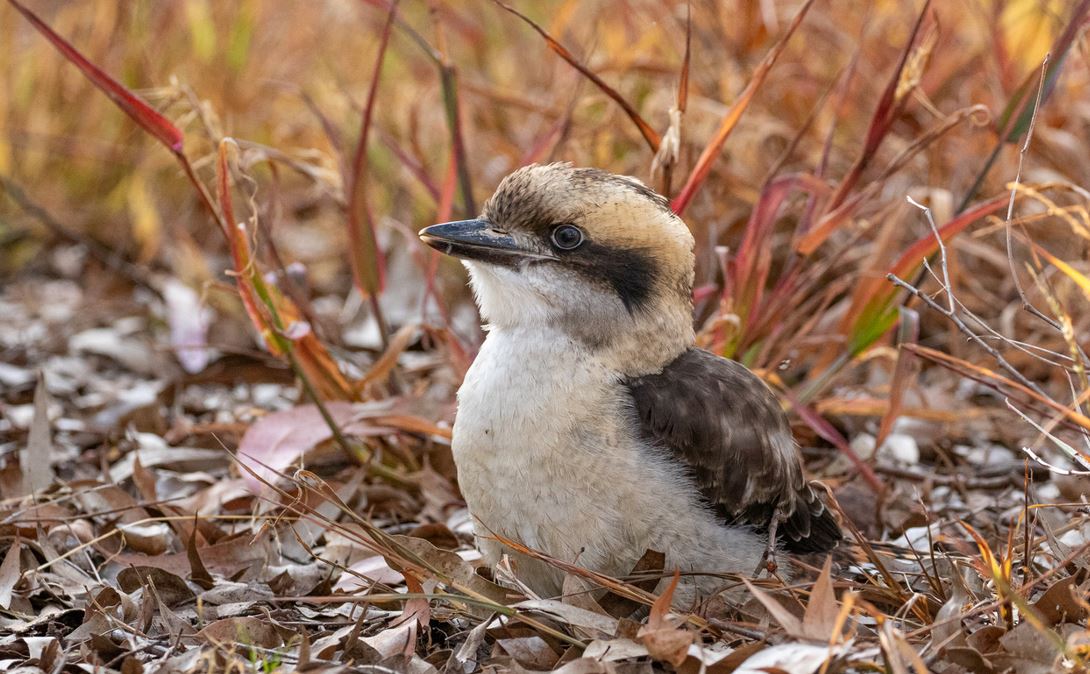
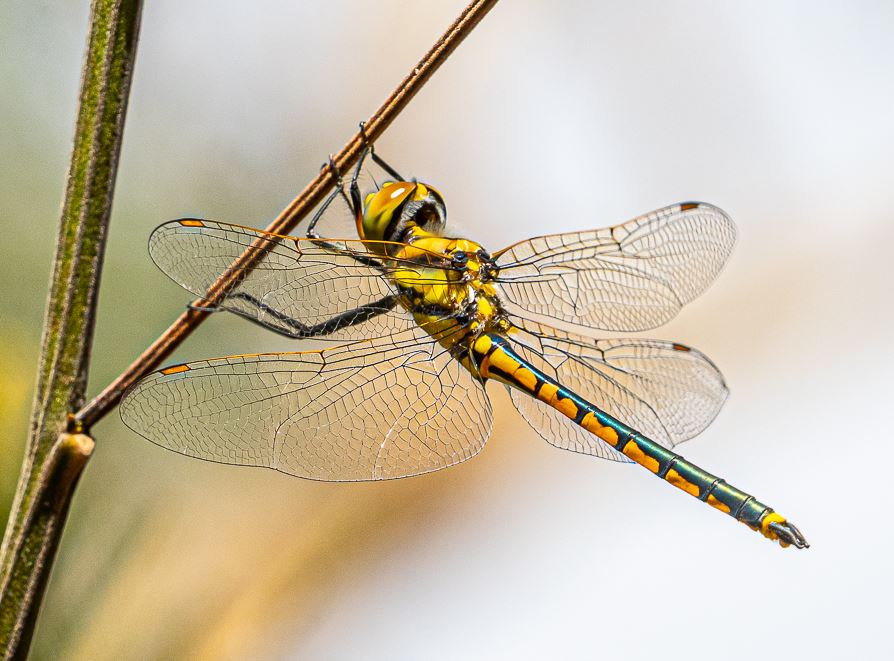
The gallery below shows a range of other sightings during the month from our regular contributors Greg, Russell, Lindy, Ken, Michael and other local photographers including:
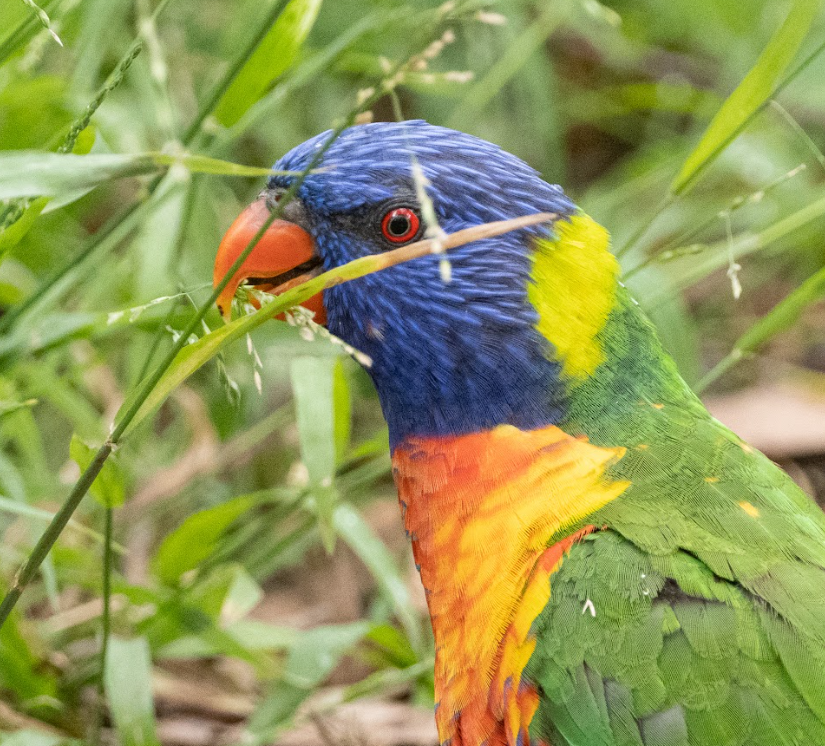
- A Rainbow Lorikeet feeding on Panic Veldt (weed) grass seeds – which we hope are not being returned to the park with a dollop of fertiliser! Actually, as Jane (one of our new Thursday Morning Team recruits) has pointed out – this is a weed often targeted for spraying by Council and contractors. The spray is non-residual and should not be a problem after a couple of days – but what happens in the meantime?
- A Common Flatwing damselfly, Austroargiolestes icteromelas. They are common all along the east coast of Australia.
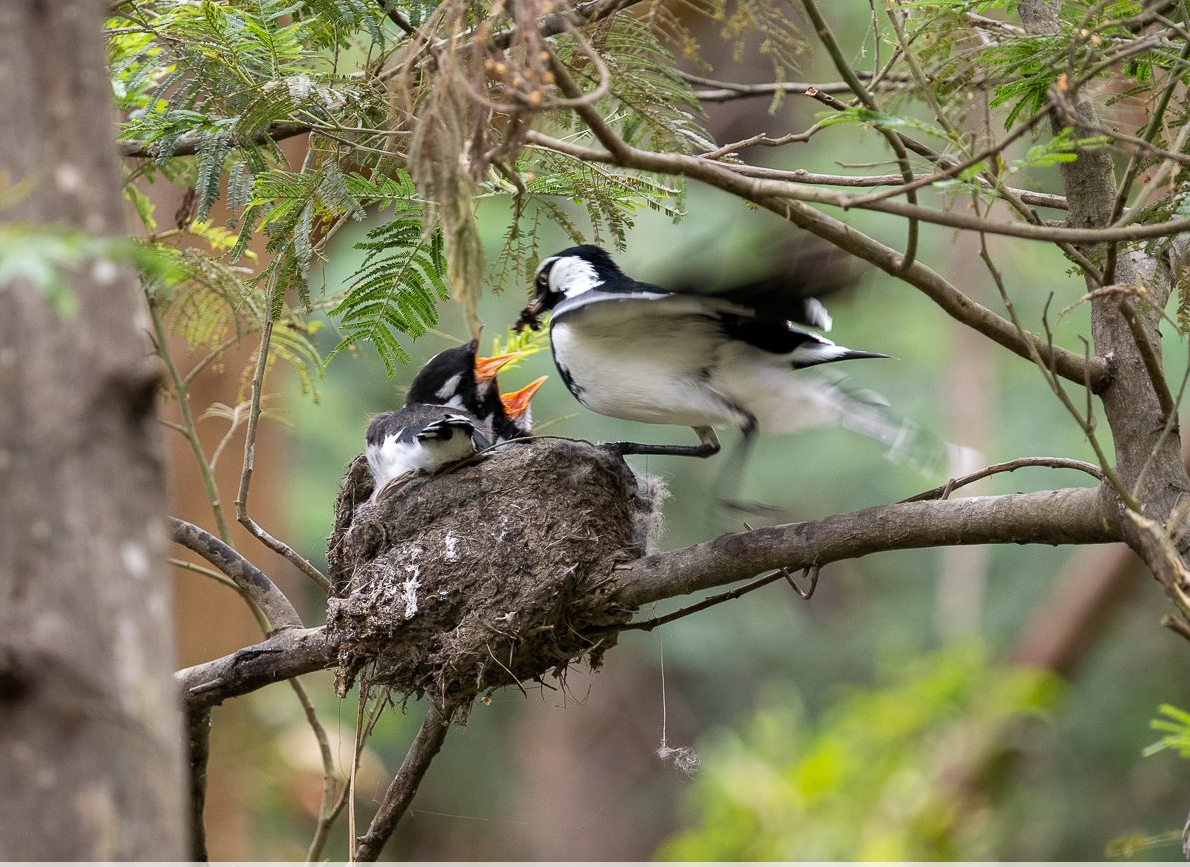
- A Mudlark nest with mum feeding a yummy spider to her young (26th October) followed by a shot of the same nest on 8th November.
- and many others including a close-up of a Tau Emerald dragonfly…

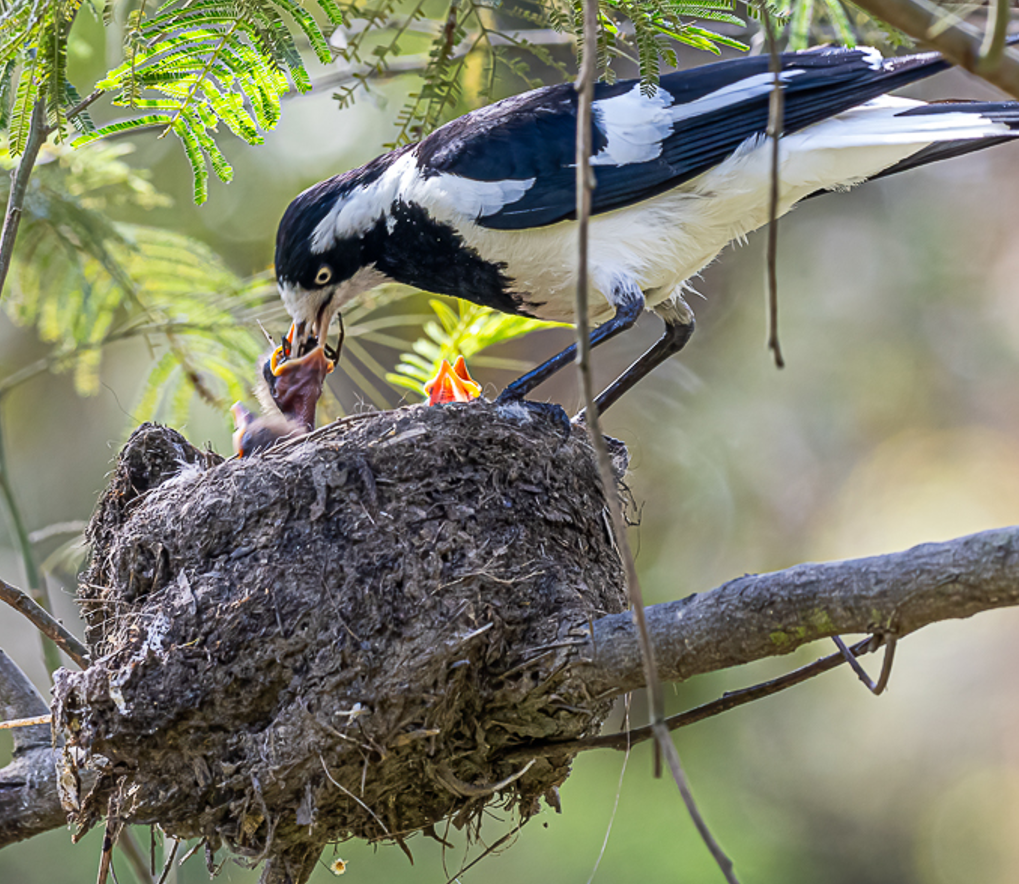
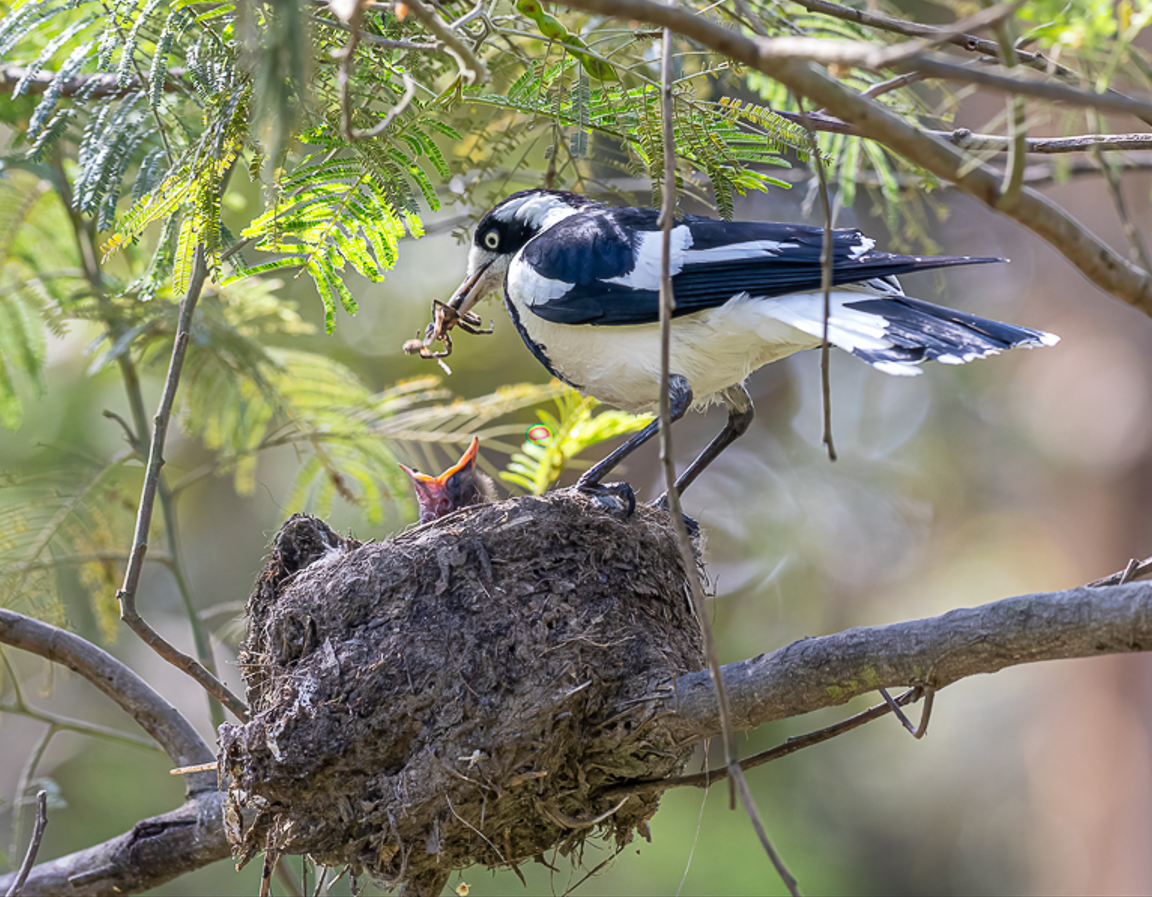
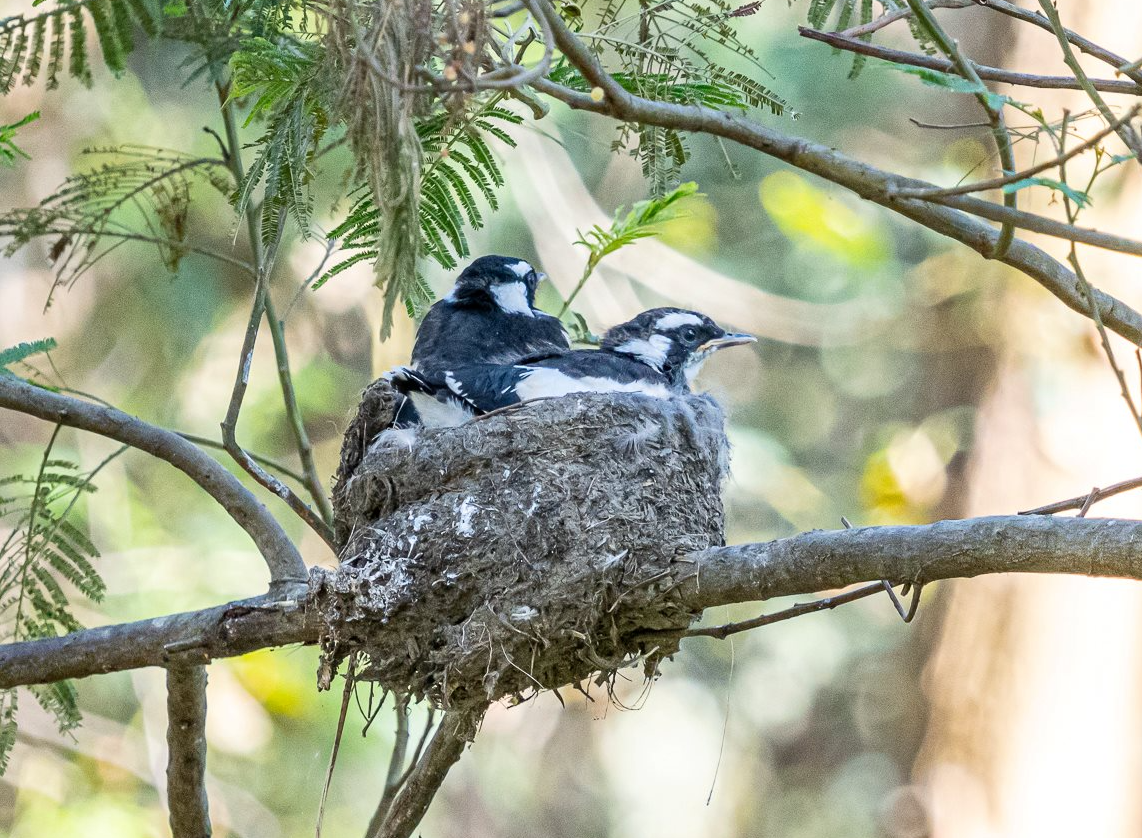
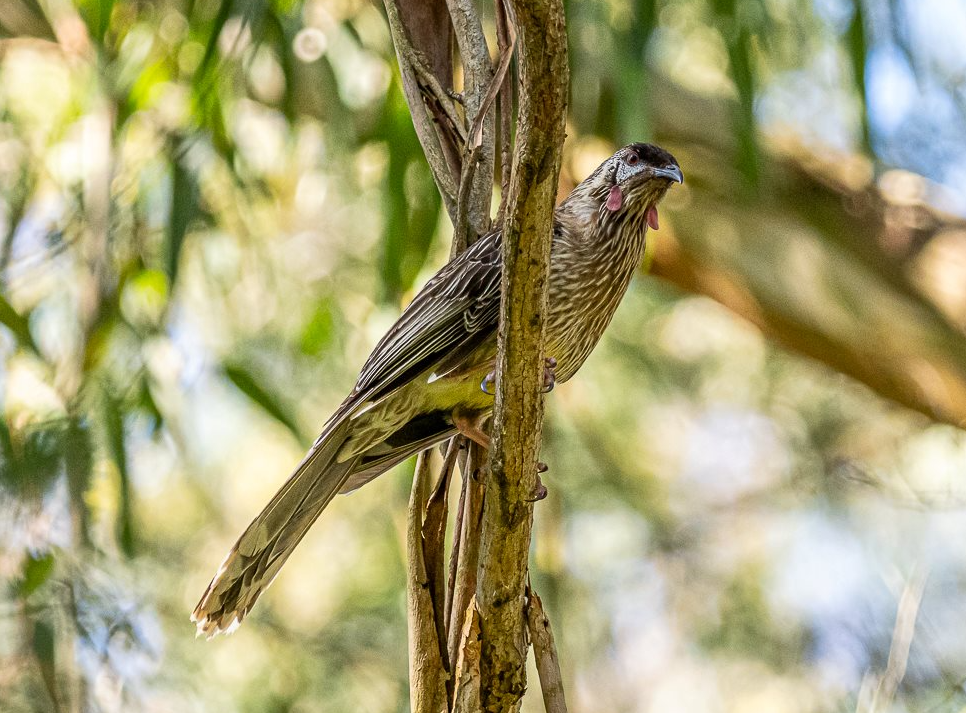
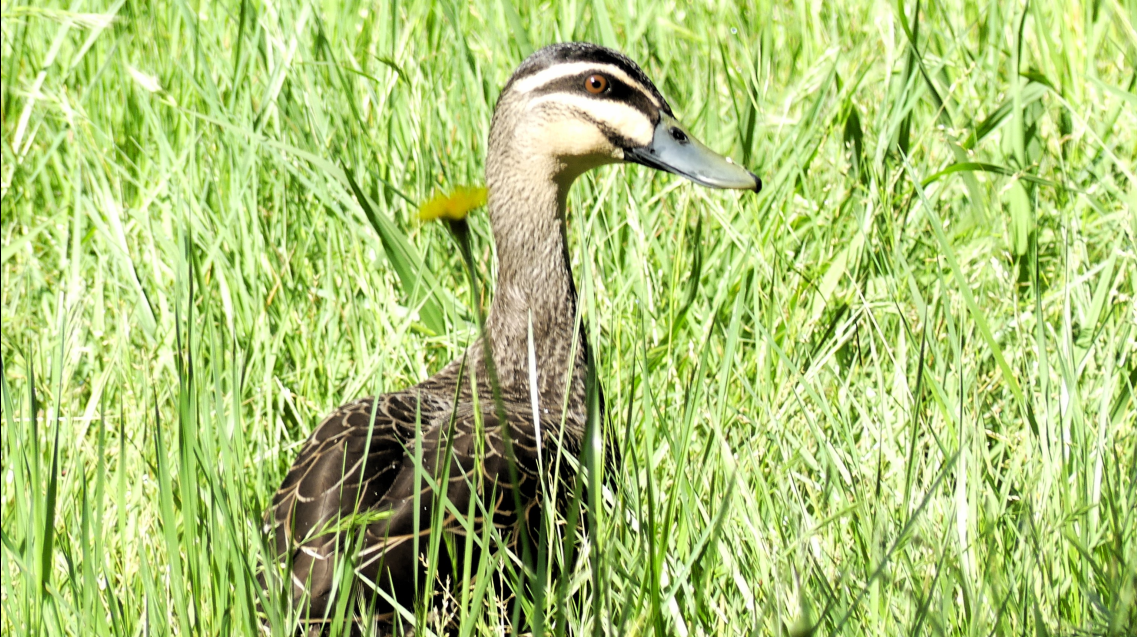
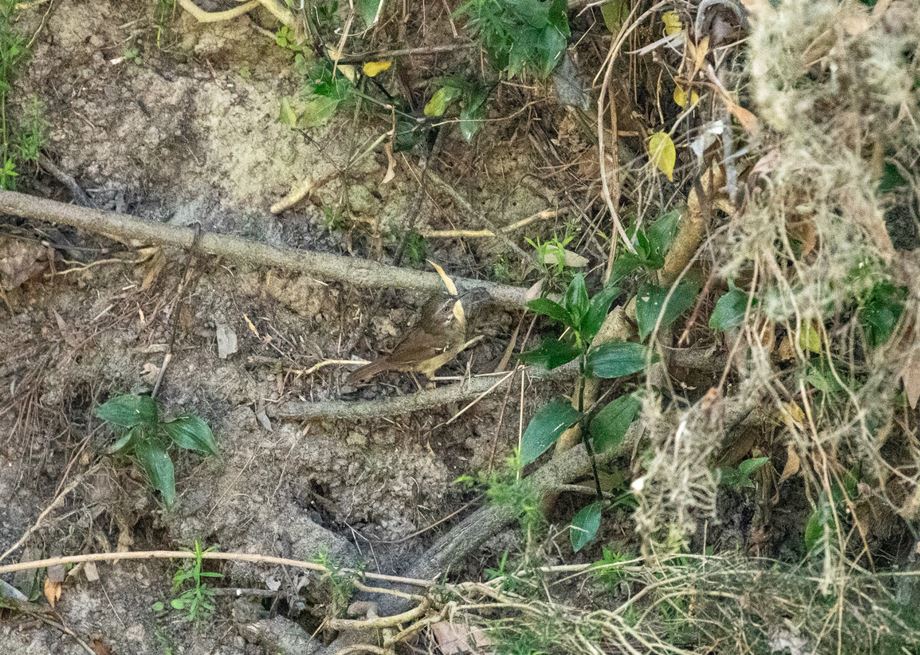
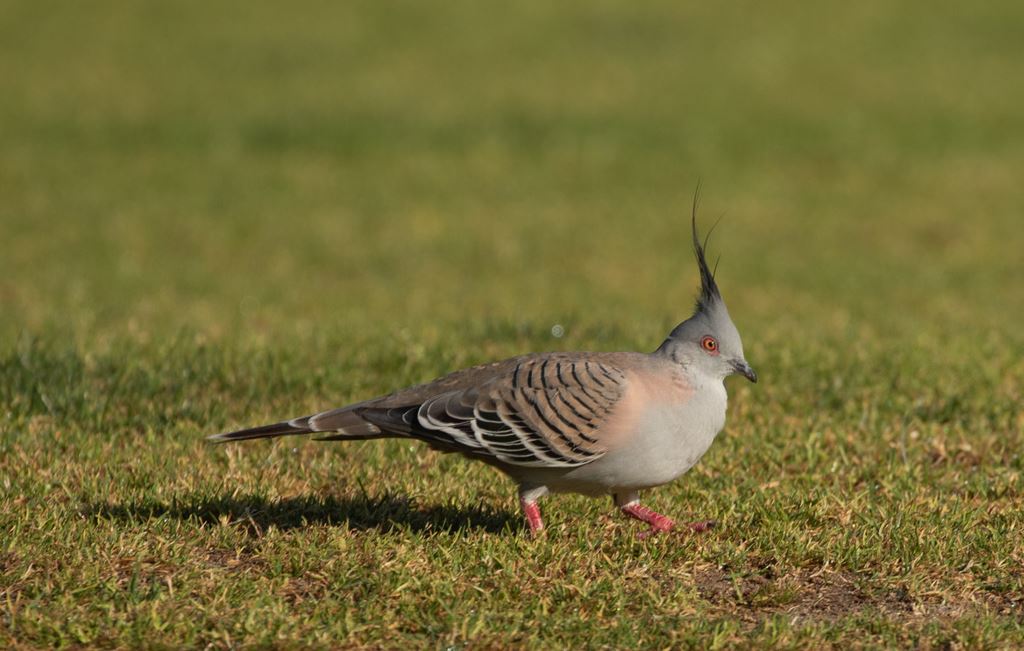
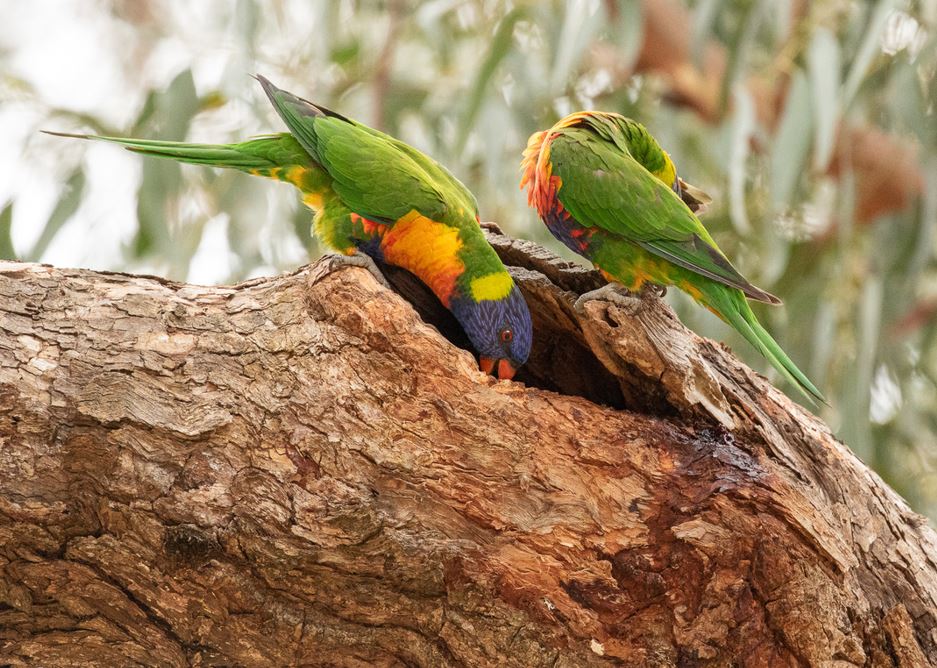
Please click to enlarge
Our babies poisoned ????
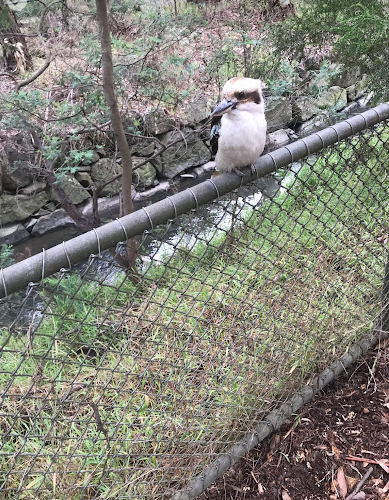
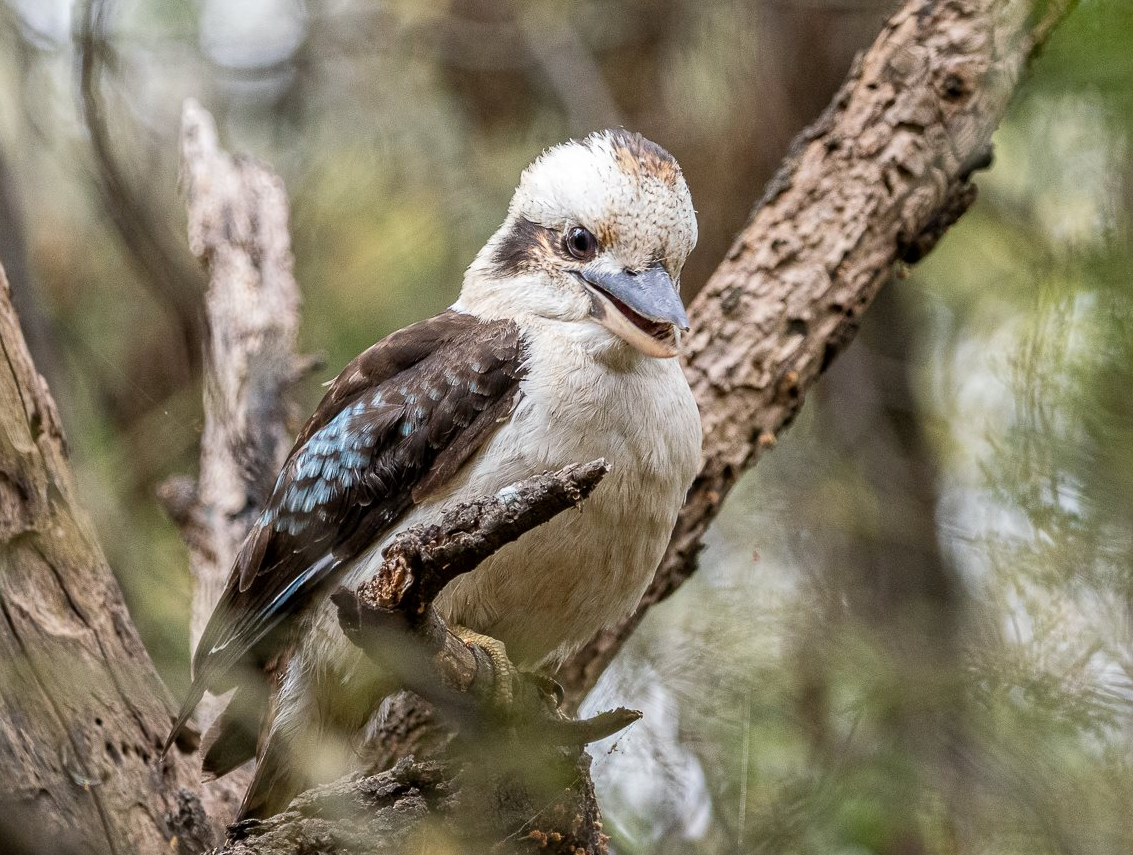
Further to our end-note in last month’s edition, Russell sent us some shots of a Kookaburra after it had hunted a rat. What happened next was important – the Kookaburra took the dead animal whole into the nest to feed what was thought to be a clutch of three chicks. There is a possibility that the rat had ingested SGARs (dangerous rat/mouse poisons) – such a rat might live for a week afterwards becoming increasingly easy prey for a Kookaburra with mouths to feed.
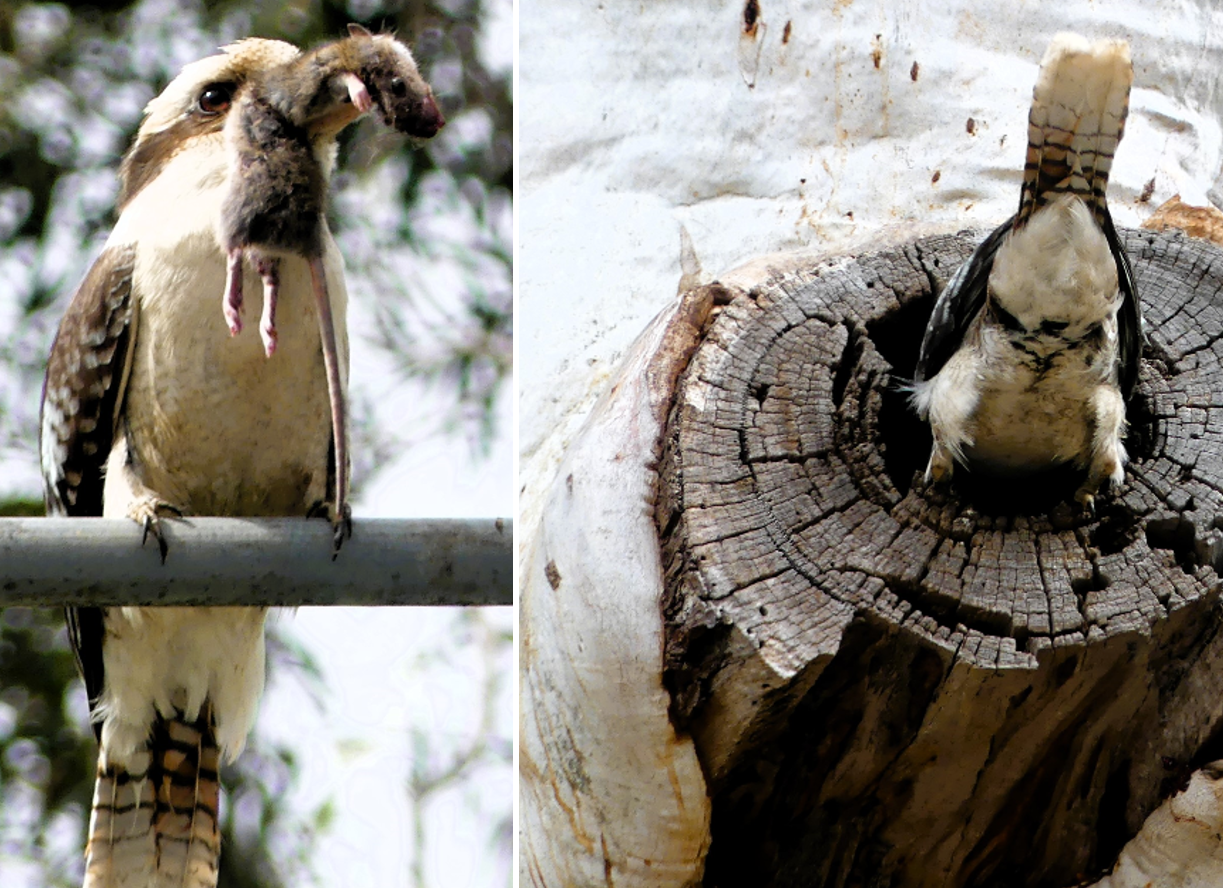
Russell’s evidence shows that these birds might be ingesting SGAR poisons from infancy!
Deakin Uni researchers are still actively looking into the extent of SGAR poisoning in Tawny Frogmouths and other night birds such as owls. If you happen to find a freshly deceased Tawny – please let us know and we’ll arrange for the corpse to reach the researchers for analysis.
Please see our July article for further information on which rat poisons to use to avoid adverse impacts on wildlife.
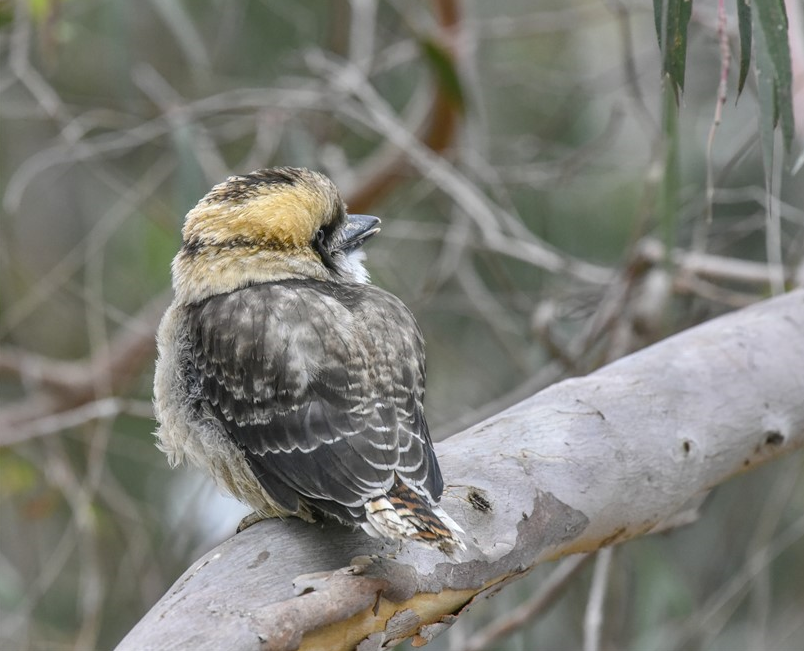
*A fledgling is a young bird at an in-between stage – between being a chick wholly dependent on its parent(s) and a juvenile largely supporting itself. It has grown enough to have flight feathers and is preparing to care for itself. It might have left the nest but not yet have all its adult plumage and might still be being fed by parents. In birds, the stage only applies to “altricial” species (born in an immature and helpless state eg parrots, Kookaburras) but not the “precocial” (born in a relatively mature and mobile state eg ducklings and Buff-banded Rails). Of course, humans are the best-known altricial organism to most of us!
Rocket Power ?
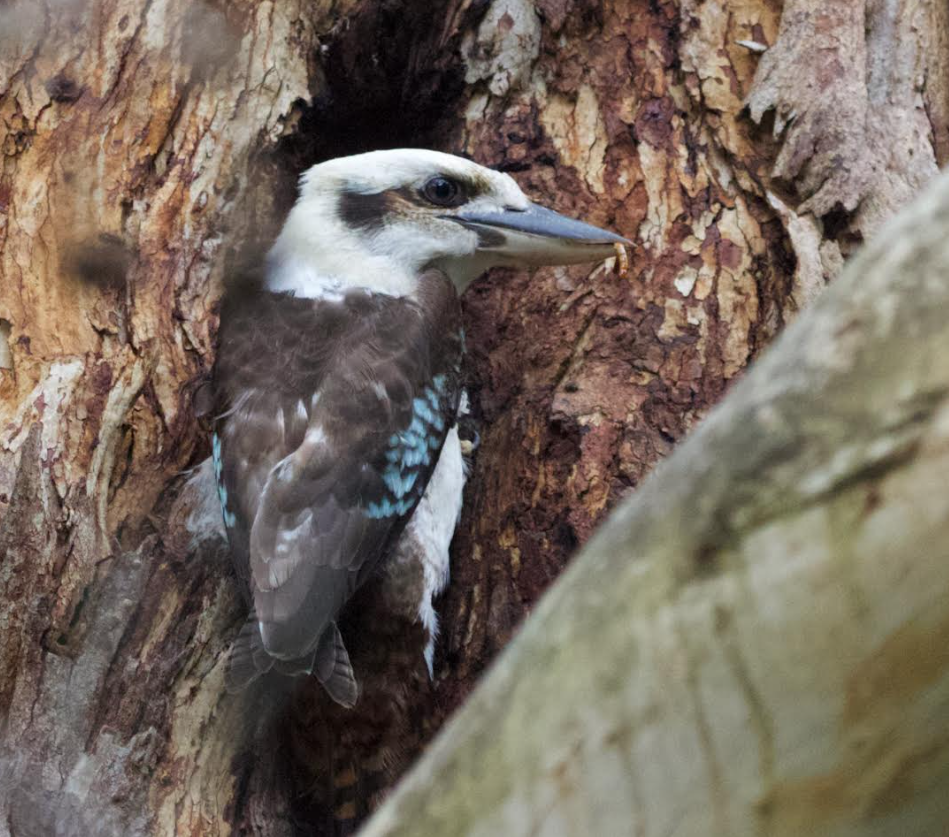
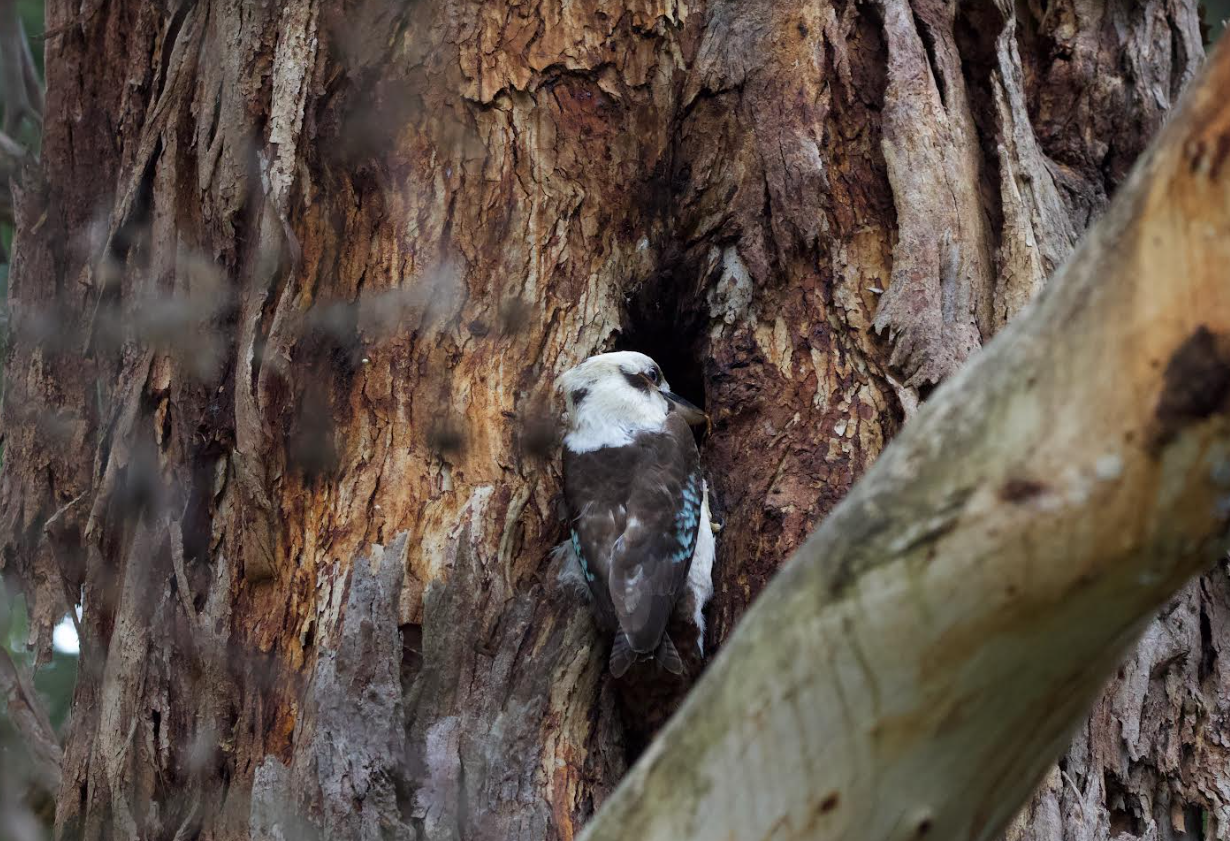
When looking at a Kookaburra’s approach to the nest hole to feed its young, there’s not a lot of shoulder room for the bird to manoeuver as you can see:
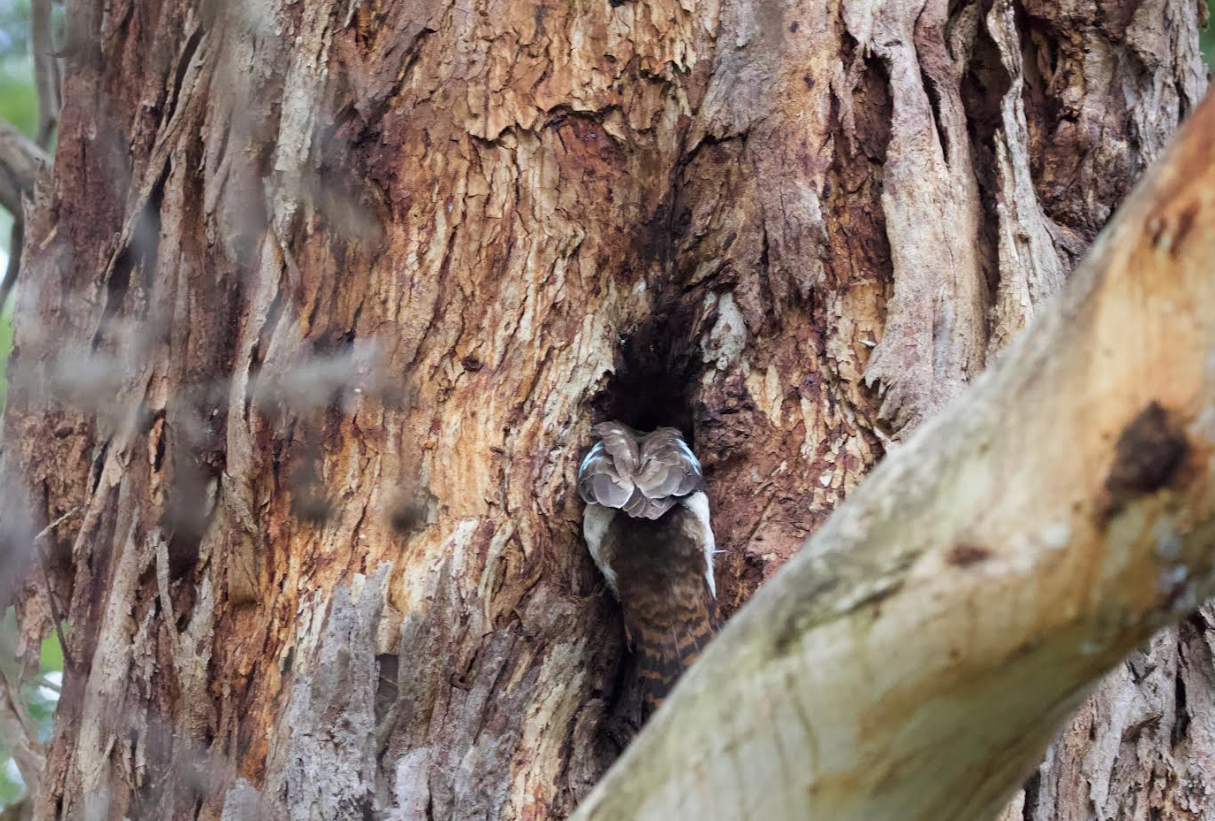
Please click image to enlarge
We wondered if a kookaburra would sort of “flop out” of the nest hole on its return journey out of the nest hole – because there would not seem to be much space, for example, to start flapping wings for take-off does there ?
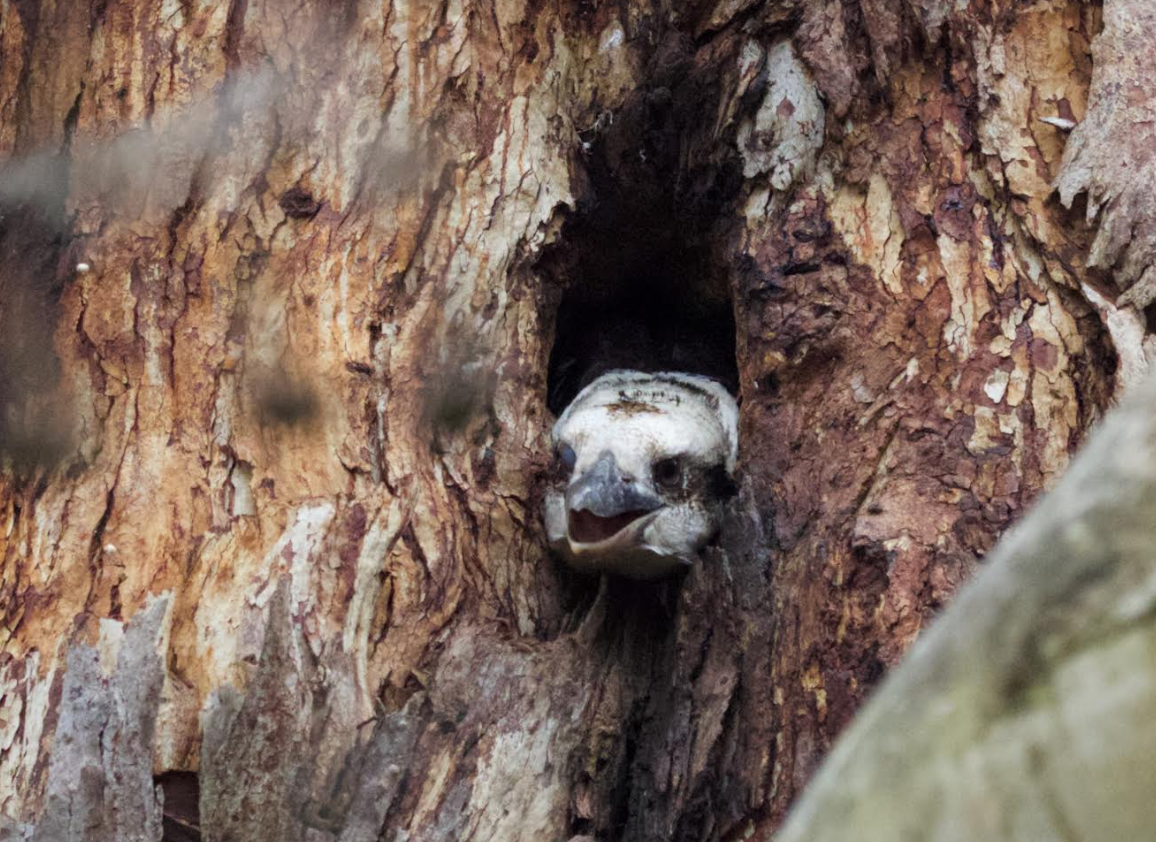
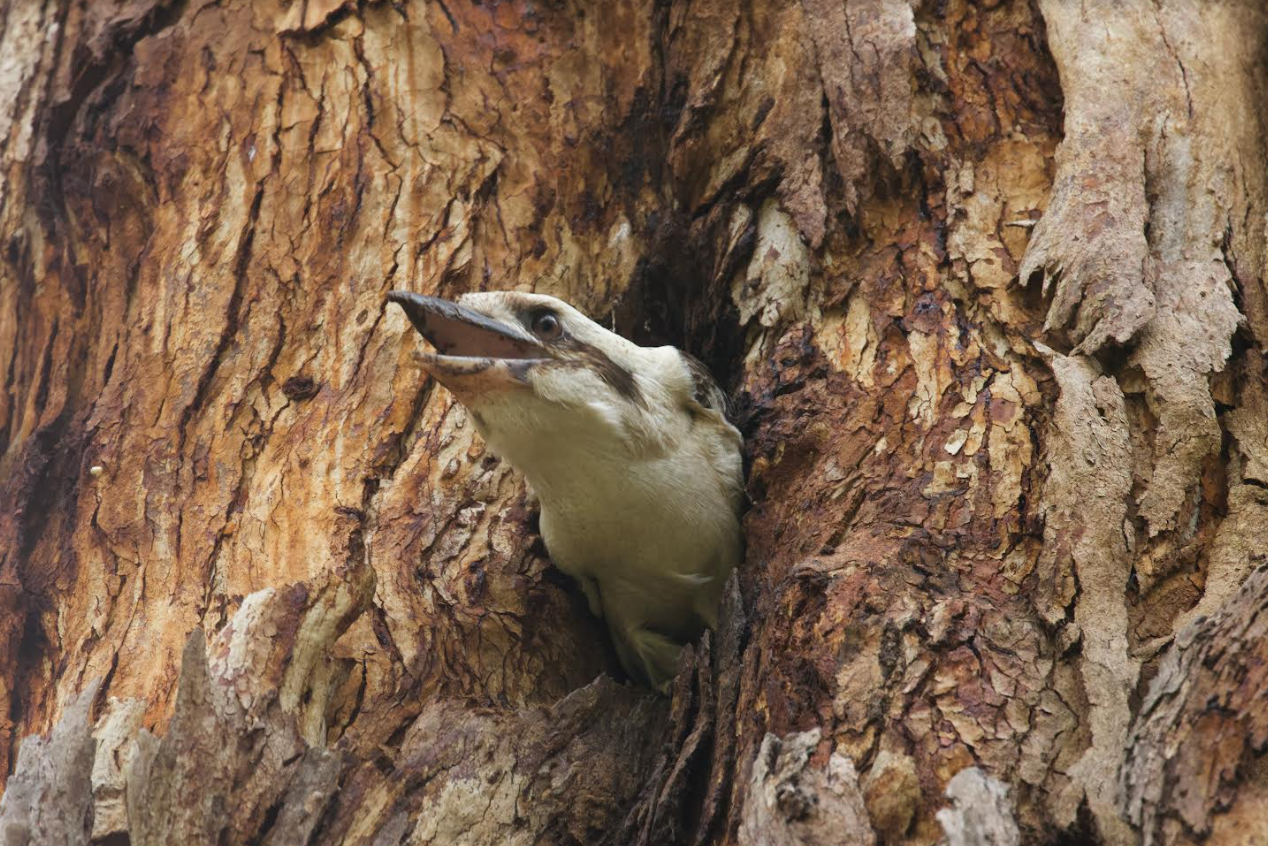
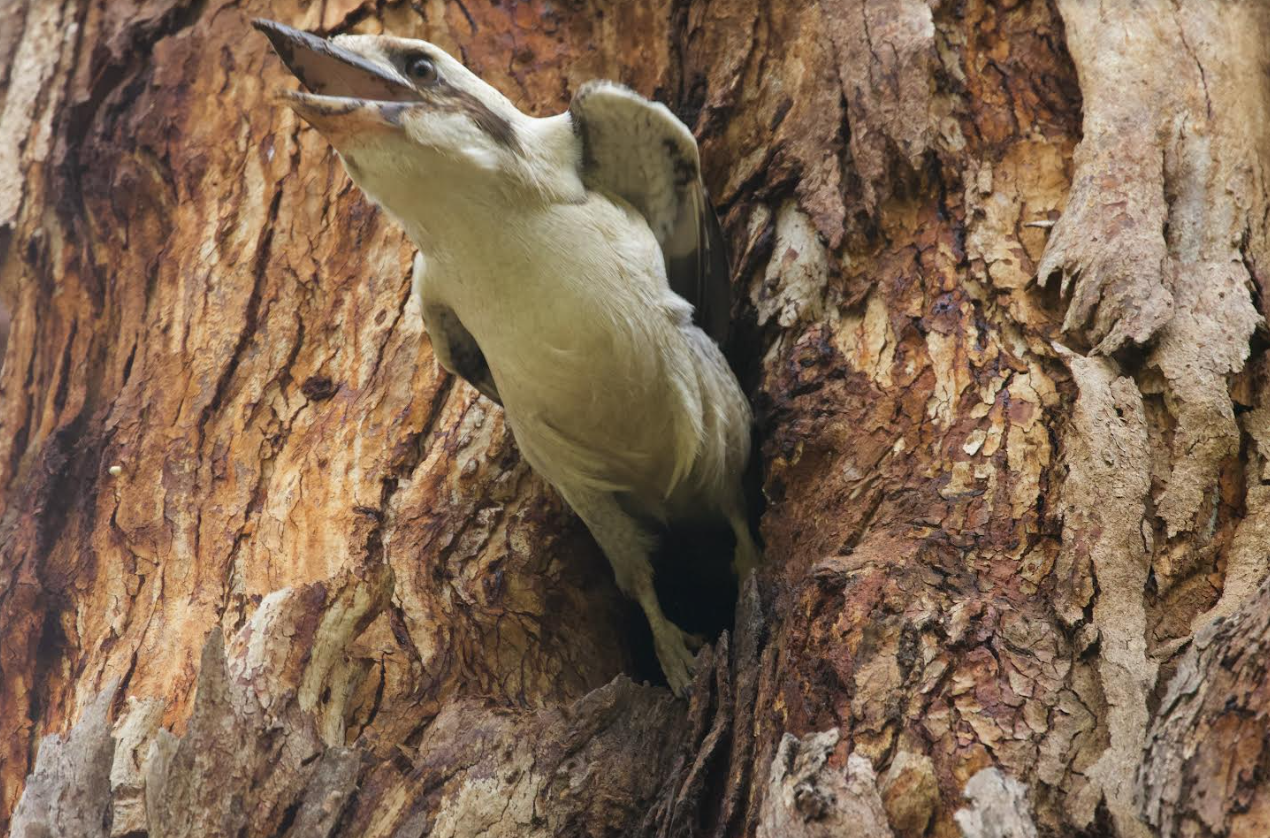
Please click image to enlarge
However, the bird seems to rocket out of the nest hole – the trick must be in a kick-off ?
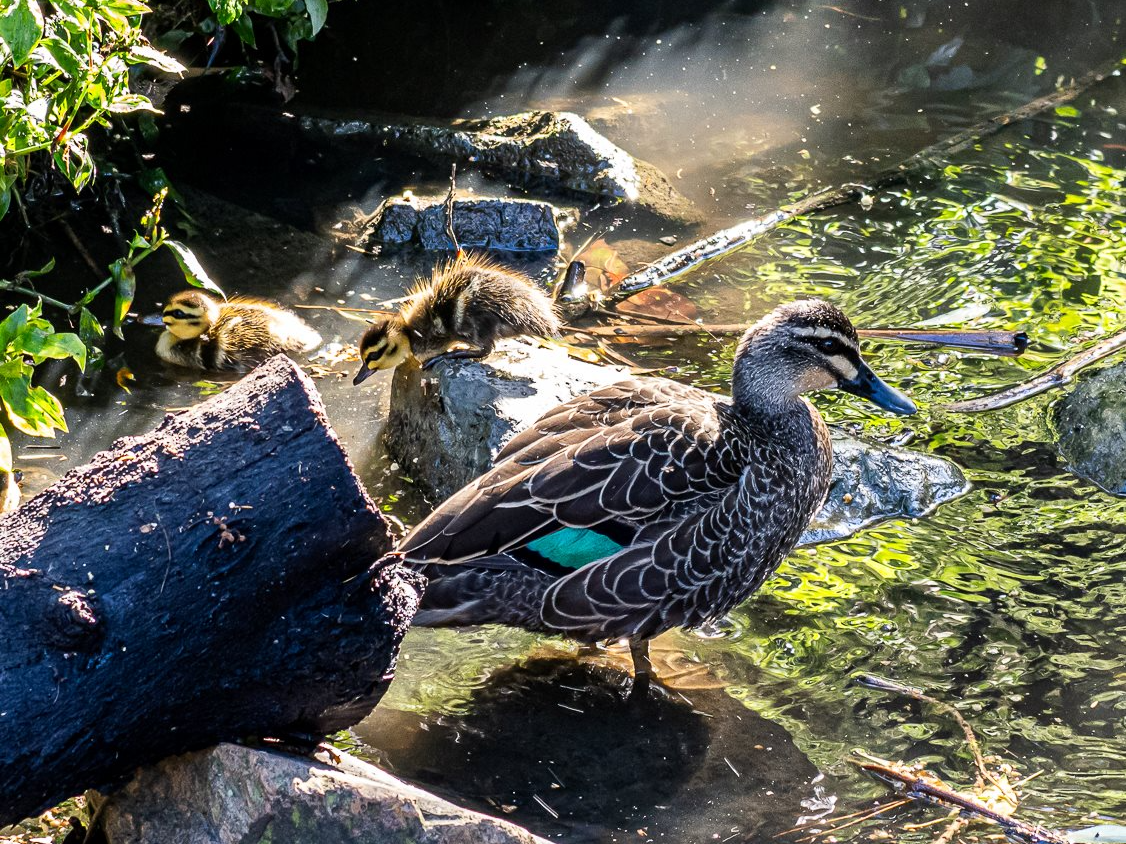
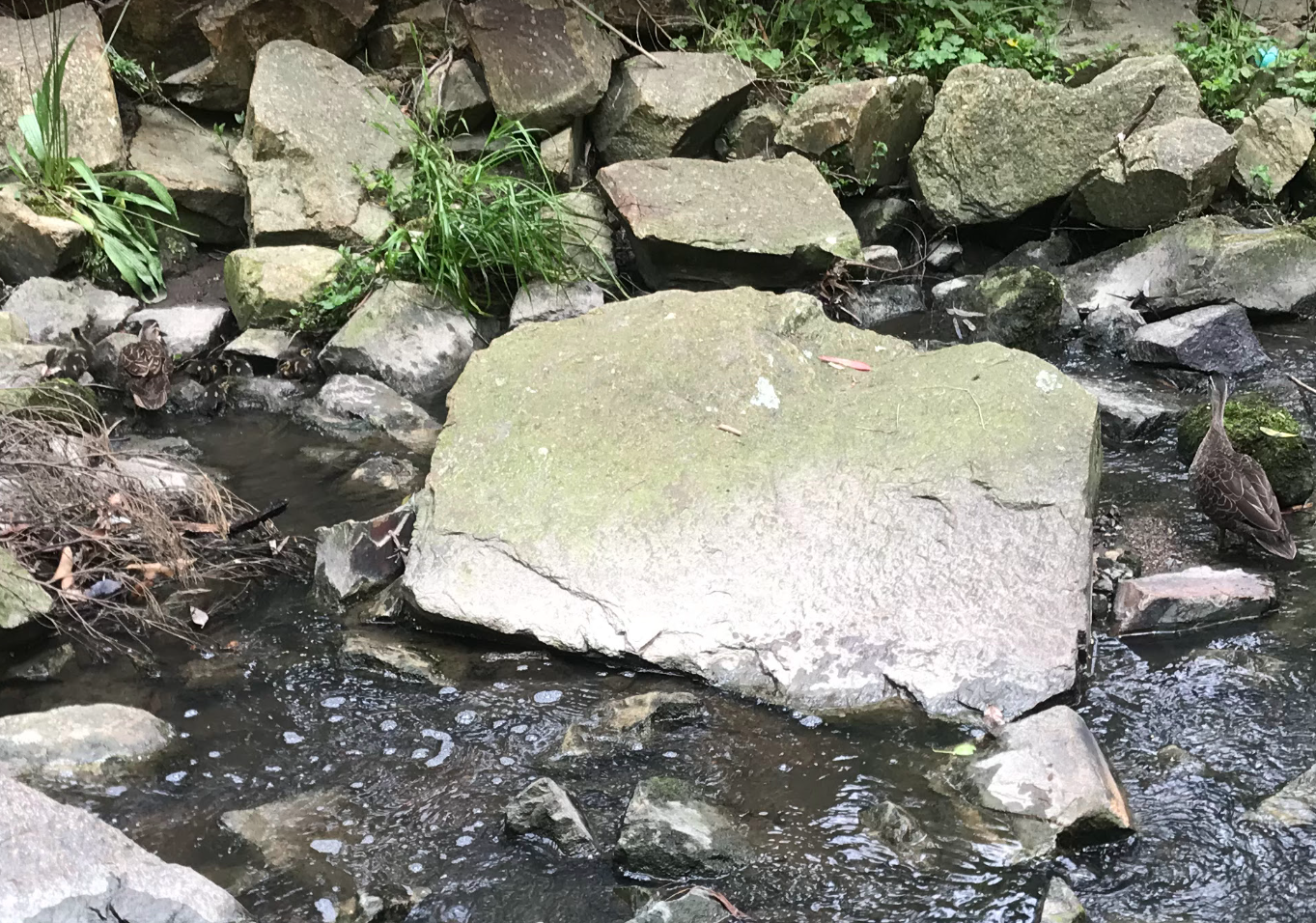
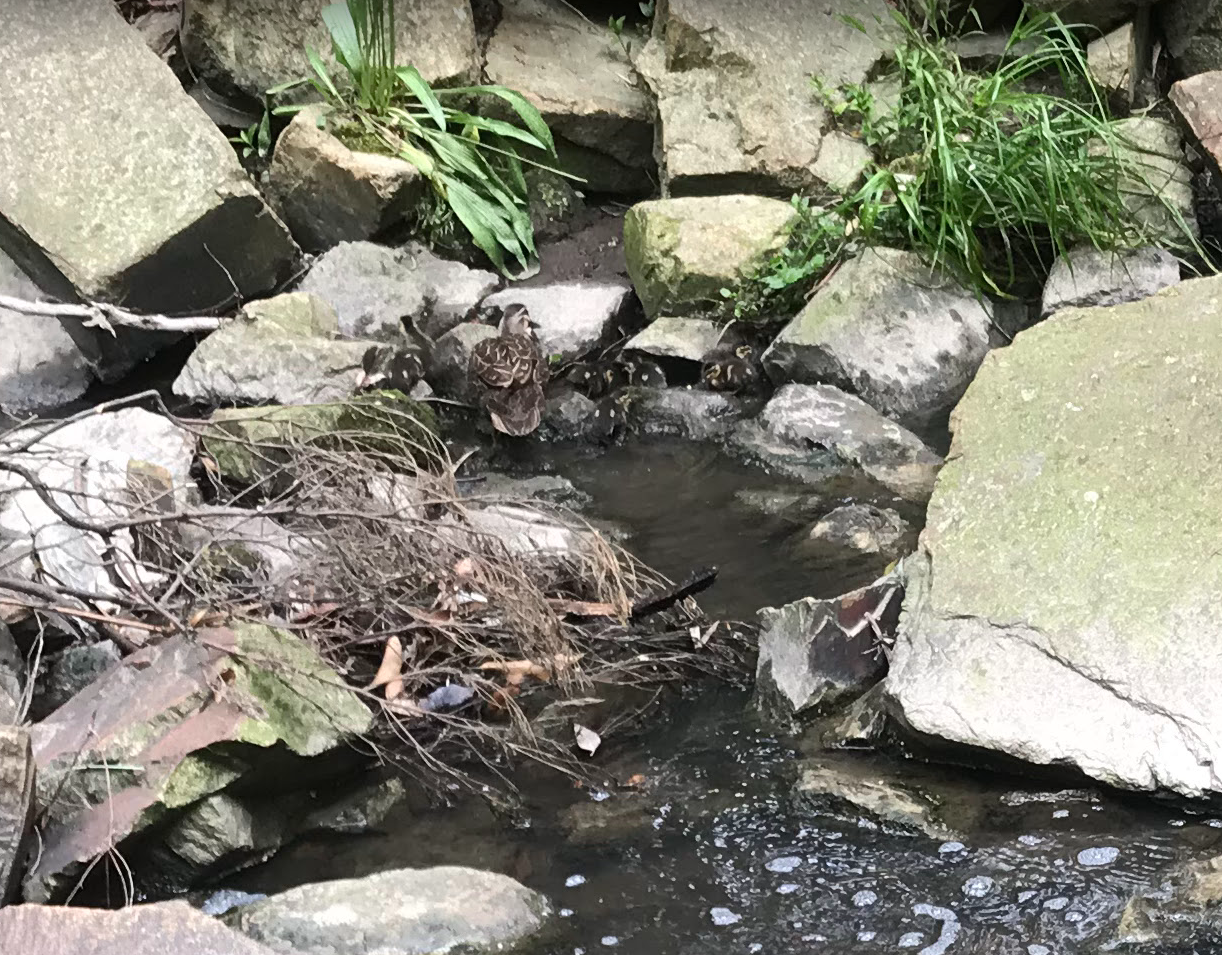
In our September edition, we told the sad fate of a duckling who was straggling – at the hands (wingtips?) of a Pied Currawong. It may be that known predators are not the only threats to the ducklings. Graeme, one of our Thursday team was doing some maintenance work close to the creek bank when an unusual event occurred – in his words,
…on bank below bridge a mad flurry of ducks came past. Seemed the mother duck was protecting her ducklings from a violent father or a threatening alternative mother. Anyway, she took her ducklings over into the rocks and chased the [marauding duck] offender away. You might be able to see her and 7 ducklings to the left of the large flat rock.
Corridor News
Gang Gangs breeding in Blackburn?
There is evidence that Gang Gang Cockatoos are breeding in the traditional Bellbird area adjacent to our park – possibly, for the second year running.
This is great news given that the species has become endangered due to habitat loss in its usual breeding places due to major bushfires. The video shows an immature male Gang-gang cockatoo perching on an upper canopy branch in a mature eucalypt growing in a suburban garden adjacent to Gardiners Creek, also known as the KooyongKoot creek. A nearby female Gang-gang Cockatoo was seen when both Gang-gang Cockatoos flew further downstream. The mature trees in suburban gardens provide vital links with local suburban parks creating wildlife corridors. Our thinking is that the young male was hatched in the vicinity.
Birds at Blackburn Lake
We confess we are often jealous of the wildlife visitors to Blackburn Lake (a little upstream from us) – testament to the beautiful environment there – including its large body of water and wonderful wooded areas…
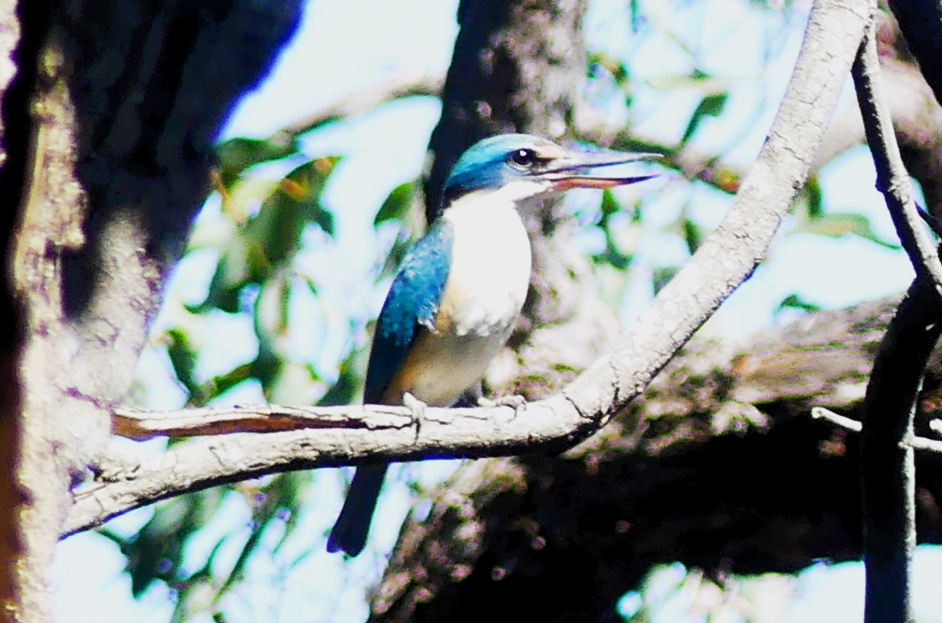
Russell has spotted some interesting species at Blackburn Lake – that just might fly down the Corridor to visit us.
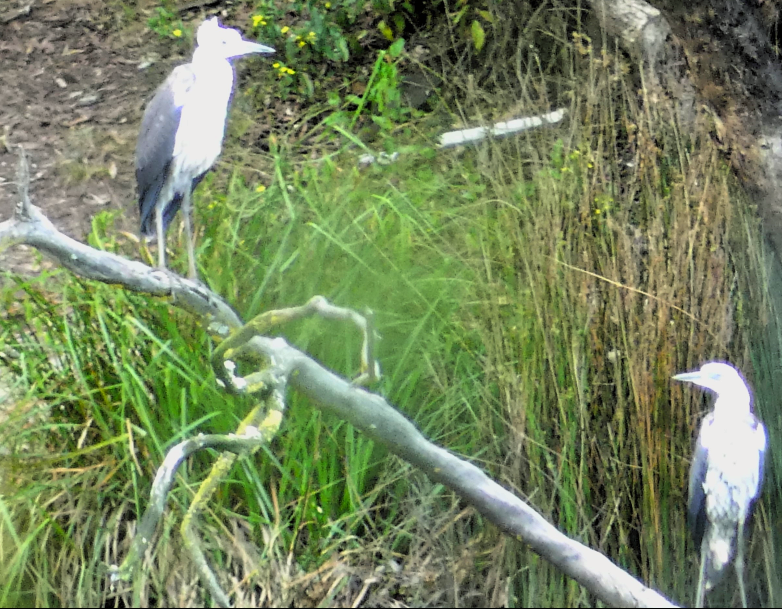
We have had visits from the Sacred Kingfisher above (even breeding locally) and White-necked Heron (at left) in the past – but neither in the past ten years – apart from a dead Kingfisher found nextdoor to the park in October, 2020.
On the other hand, the White-faced Heron (which has a grey neck) is quite commonly seen and often nests around the top of the Laurel Grove hill.
Please keep your eyes peeled!
Sacred Kingfishers are partially migratory – after breeding in the south of Australia, they migrate to Australia’s north, Melanesia and Indonesia. Birds move south again in August and September to repeat the breeding cycle.
By the way, the “Sacred Kingfisher” does not refer to Egyptian religious beliefs as per the Sacred Ibis. Rather, the name can be traced back to an 18th century description of the species (found in Australia and Melanesia) and also the “Respected Kingsfisher” of the “Friendly Isles” (Tonga), and the “Venerated Kingsfisher” of the “Society Islands” (Tahiti et al). It was claimed that all three kingfishers were venerated by the locals because they frequently inhabited human burial grounds. It seems “Kingsfisher” is a contraction of “King’s Fisher” which eventually became further abbreviated to “Kingfisher”.
 Blackburn Creeklands
Pingback: Park News, January 2024 | The Blackburn Creeklands