Events coming up:
- Blackburn Creeklands Working Bee: Sunday 1st September 09:00-12:00 – Wattle Day
- Gardiners Reserve – from our KooyongKoot Alliance allies – the Urban Guerillas:
- 11 August 10 am – 12 Noon 1st Planting
- 8 September 10 am – 12 Noon 2nd Planting
- 15 September 10 am 12 Noon. 3rd Planting
Volunteering
With two community working bees of our own in July celebrating NAIDOC Week and National Tree Day respectively, as well was significant events elsewhere in the corridor (eg the regen project at Blackburn Lake to our east on Sunday 21st July and mass plantings along Gardiners Creek to our west for National Tree Day), volunteering is a recurring theme this month.
Volunteering is not only good for the environment and for ourselves, both mentally and physically – unsurprisingly it turns out there are significant financial benefits to our society as well! DEECA’s “dashboard” for last year shows this well:
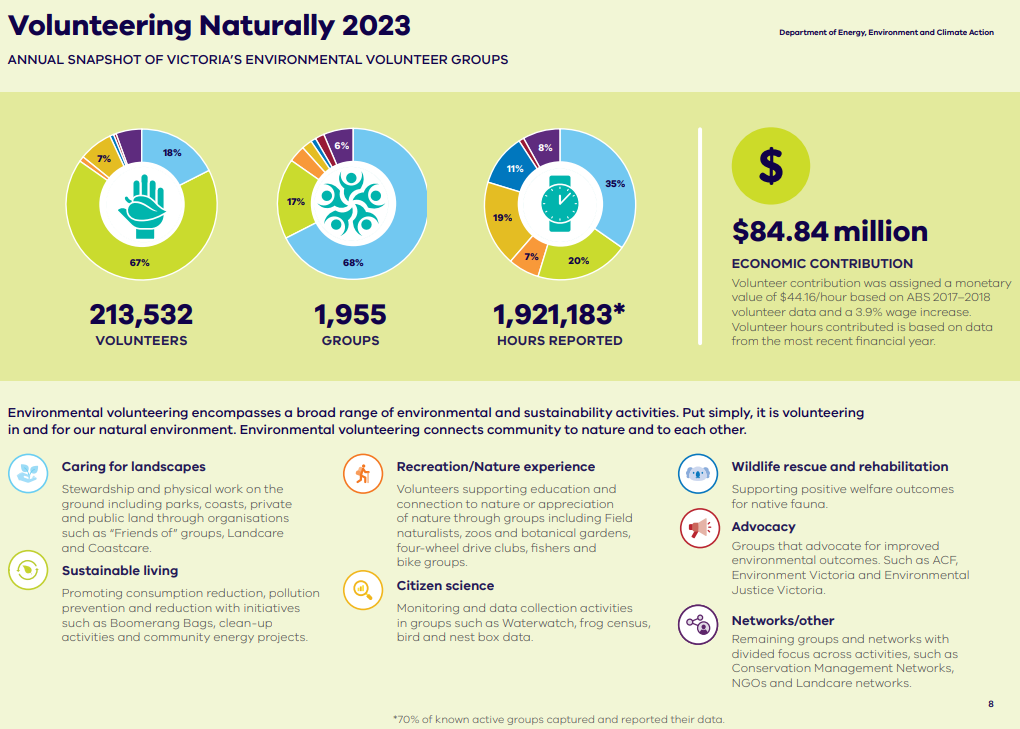
The fine print says that 70% of known groups report their data – so this is significantly under-estimated due to under-reporting and the work done by groups not known to DEECA. It would be safe to say at least $100 million per annum!
AGM Report
Our AGM was held ahead of our regular meeting on Tuesday, 23rd July. Our AGMs are usually routine events quickly despatched once the formalities are observed. Little did most of us know that we were in for some surprises this year…
Finance Report
We were very sorry to see Andrea, our long-time Treasurer, resign from Committee. She presented her final annual report following her 15 years on Committee including 13 years’ service as Treasurer. Andrea had amazing success at winning grants from agencies such as Melbourne Water and Council which fund most of our work in the park.
Andrea has left us in a strong financial position with good systems in place for managing our accounts efficiently going forward.
Committee Membership – Help!!!!!

Obviously, Andrea’s departure leaves a significant vacancy on our Commitee.
Unfortunately, we were unable to appoint her successor as Treasurer at the AGM.
We need another 3 or 4 people at least on our Committee – please help if you can. No special skills are required – we need people who can work for our local environment.
Council appointed our committee members last year for a three year term. That included several reappointments – but we did lose some very experienced members during the transition to the new committee. Unfortunately, another two of our members, appointed for the first time last year, cannot now continue. We are very concerned that the resulting situation means our Committee numbers are becoming too low to for us to continue to function viably.
Please let us know if you could volunteer in some capacity – whether it be on our Committee, or working in the park, or in community education/citizen science – or something we haven’t thought of! Please call John on 0411 14 2731 if you need further information.
Community Engagement
Our associated group, the “Friends of the Blackburn Creeklands” are people and families who register with us to receive this newsletter and other notices about events or alerts in the park, educational material and so forth. Many of our “Friends” also volunteer for working bees and the like.
Friends Group Growth
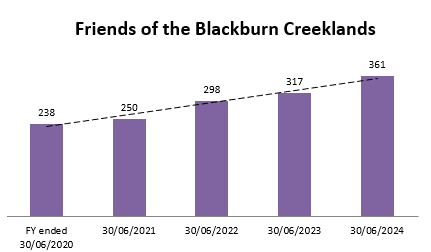
As at the end of the 2023/2024 fiscal year, the trend shows we are continuing to grow by 30+ “friends” per annum on average. Obviously we have some natural attrition as people leave the area or change e-mail addresses, so we must have averaged 35+ new registrations per annum.
Some new folks come from our events like the bird surveys or community working bees – others come from referrals from their personal friends and family, etc.
If you haven’t registered already – but would like to, please visit our Friends page here.
Web-site
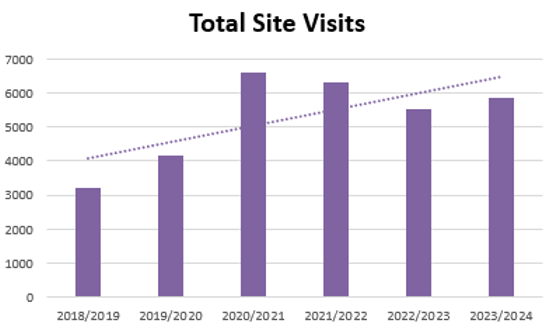
Our web-site and its associated Facebook page form an important communication channel with the community. We measure web-site usage by “site visits” rather than by single page “hits”. The latter are overly influenced by photo gallery activities (each photo viewed counts as a page “hit”) which means the content for any month can skew the activity reported.
Over recent years we have generally seen growth on an annual basis – excepting during the Covid lockdown years where there was significantly higher activity. Those years pull the trend line up over “normal”.
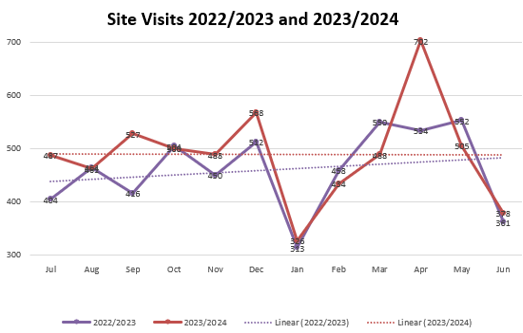
Comparing this year to last on a monthly basis, the trends indicate that our web-site usage may have plateaued at the level reached last year. The spike in April is probably due to our 40th birthday edition which included the on-line quiz.
Community Working Bees
Despite the continuing improvements in engaging new “Friends” and increasing our reach into the community via the web-site, we have to admit disappointment that we are not engaging as many new people and families in our Sunday Community Working Bees as we’d like.
At the same time, the reduced numbers on Committee make these events harder for us to run – notwithstanding the support we get from our regulars and ex-Committee people. Although our events have been successful in the sense of developing and regenerating the park (see the two reports below), they are clearly less so in terms of developing engagement with the community.
We realize modern life is complicated and Sunday mornings may not suit everyone – so we would welcome any feedback on how we can improve this side of our community engagement.
Sunday Community Working Bee – NAIDOC week report
We were not only treated to a beautiful day complete with blue sky after a cool start at our NAIDOC working bee on 7th July – the cold snap had been broken at long last – but also a great turn-out of people braving the early morning. Our special thanks go to Hugh and Megan for water supplies and to Anthea and Evelyn for the wonderful morning tea – not to mention our 20+ volunteers – some are shown below.
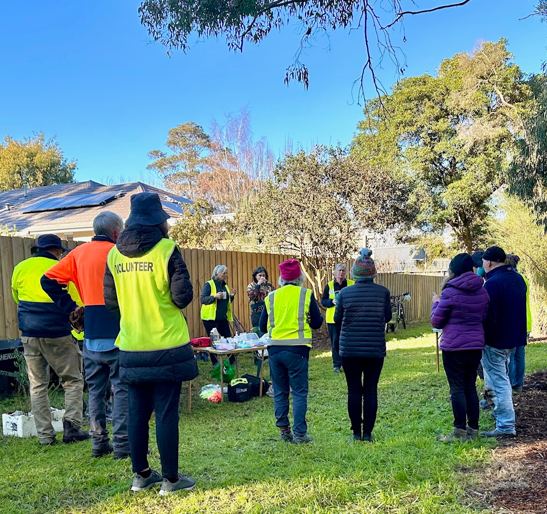
It was great to have new participants (eg Bob), the return of new people from the first 2024 community working bee, former Committee members (Lisa, John and Nic) join the rest of our team of regulars – planting, enjoying Megan’s talk on indigenous plant usage with morning tea and then having a great hand-weeding session with many hands making light work of one of Council’s future plots.
We actually planted some of the plants Megan spoke about and could see others recently planted nearby by Council. The uses discussed included food, medicines, padding, weaving, ….
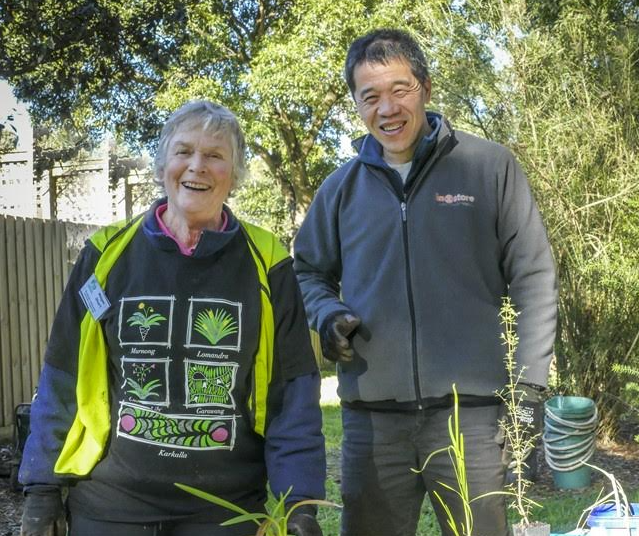
Megan’s tee-shirt shows Murnong (Yam Daisy) and Lomandra which were planted on the day – as well as Chocolate Lily and Garawang (Apple Berry) which are also locally indigenous food plants. Karkalla (pig face) is a coastal plant.
Our organizer for the day (Megan) was very pleased: “We had 21 in attendance …We got 160 plants into the ground as well as creating a big pile of weeds“.
Thanks everyone for a very successful day!
Sunday Community Working Bee – National Tree Day report
We were very impressed that so many of our regular volunteers turned up to celebrate National Tree Day on 28th July – despite the dire forecasts of rain, light hail and cold temperatures. Indeed, there were two brief hail events while we were setting up!
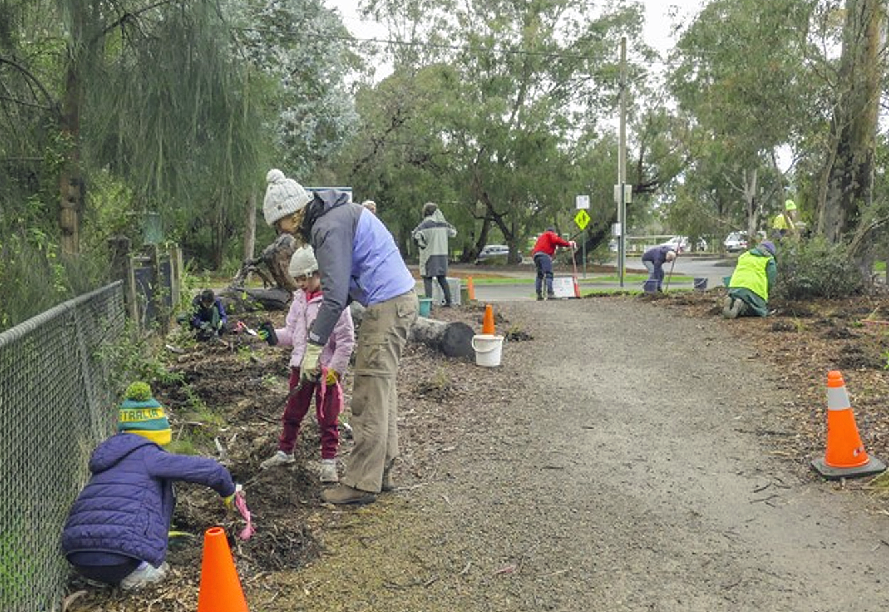
We had 20 people joining in to plant up the realigned paths on both sides of Pakenham Street near the bridge. The bad weather held off by-and-large – we even had blue skies at intervals !
Jacinta told us: My kids had a great time and are asking when the next working bee is!
We thank our volunteers, young and old, for another very successful day!
We also thank the Scouts and Blackburn Bowls Club for sparing us some water – the creek being difficult to access there (and it was a raging torrent at the time!).
Thursday Team report – frostbite avoidance !
One of our site assessment guidelines is to take notice of the ambient temperature. Every now and then it has been too hot to continue work or there has been a severe heatwave. Starting reasonably early means we usually work in the cooler times of day avoiding most of the problems with heat. However, for the first time in memory, our team had to start later due to sub-zero temperatures when they normally work!
Mild frost was evident on the oval and nearby mown areas – this was the weather situation at 08:25 on 4/7 (note that we usually start at 08:00 (with set-up and site inspections) prior to most volunteers arriving at 08:30):
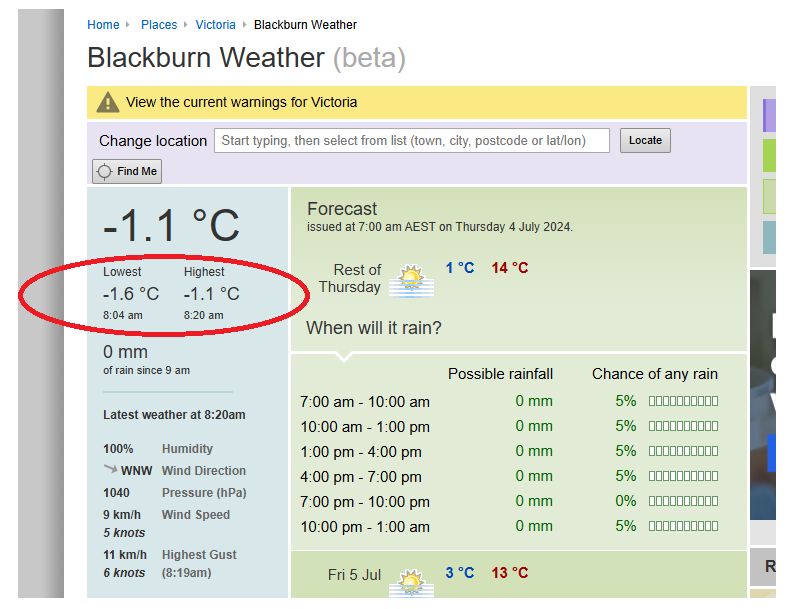
At 09:30, the temperature was 1 degree (feeling like -1) – so there was a little improvement!
Otherwise, the Thursday team has been busy in:
- The top NW corner of Furness Park – tending the young plants from last year’s National Tree Day event.
- In Blacks Walk – adjacent the Garie Street playground, weeding and planting in the SE quadrant.
- In Kalang Park on the north side of the creek near Waratah Crescent entrance, weeding and rolling back more Wandering Trad for planting up next year and also doing some prep work for the National Tree Day community working bee.
Sightings
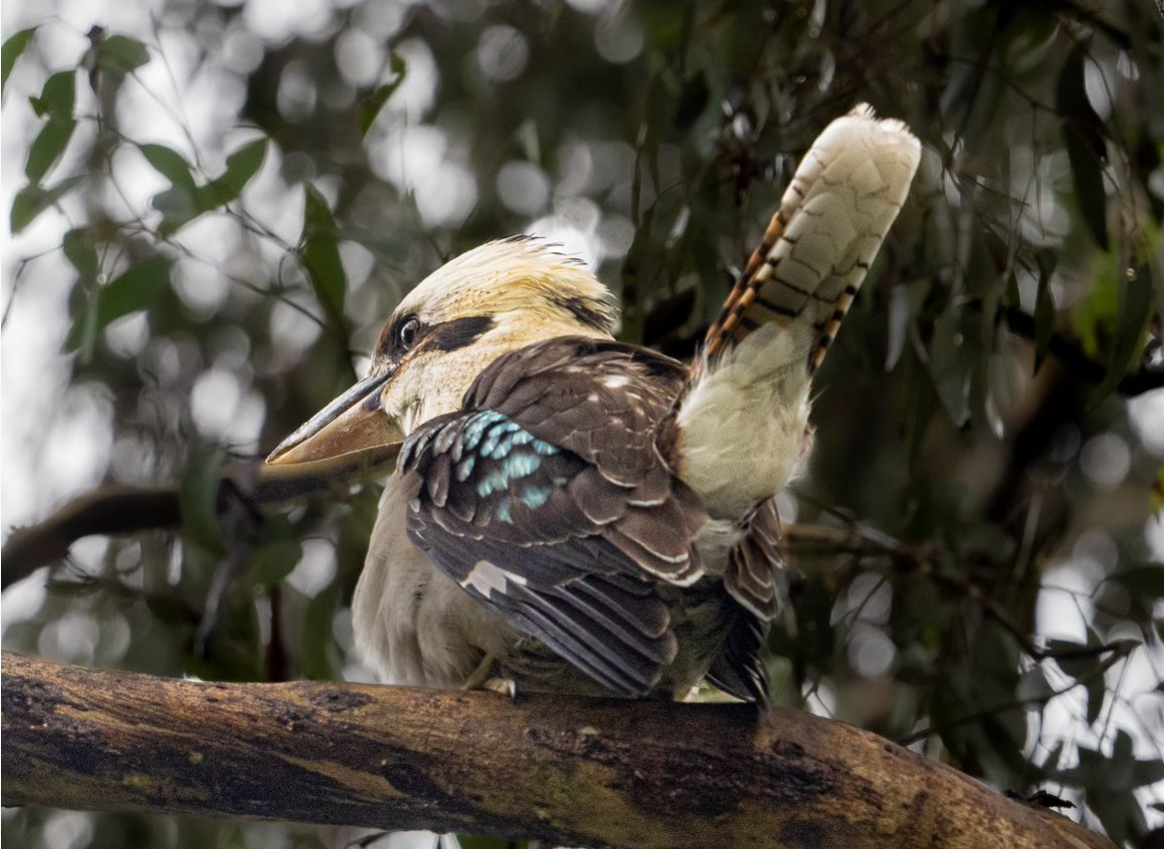
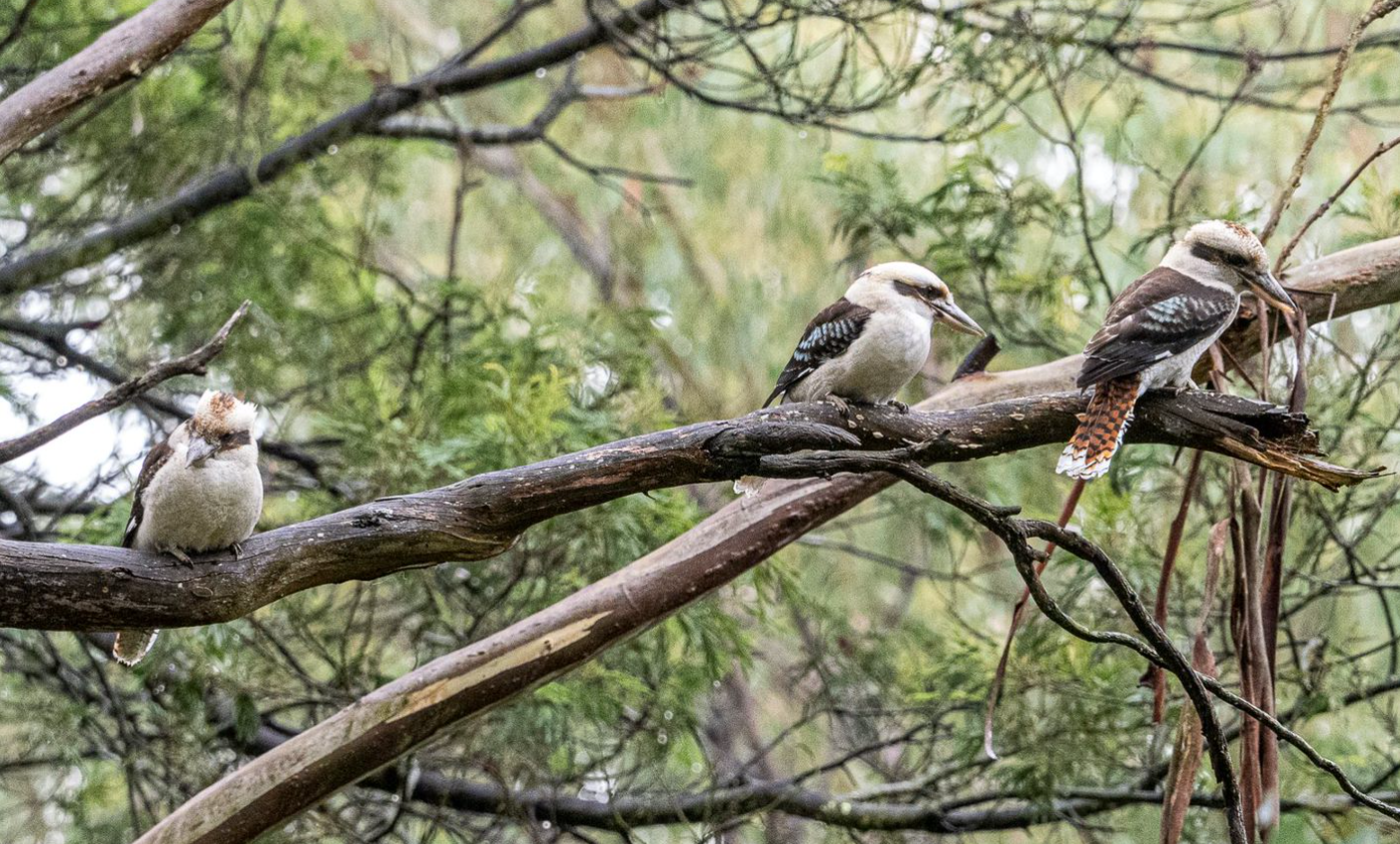
How do you tell the Sex of a Kookaburra (Part 2)?
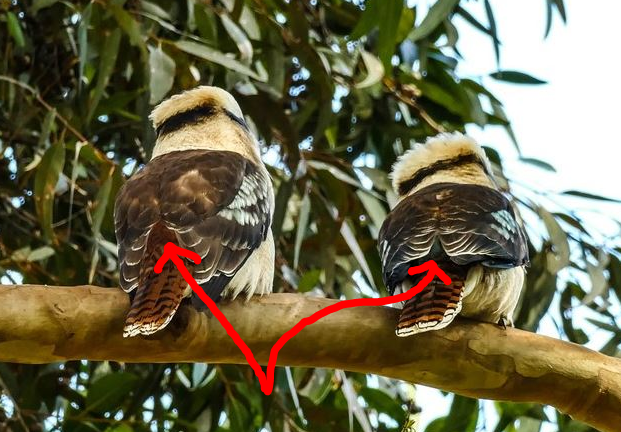
Back in July, 2020, we showed the above photo which helped show the differences between the males and females of the species – namely:
- the male is generally bluer on the wings and blue above rump (see that hint of blue above the tail feathers and under the wings on the right hand bird?)
- the female is less blue on the wing and brown above rump.
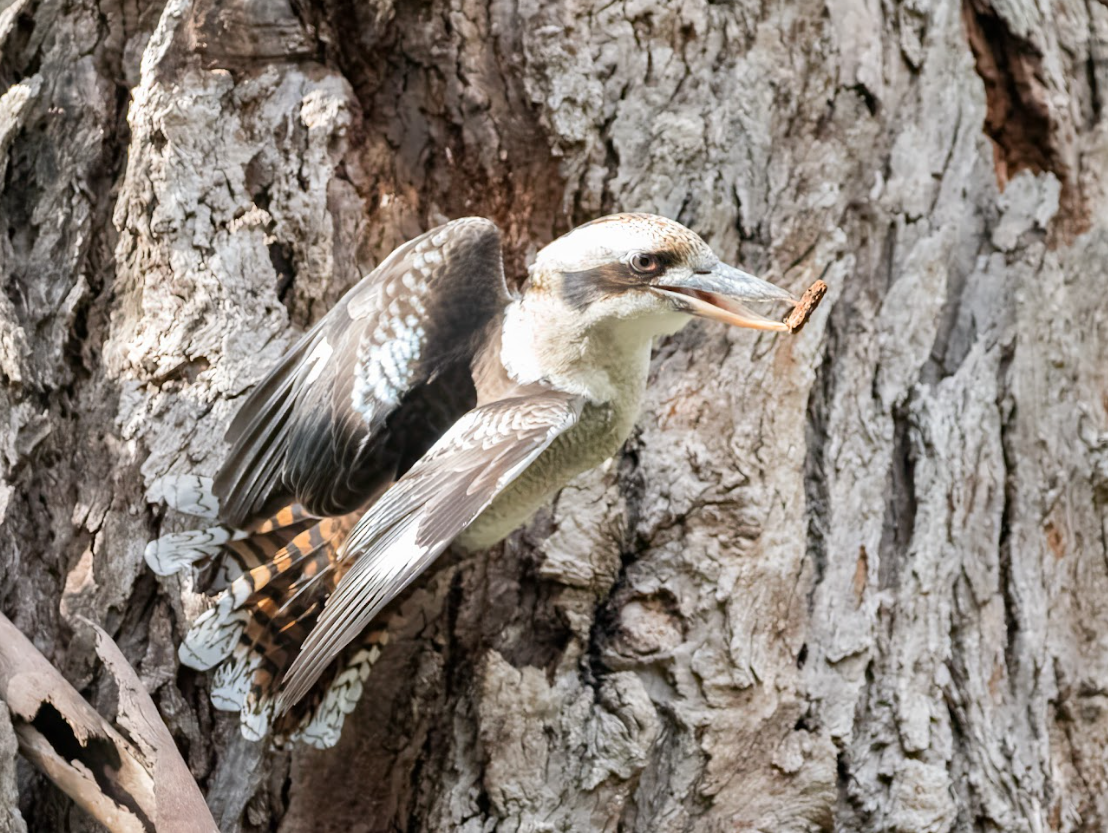
Interestingly Greg, sent us these pictures of a seemingly odd behaviour of a pair in Kalang Park during the month:
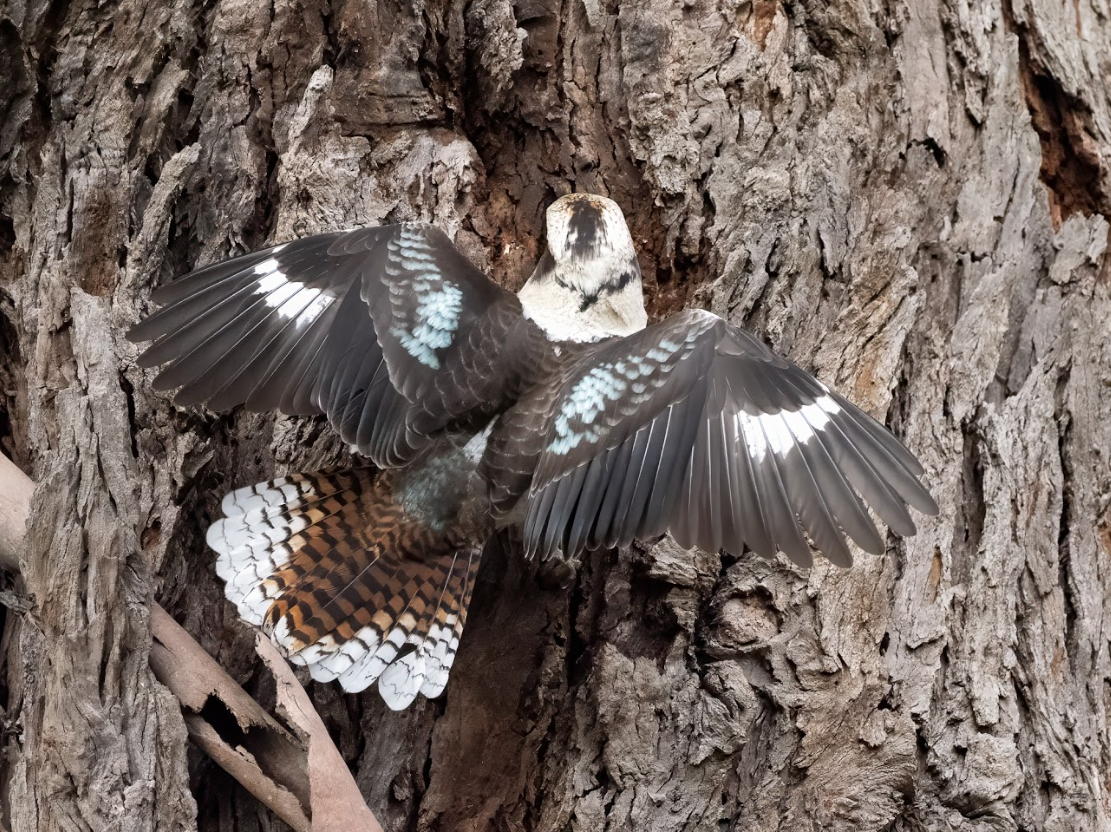
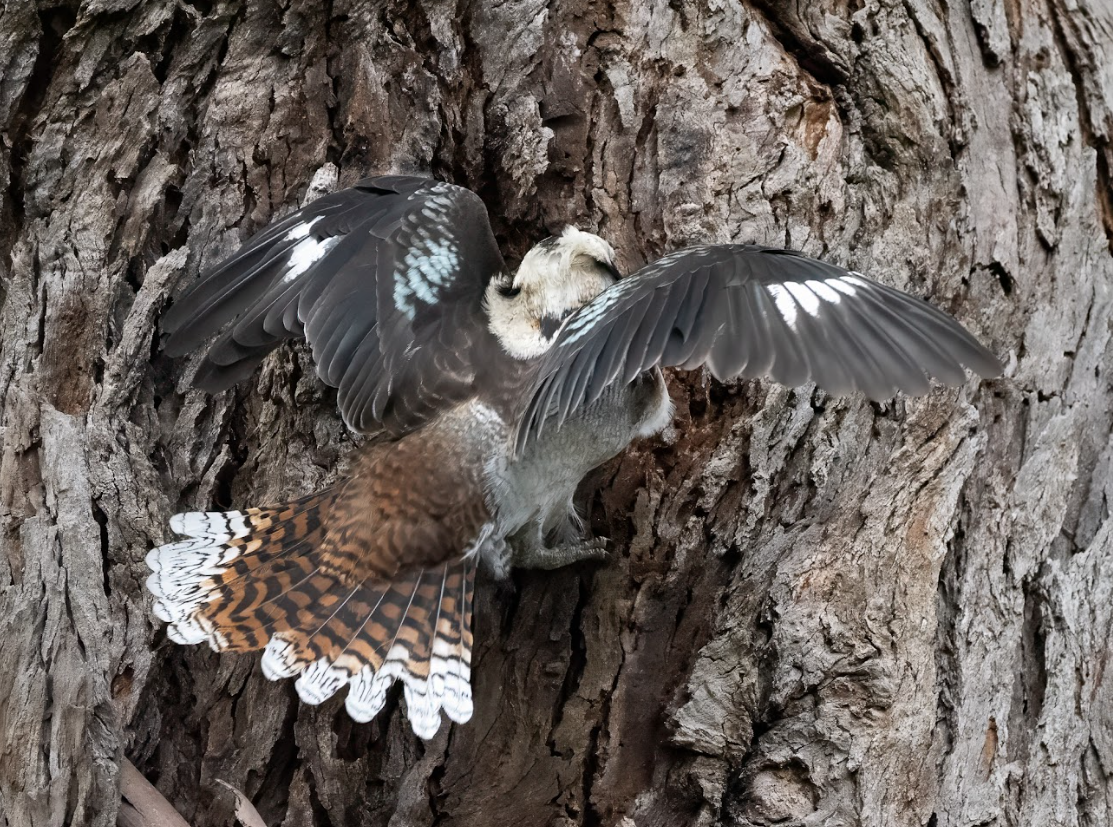
Please click on image to enlarge; click on the X to return
In his words:
Taking turns, the male and female pair kept flying to a particular spot on a gum tree removing bark from it. They kept this up for at least 20 minutes while we were there, and we saw them still doing this several days later as well. At first, I thought they might be gleaning grubs from under the bark, but inspecting the photos, I can see they are taking bark away from the tree in their beaks, dropping the bark on the return flight. I concluded that they are in fact trying to make a nest [hole]. Perhaps they can hear that the tree is hollow underneath or perhaps it is a long term project.
I have included two photos where the birds have their wings outstretched making it easy to see the rump patch telling us male (blue) from female (brown).
If you expand the images, you’ll see there doesn’t appear to be much difference in the shade or extent of the blue on their wings. However, having the wings open very much exposes the color on their backs…
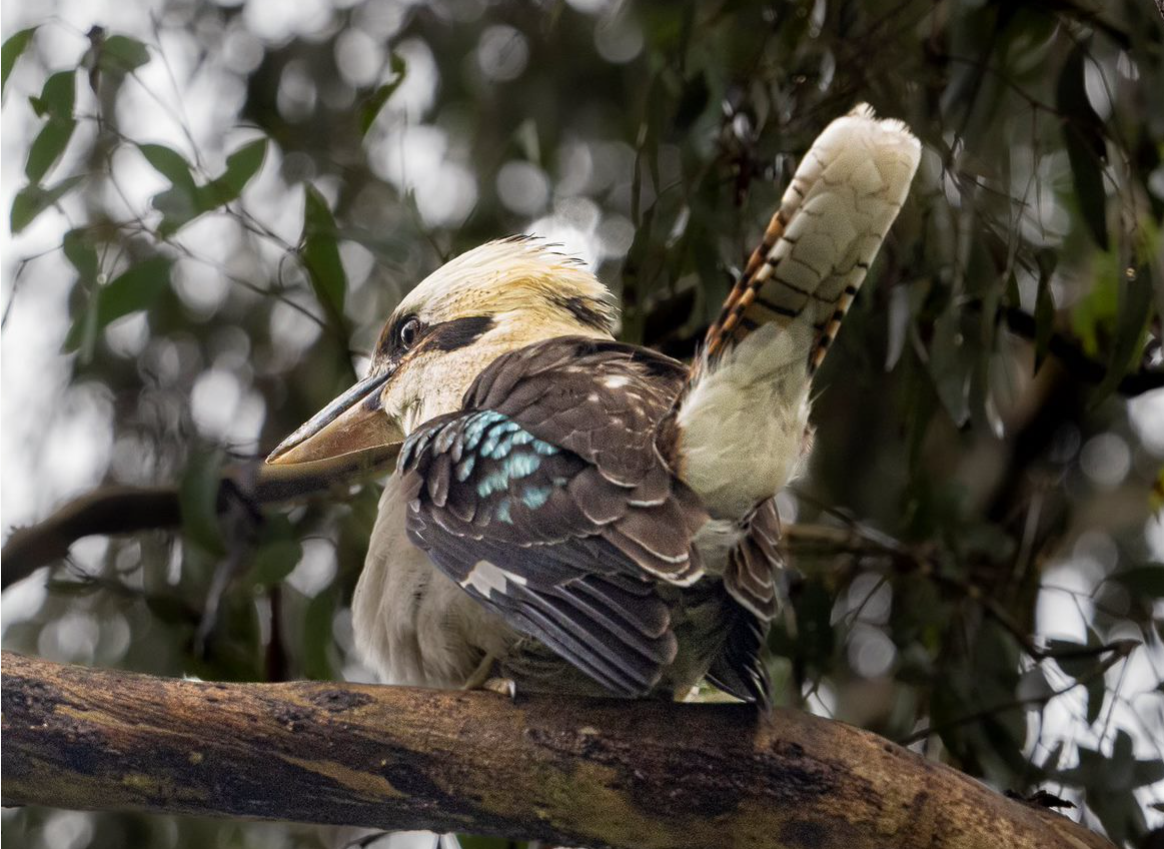
“What about the rump itself ?” … perhaps you can lift the tail and have a look?
- Not much help – coincidentally, Ken provided this candid shot:
Furness Park Works
Yarra Water is undertaking sewerage main relining works in Furness Park at present:
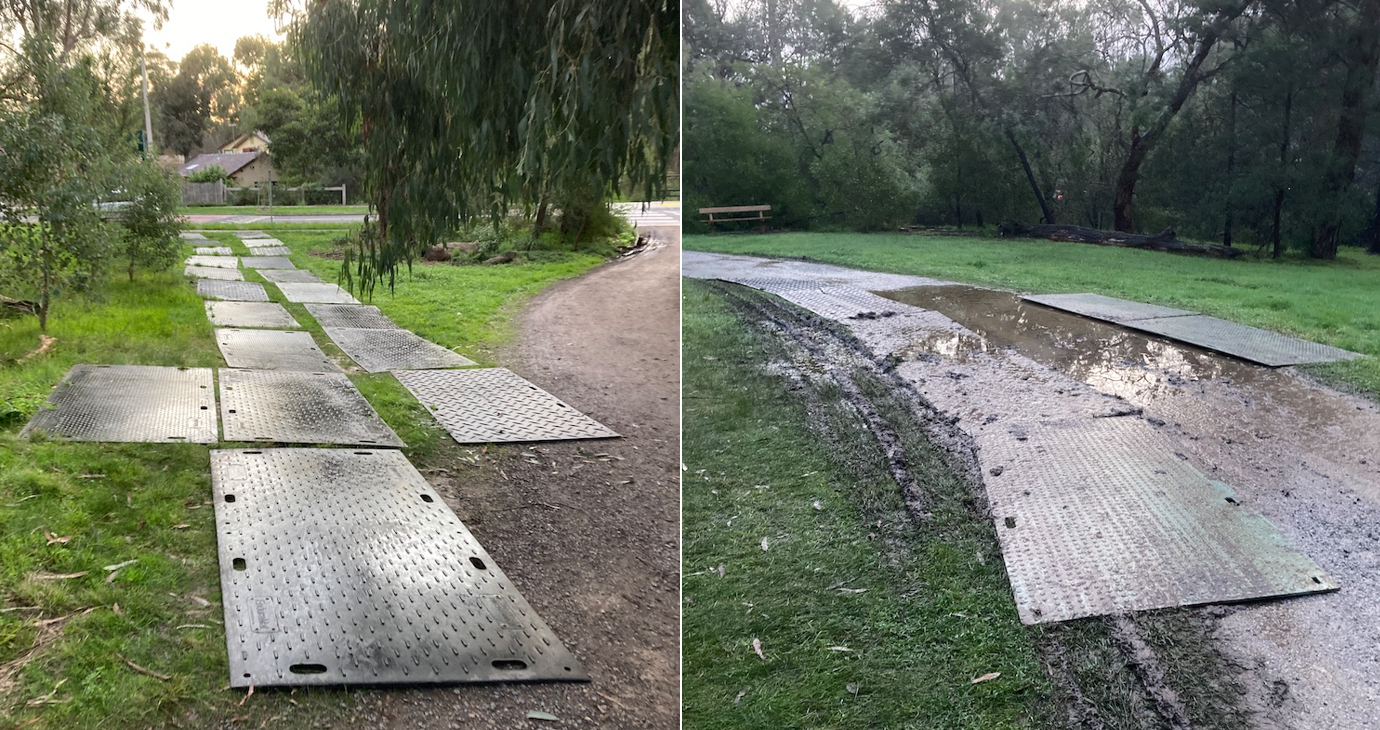
As of 31st July, they have three enormous trucks on site via a temporary road and have flattened quite a bit of Lomandra… Looks like some remedial work will be needed when the mains work has finished – NOT consisting of importing foreign soil and rye grass as the contractor thinks!!!
Other sightings
Even though it’s been cold and wet, our animals and plants seem to know spring is coming:
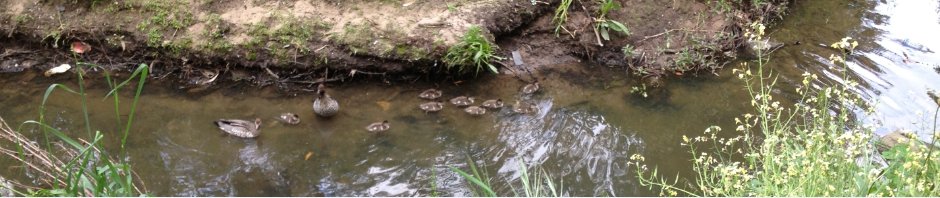
- It’s great to see our Wood Ducks back in the park – presumably for the breeding season – who, along with our Kookaburras, also need our old trees for their nesting hollows.
- Our wattles are coming out – so our usual noticeboard display must be imminent – keep an eye out for that.
Other sightings shown below are:
- The aptly named Red Velvet Mite
- photos of other bird species you are likely to see in the park at present.
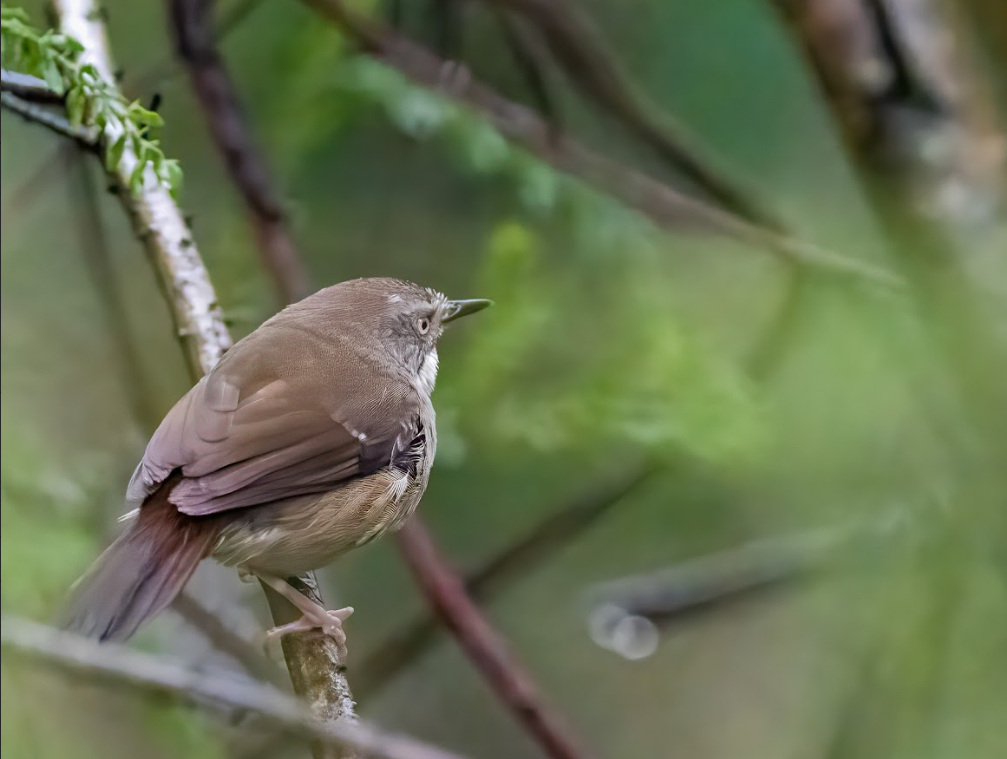
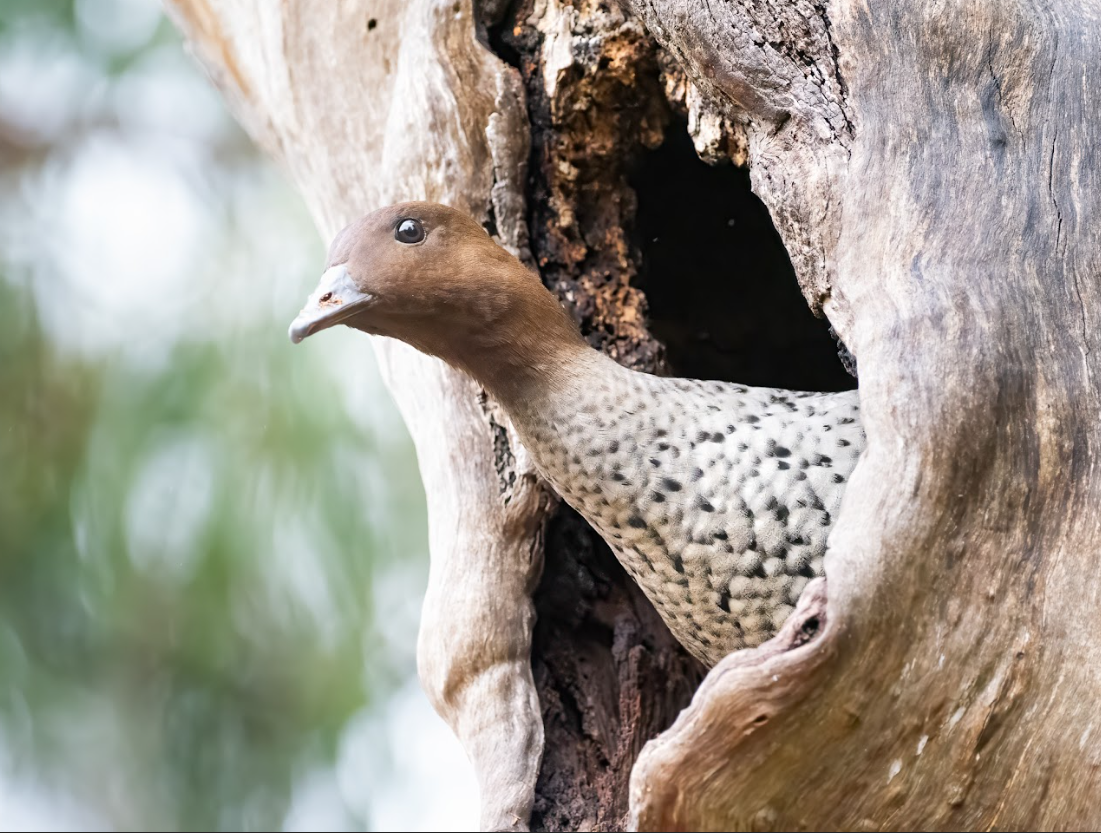


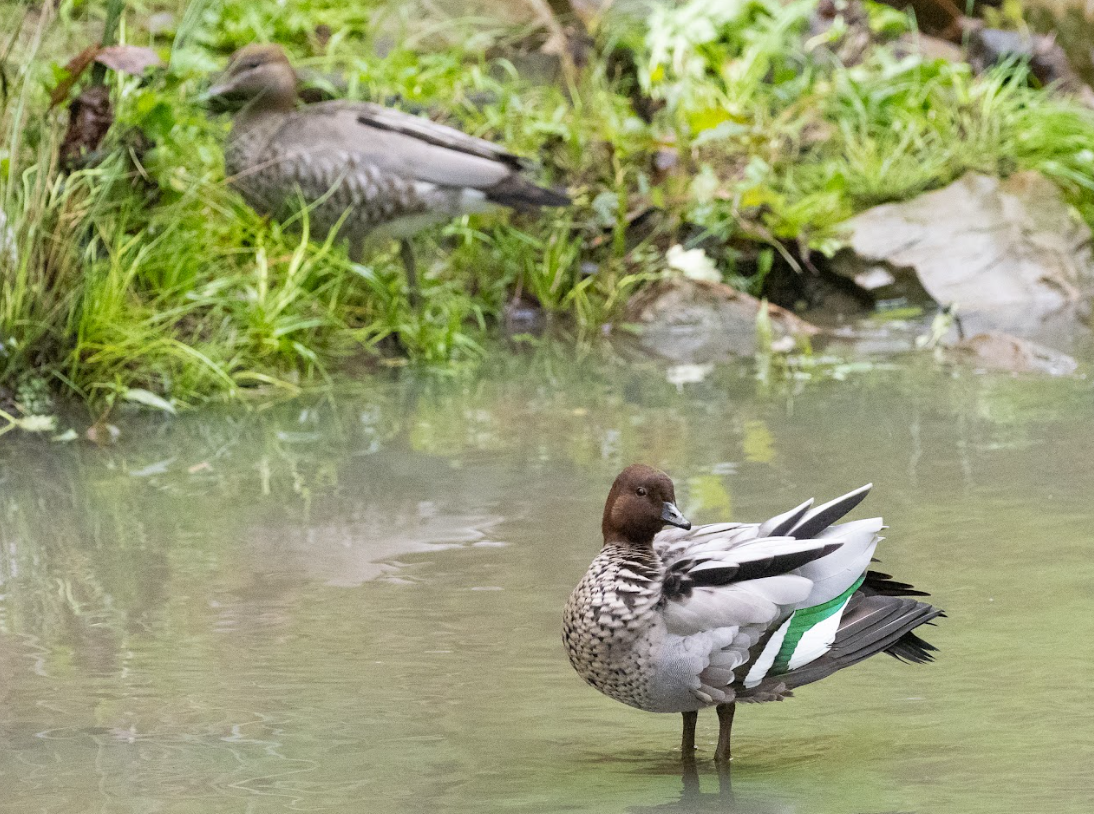
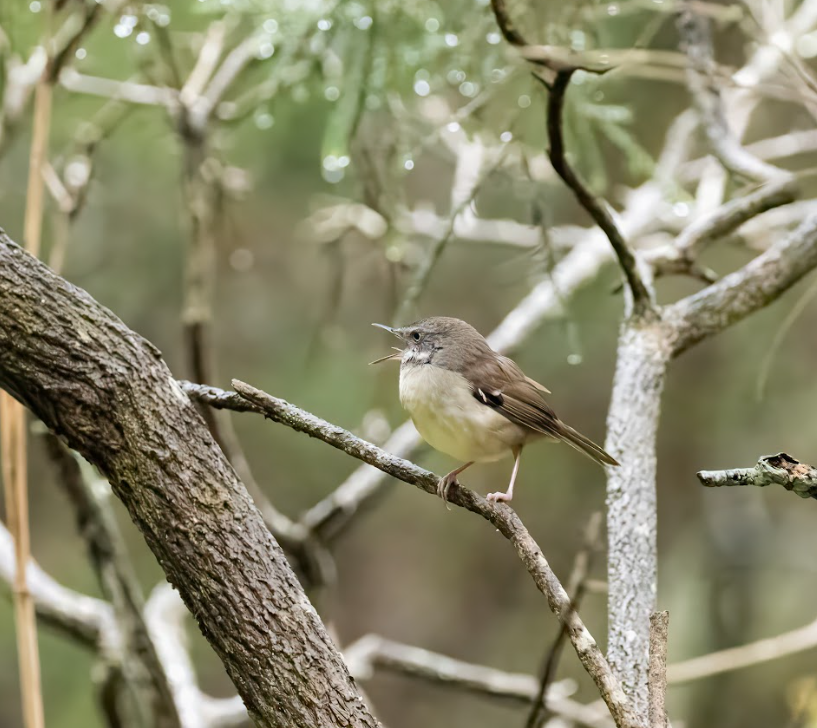
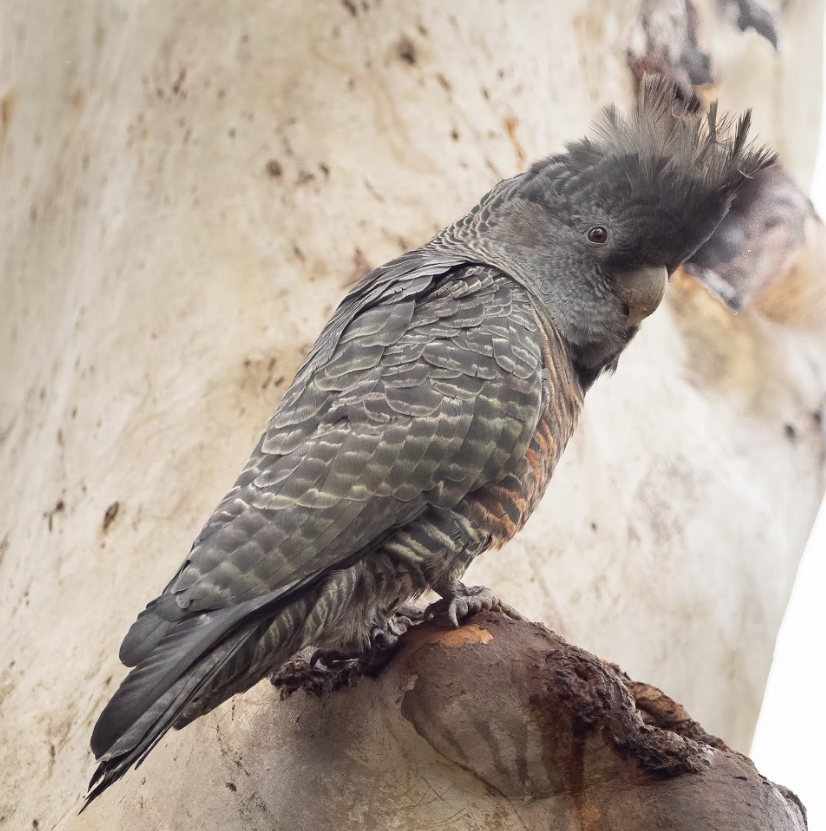
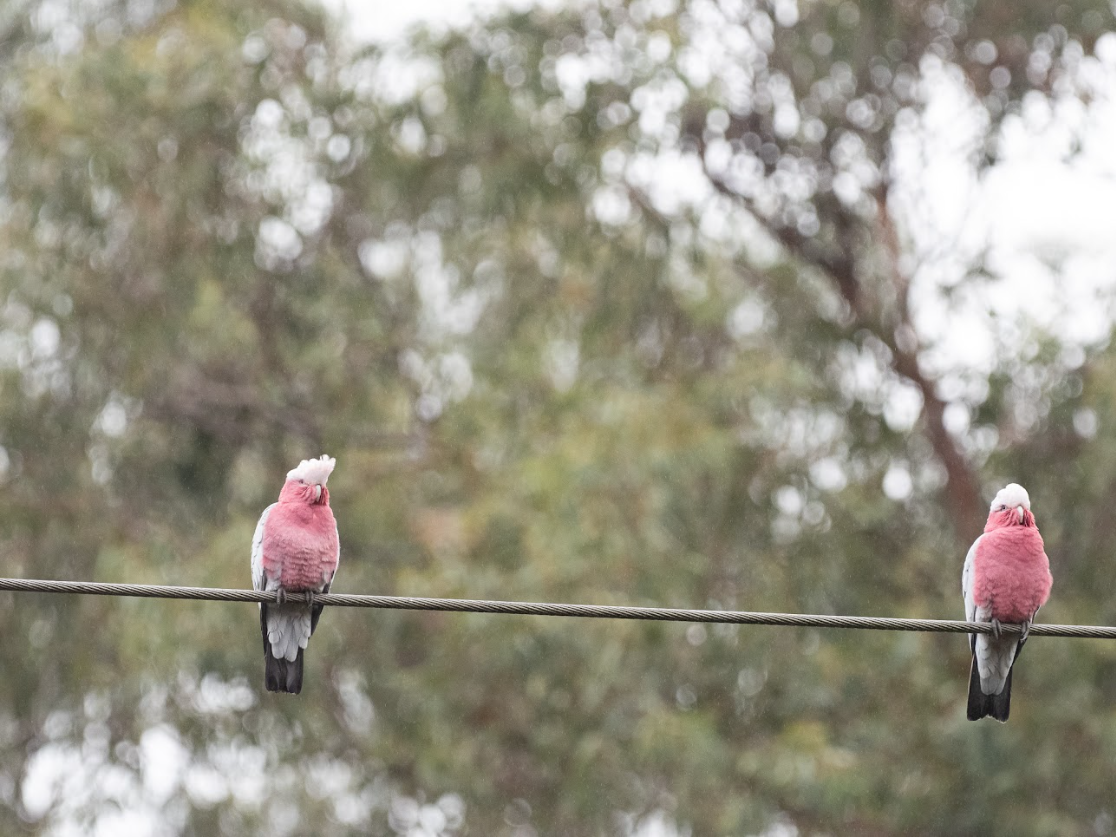
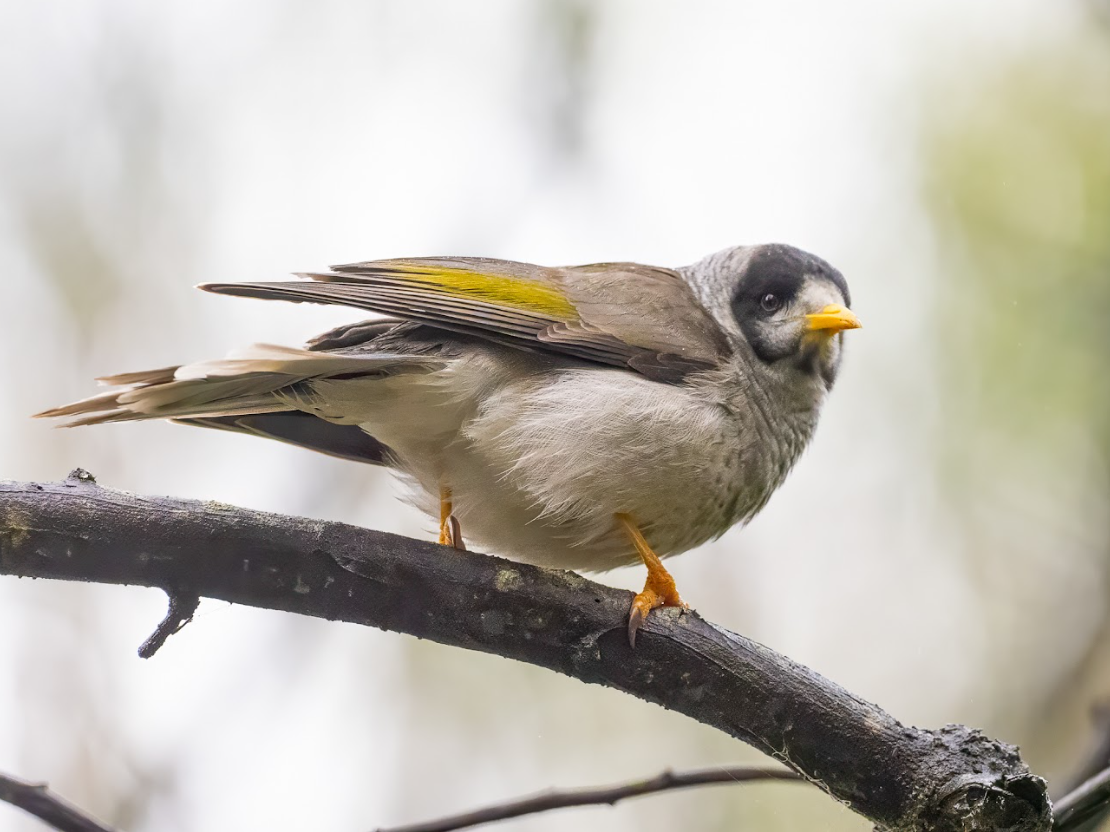
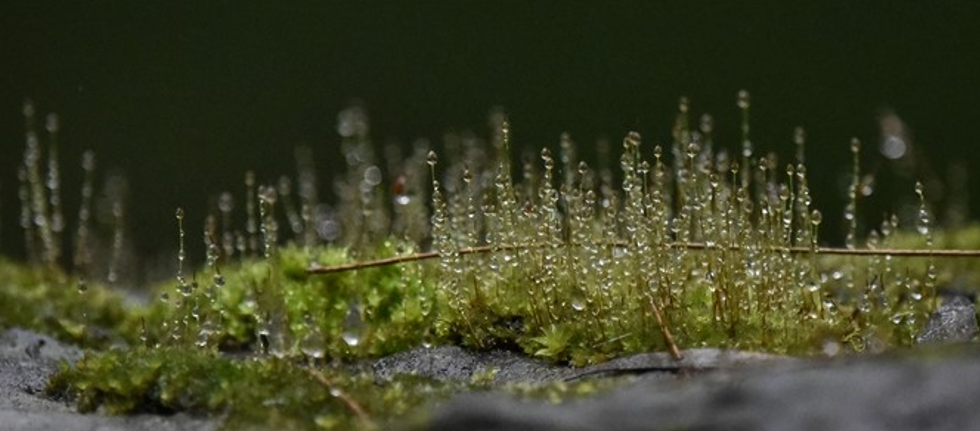
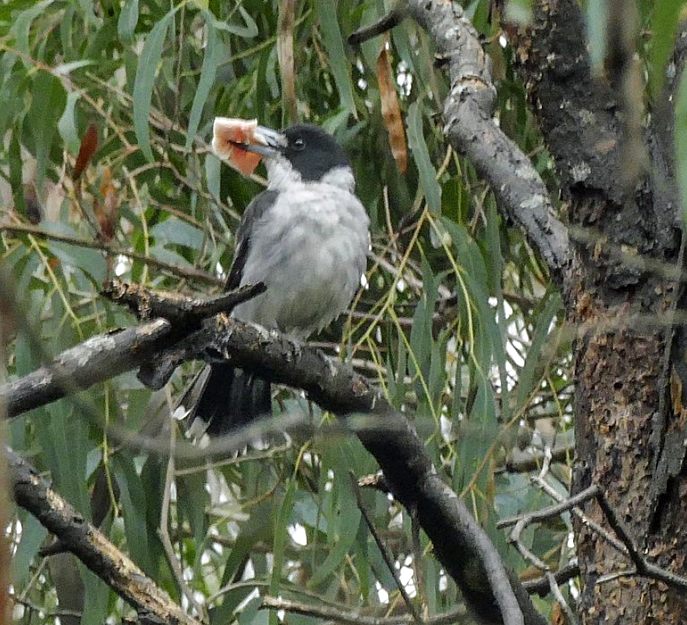
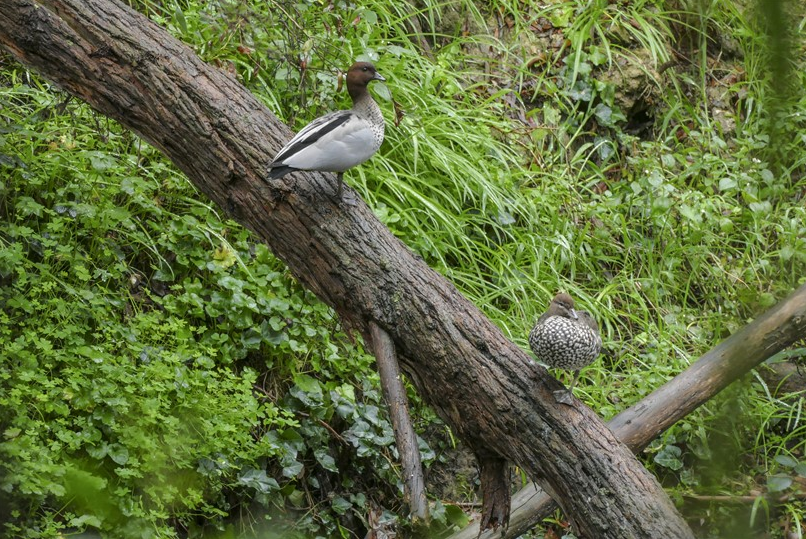
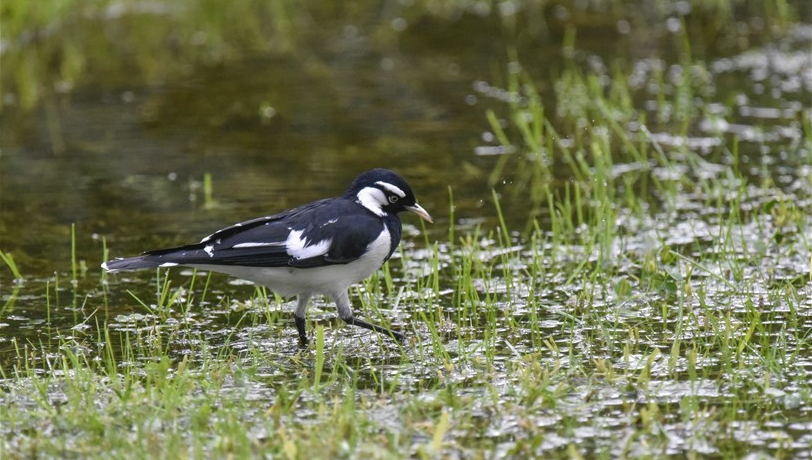

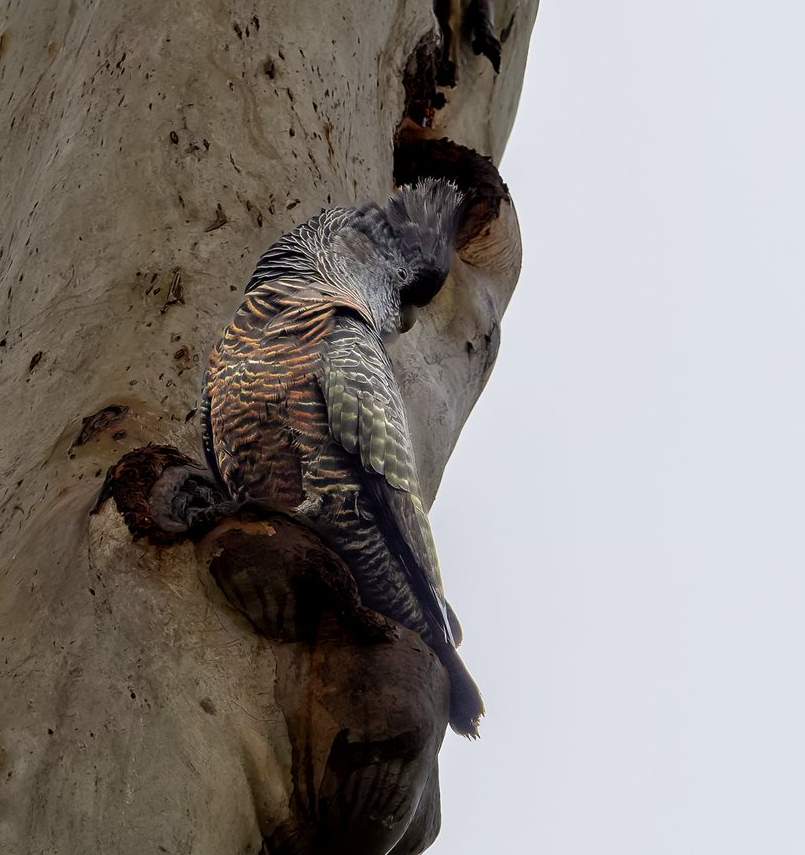
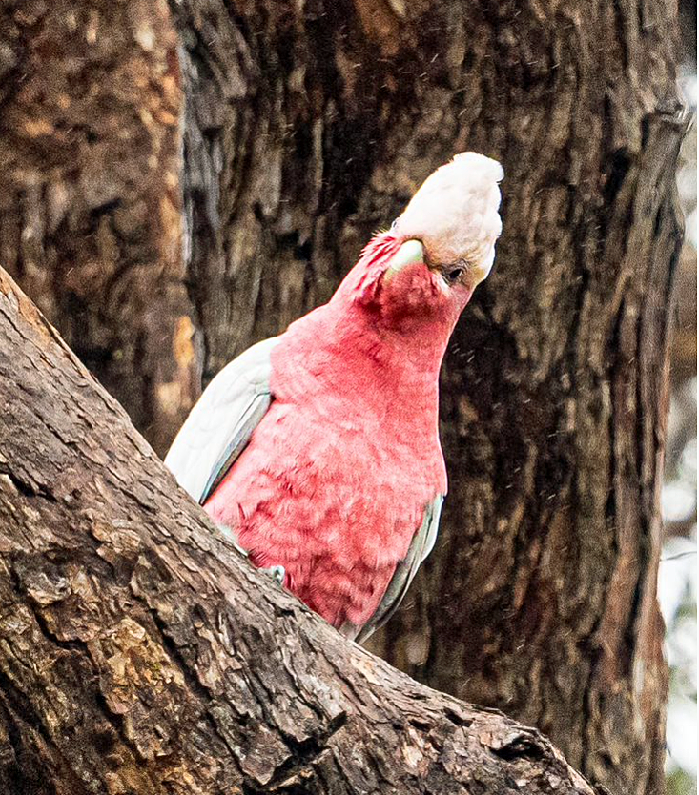
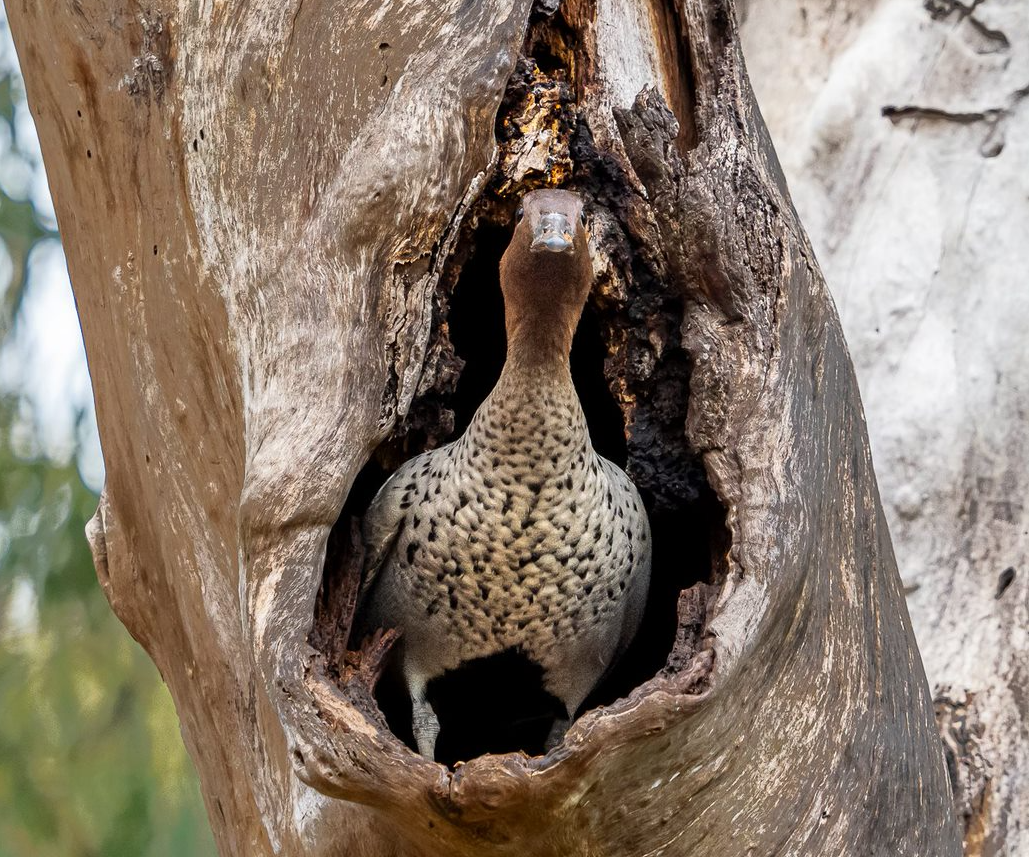
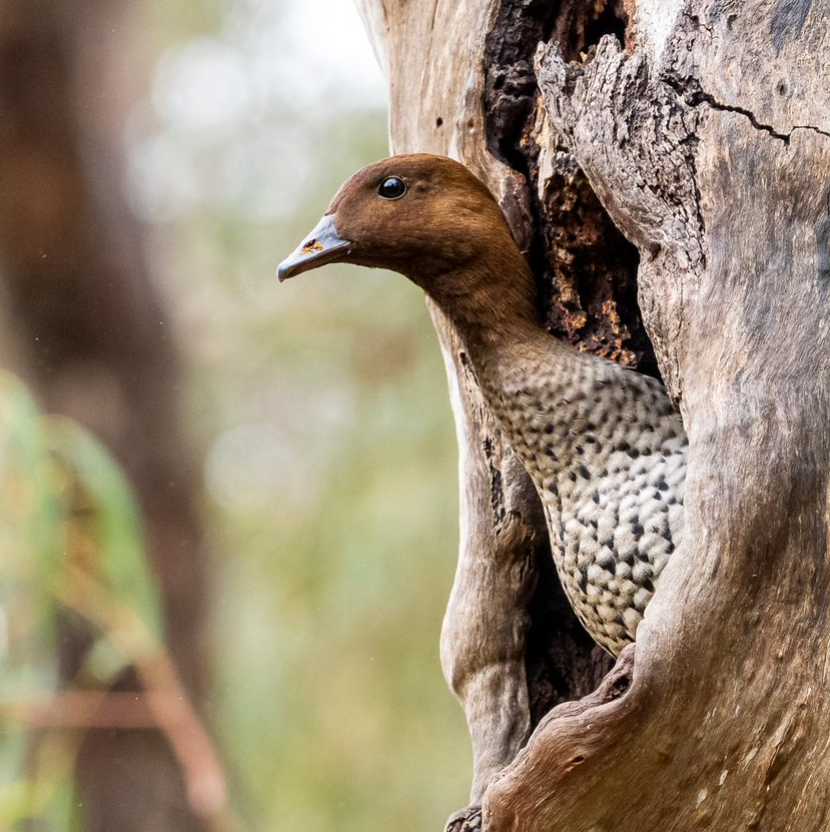
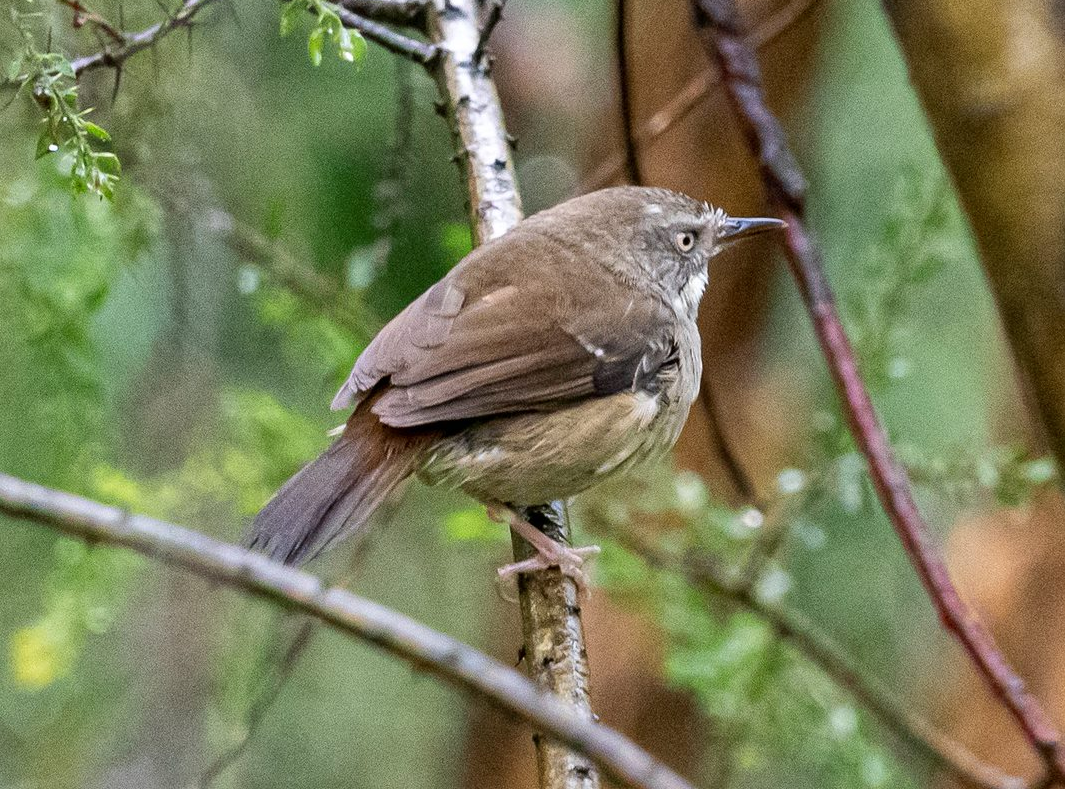
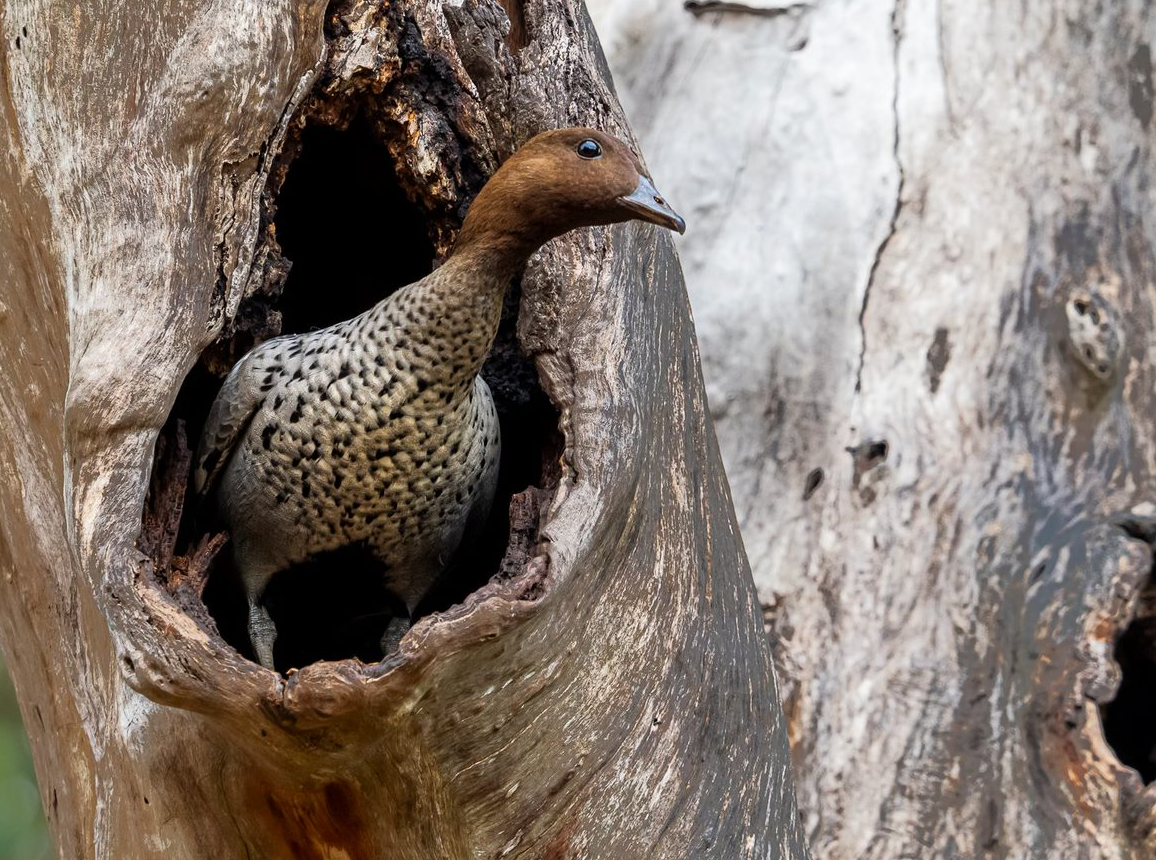
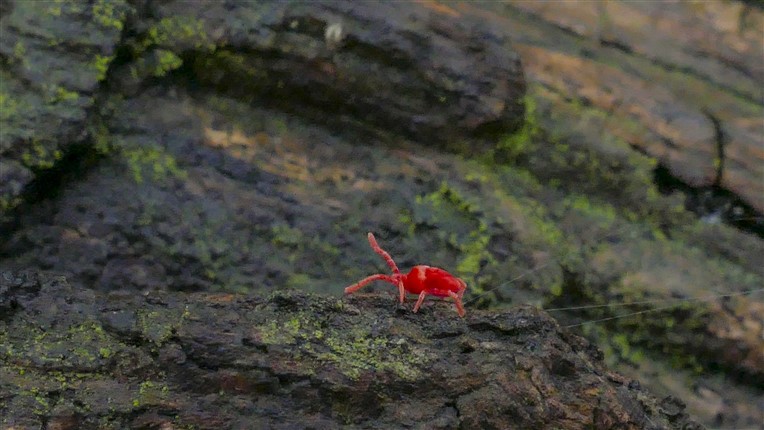
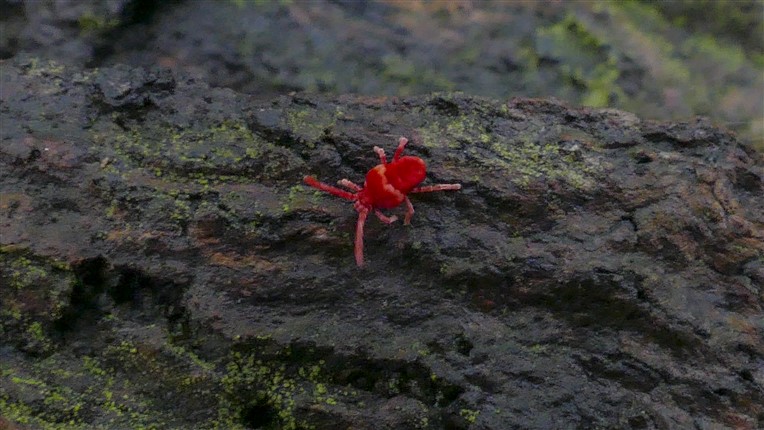
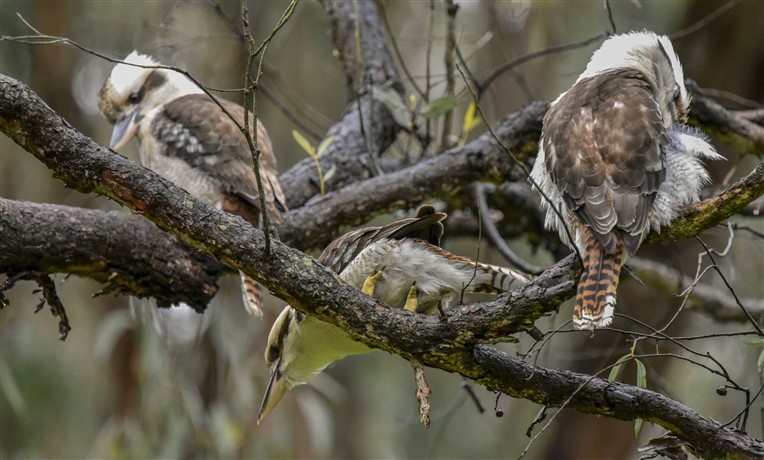
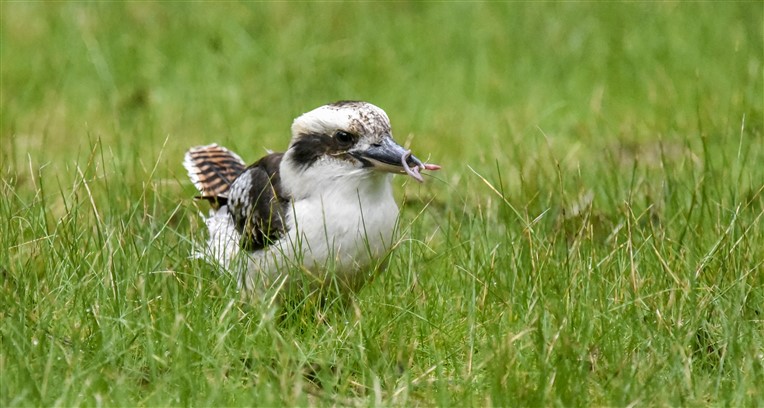
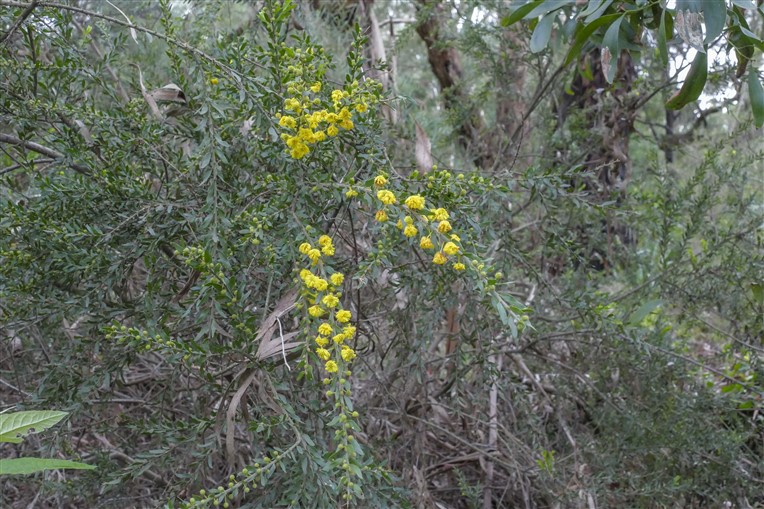

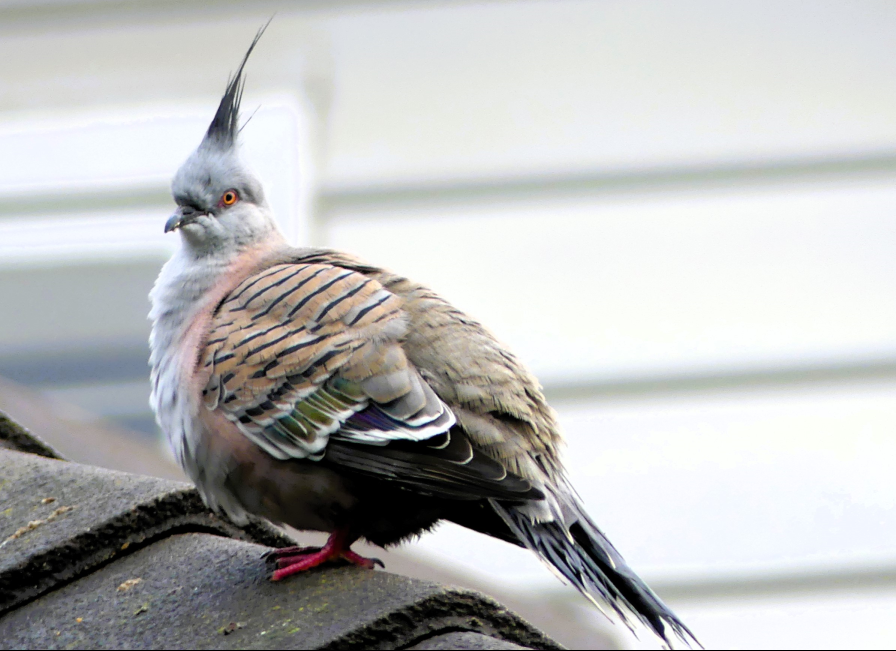
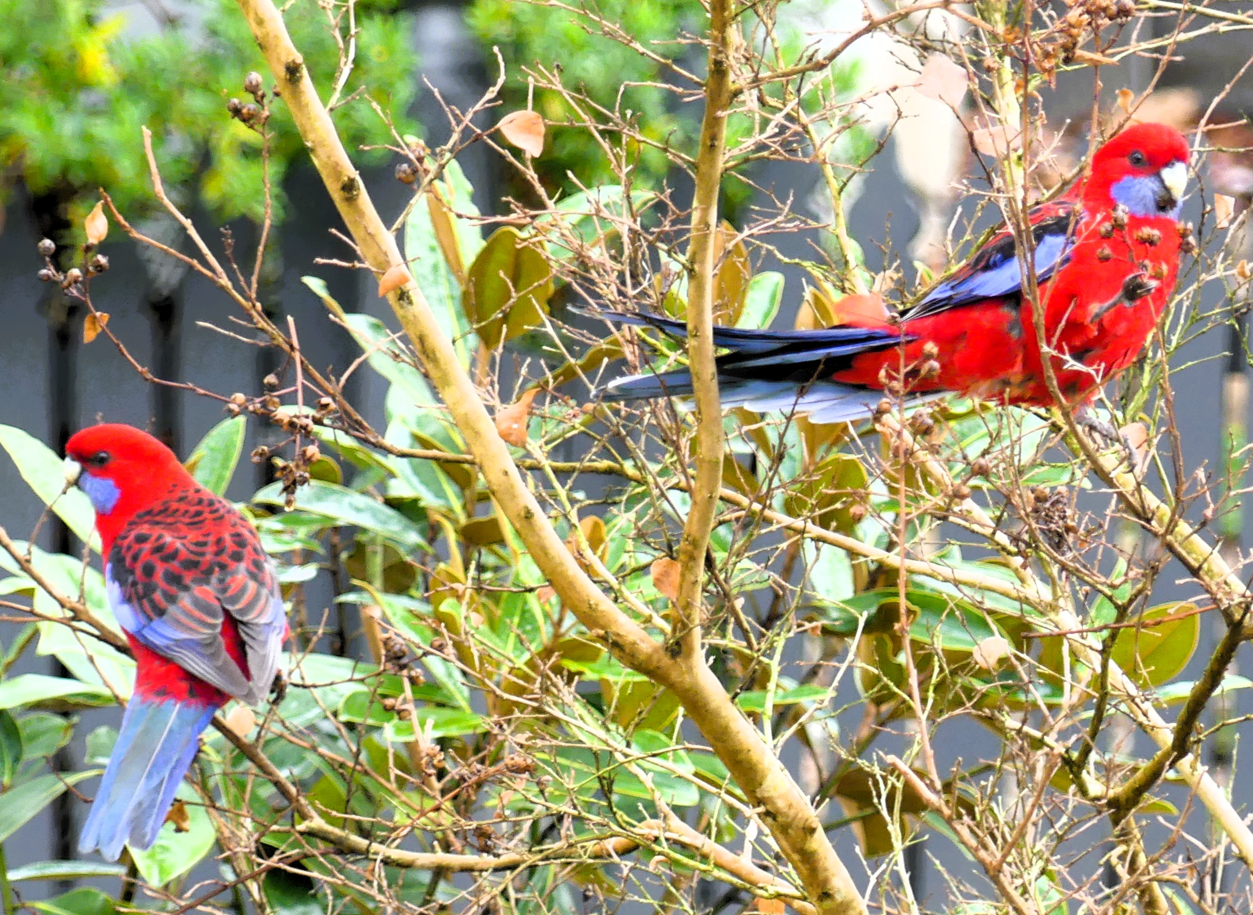
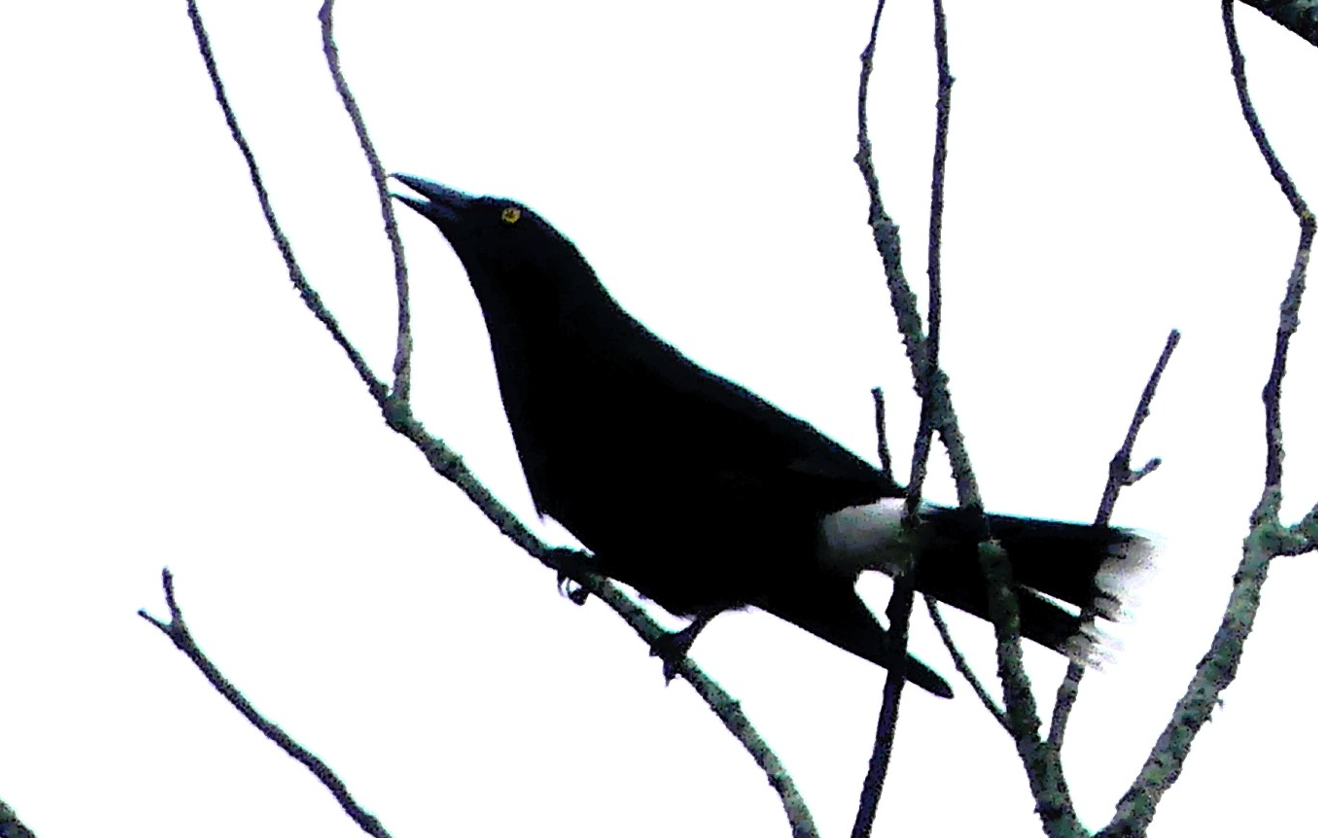
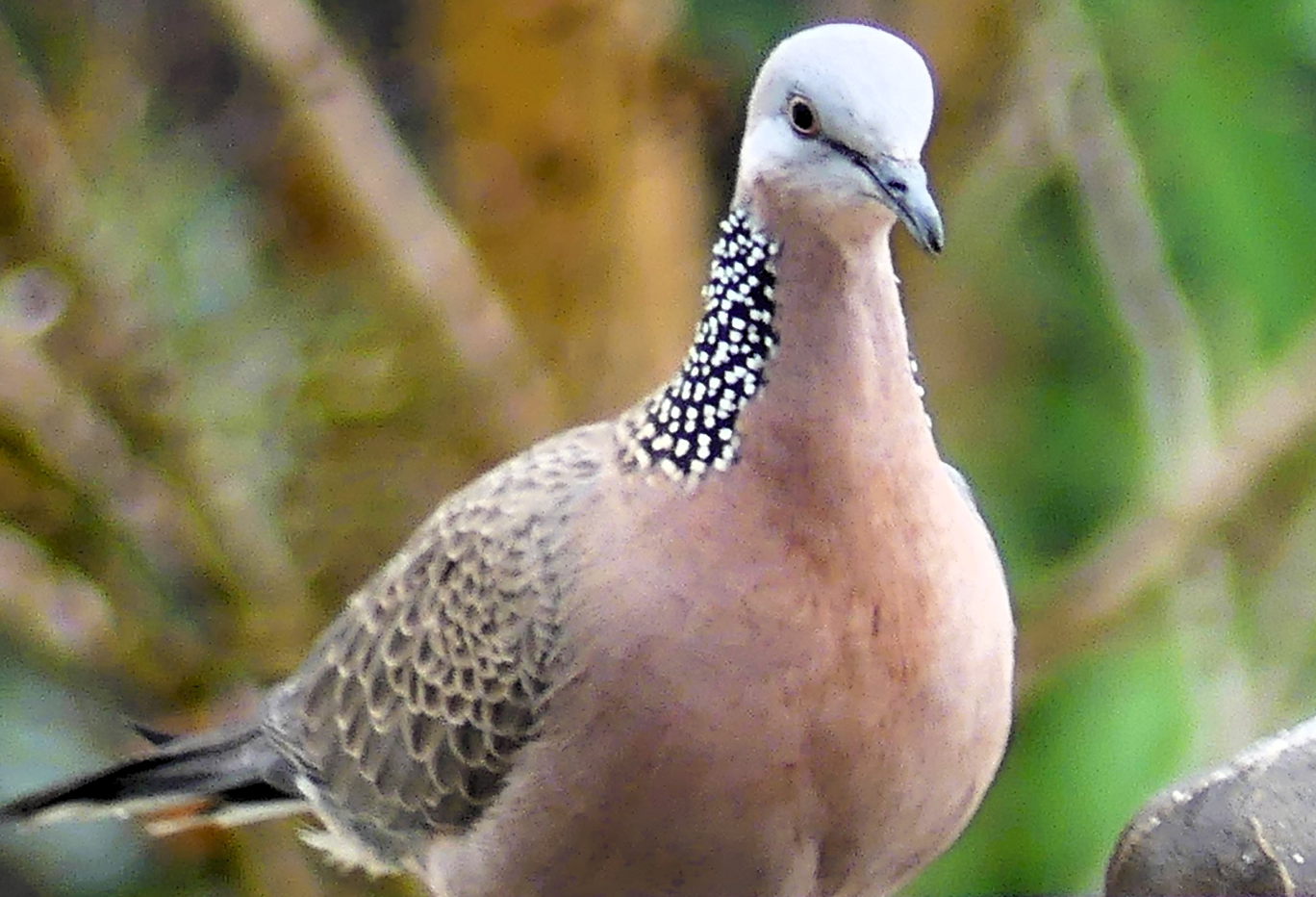
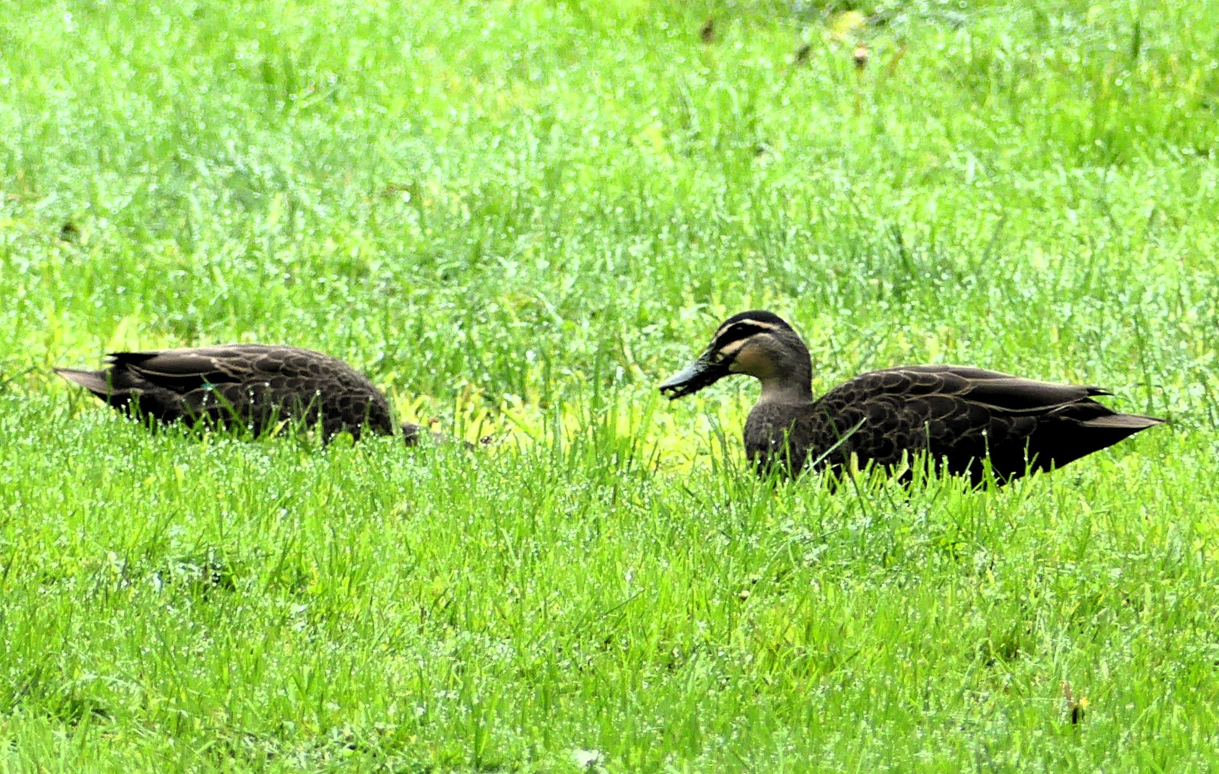
Please click on image to enlarge; click on the X to return
More Planning Madness ?
At least this one occurred nearly 100 years ago!
During our 40th birthday celebrations, we showed an early 1950s plan of subdivision that had a road following the creek – basically taking Albion Road through to Main Street neatly bisecting today’s park. One would think it very hard to beat that one for negative impacts on the park – but have a look at this:
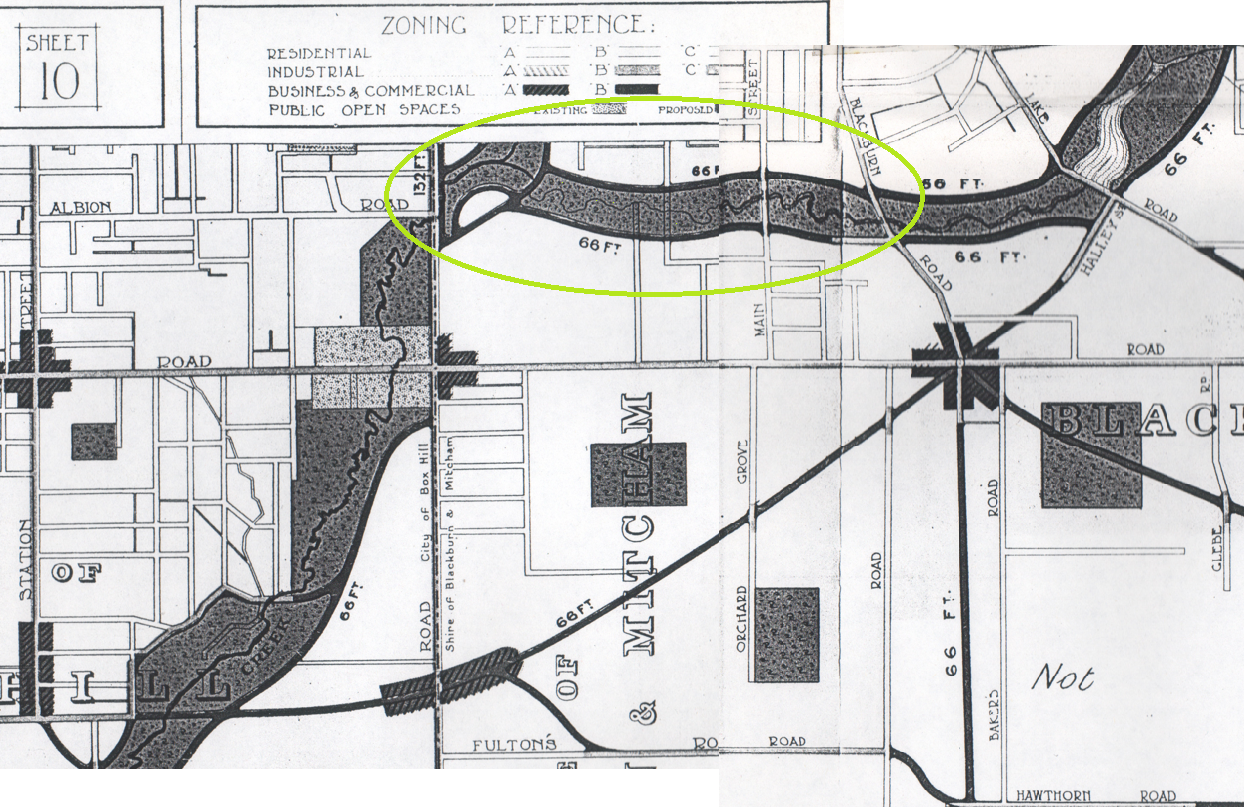
Photocopies of these maps were sent to us by Mr John Lawson of the Ministry for Planning in the early 1980s. These are excerpted from the Plan of General Development of Melbourne – a report of the Melbourne Town Planning Commission in 1929. One can only assume the plan suffered the consequences of the Great Depression and was both unfunded and unapproved. Apparently, there were also concerns that a proposed Town Planning Board, to be set up by the State Government to implement the plan, would overly impinge on the rights of local Councils – something the State Government does not seem overly concerned about these days!
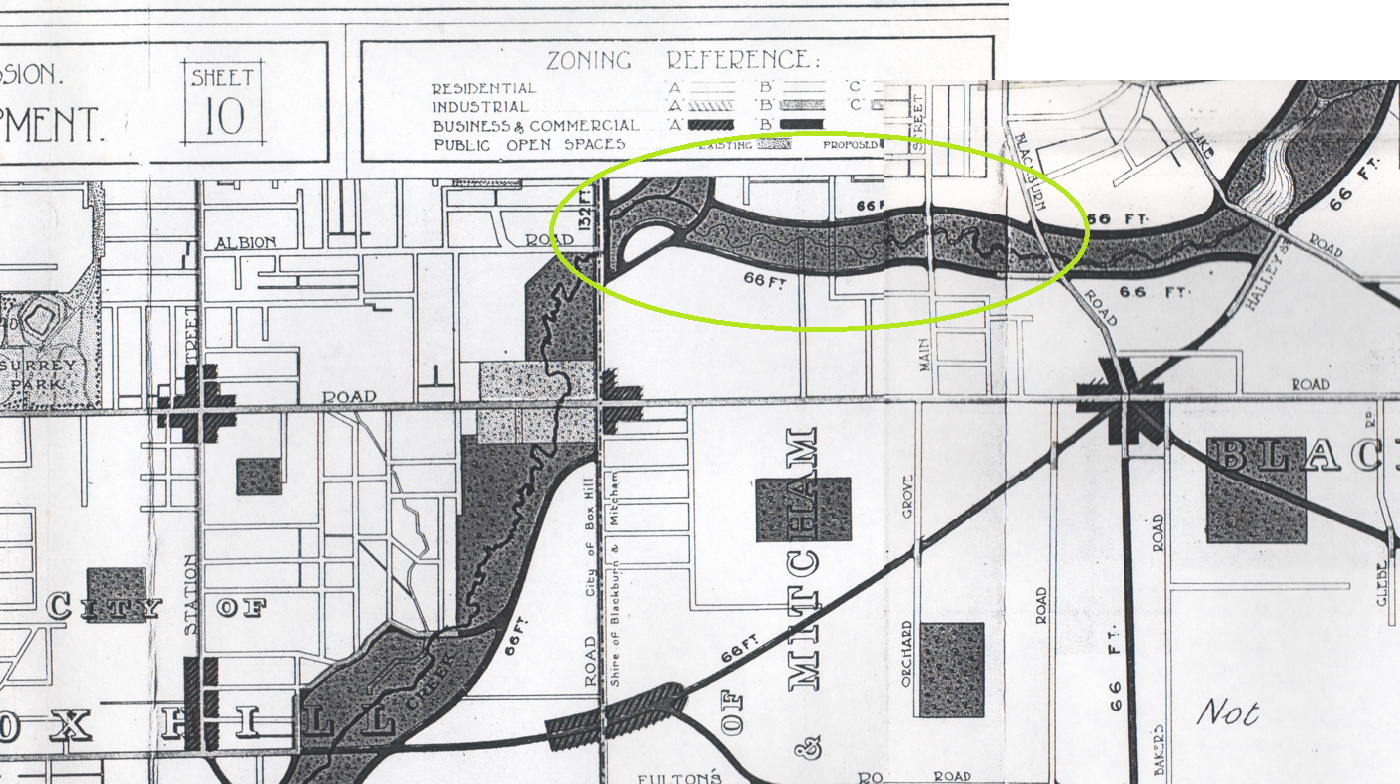
We’ve stitched parts of Sheet 10 and Sheet 15 (on the RHS) together to show what seems to be a planning nightmare that has our creek apparently squished between dual 66 feet (approx 20m) road reservations that also continue on to flank Blackburn Lake! The green oval shows the approximate location of the Blackburn Creeklands. It seems Blackburn Creek also suffers the same fate (the creeks’ confluence is near the top of Sheet 10 – on the left side of the green oval). The plans also show a bizarre continuation of Riversdale Road (at the bottom left) that arcs across the grid to meet Canterbury and Blackburn Roads in a six-way intersection before continuing on to join Halley Street near Blackburn Lake.
It’s interesting to compare the map with today’s Melway using a “slider”. Our apologies for the very rough line-up of the two – best we could do with our limited tools. Nevertheless, you can see that today’s street layouts of Box Hill / Box Hill South were pretty much in place by 1929, less so for Blackburn / Blackburn South and not at all for Forest Hill:
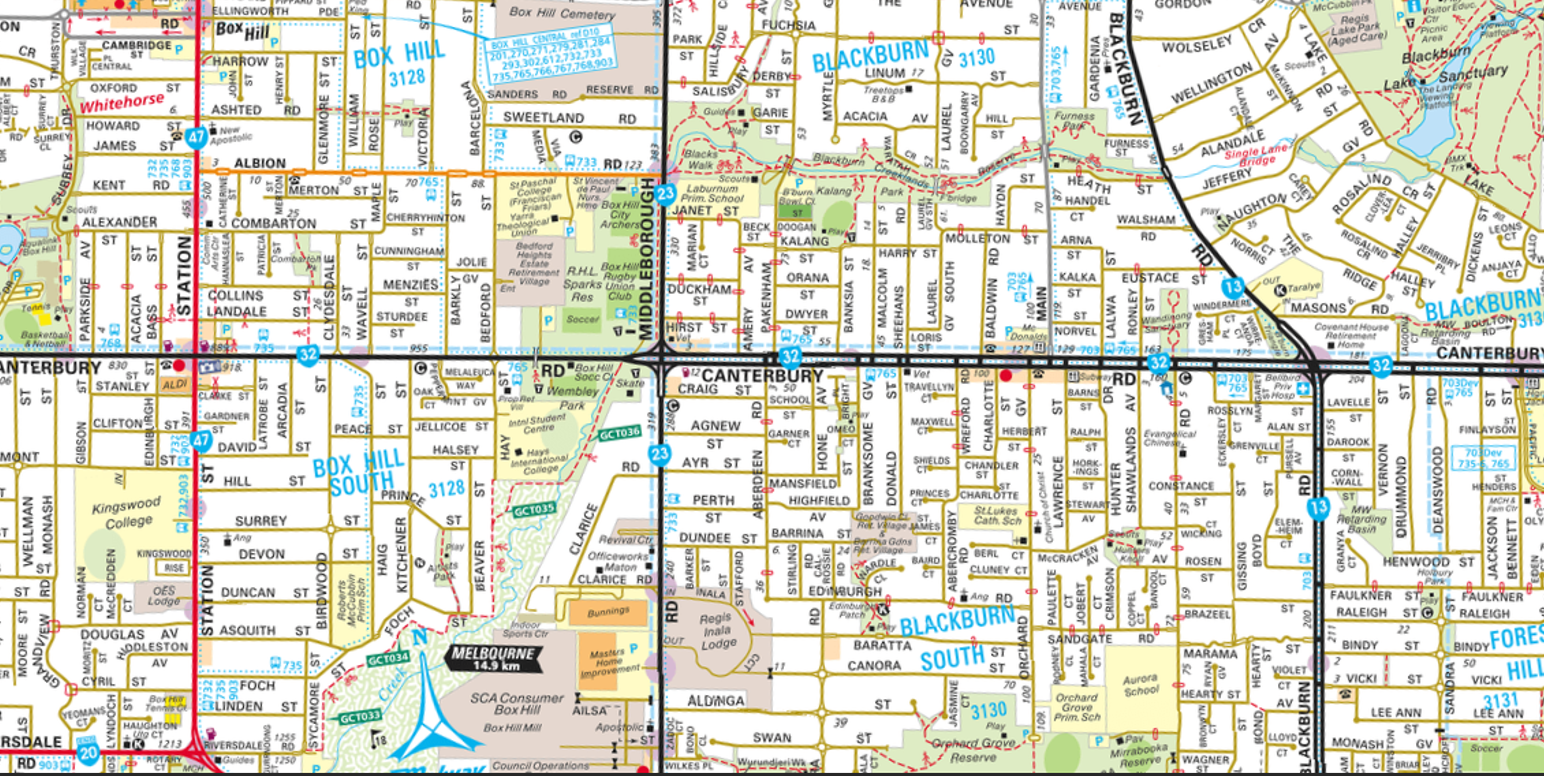
On the positive side, planners of that era did seem to understand the need for more open space with large reservations proposed (shown in speckled dark grey in the old plans). These were in Box Hill South (off Arcadia Street and at about the location of Kingswood College), in Blackburn South (around the southern end of Donald Street and off Orchard Grove) and in Forest Hill (a little west of today’s Forest Hill Chase shopping centre). Of these, only the Orchard Grove one eventuated in any substantive way – indeed it has been further augmented significantly to the east to form part of today’s Wurundjeri Walk. Also, despite the plan not being enacted in full, some of its individual recommendations, mainly road improvements and the preservation of rivers, creeks and coastlines were implemented.
The plan we show was a small part of a very ambitious proposal for Melbourne with other interesting features:
- Many more roads diagonal to the “normal” grid creating a mesh of roads.
- A new arterial road linking today’s Camberwell through to Burwood by initially following the former Ashburton Creek (now underground) – eventually to the junction of the Burwood and Mountain Highways.
- A new ring road linking Clayton with Glen Waverley and points beyond.
- Concentric developments around Glen Waverley, Mount Waverley and Ashwood.
Here’s what it looked like a little south of us at a larger scale:
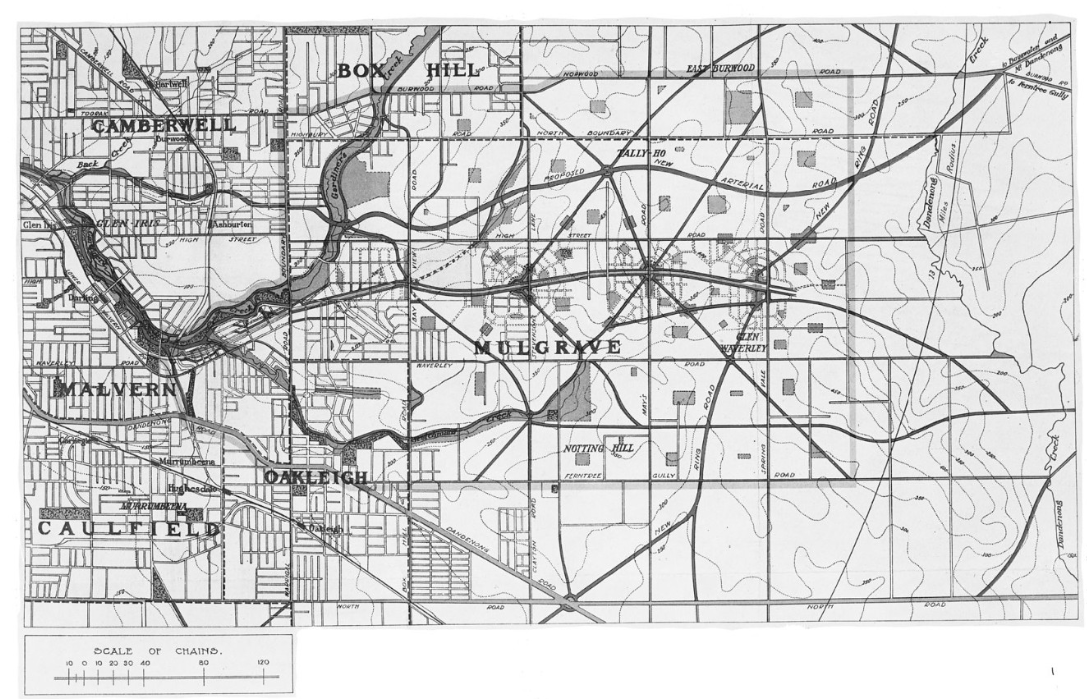
The then City of Oakleigh bordered the Shire of Mulgrave which kept that name until 1961 when it was proclaimed the City of Waverley – which is now part of the City of Monash (since the Council amalgamations in 1994).
Corridor News
It’s certainly a good idea to huddle together to keep warm this month:
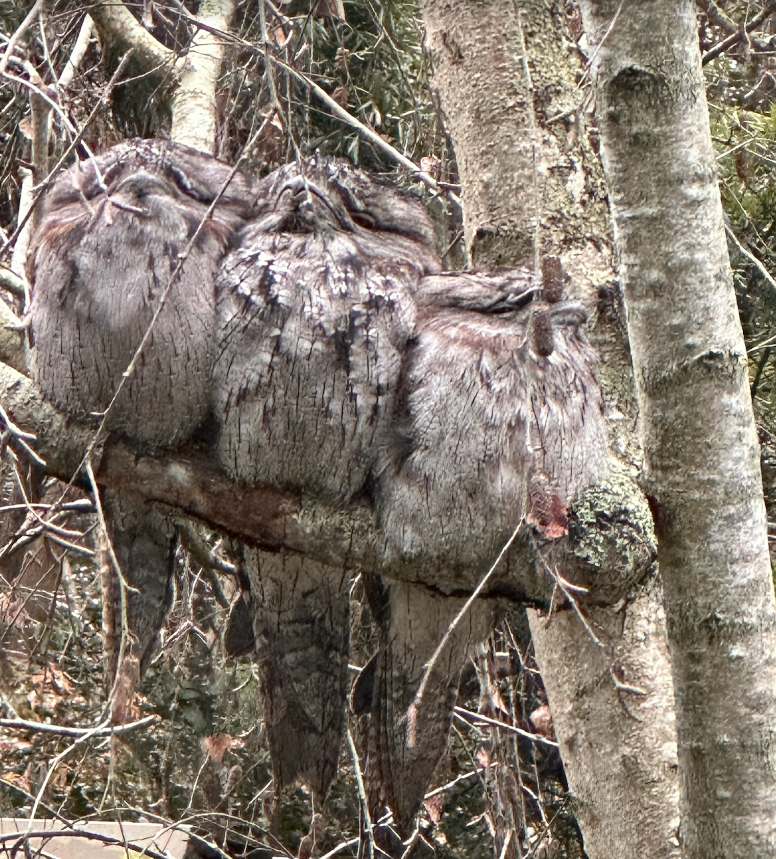
An outdoor setting ?
as well as being sociable with park neighbours :
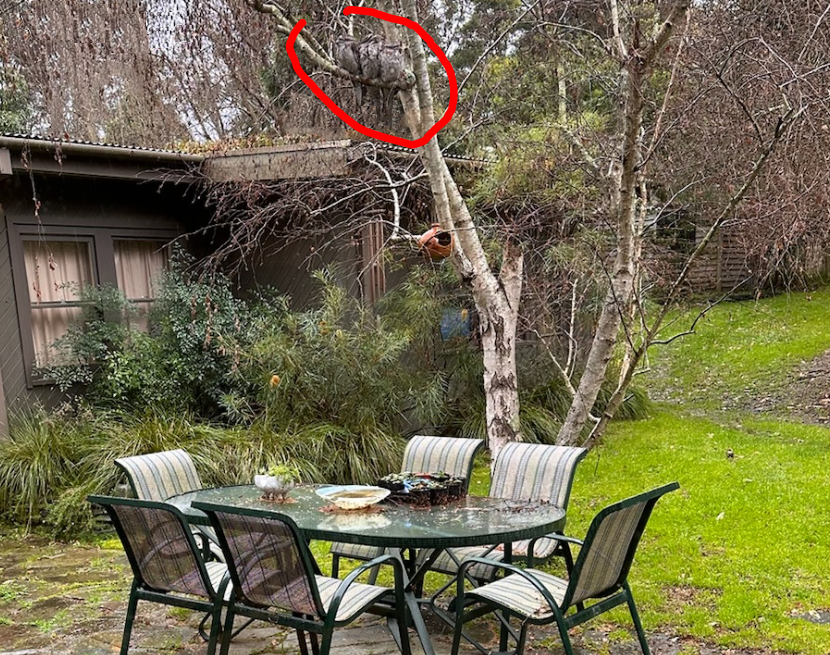
…perhaps waiting for breakfast ? Not really – they are a nocturnal bird and snooze most of the day.
Congratulations to our friends
Congratulations to our friends elsewhere in the KooyongKoot catchment at South Surrey Park (Surrey Hills) and Wurundjeri Walk (Blackburn South) for winning Landcare support grants in this year’s list.
Gardiners Creek Reserve
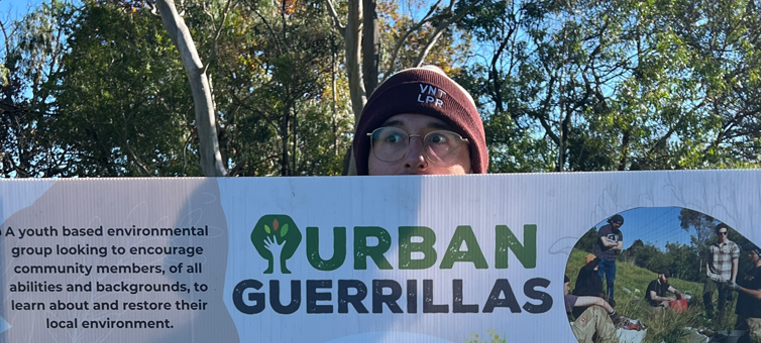
As noted on our front page, our KooyongKoot Alliance buddies including the Urban Guerrillas and the Gardiners Creek Reserve Community are running a planting session on Sunday, August 11th, at Gardiners Creek Reserve – a little downstream from us.
This event is made possible by the State Government’s Greenlinks Grant, marking the beginning of planting 17,000 plants on the site! Wurundjeri Elder Uncle Colin Hunter Junior will lead a smoking ceremony to inaugurate this project.
To learn more about the event and to sign up for the planting session, please register using the link below. After the planting, a BBQ is promised – a great opportunity to mingle and celebrate. Register here: https://events.humanitix.com/gardiners-creek-reserve-revegetation
 Blackburn Creeklands