Events coming up:
- Blackburn Creeklands Bird Walk: Saturday, 19th October 07:30
- Blackburn Lake Sanctuary – Spotlighting Friday 4th October 6pm for 6:30-8:30pm
- Blackburn Lake Sanctuary – Breakfast with the Birds Saturday 12th October 8:30am
- Birdlife Australia – Aussie Bird Count, 14–20 October
Spring has sprung !
Spring has sprung and our first ducklings have been seen for the season:
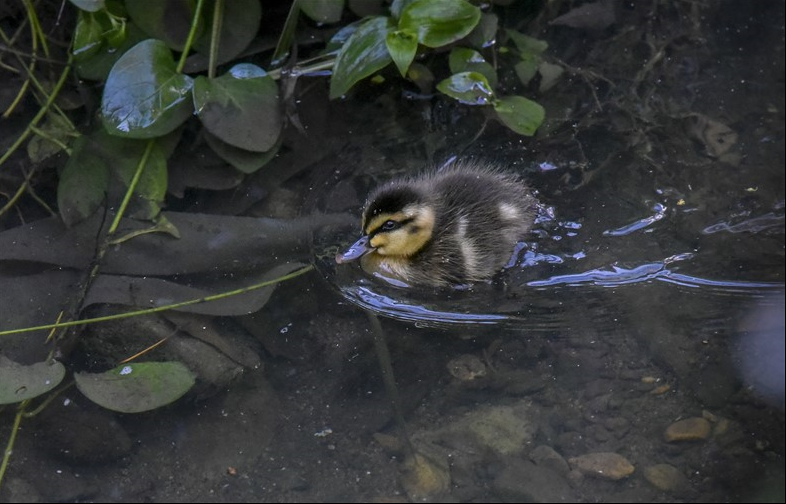
We’re not sure why this little tyke is on his own because they are usually hatched in clusters of 10-12 chicks. Sadly, the answer probably lies in the presence of predators like foxes, Pied Currawongs and possibly cats in the park – but we won’t go further into that one!
Ducklings are “precocial”- more-or-less right-to-go as soon as they hatch. They are born with their eyes open, have downy feathers and are mobile and capable of foraging for food soon after hatching. On the other hand, “altricial” species (like us!) need regular tending, warmth and feeding before they can survive independently. Nevertheless, parents (not so much Dad in the case of the Pacific Black Ducks) are needed for training and protection.
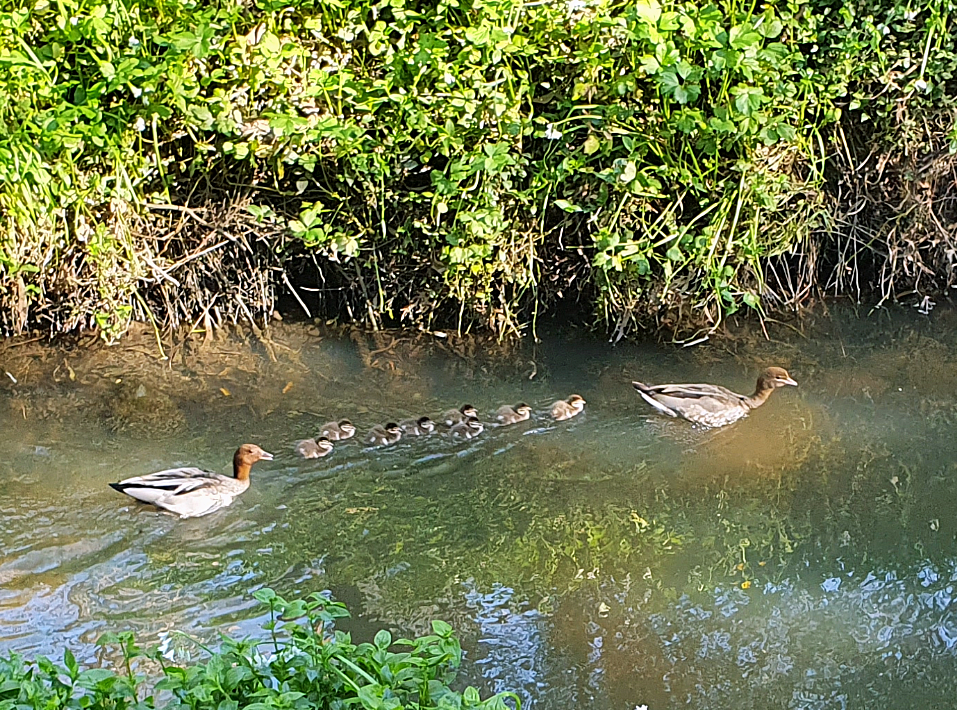
Wood Ducks are seemingly strict parents and Dad knows his role. Here Mum leads the (8) chicks and Dad provides the rear-guard making sure there are no stragglers.
There’s a lot more to see in our Sightings section! Many bird species are nesting now.
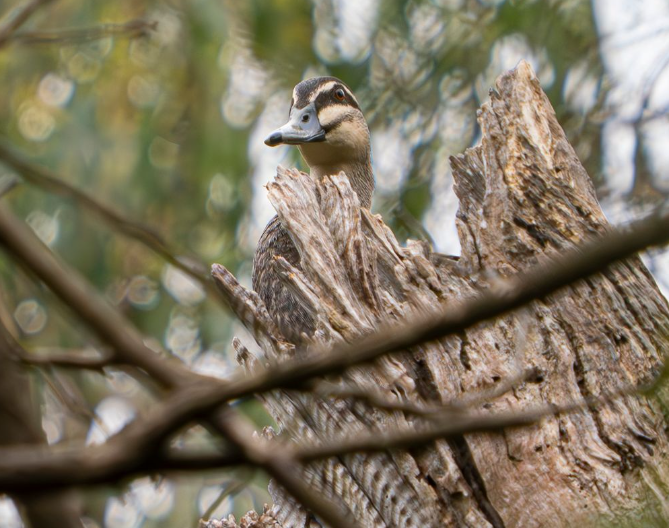
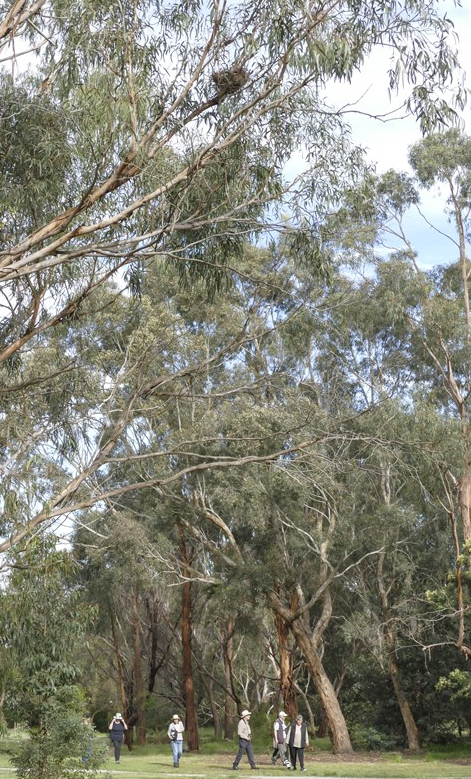
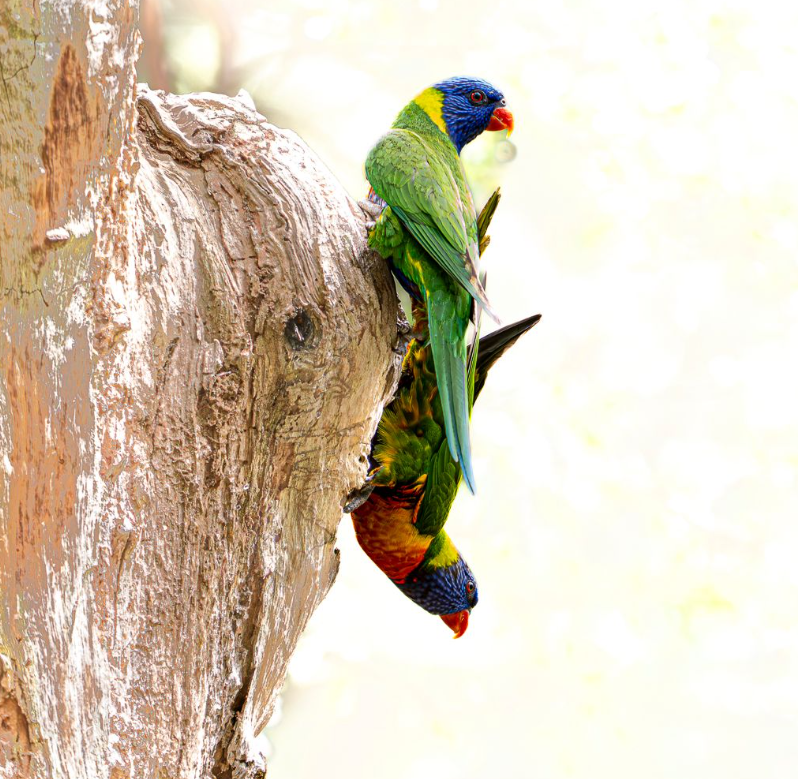
Some bird species and other fauna require hollows for nesting. Larger hollows only form in old trees (both live and dead). We are quite fortunate in our park that that we have several large, old remnant trees that do have suitable habitat for such animals – which include our parrots, ducks, Lorikeets, Kookaburras, possums and even feral bees. Things get very competitive though – those slow out of the blocks are having more trouble finding new homes than first home buyers !
What Season are we really in ?
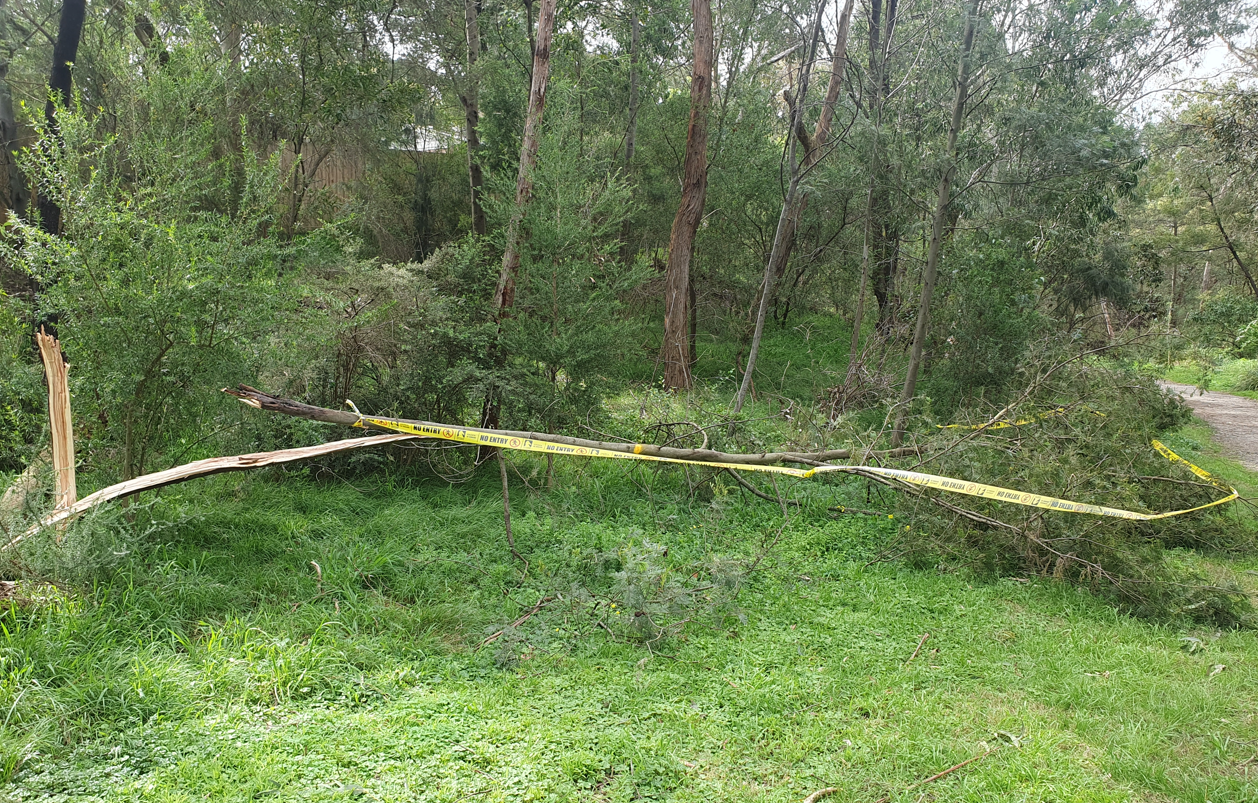
All jokes about Melbourne’s weather aside, if it were not for the nesting activity, it would be hard to know what season we are in at present. There were some warmer days in September with swift, unseasonal returns to Winter conditions – not to mention the extremely strong winds at the beginning of September.
One thing is certain though – the traditional four seasons belong to Northern Europe and really do not fit Melbourne conditions. Many people mistakenly assume that winter is an unfavourable season for plants – taking a cue from the northern European trees that have dropped their leaves and become dormant in expectation of the ground below freezing over.
However, during our winter the park is green, there is plenty of moisture in the ground and the temperatures rarely drop too low for growth. We plant throughout winter and usually stop in September when it becomes too dry. Many indigenous plants, such as Murnong (Yam Daisy), treat winter as a growth season. Our most unfavourable season is actually high summer, when water becomes scarce and much of the ground flora, such as our grasses, dries out and dies off.
According to Dr Beth Gott, Alan Reid was the first to suggest a calendar for the Middle Yarra region which had six seasons: Autumn, Winter, Pre-spring, True Spring, Early Summer and Late Summer. Naturalist Glen Jameson developed his ideas further to nominate Late Summer, Early Winter, Deep Winter, Early Spring, True Spring, and High Summer:
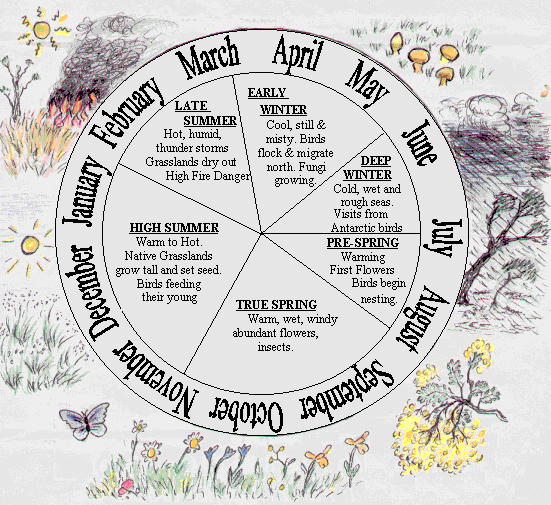
Those divisions are somewhat arbitrary – there is a similar calendar of seven seasons based on conditions in the Upper Yarra attributed to the Wurundjeri. Certainly, our first peoples were very keen observers of nature – not only fauna and flora – but also the seasons and the stars. They would know when it was time to hunt a specific animal when a particular constellation appeared in the night sky.
Dr Beth Gott (passed away in 2022 aged almost 100) was an ethno-botanist at Monash University and a pioneer researcher of aboriginal plant usage – decades ahead of her time. Our Bush Tucker page is based on her original work.
Alan Reid is a renowned naturalist and was strongly associated with the development of environmental education in Australia. He conducted a butterfly survey of Blackburn including the Creeklands in the late 1980s. Alan was on the Creeklands committee from 1987-1992. He also inspired our “photopoints” project. His partner, Councillor Wendy Reid, was instrumental in the creation of the Bungalook Nursery. Both were strong supporters of our Project Regeneration (1986-87). We owe the Reids quite a lot!
Middle Yarra is defined to be the Yarra catchment from the confluence of Watson’s Creek in Kangaroo Ground to the Burke Road bridge. Gardiners (KooyongKoot) Creek is part of the Yarra (Birrawung) catchment.
Here’s what Beth said about True Spring- September, October:
This was a time of plenty. Lilies, Orchids and MURNONG (Yam Daisies) flowered and still provided root vegetables. Greens were consumed in large quantities. Flowers were everywhere – Wattles, Hop Goodenia, Burgan, Kangaroo Apple, as well as orchids and small lilies which had been building their tubers over the winter. Snakes and Lizards became active, young Kangaroos came out of the pouch. Migrant birds – the Sacred Kingfisher for example, returned from the north. Tadpoles appeared in ponds, and the river, fed by melting snows from the mountains, flowed into the flood-plains and replenished the billabongs. Water-plants put on green leaves.
Something has already eaten all the Yam Daisies we planted at the CWB on 7th July for NAIDOC Week. We’re keeping our fingers crossed that the bulbs are still intact and viable…
Thursday Team Report
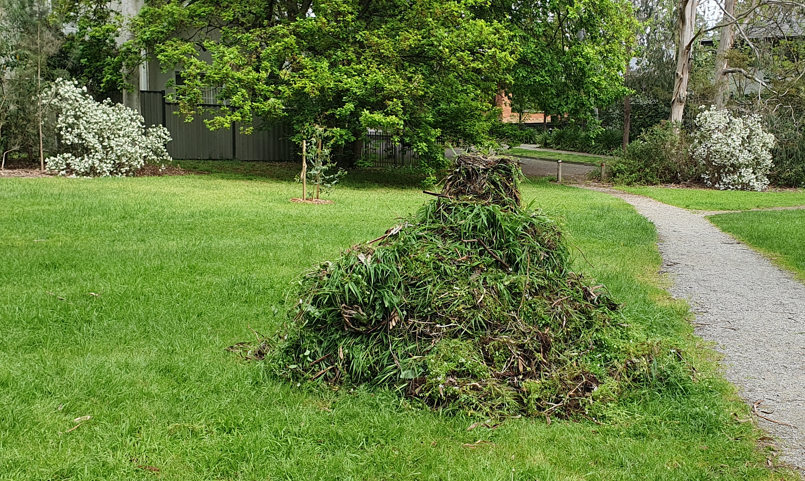
One less welcome aspect of our wet winter, pre-spring and true spring is that the weeds have been growing fast too!
The team has been busy in Kalang Park on the south side of the creek – near the Bowls Club carpark, in the Billabong area and a little west of the Laurel Grove bridge. We are very pleased that two new members have been added to the team.
Wattle Day Community Working Bee
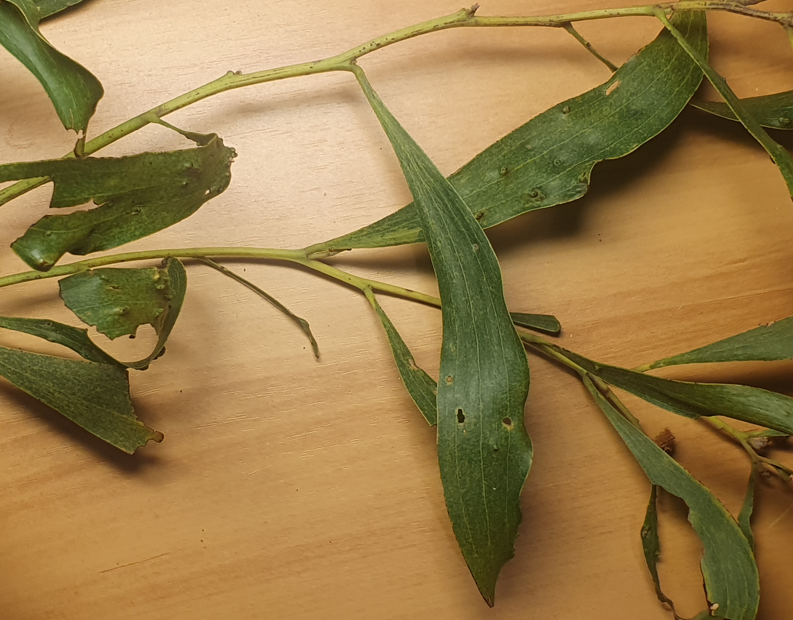
The last Community Working Bee for this year was held on Wattle Day – Sunday, 1st September with about 20 in attendance. The event was mostly devoted to weeding – though 46 plants were also planted. Megan delivered an interesting talk on Wattles – especially on leaves and “phyllodes”.
All wattles have “true” leaves when young – but some species, such as our Blackwoods, replace them with “phyllodes” (which look rather like leaves to mere mortals) as they get growing. Other species keep their leaves for life. Megan explained that phyllodes are an adaptation for our hot, dry conditions – they are actually modified stems that behave like leaves – but are tougher structures with less surface area and less prone to water loss.
Spring Bird Walk
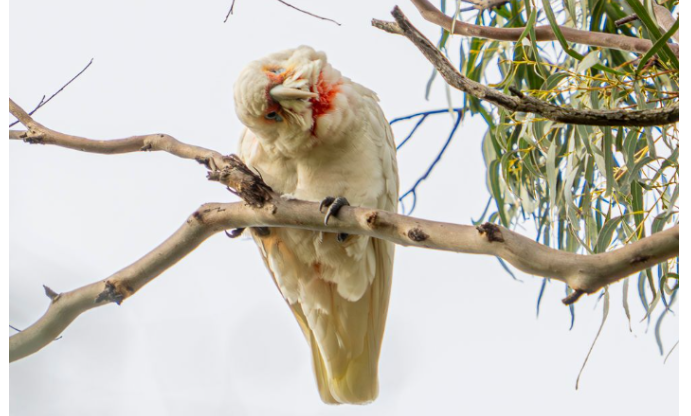
One for your Calendar: our Blackburn Creeklands Spring Bird Walk is planned for 7:30AM on Saturday the 19th October. As usual, our Groups will be led by our wonderful expert leaders – Pat Bingham and Ian Moodie.
We will start and finish at the Scout Hall in Pakenham Street. The survey is followed by (an optional) morning tea to correlate group results. It’s a great way to learn about our local birdlife. The community is encouraged to join in – no special knowledge or experience is needed to participate. Children are welcome accompanied by parents/guardians. We’ll send out a reminder closer to the day.
Council Works in the Park
SRLA Offset Plantings
Last month we let you know that the Suburban Rail Loop project has resulted in the removal of a lot of trees within the municipality – especially around the proposed stations. To compensate, the authority is obliged to fund “offset” tree plantings within the municipality.
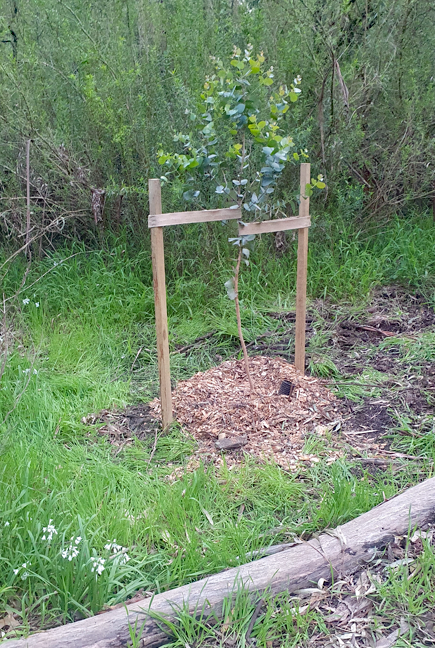
We think this approach is more equitable than the approach used in the past where offset plantings for Eastlink were made somewhere in Gippsland. They should benefit the community that suffers the loss and there is much better transparency this way.
Council planted the trees early in September. You’ve probably noticed them all over the park – they look like street tree plantings – more advanced plantings than the tube-stock we would use – plus mulched with wood chips and set-up for watering when needed. We haven’t counted them yet – but there should be sixty-five new canopy trees in place !
Plantings in Kalang Park
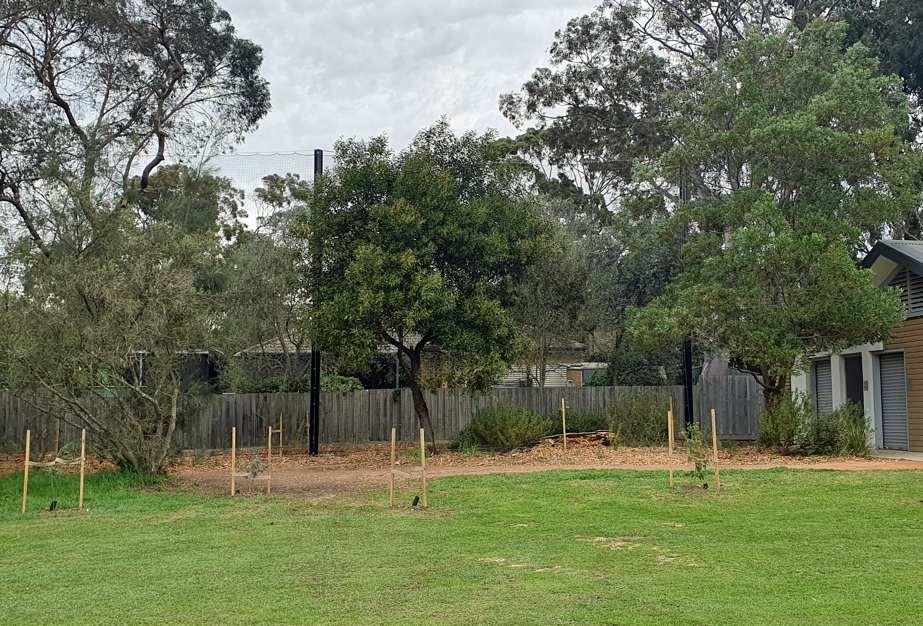
Council also planted up the area around the new cricket safety nets at the rear of the pavilion and also around the children’s playground on the opposite side of the oval:
Tools Store
We’ve been advised by Council that our tools cage at the Kalang Pavilion (behind the middle door on the right hand side in the photo above) is to be reconfigured internally to give us a bit more space to store bulky item like wheelbarrows.
Goodbye and Thanks Belinda !
We note with sadness that Belinda Moody has left Whitehorse to advance her career in Whittlesea. Belinda was the go-to person for trees in the Planning Department and has fostered Gardens for Wildlife, community education and the Urban Forest in our municipality for several years. We thank her for the significant and very positive impact she has had on the environment within our municipality. A hard act to follow! 😢
Whitehorse Open Space Strategy (WOSS) Update
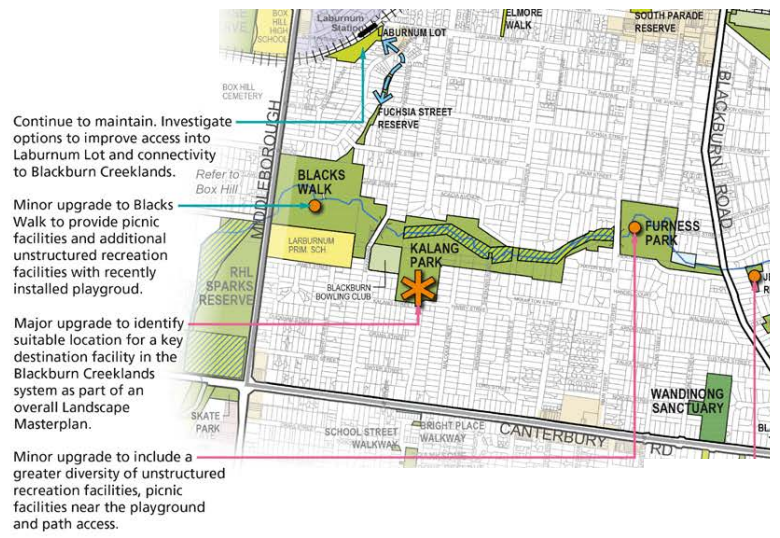
We were very well represented at a final briefing for Park Advisory Committees where Council’s WOSS team members were able to be asked specific questions to assist our understanding of the proposals affecting our bushland parks.
Our Committee then finalised our formal submission to Council which was well received by the WOSS team. We are expecting to hear more in December when the strategy is scheduled to be put to Council.
Drainage Works Adjacent 60 Main Street
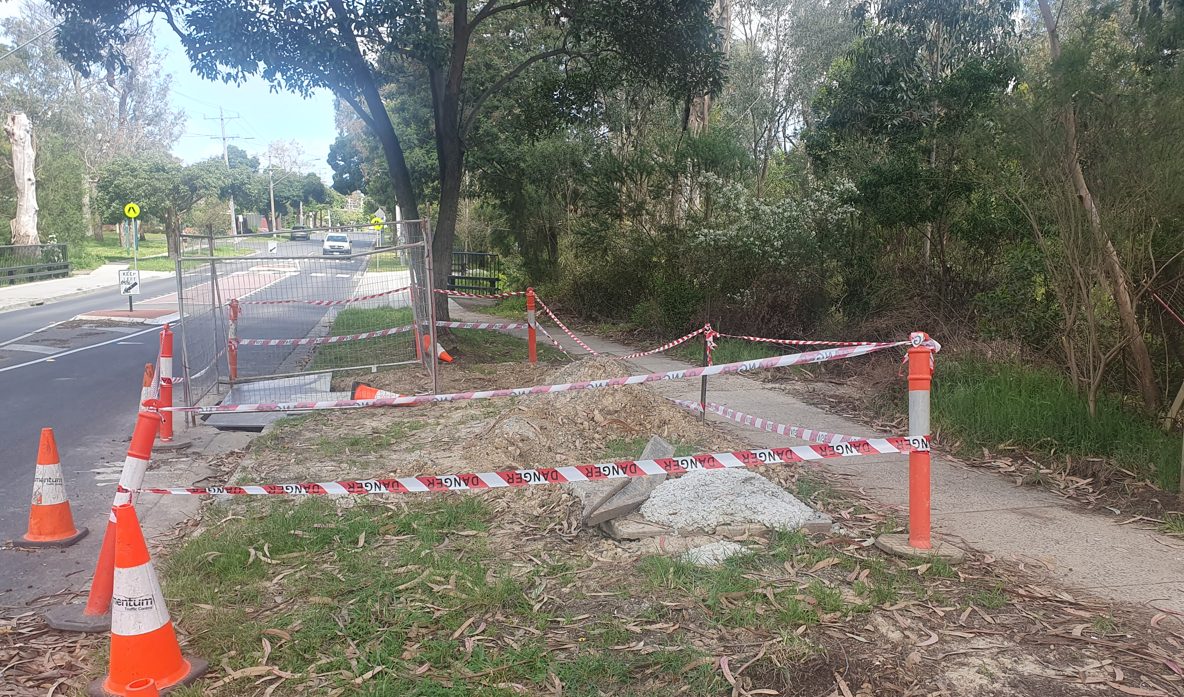
Council has advised that drainage work for the 60 Main Street flats necessitates a 400mm wide encroachment into the park alongside the footpath in the north east corner of Kalang Park (at right in the photo). Earlier attempts to reach the drain via the nature strip failed. Our thanks go to Megan and Delldint who rescued the plants they could from imminent destruction. They’ve been rehomed near the Billabong.
Inclusive Seating Project
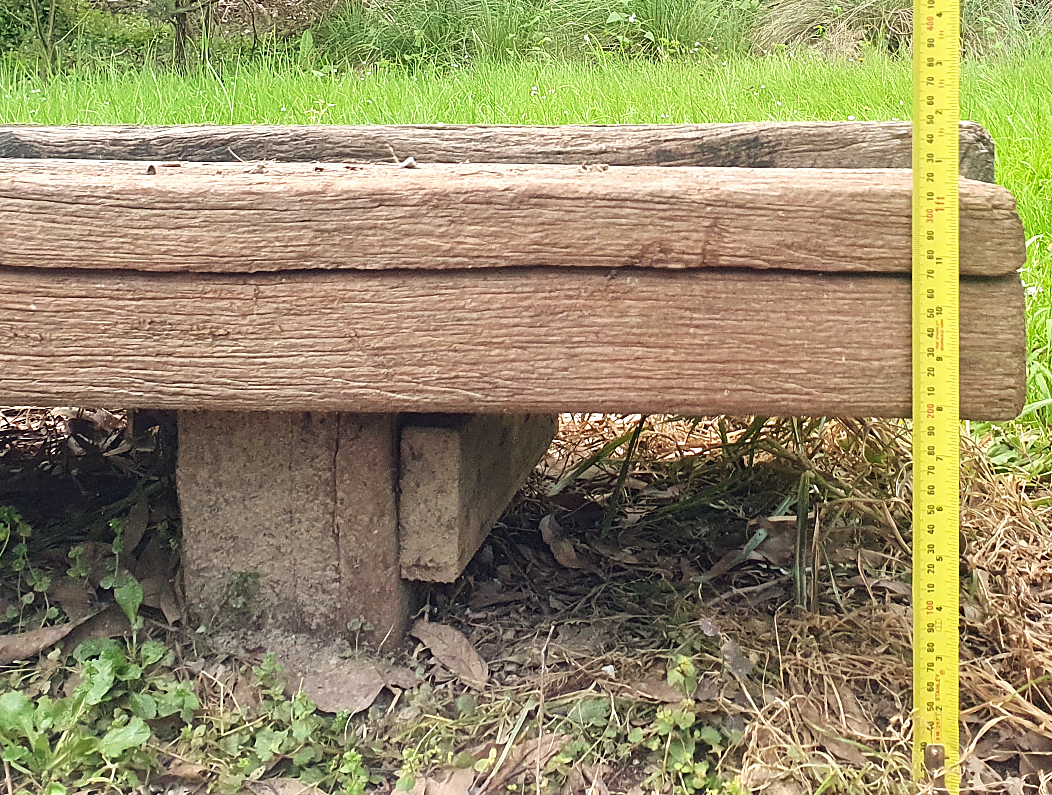
As reported in our August newsletter, linear parks (parks shaped like a long line such as ours that follows the creek) can be very good for walking by people of all abilities – although inclusive seating is a required enabler.
Health and mobility practitioners have established that the ability to walk for six minutes at a stretch is needed for a person with mobility issues (eg a toddler or someone elderly) to successfully and safely walk in a park like ours without additional assistance. To ensure access and equity (which is enshrined in Australian law), it follows that seating should be placed near paths at no greater distances apart than what can be comfortably and safely managed in 6 minutes by people with mobility issues.
It is also crucial that the walkers can be confident that the next seat will be predictably within the 6 minute range. This not only goes to the distance between seats but also their visibility and accessibility from park entrance points.
Progress to date is:
- Our mapping of existing seating has been displayed on the Blackburn Creeklands Noticeboard near the Pakenham Street entrance to Kalang Park for your information.
- Tests have begun in Furness Park and requirements for two seat upgrades and the sites for two additional seats have been identified. Assessments with a Professional Mobility Specialist will continue in Kalang Park and Blacks Walk over October/November.
- Our findings and conclusions will be reported to Council’s parks management when complete. We’ll report further progress in our next editions.
Air Quality
There are a number of factors that we look at when planning our working bees including: weather warnings, heatwaves and temperature extremes, thunderstorm asthma forecasts during the grass pollen season (October to December) and air quality.
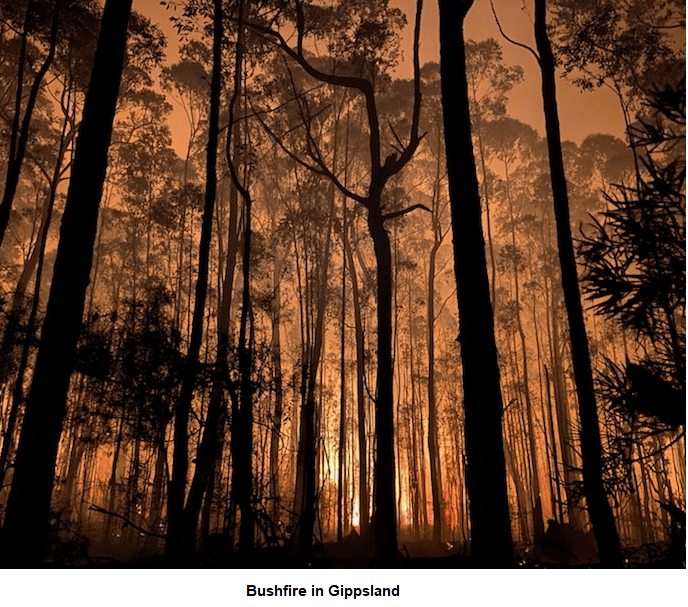
Some people are extra sensitive to air pollution. These include children younger than 14, pregnant women, people older than 65 and those with heart and lung conditions (eg asthma).
Symptoms include chest tightness, itchy/sore eyes, sneezing/runny nose, coughing/wheezing and shortness of breath.
Photo: Scott Thorpe (CFA Volunteer)
The EPA AirWatch service measures PM2.5 rates at sites around Victoria. PM2.5 are tiny particles usually found in smoke. They have a diameter of 2.5 micrometres (0.0025 mm) or smaller. For comparison, human hair varies from around 20–180 micrometres in width. Rye grass pollens measure 20-40 micrometres.
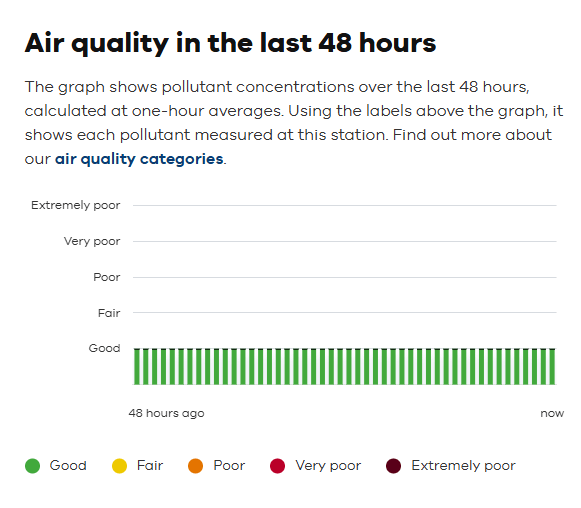
Our Air Quality is usually consistently “GOOD”. For the first time on 4/9/2024, the EPA Air Quality forecast for a Thursday morning event was not “GOOD” – rather, it was “FAIR – fair to poor air quality was expected due to smoke from bushfires and planned burns blowing down from the northern to the southern part of Australia.
When the forecast air quality is Fair or Poor, we make sure that our team members are alerted to the issue and are recommended to make their own decision as to whether to participate based on their particular situation for their safety. We would not work on days where Very Poor or Extremely Poor conditions were forecast. Any exercise outdoors for anyone would not be advisable.
As it happened, the forecasted strong northerlies did not arise that day and our air quality remained consistently GOOD all day.
Other than bushfires and planned burns, pollution sources can be vehicular traffic, wood heaters, industrial emissions and dust storms.
Sightings
Some interesting stories are attached to a couple of sightings submitted by our photographers (Greg, Ken, Lindy and others):
Kookaburra Courting Behaviour ?
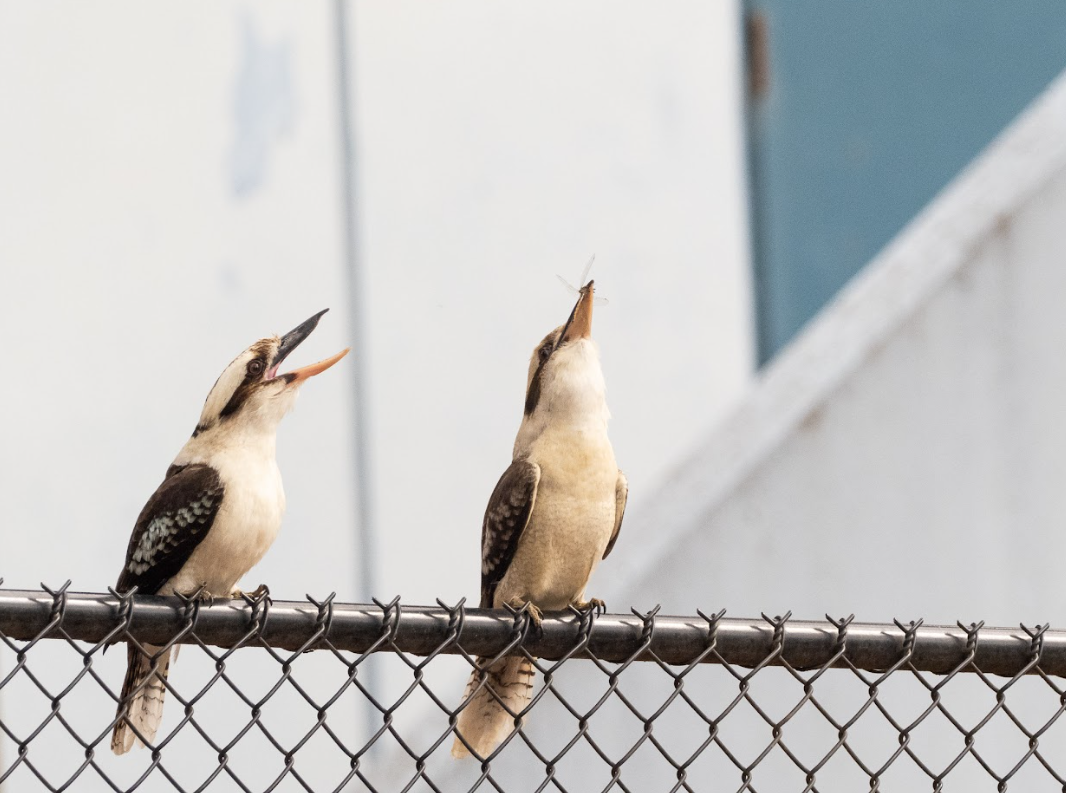
This pair of Kookaburras was snapped on the school fence in Blacks Walk on the Monthly Wednesday Bird Survey (10/9). The photographer (Greg) noted:
The bird to the left fetched the dragonfly and gave it to the bird on the right [faintly visible in the bird’s beak], directly after which both birds gave a long and raucous call. A courtship gesture? [maybe a Damselfly then? ed]
Pat, the Group Leader for the day, also made a similar report concluding both birds laughed riotously ! Maybe it was a practical joke (?)… eg Kooka #1 to Kooka #2 – “hold this for a minute”… “haha – fooled you!”…
Birds of a Feather?
In another of Greg’s photos, we see an Eastern Rosella happily standing by – apparently keeping watch – while a Crimson Rosella takes a bath in Blackburn Creek:
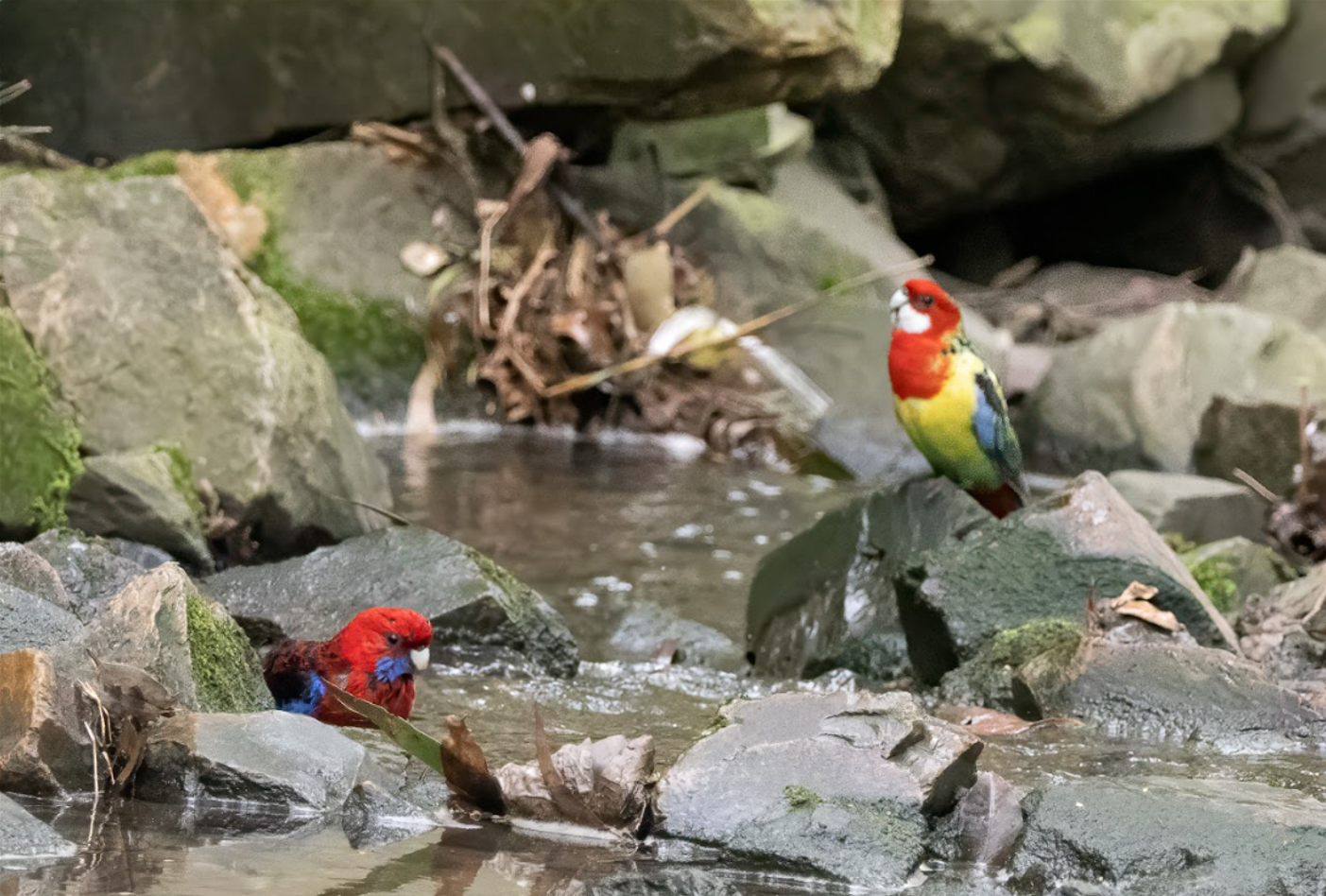
Both species belong to the same genus Platycerus (Rosellas) – so they are related (P. eximius and P. elegans are the scientific names for the Eastern and Crimson Rosellas respectively). The Eastern Rosella is the “tomato sauce bottle” variety and a little smaller – it seems to be debatably more common in the park at the moment.
Interestingly, there are South Australian subspecies of the Crimson Rosella that have yellow/red/blue colours looking more like their cousins – they are collectively called the “Adelaide Rosella” types.
Nesting Activity
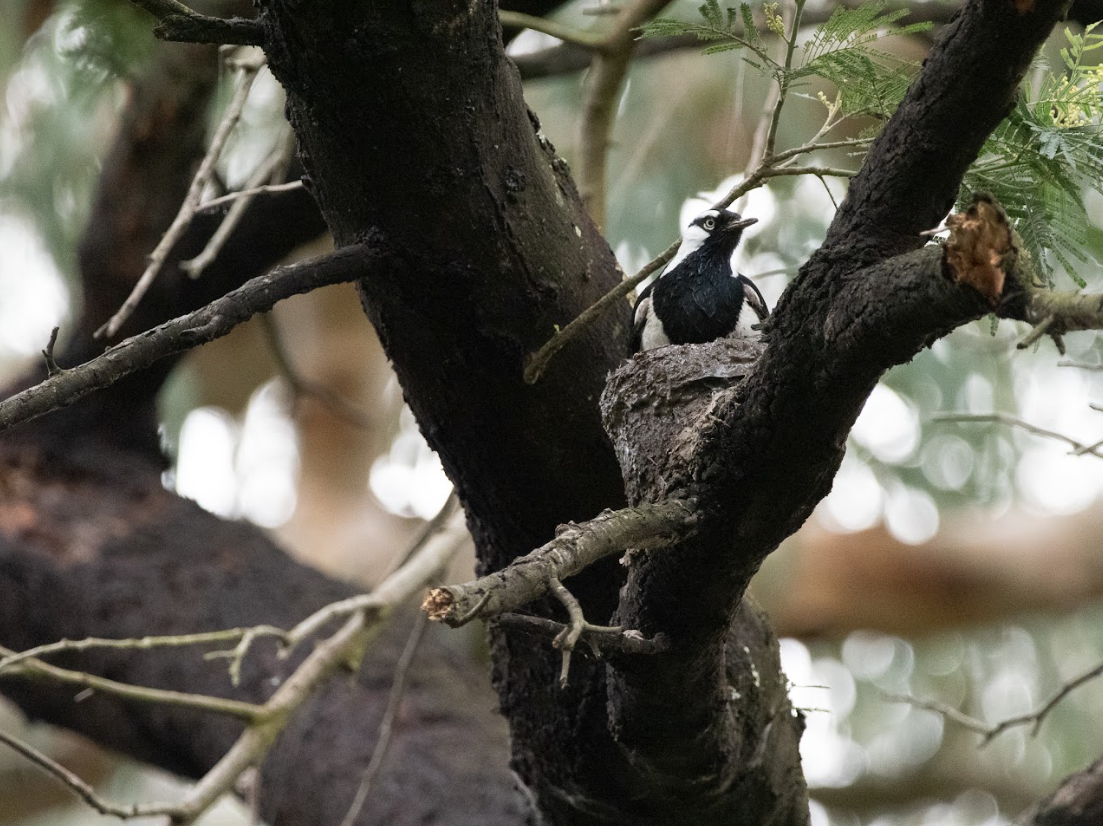
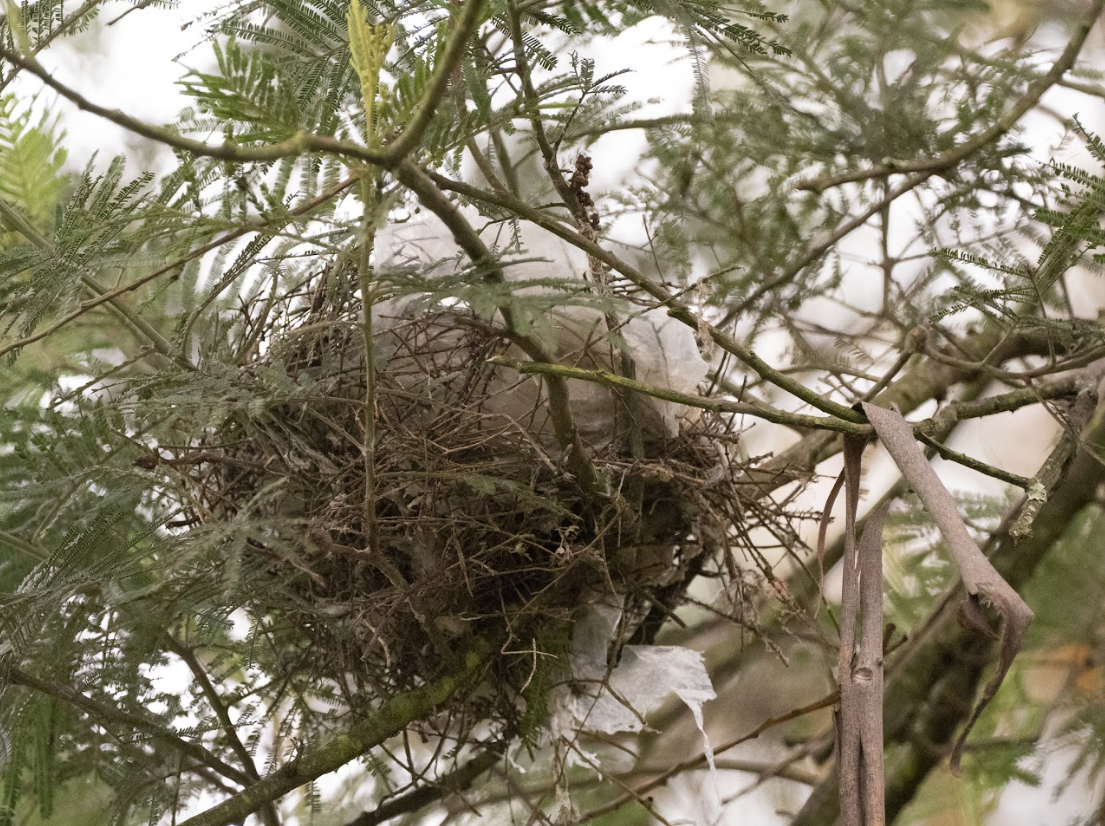
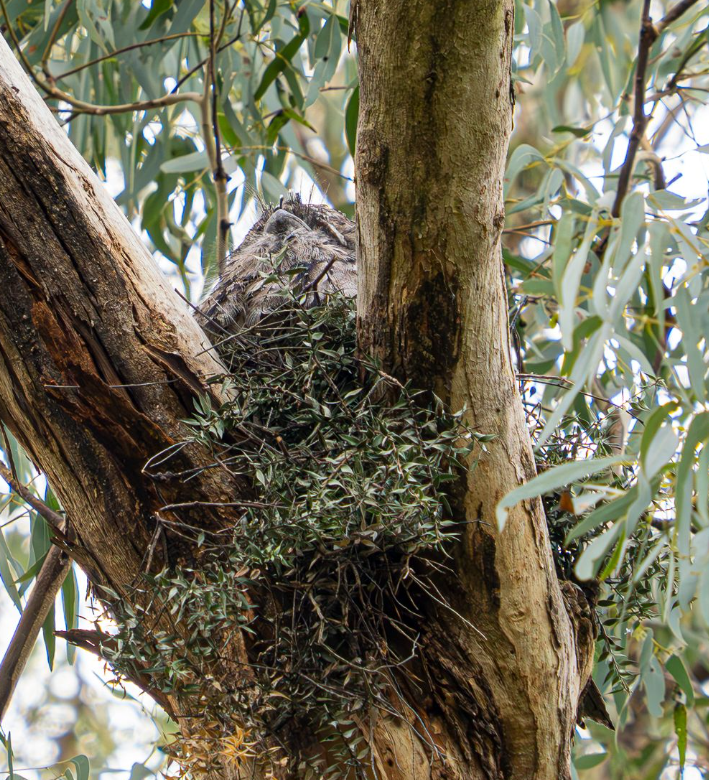
Given all the nesting going on, we’ve separated related photos from general observations showing our fauna and flora. Once again, we see the birds making use of litter (plastic, wire etc) in their nest building – a little disturbing but at least some recycling is occurring!
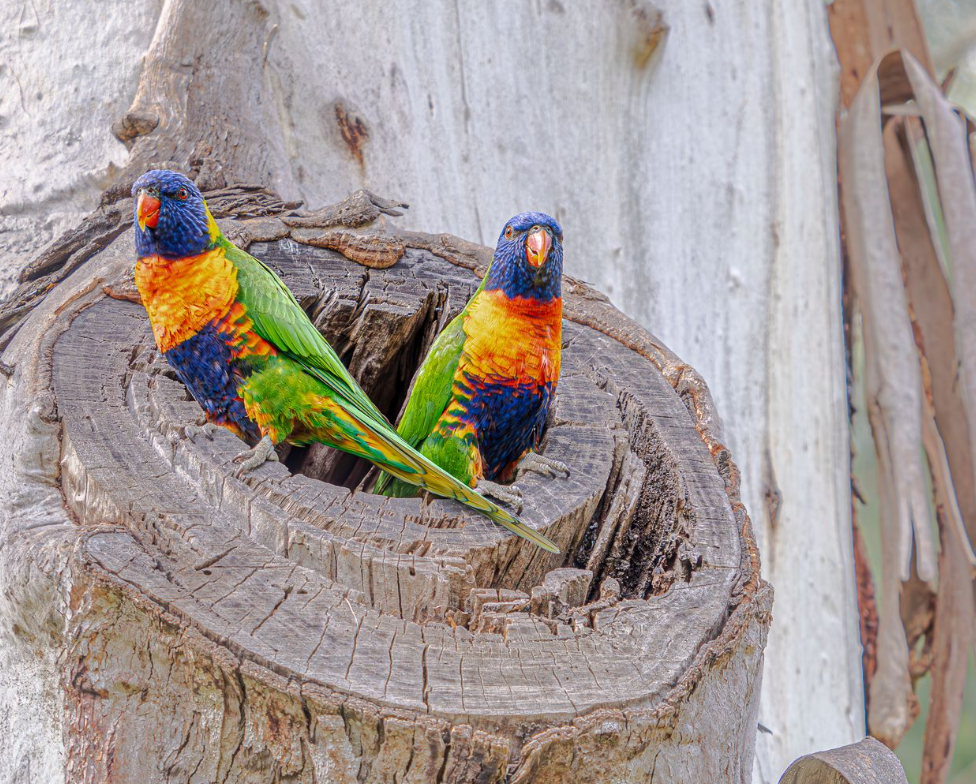
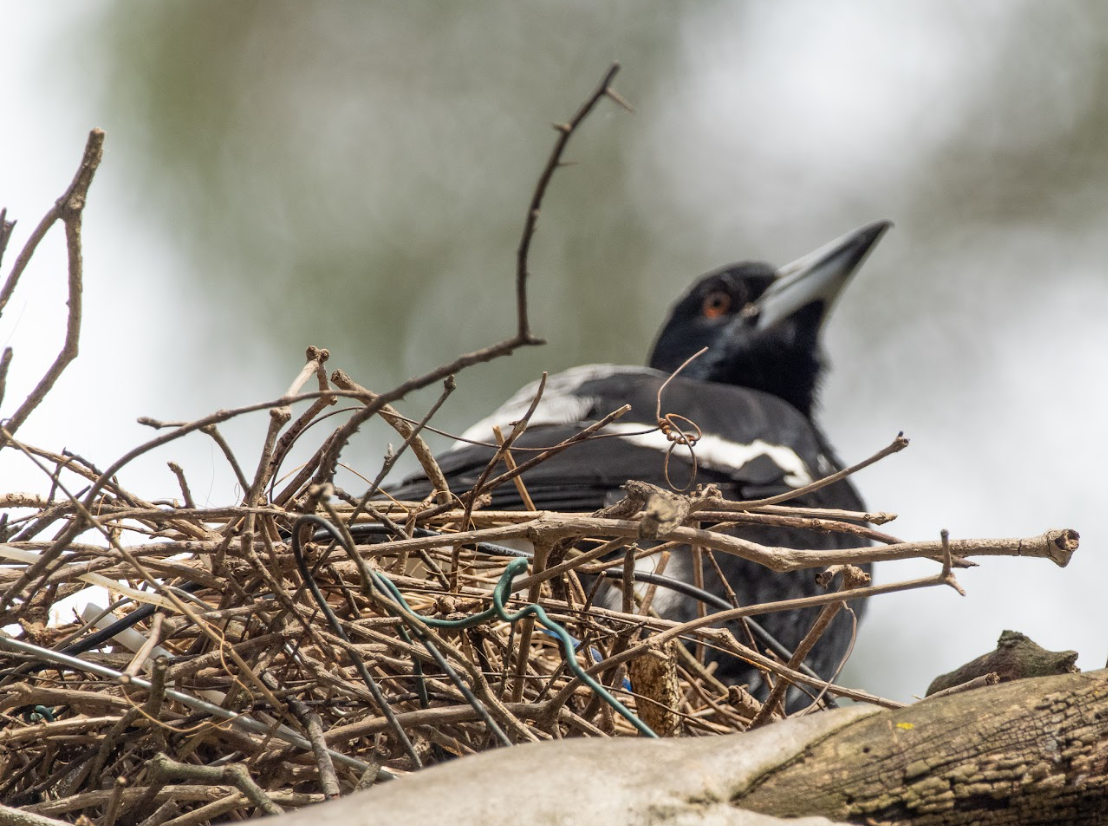
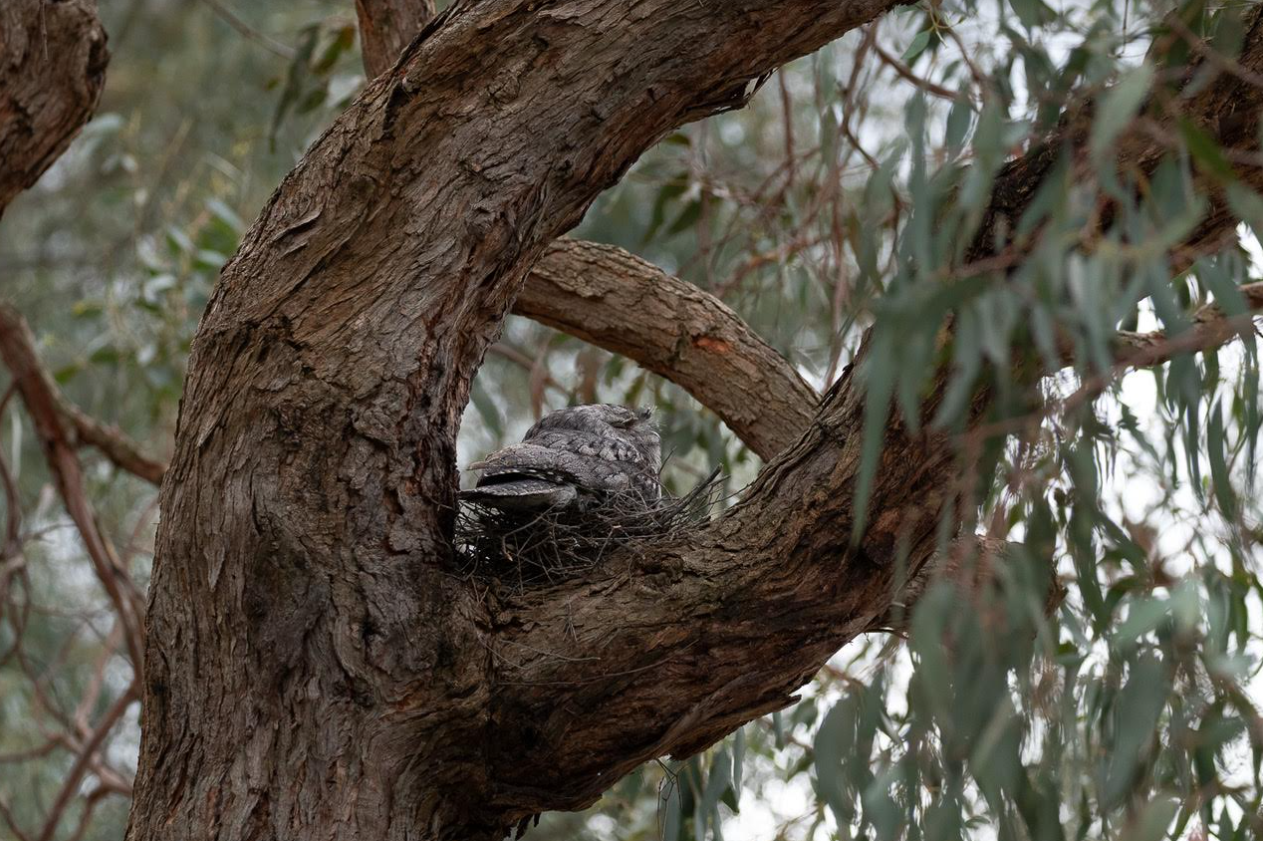
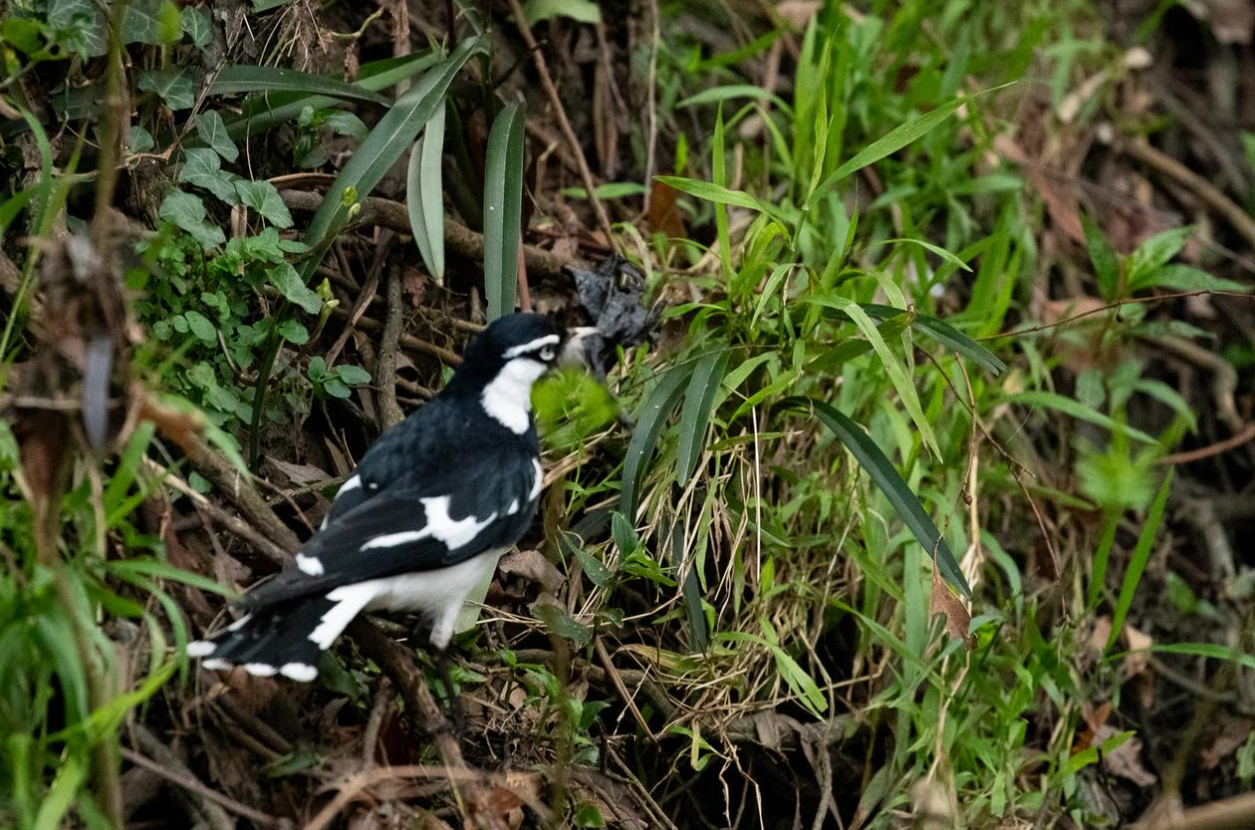
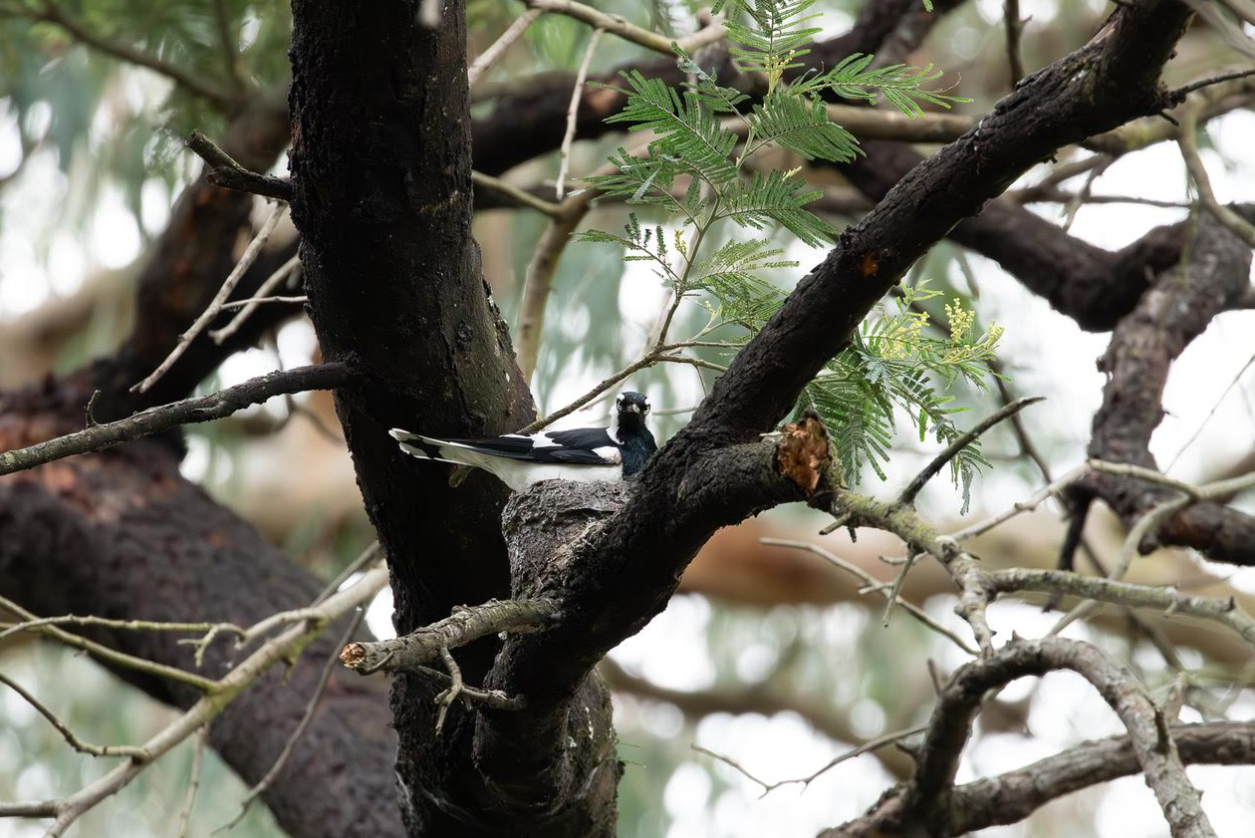
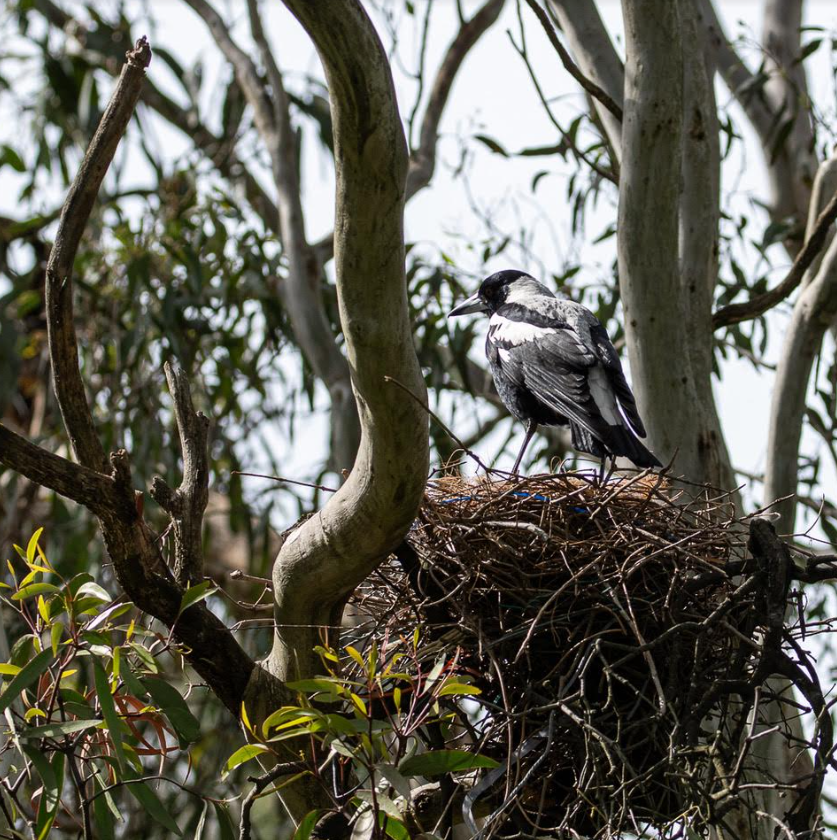
Please click on image to enlarge; click on the X to return
Others
Our photographers also took the following shots of our fauna, flora and, given the moist conditions, some interesting fungi.
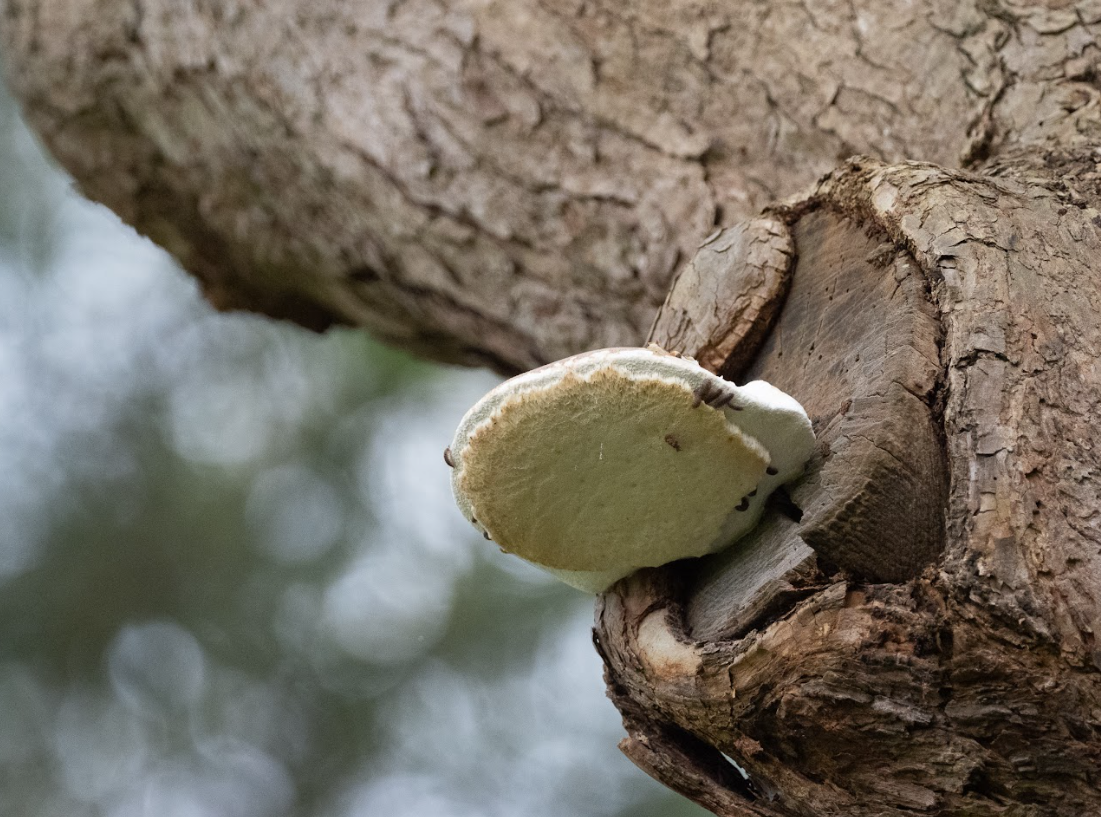
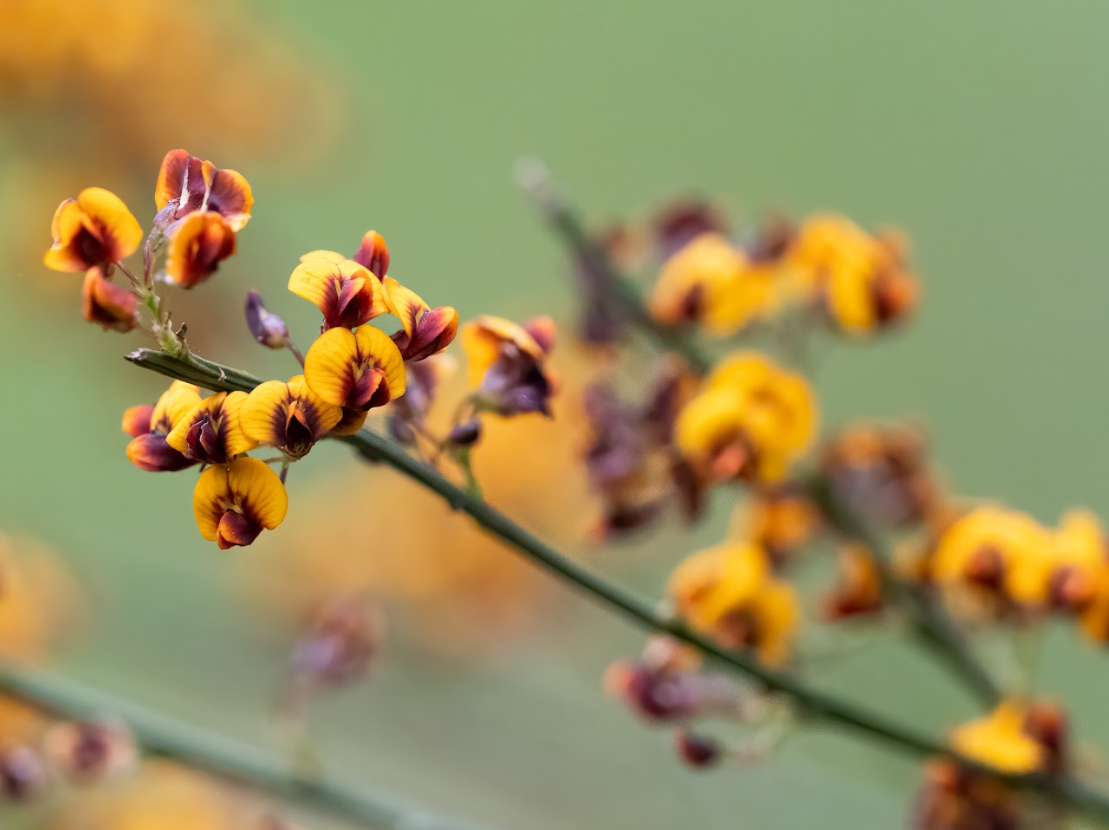
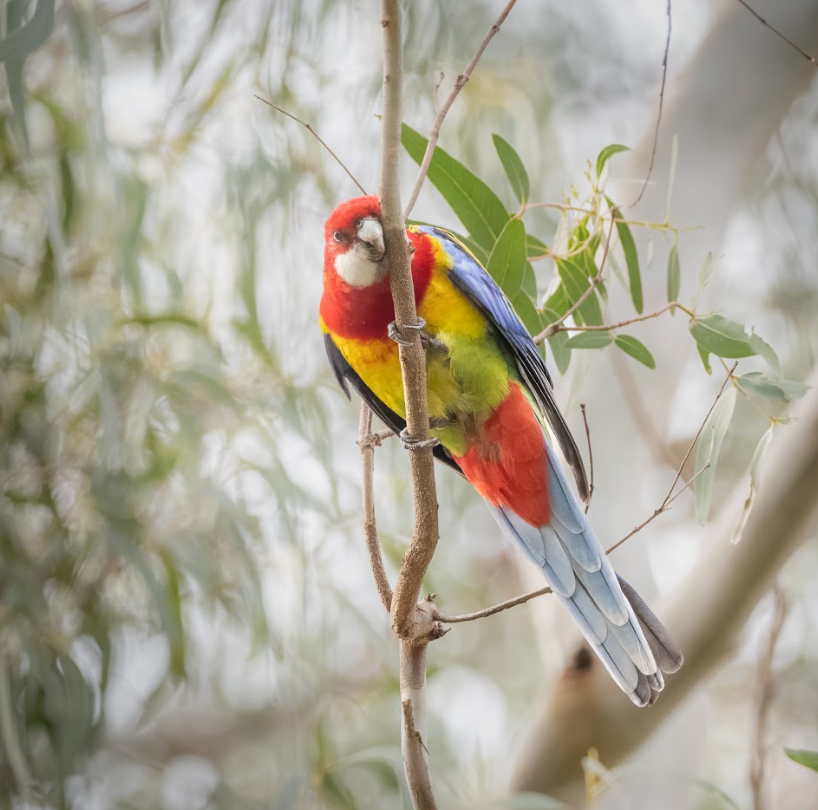
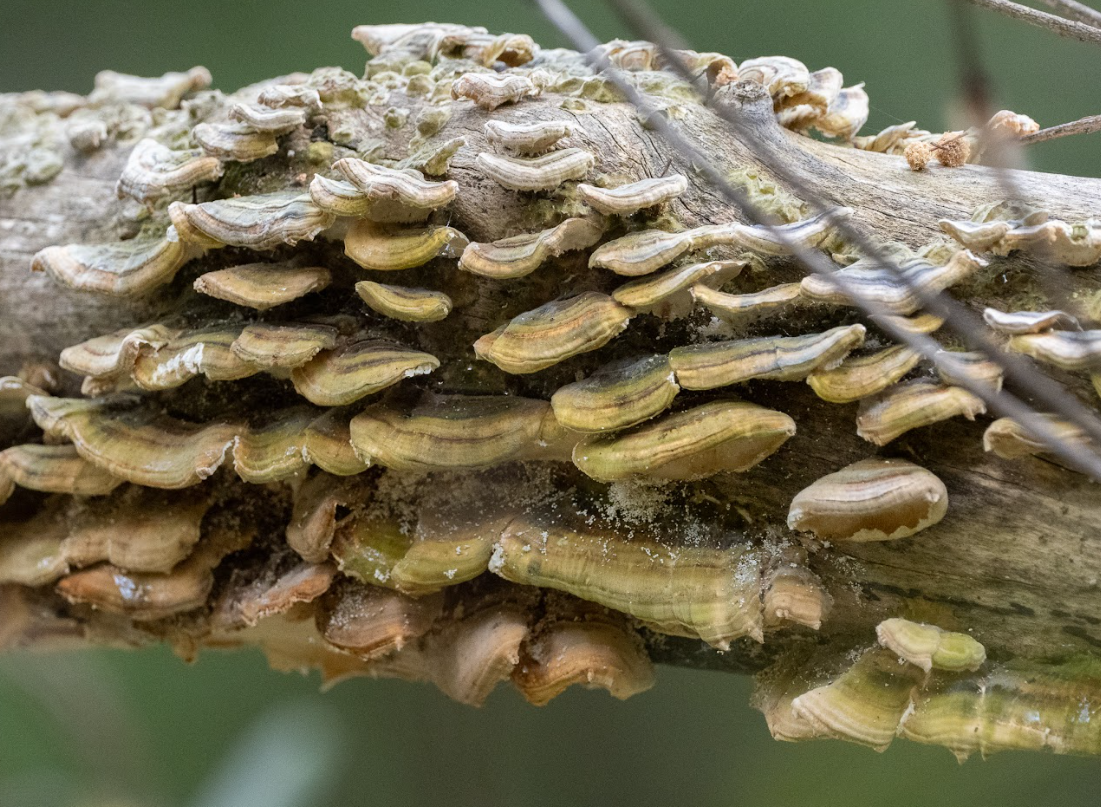
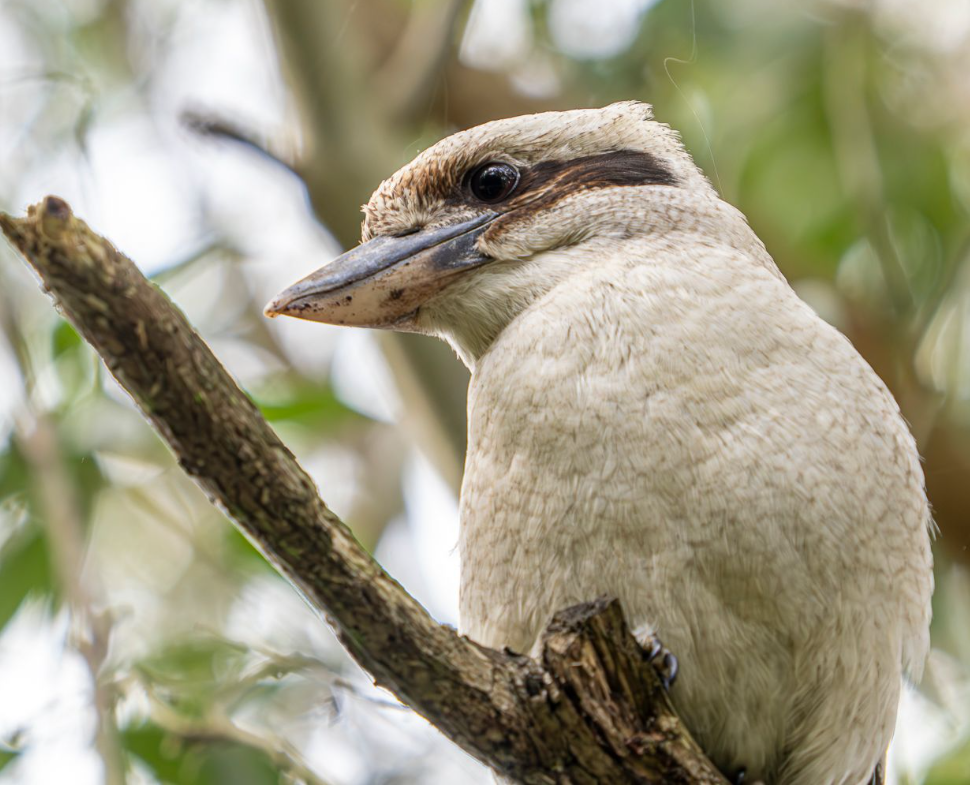
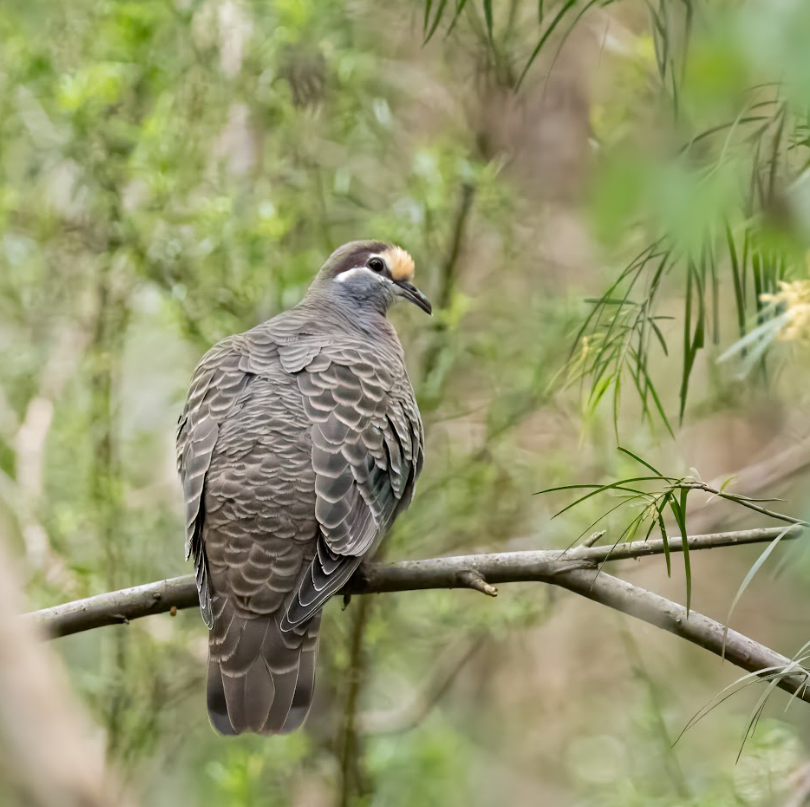
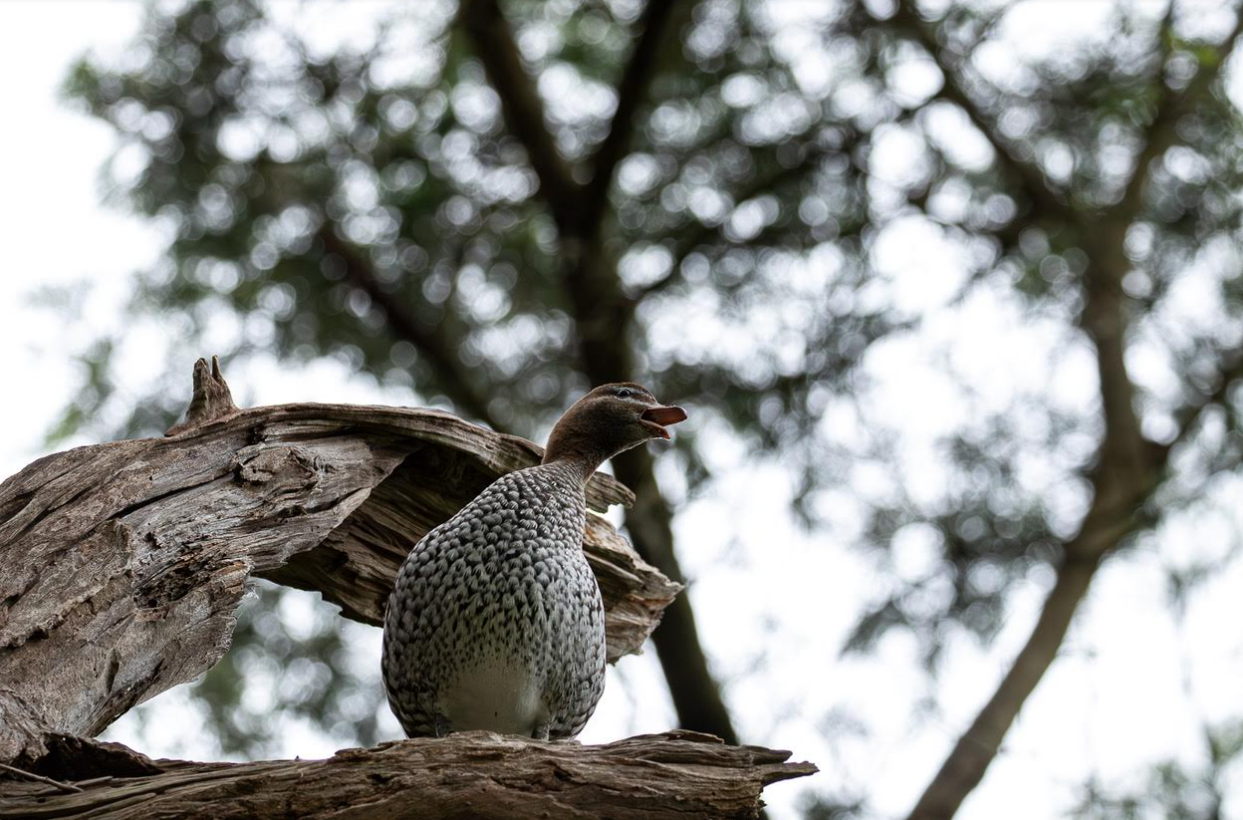
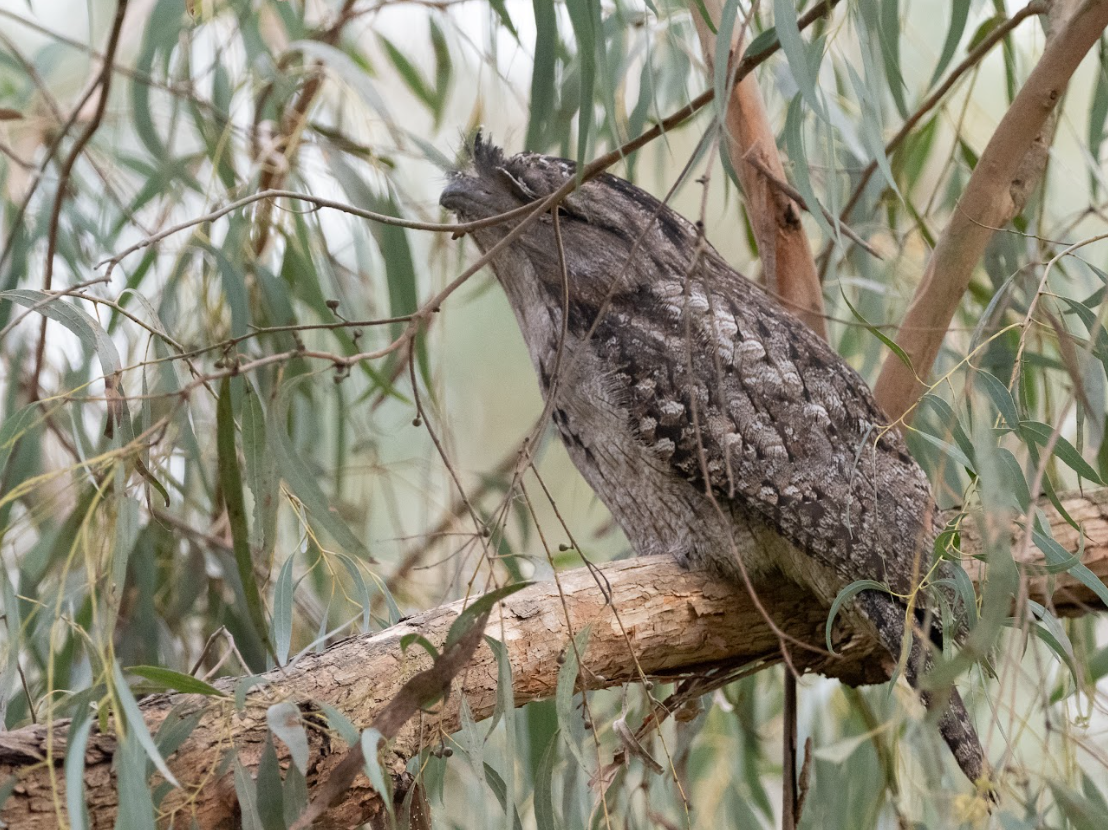
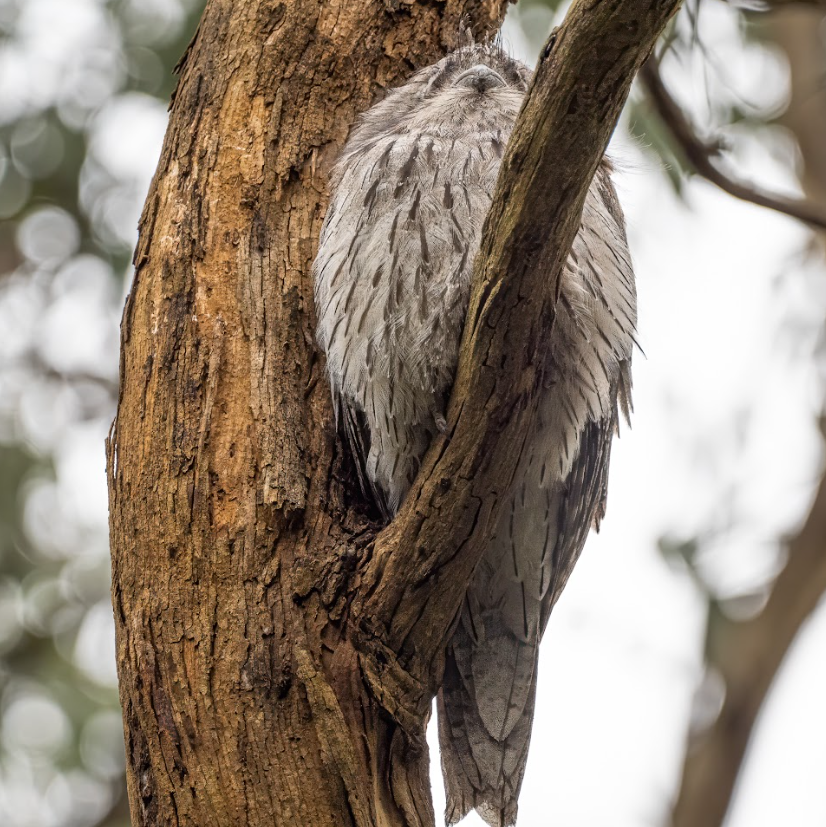
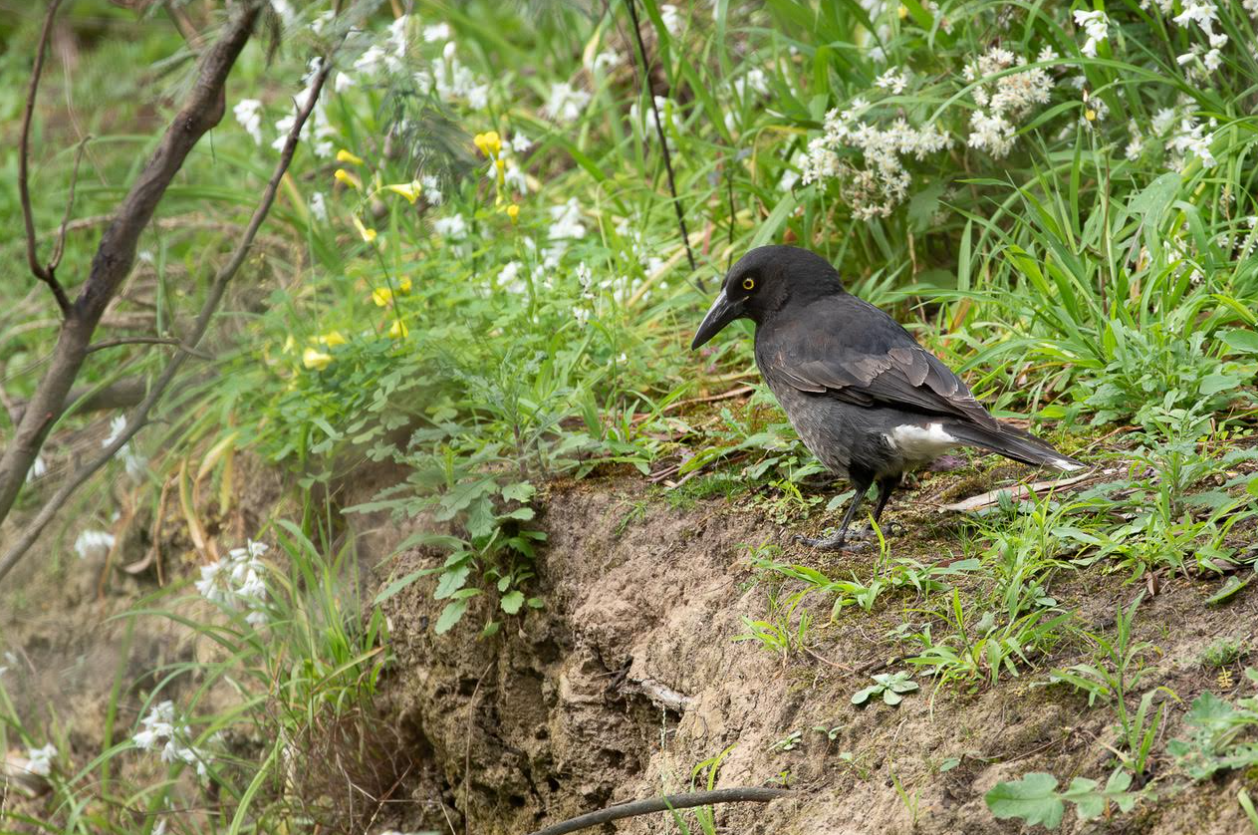
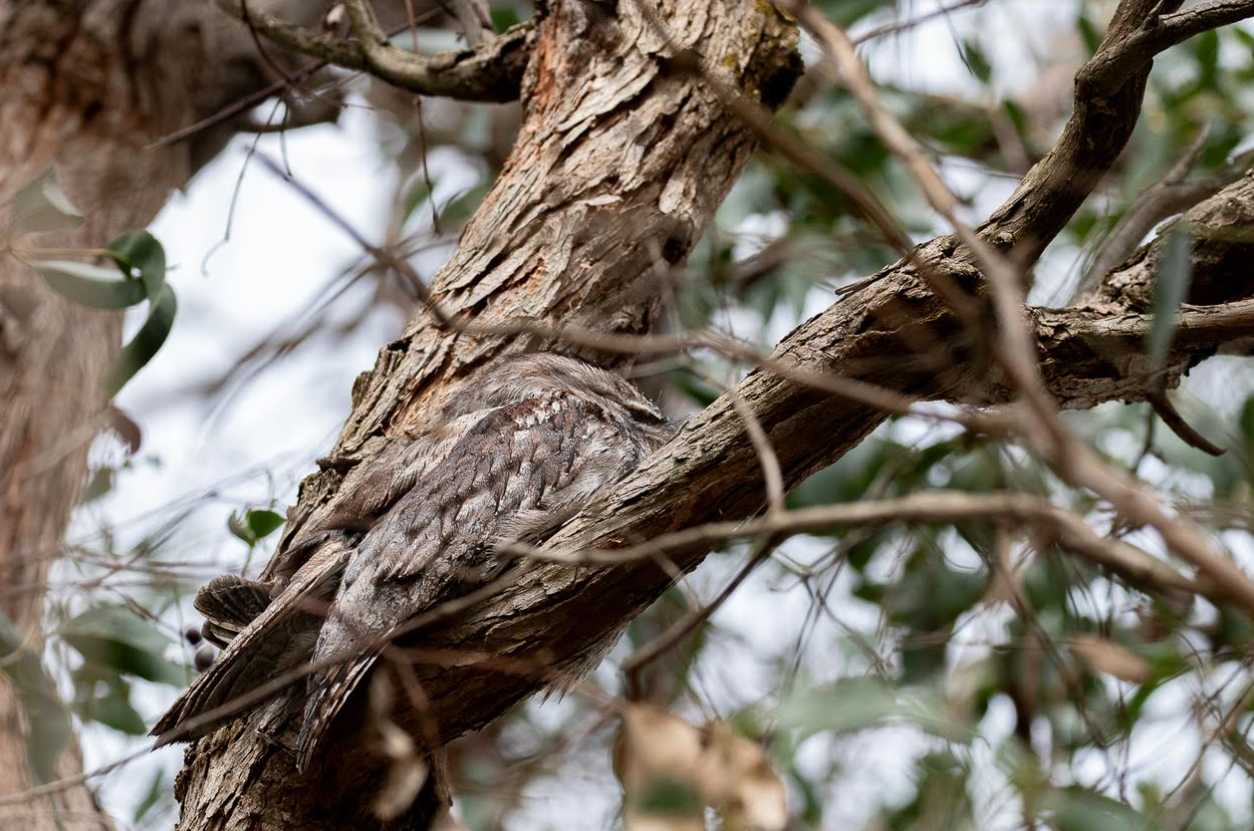
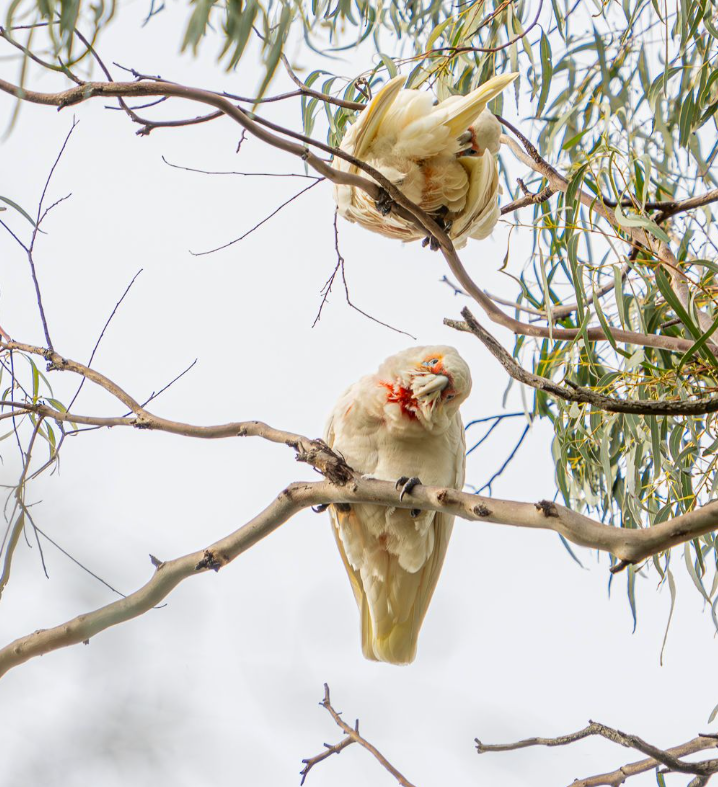
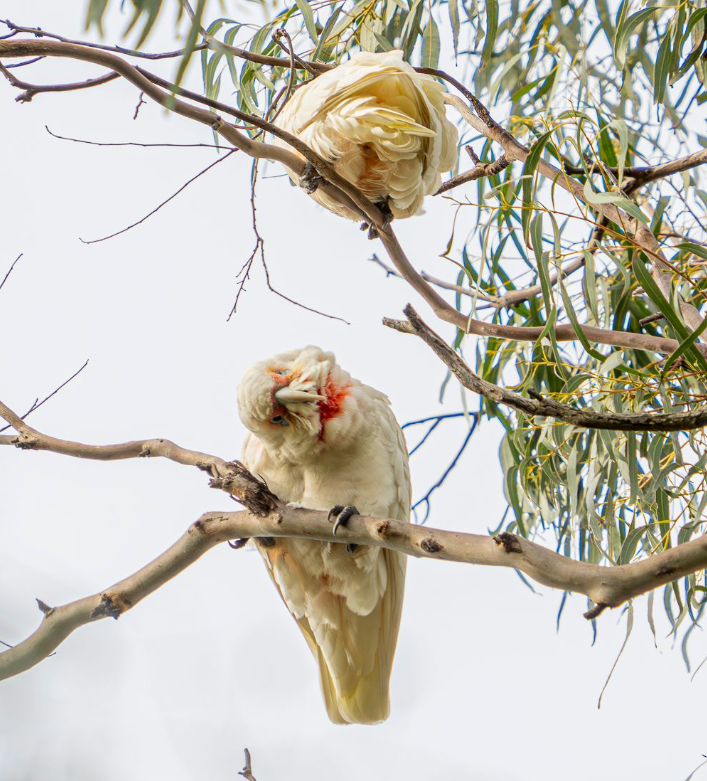
Please click on image to enlarge; click on the X to return
Corridor Sightings
This photo shows a lizard in a home quite close to the park (high on a living room wall just under the cornice and near a wall vent):
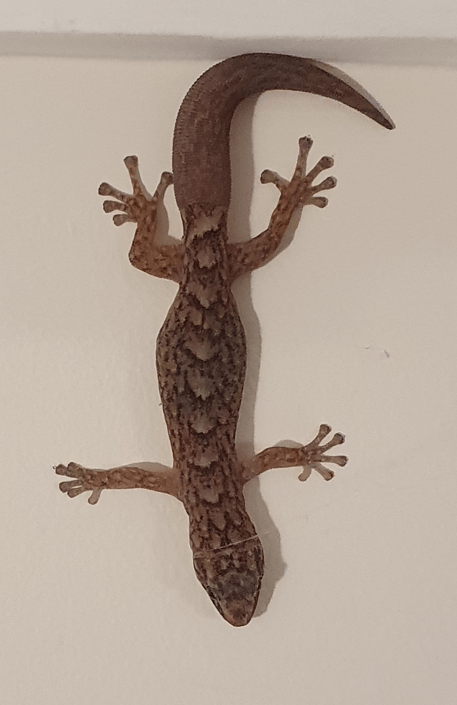
We think it is a Marbled Gecko (Christinus marmoratus). It is a small, thick-tailed lizard – about 10cm long in this case.
Notice the strange looking tail – rather like it is grafted on ? They have fat reserves in their tails – which can also be dropped off from their body when threatened – eg to help escape a predator. Tails take about eight months to regenerate. Fully regenerated tails are characterized by an abrupt change in skin colouring and pattern.
So, our boy or girl may have had a near miss last summer !
In fact, we suggest he/she not be named “Gordon Gecko”. Maybe the bulge suggests a pregnant female? They mate in late summer and the females retain the sperm until fertilisation in Spring/early Summer. She should produce a clutch of two eggs in due course.
New Projects
We’ve met with Council very recently on 30/9 to discuss new projects for next year. Work is conducted in the park by a combination of Council staff, contactor staff and the Committee and Thursday Team – collectively the Creekies – together with the community on Community Working Bee (CWB) days.
Our projects can take 1-3 years to deliver depending on the site chosen. This is an indicative time-line/flow for a project:
Decide site and plan with Council
Preparation – managed by Council over 1 or 2 years (site dependent)
- Council spraying, slashing, mulching, ripping old paths
- Creekies could possibly do mulch spreading and hand-weeding around good plants
Community to plant up – when site ready
- Possibly prep work by the Creekies – Thursday team
- One or more CWBs to conduct planting
Creekies – Thursday Team would maintain – for 1 or 2 years nurturing young plants
- Temporary staking, hand-weeding, extra watering as needed.
Maintenance – as plants mature
- Could be Contractor or Council or stay with Thursday Creekies
For 2025, we’re looking at some interesting projects in Blacks Walk on the southern side and two in central Kalang Park – one on either side of the creek.
We’re also planning for educational events in addition to our well-established Bird Walks – a Eucalypt identification walk and a Possum Prowl or two. To understand how the latter events work, two of our Committee people attended a very successful prowl Council’s Environmental Officer Tanveer ran for the Scouts in Blacks Walk. Not only were possums spotted, the group also saw a Tawny Frogmouth building its nest, a Kookaburra returning to its hollow, microbats and a Krefts (aka Sugar) Glider !
For 2026, we’re looking at two planting projects in Furness Park near the bridge and two more in central Kalang Park. Hopefully, the new educational walks/prowls will be successful and be worthy of encore performances too!
Augmented Reality App for Blacks Walk
Council has implemented an exploring game on an Augmented Reality App. It seems to be designed for primary school aged children with an adult – use of a smartphone is required. This poster is on the noticeboard too with the QR code to gain access.
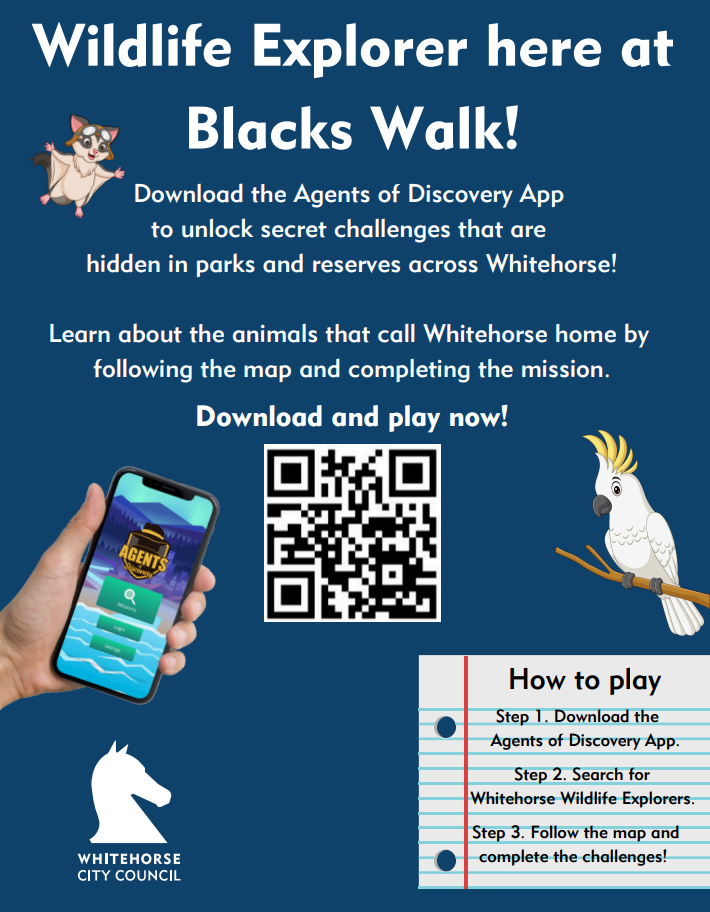
It requires the participant to find a location and answer questions. Additional information is provided about what is at the site. It looks like good fun and there is potential for developing our own versions with different themes.
Might be an interesting School Holiday diversion ?
 Blackburn Creeklands
Pingback: Drainage Works for 60 Main Street development | The Blackburn Creeklands
Pingback: Park News, October 2024 | The Blackburn Creeklands
Pingback: Park News, November 2024 | The Blackburn Creeklands
Pingback: Park News, July 2025 | Blackburn Creeklands