Events coming up:
- International Volunteers Day – Thursday 5th December incl Thursday Team “thank-you” at 09:30
- Nocturnal Wildlife Prowl on Friday 6 December, 8pm to 9:30pm at Yarran Dheran.
You don’t need us to tell you that there’s been volatility in our weather in November !
We have had our first heatwave warning for the season, hot weather, humidity like the tropics, significant thunderstorms with major rainfall and strong winds – as well as “normal” Spring weather.
The water level in the creek has been very high at times recently:
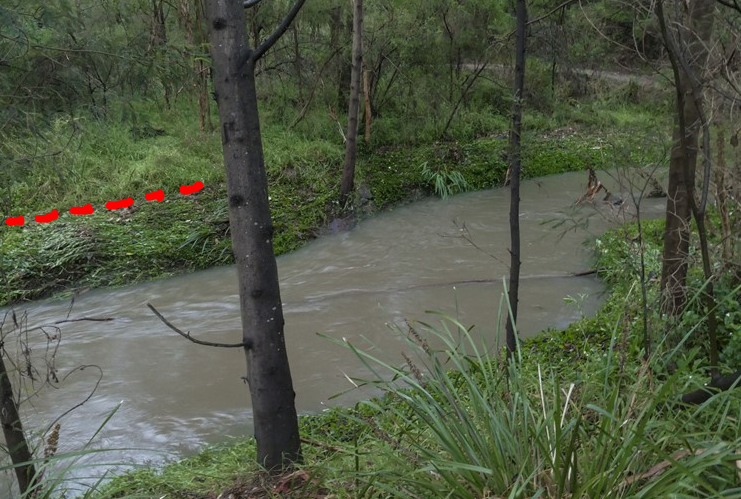
Our photo shows the creek quite high – but had clearly been quite a deal higher at its peak…
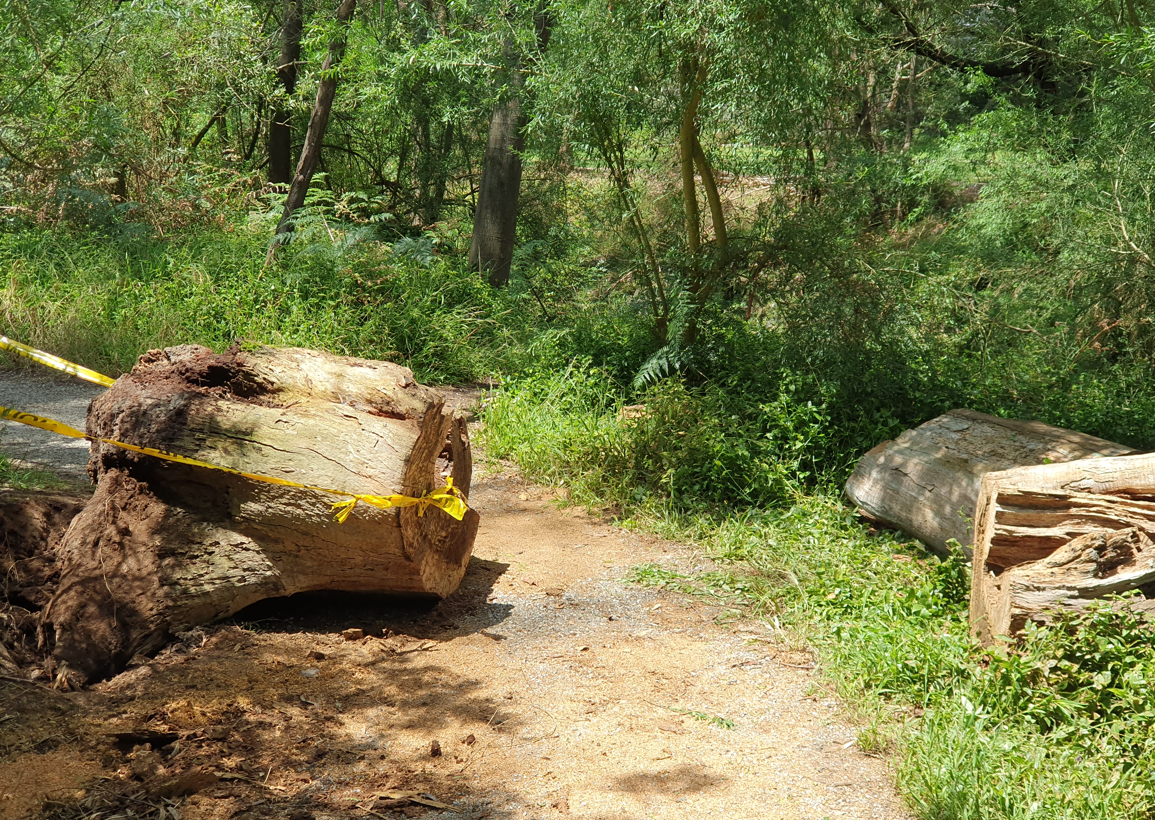
Sadly, it’s been too much for some of our large trees and stags (dead trees left standing for habitat reasons) – including our totemic “blind corner stag” near the Waratah Wetlands, pictured above, which came down after the recent thunderstorms. An even larger stag in Blacks Walk fell over last month.
The heat also means it’s time for us to think about the animals that share our environment – such as our birds and lizards – please shout them a drink ! Put out a fancy bird bath or a simple saucer with cool water in it. For best results, the water needs to be kept clean (some drink and have a bath in the same water like little kids!). Top it up in extreme heat. You can find detailed instructions on siting, cleaning etc here.
The heat also brings out the best (or worst depending on your perspective!) in our local insects – such as the dragon and damsel flies controlling our mosquito population and our bull-ants…
Our Bull ants: Would they bite you or sting you ?
Bull ants are aggressive, large ants that can grow up to 40 mm long. There are about 90 species in Australia. Typically, they have large compound eyes, good vision and a venom-loaded sting.
Our weeders have a healthy respect for bull-ants – two of our team have been victims this season already. Only some ant species can sting – unfortunately, ours is one of the worst ! The main culprit in our park is blackish and about 25-30mm long – the so-called Inch Ant (Myrmecia pyriformis).
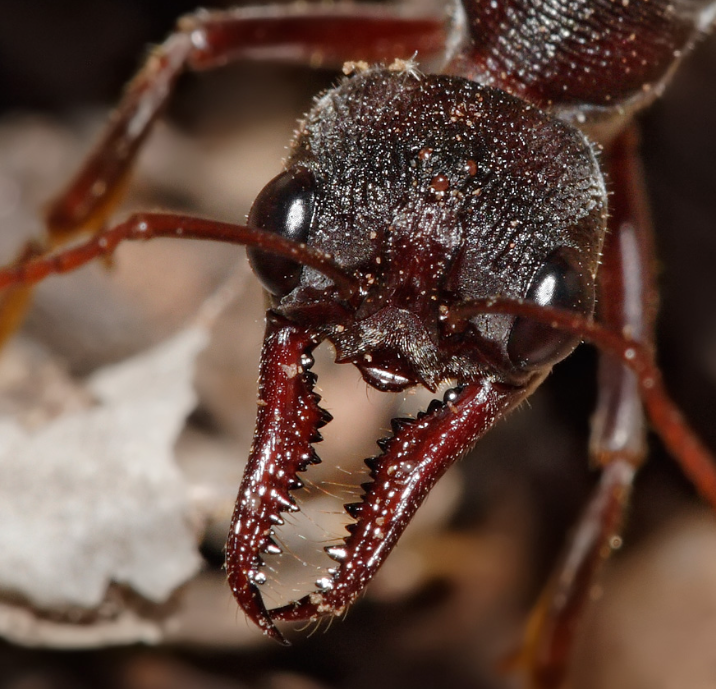
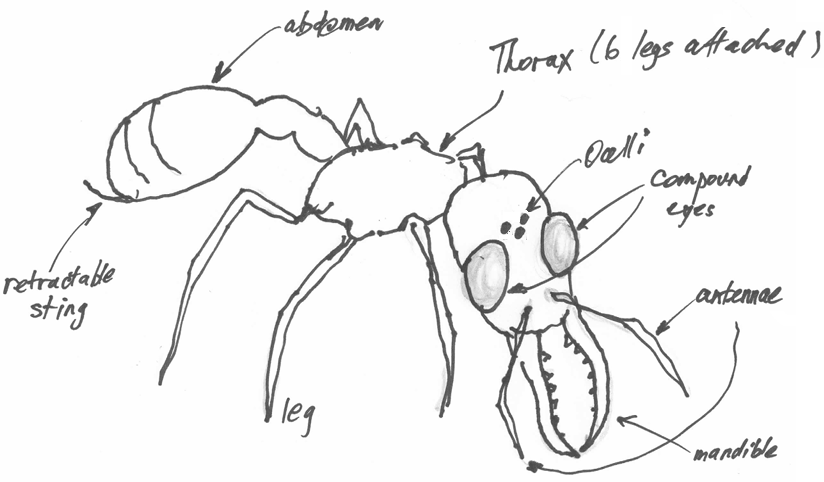
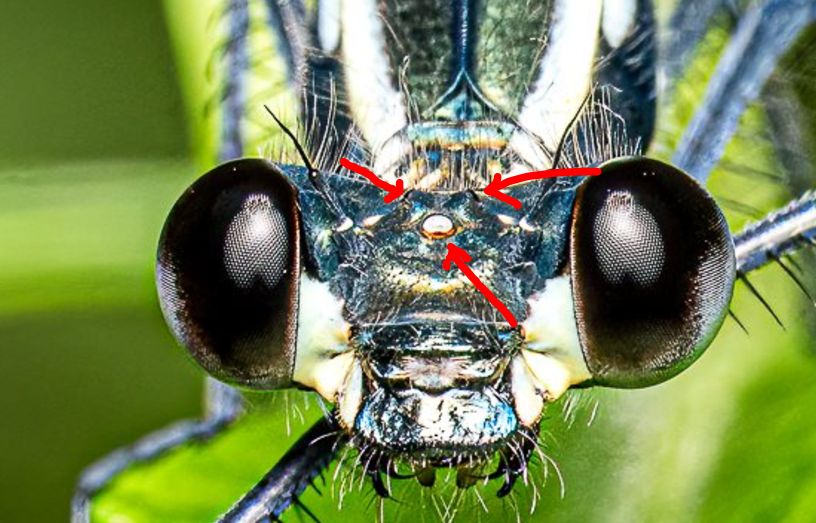
The Myrmecia genus is one of the most primitive family of ants on earth – they are typically large, have pronounced mandibles and large, compound eyes giving them good eyesight. Not only that, like many insects (eg the Green Grocer cicada), they also have Ocelli (they are the three dots on the forehead in the photo above. You may have heard of “five eyes” in a national security context – for ants and other insects, they provide security for attack from above – they are basic sensors for overhead movement/shadows).
Workers are lone hunters and are unable to lead other workers to food. However, they do seem to be excellent communicators with their colleagues when they sense that their nest is being threatened! Along with our Inch Ant, the genus also includes the infamous Jack Jumpers.
Insect mandibles are two parts of a jaw-like device near the insect’s mouth. They are typically used to carry, crush/cut food, and for defence. Though they look rather fearsome, the “bite” is purely mechanical. However, our ants use them to hang on to their victim while they deliver one or more stings (and they don’t die after one sting like honeybees do).
Only the females (the workers and the queen) can sting – not via a bite as many people think – but through a sting located in the abdomen at the other end of the ant. Here’s a basic sketch of the worker ant’s anatomy:
Myrmecia stings are very potent – the sting injects a venom which is said to be one of the most toxic of all insects. The stings contain peptides, histamines and formic acid. The effects are pain, dilation of arteries, increased vascular permeability, muscle contractions, muscle relaxants (to make sure the toxin spreads) and also bursting of red blood cells…
Individual people’s reactions differ widely – generally, once the pain subsides, the victim is left with inflammation, swelling and itching that subside after 4 or 5 days. Worse still, some people are allergic to the venom which can have very serious consequences. However, you are unlikely to come across them unless you disturb a nest. Dog owners should keep their pets on the tracks and lawn areas.
So, the answer to the question: “Our Bull-ants: Would they bite you or sting you ?” is:
BOTH – but the sting is the problem!
Council Works
Drainage Works and subsequent mulching, planting, mulching
Following the storm-water trenching work and damage to the park on its Main Street frontage reported in last month’s news, council cleared out damaged plants and mulched the backfilled drainage works with wood-chips. Later, volunteers planted up the strip with new plants.
Evidently, the local Corellas in the mature Acacia adjacent thought more mulch was required…
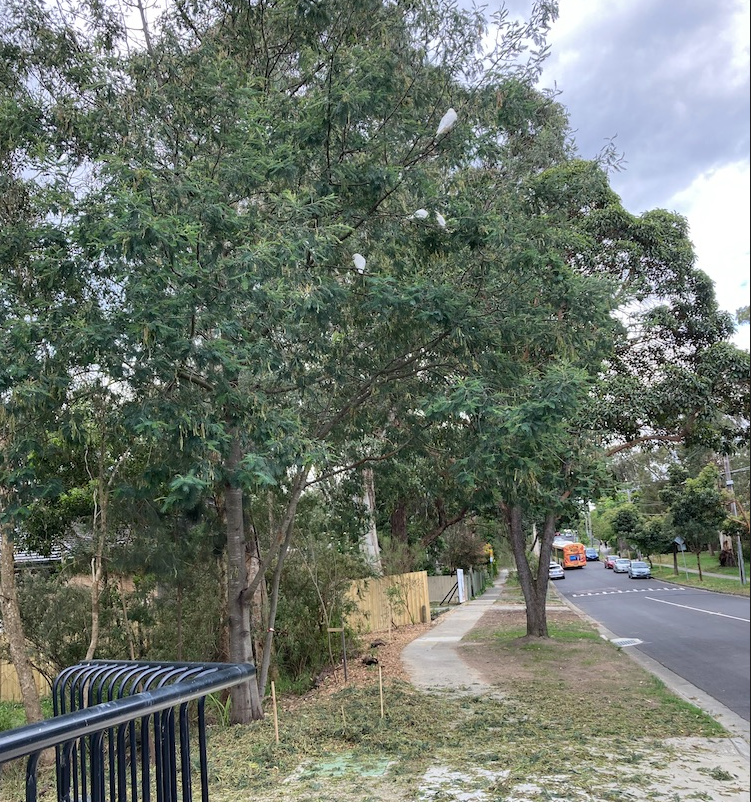
They dropped enough to completely cover some of the new seedlings while feeding on wattle seedpods – a problem quickly sorted out by one of our intrepid volunteers. Given how late we are in the planting season, we will need to regularly water the new plants through Summer.
Environment Education and Volunteering
The much loved and respected Ian Moodie retired from Council in June this year. Many of our friends would know him as one of our regular Bird Walk group leaders amongst other roles. Some of us have been very pleased to meet his successor, Dr Sabrina Trocini, in the park. Not only has she impressive qualifications and experience as a scientist, she brings fresh ideas and enthusiasm to her role which has been expanded to include “volunteering” at a higher level in the organisation. As community volunteers, we are hoping to involve her in more activities within the Creeklands to better inform her about our park and its value to the community.
Our Projects – quick update
Inclusive Seating
Our Inclusive Seating project is on track. Seats in Blacks Walk and Furness Park were evaluated as scheduled in November. The next step is to present our recommendations to Council for implementation.
Regen Projects
We’ve put our hand up to plant up a new bed outside Laburnum Primary School which will result from the removal of a potentially dangerous tree.
Our first Heatwave
Heatwaves relate to three consecutive days of high temperatures. We had our first heatwave warning for the season – for the threes days starting from our Thursday team’s working bee on 21st November.
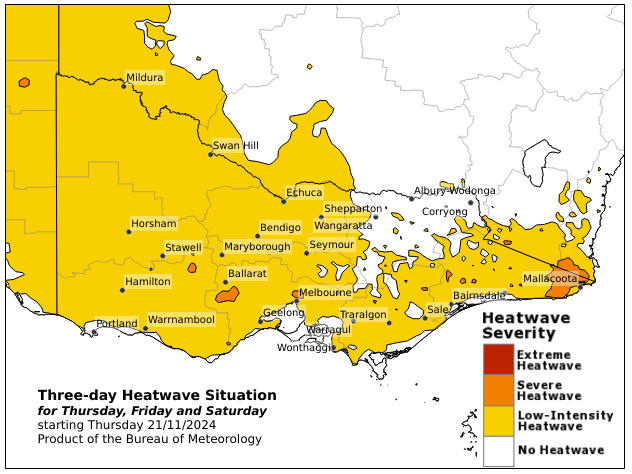
A further heatwave warning was issued for the three days commencing on 22nd November. Conditions eased from Sunday (24/11) following a cool change from the west over the weekend leading into the following week.
For information on staying safe during a heatwave, please go to the Department of Health web page.
3-30-300 tree canopy rules
Tree canopy is a critical protection we need to protect ourselves from heatwaves.
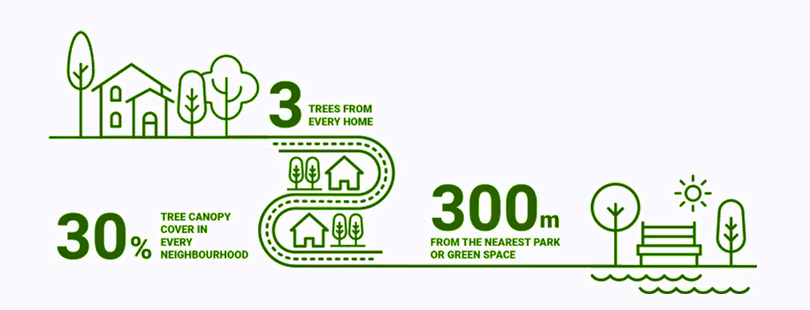
In the context that this coming summer is predicted to be our hottest ever, the ABC ran an interesting article noting that Sydney and Melbourne are among major world cities failing the 3-30-300 tree canopy rules. These rules are a relatively new concept but are gaining acceptance in urban planning worldwide. In a nutshell, these rules, as a bare minimum, suggest that residents should:
- see three trees from their homes,
- be in a neighbourhood with at least 30 per cent canopy cover
- reside within 300 metres of high-quality public green space.
The recommendations come from Dutch Professor Cecil Konijnendijk who says:
I reviewed decades of science linking nature to human health and found that views to nature, canopy cover and parks are all really essential if we want to be mentally healthy, physically active and safe from heatwave impacts.
Notice, on the map above, that the Bureau predicted a Severe Heatwave in central Melbourne. The ABC article reports:
Just 3 per cent of buildings in Melbourne’s innermost suburbs had sufficient neighbourhood canopy cover despite 44 per cent having views of at least three trees, the study found. And across central Sydney, at least three trees were visible from 84 per cent of buildings, but only 17 per cent had “enough” shade.
3 – How many trees can you see from your windows ?
This is an exercise for the reader – off you go please and count the trees you can see from your place – hopefully more than three!
The Conversation also recently ran an interesting article reporting some RMIT studies of the 3-30-300 rule. Unfortunately, the RMIT maps stopped at Surrey Hills so we can’t show you the local situation (dark green houses see 3+ trees):
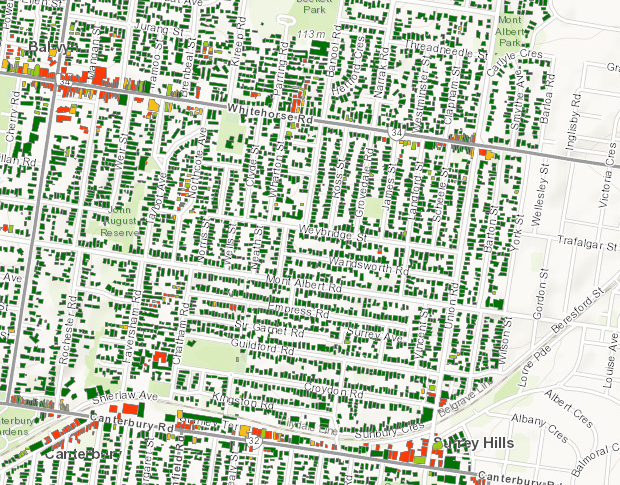
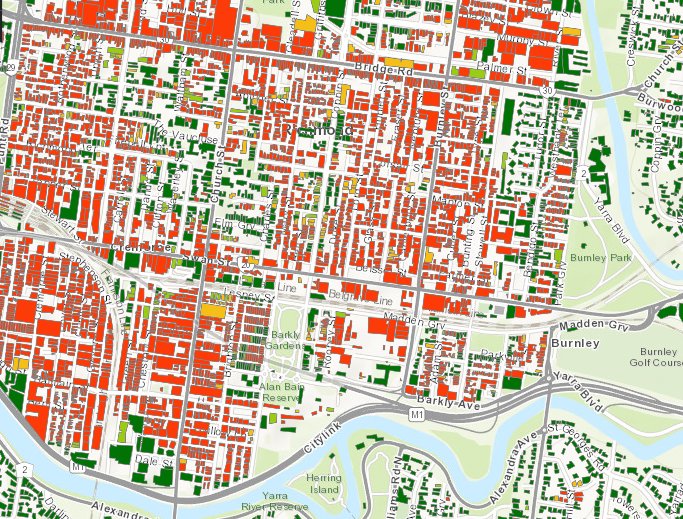
The leafy suburbs like Surrey Hills are generally OK – with some anomalies and “fails” in shopping strips and the like. Unsurprisingly, Richmond’s residential areas do not fare so well.
30 – How does our tree canopy stack up?
Whitehorse City Council’s Urban Forest Strategy commits to increasing tree canopy cover for the municipality to 30% by 2050 (27% by 2031). While Council has been busy planting trees, the problem is that tree canopy on private land has been declining for years – probably, since the 1990s. Private open space is disappearing – as multi-unit developments continue and as preferences for larger houses with less garden space prevail.
In the past, the State Government’s DELWP (now DEECA) provided local councils with LIDAR* based data which showed alarming decreases in tree canopy. Curiously, given the health issues and the likely negative effects of the State Government’s major changes to planning rules to increase population density, DEECA no longer provides the data to Councils. We heard in June, at Council’s Managing Our Urban Forest presentation, that Council decided to acquire its own data – but this has proven difficult to analyse. : We are awaiting an update from Council, but the data we have from LIDAR data shows:
| Year | Box Hill | Blackburn | Source |
| 2014 | 18.5 | 28.5 | DELWP |
| 2018 | 15.5 | 24.8 | DELWP |
| 2024 | 11% ? | 20% ? | Complete guess – awaiting Council |
*LIDAR is a remote sensing system that uses pulsed laser light from an aeroplane to measure distances to the earth below which can include the height of “plants”.
So, Blackburn (one of the leafier suburbs of Whitehorse) was nearly at 30% ten years ago – but has been going backwards. We can only guess that today’s figure is more like 20% !!!! We are very pessimistic about Whitehorse meeting its targets in the current situation. At a major city level, RMIT found that only Singapore meets the 30% target. It studied Melbourne, Sydney, New York, Denver, Seattle, Buenos Aires, Amsterdam and Singapore.
300 – What does our park contribute to Blackburn and Box Hill ?
This map shows 300m around our park (roughly):
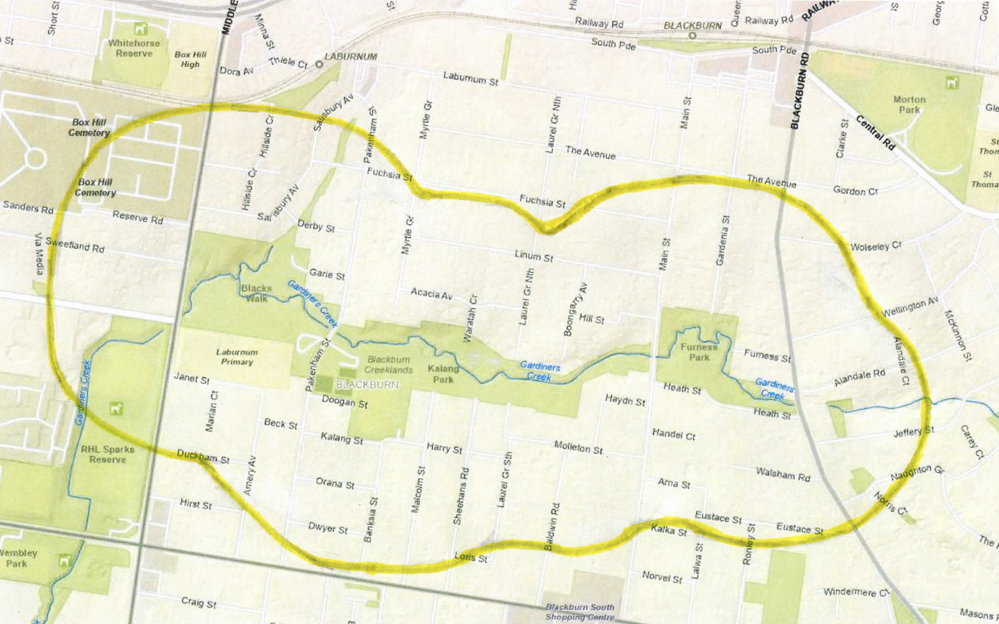
Interestingly, it seems like many houses in some of the “best” streets in Blackburn (eg The Avenue) are not close enough to quality open space to conform to the 300m “rule”. This anomaly of insufficient public open space in the northern end of central Blackburn was also exposed in Council’s Open Space Strategy – which used a “400m safe walking distance” criterion for accessibility.
Of course, we are ignoring the effects of other open spaces in our area. However, we doubt a sports oval or a pocket park would fit the definition of “high-quality public green space” but Blackburn Lake Sanctuary would, of course.
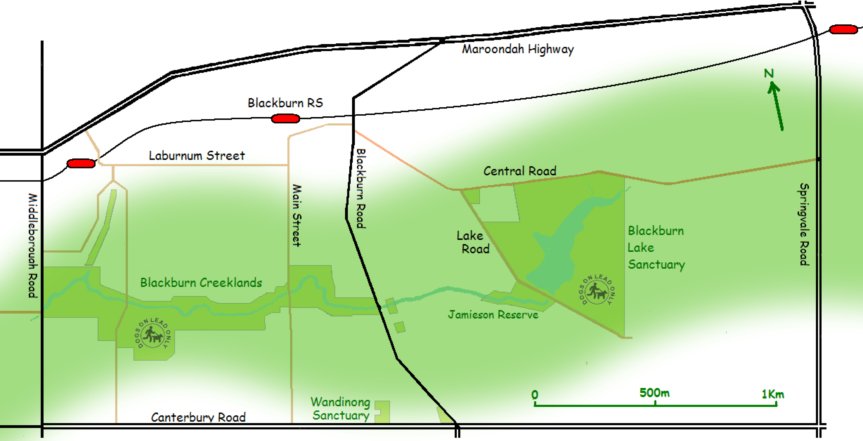
One thing we can do in the community is to “extend” the park by compatibly planting up and retaining as much vegetation as possible within the park’s corridor. In that way, the “virtual” park becomes much larger and we can deliver more of the park’s benefits further afield into the community. Another effect of this altruism is to create better bio-links along the corridor for nature – which benefits our fauna and flora and their biodiversity.
If you’d like to participate but are unsure about where to start, why not try contacting the Gardens for Wildlife team for a visit to your garden?
We are also working towards making our park accessible to more people in the community through our Inclusive Seating project mentioned earlier.
Conclusions – how are we doing 3-30-300 wise?
It seems to us that the 3-30-300 rules are valuable measures of the condition of our urban environments.
In the local context, we are doing OK on the 3 and the 300 rules – especially if we take action in The Corridor.
The worrying problem is we seem to be failing badly on the 30% tree canopy rule which is so important for community safety. We seem to have little hope of reaching that target for the municipality while planning rules, housing strategies, low quality urban design, housing fashions favouring McMansions, weak compliance checking etc stay as they are… It may seem melodramatic, but detriments to the physical and mental health of our community are likely.
Another issue is that we are flying without instruments – the sooner % tree canopy comes up on the Council dashboard, the better!
Thursday Team Report
Our Thursday team has been busy with regular working bees in Blacks Walk and Kalang Park. There was also one ad-hoc Committee-only event to plant along the northwestern boundary of Kalang Park with Main Street where the new storm-water pipe was run along the footpath. Our thanks to neighbours who generously provided water for the plants.
We are continuing to get very good numbers in attendance. Nevertheless, we are always on the look-out for new people – if you are interested, please let us know at BlackburnCreeklands@gmail.com. We work on Thursday mornings between 08:30-11:30 – any contribution between those times would be most welcome !
Greenlink Award
Greenlink is one of our wonderful (two) local, volunteer run, indigenous nurseries – which supplies canopy tree seedlings amongst its large range of local plants.
Greenlink won the “Excellence Award – Community” award in the Whitehorse Business Group 2024 Excellence in Business Awards on 15/11.
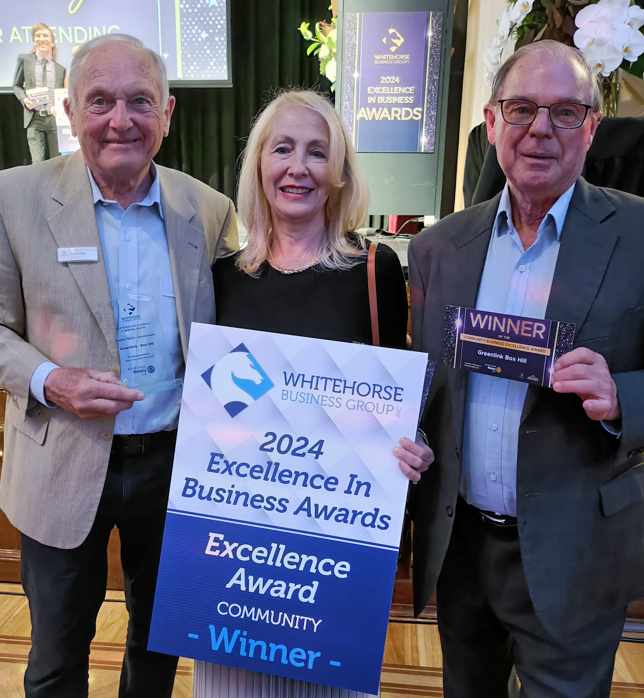
Congratulations to Trevor, Emi and Robert –and all the other volunteers at Greenlink– a very well deserved win for such a dynamic and forwarding-thinking organisation.
There are some amazing skills and experience embedded in our Whitehorse volunteers. We think it’s wonderful that an environmental group wins an award for business excellence!
We are grateful that Greenlink has been a generous supporter of our efforts – for example, Greenlink helped fund a portable defibrillator for our volunteers. Trevor (at left) also generously gave us very helpful business advice and resources when we were looking into incorporating in our own right a few years ago.
Council Elections
Council must have highly valued our local parks in 2020 – because the new wards were named after significant parks contained within them. Strangely, our ward was not named “Creeklands” but was named “Cootamundra” (after Cootamundra Walk) – which ultimately means our ward is named after an environmental weed ! Oh dear… anyway, the latest election results were announced in November.
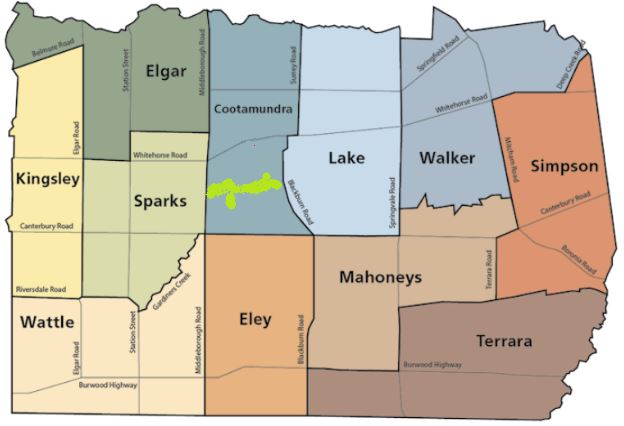
We congratulate Kieran Simpson on his recent victory in Cootamundra Ward – which completely contains our park. We thank our previous councillor, Andrew Munroe, for his long service to our community. As Andrew is a park neighbour, he was usually very aware of our needs and responsive when needed. Kieran hails from Blackburn North (as Andrew did originally). He is not so local – but we’re impressed with Kieran as a worthy successor to Andrew – following very positive informal discussions we’ve already had with him. We’ve agreed to meet formally with him in the new year – to make him fully informed on the importance of the Blackburn Creeklands and to seek his help with the issues we currently have.
Amid a lot of changes of representatives, other longstanding Councillors (and former Mayors) in the neighbouring Sparks (Tina Liu) and Lake (Denise Massoud) Wards were also defeated. Prior to redistributions in 2020, our park used to fall within the old Central Ward and we were represented by dual Councillors for several terms – both Denise Massoud and Andrew Munroe for many years. So our thanks are also in order for Denise – for her work in assisting the park and our Committee over the years. As one of the “greener” Councillors, she went into bat for the Creeklands on several occasions.
Thank you Denise and Andrew !
KooyongKoot Alliance (KKA) AGM
Our Blackburn Creeklands Advisory Committee is a member of the KooyongKoot Alliance (KKA) as are another 20+ Friends Groups within the Gardiners Creek catchment – including our patch and our corridor. “KooyongKoot” is the Woi Wurrung name used by the first peoples.
The KKA’s third Annual General Meeting (AGM) on Wednesday 13th November, 2024 was a very well attended and successful event – dealing with changes to the KKA Rules to meet Tax Office requirements for Deductible Gift Recipient status, appointments to office bearer positions and as ordinary Committee members, as well as a very interesting and thought-provoking presentation from Dr Dimity Williams on linking nature and human health.
There were many positives including the breadth of KKA’s membership, its relationships with the young Urban Guerrillas, its successful 2023/2024 projects with major new projects underway at the Gardiners Creek Reserve, Blackburn Lake and significant projects at the Glen Iris and Tooronga wetlands to follow soon. However, challenges have arisen – eg funding for the all-important KooyongKoot Creek Keeper role runs out in January ! Their work is so important – they deserve our support.
Also:
- Congratulations to Sam Russell the inspirational leader of the Urban Guerrillas on being awarded a Caroline Chisholm Volunteering Award for 2024.
- Congratulations to the two-year old Ashburton Creek Biodiversity Crew (ACBC) upon receiving a “Highly Commended” award in the category of Outstanding Friends Group at the recent Victorian Environmental Friends Network Awards – 6,000 plants in the ground already!
Sightings
Imperial Blue/Hairstreak Butterfly “hatching”
One of photographer Ken’s favourite events is the annual metamorphoses of the Imperial Blues – which have an extraordinary symbiotic relationship with ants.
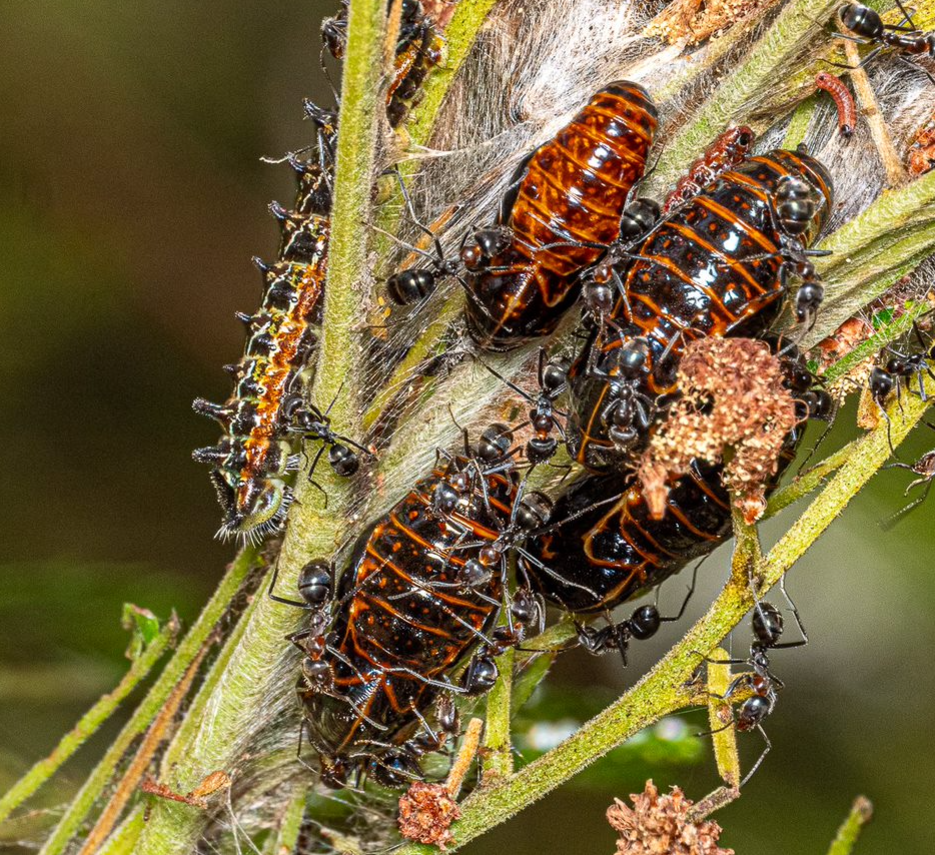
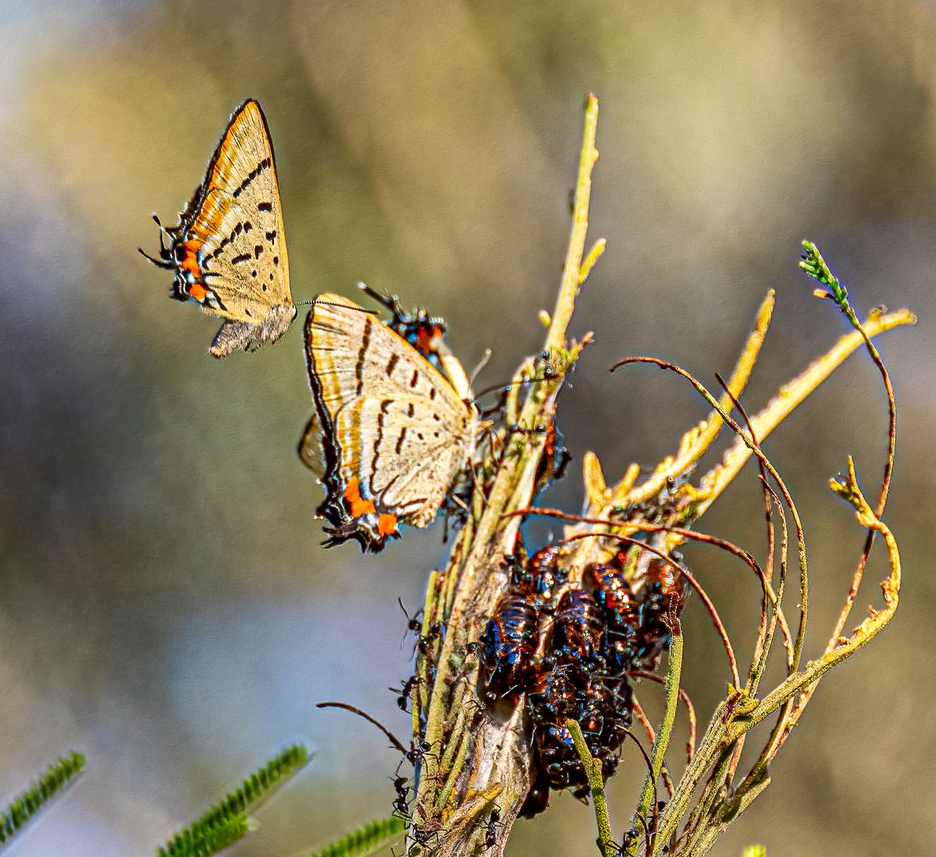
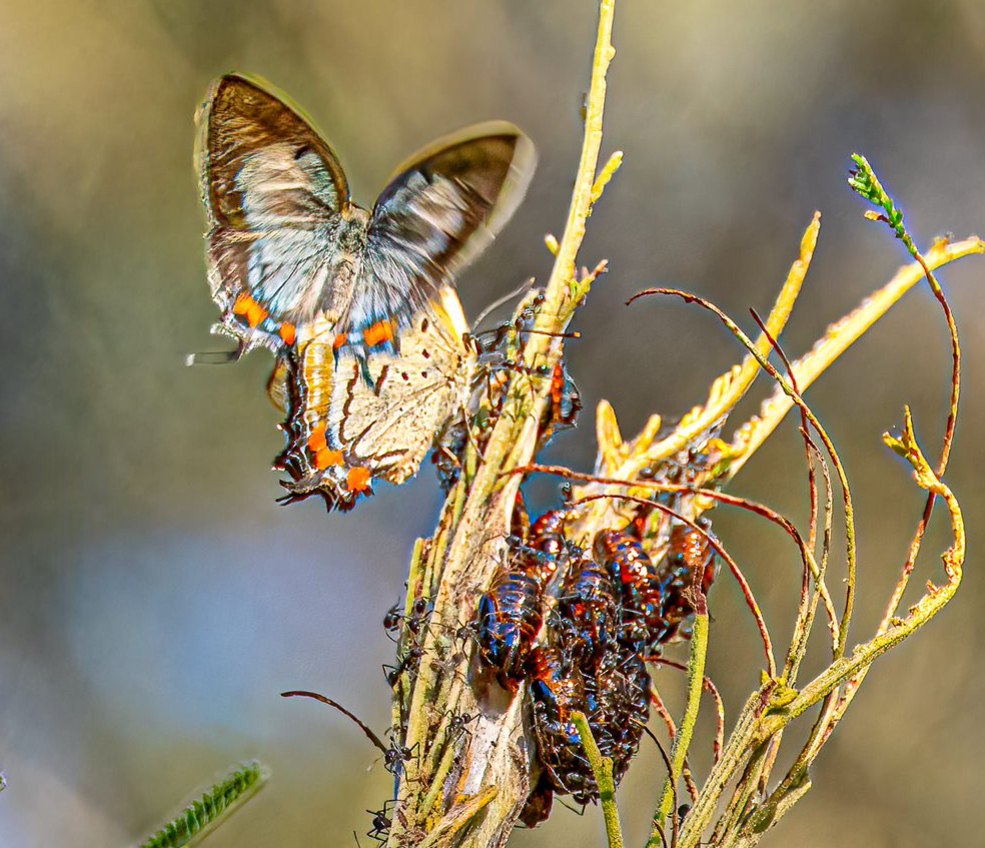
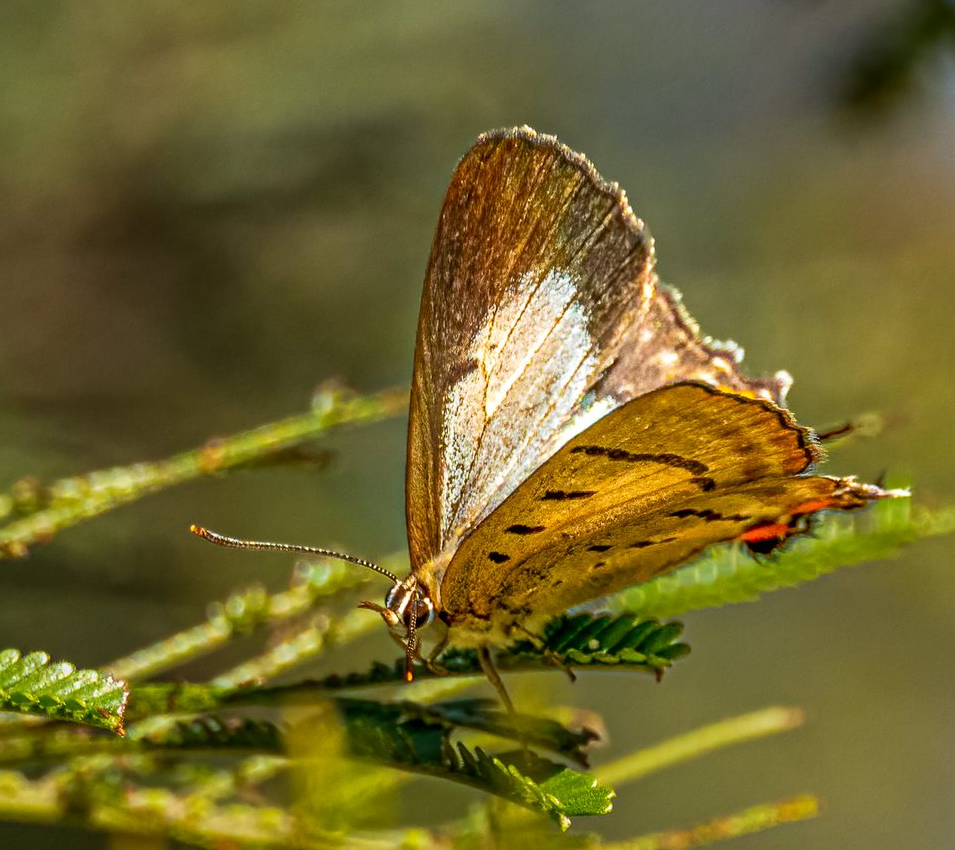
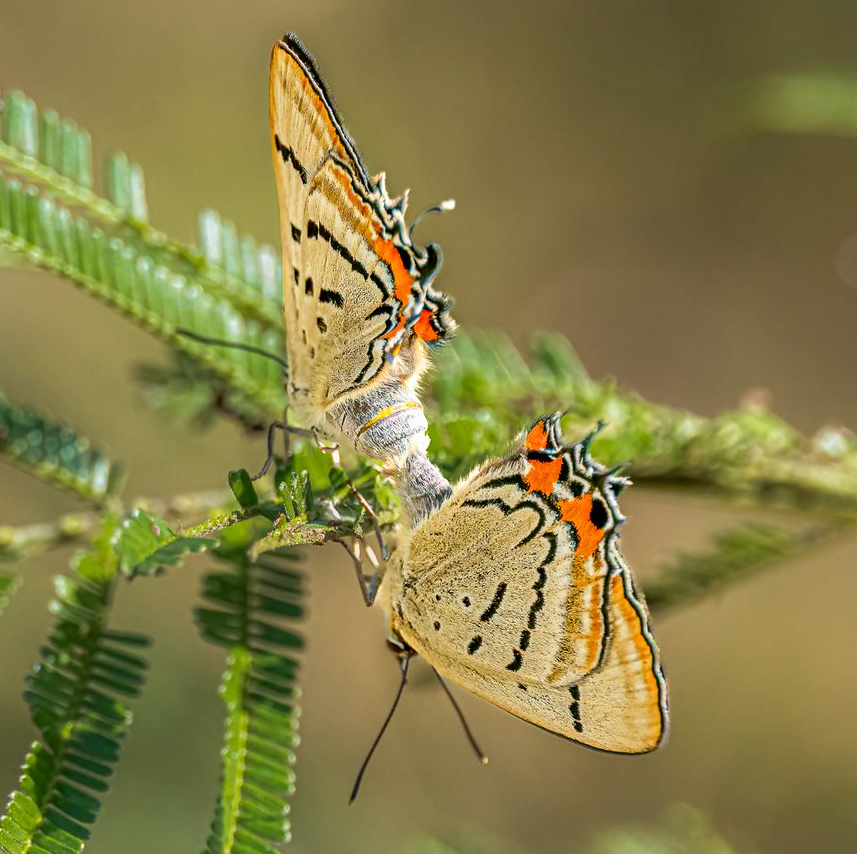
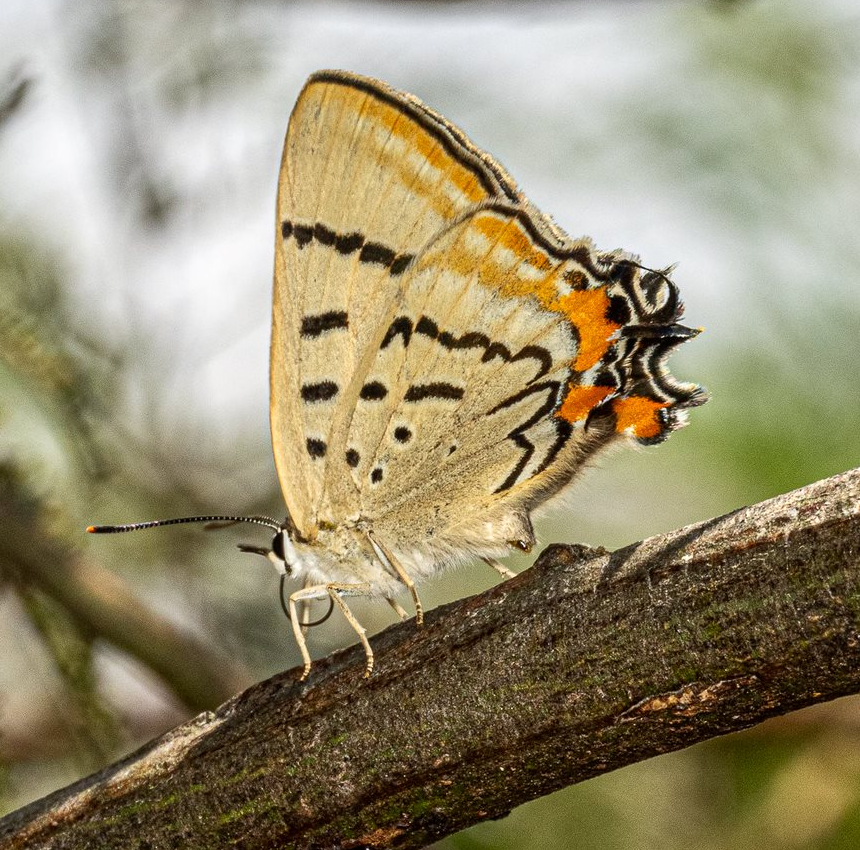
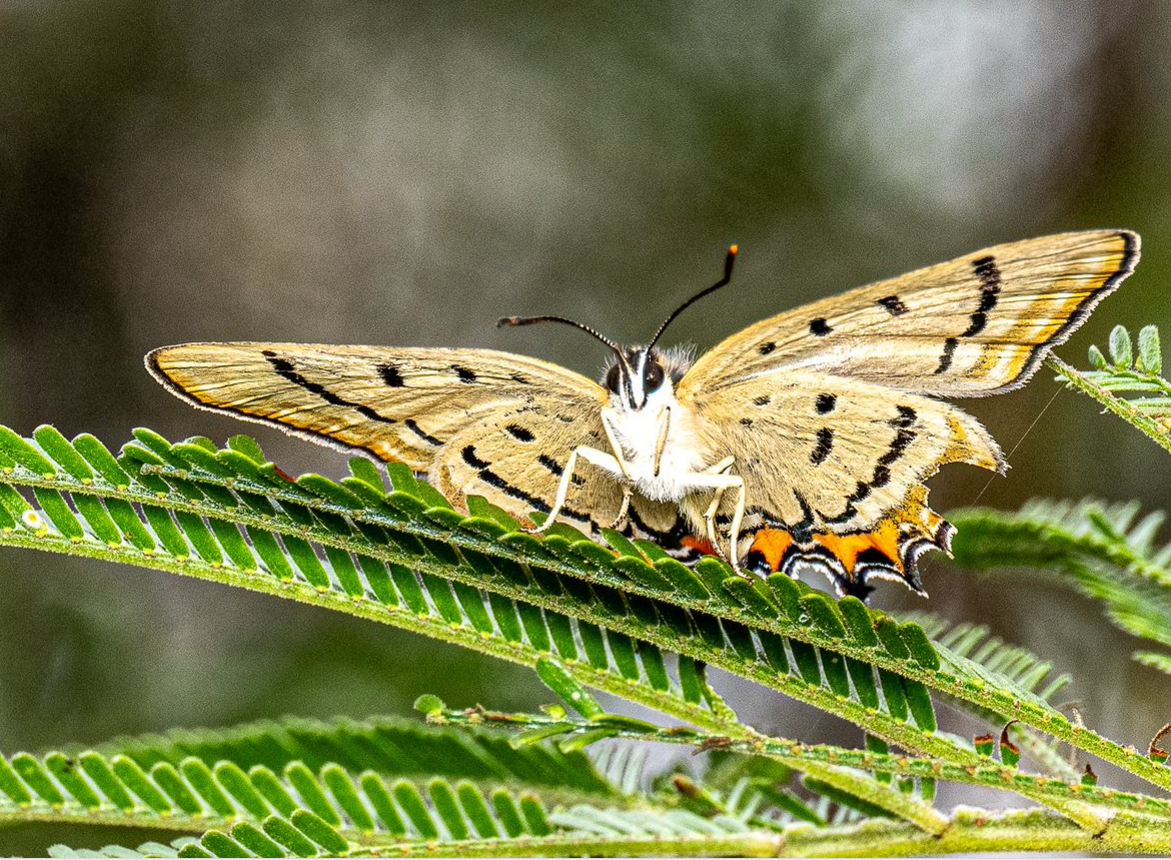
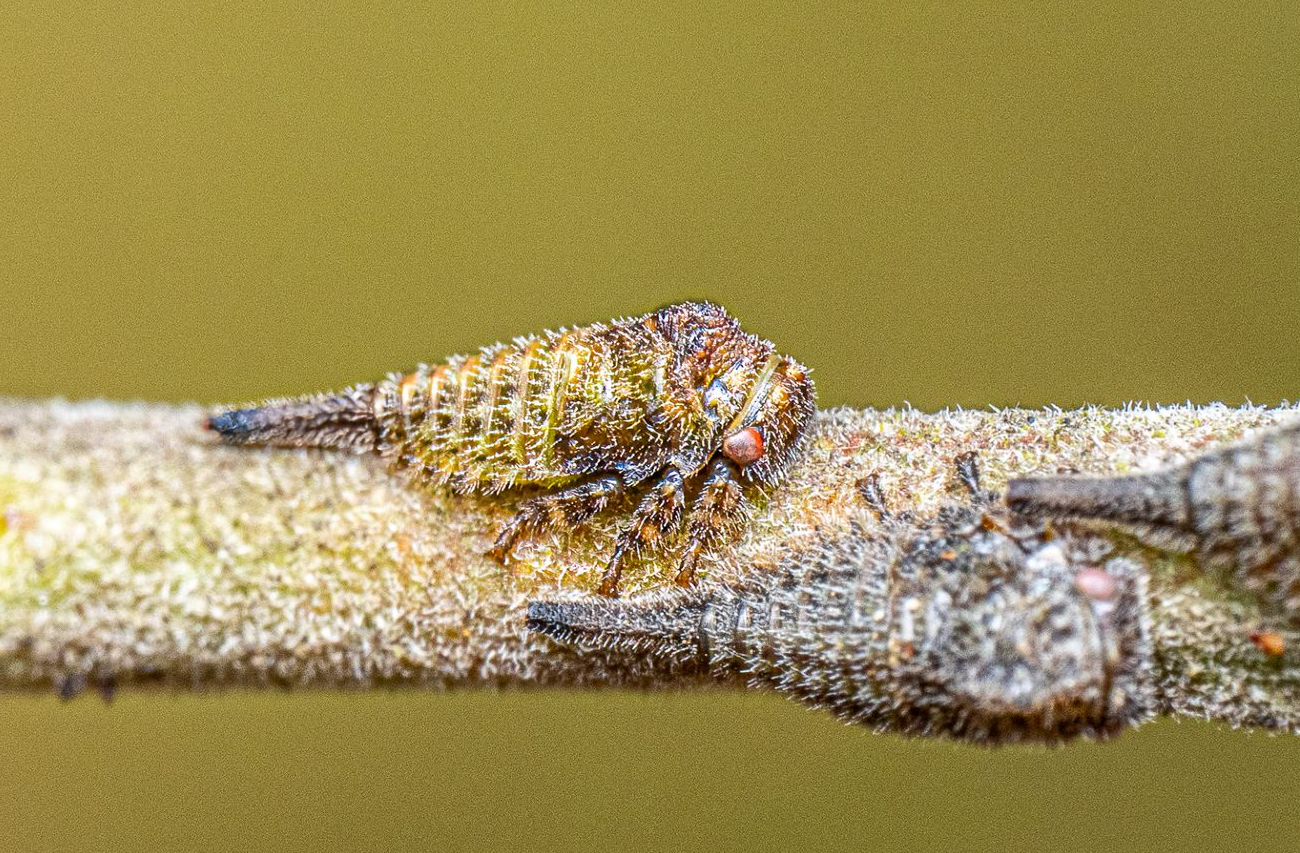
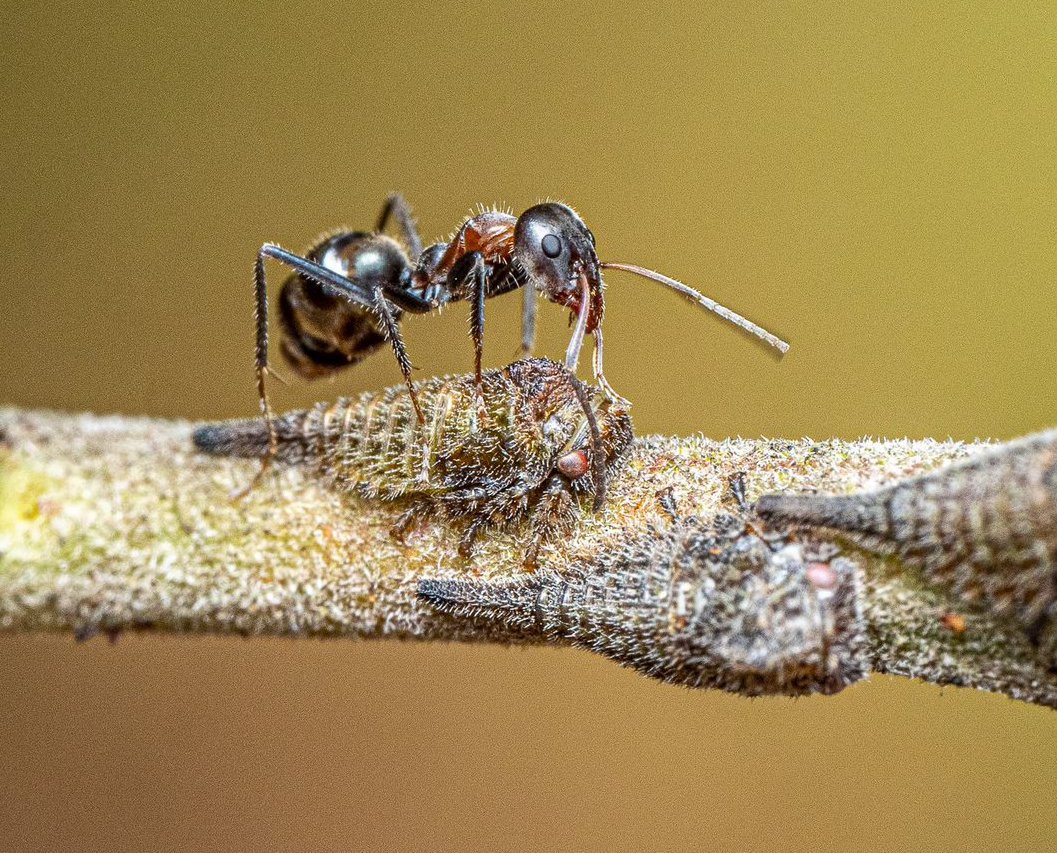
Please click on image to enlarge; click on the X to return
The last two shots show leaf hoppers as part of the action. Our Friend, Wendy who often helps us on matters concerning insects, says:
There is some relationship between the ants & the caterpillars & hoppers. The hoppers hatch at the same time as the caterpillars and seem to enjoy the protection of the ants. Whether the hoppers call the ants like the caterpillars do, I don’t know. Hoppers communicate by tapping. Caterpillars communicate by clicking. The hoppers have been around a lot longer than caterpillars, so the question is which one started the association. An interesting thought that we will probably never know. Both the caterpillars and the tree hoppers give the ants a sugar reward which the ants benefit from and thus encourages the ants to protect their – dare we say – herd!
A three-way symbiosis seems incredible enough – but Wendy has already told us that two shifts of different species of ants protect the pupae – the Tyrant Ant during the day and the Camponotus Ant overnight! Of course, the right plants need to be available for caterpillar food – usually the Silver Wattle (Acacia dealbata) in our park. This complexity underscores the importance of maintaining and protecting our wild places to maintain biodiversity in urban environments like ours!
Tawny Frogmouths
With the interest in new additions to the neighbourhood, we were spoiled for choice this month with Tawny Frogmouth photos. Here are samples including the “baby photos” we promised (thanks Greg, Ken and Russell):
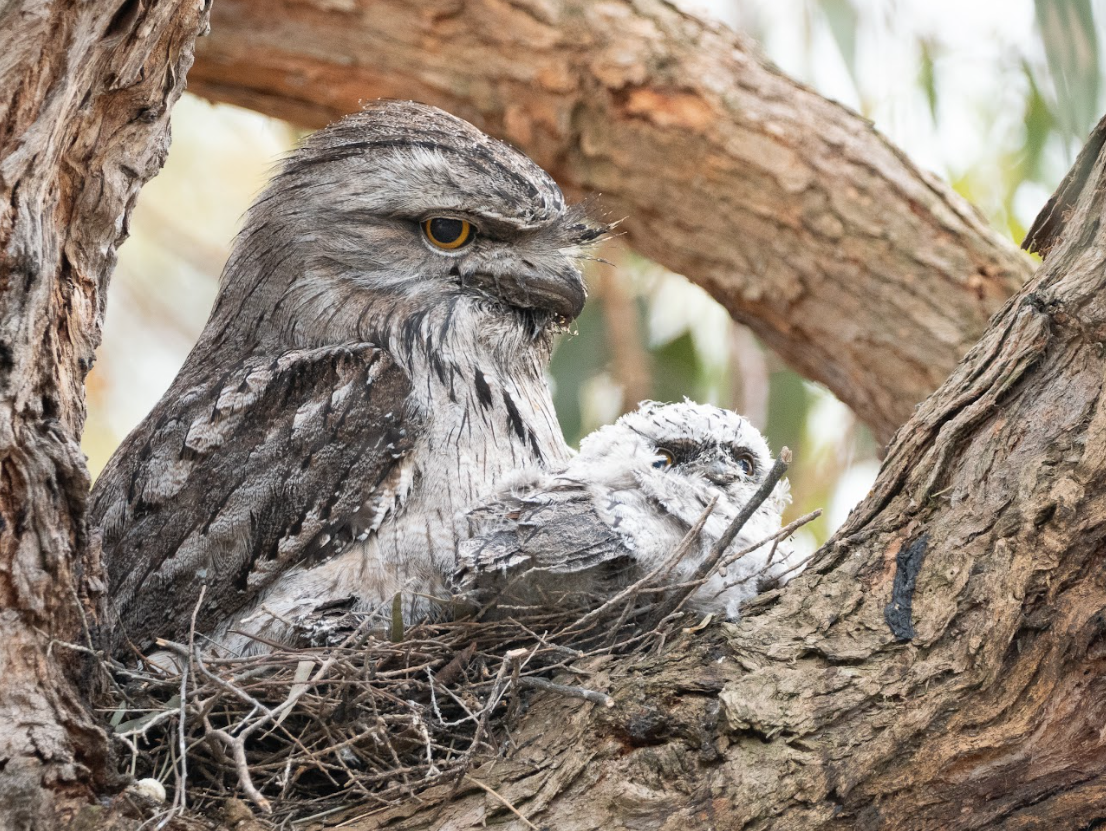
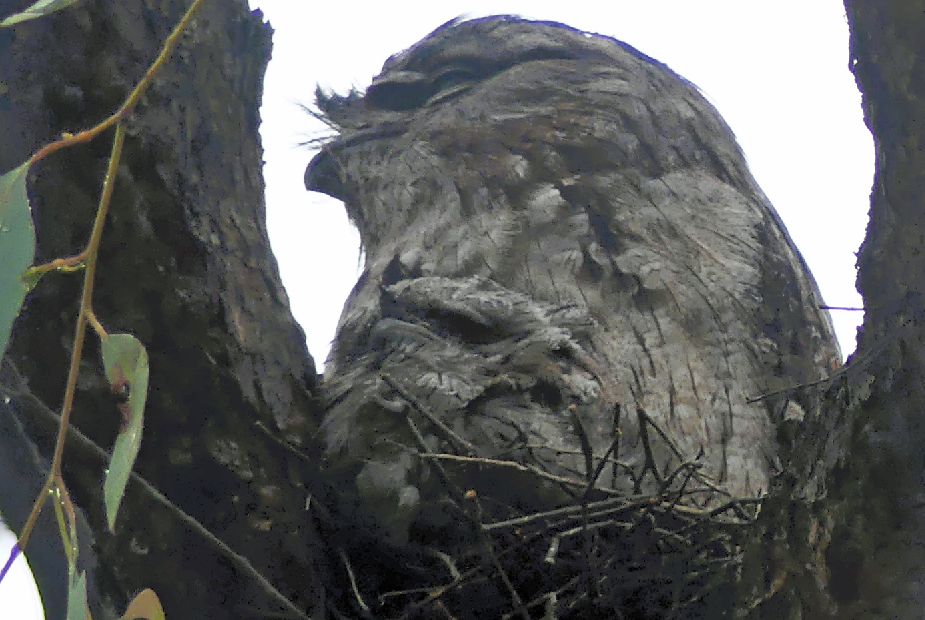
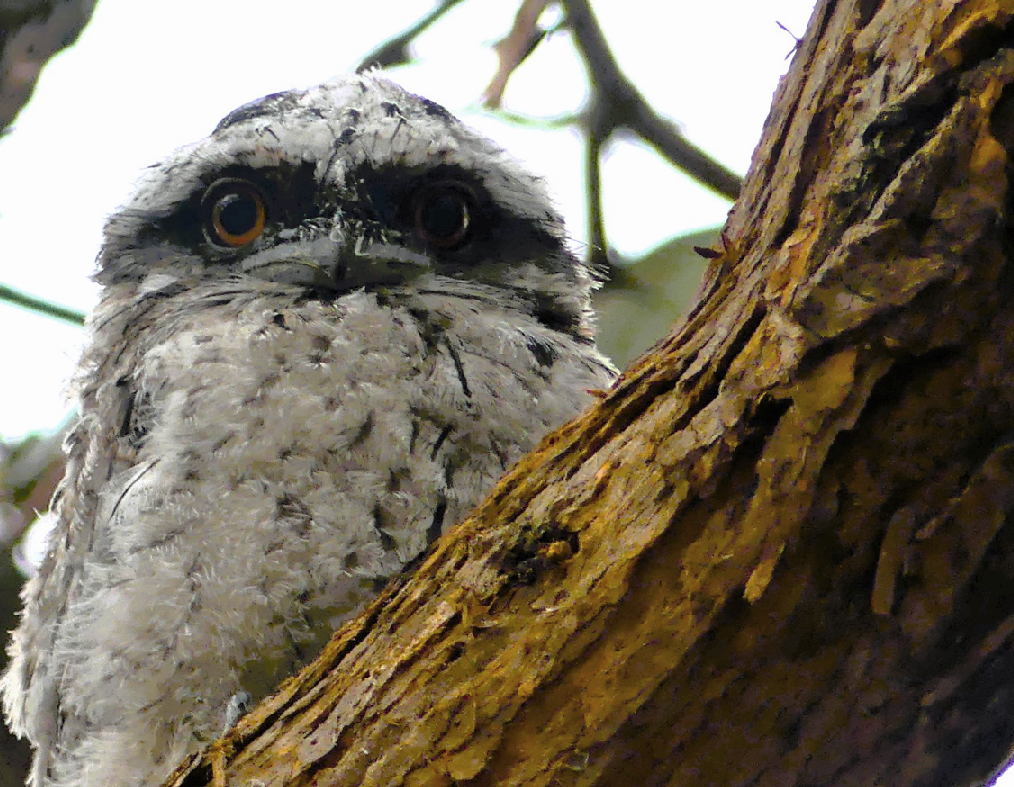
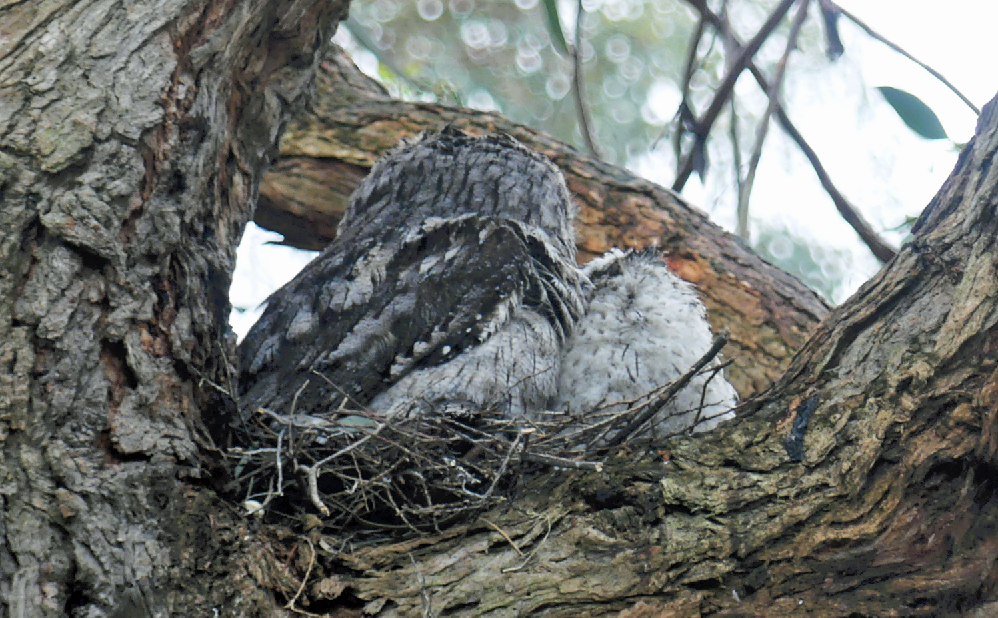
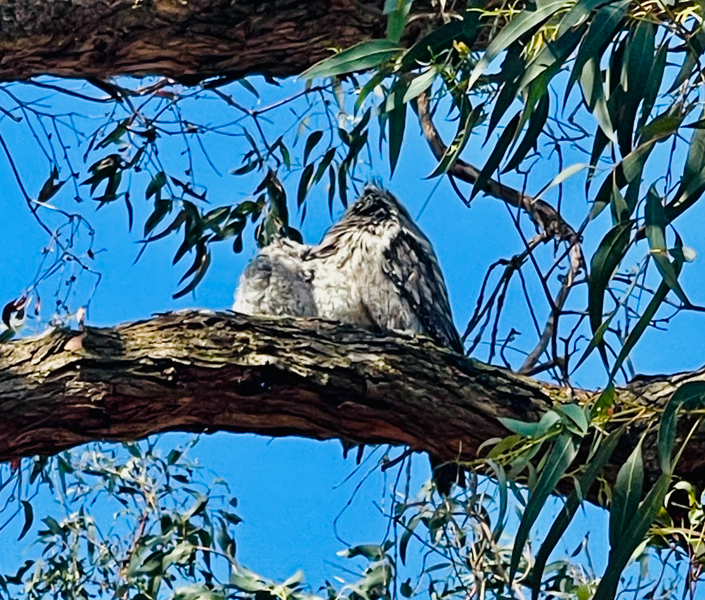
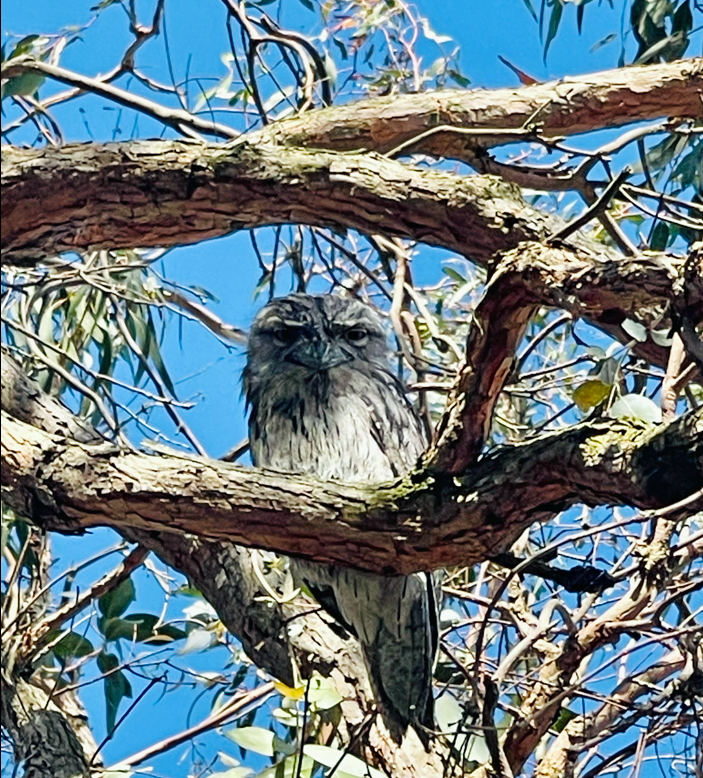
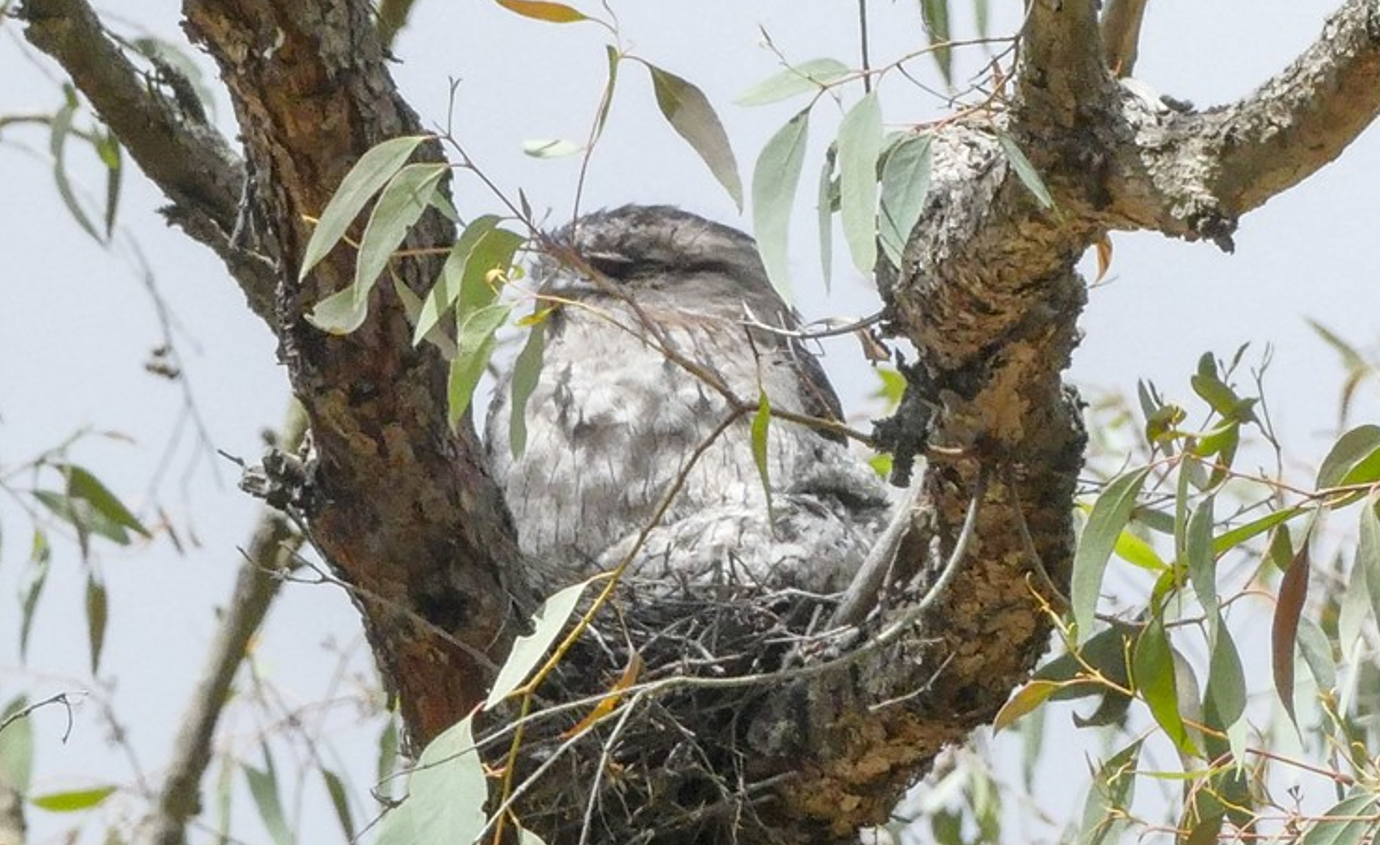
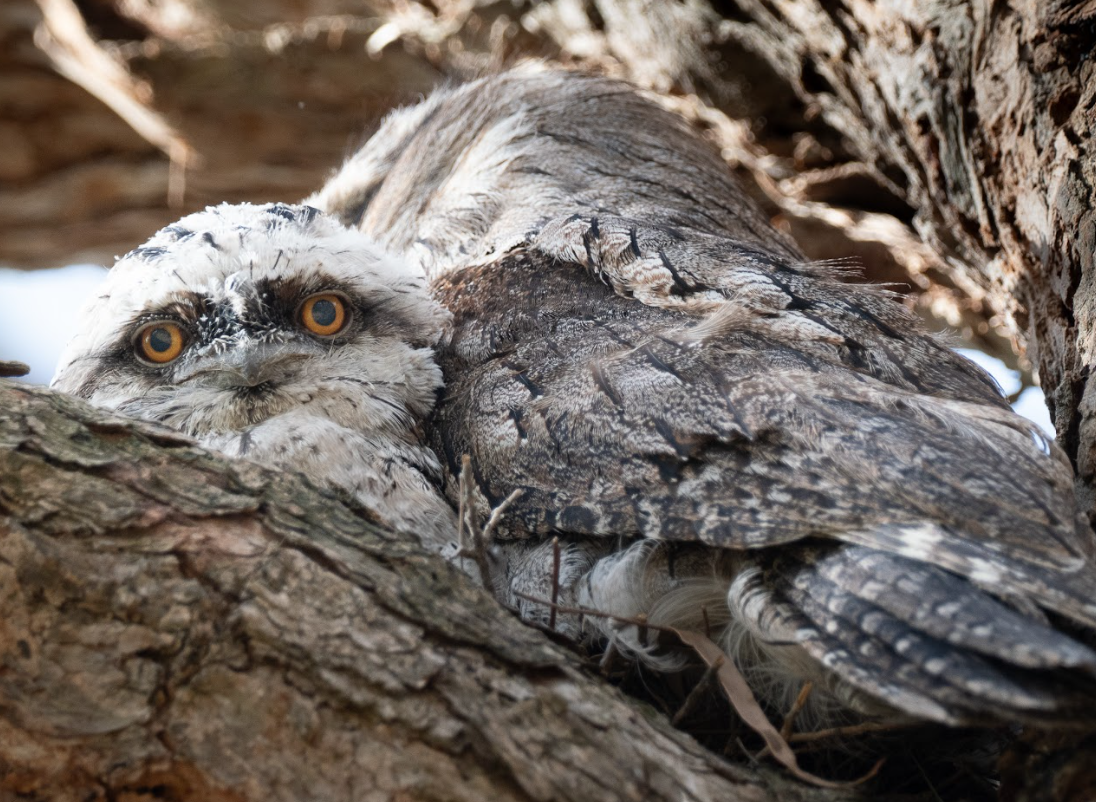
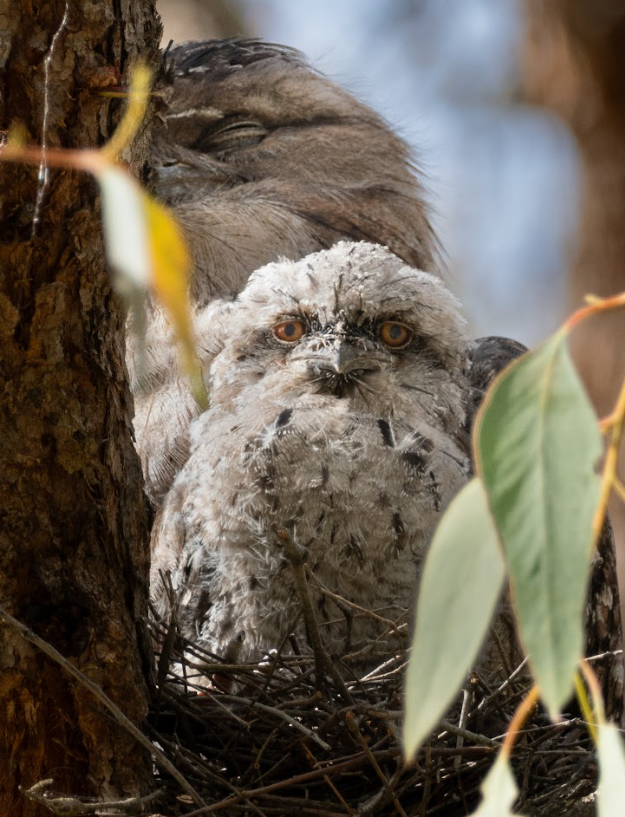
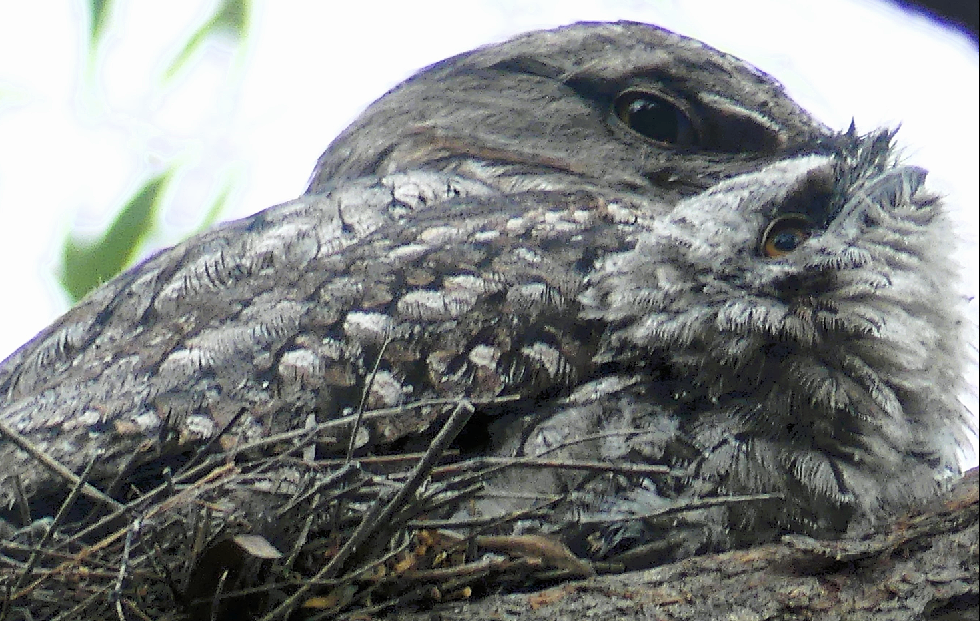
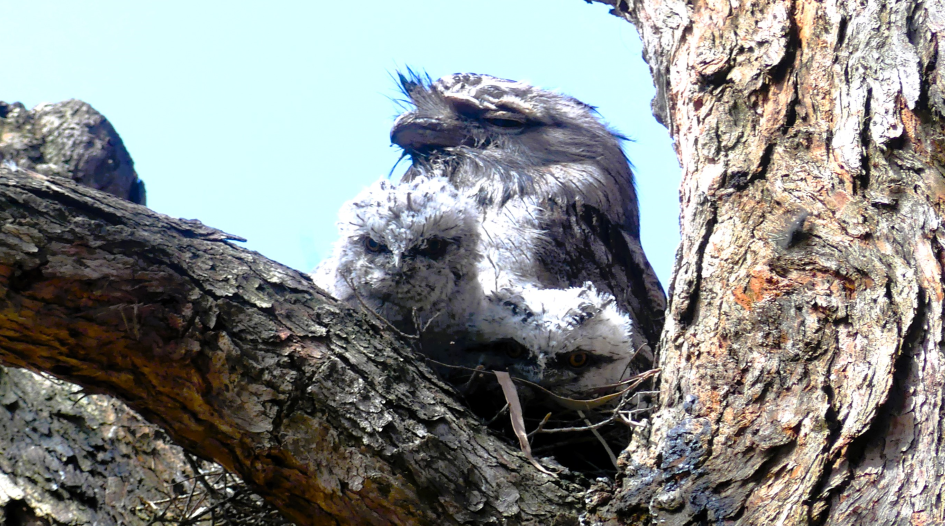
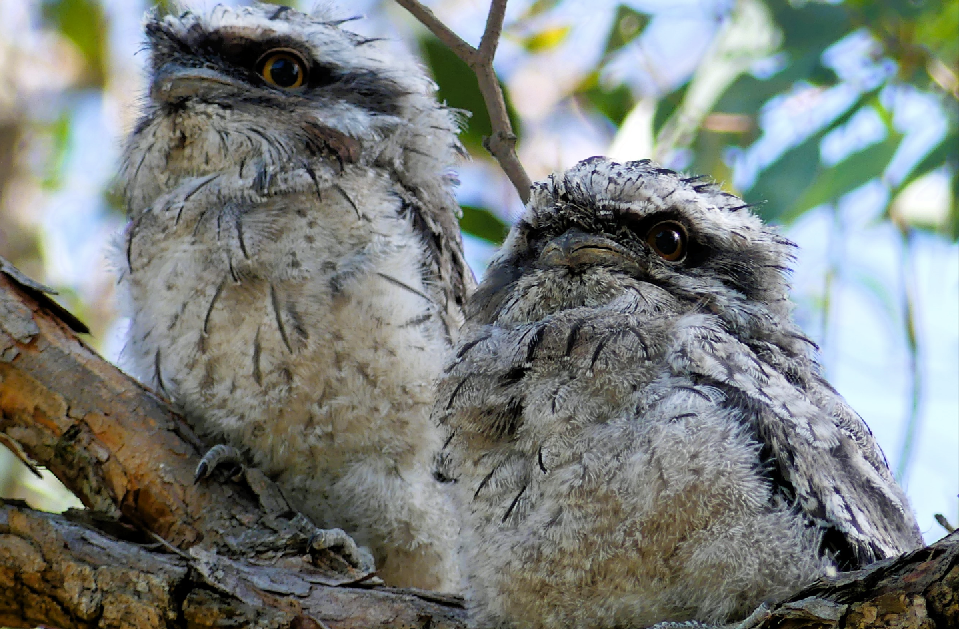
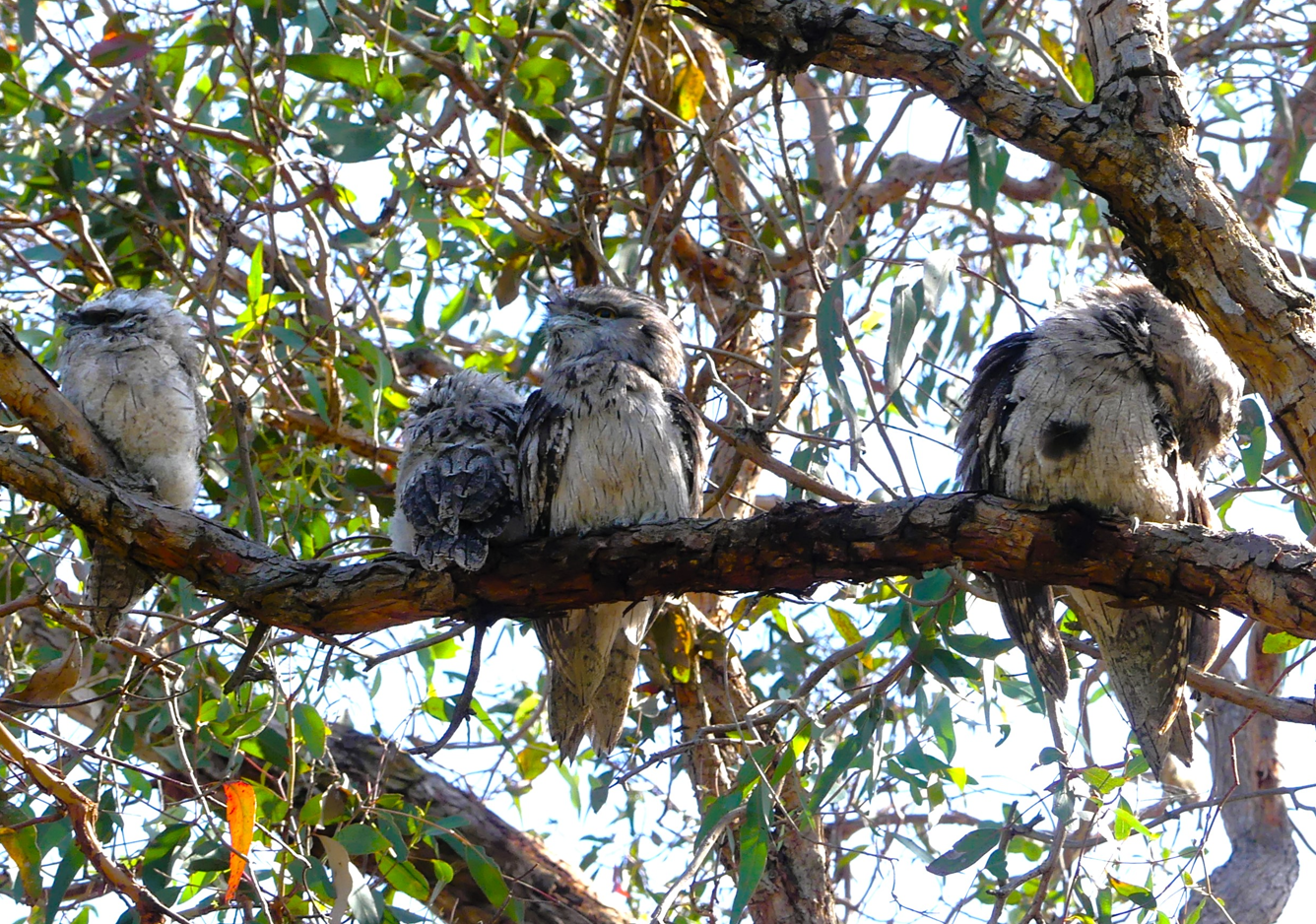
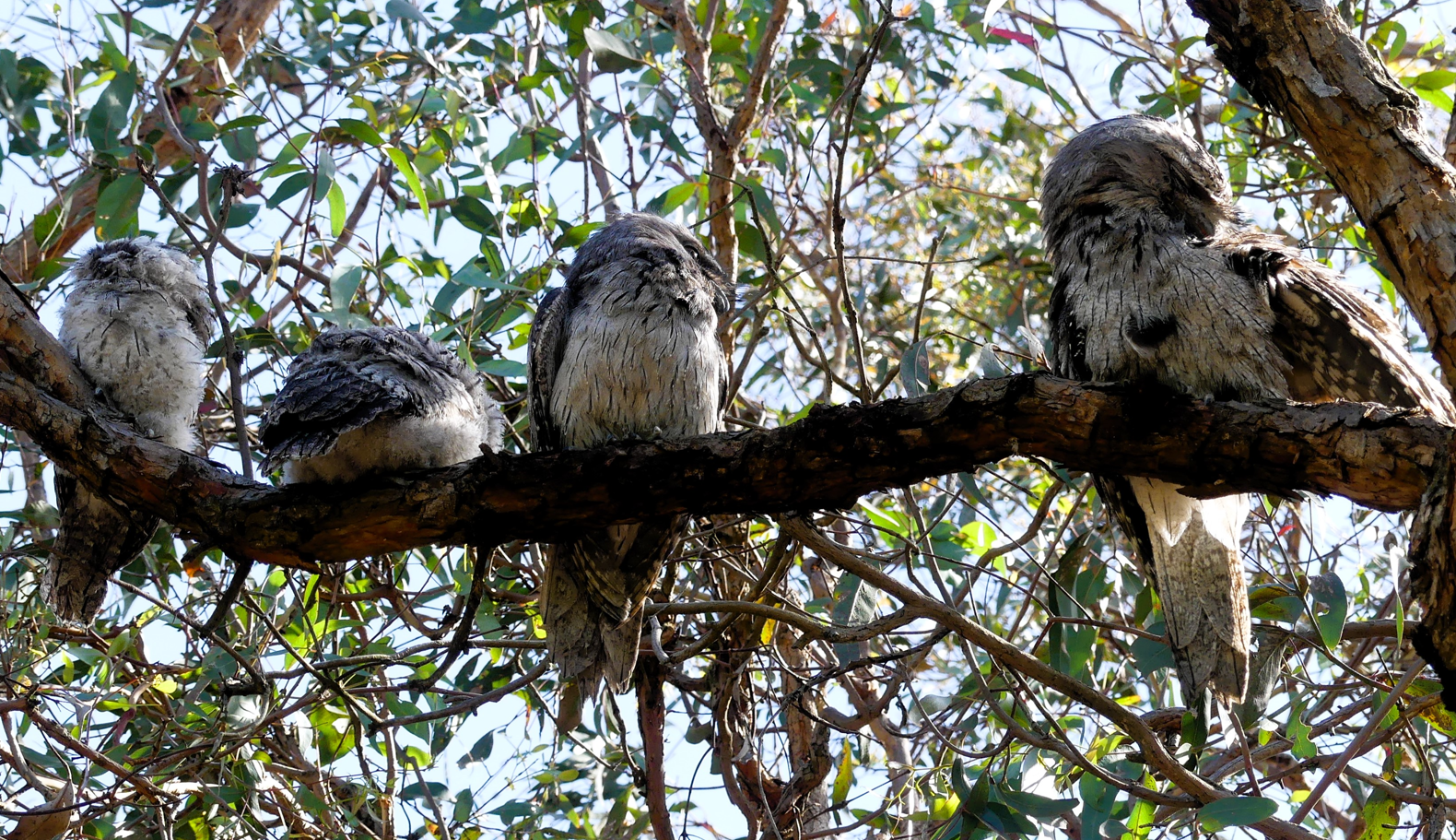
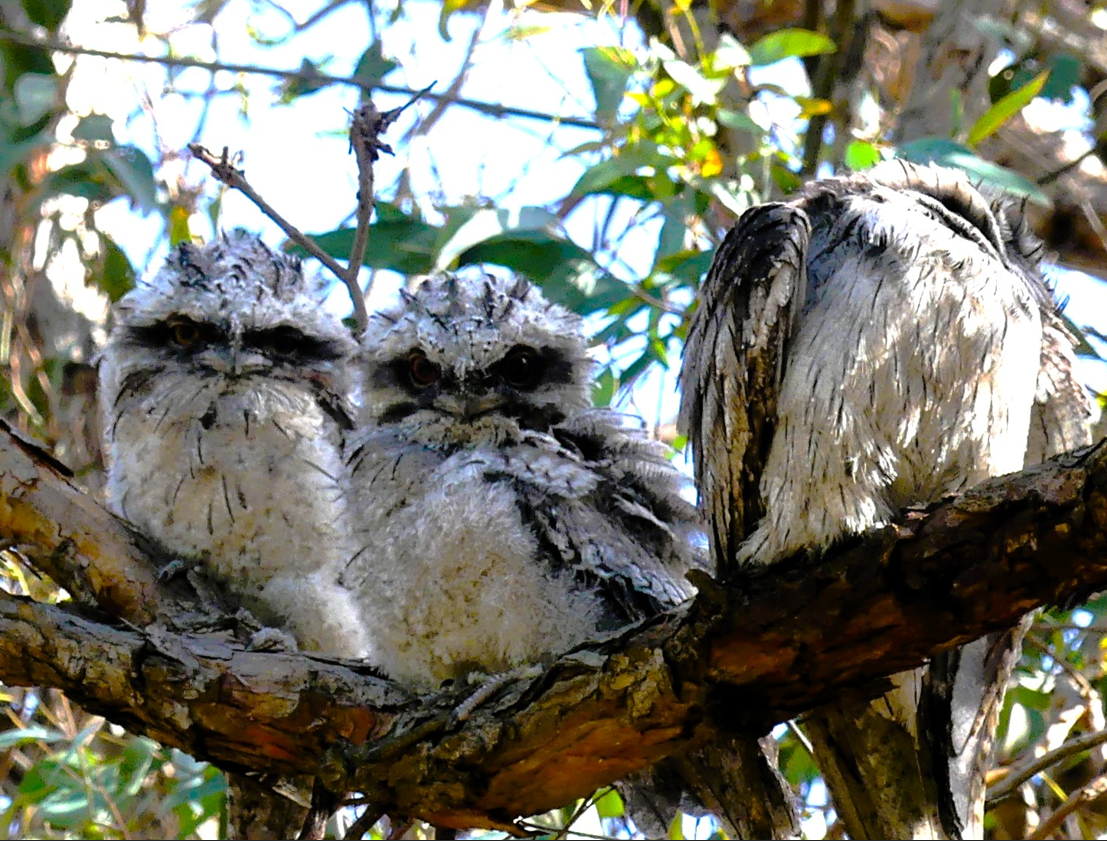
Please click on image to enlarge; click on the X to return
What do our birds eat ?
Of course, our birds eat different foods – they all have their own environmental niche, sometimes shared with others. Greg caught some of them in this group of very special photos:
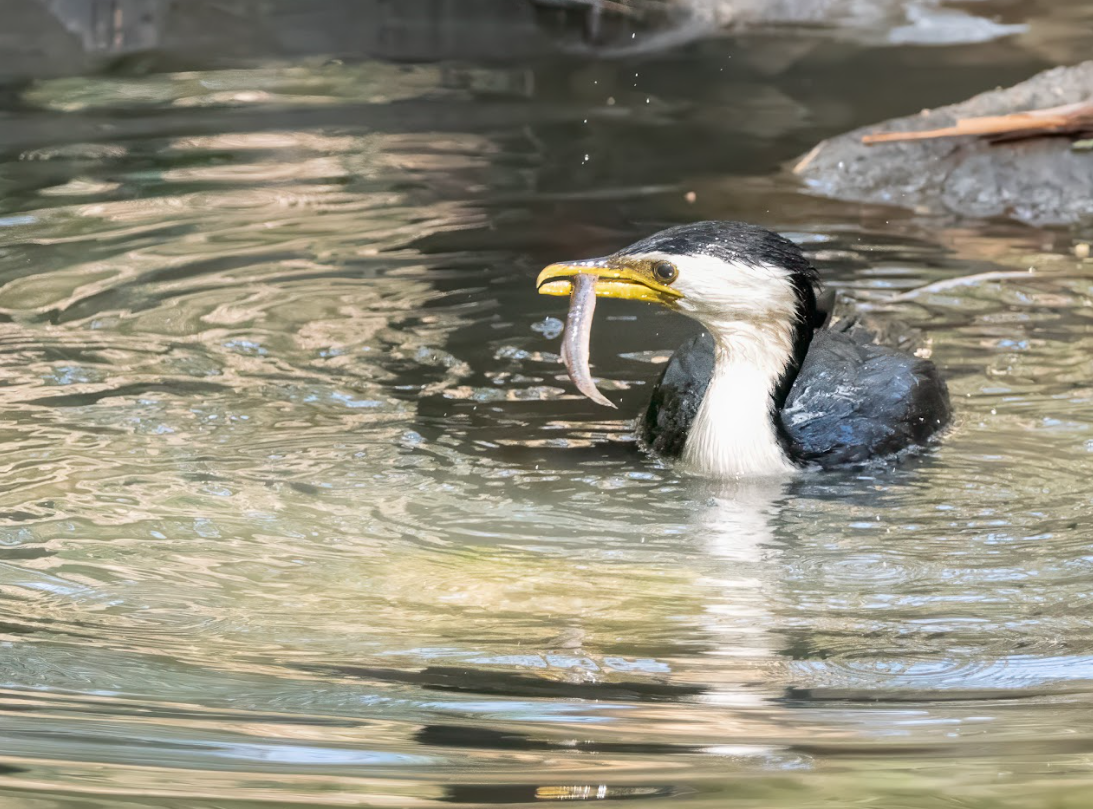
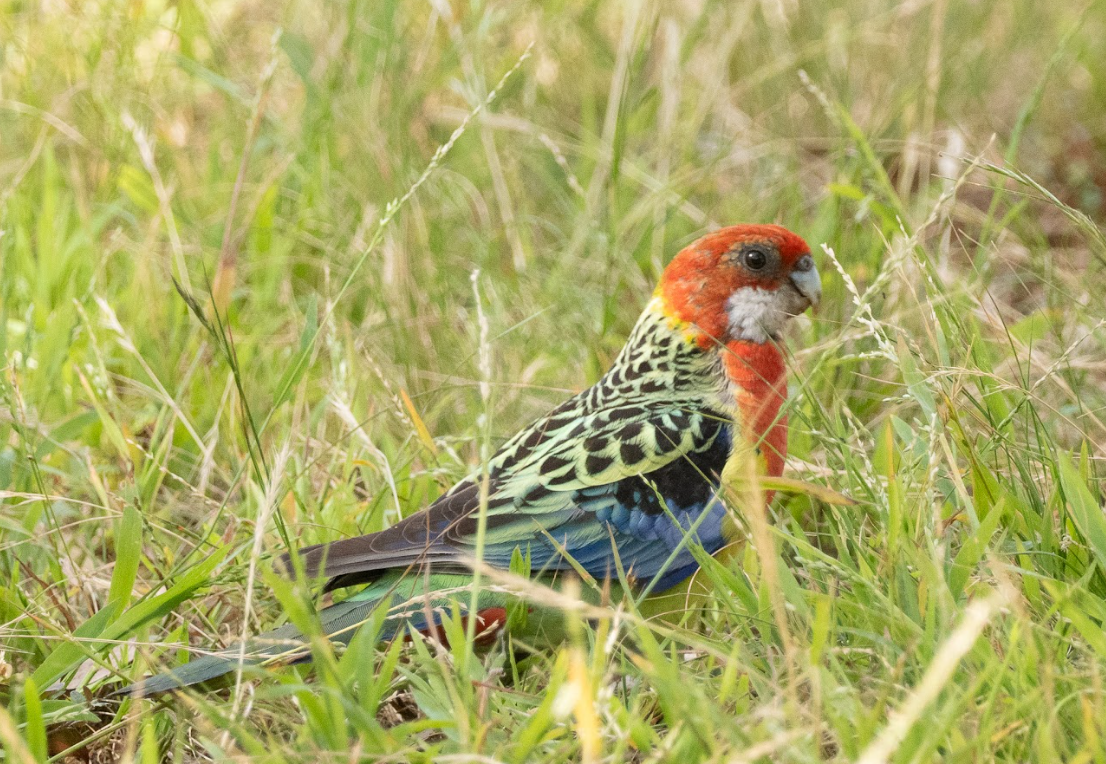
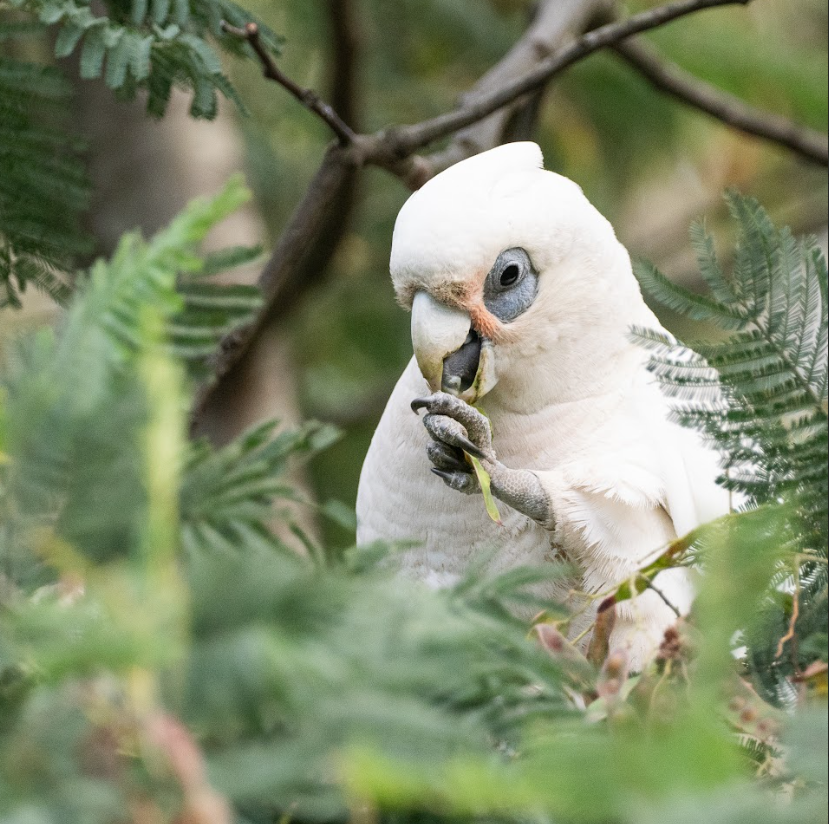
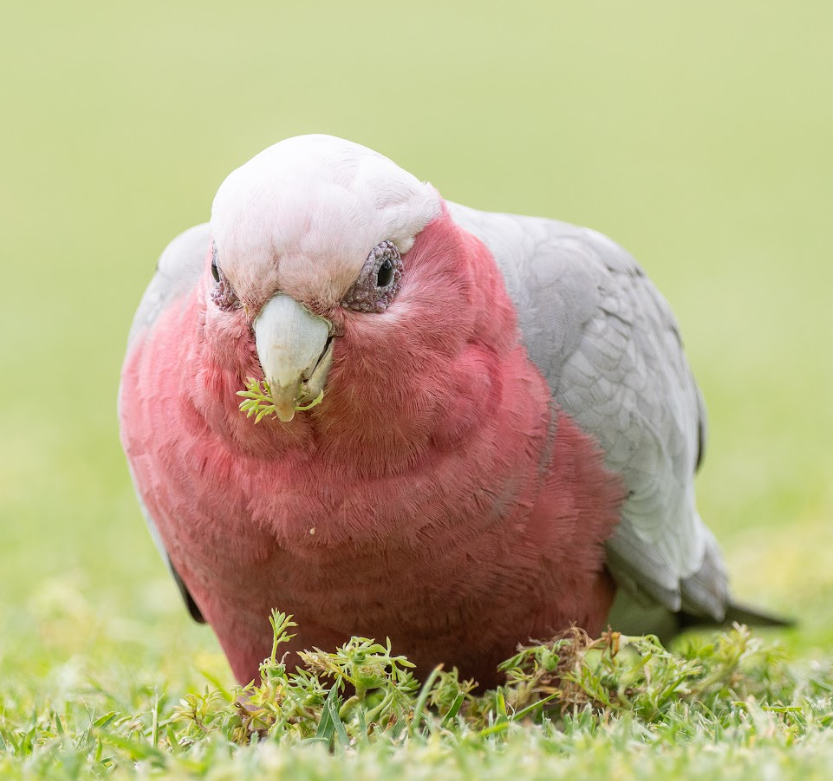
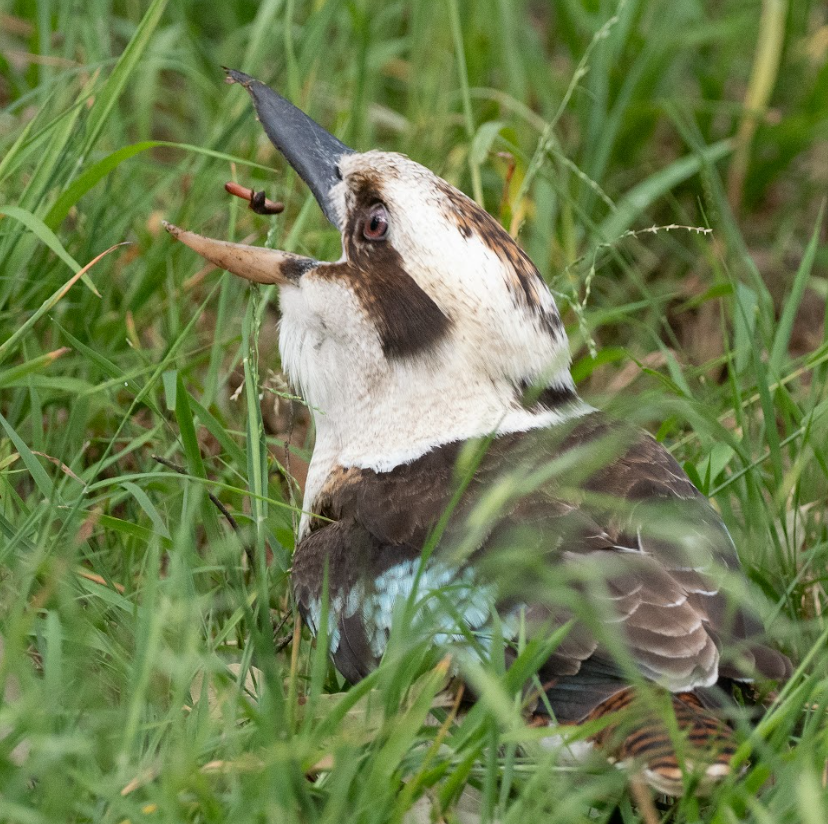
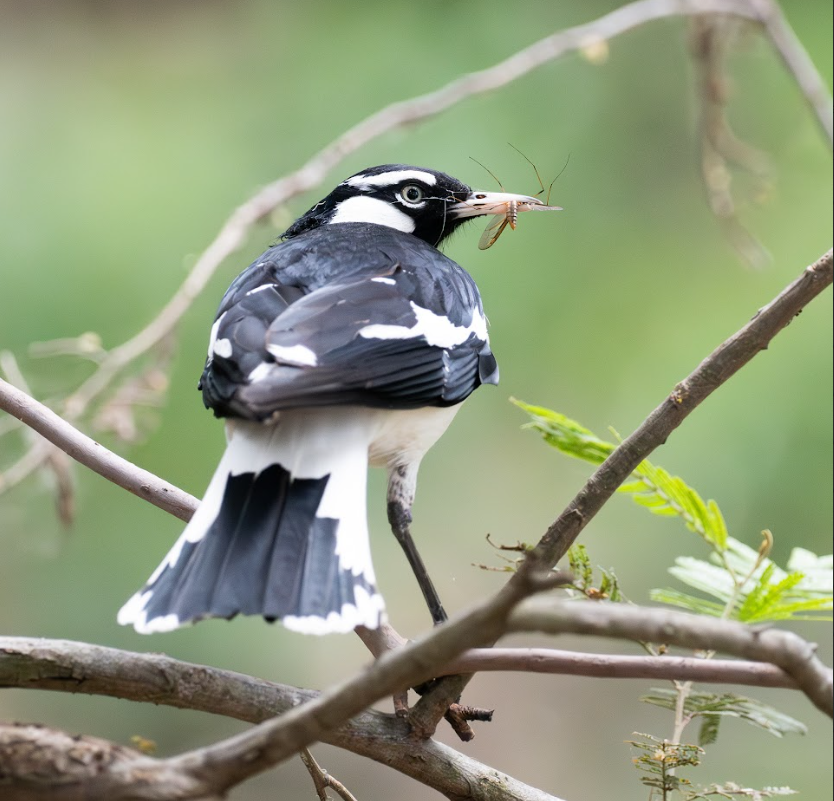
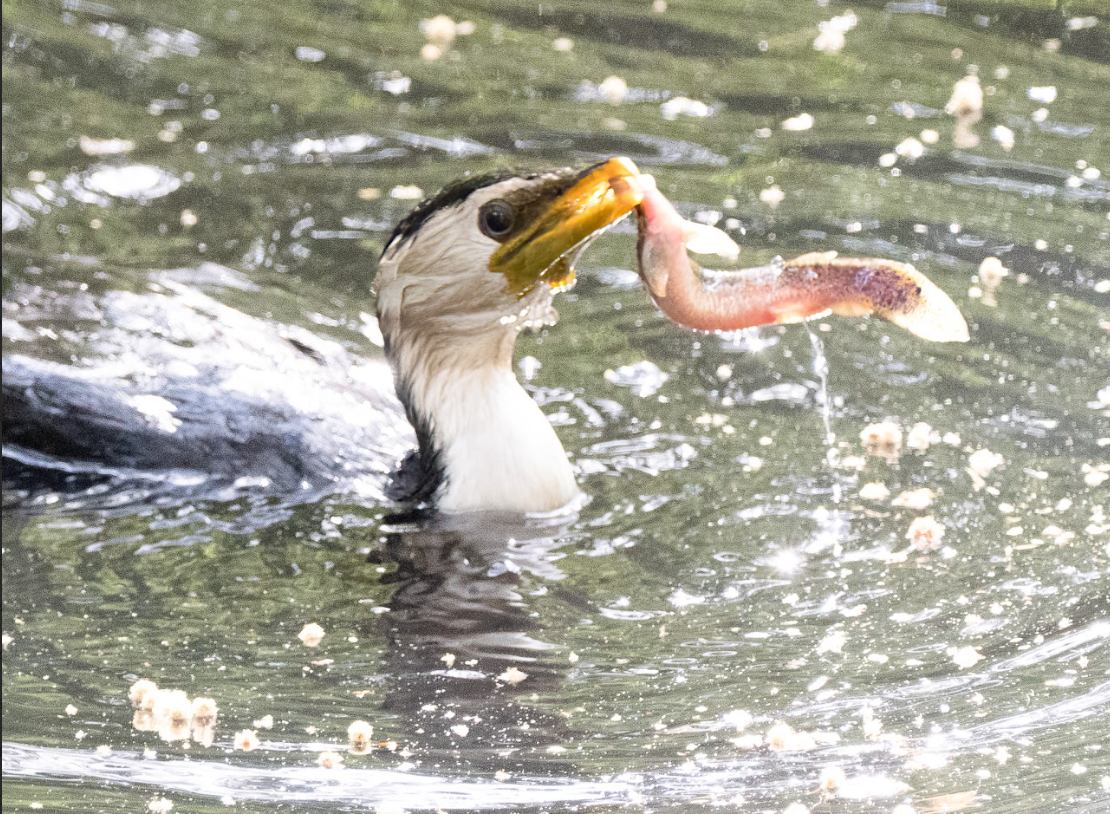
Please click on image to enlarge; click on the X to return
One of our informants tells us:
The fish species taken by this Little Pied Cormorant appears to be an Oriental Weatherloach [Misgurnus anguillicaudatus]. The Oriental Weatherloach is a feral fish found in Australian waterways, reported as first recorded in the Australian Capital Territory in 1980 and later found in the Yarra River, Victoria in 1984.
What other sightings were there in November ?
Here’s an un-curated gallery:
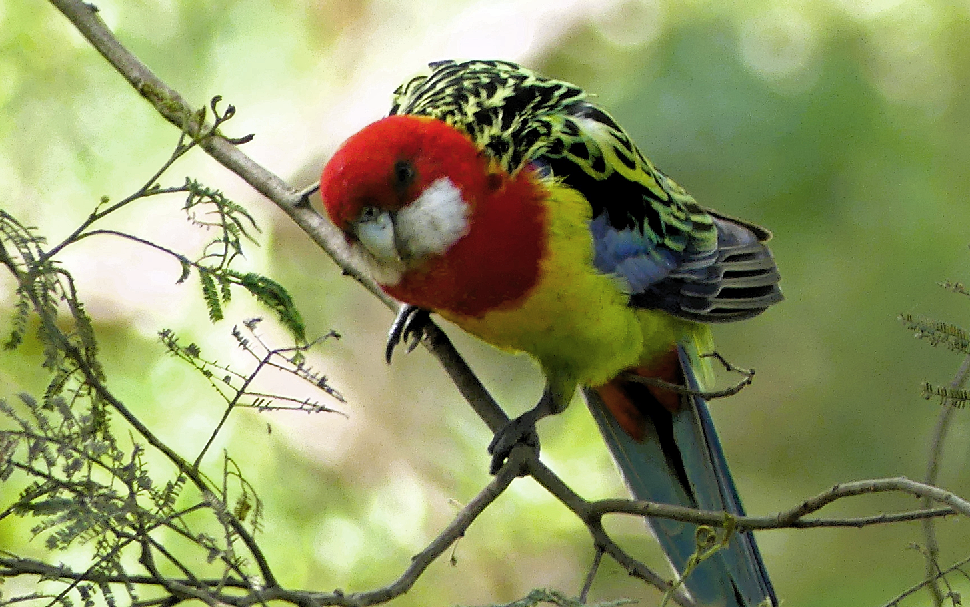
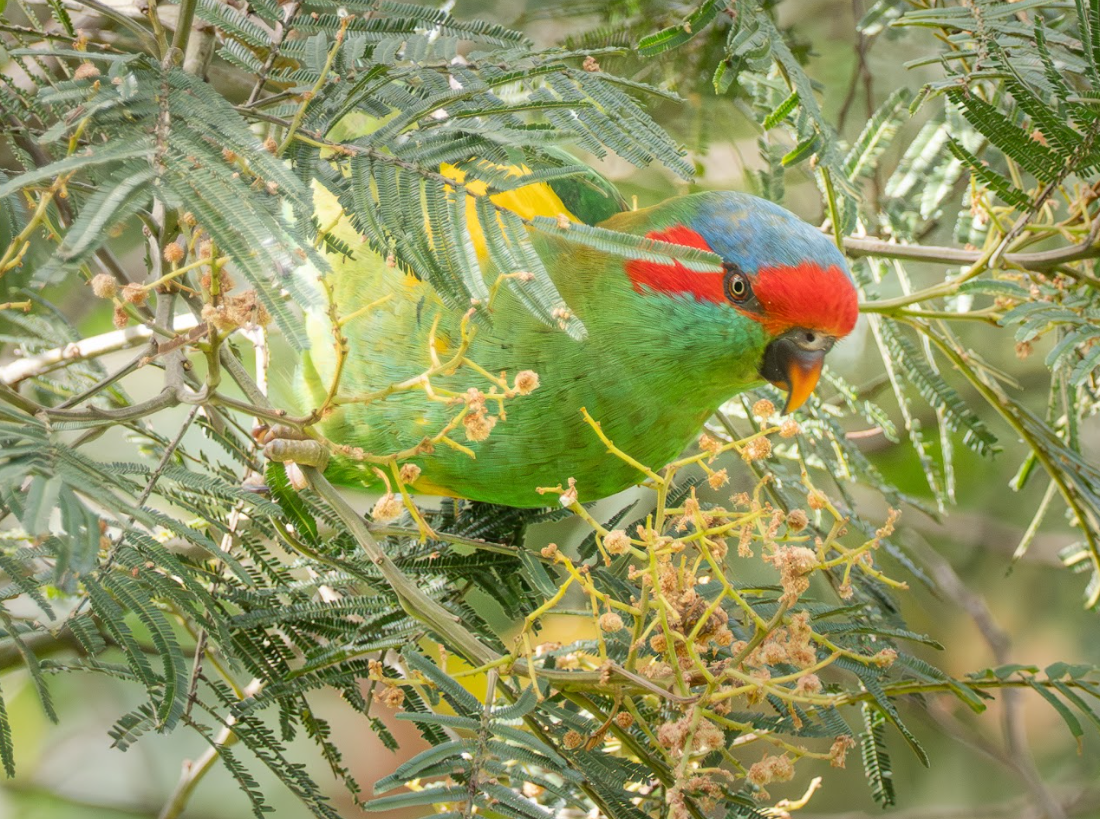
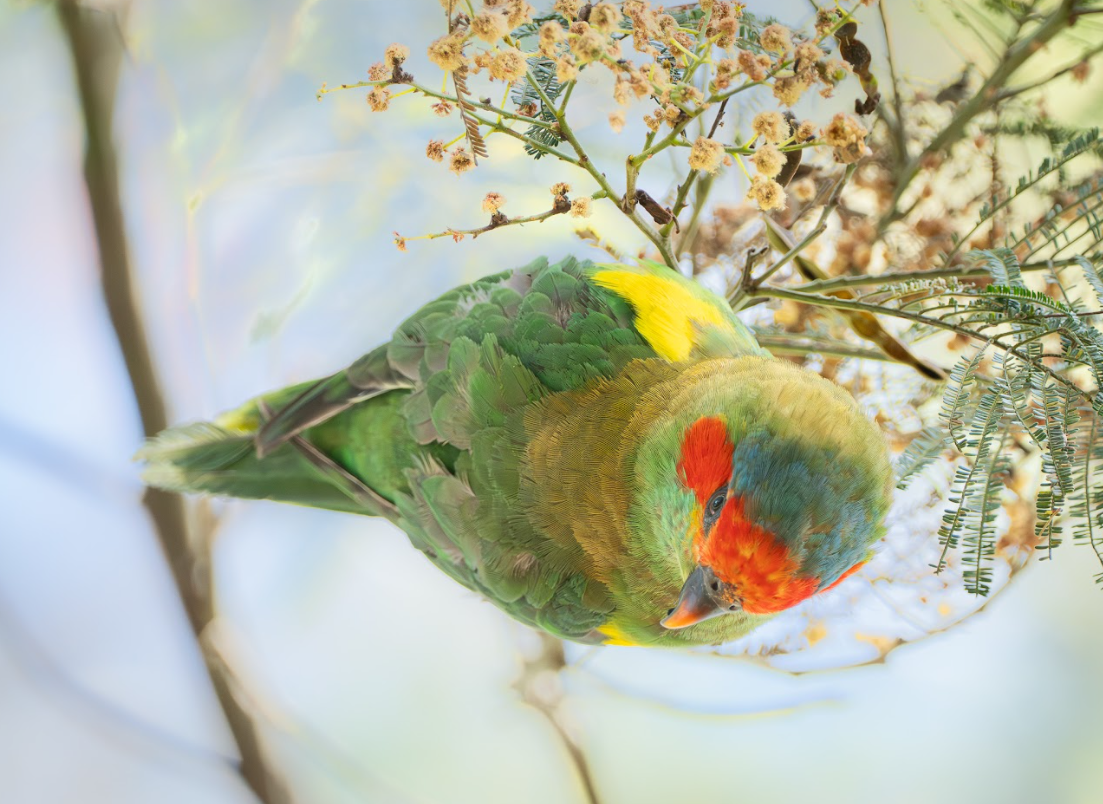
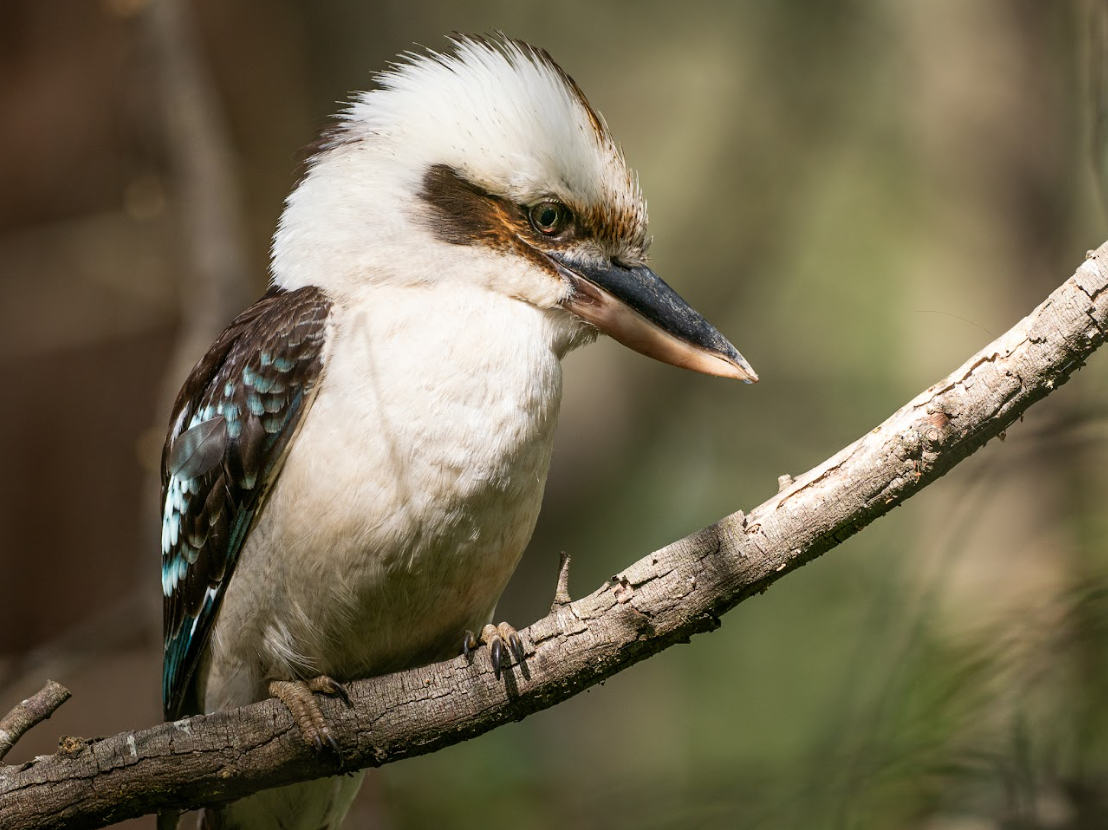
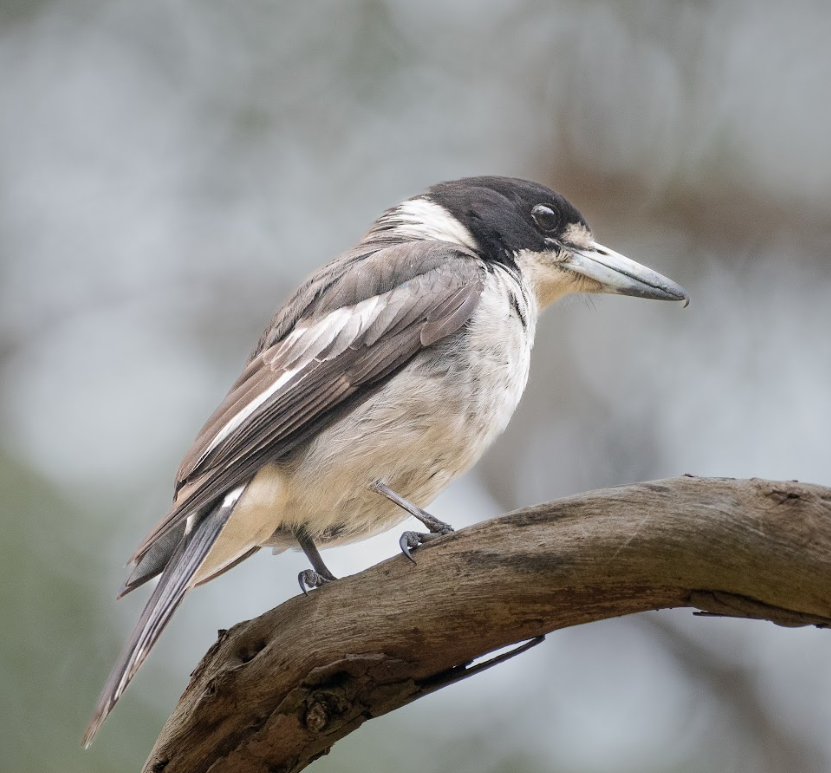
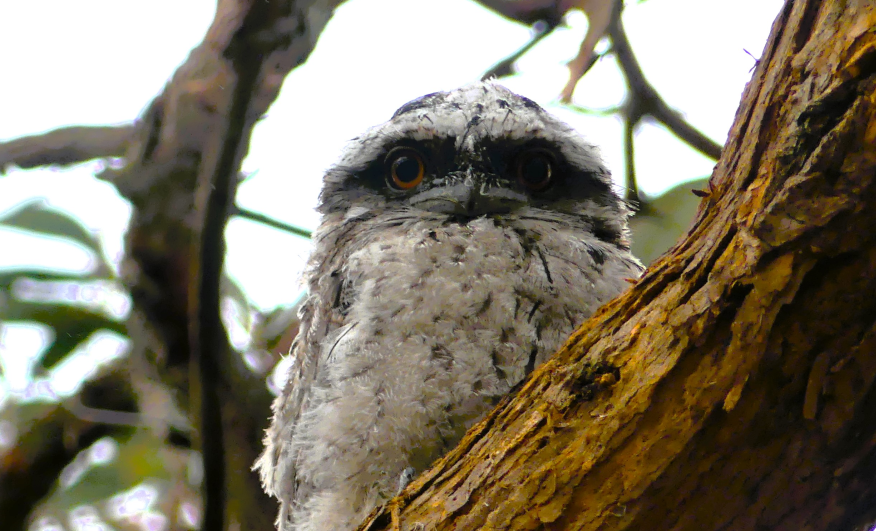
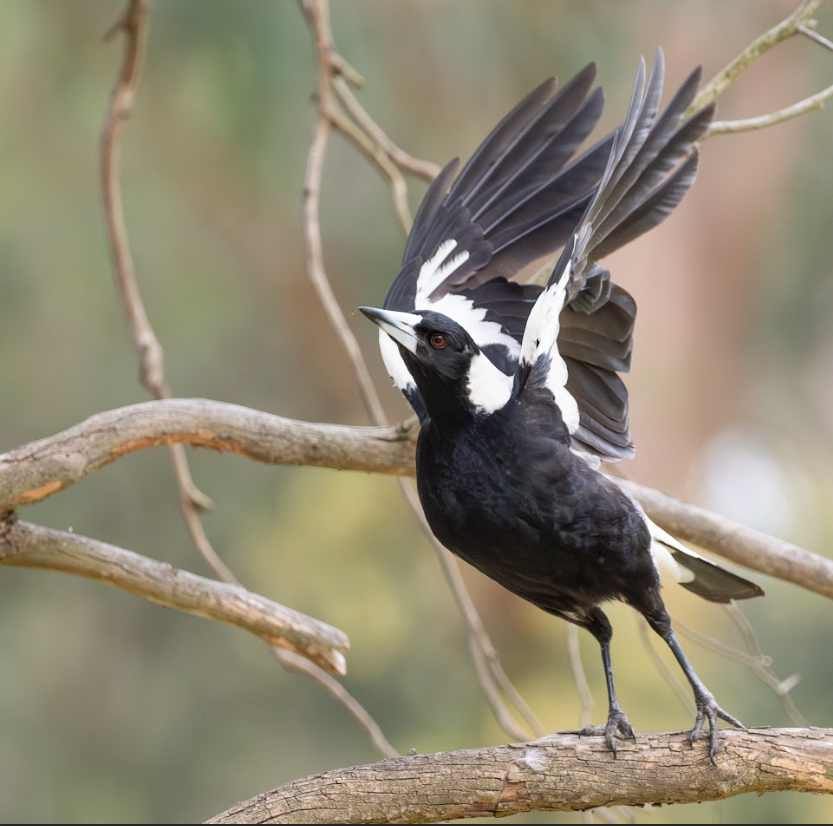
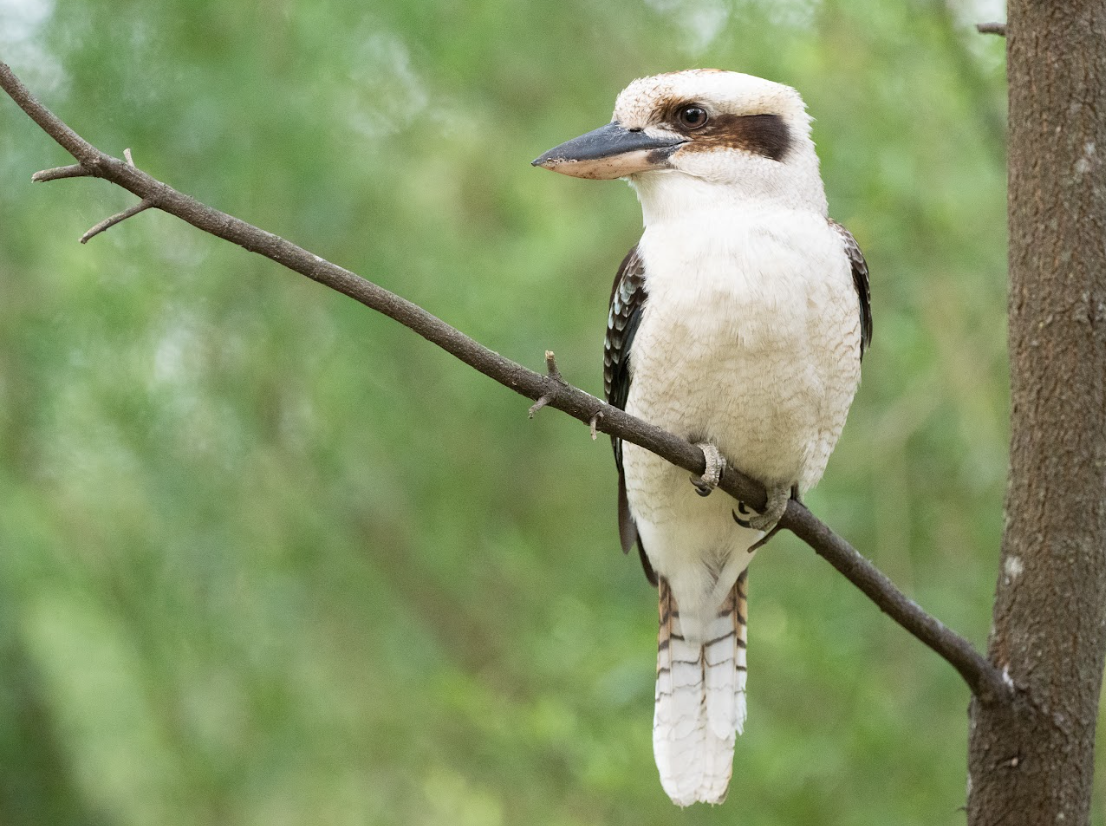
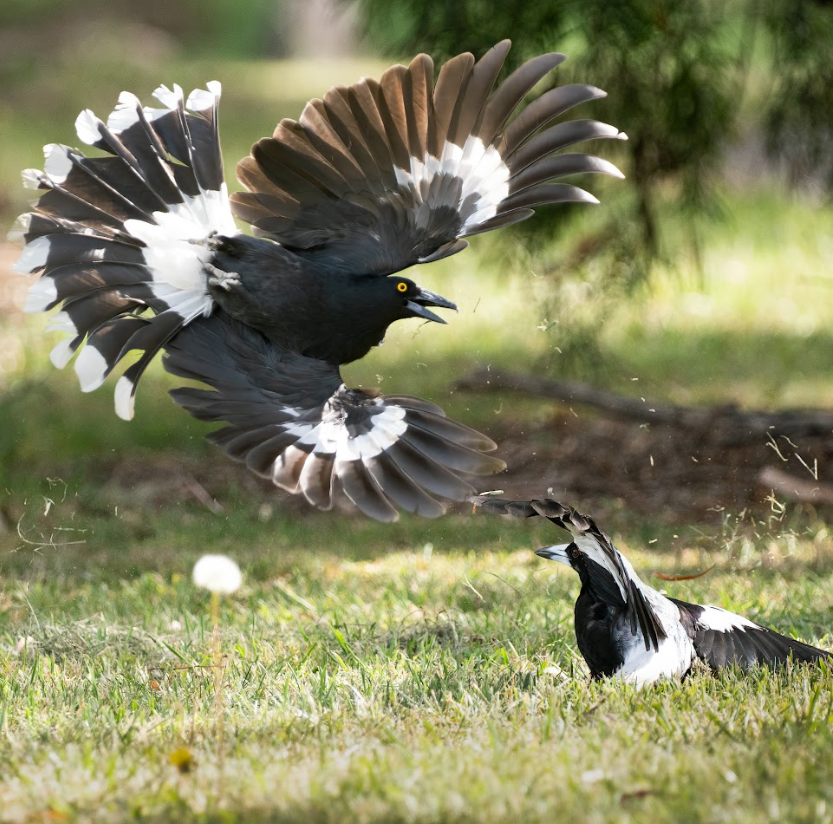
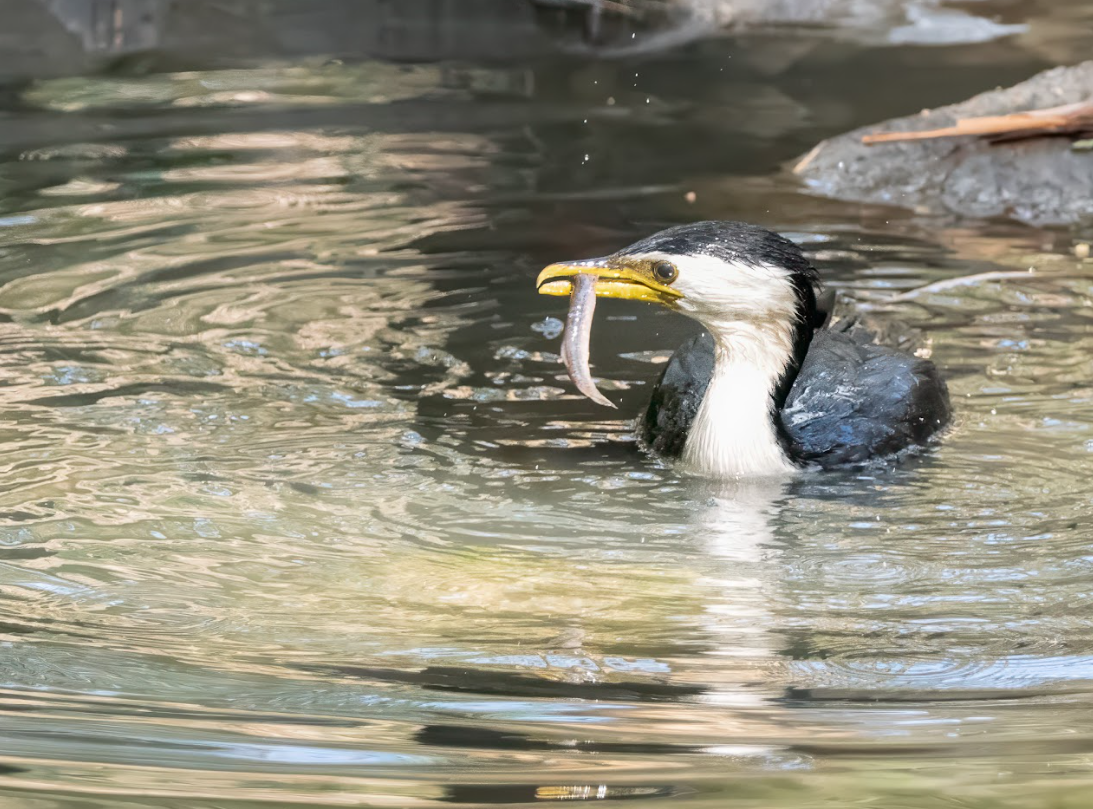
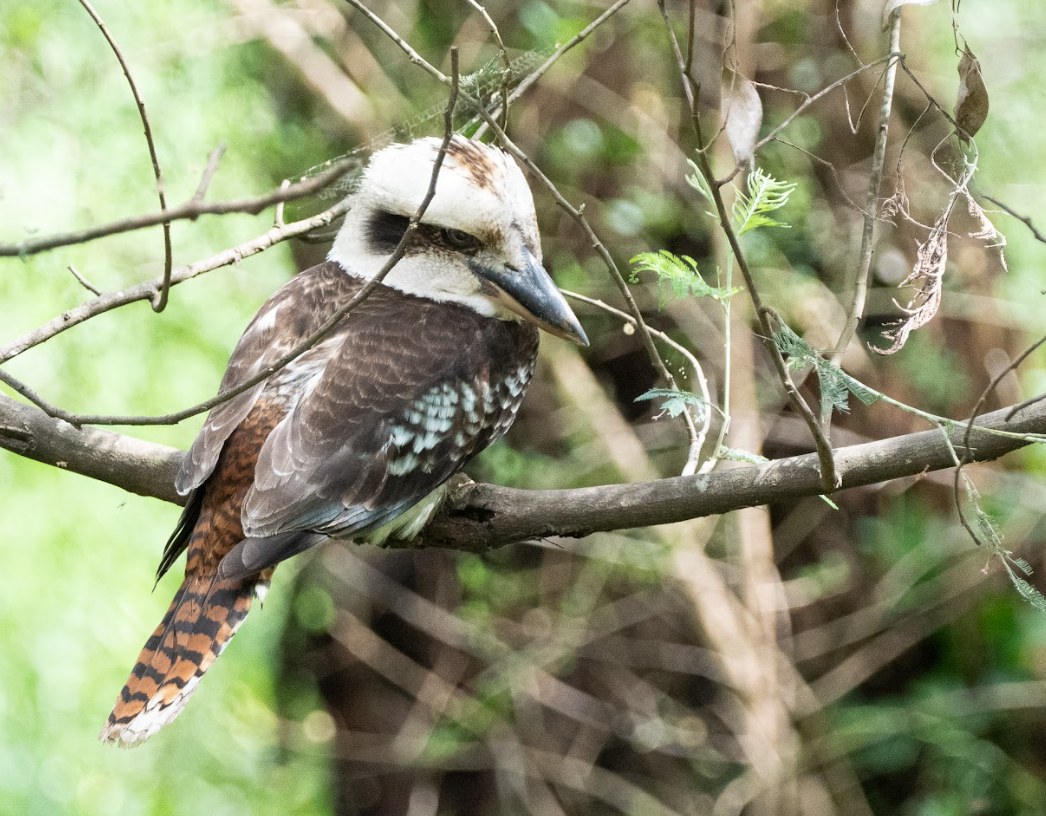
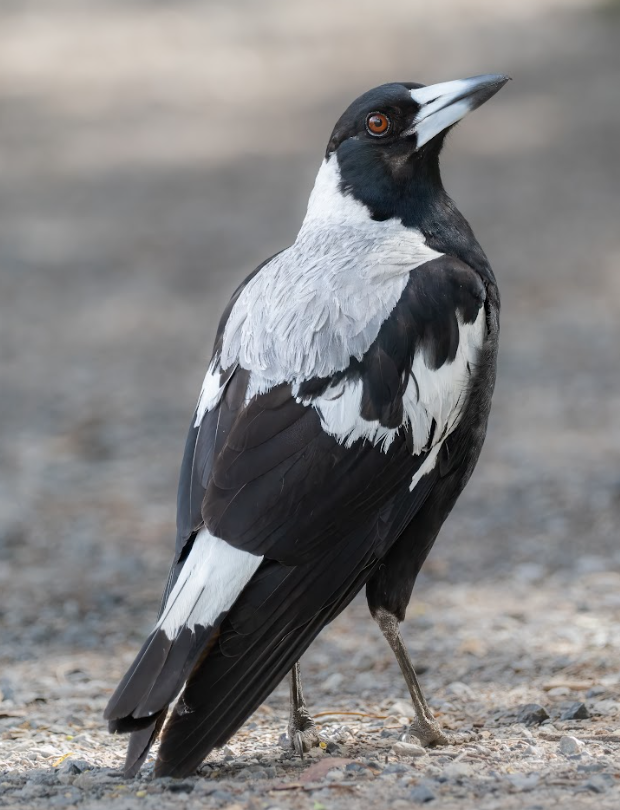
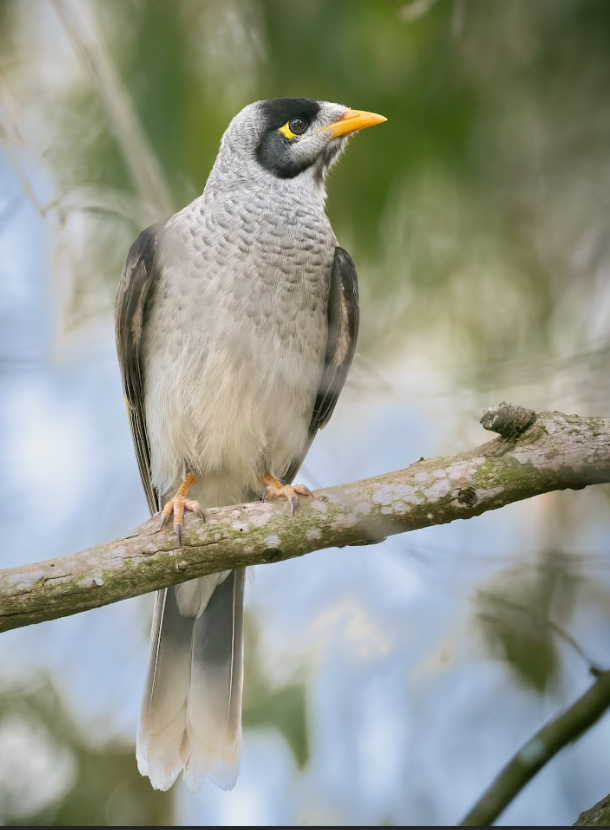
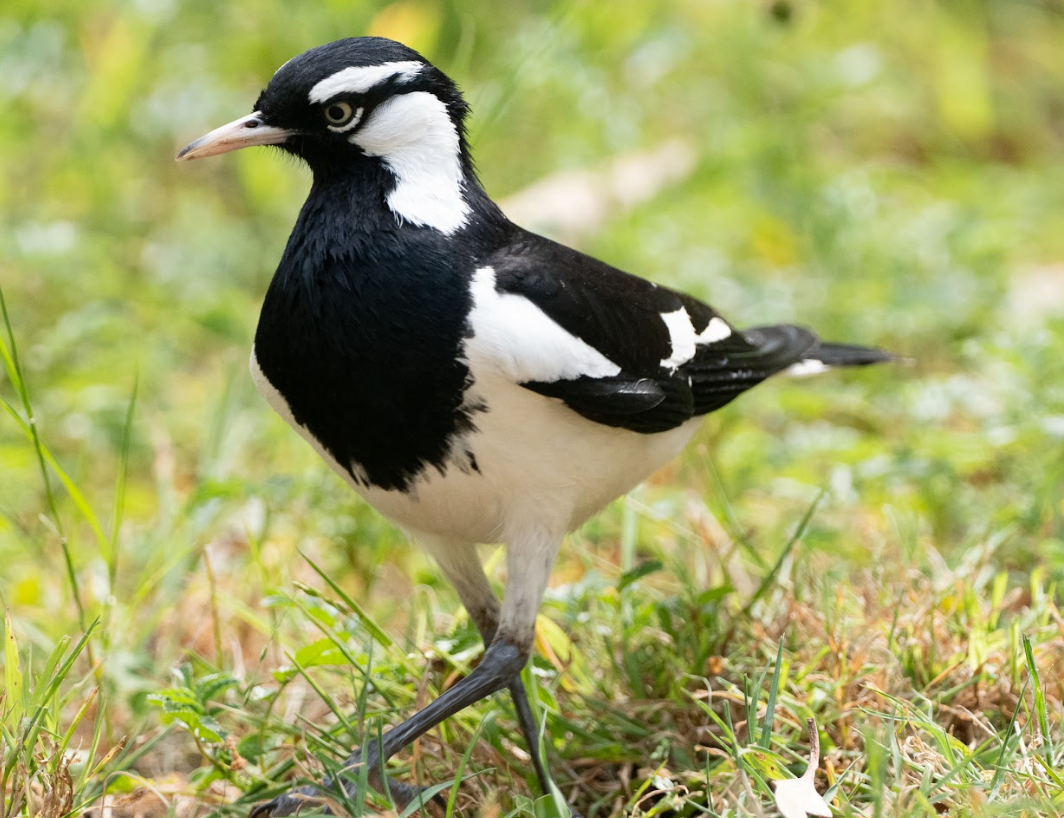
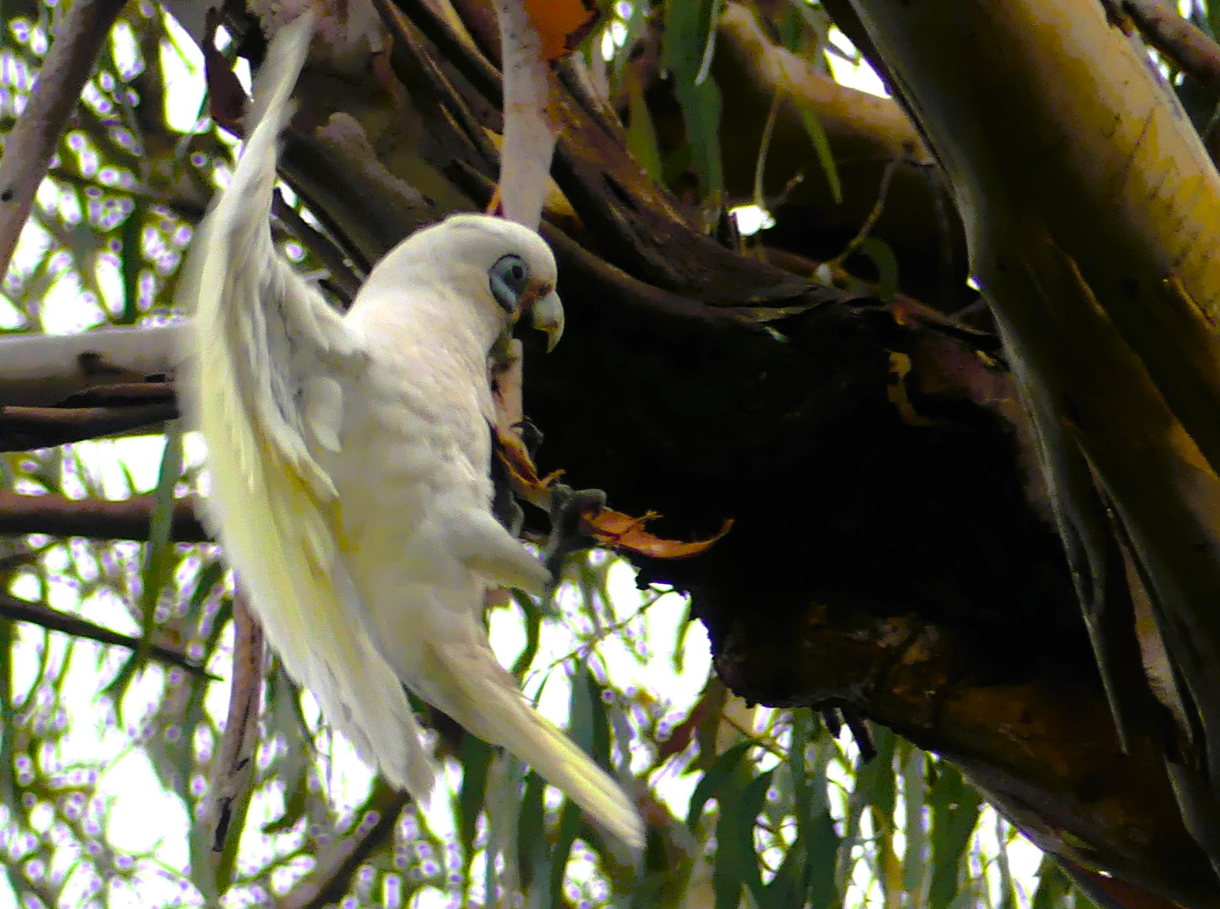
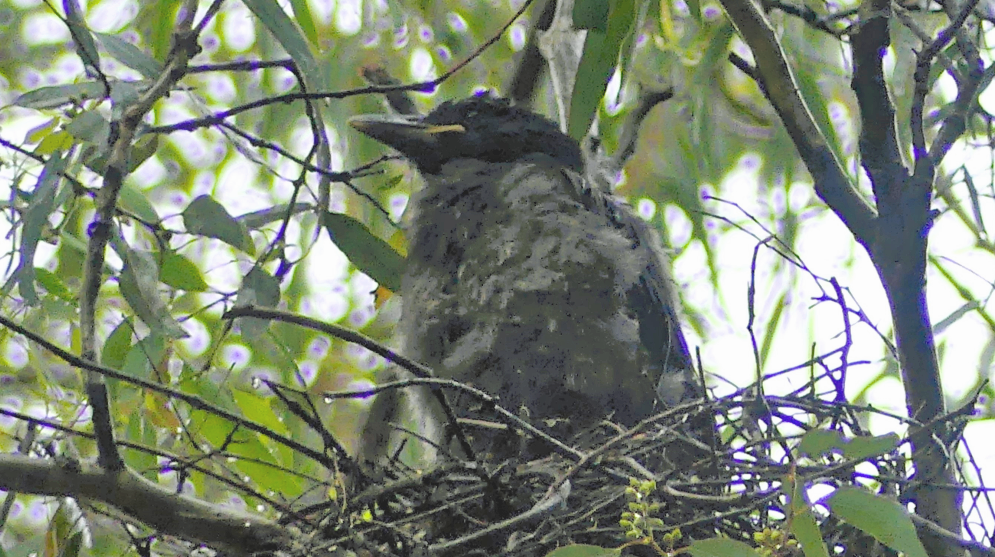
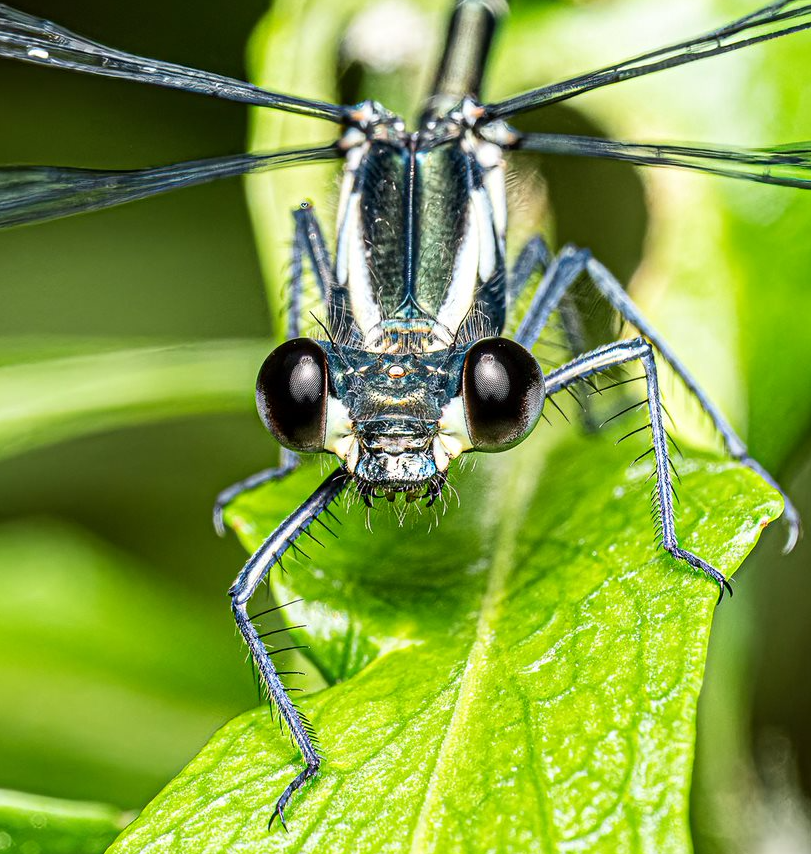
Please click on image to enlarge; click on the X to return
Did you notice the ocelli on the damselfly’s head?
Eastern Koel Hearing
In a first for the Creeklands, an Eastern Koel – Eudynamis orientalis (aka Pacific Koel) has been heard in Blacks Walk. It is a largish*, canopy dwelling cuckoo having distinctive and persistent calls.
We don’t have a photo yet. The species is dimorphic – the males are glossy black with a red eye and a pale bill – *but only half the size of a Raven. The females are dark brown with white flecks and buff to white underparts.
Apparently, there have been many sightings around Melbourne – but we’ve not recorded the species before in the Creeklands. Anyway – please keep your eyes and ears peeled !
Our Corridor
Vale David Berry
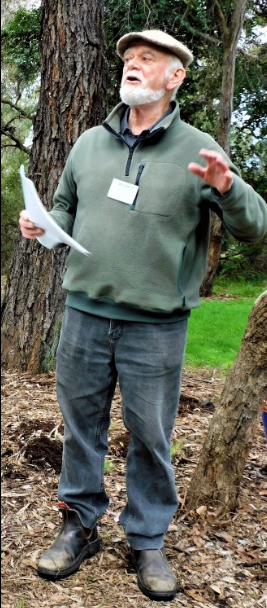
David Berry (23/2/1951-22/11/2024) was an activist and environmental champion. Blackburn owes him such a lot.
He made incredible contributions to many Whitehorse community and Council organisations over about 40 years -with a strong focus on both our environment and our community.
A great man who gave such a lot to our community! Our sincere condolences to his wife Sally and his family, colleagues and friends.
Our picture shows David speaking at a planting working bee tribute to another of our local heroes – Les Smith.
He was a major player in the following groups (which reminds us of our Useful Links page !):
- Blackburn and District Tree Preservation Society, for 20+ years
- Blackburn and District Environment Protection Fund
- Combined Residents of Whitehorse Action Group (CROWAG)
- Bungalook Nursery
- a major player in making the case for Wurundjeri Walk as a park and a long-time member of its Advisory Committee
- Blackburn Lake Sanctuary Action Group (BLSAG) – which secured McCubbin Park
- City of Whitehorse committees including the Bicycle Advisory Committee (COWBAC)
- Whitehorse Active Transport Action Group (WATAG).
Hay Street park
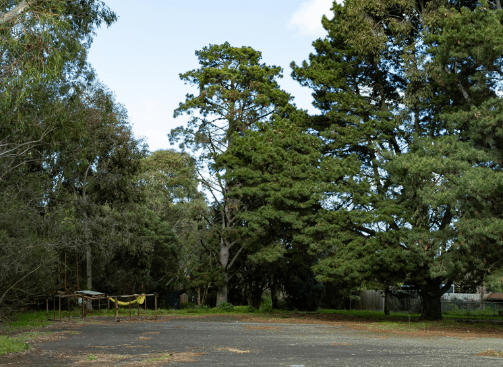
Whitehorse Council is seeking feedback on a Concept Plan for a new reserve at the foot of Hay Street hill in Box Hill South adjacent the Gardiners Creek Trail here.
The newly acquired open space (formerly a disused carpark) lies a little further downstream along the creek on the Gardiners Creek Trail from Wembley Park.
We’ve received advice that affects those who make direct submissions of their own – instead of following the Have Your Say directed format. People do that when their points relate to items not covered in the directed response – for example, to point out existing habitat issues such as the Tawny Frogmouths nesting in the pine trees there. The advice is to also lodge a Have Your Say response quoting your individual submission giving full details. This is to protect against such responses becoming “lost” in the system.
Corridor Sightings
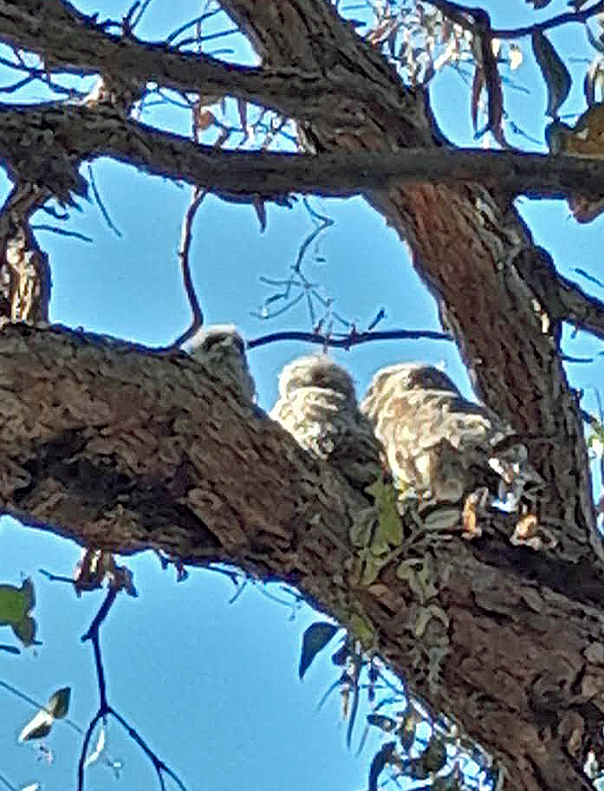
Marg sent us this photo of another pair of Tawny Frogmouth chicks and parent sitting in a tree along Blackburn Road towards Canterbury Road.
This pair nested somewhere else last year – but are back at their former nesting tree.
It’s good to see the species breeding successfully elsewhere in Blackburn – not only in the park.
New Friend, Marg, is keeping an eye on them!
 Blackburn Creeklands
Pingback: Park News, May 2025 | Blackburn Creeklands