Springing into action!
Events coming up:
Spring Bird Walk to be held on Saturday 25th October
Welcome to the latest edition of our Blackburn Creeklands newsletter. In this edition, we:
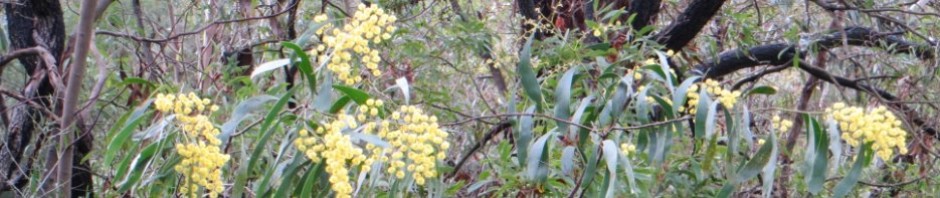
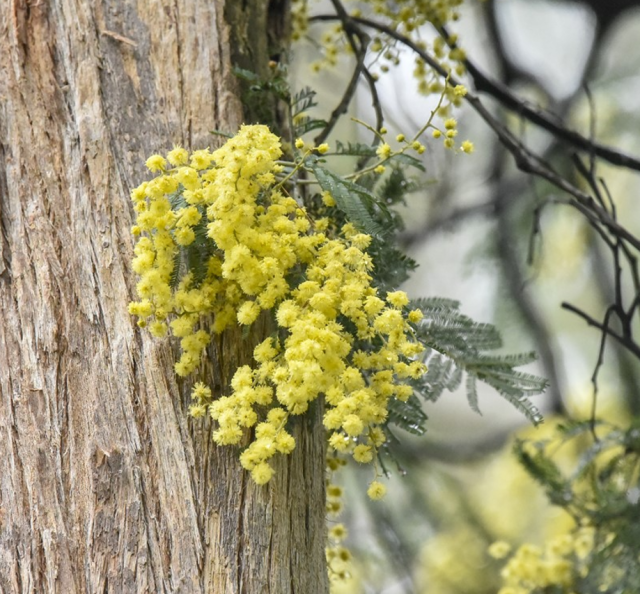
- Mark the change in “official” seasons as we leave Winter for Spring – heralded by the beautiful blooming wattles in the park!
- Mark changes in our leadership following our recent AGM.
- Settle the question of whether there are indigenous fish in our creek !
- Report on the Community Working Bees book-ending the month.
- Our usual roundup of sightings, Council works in the park and snippets from further afield.
Our Wattles
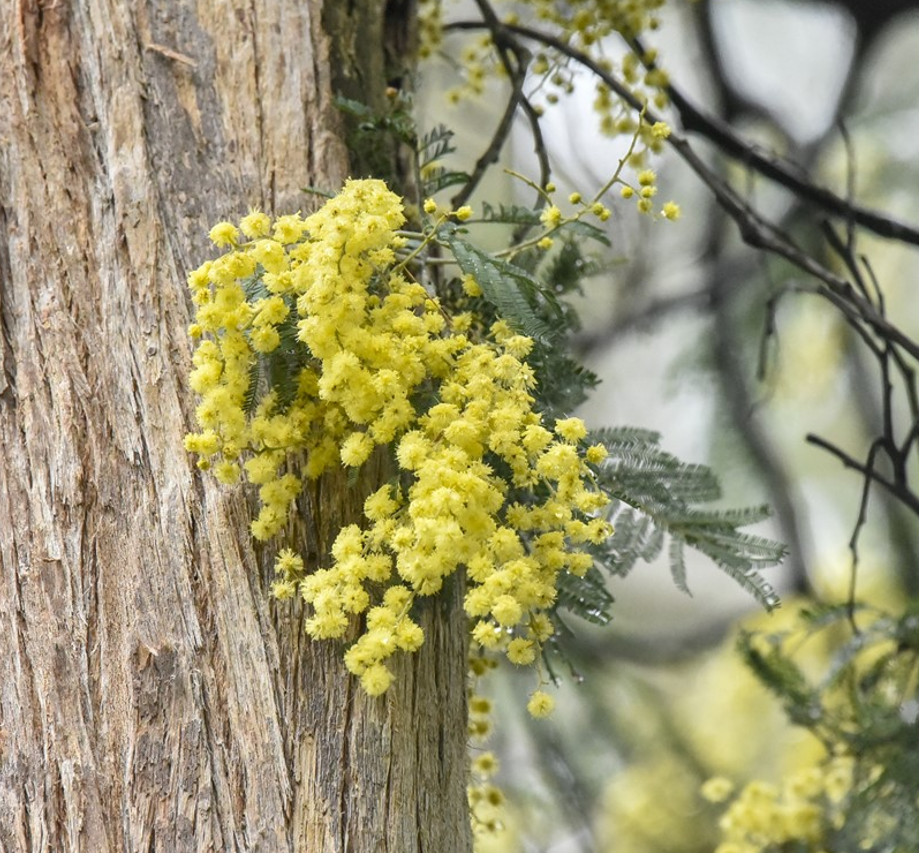
In the lead up to Wattle Day (1st September), many of the park’s wattles are flowering spectacularly with their cheery yellow blossoms in August after a July start – just the tonic we need as we emerge from a very cold and wet Winter into (hopefully) a bright, sunny Spring.
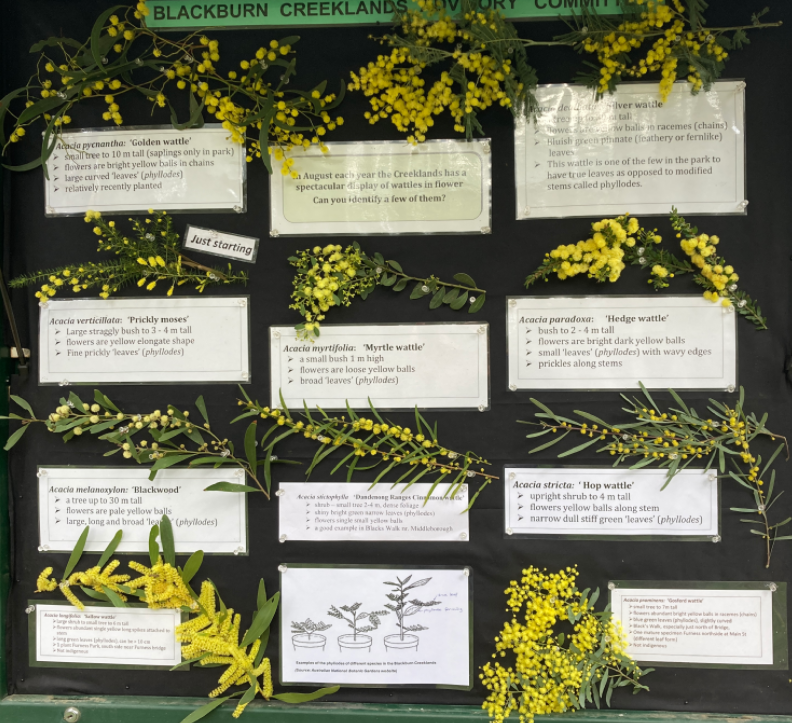
As usual at this time of year, Megan has mounted some blooms and foliage on the flip side of the Noticeboard – to help us determine what wattle is what ! Megan also gave a very interesting talk on our Wattles at morning tea at Sunday’s final Community Working Bee for the year.
Community Working Bees
August saw the second stage of our ‘School Gateway to Nature Project’. Both Community Working Bees in the park dealt with planting up the new gateway area to Laburnum Primary School from Blacks Walk with Greg in a leadership role. We had great turn-outs with many of our regulars augmented by a significant contingent from the school community facilitated by James and family.
Both working bees were very well attended with 36 and 40 in attendance – including a number of school families each time. It is a delight to have the young families working with us – especially to see how enthusiastic the children are, even if they do get sidetracked at times by a worm, centipede or millipede.
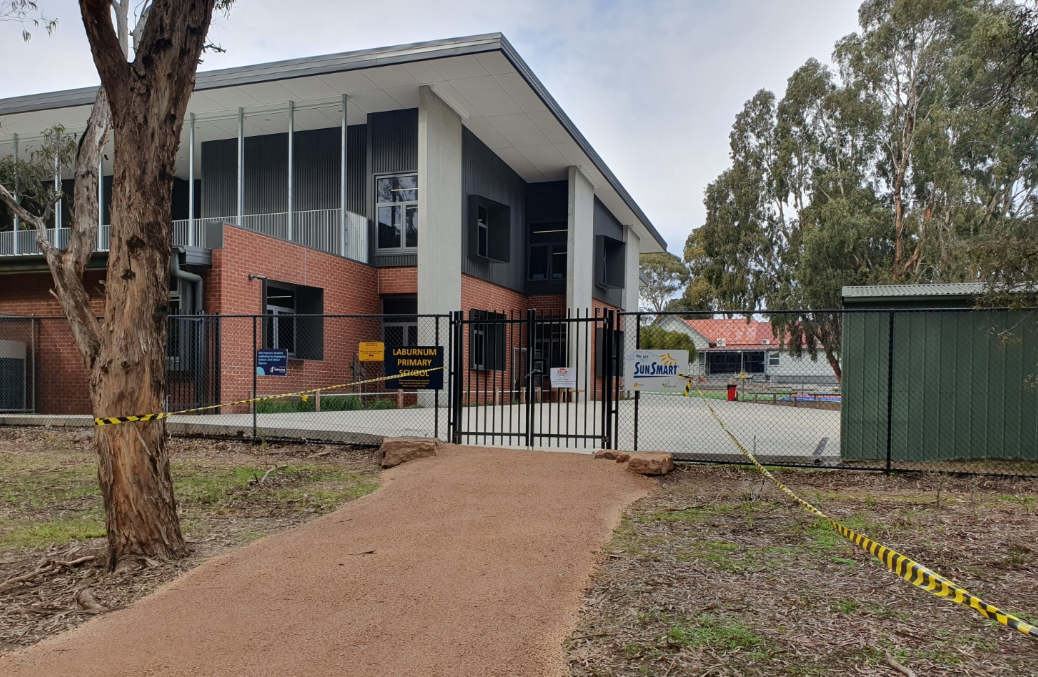
The July working bee saw 350 plants go in around the new school gate with a further 350 planted at the August working bee. The latest plantings were around the new pathway to the school gate (constructed by Council mid-month), near the Pakenham Street entrance and along the southern boundary with the school. As we were celebrating Wattle Day, a large number of wattles were planted that should provide even more spring colour in years to come.
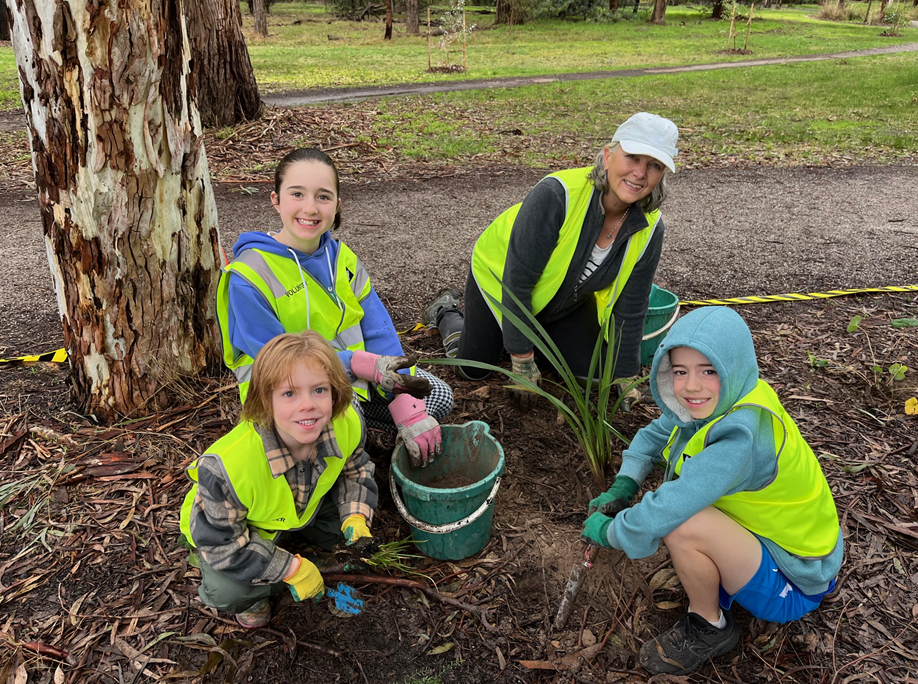
In our photo, Nic is ably assisted by enthusiastic youngsters in planting some Dianella near the main track. We are very impressed that all participants are wearing PPE for their safety. Believe-it-or-not, Nic is a fully qualified Granny AND horticulturalist – so a perfect fit for this role!
We thank all the participants – especially our new friends from LPS !
eDNA Part Two
In our June edition, we gave the first instalment of our learnings from eDNA sampling taken in the creek a few years ago.
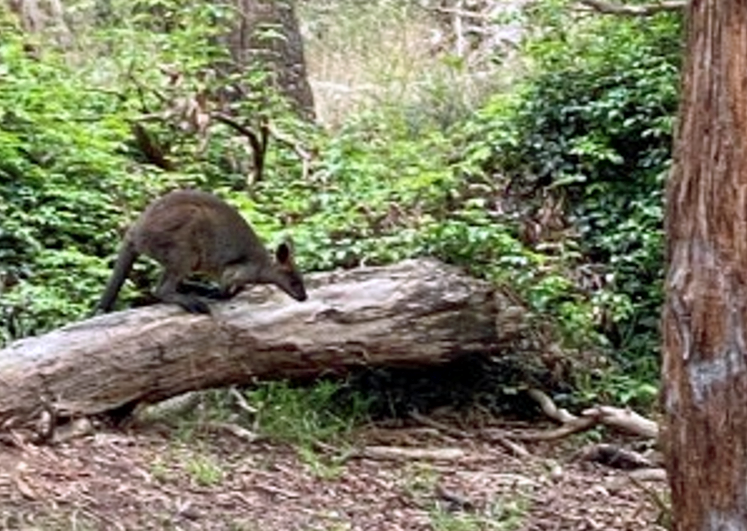
A couple of surprises came up – the first being traces of Swamp Wallaby DNA (we have only seen Grey Kangaroos in the area on rare occasions).
However, our colleague Su at Blackburn Lake has shed more light on that “surprise”. Swamp Wallabies have turned up at the Blackburn Lake Sanctuary quite often!
Su even provided a 2020 photo of a Swamp Wallaby taken after a working bee to prove it!
Su also offered an alternative explanation for the farm animal DNA we reported too – apparently an animal refuge for sick/injured animals operated on Forest Road (well within the creek’s catchment). We know that DNA fragments can persist from mere weeks to over a million years! However, we are told that eDNA in soils can last from several months to multiple years, depending on soil composition and other factors. Presumably that holds for eDNA soils leaching or being washed into our creek.
Where were the samples taken?
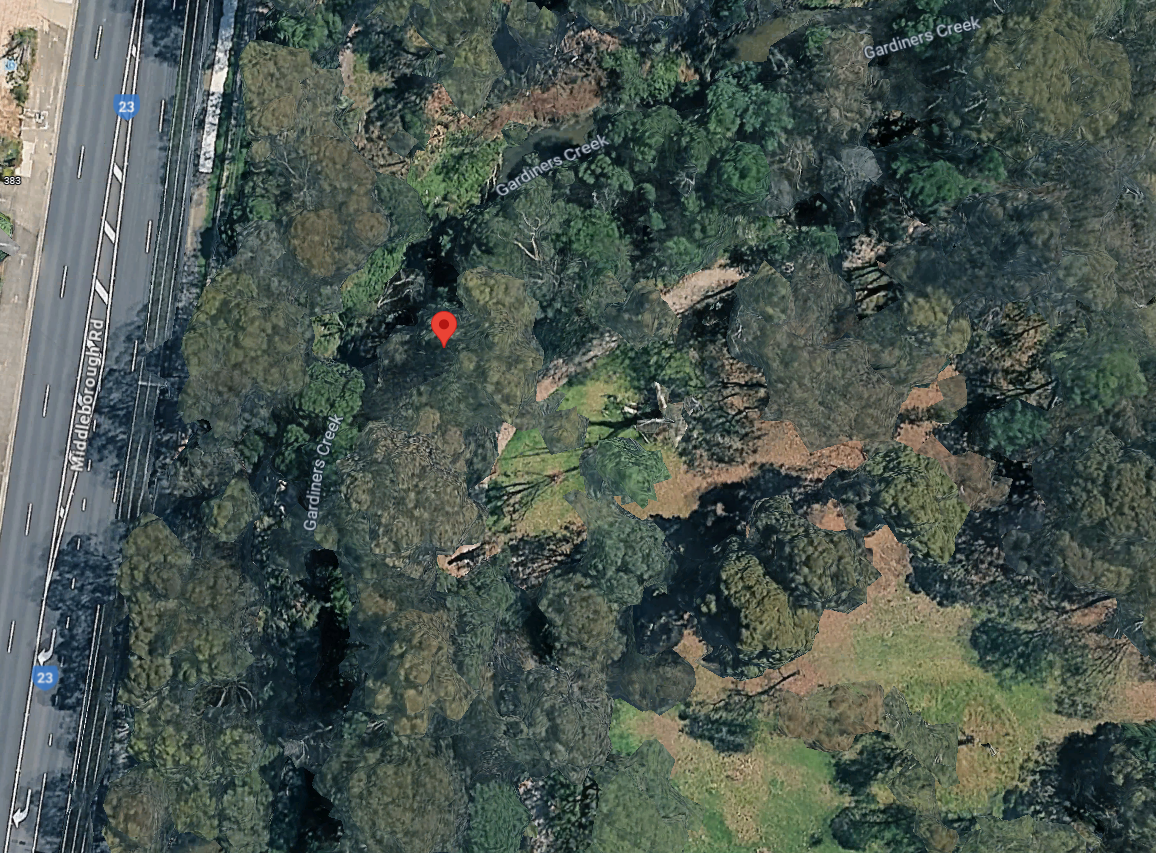
The latitude/longtitude recorded with the samples puts the sampling point in Blacks Walk near Middleborough Road – not far from where the creek runs under that road into the Sparks Reserve retarding basin.
Incidentally, that neck of the woods would be a great place for another pedestrian bridge within the Creeklands to enable walking around Blacks Walk without having to leave the park and walk along Middleborough Road for a stretch.
Fishy Business ?
We wanted to dive further into the fish data – particularly to find out whether we might have any indigenous fish in our part of KooyongKoot (Gardiners) Creek from eDNA testing as well as older studies.
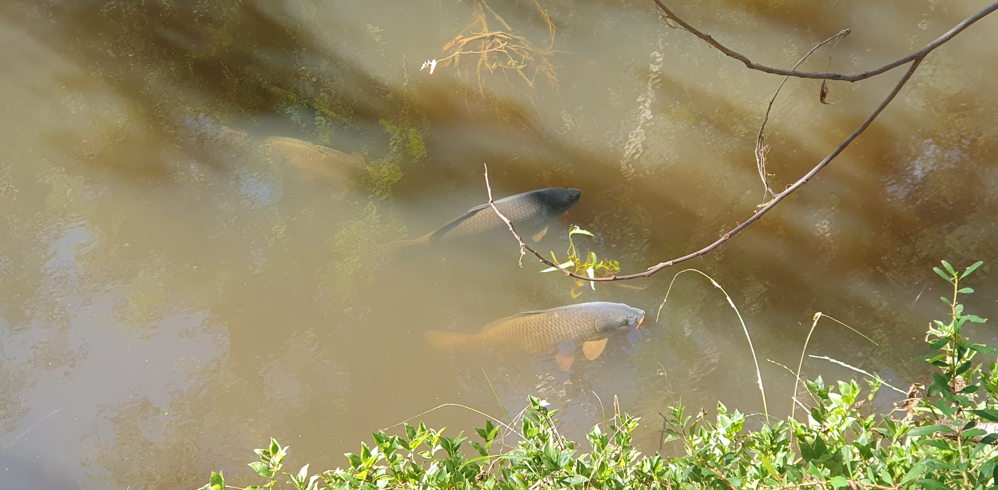
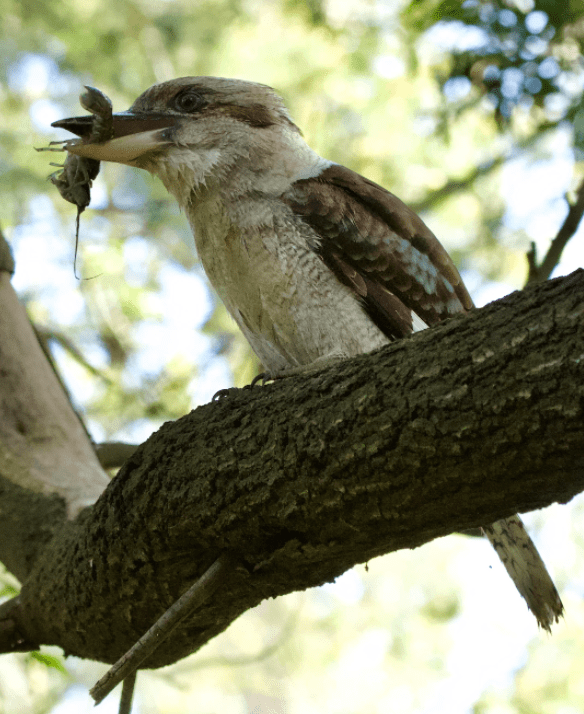
In our June article, we had to confess that we had very little information on what fish live in the creek excepting for the large carp visible in the creek at times and birds showing off their catch every now and then.
We do know the Decapod crustacean Cherax destructor (Yabby to most of us) also lives in the creek and was found via both test methods – and by a Kookaburra.
From the data we have, water samples were tested for 66 indigenous and introduced fish species. Of all those, only these five species were reported in the eDNA study.
| Scientific name | Common name | Common length + remarks |
| Philypnodon grandiceps | Flathead gudgeon | 8cm long; indigenous |
| Galaxias brevipinnis | Climbing or broad-finned galaxias | 15cm long; indigenous to Australia and NZ |
| Gambusia holbrooki | Eastern mosquitofish | F 6 cm, M 3.5 cm; noxious & invasive – introduced in 1920s to control mosquitoes (another Cane Toad success!) |
| Cyprinus carpio | Common carp | 30-40 cm; can reach 120cm(!) European carp were introduced to Australia both deliberately and accidentally. |
| Misgurnus anguillicaudatus | Pond loach | 20 cm; introduced – noxious species imported into Australia in the 1960s as an aquarium specimen. |
Koster Study 2002
Because we wanted to check the eDNA results, and because of our lack of information on local fish populations, we went searching for prior studies.
We found a study conducted by Wayne Koster of The Arthur Rylah Institute for Melbourne Water in May, 2002 on the Gardiners Creek Catchment – including Gardiners Creek, Scotchmans Creek, Damper Creek and Back Creek.
This study included a Blacks Walk site very close to, if not the same, as the eDNA study – GC5 below. This study used electrofishing – any fish in the immediate vicinity are temporarily stunned by an electric shock and can then be netted, identified and counted.
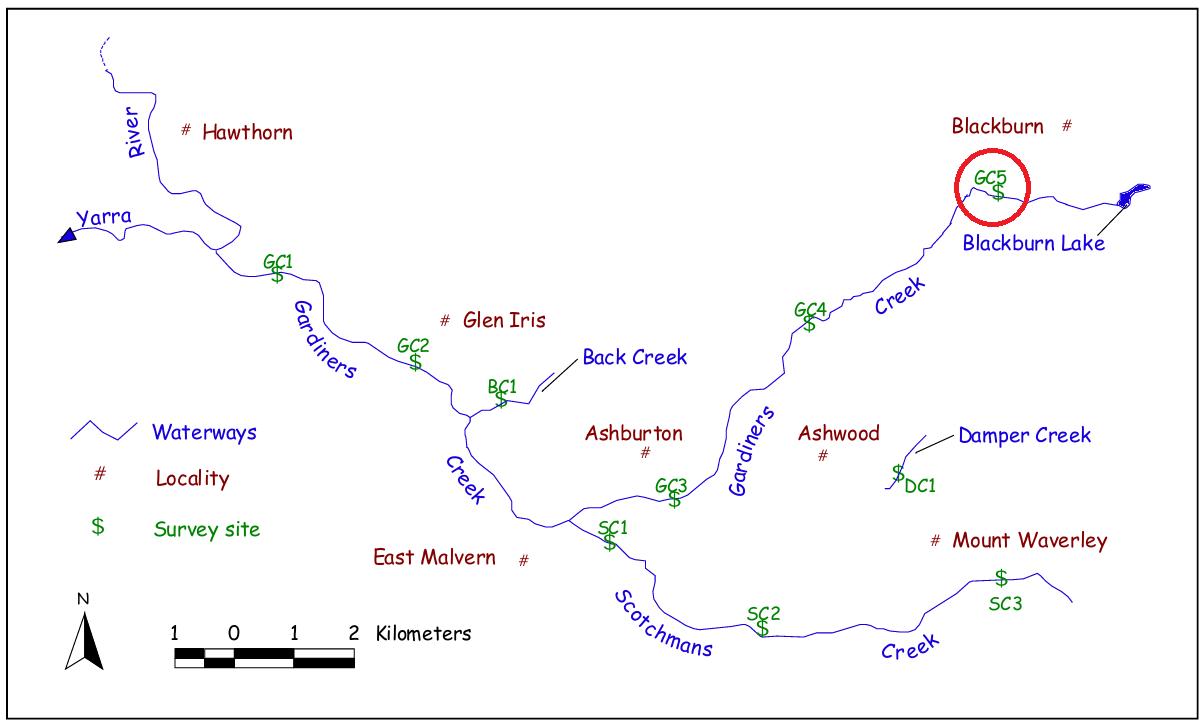
The range of the KooyongKoot (Gardiners) Creek catchment is surprising – reaching Mitcham in the east, Oakleigh South to the south, Balwyn and Blackburn North to the north before flowing into the Yarra at Hawthorn to the west. KooyongKoot has its own tributaries – Back Creek (Surrey Hills – Glen Iris), Damper Creek (Mount Waverley-Ashwood) and Scotchmans Creek (Wheelers Hill-Glen Waverley-Mount Waverley-Oakleigh-Chadstone).
Only 3 fish were reported at GC5 in 2002: Galaxias maculatus, Gambusia holbrooki and Misgurnus anguillicaudatus.
Two of these 3 match the eDNA data. Interestingly, a different species of Galaxias was found – Galaxias maculatus – not the Galaxias brevipinnis of the eDNA study.
Of the two “extra” species, we do know there are definitely Carp in the creek not far from the test site(s) (as shown in our earlier photo) and Philypnodon grandiceps fish were found at GC1. Also, Galaxias maculatus fish were found further downstream in the eDNA study. Perhaps both species migrate? In any event, our confidence in the eDNA results was reinforced by the reasonable correlation between the two sets given the 20 year separation, different times of the year etc.
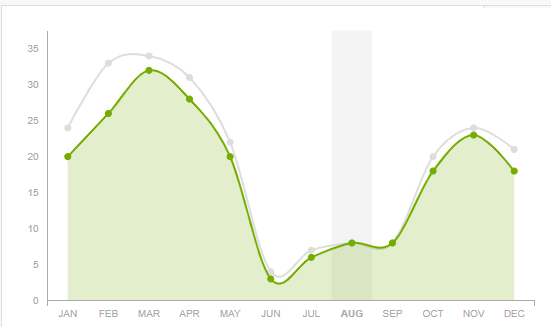
For whatever reason, the iNaturalist observations of Galaxias brevipinnis do seem to crash in May – so maybe that’s why Koster did not find them in 2002:
Another question in our minds was the influence of Blackburn Lake. It seems intuitive that the higher reaches of the creeks would provide less variance in habitat given the creek narrows and there is less water flow. The lake, on the other hand, provides a variety of habitats such as wetlands and reasonably permanent, deeper water. Are we seeing DNA from fish in the lake but not in the creek ?
Blackburn Lake vs Blacks Walk eDNA confirmations
| Site | Date | Pg | Gh | Gb | Ma | Ca | Cc |
|---|---|---|---|---|---|---|---|
| Blacks Walk | 2022-10-26 | Y | Y | Y | |||
| Blacks Walk | 2023-04-05 | Y | Y | Y | Y | Y | |
| top of Blackburn Lake | 2022-10-26 | Y | Y | ||||
| top of Blackburn Lake | 2023-04-05 | Y | Y | Y | |||
| Blackburn Lake; off Lake Rd wetland | 2016-09-01 | Y | Y | Y | Y | Y | |
| Blackburn Lake wetland | 2022-04-11 | Y | Y | Y | Y | Y | |
| Blackburn Lake wetland | 2022-10-07 | Y | Y | Y | Y | Y |
Pg=Philypnodon grandiceps; Gh=Gambusia holbrooki; Gb=Galaxias brevipinnis; Ma=Misgurnus anguillicaudatus; Ca= Carassius auratus; Cc=Cyprinus carpio
Interestingly,
- Carassius auratus (Goldfish) only appear in the Blackburn Lake wetlands (disposed of pets?)
- Galaxias brevipinnis (Climbing Galaxias) also only appear in the creek.
What does it all mean ?
Given that :
- Galaxias brevipinnis DNA was found in our part of the creek but not at the lake
- Some Lake DNA is not detected downstream in Blacks Walk
- Most of the creek’s catchment upstream from GC5 is underground storm-water drains (presumably not fish habitat) with the exception of our open part of the creek and its link to Blackburn Lake
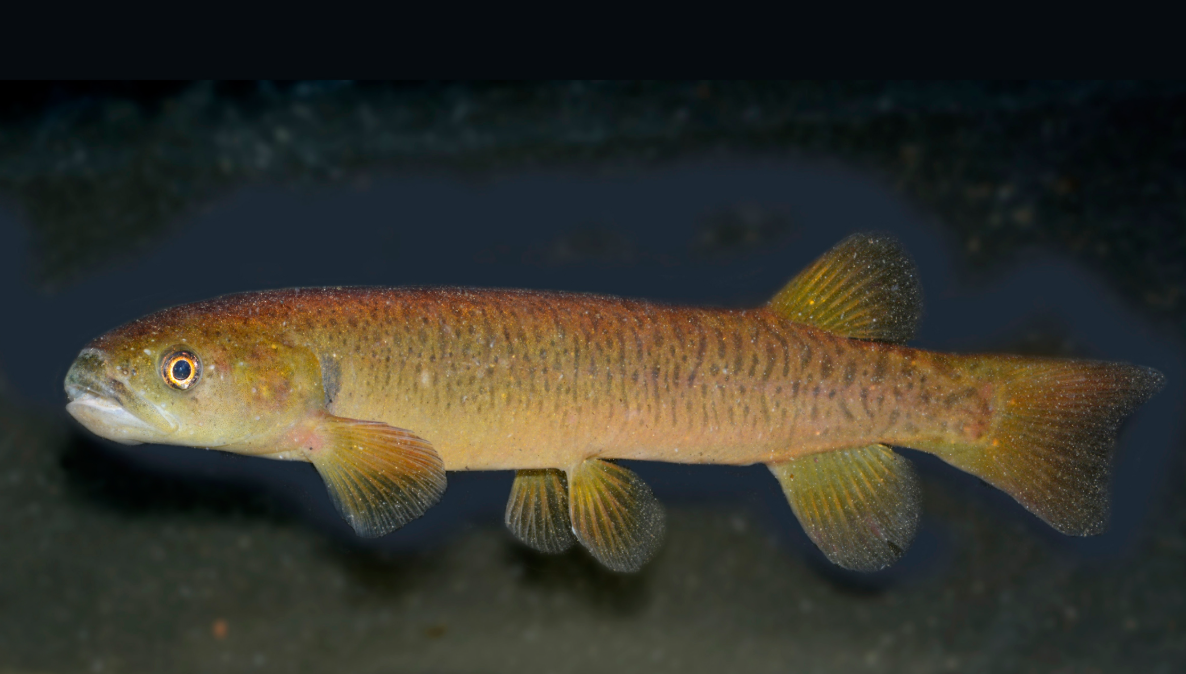
we think it likely that we host the Galaxias brevipinnis (Climbing Galaxias or Broad-finned Galaxias) species in our part of the creek! Wahoo! It is also likely but less certain that another native fish – Philypnodon grandiceps (Flathead gudgeon) also occurs in the creek.
Wait – Climbing Galaxias – they climb ????
Yes !!! They can climb up steep surfaces such as cascades and wet rocks. They seem to have special features that enhance their climbing abilities – broad, downward facing fins with helpful ridges on the front part of their fins for “toe holds”.
This species is migratory and requires free passage between marine and freshwater environments during both the adult and the larval/juvenile stages of its life. The ability to climb obstacles probably explains why they are still in our creek despite obstacles from the sea to our creek via the Yarra – such as Dights Falls, concrete culverts etc.
Another fun fact is that the “brevipinnis” part of their scientific name means “short-finned” in Latin. We guess it’s all relative – “broad finned” implies “short finned” relative to length (admittedly, we’re out of our depth here… (oops, sorry!)).
Our Web-site’s URL

You may have noticed that our web-site’s URLs seem to be prefaced by https://blackburncreeklands.org/ as opposed to our former addresses beginning https://blackburncreeklands.wordpress.com/ .
URL stands for Uniform Resource Locator – otherwise known as “an address on the Web” – ie HOW TO GET OUR STUFF!
The reason is that BlackburnCreeklands.org is now our “primary domain” in Internet-speak. We’ve put our “big boy pants on” from the network point of view – so we now have our own identity independent of WordPress.
WordPress provides both our content management system and our Internet hosting. The old URL will continue to work as long as WordPress hosts our site – so, there’s no need to change any bookmarks etc you may have.
Council’s DAMP
Many of us think that the dogs-on-lead rule in the Creeklands is “more honored in the breach than the observance” – to quote William Shakespeare.
Certainly there are many dog owners who do the right thing. Sadly, many others do not. Dog attacks on other dogs, on people including children and on our wildlife result.

One thing that confounds us is that Sparks Reserve is an off-lead reserve next door to the Creeklands – yet dog owners don’t seem to want to go there to let their dogs run off leash. Why not ? Many of us love dogs – but the reality is that dogs and cats just don’t mix with wildlife.
From what we read in the draft of the revised policy, it seems we’re in for more of the same – excepting more emphasis on providing dog training.
Thursday Team Roundup

The big news is that management of our Thursday Team working bees is changing with Greg, Cath and Nicky taking on leadership roles – certainly not ducking for cover like those three thereof in the foreground of the photo above! John is off on a private project for a while which he says “creates an opportunity for others to shine” ! Hmmmm….
Actually, Greg, Cath, Nicky, Megan and John have been working for many months towards improving our planning, optimizing our resources and our collaboration with Council – as well as codifying our plants lists and biodiversity policy in the face of expected impacts on the park of climate change, increases in population density and so on. The Committee is very grateful that our volunteers choose to put so much effort and expertise into the park for the benefit of the community !
At the more mundane level, the Thursday Team has spent most of the month working at various sites in Kalang Park on both sides of the creek. Of special note is the finalisation of the seemingly successful three year project to push back the Wandering Trad at the foot of Waratah Crescent utilising “sheet mulching” techniques.
We’ve had great turnouts at our working bees recently – averaging 11 people, delivering 35 hours of free labour to Council and the community weekly!
Our Annual General Meeting

Our Annual General Meeting (AGM) was held ahead of our regular meeting on Tuesday, 26th August.
Our Chair Megan gave a brief review of how things went during the 2024/2025 year. Her headline point was just how successful the appointments of new members to the Committee have been. Although we have lost Delldint due to her relocation to rural Victoria, Jenna, Greg and Glenn have all stepped up to take on important roles for the Committee. Mark rejoined committee after a hiatus of a few years and immediately took on the role of Treasurer. Bec and Evelyn (who have been on-board a year or two longer) have both played important roles in new projects.
Former Secretary John has stepped down from Committee while he sorts out a demanding personal project over the coming months. We congratulate Jenna who was elected unanimously as our new Secretary.
Greg was appointed Committee’s Working Bee Coordinator. He will be ably supported by two non-committee people who are strong supporters of the park, Nicky and Cath, to help spread the workload. All three bring a great deal of expertise, experience and fresh ideas to the role.
Our inclusive seating project was the stand-out achievement of the year managed by Evelyn and currently being implemented by Council. Former Committee member Nic, who has relevant professional expertise, was instrumental in the field studies with Evelyn which justified the number and location of seats needed to meet our inclusivity objectives.
Megan also acknowledged the great work of our Committee veterans Mark, Anthea, Graeme and John and also the success of the first-time events this year – the Possum Prowl and Eucalypt ID Walk facilitated by Bec and Greg respectively with resources from Council and Blackburn Lake. She also noted the Committee strongly values having younger voices around the table – Ruby, Bec, Emma and Corey – providing different perspectives and also expertise in newer technologies such as social media.
Council Works
Training for Volunteers
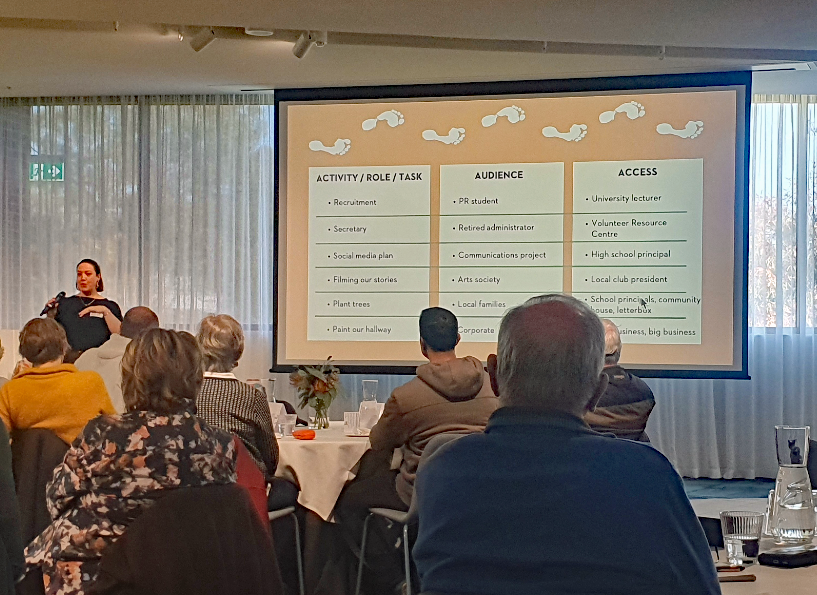
With the comings, goings and changes in Committee roles, Council’s recent volunteer training offered on recruitment, retention and succession planning proved very apt for our Committee.
Four of our Committee volunteers sacrificed a Saturday to the cause – along with reps from the other parks and the indigenous plant nurseries. Fortunately, the course, taken by Kim from the Forever Agenda Team proved to be excellent – very worthwhile and thought-provoking.
Tree works in the park near the end of Malcolm Street
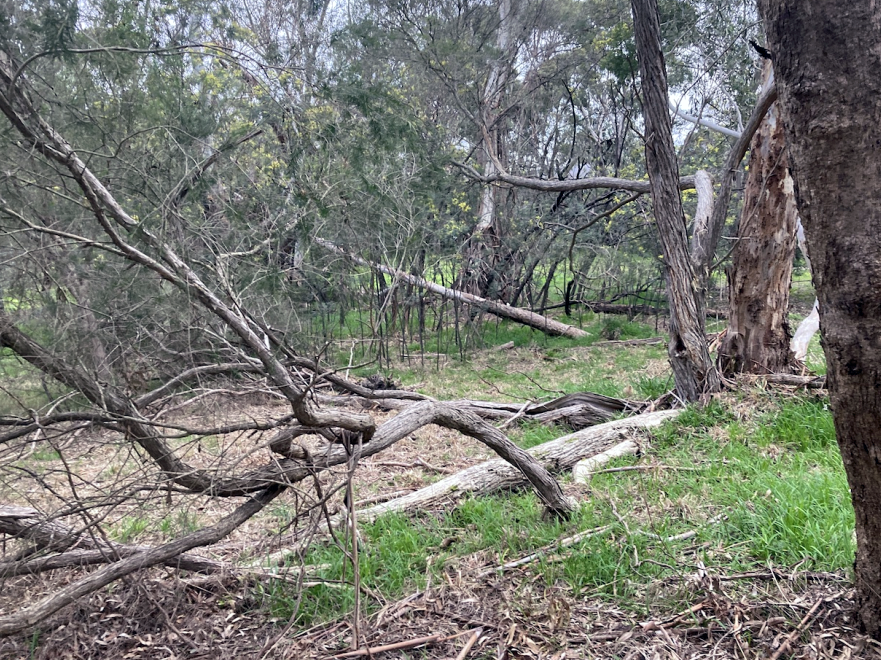
Trees planted by the our forerunner group, the Blackburn Creek Conservation Group more than forty years ago have senesced over the past years resulting in several fallen trunks and branches following strong winds etc.
Council has recently cleared part of the area ahead of revegetation works in those areas in the next year or three… As we requested, some logs remain for habitat purposes.
Offset Plantings in the Park
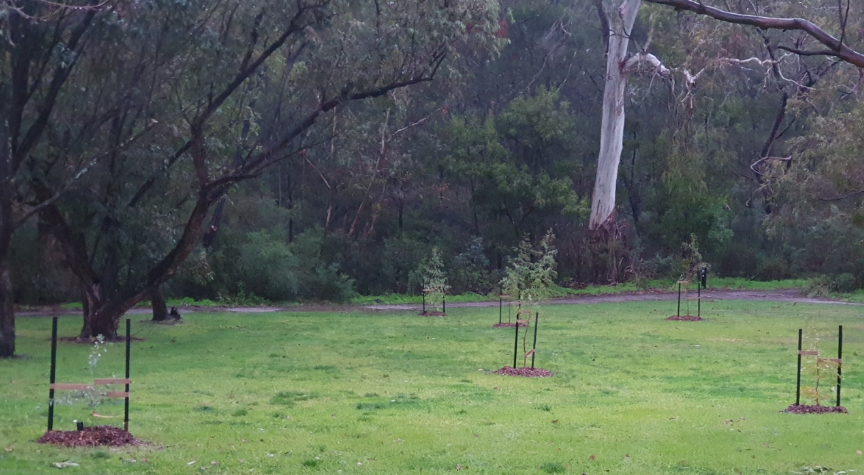
You’ve probably noticed the raft of recent canopy tree plantings in the park – partly grown stock with stakes, and webbing support. Council has also been very active in offset-planting for the SRLA – including, surprisingly, in our community working bee site not long after the event.
Track Improvements
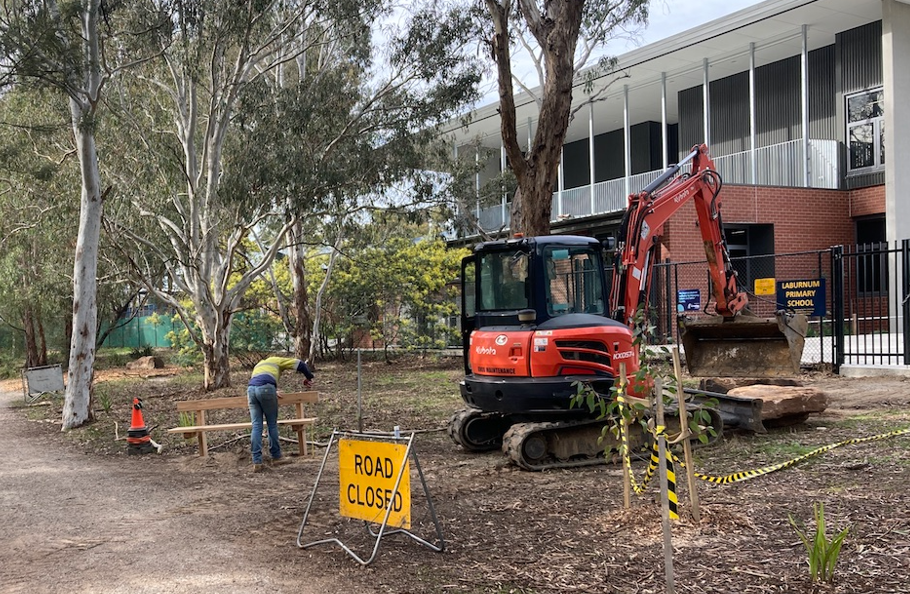
A new path has been added by Council from the main track in Blacks Walk to the newish school entrance near the bike shed (on the right) at Laburnum Primary School. The two July Community Working Bees have planted up the areas on both sides of the path.
The recycled concrete track just west of the Laurel Grove bridge has been treated recently so as to be more level. The works have resulted in a vast improvement over its former ankle-rolling self!
Vale David McKittrick
We only recently learned of David McKittrick’s passing away towards the end of June, after a long illness.
David was Mayor of the (former) City of Nunawading when the City finalised negotiations with the Melbourne and Metropolitan Board of Works (MMBW – the predecessor of today’s Melbourne Water) to acquire land it was having to sell off – some of which would have been slated as “residential”.
David was very supportive of the proposal to purchase the land and the Council he led voted unanimously to buy the land in May 1983.
All lovers of our park owe David a great debt of gratitude for his political nous which helped create such a great result for the community.
Our sincere condolences to David’s family and friends.
If you like to know more about the campaign to create the Blackburn Creeklands in the early 1980s, please click here.
Sightings
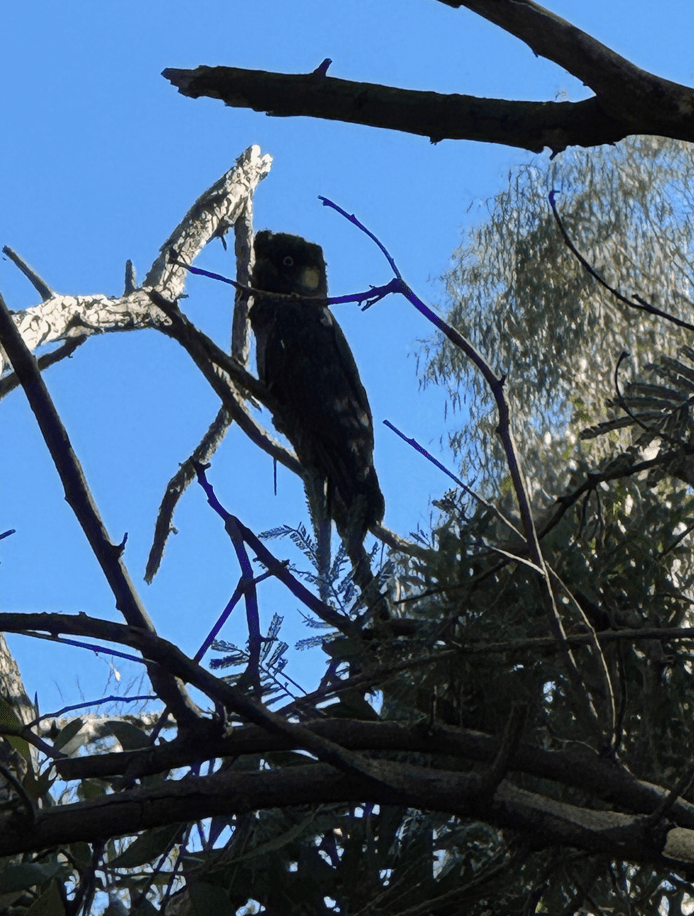
Yellow-tailed Black-cockatoos have visited the park a couple of times – but have proved to be infrequent flyers to date.
Barb managed to snap a couple of birds south of the creek near Middleborough Road on Saturday, 9th August.
Another of her shots shows the birds feeding on Hakea – now there’s a hard nut to crack!
Thanks for sharing Barb!

First prize in our competition to submit a snap of the first batch of ducklings in the creek for the season goes to Friend Mary this year.
Poor mother duck has her work cut out – eleven littlies to marshall ! Mary snapped them near the Main Street bridge.
Well done Mary!
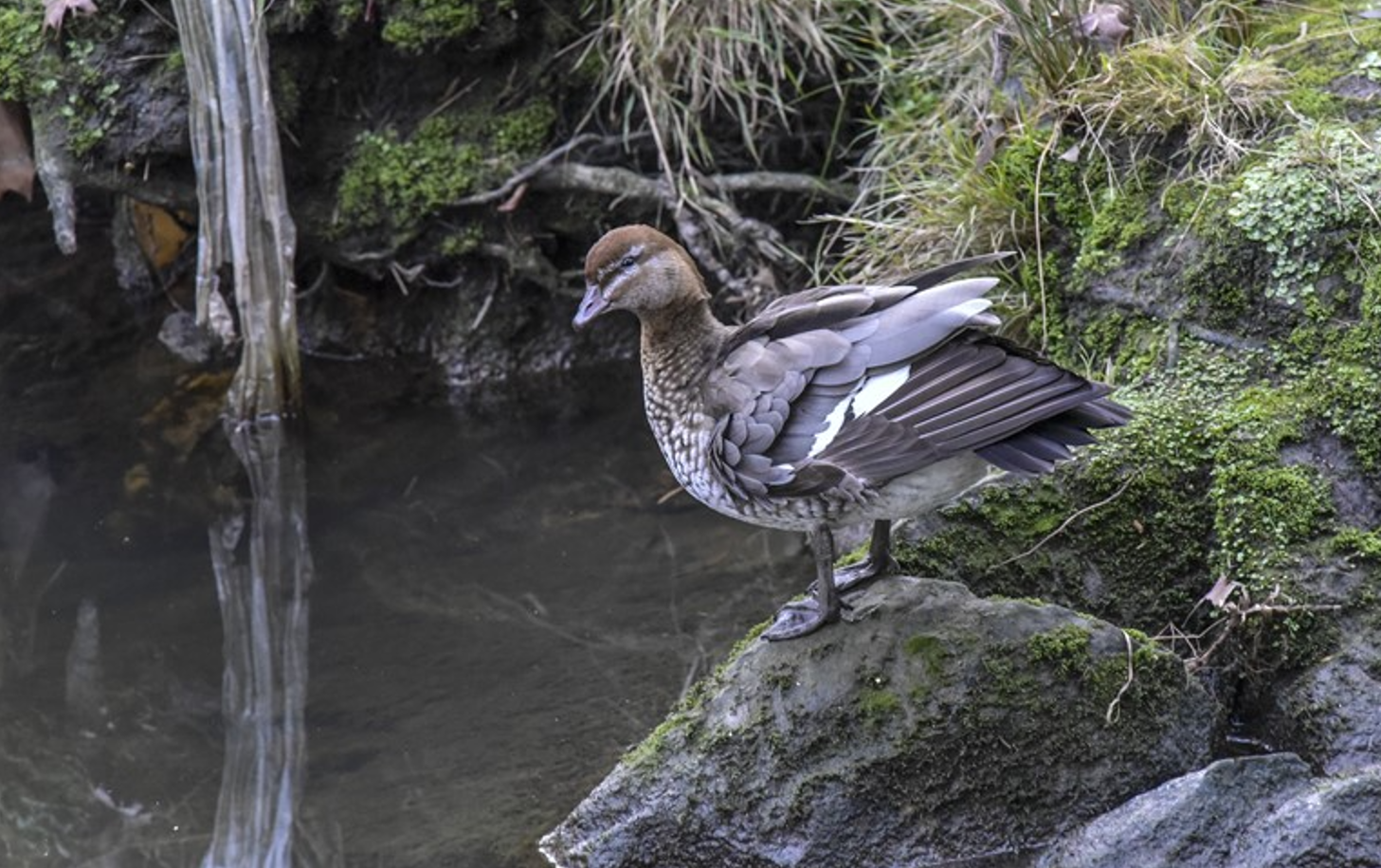
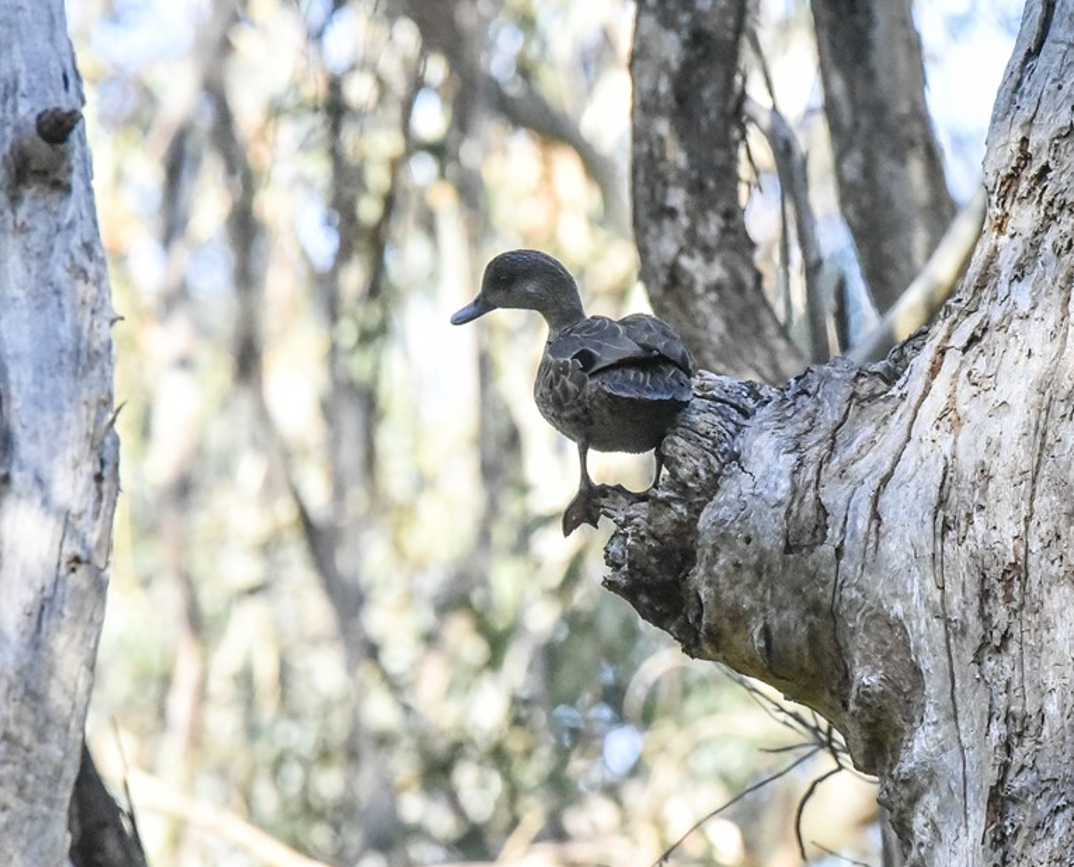
Speaking of ducks – the “Queen of the Castle” below is a female Australian Wood Duck. Her photo was taken near the Main Street bridge.
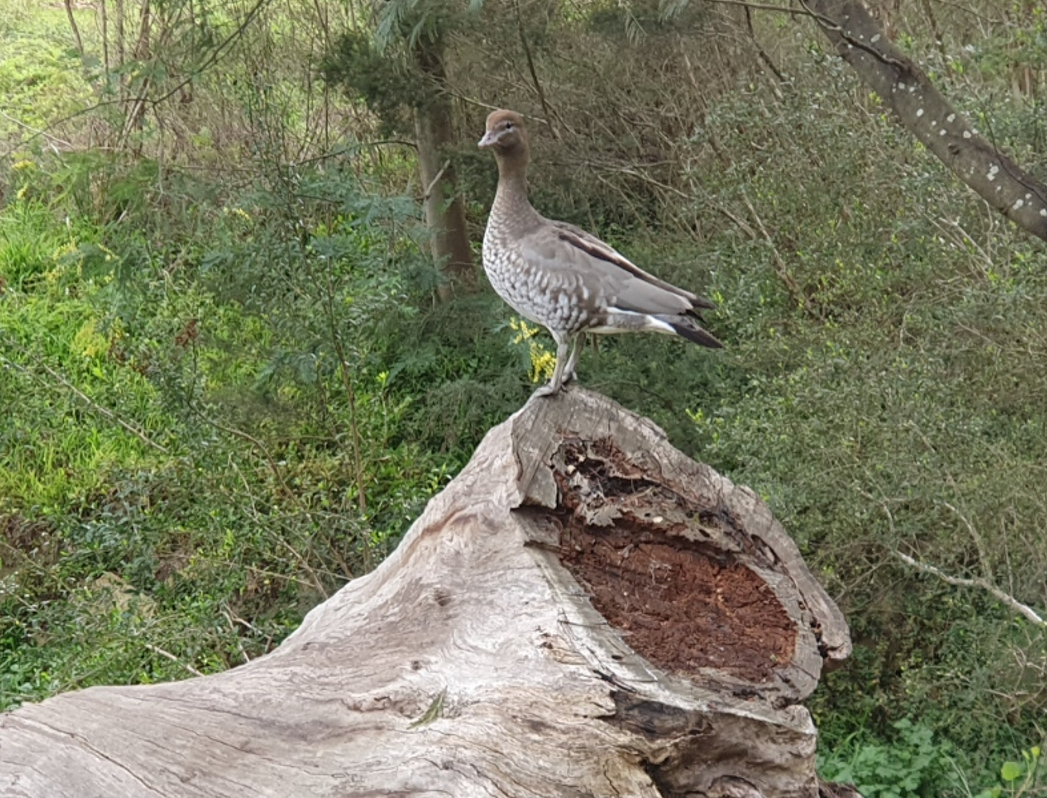
Like most ducks, they have webbed feet, which of course helps them swim. However, Wood Ducks tend to spend more time on land than on water. Unlike their more aquatic relatives, Wood Ducks walk easily on land and are often seen foraging in grassy areas and open woodlands near the creek.
As our photo shows, they can comfortably perch on logs and in trees, suggesting a higher degree of dexterity and grip than in most duck species. They also nest in tree hollows.
Here are other sightings forwarded by our fantastic team of local photographers showing our increasingly active birdlife as well as the park emerging from winter despite wintry wet and frosty days:
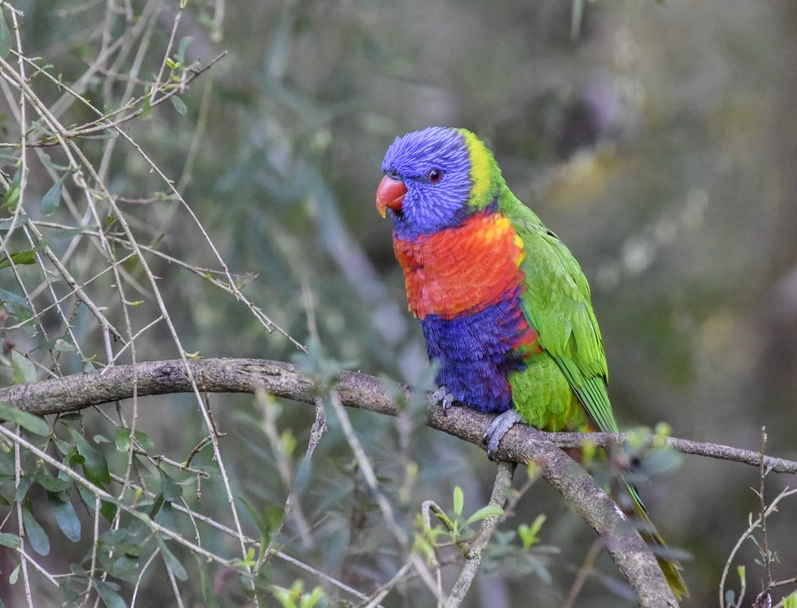
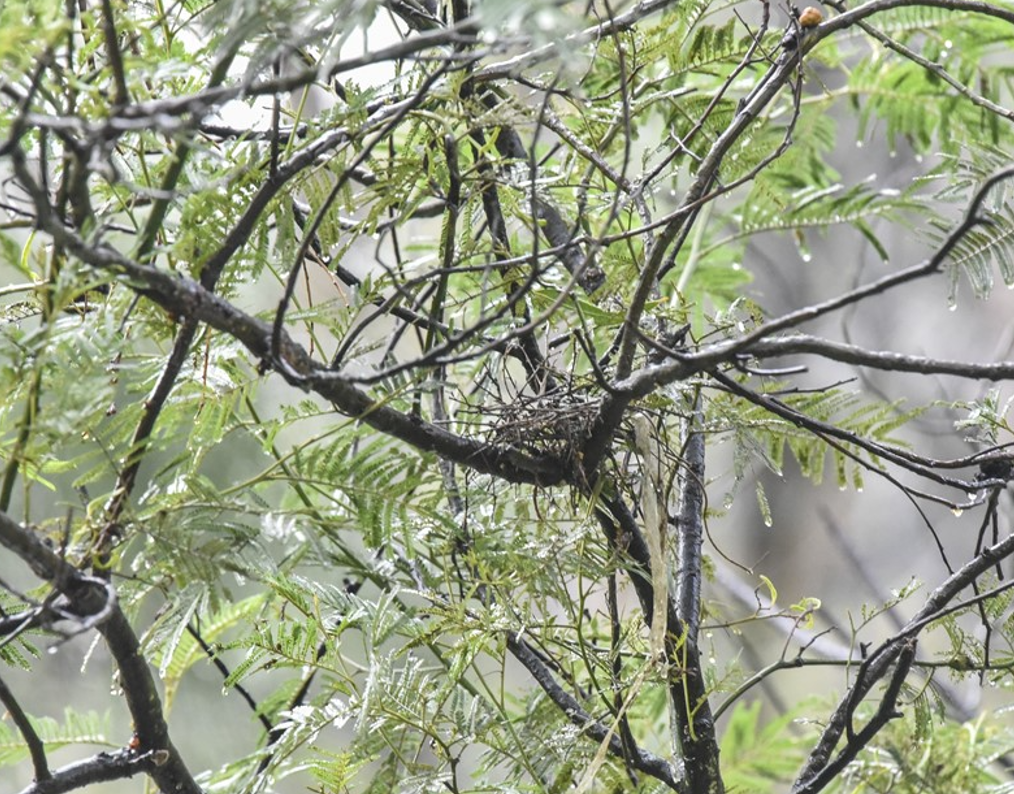
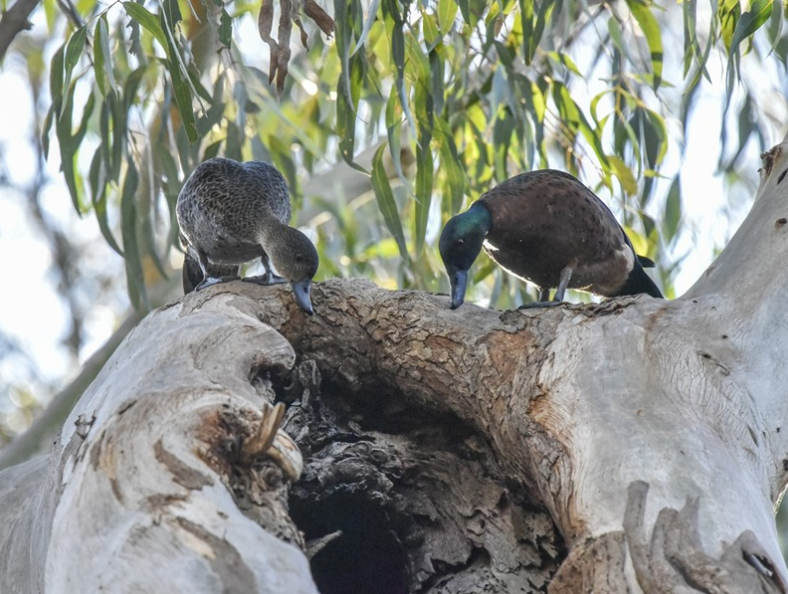
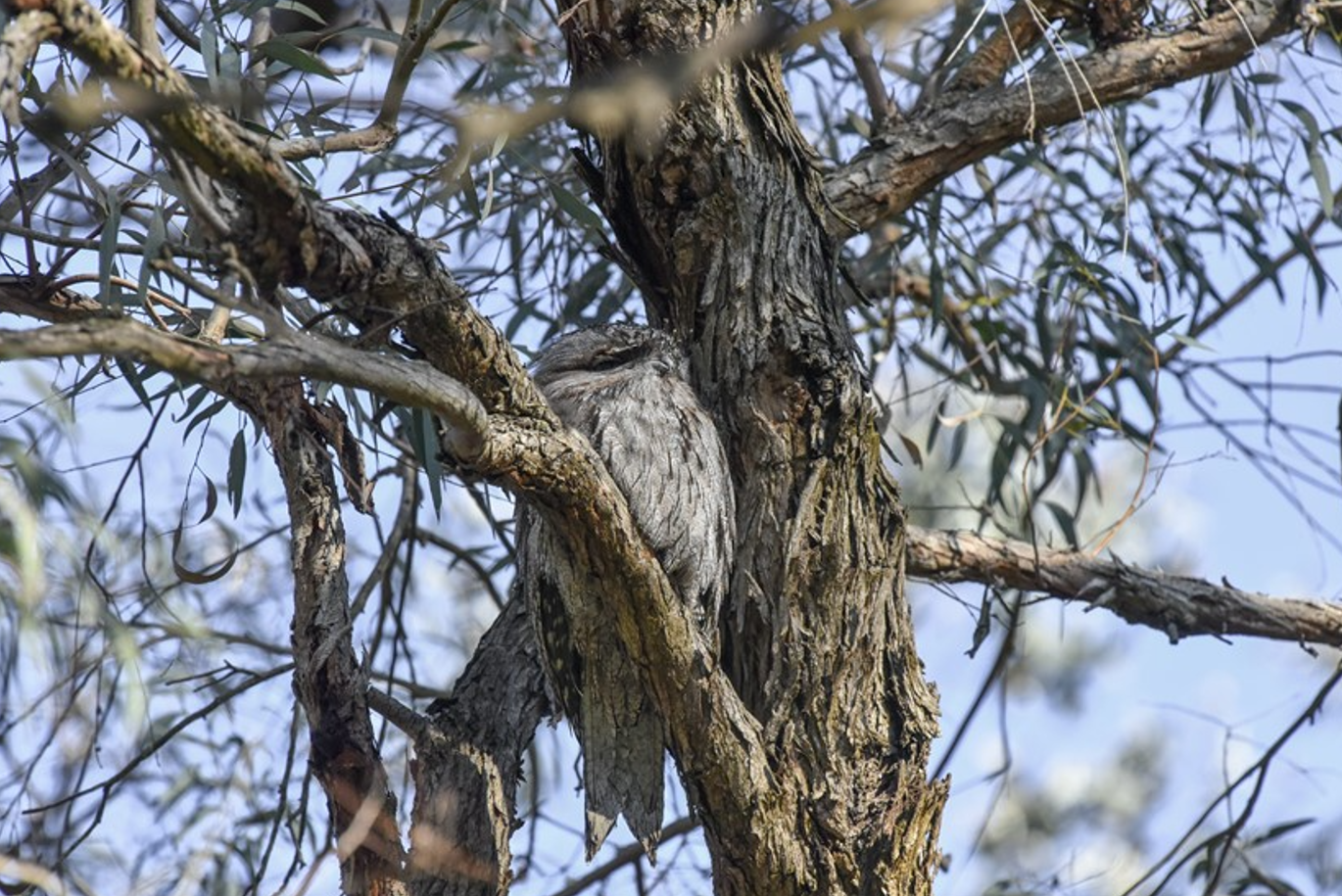
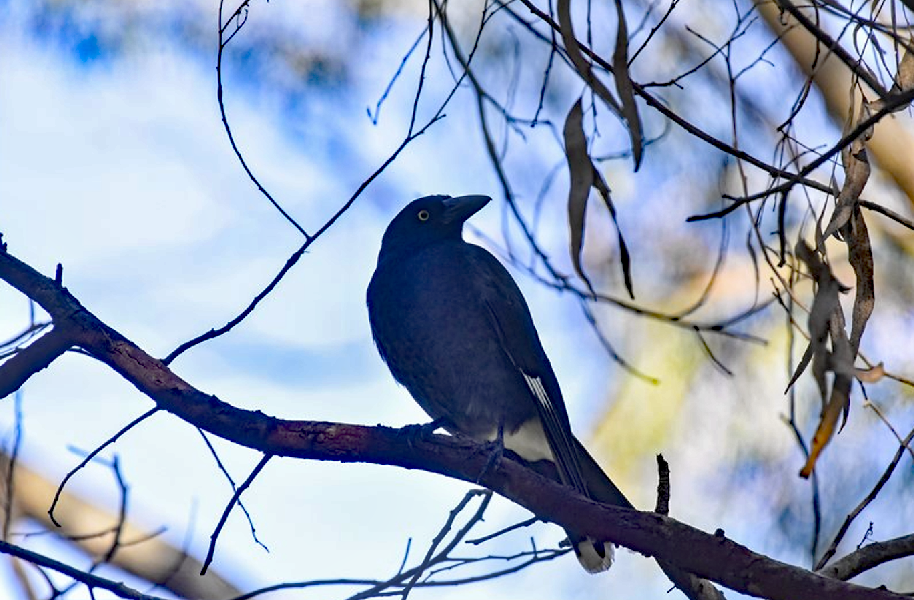
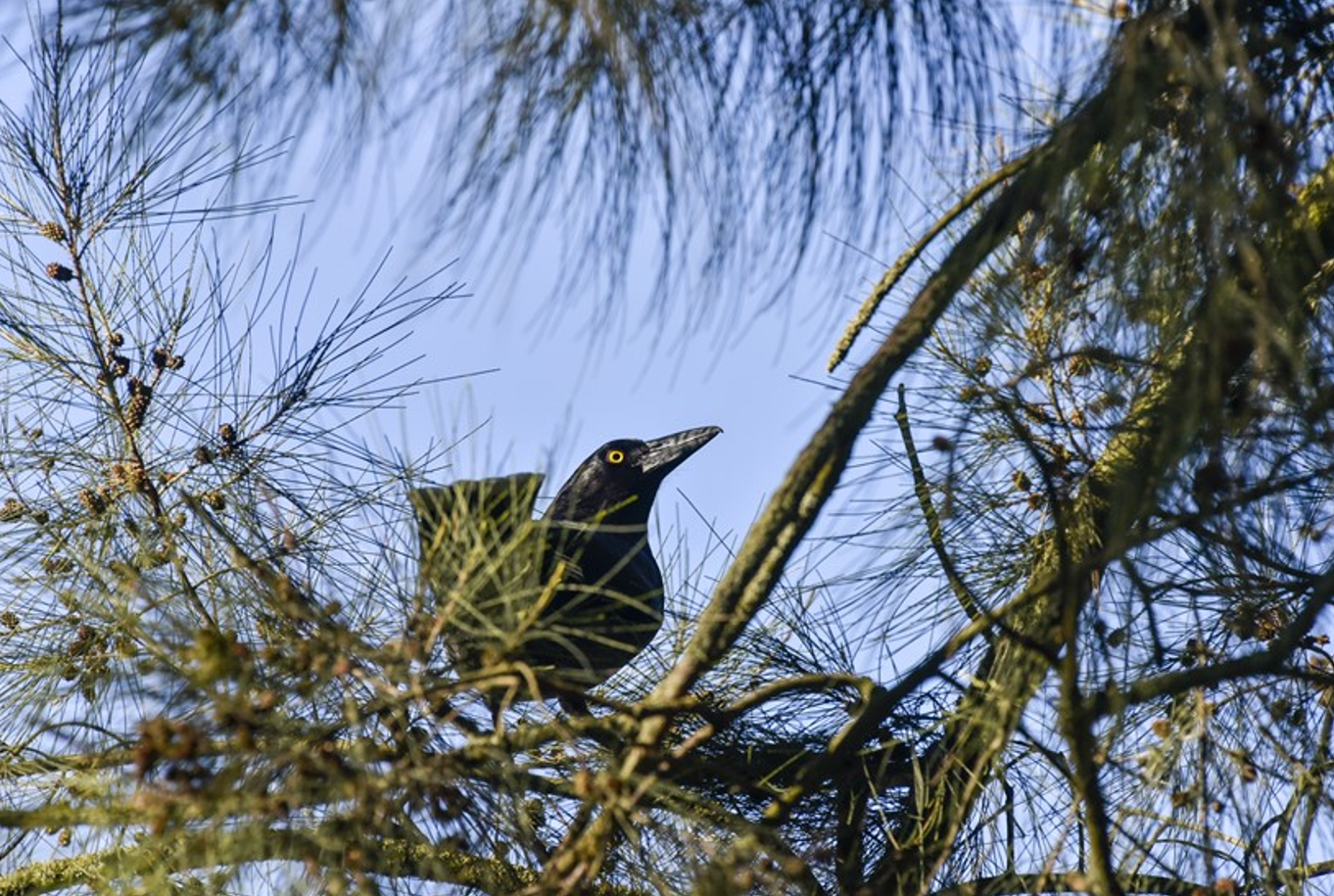
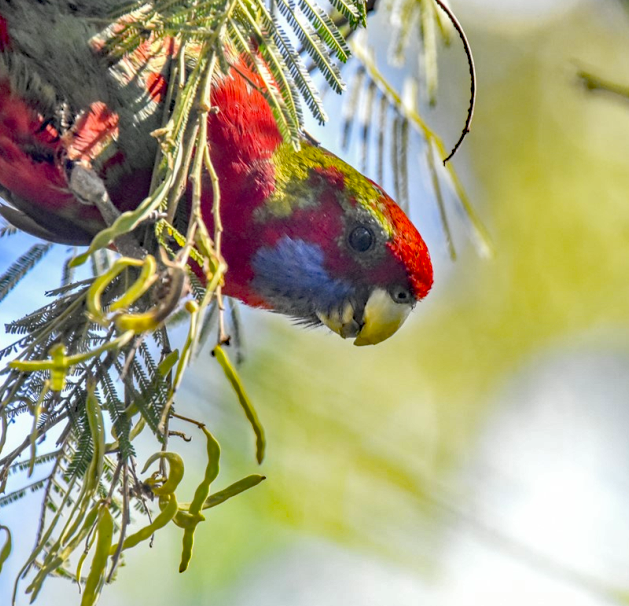
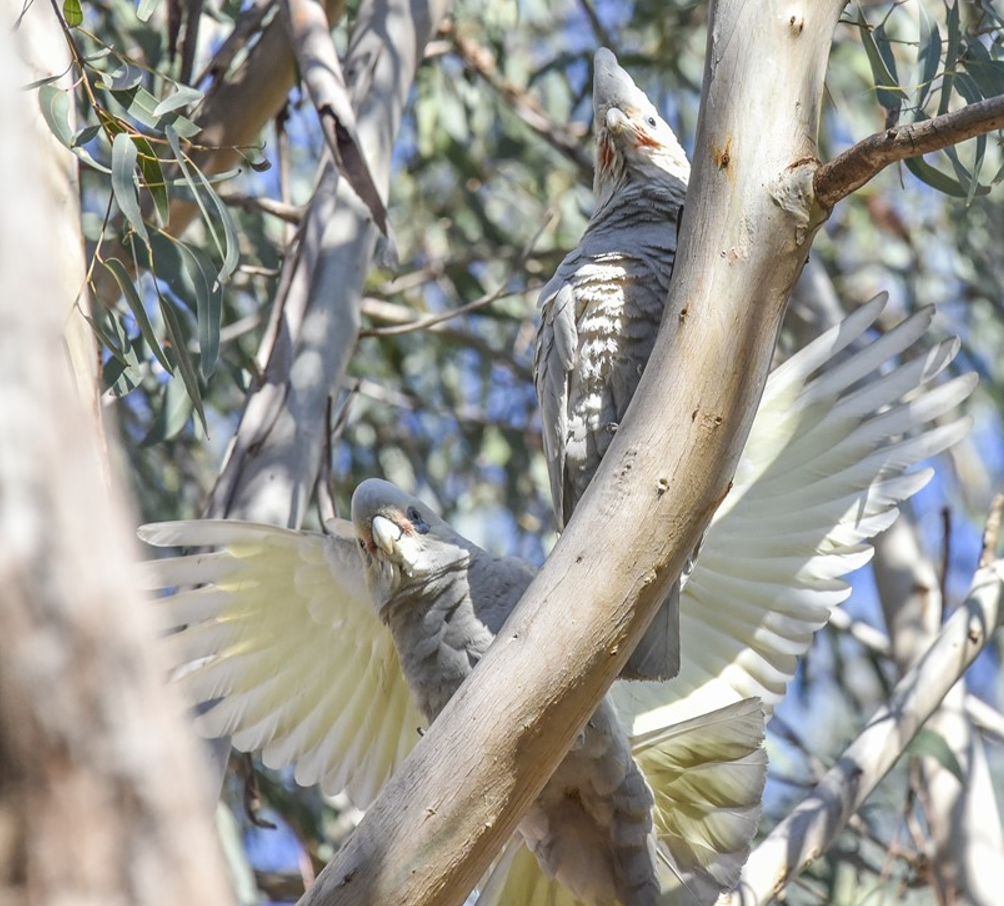
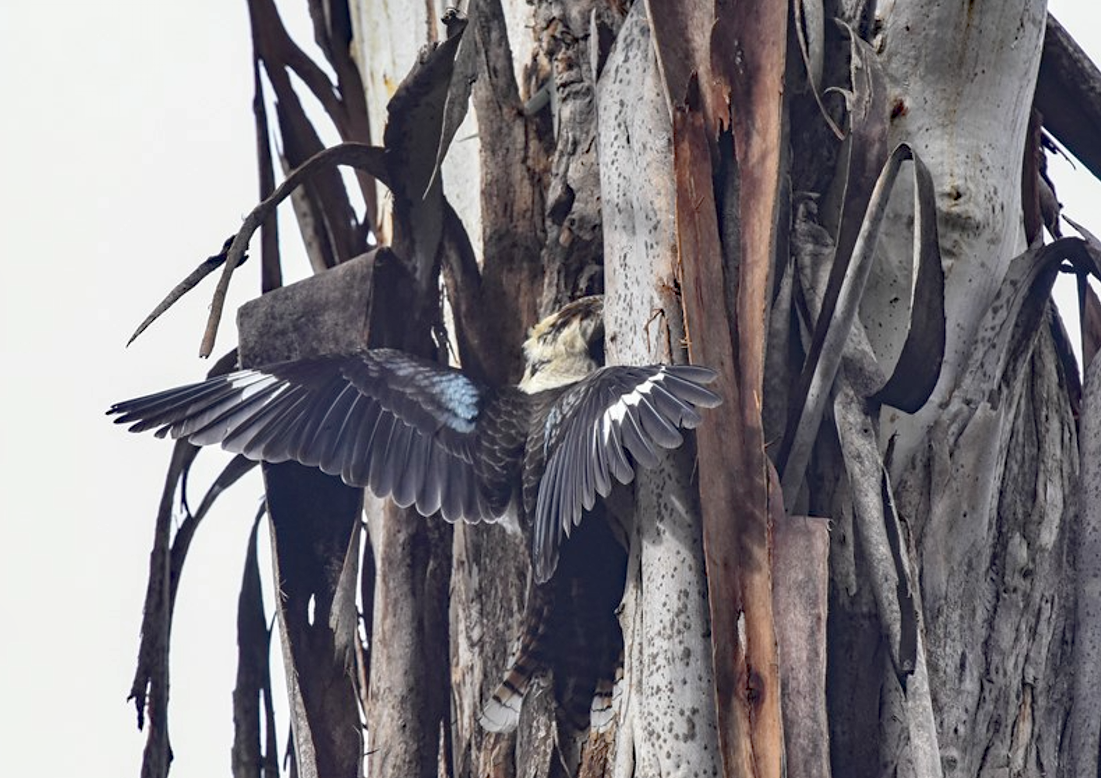
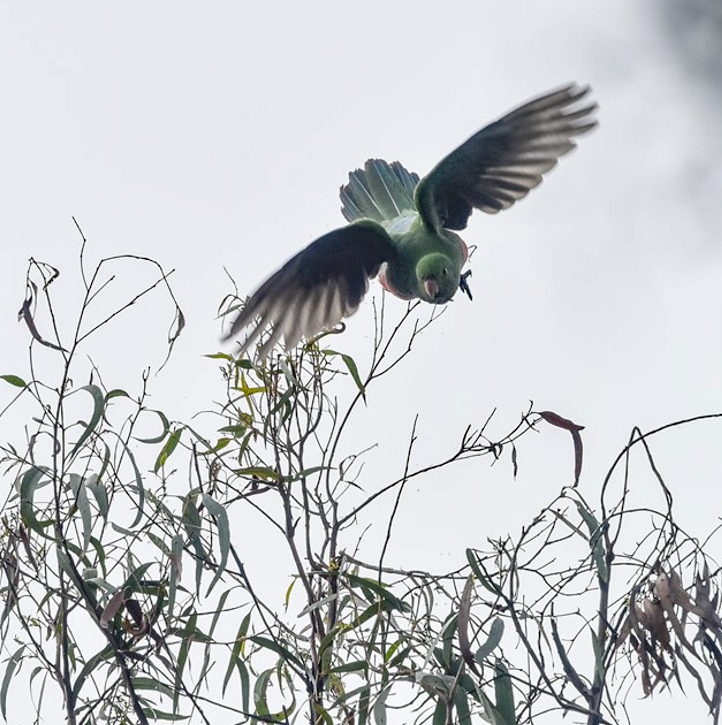
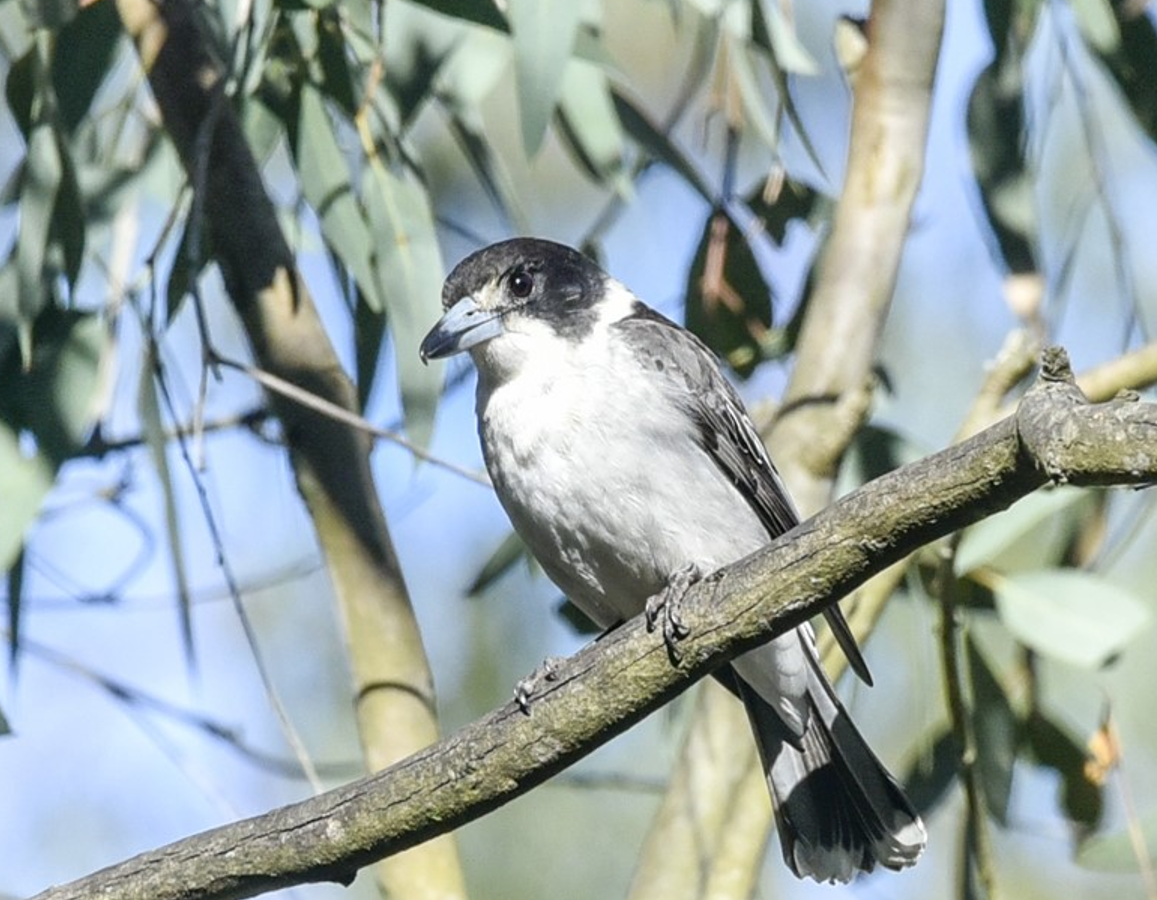
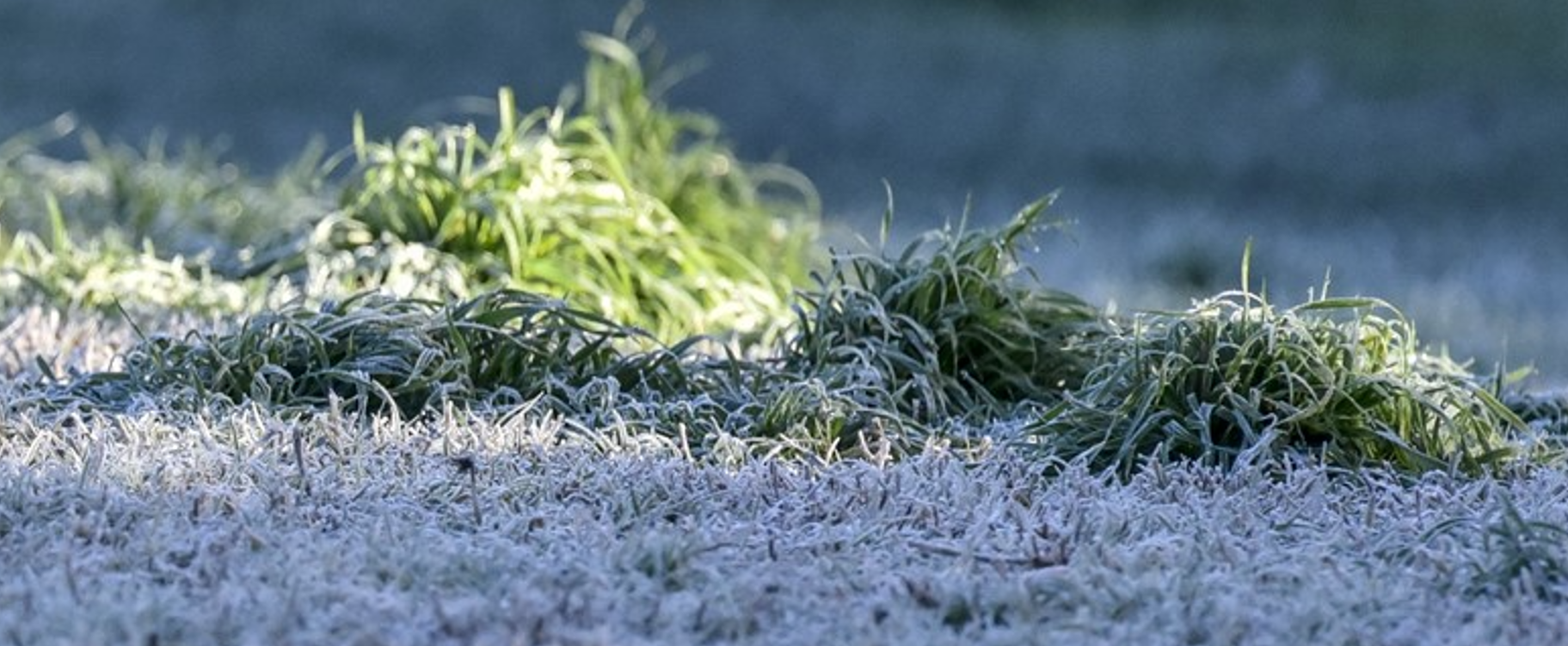
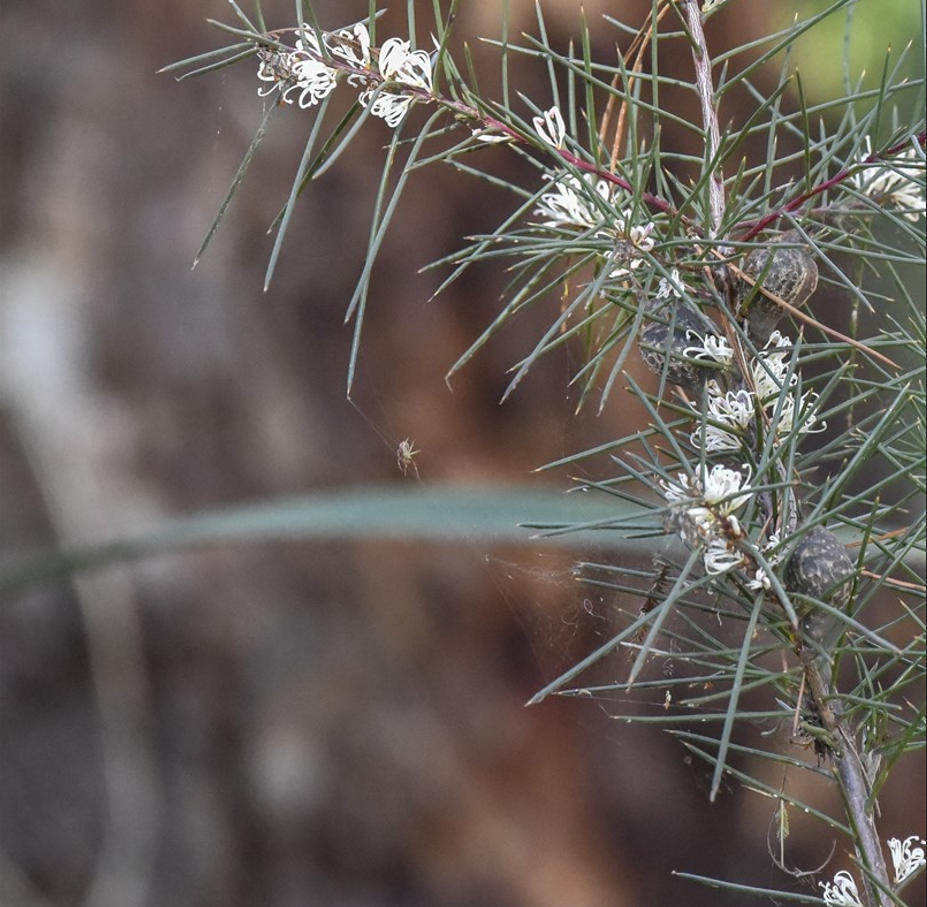
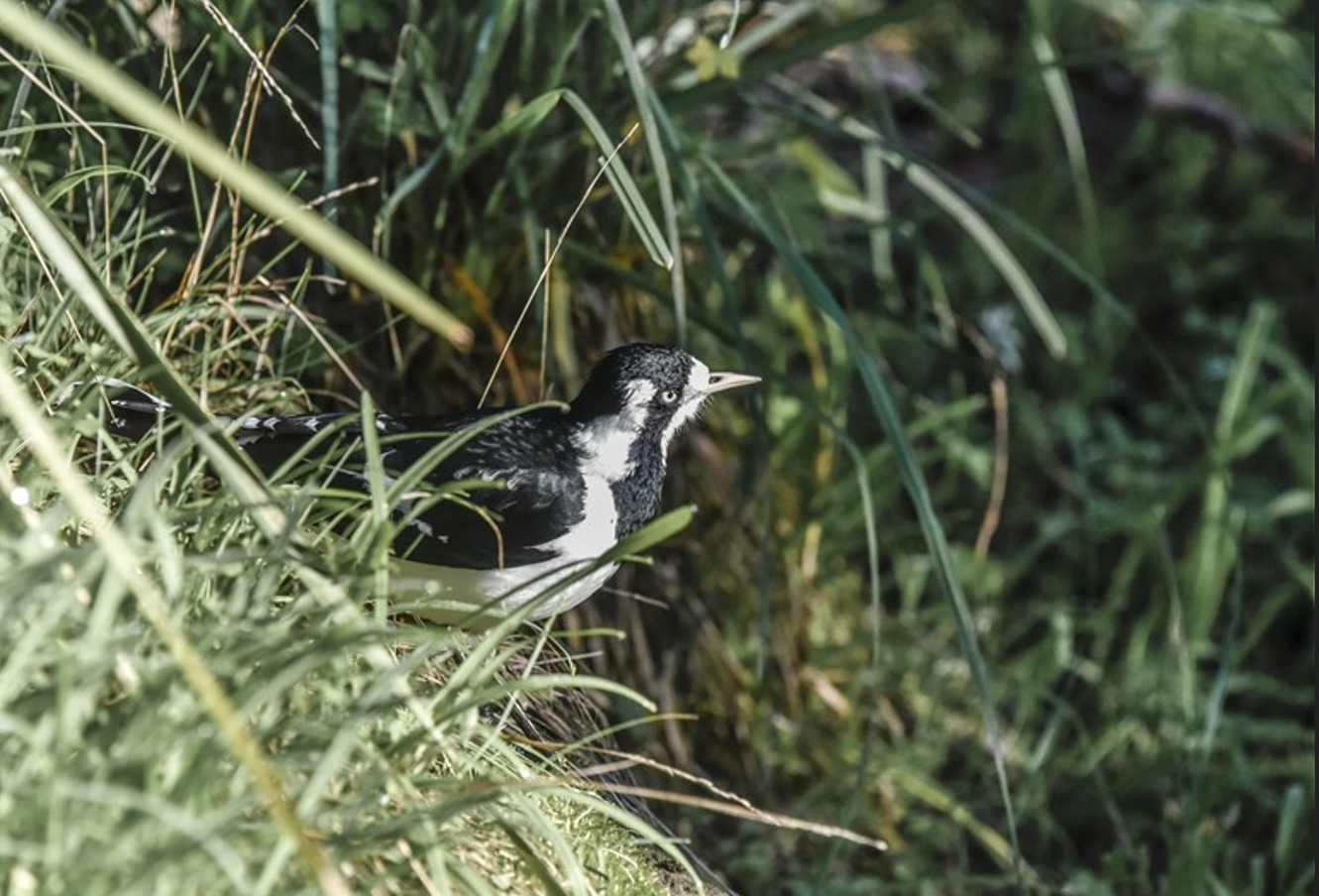
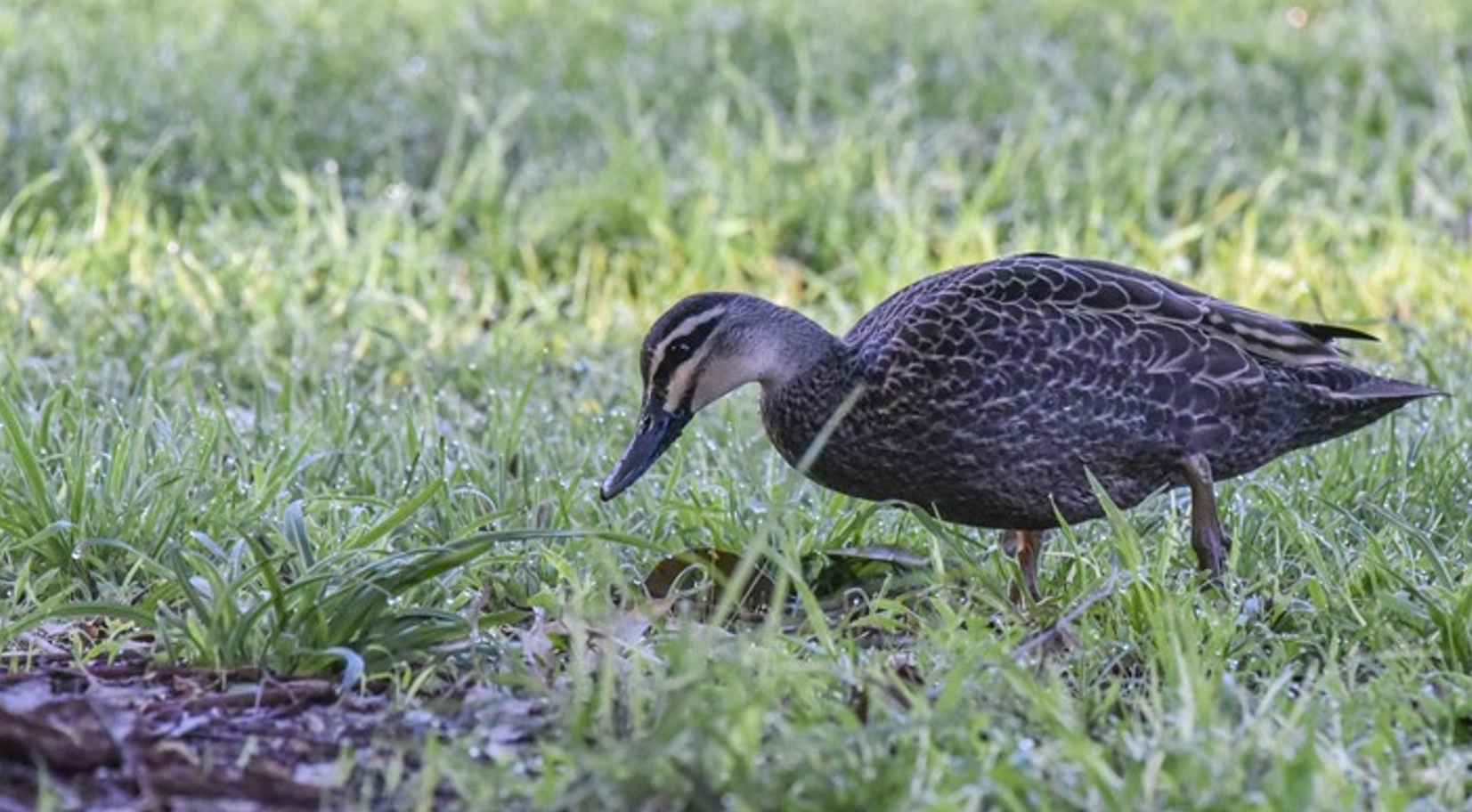
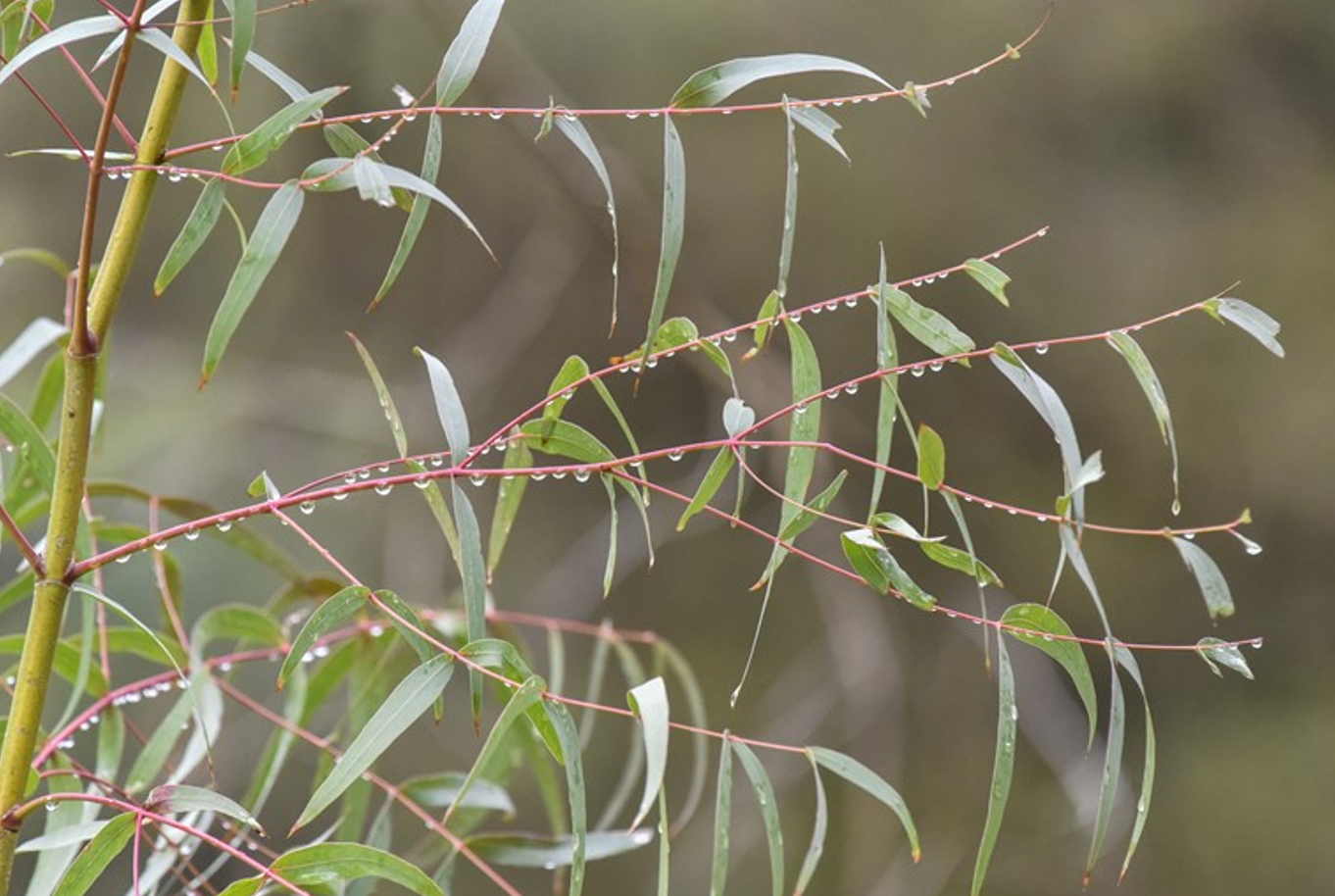
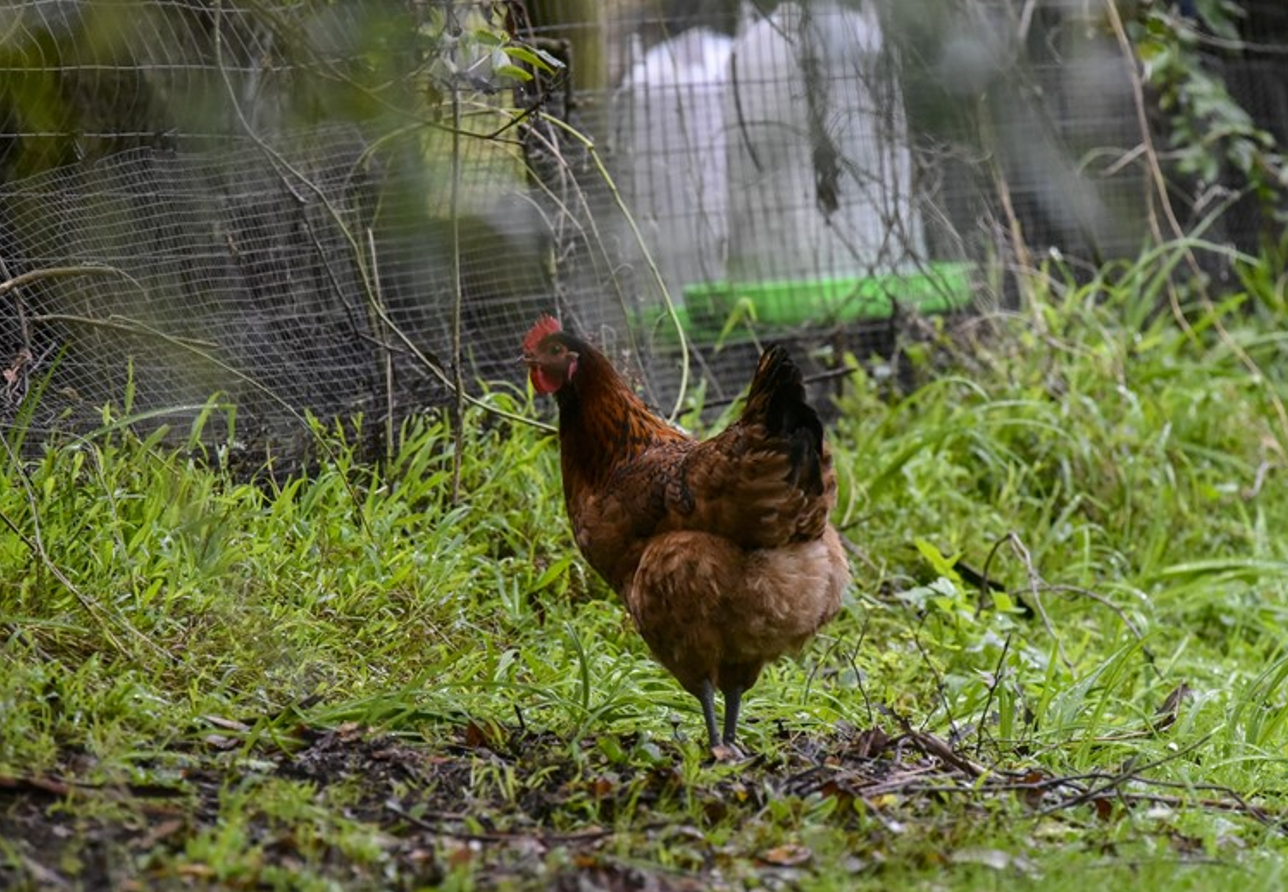
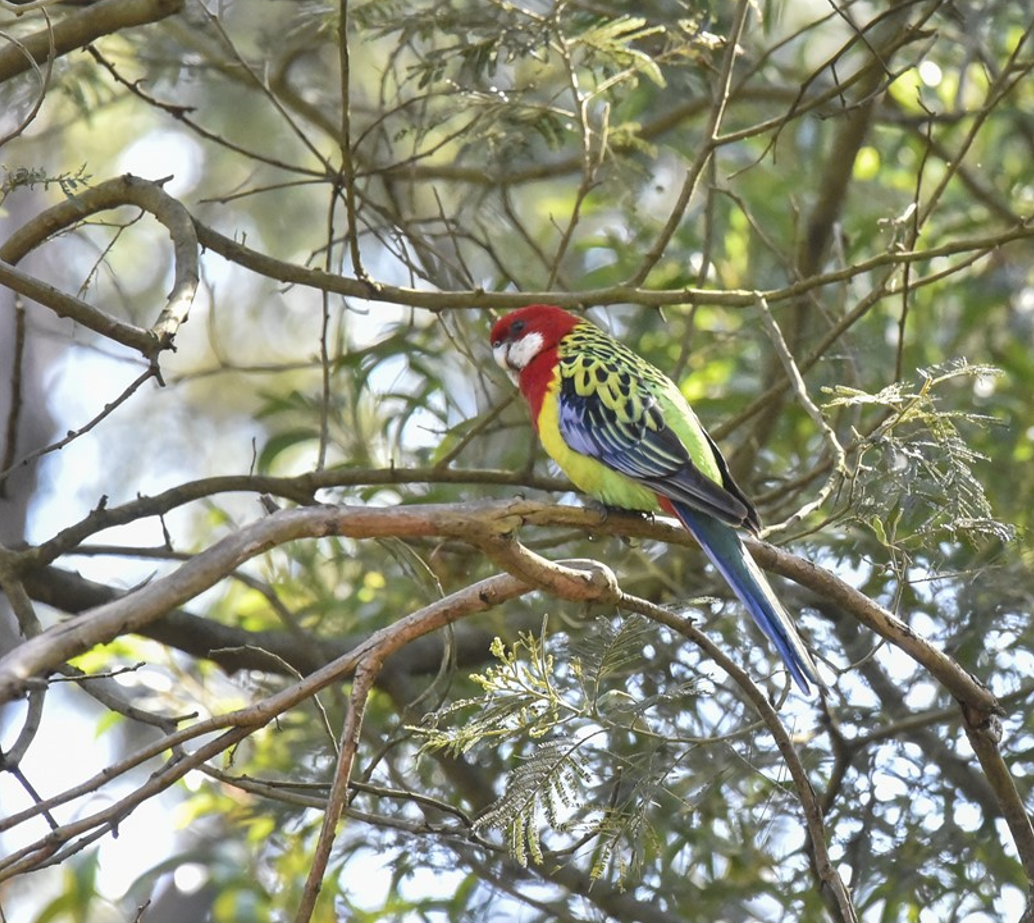
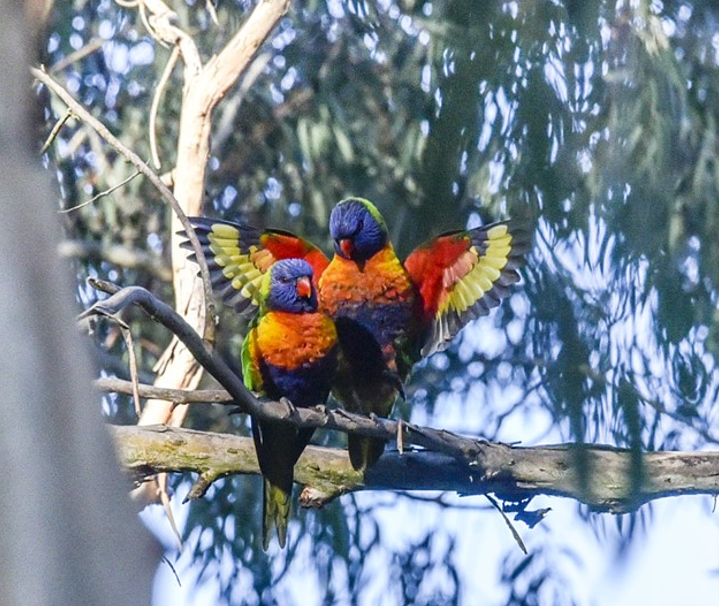
There is a possibility that the endangered Gang-gang cockatoo is breeding in the area. The species has remained present through winter in small numbers – and a juvenile male has been spotted recently. We had similar indications a few years ago also.
In the Corridor
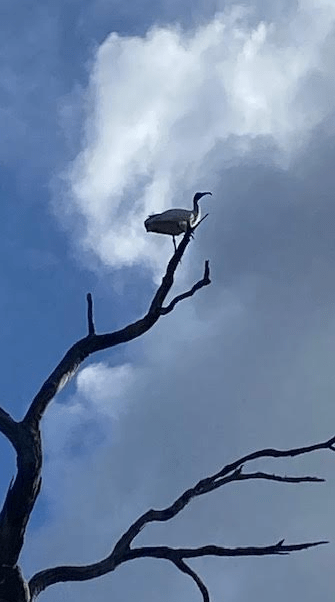
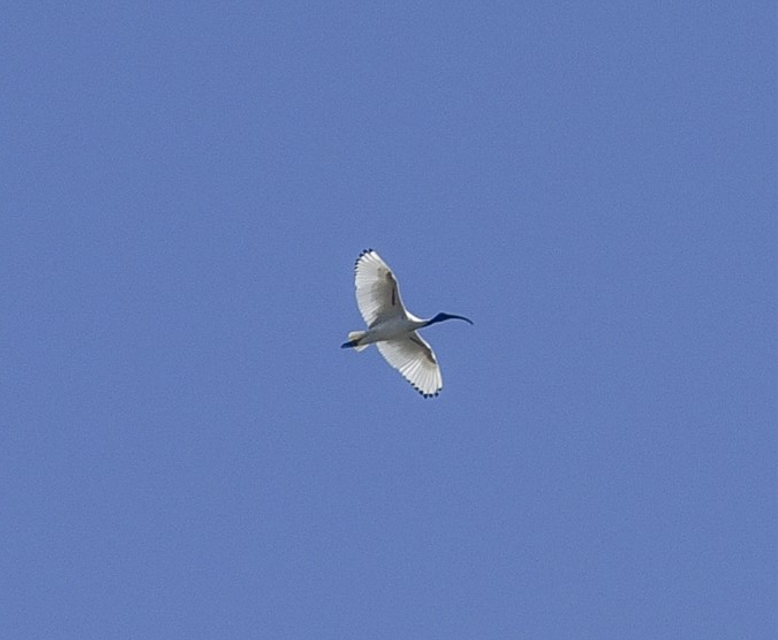
In June, we featured a photo of a Straw-necked Ibis (Threskiornis spinicollis) flying overhead. The species is occasionally seen at Blackburn Lake Sanctuary and in Sparks Reserve.
Adela took this interesting photo when walking at the Sanctuary – clearly another species good at perching!
They differ from the more common White Ibis (T. molucca) aka “bin or tip chickens”. They are roughly the same size – but have dark wings that are iridescent in sunlight. Their common name stems from the adult birds having distinctive straw-like feathers on their white necks.
New Editor
After 12 years (allegedly) working on our on-line Newsletter, our editor is stepping down for a break. We haven’t quite put the old hack out to pasture just yet – rather out for agistment – but not out in the Creeklands like the one below!
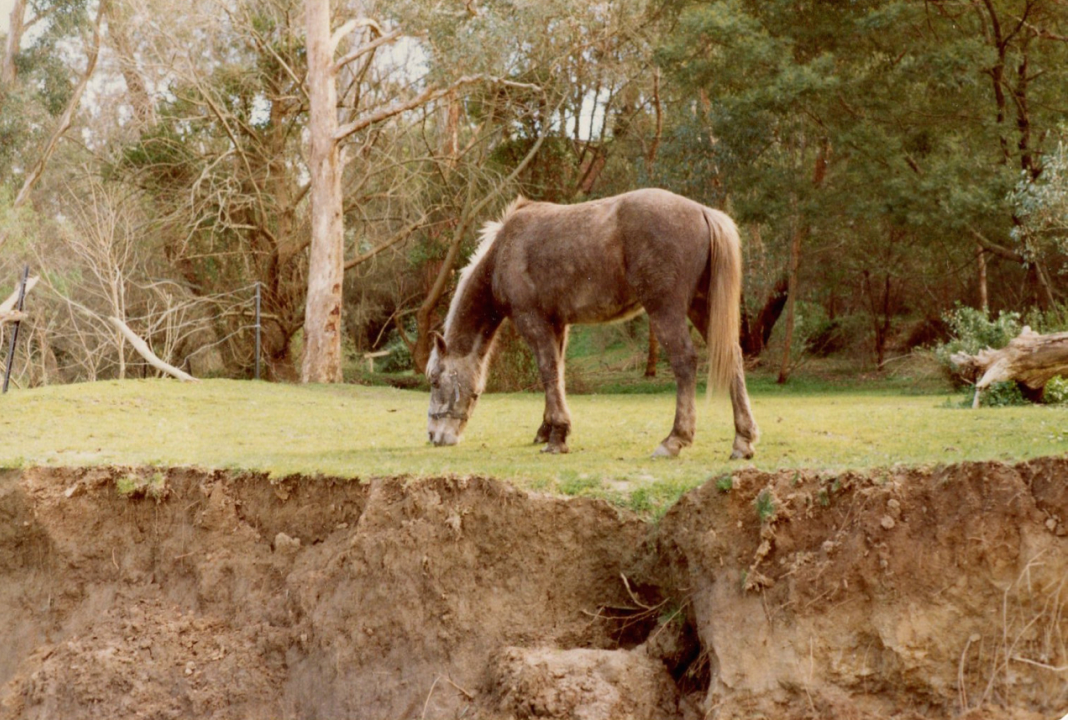
However, he did note that he too has an eroding bank (balance) to deal with… He thanks you for your support over the years – with special thanks to our amazing photographers for sharing their work, knowledge and expertise – as well as our occasional contributors, our untiring editors – and you, our readers, for your interest!
We are very appreciative that newish committee member Glenn has volunteered to take over the editor/coordinator role going forwards.
 Blackburn Creeklands