Upcoming events:
- Monthly Wednesday bird survey on 8 April
- Autumn bird walk on 11 April
- Sunday weeding bee on 19 April
Welcome to the March edition of our Blackburn Creeklands newsletter.
With Easter just around the corner, the weather is beginning to cool, the days are gradually shortening, and the leaves are starting to change colour. It’s one of my favourite times of the year, so make the most of the mild autumn weather, while it lasts.
In this edition, we have:
- Autumn bird walk
- A new bird species
- Corridor sightings
- Blackburn Activity Centre update
- Sunday weeding day success
- Adopt a tree
- Plant of the month: Kangaroo apple
- Rat bait update
- Sightings – photos and videos
Autumn bird walk
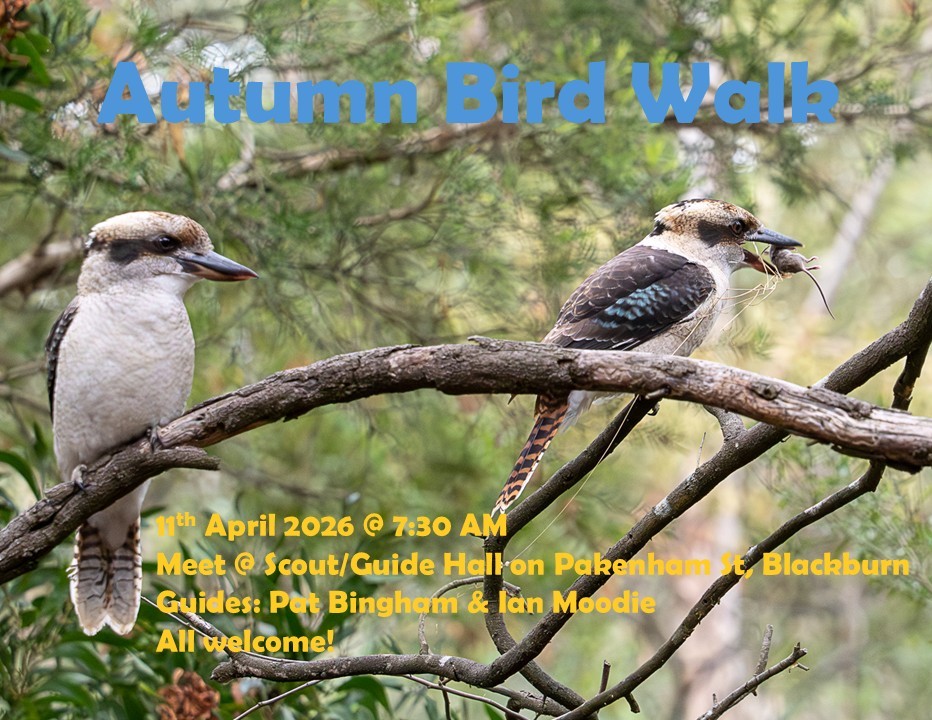
Our annual Autumn bird walk is fast approaching. This year it will be held on Saturday 11th April, starting at 7:30 AM at the Scout/Guide Hall in Pakenham St. Pat Bingham (Birdlife Australia) and Ian Moodie (formerly from Whitehorse Council) will be our leaders on the day. The plan is to separate into 2 groups and walk around the Blackburn Creeklands for approximately 1 hour and record all the birds we encounter along the way (visually and audibly). We will then return to the Scout/Guide Hall for a sociable morning tea and combine both sets of bird records.
If you wish to start learning about the amazing birdlife of the Blackburn Creeklands, this is the place be. Learn how to easily identify the differences between a female and a male mudlark? Beginners and children are most welcome.
Record the date in your diary now. No registration is needed, so feel free to just turn up on the day. Please dress appropriately for the weather, bring some binoculars and a camera (if you have them) and we look forward to seeing you bright and early in the morning.
A new bird species for the Creeklands
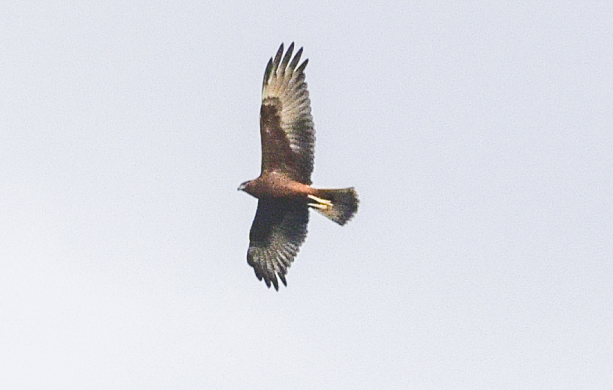
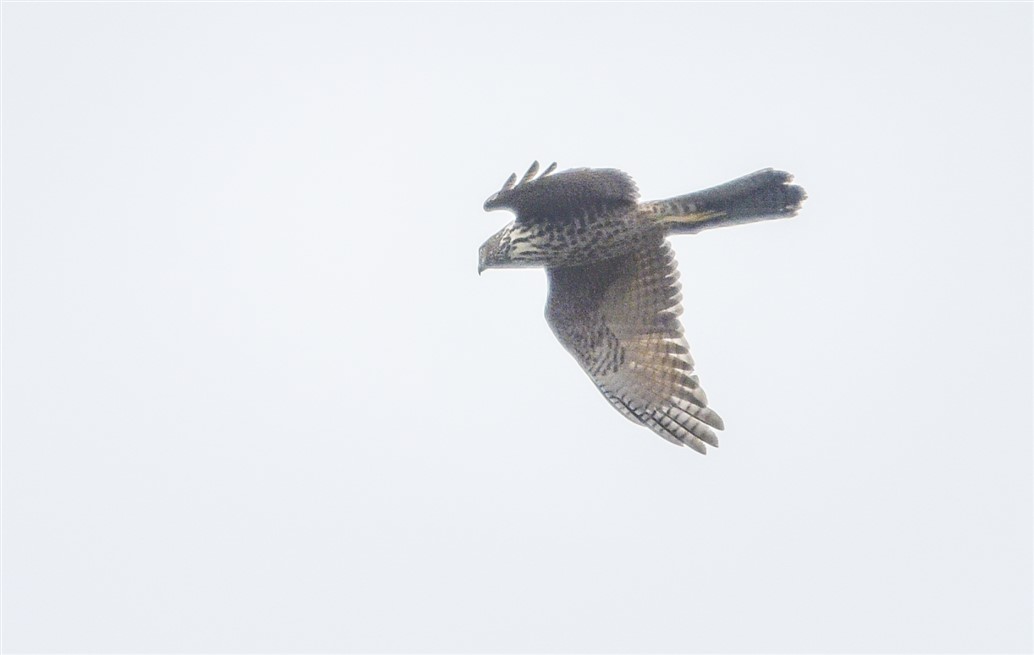
Despite poor light and a time-limited sighting, the March bird survey attendees were rewarded with a sighting of a Swamp Harrier (Circus approximans). This is the first recording of the species in the Blackburn Creeklands since our records began in the 1970s. Group Leaders spotted the bird when they were alerted by the alarm calls of several different bird species. Juveniles are a rich brown and they become lighter brown with maturity. Older males tend to go greyer, almost white eventually (rather like the old editor!).
Some smaller birds raise a racket to warn each other of a potential threat – and then go silent so as not to expose themselves. Others are brave and feisty – birds like Mudlarks, Willy Wagtails and Magpies will actively chase the raptor out of their territory rather than simply go quiet. One of our group leaders has seen a Noisy Miner flock, Grey Butcherbirds and a couple of Magpies all lined up on branches of a nearby tree harassing a Brown Goshawk “hiding” in the adjacent cypress reducing its chances of any surprise attack.
At first the experts could not identify the species – especially given the light that morning. It was definitely a raptor, but wasn’t a clear match with the “usual suspects” such as a Brown Goshawk. However, once the photos were reviewed in detail by the experts, a positive identification was able to be made.
The species is widespread in Australia – though mostly around wetlands and adjacent open country in temperate or tropical areas. Usually they stay fairly local – except Tasmanian birds that understandably migrate to the mainland in Winter.
What is a raptor? Raptors are “birds of prey” – mostly are carnivorous bird species that actively hunt and feed on other vertebrates such as mammals, reptiles, fish and small birds. Typically, they are fast and powerful birds with excellent eyesight, curved beaks for tearing flesh and sharp talons for catching and killing prey.
Raptor sightings are rare – but others seen in the Creeklands over the last five years have been the Brown Goshawk, Wedge-tailed Eagle, Powerful Owl, Collared Sparrowhawk, Whistling Kite and Nankeen Kestrel. We do seem to see more than our fair share here! Some do seem attracted to Kalang Oval – perhaps the combination of an open grassed area near trees and water? As top predators, they often have to travel more widely to find prey. Also, as their habitat changes (eg due to climate change, clearing, summer fires and burn-offs), they may wander further than usual.
Two of our local bird experts agree that the topography of our area is another possible attraction – the rise of the Box Hill/ Blackburn hillside may assist with thermal air currents to assist flight further up towards other creek valleys (eg. towards Dandenong Creek or Mullum Mullum Creek) and further off to the Yarra river? We think another possibility is that it’s due to the skills and experience of the group leaders!
Corridor Sightings
3G Gecko ?
In last April’s news, a park neighbour reported a second sighting of a Marbled Gecko on his property.
The same neighbour has now reported an alleged Third Generation Gecko – this time, in his workshop.
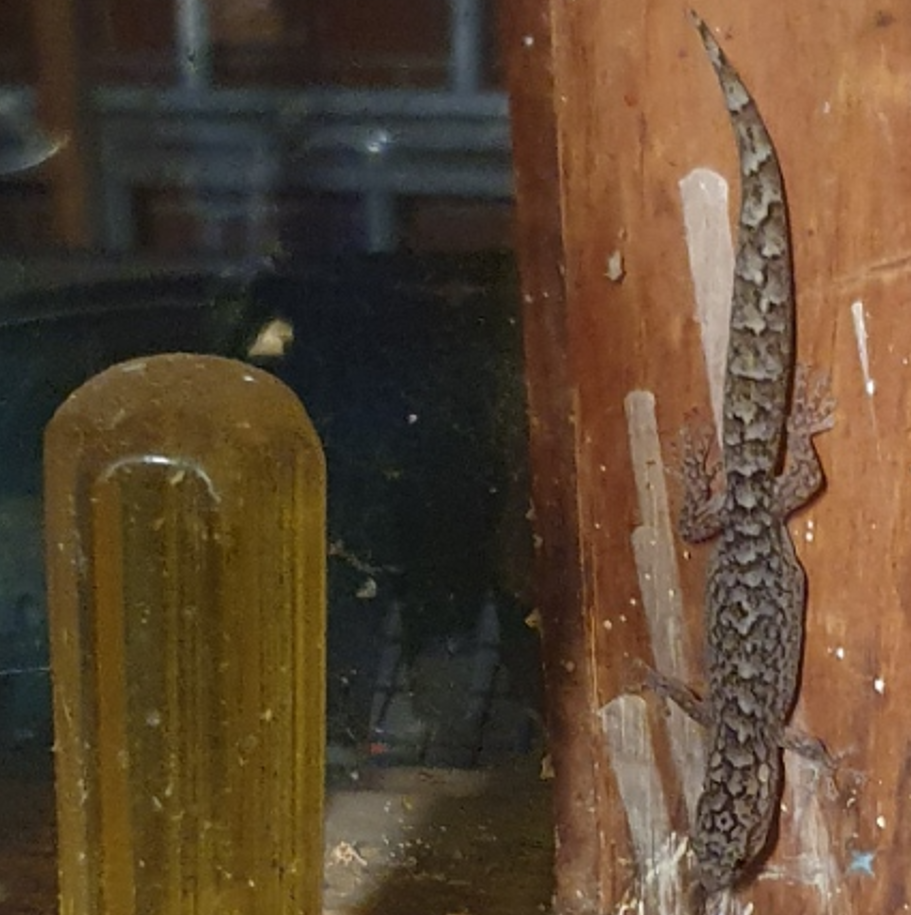
Here are the three “generations” of geckos together:
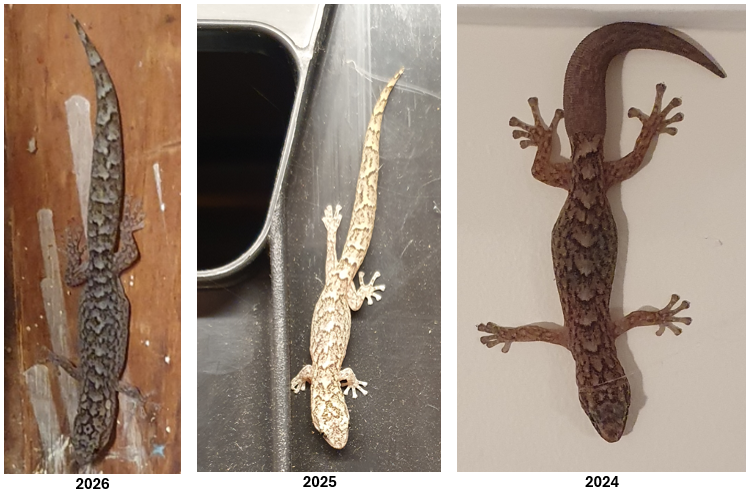
Clearly the markings and colouration of each are quite different – though we have read they can change colour – not instantly like chameleons, but over a few hours to match their environment. Our three must have moved (possibly to hunt insects) because they have seem to have contrasting colours – probably why our reporter saw them. The 2024 Gecko has a regenerated tail – they can drop their tail off as a decoy when threatened.
All three are climbing down vertical walls effortlessly. Apparently, they don’t have sticky pads on their feet – but, believe it or not, their feet have microscopic hairs called setae, which interact with surfaces at a molecular level (!) through Van der Waals (no, not Van der Walls !) forces.
Van der Waals forces are weak, short‑range attractions between molecules caused by temporary or permanent shifts in electron distribution. They help explain why gases condense, why liquids stick together, and why even non‑polar molecules can attract each other. Apparently, microfibre cloths use the same trick for picking up dust etc.
They are truly amazing creatures – some populations reproduce via parthogenesis (ie no males required!). Does this mean all their offspring are clones of their mum? By the way, did you notice the cartoon faces tattooed on this year’s gecko’s back ?
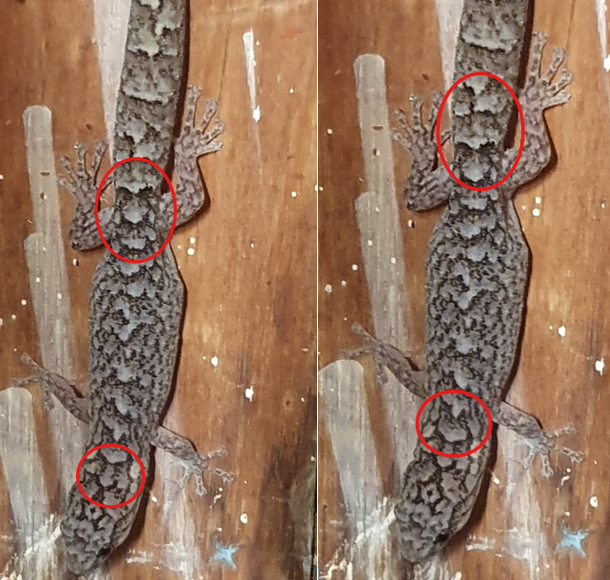
You might have to blink a few times to see these caricatures: Uncle Joe Stalin, George Orwell fulminating, Tricky Dick Nixon crying with eye rubbing and a cartoon cat.
Blackburn Activity Centre update
In February, the Department of Transport and Planning (DTP) released Stage Two draft plans for the latest tranche of railway station/tram proximity-based Activity Centres which include Blackburn. Much to our relief as custodians of the Blackburn Creeklands, the areas slated for higher density, multi-storey development do not directly impinge on our park or its surrounding corridor.
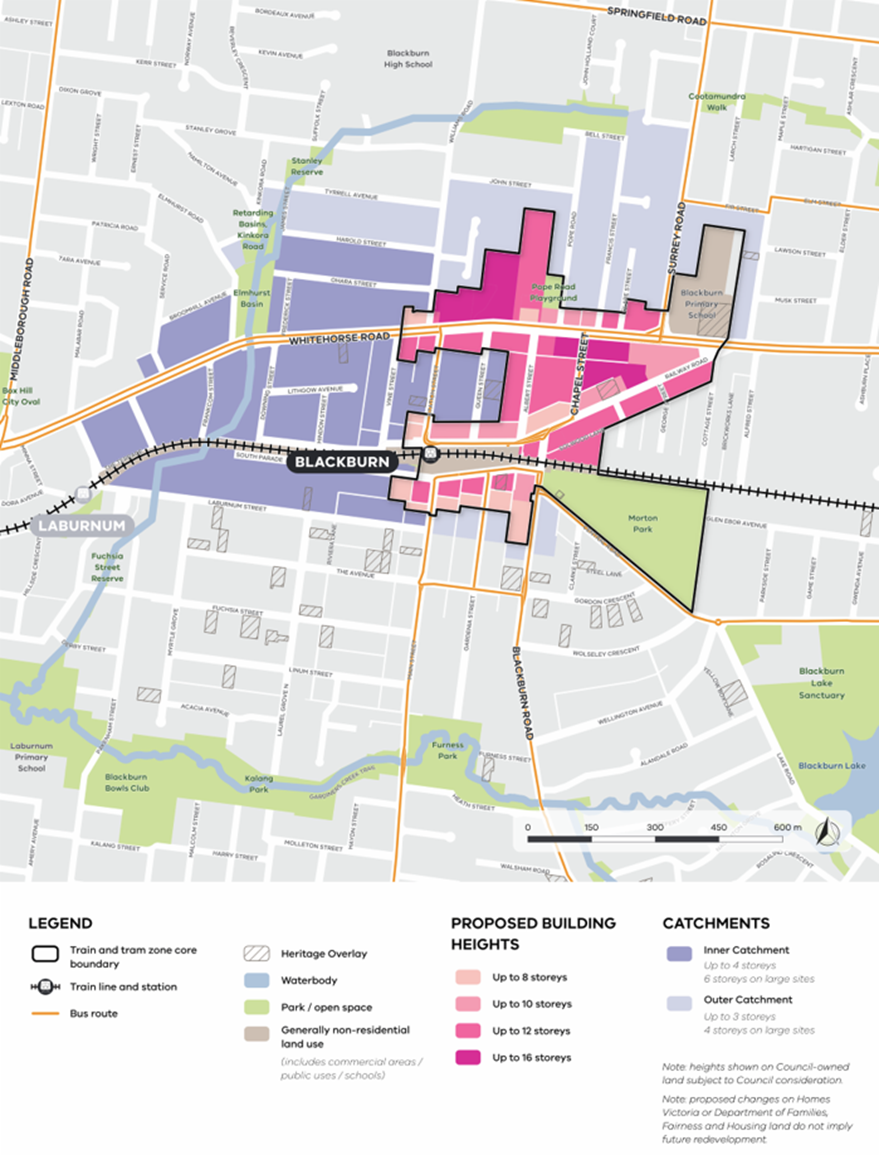
On-line and in-person information sessions were conducted mid-month to further inform the community on the DTP’s proposals for Blackburn, Nunawading and Mitcham. These displayed the revised boundaries and introduced height limit recommendations for higher density areas. In Blackburn, they are focussed on the railway station precinct and the adjacent Whitehorse Road area to the north. The deadline for Stage 2 submissions and survey responses was 22 March 2026. We know many of you responded, as we did.
Community Reference Groups
Also during the month, initial meetings of Community Reference Groups (CRGs) were conducted. Members of the groups were hand-selected by the DTP consultants. The CRGs have an on-going role in advising the DTP. We trust that the resulting groups are fully representative – including of the interests of the environment.
Next step
The next step is finalisation of the plans by DTP (considering the Stage 2 feedback from the community and others) – to be approved by the Minister for Planning. The DTP was saying around mid-year for this to be achieved – but the DTP’s web-site now seems to be silent on the time-line…
For more information, please see: https://engage.vic.gov.au/project/activity-centres-program-stage-two/page/blackburn-mitcham
Sunday weeding day success!
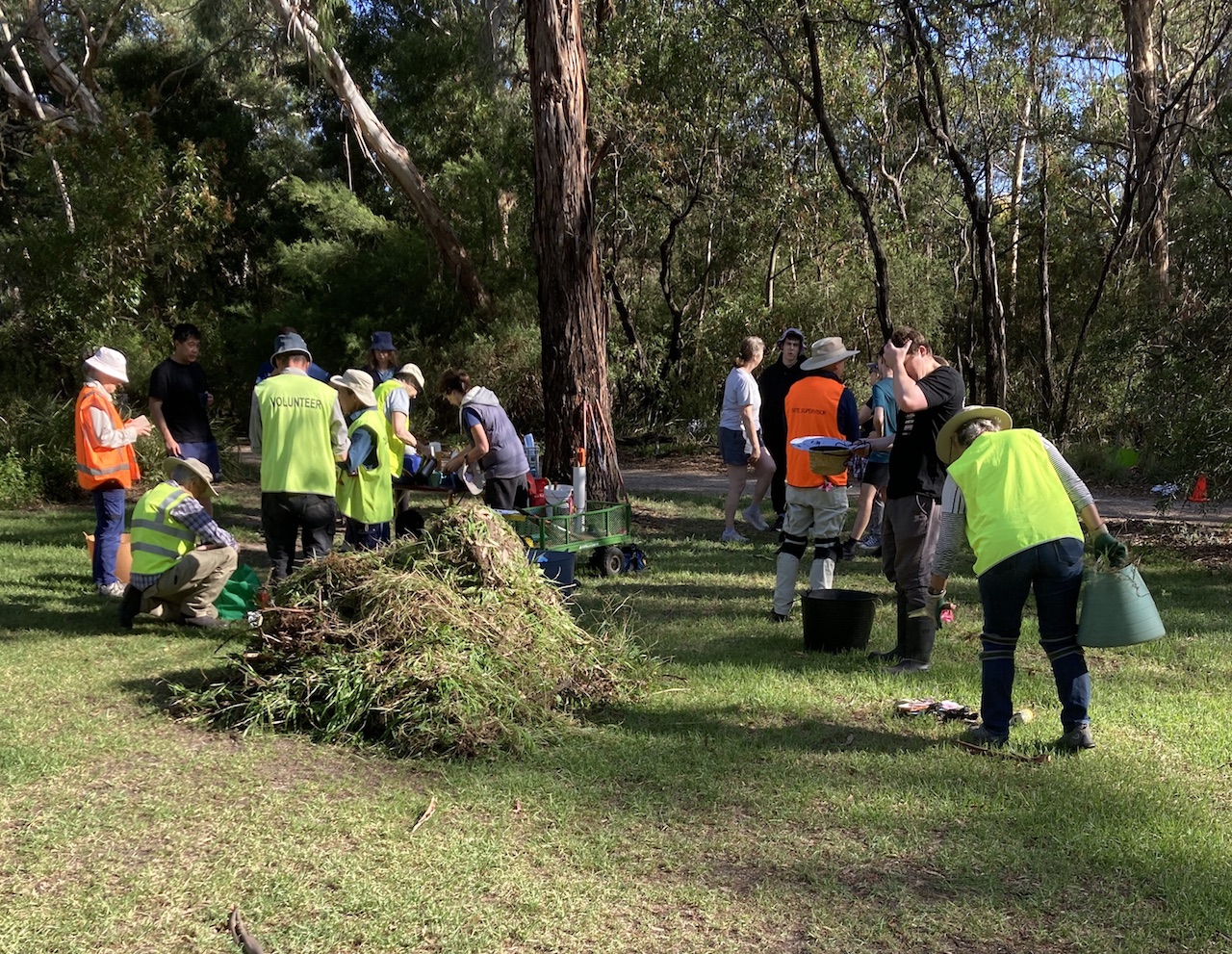
On 22nd March we held the first of our Sunday weeding working bees in the Blackburn Creeklands, providing an opportunity for people who can’t attend the regular Thursday sessions to get involved.
A fantastic turnout of 21 enthusiastic volunteers joined us to help care for the Creeklands. Working together, the group removed weeds and helped improve habitat for local plants and wildlife along the creek north of the Kalang oval. It was a great morning of community spirit, teamwork and environmental stewardship. A big thank you to everyone who came along and contributed their time and energy.
We look forward to welcoming you all to our next session from 9 – 11AM on Sunday 19th April where we will continuing the good work by weeding eastward from our last weeding bee. For more information, please email blackburncreeklands@gmail.com
Adopt a tree
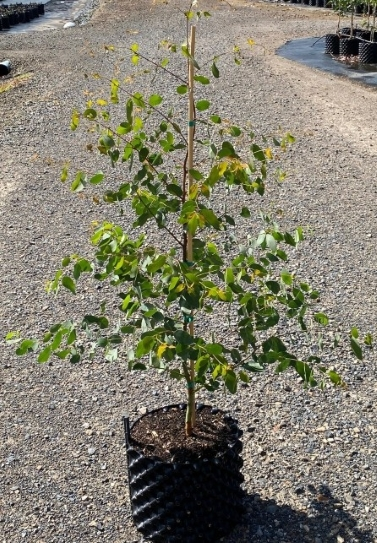
The Adopt a Tree program invites residents of Whitehorse City Council to register for a free tree giveaway, supporting greener, cooler and more liveable neighbourhoods.
A total of 80 advanced trees (1.5–2.0m tall) are available, limited to one per household, and must be planted at a Whitehorse address. Trees will be ready for collection in early May from a nominated location.
Planting trees helps reduce urban heat, improve air quality and support local wildlife. Participants are responsible for planting and ongoing care, with guidance to plant trees at least 3.5 metres from structures.
All species are locally indigenous to Whitehorse and have been specially grown for this giveaway. These evergreen trees are hard to source commercially, making this a unique opportunity to plant locally significant species in your garden.
Please register your interest on the Whitehorse council’s website: Adopt a Tree | Whitehorse City Council
Plant of the month: Kangaroo Apple
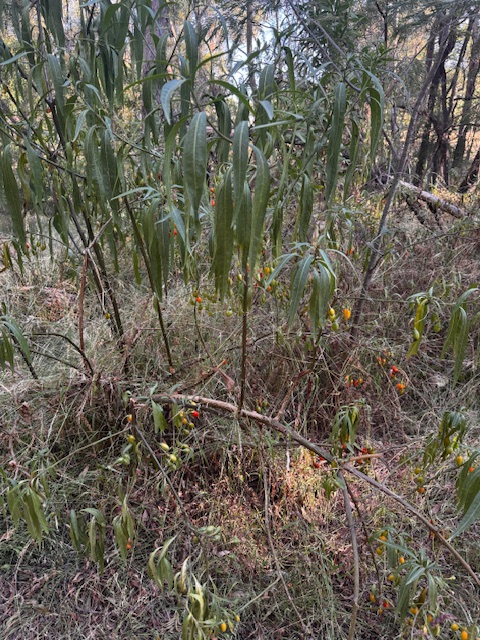
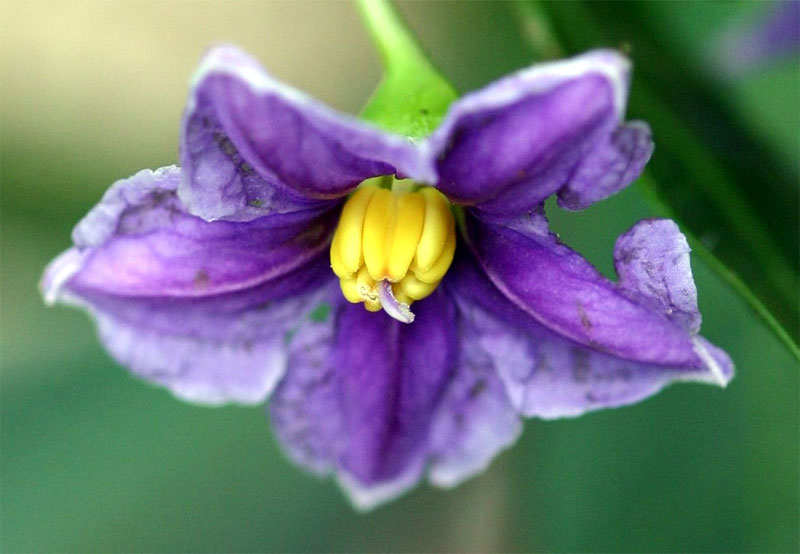
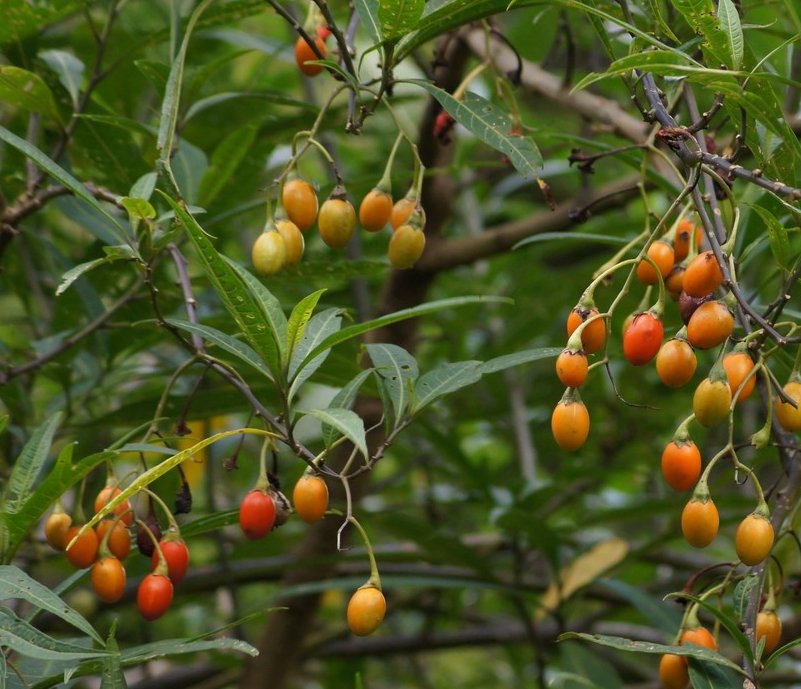
The Kangaroo Apple (Solanum laciniatum) is a fast-growing native Australian shrub often found in bushland and garden settings as well as planted sporadically throughout the Blackburn Creeklands (left).
It is easily recognisable by its dark bluish-purple star-shaped flowers with bright yellow anthers (top right) and green-orange-red berries (bottom right). It provides valuable habitat and food for local wildlife, including birds and insects. The plant grows quickly to 4 meters and helps to stabilise the soil in disturbed areas.
Unfortunately, back in early February, we noticed a few self-seeded plants had been pulled out so we called in the plant doctors to help revive them. After some CPR and TLC we managed to bring them back to life and look forward to planting them out at one of our four designated community working bees (CWBs) over the coming months.
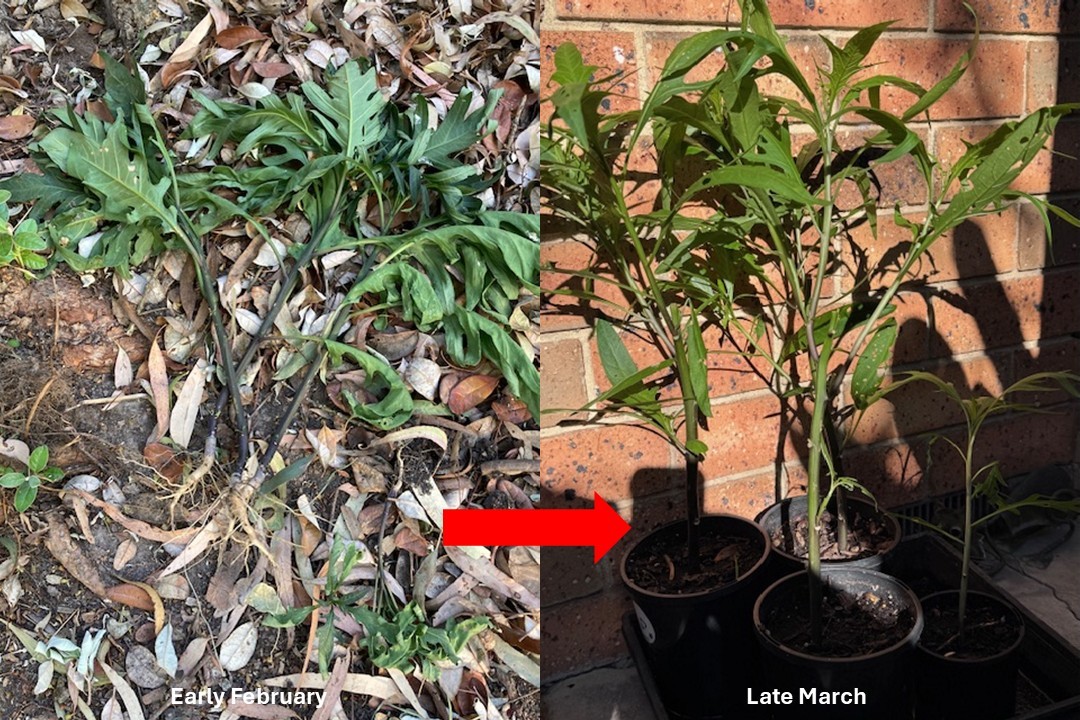
Note: These plants ARE NOT weeds, so please do not touch them and let them grow naturally so we and the local wildlife can enjoy them for what they are 😉
News rules announced for banning rat baits
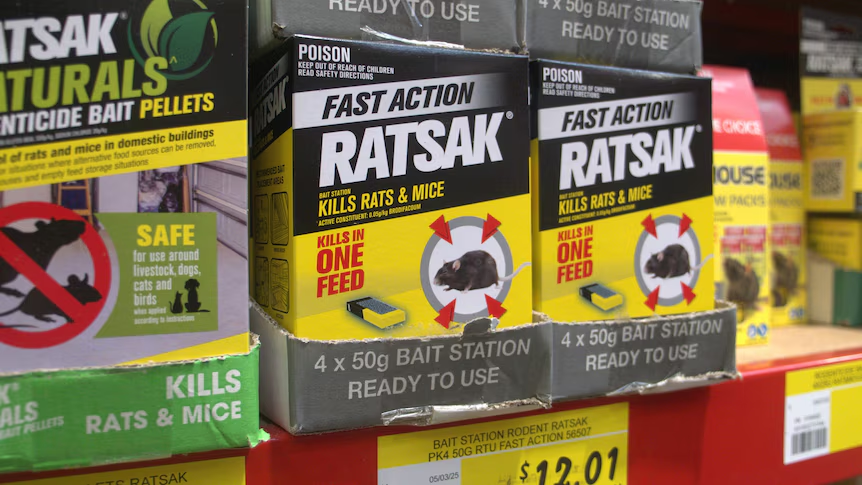
In mid-March, Australia’s pesticide regulator, the Australian Pesticides and Veterinary Medicines Authority (APVMA) announced new restrictions on widely used rat poisons to better protect our wildlife. After a four-year review, the authority has recommended that second-generation anticoagulant rodenticides (SGARs) be classified as ‘restricted’ chemical products.
If implemented, many popular rat baits currently being sold over the counter will no longer be available for purchase by the general public. Instead, they will only be sold to licensed and trained operators, such as professional pest controllers who can demonstrate appropriate accreditation and experience.
The change aims to reduce the harmful impacts these poisons have on native wildlife. SGARs can persist in the environment and accumulate in the bodies of rodents. Predators and scavengers including owls, raptors, reptiles and Tawny Frogmouths can then be poisoned after eating contaminated rodents, often leading to serious illness or death. Wildlife carers and environmental groups have raised concerns about these impacts for several years and have campaigned for stronger regulation.
The APVMA says restricting access will help ensure the poisons are used carefully and responsibly to minimise risks to non-target species. State and territory governments will now work with the regulator to establish licensing requirements and implement the new restrictions in the coming months.
If you have these poisons in your garage or back shed, then please think twice about deploying them in your garden especially if you live close by the park. Thanks in advance for your consideration.
For the full article please see the following link: Australia’s pesticide regulator sets new rules banning some rat baits from public sale – ABC News
Sightings
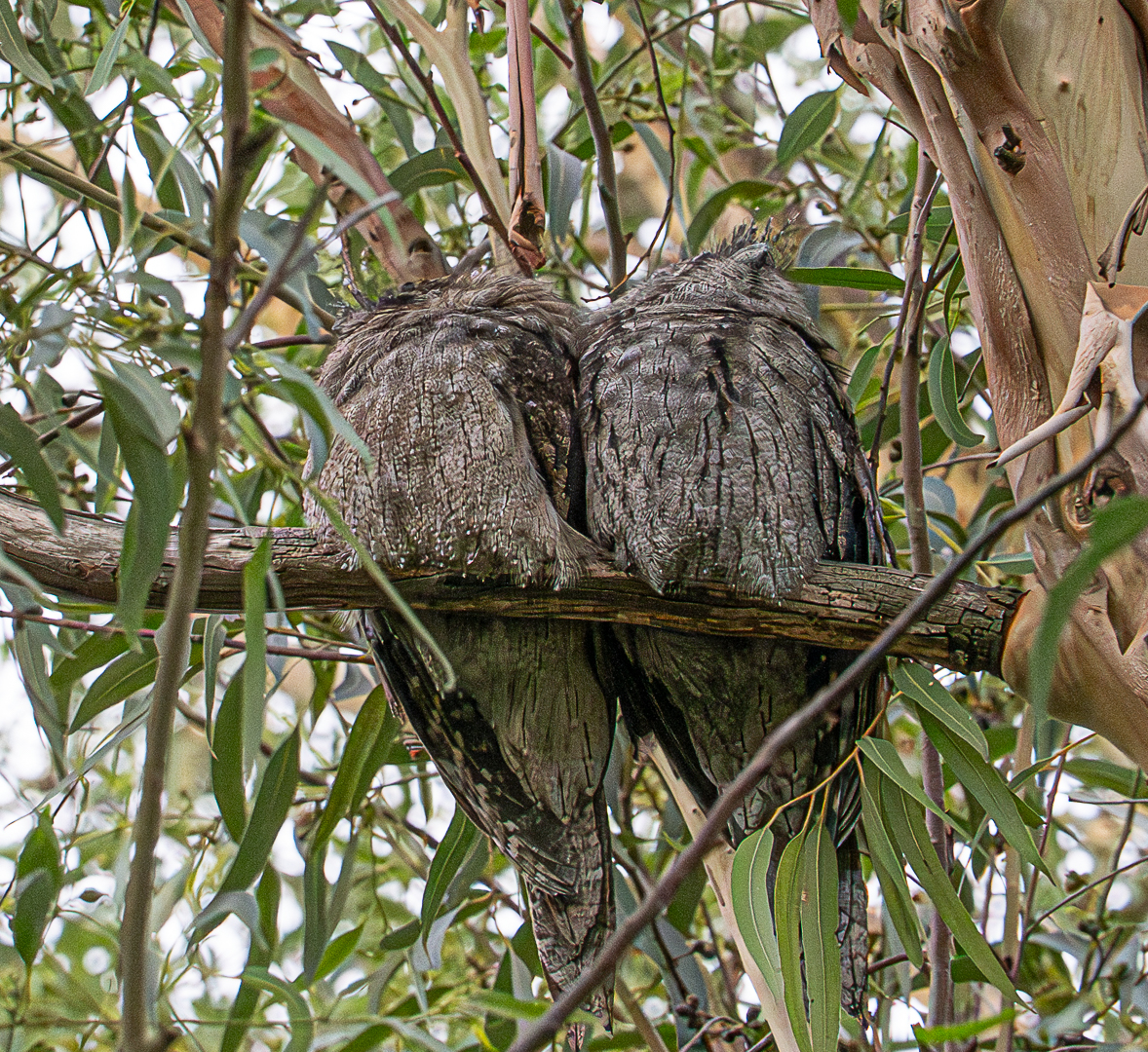
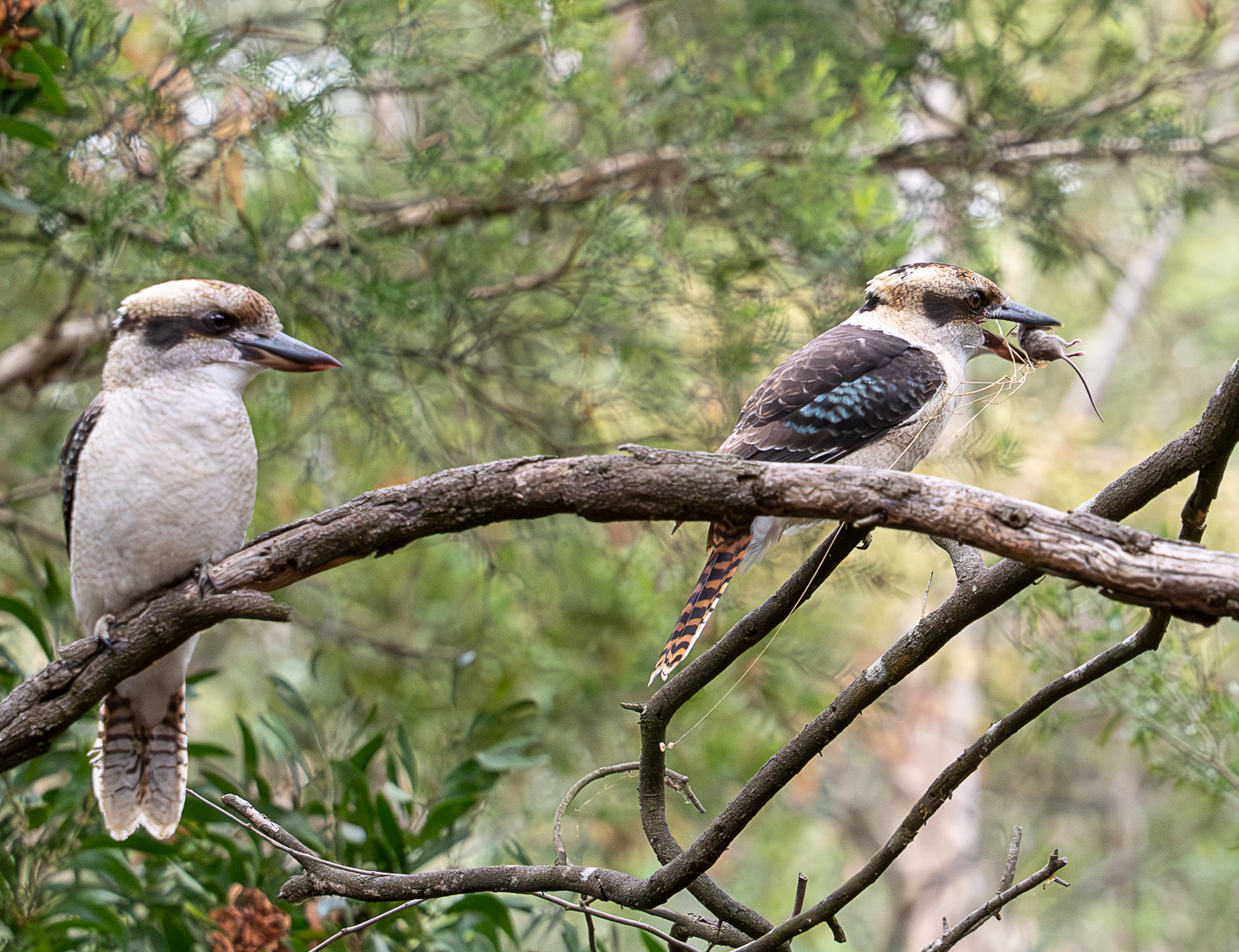
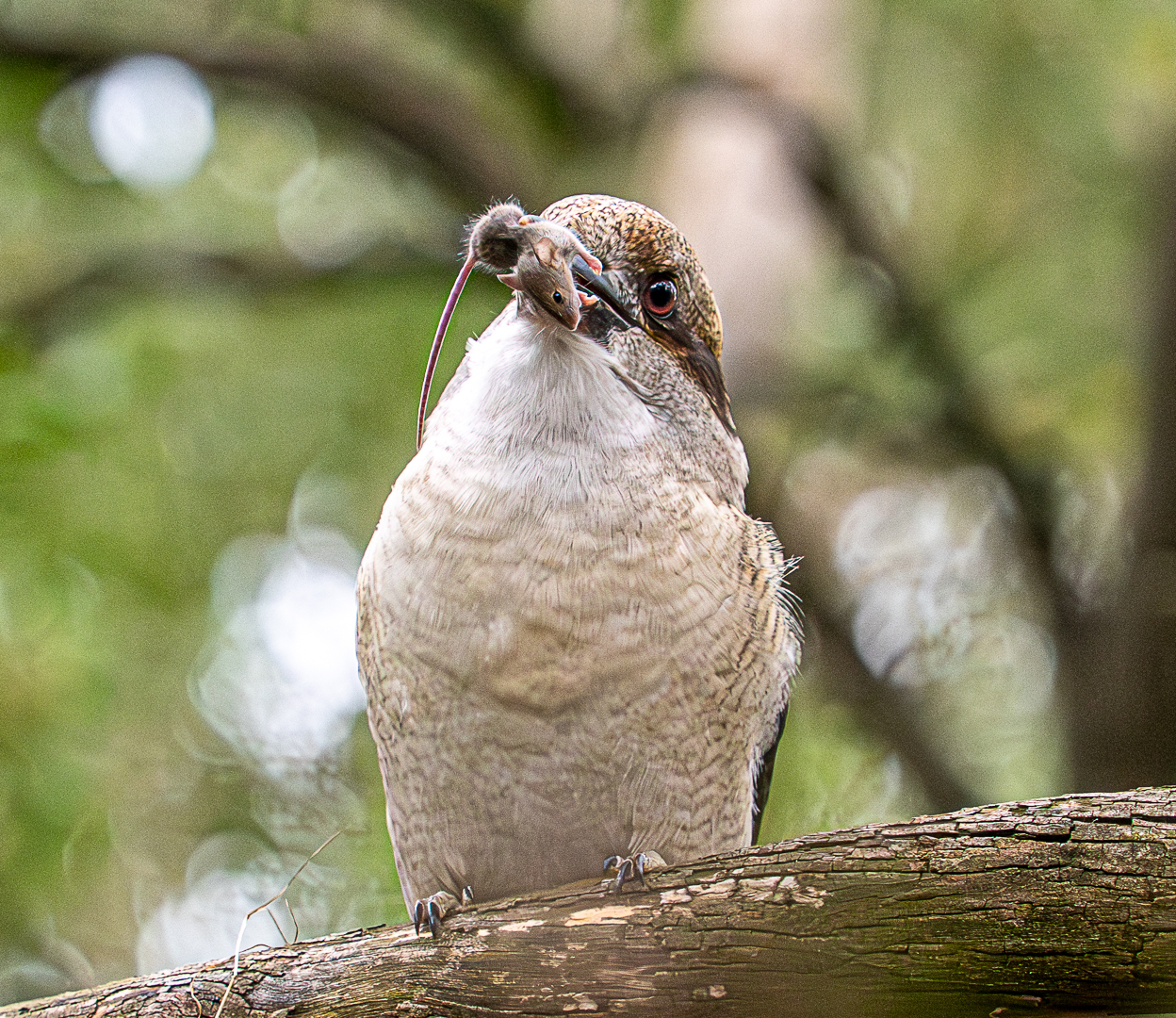
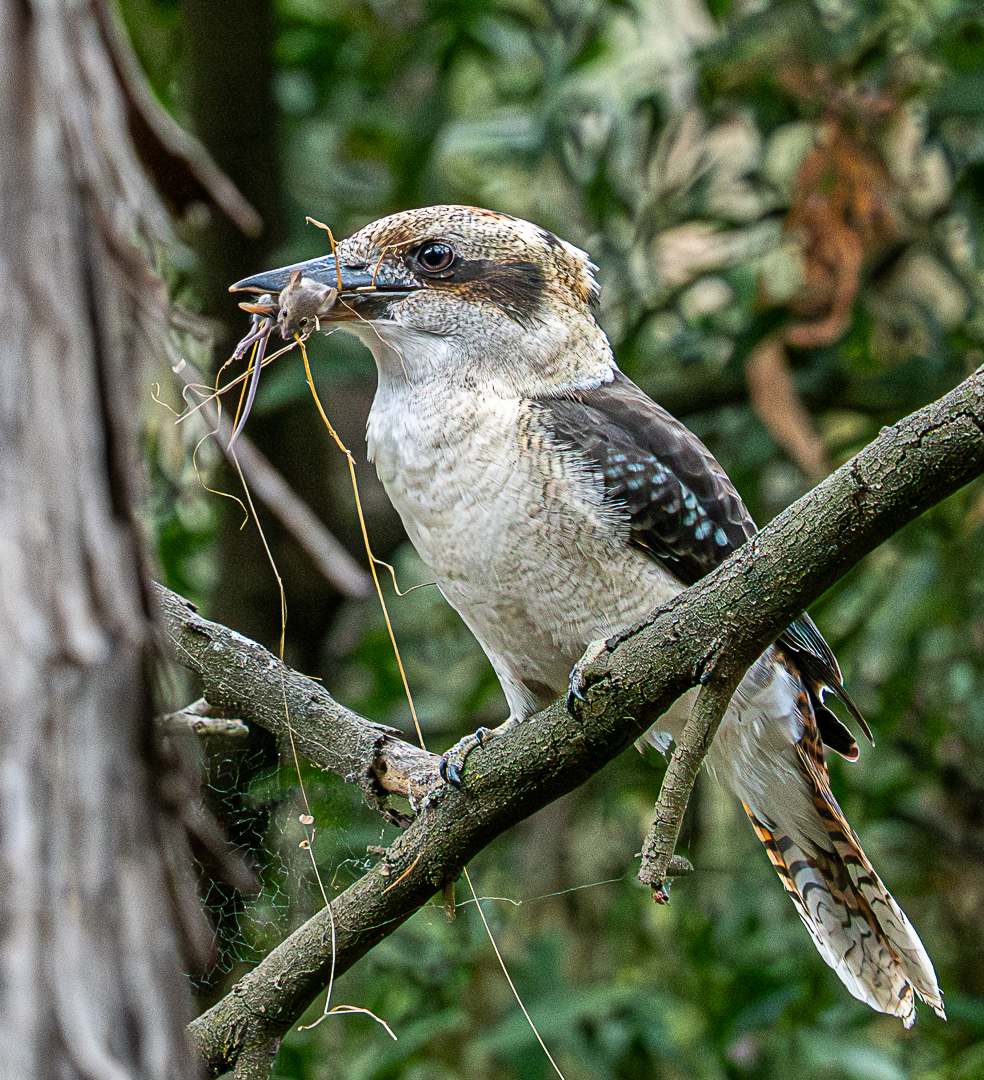
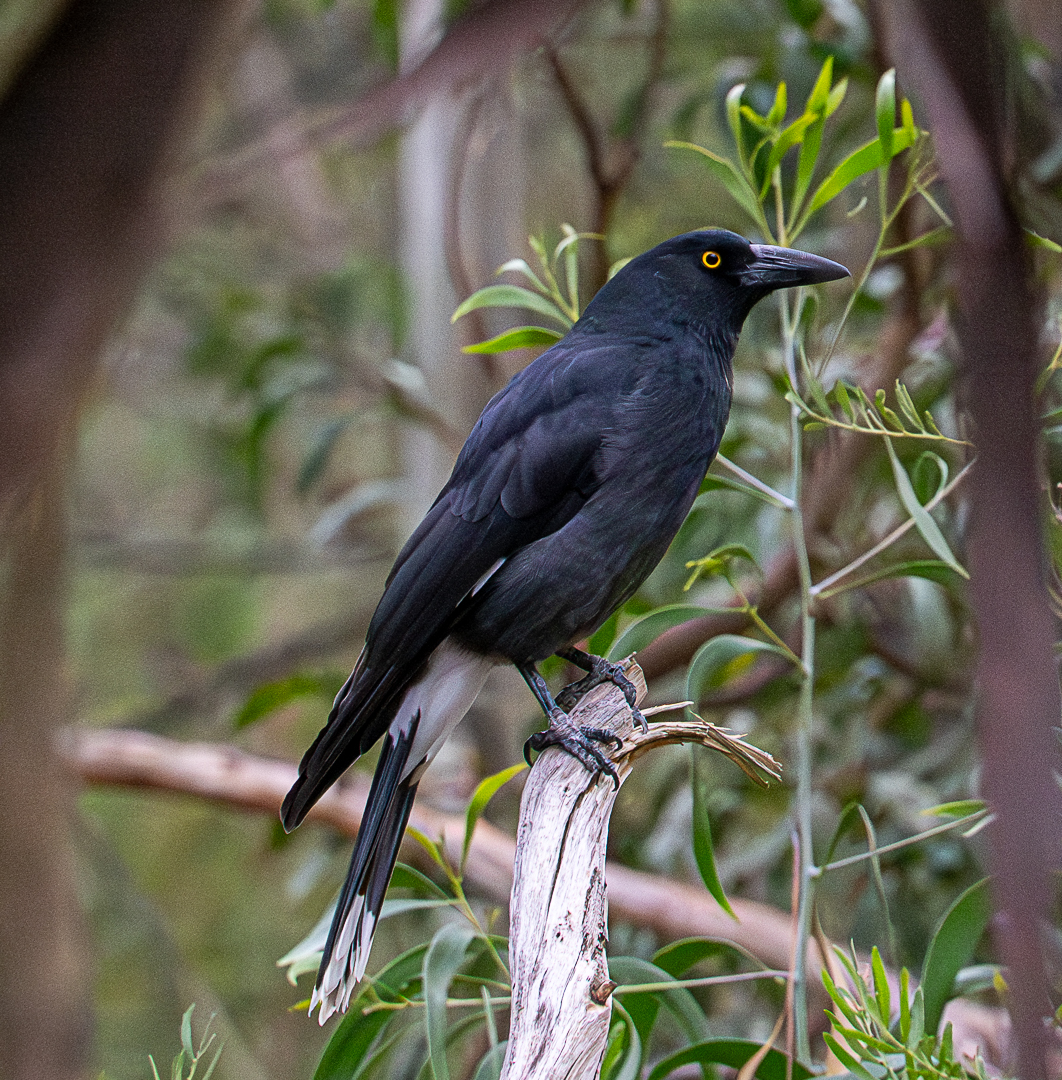
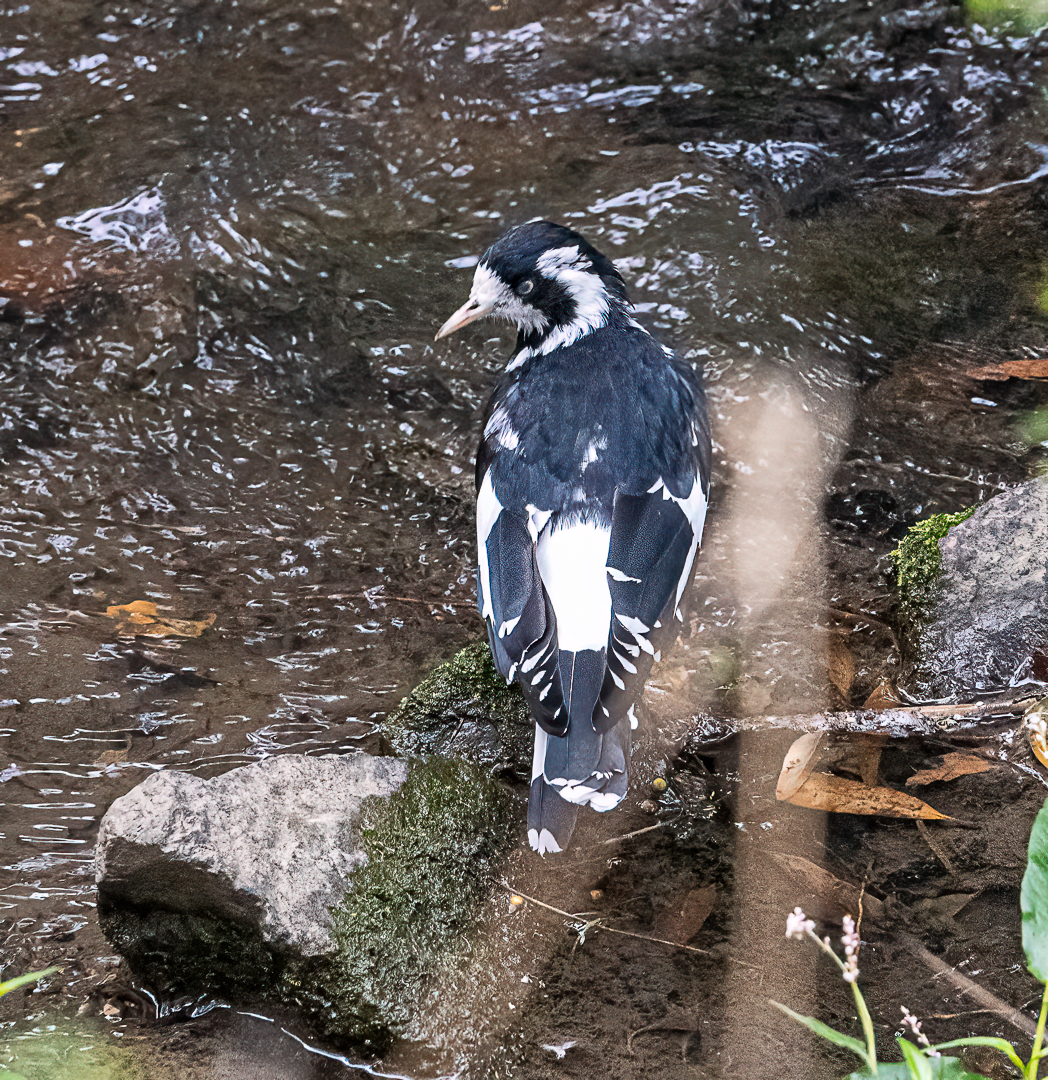
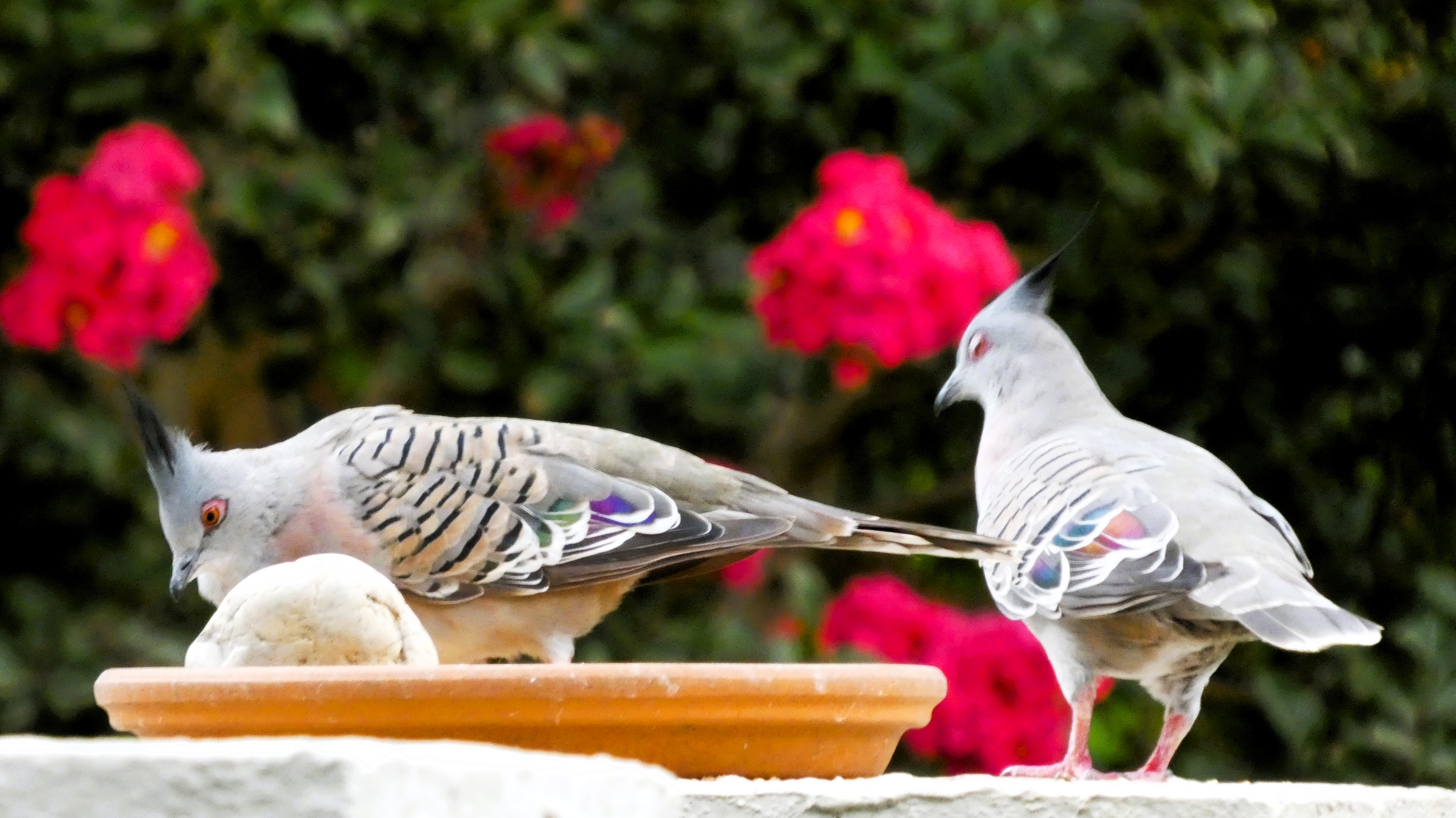
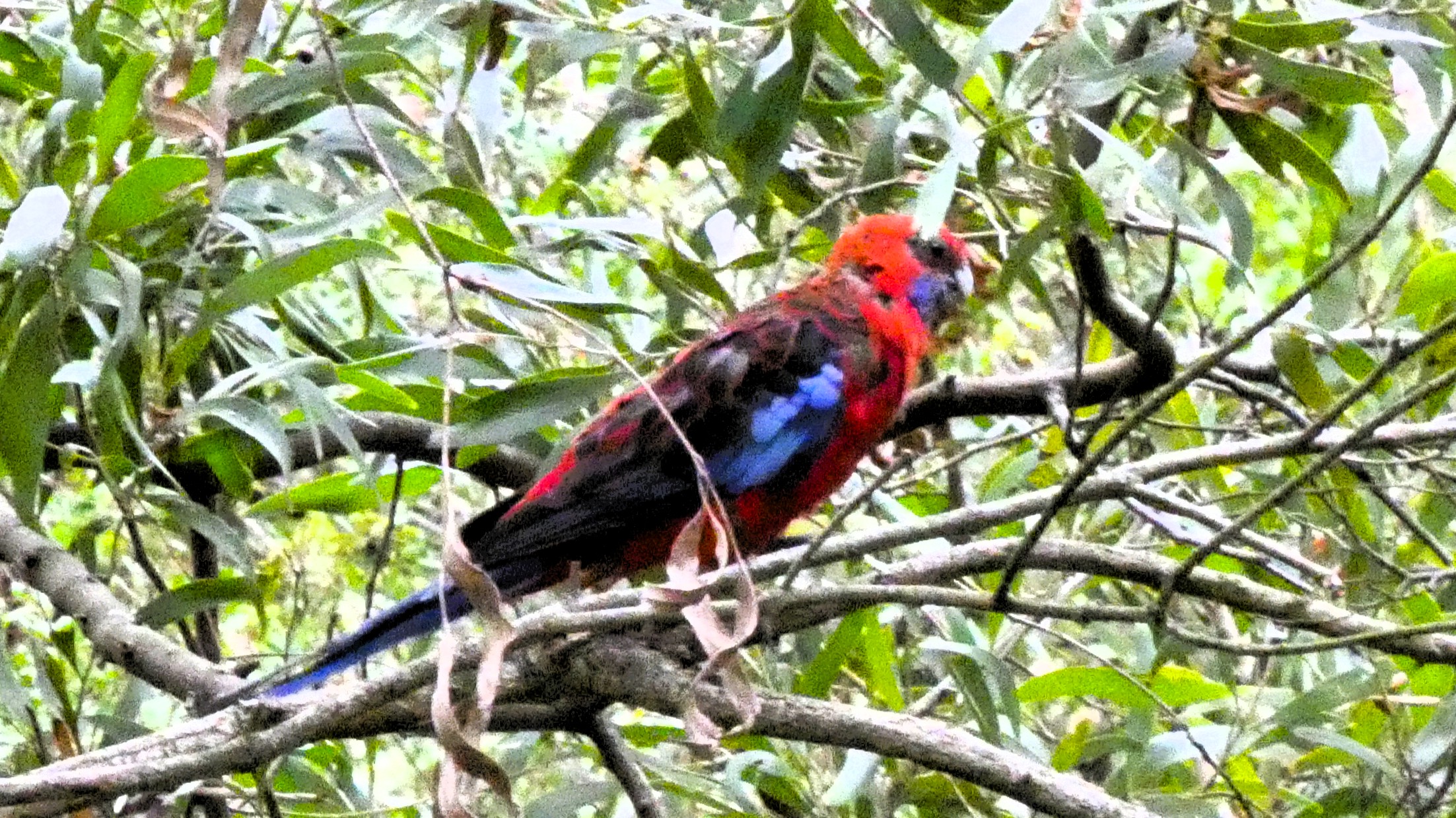
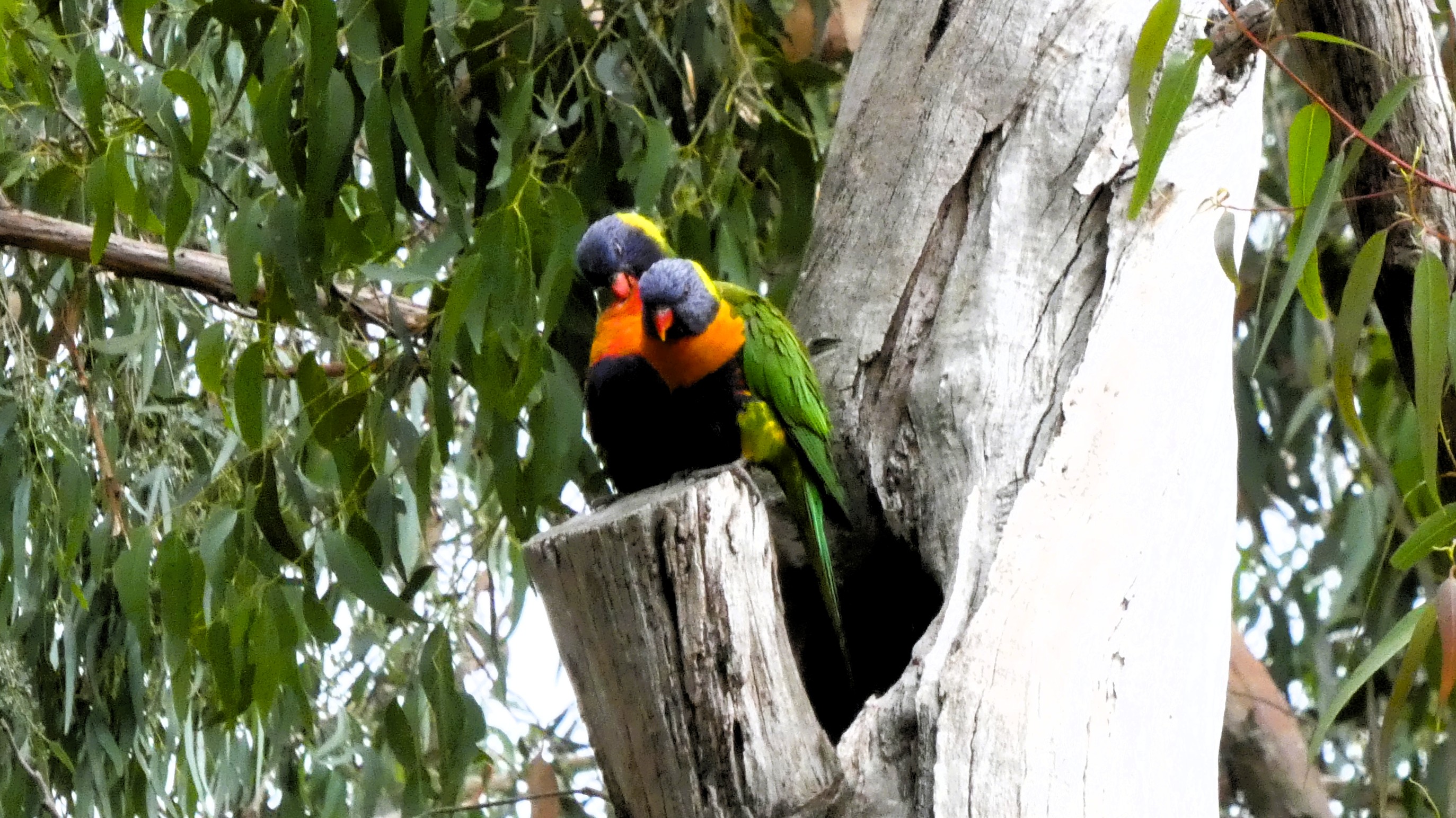
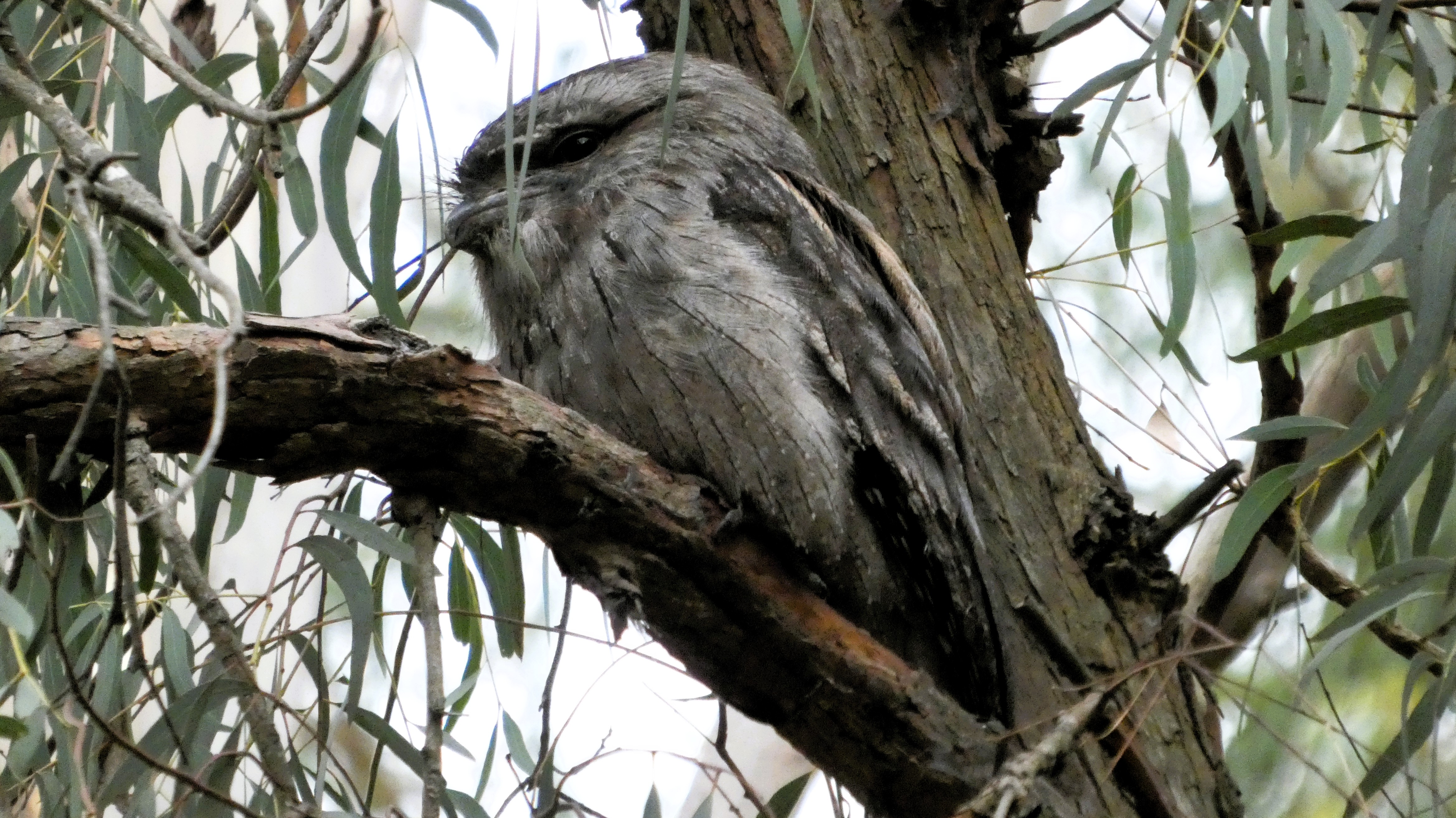
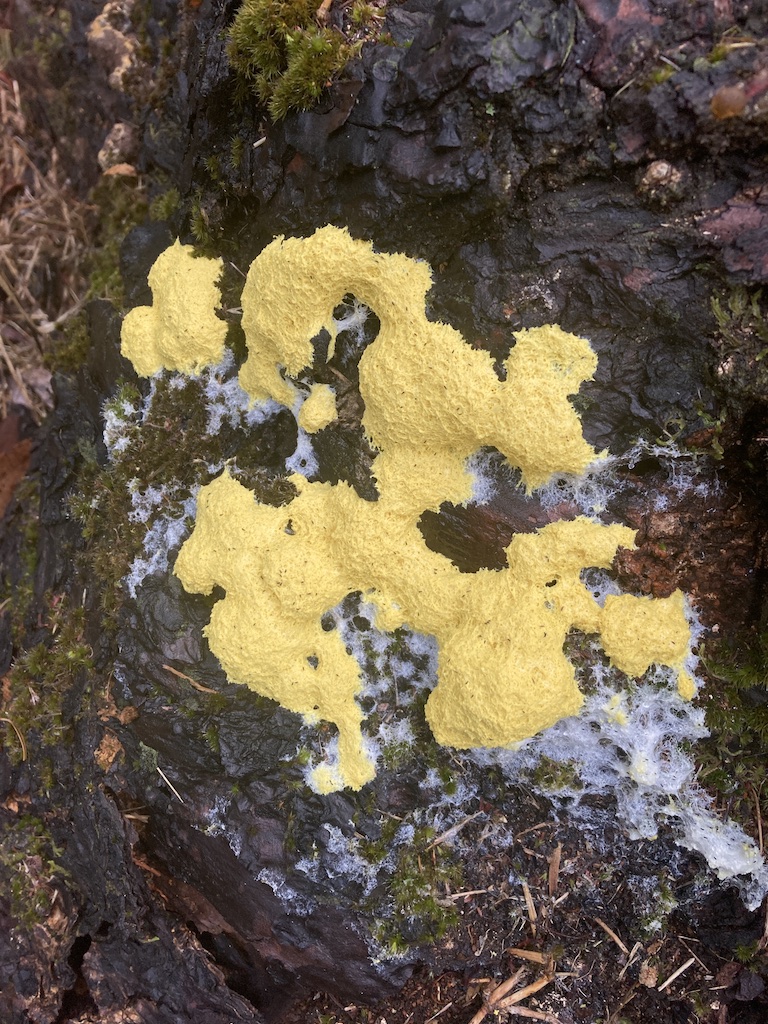
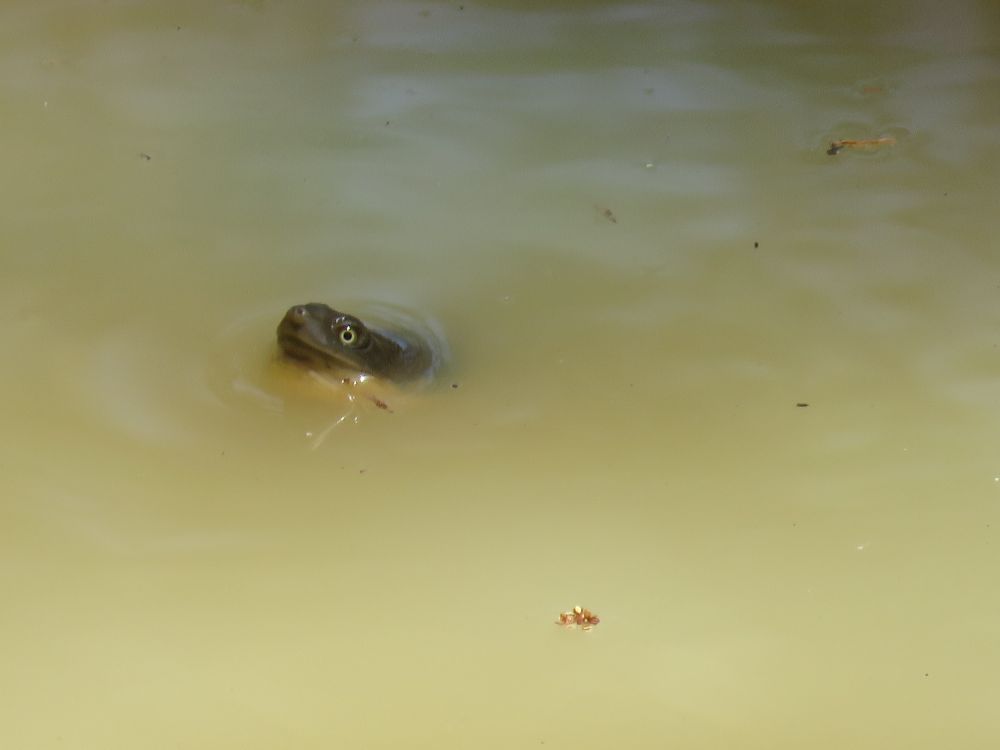
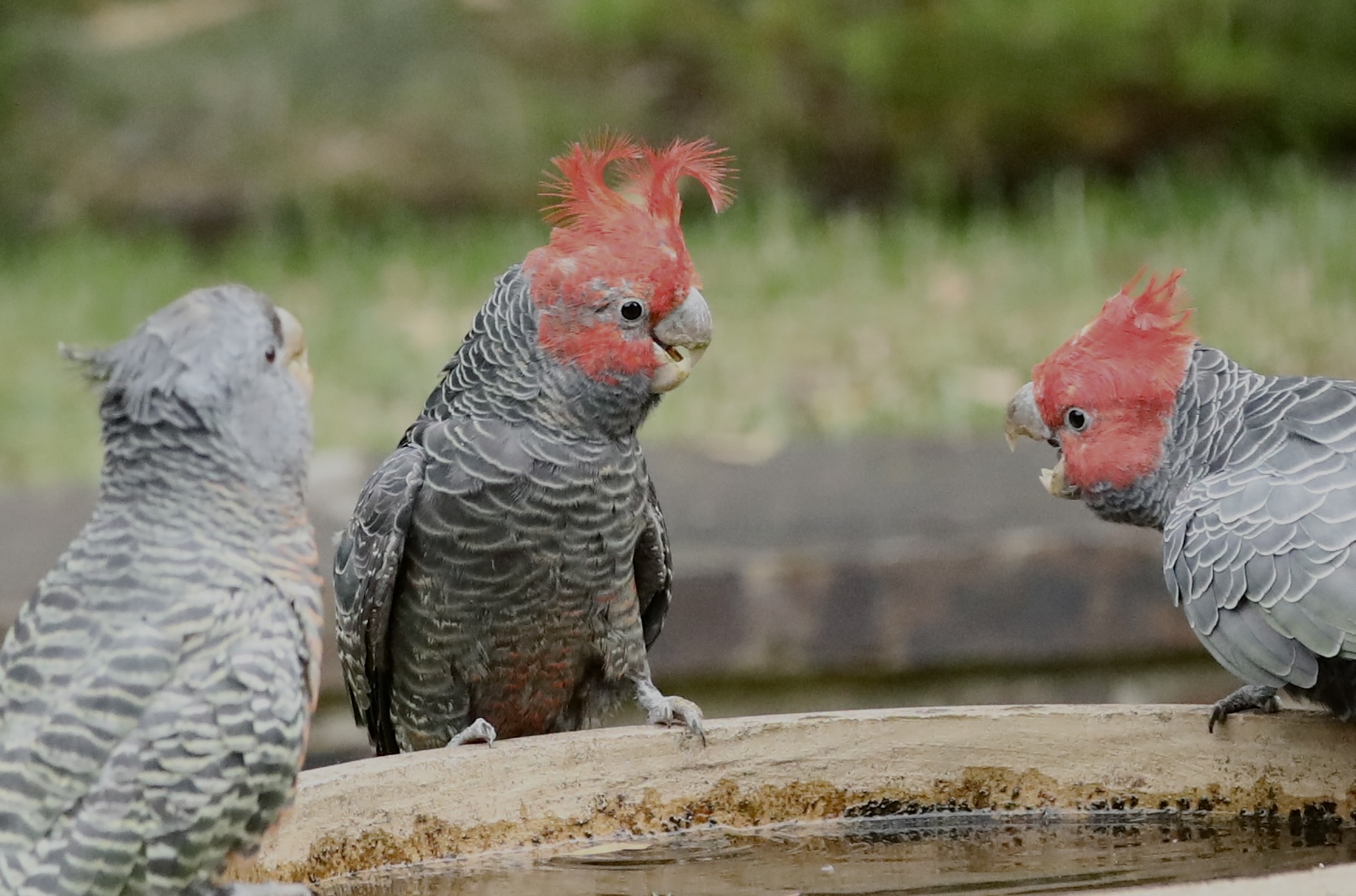
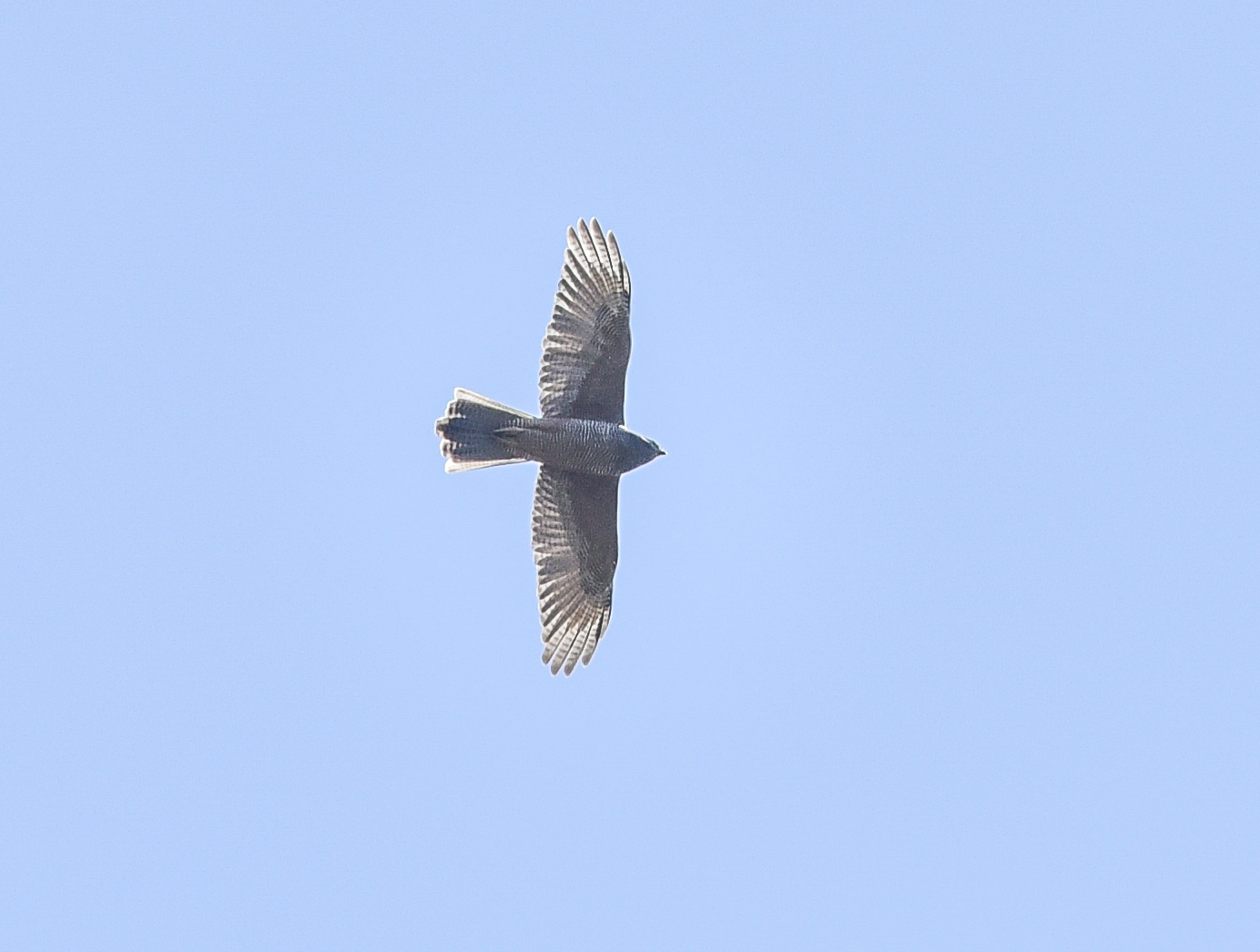
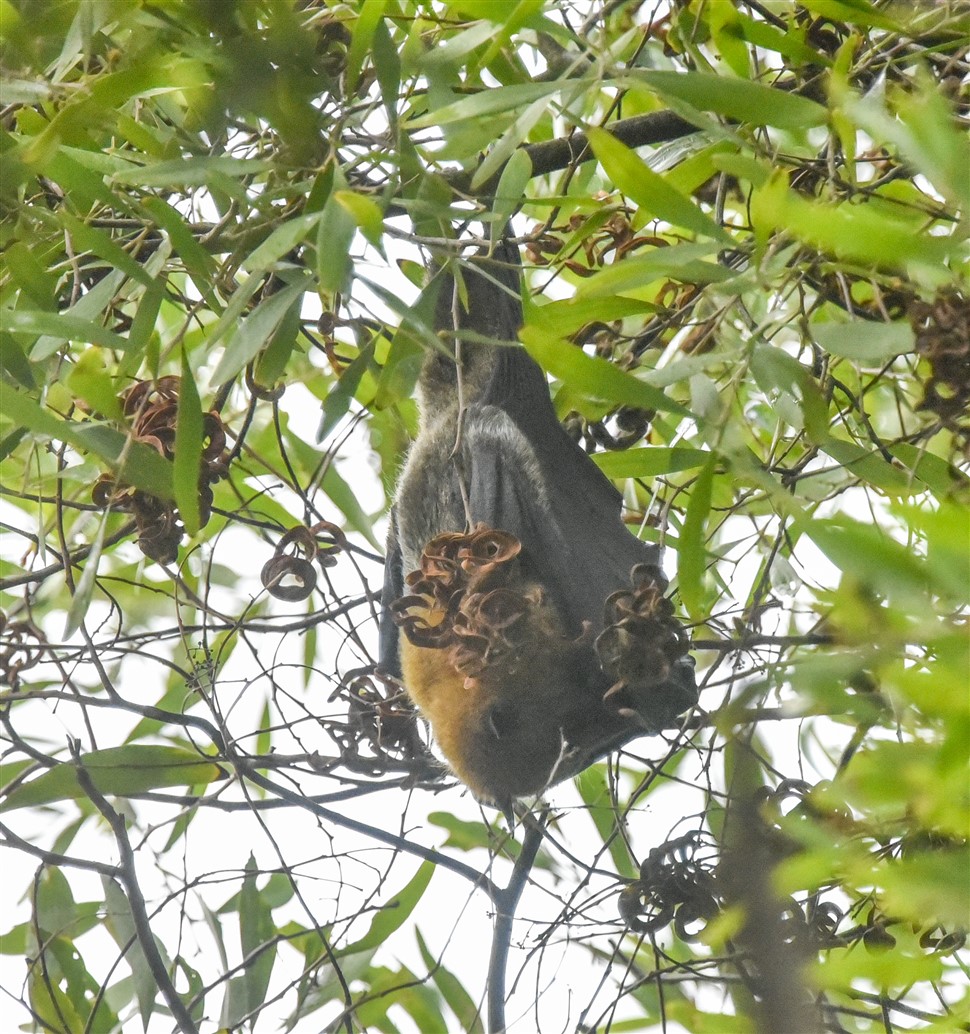
We thank our wonderful photographers for sharing their amazing images and videos with us. If you would like to contribute, please email your photos to: blackburncreeklands@gmail.com
Photo gallery:
Videos:
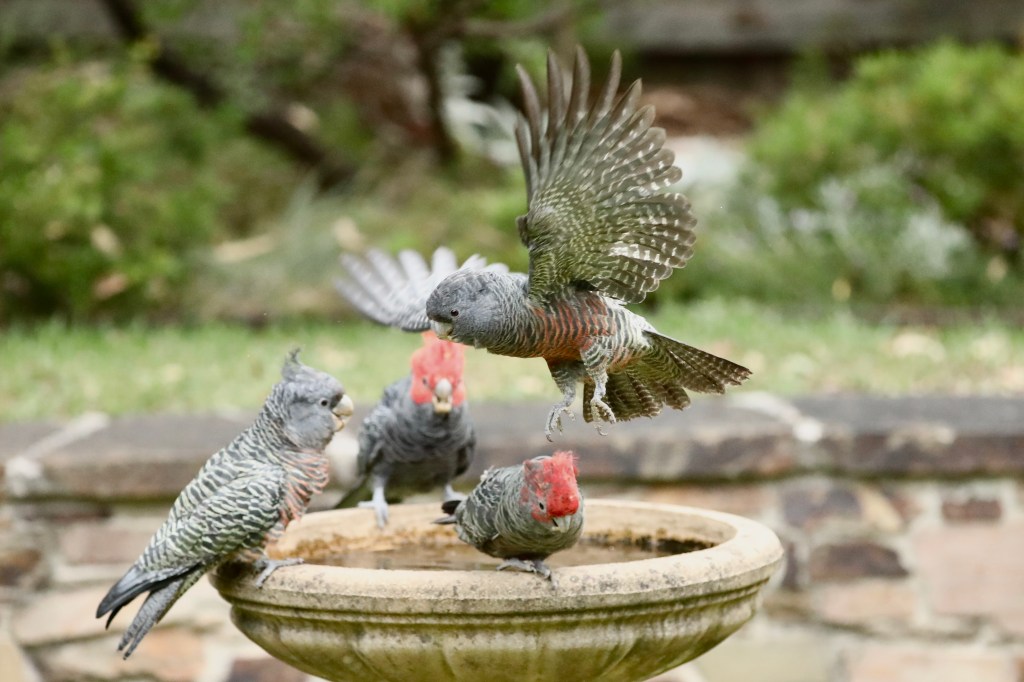
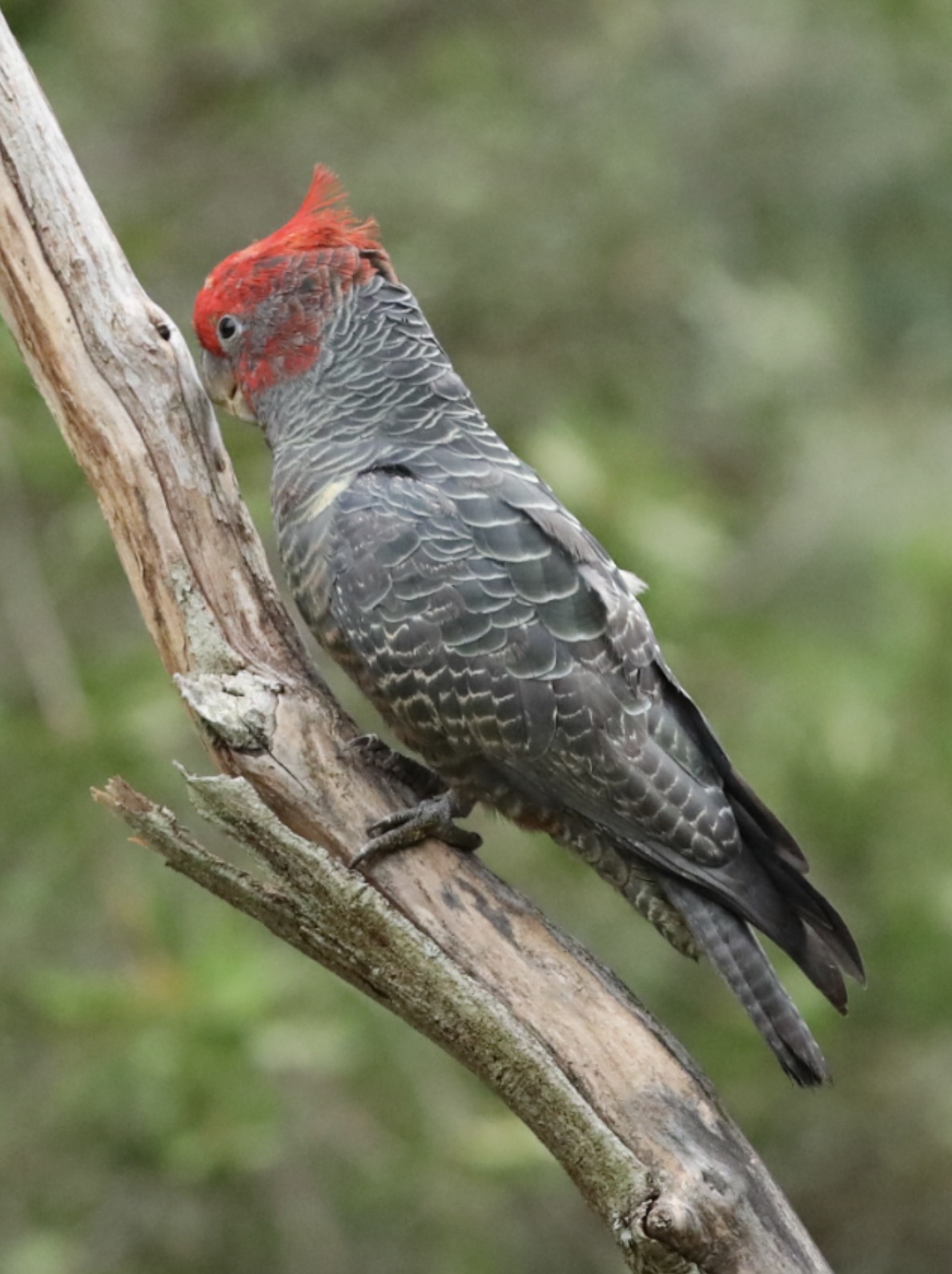
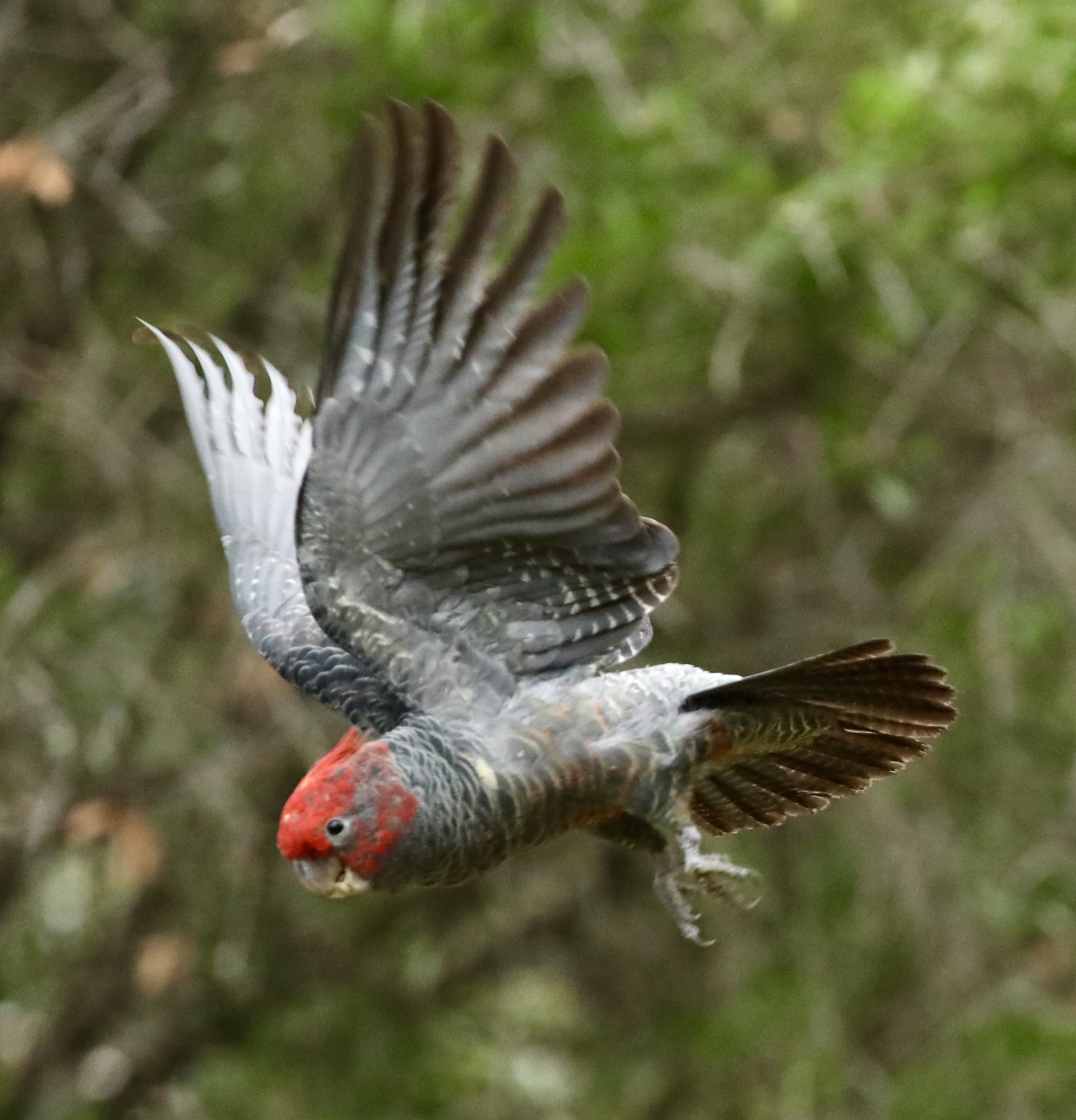
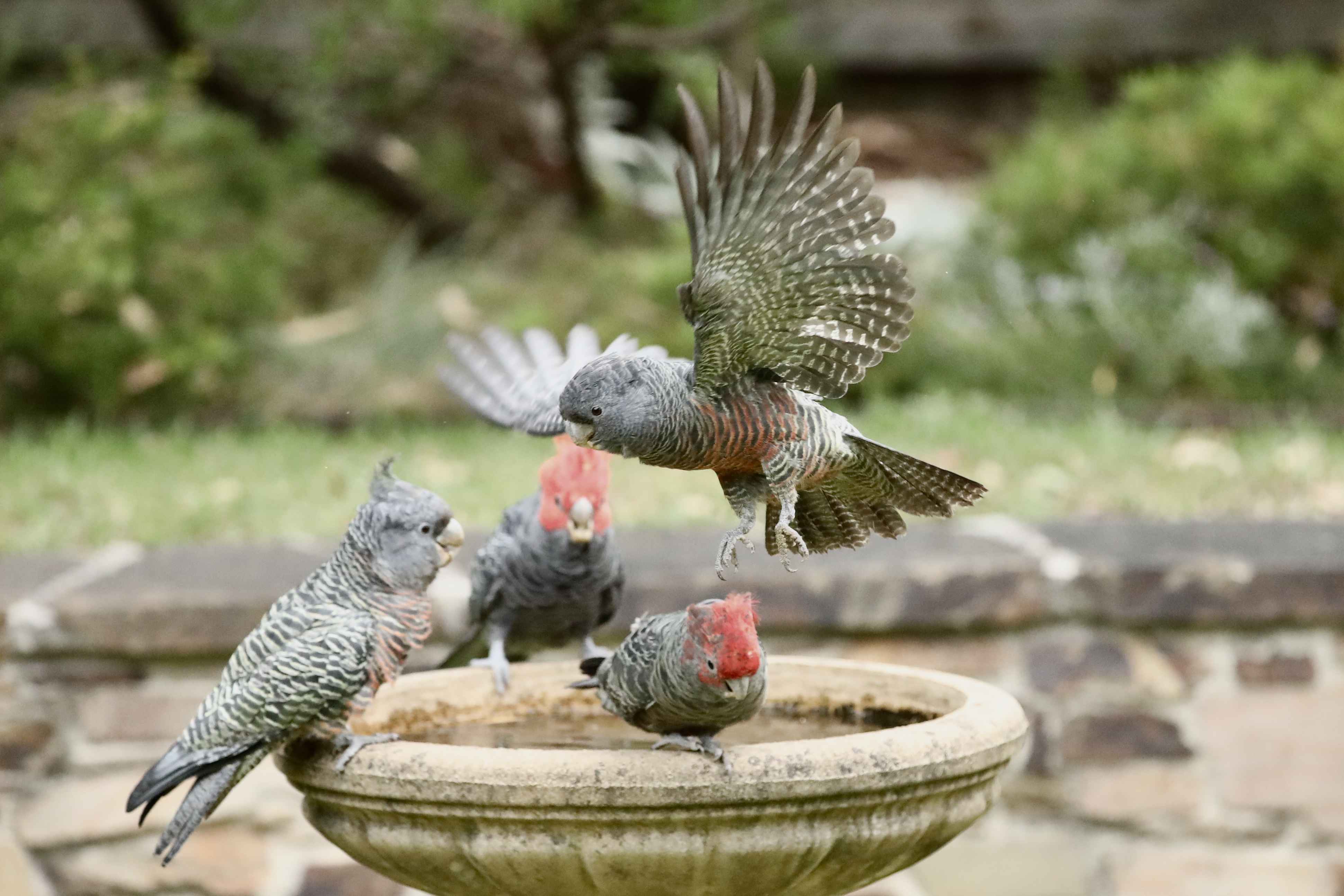
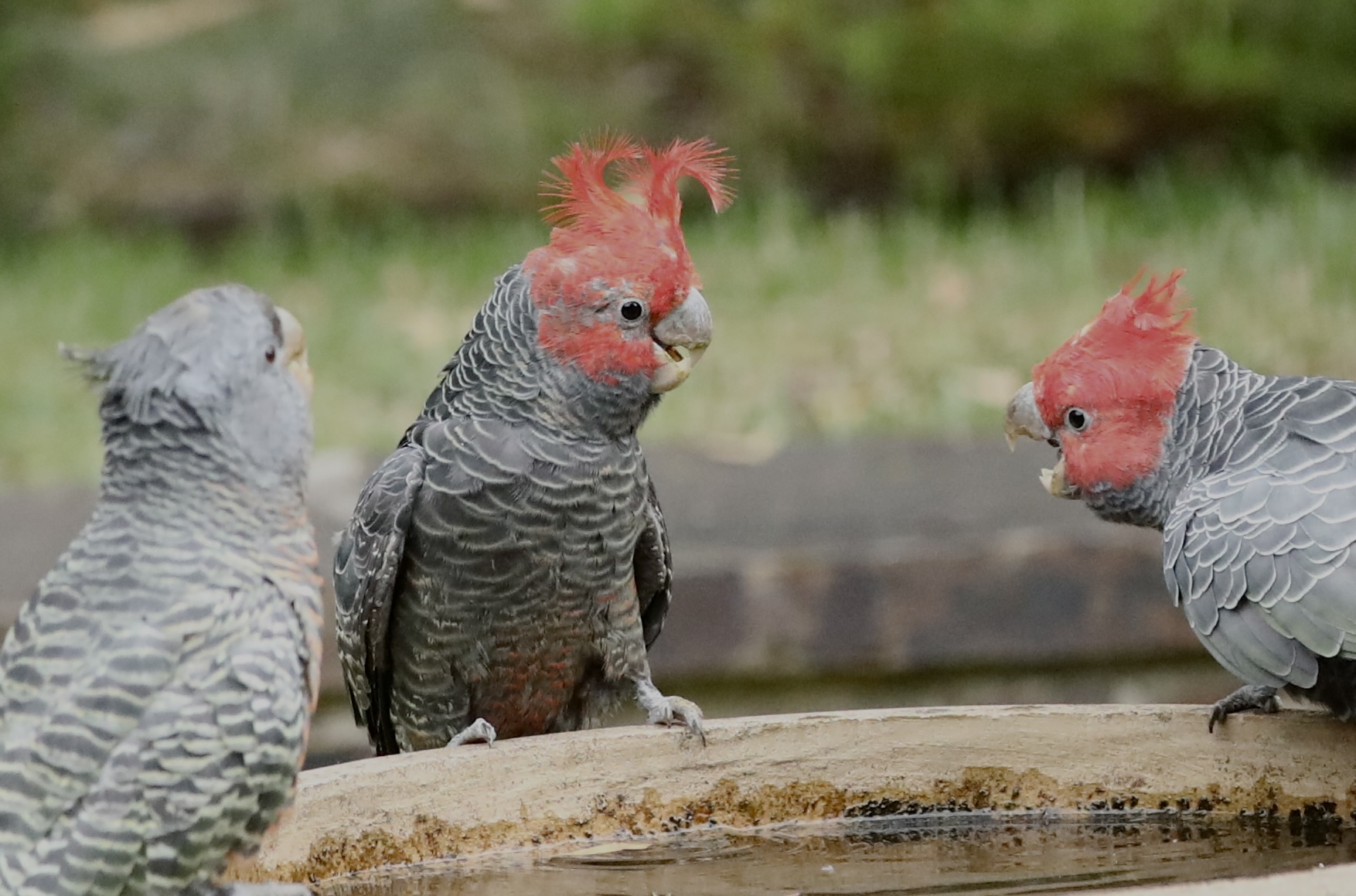
A family of Gang-gang Cockatoo was observed foraging in trees beside Gardiners Creek, feeding on seeds from the gumnuts of Lemon-scented Gum. The female was seen expertly cutting open seed pods and holding them with her foot while eating the seeds. Gang-gang Cockatoos mainly feed on seeds, fruits, nuts and insects, and drink daily from creeks, wetlands and birdbaths. During the breeding season (October–January) they form small family groups and nest in hollows of mature trees. Pairs share incubation of two to three eggs and continue caring for young for several weeks after fledging.
Thanks for the interesting video and description Ruth 😉
For more information, please contact us on one of the options below:
- Email blackburncreeklands@gmail.com
- Website https://blackburncreeklands.org/
- Facebook https://www.facebook.com/BlackburnCreekies/
- Instagram https://www.instagram.com/blackburncreeklands/
Enjoy your Easter break, drive safely (if you can afford the petrol) or please make use of the FREE public transport in April and make time to go out and enjoy all three parks that make up the Blackburn Creeklands.
Your friends,
Blackburn Creeklands Advisory Committee
P.S. Thanks to John for contributing articles #2-4 above whilst still ‘agisting’ to the greener pastures of a 12+ months sabbatical. Keep up the great work John!
 Blackburn Creeklands