Our Compliments of the Season!
We wish all our Friends and your families a safe and happy holiday period – and all the best for 2021!
2020 in Review
Not even those with 2020 vision could have possibly foreseen how unusual this year would be – thanks to the Covid-19 pandemic and its impacts. As everyone knows all too well, things were definitely “not normal” this year:
- We regret that all our regular community events had to be cancelled. This included all Sunday Community Working Bees as well as the Autumn and Spring Bird Surveys.
- Our Monday morning working bees were also severely impacted with restricted working bees being run in June between the lockdowns and finally only recommencing in November – albeit still in a restricted way. Sadly, the weeds do not obey social distancing – so there’s quite a backlog to take care of !
- Our Committee meetings continued throughout the year – remotely on Zoom. Like many people, we became quite used to teleconferencing and, on the positive side, Zoom did enable an old friend and former colleague now resident elsewhere to regularly participate as a “visitor”.
Nevertheless, one of the most satisfying things about the year for those working to support the park is the realization of just how important the park was for the community during the lockdowns:
- Our park became increasingly popular as people of all ages regularly took exercise and briefly escaped their “four walls”.
- There is a growing awareness that spending time in nature has significant benefits for both physical and mental wellbeing. Steadily increasing population density through redevelopment of housing to apartments and units also underscores the importance of publicly available recreation spaces.
- Due to the unprecedented level of usage, the park still shows some wear and tear – amplified by social-distancing rules.
Positive Developments in the Park
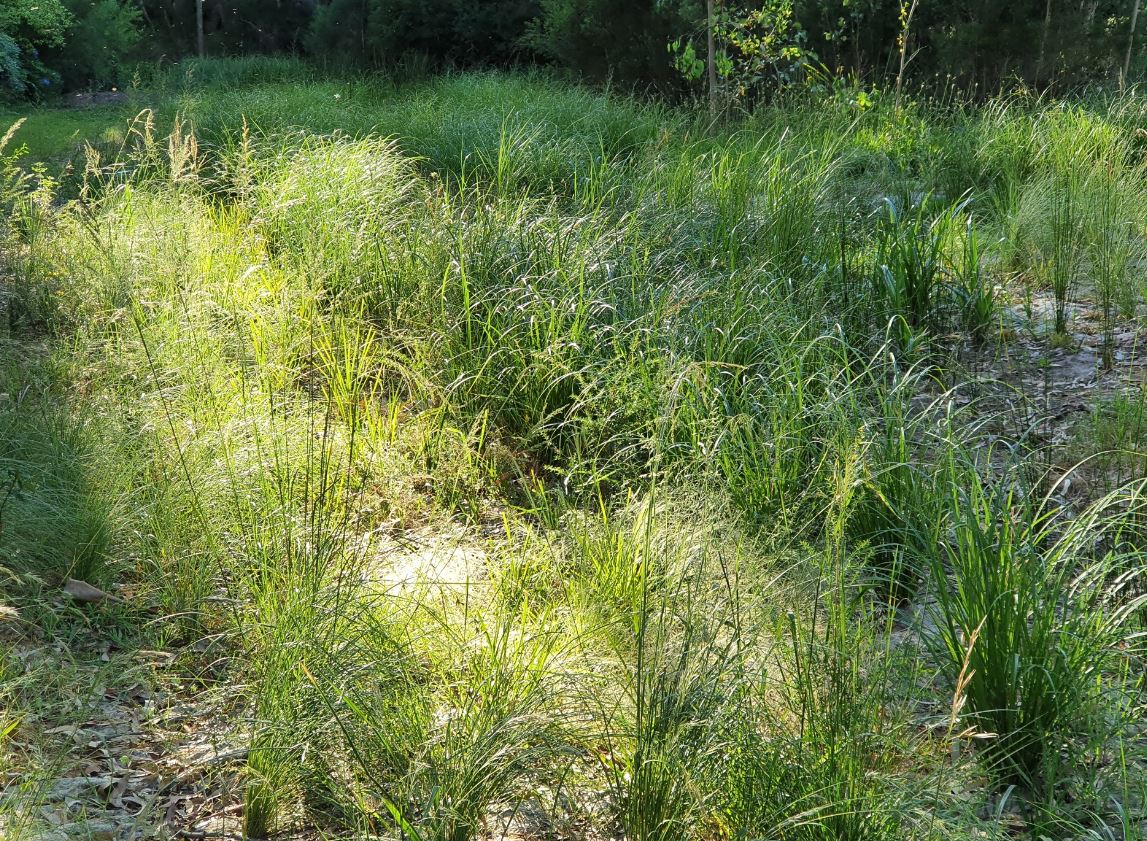
The new wetland (courtesy of the shared Council/Melbourne Water Laurel Grove North Drainage Treatment Project) is doing really well. We have been impressed by the contractor’s management of the young plants. It is also presumably partially thanks to this year’s La Niña event bringing more rain that the new plantings have done so well.
There are still wrinkles with the sediment trap design – no doubt a work-around can be developed to prevent further flooding in the neighbours’ properties.
Other important developments in the park this year have been:
- Council’s renovation and extension of the Scout Hall.
- The Furness Park playground equipment has been updated.
- The car park adjacent the Bowls Club has been renovated
- Council’s park contractor has been doing a great job of regeneration in an area in the middle of Blacks Walk south of the creek near Laburnum Primary School. This area was formerly covered with weed species (mostly dead and dying non-indigenous wattles and their saplings) which were removed by Council.
- One of our Committee members, Anthea Swann, was awarded a Whitehorse Community Achievement Award on Australia Day after a very impressive 33 years of service. Among many other contributions, Anthea has managed our Notice Board for many years.
Calendar for 2021
Meetings
Pandemic or not, our Committee meetings will continue face-to-face or via Zoom on the fourth Tuesday of the month. This includes the Australia Day holiday.
Visitors are most welcome – just let us know you will be coming and we will provide the details you need.
| Date | Special Event |
|---|---|
| 26th January | Australia Day |
| 23rd February | |
| 23rd March | |
| 27th April | |
| 25th May | |
| 22nd June | |
| 27th July | Preceded by the Annual General Meeting |
| 24th August | |
| 28th September | |
| 26th October | |
| 23rd November |
Community Working Bees
Our ability to run community events will depend on Covid-19 being kept under control. However, we feel optimistic enough to plan dates for our events – Community Working bees will be undertaken on the first Sunday of the month, May – October as follows:
| Date | Special Event |
|---|---|
| 2nd May | First working bee for more than 18 months (yay!). |
| 6th June | Do your bit for the environment! 6th June follows World Environment Day on 5th June. |
| 4th July | Do something to celebrate the history, culture and achievements of our first peoples and their connection to the land – 4th July kicks off NAIDOC Week. |
| 1st August | National Tree Day – come and plant a tree or two! |
| 5th September | Father’s Day – (hopefully) bring your father/grandfather and teach and learn! |
| 3rd October | Daylight saving starts – so some of us may not turn up on time! |
These are likely to run in a modified form to comply with whatever “Covid-normal” restrictions apply at the time.
Maintenance Team Working Bees
Our Maintenance Team Working Bees will occur every Monday morning 08:30-11:00 from 4th January onwards. These are attended by some Committee members and a few dedicated weeders/planters – typically we’d get about 6-7 people attending. Right now, we work to a Covid-safe plan – please let us know if you’d like to participate and we’ll forward the necessary details and add you to our e-mail list.
Bird Surveys
Dates for our Autumn and Spring Bird surveys have not been set yet – but, again, these are likely to run in a modified way depending on the “Covid-normal” rules.
Maintenance Team Report
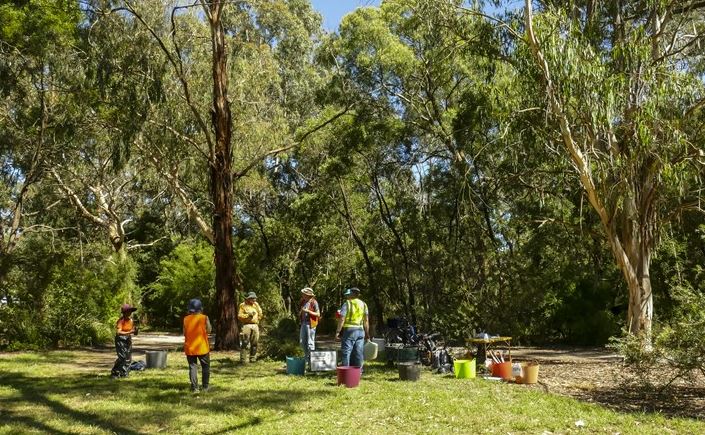
The Maintenance Team has been busy again tackling high-priority sites under its Covid-safe plan. Unfortunately, all our work sites had to be let go during the long lockdown. Many of the weeds have already dropped seed – so there’s guaranteed to be a lot of work next year !
At last working bee, Megan Short, Chair of the Blackburn Creeklands Advisory Committee, thanked the group for working as much as they could during the lockdowns, picking up where they left off as much as possible – and welcomed some new faces.
Given the damp La Niña conditions, the group has planted 100 groundcover plants strategically around bare patches in the park that were “over loved” during the lockdowns.
Invertebrates in Kalang Park (Part Two)
In this edition, we provide the second instalment of Wendy’s photos of some of the interesting invertebrates you may find in our park. The first instalment was presented in last month’s newsletter.
Long Jawed Spiders – Tetragnathidae
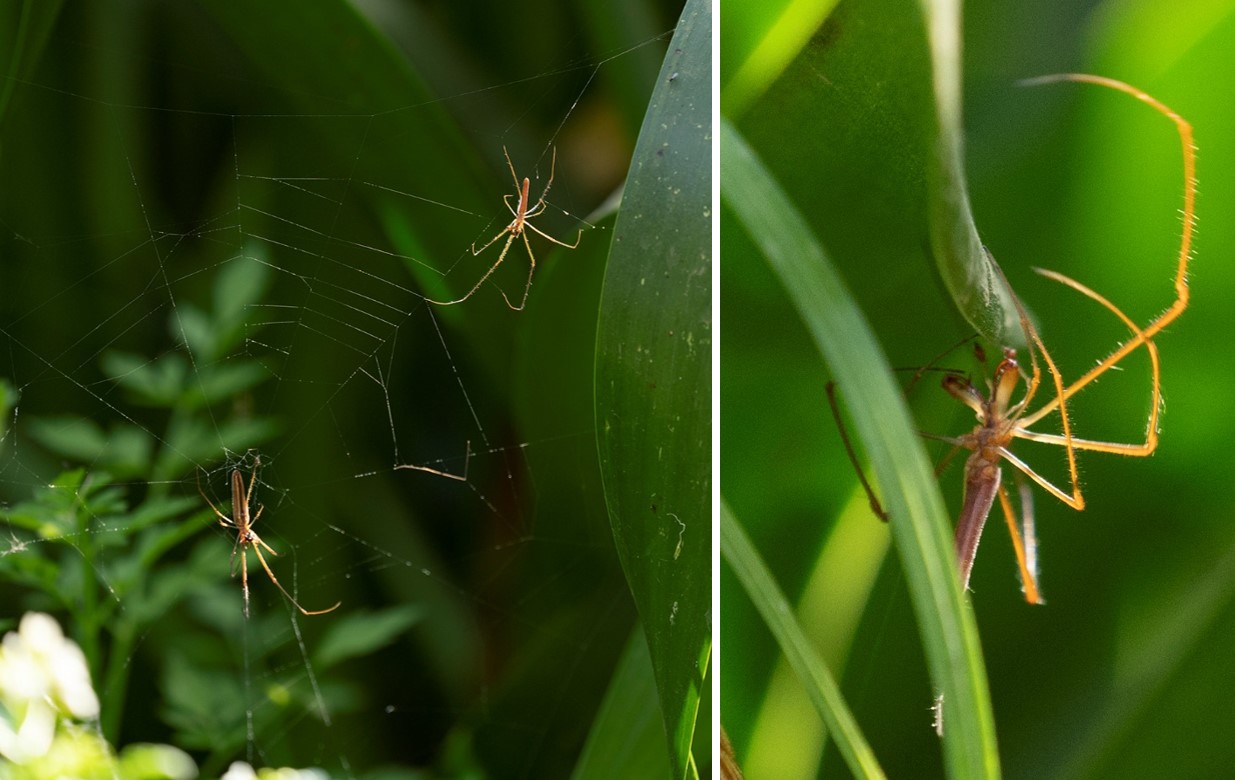
You can see these small long spiders around creeks & swamps – usually sitting in horizontal orb webs trying to catch small flying insects. They are particularly visible early on damp mornings when the sun highlights their webs. The male has an enlarged jaw for clasping the female during mating (probably also used to avoid being eaten by her!)
Flatworms
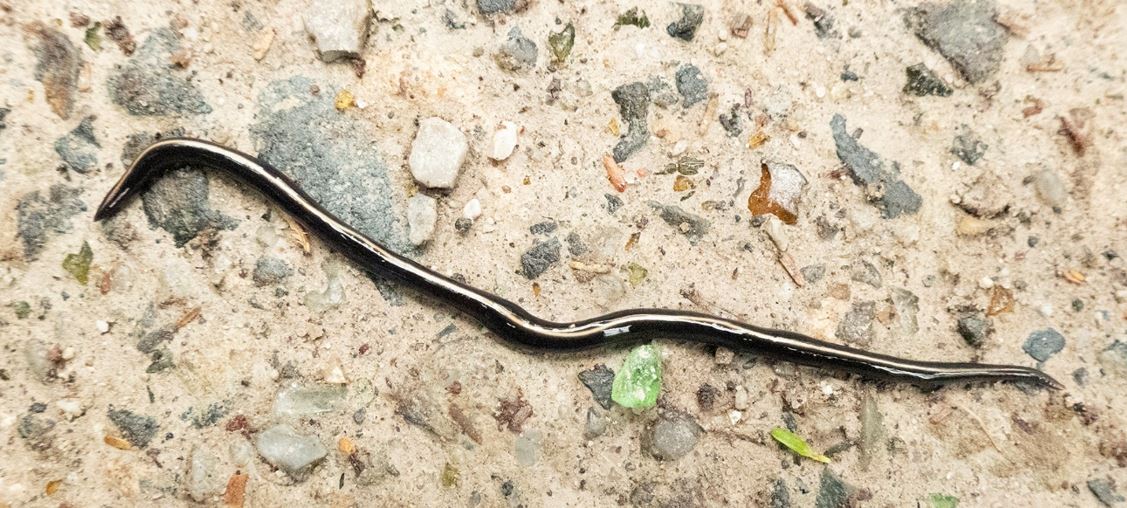
Flatworms usually hide under logs of wood , leaf litter and pot plants – anywhere damp. However on mornings after rain, when it is still wet, you can see them crossing paths, looking to find a home to get out of the sun.
They can stretch to about 5cm or contract to about 4cm. They are round on top and flat underneath. They eat tiny creatures found in the leaf litter. The head is on the right, is pointed and slightly reddish in colour. They have some rudimentary eyes on the head. Other species of flatworms are orange, green, black and blue, yellow and other colours as well! The bright yellow variety is quite commonly found in the park under logs and so forth.
Large Slater
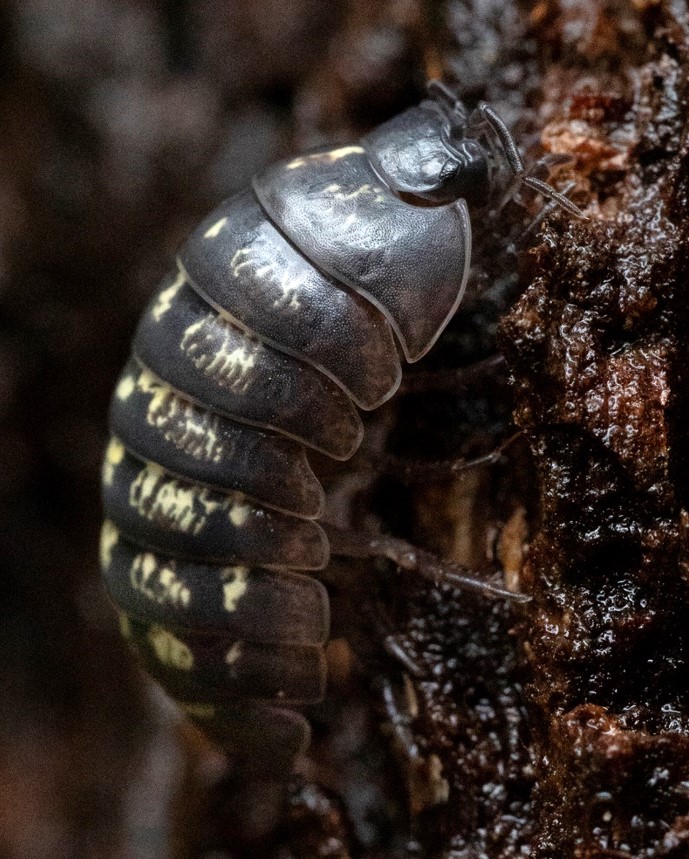
This is an imported large slater (Armadillidium vulgare) that can roll up into a ball for protection. It was seen on the bark of a tree on the wet morning after rain.
Leaf Hoppers Juvenile & Adult
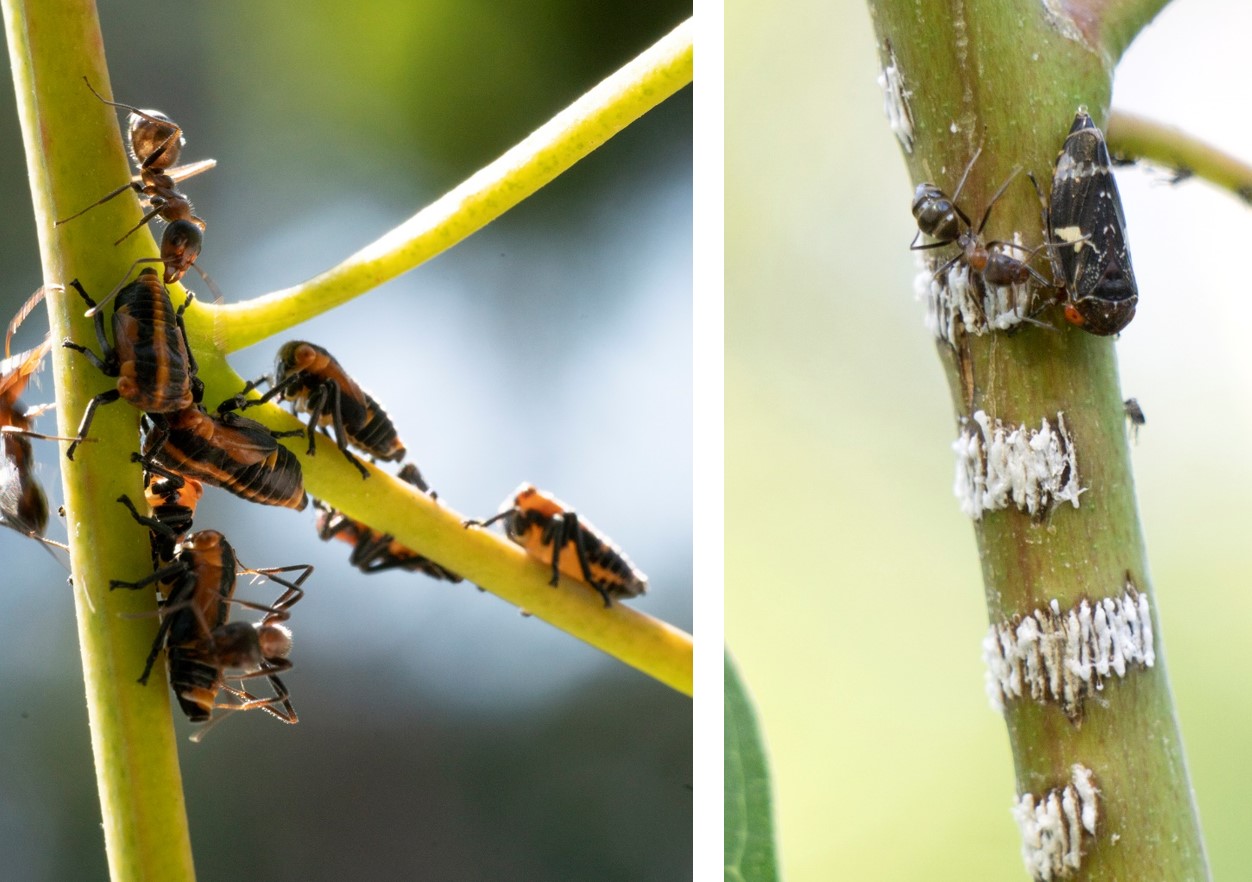
Leaf Hoppers – both juvenile and adult – excrete sugar as a by-product of sucking sap. Like the symbiotic relationship we saw between the Imperial Blue Butterflies and Tyrant Ants in last edition, ants tend the hoppers and feed on the sugar. The amount of sugar in sap is much higher than the amount of amino acids they need for food, so they excrete the excess.
The left-hand pane of Wendy’s photo shows Leaf Hopper Juveniles while the right-hand pane shows an adult and eggs (white vertical stripes).
Wendy’s Look at a Tree
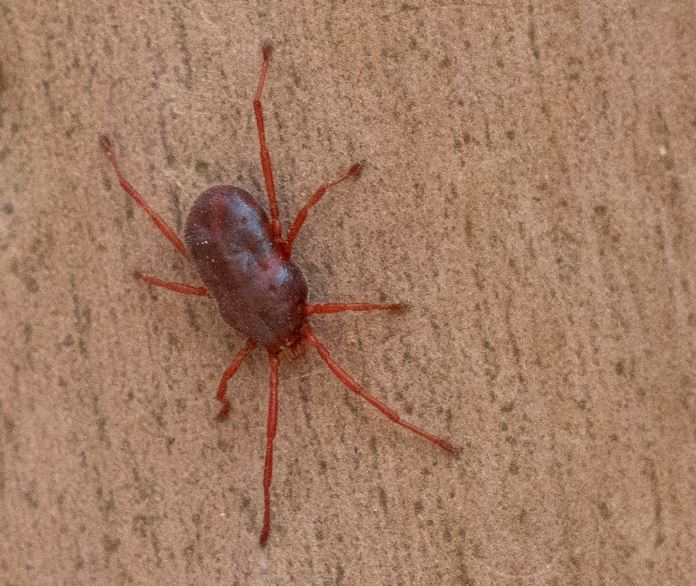
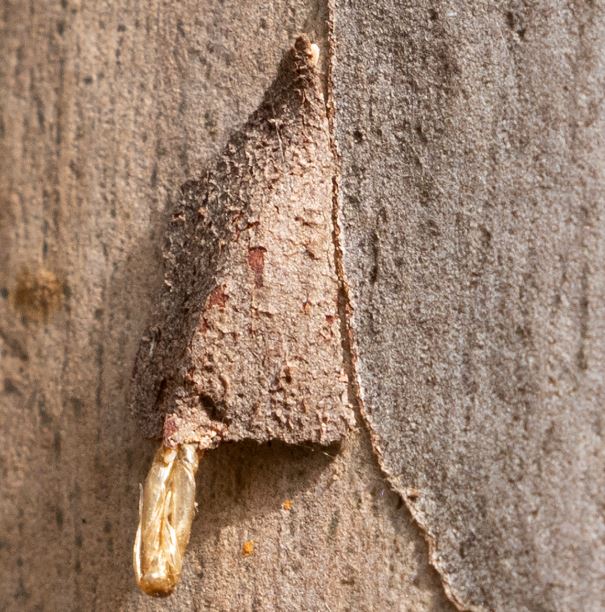
Wendy also studied and photographed what she could find on “a smooth barked gum tree”:
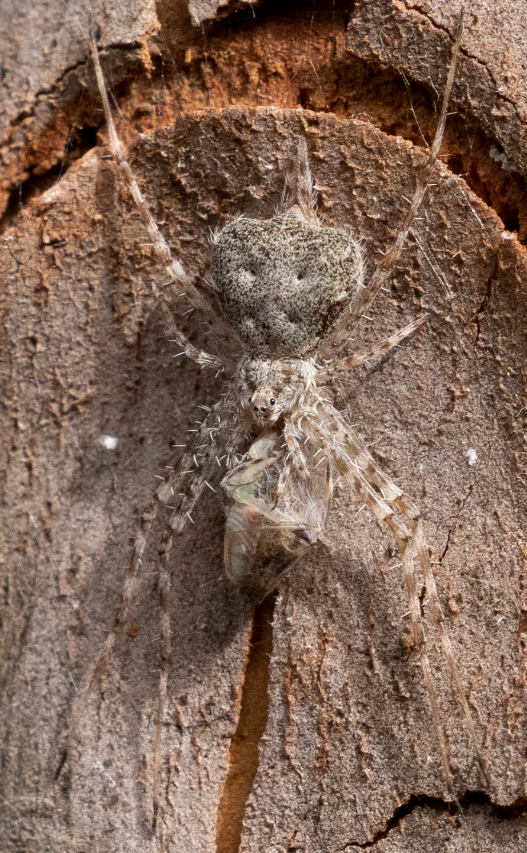
Here is what its head looks like close-up:
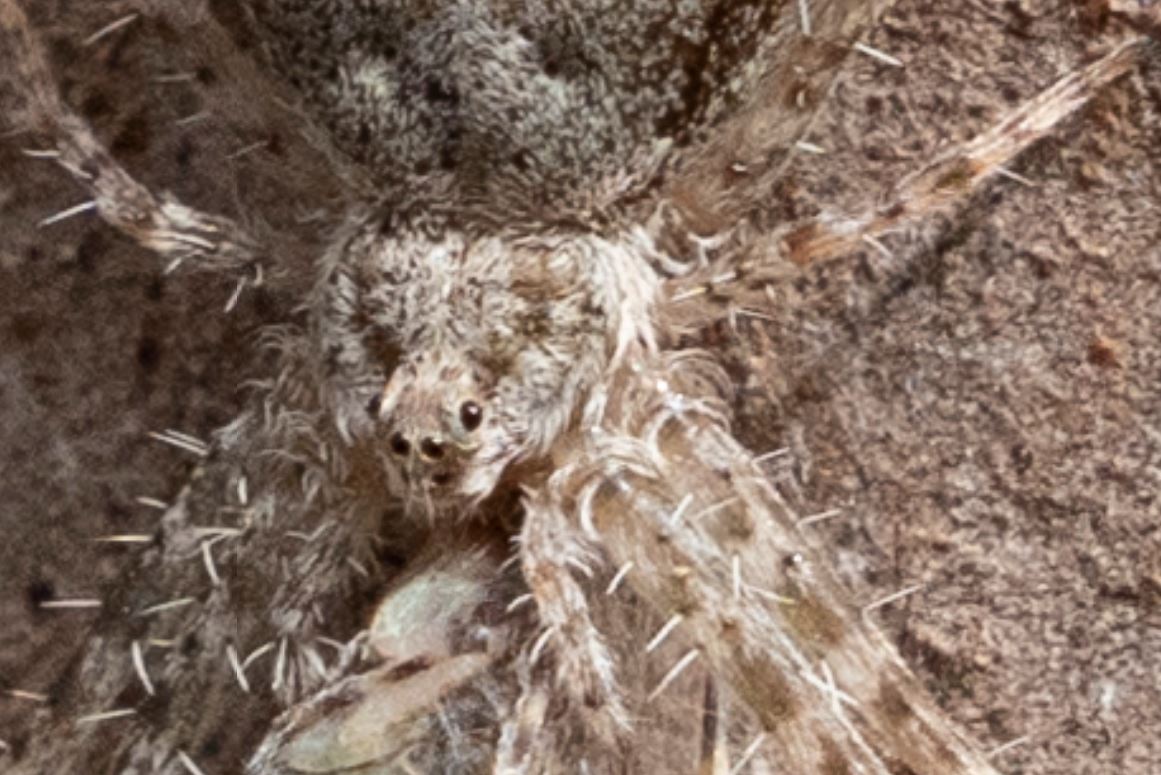
Q: This is a “Two Tailed Spider” – Do spiders really have tails ?
A: No… the two “tails” are actually elongated spinnerets. A spinneret is the silk-spinning organ of a spider. While most spiders have six spinnerets, some have two, four, or eight. They can move independently and in concert to weave webs or wrap up prey.
Vale Ian Cameron
We were very saddened to learn of Ian Cameron’s recent death. Ian was a friendly neighbour of the park for decades. He was also an excellent craftsman who had both a career and hobbies working in wood. As an example of his work many would know, he carved the “billabong” log sign in Kalang Park:
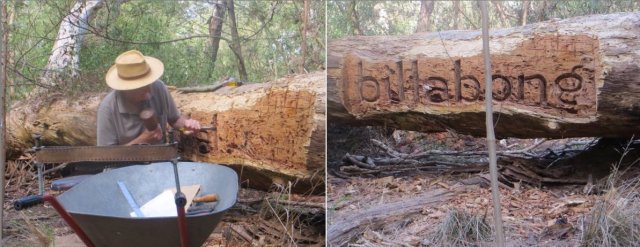
The photos above show Ian wood-carving the log and the finished product in April, 2016. Ian had received special permission to carve lettering into a fallen log near the billabong. I don’t think anyone expected the beautiful carved typography that resulted!
Ian was a longtime friend of the park – regular park users will know him as one of the cheery stalwarts who regularly collected rubbish on his morning walks with tongs in hand until his illness took hold.
Our sincere condolences to his family and friends.
Sightings
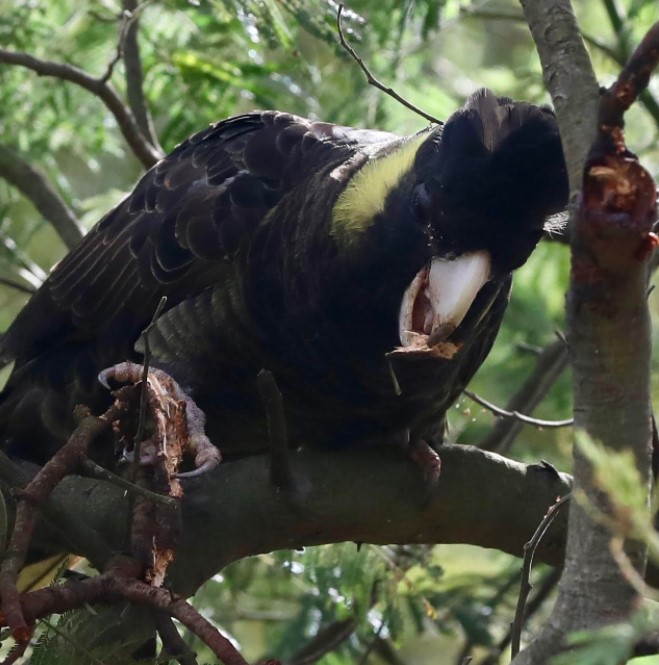
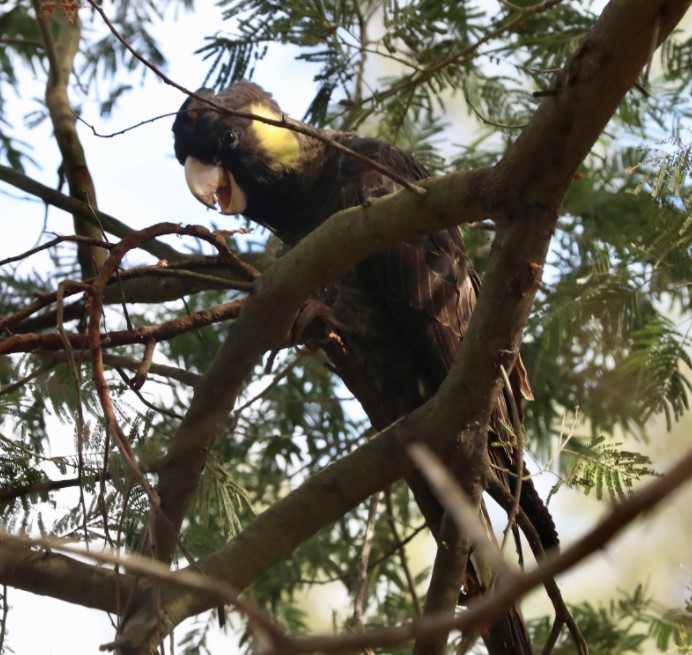
One of our favourite visitors, the Yellow-tailed Black-cockatoo, has been sighted again the park over the lest few weeks. Hugh sent us these photos showing one tucking into grubs they find under tree bark.
Camouflage Trees
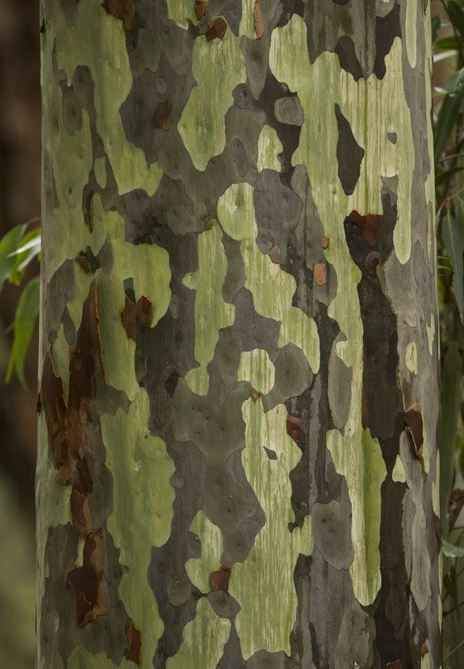
Ruth’s interesting photo above shows the trunk of a Spotted Gum in Blacks Walk taken on a recent rainy day. These trees tend to drop shards of dry bark in response to hot weather – so they effectively “mulch” the ground below them to help prevent moisture loss. However, a good wet day then contrasts the colours of the newly bare patches with the older areas. The overall effect looks like some sort of military camouflage pattern don’t you think?
Rakali
Friend Max has let us know that he saw a Rakali (Hydromys chrysogaster), also commonly known as a water-rat in the creek a couple of weeks ago. According to Max, the CSIRO Atlas of Living Australia reports five sightings of rakali in the Burwood/Box Hill/Blackburn area of Gardiners Creek in the last few years.
It is a largish (23-39cm) indigenous rodent which lives in burrows on the banks of creeks, rivers, lakes and irrigation channels. It feeds on aquatic insects, fish, yabbies, snails, frogs, plant material, birds’ eggs etc. Its tail usually has a white tip and its back feet are partially webbed for swimming. Please keep your eyes peeled – our last photo was published in our November, 2015 news.
Platypus?
A couple of skilled bird observers have reported what they thought to be a platypus in the creek just west of the Laurel Grove bridge. This would be great news if confirmed! On the other hand, could the object of their observation possibly be the Rakali mentioned above ?
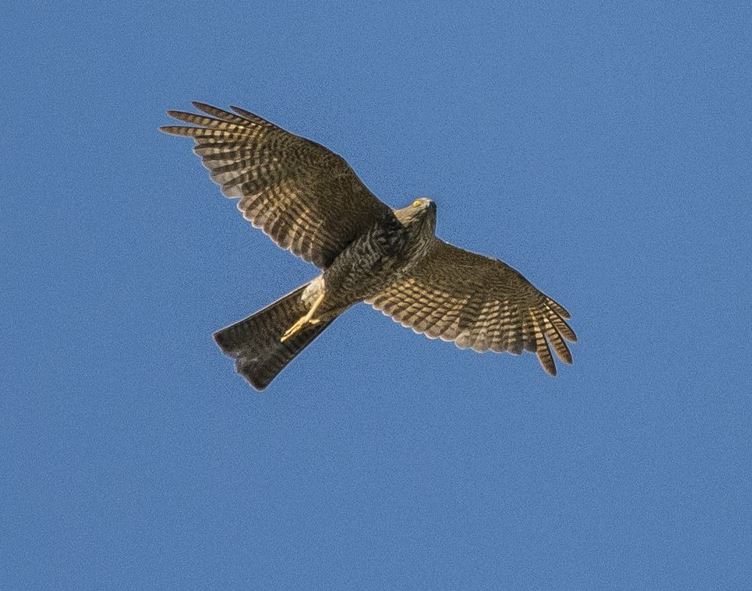
Juvenile Female SparrowHawk
Ruth captured these photographs of a SparrowHawk causing quite a stir as she flew over the park:
Others
Other interesting sightings have been:
- A full grown fox was noticed prowling in the Waratah Wetlands recently (14/12).
- A Nankeen Night Heron hunting in the new wetland and later flying overhead with a Pied Currawong in hot pursuit (21/12). This heron is a larger bird with beautiful colours which occasionally visits the Creeklands.
- Lots of butterflies: Common Brown, Grass Blue (not on our list!), Cabbage White, Caper White, Imperial Blue and nearby, in the corridor, Yellow (or Australian) Admiral & Painted Ladies.
In the Corridor
Further congratulations to Andrew Munroe
Last month, we congratulated Cr Andrew Munroe on becoming the councillor for Cootamundra Ward which contains our park. Further congratulations are now in order – Andrew has been elected by fellow Councillors as Mayor of the City of Whitehorse for a twelve-month term.
Gone Fishin’
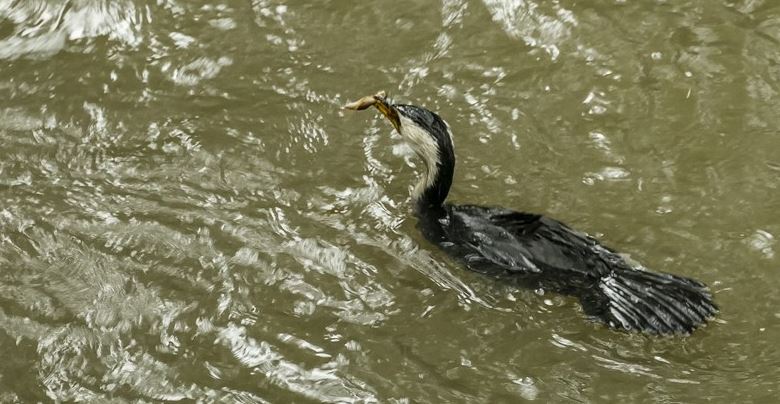
We trust everyone enjoys the holiday period doing some of your favourite things – see you in 2021 !
 Blackburn Creeklands
Pingback: Park News, February 2025 | Blackburn Creeklands