Community Working Bees
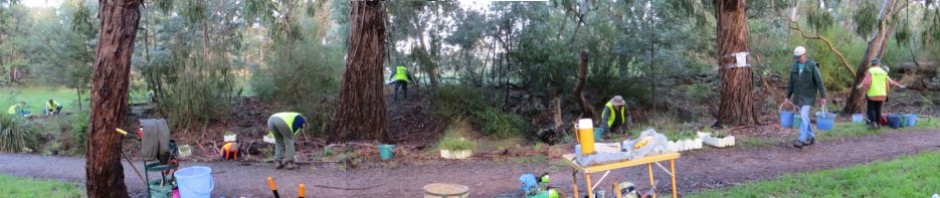
At our first Community Working Bee for 18 months on Sunday, 2nd May, twenty adults and three kids enjoyed a great day’s planting along with some sorely needed weeding . Work was in the Billabong area in Kalang Park and, importantly, counts toward our responsibilities for our Melbourne Water grant.
Covid-19 has locked us down again – so we’re postponing the event for the time being. We’ll let everyone know once we can run the event under the (then) relevant Covid rules.
Our regular Monday morning working bees are also in abeyance at present.
Maintenance Team Report
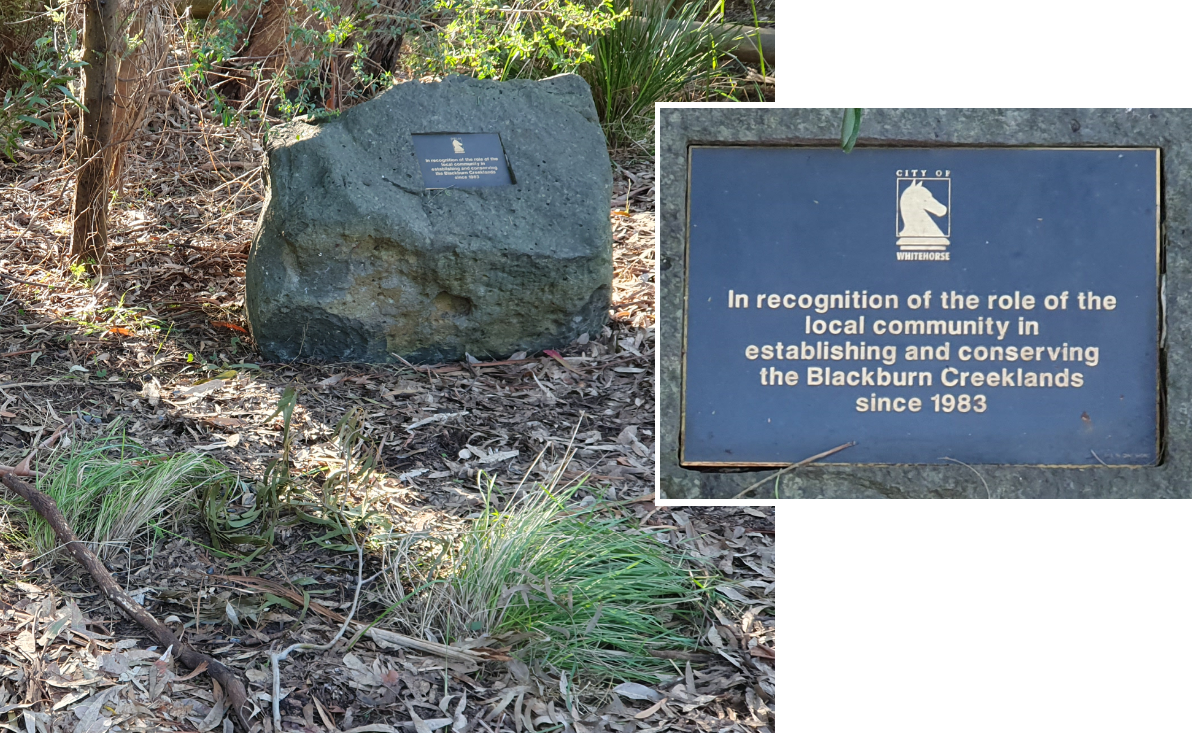
It was National Volunteer Week from 17-23rd May. All our volunteers, past and present should take a bow ! Our Monday morning team celebrated by weeding around the rock and plaque honouring our volunteers in Kalang Park – a little to the east from our Noticeboard.
The team has been going well recently – slowly growing in numbers to the point we’ve had 10 or 11 members contributing in recent weeks. We welcomed Tilly to the team in May. This level of person-power has enabled us to tackle serious weed infestations generating huge piles of weeds in the process as well as some infill planting here and there.
All are welcome to join the team – old/young, retired/students, experienced/learners and all in between. We work to a CovidSafe plan (when not in lockdown!) and any contribution between 08:30 and 12:00 is welcome on Monday mornings. Please see Working Bees | The Blackburn Creeklands (wordpress.com) for further information.
Masters of Camouflage
Most of our readers would be familiar with photos like this of our iconic Tawny Frogmouths:
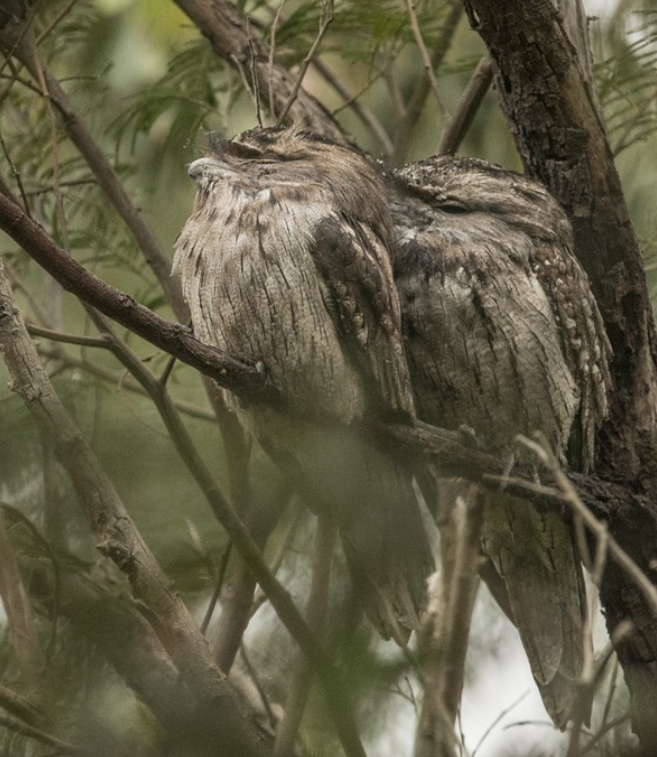
Here the birds are relaxed, sleepy (they are nocturnal) and have their feathers plumped for warmth facing the sun in the late Autumn weather.
They can be difficult to spot in trees at the best of times given their natural colouring. However, when they feel threatened, they go into “alarm” mode and try very hard to camouflage themselves as dead branches .
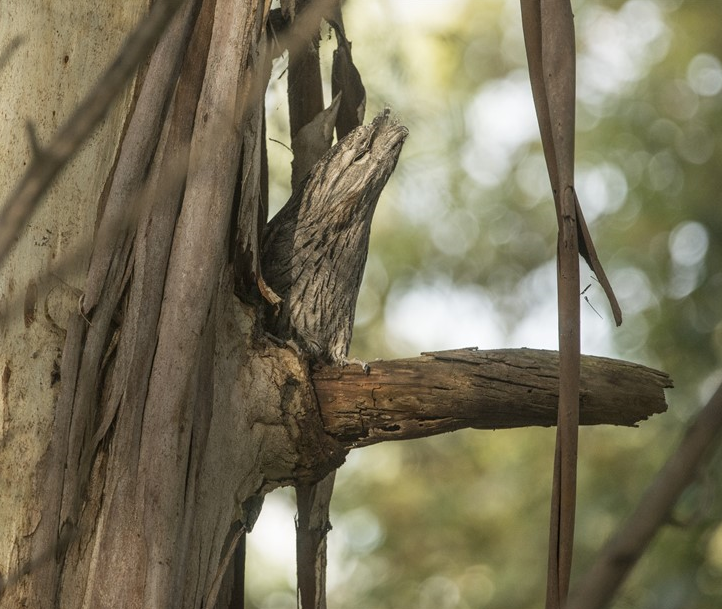
They stretch their head and bodies upwards to give a convincing impression of a broken off stump of a branch. The angle chosen for this stance cleverly fits the structure of the tree. If a pair of birds feel threatened, they align themselves in mirror images of themselves so as to look like a fork in a tree!
The feathers are flattened and the eyes are narrowed to form an inconspicuous narrow slit like a small knot hole – no doubt, they are still able to keep a good look-out for trouble – having low-light, nocturnal vision. They stay as still as possible until the perceived threat has gone away.
Gisela Kaplan, in her excellent book Tawny Frogmouth, tells us they are physically well adapted to this strategy. They have a semi-zygodactyl second toe – so mobile, they can align themselves along a branch as shown in our photo rather than at right angles to the branch which normal perching would result in.
If you see this behaviour, something (possibly you!), has alarmed the bird and it is no doubt very stressed. The best thing to do is to back off quickly and don’t stare or point at the bird. We like our tawnies relaxed – feeling safe and comfortable in our park!
Council Works
Whitehorse Council has several projects in the park and surrounds on the go at various stages. These are listed below.
Main Street Bridge (construction starting soon)
We’ve met with Council and the contractor to discuss the timing and park impacts of the Main Street Bridge replacement project. The news is that the bridge work is to start in July with Main Street closed to vehicles and pedestrians until December. Vehicles, including buses, will be detoured along Heath Street, Blackburn Road and The Avenue. Pedestrians walking along Main Street will need to detour via Furness bridge. The closures will not affect any driveways into Main Street.
The existing bus stops in Main Street between Heath Street and The Avenue will be closed. There will be temporary “no stopping” signs along the northern side of Heath Street (ie along the park boundary).
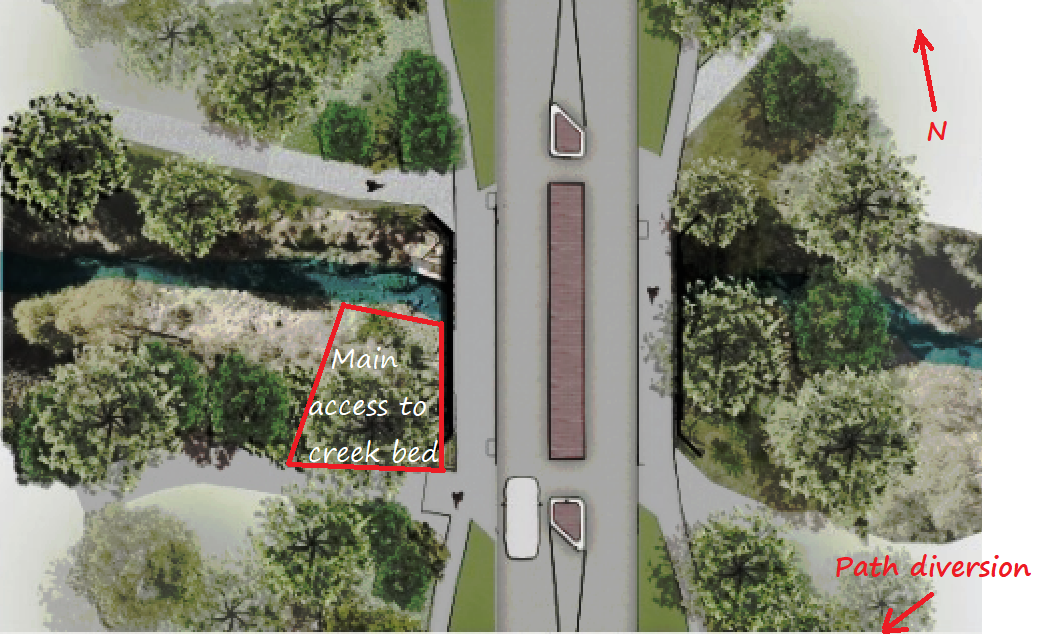
The main construction access to the creek bed and bridge will be adjacent to the southwest corner of the bridge. Pedestrians walking along path tracks will need to walk south or north (further away from the bridge) along Main St before being able to cross. A temporary path will be constructed in one location in Furness Park on the south side to the east before the “no mow” area in Furness Park. We’ve been assured that only minor impacts to the park and vegetation around the remainder of the bridge will be necessary. All park paths will all be kept open with slight diversions.
Construction access to the creek bed and bridge will be adjacent to the southwest corner of the bridge. The track will need to be diverted further south around the access point and rejoin the existing track a little further to the east before the “no mow” area in Furness Park. We’ve been assured that only minor impacts to the park and vegetation around the remainder of the bridge will be necessary. All park paths will all be kept open with slight diversions.
Large cranes will be needed and there will be construction noise at times. Building will be working hours Monday to Friday only – so no night noise.
Questions on the project can be directed to Arthur Makris, Council’s Engineering Works Coordinator by telephone (9262 6333) or via e-mail to: customer.service@whitehorse.vic.gov.au
The Urban Forest (strategy released, now closed for comments)
Council’s Whitehorse Urban Forest survey concluded on 30th May. We must say we were very impressed by the quality of the strategy documents and the buy-in from the various divisions of Council. We wish the team every success in the next stages of the project leading up to Council’s official endorsement – which can only beneficially impact our parks and our quality of life in Whitehorse in the long run.
Blacks Walk Play Space (planning under way)
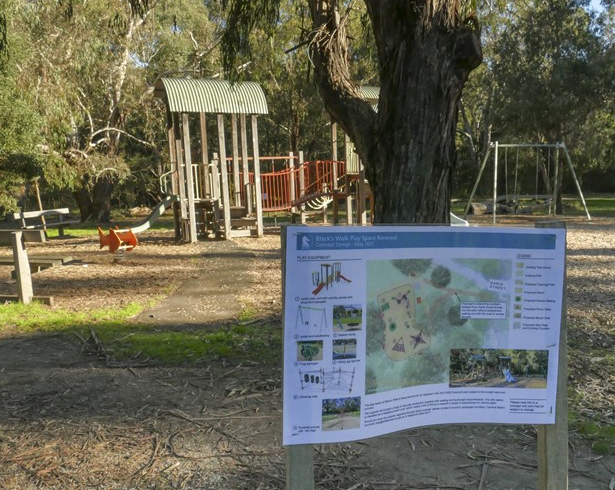
The play equipment at the Blacks Walk playground (at the end of Garie Street) is due to be replaced in the coming financial year. We don’t have major issues with the proposal given it is substantially as previously considered.
Positive aspects of the replacement equipment are: a better linkage with Garie Street, the amount of seating provided (in contrast with the reduction in Furness Park), some equipment for older kids, a bike rack and retention of the large stump.
Demolition of the Guide Hall (demolition very advanced)
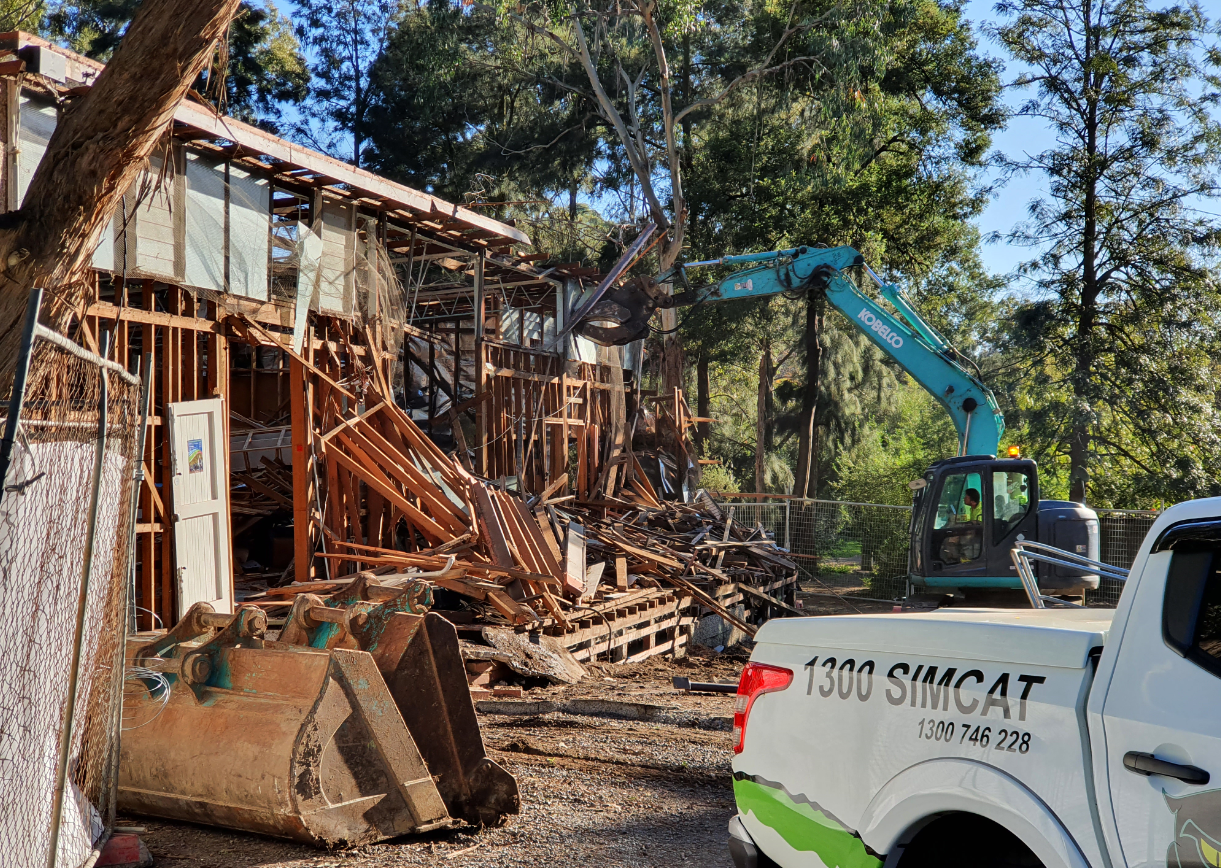
Demolition of the Guide Hall (adjacent to the playground above) commenced in the last week of May and is almost completed (3/6). There is no intention of replacing the building – the soon-to-be-vacated land will simply be returned to the park.
STOP PRESS: Tree Pruning in Car Park Adjacent the Scout Hall
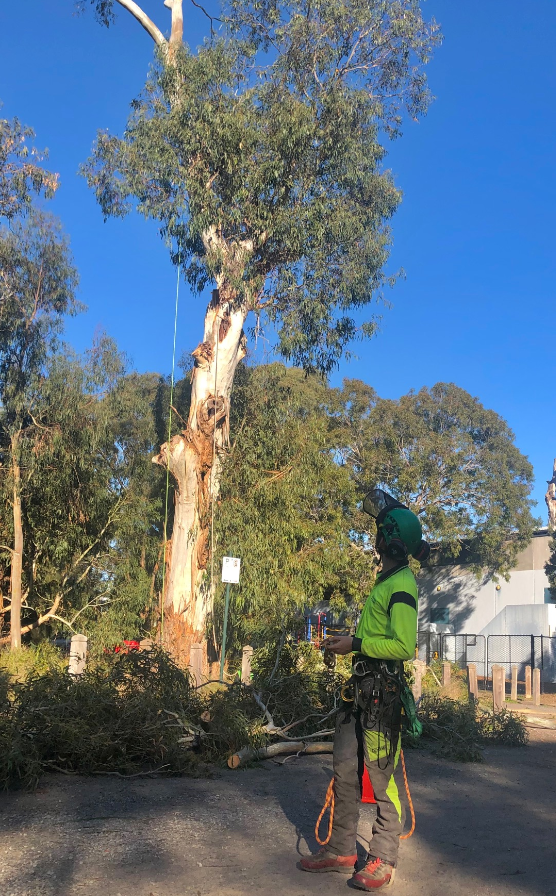
The mature large Manna Gum in the island within the car park adjacent the Scout Hall and Laburnum Primary School has been pruned back. Council’s inspections arborist recommended pruning works on the upper limbs to prolong the life of the tree and to reduce the risk of limb drop within the car park.
It is good news that the tree can be retained – it provides a lot of habitat having numerous hollows scattered throughout the trunk.
Not Spotted ?
We reported the great news that our Community bird surveys were back running again last month after none could be run last year. There was further good news in that we observed a Superb Fairy Wren for the first time in our surveys that go back to 2012. In fact, there had been no sightings of that beautiful bird in the Creeklands for many years before that.
However, the negative news was that the number of bird species observed was down twenty percent on the usual. Obviously, we can’t draw conclusions from a single morning survey. It was also a dull day making it hard to spot birds.
Nevertheless, we’ve used our database of survey results to look further into this concern – specifically, to see what birds we’d expect to see in Autumn but didn’t this year. The results were: Common Myna*, Red Wattlebird, Crested Pigeon, Spotted Pardalote and Blackbird*. Two of these are introduced species (those asterisked), so not a concern. In fact, the only observation of an introduced species that day was a Spotted Dove (even then only heard – not seen).
We asked two of our foremost local experts what they thought about the three missing indigenous species. They have both been involved in weekly surveys within the Creeklands until recently:
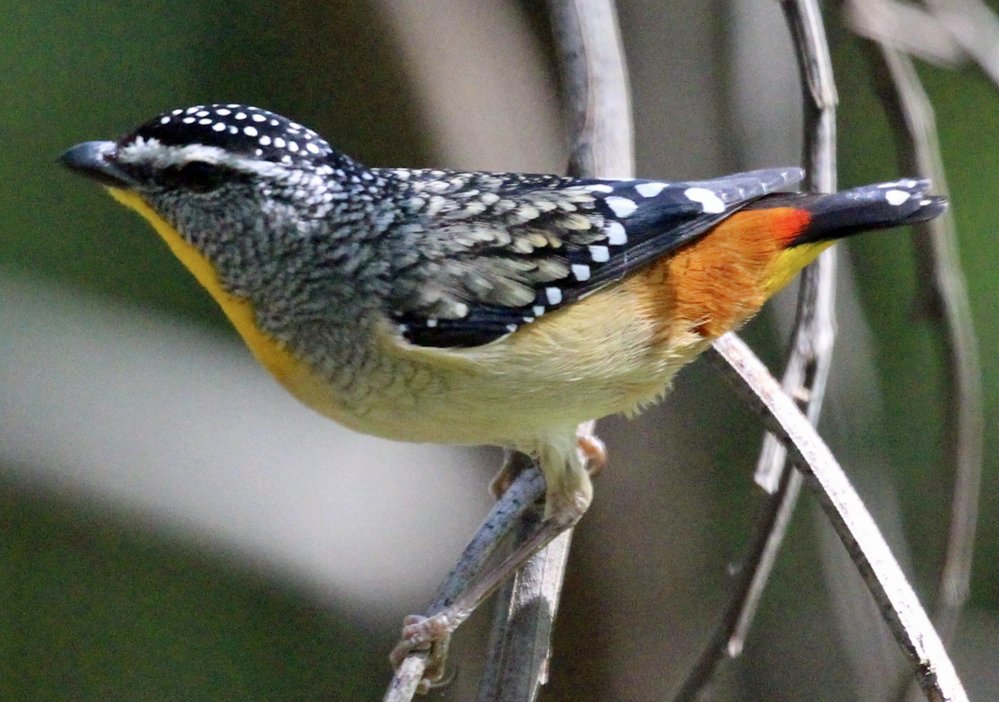
Spotted Pardalote (pictured above)
Both agreed we seem to have fewer this year in the Creeklands. They tend to be heard rather than seen given their penchant for feeding in the canopy of our tall trees. Despite their high altitude feeding habits, they nest by tunnelling into the likes of creekbanks. They may have had fewer nesting opportunities if creek levels have risen suddenly and flooded nest sites. They are also harassed by many other birds including Noisy Miners and Wattlebirds; their high canopy feeding could be disturbed by Lorikeets.
Red Wattlebird
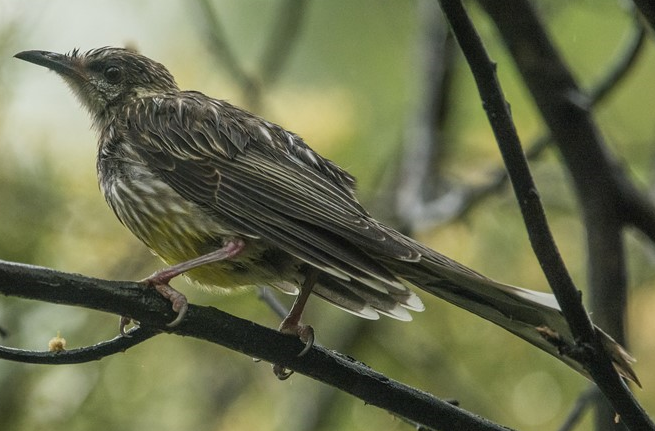
Red Wattlebirds in their turn are harassed by Noisy Miners and the larger Pied Currawongs. Dispersal of this species occurs in autumn from breeding areas (eg wattles in the Creeklands) to nearby gardens in winter – a not-uncommon pattern in suburban Melbourne. They like winter flowering Camellias, Banksias and ‘big’ Grevilleas.
By the way, the “wattle” in Wattlebird does not refer to the plant. Its red “Wattles” are flaps of skin on the side of the neck below the eye. This feature grows as birds mature – so is not obvious on our juvenile pictured. Turkeys have an extreme version of these!
Crested Pigeon
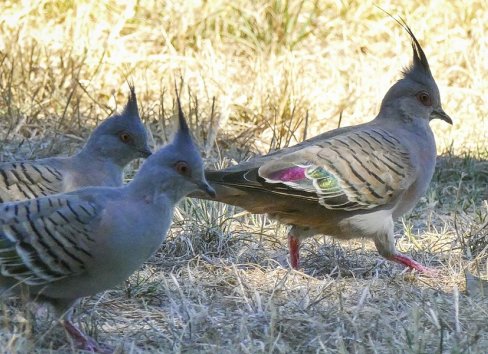
Crested Pigeons love to feed in very short grass/bare ground, eg in the centre square and goal mouths of sports ovals and mowed grass verges on roadsides.
So, the well vegetated Creeklands corridor is not their preferred territory – though they were regularly seen in both Blacks Walk, on the Laburnum Primary School’s oval (now astroturf), also the Kalang Oval and oak tree area nearby. Their numbers do seem to be down in Melbourne suburbs as compared to drier years. They are dry country birds in origin and may be moving away again from Melbourne after our wetter recent seasons.
Please keep your eyes peeled and let us know when and where you see any of the three species listed above – please e-mail: BlackburnCreeklands@gmail.com .
City Nature Challenge
The results for the 2021 City Nature Challenge are in! These show the extraordinary growth in participation in five years from the original San Francisco vs Los Angeles rivalry (which is a bit like Melbourne vs Sydney for us):
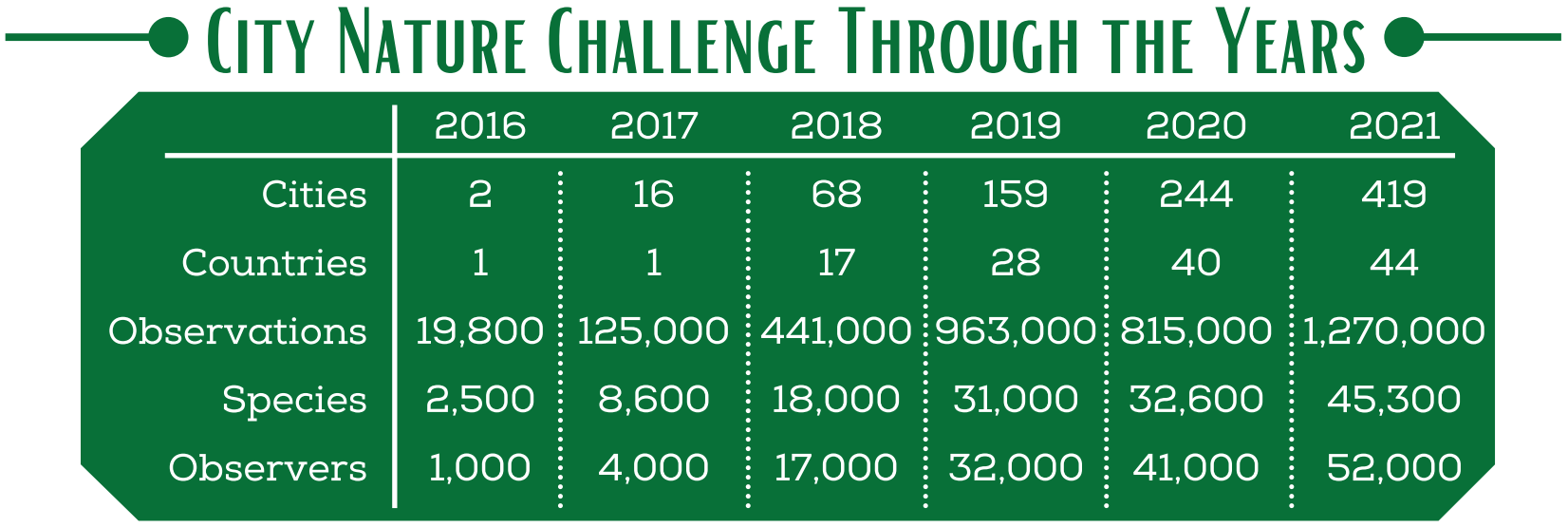
These are the stats drilling down to our local municipality level:
| Where ? | Observations | Species | Observers | Identifiers |
|---|---|---|---|---|
| Global | 1,270,767 | 45,300+ | 52,777 | 12,635+ |
| Melbourne – Eastern Metropolitan | 7,629 (41st overall) | 1,106 (55th) | 323 (41st) | 328 (47th) |
| Maroondah | 2,652 | 570 | 80 | 185 |
| Whitehorse | 1,723 | 491 | 85 | 180 |
Clearly, Maroondah and Whitehorse did our share of the lifting for eastern Melbourne.
iNaturalist and our “Gold Bum Ant”
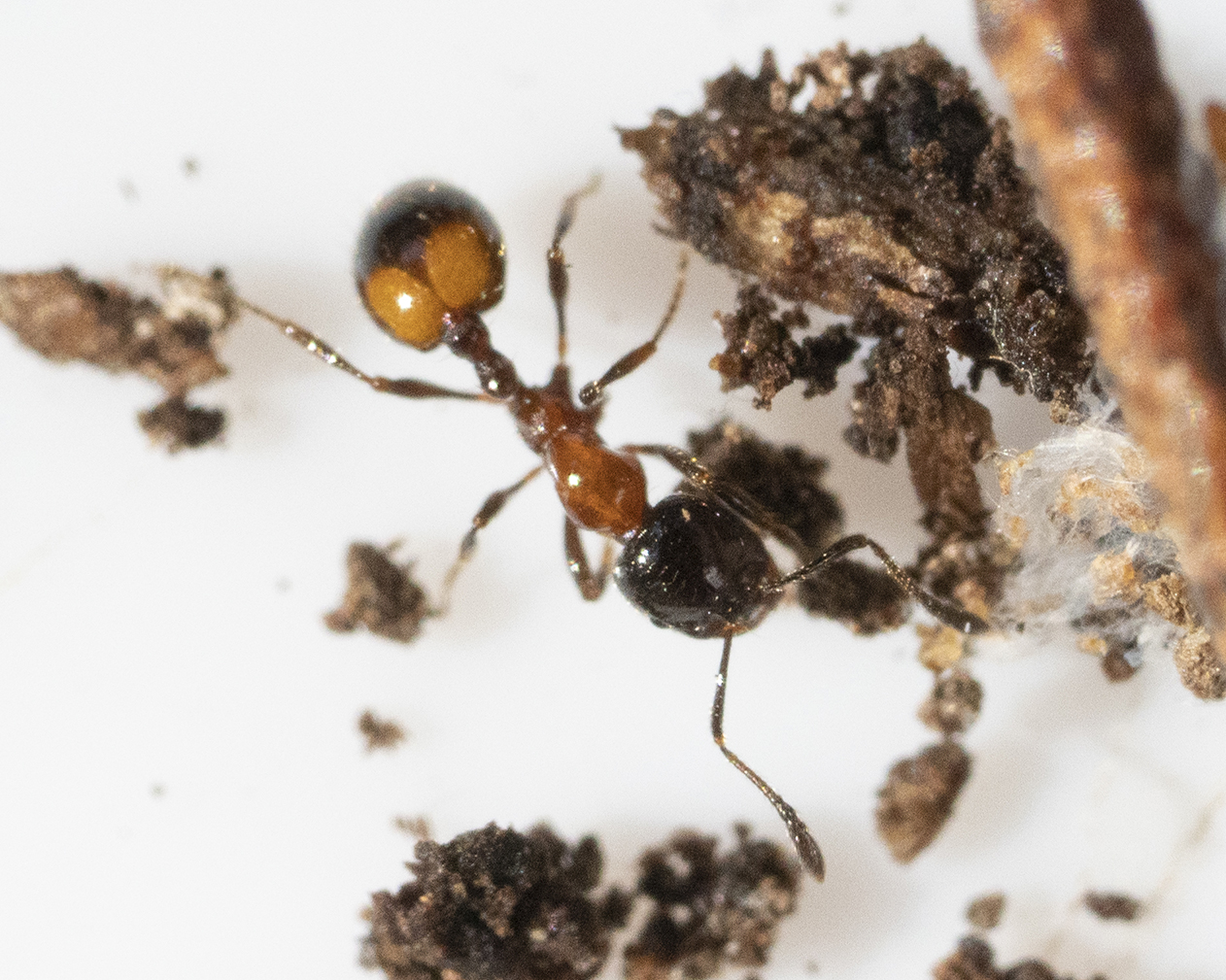
Following the interest in our story in last month’s edition on the little creatures found in the Leaf-litter Survey for the City Nature Challenge, we decided to follow up what happened with our “Gold Bum Ant” once it was posted up via iNaturalist.
An interesting process follows – a bit like crowd-funding – various volunteer naturalists, who may be amateur or professional, contribute their opinions as to what species the creature might be. Those identifications are graded as to quality as they go – depending on agreement and the quality of the supporting evidence.
Looking at the case of one of the ants photographed, it shows an early identification as being one of the subfamily Myrmicinae. It was later made specific – to the species Monomorium kiliani – Monomorium being one genus of Myrmicinae. The Monomorium genus contains about 400 different species. Another iNaturalist contributor agreed with that identification raising its status to “Research Grade”. One early identification was contradicted and later withdrawn.
If you would like to know more about those genus, subfamily etc naming conventions, please see our October, 2020 edition. To see more of the iNaturalist reports relating to our area, please visit https://www.inaturalist.org/observations?place_id=143151&subview=map .
There’s a lot more you can do there as well – looking at what people have observed in our park, where to see things you might be looking for – the perfect thing for lockdown! This snippet shows observations recorded for Kalang Park:
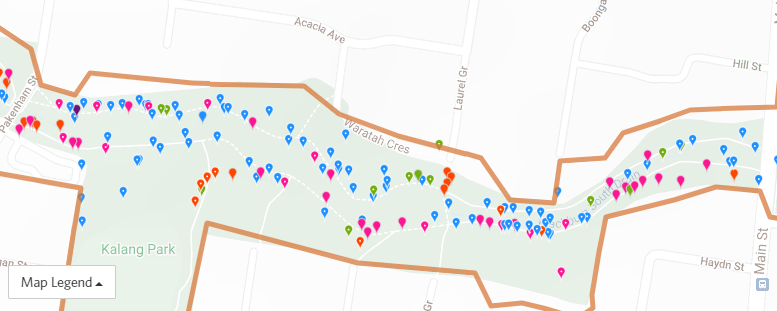
Each coloured flag represents an observation you can investigate further – not the people taking their exercise in the park at the moment!
Sightings
As we leave Autumn behind, here are some May photos in the park to remember the season by:
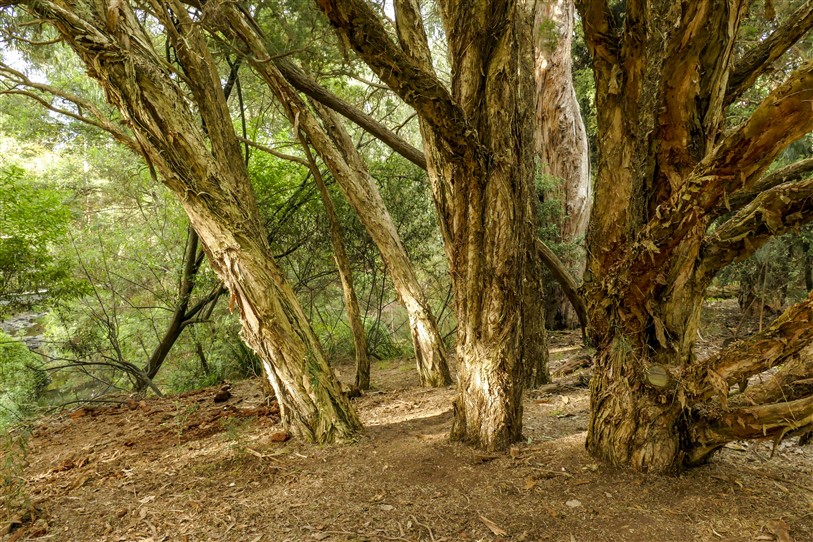
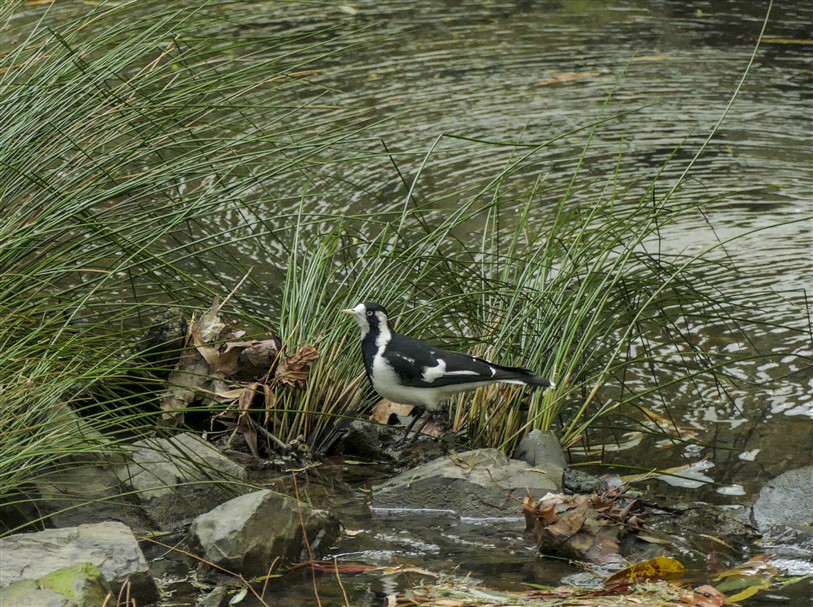
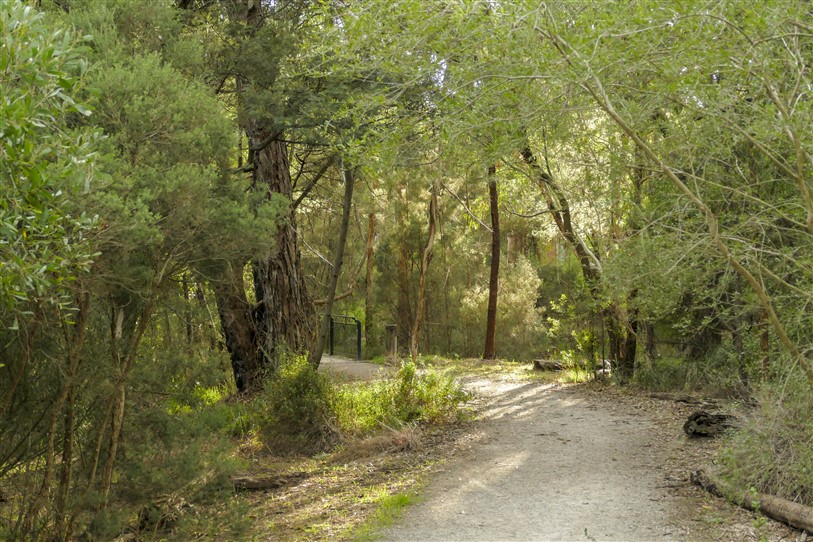
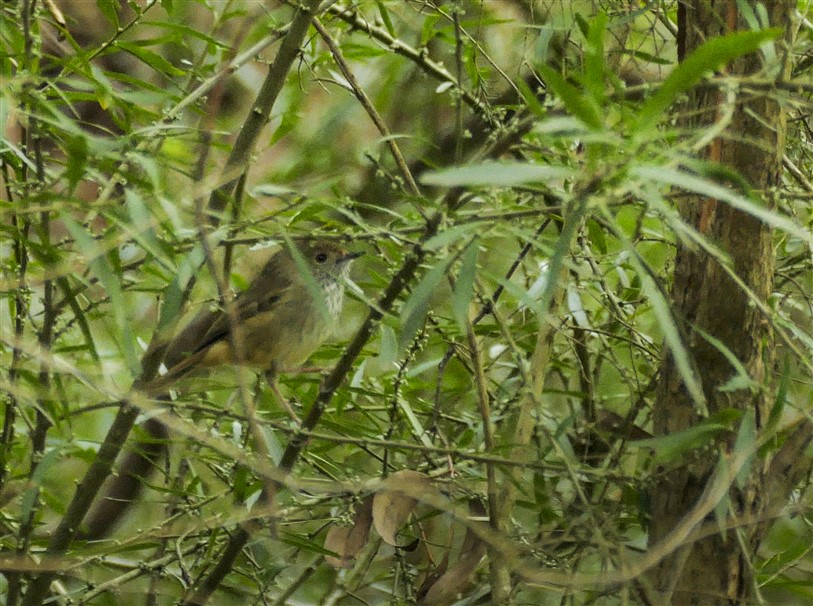
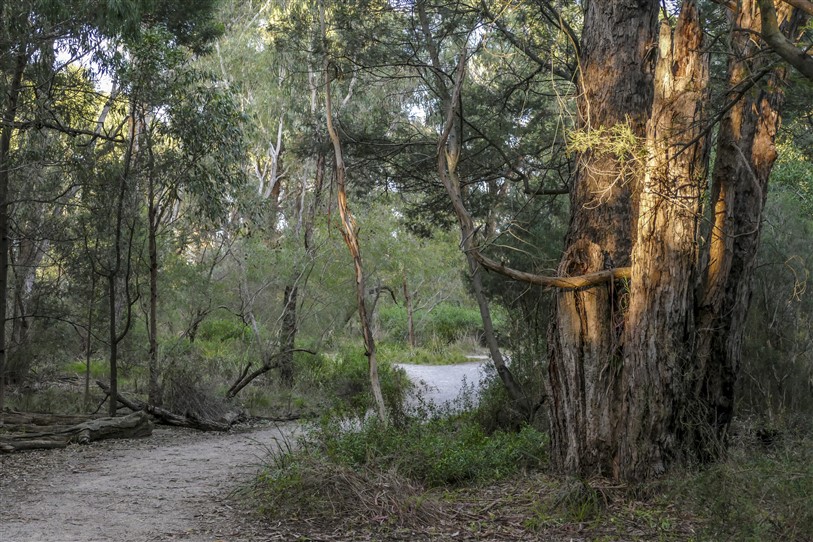
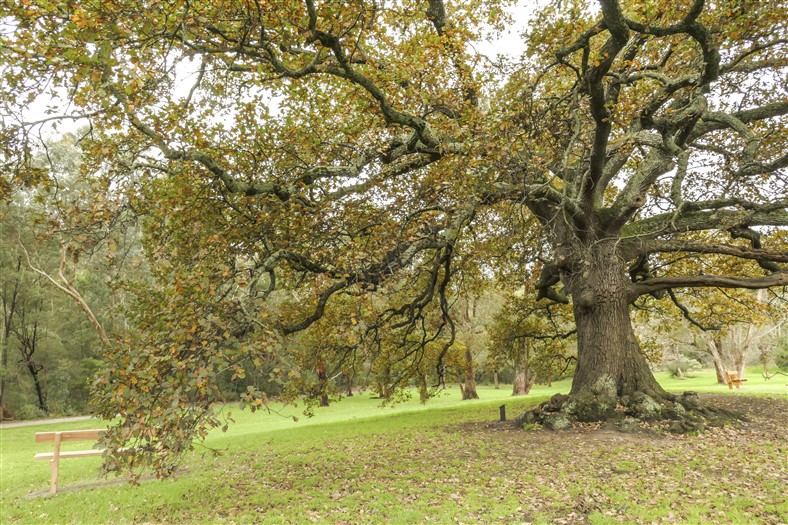
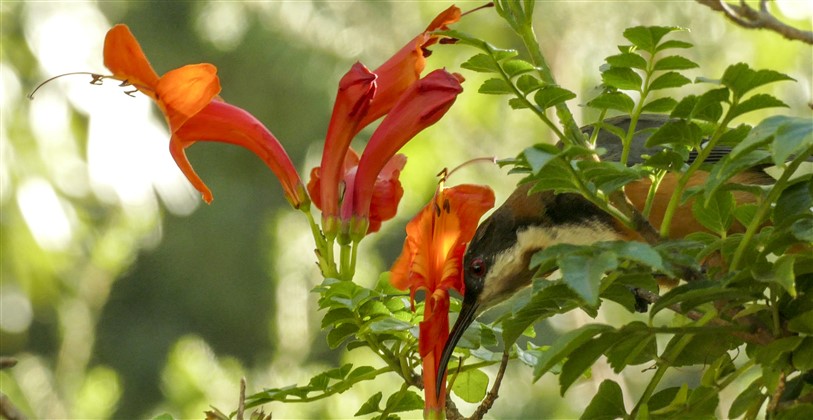
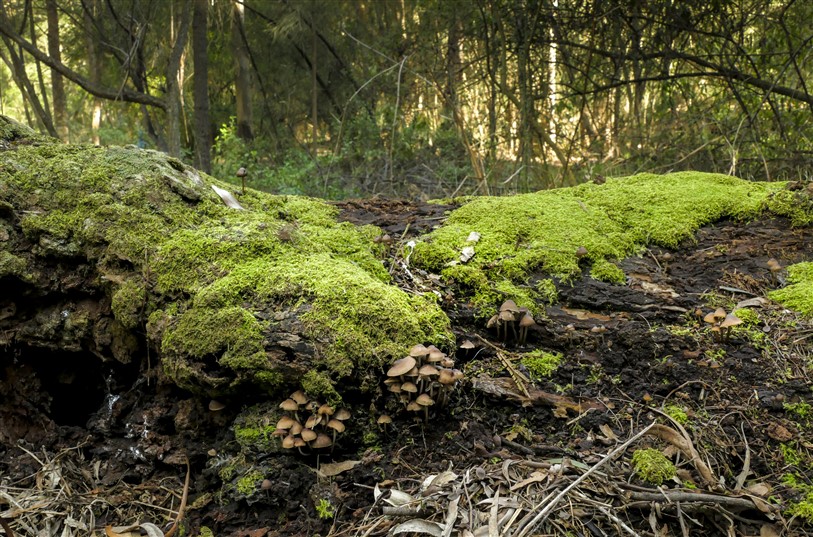
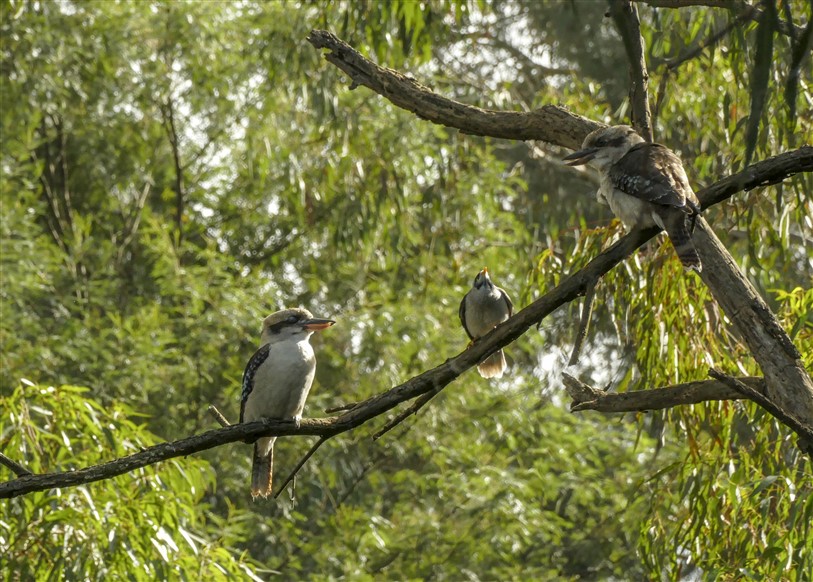
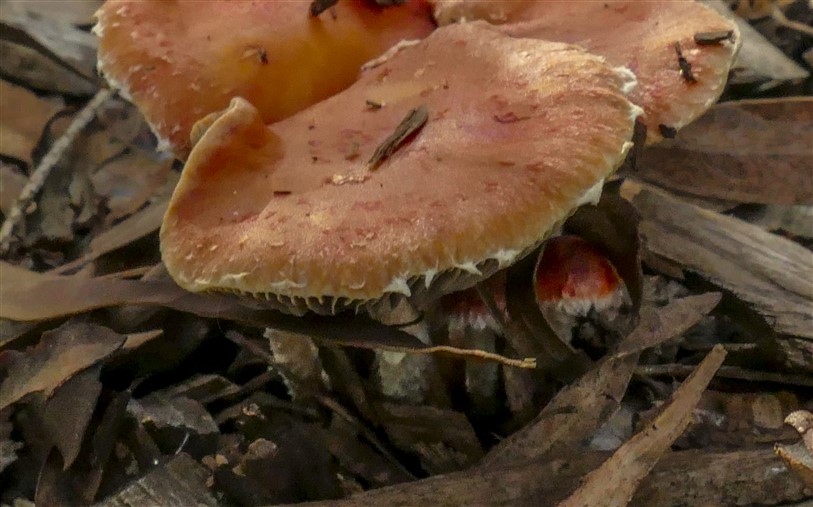

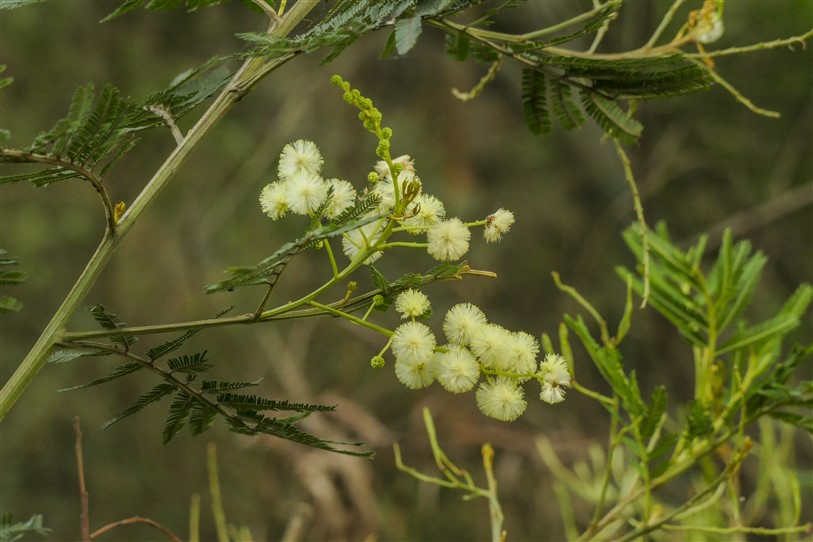
For a closer view – click on any of the images and then scroll through using the < or > symbols on the sides. When finished, click on the “X” that appears towards the top right. of the gallery.
 Blackburn Creeklands
Pingback: Park News – November, 2021 | The Blackburn Creeklands
Pingback: Park News – July, 2022 | The Blackburn Creeklands