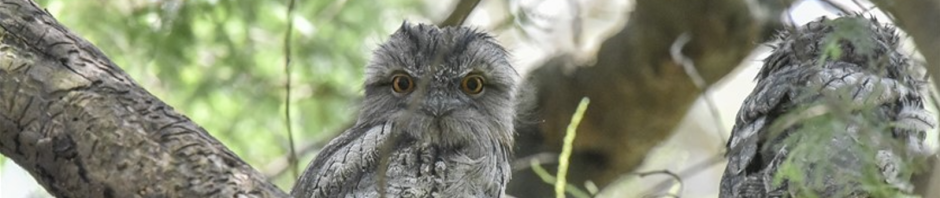
Our Bird Surveys are Back !
Last year, our Autumn and Spring bird surveys could not be conducted due to Covid-19 restrictions – so we were very pleased to be able to run our Autumn survey on Saturday, 24th April!
Although the sky was overcast, the other weather conditions were good and one of our survey groups was rewarded with a sighting of a Superb Fairy Wren in Furness Park. Oh well, it wasn’t a male with those wonderful blue colourings – it was the female of the species. No-one was quick enough to get a picture, so we grabbed this one from Wikipedia – a pair photographed on a fence at Ensay in Gippsland:
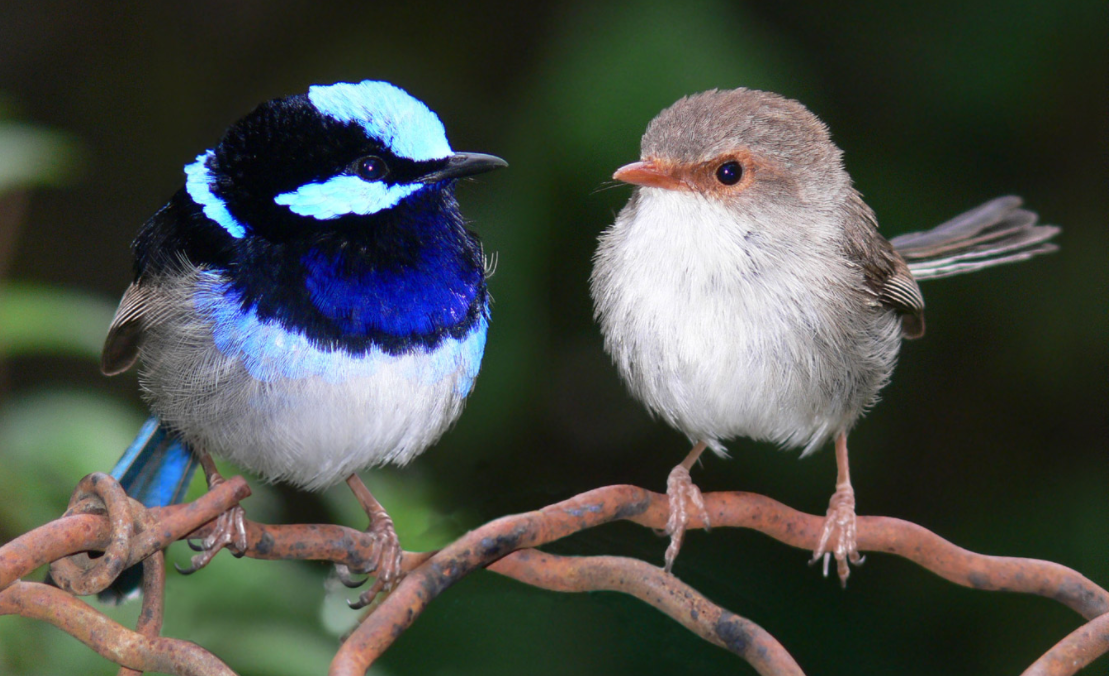
Our records show the species has been sighted in the park before – but not for a very long time. Local lore has it that they left the park after significant blackberry infestations were weeded out. Many small birds need habitat like that provided by blackberries – good cover and lots of thorns to provide refuge from larger predators.
These wrens can be found at Blackburn Lake Sanctuary and along the upper reaches of our creek “Below the Lake”. As our one of leaders, Ian Moodie, says – they are an iconic species – one of the first to leave when sites are disturbed and last to return. We are hoping they will make a very welcome return to our park!
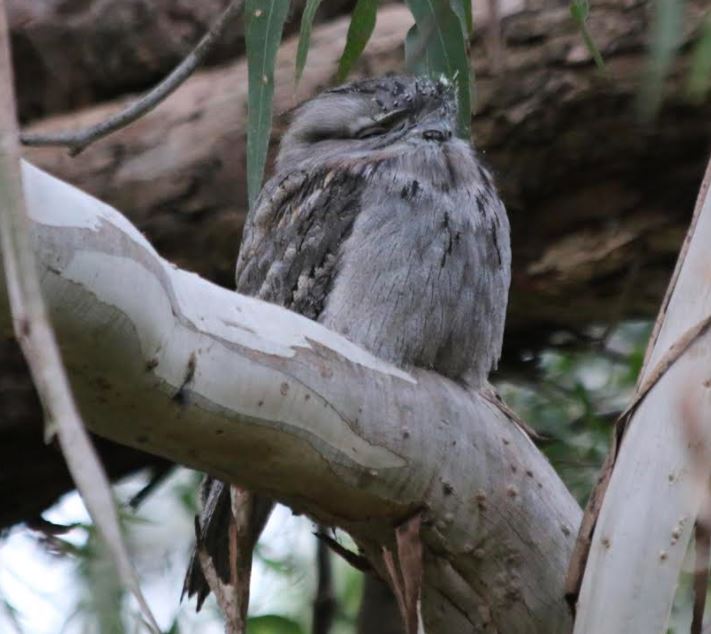
Attendance was very good – from people, but the number of bird species observed was down twenty percent on the usual. Twenty-three species were observed by twenty-nine adult attendees and three children – with many new faces participating. Despite the low light, Ian took these shots as his group walked – to give you a flavour of the sightings on the day:
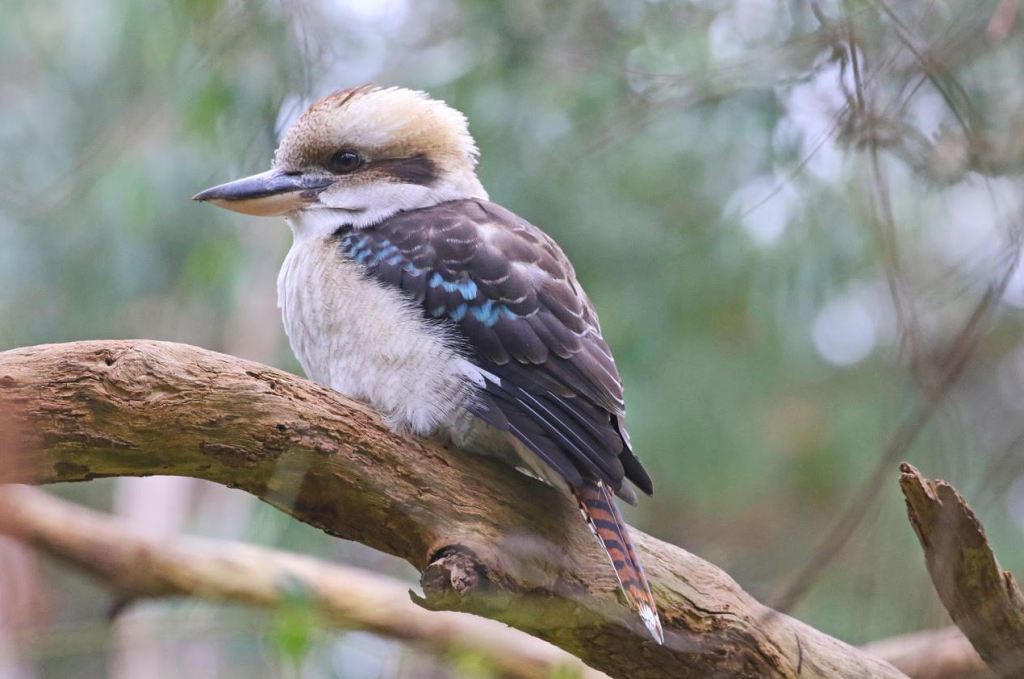
Kookaburra 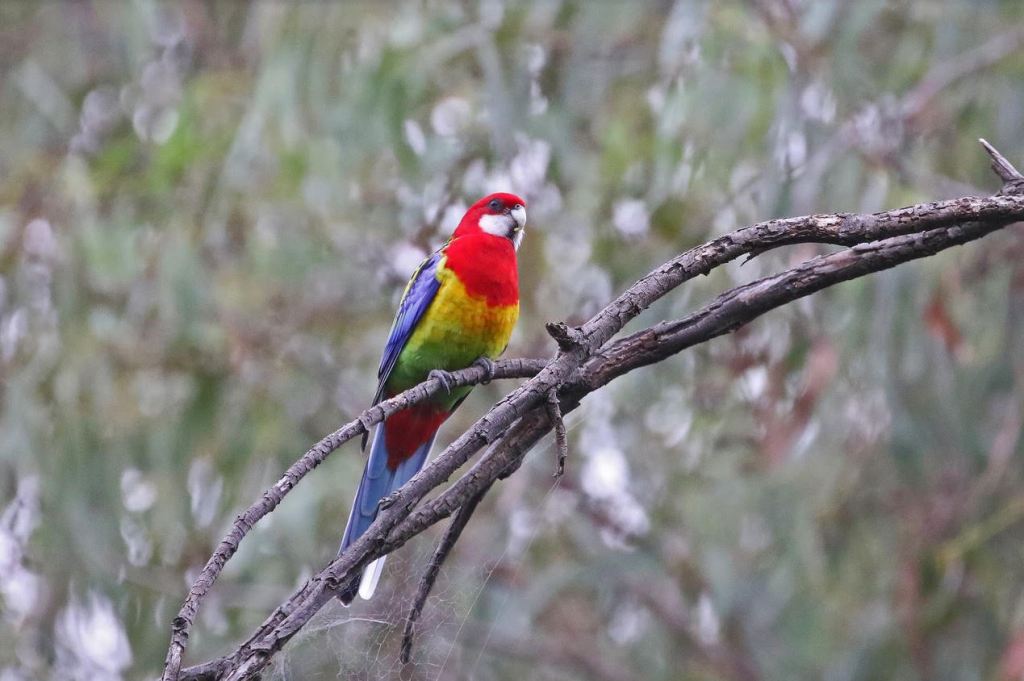
Eastern Rosella 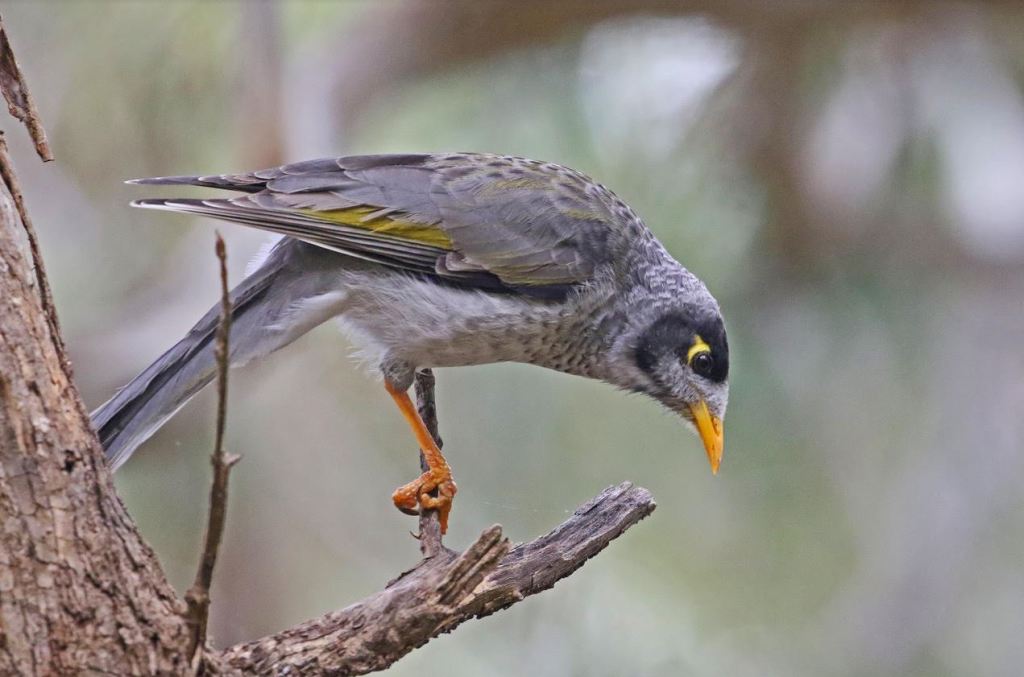
Noisy Miner 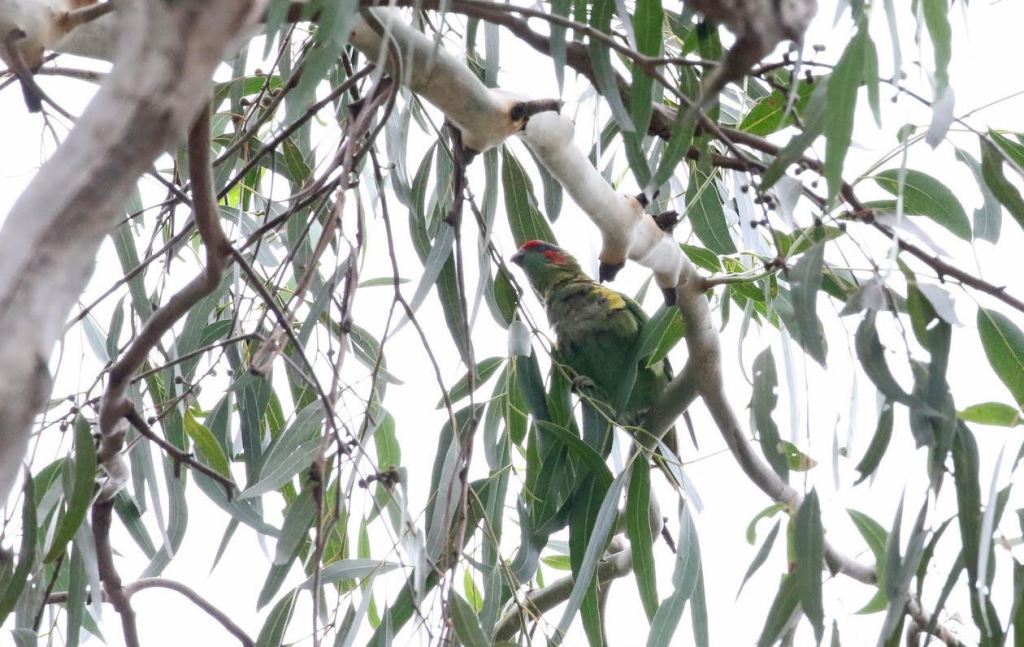
Musk Lorikeet 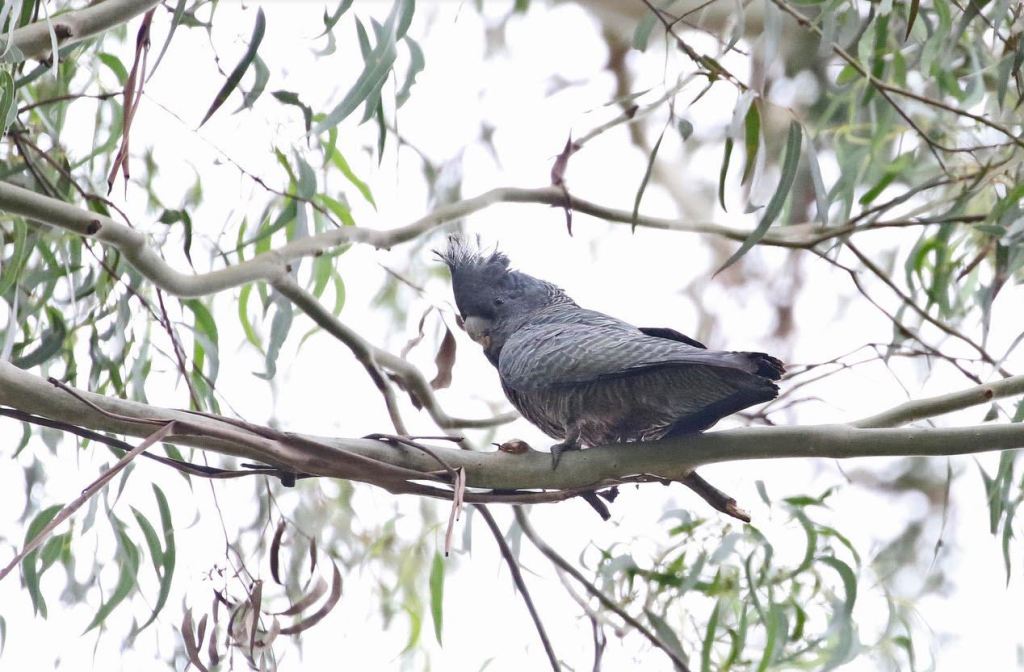
Gang-gang Cockatoo (F) 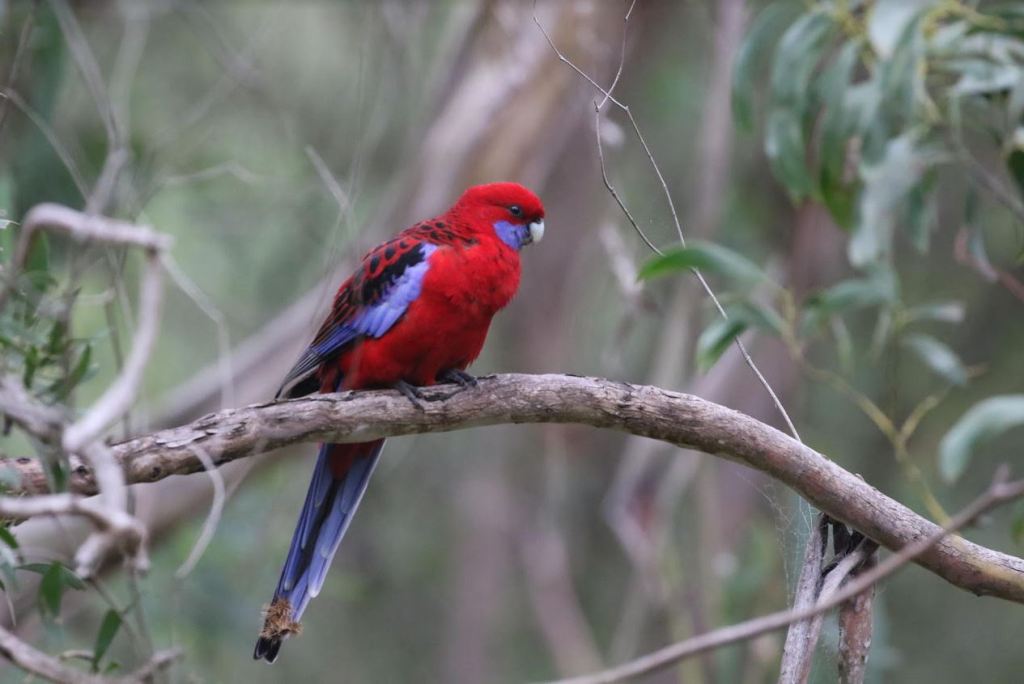
Crimson Rosella 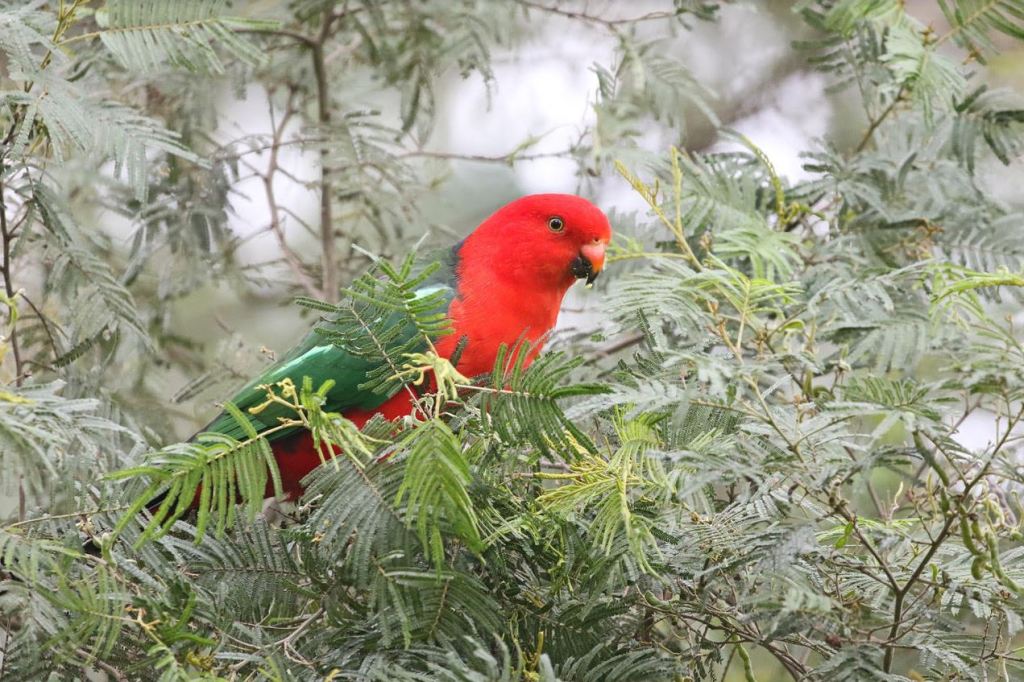
King-parrot feeding 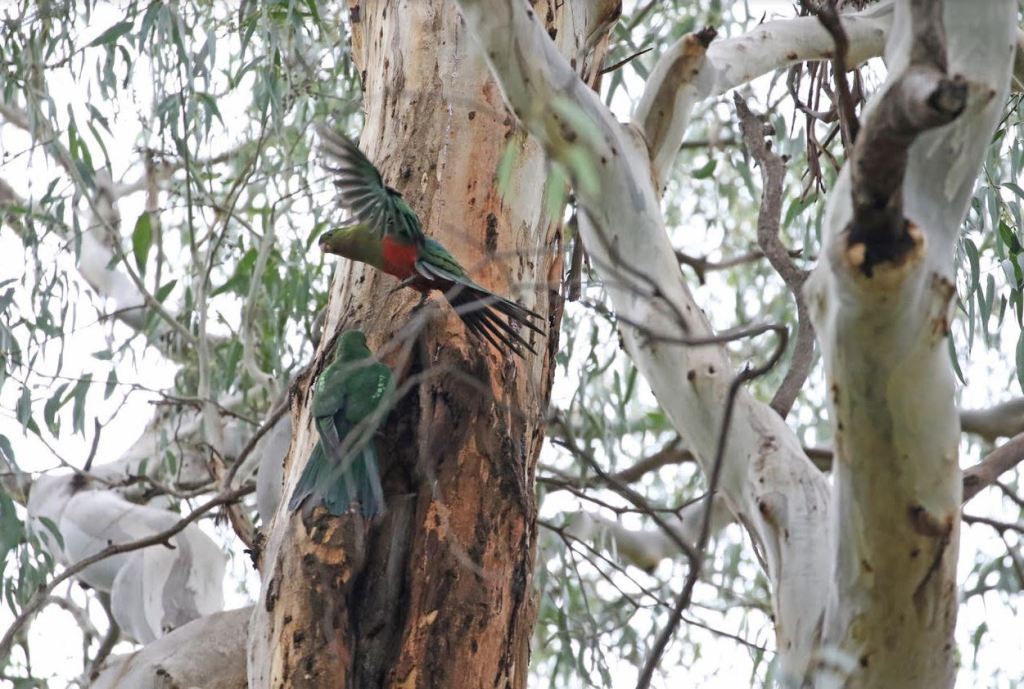
King Parrots 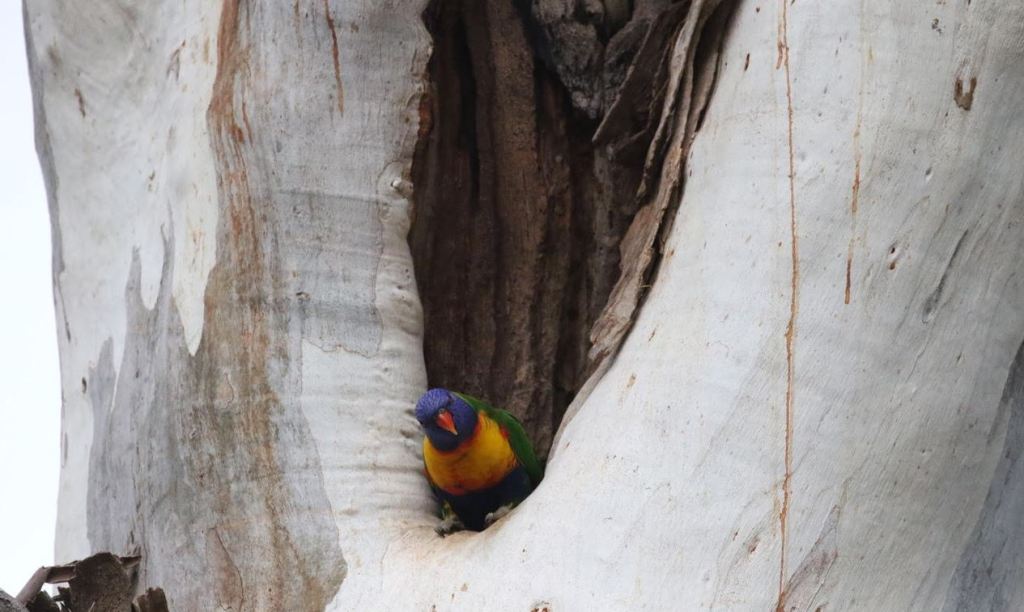
Rainbow Lorikeet
For a closer view – click on any of the images and then scroll through using the < or > symbols on the sides. When finished, click on the “X” that appears towards the top right. of the gallery.
Although not really April news, our Community Working Bees are back too! At our first for 18 months, twenty adults and three kids enjoyed a great day’s planting along with some sorely needed weeding on Sunday, 2nd May. Work was in the Billabong area in Kalang Park and, importantly, counts toward our responsibilities for our Melbourne Water grant. Last year, we could only do some limited “Monday morning” planting between the lockdowns in June.
We thank those volunteers who returned after such a long lay-off (thanks to Covid-19) and the new folks who also turned up for their first community sessions bird observing or working with us. Our next Community Working Bee is planned for Sunday, 6th June.
Other Opportunities for Bird Watching
Monthly Surveys
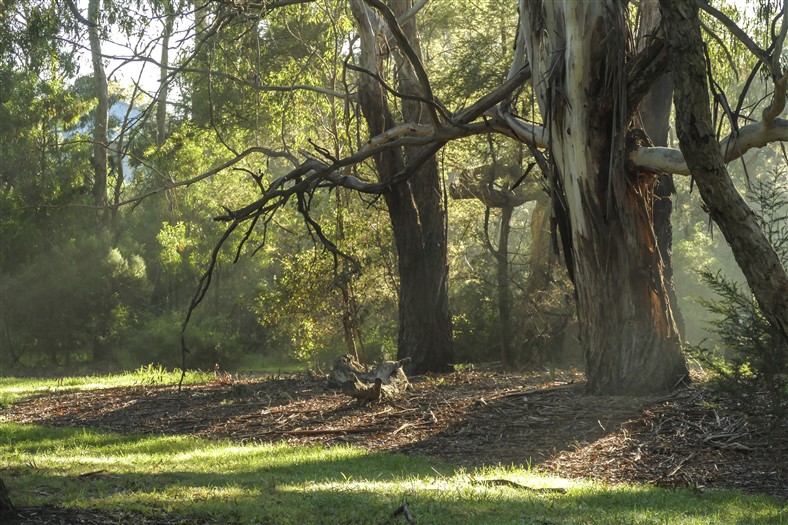
Our next Creeklands (Spring) Bird Survey won’t be until October. Last month, we informed you that the group formerly doing weekly bird surveys on a weekly basis are shifting gears to run monthly surveys by July – when they’ll run every 4th Wednesday. Actually, they are tapering-off to that point – there will be two walks per month in May [12th and 26th] and June [9th and 23rd].
These surveys offer another bird watching experience in our park. The aim is to provide meaningful, monthly, bird survey reports to our Committee and to Birdlife Australia’s Birdata data collection platform. Bird watching activities are done on a more rigorous and scientific basis than our Autumn/Spring bird surveys. They include observations of what birds are present, their numbers and other aspects such as bird feeding, drinking and nesting activities -correlated with weather, water conditions and environment changes. All this will inform maintenance planning and practices to conserve and improve the biodiversity of the Blackburn Creeklands.
We are hoping these regular surveys will show that the reduced species count noted in our Autumn Bird Survey was an anomaly (eg due to the low light on the day). More regular surveys will help shed light on that question.
Please let us know if you are interested and we’ll pass on your details to the organisers.
On your own
If you are out looking for yourself, you might get clues to where birds roost by “splashes” or “wash” on the ground below and where they are eating food from scraps/discards on the ground.
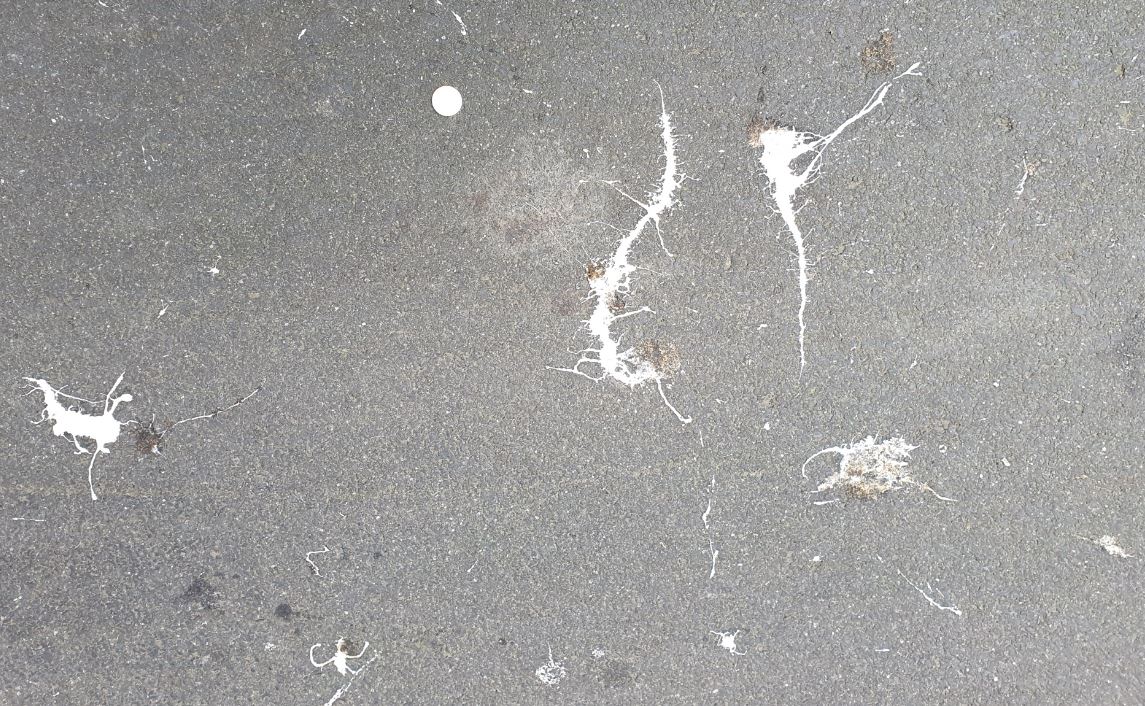
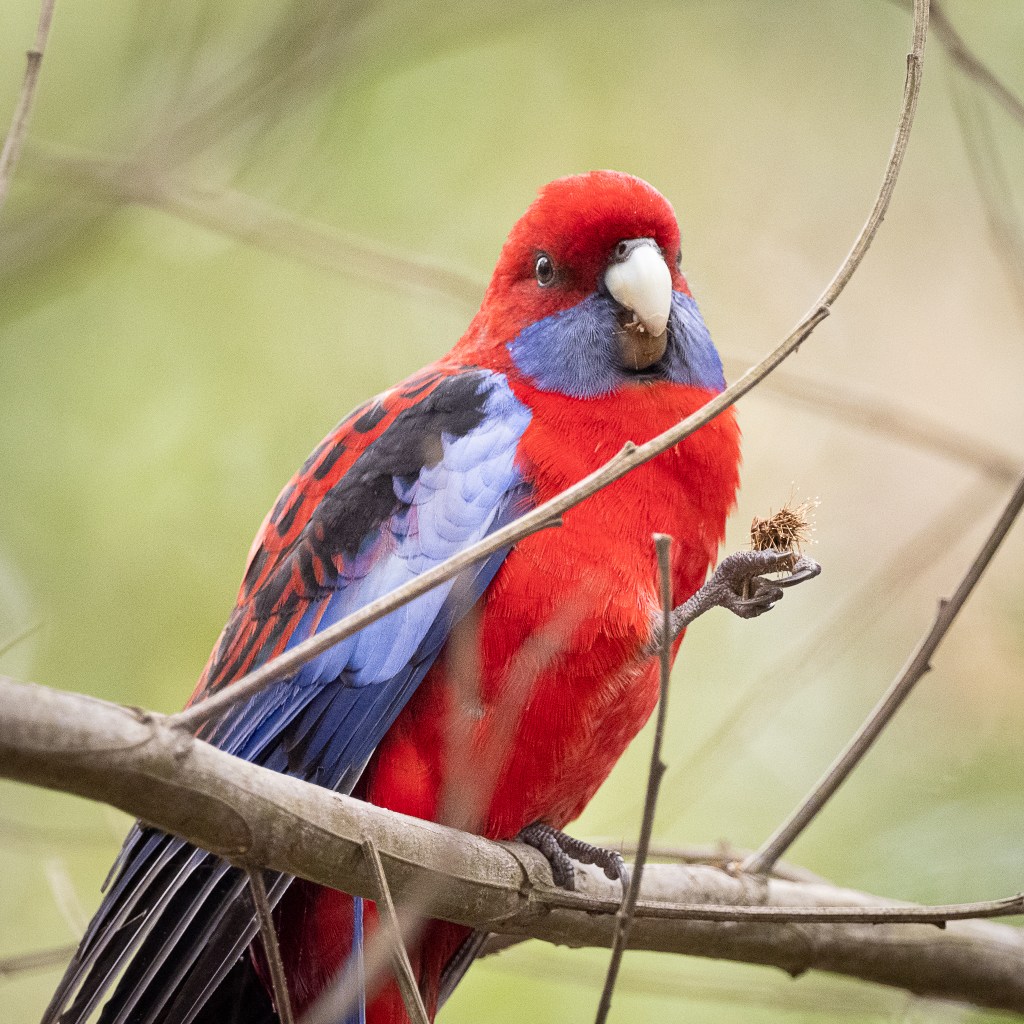
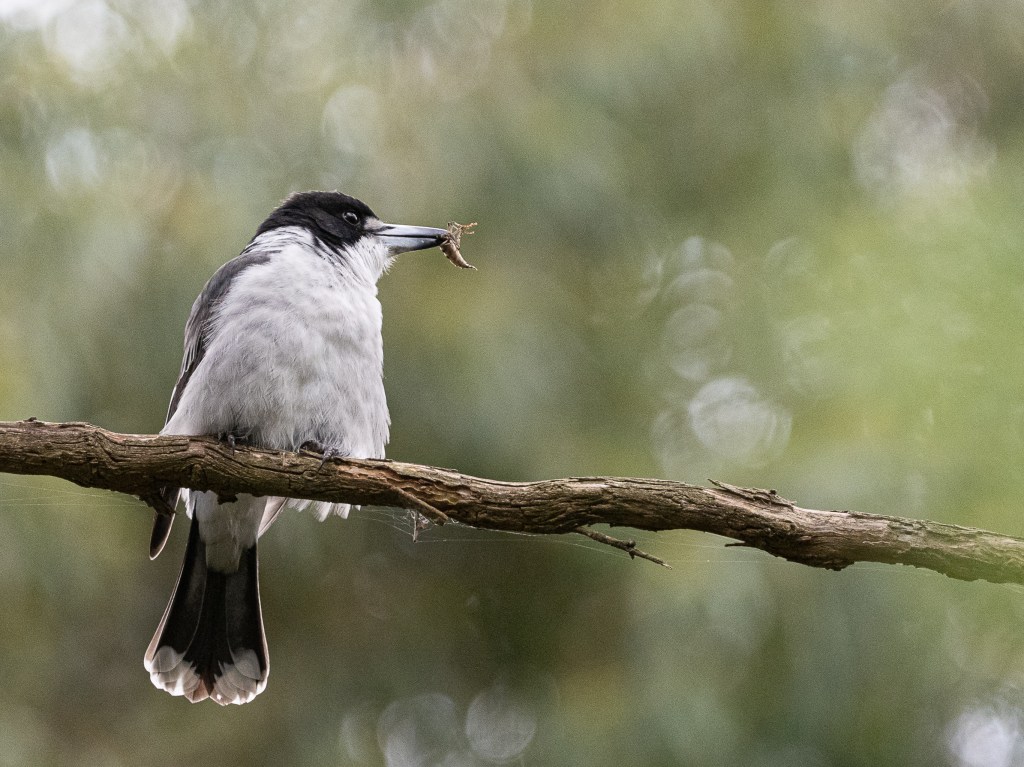
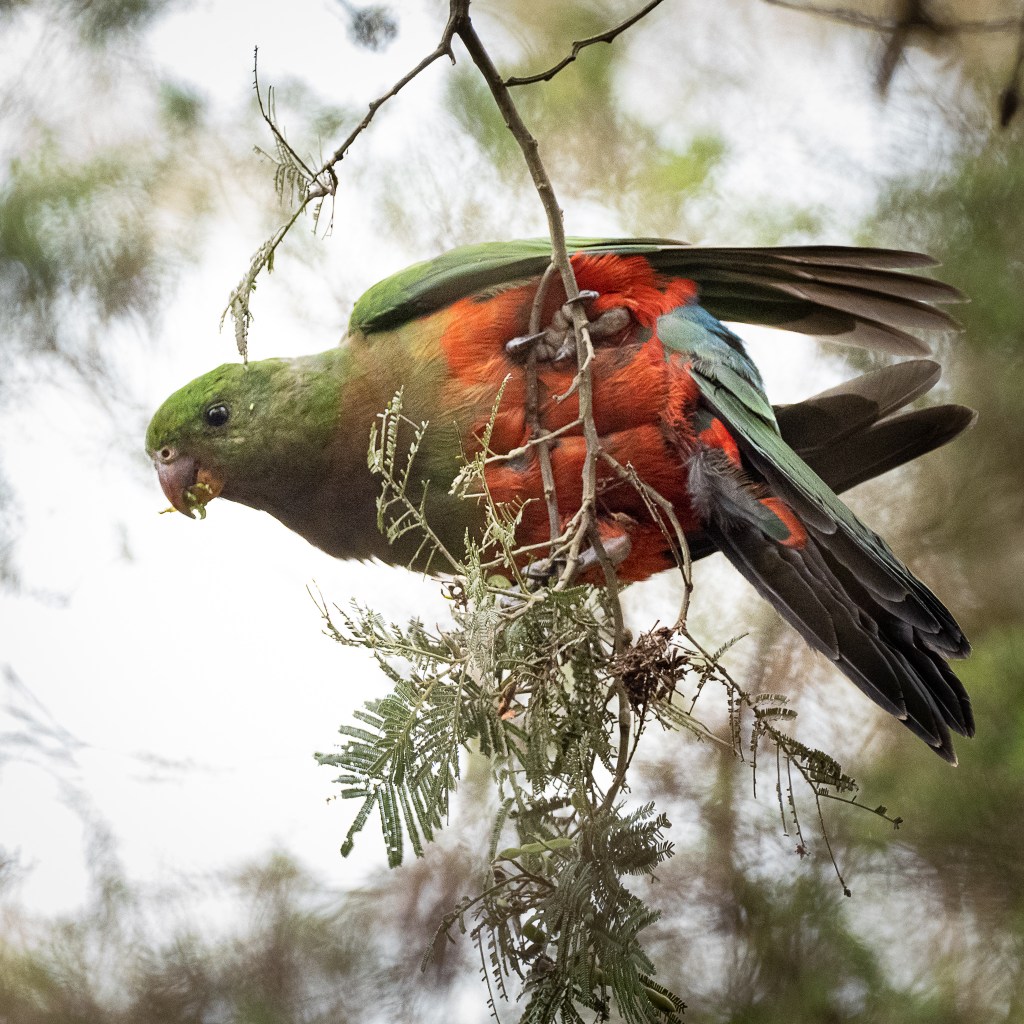
No wonder there can be a mess under a bird’s dining site – how would you go eating with only one foot at best?
Leaf-litter Survey
The City Nature Challenge (through the iNaturalist software) got many of our local Citizen Scientists out recording over the period from 30th April to the 3rd May. One interesting project undertaken by mostly members of our bird watching crew (above) was to perform a leaf-litter survey. The methodology was basically to scrape up leaf-litter at a couple of different points in the park into a tray, to sift and photograph what they found.
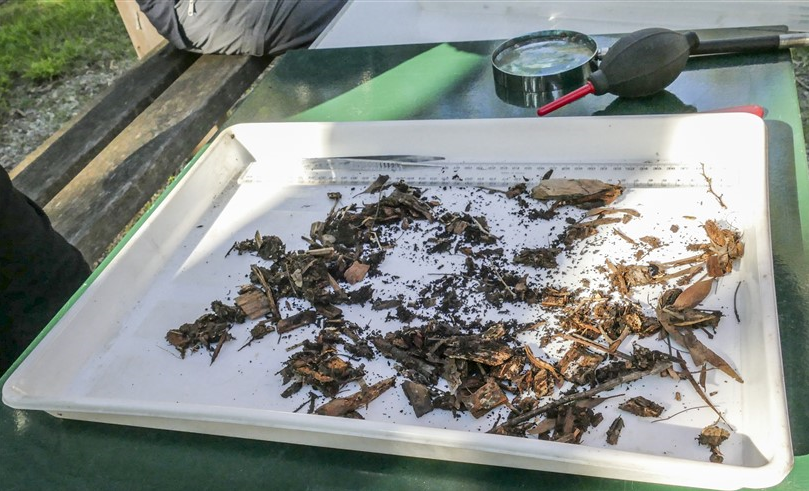
Here’s a sample (our thanks to Wendy and friends) – this is where the Gold Bum Ant comes in (the name is NOT our invention we hasten to add – too technical for us!) :
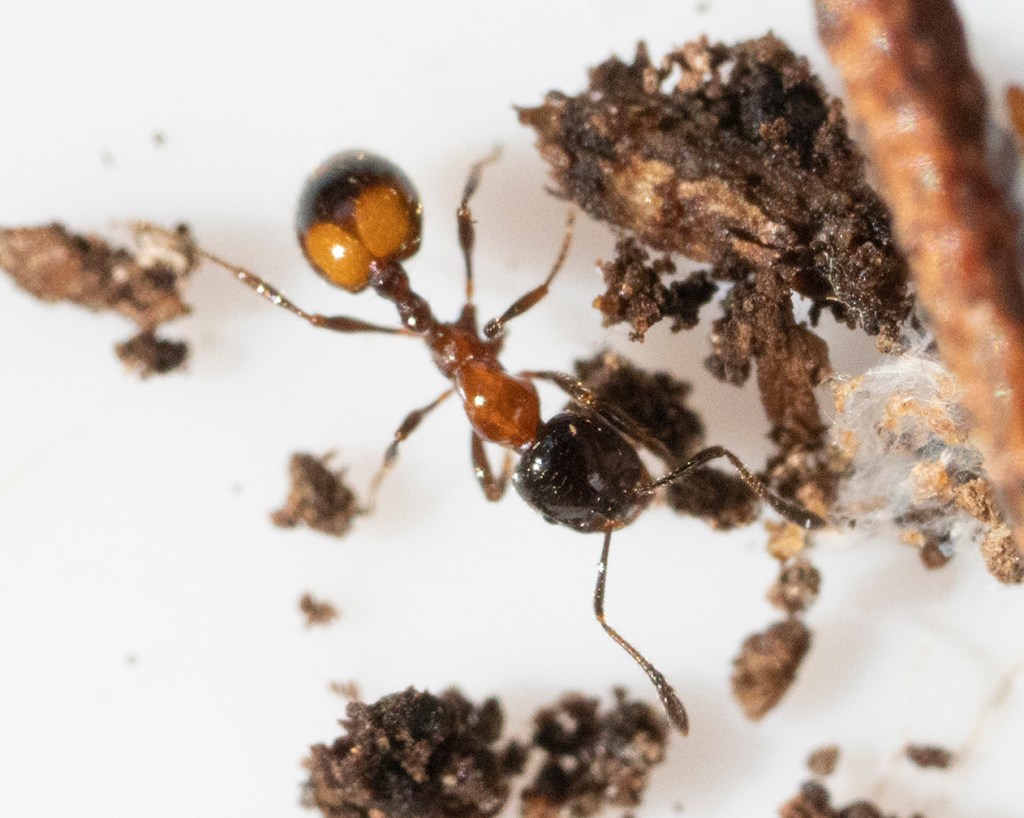
Gold Bum Ant (Monomorium kiliani) 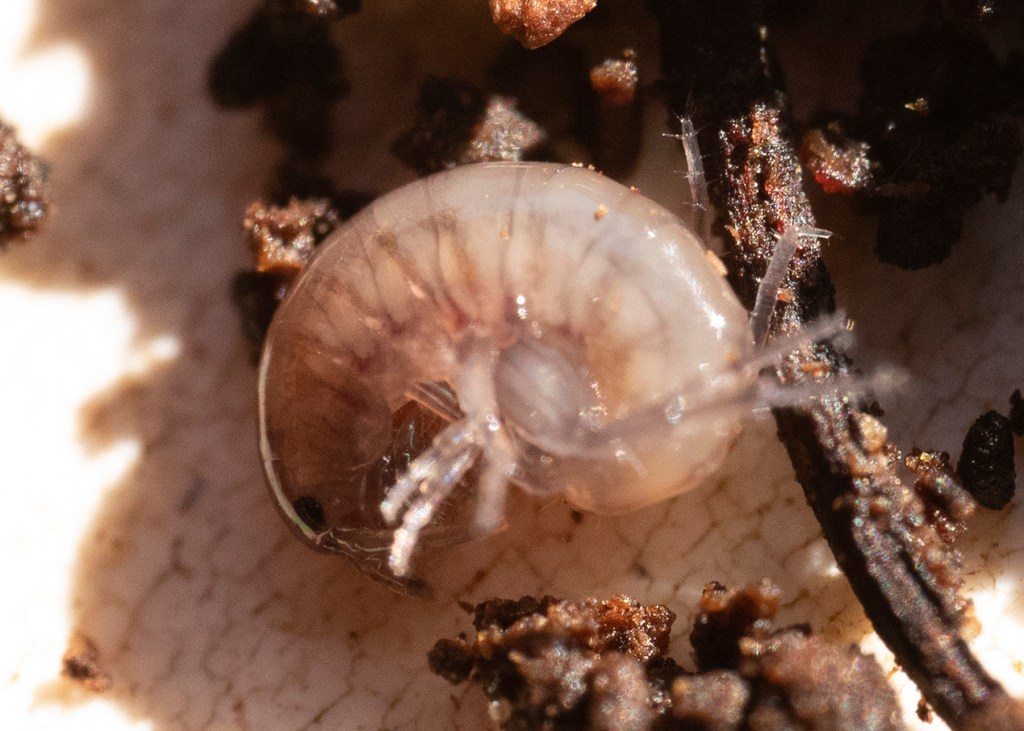
Amphipod 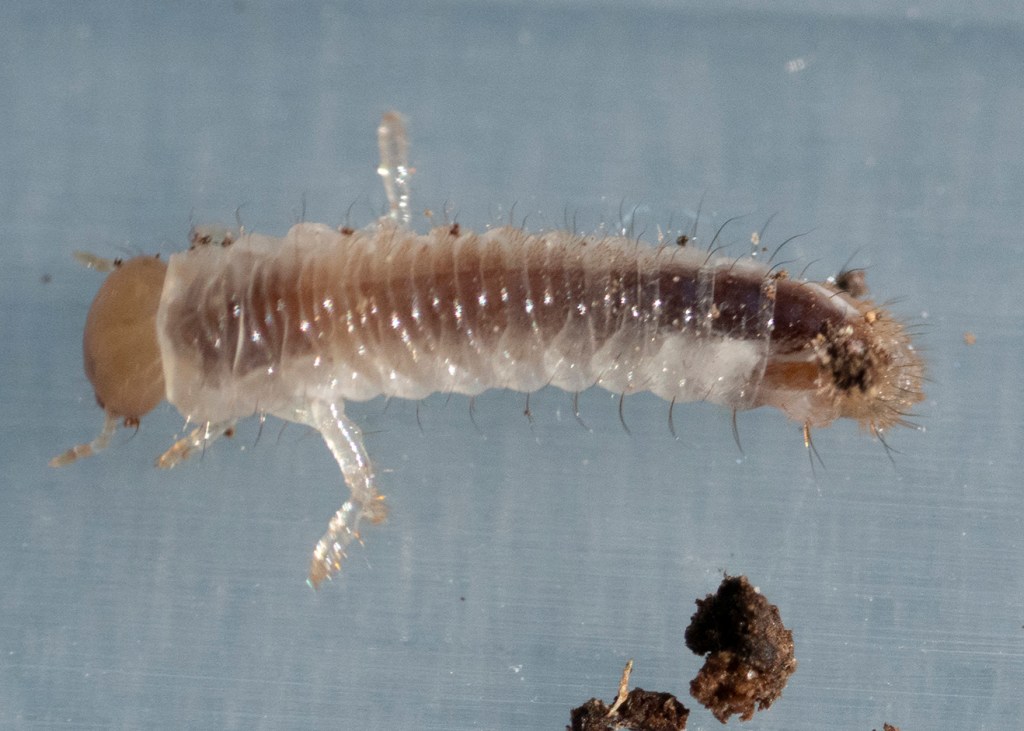
Beetle Larva 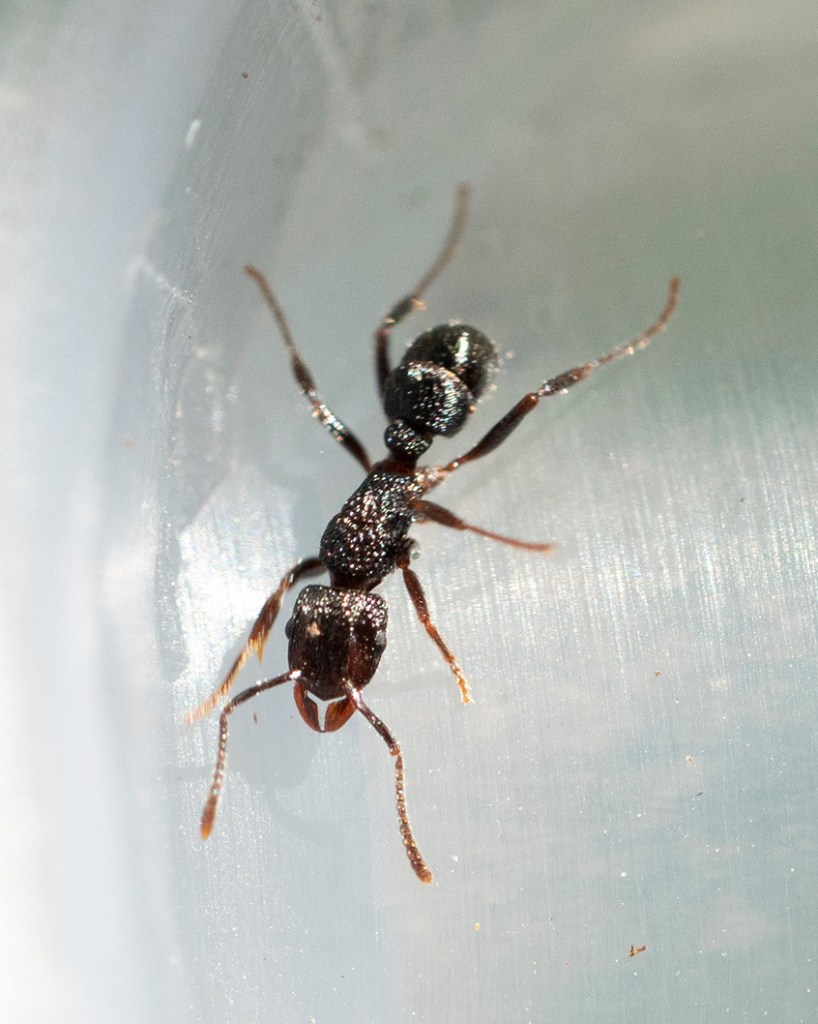
Black Ant 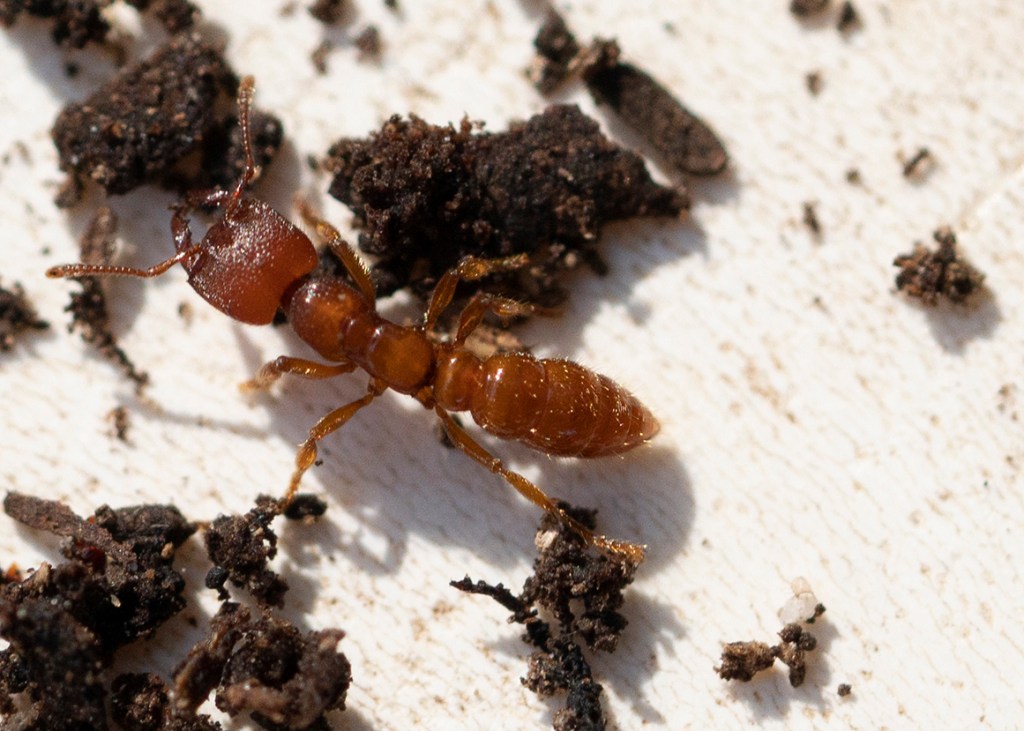
Dracula Ant – notice big jaw 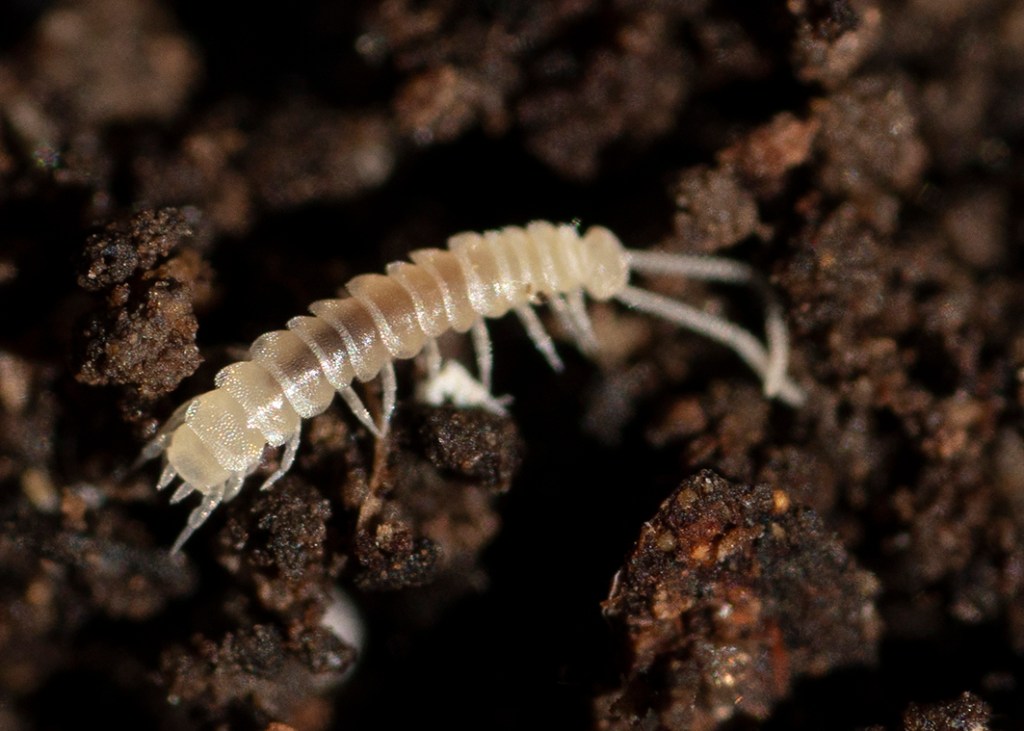
Centipede 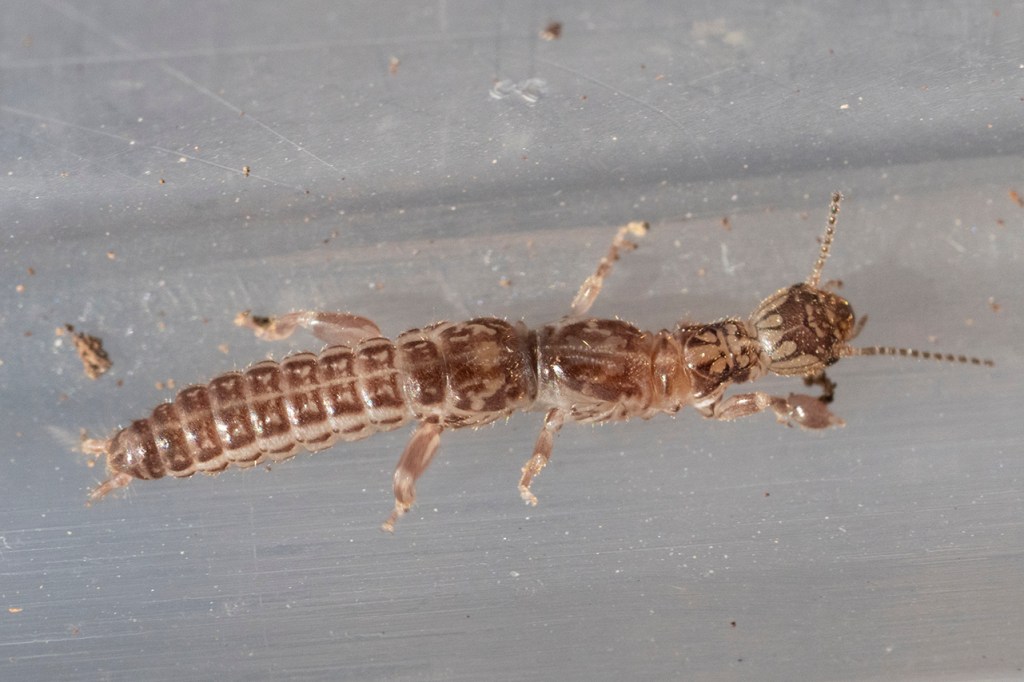
Web Spinner 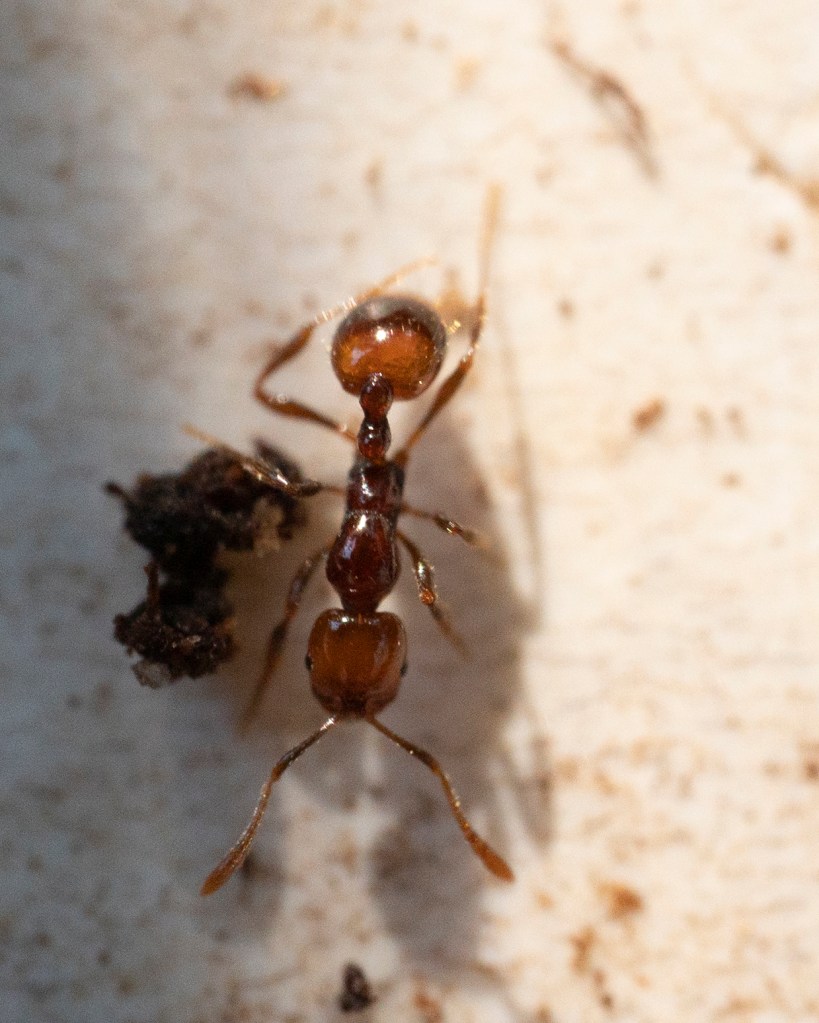
Another Gold Bum Ant 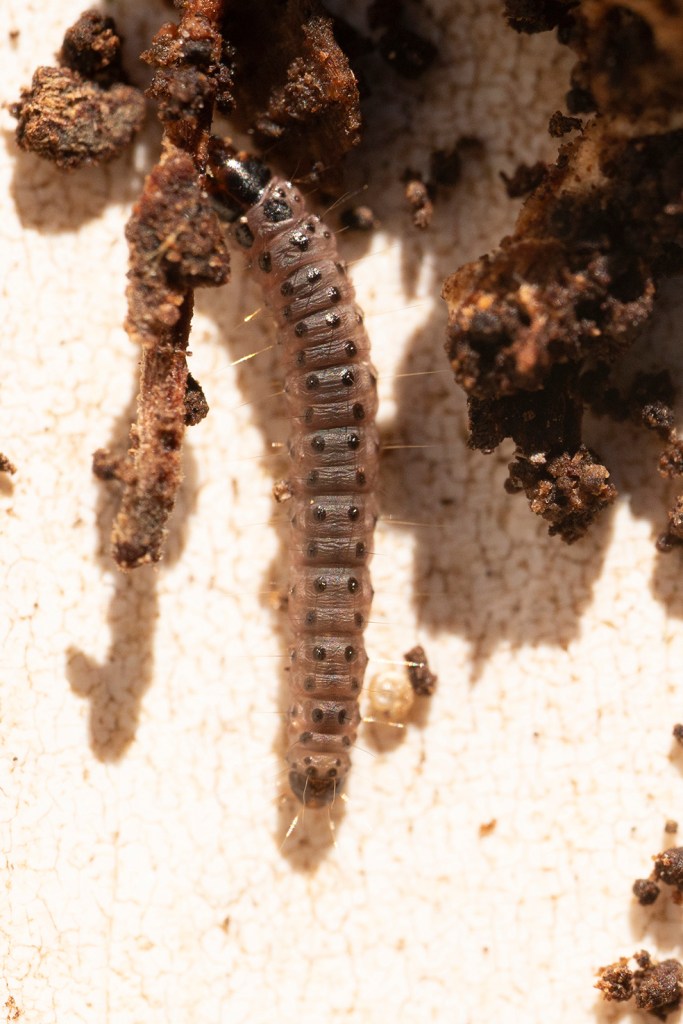
? Larva 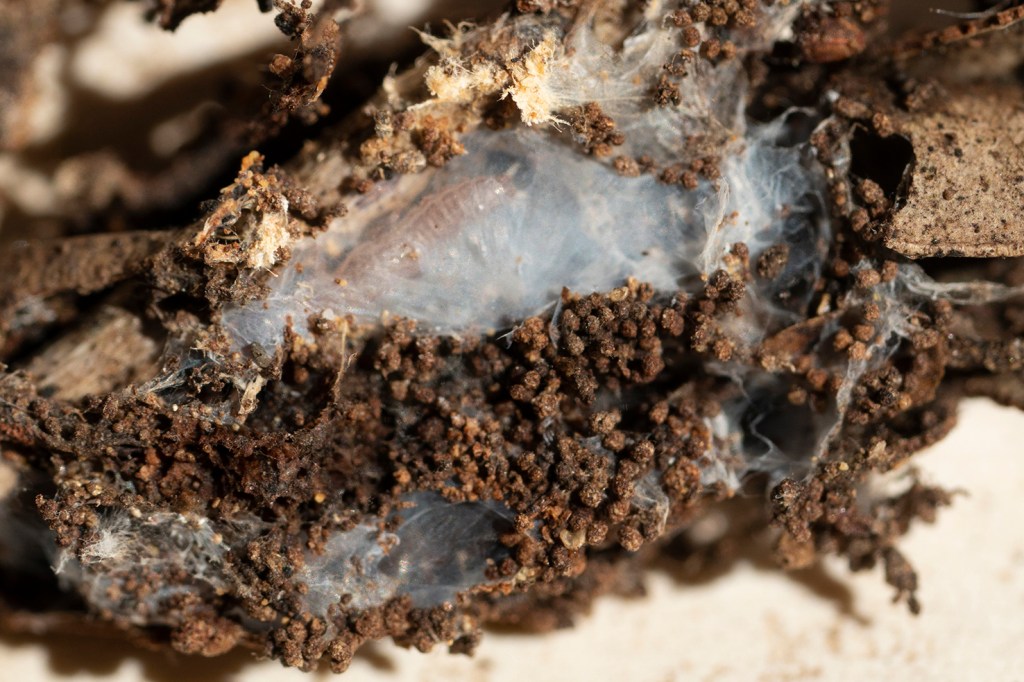
Larvae in silken cocoon 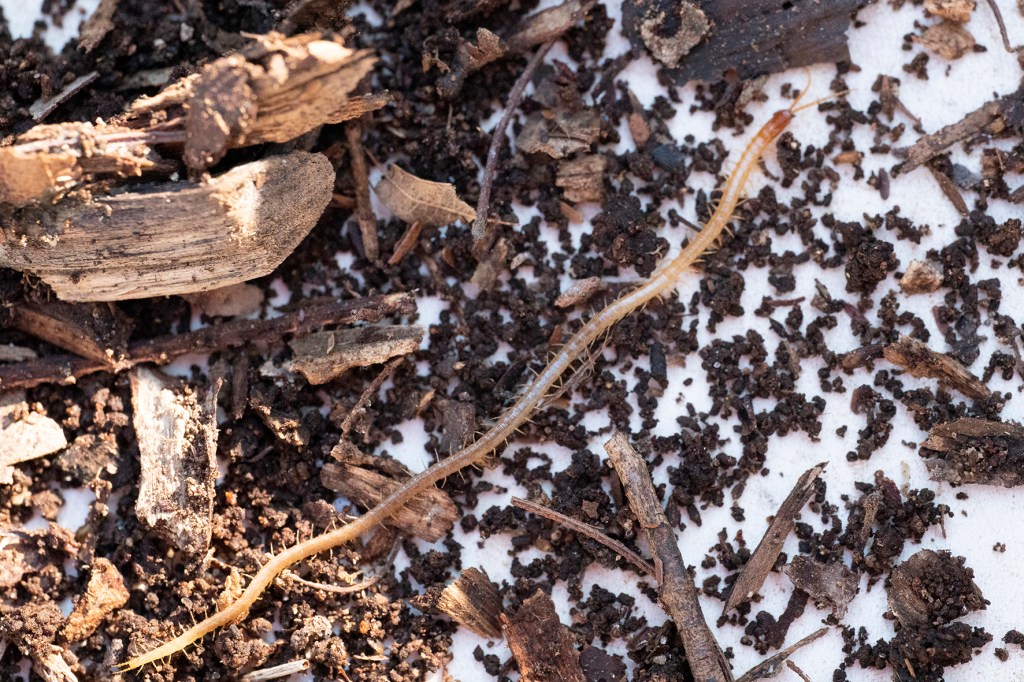
Long Thin Centipede 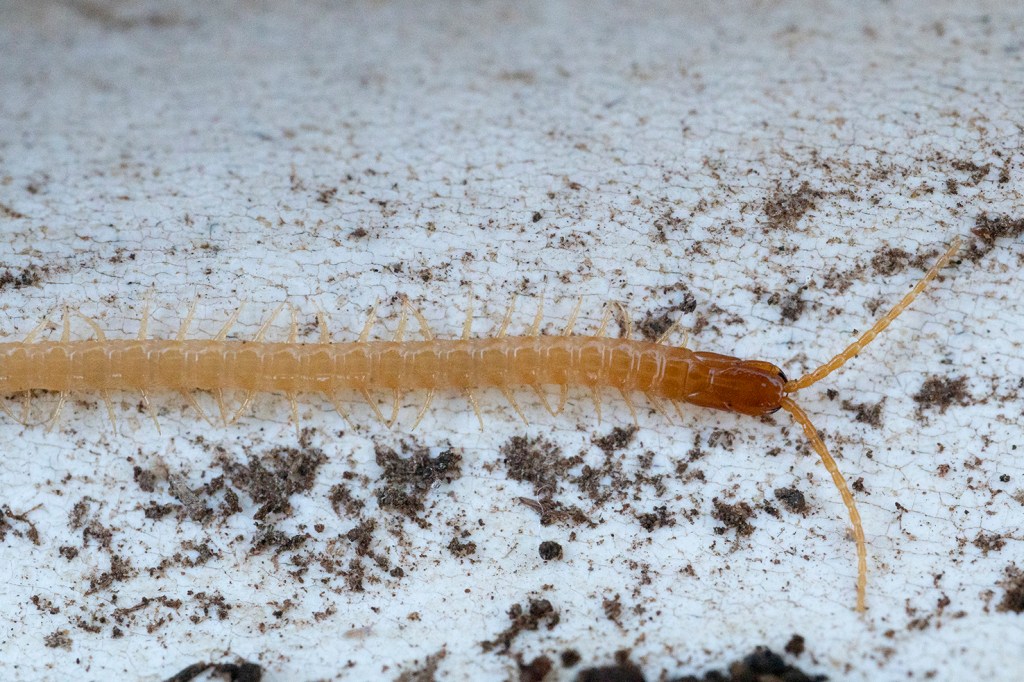
Long Thin Centipede 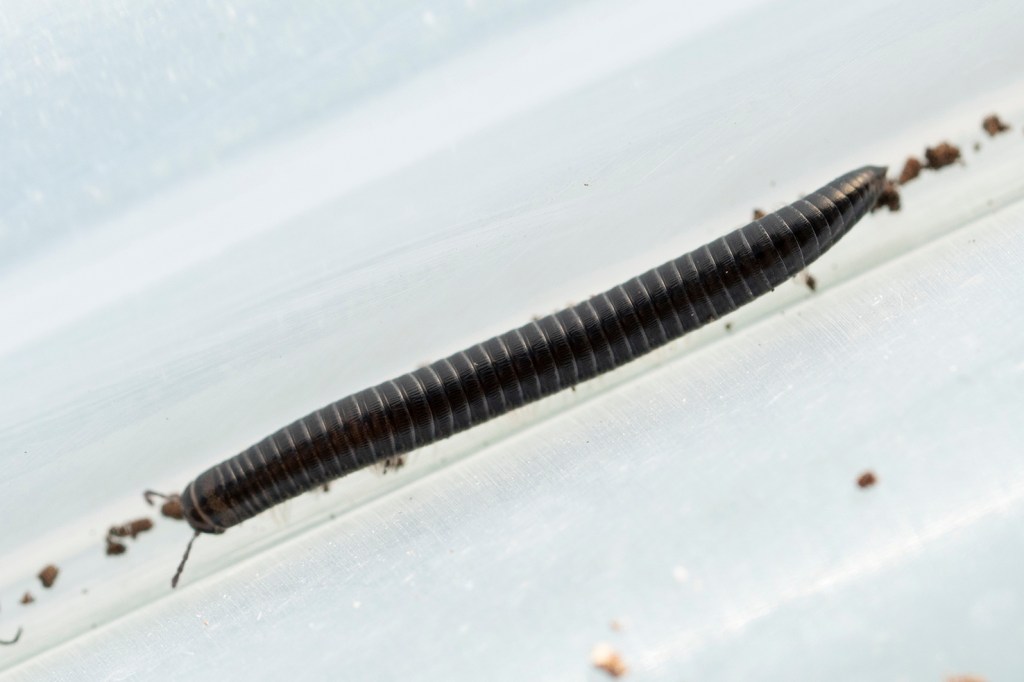
Portuguese Millipede 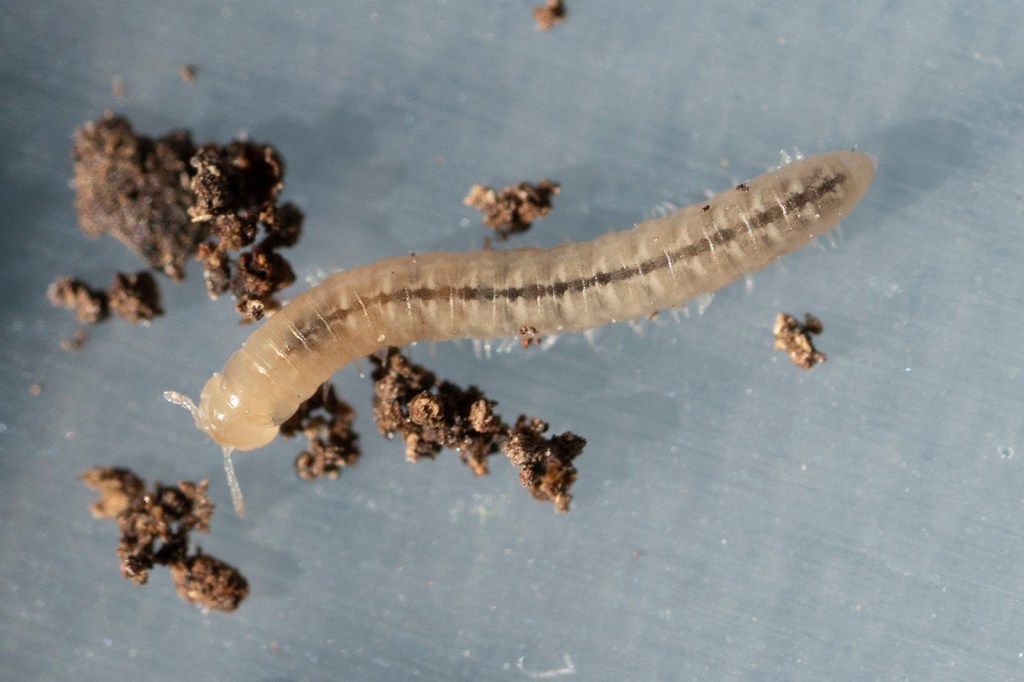
Millipede 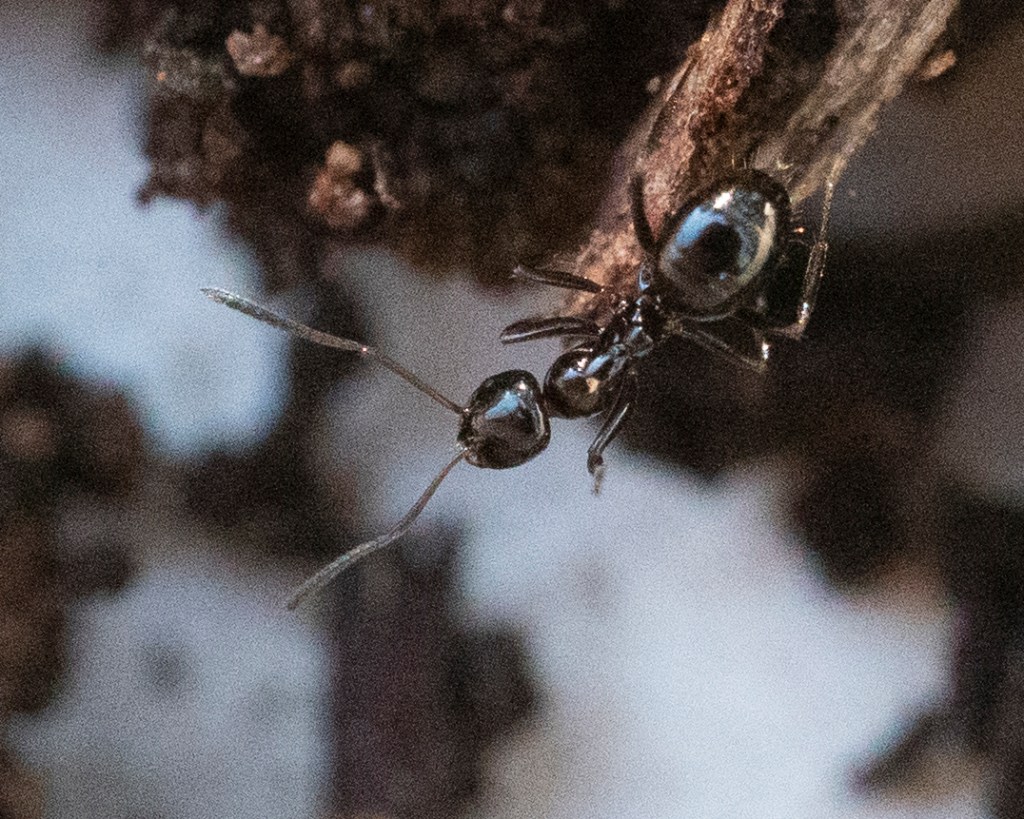
Shiny Black Ant 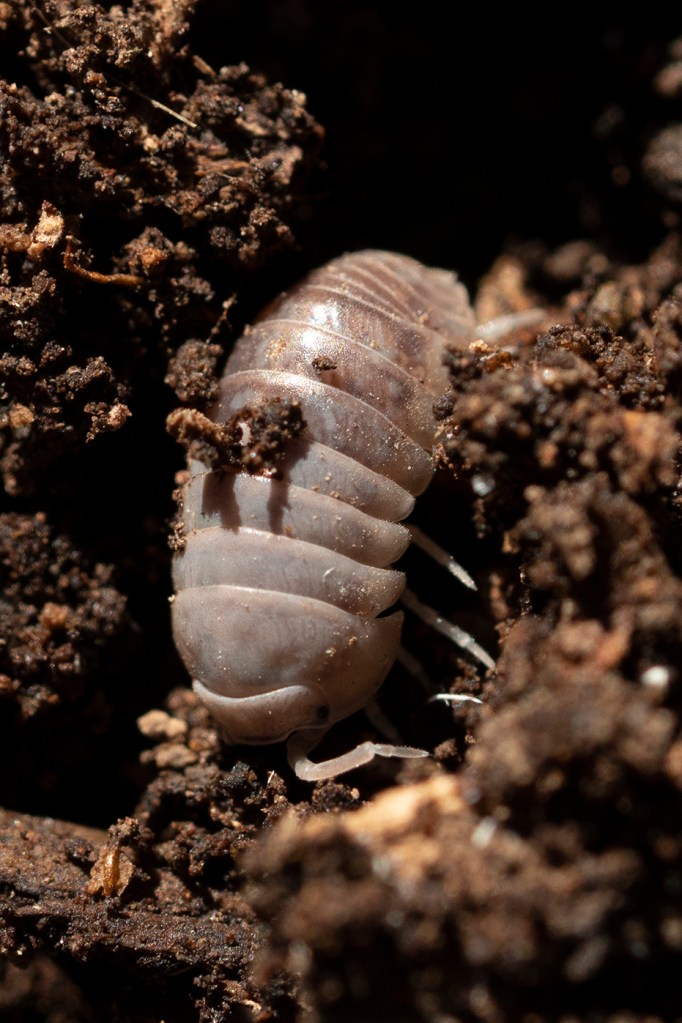
Slater 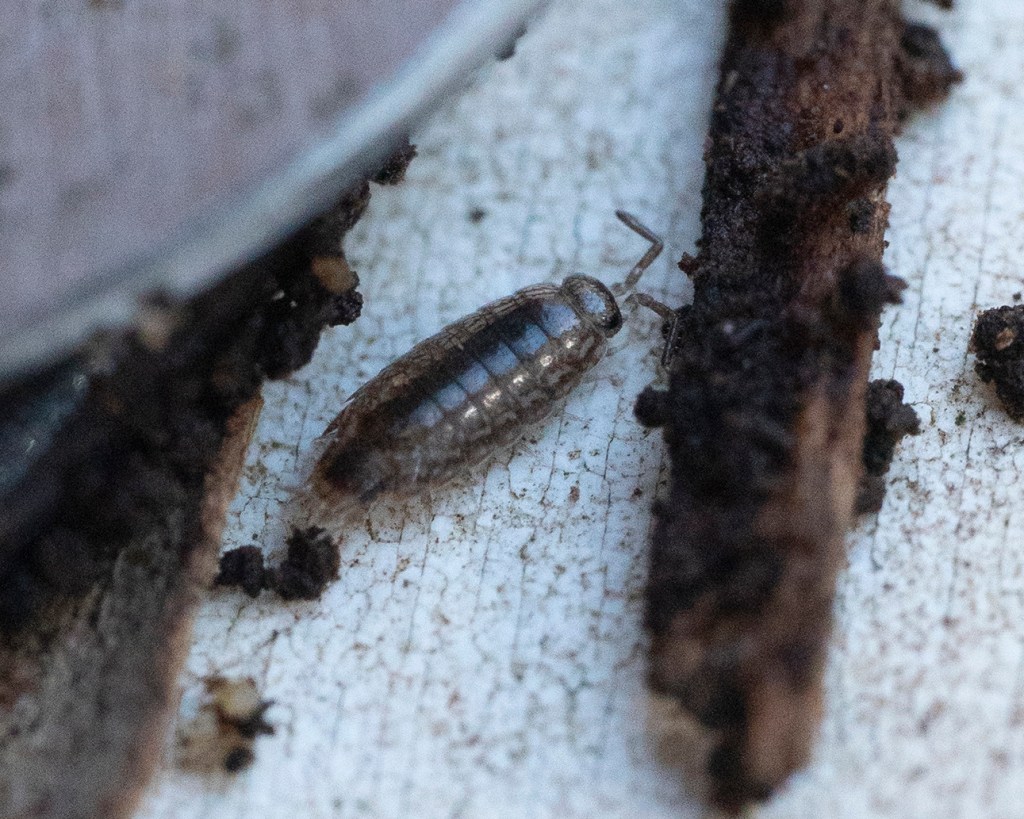
Slater 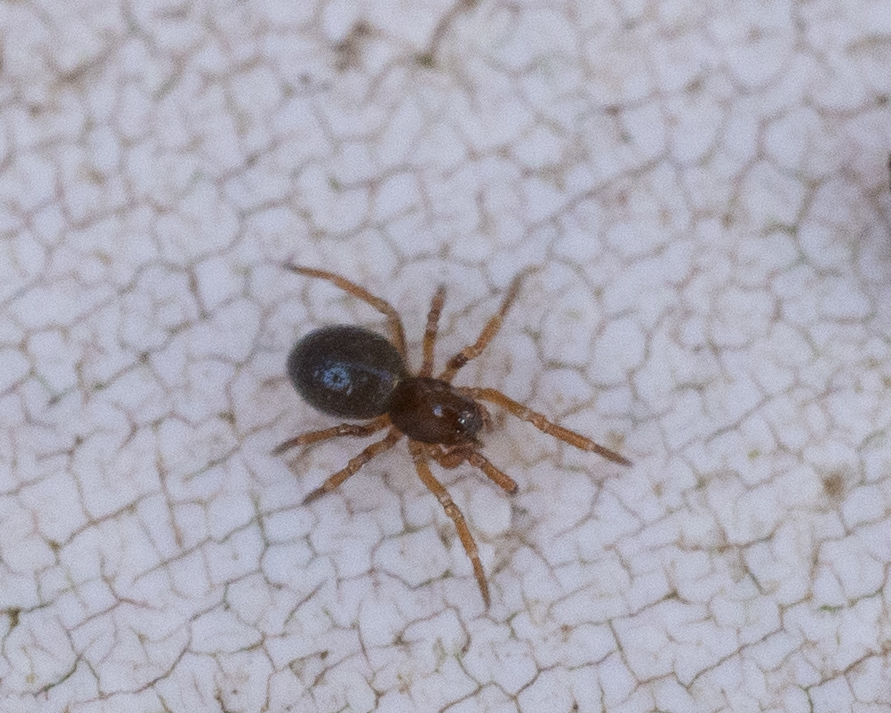
Spider 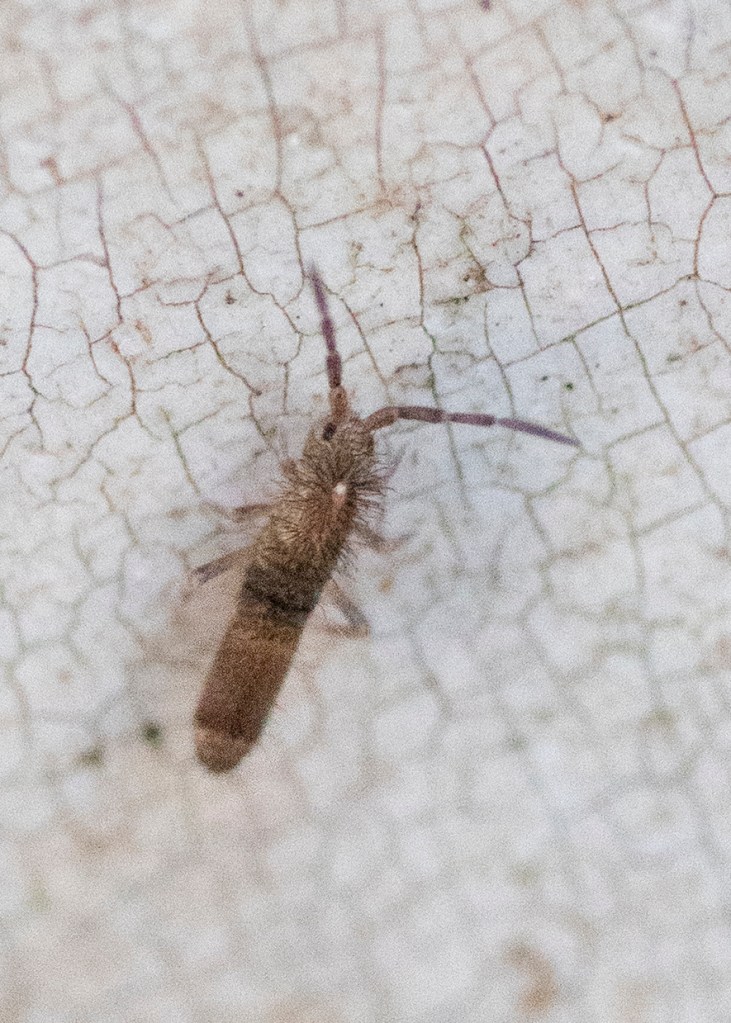
Springtail 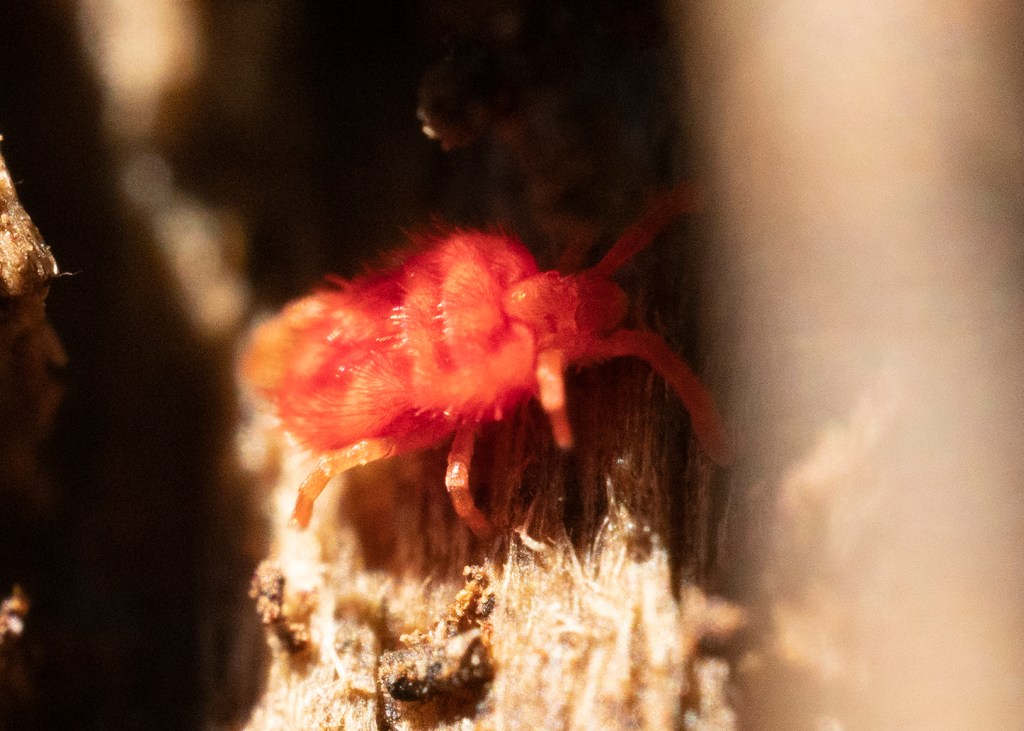
Velvet Mite 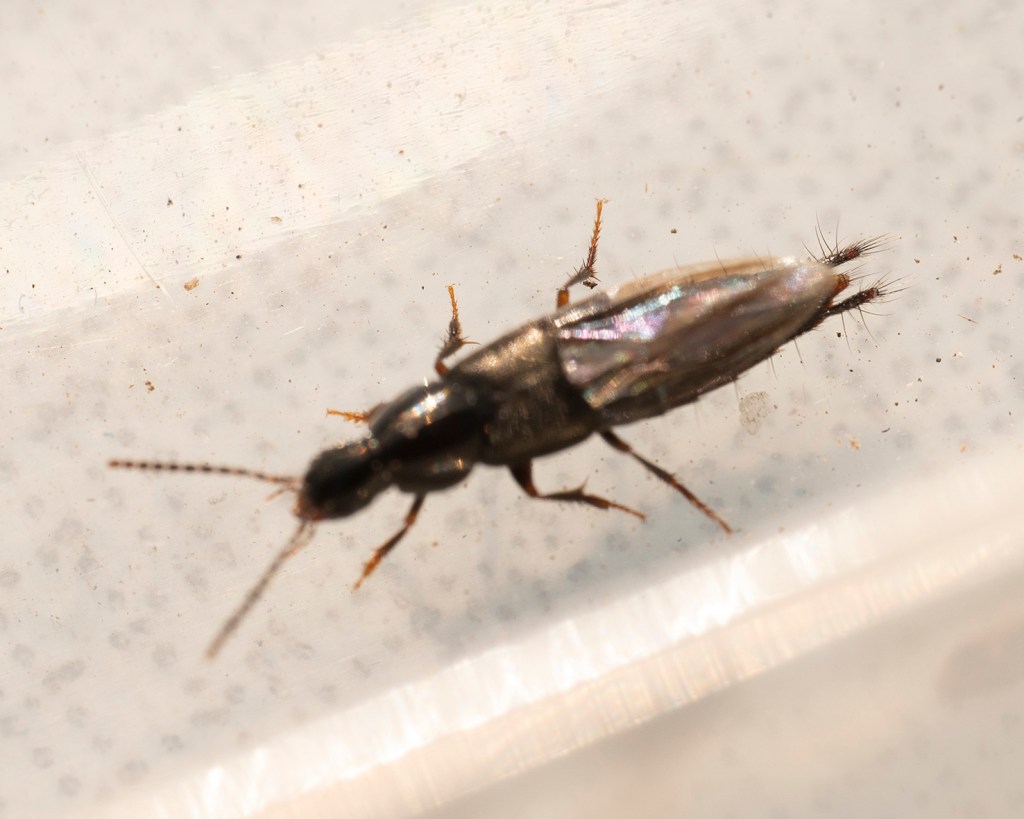
Winged Insect 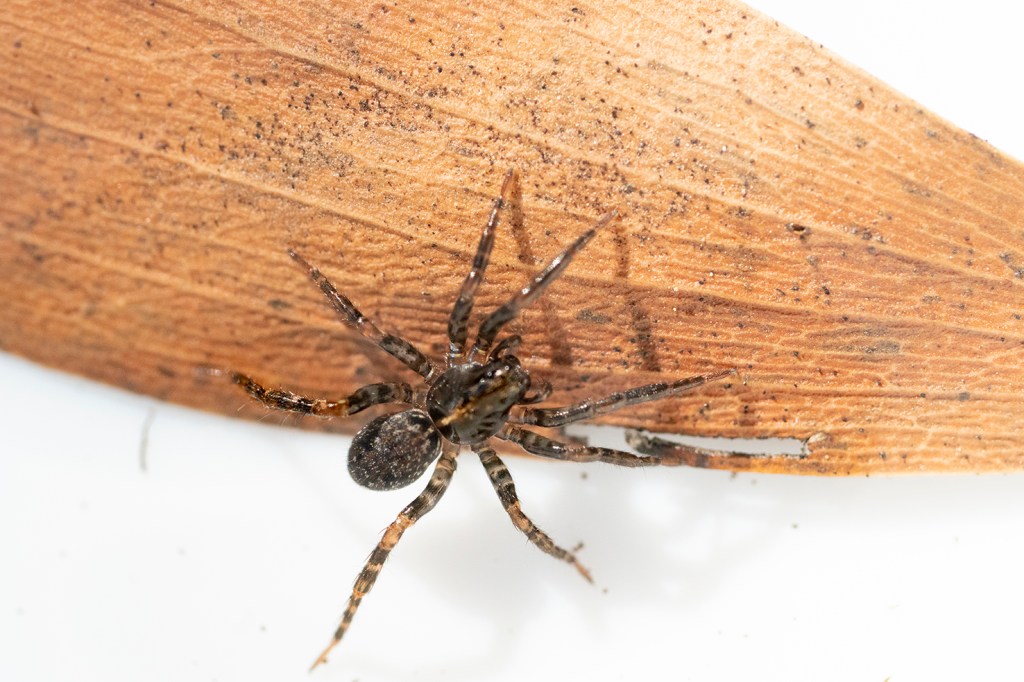
Wolf Spider 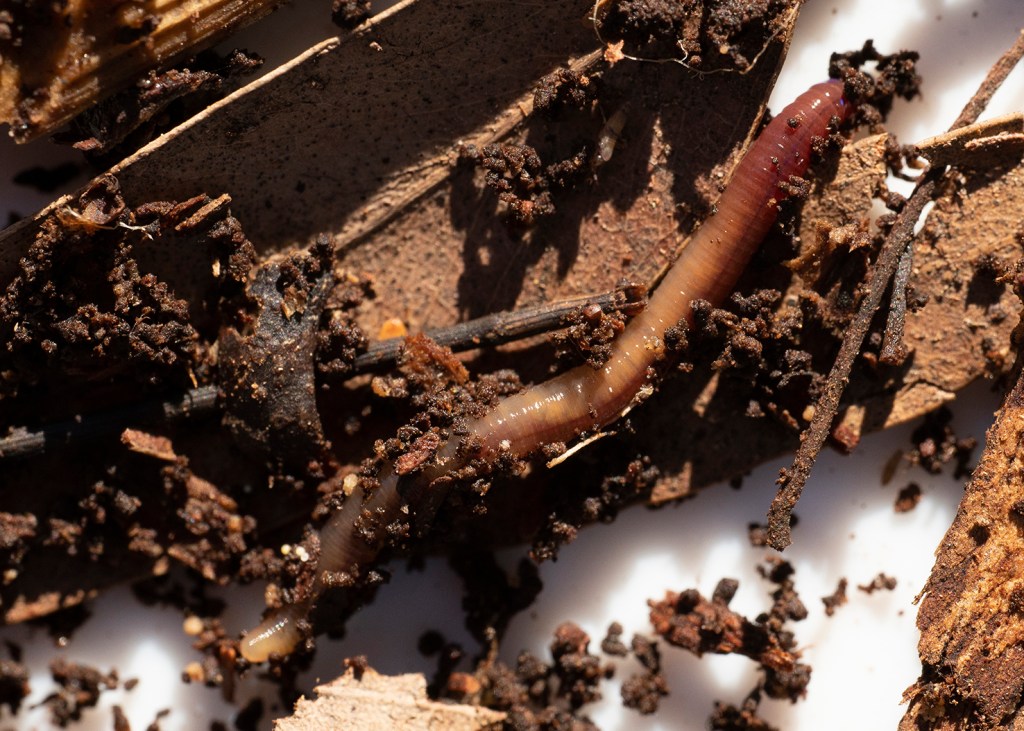
Worms
That seems a large number of animals – the two areas reviewed were relatively small [2XA4 page size]. Everything examined, including the leaf litter material, was returned to the sites and reinstated to approximately original conditions. Lessons learned – it took much longer than they expected to process a site. They had time for only two of the original four sites they planned. Also, photographing tiny, moving animals is hard!
Ants (nature’s rubbish collectors) are very important in the environment. For example, their tunnelling aerates soil and improves water penetration and drainage. They also improve soils by storing large amounts of food (ie organic matter) underground – in and around their nest sites. This includes seeds – effectively “planting” them in safer, deeper, nutrient-rich places.
There are about 1,300 species and subspecies of ant in Australia. We believe there are over 50 species of ants living in our park.
Maintenance Team Report
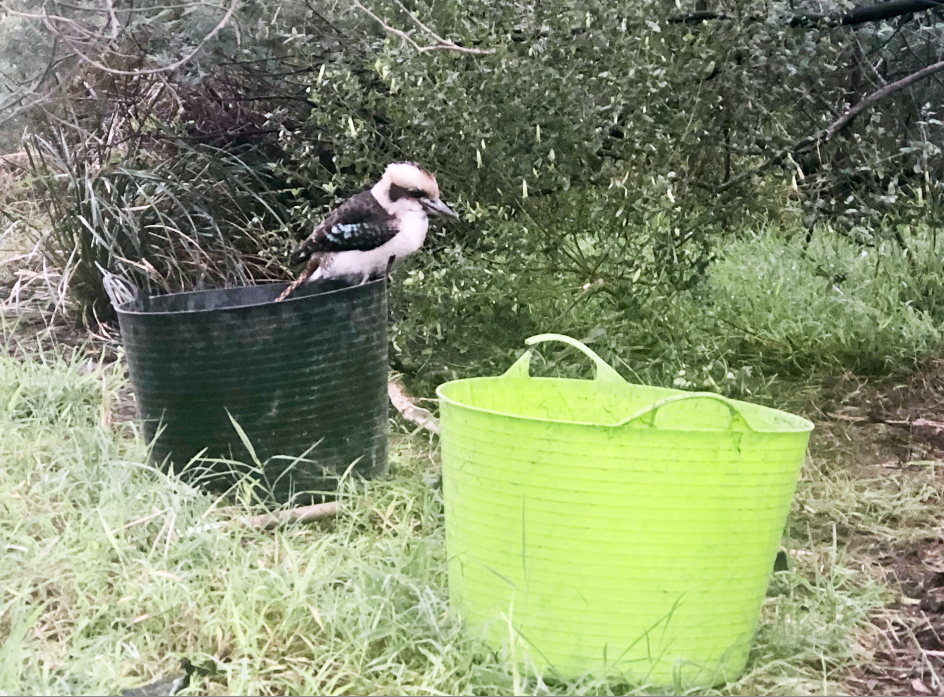
The Maintenance Team worked its last three Monday working bees at the Billabong in preparation for our first Community Working Bee on 2nd May. Earlier work in April was adjacent 60 Main Street, also in Kalang Park.
In good news for the team, Nic, one of our old stalwarts, has returned to the team after retiring from full-time employment.
We are also very pleased to welcome two new team members working with us – Peter and Julie – both have started in the last few weeks.
Council Works
Main Street Bridge Replacement
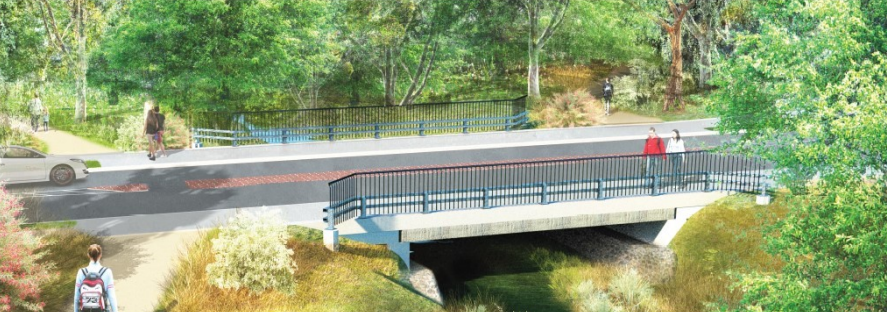
A tender was accepted for the Main Street bridge replacement at April’s Council meeting – foreshadowed in last month’s news. This $1.6M project will require road closure(s) and park track diversions as the works progress. We will meet shortly with Council and the approved contractor to work through the impacts to our park.
Park Furniture
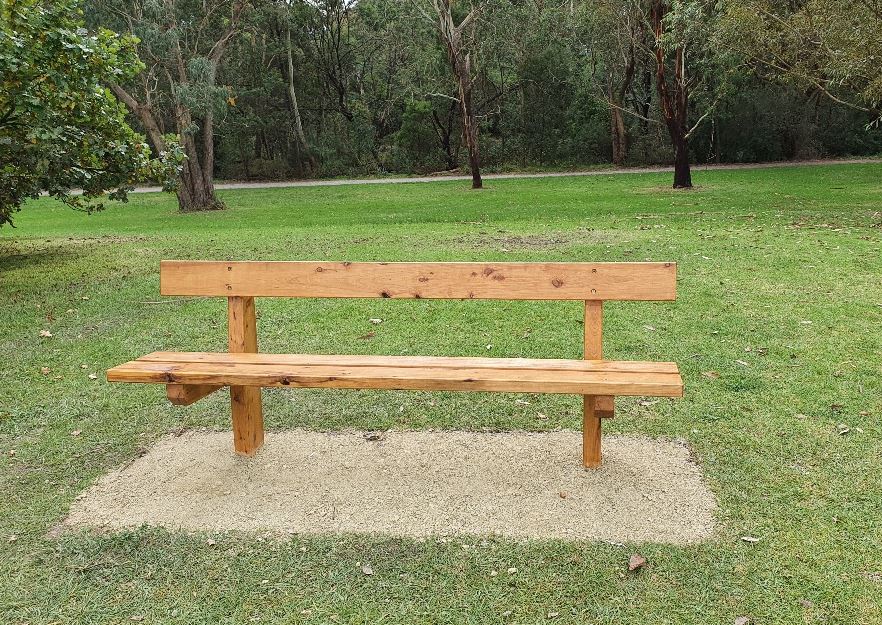
The program of updating seats is continuing – the low slung sleeper seat that was split down the middle under the Ole Oak Tree has been replaced by two new seats nearby. The new seats have a backrest and seat higher off the ground to better suit the elderly. One faces the oval (pictured above) – the other has a northerly aspect. We have been discussing siting a picnic table near the children’s playground adjacent the oval soon too!
Heath Street Footpath
We’ve had preliminary contact with Council’s engineering department regarding proposals for changes to the footpath on the northern side of Heath Street at the Blackburn Road end. That path was a little too narrow to cope with the high volume pedestrian traffic and social distancing experienced during the long lockdowns.
Matters are complicated there by the narrow verge, street tree plantings, the need to respect the park’s vegetation and there being no footpath on the south side of Heath Street.
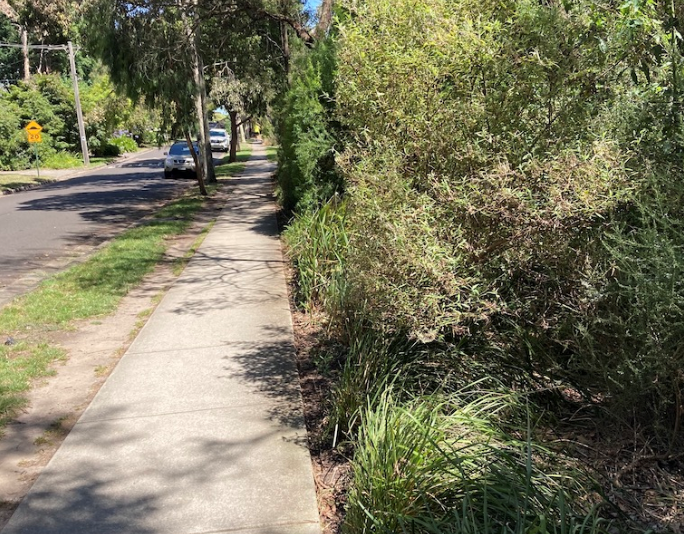
Heath Street is a designated cycling route linking points east to the Gardiners Creek Trail that ends at Albion Road. We believe commuting cyclists should stay on the road. Recreational cyclists are welcome to share the tracks in the park – but need to slow down and be cognisant of other park users – especially mums with strollers, children, the elderly and dogs-on-lead. All of our park’s tracks and paths are actually NOT designated “shared paths” – they are pedestrian paths.
Sightings
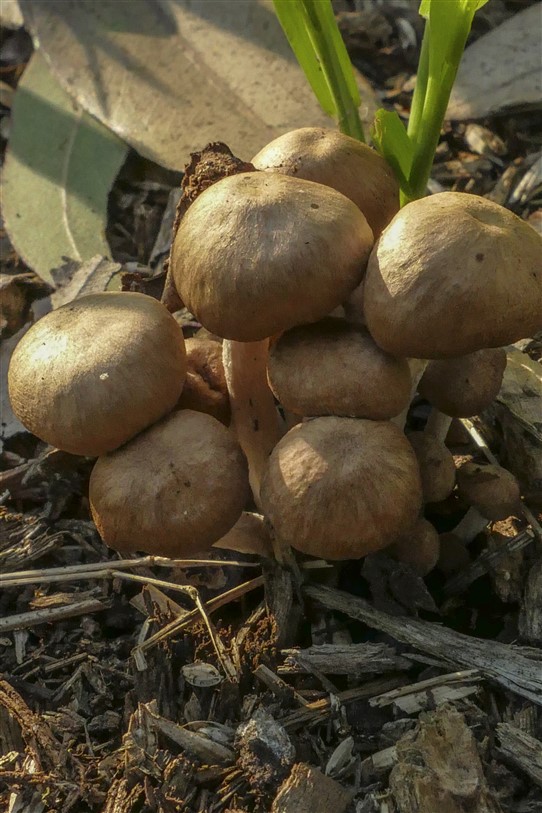
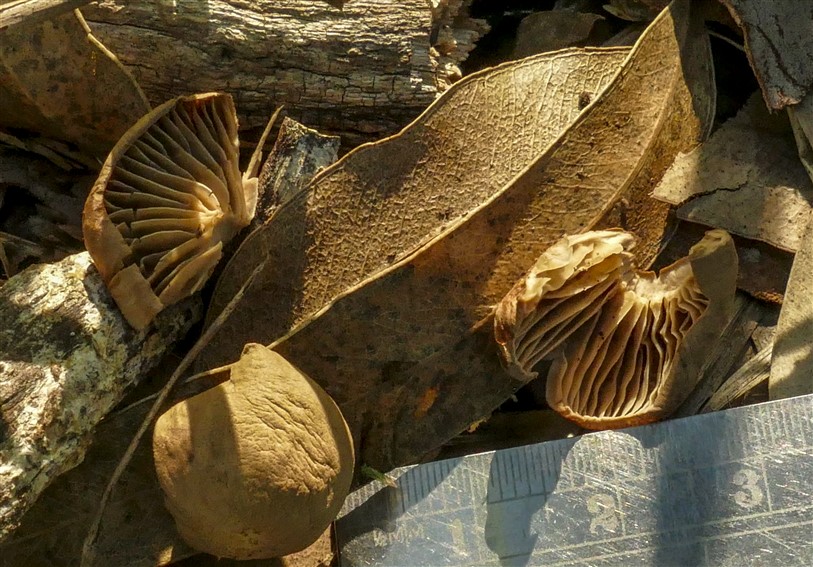
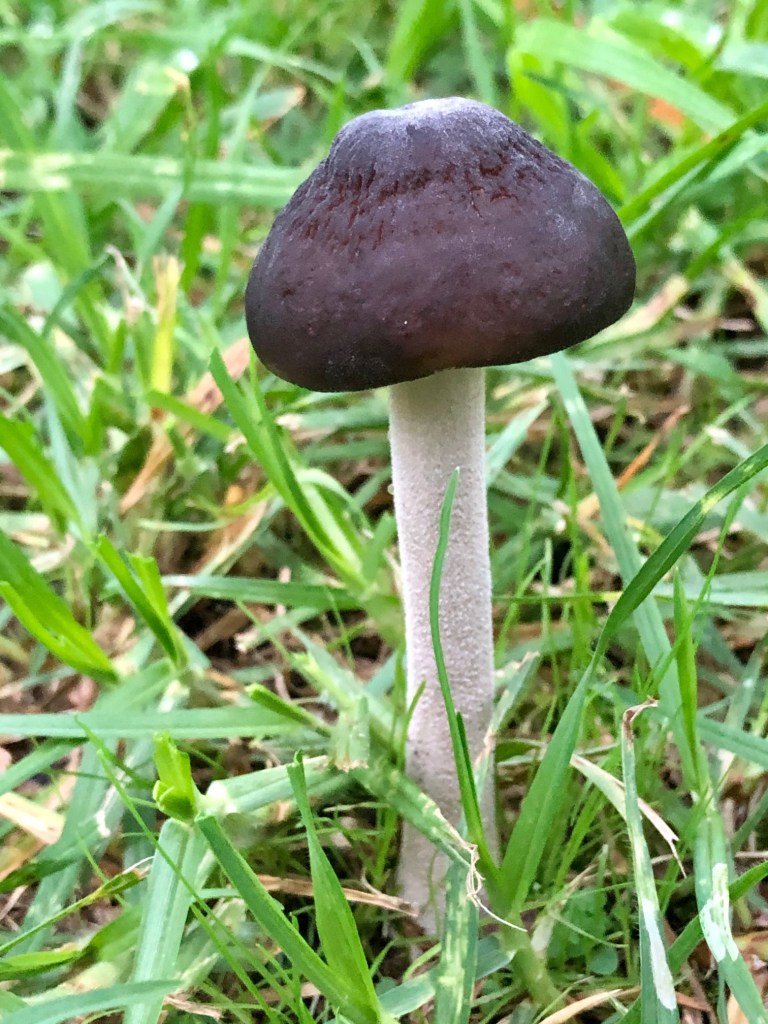
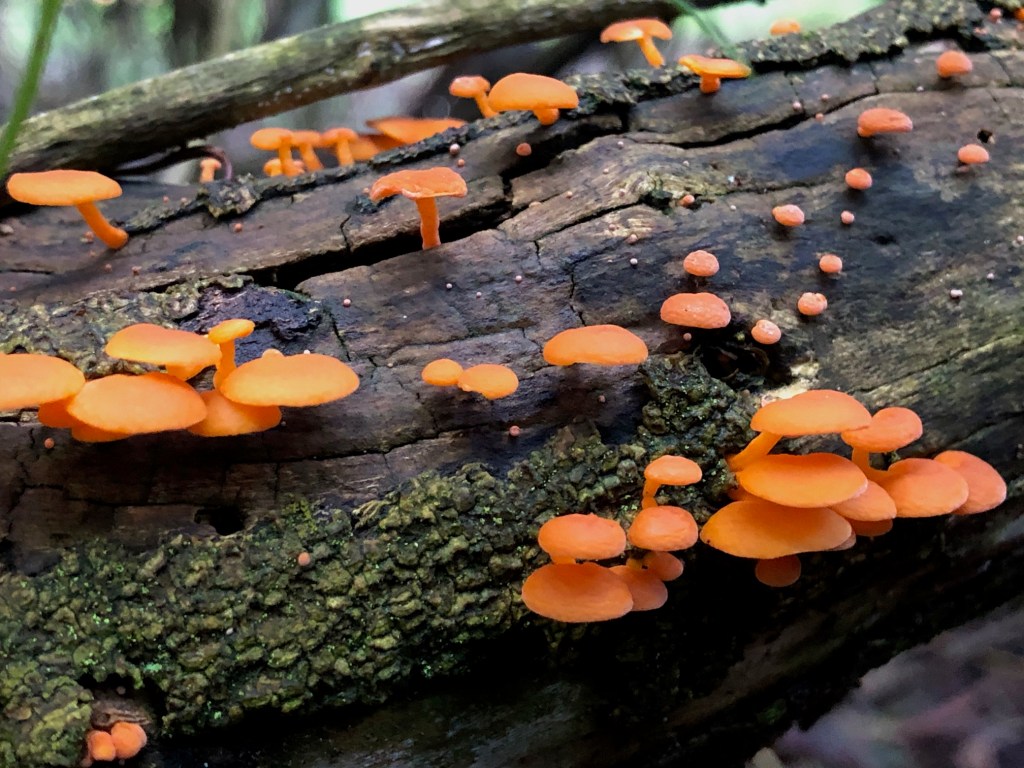
Fungi
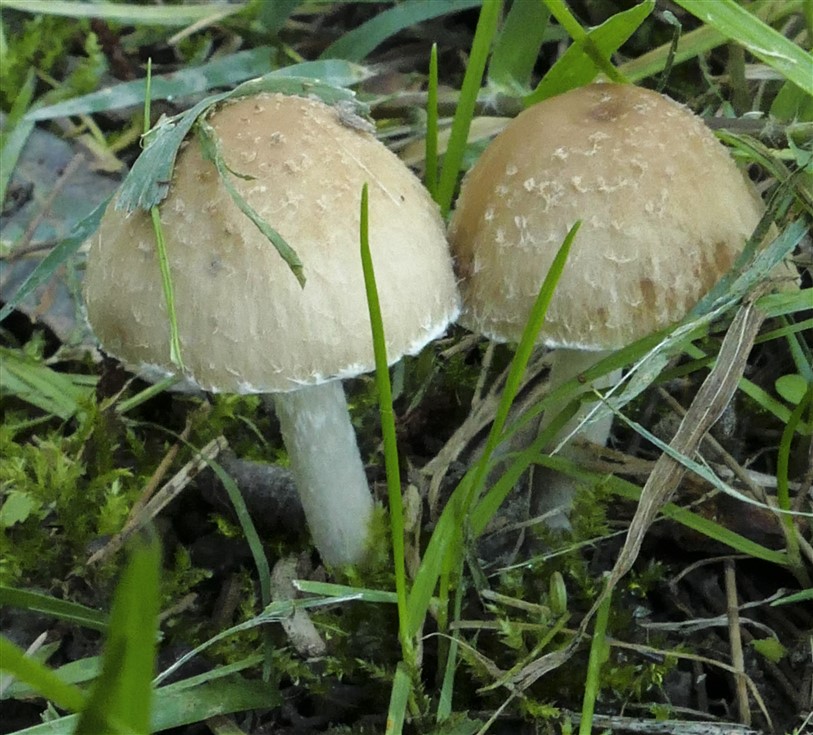
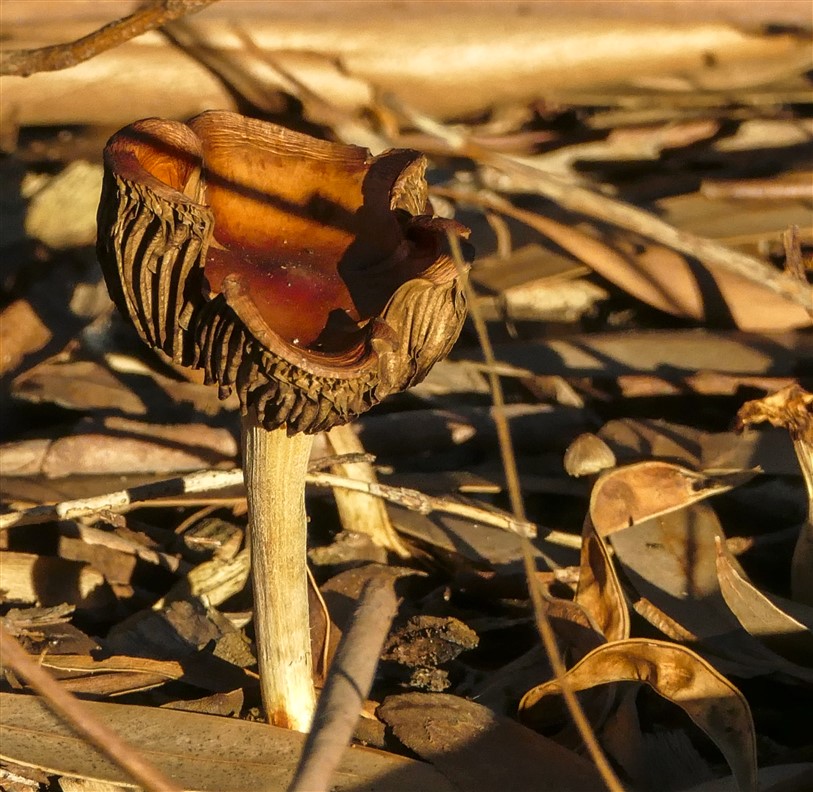
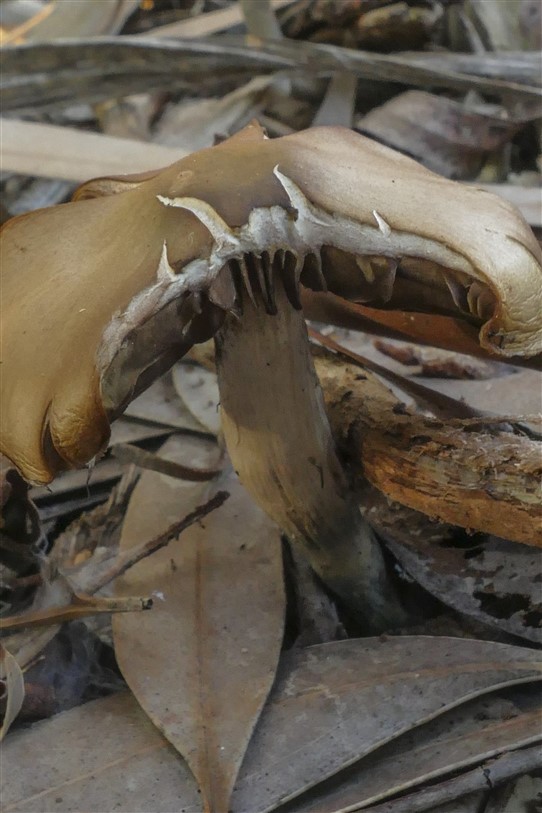
Autumn is usually our best season for fungi in the park. Here are some of the interesting varieties around at present – snapped by Lisa and others:
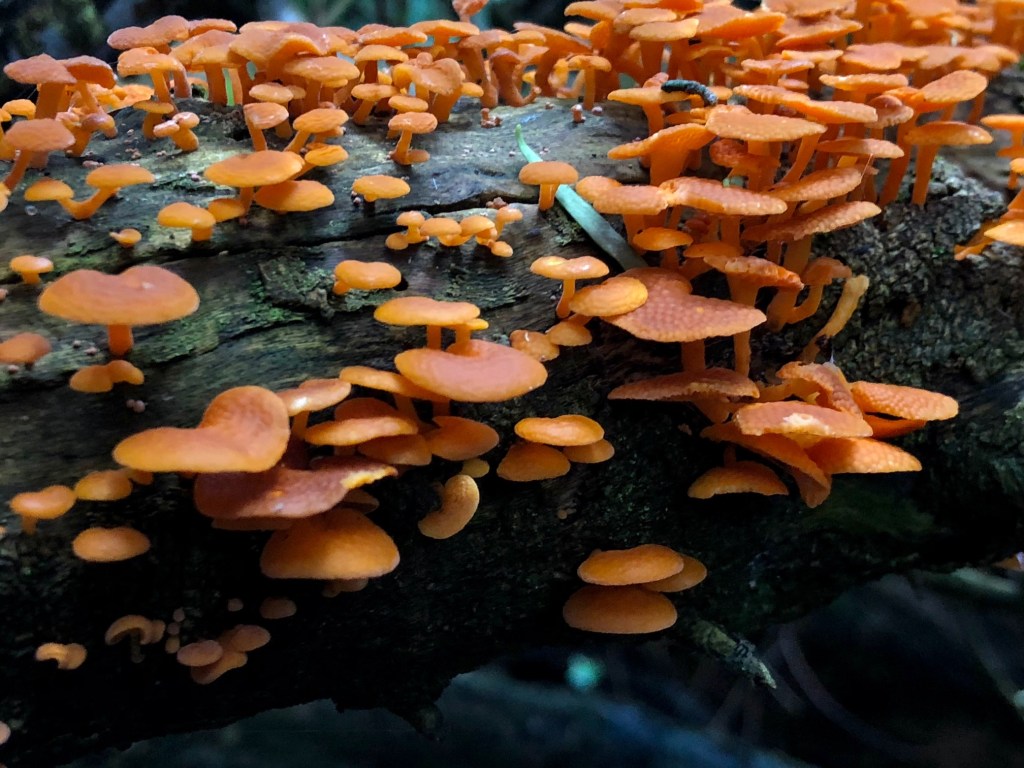
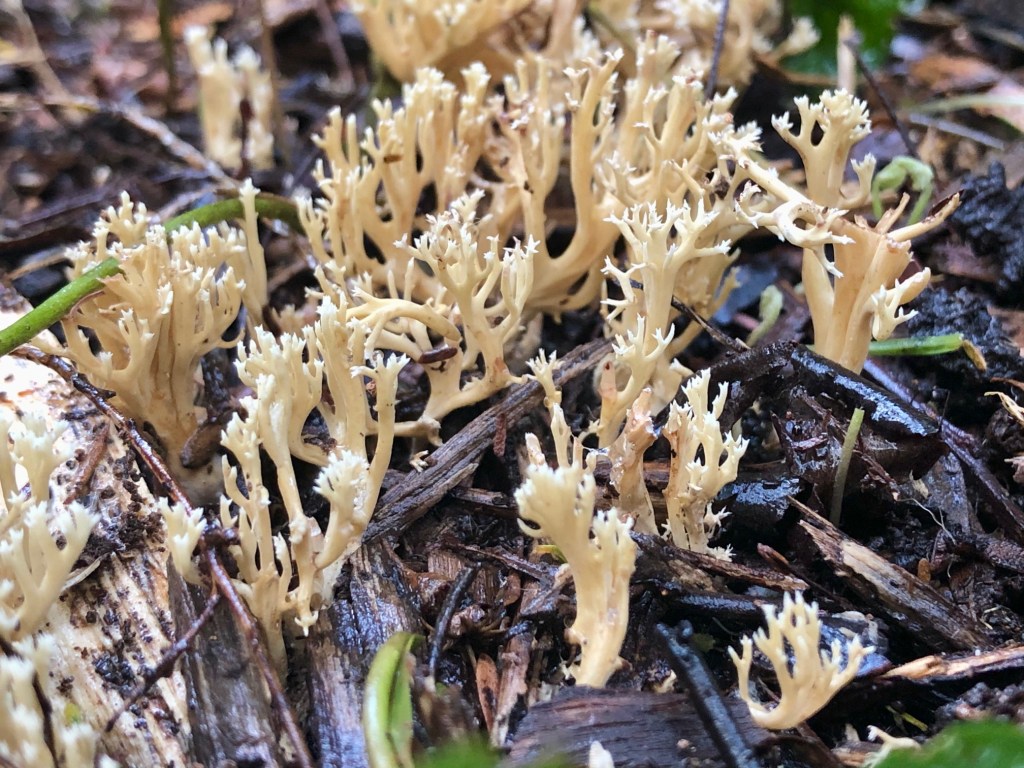
Nature is not wasteful!
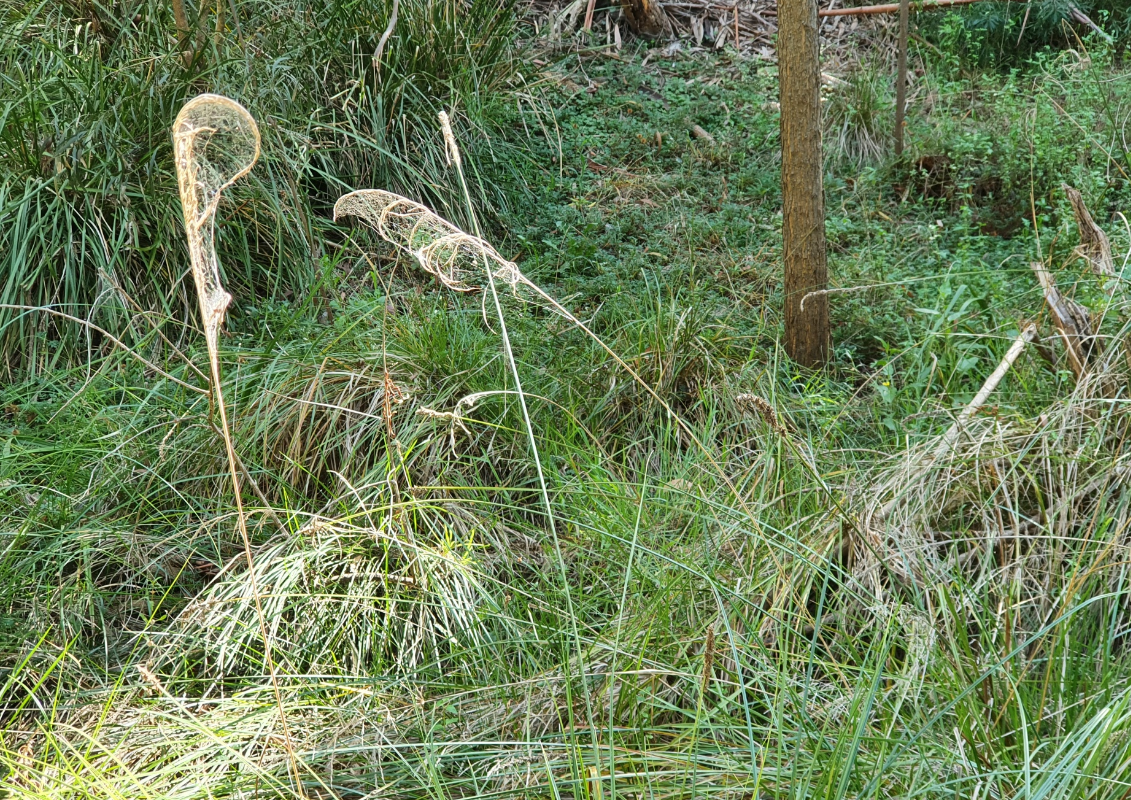
There are so many niches in nature – and creatures to take advantage of them. For example, borers in a tree leave tunnels though the trunk under the bark that become exposed later when the tree eventually dies and the bark falls off. These tunnels then become homes for other insects.
Our photo below shows how a species of spider takes advantage of remaining Spear Grass shafts for its lure – that surely must be the inspiration behind those “teardrop” advertising banners you see along the Golden Mile:
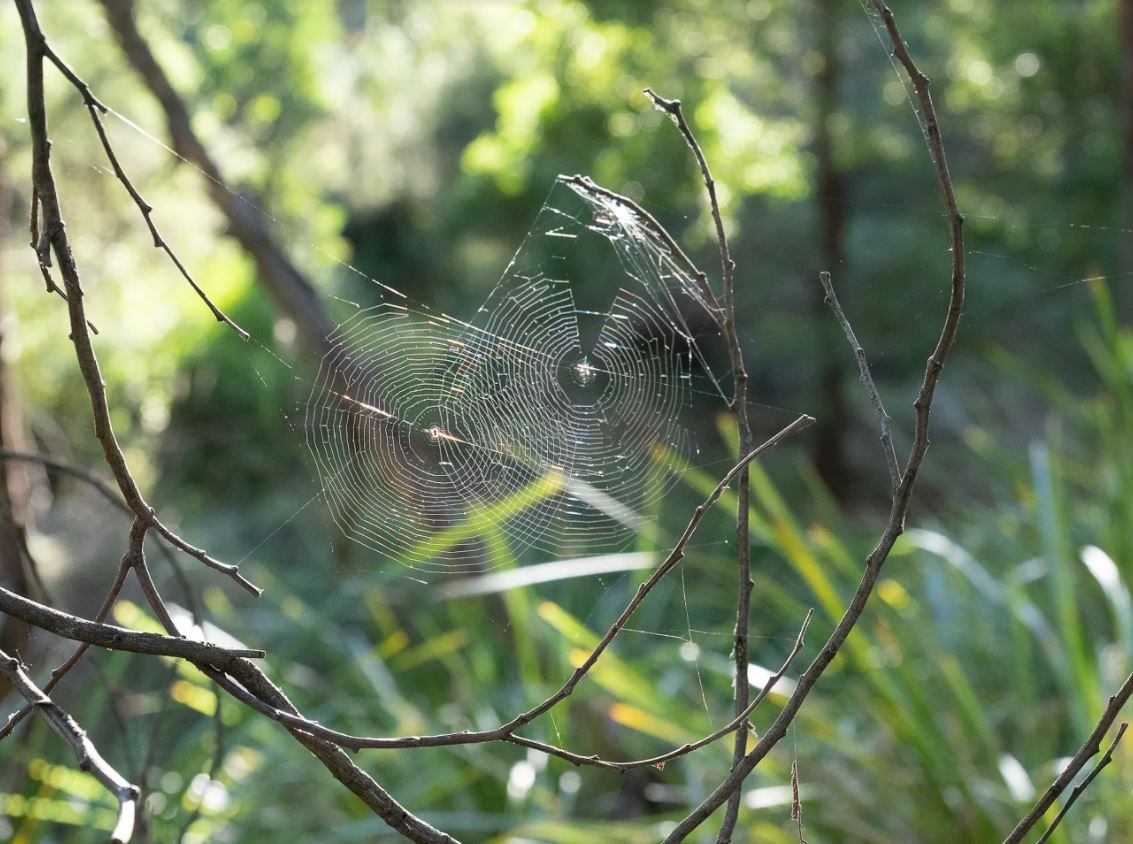
Greg’s photo below shows a similar approach to use of twigs by other spiders:
In the Corridor
Powerful Owl sightings at Blackburn Lake Sanctuary
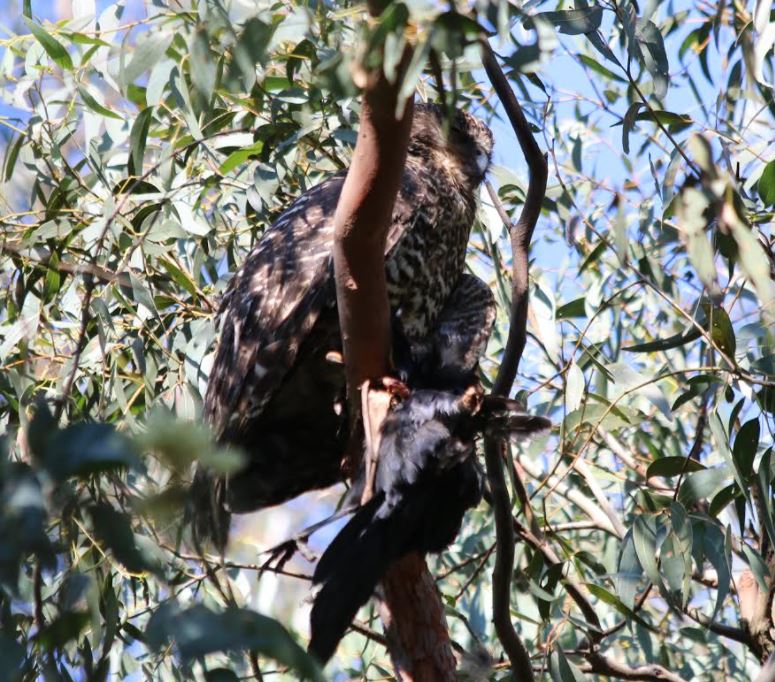
Our friends at Blackburn Lake Sanctuary have let us know a Powerful Owl was back in the area in early April, 2nd – 6th. This is Australia’s largest owl. Its prey, most likely a Little Raven (aka “crow”), gives a clue to its size in Julie’s photo above – taken in a nearby park in Glen Waverley. We had a visit in April last year, so please keep a look out for this very special bird.
Several homes neighbouring our park are up for sale at the moment. We trust that the new owners will continue to make their properties great contributors to our precious corridor!
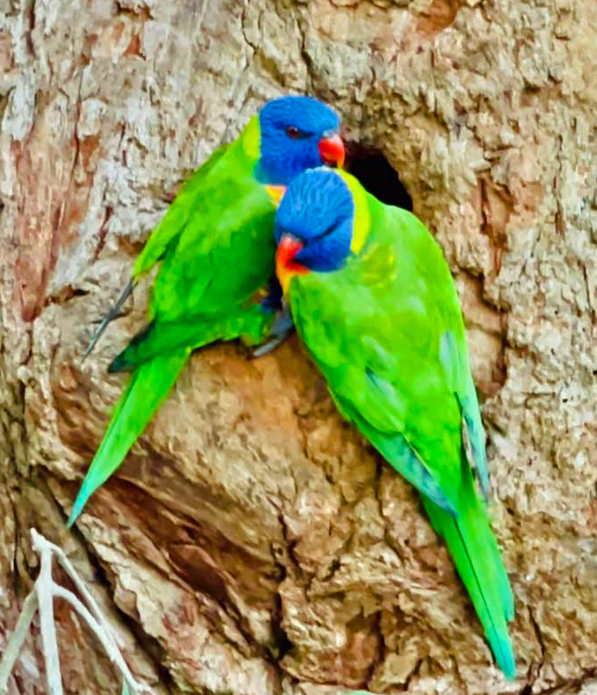
We’ll leave you with Russell’s picture which highlights the brilliant colours of our local Rainbow Lorikeets:


Pingback: Park News – May, 2021 | The Blackburn Creeklands
Pingback: Park News – February, 2022 | The Blackburn Creeklands
Pingback: Park News – July, 2022 | The Blackburn Creeklands