Bunjil visits the Blackburn Creeklands
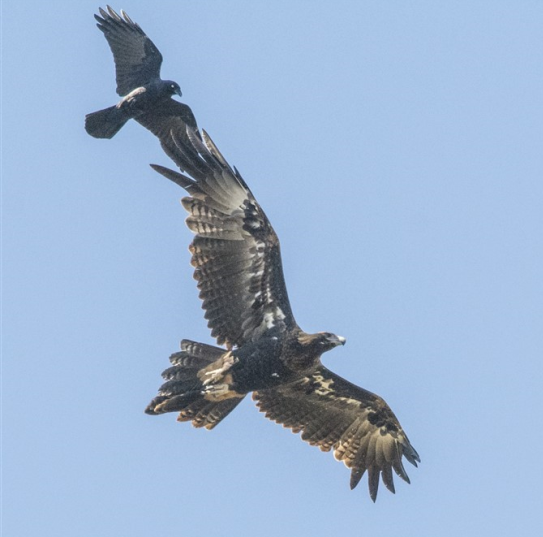
For the peoples of the Kulin nation, including the local Wurundjeri people, Bunjil and Waa created the universe during the Dreaming – with a little help from their friends – some lesser spirit ancestors. Bunjil and Waa are often depicted as a Wedge-tailed Eagle and “Crow” respectively. Given the range of the Kulin nation, we suspect that the Little Raven (very common in our park) may have depicted Waa. Not that the Little Raven is all that little – it is considerably bigger than both our Magpies and Pied Currawongs – and only a fraction smaller than the Australian Raven found a little further north.
In many First Peoples including the Kulin people, moiety is the highest level of kinship. Moiety refers to a form of social organization where society is divided into two complementary parts – perhaps, like Yin and Yang in Chinese philosophy. In many aboriginal cultures, people who share the same moiety are considered siblings and forbidden to marry. They also have a responsibility to support each other.
The Wurundjeri are divided into four different clans – one has Bunjil moiety, the others are all Waa. Along with further social rules, the overall effect was that Wurundjeri men sought wives from further afield which made for a strong gene pool, fostered alliances with more remote in-laws and relations – as well as making most people bi-lingual (so good for the grey matter!).
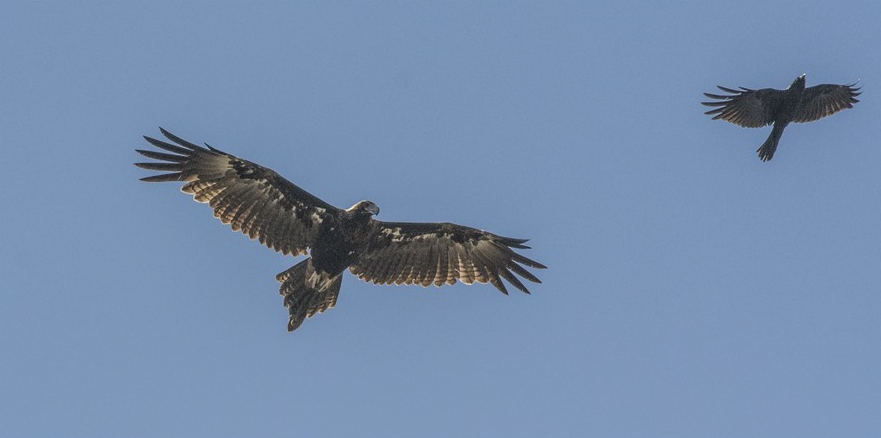
Our pictures seem to show the eagle and the crow flying together as we’d expect the complementary Bunjil and Waa to behave. However it is more likely, that the Little Raven is one of a gang “escorting” the Wedge-tailed Eagle “from the premises”! This is a dangerous thing to do given that the Wedge-tailed Eagle is Australia’s largest bird of prey.
The Eagle has Landed !
The photos in our article above were taken by our most dedicated photographic contributor who knows a thing or two about birds and their behaviours. This is her story:
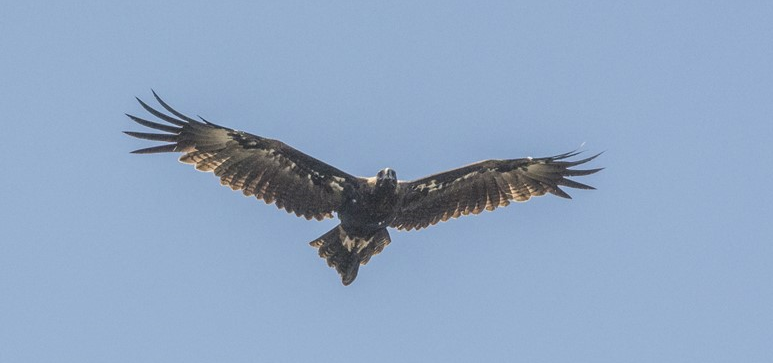
When I saw this Wedge-tailed Eagle flying quite low over my head, I realised that this was the intruder the local birds had been chasing and calling about over the previous few hours. Hearing the various different alerting/ harassing calls of the local birds and remembering what these calls are often used for, provided some of the clues in this final, admittedly partly surmised, story.
On Thursday 3 March 2022 at about 11am in Kalang, the Weeding Group heard the local Magpies, a few Pied Currawongs and numerous Noisy Miners flying in to call loudly at something in the trees. After a few minutes the loud harassing calling stopped and the Magpies and Noisy Miners flew back to their various trees. Later the birds began calling again and chased something off to slightly further away. Once again the loud bird calls stopped.
After a while the chasing calls started up again. This time it was mostly Pied Currawongs chasing the intruder as it was flying from somewhere near Garie St to the top of one of the tallest gumtrees on the high North slope of Blacks Walk near Middleborough Rd. The Pied Currawongs stopped their chasing and resumed normal feeding and perching behaviours with at least 3 of the local Pied Currawong family remaining in the next gumtree.
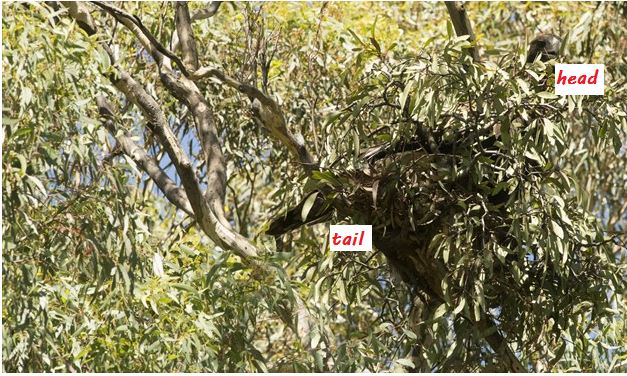
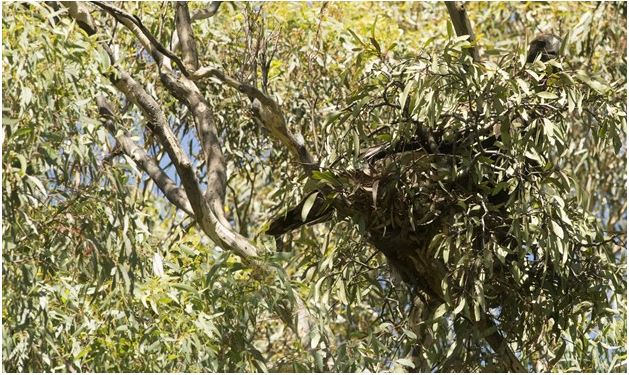
The intruder was a Wedge-tailed Eagle which stayed mostly obscured by the mistletoe clump where it had landed. Walking by and looking up from the track I did not notice the Wedge-tailed Eagle in the tree and just took a couple of photos of the mistletoe at 1:13pm. The Wedge-tailed Eagle had stayed there not being harassed for at least 30 minutes then, when it did fly, it was almost immediately harassed by Little Ravens, but not by the Pied Currawongs which were still nearby, and not by the other local group of Noisy Miners.
The Pied Currawongs did not fly up to join in with the Little Ravens to chase the Wedge-tailed Eagle away at the end. At 1:20pm the Little Ravens started chasing the Wedge-tailed Eagle which flew away in a circle low over Middleborough Rd and back towards its perching tree before flying further away back over Blacks Walk with the Little Ravens still chasing it. It appears on this occasion that the other birds harassed the Wedge-tailed Eagle when it flew, but not continuously when it was perching.
Considering the general behaviour of the birds during the morning, I think the Wedge-tailed Eagle stayed for some time perching in different trees in the Blackburn Creeklands and the surrounding Blackburn Bushland Corridor.
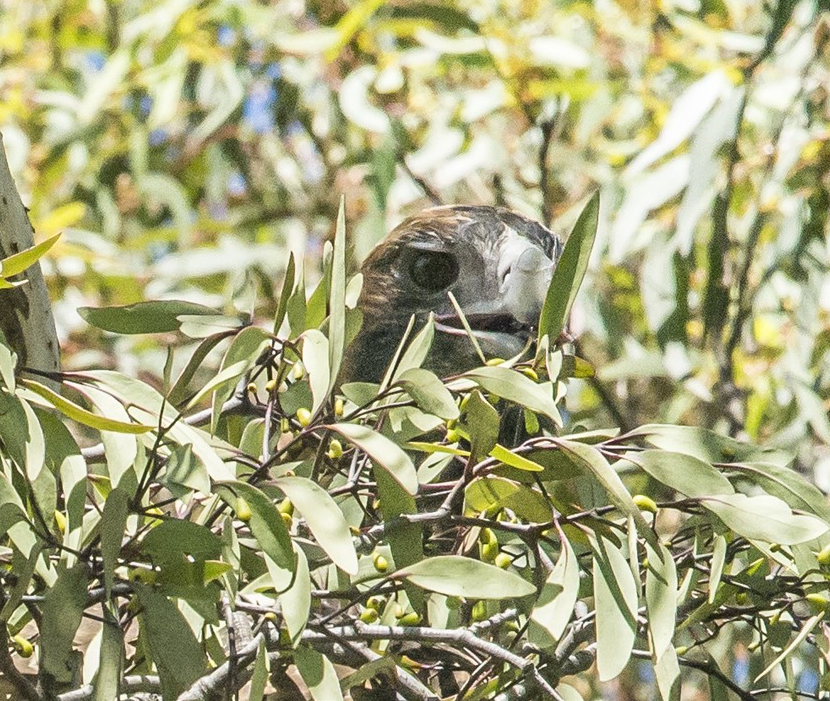
Watching wildlife is all the more interesting when something unexpected occurs. Checking out a tree canopy photo and finding that a bird as large as a Wedge-tailed Eagle was almost completely hidden by a mistletoe clump is one of these surprises, even after you have seen the Wedge-tailed Eagle flying overhead!
What a marvellous sighting! The Wedge-tailed Eagle (Aquila audax) is a new species for our list – which goes back to the 1970s. You can find our full lists here.
Damsels and Dragons Update
Regular readers may remember our articles on Damselflies and Dragonflies in our January and February editions last year.
In these days of mosquito borne diseases such as Japanese Encephalitis, we thought readers might be interested in this recent ABC news article which carries additional information such as:
- What good mosquito eaters they are – both as insects and at the larval stage.
- How good flyers they are – at speeds of up to 60 km/hr with almost 360 degree vision.
- A spotters’ guide.
Maintenance Team Report
The team has been busy weeding, mulching and protecting young plants:
- In the Noticeboard and Plaque areas in Kalang Park adjacent the carpark.
- In Furness Park alongside the track from the Main Street bridge to Gardenia Street.
- Around the western end of the Billabong precinct.
- In the areas to the immediate west of the Laurel Grove bridge on both sides of the creek.
We’re Recruiting
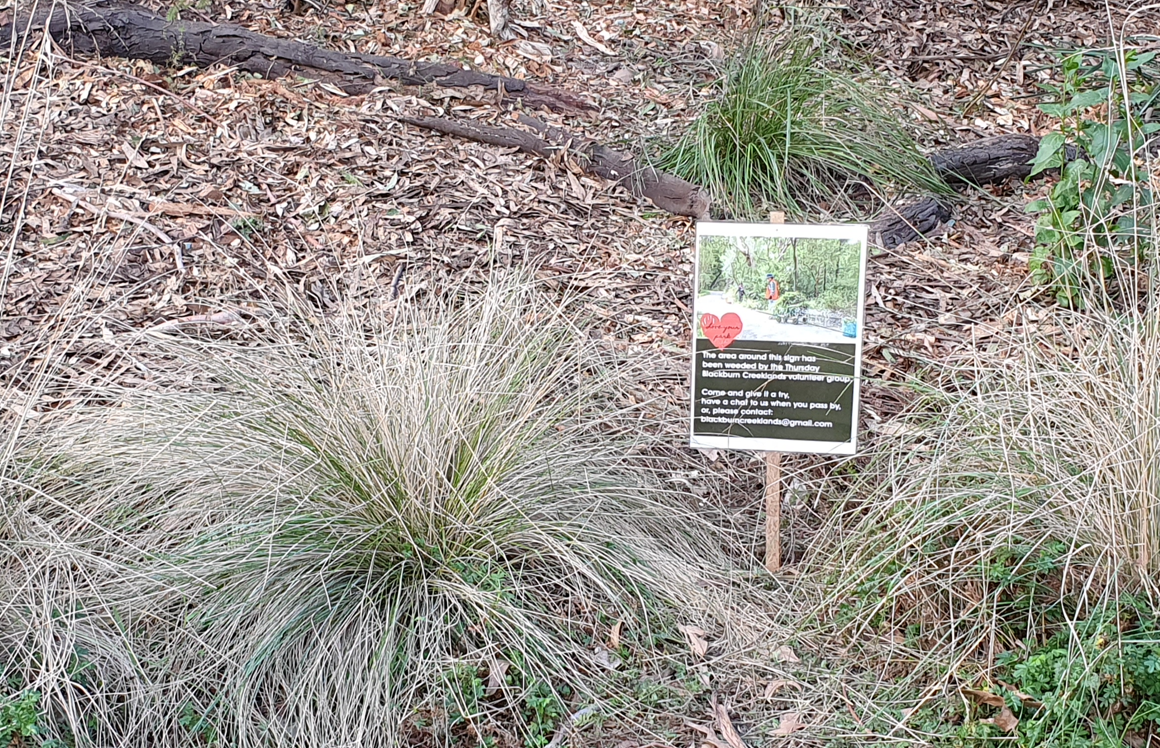
Given the relaxation of the Covid restrictions, we are now actively recruiting new team members. You do need to be fully vaxed though. You might have seen our low-key recruitment posters where we’ve been weeding or on our noticeboard (see photo above).
Mulching
One problem we have is that there’s a fair bit of weed seed on the ground which resulted from our inability to weed during Covid-19 lockdowns over the past two years. The team has used mulching to slow down weed re-growth in appropriate places. Some of this is Council-supplied wood chips (from storm-damaged trees etc) or eucalypt leaf-litter collected from the Bowls Club carpark.
Council’s wood chip mulch is good quality – the right consistency and weed free. Council is delivering mulch just ahead of our working bees to the work sites – this helps avoid problems with fungus that can occur when mulch stands too long and gets wet.
Tools
Council has generously offered to top-up our supplies, PPE and tools ahead of our Sunday Community Working Bees restarting next month. Council used to supply top-ups to the Park Advisory Committees at our annual Parks Forum networking event. Unfortunately, those events could not be held for the past two years due to Covid restrictions.
Council Projects and Works
Main Street Bridge Crossing Update
We’ve recently been advised by Council’s Engineering and Investment Department that a zebra crossing at the Main Street bridge will not be initially installed at the Main Street bridge. This decision followed consultation with owners and occupiers along that section of Main Street.
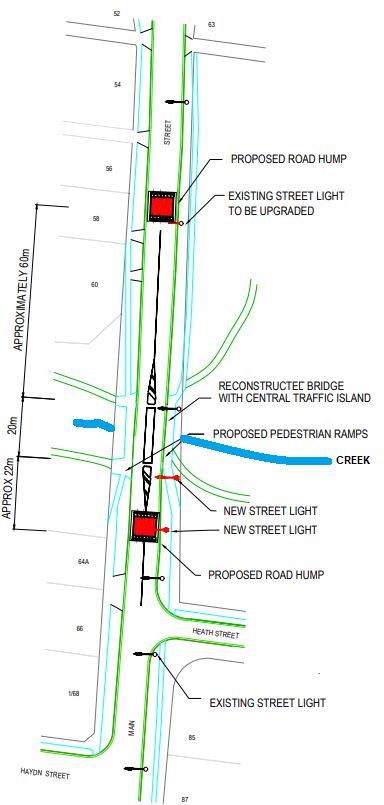
Instead, the following will be installed:
- Two 6m long flat-top road humps – approximately 20m south of the bridge and approximately 60m north of the bridge. The road humps are designed for bus use and have been approved by the Department of Transport.
- Upgraded or new street lighting beside the proposed road humps.
- A new street light above the Main Street bridge’s southern pedestrian crossing point.
These works are expected to be completed prior to 30 June 2022.
Council will then evaluate whether these treatments result in a safer, lower speed environment – and then determine whether a zebra crossing is needed.
These works are expected to be completed prior to 30 June 2022.
Tony Slater’s Guide to Eucalypts of Whitehorse
If you’d like to learn more about identifying your eucalypts or those in our park, Council has published a Guide to Eucalypts of Whitehorse authored by Tony Slater who volunteers for Council’s Gardens for Wildlife and Environmental Education programs.
You can download the guide and learn more about Tony and the project here: https://www.whitehorse.vic.gov.au/about-council/news/whitehorse-news/caring-community-eucalyptus .
Slime Moulds Update
We had a very positive response to our article on Slime Moulds in our January edition. You may also remember, we followed up the original article with a photo in our February edition of a slime mould disturbingly leaving the park to invade a neighbour’s property by passing through a fence.
Friends of the park have since let us know they’ve identified slime moulds in several different situations. Tasmanian researcher Sarah Lloyd, who was featured in the January article, has recently been in contact and supplied us with this amazing photo of Cribraria intricata:
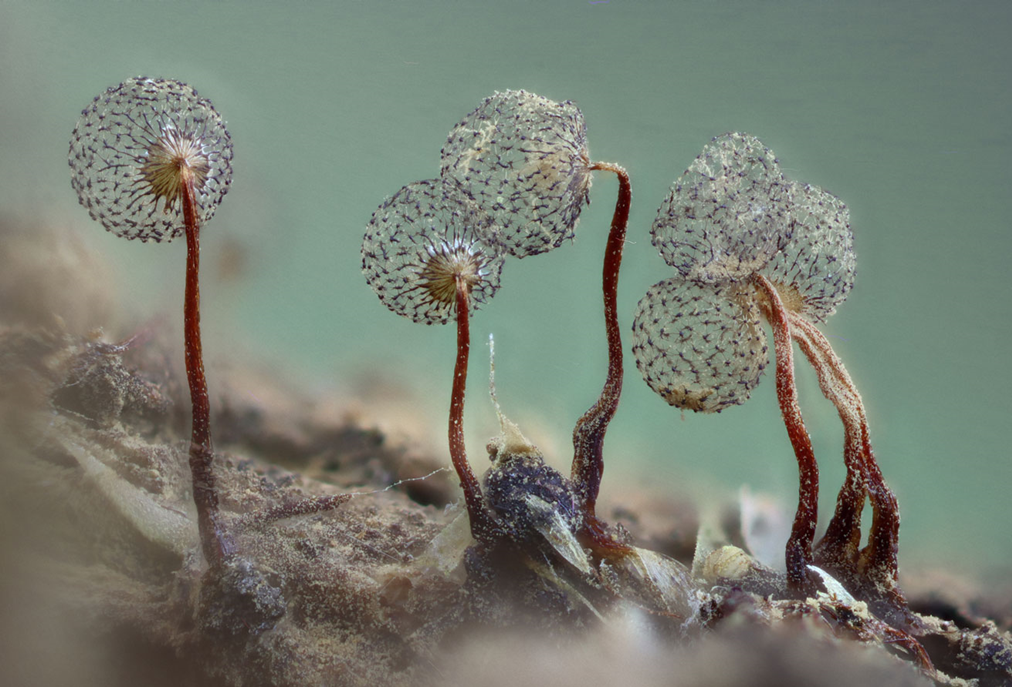
Well, “intricata” which presumably mean “intricate” indeed – looking rather like miniature dandelions! For the photographers out there, the photo was taken with an extreme macro lens at 5x magnification. It’s a composite of several hundred images that are ‘stacked’ using computer software. The fruiting bodies are actually only about 1.5 mm tall.
Sarah also let us know that there is a Slime Mould Club nearby at Whitehorse Primary School – not far from our park, just a few km away in Blackburn North. The school’s science teacher, Mrs Mac, tells us she has found over 60 species in our region over the past two years (including within Blacks Walk)! Also, her students are doing great citizen science work including contributions to the CSIRO magazine Double Helix for kids – including how to grow your own slime moulds and a case study on growing Enerthenema papillatum (brown with a black spot).
Our Corridor
Significant Landscape Overlays
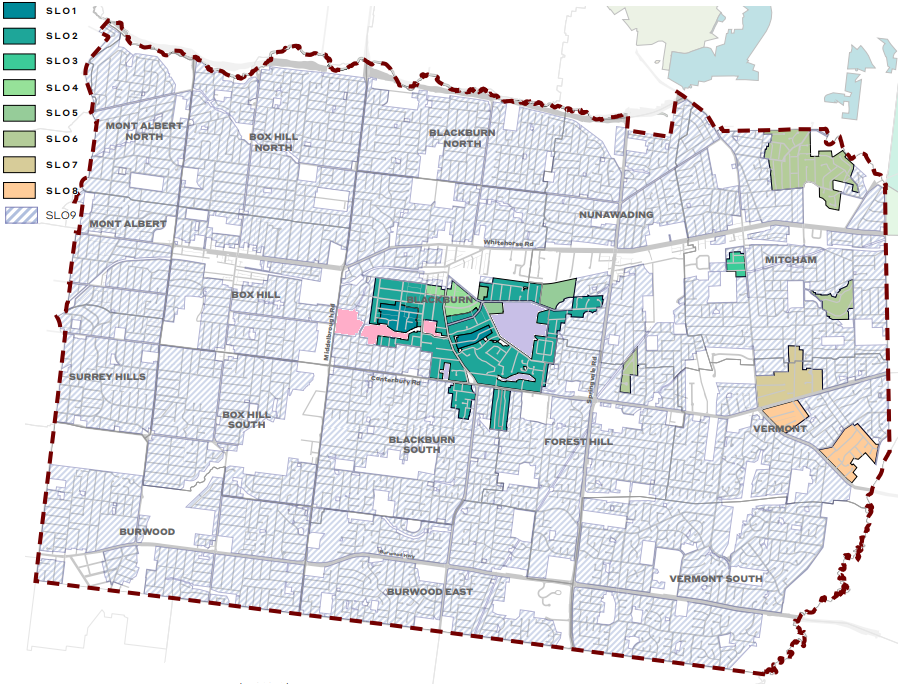
Trees in most of the Whitehorse municipality are protected by the interim Significant Landscape Overlay (SLO) 9 – shown in our diagram as cross-hatched grey. The more highly protected SLO1-4 areas are the beating heart (and lungs) of the Whitehorse municipality. Because they largely surround our park (shown in pink) as well as the Masons Road Reserve, the Blackburn Lake and Wandinong Sanctuaries (mauve), they are a very important part of our park’s corridor and long-term viability.
There are also other areas of bushland contributing to the corridor further to the east and west respectively:
- Other protected SLO areas further east in Mitcham and Vermont
- Parklands following Gardiners Creek to the south west.
Worrying Tree Removals
Many in the community are concerned about continuing losses of tree canopy due to illegal tree removals as well as legal, but unnecessary and undesirable, removals. There is a tension between protecting our environment and coping with planning policies which require the well-serviced middle suburbs to accommodate larger population densities and the housing that entails.
We’ve all seen instances of the traditional house and garden replaced by multi-unit developments or McMansions – with the result that building site coverage and driveways leave little room for trees – especially the larger canopy trees that are so important for cooling, greening, habitat and visual amenity.
Biolinks and Biodiversity
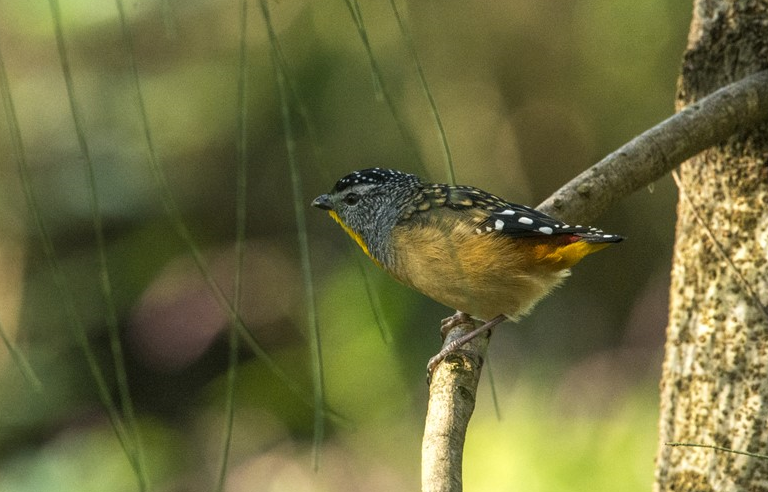
One of our intrepid bird photo contributors visited Yarran Dheran recently and found these species not seen in our park these days:
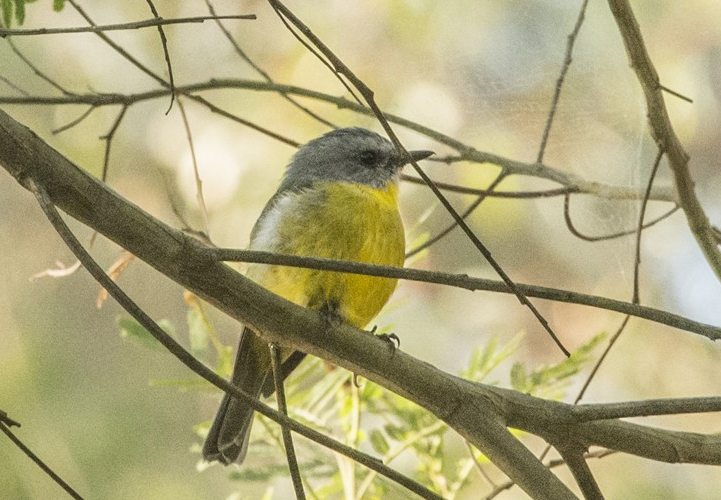
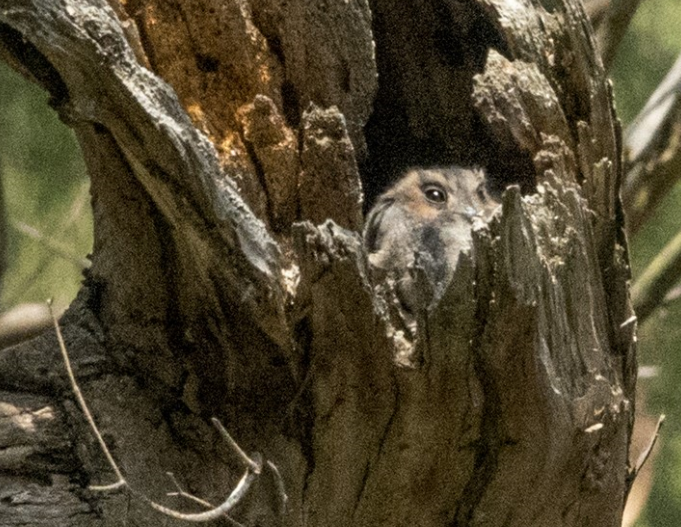
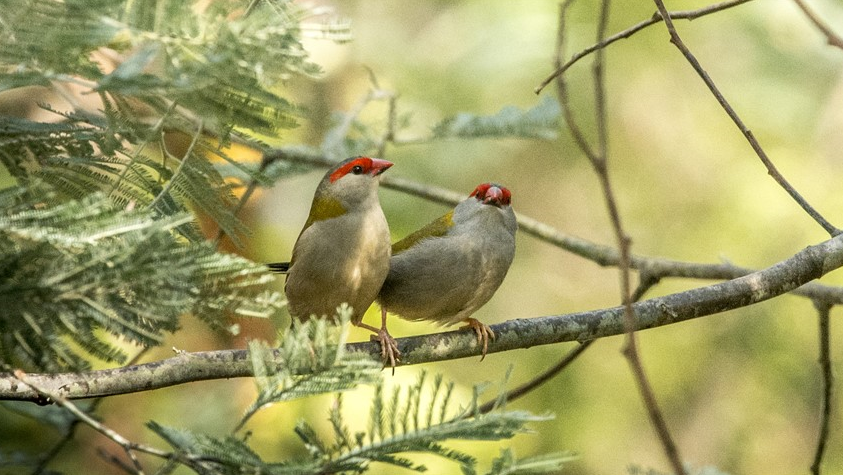
Wouldn’t it be marvellous if our bio-link corridors were good enough for these species to be able to make their way down to our park from Mitcham?
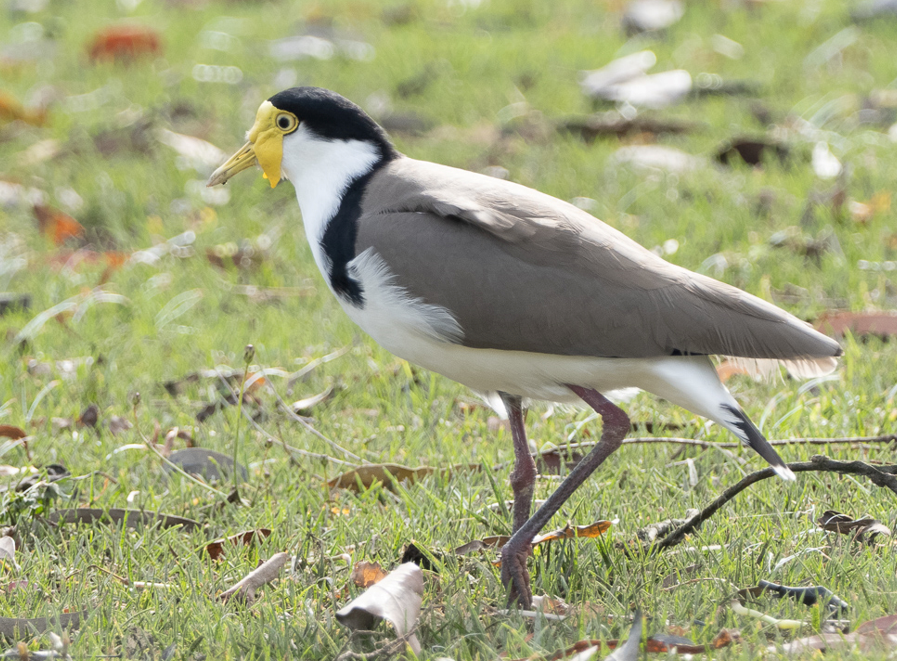
In another corridor shot, Greg snapped a Masked Lapwing nearby in Sparks Reserve:
Bird Survey and City Nature Challenge
Both of our incredibly knowledgeable – and entertaining – regular group leaders (Pat and Ian) have confirmed their availability for our Saturday, 30th April bird survey which is running along with this year’s City Nature Challenge. This is a fantastic way to get started in Citizen Science if you or your family are so minded.
You can link to Council’s web page on the City Nature Challenge here. That page has further links to training with the iNaturalist app including recorded sessions from last year.
The Bird Survey will start at 7.30 AM at the Scout Hall on April 30th. Attendees must be fully vaccinated.
We’ll send out a reminder to you in the week before the event. Hopefully, our May edition will be burgeoning with photos and reports from the day!
Friend Lisa sent us this pic of a “moth” outside her home in the Box Hill side of our corridor – particularly admiring the “quite … snooty lift of the proboscis!“:
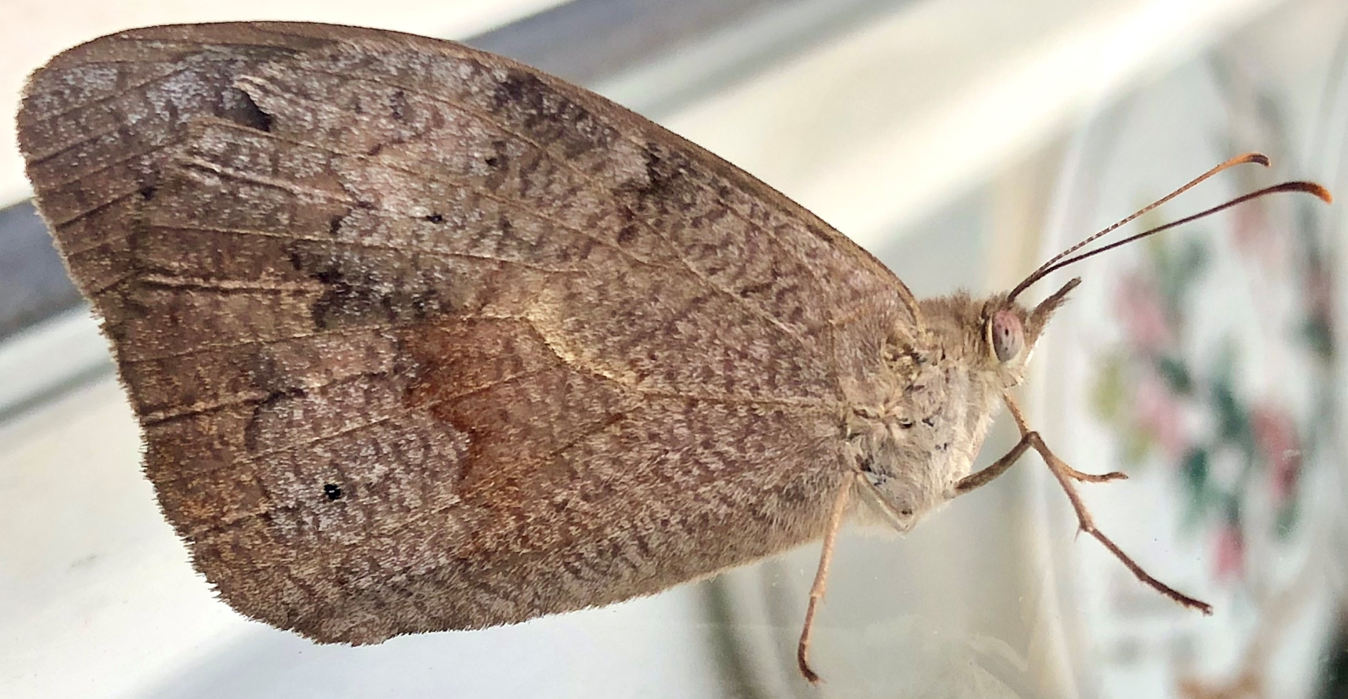
She has entered it into iNaturalist which suggests the Genus Heteronympha (a butterfly) in the family Nymphalidae. Interestingly, Wendy our go-to person for identifying invertebrates was consulted independently and agrees it’s a butterfly – possibly, a Yellow Admiral (she’d need to see the wings open) – and “definitely in the family of Browns – Nymphalidae”.
So what is the difference between moths and butterflies ? We remember Ian Moodie told us that there is now no trait that all butterflies exclusively have, that some moths do not also have, and vice versa. Logically, therefore, there is no difference. To entomologists, they are all ‘lepidoptera’, with butterflies being just a ‘specialised’ type of moth. Wendy agrees – but the usual rule of thumb is:
- Butterflies are day fliers, have club antennae and hold their wings vertically.
- Moths are night fliers, have feathery antennae and rest with their wings flat.
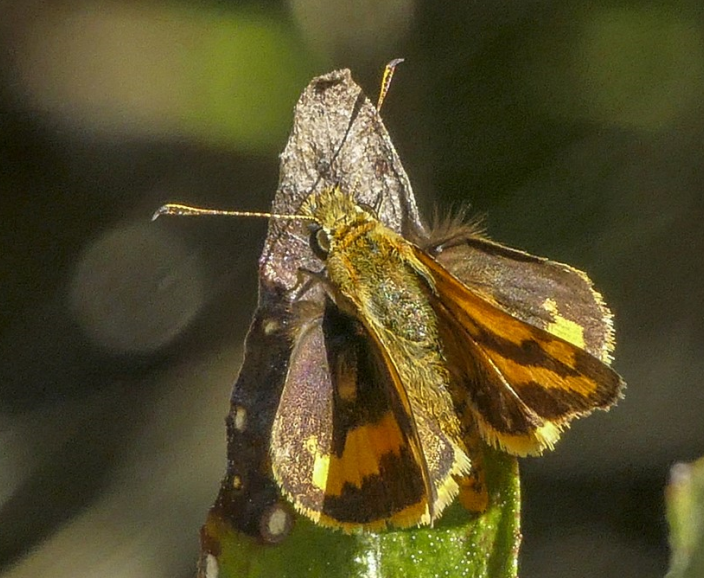
She hastens to add: there are exceptions to the rules such as the skippers – eg the Yellow-banded Dart below:
Hopper Hypothesis
Have you noticed lots of insects plundering your plants over the past season ? Friend Nicky proposes a hypothesis as to one class of culprits…
Has La Niña exerted its effect on Blackburn Creeklands insect population? Our park was looking better for the spring rain – but were these conditions also better for insects, that might be considered as pests? We know there has been a notable increase in mosquitoes, spiders, and rodents.
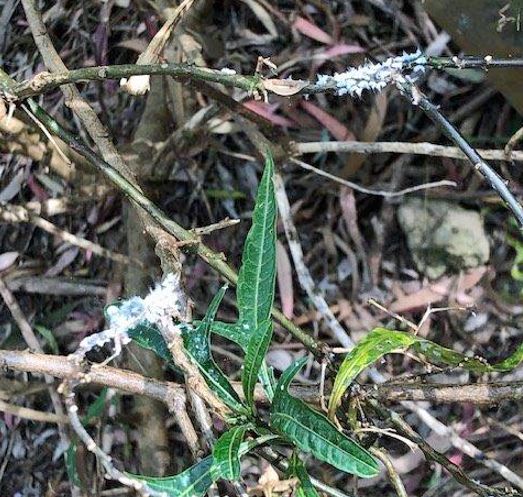
In November, we noticed that many plant species were being covered in white fluffy material – that hopped if disturbed. Some plants were so badly effected – it looked like there had been a recent snowfall. Prostanthera lasianthos, the Victorian Christmas Bush and Goodenia ovata, Hop Goodenia, seemed to be the worst affected. We suspected the culprit was the nymph life stage of a ‘hopper’.
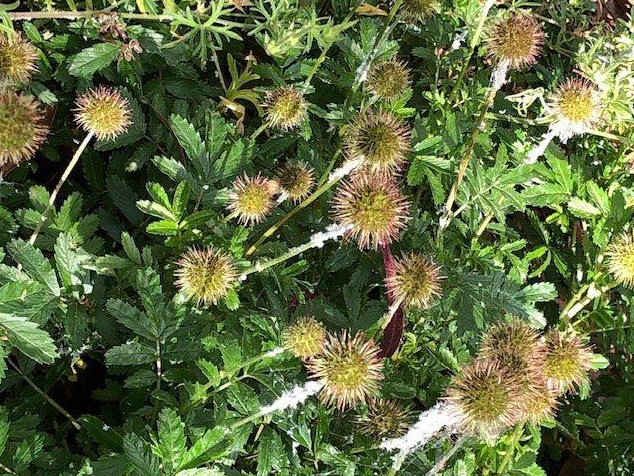
Nymphs and “Fluffy Bums”
‘Nymph’ is the young stage of certain insects undergoing metamorphosis. The nymph is a small version of the adult, usually with a thin exoskeleton [skeleton on the outside], which may be replaced several times as it grows larger. They generally eat the same food as the adults and can be seen feeding together. Weeks later, as the larger and more defined adult forms revealed themselves – it appeared there had indeed been an attack from not 1 but 3 different kinds of hopper. Initially, most hoppers were grey, then green critters appeared, followed by mostly lacey winged brown species remaining.
Although they have not been formally identified, we think the first to appear was Anzora unicolor or Grey Plant Hopper. The second was the Green Planthopper, Siphanta acuta and finally the brown Passionvine Hopper or Scolypopa australis. In New Zealand – they are known as Fluffy Bums – which is a pretty good description of the fluffy snowflakes seen on many plants.
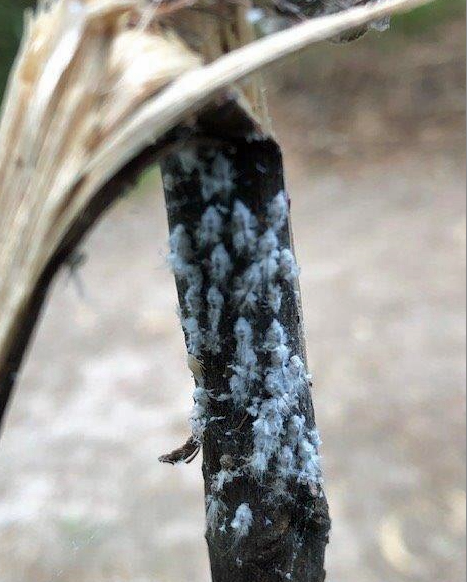
Apparently, the white fluffy stuff is wax and is thought to protect the nymphs from predators. The area where they live also becomes coated with wax. When they shed their exoskeleton or moult, the skin on the dorsal side splits and the next stage simply pulls itself out of the old skin. These insects have piercing and sucking mouth parts – one part injects saliva, and the other part sucks out the plant juices. They then excrete waste liquid as honeydew. We noticed that they mostly seemed to attack the woody parts of the plants and not necessarily the new growth. Plants were indeed suffering, and unfortunately quite a few have died.
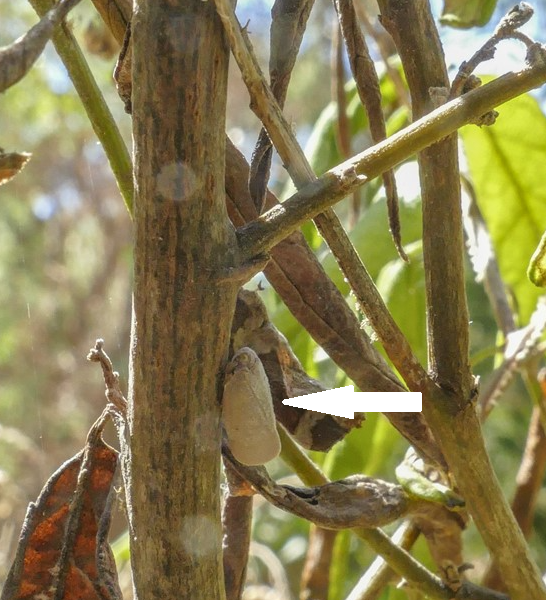
These critters are so quick to jump away if disturbed, we were wondering what Mother Nature was going to do with them, hoping that it would not take long for predatory insects and birds to gear up for a hopper feast. In New Zealand, a parasitic wasp (Dryinus koebelei) was described back in 1905. Rather gruesome – the larva of this creature lives on the outside of the nymph with its head tucked under the nymph’s wing buds, from where it sucks out nutrients. The parasitic wasp then goes through its own metamorphosis emerging from a cocoon to continue laying eggs and mopping up the planthoppers.
What’s in store for next year?
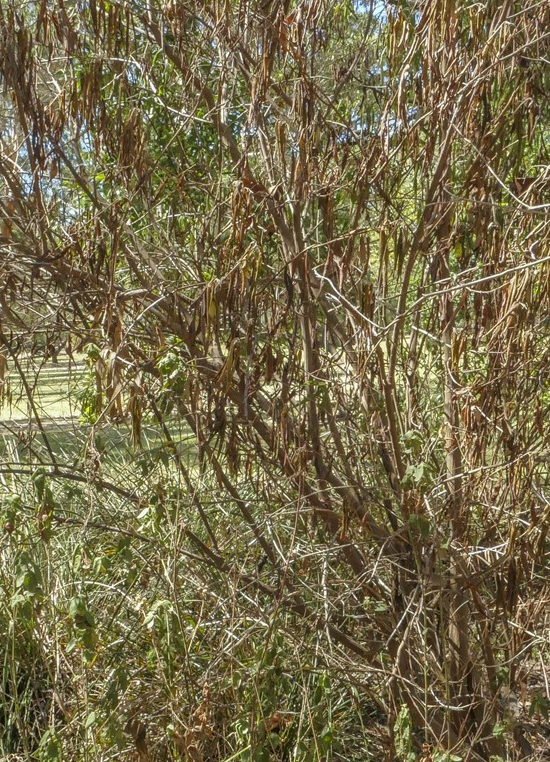
Perhaps we have some Dryinus wasps here too – Mother Nature seems to be coping, as the numbers of hoppers decline. We wonder what is in store for next Spring as there will have been many eggs laid and we plan to replace some of the dead plants in our coming planting season.
Sightings
As our weeding group was packing up on Thursday, 24th March, two raptors appeared briefly and fairly high up – the folks were alerted by warning calls from the other birds – along the lines of our Wedge-tailed Eagle story. They had straight-ended tails. Then, a little later, one came back (or possibly a different one all together). The photo shows the latter flying high above Hill Street:
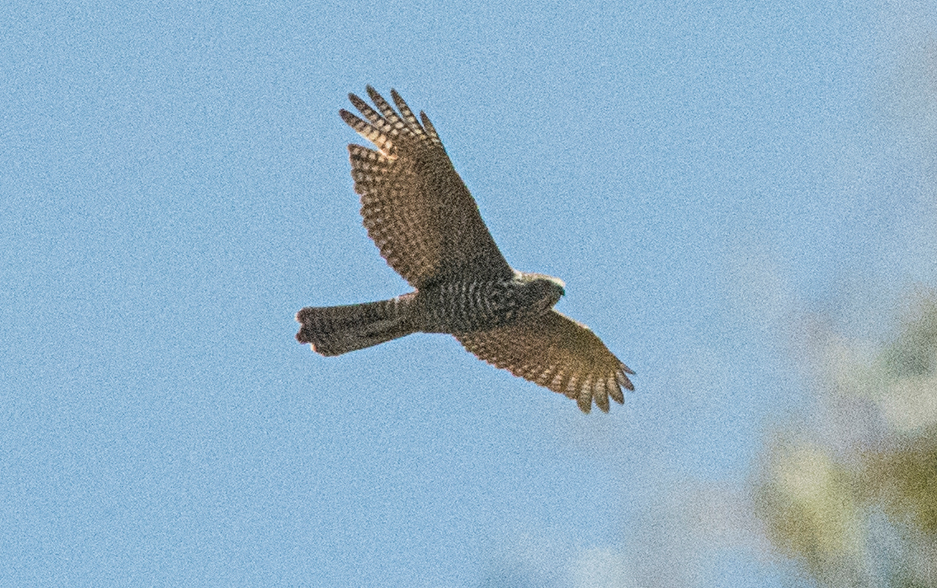
This is another raptor, a Brown Goshawk – but its impressive wingspan is less than half that of the Wedge-tailed Eagle.
In other sightings:
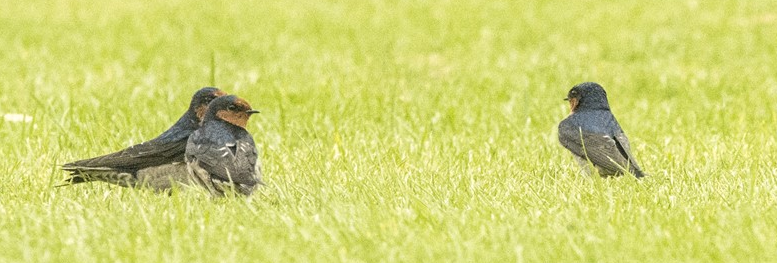
- Welcome Swallows have been welcomed back – a flock of 20 or so were seen recently on the Kalang Oval.
- Bronzewing Pigeons have also returned – we’re told that Blackwood wattle seeds are a favourite food.
- There was a possible sighting of Tree Martins in Blacks Walk. These are on our bird list for the park but have not been observed for many decades. These look like Welcome Swallows in shape though a bit stubbier and less colourful. They fly higher and more erratically when feeding too
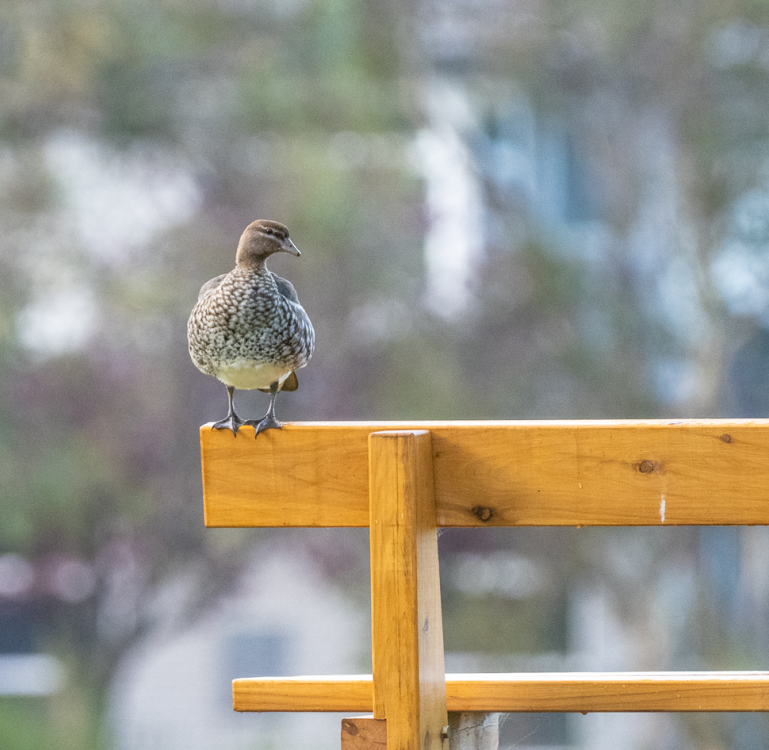
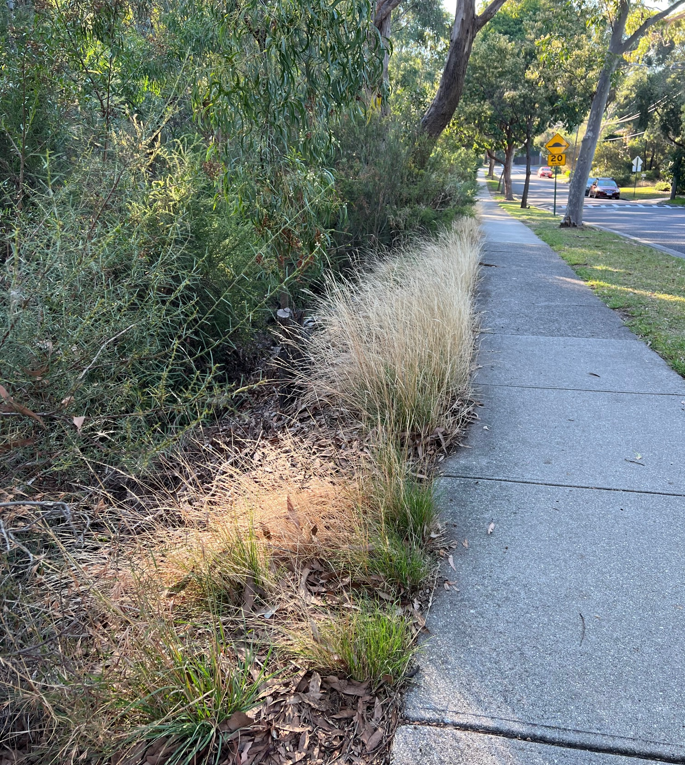
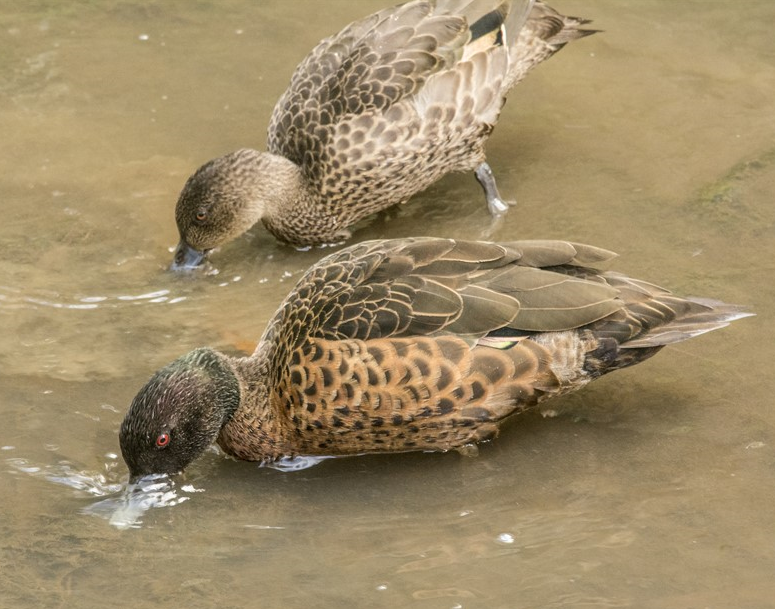
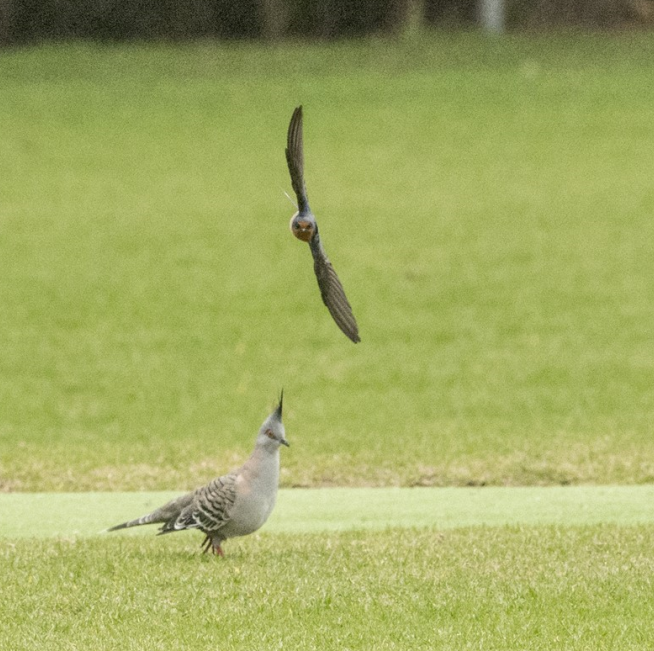
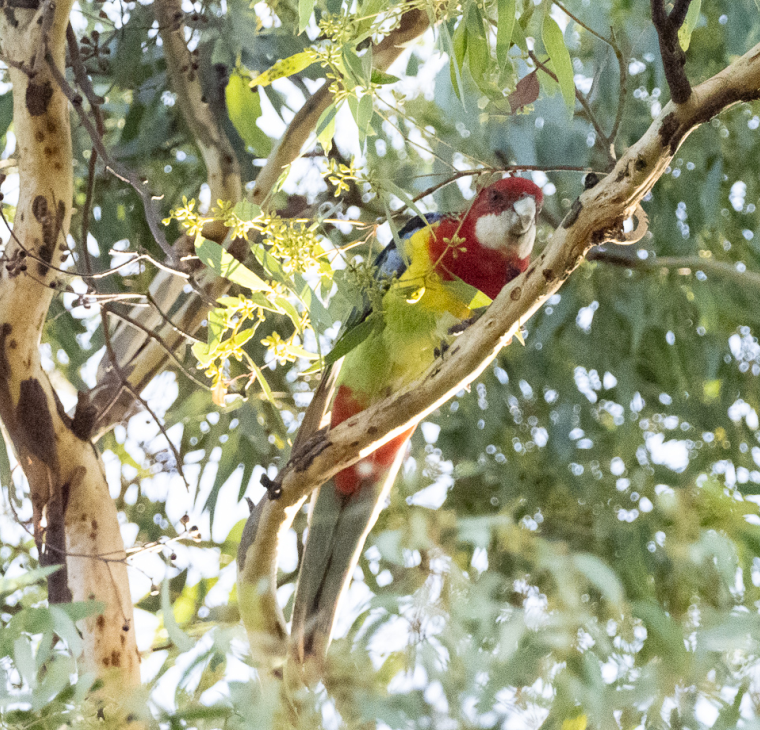
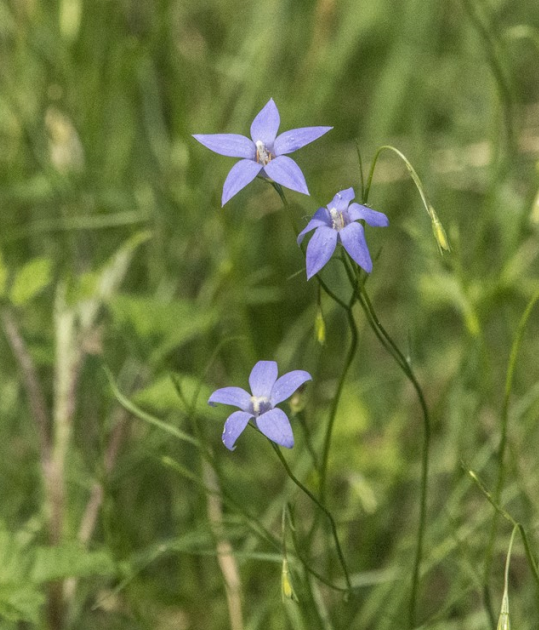
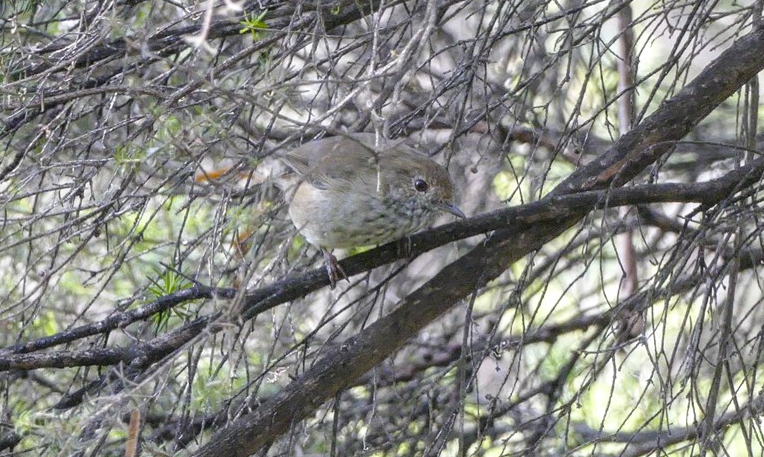
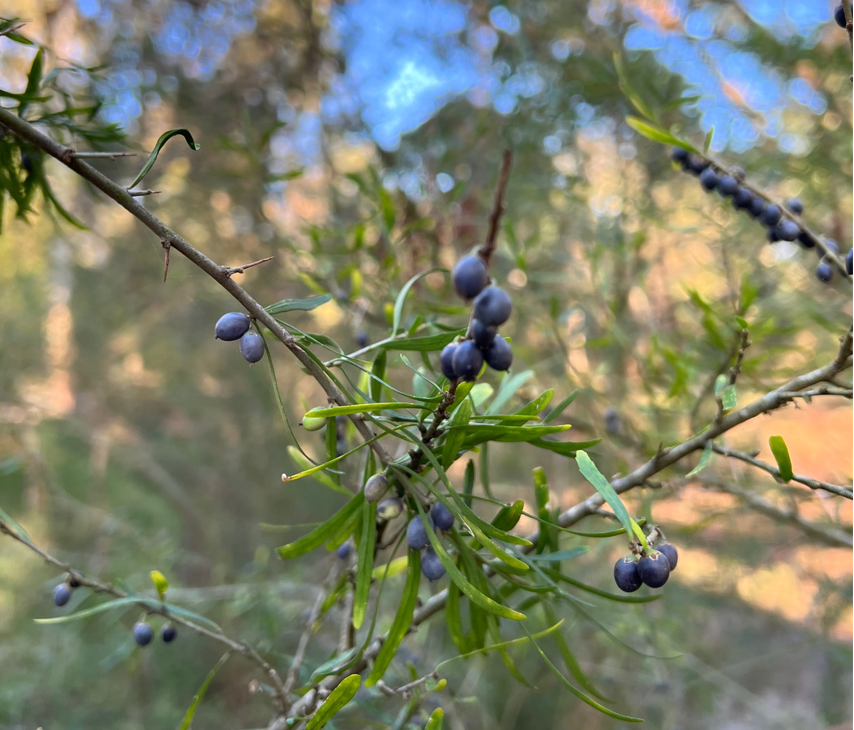
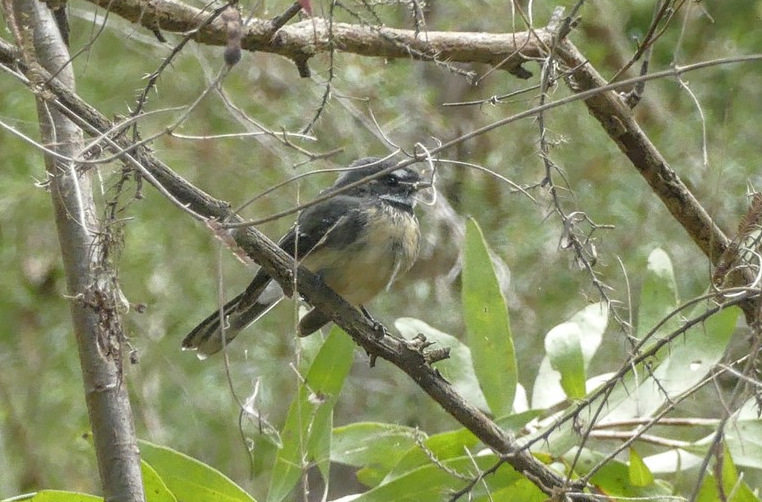
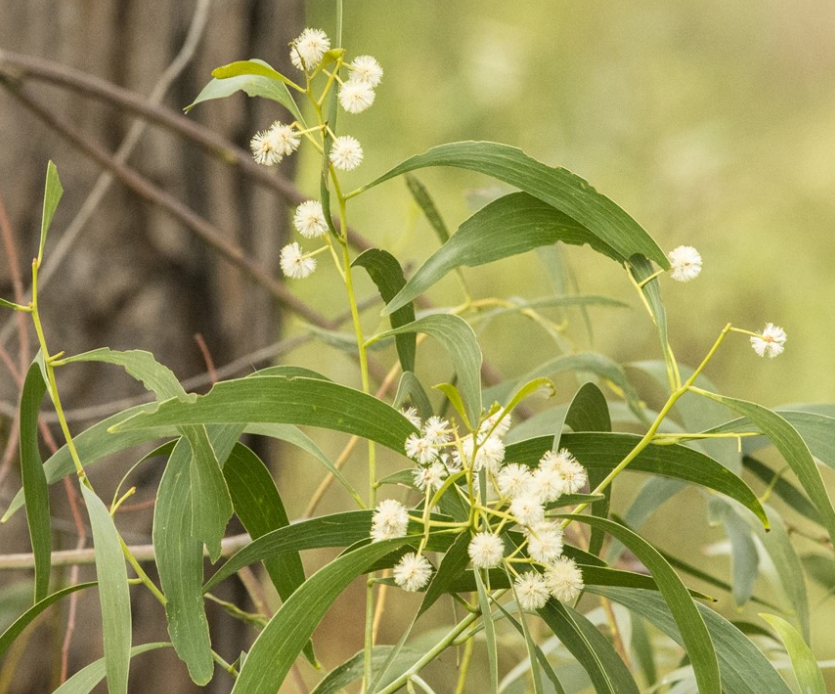
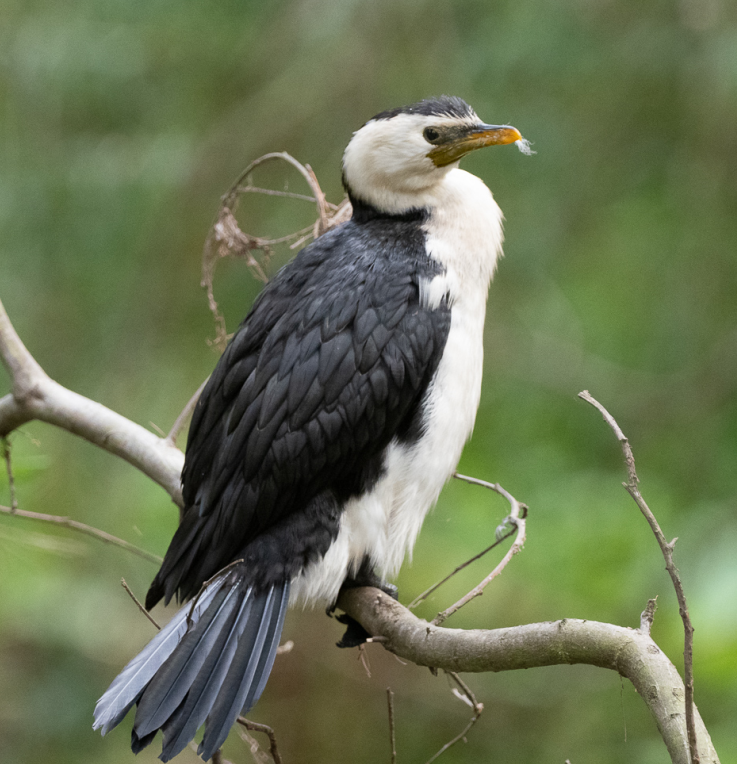
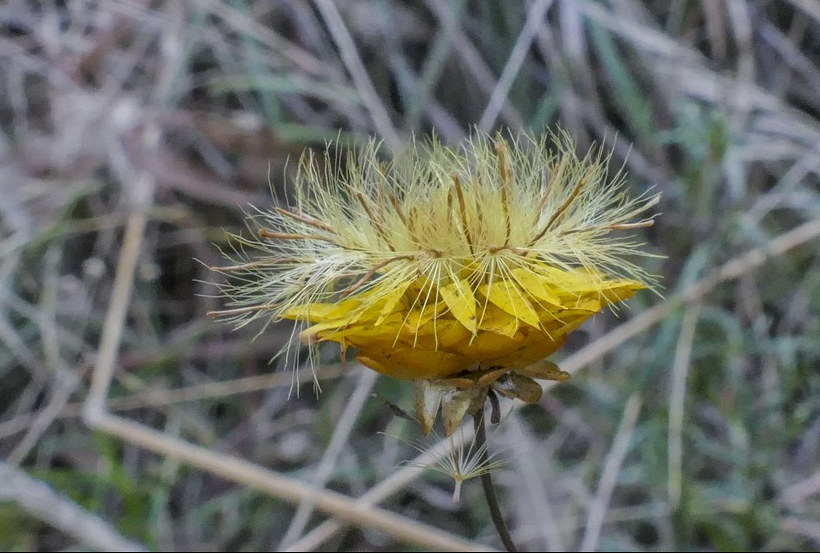
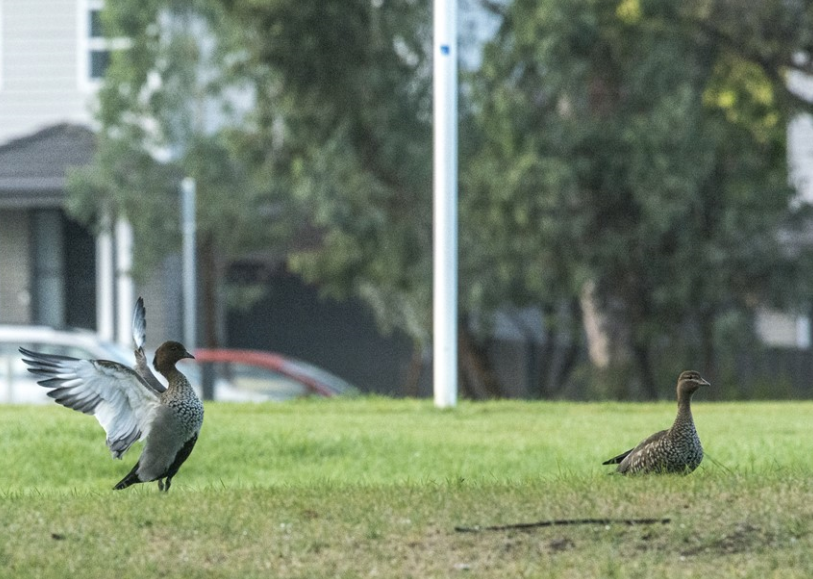
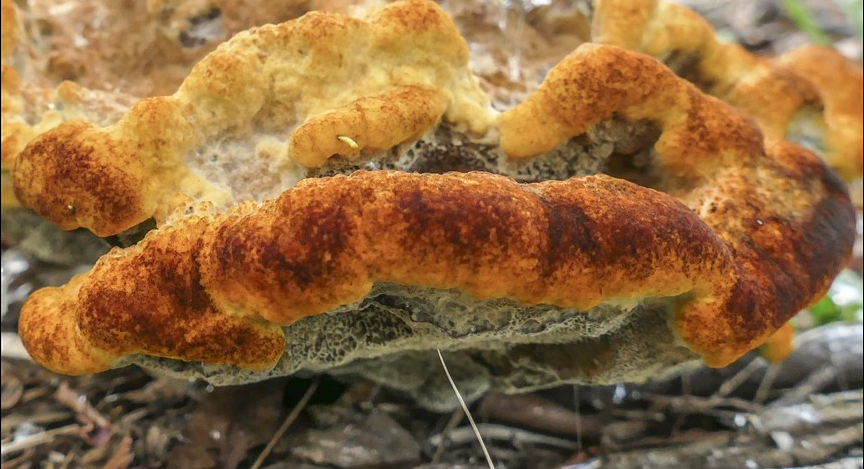
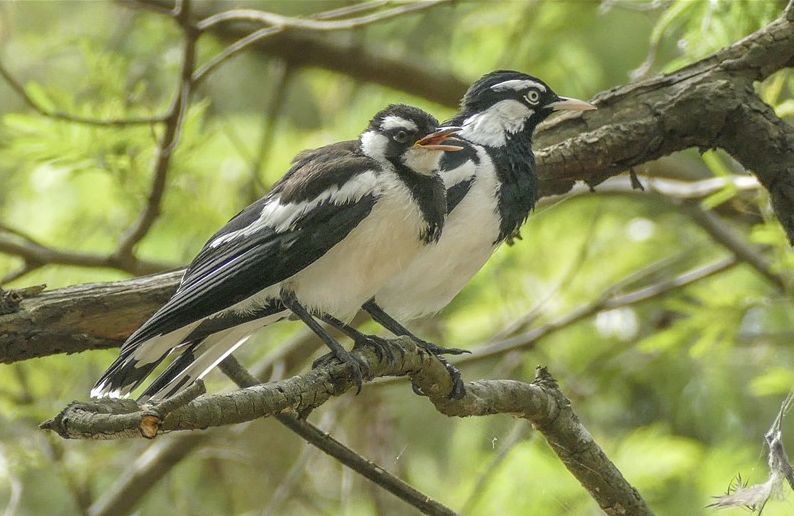
As usual, we have some great shots of individual sightings that our contributors have shared with us:
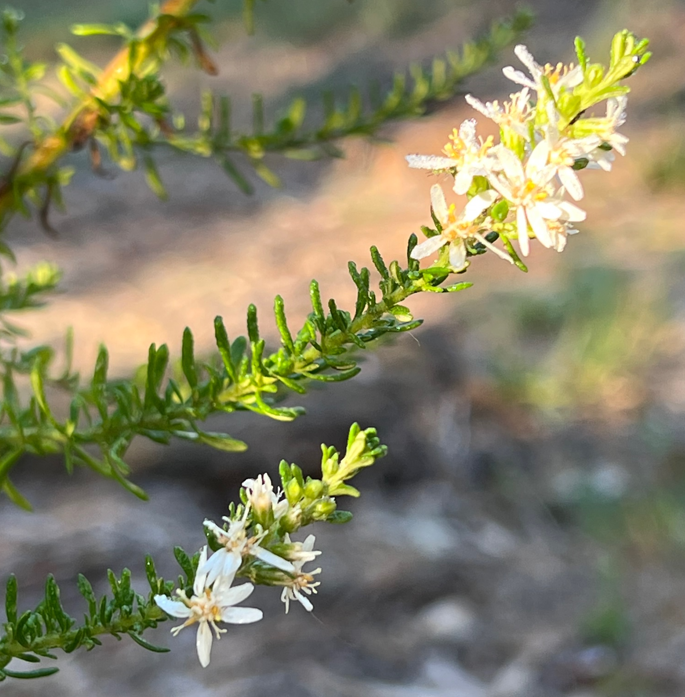
A Sad Ending
One of our permanent avian friends at the Blackburn Creeklands, a Tawny Frogmouth, was found dead on 28/3. It appeared to be uneaten and uninjured (wings and neck not broken and all tail and wing feathers present) – though one eye was damaged. Its state seemed to largely rule out active predators or damage from a car.
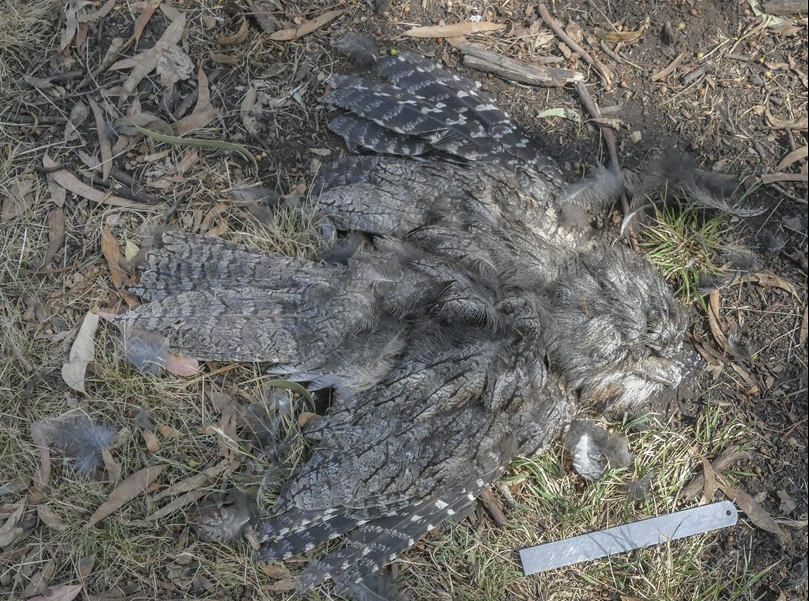
One possibility is rat poison in the food chain. Some of today’s retail household rat baits contain poisons called Second Generation Anticoagulant Rodenticides (SGARs) which break down very slowly and remain in the food chain for long periods. The nub of the problem is that birds such as owls might eat a poisoned rat or mouse and become poisoned themselves. Globally, SGARs have been responsible for declines in the populations of many carnivorous mammals and birds. If you’d prefer to use wildlife-friendly rat poisons, please visit this link for information on how to choose the right product.
 Blackburn Creeklands
Pingback: Main Street Closure 24th Feb – 1st Mar | The Blackburn Creeklands
Pingback: Park News, November 2023 | The Blackburn Creeklands