Who has been gekkering in our park ?
What is gekkering ? If you turn up the sound on the video above you will hear odd sounds rather like a bird call – perhaps a distress or alarm call to others. Actually, we think the fox was emitting the call – which we’ll call gekkering. “Gekkering” means making a series of stuttering throaty vocalizations – which foxes make when encountering a rival.
According to one story on the Internet, “gekker” comes from the German word gekkern which is probably onomatopoeic (ie imitating an actual sound – as “hiss” does in English).
For some reason, we don’t entirely trust the Internet (…) – so we double-checked that explanation with our writer friend Nina* who also happens to be a native German speaker – she wasn’t so sure and said the double k might suggest Dutch. She also looked up the words gekkern and geckern (the more likely German spelling) in the much revered Duden (the German equivalent of the English Oxford) to no avail – those words are not listed as German. Bing translates the Dutch “gekker” to “crazy” and “gekkern” to “knitting”. Google Translate’s version is “crazy” and “crazies” respectively. In any event, the sound is certainly quite strange if not crazy!
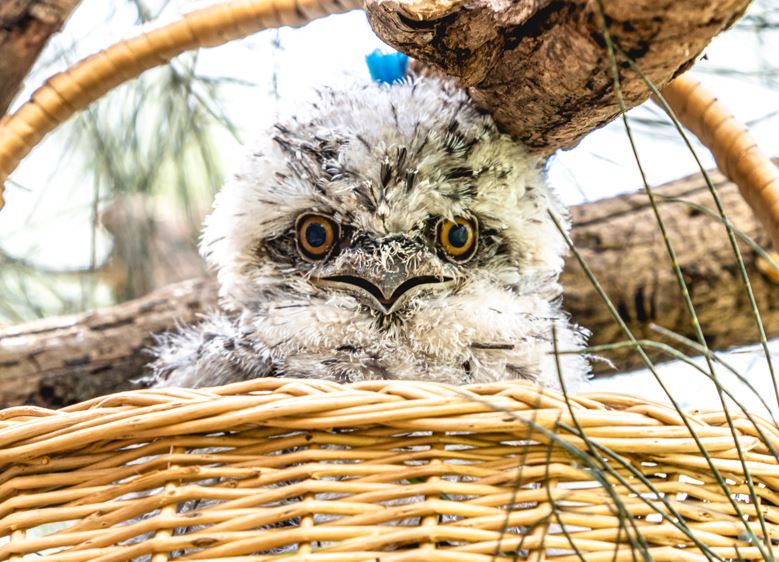
*Regular readers will well remember Nina’s Rescue Story concerning the Tawny in a Basket in last November’s edition.
Obviously, gekkering is disturbing in that implies we may have (at least) two foxes there! Happily, it does not indicate the presence of fox cubs – which would usually be expected to be found in August-September. There are 20 or more different types of fox calls – please click here to hear others.
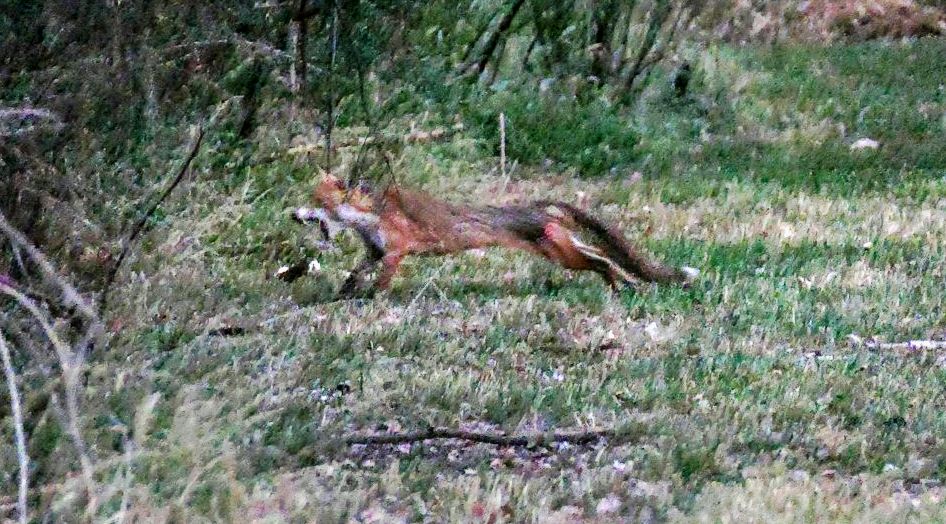
Foxes are omnivores. Belinda McPhee, who researched the issue for us a few years ago, reports that a mature fox is capable of killing up to 3000 native animals a year. They also prey on domesticated animals including poultry, rabbits, guinea pigs and aviary birds. They can spread parasites and diseases such as mange and distemper to domestic animals and pets. Feral populations of Red Fox (Vulpes vulpes) have been present in inner Melbourne since the 1930s and have adapted to become part of suburbia – including Blackburn.
Ian Moodie from Whitehorse Council tells us that Council’s options for effective control in the park are very limited (for example, baits can’t be used because pet dogs might take them accidentally). Metropolitan Melbourne has one of the highest population densities of foxes in the world – a distinctly dubious ‘honour’ (as Ian says).
Park neighbours report seeing foxes in their backyards probably coming in from the park – we hope those with chooks have secure cages! Actions you can take to discourage foxes at your place are:
- Remove rubbish and secure bin lids.
- Clean up excess fruit dropped by fruit and berry plants. Fox scats often contain large amounts of seed.
- Ensure that chickens, guinea pigs and rabbits are securely protected.
- Always cover compost heaps or use a compost bin.
- Don’t feed wildlife (including foxes of course).
- Remove prickly and woody weeds (such as gorse, hawthorn and blackberries) that may provide shelter.
- Fence off the underneath of buildings, water tanks and other places where foxes may hide.
- Don’t leave objects for foxes to climb over into neighbouring properties.
- Remove uneaten pet food and any animal carcasses to prevent foxes scavenging.
- Fence off rock piles, building materials and woodpiles or store them in a manner that does not create a hiding place for foxes.
Council Projects and Works
Main Street Bridge Update
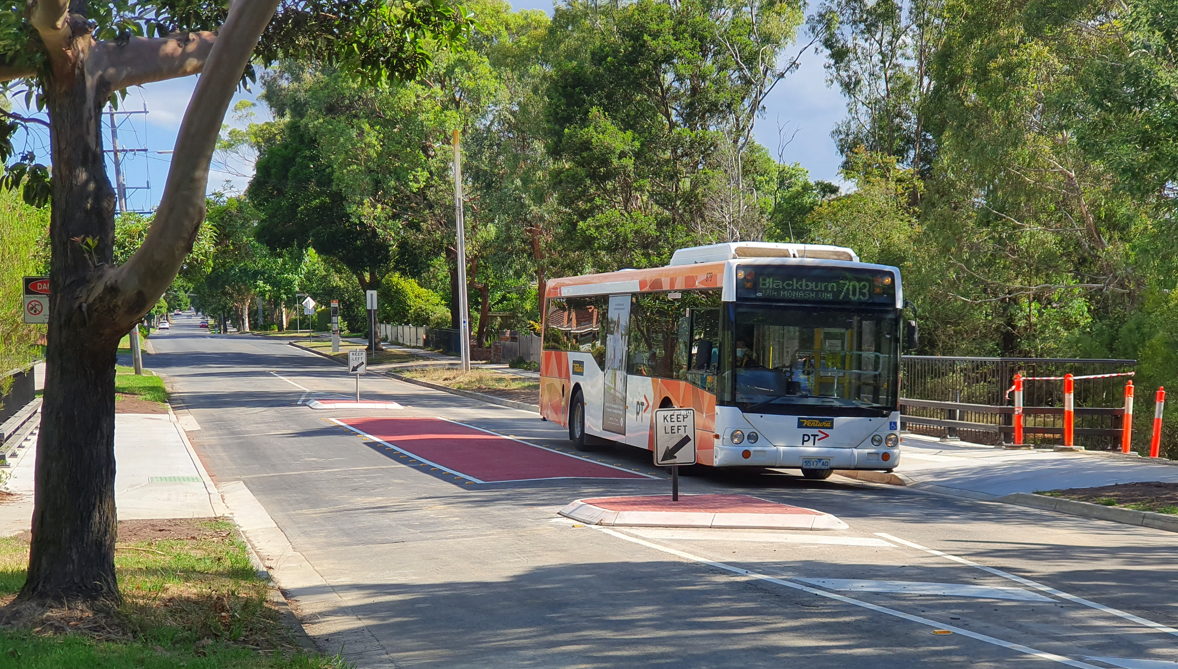
The Main Street bridge was quietly opened on 4th February in line with Council’s revised deadline that we reported in our January Newsletter.
Finishing off the hand-rails and some minor defect works around the bridge were done immediately after the opening. Revegetation work will be undertaken in the planting season soon.
We are monitoring the progress of the proposed pedestrian crossing at the southern end of the bridge. We have sought an update from Council officers who report that they are still finalising plans – we’ll let you know when something more concrete is known.
Stag Reduction
The significant stag near the south eastern corner of the bridge has had be reduced for safety reasons. During the construction of the bridge, it dropped a large branch narrowly missing bridge construction workers – fortunately no-one was injured. The fallen branch is now a solid “log” on the creek side of the path at that location – it would have come down with quite a thud.
The tree was known affectionately as our “High Rise” – due to different species of birds using the tree for habitat at different heights including Galahs, Rainbow Lorikeets, Corellas, Magpies and even an introduced Ringneck Parrot (who thought he was a Lorikeet).
Fractures could be seen in other limbs near where the offending limb broke off – so the tree had to be reduced to the major fork. It is odd that the stag has deteriorated so fast – the tree died only four years ago!
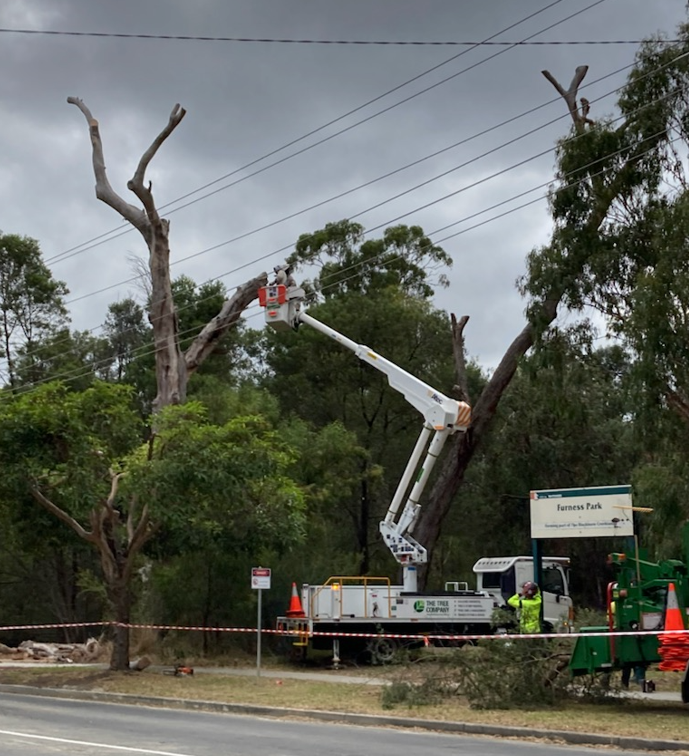
Our picture shows the reduction work in progress – clearly not the most comfortable of work sites around power lines an under an ominous sky. The leaning tree to the right of the subject tree died about two years ago. One wonders what’s going wrong at that site?
Other Council News
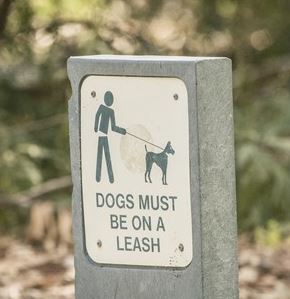
There have been problems with dogs being let loose in the creek.
Dogs need to be under their owner’s control at all times. To protect wildlife and habitat, there are also bylaws prohibiting dogs from entering the wetlands and ponds.
Council will be installing additional “dogs-on-lead” signs at park entrances soon – so that “ignorance” will not be a credible excuse!
Maintenance Team Report
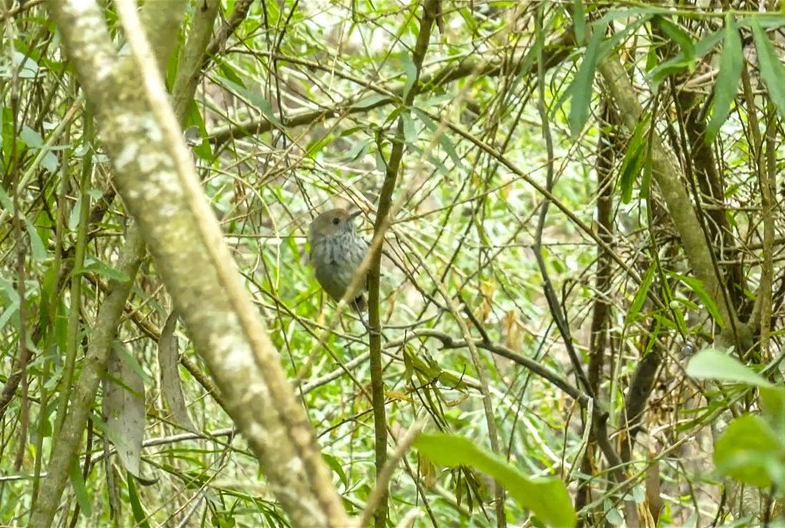
The team has been busy weeding, mulching and protecting last year’s plantings in the area below Waratah Crescent and also in the creekside “Lunettes” adjacent to the new wetland.
The team has also also been looking at:
- our mulching techniques,
- how we might assist with Mistletoe seed collection for a Gardens for Wildlife project
- whether we need to control Wonga Vine becoming rampant in Kalang Park with its host-smothering habits.
The latter plant is native but not thought to be locally indigenous. For the time being, we will be monitoring it carefully noting that it is becoming a problem at Blackburn Lake, at the Maranoa Gardens in Balwyn and points further east as reported by the CRISP Nursery (Ringwood).
Bird Survey and City Nature Challenge – Coming Up in April
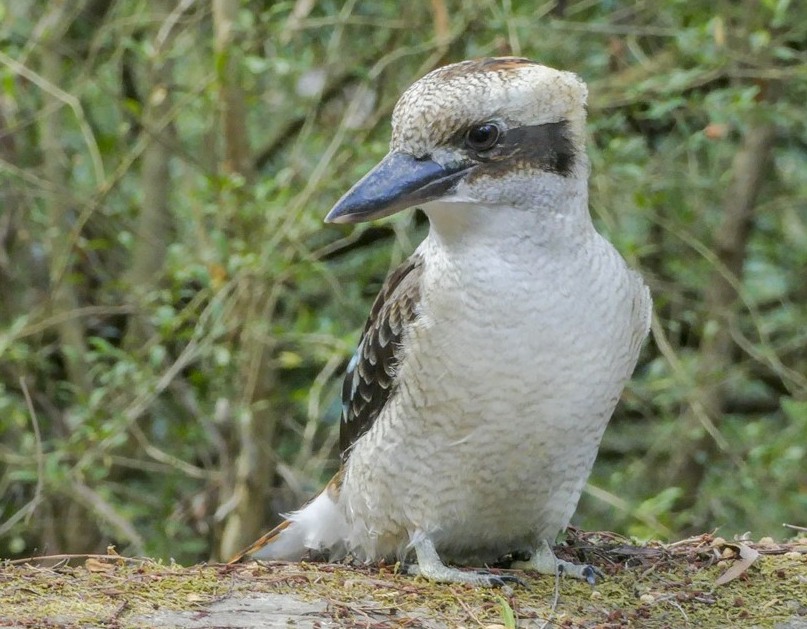
Both of our incredibly good regular group leaders (Pat and Ian) have confirmed their availability for our Saturday, 30th April bird survey event. Of course, that’s still a ways off – but don’t forget we are running our event along with this year’s “City Nature Challenge”. This is a fantastic way to get started in Citizen Science if you or your family are so minded.
But wait – there’s more! You don’t have to only spot birds…
Wendy, one of our Friends, just loves invertebrates (creatures without backbones – no, not politicians silly!) – and is a great photographer to boot. She has been busy documenting some of our non-avian creatures around the park – which you might like to log with iNaturalist when you get the chance. Wendy describes an interesting array of life she has found recently in the park:
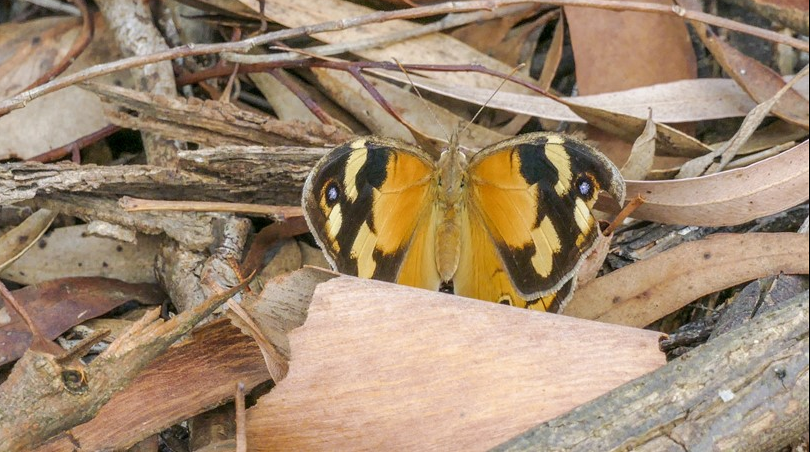
Some of our butterflies:
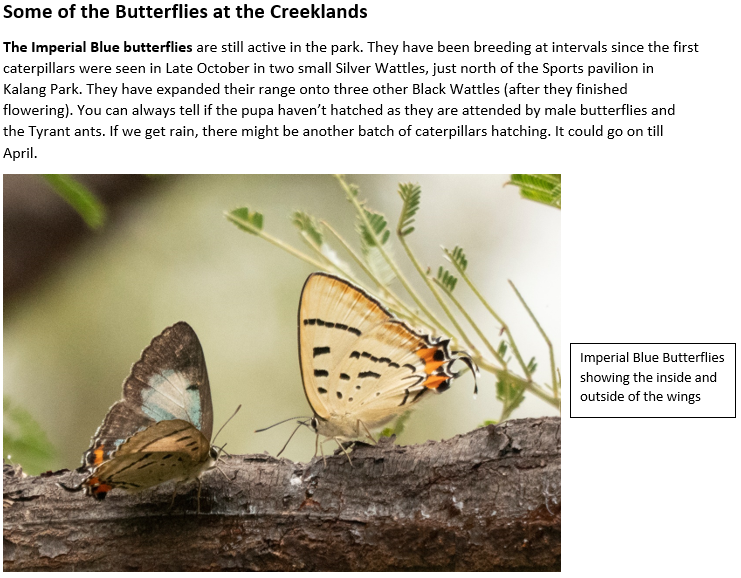
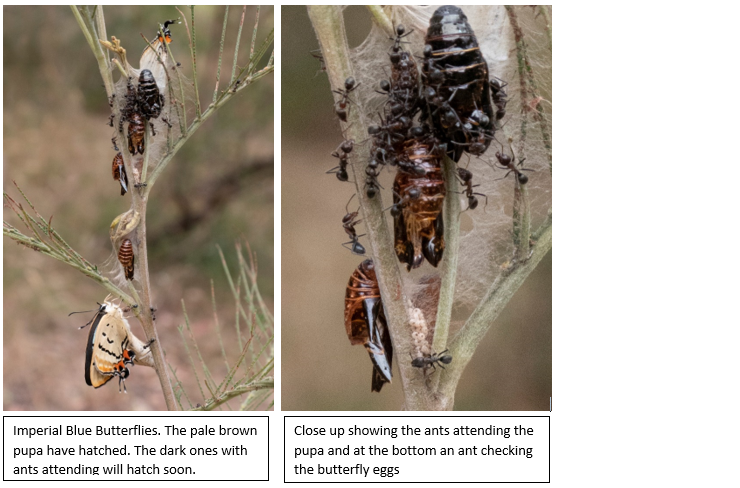
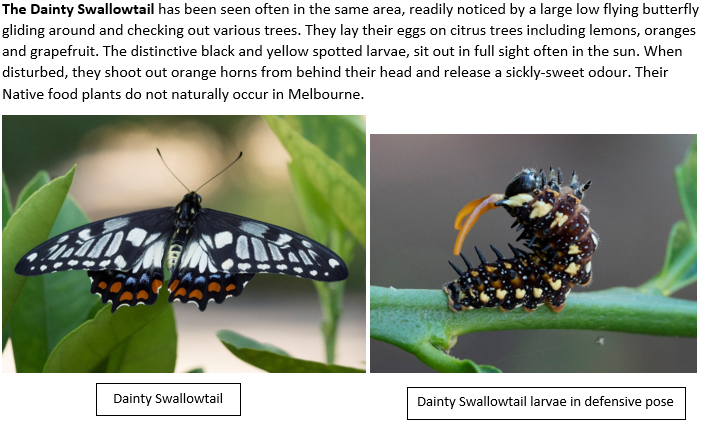
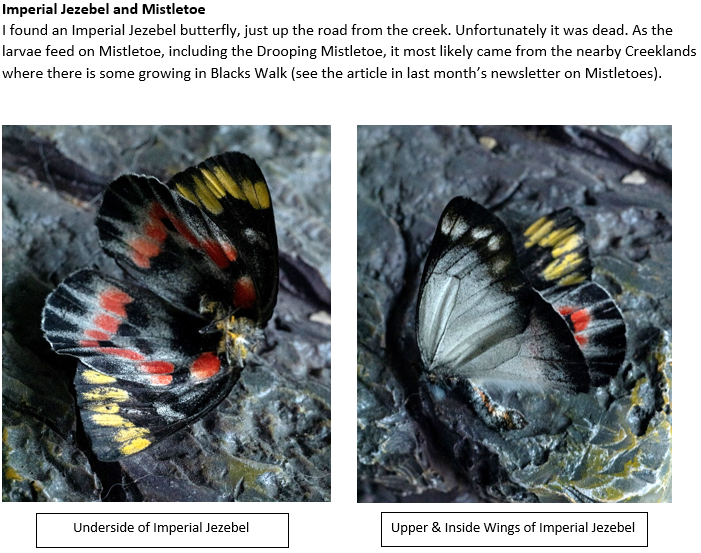
To expand, click on one of the photos and scroll using the < > arrows. Click X when finished.
Cossid Moths in unusual habitat (the chain mesh shows their size):
Cossid Moths are beautifully patterned and quite large. A pair of them were seen resting on the blue cloth covering the fenced area shielding the works on the Main Street Bridge. This Cossid Moth is Endoxyla lituratus. The moths have a wingspan of about 7 cms. It was an incredible sight.
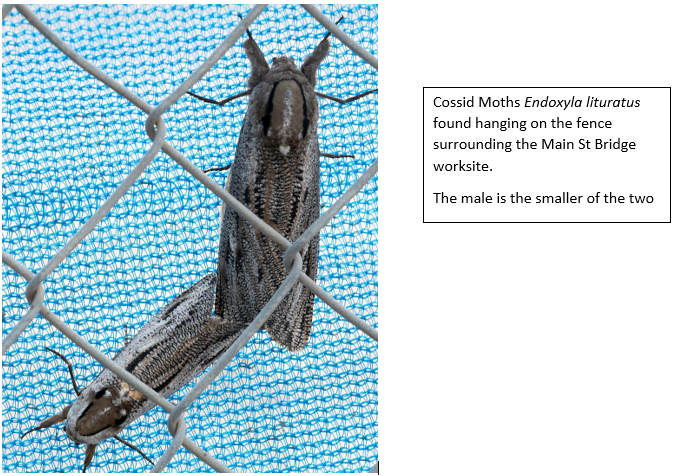
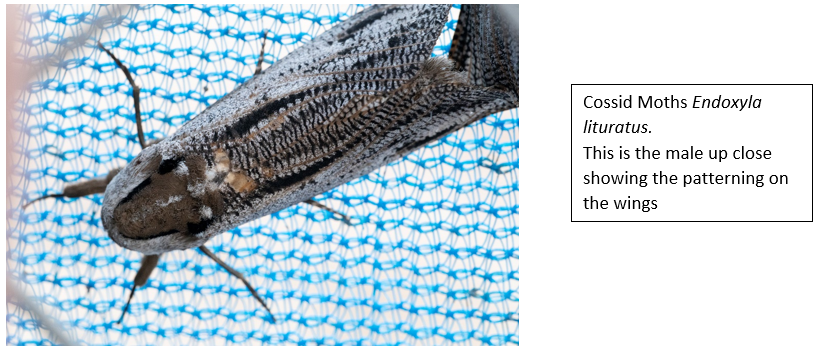
The female moth of this species lays her eggs in holes she bores into the trunks and branches of various wattles. The Caterpillars bore through the wood making it a sort of honeycomb of tunnels. The larvae would be one of the grubs that the Yellow Tailed Black Cockatoos catch when they chew into the branches of wattles. Pupation occurs in its borehole, and when the moth emerges from metamorphosis, it leaves the empty pupal case half sticking out from the mouth of its tunnel. The life cycle can take up to four years.
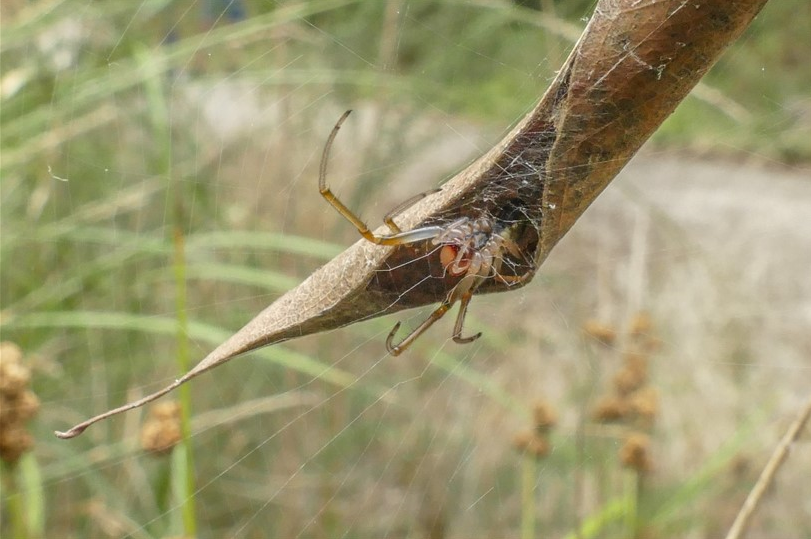
Interesting Web and Spider on Smooth Barked Gum Tree:
For a while now I have been observing a web on smooth barked gum trees. The web has very tough long strands which reminded me of the webs that Red Back Spiders build, although they usually build theirs near the ground.
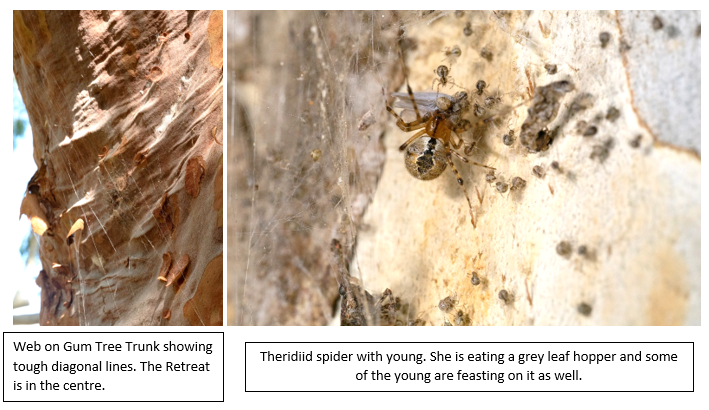
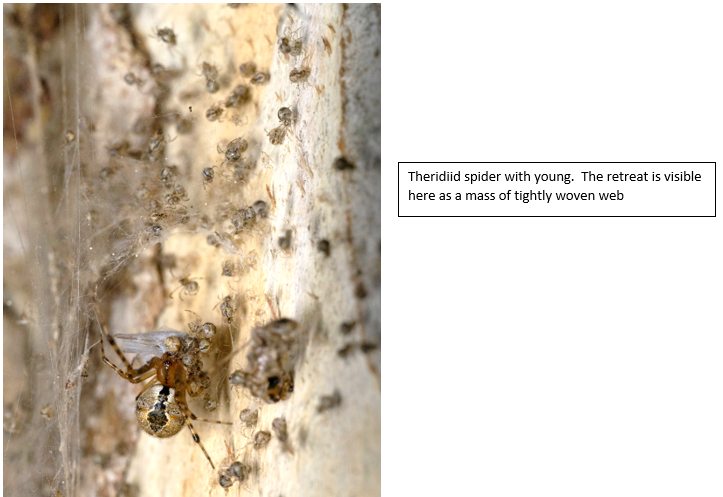
The spider, family Theridiidae, which is the same family the Red Back is in, builds a retreat often under a piece of bark and surrounds it with web with a hole in the centre. At this time of the year, the young are hatching. Whilst trying to photograph the web and young, I had a fleeting glimpse of the adult, and it definitely was not a Red Back.
The only way I managed to get a photo of the adult was to go to the park at night with a camera and torch, as most spiders are nocturnal. The one in the photograph was eating a grey leaf hopper.
Other Interesting Invertebrates at Blackburn Creeklands:
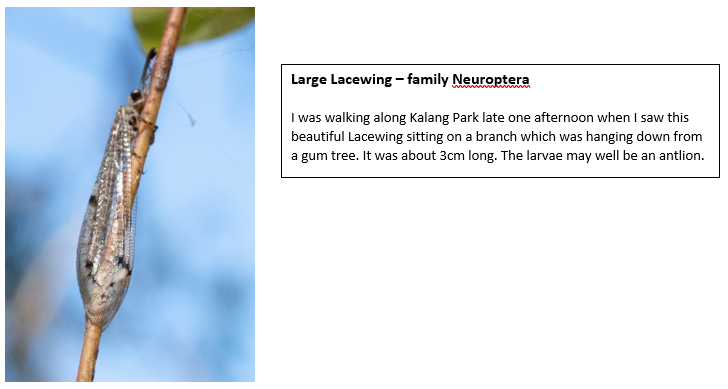
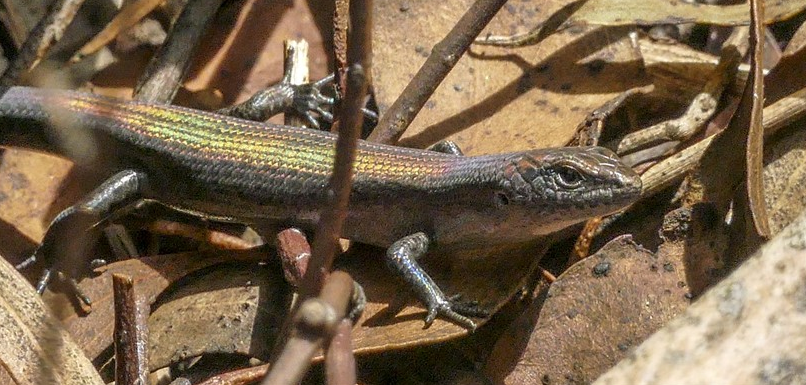
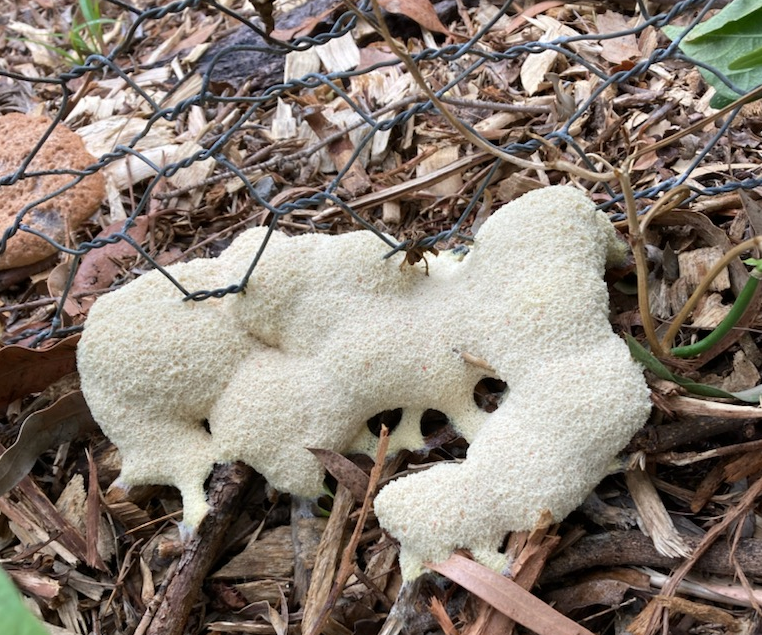
So far we’ve only scratched the surface – in last year’s Challenge, a leaf litter survey found ants, centipedes, millipedes, slaters, web spinners, beetle larvae, amphipods, mites, springtails, worms…
Committee News
For the first time for quite a while, we met in person at the Kalang Oval Pavilion, Kalang Street, Blackburn. We hope our visitors – Clare, Margaret, Nicholas and Ruby enjoyed the experience despite everyone having to be masked. We thank them for their contributions and we hope to host them all again at another meeting.
Committee meetings are held at 7:30 PM on the 4th Tuesday of each month excluding December. All visitors are most welcome. Remaining meeting dates for 2022 are: March 22nd, April 26th, May 24th, June 28th , July 26th (with AGM), August 23rd, September 27th , October 25th and November 22nd. If you would like to attend, please let us know by e-mail at BlackburnCreeklands@gmail.com.
We are expecting that a workshop involving Councillors, Council Officers and representatives of the thirteen park Advisory Committee will be conducted this month to help resolve the difficulties on the future of the volunteer Advisory Committees including ours.
Sightings
Asbestos contaminated soil was removed from the former Guide Hall site last year and replacement soil is still to be brought in. Indigenous grasses and eucalypts are planned for the area. Works on the Scout Hall frontage and in finalising the clearing of storm damage are now back in the queue. COVID issues have impacted the projects.
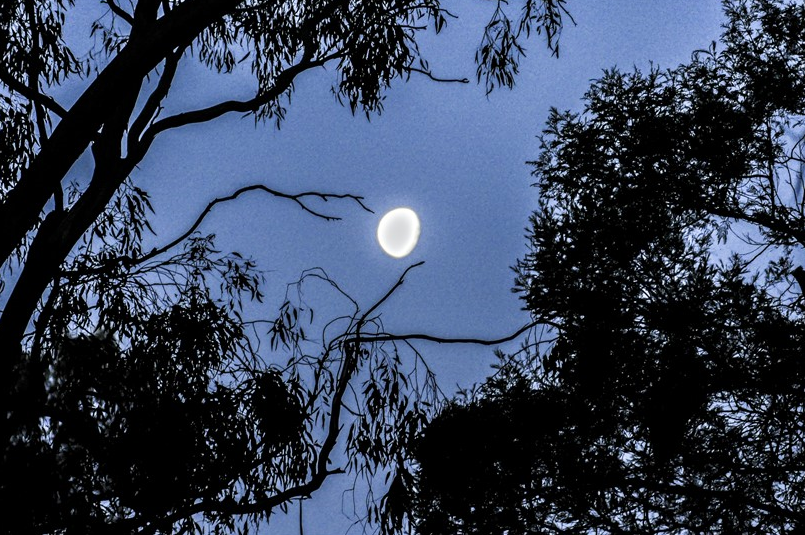
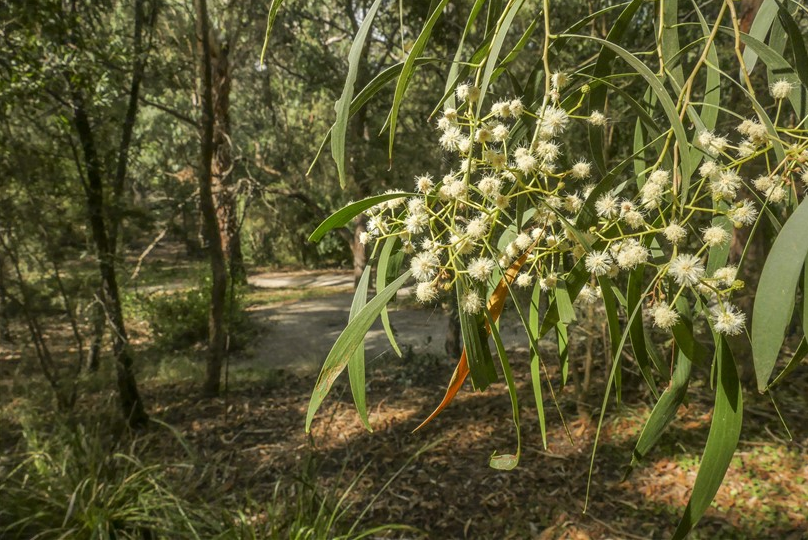
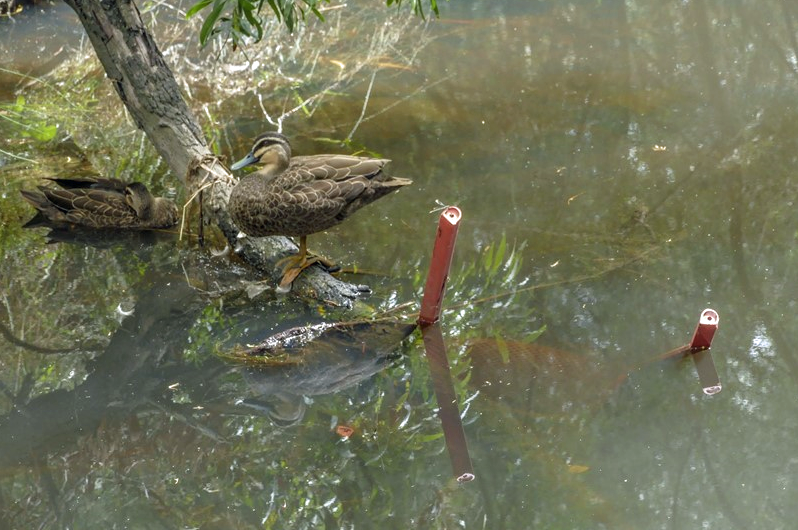
Our thanks to the good folks who fished that rubbish out…
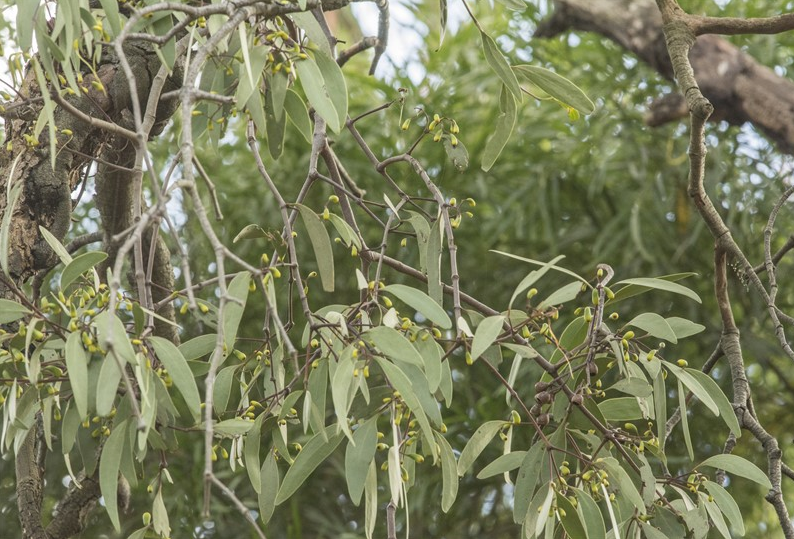
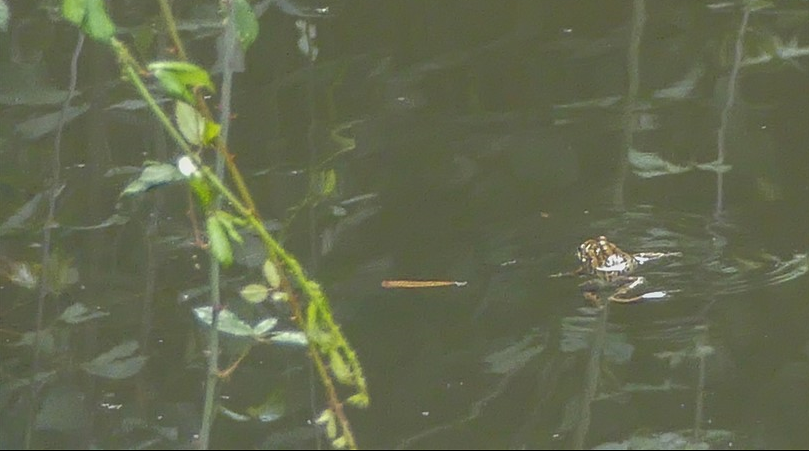
Escapee ?
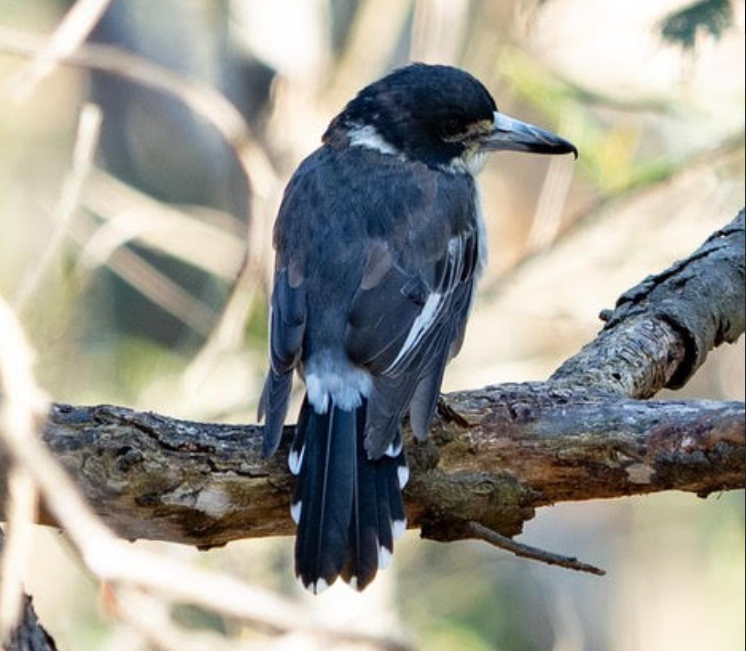
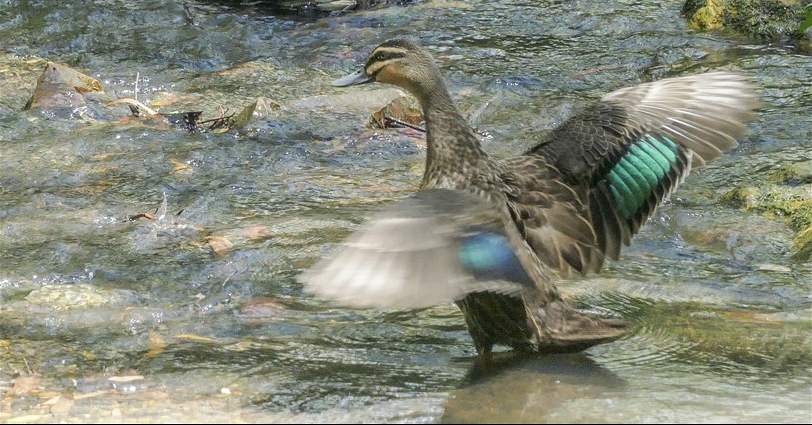
The vegetation in the new wetland has been enjoying the La Niña conditions. We thank everyone who have been observing Council’s notice asking people not to take a shortcut through there.
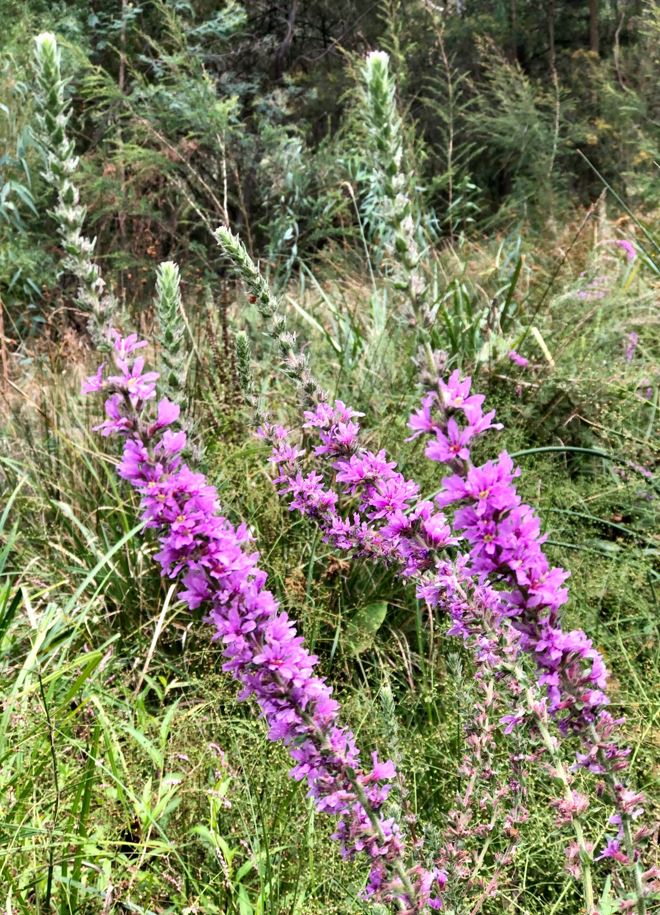
During the month, our Maintenance Team met with contractor Vyv who has been looking after the site regularly as part of post-implementation maintenance. He has been doing a great job monitoring progress and managing the weeds there.
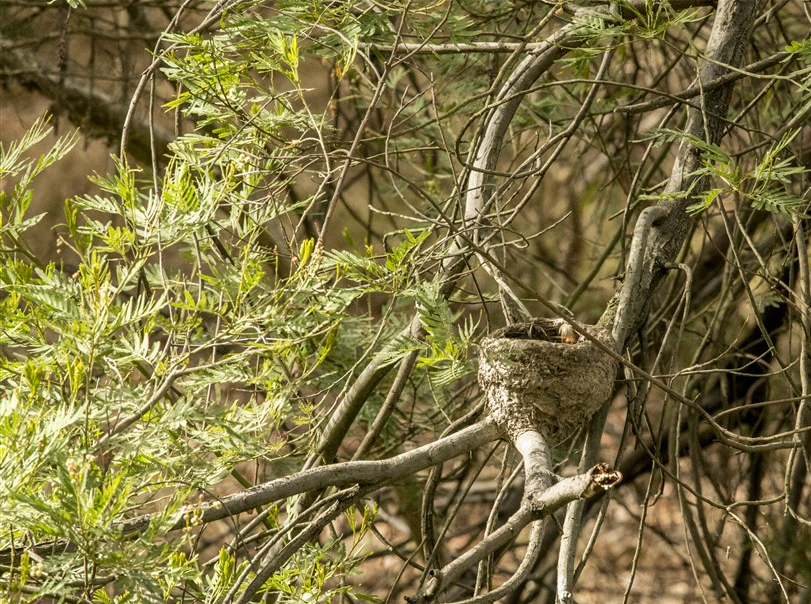
Superb Fairy-Wren
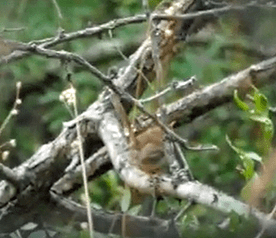
A female Superb Fairy-Wren has been sighted recently in Blacks Walk.
After many years’ absence, there were observations last April in Furness Park near the Main Street bridge – near where the reconstruction of the bridge (now reopened again) took place.
Probably a migrant from Blackburn Lake, it seems the bird moved westwards to avoid the hubbub at Main Street. We hope more birds will be found – it is usually a very social species with multiple birds of both sexes coexisting.
In the Corridor
Planting up your garden
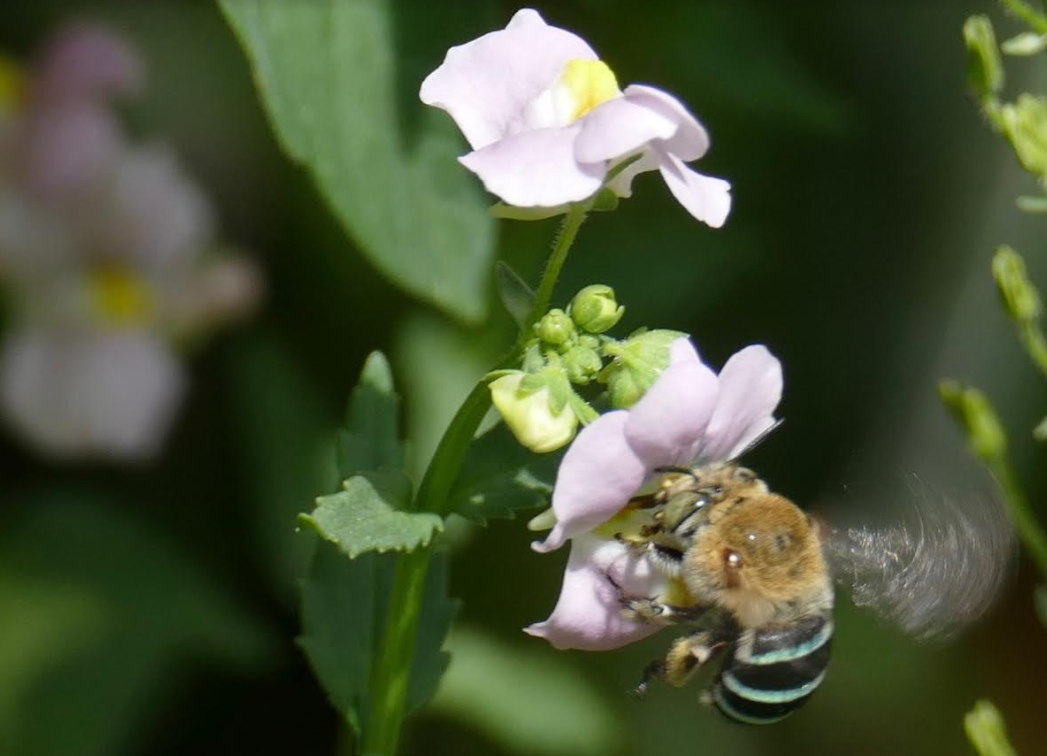
Bungalook Nursery has let us know they have a large stock of quality plants for sale, especially for home gardeners wishing to enhance their gardens and willing to keep the water up during our warmer, dry weather. Gardeners planning for the coming months are also encouraged to come and browse. Bungalook’s volunteers are always willing to assist.
Speaking of nurseries, Greenlink has updated its web-site to make plant selection even easier – please check it out here.
Kooyongkoot Alliance Incorporated
We congratulate the Kooyongkoot Alliance (KKA) upon its members taking the decision to formally incorporate. The KKA is an alliance of 17 advisory committees and friends groups along the length of Kooyongkoot/Gardiners Creek. It also maintains strategic alliances with groups such as the Yarra Riverkeeper Association.
Representatives of the KKA have recently met with our Mayor to discuss the concept being promoted by Melbourne Water and City of Stonnington to develop a strategy for Gardiners Creek as a whole. As a speaker at a recent forum said, “Ducks don’t stop at the Council boundary“… and neither do yabbies, dissolved pollutants, plastics or even walking tracks. Stonnington Council has been proactive inviting the other three Councils along the catchment (Booroondara, Whitehorse and Monash) to be partners in developing a catchment wide plan.
Needless to say, the KKA, representing the friends and advisory groups working along the creek, is strongly supportive of this initiative and has put its hand up for a seat at the table to plan for an exciting sustainable future for our Creek. And also needless to say, your Committee is well represented on the KKA and has made valuable contributions to the formation of the organisation and to the ongoing discussions.
Do Honeyeaters only eat “honey” ?
Another of our photographer friends, Margaret, was experimenting at home with a new camera and took the following sequence featuring a Blue Damselfly and an Eastern Spinebill:
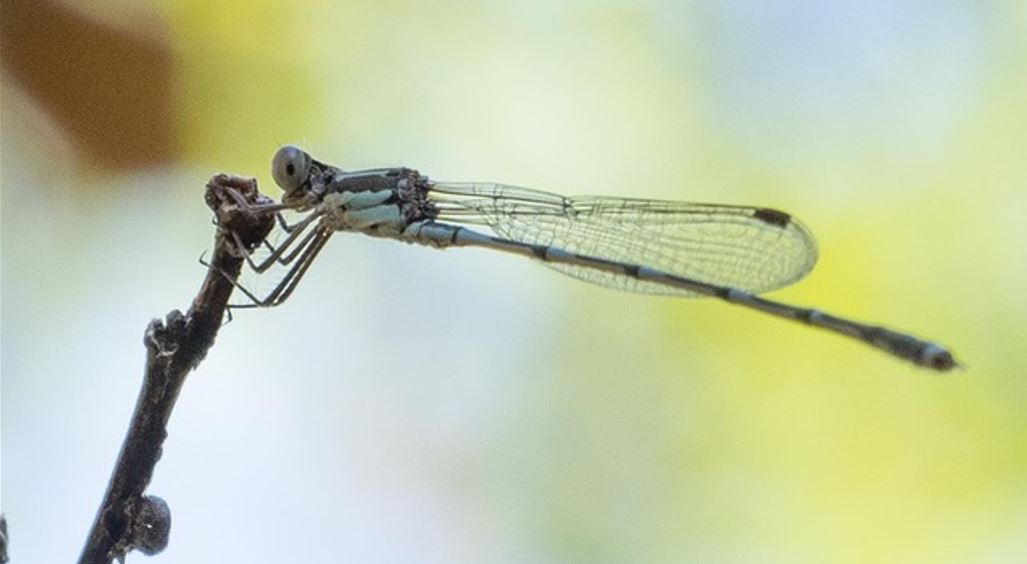
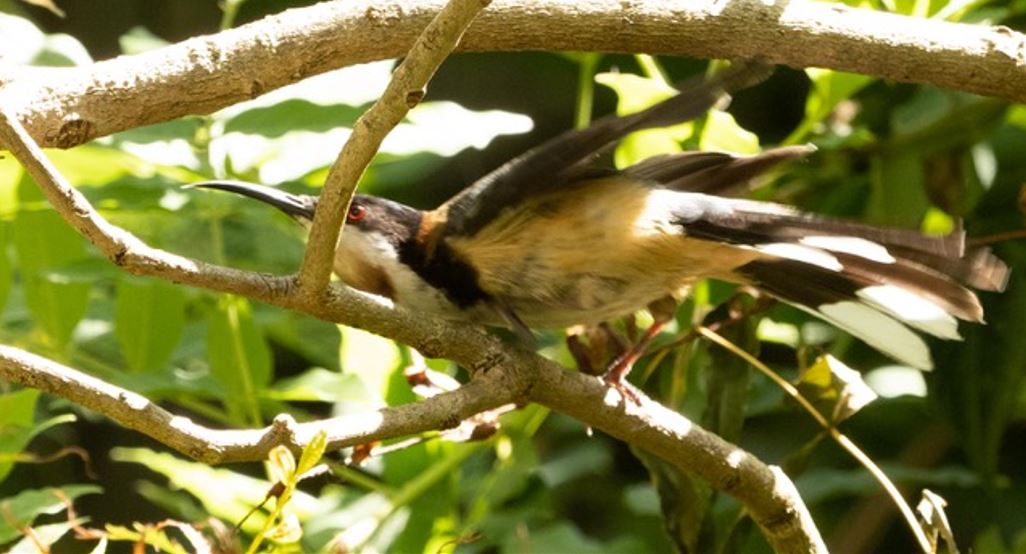
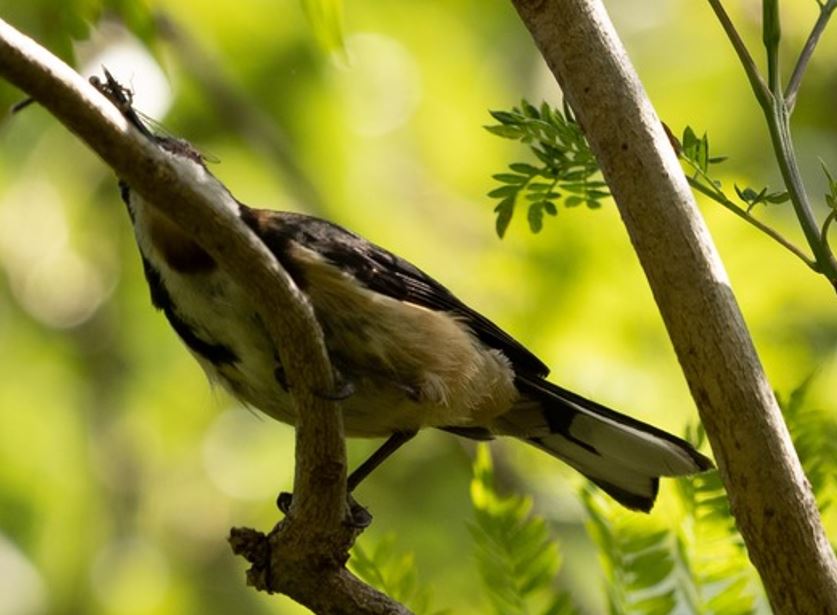
So the answer to the question appears to be “not exclusively”! Margaret was very surprised to see the insect in the bird’s beak. Eastern Spinebills are indeed specialised for extracting nectar from flowers with their beak’s structure and their ability to hover – rather like a Hummingbird. However, as we now know, they are also partial to insects and spiders !
Epilogue
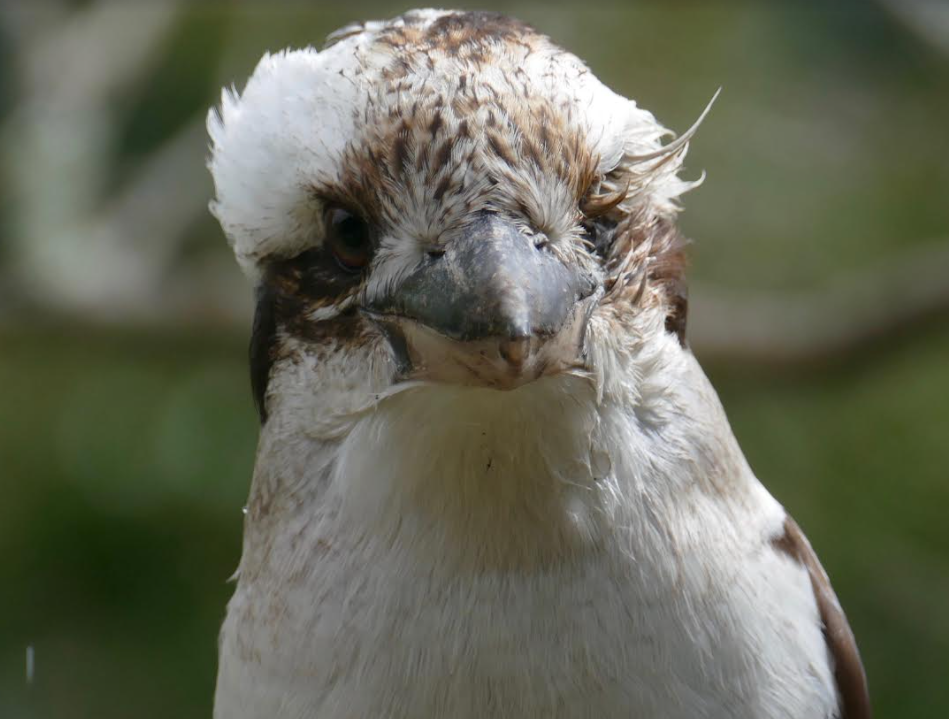
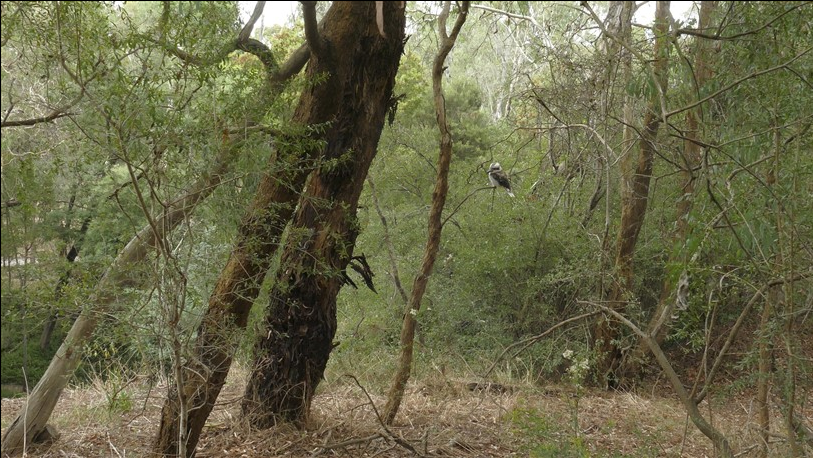
Rita sent us this photo of a one-eyed kookaburra in her garden. Although the bird seems ok, it must be difficult to fly and feed with monocular vision. According to one of our bird experts, sibling rivalry during nesting might account for the injury. Nature can indeed be tough…


Pingback: Park News – March, 2022 | The Blackburn Creeklands
Pingback: Park News – July, 2022 | The Blackburn Creeklands
Pingback: Park News, November 2023 | The Blackburn Creeklands