Now that life is returning to sort-of normal after the festive season, kids going back to school and annual holidays over – we wish our Friends all the best for a happy and prosperous 2022! Unhappily, there’s still a fair bit of Doom and Zoom around due to Covid being a very tough problem to beat.
January has been mostly dry and hot, except for a few very rainy days. Indeed, Melbourne has broken or equalled records for the the highest number of days in a month above 30 degrees and the highest mean minimum temperature in January.
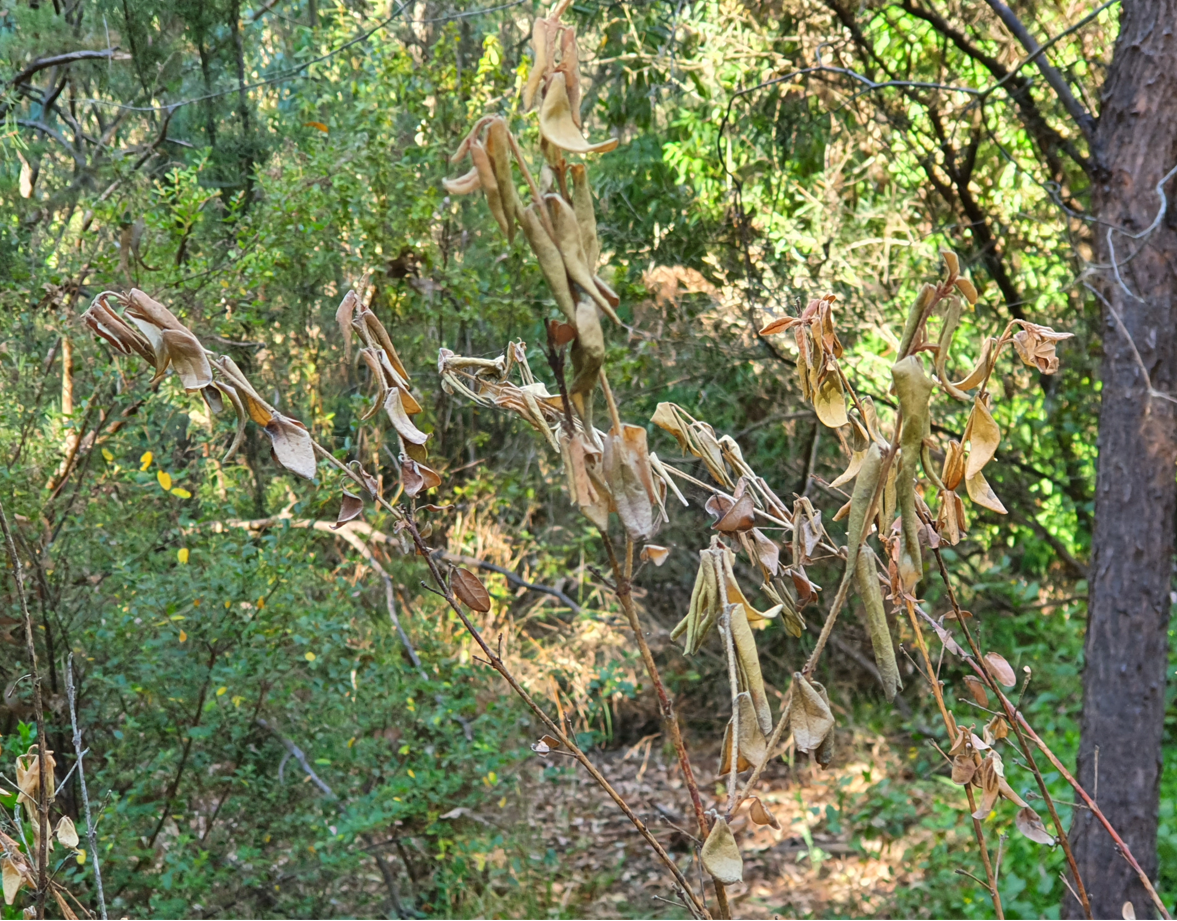
Generally speaking the park has been doing reasonably well – no doubt helped by the wetter La Niña weather experienced up until the end of 2021. The downside of La Niña is the higher humidity and tendency to storms we have been experiencing recently.
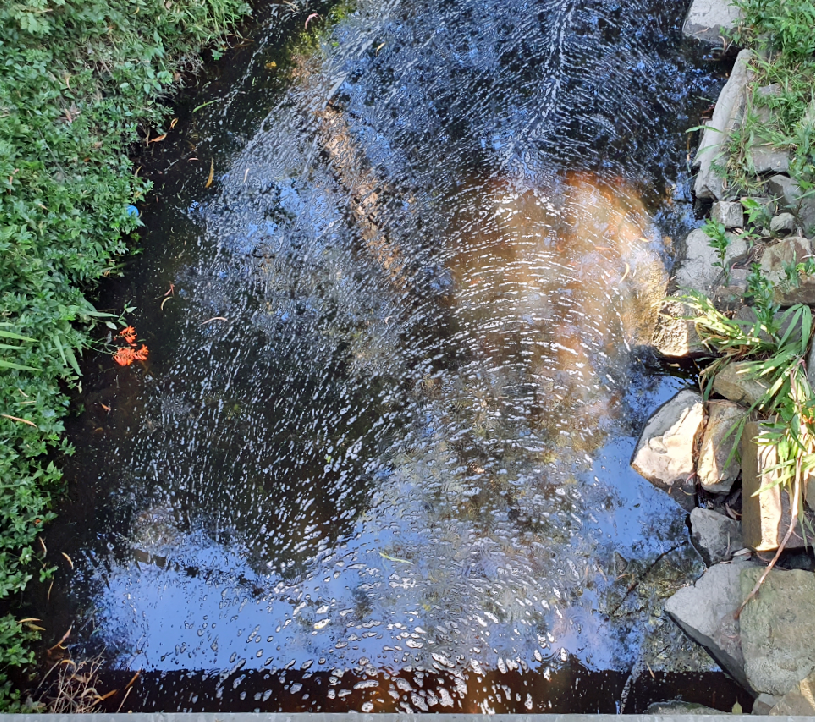
At times, the creek has slowed to a trickle – making interesting patterns in the scum on the water looking like iron filings on a magnet and fixing the trail of a surface swimmer. This photo was taken just before the recent rains and storms:
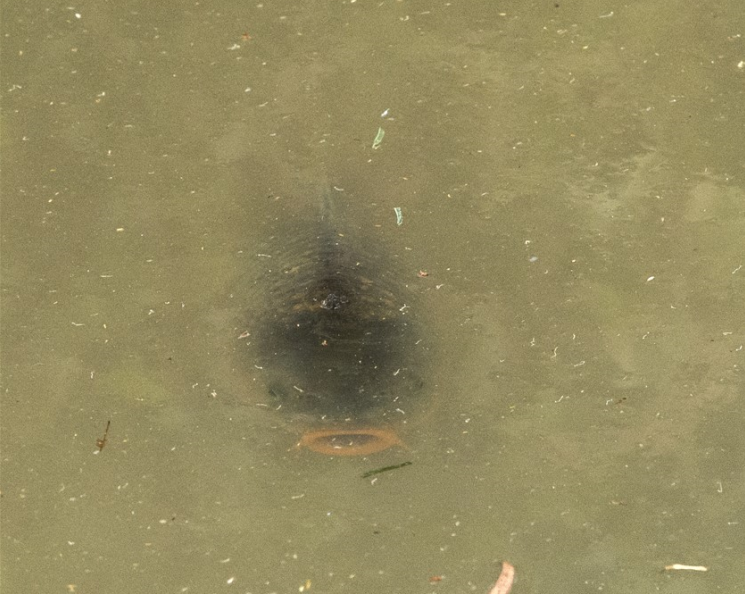
Obviously the water quality and level of oxygenation suffers at periods of low flow making life difficult for fish. There have also been reports of dog owners allowing their dogs to swim or romp in the creek. Although it’s understandable that the animals need to be cooled down, that approach is possibly asking for trouble that only expensive visits to the Vet can resolve. Also, Council by-laws prohibit dogs in waterways – not least to protect the environment for wildlife.
Birdbaths and Ponds
The availability of clean water is essential for our local wildlife – especially as the weather heats up. You can help if you live in the park’s corridor – using a pond or a simple birdbath. For best results, the water needs to be kept clean and topped up in extreme heat. You can find detailed instructions on siting, cleaning etc here.
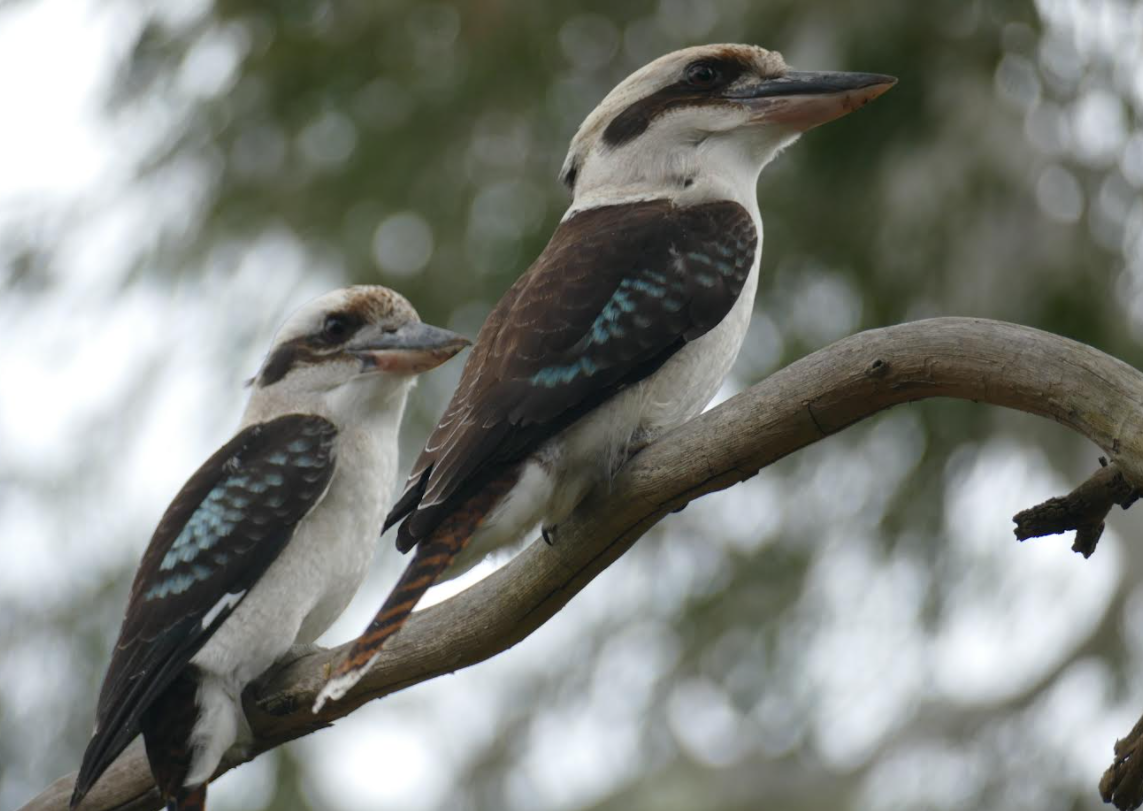
Friends Rita and Hugh, who live next door to Kalang Park (though not so close to the creek), have sent us some photos illustrating just how popular their birdbath is with a variety of species in this warmer weather:
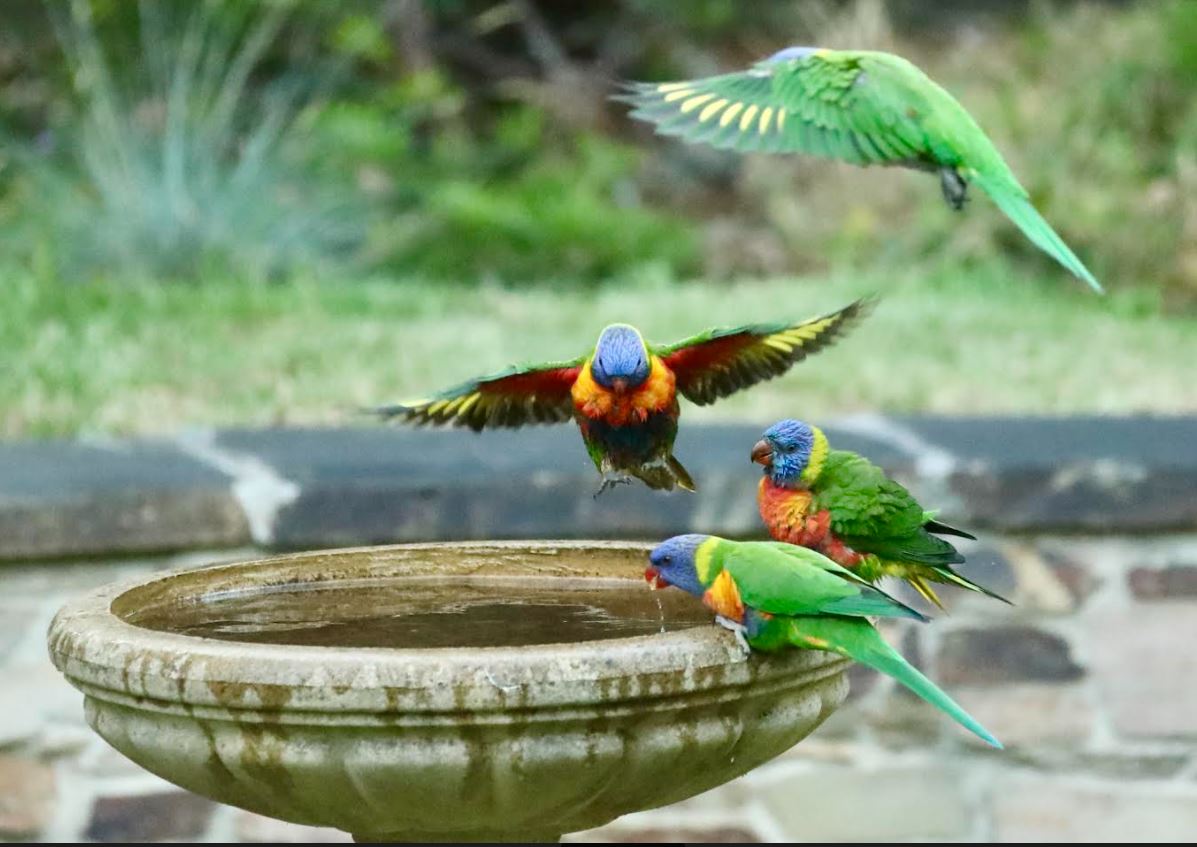
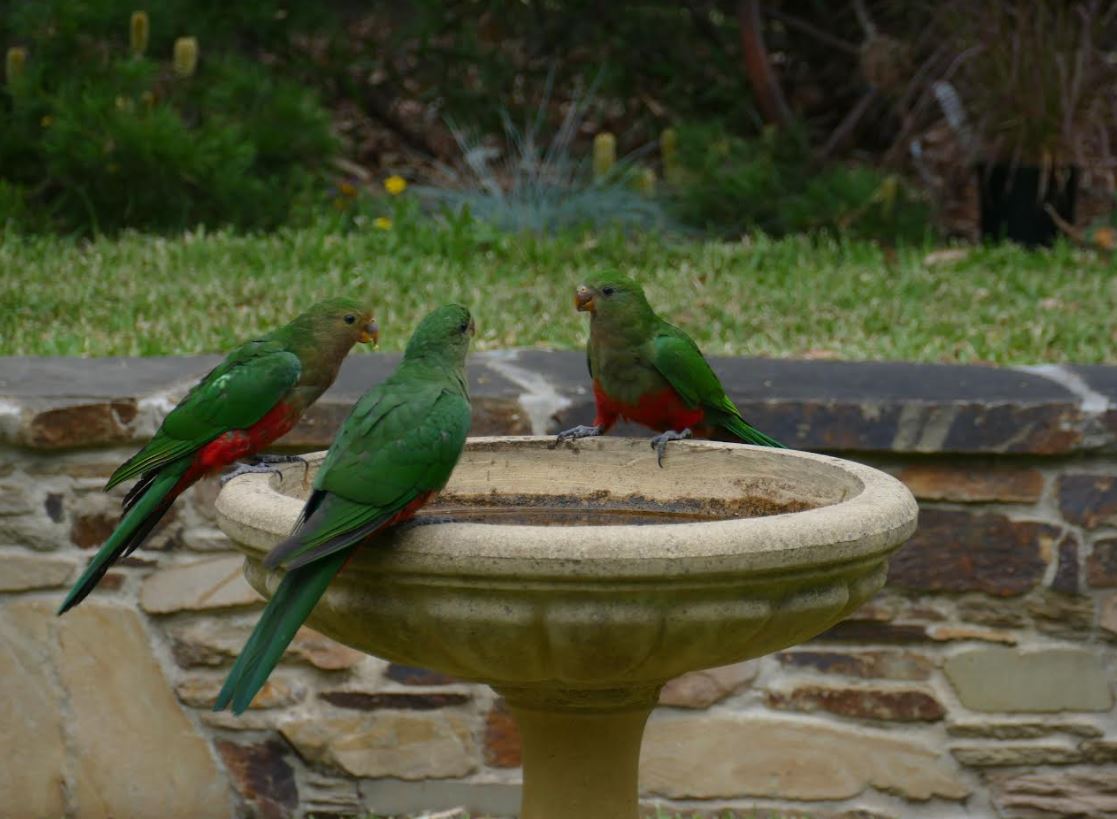
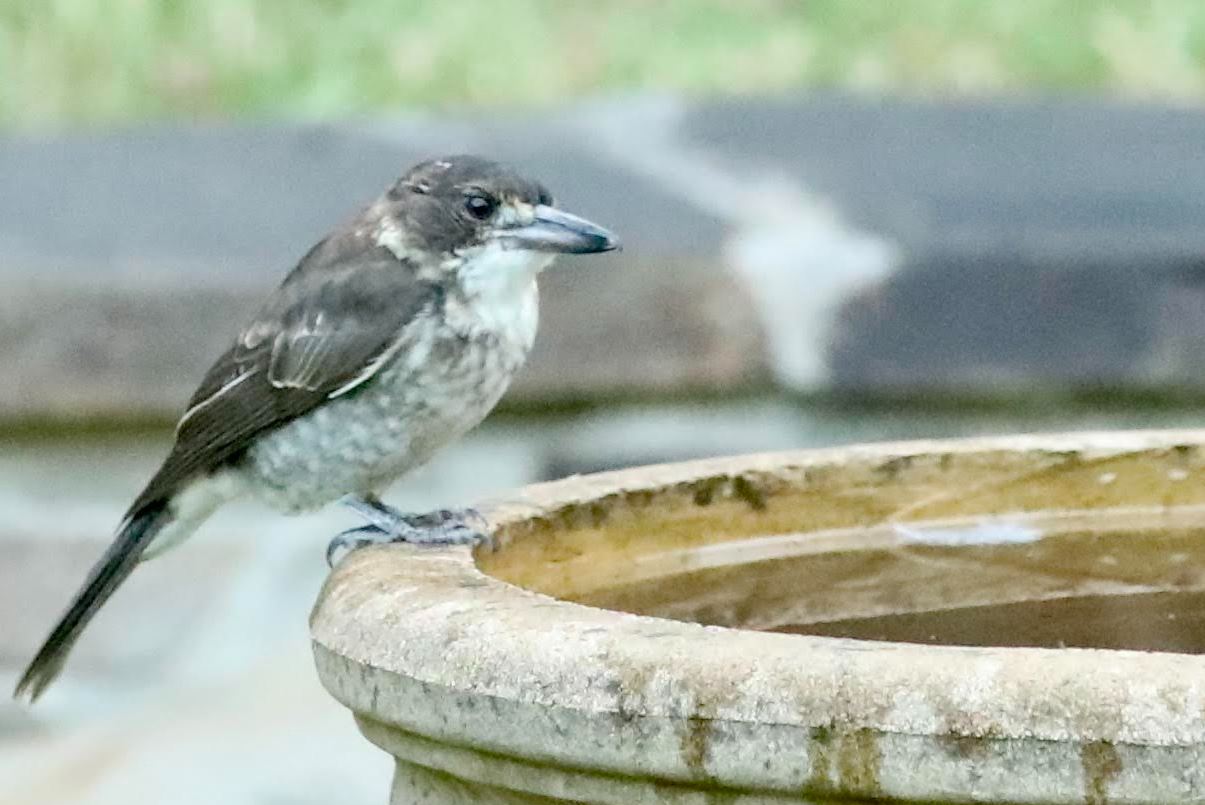
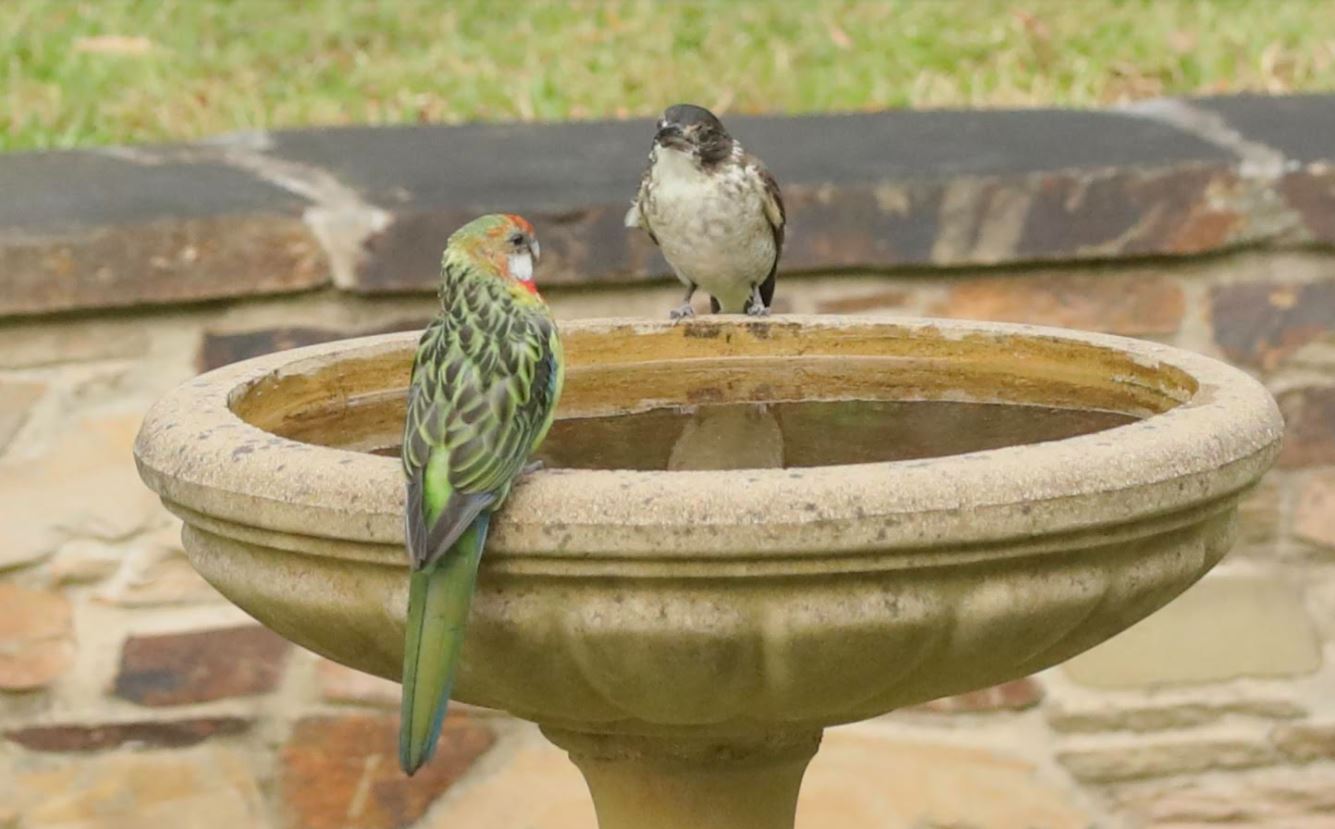
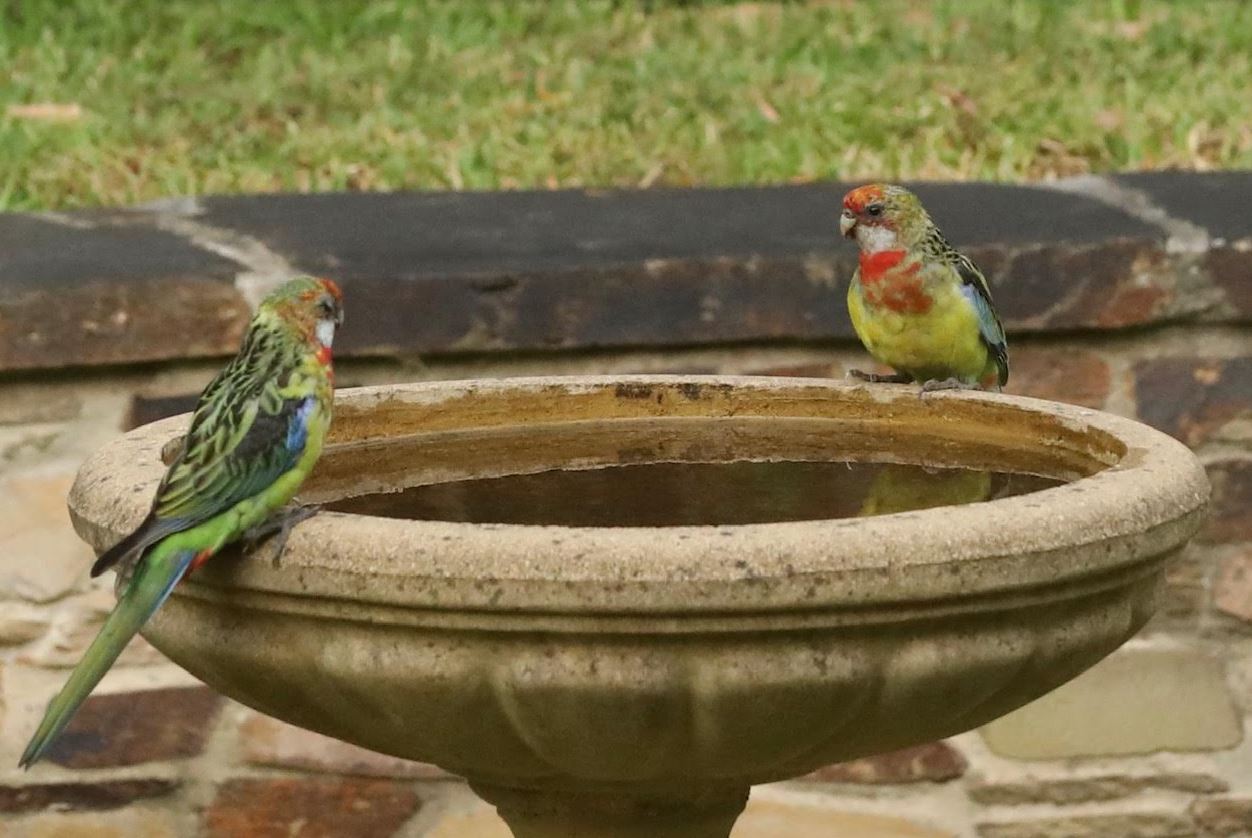
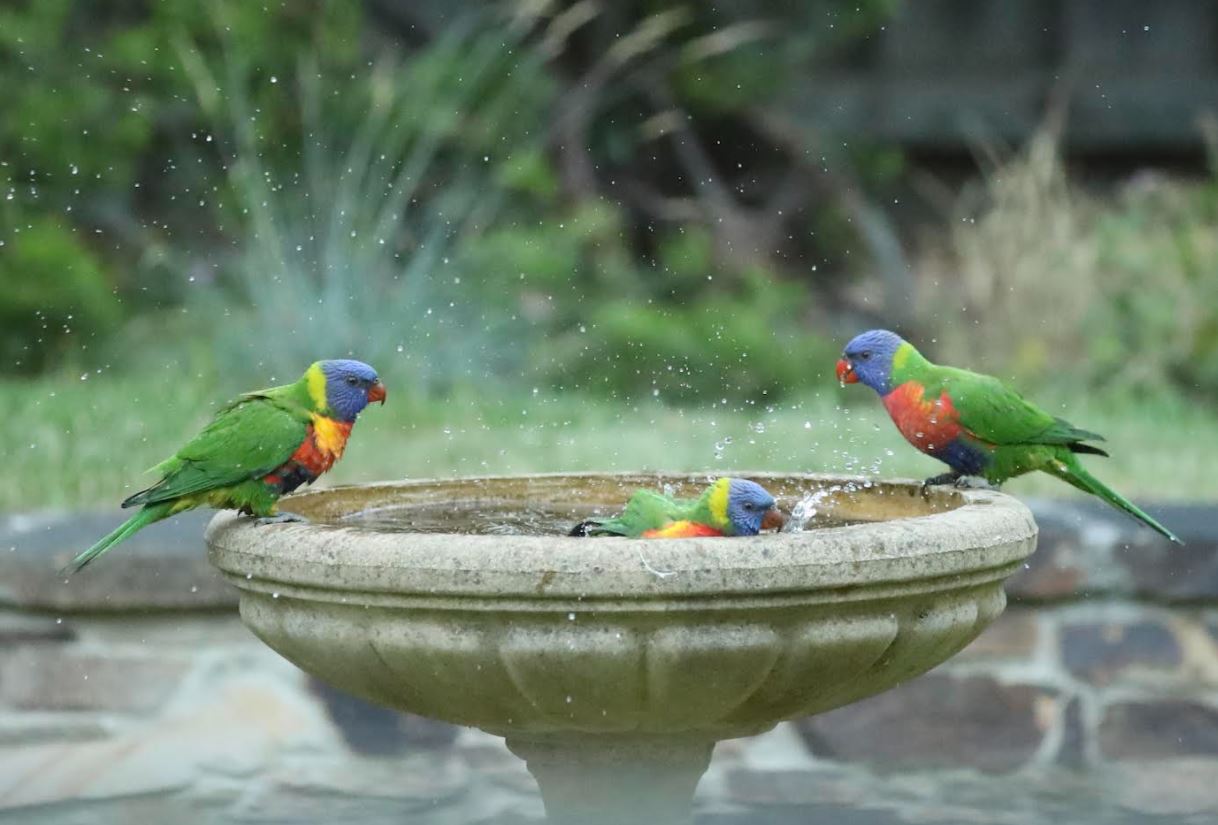
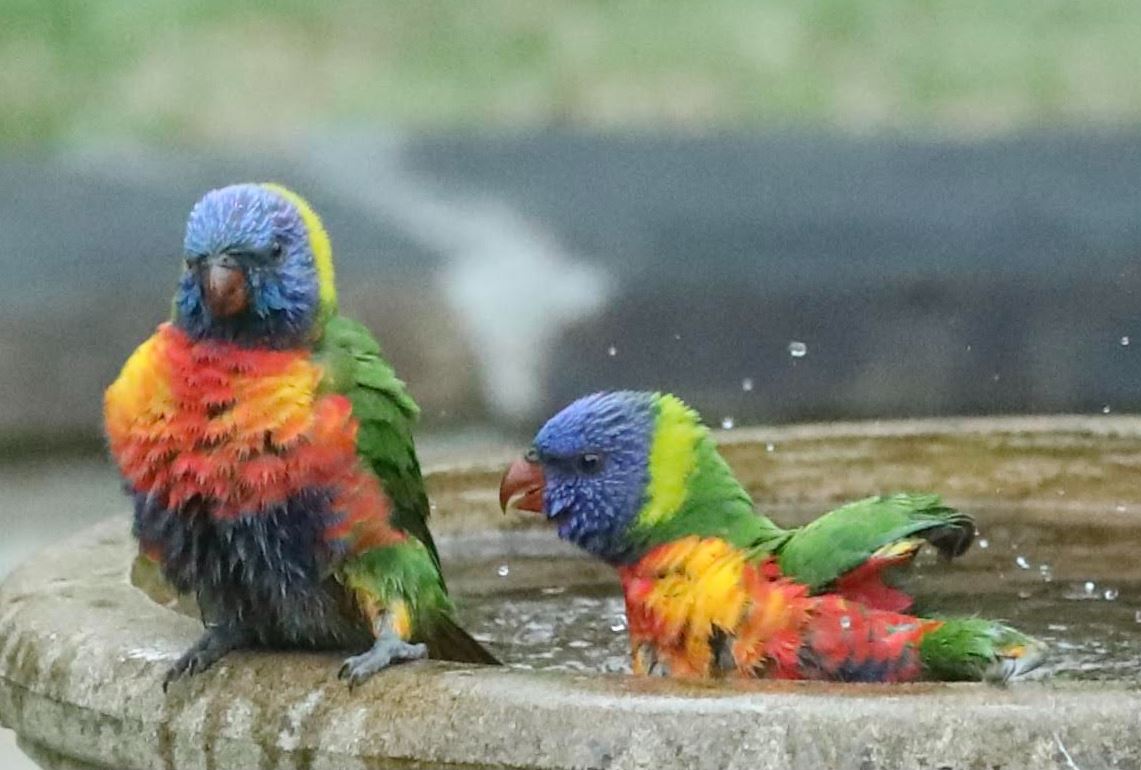
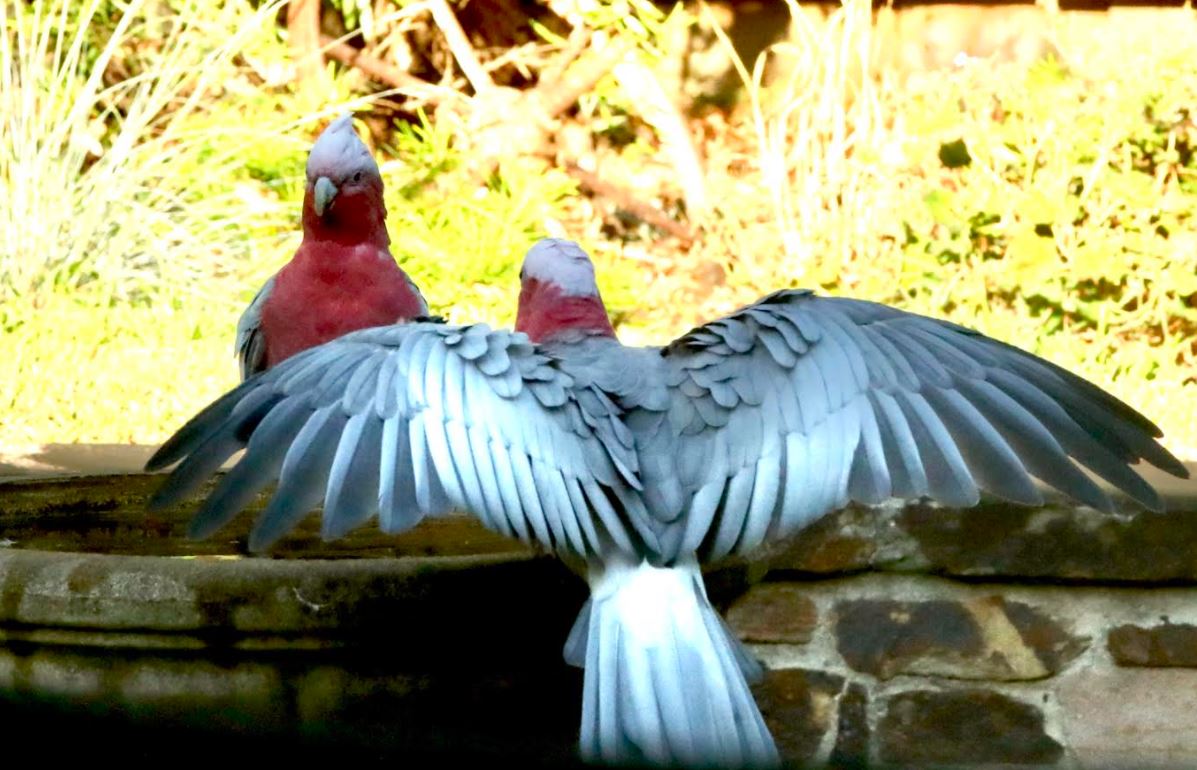
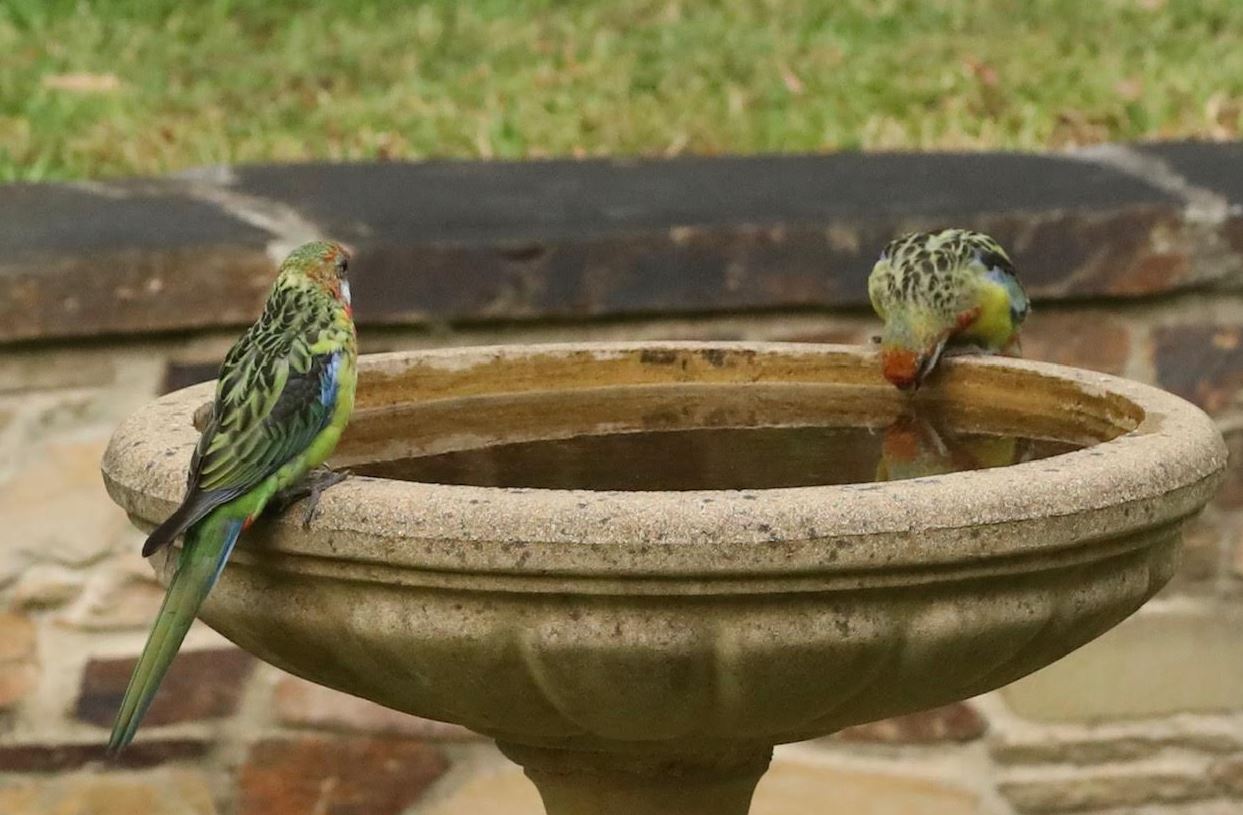
To scroll, click on one of the photos and scroll using the < > arrows. Click the X when finished.
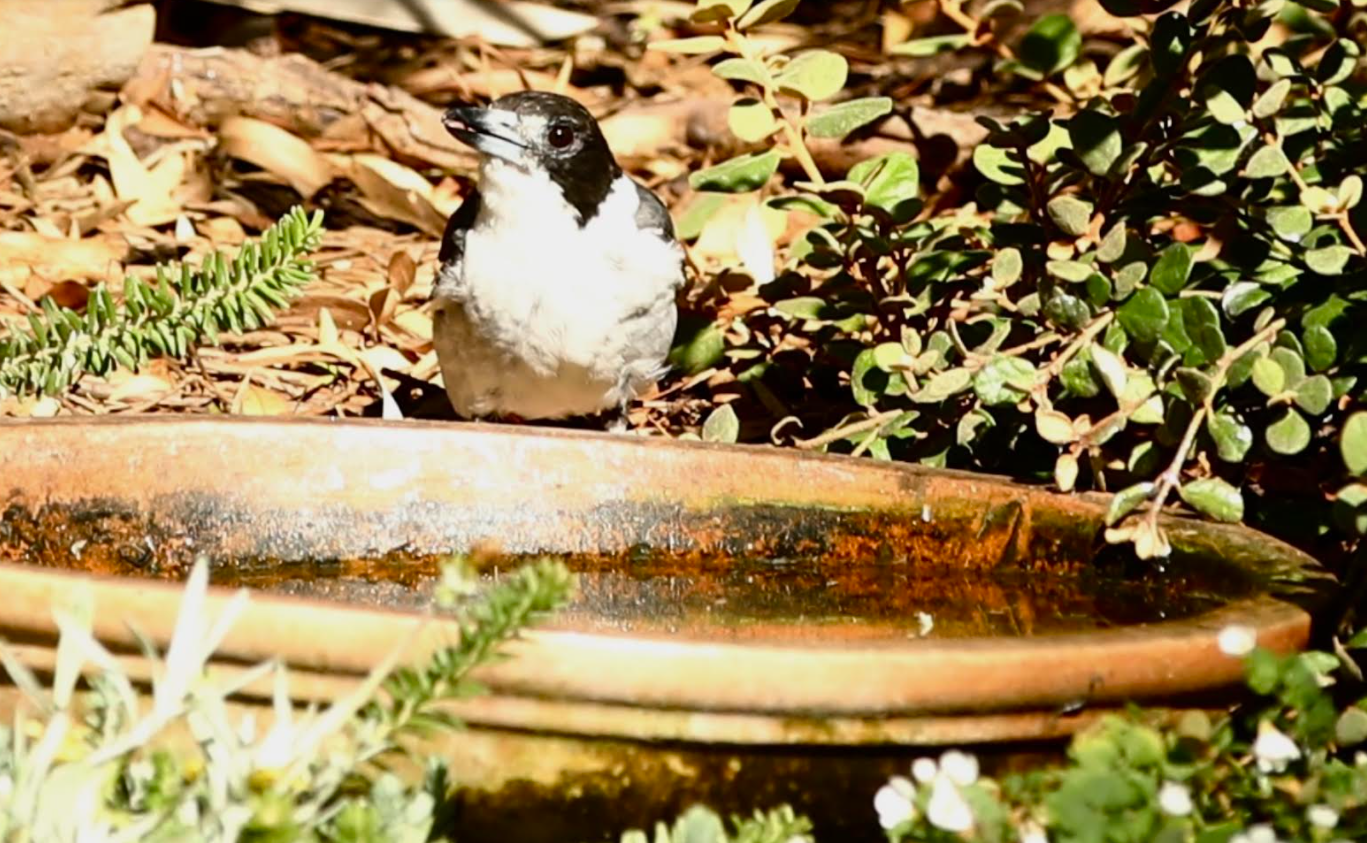
If you have no cats in your backyard, a simple pot saucer on the ground can also make a suitable bird bath for modest cost and effort:
What is it ? Plant, Animal, Poo or ???
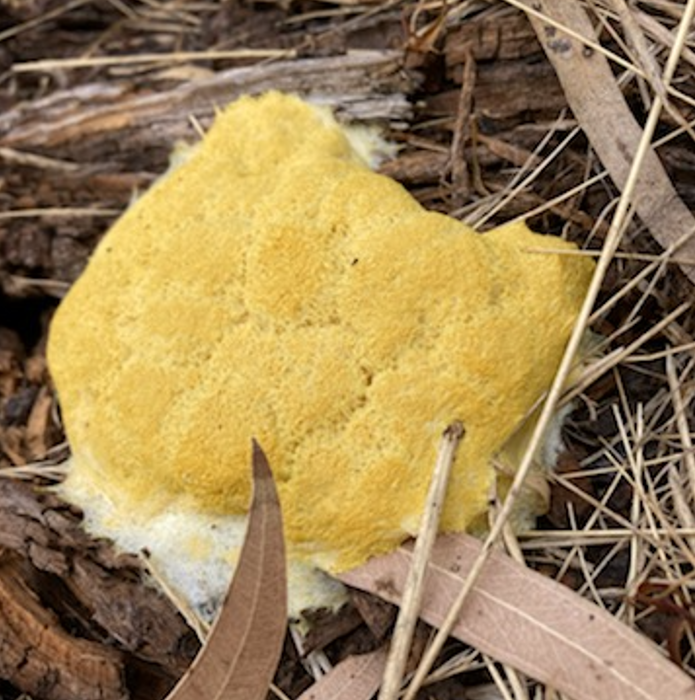
Well, the short answer is: It is a Myxomycete – which is a plasmodial or acellular Slime Mould.
The scientific name of the subject of our photo is Fuligo septico. Its common names reflect its appearance and size, even if a little crass: Dog Vomit Slime Mould or Scrambled Egg Slime Mould. Occasionally, slime moulds are sighted in the park – often on a dead or dying tree stump. They usually only last a few days before they harden, fade in colour and disappear.
So, what is a Slime Mould ?
This has been a tricky question for science with a variety of answers over time. Too tricky for this author too – what follows largely relies on work by Tasmanian researcher Sarah Lloyd OAM.
Initially, Slime Moulds were thought to be types of fungus – and because fungi were thought to be types of plants – they were determined to be a type of PLANT. Later, it was decided that fungi were so different from plants that they deserved their own “kingdom” so Slime Moulds came to be considered types of FUNGUS.
Then it was noticed that they actually moved when feeding (!) in their plasmodial stage – so they were thought to be a type of ANIMAL. They are not fast movers but can move several metres per day, navigating towards food. Not bad for an organism composed of protoplasm that has no brain! They feed on bacteria, fungi, yeasts and decaying organic matter.
The plasmodial stage is just one of the life stages of a Myxomycete. For much of their lives they are microscopic in size – they are single-celled “myxamoebae”. However, during the “plasmodial” stage of their life, after fusion with another compatible myxamoeba to form a zygote (fertilized ovum), they coalesce into large blobs that consist of millions of nuclei that can span up to a metre across. They eventually form fruiting bodies that produce spores from which the myxamoebae form to complete the cycle. The observation of the single-celled amoeboid stage caused another reassessment and they were defined as PROTISTA (animals are a descendant as are fungi). These days, they are generally thought to be AMOEBEANs.
Some scientists think Slime Moulds evolved before plants. In any event, our example is “cosmopolitan” – occurring all over the world. An ancient Chinese name means “devil’s droppings” and a Mexican name means “moon poo”. [Despite that, some indigenous Mexicans fry and eat it.] “Snake poo” is another name/belief still common in Tasmania.
So, if you guessed any of Plant, Animal or Poo – you would have been correct – at least according to scientists or local knowledge at one point in time or another !
Further Information
There are other types of slime mould which often have bizarre, even alien, looking fruiting bodies. To have a look, please visit Sarah Lloyd’s home page on the subject.
Here’s a time-lapse video on YouTube showing Dog Vomit moving in its pulsating way:
Main Street Bridge Update
Council has recently let us know that the proposed completion date for the bridge project has slipped a little further to 4th February. Covid-19 has caused additional manpower and supply chain problems that have meant the end-of -January target could not be met.
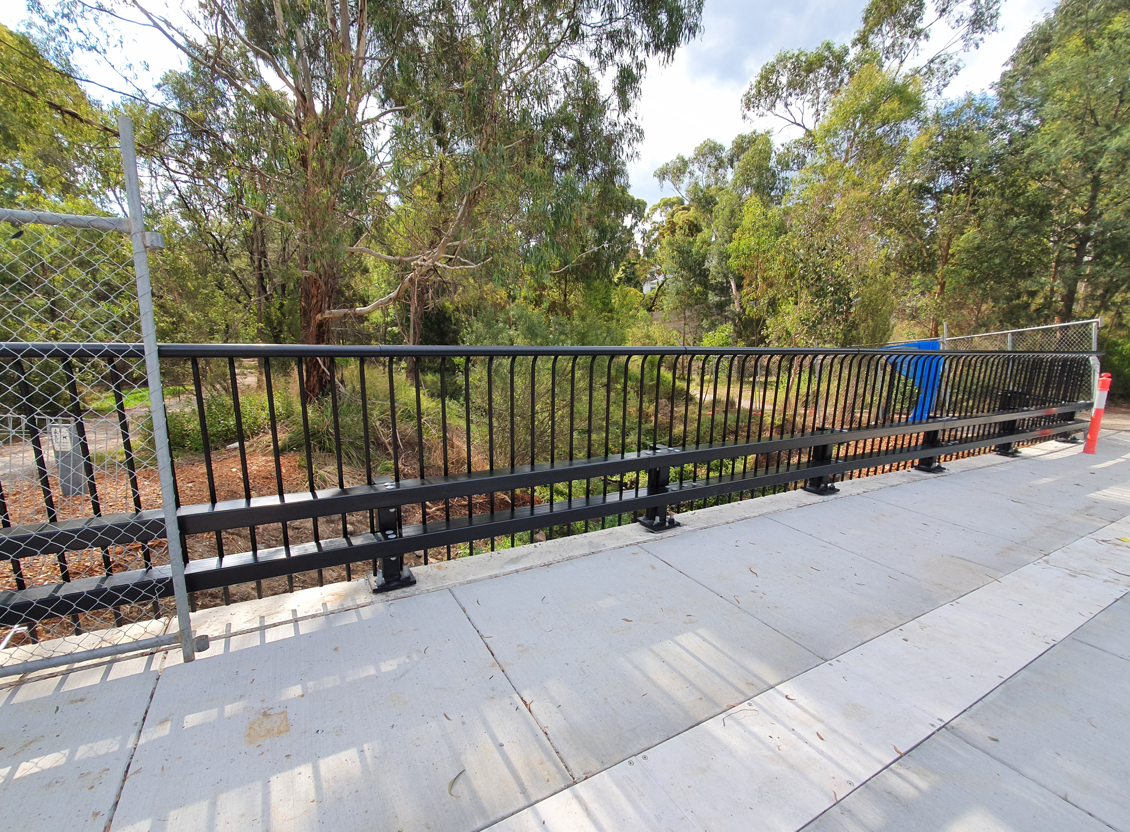
As of 31st January, the bridge footpath was opened on the western side with railing (and inbuilt crash barrier) installed – excepting pillars to support the wings. Railings were still to be installed on the eastern side – but work seemed imminent.
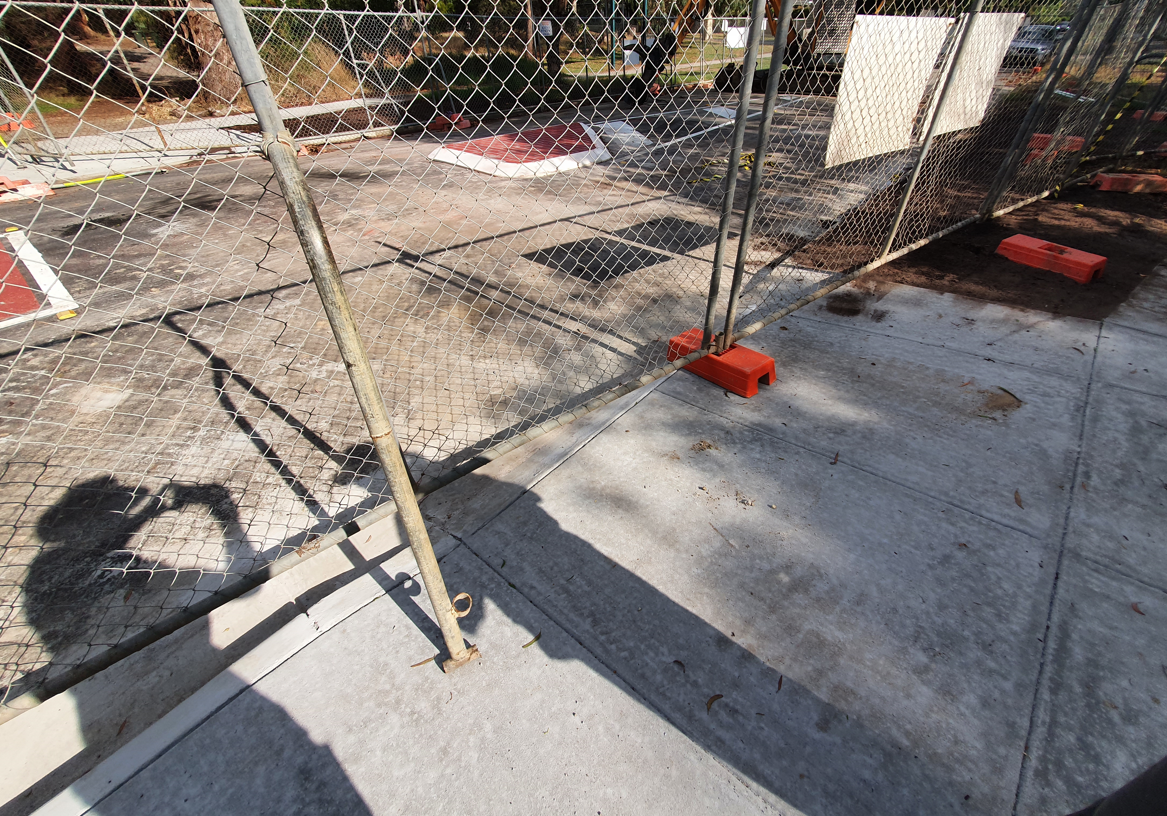
Cross-overs to the park tracks had also been laid. We haven’t had any further update on the possible zebra crossing (which is a separate project). If it goes ahead, the crossing would align with the main track through the park on the southern side of the creek (shown in the photo above).
Mistletoes
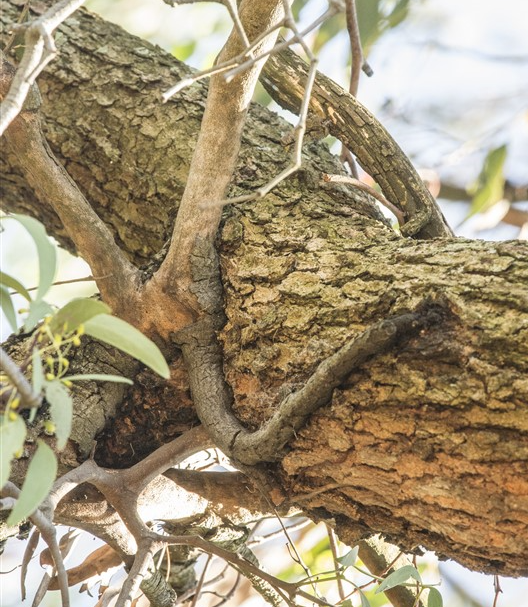
Mistletoes are partially parasitic and tend to grow in the canopy of host trees. They photosynthesise on their own account, but gain extra nutrients by attaching their roots to host trees. Our photo shows the attachment points of Mistletoe in a host tree in Blacks Walk.
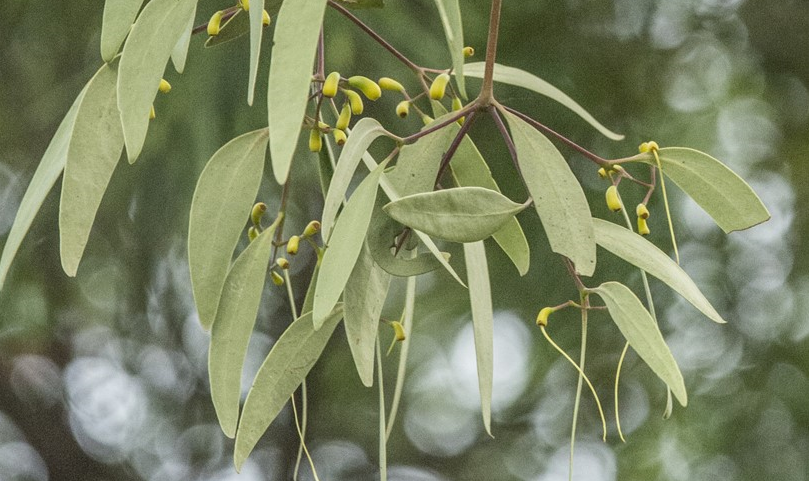
This particular Mistletoe is the Creeping Mistletoe (Muellerina eucalyptoides) with foliage and fruit looking quite similar to that of a host eucalypt.
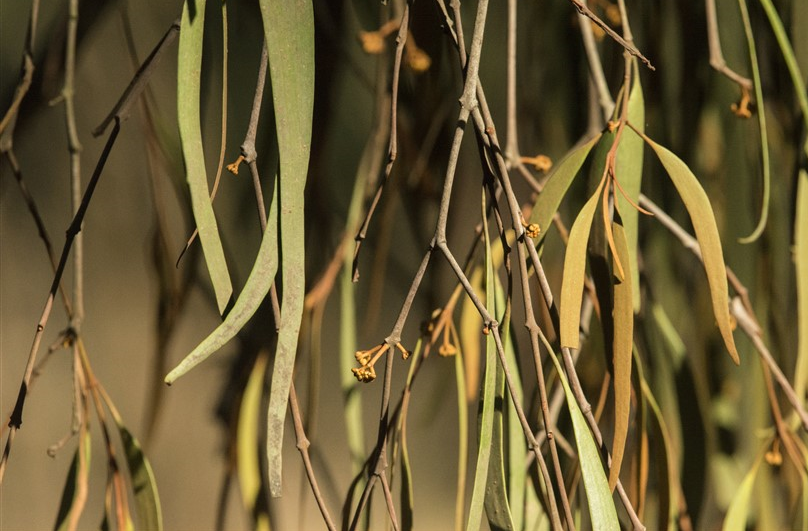
Another Mistletoe you might see in Blacks Walk is the Drooping Mistletoe (Amyema pendula):
Gardens for Wildlife is running a project with support from the Bungalook and Greenlink nurseries to encourage the community to grow mistletoes in their gardens. Mistletoes provide excellent habitat for wildlife. They flower for long periods and produce nectar and seeds much appreciated by insects and smaller birds such as Silvereyes, Eastern Spinebills and Mistletoebirds. For more information or to register your interest in the project, please e-mail: gardensforwildlife@whitehorse.vic.gov.au .
We used to have the Mistletoebird in our park – but most of our Mistletoe disappeared – and, consequently, so did the bird – having lost its habitat and preferred food. Silvereyes used to be more common too – but are very rarely seen these days. Eastern Spinebills are still present but do appear to be waning in numbers. Let’s hope the reappearance of the Mistletoes in the park brings back those small birds.
Autumn Bird Survey
One for your diaries – our Autumn Bird Survey will be held on Saturday, 30th April – Covid willing!. This year, the event will also form part of Whitehorse’s participation in the international City Nature Challenge which is to run from 29th April – 2nd May this year. We meet at 07:30 (the early bird catches the worm!). We’ll remind you all closer to the event.
For more information on the City Nature Challenge and the iNaturalist app used to record fauna and flora observations please click here.
Our Status

Our future status as a Park Advisory Committee (PAC) of Whitehorse Council and how we organise to protect our park has still not been determined. The next major step is intended to be a workshop attended by reps from the 13 PACs, Council Officers and Councillors to work through a revised proposal from Council. No date has been set yet.
In the meantime, we are continuing on as per the status quo – running Thursday morning working bees and meeting monthly as a Committee.
Committee Meetings
Committee meetings are held at 7:30 PM on the 4th Tuesday of each month excluding December. Visitors are most welcome. For the time being, meetings are held via Zoom instead of in person at the normal venue : Kalang Oval Pavilion, Kalang Street, Blackburn.
Meeting dates for 2022 are: January 25th, February 22nd, March 22nd, April 26th, May 24th, June 28th , July 26th (with AGM), August 23rd, September 27th , October 25th and November 22nd.
If you would like to attend, please let us know by e-mail at BlackburnCreeklands@gmail.com.
Maintenance Team Report
Our Thursday morning working bees resumed on 13th January. Two (hot weather) bees have since been conducted in the project area to the west of the Laurel Grove bridge. Next working bee is to be in the heavily planted-up area below Waratah Crescent.
Our most recent working bee had to be postposed in the light of the severe thunderstorm warning for Melbourne issued by the Weather Bureau. For team safety, the team doesn’t work during electrical storms, during high winds or if the temperature exceeds 34 degrees.
Speaking of safety hazards, bull-ant bites have been abnormally common this summer with several incidents over the season at our working bees. Precautions are to watch out for nest holes and solitary creatures and to wear long sleeves, gloves and long trousers. The usual culprit has been a large black bull-ant at several sites within the park. It is so easy to disturb this aggressive species and its sting can be quite painful and itchy.
Due to the heat and Covid-19 concerns, the working bees have temporarily been run from 08:30 to 11:00 rather than the usual 11:30 – by sacrificing the tea morning break.
Sightings
Platypus?
Julie, one of our park neighbours and weeding team members, believes she spotted a platypus in Furness Park at the large bend adjacent the track to Gardenia Street from the Main Street bridge. It would be fantastic if her sighting can be confirmed especially with a photo – so please keep your eyes peeled!
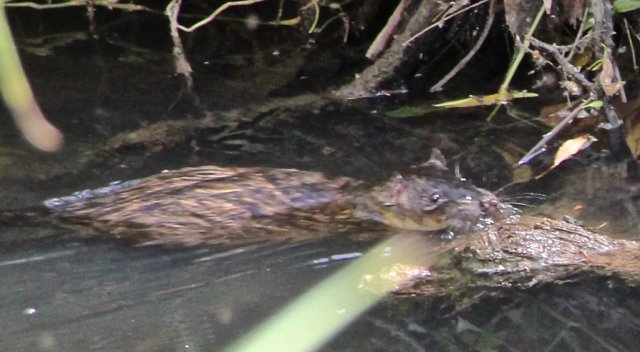
Another possibility is that it was a Rakali sighting. One Rakali sighting at that site was reported in early January on the creekbank. The Rakali (Hydromys chrysogaster), also commonly known as a water-rat, is a largish (23-39cm) indigenous rodent which lives in burrows on the banks of creeks, rivers, lakes and irrigation channels. It feeds on aquatic insects, fish, yabbies, snails, frogs, plant material, birds’ eggs etc. Its tail usually has a white tip and its back feet are partially webbed for swimming. Being of similar colouration and size, being furry and having webbed feet – a mistaken observation would be completely understandable. Robin’s Rakali photo below was first published in our November, 2015 news:
Other Sightings
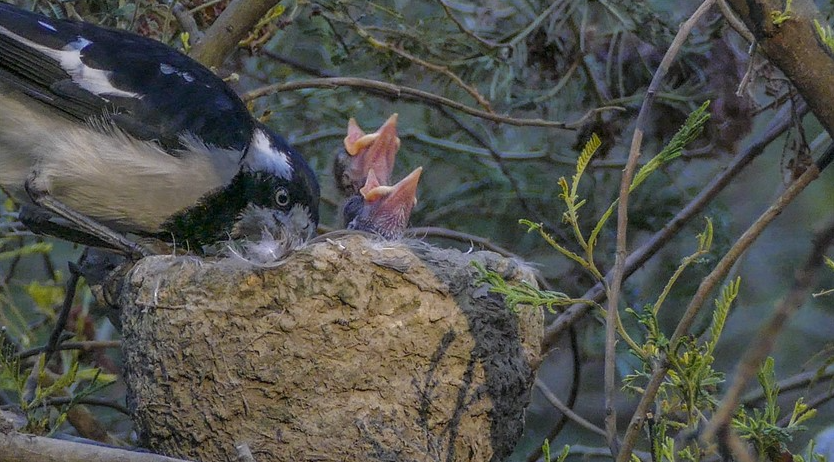
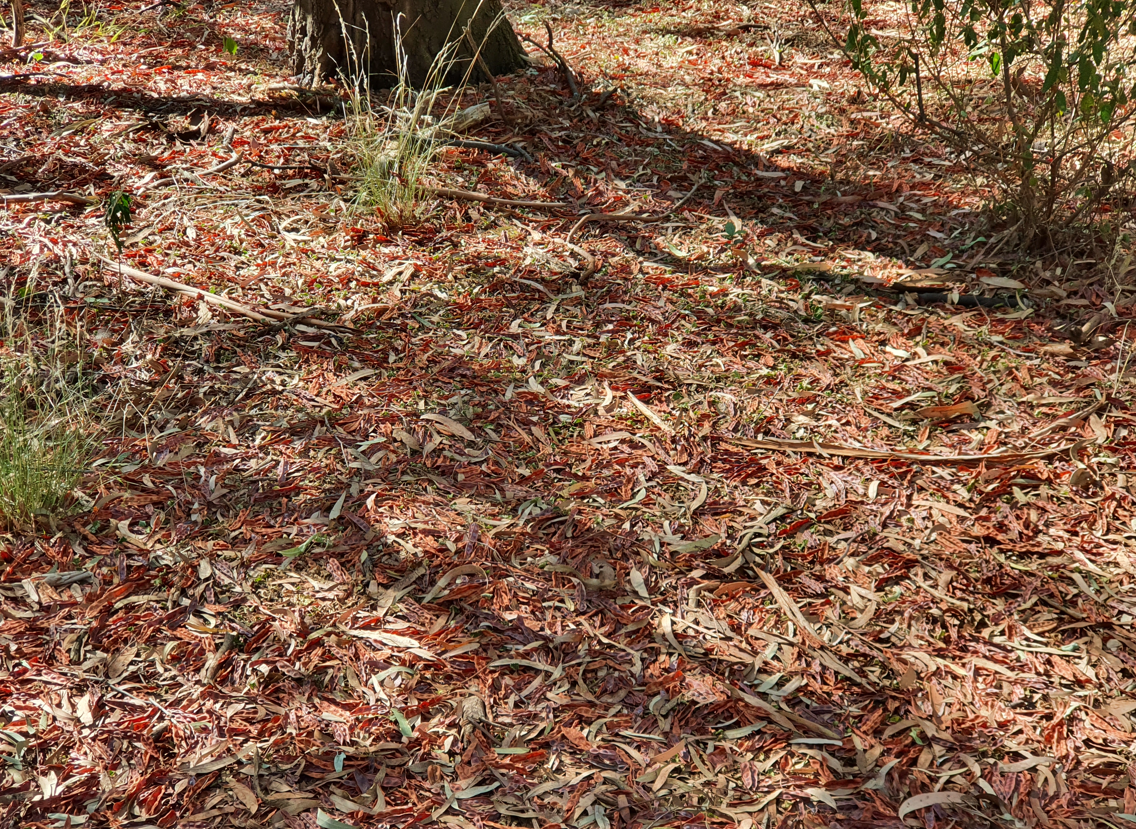
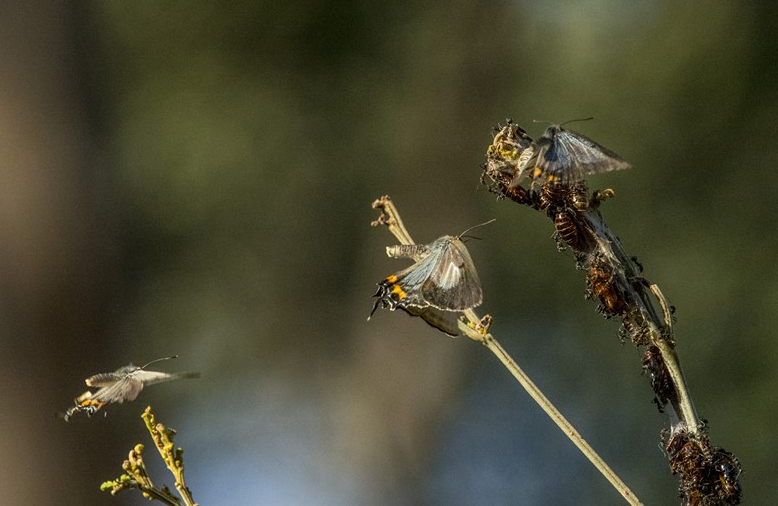
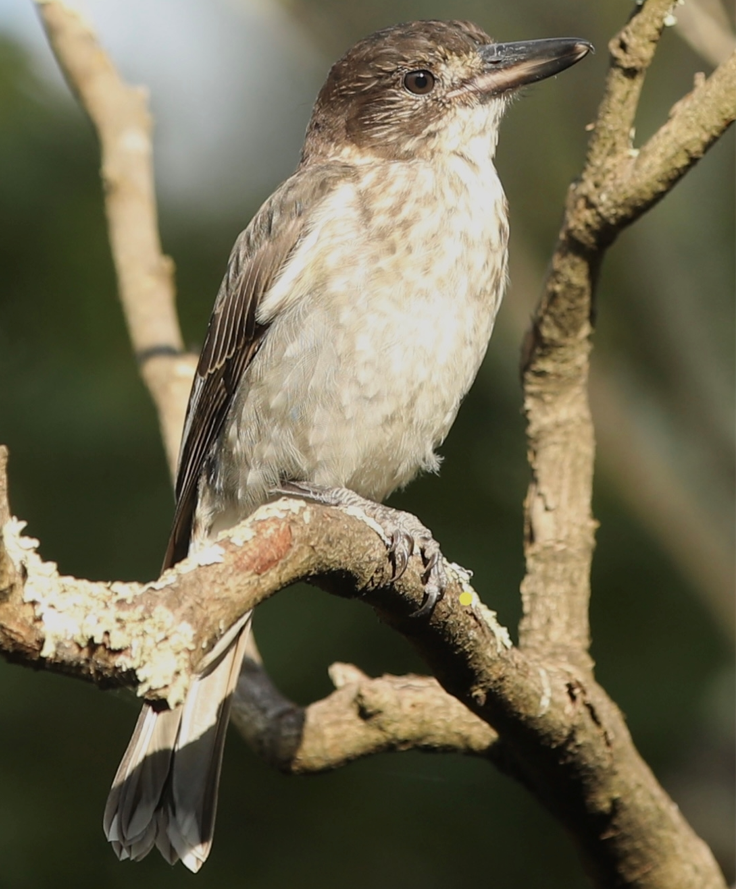
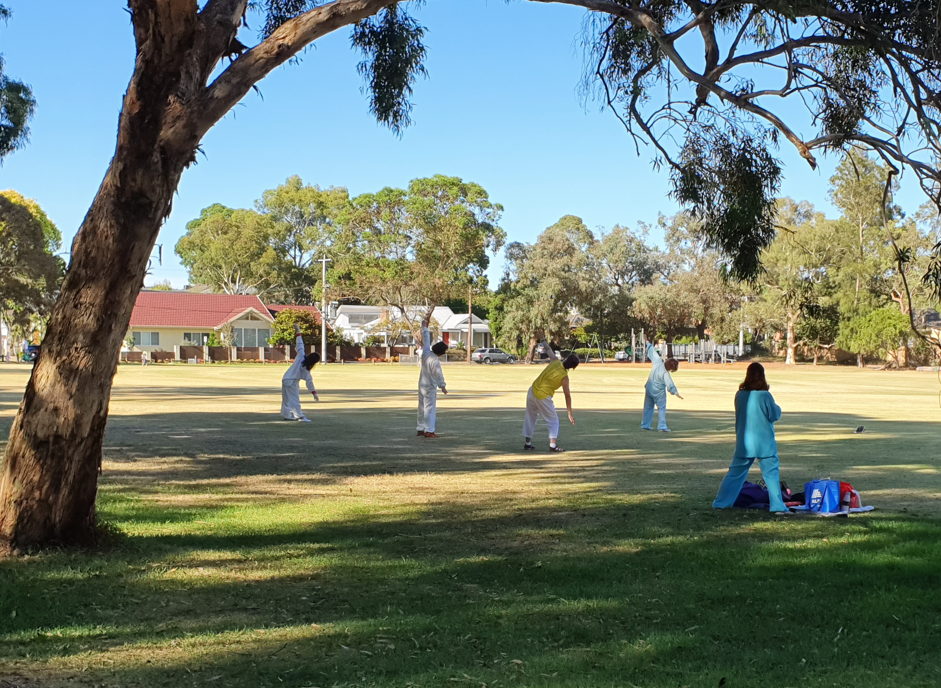
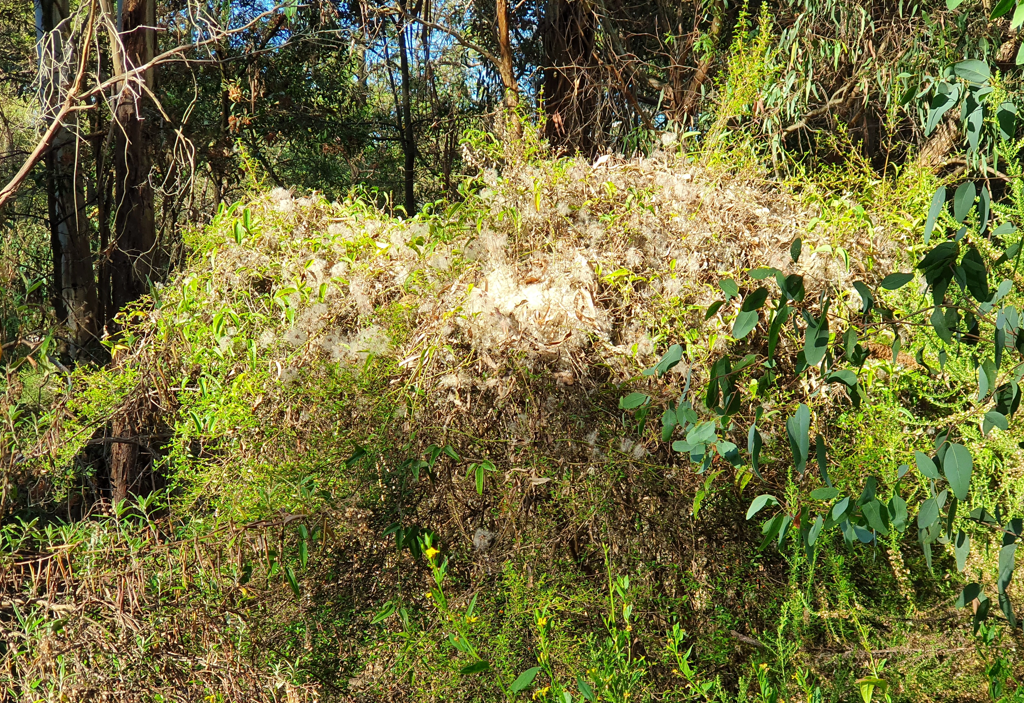
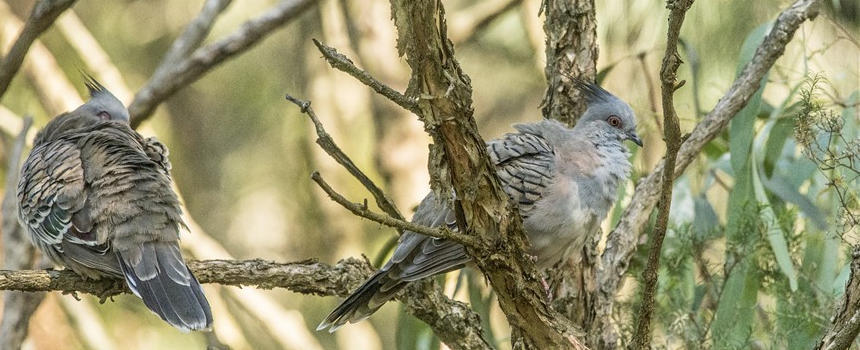
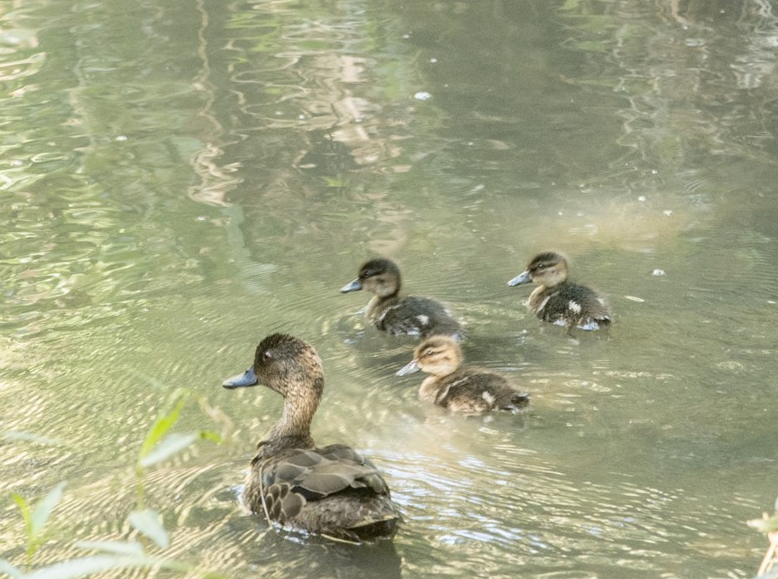
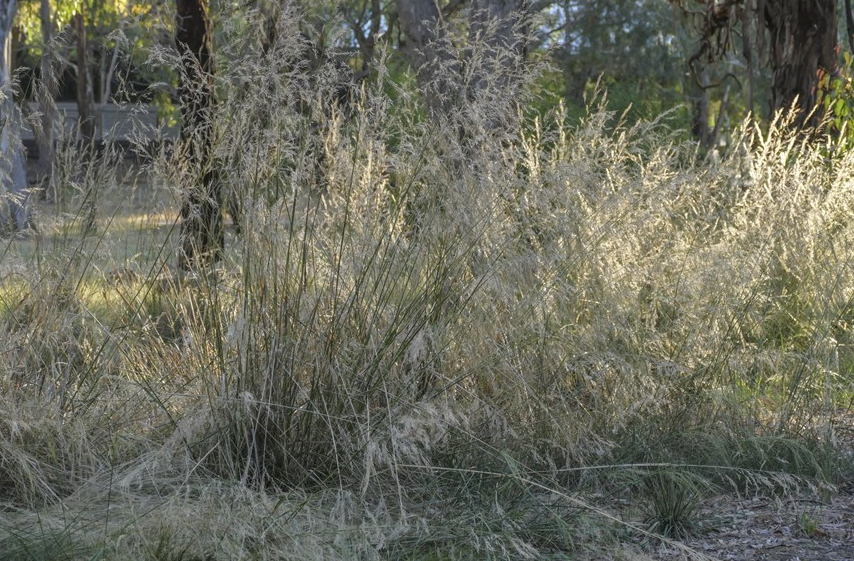
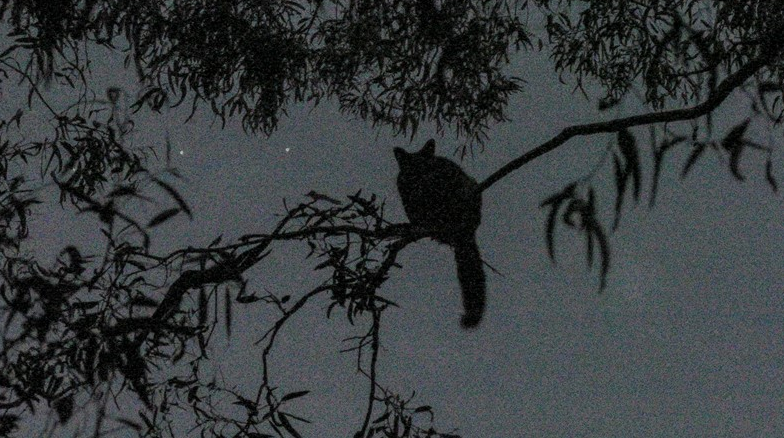
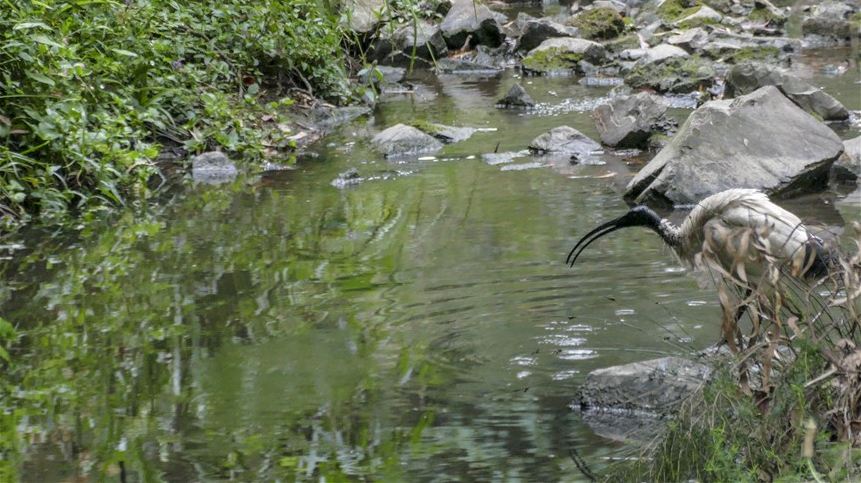
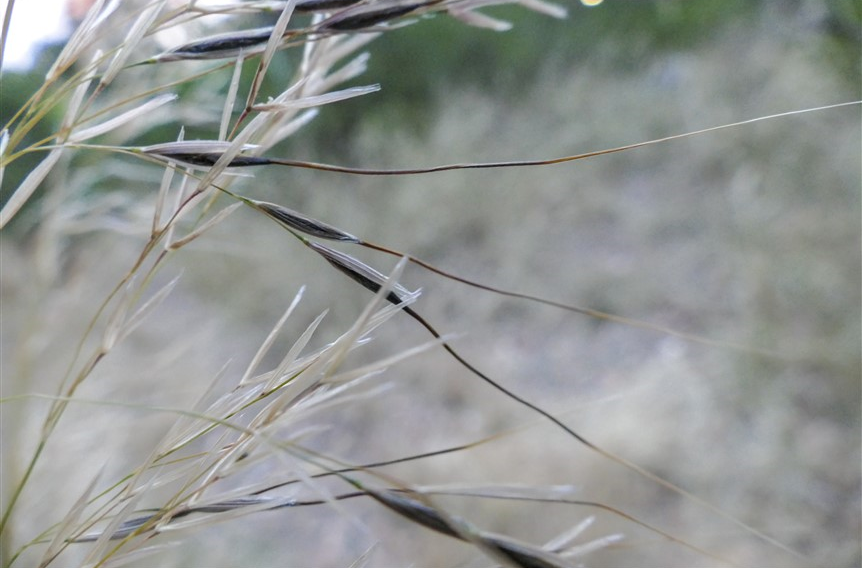
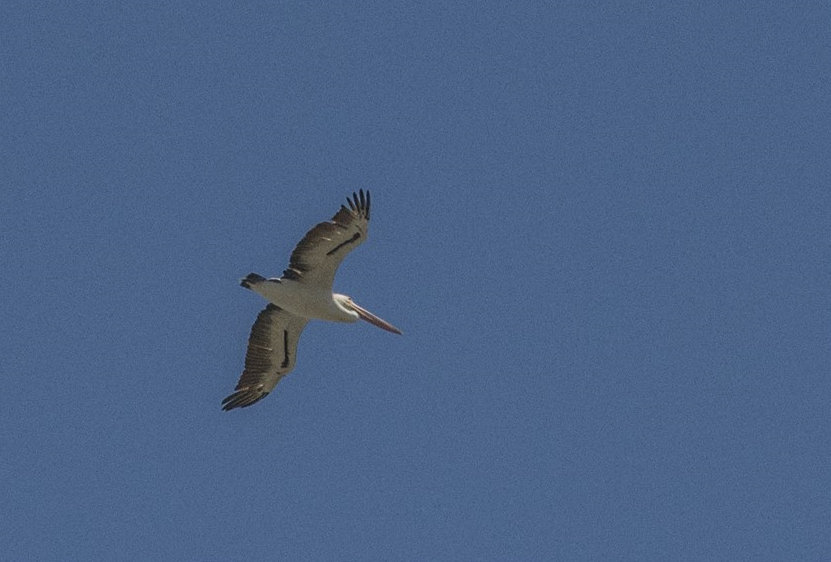
Possibly due to the unusual La Niña conditions, some species of birds are still nesting (late December).
Our Corridor
Congratulations Trevor!
We congratulate Trevor Eddy who has won a 2021 Victorian Senior Achiever award as announced in the January Whitehorse News. Trevor is the Treasurer of Greenlink – one of our two local indigenous plant suppliers and also holds senior executive roles with Blackburn’s Burke & Beyond in the disability sector and with Clota Cottage Neighbourhood House in Box Hill. Trevor has also helped us navigate a path through the incorporation of our group – if that should become necessary. His is a much deserved award.
Blackburn Men’s Walk and Talk
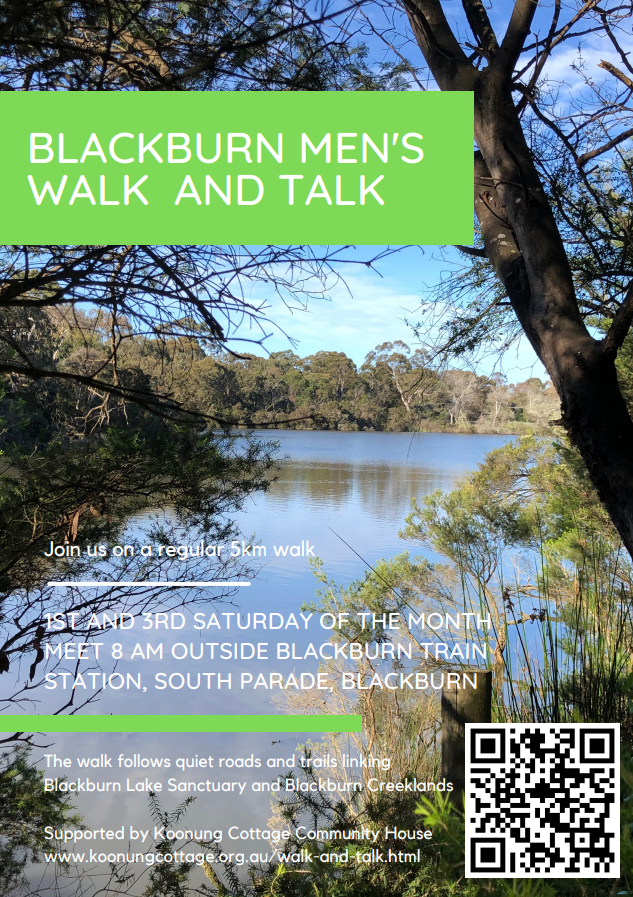
The Blackburn Men’s Walk and Talk program is an exciting men’s mental health initiative commencing this month.
Extensive international research has demonstrated the effectiveness of walking in nature in enhancing well-being, self-esteem and positive mood levels. The walks in Blackburn will provide regular opportunities for local men to come together and connect with each other during the walks. Trained volunteer facilitators will help men feel included, be available to listen and to increase awareness of the natural world they are passing through. Walks will finish with an opportunity for a coffee and a chat.
If you’d like to participate, please call Richard Kaser on 0459 840 251.


Pingback: The Main Street Bridge is Open! | The Blackburn Creeklands
Pingback: Park News – March, 2022 | The Blackburn Creeklands
Pingback: Park News, November 2023 | The Blackburn Creeklands