Welcome to our Blackburn Creeklands Newsletter for January, 2023. Now that life is returning to the new normal after the festive season and late December and January finally brought some heat, kids are going back to school and the summer holidays are over – we wish our Friends all the best for a happy and prosperous 2023!
The Kidnap of a Queen
As many Friends would be aware, we occasionally have a swarm of honeybees move into the park and set up home hanging from a tree or in a tree hollow.
Bee swarms can be an issue for Council given that some people can have dangerous allergic reactions to bee stings. Council usually marks off the area with hazard tape and exterminators are called in – to poison the bees.
Fortunately, a swarm that had set up home attached to a log on the ground next to the path leading north from Kalang Pavilion was recently saved by a local beekeeper. This site would be considered dangerous because of its position close to a path and near the ground – a child or dog could easily have disturbed the bees.
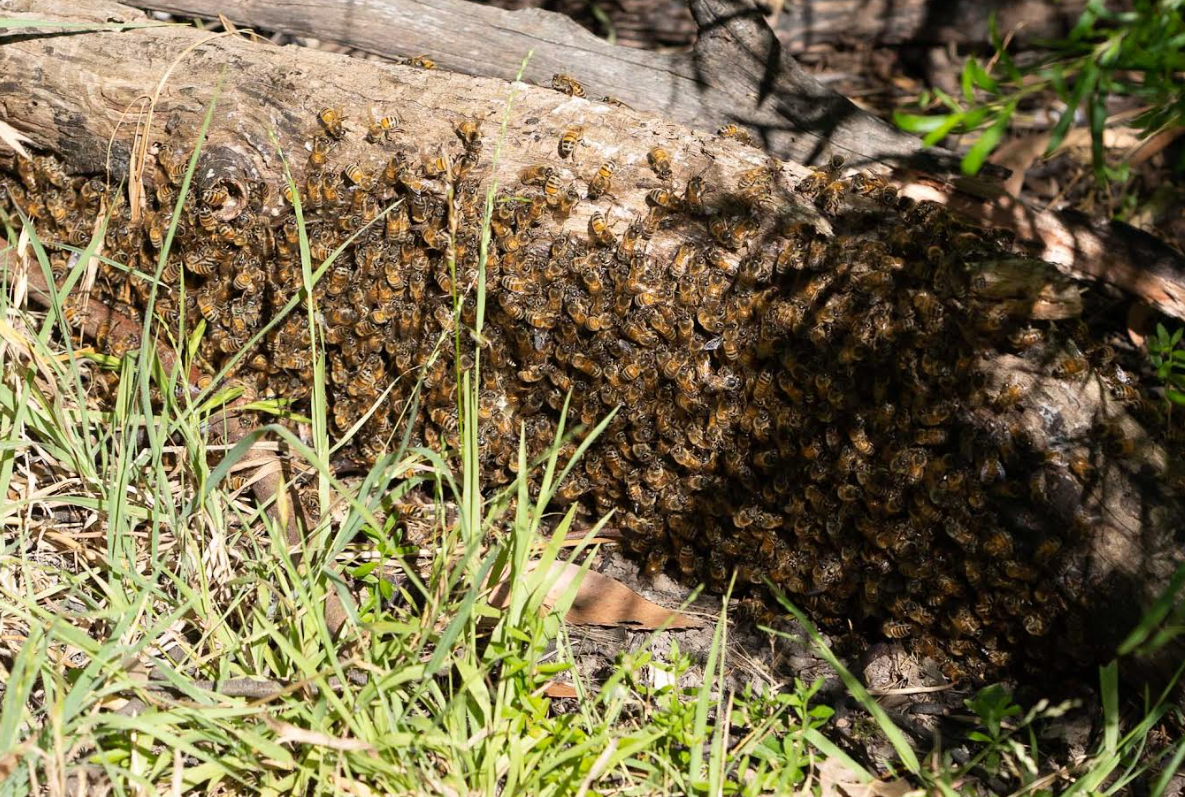
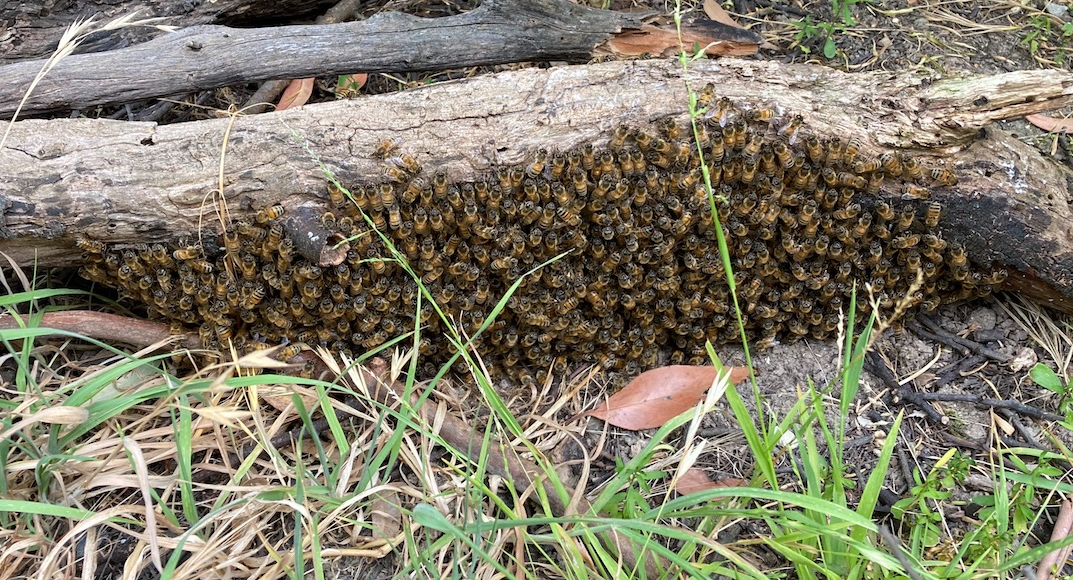
Often a swarm will move on after a day or two. Not in this case – the rescue was undertaken two weeks later.
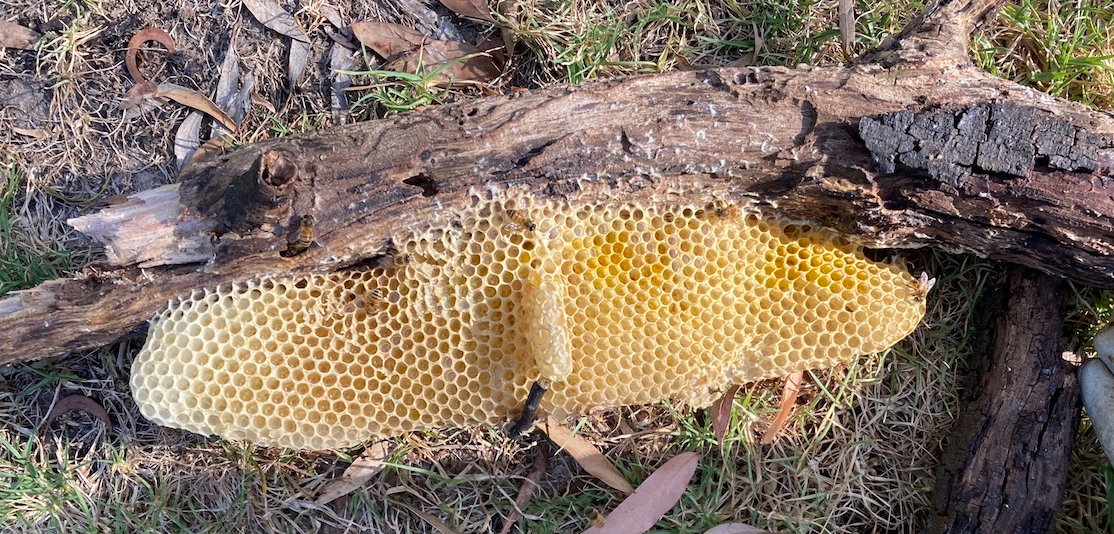
The log was lifted off the ground and most bees swept off the log and attached honeycomb with a brush into a “temporary travel hive” – a lidded white Corflute box with some wooden hive frames in it called a “nuc”:
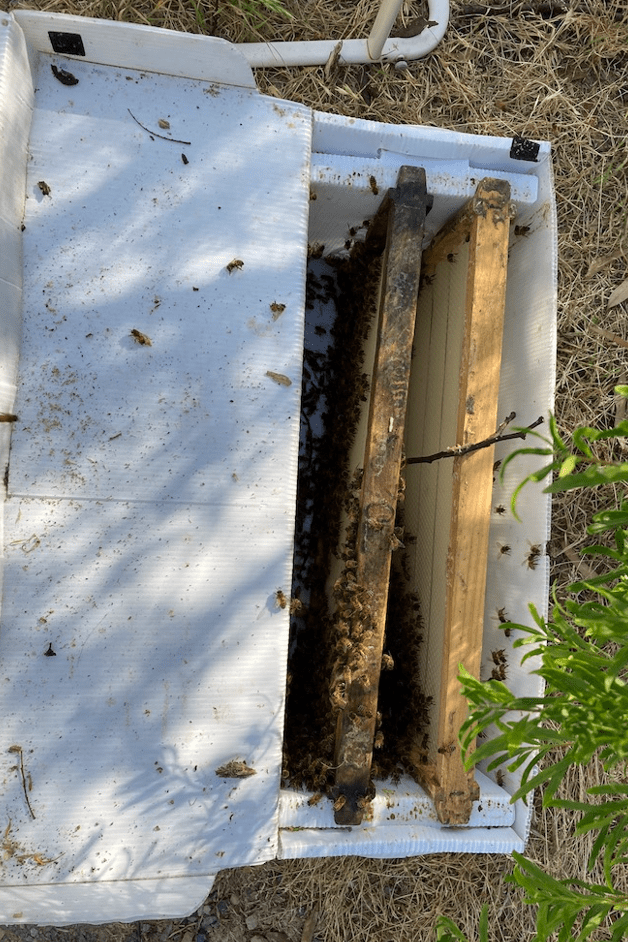
Then, there was a long wait to watch if the bees stayed around the box or moved back to the yellow honeycomb or elsewhere.
The bees instinctively stay with the queen – we understand the queen emits a pheromone (a secreted or excreted chemical factor – often a scent – that triggers a social response in members of the same species).
Observing the subsequent movement of the bees was then necessary for 20 – 30 minutes – to determine if the queen had been captured in the box.
Gradually, it became obvious that the box was the main attraction – indicating that the queen had been captured.
More bees were shovelled and swept into the box from the ground, comb and outside of the box.
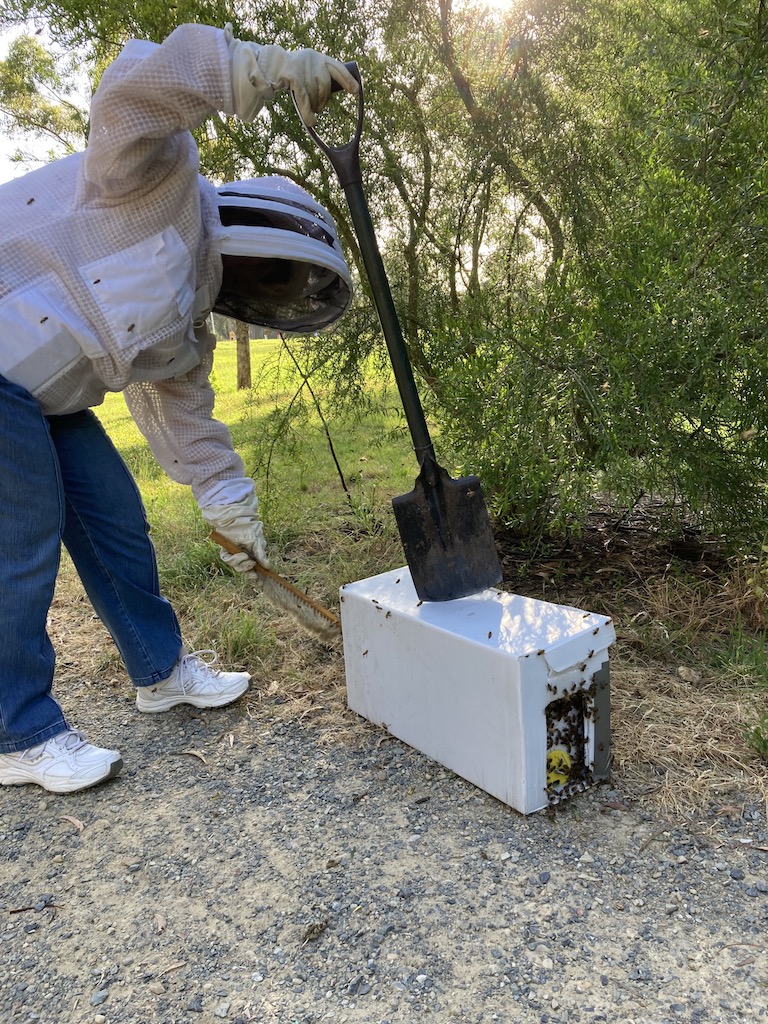
By the way – this is a task best left to experts and certainly don’t try this at home without wearing proper beekeeping PPE !
Normally, if the swarm had been collected on private land, the box would be left overnight with its lid shut but with a small entrance open at the side. By morning, the hordes of bees clinging to the outside plus any stray bees would have joined the queen inside. As possibly too risky to leave in the park, the decision was made to place the box with many bees all over the outside inside a large, lidded plastic tub so that it could be driven back to the home of the beekeeper in Box Hill South. This photo shows why the lid was needed:
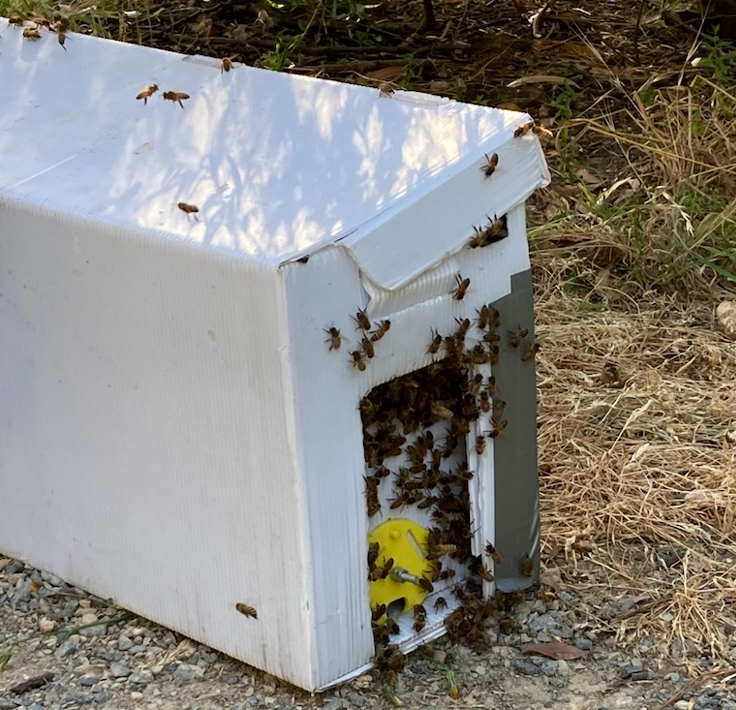
An unexpected development was that on the afternoon of the next day, an enormous number of the bees had come out of their temporary hive though the little entrance at the side, clinging now to the outside:
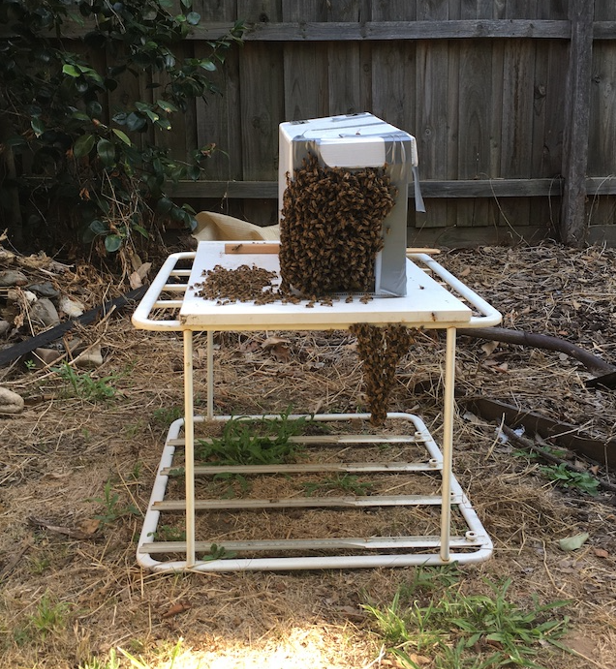
This behaviour is called “bearding” – presumably due to the temperature inside the small box being too warm. Normally, a captured swarm would stay in the small box for 3-4 weeks. A rapid phone around and quick dash to Parkdale was then undertaken to acquire a regular wooden hive. We understand the bees are now settled in a very spacious and well-ventilated abode and have been fed to help them get established.
Honeybees are not indigenous to Australia. However, given the crash in pollinator numbers around the world including in Australia, we think it was great our beekeeper friend could remove the bees as a potential safety problem in the park at very short notice and put them to good use elsewhere.
What about Native Bees ?
Our indigenous bees are usually harder to spot and quite different in lifestyle. Some would have seen Blue-banded bees around tomato flowers and the like – much faster and much more direct flyers than honeybees are. Anyway, our go-to invertebrates adviser, Wendy, just happened across some native bees less than a cricket pitch away from where the honeybee swarm was captured a few days earlier, near Kalang Oval. Here is her story of the event:
Native Bees Roosting in Clusters – by Wendy Clark
In the late afternoon in January, I was checking on the progress of the Imperial Blue Butterflies in Kalang Park, Blackburn when I noticed a cluster of bees on several of the leaves with more flying in as I watched. I rushed home to get my camera and returned to try and take some good photos of the details of the bees in the mass. The sunny light was casting shadows and making it difficult to see all the bees clearly.
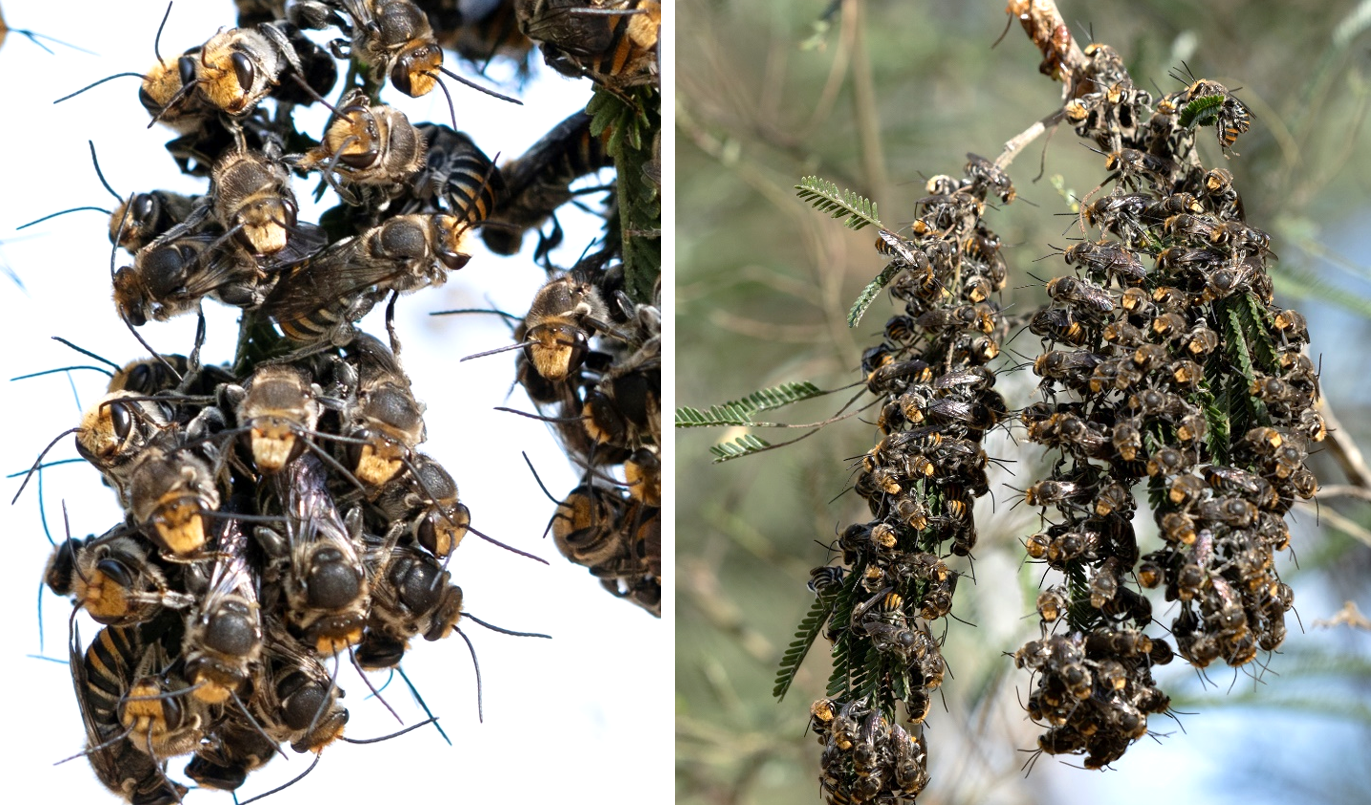
Lipotriches australica
These native bees are Lipotriches australica and they are all males. They are one of the ones more commonly seen roosting in clusters. They will roost like that overnight and then disperse in the morning when it is warm enough. The reason they are doing this is not known, though there is a study going on of whether there are pheromones (see previous article) attracting them together. It is suggested a contributing factor is that most Australian native bees are solitary nesters, and as a rule, males are not allowed to stay in the nesting holes. There are, of course, exceptions. If you keep your eye out, you may be able to see these roosting clusters on cool or cloudy mornings or evenings. Other native bee species do this too.
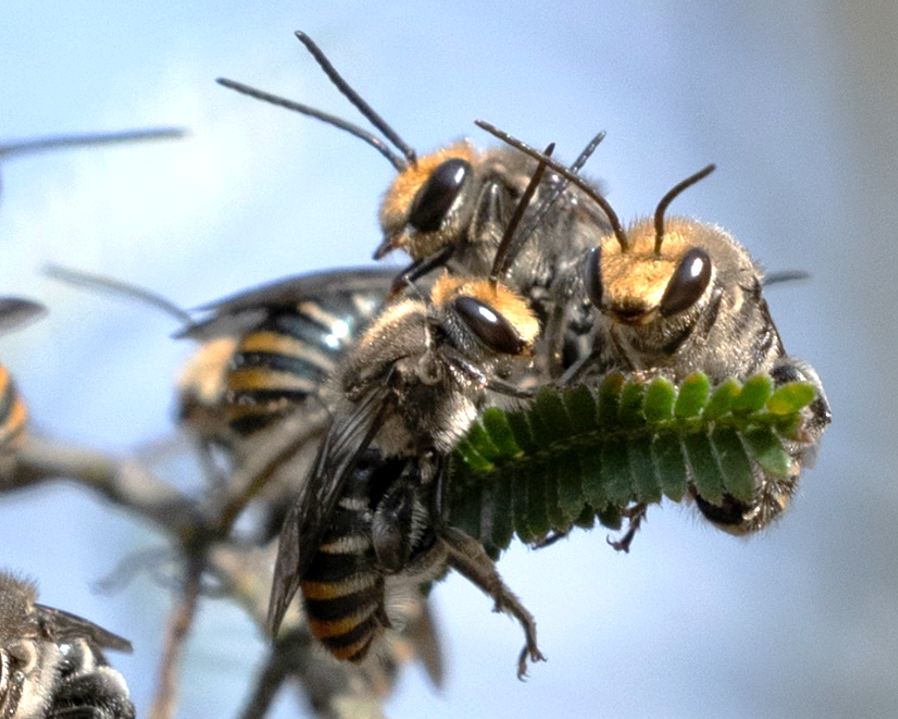
Because these bees do not form hives and simply disperse the next day, and because they tend not to be aggressive, they do not present a danger like Honeybees.
It’s probably no great surprise to many that Aussie males like to hang out together. Just as with humans, the reasons can seem incomprehensible! We thank Wendy for sharing – interesting and confounding stuff – and do hope she can update us on the findings of the research program she mentioned!
Maintenance Team report
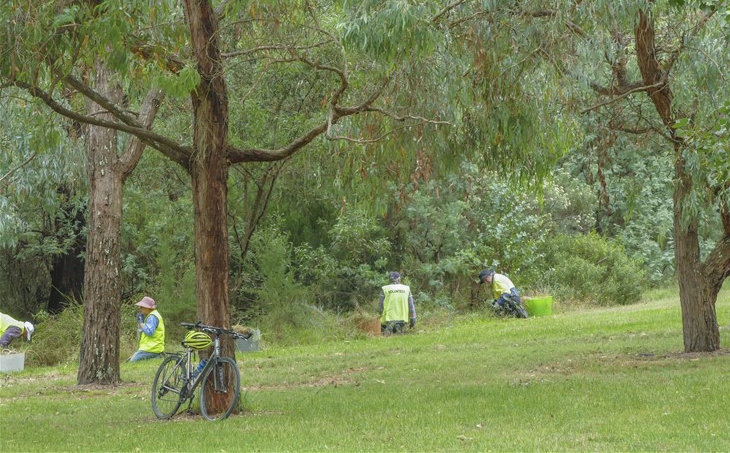
December/January working bees
Four working bees were run in December in Blacks Walk, followed by one in January also there – the team worked along the track between the bridge and the junction of the paths near the Middleborough Road entrance.
Our most recent events have been at the Billabong on its western side. However, our 19th
January working bee there had to be cancelled (!). We have four leaders who are also trained in first-aid – but no-one was available for a variety of reasons! Just plain bad luck during the holiday period – we believe we have more first-aid trained leaders than any other Park Advisory Committee in Whitehorse. The reason is that we had people on stand-by when last minute cancellations from other groups in Council’s training courses occurred.
Spiders and insects
One striking thing was the variety of spiders obvious at the last working bee site which probably indicates plenty of insects there too.
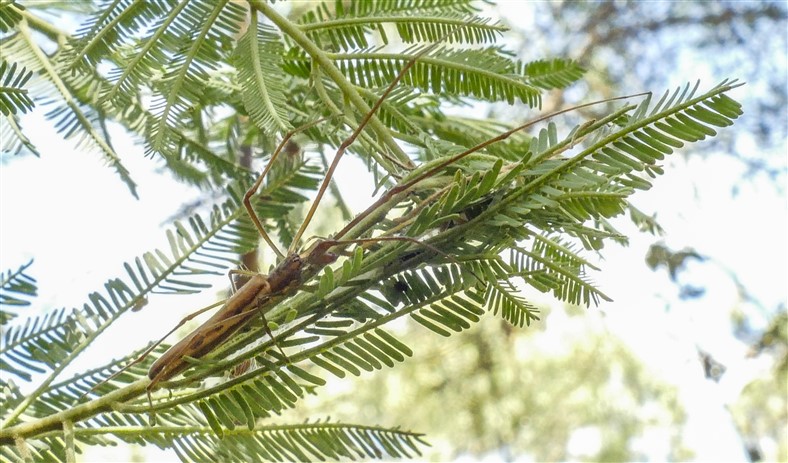
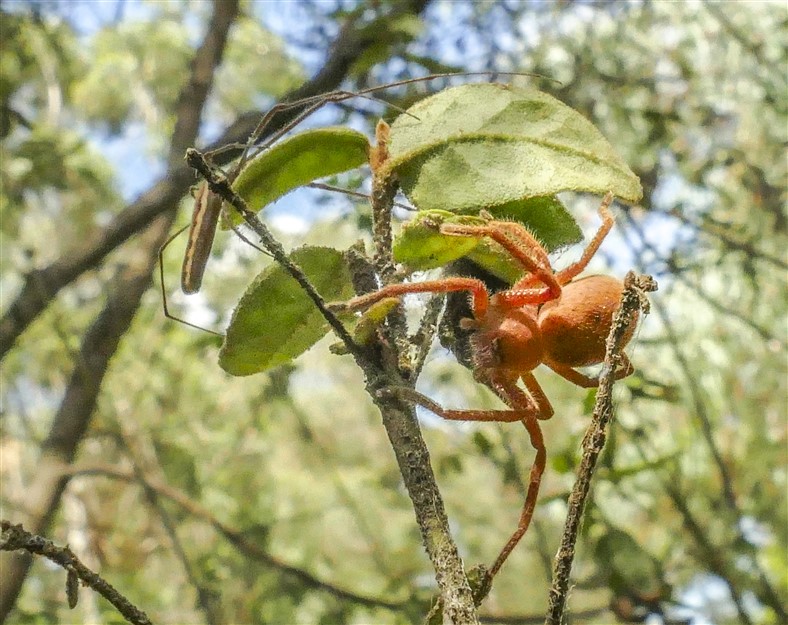
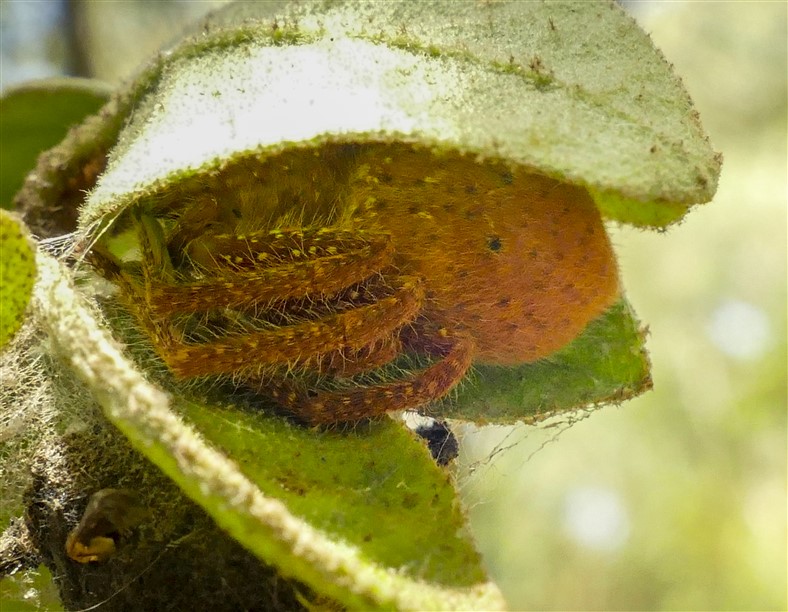
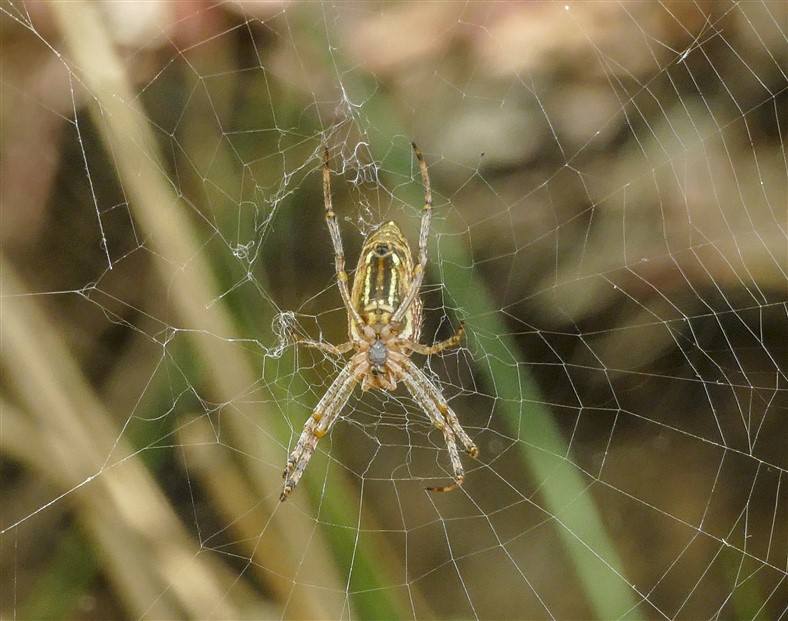
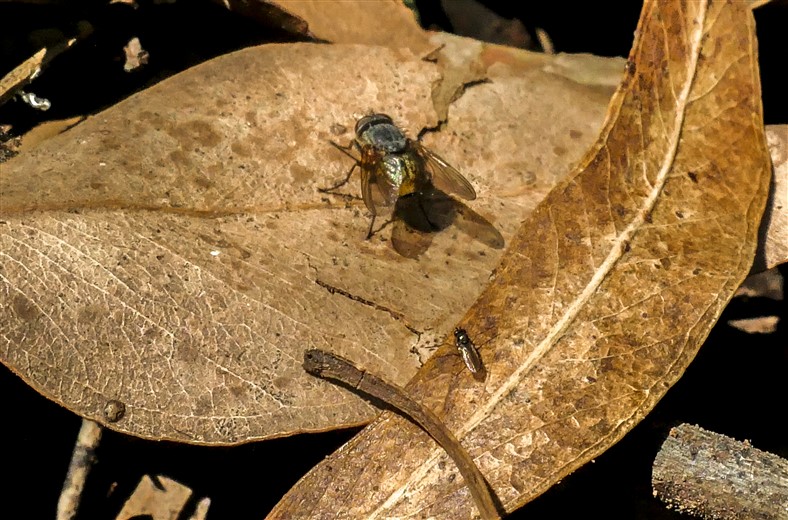
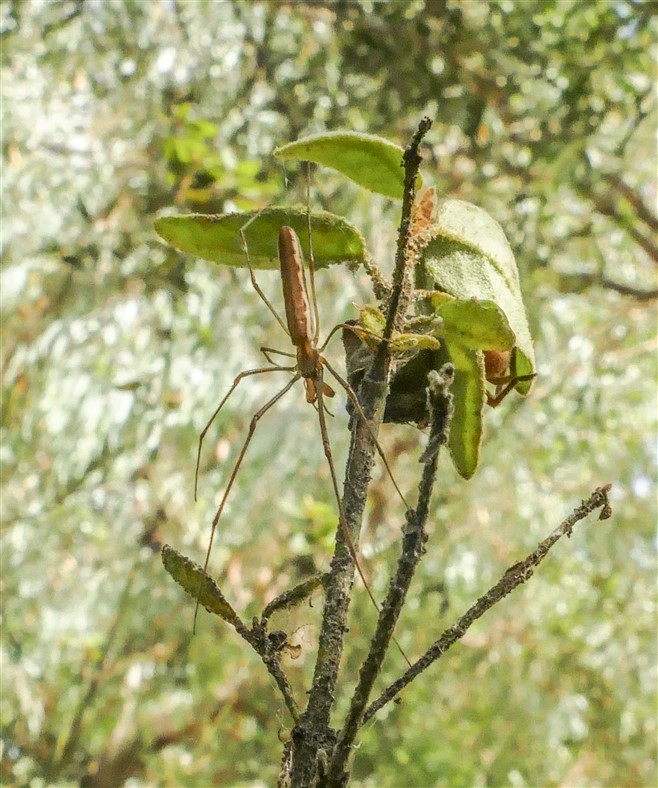
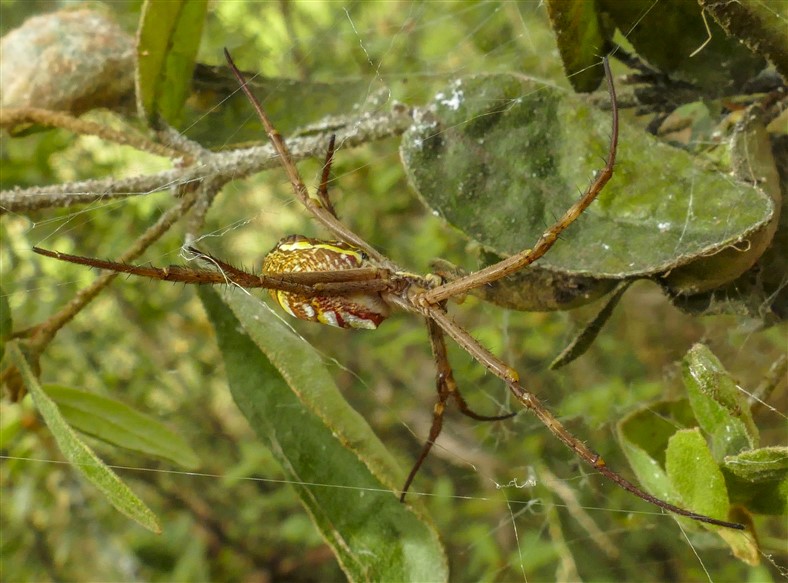
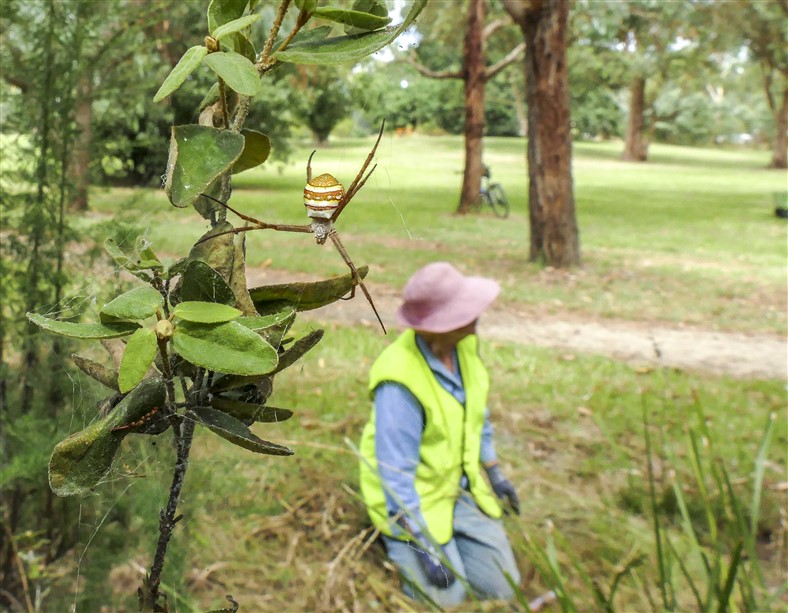
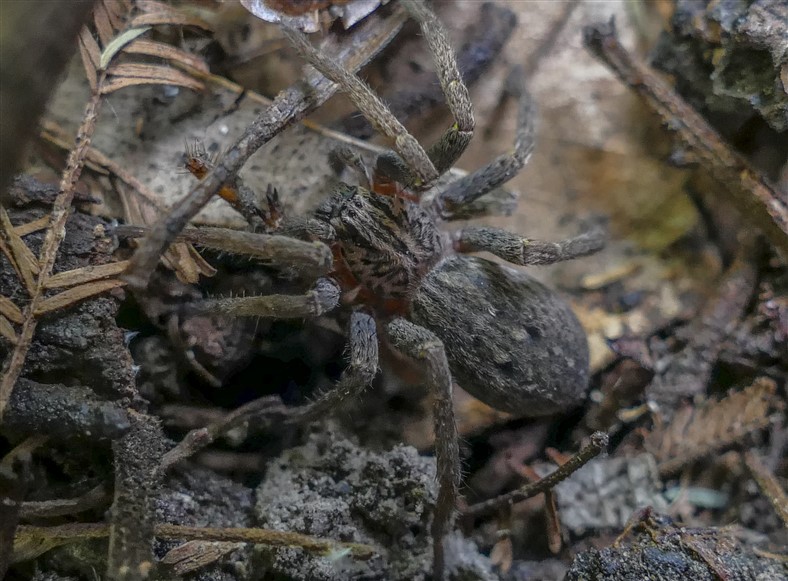
Please click to enlarge and hit the ‘X’ to exit.
Note that our weeder in the pink hat was not actually in harm’s way ! We also have a movie showing the interaction between the Badge Huntsman Spider and the Long Jawed Spider – perhaps a study in indifference or “live and let live” perhaps ?
This commentary was supplied:
These two spiders were seen with a number of other spider species on a hot, windy, summer afternoon near the banks of Gardiners Creek [also known as the KooyongKoot waterway]. The Badge Huntsman Spider (Neosparassus) is a long legged spider which runs to catch its prey, and the Long Jawed Spider (Tetragnathidae) is an orb-weaver spider (Araneidae) which creates a silk web to catch its prey. In this video the Badge Huntsman Spider is seen first outside of its resting place facing the Long Jawed Spider. The Badge Huntsman Spider’s resting place was made by the Badge Huntsman Spider adhering its web to the terminal leaves of a Correa sp. shrub branch, closing the leaves over to make a secure cavity. The Long Jawed Spider then moved away from the Badge Huntsman Spider to the Long Jawed Spider’s web before returning to the safety of the underside of the adjacent wattle tree foliage. The Badge Huntsman Spider then retreated into its own resting place. In the concurrent audiotrack, the sounds of the foliage blowing in the wind, local vehicle traffic and the nearby bird calls of the Rainbow Lorikeet (Trichoglossus moluccanus) can be heard.
Replacement planting of lost canopy
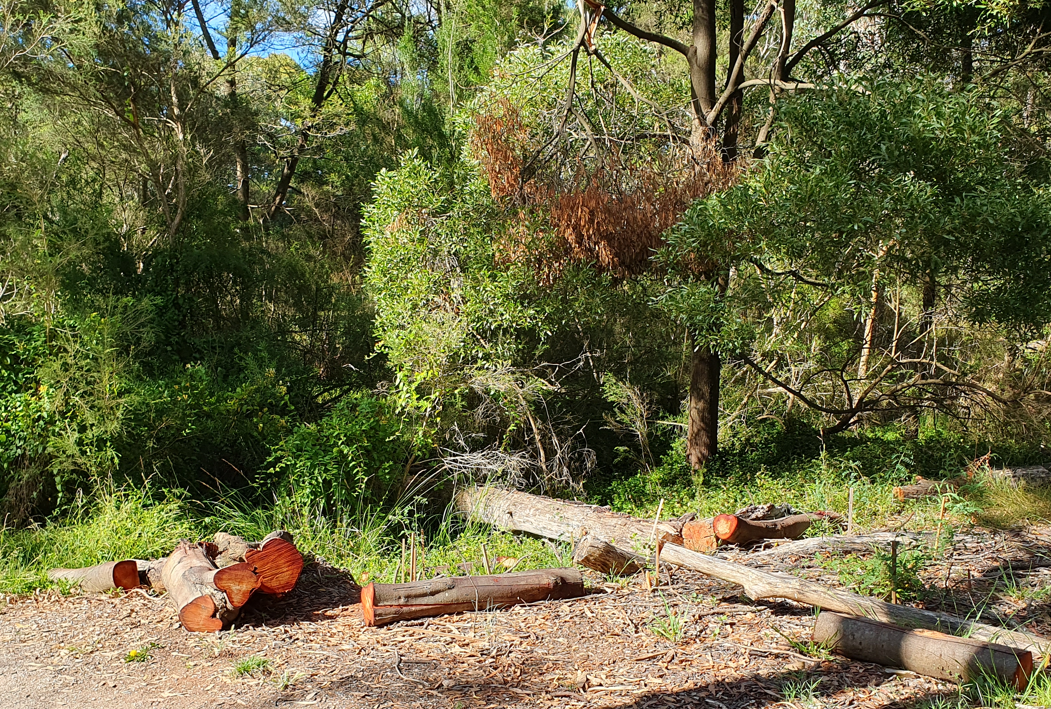
We’ve had several friends raise concerns about the loss of trees in the park over the past twelve months. It does seem that the combination of heavy flowering/foliage, plus sodden, soft ground and occasional strong winds has been lethal for some trees. We’ve noticed that the Silver Wattle (Acacia dealbata) – much loved by butterflies – has been particularly badly affected.
We’ve raised these concerns and need for replacement plantings with Council. Discussions on the best way forward are still underway. We’ll update you on conclusions. By the way, the logs are left to provide habitat while the trees nutrients are returned to the soil.
Community Working Bee (CWB) Program for 2023
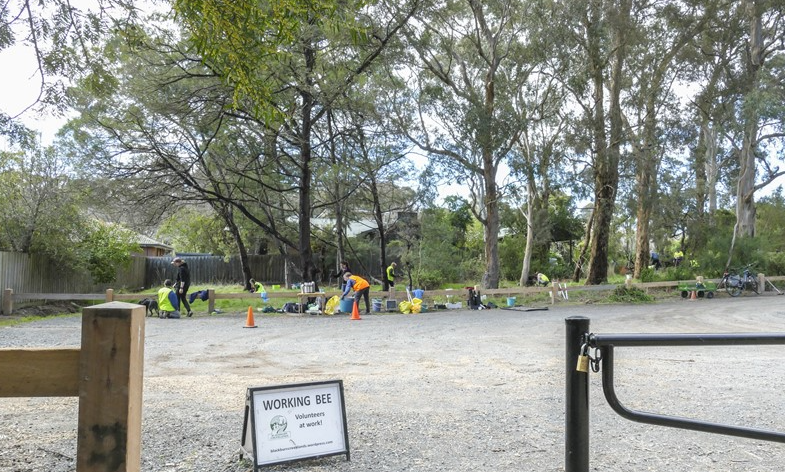
A lot of our new planting occurs via our Community Working Bee (CWB) program. We also do some in-fill planting during our weekly Thursday working bees.
We see the CWBs as very important not only for the obvious improvements they make to the park, but also for participants to learn more about indigenous plants and to work with like-minded people in the community. Another positive outcome for the Creeklands is that sometimes CWB attendees decide they would like to do more and join in our weekly working bees and/or our Committee, depending on their interests.
Last year, we held four working bees which seemed to work very well. We’ll do the same this year, running the working bees in May, June, July and August (in the planting season). The first is likely to be on Sunday 28th May, at the sign-posted site just north and east of the Laurel Grove bridge. Proper site preparation is crucially important for the success of any CWB – where planting is the main event. This explains the sign that Council posted after weed control was conducted there last year. Woody weeds were removed there this month as well. Further herbaceous weed control is anticipated to the west of the current patch.
Small Black Cicadas
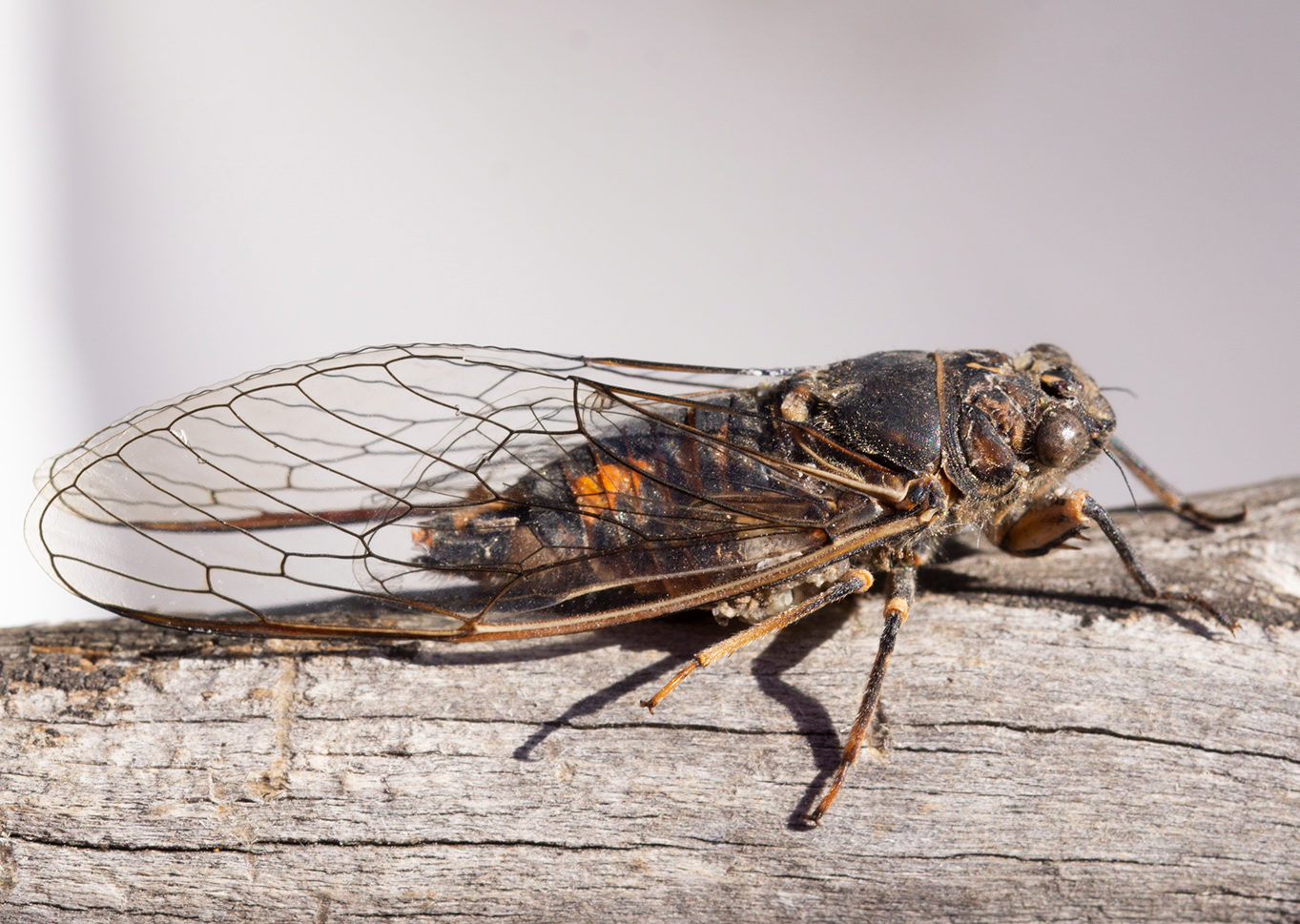
Wendy Clark has followed up on the sighting of a small black cicada reported in last edition. She says:
Many of you walking through the Creeklands will have heard noises in the trees in the hot weather. The well known, loud, ‘creeee’ of the large Green Grocer Cicada can be heard in November / December. There are other sounds though that start earlier than November and can still be heard now. They are clicks, ticking and whirring sounds and they come from the small black native cicadas that can be found all around Australia. There are a myriad of species and all look similar. Many are in the genus Cicadetta. They are hard to spot, very fast and are about a 1.5 – 2cm long. They will sit on a branch stem or leaf ticking away and then zoom off to another location – especially if you try and look for it, catch it or photograph it! They are fascinating little cicadas and it’s worth keeping an eye and an ear out for them.
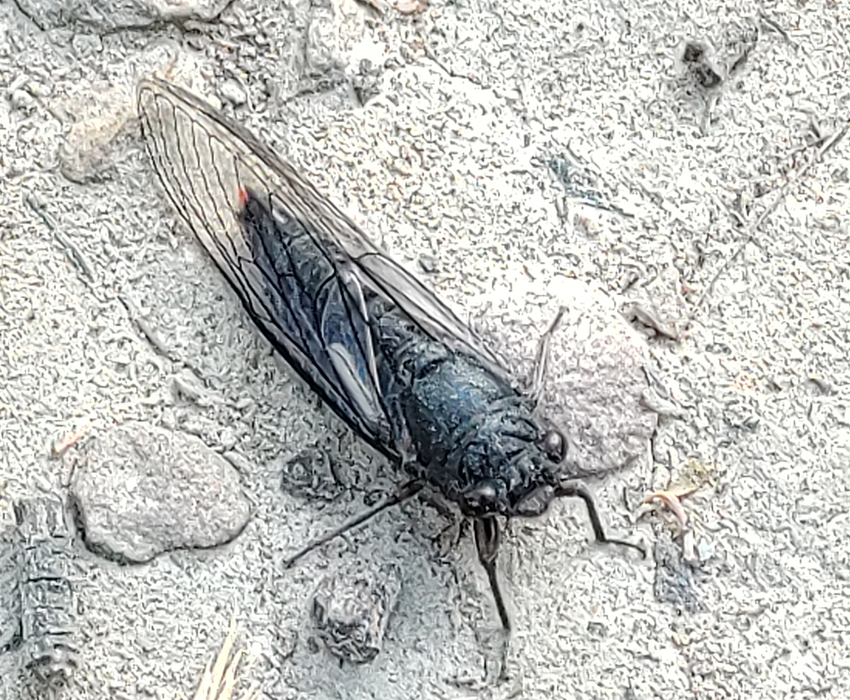
We thank Wendy for her photographs and description of these less conspicuous creatures – also for resolving the mystery of where some of those strange sounds emanate from!
Bird Surveys
Many of our Friends will be familiar with our Blackburn Creeklands Autumn and Spring Bird Surveys. These are intended to be family-friendly and community-oriented. We hope to announce their dates in our next edition.
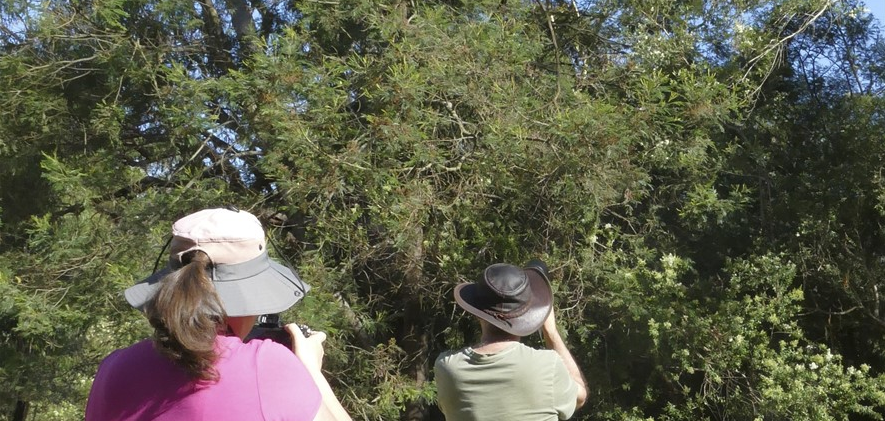
Another group conducts monthly surveys in our park on a more scientific basis than our Spring and Autumn surveys. These are run by experienced bird watchers and attended by a variety of “birdos” including some excellent photographers. They share their results with us for posting on the Noticeboard and this web-site (see our “Sightings“) below.
Their events are now usually run on the second Wednesday of the month and the first for 2023 was conducted on the 11th January. The next event is planned for the 8th February.
If you are interested in attending these events, please visit our Bird Surveys page and fill in the contact form at the bottom.
Myrtle Rust fungus – update
Ken, one of our Friends, recently forwarded a message to us from environmental legend Rodger Elliot updating us on the Myrtle Rust fungus. Myrtle Rust (Austropuccinia psidii) is a fungal disease that affects plants in the family Myrtaceae (which includes eucalypts, bottlebrushes, paperbarks and lilly pillies.
Myrtle Rust is now considered endemic and cannot be eradicated. Early attempts at containment failed – its spores being spread very effectively by wind. South and Central American in origin, it was first noticed in 2010 on the central coast of New South Wales. An instance soon turned up in Blackburn South in 2012. It’s invaded every state of Australia with the exception of South Australia. Impacts appear to be worst in NSW and Queensland.
According to the Invasive Species Council, Myrtle Rust could eventually universally “alter the composition and function of forest, woodland, heath and wetland ecosystems” – in other words, dramatically change the country. It says the incursion “is about as bad as it can get for biosecurity in Australia”.
Oddly, (at first glance), it’s not a major issue in its American home environment. The problem here is that 80 per cent of Australian native trees are susceptible because they belong to its primary victim, the Myrtaceae family.
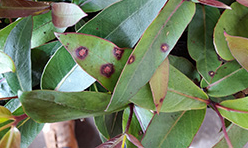
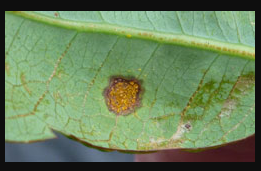
Typically, it shows up as blotches (“lesions”) on leaves with yellow to orange spores developing – sometimes surrounded by a purplish halo. Image credits: David Smith, Agriculture Victoria.
The Department of Agriculture has more information on the disease, how to recognise it on various plants and what to do if you suspect you have it at your place – here.
Sightings
We’ve loaded a lot of recent sightings into the “light box” below. Some comments are:
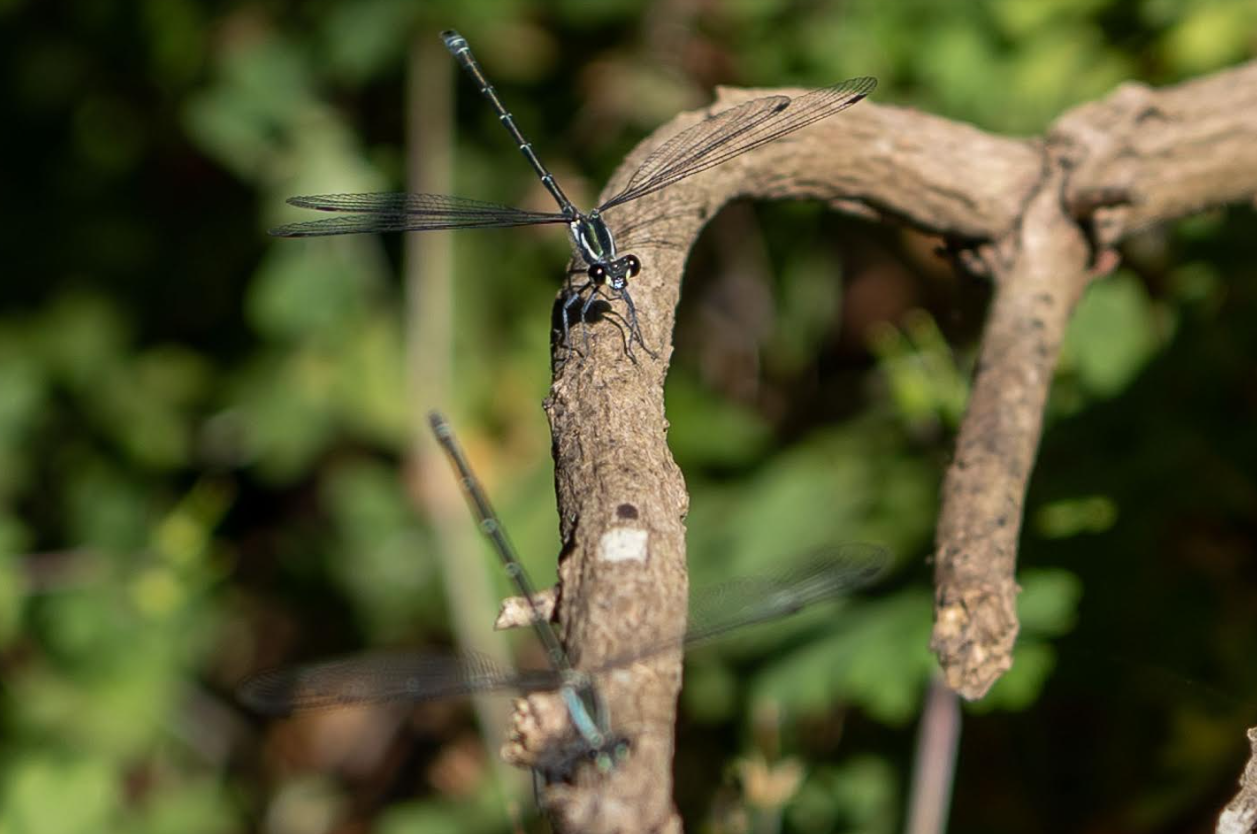
- The mosquito numbers seem to have dropped following the burst of very hot weather. There are still plenty of their predators around (photo of the Damselfly by Danika).
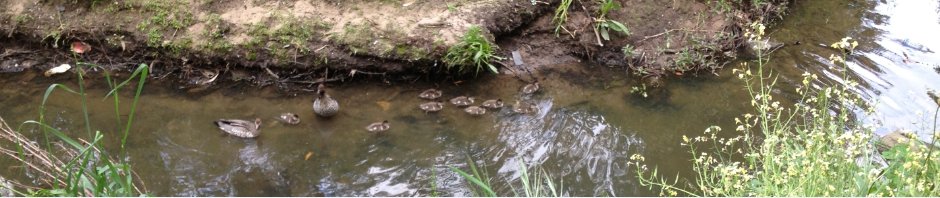
- It has been pleasing to see a larger number of juvenile ducks surviving this season – despite very regular fox sightings (photos of youthful ducklings by Danika)!
- Mudlarks were still sitting on eggs at Main Street having lost their first brood (Ken has been monitoring and suspects Kookaburras are the culprits).
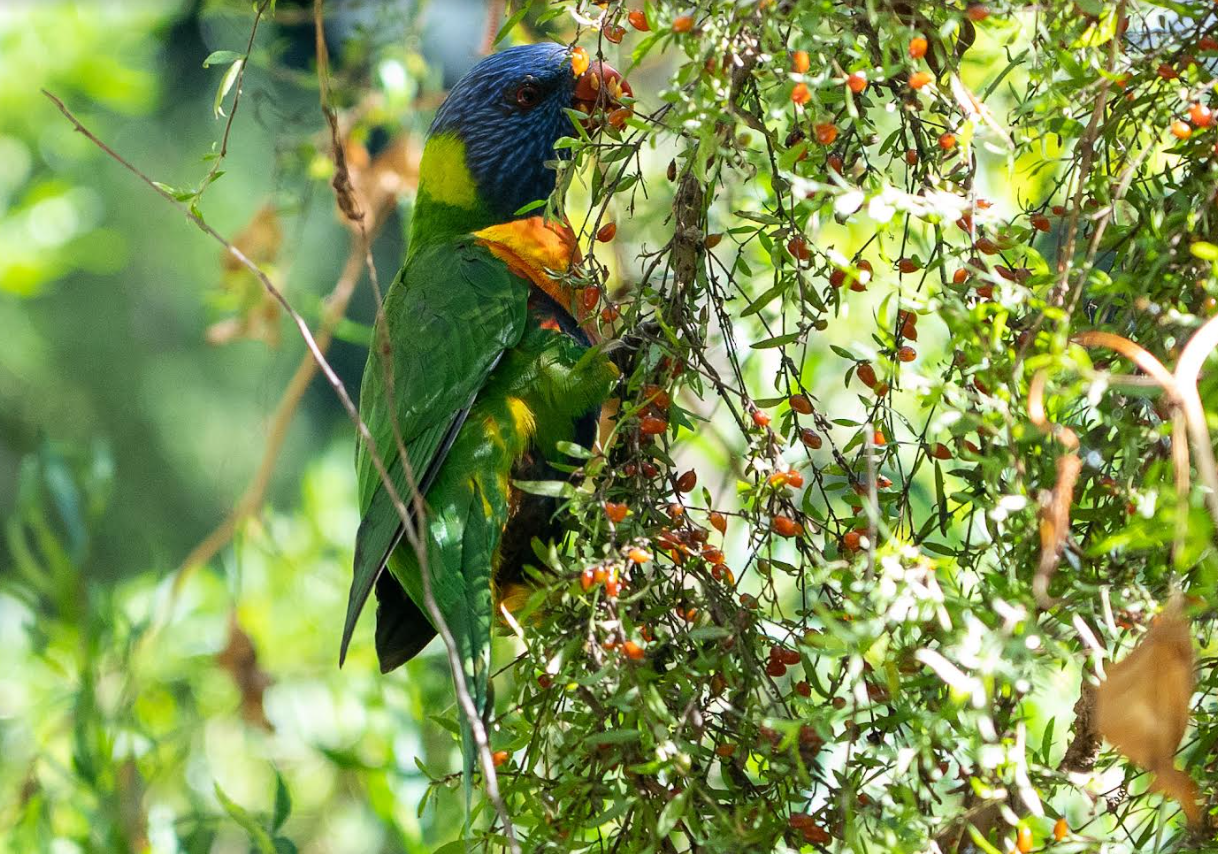
- Prickly Currant-bush (Coprosma quadrifida) is in fruit – and enjoyed by Lorikeets as Danika’s photo shows! They also enjoy Tree Violet (Melicytus dentatus) fruit at this time of year.
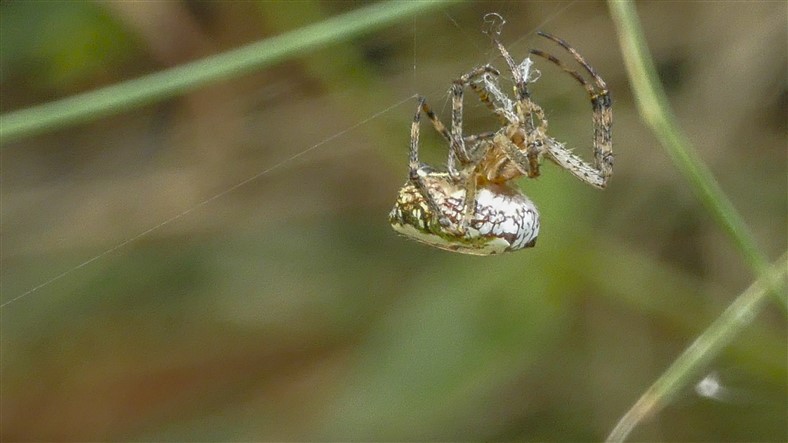
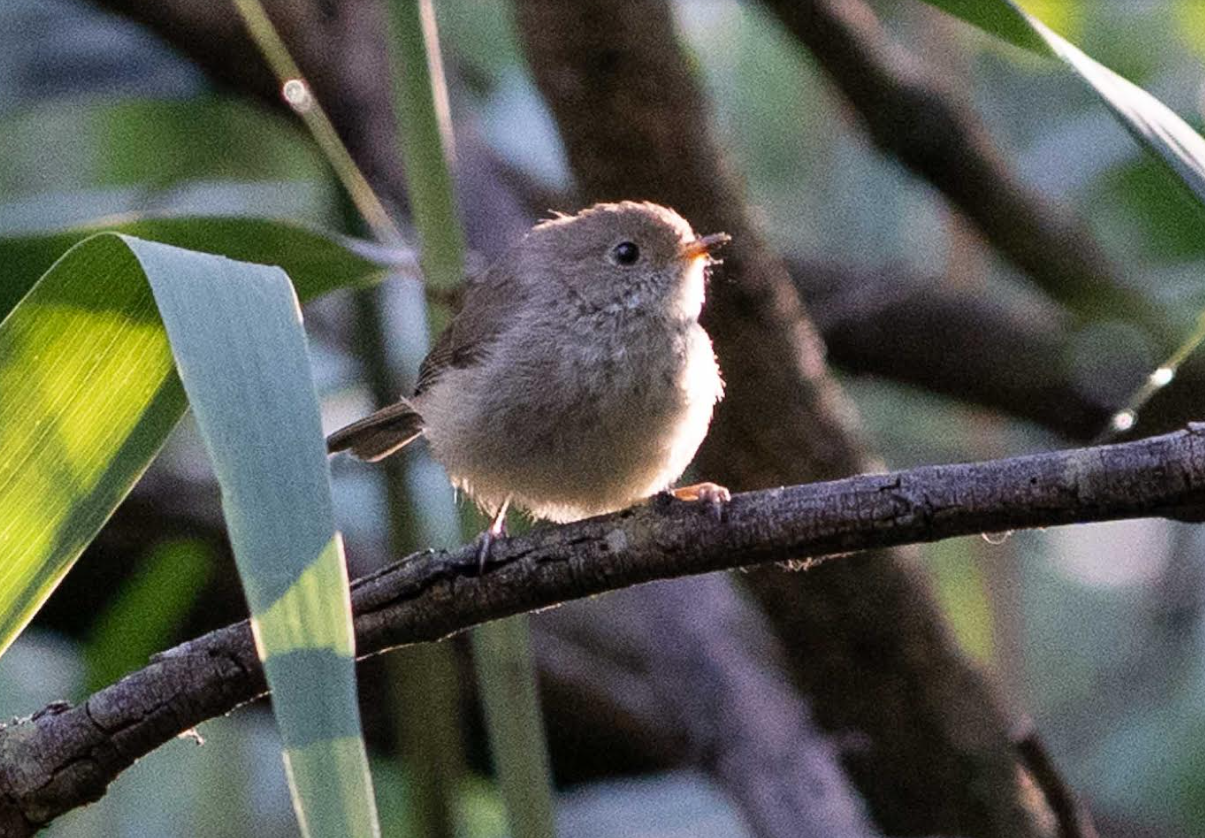
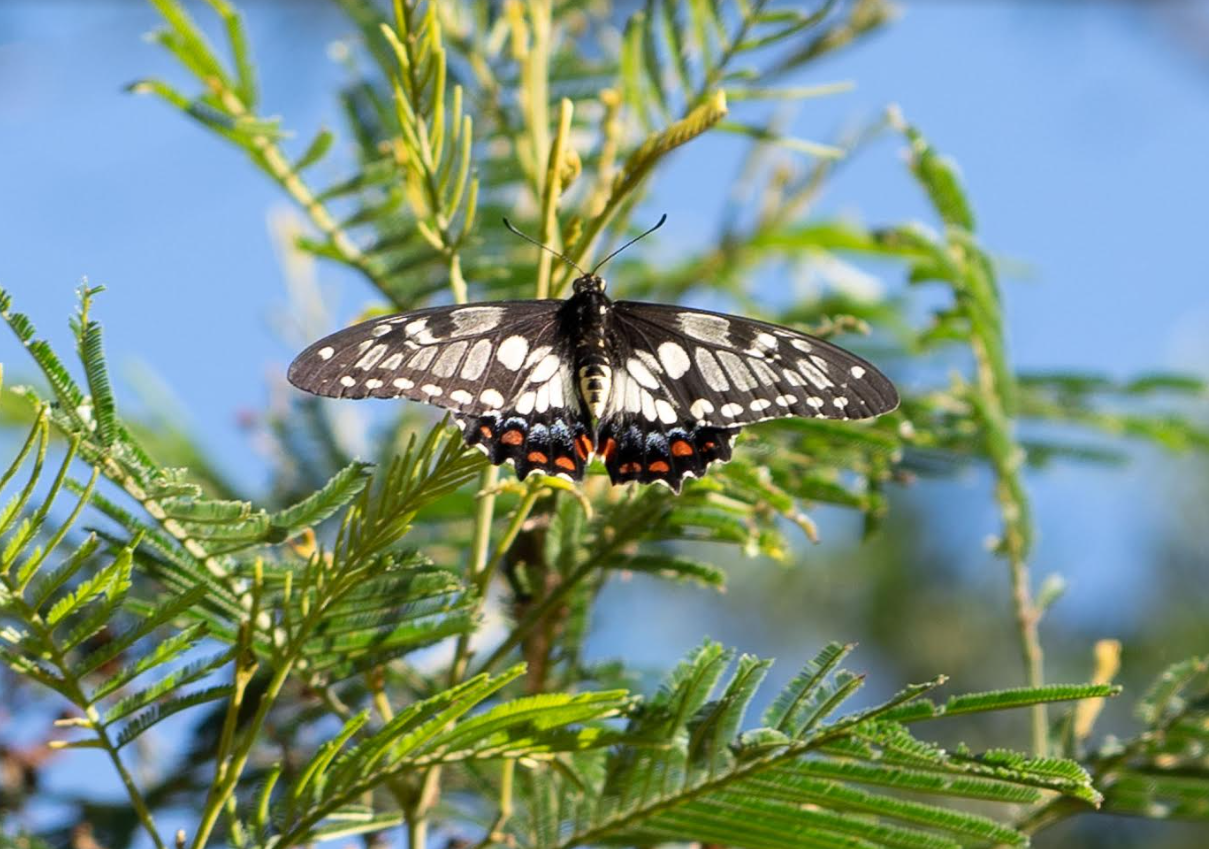
- Other photo credits: Danika also supplied the photo of the Dainty/dingy Swallowtail butterfly, the Chestnut Teal ducks and the Brown Thornbill. Greg supplied the photos of the Common Brown and Imperial Blue butterflies, the Mudlark on nest, Red Wattlebird, the Enamelled Spider and close up, Butcherbird and the morning moon (!). Others were supplied anonymously or by staff photographers.
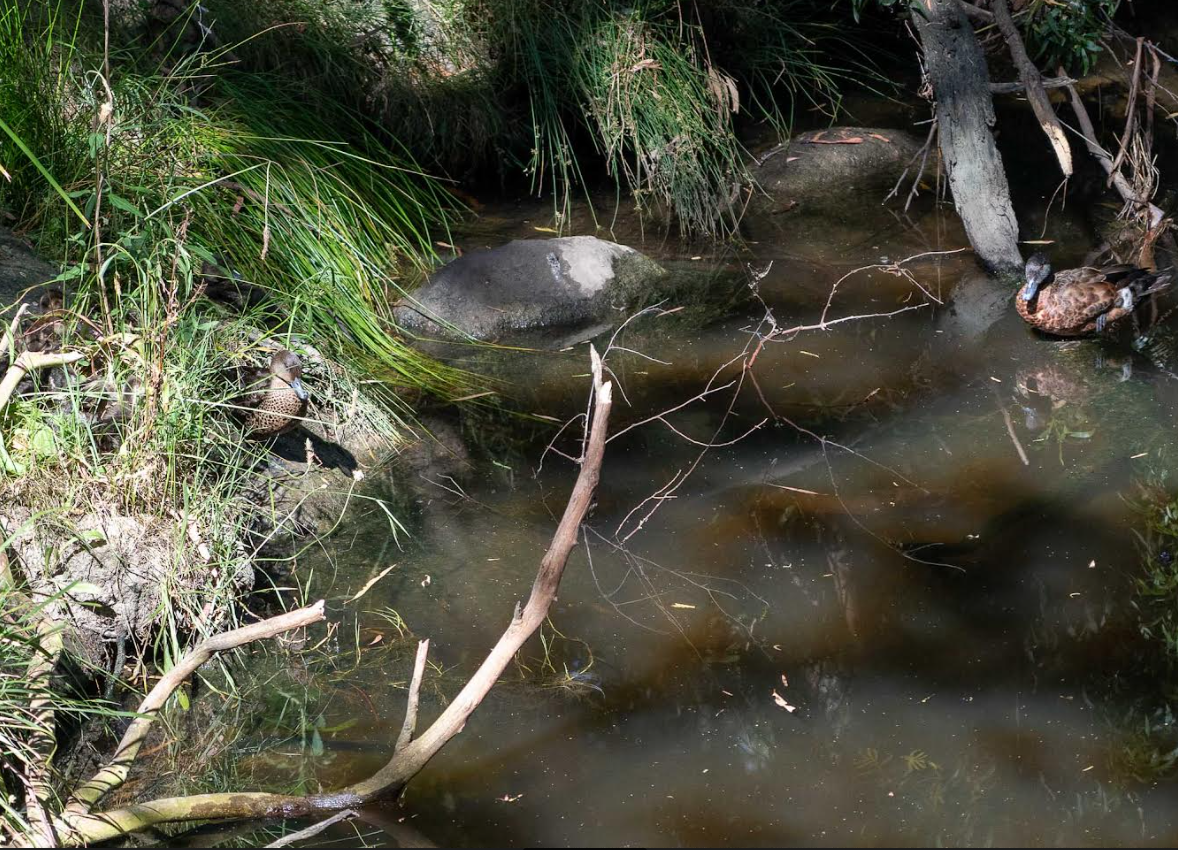
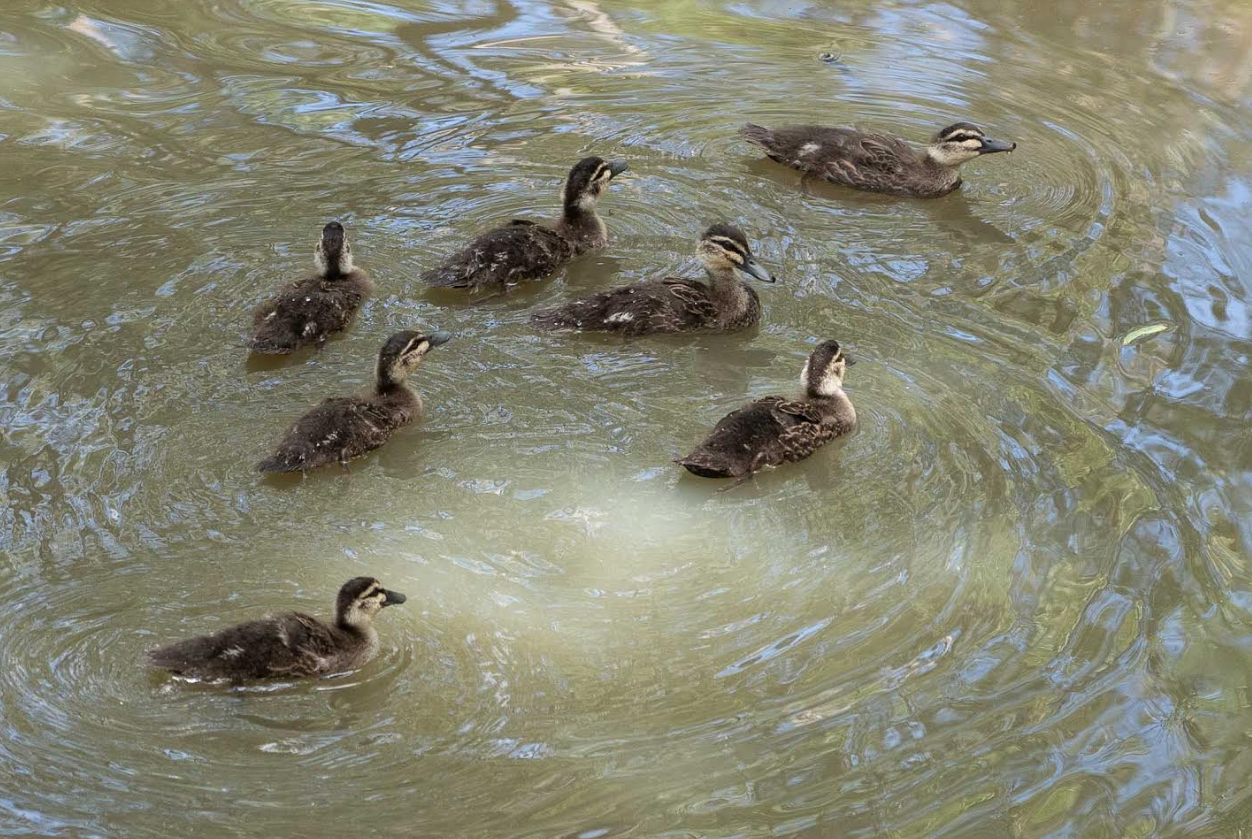
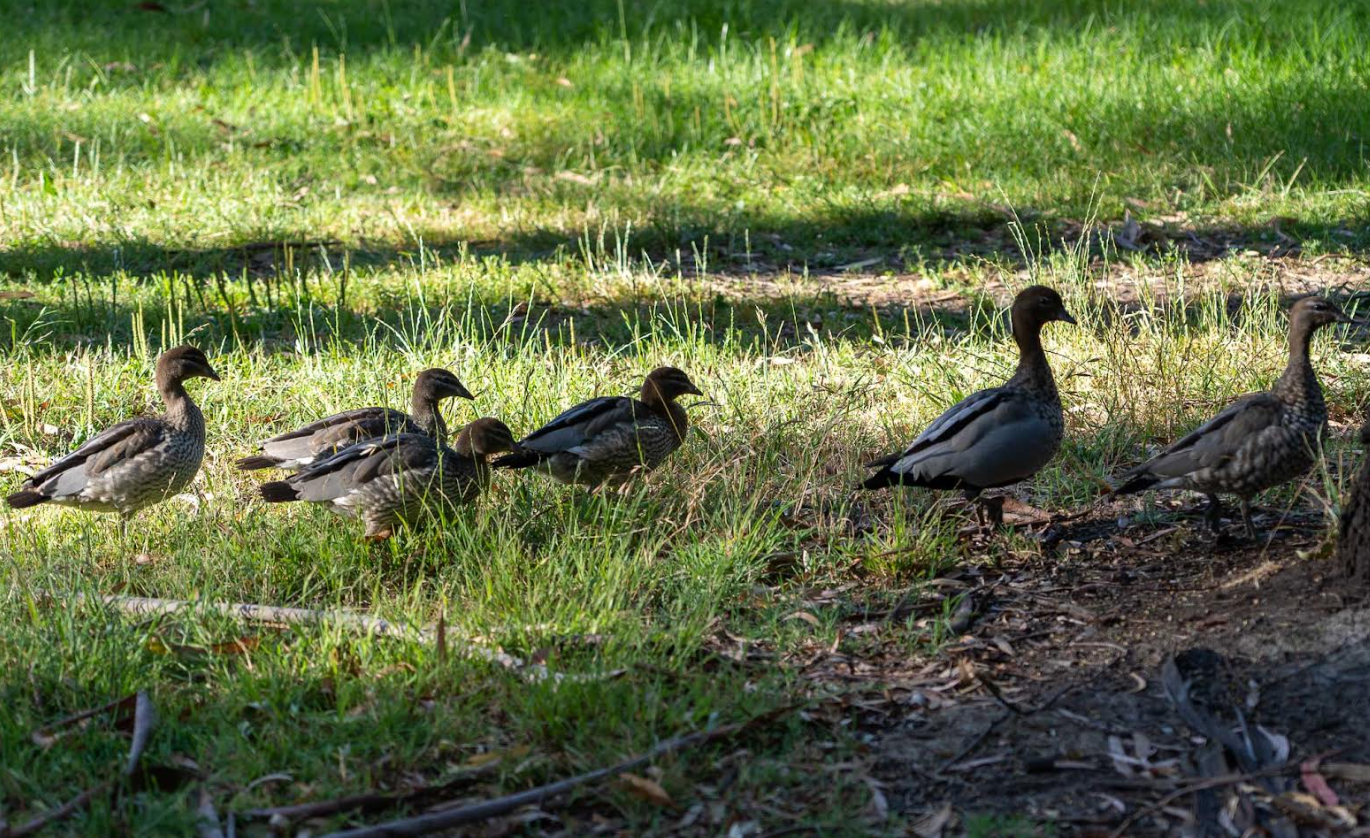
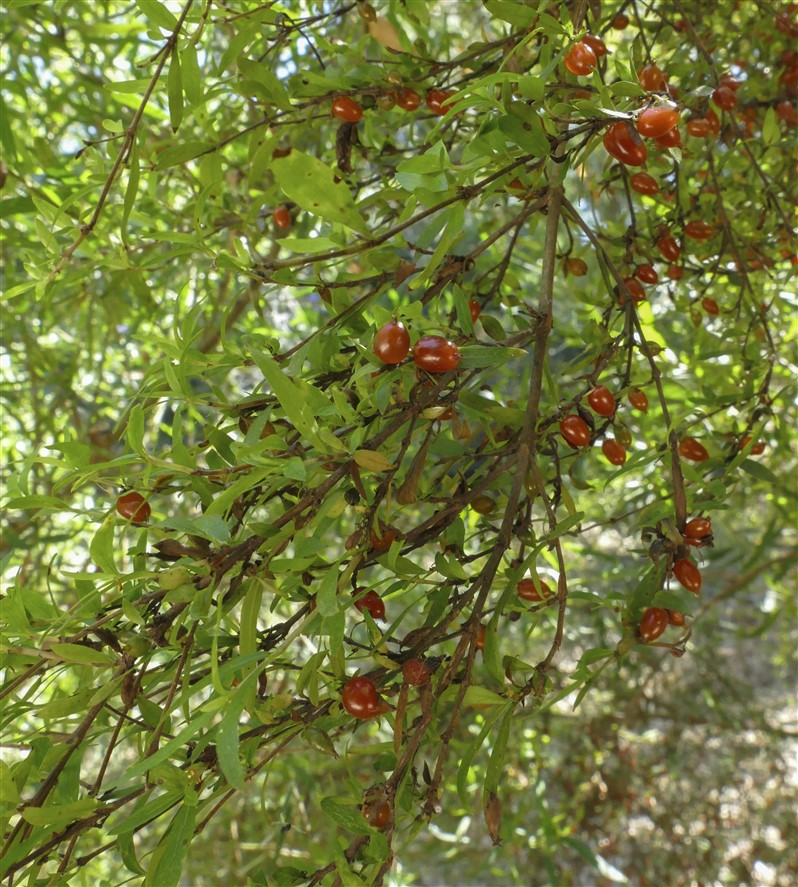
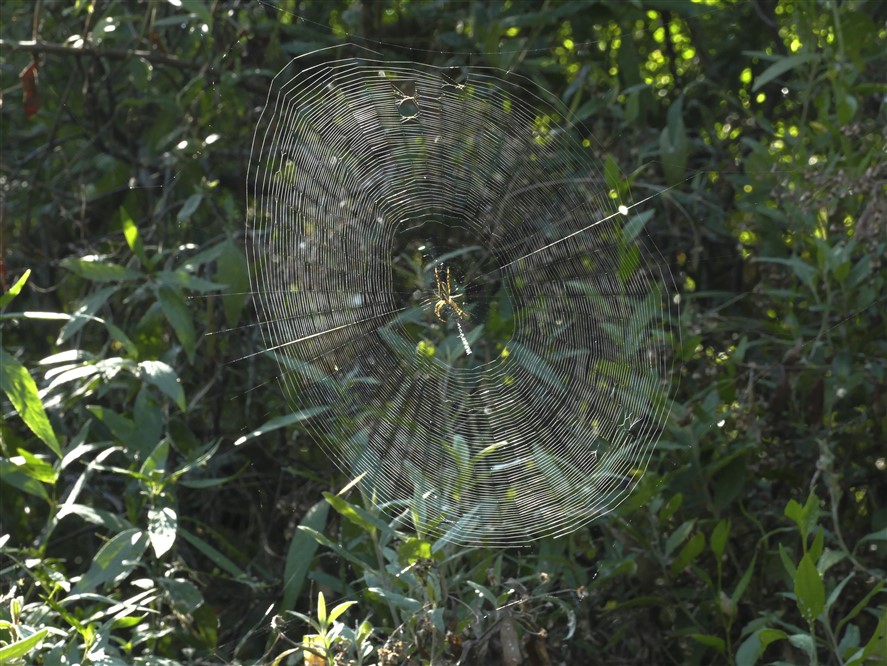
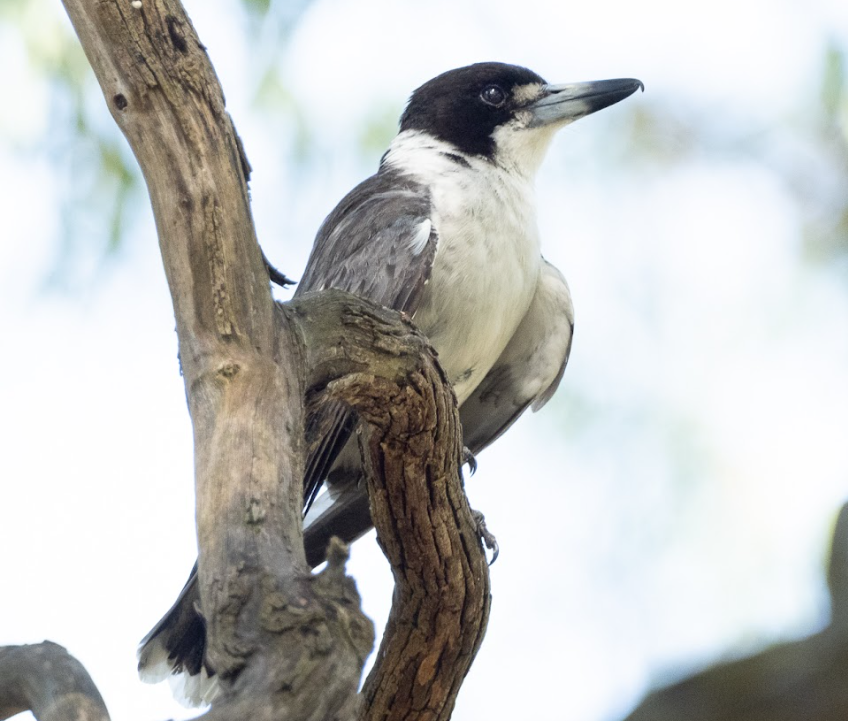
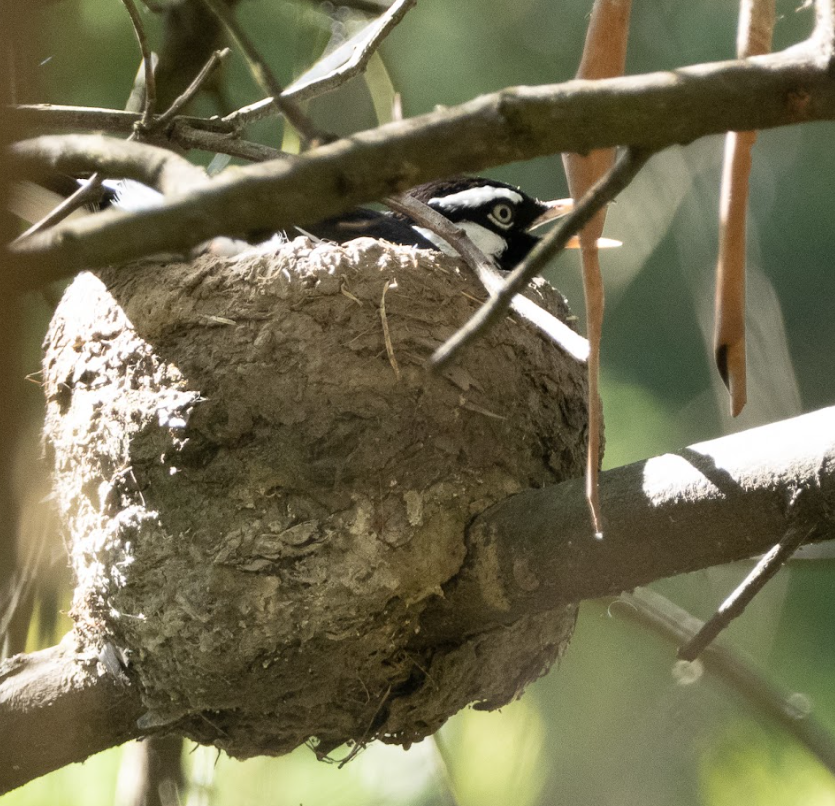
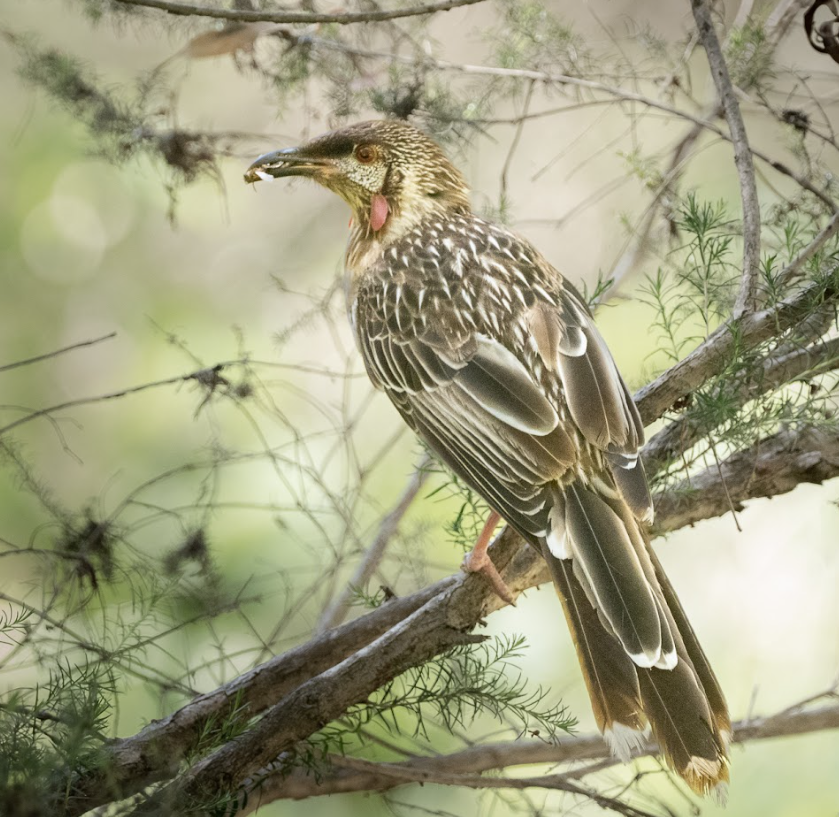
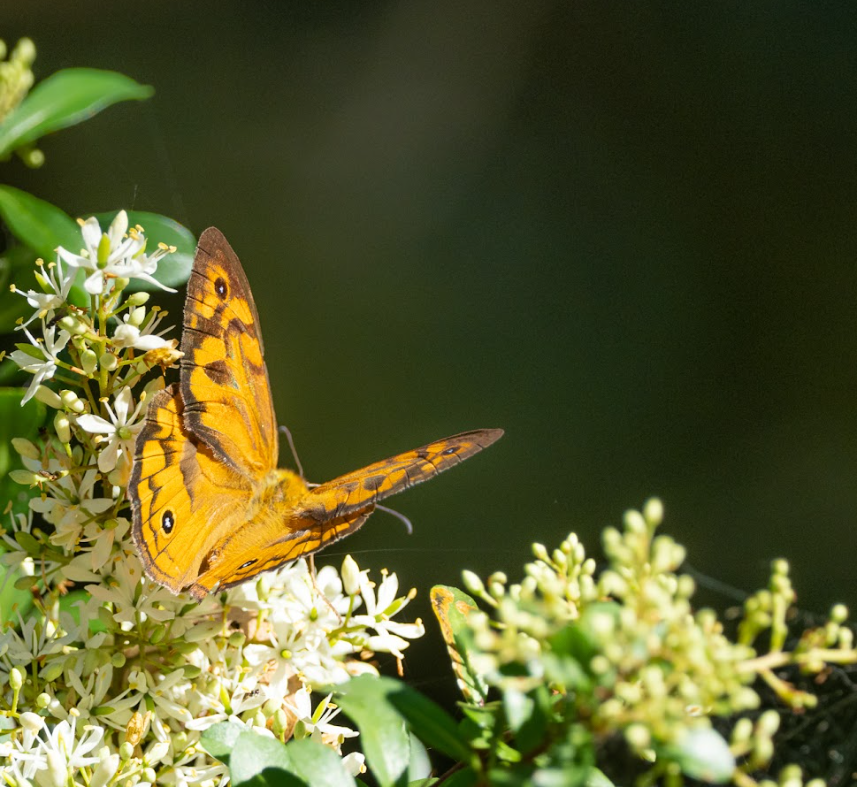
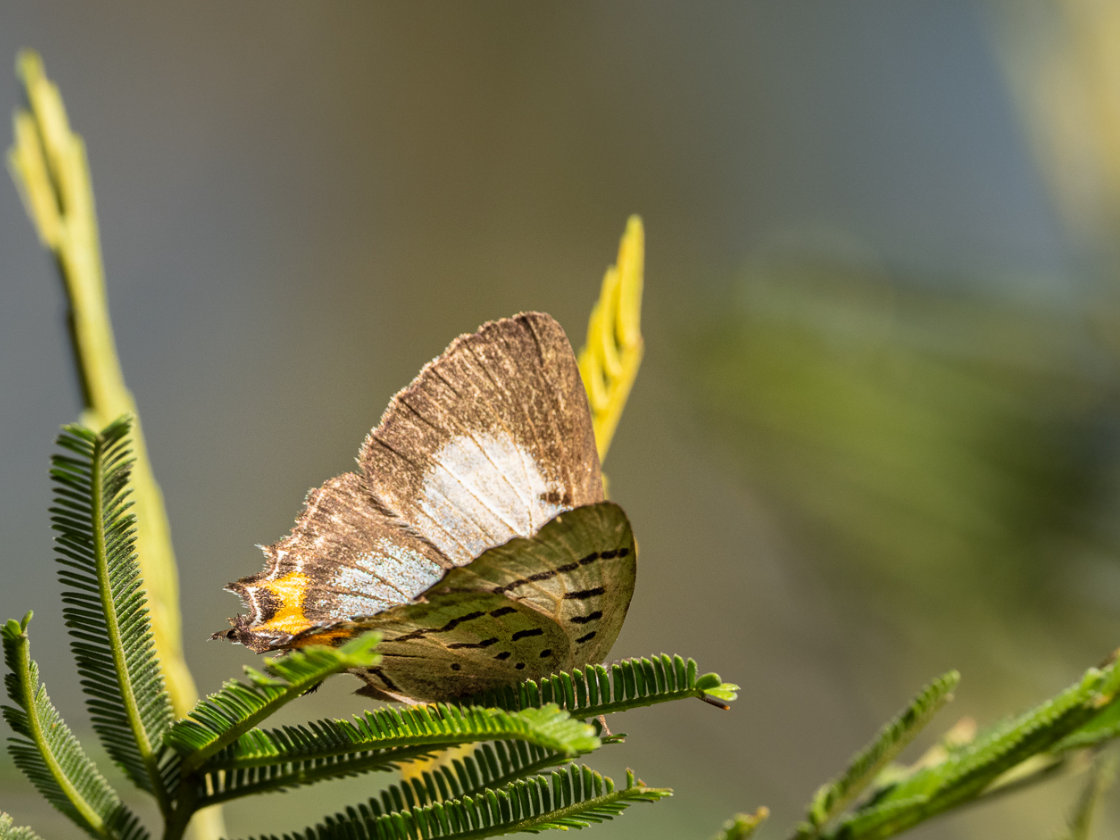
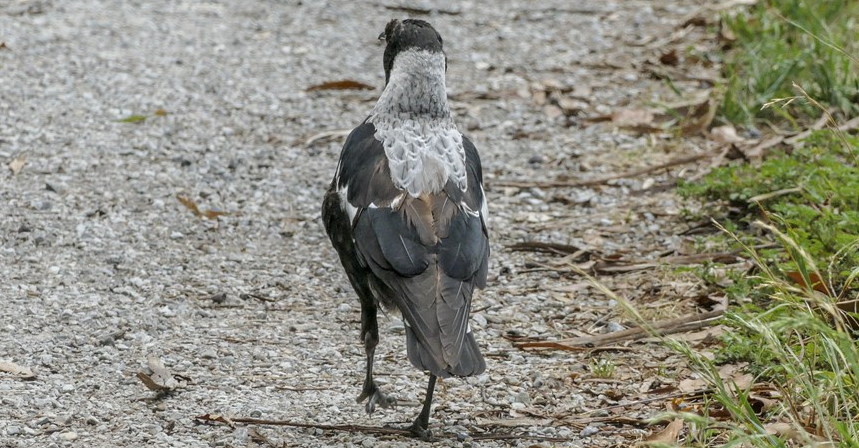
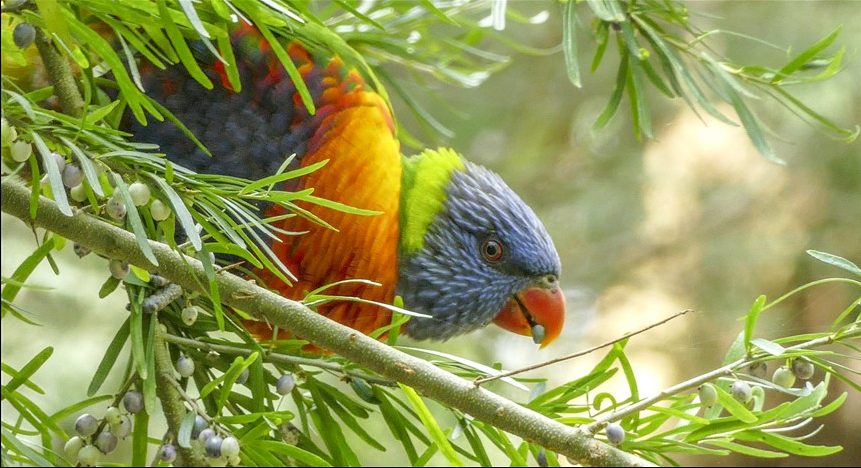
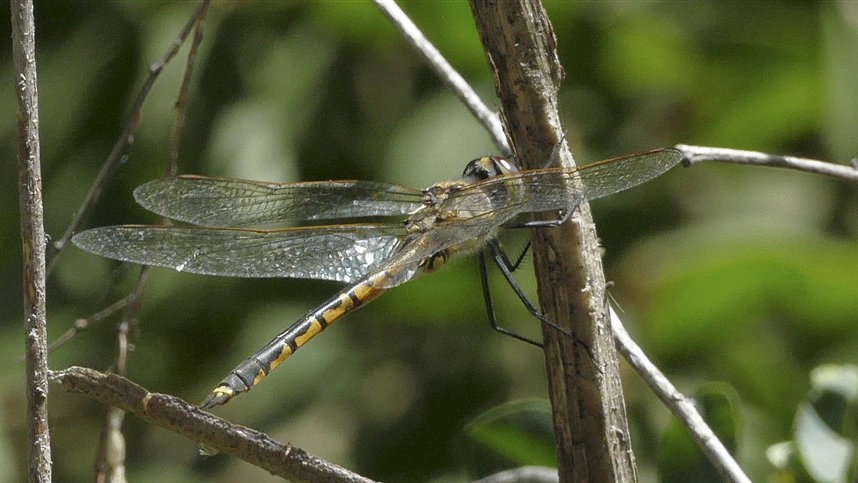
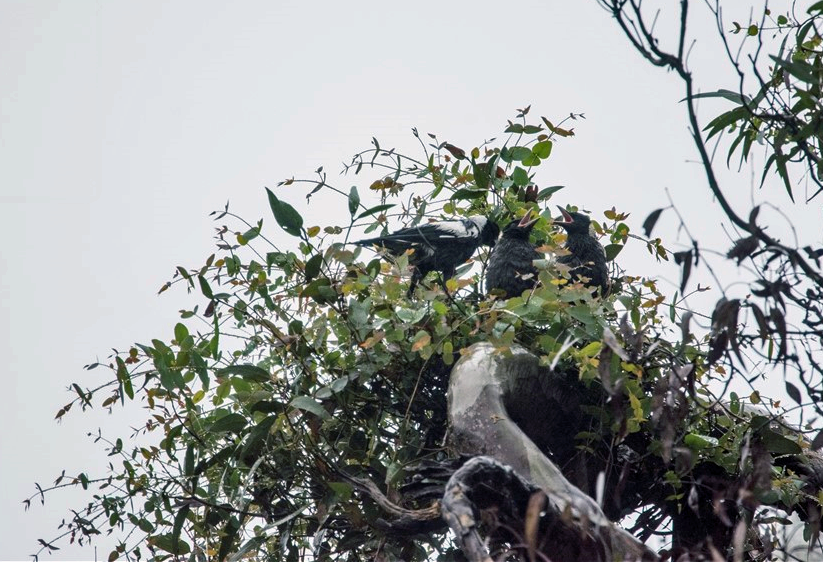
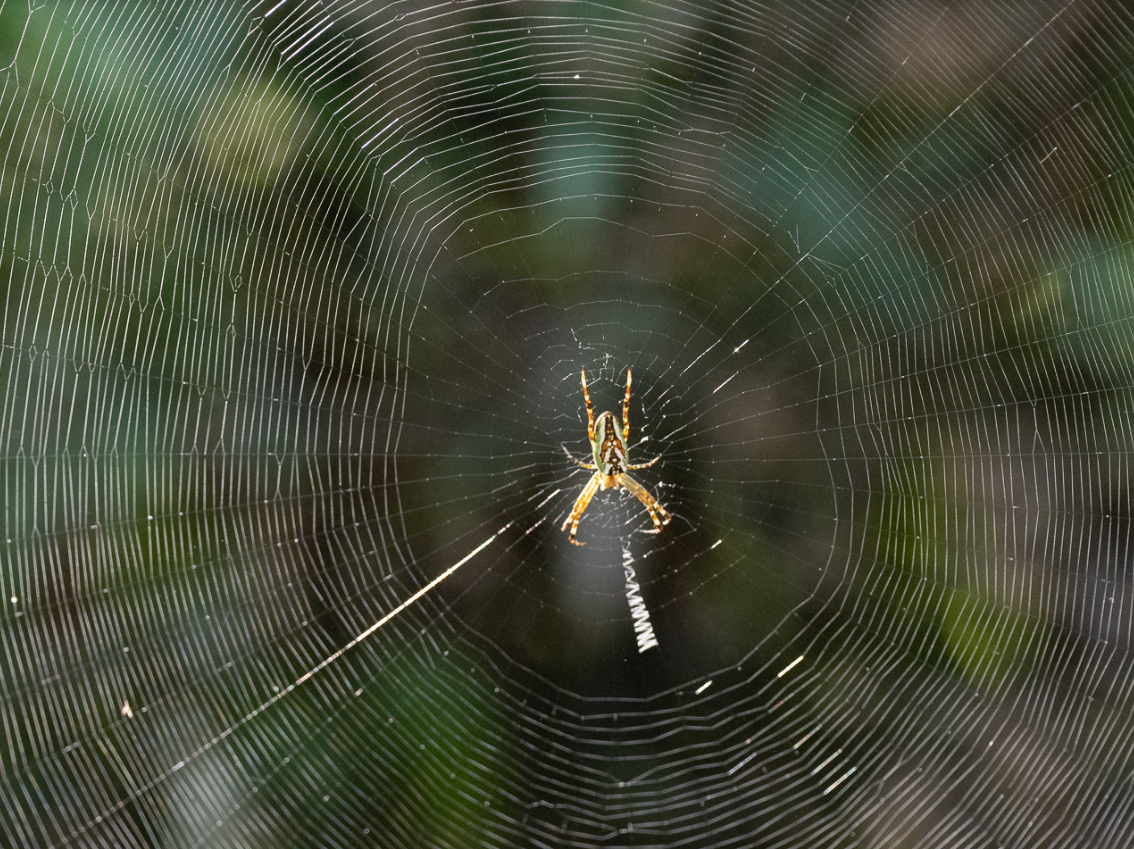
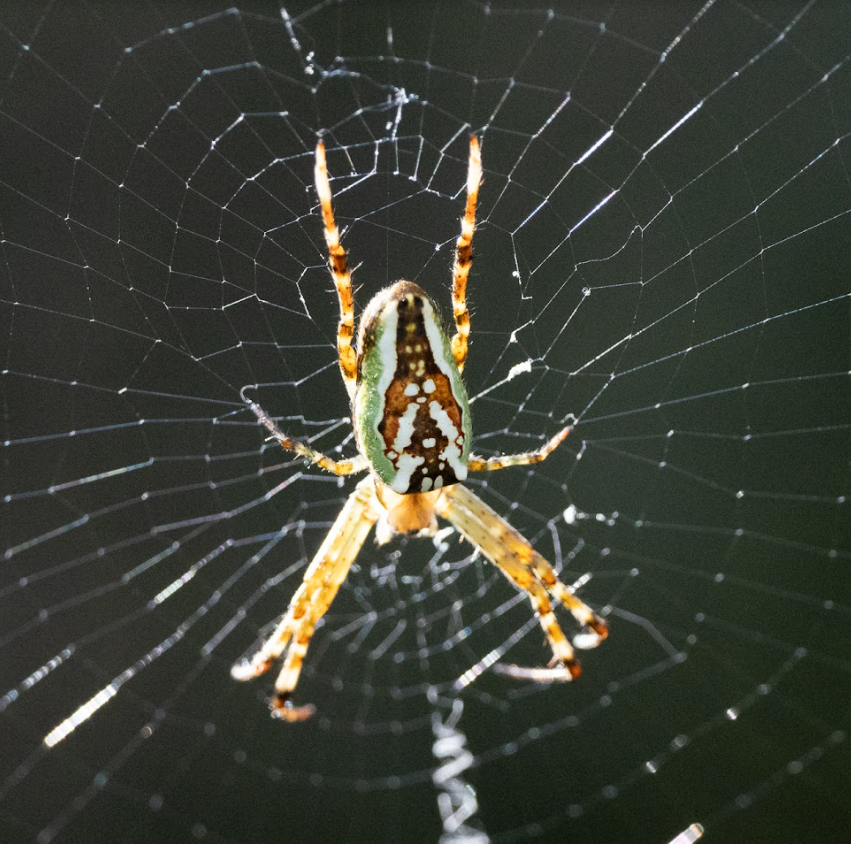
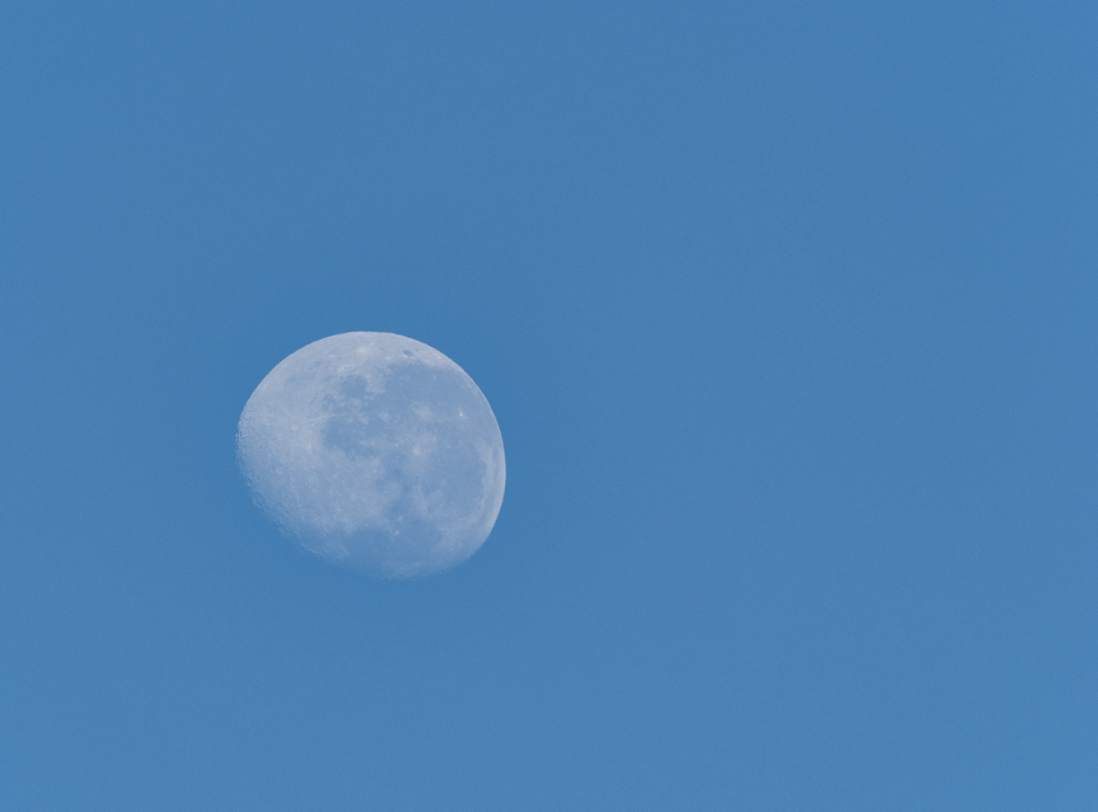
Please click to enlarge and hit the ‘X’ to exit.
We also have a movie of an Enamelled Spider renovating its web a fortnight later than the above shots:
This description was provided:
This Enamelled Spider (Plebs bradleyi, synonym Araneus bradleyi) was seen with a number of other spider species on a hot windy summer afternoon near the banks of Gardiners Creek [also known as the KooyongKoot waterway]. The Enamelled Spider is an orb-weaver spider (Araneidae). The orb web structure of this particular Enamelled Spider appeared to have been damaged, perhaps by the windblown debris. In this video the Enamelled Spider is seen first collecting and bundling the individual strands of the damaged web structure, then later consuming it. In the concurrent audiotrack, the sounds of the foliage blowing in the wind and the nearby bird calls can be heard; Noisy Miner (Manorina melanocephala), Rainbow Lorikeet (Trichoglossus moluccanus), and Little Raven (Corvus mellori).
In the corridor
Trish, one of our Friends, and her family were welcomed home from holidays by an unexpected guest.
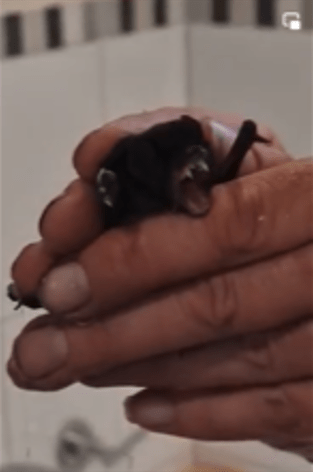
Sonja, from Wildlife Victoria, rescued this little Gould’s Wattled Bat (Chalinolobus gouldii) – who was roosting underneath her son’s bed!
This bat eats insects – mostly moths but also others including cockroaches and caterpillars.
“Little one was asleep and let the Wildlife Victoria volunteer take them away.”
As Trish said “A very interesting experience and great signifier of the varied wildlife we have in our little area!!“.