Events coming up:
- Our Autumn Bird Walk – Saturday, 26th April 07:30
- Our Possum Prowl / Nocturnal Walk – Friday 23rd May from 5.30 -7.30 pm
- Eucalyptus ID walk with Tony Slater – Sunday 13th July at 2pm
Welcome to our March, 2025 newsletter – which is a tour de force in the invertebrates you might find in the Blackburn Creeklands in March. Lots of questions are answered along the way such as what are those super-sized mozzies?, what is an Antlion? and so on.
We also update you on the impacts on the park of the latest planning changes from the State Government – as well as descriptions of the events listed above and our usual features on sightings and news from the park and our corridor.
Our Invertebrates – Part Two
Last month we presented the first installment of photographs supplied to us by Ian Moodie. As we said then, our invertebrates (animals without backbones – spiders, insects etc) tend to be overlooked as part of the park’s fauna. We’re fortunate to have Ian contributing – his keen eye, knowledge and photographic skills make it very easy for us to sit back and admire the diversity in the park given many of the invertebrates in the park tend to be smaller, harder to see and arguably not as “cute”.
What is going on here ?
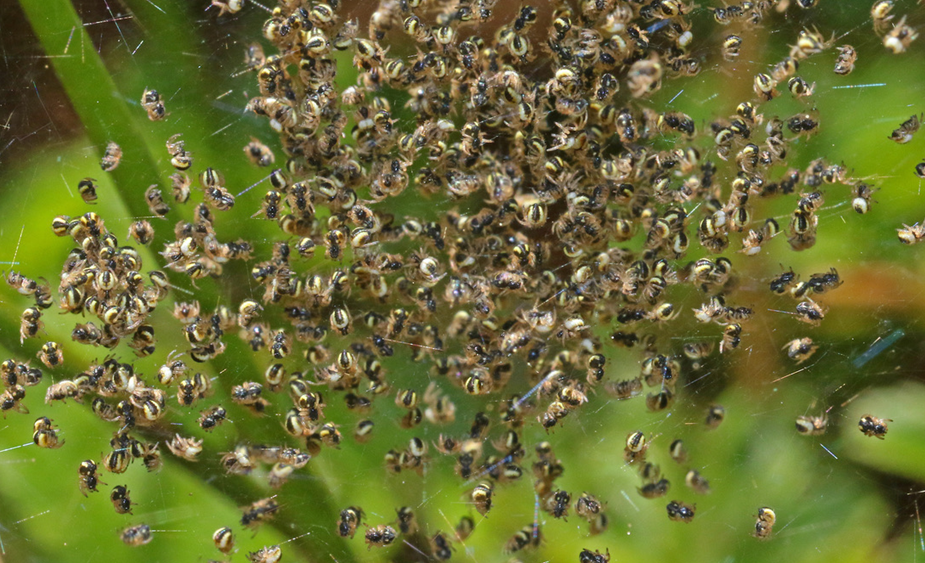
Arachnophobes should quickly look away… Ian’s answer to our question is “spiderlings“…
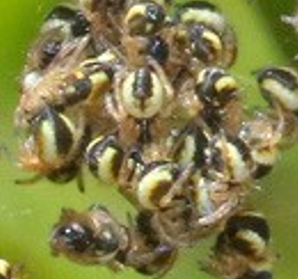
At this time of the year many of our local spider species lay their eggs.
Some species, such as this one, emerge from a cluster of eggs and form a tight grouping of tiny spiderlings. These disperse after a few days.
Ian is not familiar with this species but notes they are certainly boldly marked!!
Ian has produced a large body of work for our enjoyment. These were sent in sets resulting from a specific walk. We retain Ian’s order for context.
More pics from Furness and Kalang
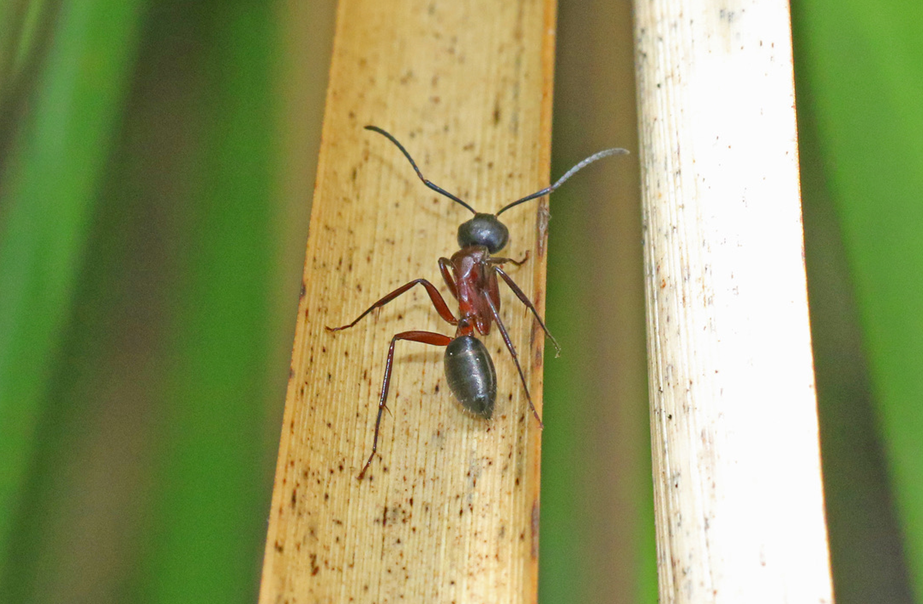
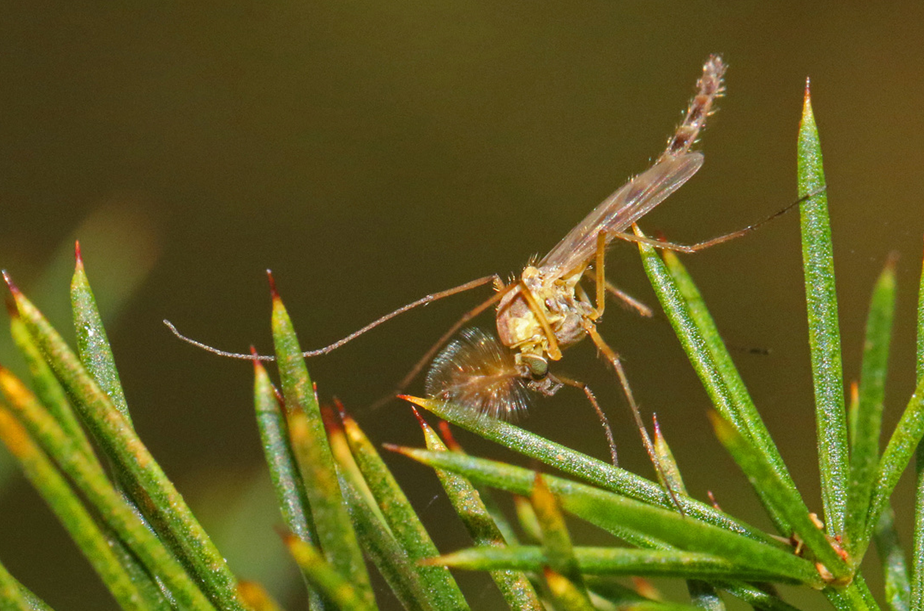
We were unaware we had Midges in the park (at least they don’t bite) and who knew we have Antarctic Sugar-ants?
Please click on image to enlarge; click on the X to return
Here are Ian’s notes on each species:
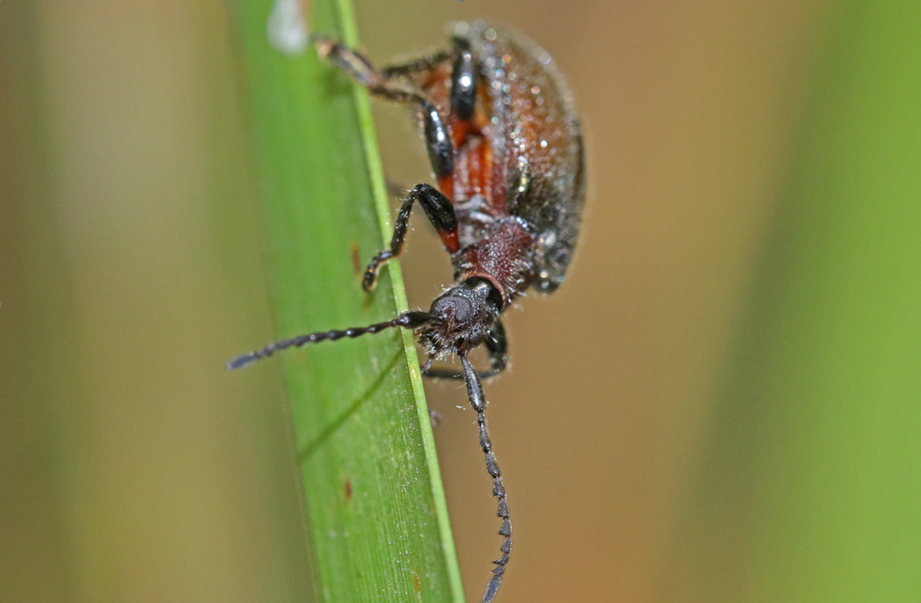
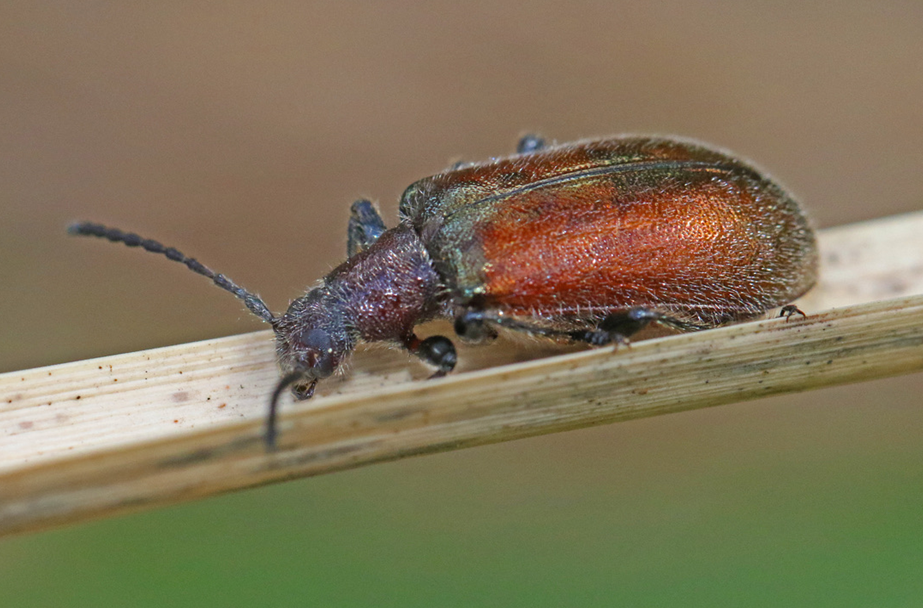
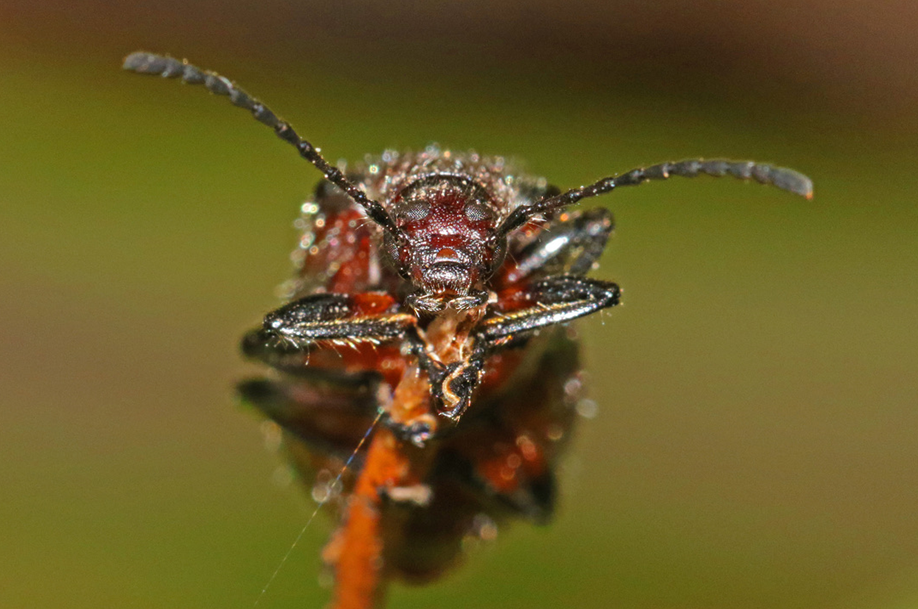
- Brown Darkling Beetle (Ecnolagria grandis): three pics of a Brown Darkling Beetle, a very common small beetle in late summer. Their larvae feed on detritus such as dead leaves.
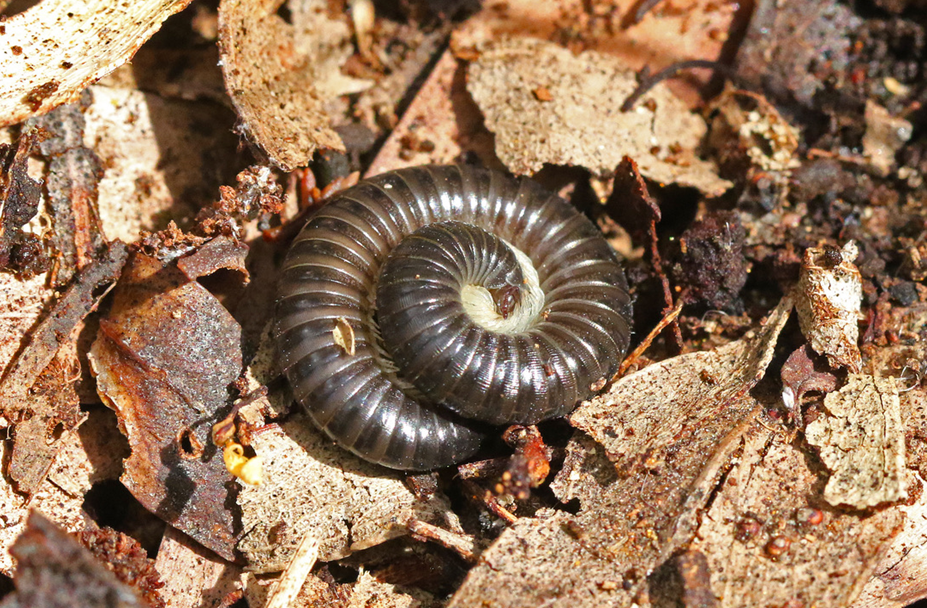
- Portuguese Millipede (Ommatoiulus moreleti): these introduced millipedes can be very common at times.
- Antarctic Sugar-ant (Camponotus innexus): these feed on a variety of sources including plant sap, fruits, insects, and even honeydew produced by aphids.
- Midge (Family Chironomidae): one of a number of local non-biting Midges.
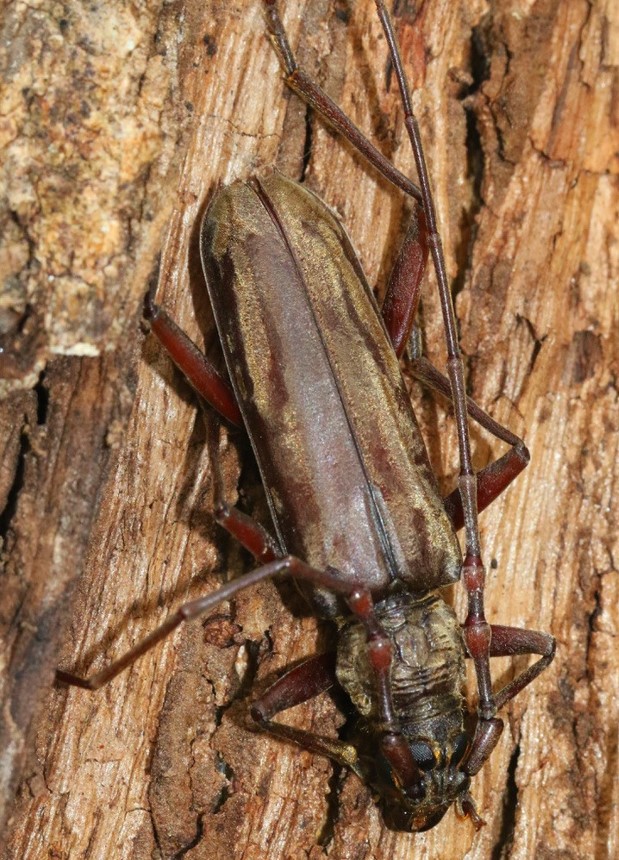
- Longhorn Beetle (Pachydissus sp): a type of wood boring Longhorn or Longicorn Beetle.
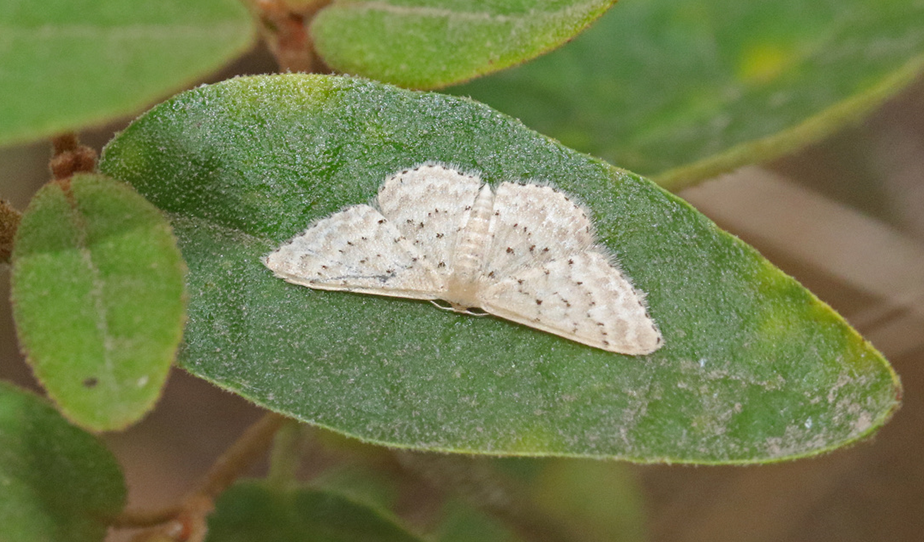
- Flecked Wave Moth (Idaea philocosma): a common moth found in most of Australia.
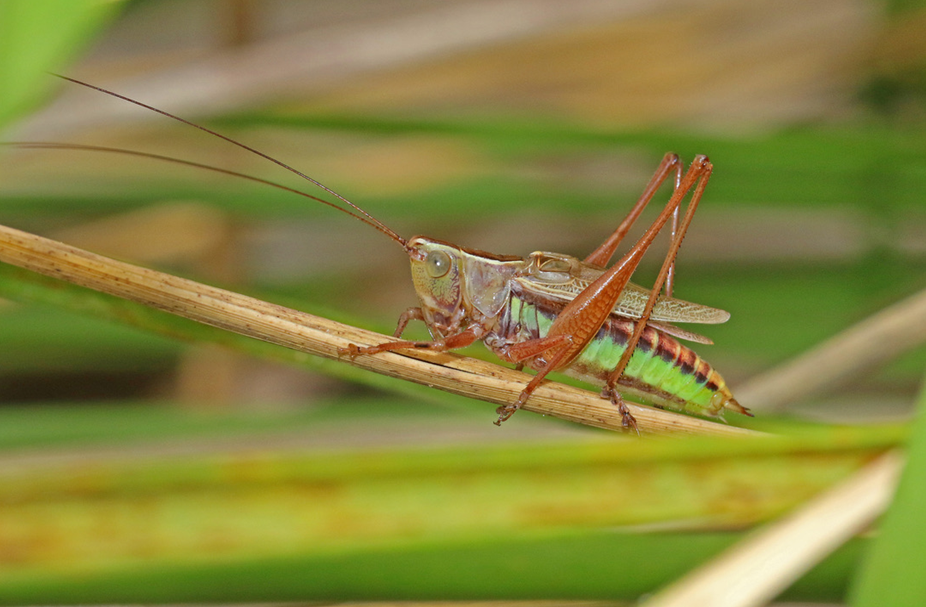
- Meadow Katydid (Conocephalus sp.): a common insect, often mistaken for a Grasshopper. They are a plant eater.
Mostly Kalang Park (some Furness)
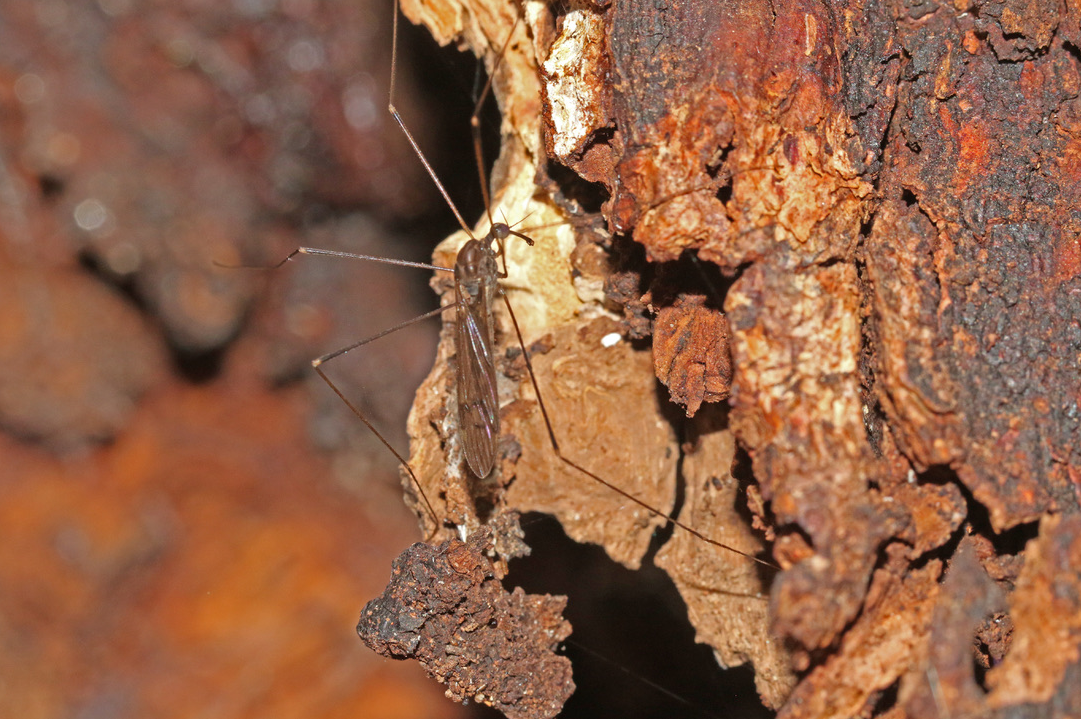
In this set, we learnt that we have Jack Jumpers in the park and that “red-eye” not only refers to the late-night flight from Perth! At last, we know what those “Mega Mozzies” are – and they’re harmless – no sting!
Please click on image to enlarge; click on the X to return
Here are Ian’s notes on each species:
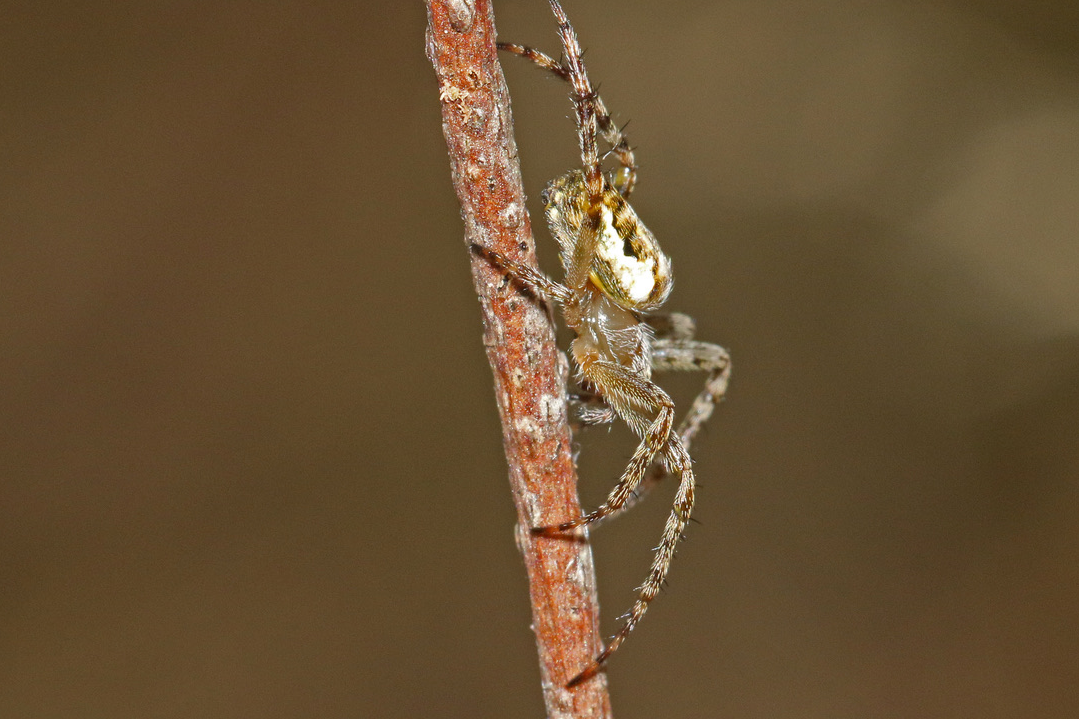
- Eastern Bush Orb-weaver spider (Plebs eburnus): a common and widespread species of spider. Like most Orb-weaving spiders, they spin a large ‘spoked wheel’ like web and sit and wait for an unsuspecting insect to fly into it.
- Limoniid Crane Fly, Helius sp. there are lots of different Crane flies (well over 10,000 species) and while some look like giant mosquitoes, most are quite harmless. This species feeds on decaying plant matter.
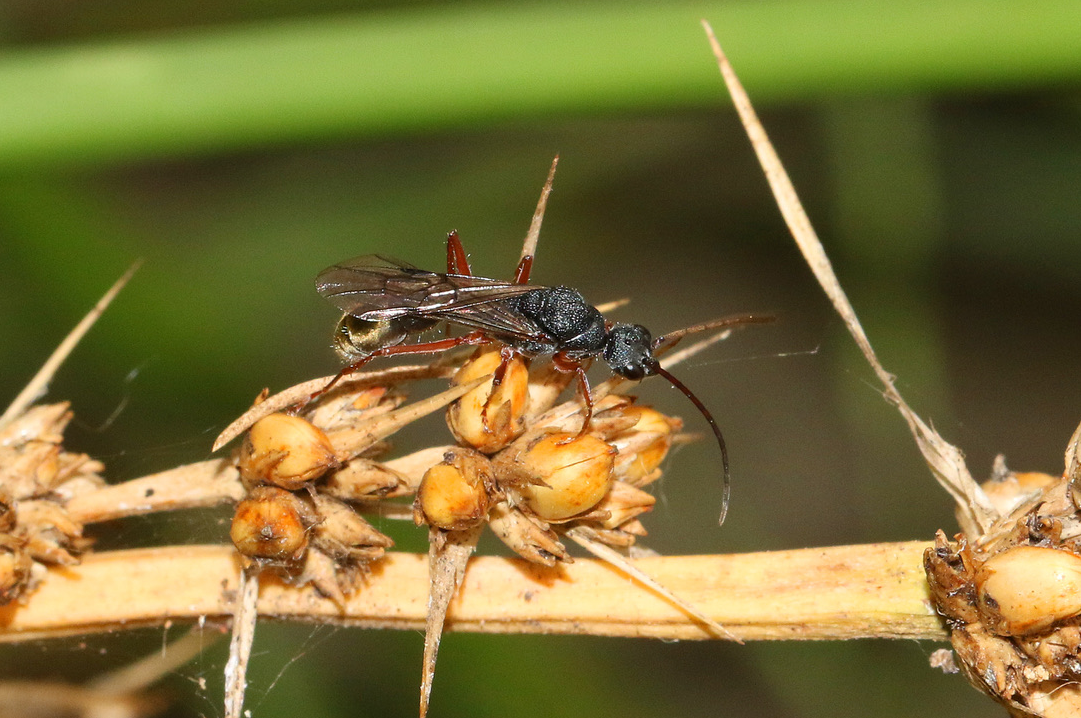
- Tawny-legged Jack Jumper Ant, Myrmecia fulvipes. these ants do have a sting but it is (reportedly) ‘mild’. Their food is often the larva of other insects. [Megan adds that winged forms appear for reproduction and dispersal of the species and are called alates].
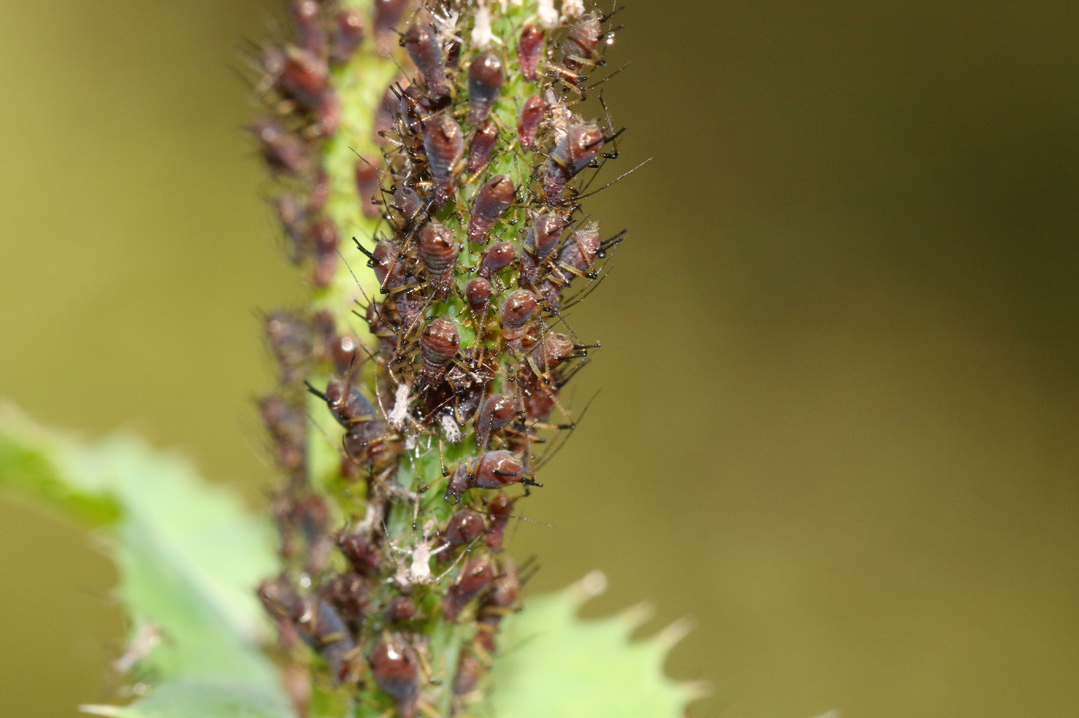
- Black (Brown) Aphids Aphis sp: there are many different species of Aphid to be found locally . All are sap-sucking insects that can be a real pest in domestic gardens. They can breed rapidly.
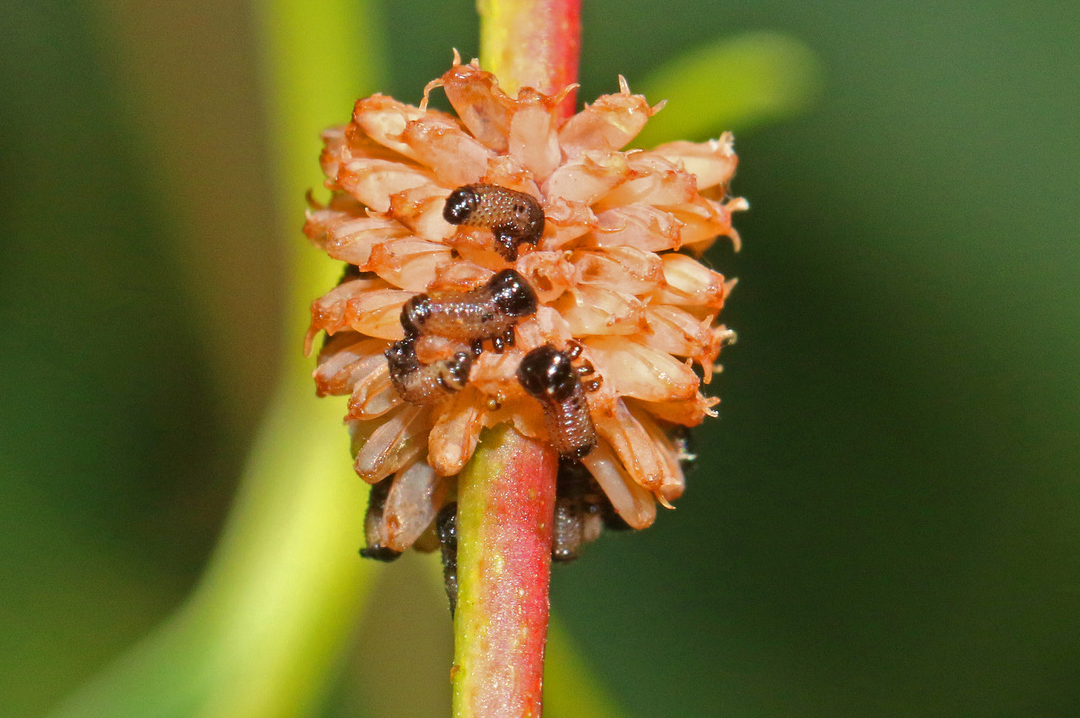
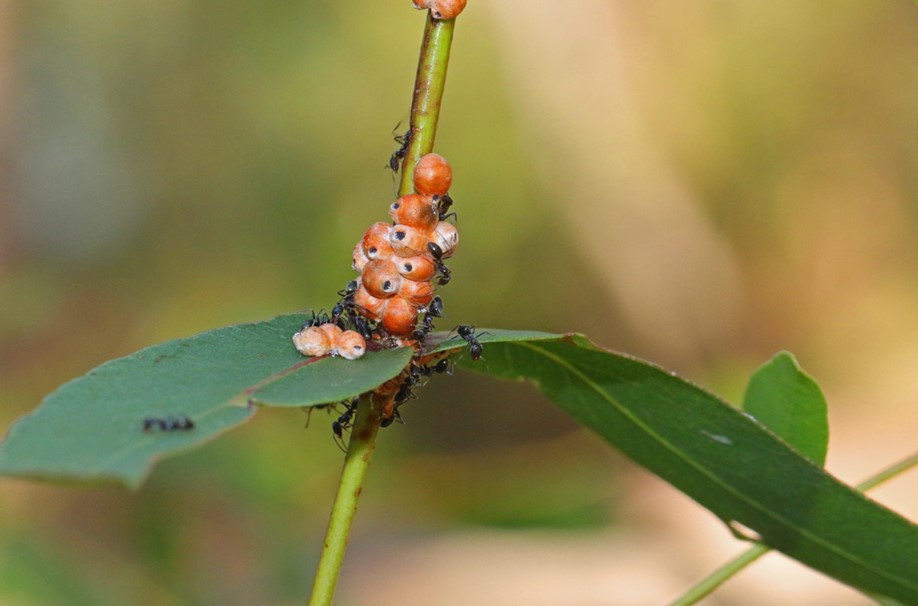
- Dotted Paropsine Leaf Beetle larvae (Paropsis atomaria): in the picture larvae can be seen emerging from their egg cluster. They feed on Eucalyptus species. The adult beetle is about a centimetre long and is somewhat ‘dome’ shaped.
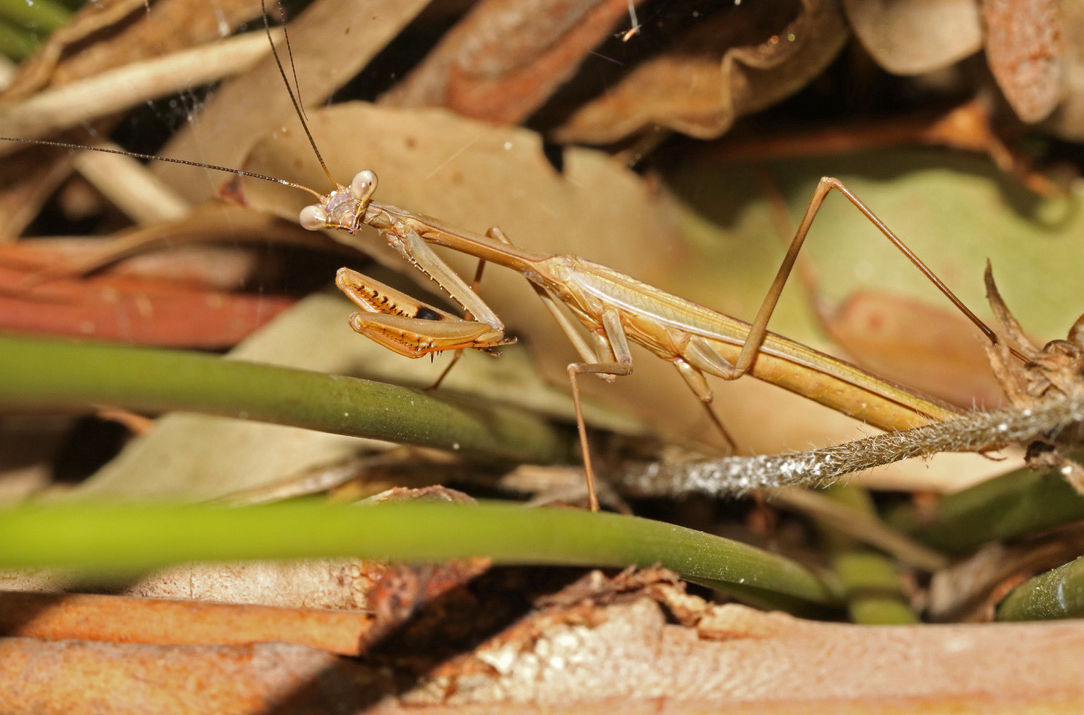
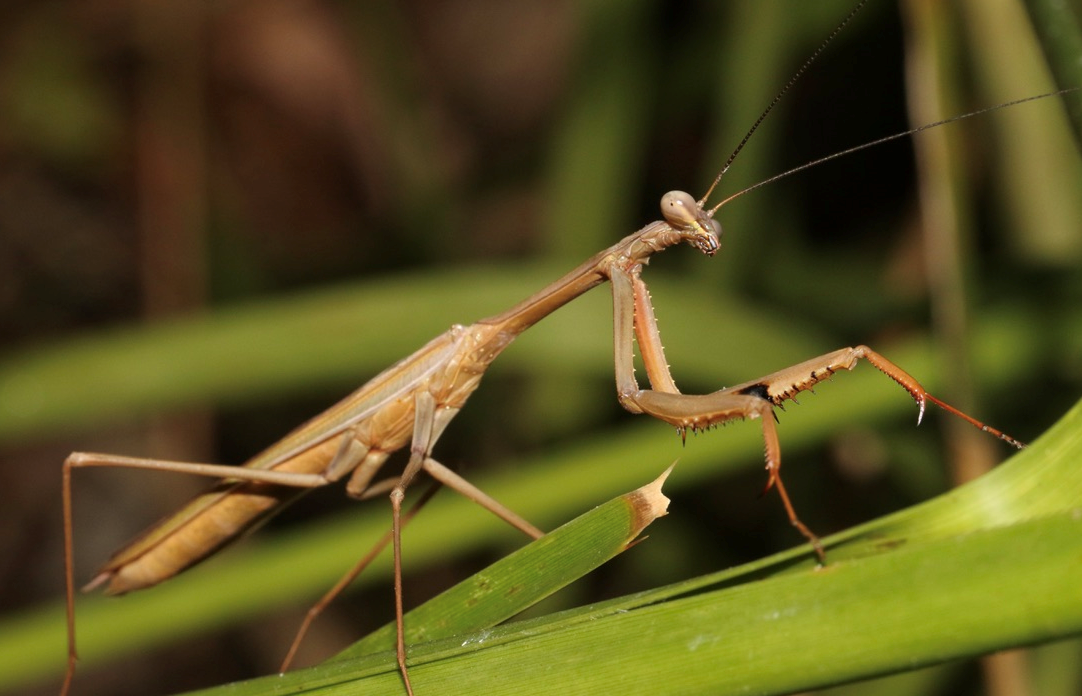
- False Garden Mantis (F) (Pseudomantis albofimbriata): this is one of two common local Mantids. This species comes in two colour forms, ie light brown (as in the photo) or a bright green. These are fierce hunters.
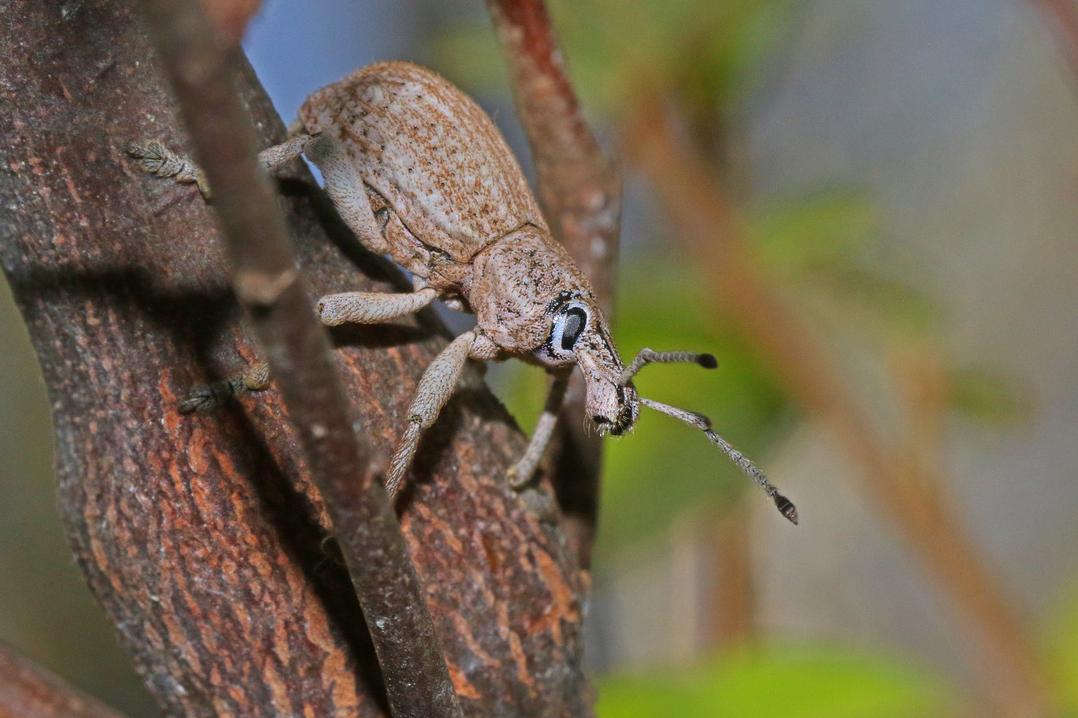
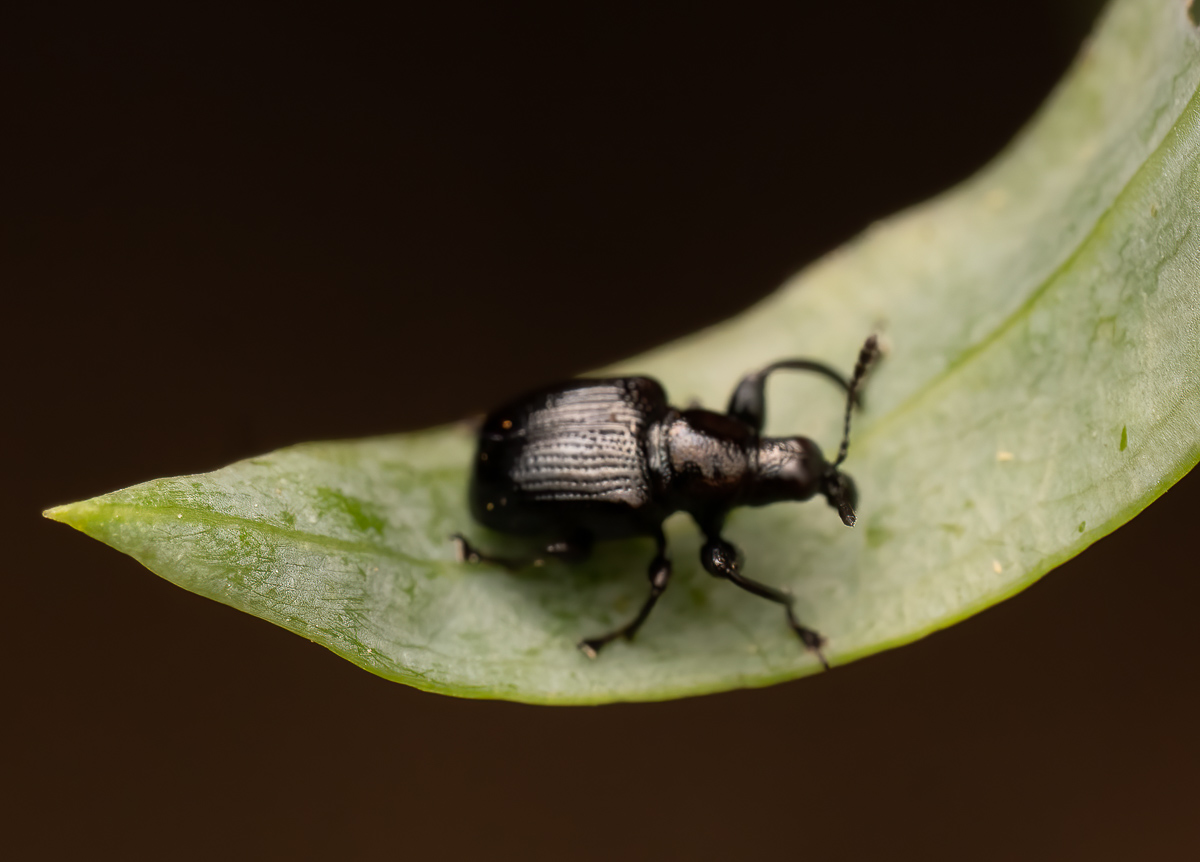
- Fruit-tree Root Weevil (Leptopius robustus): larvae of this weevil are known to attack the roots of some fruit tree species.
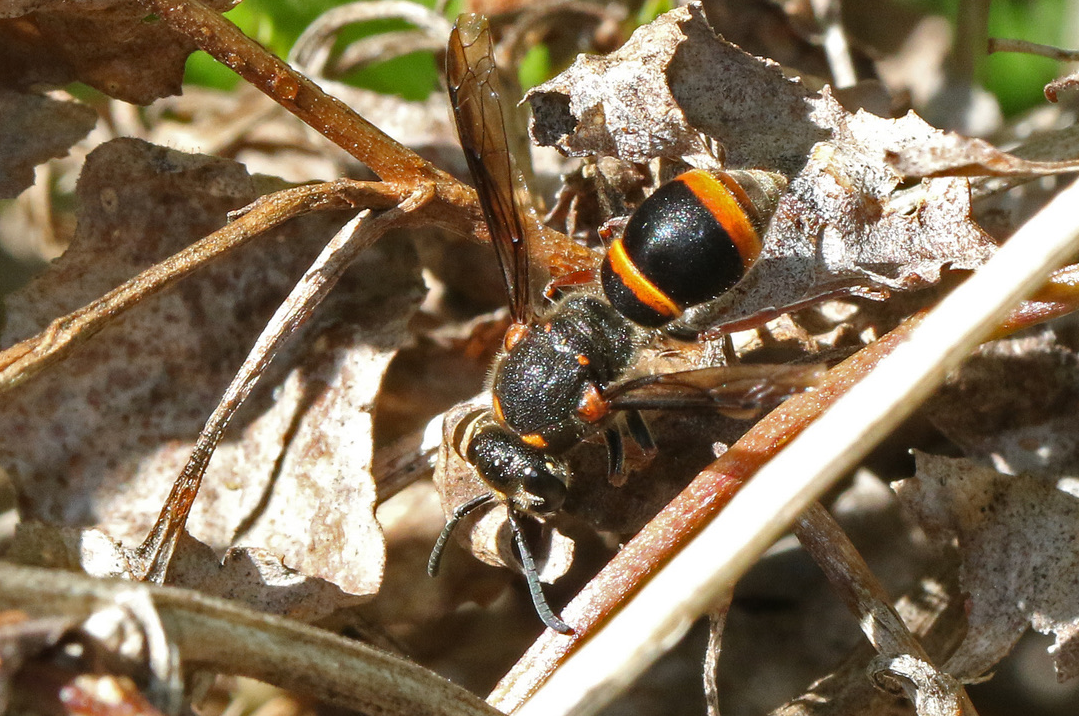
- Potter wasp (Paralastor sp): they build mud nests for their larvae which they feed with paralysed caterpillars. The adults drink nectar.
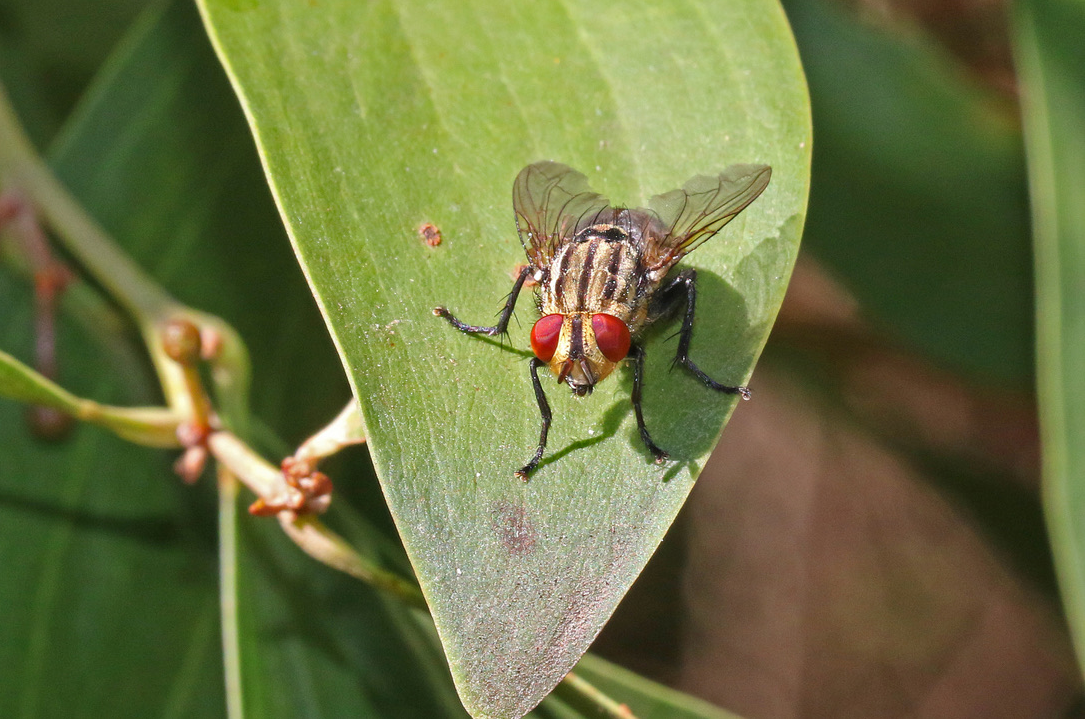
- Flesh Fly (Sarcophaga sp): these flies deposit maggots on carrion and dung as well as open wounds of mammals.
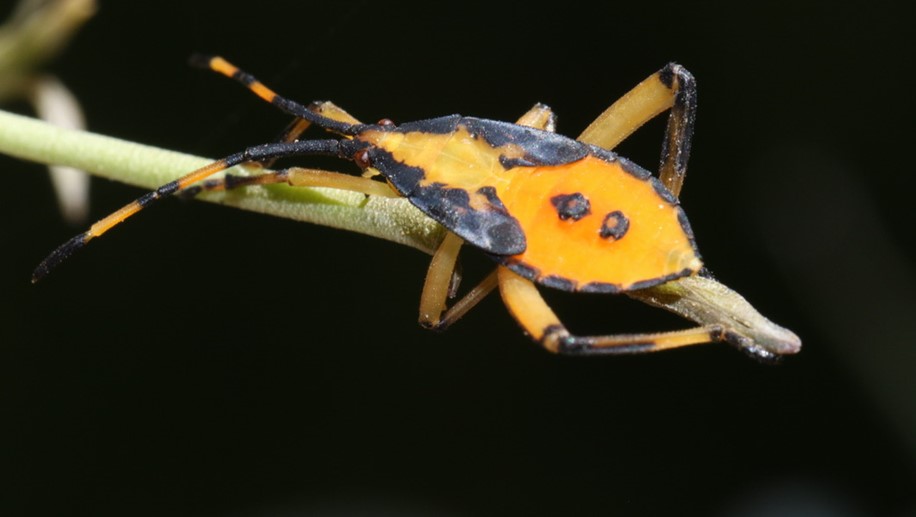
More ‘bugs’ from the Creeklands!
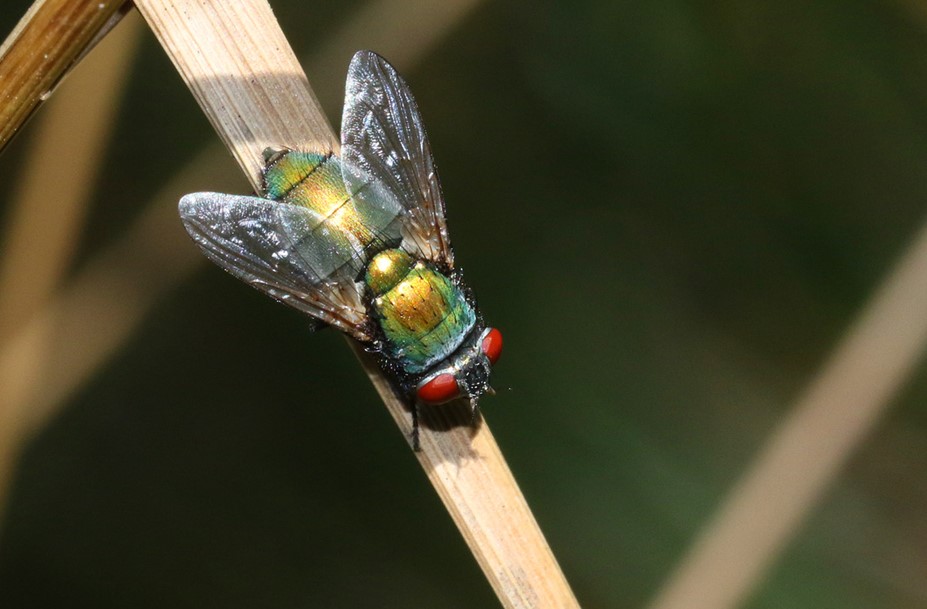
Another red-eye we note!
Please click on image to enlarge; click on the X to return
Here are Ian’s comments:
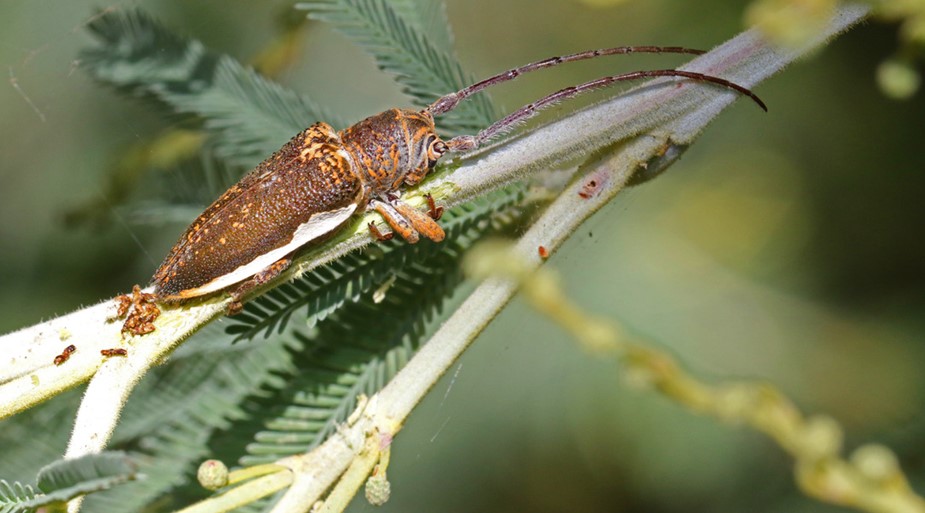
- Flat-faced longhorn beetle (Rhytiphora sp.): their larvae are wood borers.
- Common European Greenbottle Fly (Lucilia sericata): their larvae (ie maggots) typically feed on carrion.
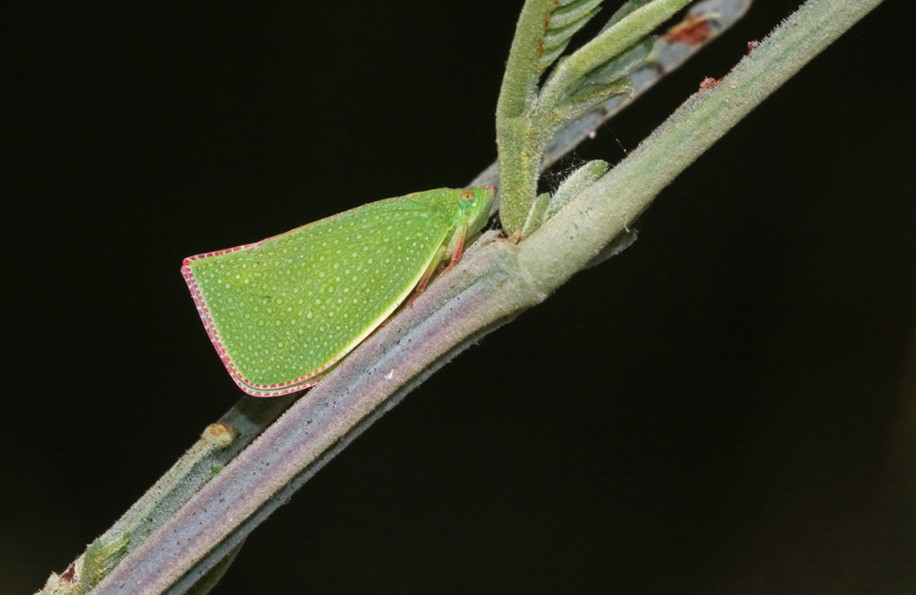
- Torpedo Bug or Green Plant Hopper (Siphanta acuta): these are a common sap sucking native bug.
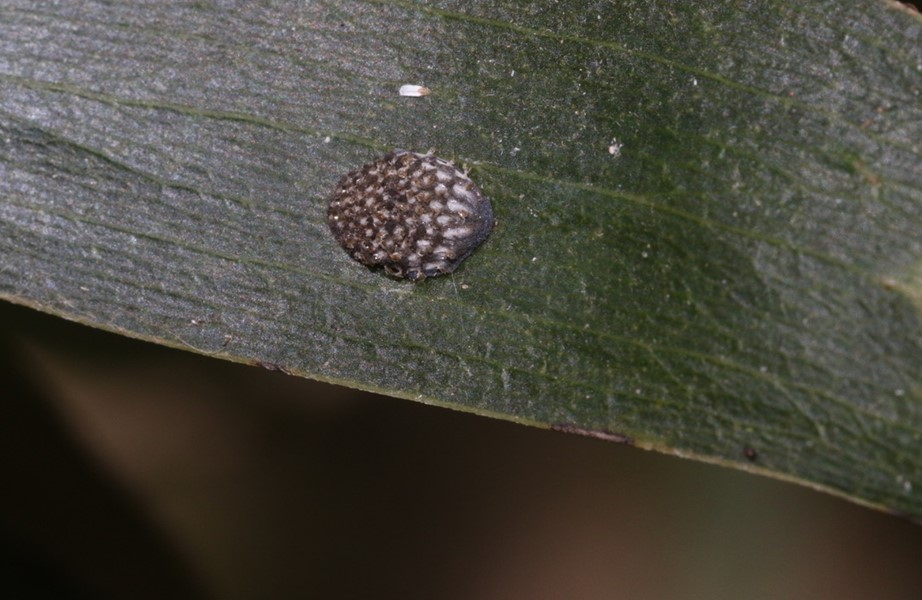
- Torpedo Bug egg cluster: the next pic is of its egg cluster.
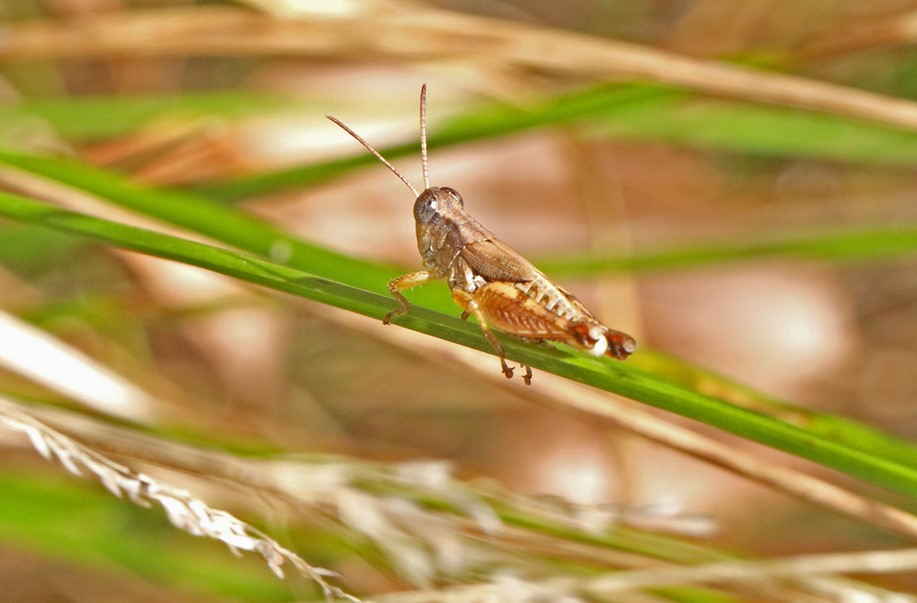
- Wingless Grasshopper (Phaulacridium vittatum): despite their name, these common Grasshoppers do have wings and can actually fly, but only as an adult. This pic is of an immature specimen.
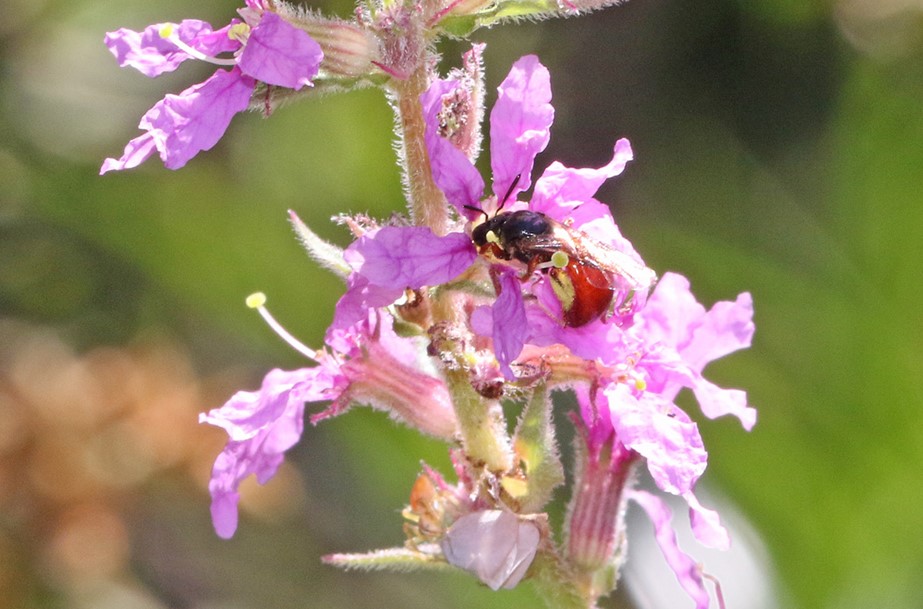
- Allodapine Bee (Exoneura sp.): these bees are one of several related species often called ‘Reed Bees’. There are lots of different local native bee species.
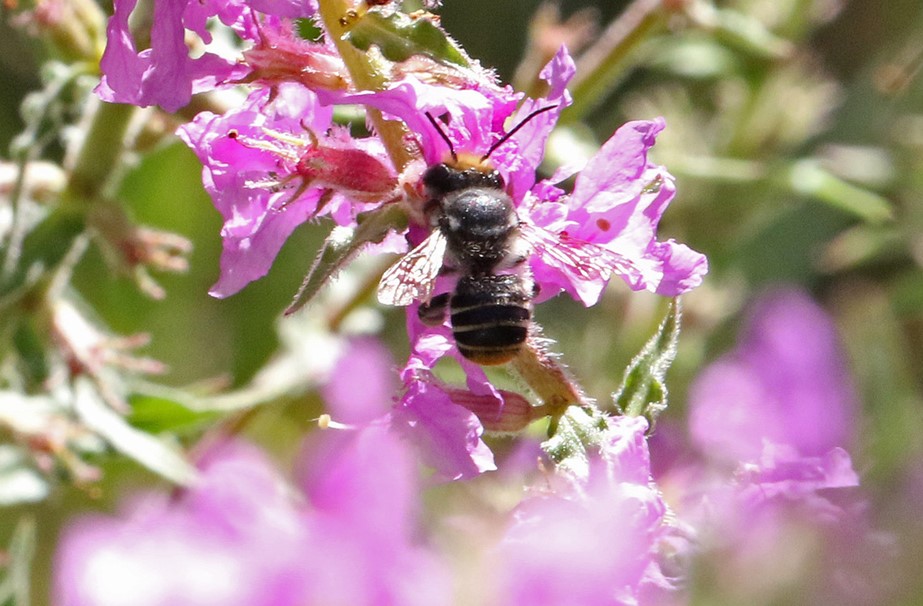
- Leaf-cutter bee (Megachile maculariformis): often called a Leaf-cutter bee because it will cut circular holes in leaves (often roses!) to use for nesting material.
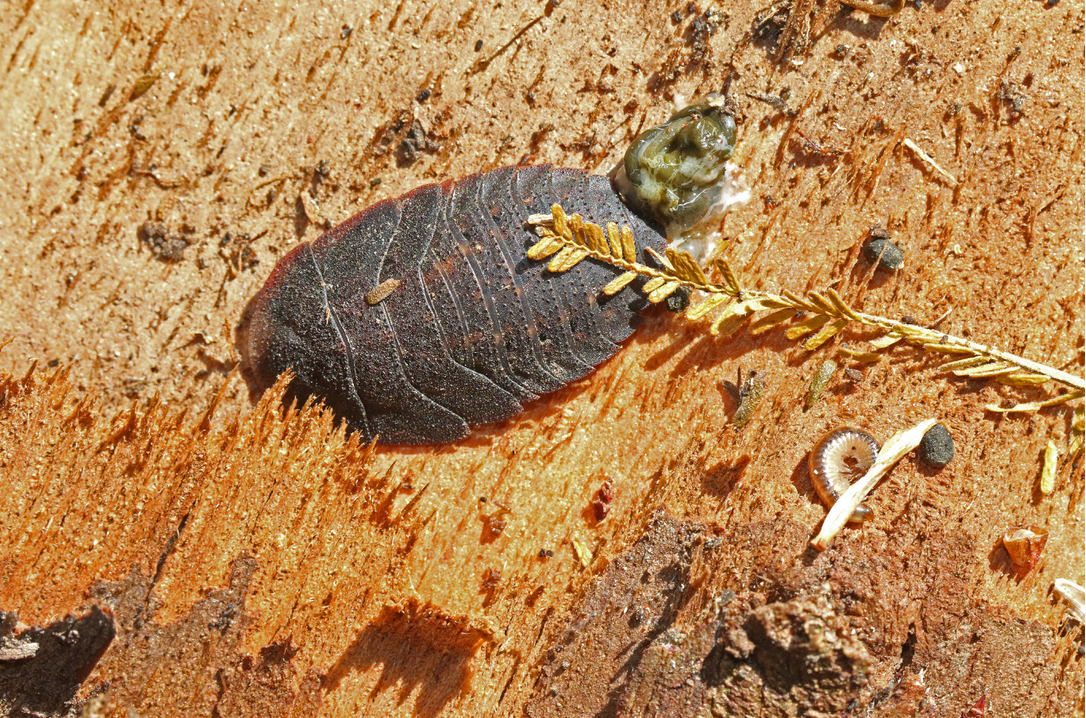
We thought Trilobites were sea creatures that lived many millions of years ago – who knew they grow on trees in the Creeklands ?
Please click on image to enlarge; click on the X to return
Here are Ian’s notes on each species:
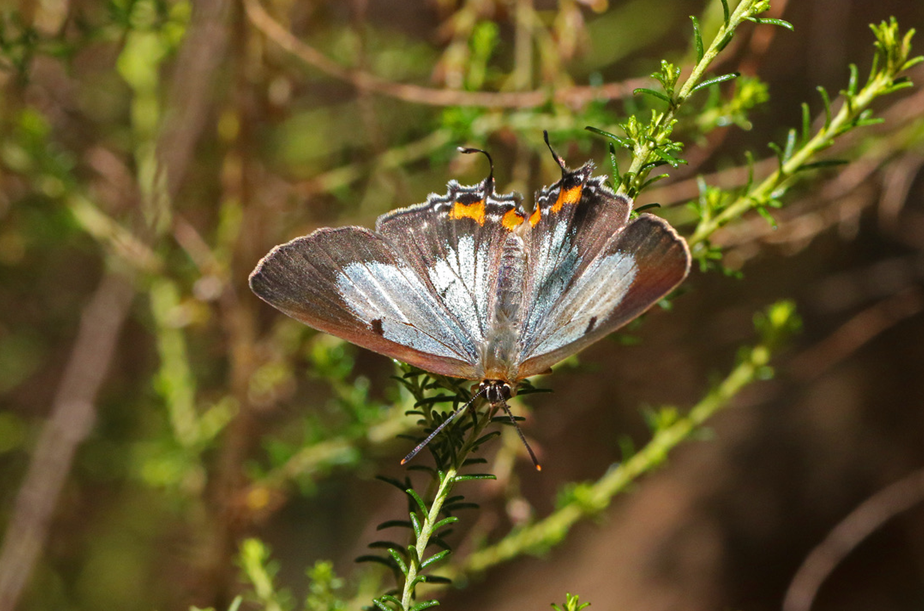
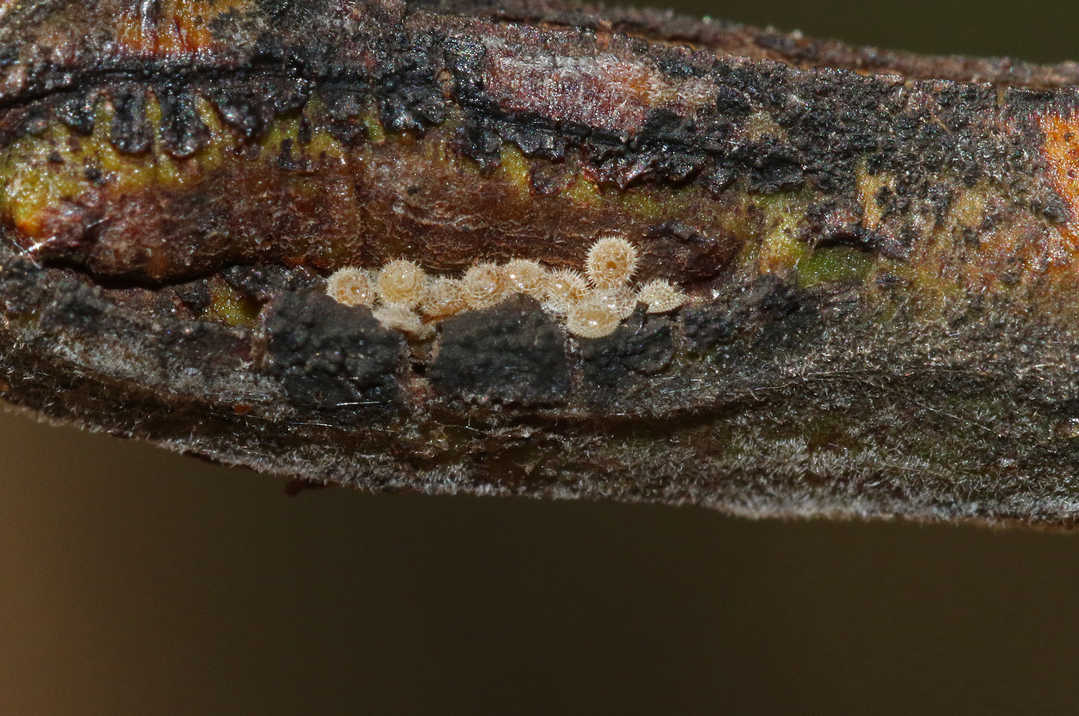
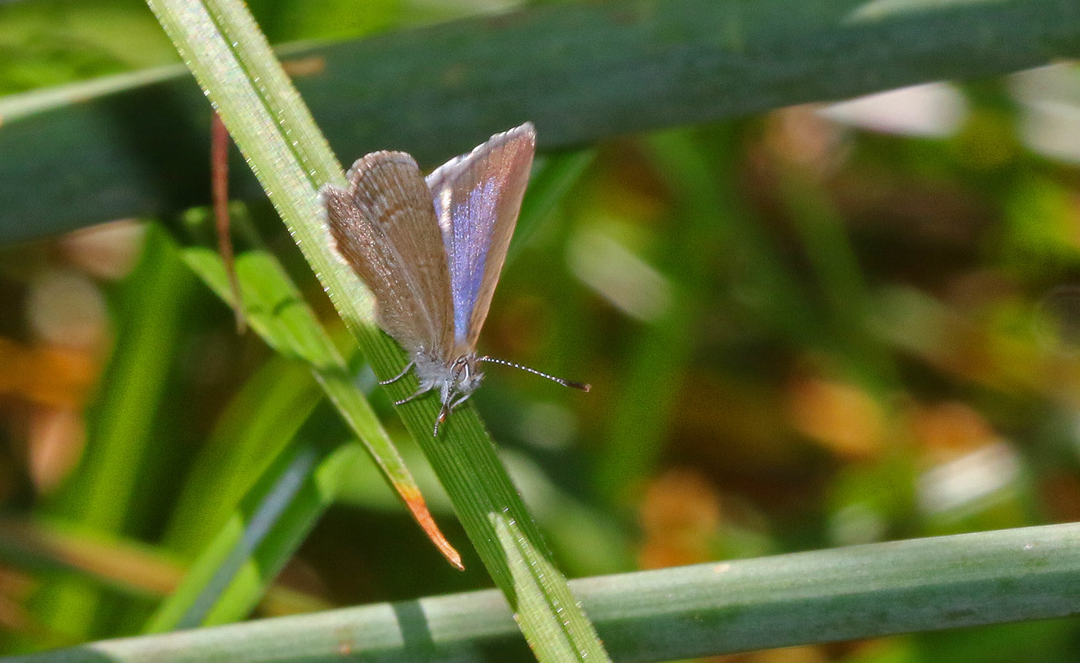
- Common Imperial Blue: here are three shots of a Kalang Park favourite, the Common Imperial Blue butterfly; Jalmenus evagoras. Like most butterflies, they are seasonal – really only about in the warmer months. At this time of the year, they are getting ready to ‘over-winter’ (as eggs!). Indeed most of these butterflies have now disappeared; the adult and chrysalis shown here are some of the few still to be seen. Most females have already laid their eggs (last pic) and died. The eggs are very hard to see as each one is less than 1 mm in diameter.
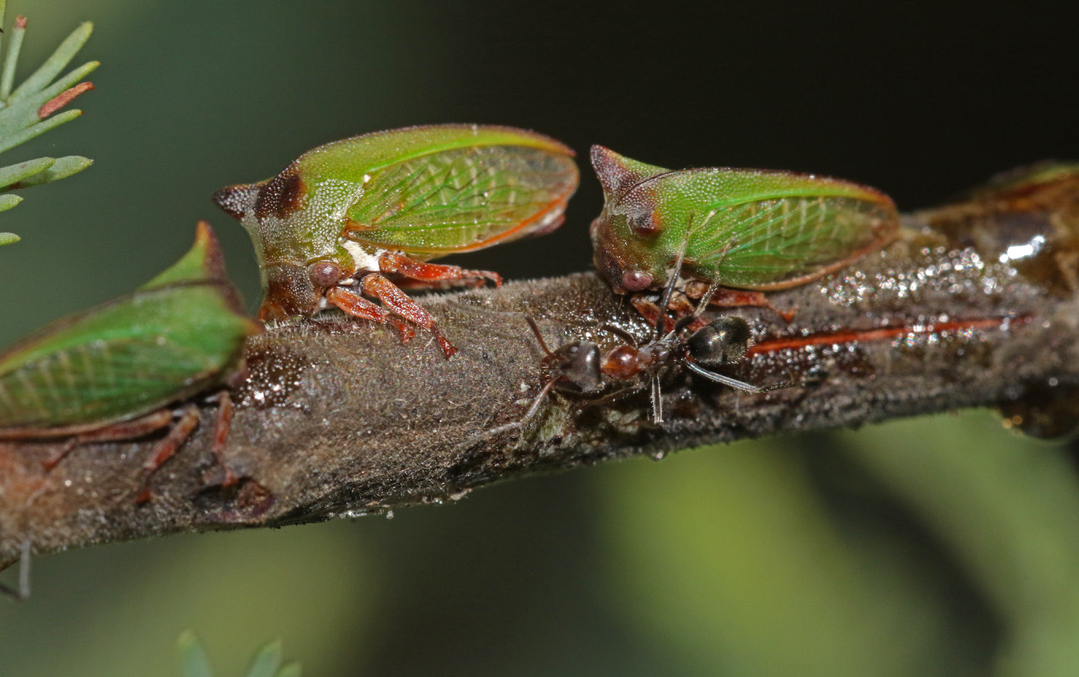
- Green Treehoppers: often seen near the Common Imperial Blue butterflies, are these sap sucking insects, the Green Treehopper; Sextius virescens. In the picture you can also see some ants of the genus Iridomyrmex. These ants tend both the butterflies and Tree Hoppers to collect the sweet, energy rich substance they exude as a by-product of their tree-sap diet.
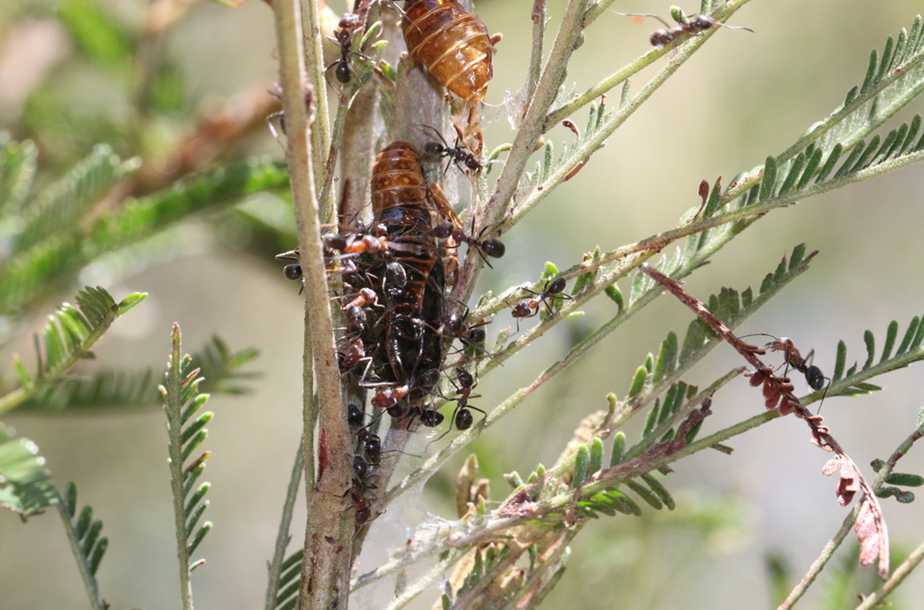
- Bark or Trilobite Cockroach (Laxta granicollis): these very flattened communal insects live under loose bark on trees. The females (pic) are wingless; the males have wings.
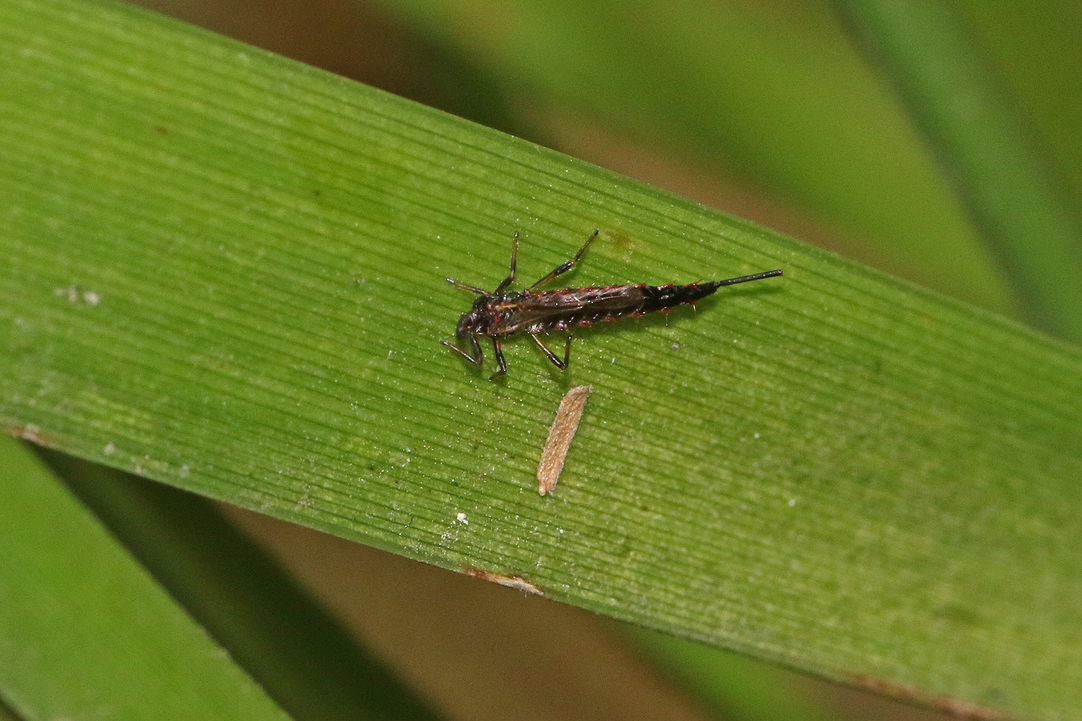
- Giant Thrips (Idolothrips spectrum): these are the largest Thrips in the world. They feed exclusively on dead Eucalyptus leaves, where they presumably feed on fungal spores.
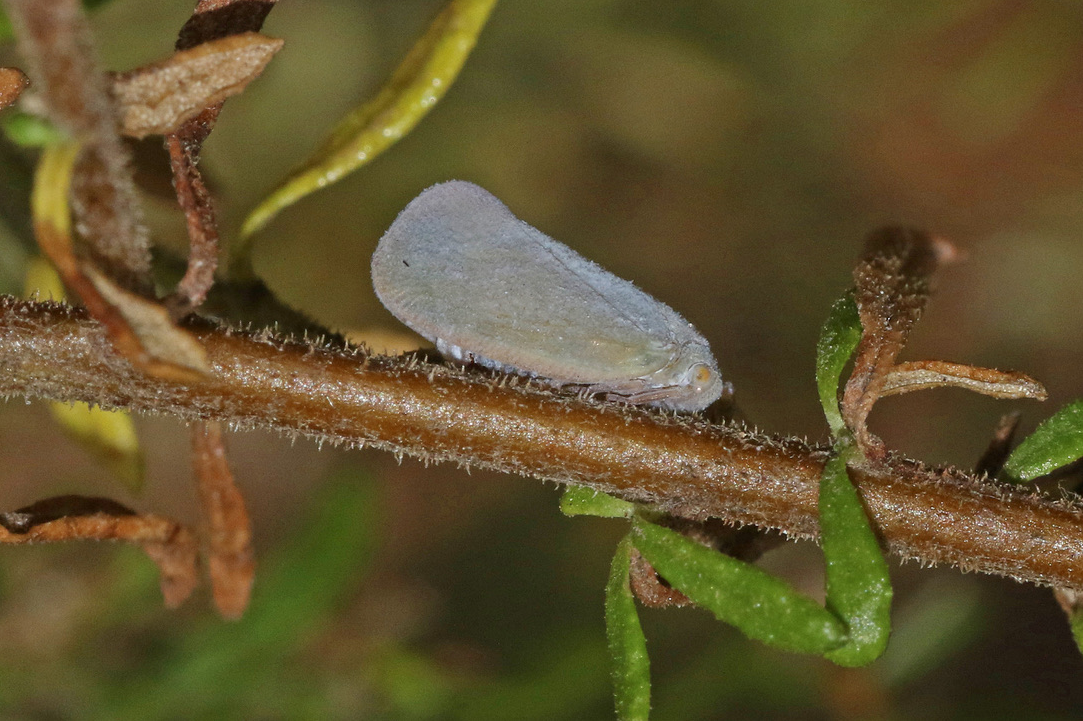
- Grey Plant-hopper (Anzora unicolor): these are a very common sap sucking insect. Their immature nymphs are very fluffy and powdery white. A (usually) minor pest in the home garden.
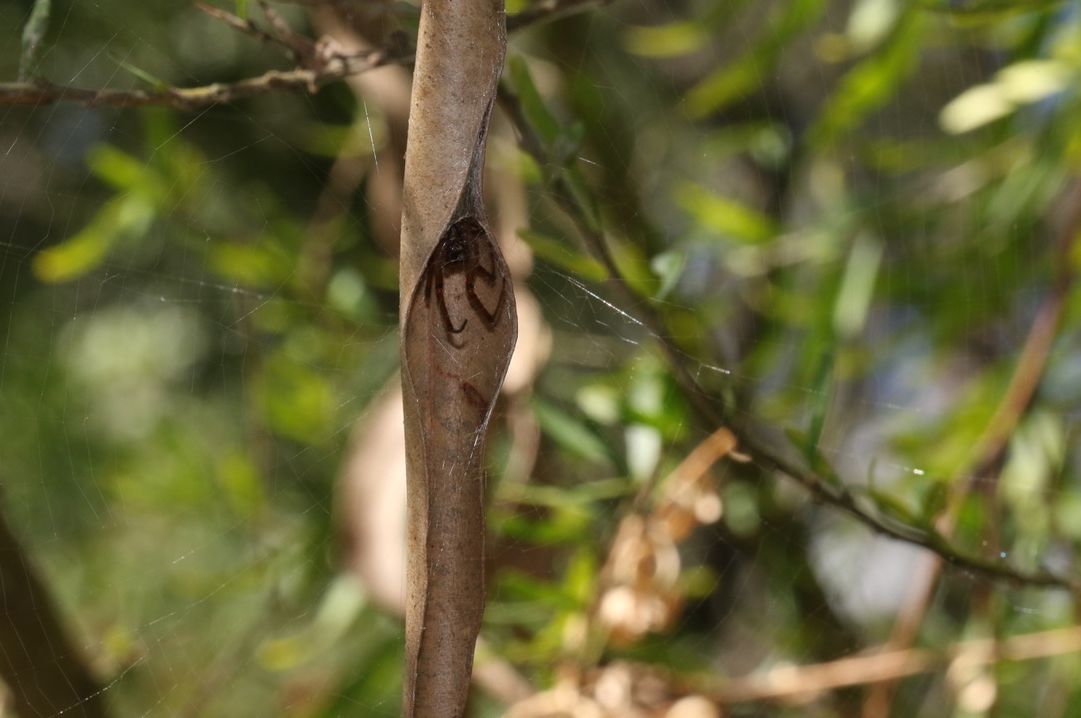
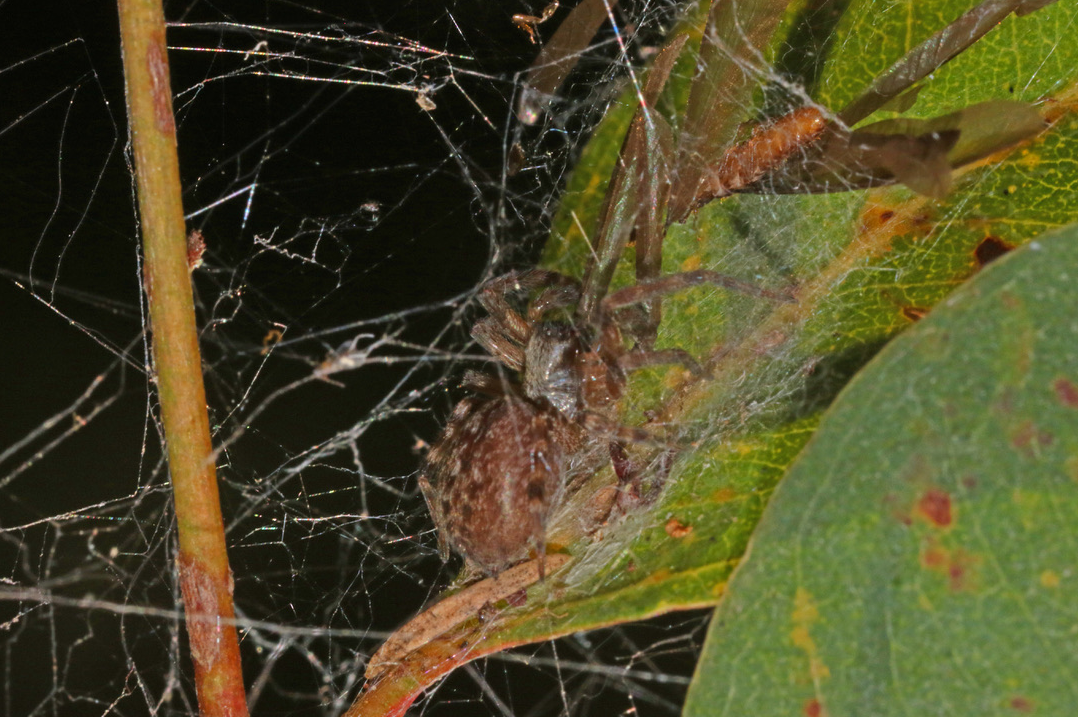
- Curl Leaf or Leaf-curling Spider (Phonognatha graeffei). these web spinning spiders use a leaf that they have curled together with silk to form a disguise and a form of protection. They are more visible when they emerge from their leaf at night.
- Grey House Spider (Badumna longinqua): these common spiders are very similar to the closely related Black House Spider B. insignis. While native to Eastern Australia, they have been accidentally exported to many overseas countries where they are almost exclusively found in buildings of some sort, hence their common name.
- Common Grass-Blue butterfly (Zizina otis): as the name suggests, these small butterflies are very common locally. Their caterpillars eat a variety of grasses and legumes.
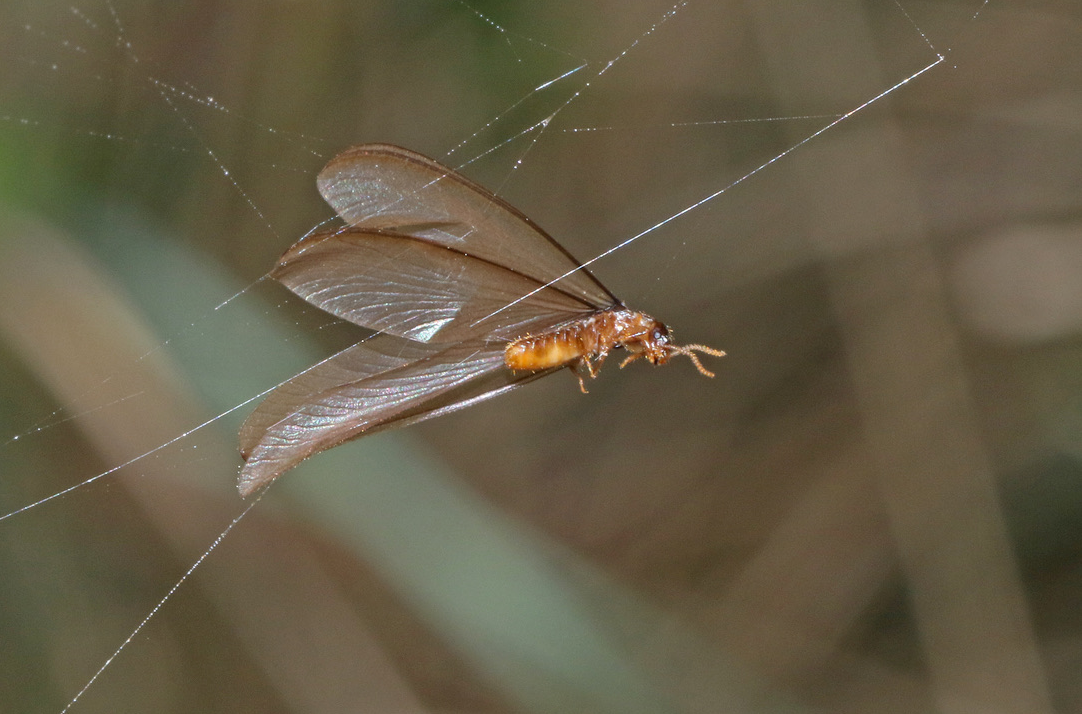
- Alate or Winged Termite: these adult termites can emerge from a termite mound in large numbers to try and form new colonies. They are not strong fliers and often don’t go very far. The one in the pic has had the misfortune to run afoul of a spider’s web.
More pics from Kalang Park
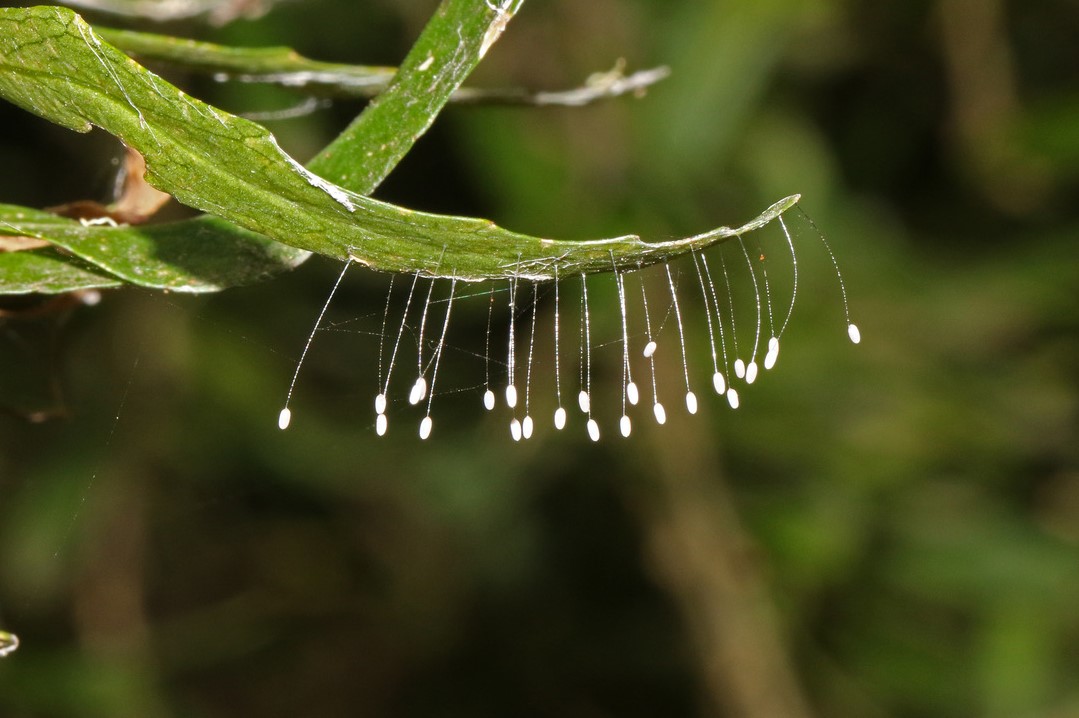
Now we know what those weird things on stalks are !
Please click on image to enlarge; click on the X to return
More from Ian:
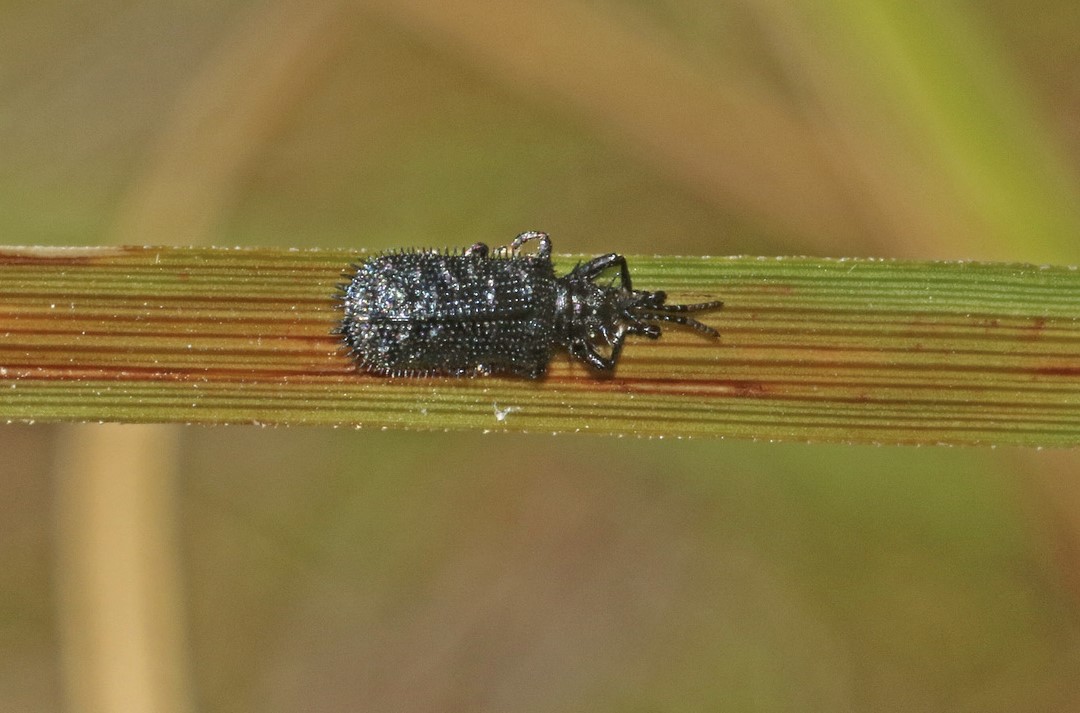
- Spiky Leafbeetle (Hispellinus sp.): like most members of the genus they are leaf eaters (as their common name suggests!)
- Green Lacewing Eggs (Family Chrysopidae): the female Lacewing lays her eggs on stalks so that the aggressive larvae don’t immediately eat each other when they hatch.
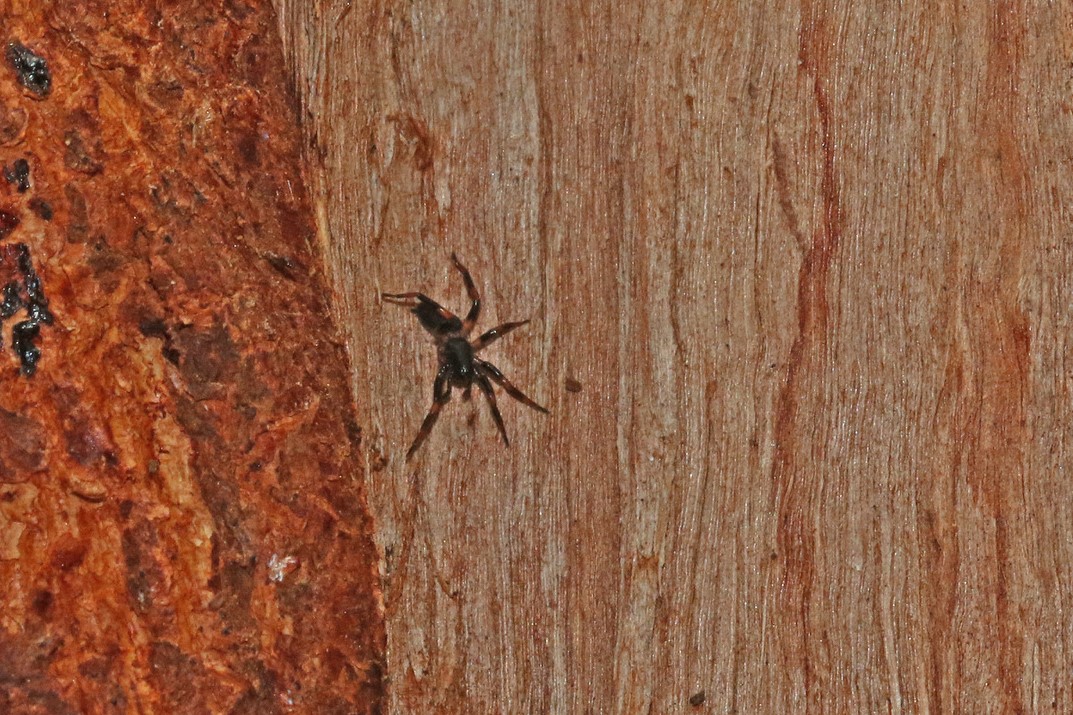
- Ground or Gnaphosoid Spider (Family Gnaphosidae): spiders in this grouping are active hunters, generally running prey down and then subduing it by entangling it in silk.
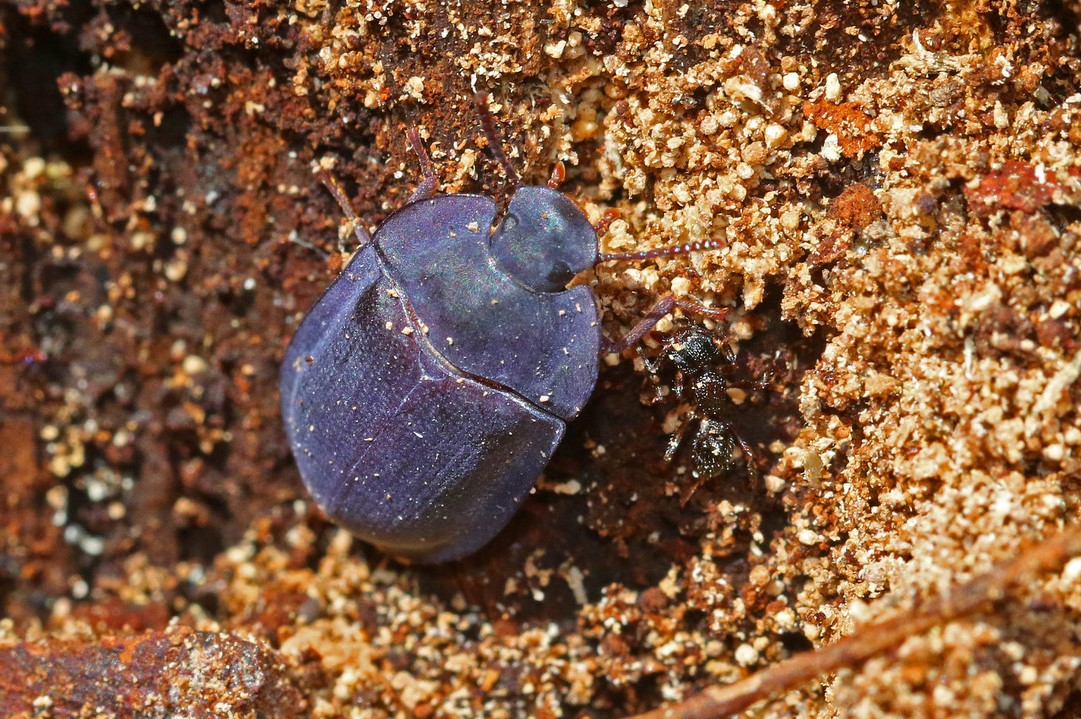
- Blue Pie-dish Beetle (Genus Pterohelaeus): Pie-dish Beetles are only found in Australia. They are usually found under loose bark on Gum trees. They mainly feed on decaying vegetation and animal dung.
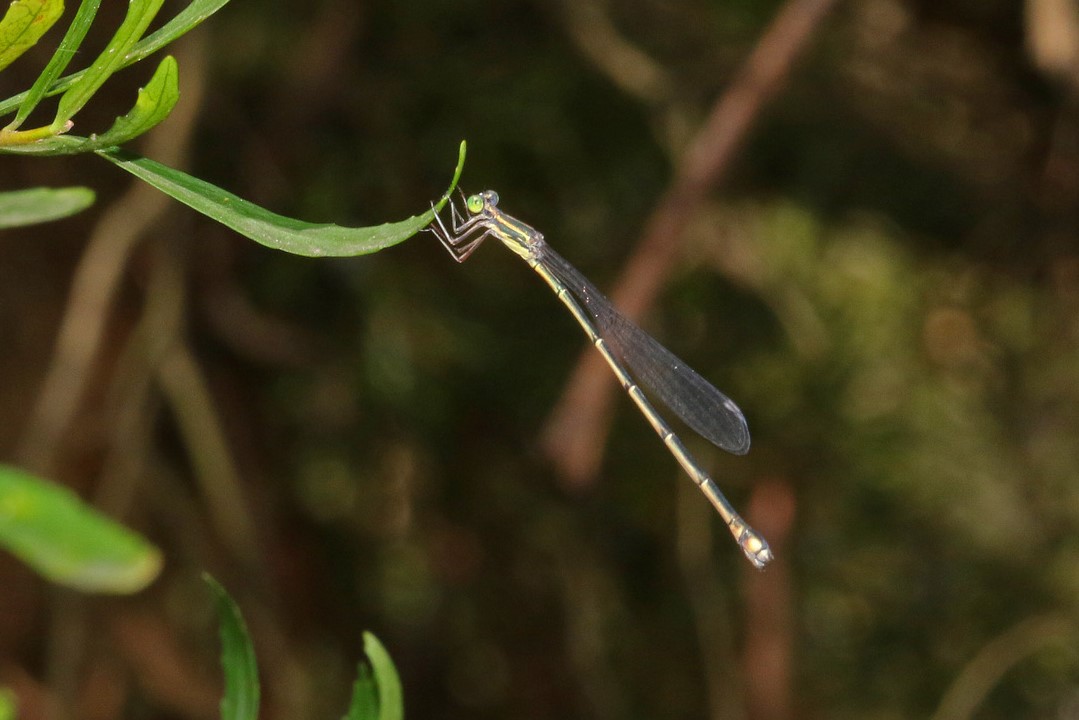
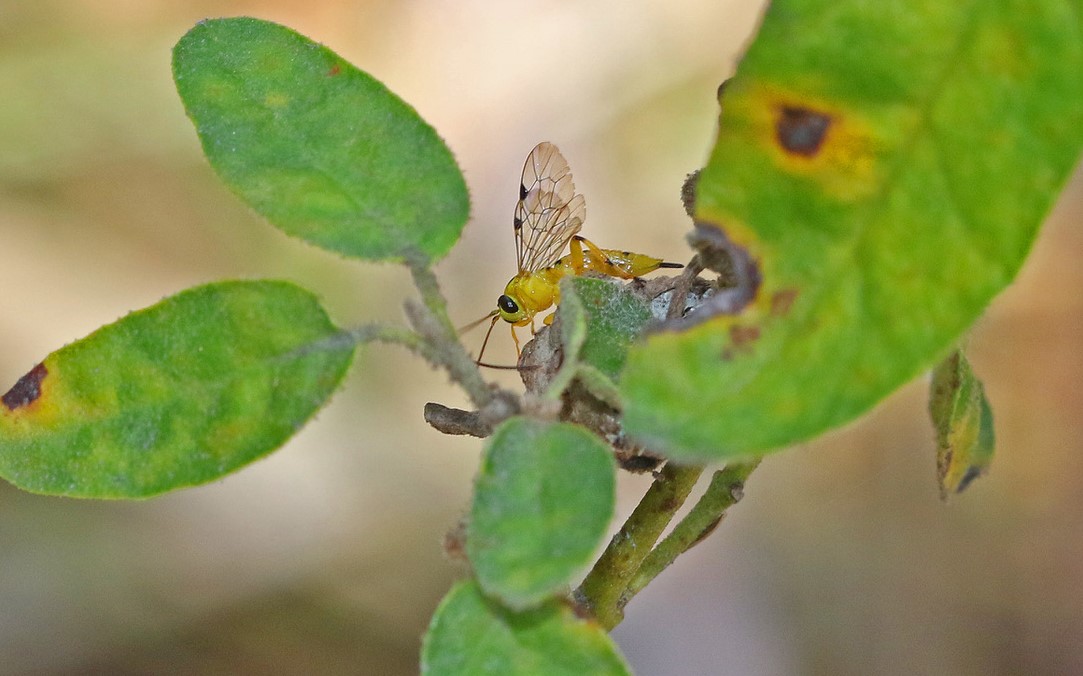
- Yellow-banded Leafroller Parasitoid Wasp (Xanthopimpla rhopaloceros): these small wasps prey on the caterpillars of a number of small ‘leaf roller’ moths, and can therefore be helpful in pest control.
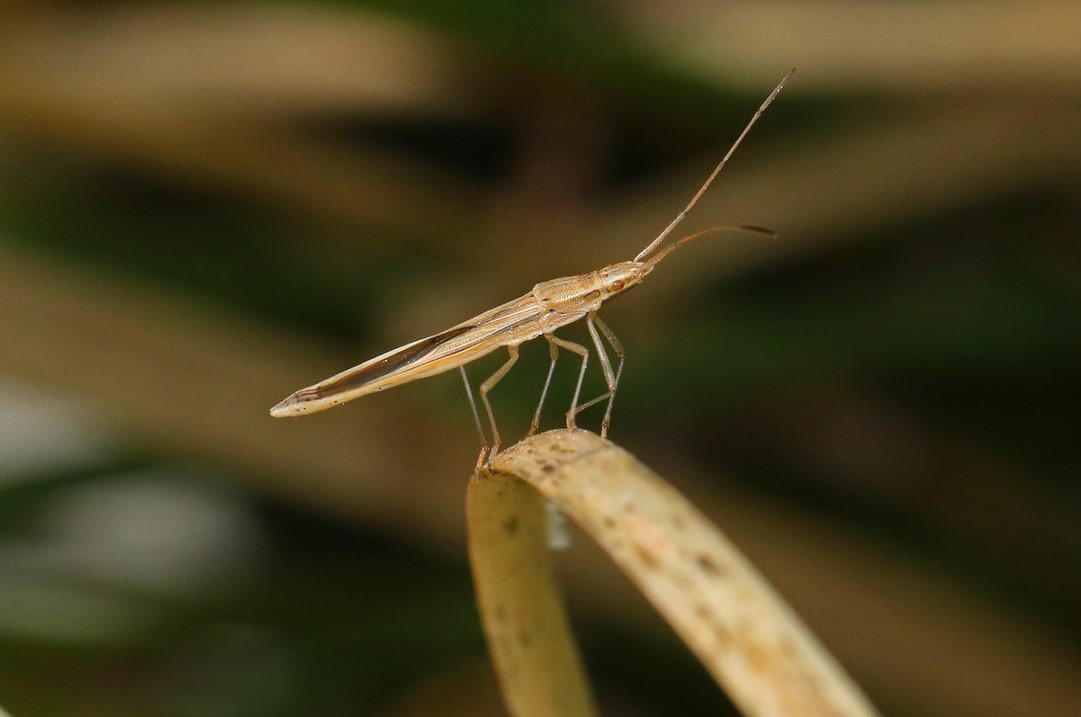
- Long Broad-headed Bug (Mutusca brevicornis): these rather common, but often overlooked, members of the ‘bug family’ Hemiptera, feed by sucking fluid out of plants using their long proboscis.
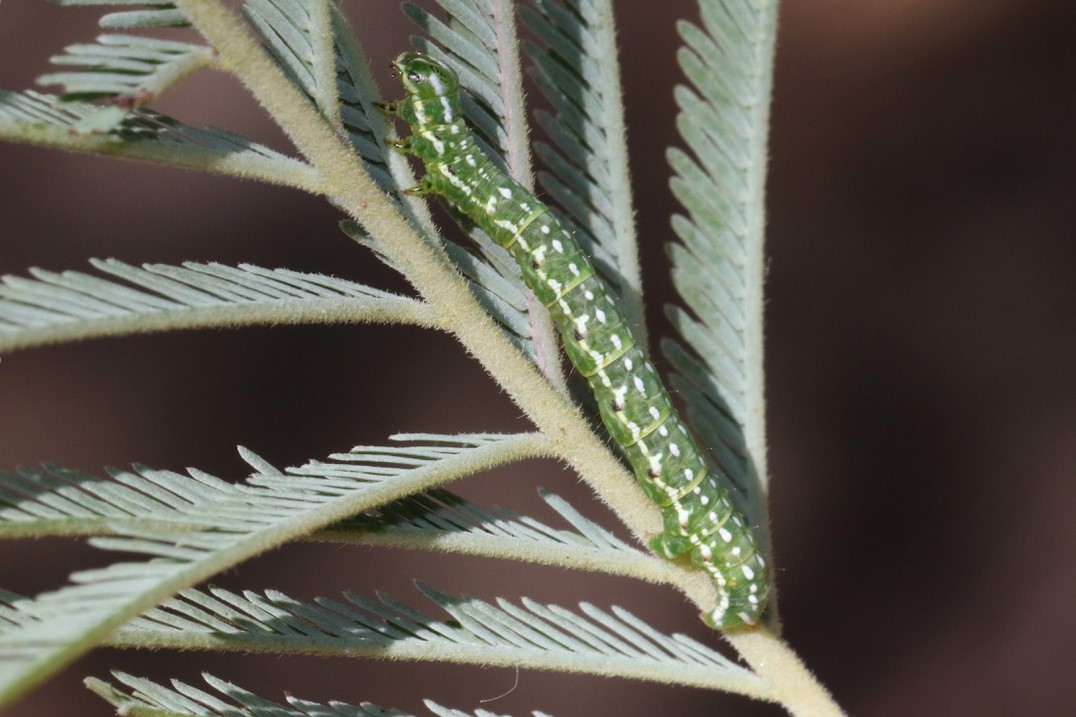
- Dashed GeometridMoth caterpillar (Dissomorphia australiaria): the caterpillars of this common small moth feed mainly on local Wattle leaves.
Blacks Walk
Ian says:
As with all the others, these were all taken on one day and I was attempting to highlight just some of the things a person strolling through the park might come across in late Summer or early Autumn. I resisted the urge to include better photos of some of the critters, because I wanted them to be all ’shot on the day’ and ‘local’.
Truly amazing – here they are:
Please click on image to enlarge; click on the X to return
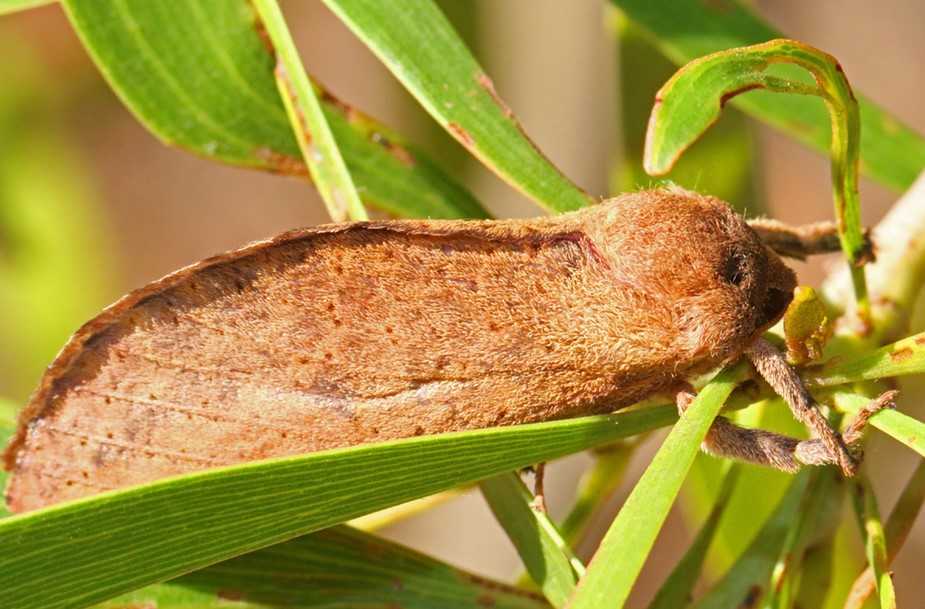
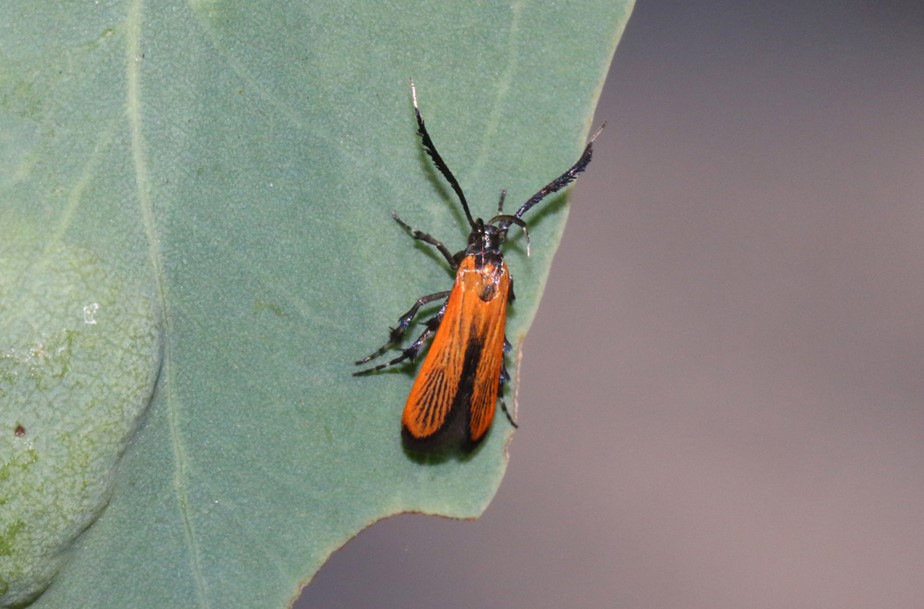
- Swift or Ghost Moth (Elhamma australasiae): a member of Swift or Ghost Moths family. This female is one of several local moths that, as caterpillars feed on the roots of plants. They emerge as adults in Autumn, leaving behind a distinctive empty cocoon that can often be found sticking out of the ground after rain.
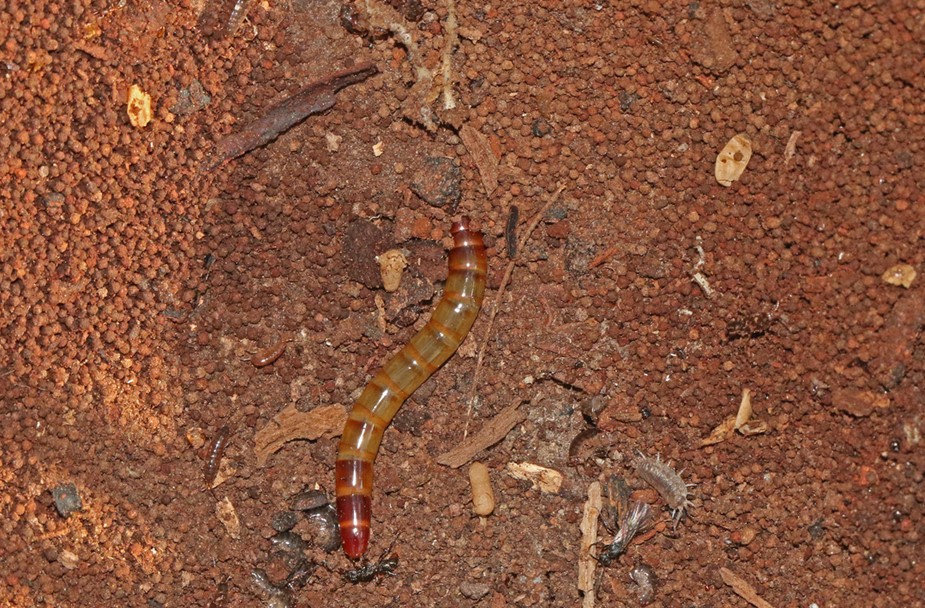
- Darkling beetle larva (Meneristes australis): a member of the large group of beetles known as Darkling beetles. The larvae can often be found under partially rotten logs.
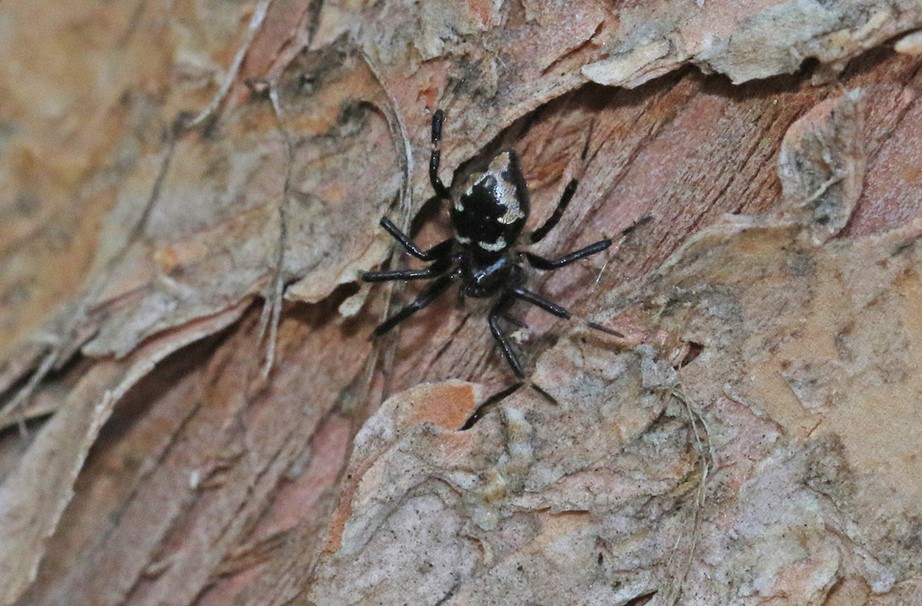
- Ant-eating Spider (Euryopis sp.): these small spiders, as their name suggests, hunt ants. They operate under or on the bark of Gum trees.
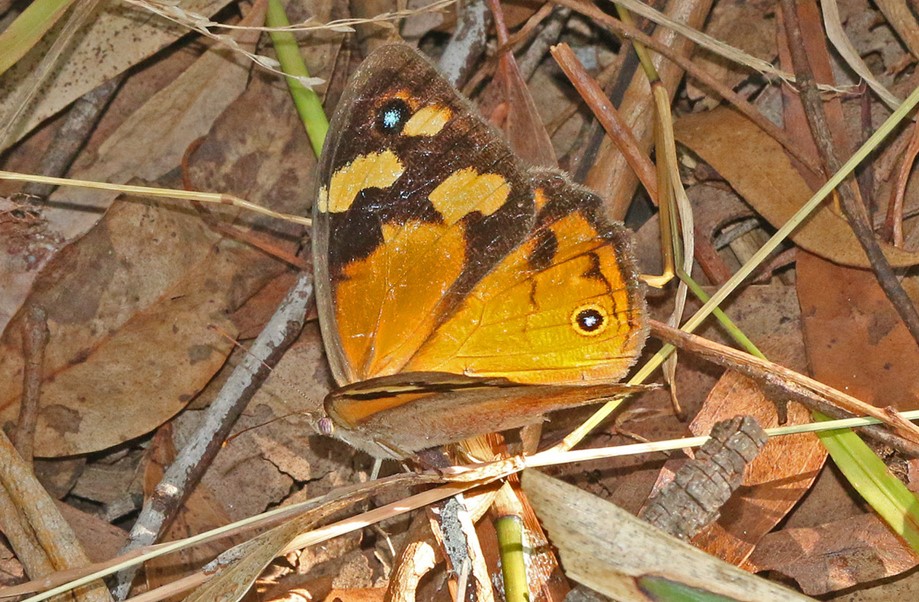
- Common Brown Butterfly (female) (Heteronympha merope): these are very common butterflies in the warmer months. Males are usually abundant from October to late January whereas females are more abundant from December to late March. Their caterpillars eat various local grasses.
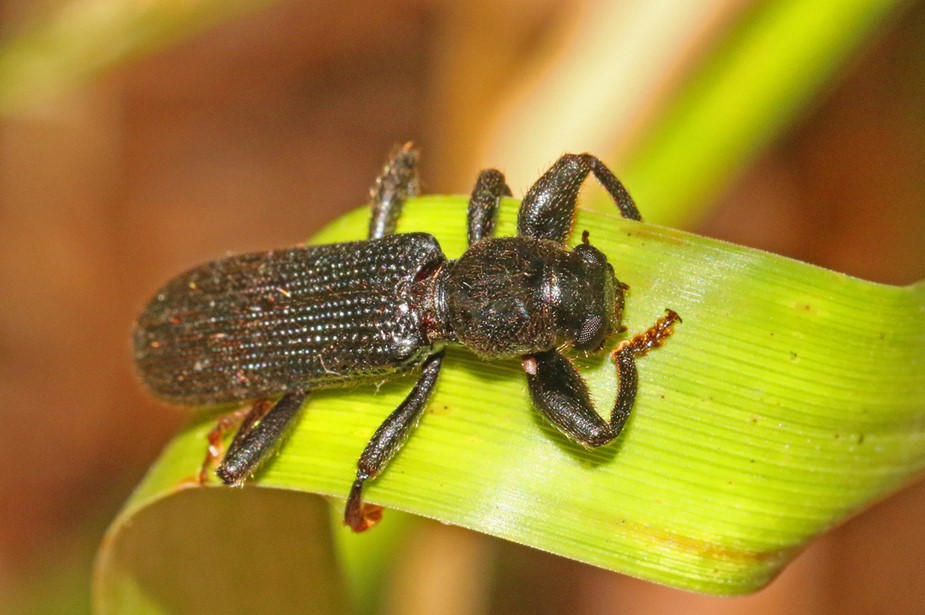
- Clerid or Chequered Beetle (Eunatalis sp.): these beetles feed on the larvae of wood boring insects, often another species of beetle.
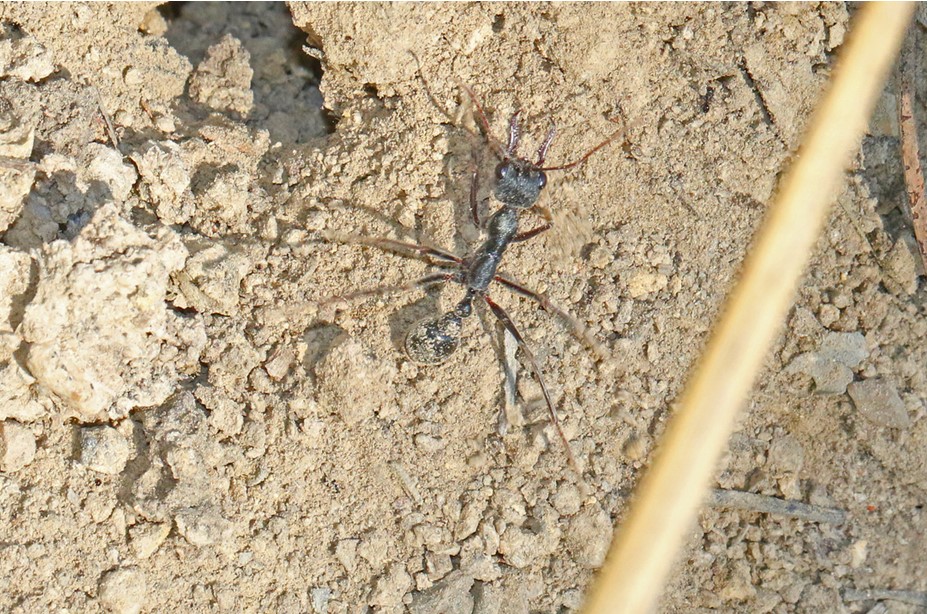
- Bullant or Inch Ant (Myrmecia pyriformis): one of our largest ants, they eat a wide range of food from nectar to other insects. They have a painful sting which can be serious if a person has anaphylaxis.
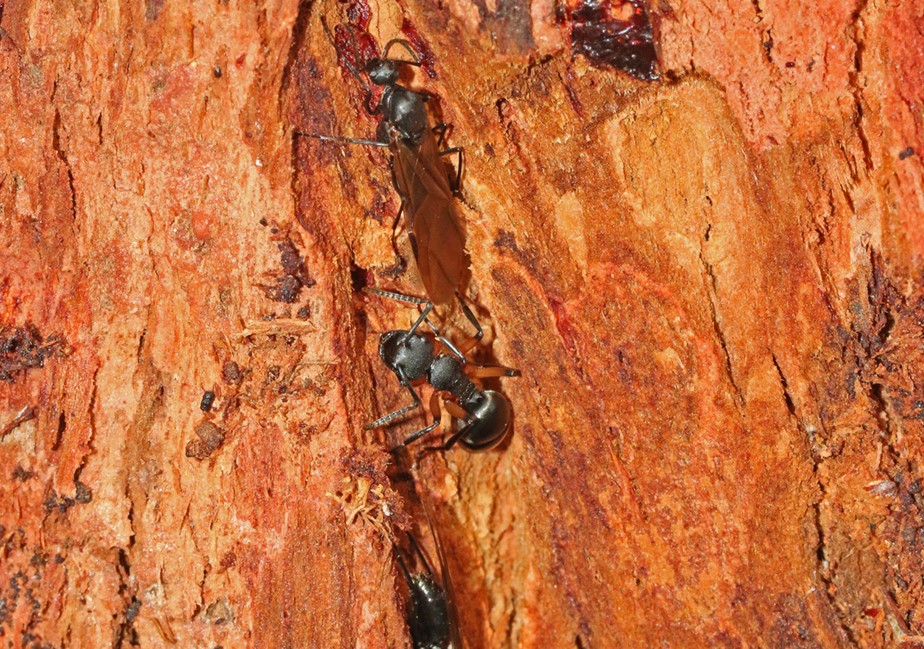
- Southern Broad-nosed Spiny Ant (Polyrhachis femorata): these distinctive ants are found over much of eastern Australia. They are often found under bark on trees. They feed on a wide range of food, including plants and insects.
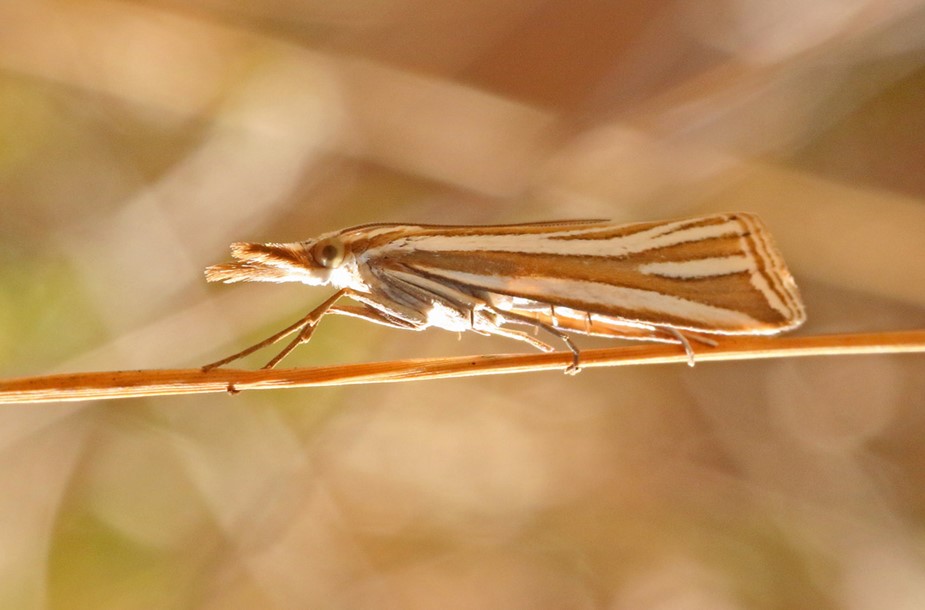
- Grass Moth (Hednota relatalis): common over much of SE Australia, the caterpillars feed on various grasses, and can be pests sometimes for farmers growing cereal crops.
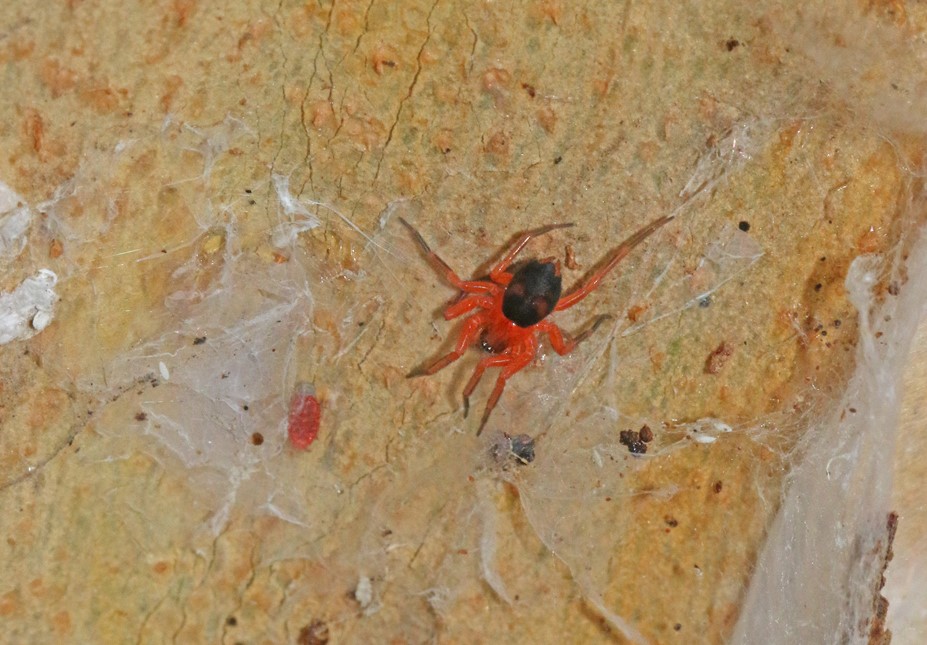
- Comb-tailed or Dwarf Sheet Spider (Scotospilus sp.): a member of the typical Comb-tailed or Dwarf Sheet Spiders. Often found under bark, these spiders spin a very delicate web that looks like a sheet.
- Lycid-mimicking Moth (Snellenia lineata): this moth pretends to be a Lucid beetle, which has a very bitter taste, so the birds will not attack it.
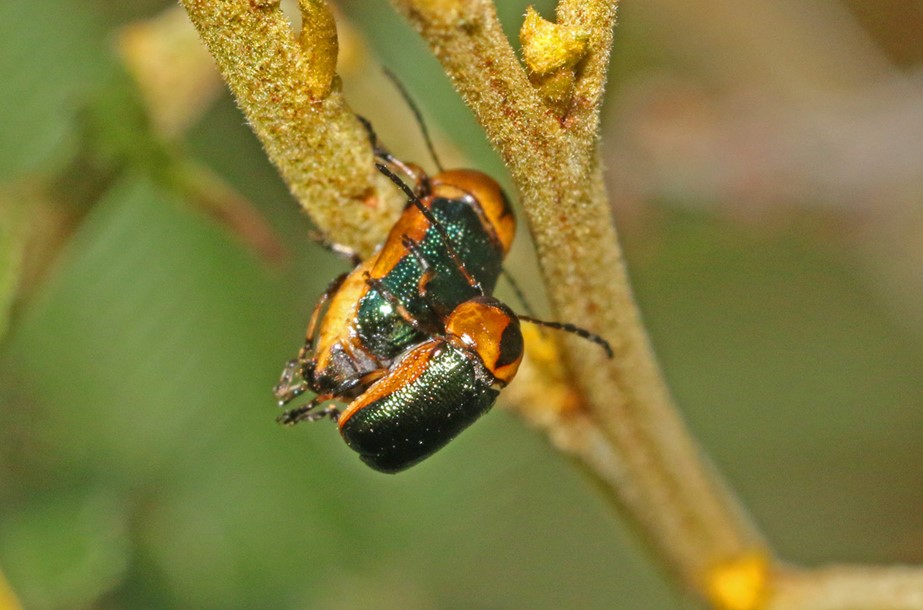
- Case-bearing Leaf Beetle (Aporocera consors): they feed on Eucalyptus leaves.
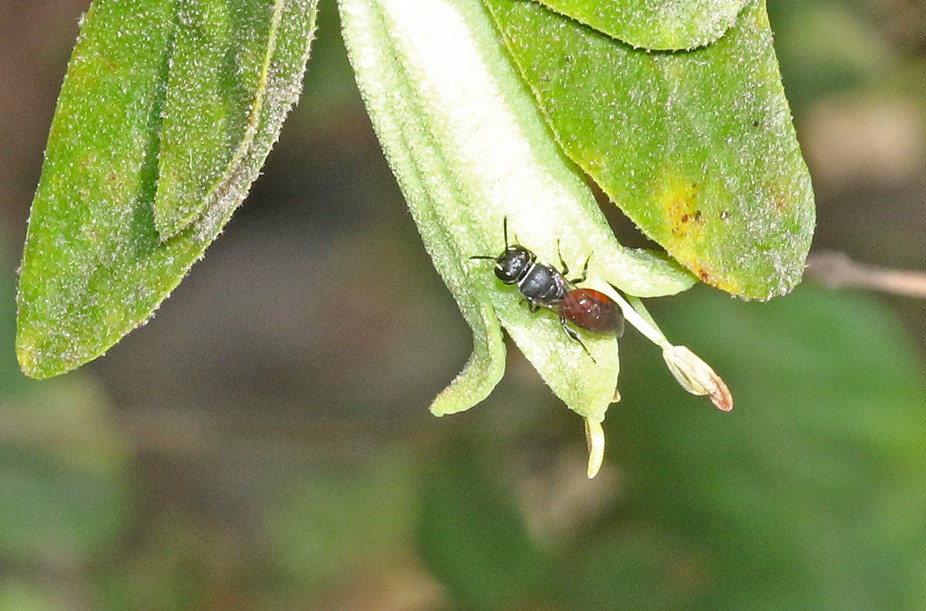
- Littler’s Masked Bee (Hylaeus littleri): this is one of the less common of our many, many local bees.
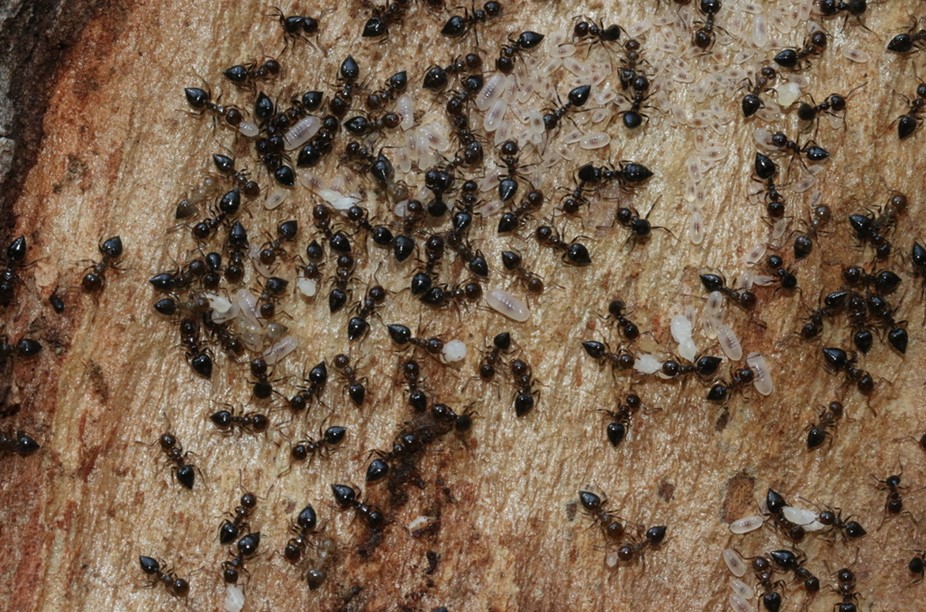
- Acrobat or Cocktail Ants (Crematogaster sp.) a member of the Crematogastrin Ants. They prey on other insects including wasps and other ants.
- Gum Tree Scale (Acanthococcus coriaceus): these small sap sucking insects mainly attack Gum trees. They exude a sweet sticky substance that ants like, but which can also lead to sooty mould.
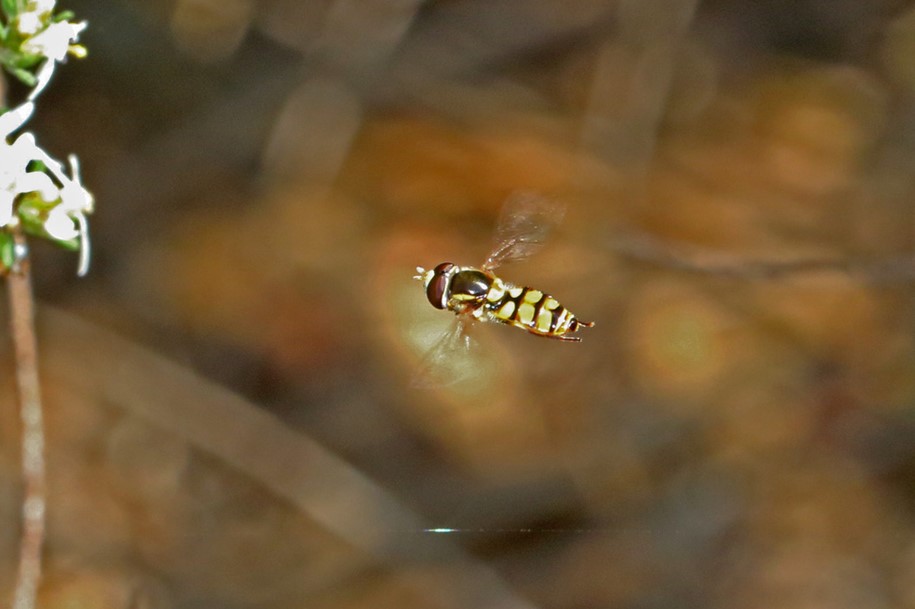
- Yellow-shouldered Stout Hover Fly (Simosyrphus grandicornis): these small little flies not only look like bees, but they are also very important pollinators of many local native plants. Their larvae prey on aphids.
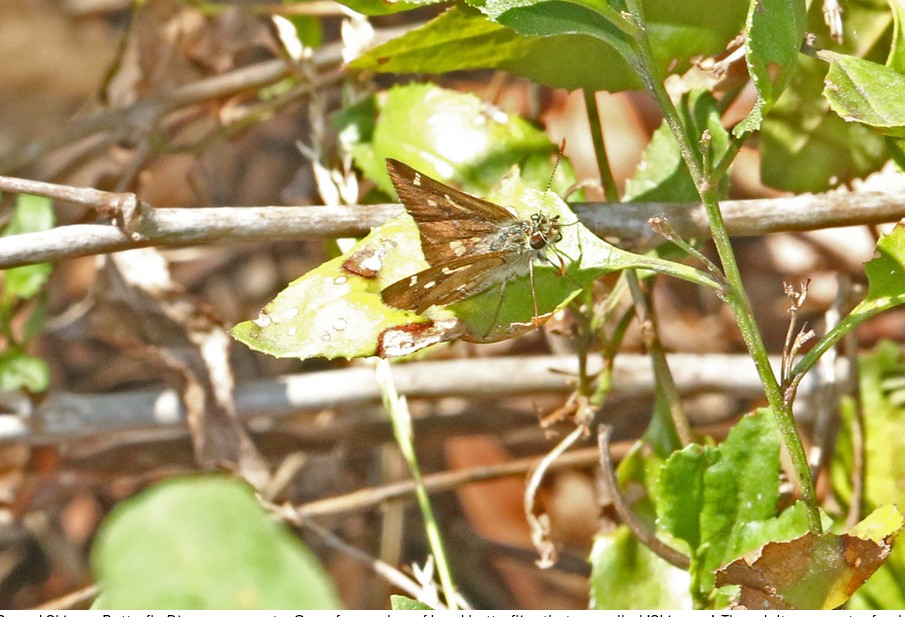
- Barred Skipper Butterfly (Dispar compacta): one of a number of local butterflies that are called ’Skippers’. The adults are nectar feeders, while the caterpillars eat a range of local grasses, Gahnia and Lomandra.
Yet more from Blacks Walk
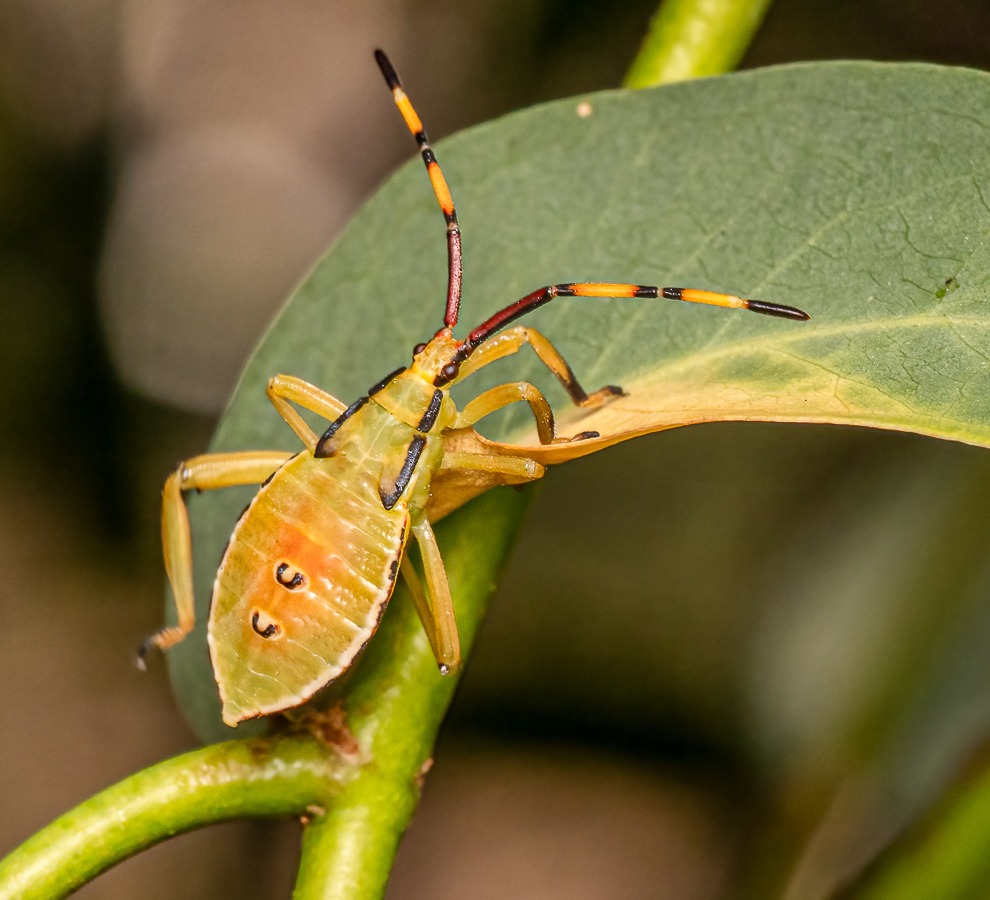
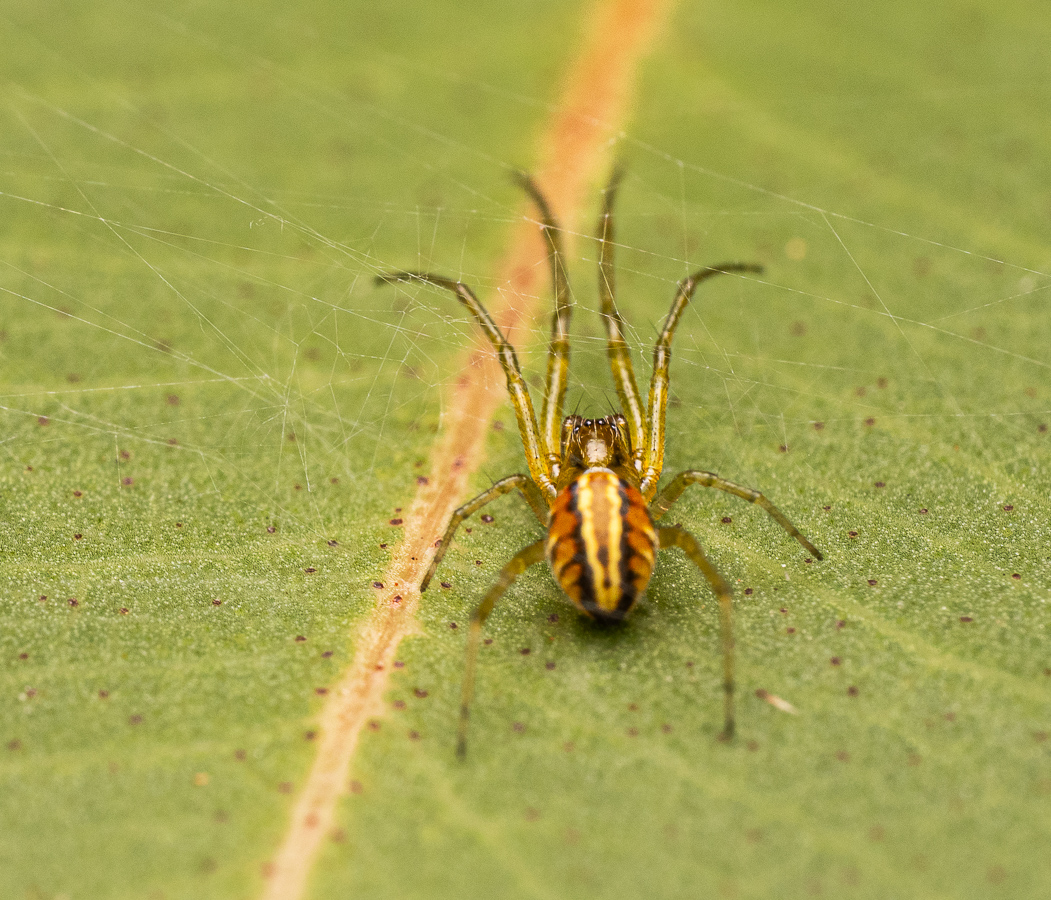
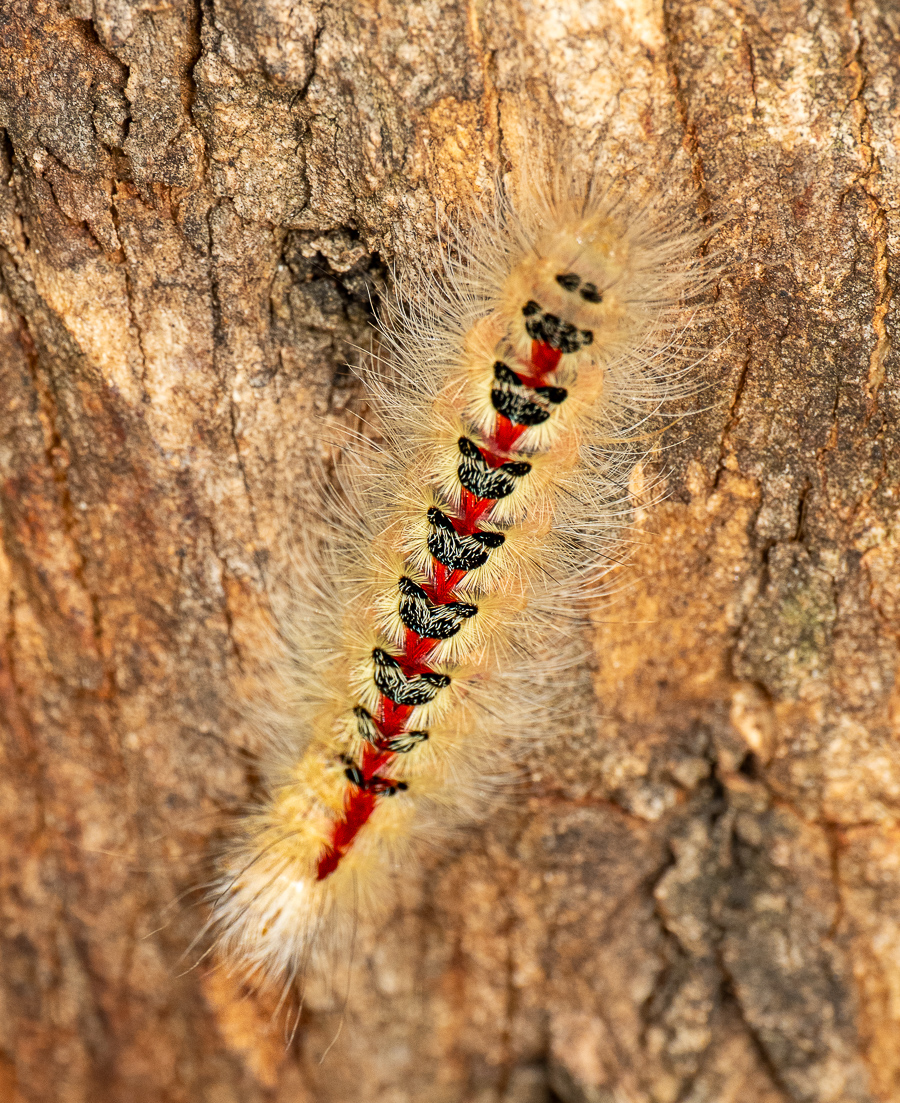
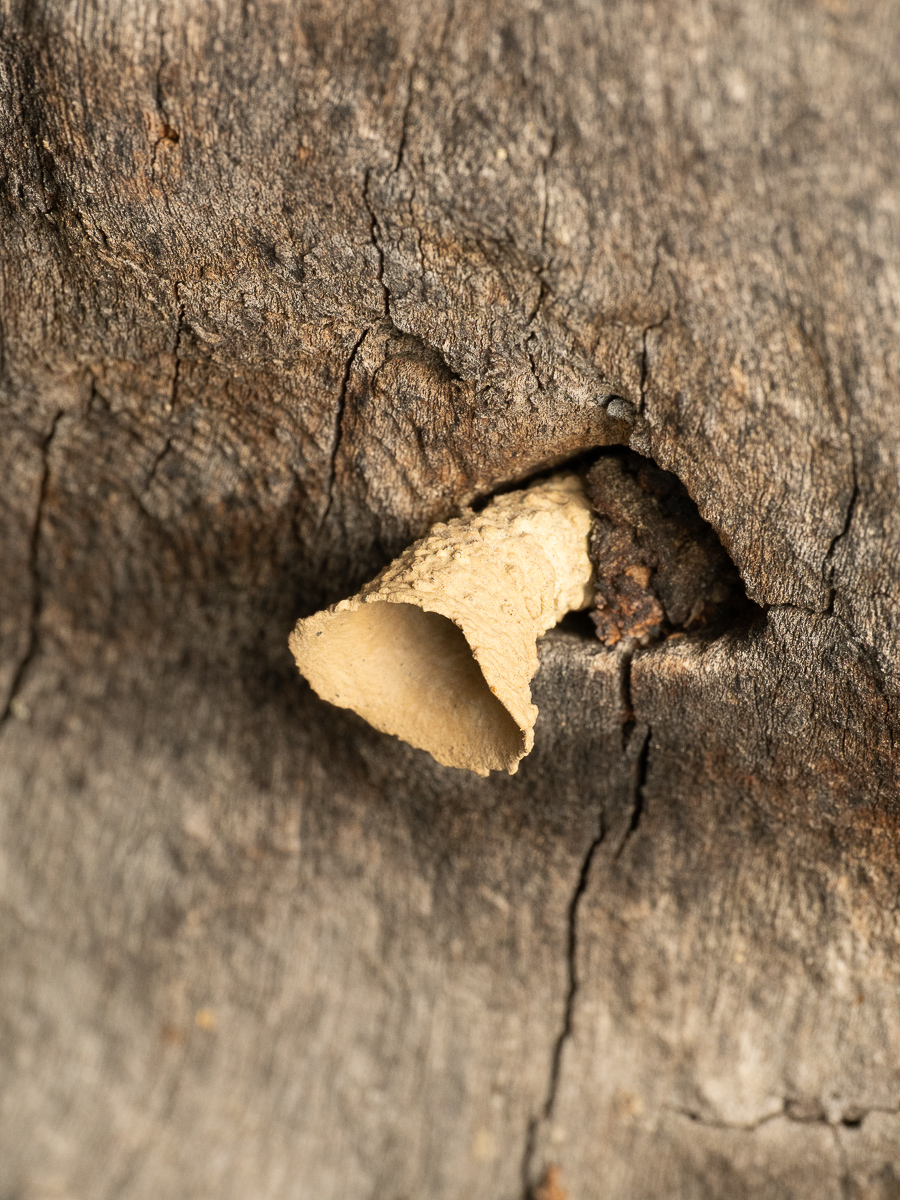
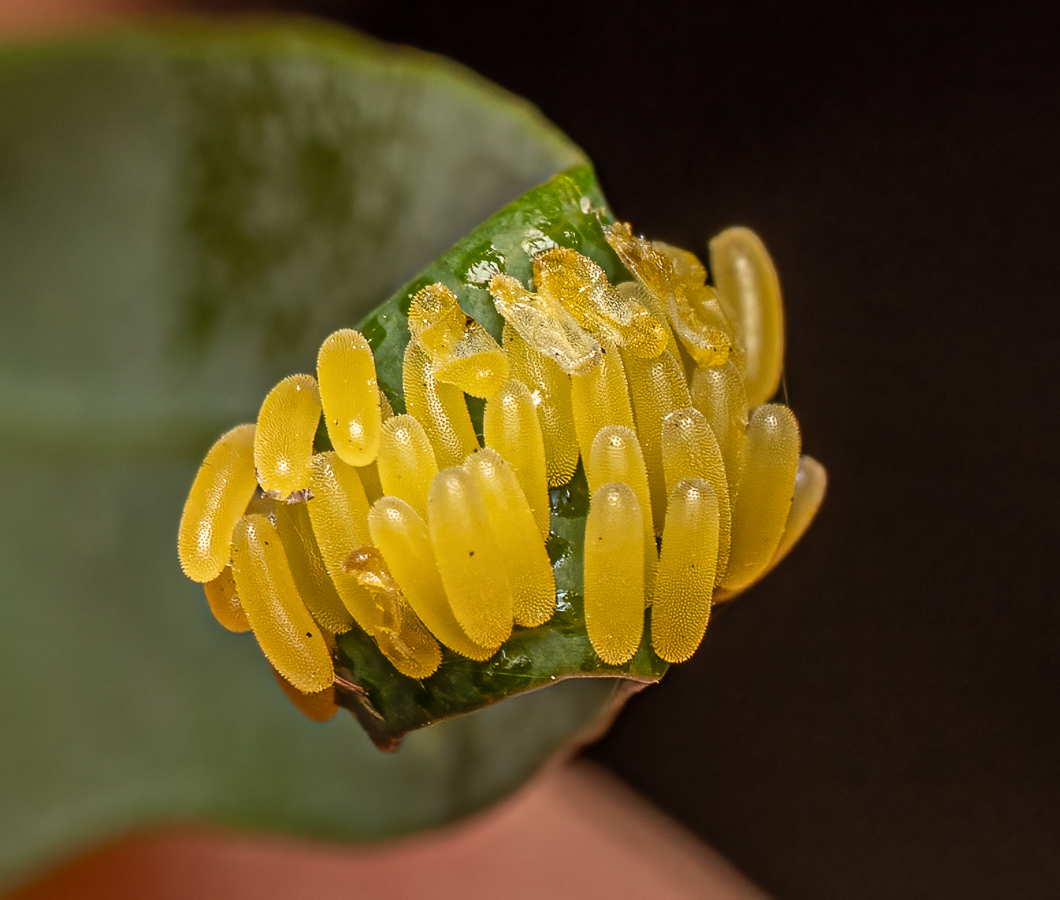
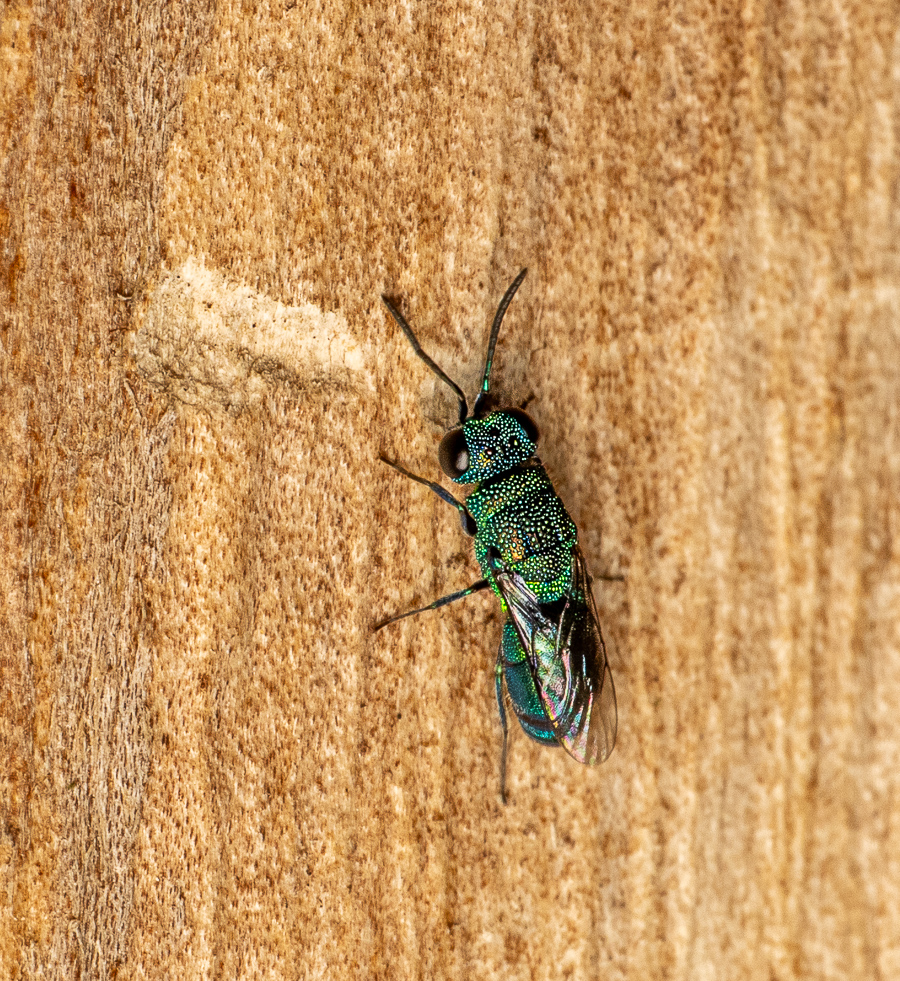
We thought we’d also include these photos Ken recorded in Blacks Walk late February. It was part of an excursion by the Field Naturalists Club of Victoria (their rooms are in Blackburn) led by Wendy who has helped us a lot with identifying invertebrates over the years. As Ken says, it is interesting what was found in a restricted area in just an hour and a half:
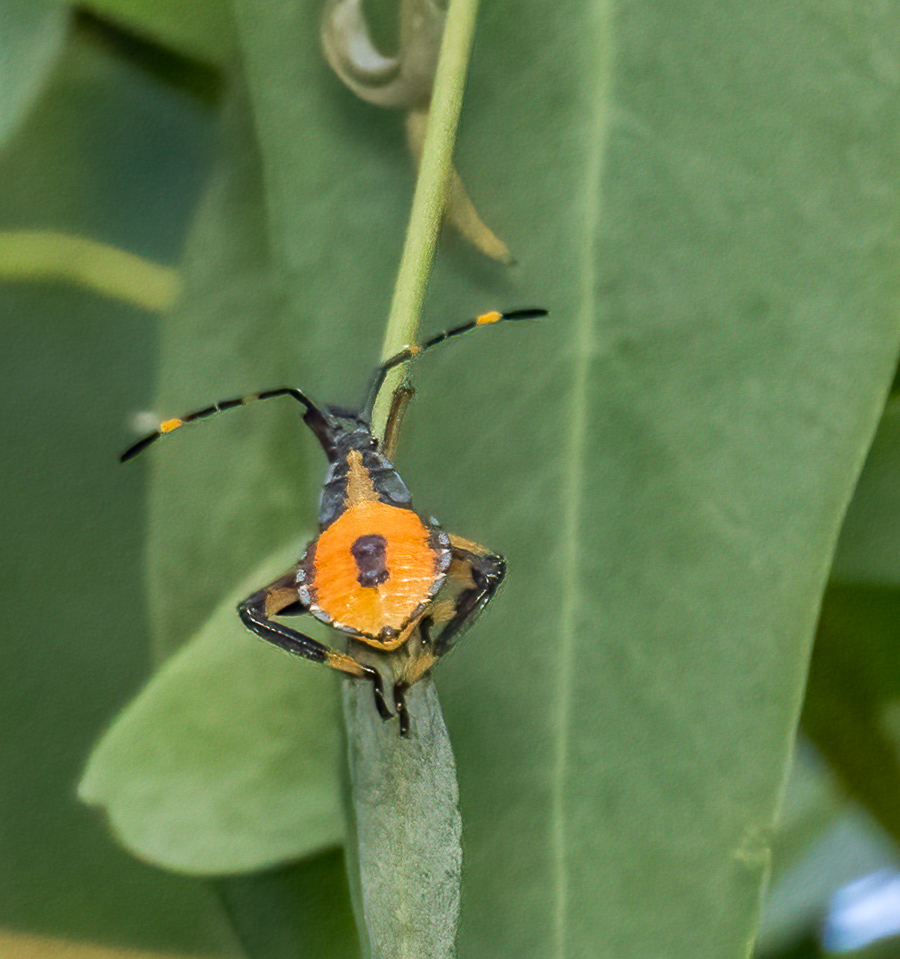
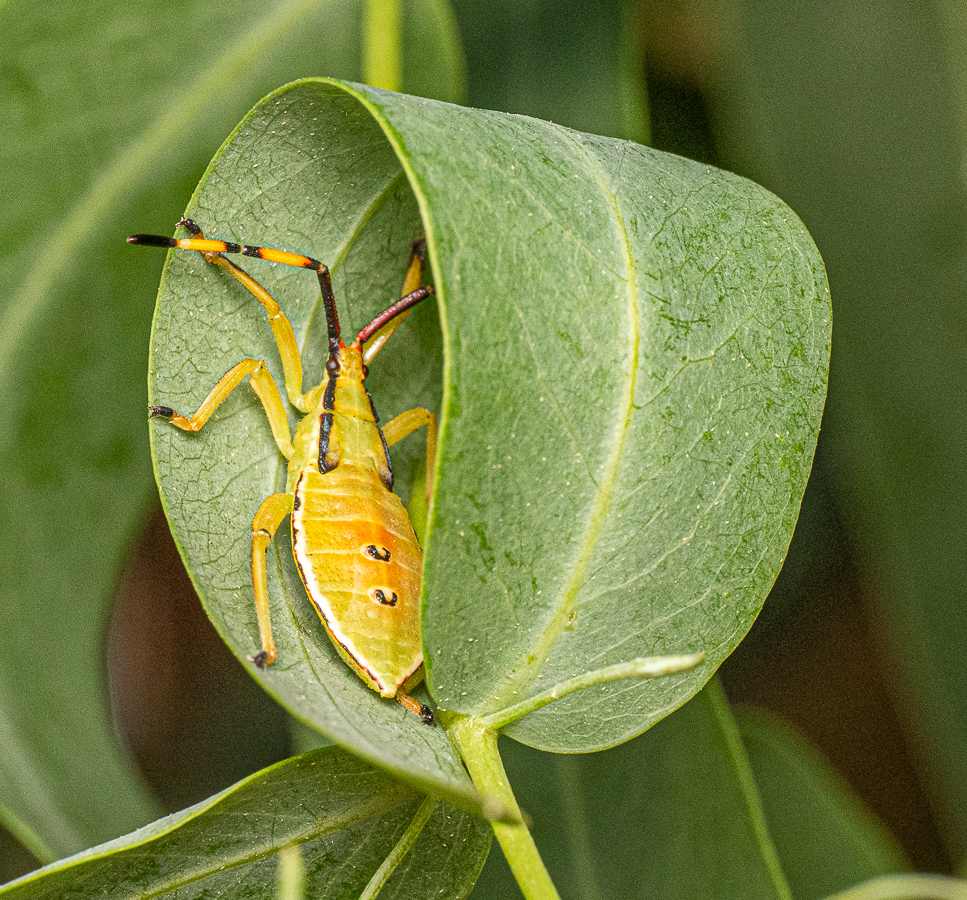
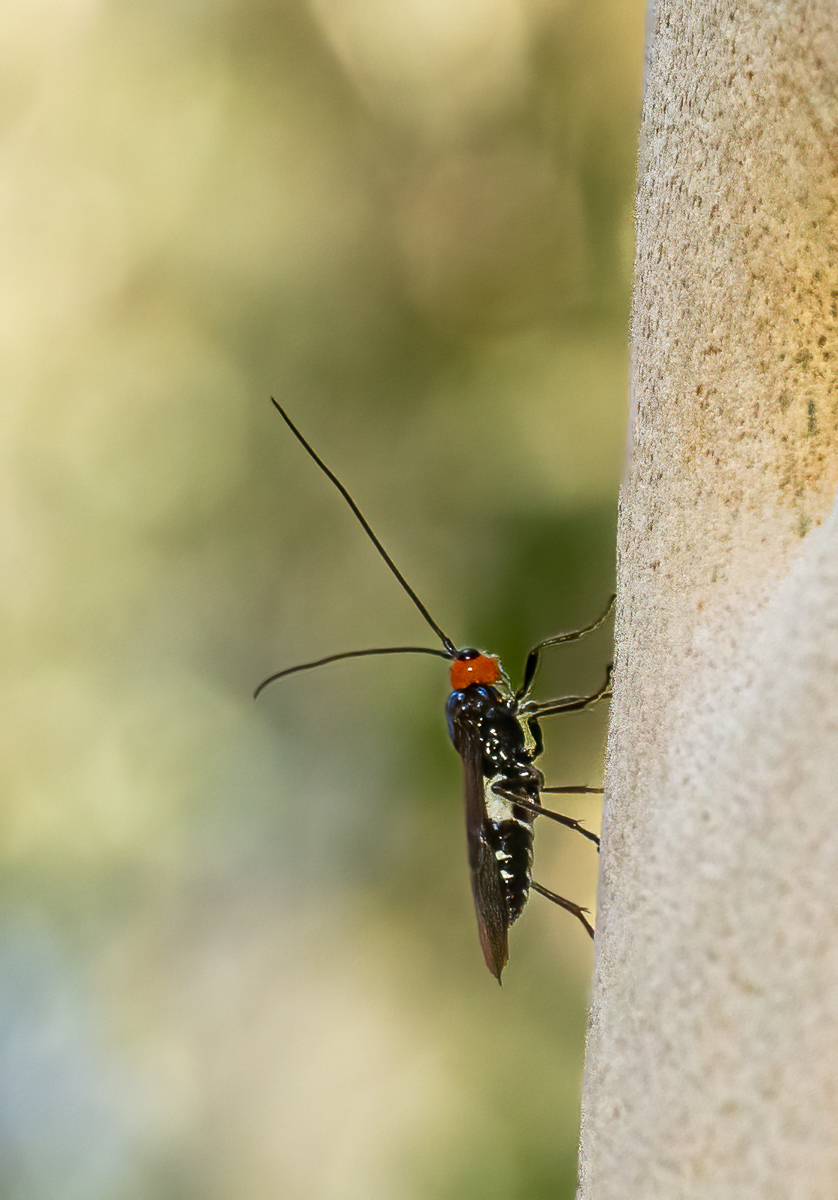
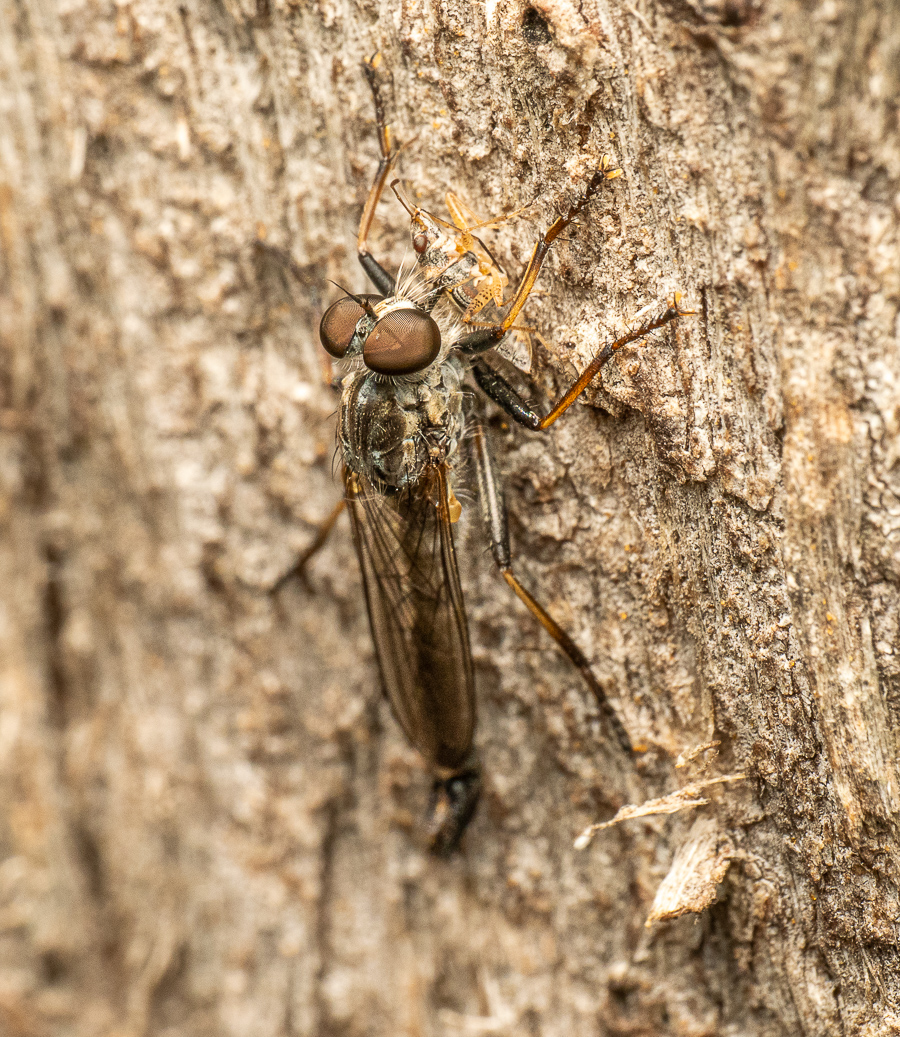
Please click on image to enlarge; click on the X to return
Pied Lacewing (Porismus strigatus)
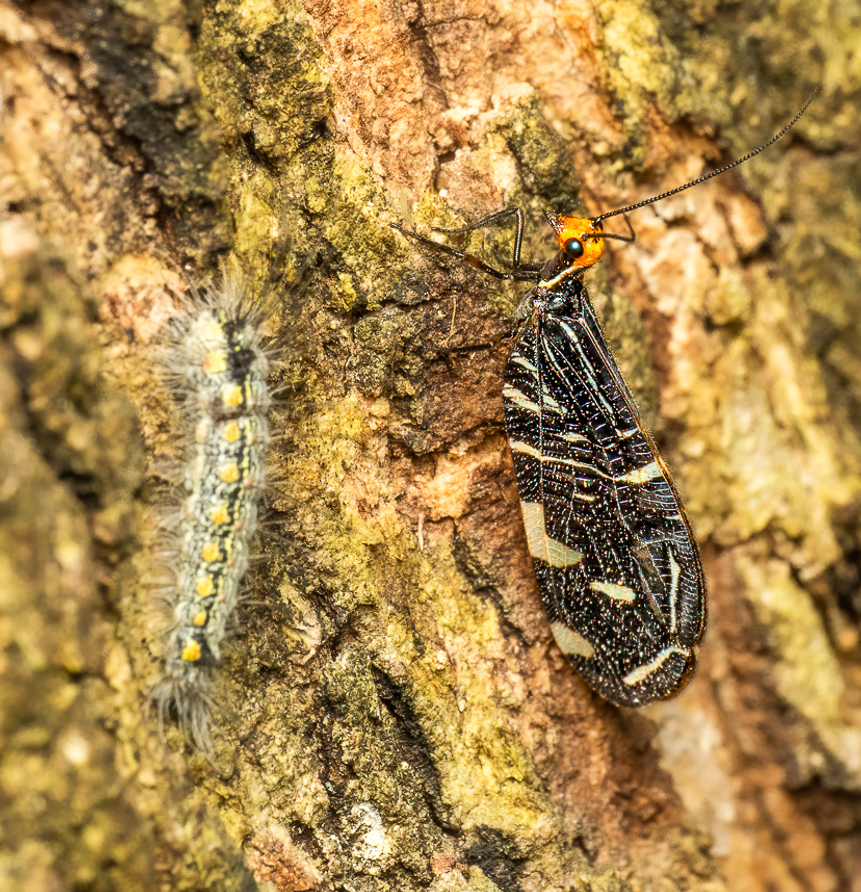
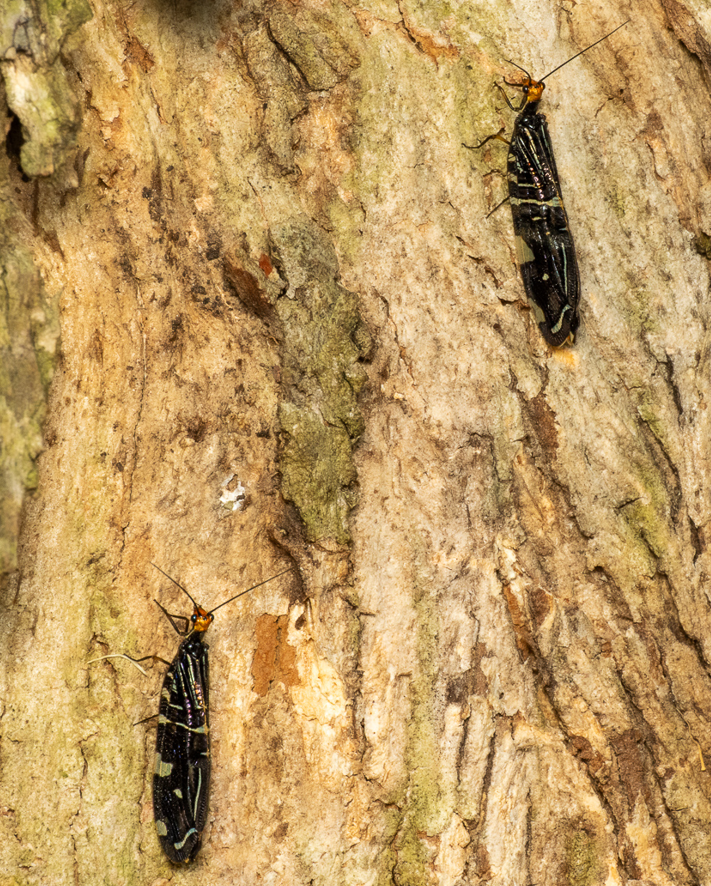
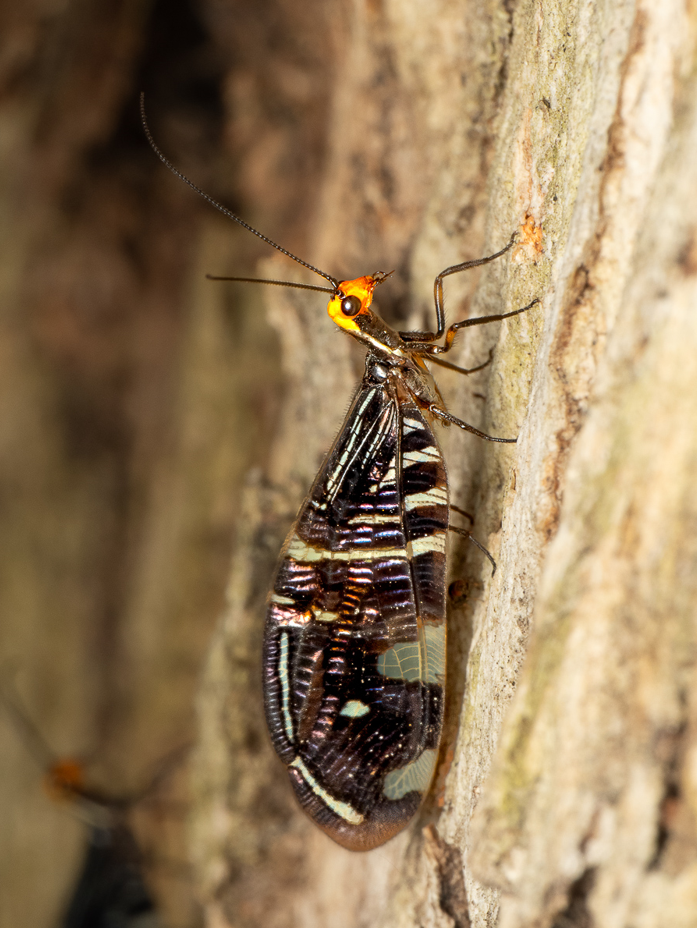
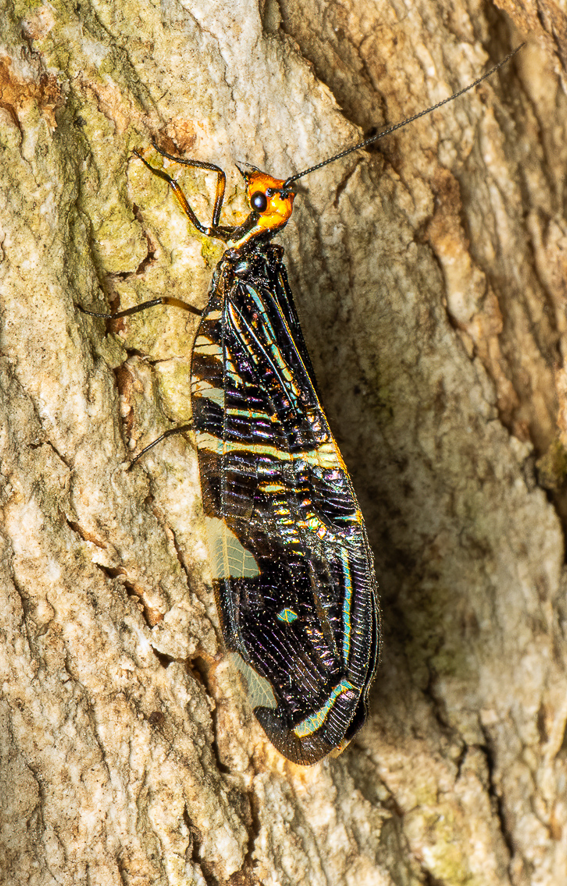
While we’re on the subject of invertebrates, Ken discovered a new species for the park – the Pied Lacewing (Porismus strigatus) – as far as we know – not seen in the park before. Clearly, this species is not content with the all-green camouflage – Ken’s photo has picked up almost an opalescence. Here are the photos he took at the time (photobombed by a caterpillar!):
In Ken’s words:
This unusual insect is a Pied Lacewing (Porismus strigatus), was found in mid-March in Blacks Walk. While it is widespread in the Southeast of Australia, there are only 285 records in the Atlas of Living Australia* records for Victoria. It is thought to be the first time it has been observed in our Creeklands.
The name Lacewing derives from the wings appearing lace-like and often transparent. The one that is most often seen is green (Green Lacewing) and the other one that is often overlooked is small and brown, (Brown Lacewing) on both body & wings. The Pied Lacewing, however, has particularly strong markings with steel blue/black wings with white patterns. The larvae of the Green Lacewings are commonly known as antlions. Lacewing adults and larvae are both predatory, eating soft-bodied insects like aphids and scale-insects, so they certainly benefit human agriculture.
It is not unusual to find them in pairs like our photo. The caterpillar shown on the same tree is not related to the Lacewing but rather a caterpillar of the Clouded Footman moth.
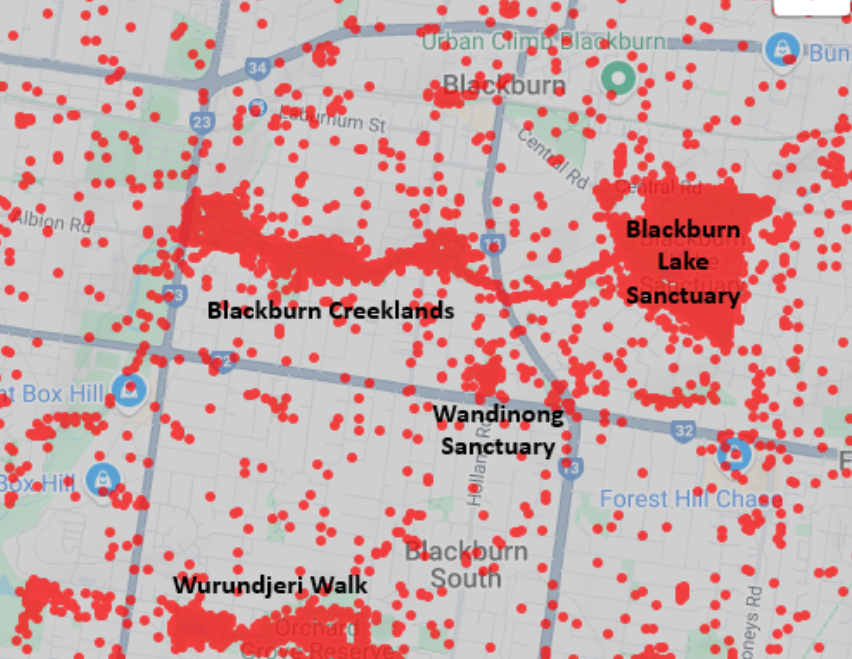
*The Atlas of Living Australia (ALA) is hosted by CSIRO and is an online repository of information about Australian plants, animals and fungi – sightings in particular. It is accessible to all and shares iNaturalist sightings as well as historical data going back to 1850. If you’d like to search the ALA records for the City of Whitehorse please click here.
Autumn Bird Walk – Saturday, 26th April 07:30
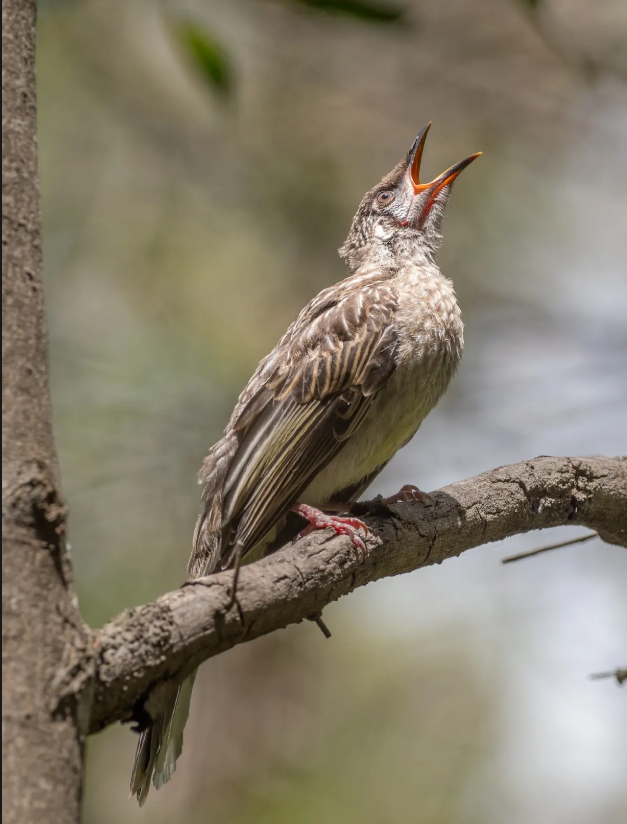
Our regular Autumn Bird Walk is all set for Saturday, 26th April at 07:30 at the Scout/Guide Hall.
Our event is designed for people of all ages and experience – everyone is welcome including beginners.
Ian Moodie, who supplied much of the invertebrate photos and information in this edition, and Pat Bingham from Birdlife Australia are simply brilliant guides – you are guaranteed to have fun and also learn something!
Possum Prowl coming up
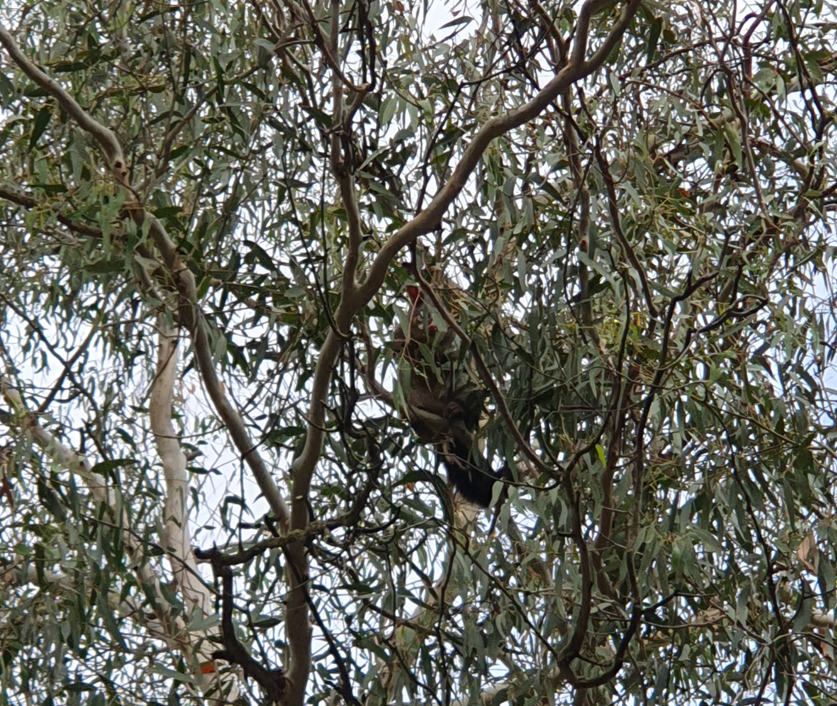
This Brushtail Possum was calmly feeding in (overcast) broad daylight right above the main track on 23/3 at 10:45 in the morning. Normally nocturnal, our attention to the possum’s presence was drawn by the local birdlife being most upset about its presence. Pied Currawongs and Noisy Miners were doing their best to scare it away via swooping and loud calls – it does look rather like a large cat after all.
It’s easier to find them at about dusk when they emerge from their daytime slumbers. If you’d like to see Possums and, perhaps Krefts Gliders and micro bats, please put our Possum Prowl in your diaries for Friday, 23rd May from 5.30 -7.30 pm with Tanveer from Whitehorse Council. Tickets will be free and managed via EventBrite.
Eucalyptus ID walk with Tony Slater
Your committee is also planning a Eucalyptus Identification walk with Tony Slater on Sunday, 13th July at 2pm. Registration details will be provided later.
More dumping in Furness Park !
Unbelievably, there’s been more dumping in Furness Park – this time along Heath Street:
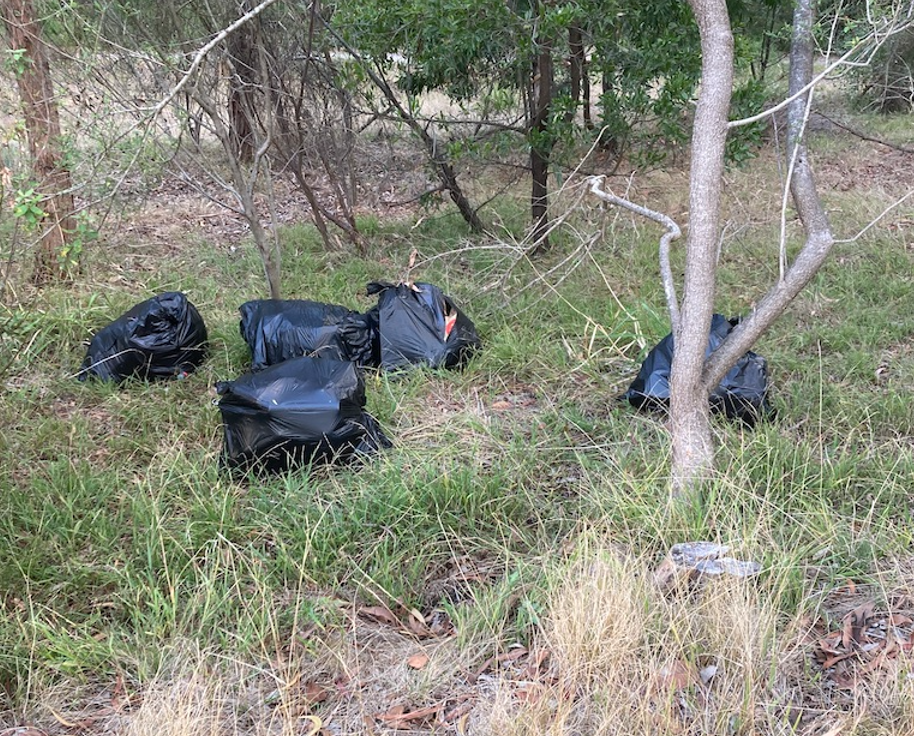
What’s the bet the perpetrator was dopey enough to leave some ID in the bags? Let’s hope so – a fine of up to $10,000 applies…
Yet more planning changes
Our readers will be pleased that the State Government’s roll-out of planning changes seems to have slowed down – with two exceptions. Updated State Rail Loop (SRL) East structure plans for Box Hill and other centres were released early this month and the depressing changes to ResCode have come into effect.
State Rail Loop (SRL) East structure plans
These changes are distinct from the overhaul of the planning system we’ve reported on in recent months. To permit “value capture” for the Government, areas around the new SRL railway station, are under the jurisdiction of the SRL authority. Therefore the SRL is a major property developer/partner, train line builder AND, simultaneously, the sole planning authority for properties originally defined as within 1.6km of the new train stations. This seems a dangerous concentration of powers – we trust that the government avoids the corruption risks seen on other Big Build projects.
“Value capture” is predominantly to occur through rebuilding with higher-density homes (ie blocks of flats). The structure plan includes the Metropolitan Activity Centre formerly managed by Council. Box Hill already has a 50+ storey non-SRL development approved. Here’s how the latest Structure Plan looks:
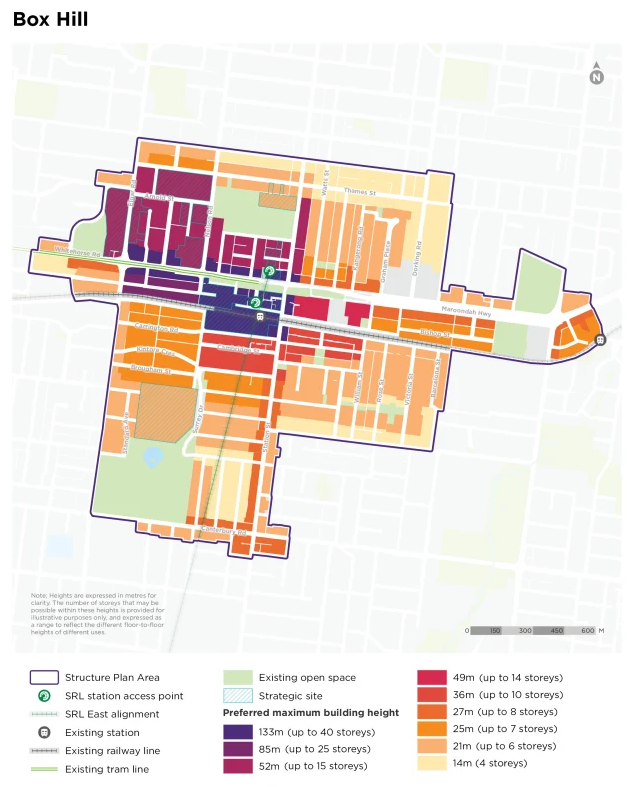
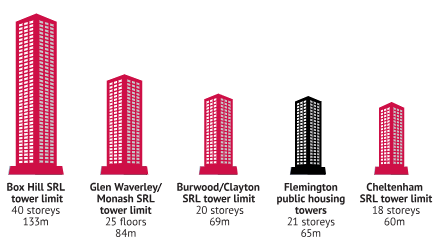
Unlike most SRL Activity Centres, Box Hill is slated for very high rise 40-storey buildings. By way of comparison, Burwood further down KooyongKoot (Gardiners Creek), the limit is 20 storeys and Glen Waverley’s is 25. Here’s how they compare (also showing the Flemington Housing Commission high-rise towers):
When we overlay the new map (March, 2025) over the old (December, 2024) in the slider control – some changes are apparent:
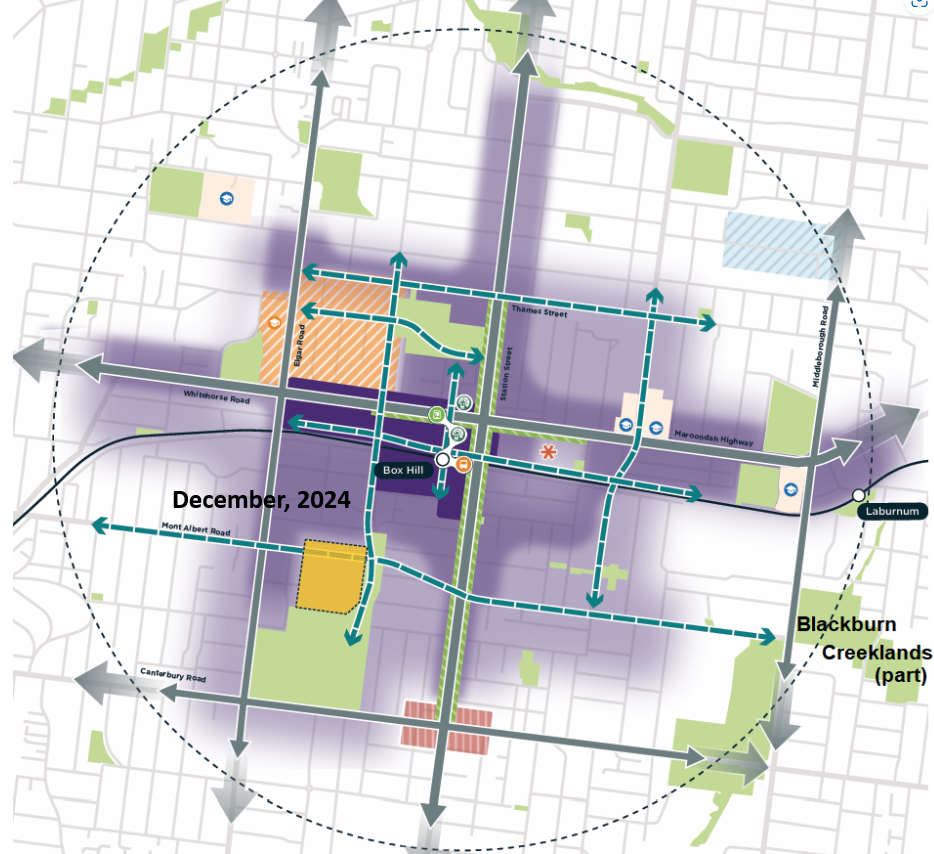
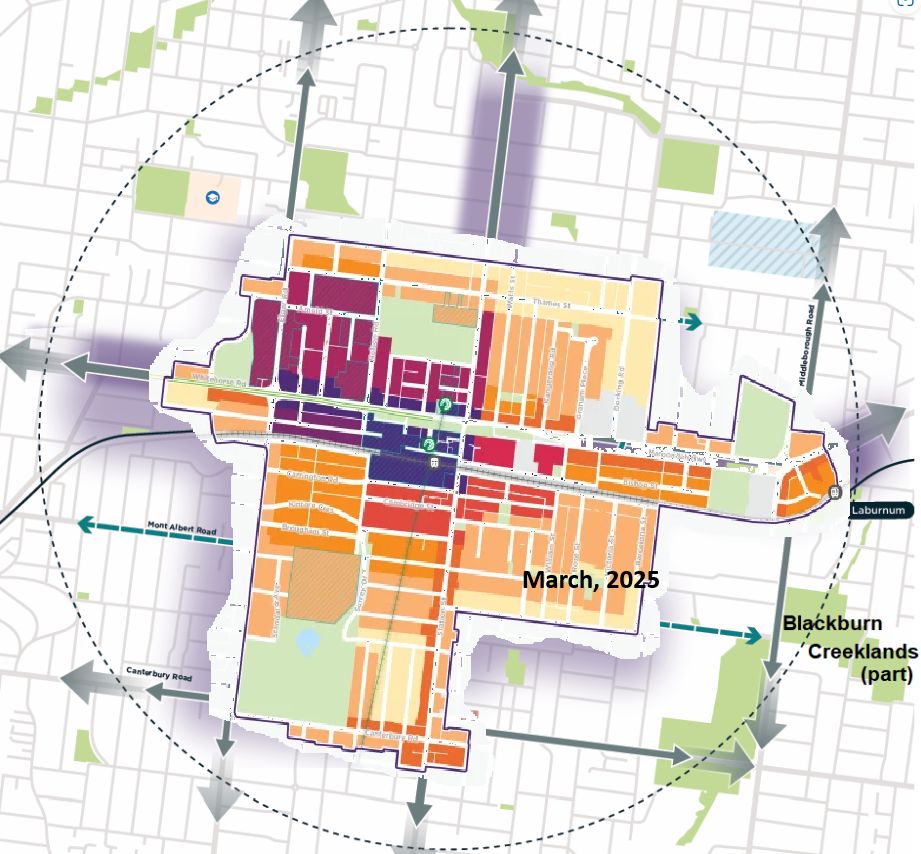
- The “purple haze” of the older version extending along the north-south and east-west major roads seems to have been curtailed by making the boundary definite rather than fuzzy.
- On the other hand, land along Canterbury Road east of Station Street now seems to be earmarked for significant development.
- It is not clear whether the SRLA continues to be the planning authority for areas outside the Structure Plan area but within the 1.6km radius (which was stretched to include the Laburnum Village shopping strip). One would expect the SRLA to retain control (and value extraction!).
- The former Brick Works site remains a development site of significance. It seems the campaign to save the area as valuable green space has failed.
- The related Mont Albert Road extension to join with Albion Street is no longer shown. This modification would be good for the park and the Laburnum Primary School – connecting these roads would have meant even more traffic in Middleborough Road, via Albion Street.
- In general, there seems to be a sufficient buffer around the park to prevent overweening shadowing etc.
You can have “your say” to Council (not the State Government) on the SRL Box Hill draft structure plan via this link: https://yoursay.whitehorse.vic.gov.au/srl .
ResCode changes
The ResCode changes referred to in last month’s newsletter took effect on 31/3. They introduce major changes for flats/apartments of up to three storeys. Developer applications that meet the new ResCode rules will be “deemed-to-comply” and immune from any neighbours’ objections, further Council scrutiny, VCAT appeals etc.
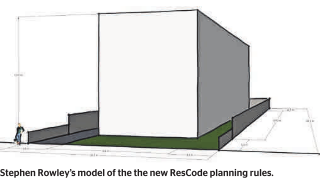
The new rules also remove requirements for developments to align with local neighbourhood character schedules and permit smaller street setbacks, taller walls and greater site coverage. Planners predict that the changes will encourage “sore-thumb” boxy, generic, three-storey buildings which will reshape neighbourhoods all over Victoria. There will be a negative impact on the urban forest.
Our Mayor, Andrew Davenport, is quoted in The Age as warning the code would erode suburb character and lead to bulkier buildings with less greenery – as Dr Stephen Rowley’s model indicates is possible under the new rules.
Hopefully, our Significant Landscape Overlays and Heritage Overlays will remain in force and continue to provide some protection for our local neighbourhoods which would, in turn, help maintain the park’s essential corridor, biodiversity and nature more generally.
Thursday Team
On Thursday 6th March, there must have been some unusual astral alignment – we had a World Record 16 attendees for a Blackburn Creeklands Thursday morning working bee !
Here’s the proof – photo taken by Nicky the 16th attendee:
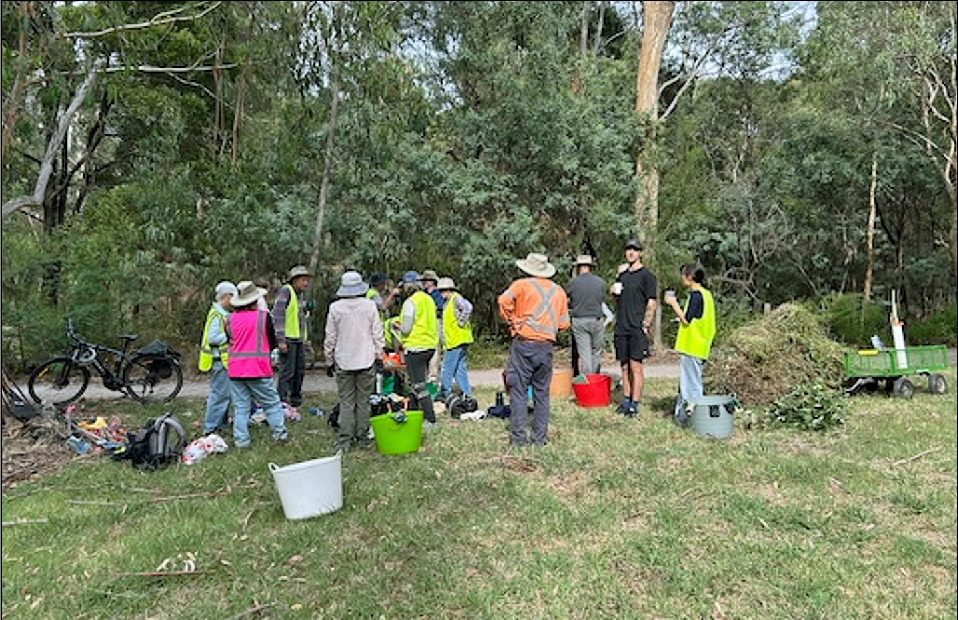
The main activity for the day was a the third instalment of the rollback of the Wandering Trad coming up from the creek in that patch. Lots of normal weeding done too – including inroads into the ephemeral overflow wetland on the creek-side of the path opposite the old Waratah Wetland. Many hands make light work – the enemy was pushed back over the bank to desiccate and smother itself. We also welcomed Louis whose RMIT course requires contact with half a dozen volunteer groups – we were the lucky one on the day.
Pied Currawongs are flocking at the moment – and they saw a golden opportunity for a feed during and after the weed clearance. This is normally the Kookaburras’ job – so there were some interactions:
Turn your speakers on !
The record breaking event made a great start to the month followed by work in Kalang Park near the plaque, then further along the track towards the Billabong, a stint in Blacks Walk all around the Scout/Guide Hall and finally in the Billabong area itself….
Even though our numbers vary from week to week, the trend is that our team has been gradually building over the past 6 months. All are welcome – please let us know if you are interested! If Thursday mornings are a problem for you, our monthly Sunday Community Working Bees restart on June 1st…
It was very nice to welcome back Kath and Tom from Mitcham, they love to come and work with us when they can. Bec is also back with us after some time out.
Sightings
Here are this month’s sightings submitted by our regular contributors including Russell, Ken, Greg and other locals.
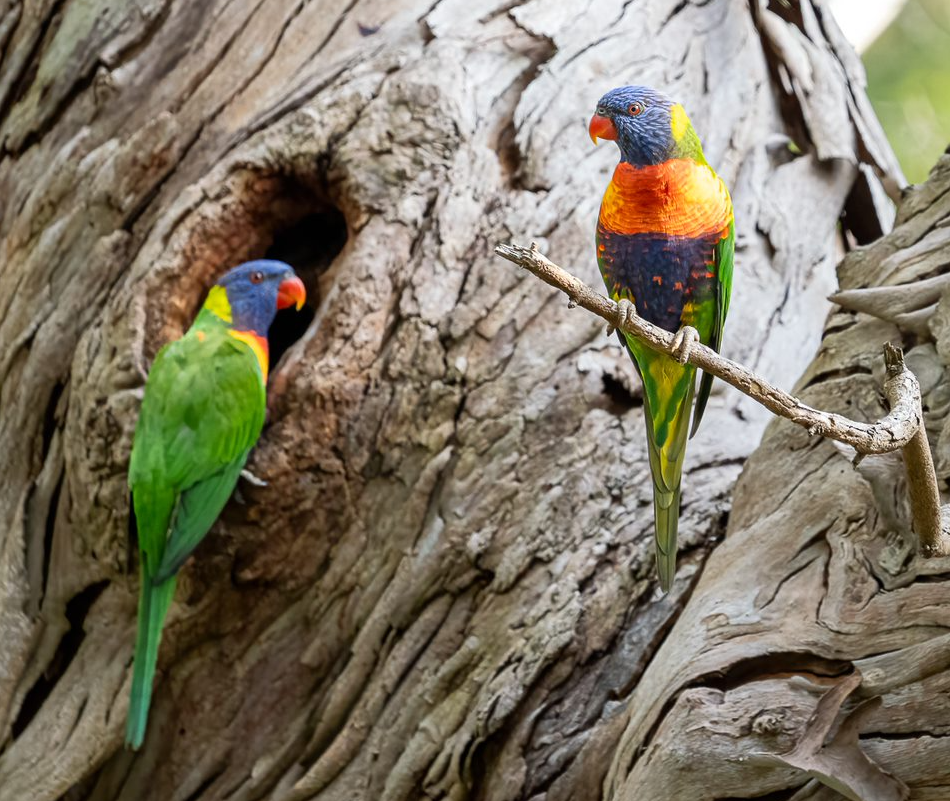
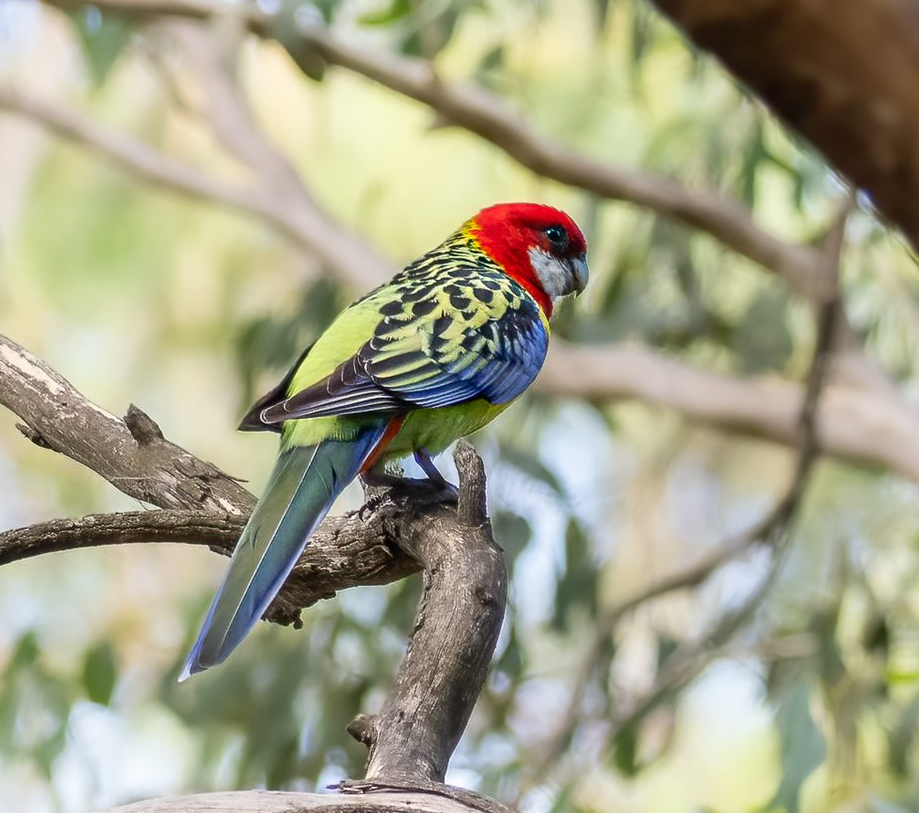
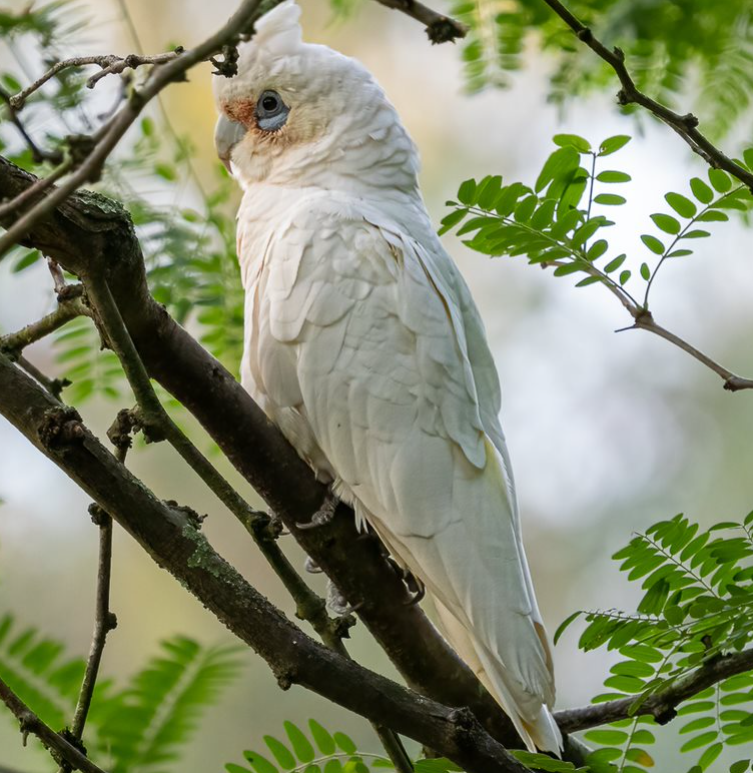
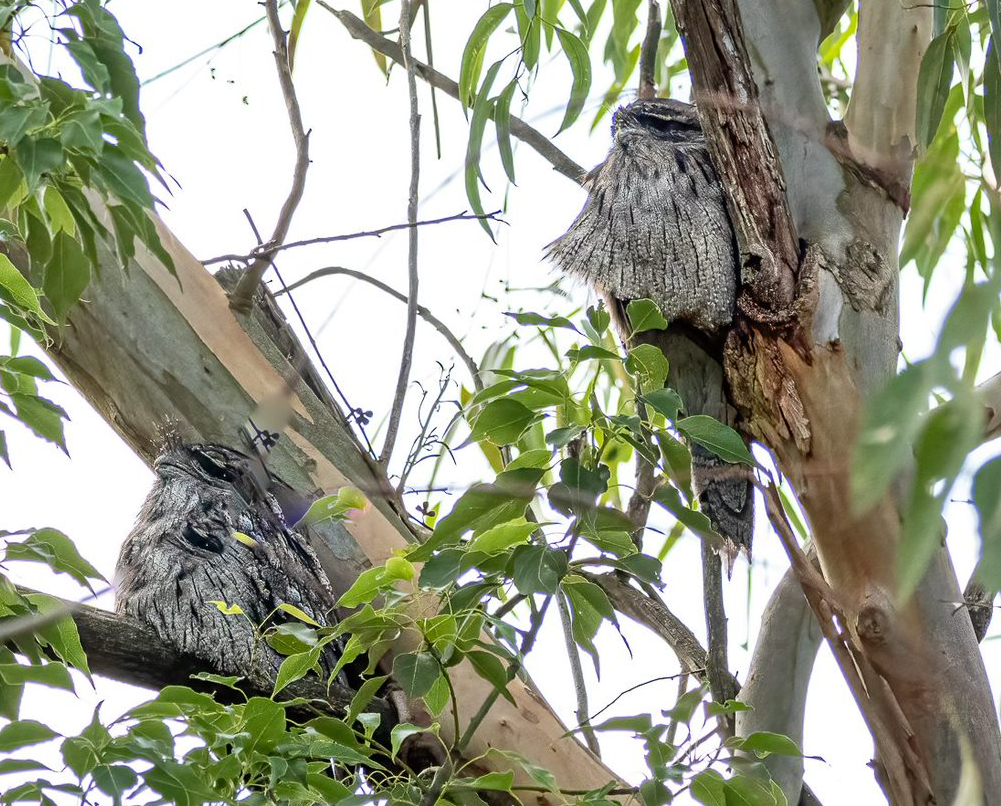
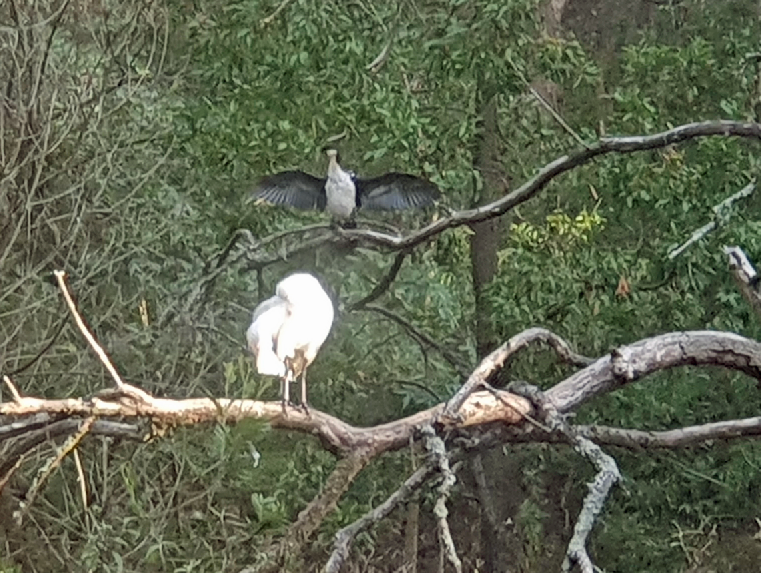
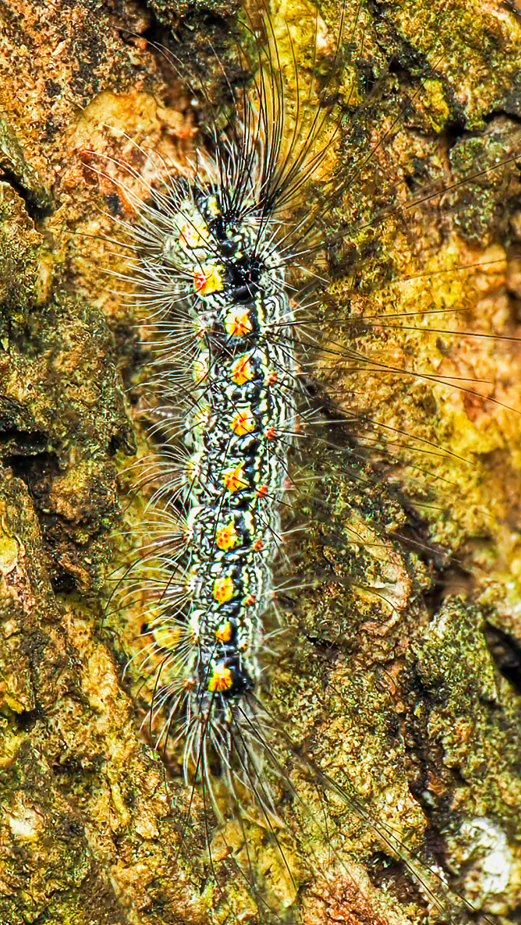
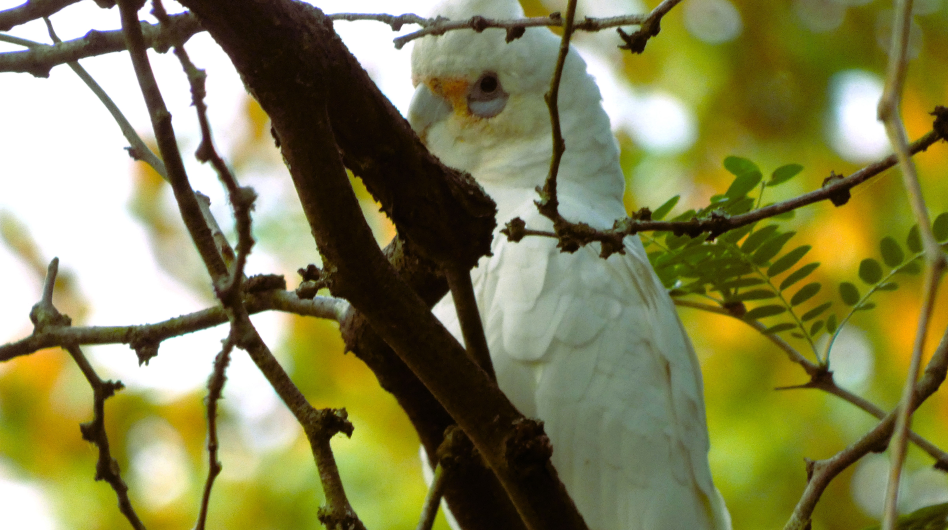
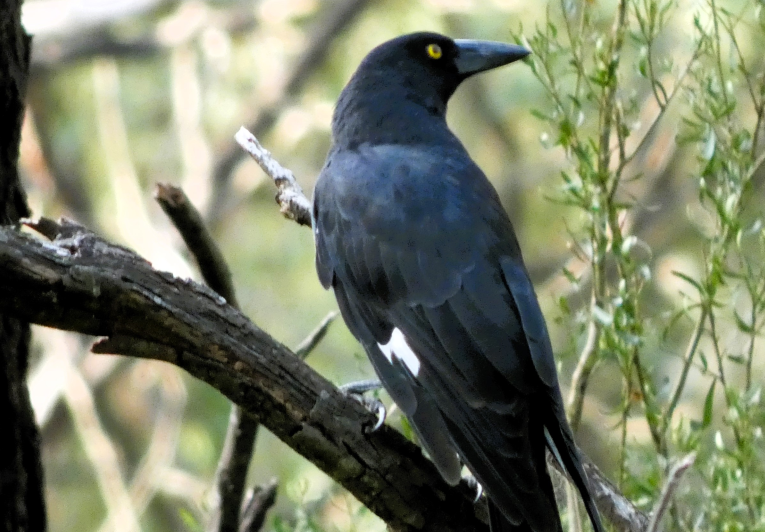
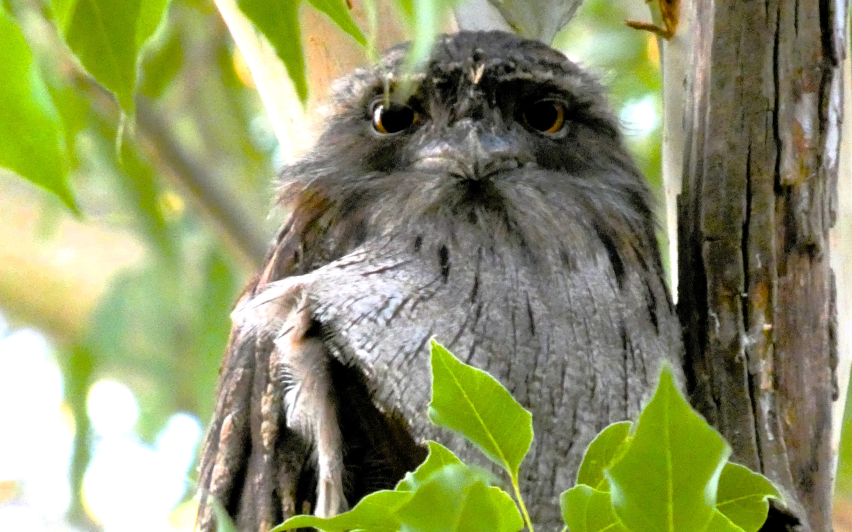
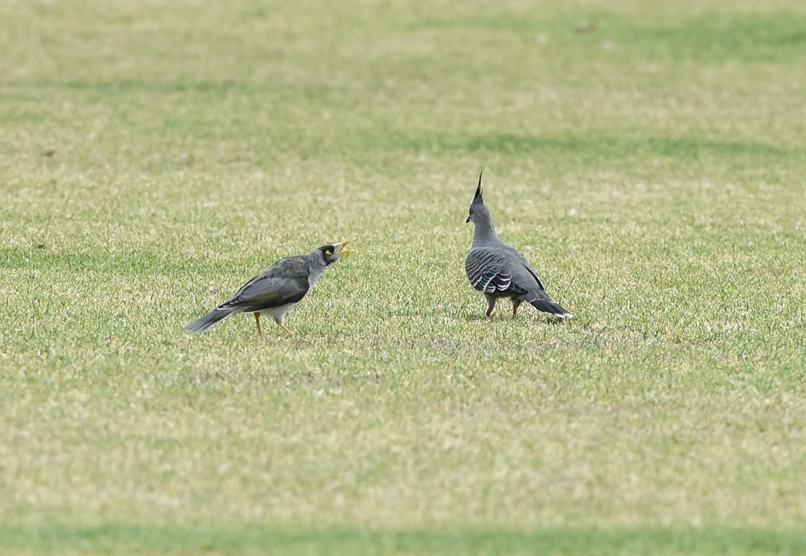
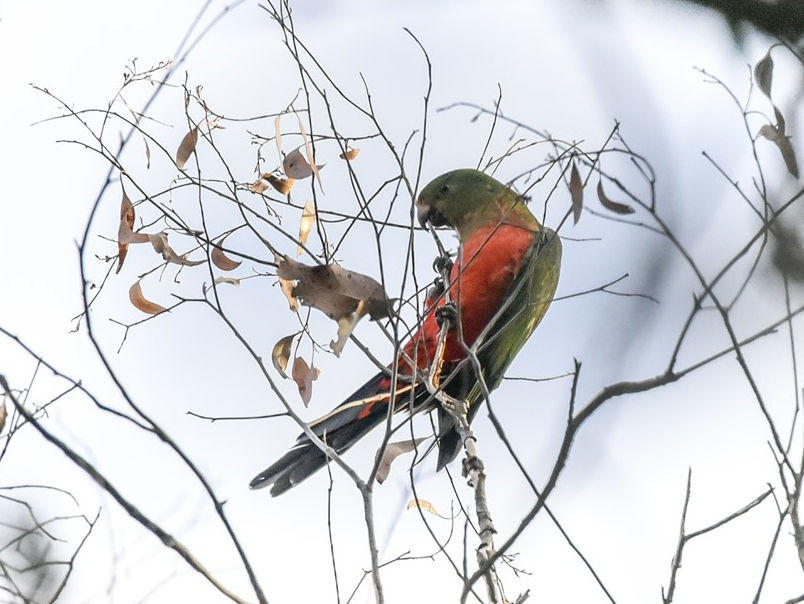
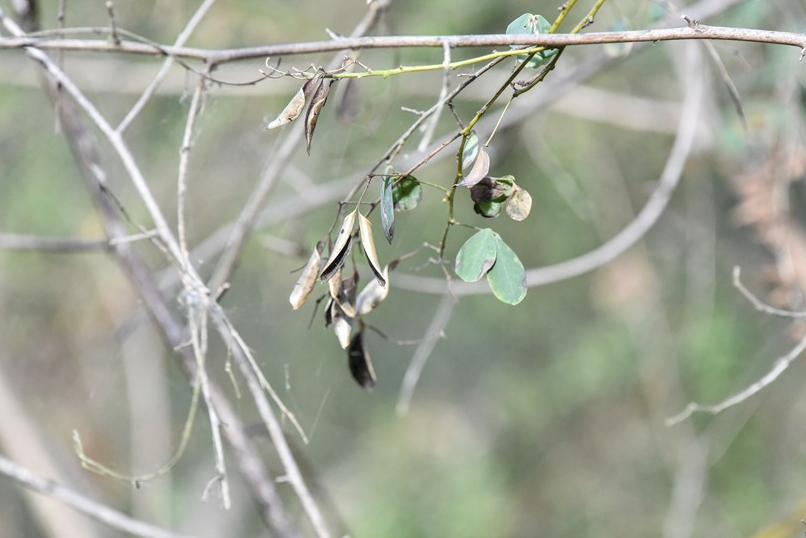
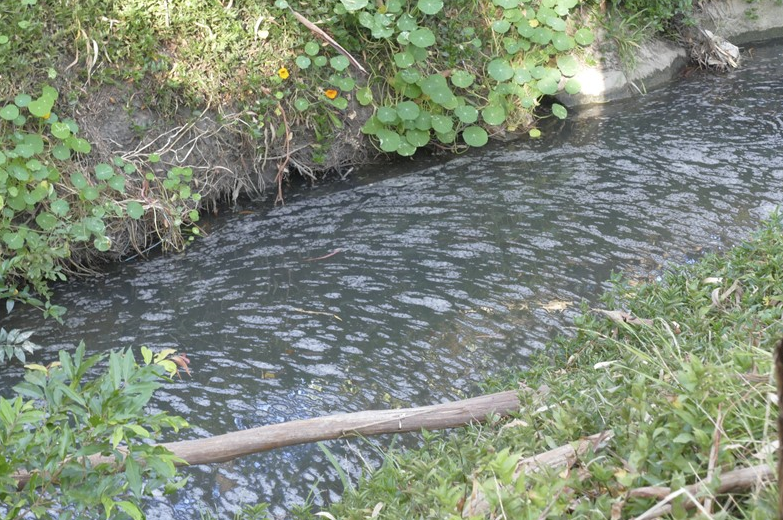
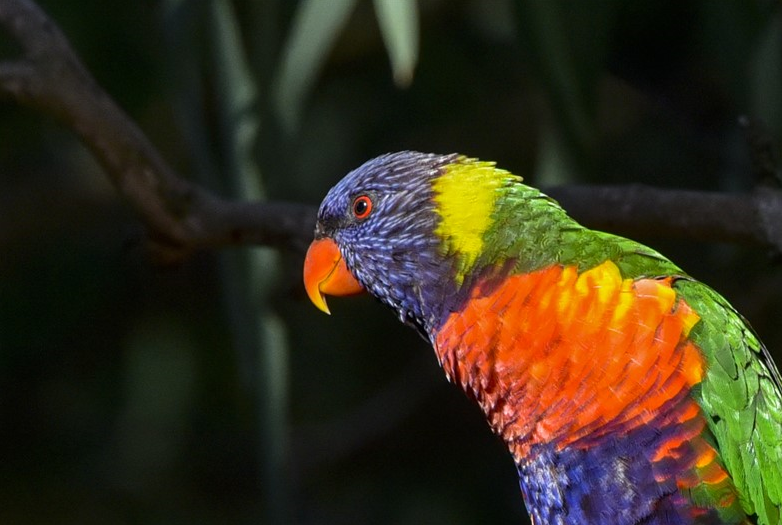
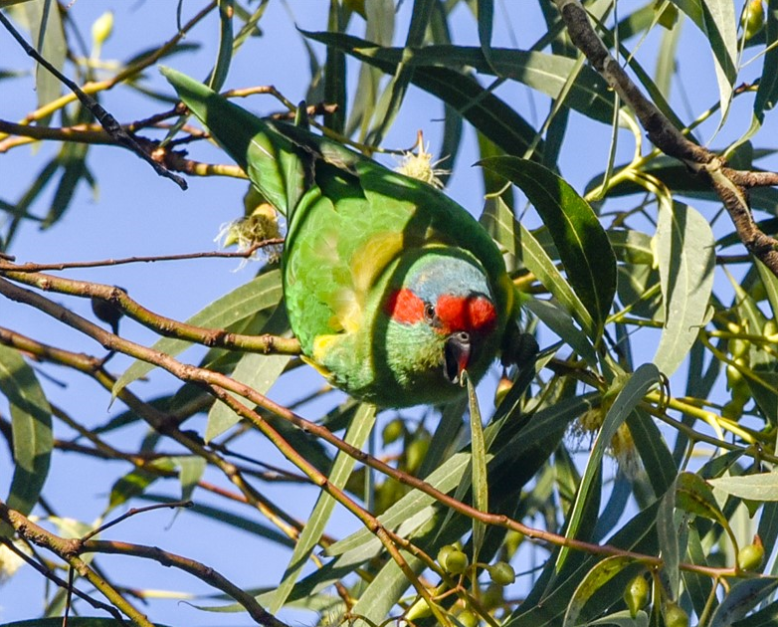
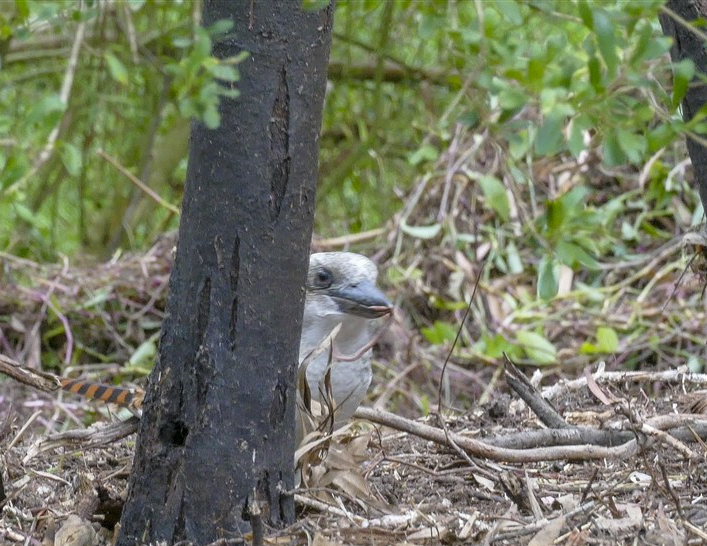
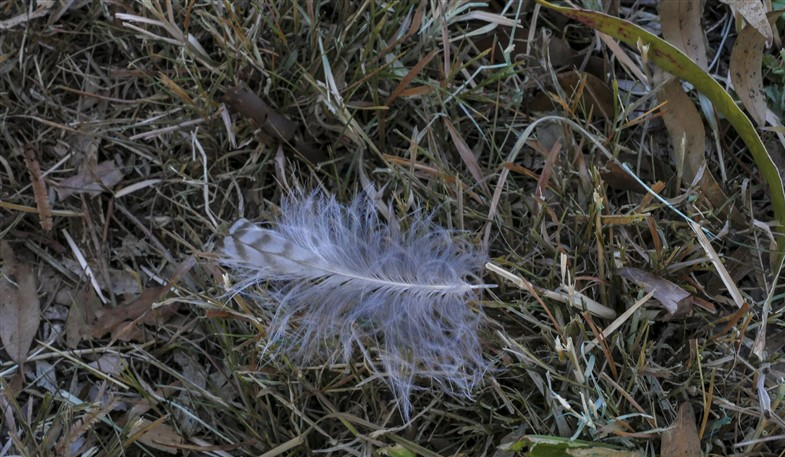
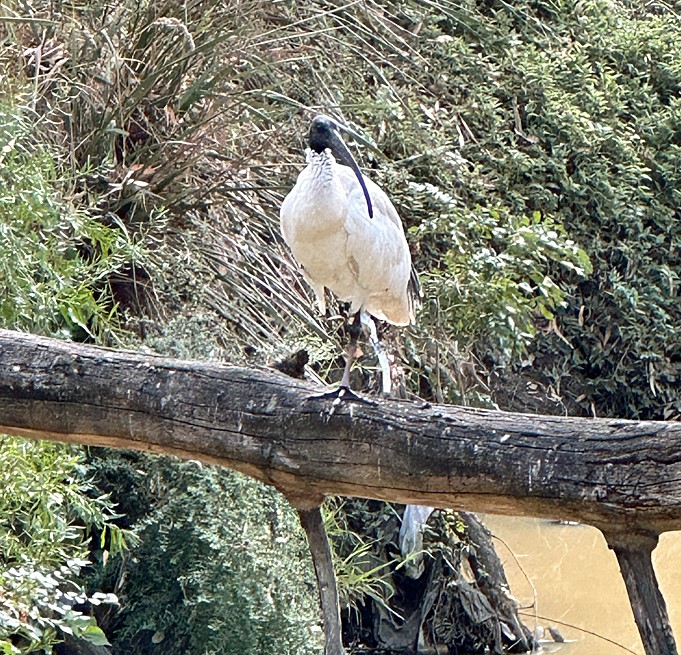
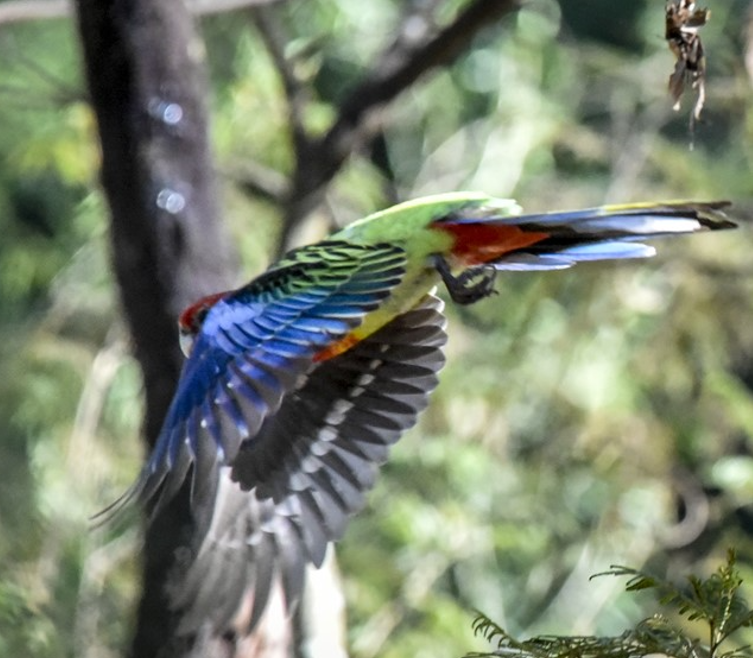
Please click on image to enlarge; click on the X to return
Corridor Sightings
Gang-gangs (Creaky Doors in Canberra-speak) continue to be seen/heard in the “Bellbird Area” – they especially seem to like drinking from rainwater collecting in tree hollows. This photo comes from an Acacia Ave garden after the recent good rains:
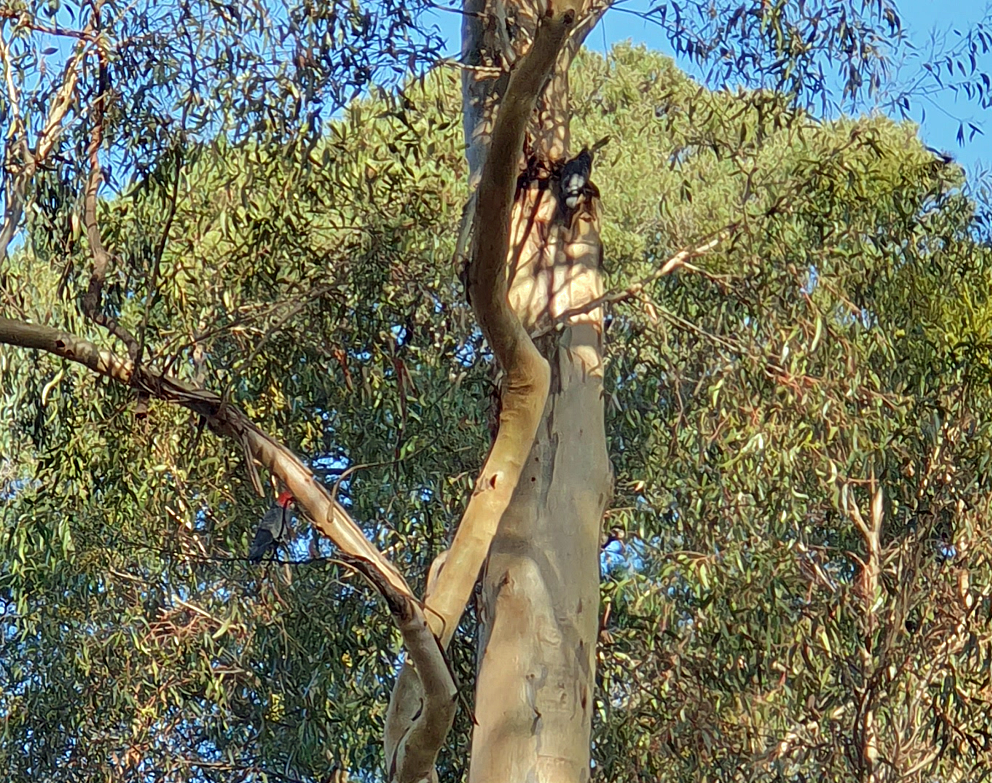
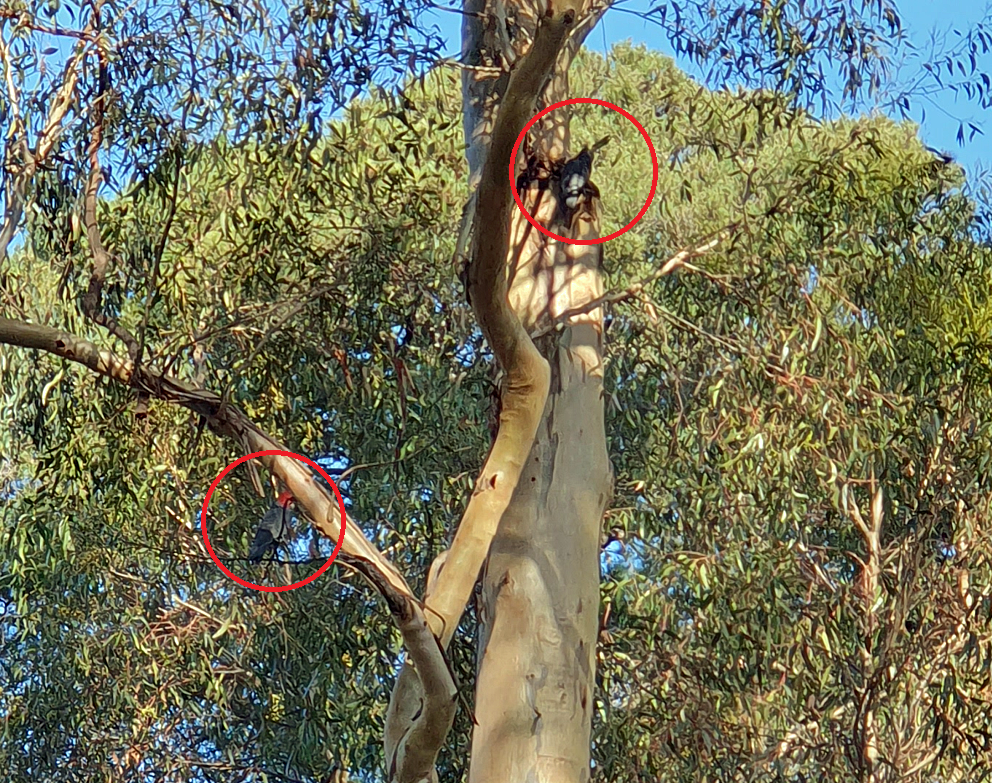
Our source says that they usually drink serially at their bird baths too. Usually the “gallant (greedy?) male” goes first (having maybe half a dozen dips) to ensure safety. He then flies off calling out to his partner who then comes in for her turn.
KKA News
The KooyongKoot Alliance (KKA) – the peak body for volunteer groups like ours along our KooyongKoot (Gardiners) Creek – is growing and maturing as a group. It has recruited some amazing volunteers to newly formed sub-committees designed to add further capacity and skills to the group.
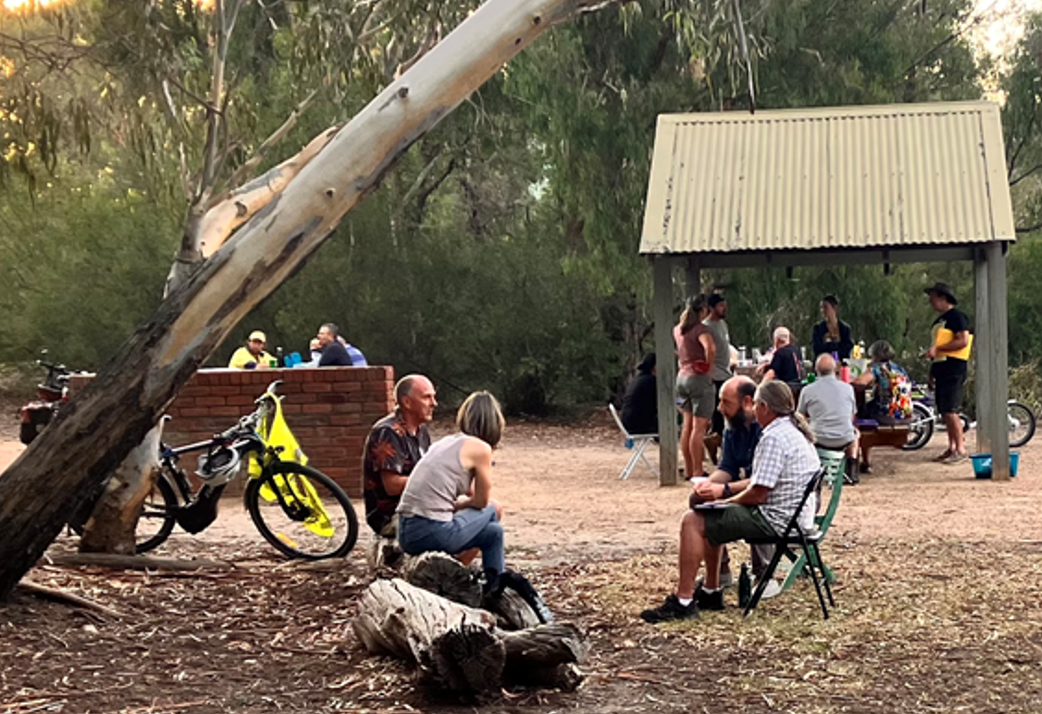
Our photo shows the inaugural meetings near Deakin Uni in early March in the office (Gardiners Creek Reserve) – with the Education sub-committee (foreground), the Advocacy and Communication/ Marketing committees combined under the tin shelter, Projects/Revegetation behind the BBQs and other groups are out of frame. The Blackburn Creeklands park is well represented with three members on KKA sub-committees.

