Upcoming events:
– Monthly bird survey on Wednesday 8 July
– Community working bee on Sunday 19 July
– AGM on Tuesday 28 July
Welcome to the June edition of our Blackburn Creeklands newsletter.
With cooler temperatures and welcome rainfall, Winter has definitely arrived! It is a special time of the year where nature slows down to take a breath, so why not get outdoors and enjoy the icy cool fresh air and check out our fungi display in the noticeboard and see if you can spot any popping up in the park?
In this edition, we have:
- AGM
- Another first for the Creeklands!
- Community working bee
- Bird feeders
- Noticeboard display
- Rubbish in our waterways
- El Niño event declared
- Sightings – photos
Annual General Meeting
The Blackburn Creeklands Advisory Committee’s Annual General Meeting (AGM) will be conducted on Tuesday the 28th July, 2026 at 07:30 PM at the Kalang Oval pavilion in Blackburn. The AGM will immediately precede the usual monthly meeting. All volunteers and everyone in the local community are cordially invited to attend.
Friend Nicky sent us this irrefutable proof of branch stacking ahead of the AGM near the Blacks Walk bridge:
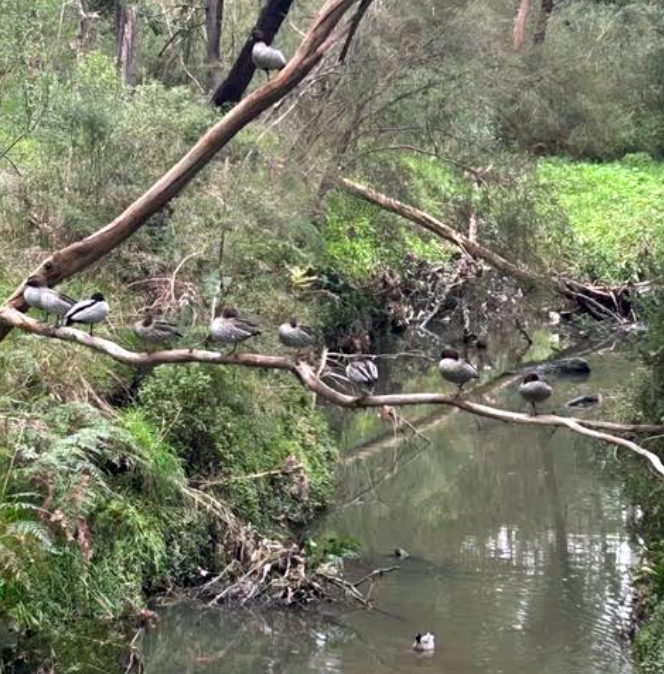
Sadly, we are unable to inform you of whether they are left wing or right wing candidates (let alone left or right footers) and sadly are also unable to identify the “wets” or high-flying “dries”. Perhaps you should come along to the AGM and find out!
Another first for the Creeklands!
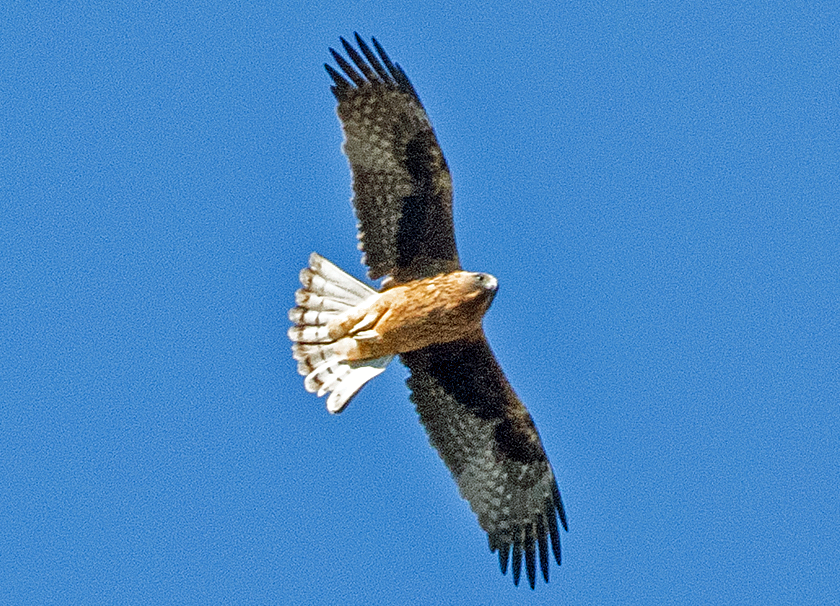
The Little Eagle (Hieraaetus morphnoides) is (guess what?) a small Australian eagle! To our knowledge, we have not recorded any sightings of it in the Creeklands since the 1970’s – until now when two locals and avid birdwatchers, Barb and Greg spotted one on 15th May 2026. Not only that, Greg managed to grab his camera and snap a photo of it flying over Kalang Park (see photo). Apparently, this magnificent ‘bird of prey‘ was being harassed by some valiant (or foolhardy) magpies whilst trying to protect the park from interlopers.
Interestingly, Little Eagles have about two-thirds the wingspan (110-135 cm), only half the bill size and are about a quarter of the weight compared to a Wedge-tailed Eagle. Nevertheless, they are still fast and agile, and their diet consists of rabbits, reptiles, birds and small mammals. It nests in mature trees, open woodlands and along tree-lined water courses and tends to avoid rainforests.
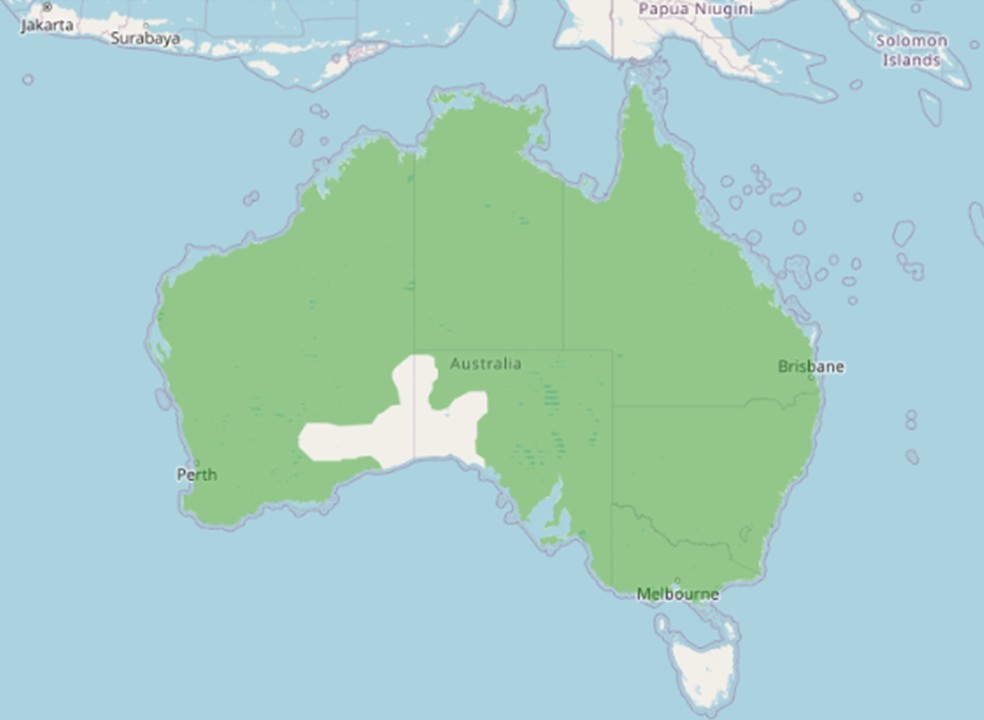
Plumage varies from light to dark brown, with a pale broken ‘M-shaped’ band on the underwing with dark ‘fingered’ tips (see photo). Furthermore, the Little Eagle is widespread on the Australian mainland except for the border area around SA and WA and in Tasmania (see map).
We are rapt (sorry!) that raptors seem to have taken to surveilling our park. Previously, we have spotted several raptors including a Whistling Kite (2024), a Nankeen Kestrel (2023) and a Black-shouldered Kite and Wedge-tailed Eagle (2022) – all for the very first time, which is extremely exciting!
One wonders whether these birds have always been around or if it’s only due the skills of our wonderful birdwatchers that we are now spotting and identifying them.
Did you know?
Australia has only two species of “booted” eagles – the Wedge-tailed Eagle and the Little Eagle. These raptors are distinguished by their heavily feathered legs, with plumage extending down to the feet, creating the appearance of wearing feathered “trousers” over robust legs.
In contrast, most other Australian birds of prey have bare lower legs, giving them a noticeably slimmer appearance. This distinctive feature is one of the key characteristics used to identify Australia’s booted eagles (Birds in Backyards).
We have updated the bird records on our website Birdlife | Blackburn Creeklands.
Thanks Barb and Greg – keep up the great citizen science work!
Community working bee (CWB)
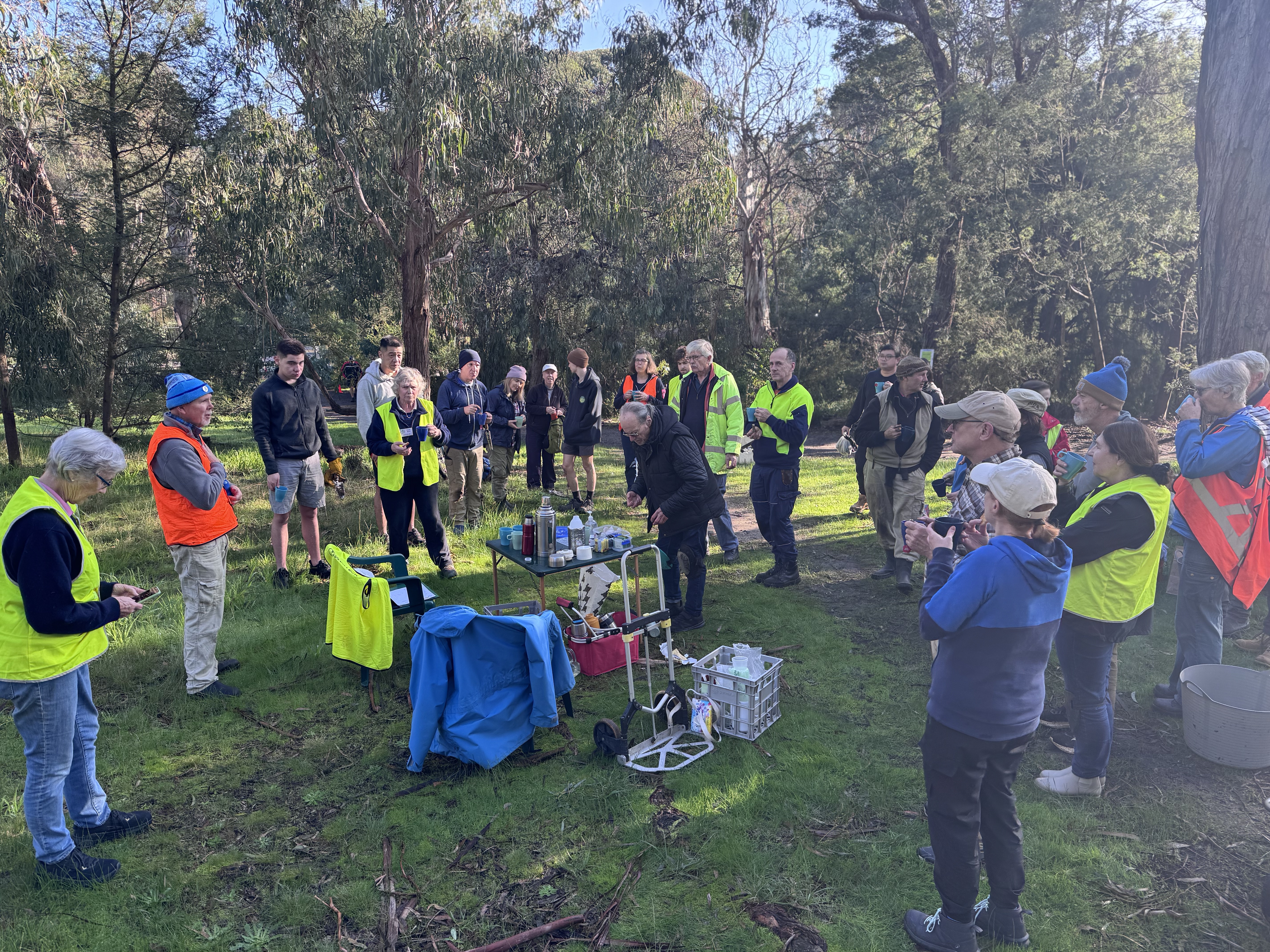
On Sunday the 21st of June, 40 participants enjoyed sublime conditions for planting 350 native tube stock in Furness Park near the pedestrian crossing on Main Street. The enthusiastic team were so efficient that we decided to spin off another group to start weeding in and around the Kalang Park sign on the opposite side of Main Street.
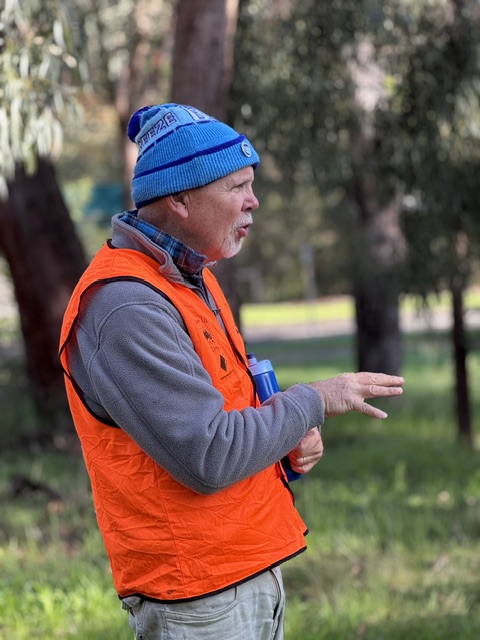
I tip my hat (or beanie) to all volunteers that worked pro-actively and cohesively to cover a lot of ground on the day. Feel free to come and inspect the great work of our volunteers and enjoy the plants and flowers for years to come.
Thanks Greg, for the half time address and to the Thursday team for preparing the site a few days earlier and for soaking the plants in Seasol to minimise transplant shock on the day. Plants were top-dressed with a native fertiliser and watered in well. The rain this week should help them settle in nicely.
Thanks also to Anthea and Evelyn for hosting morning tea and for keeping us well hydrated and fed. A team effort and a very productive morning’s work!
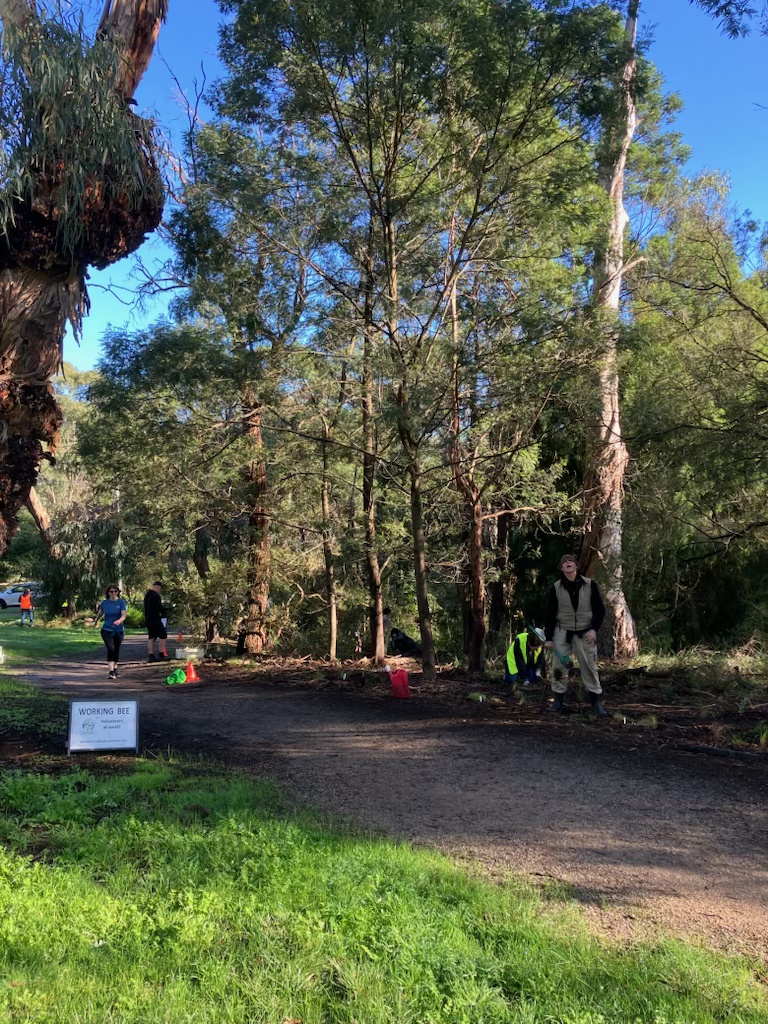
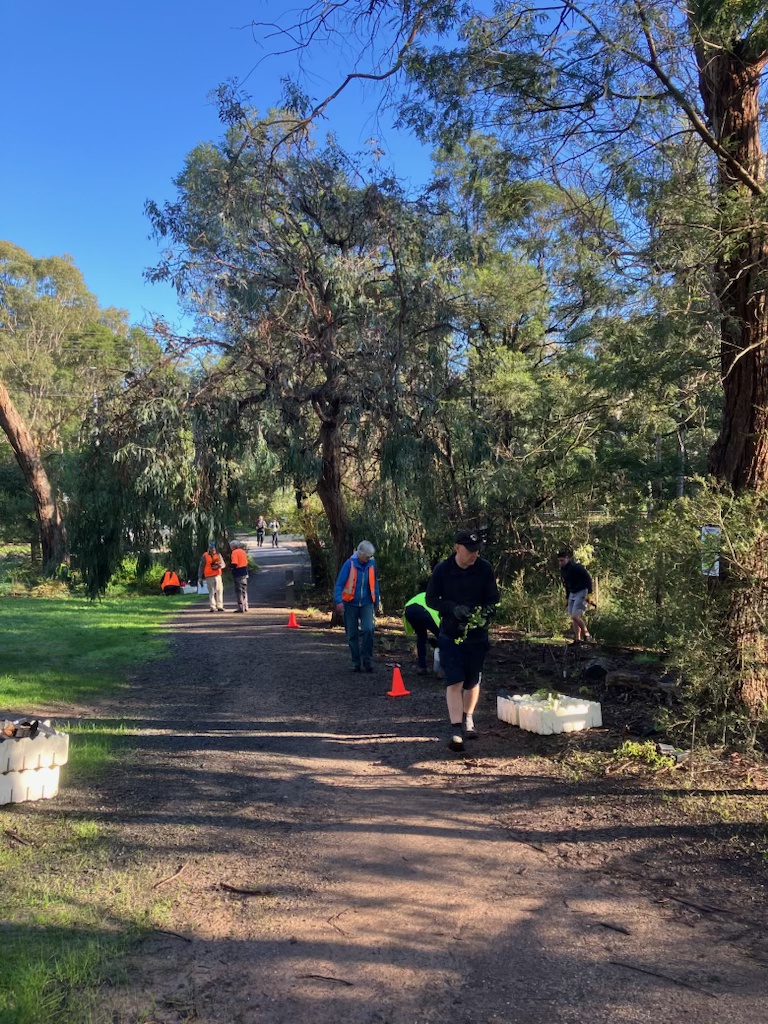
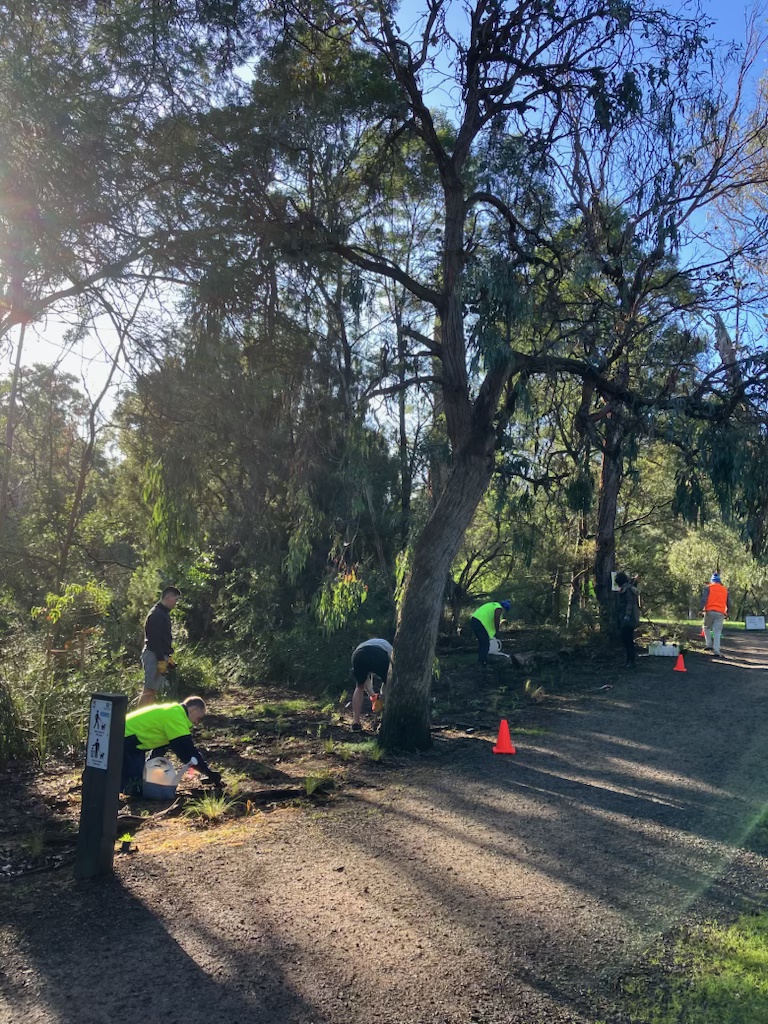
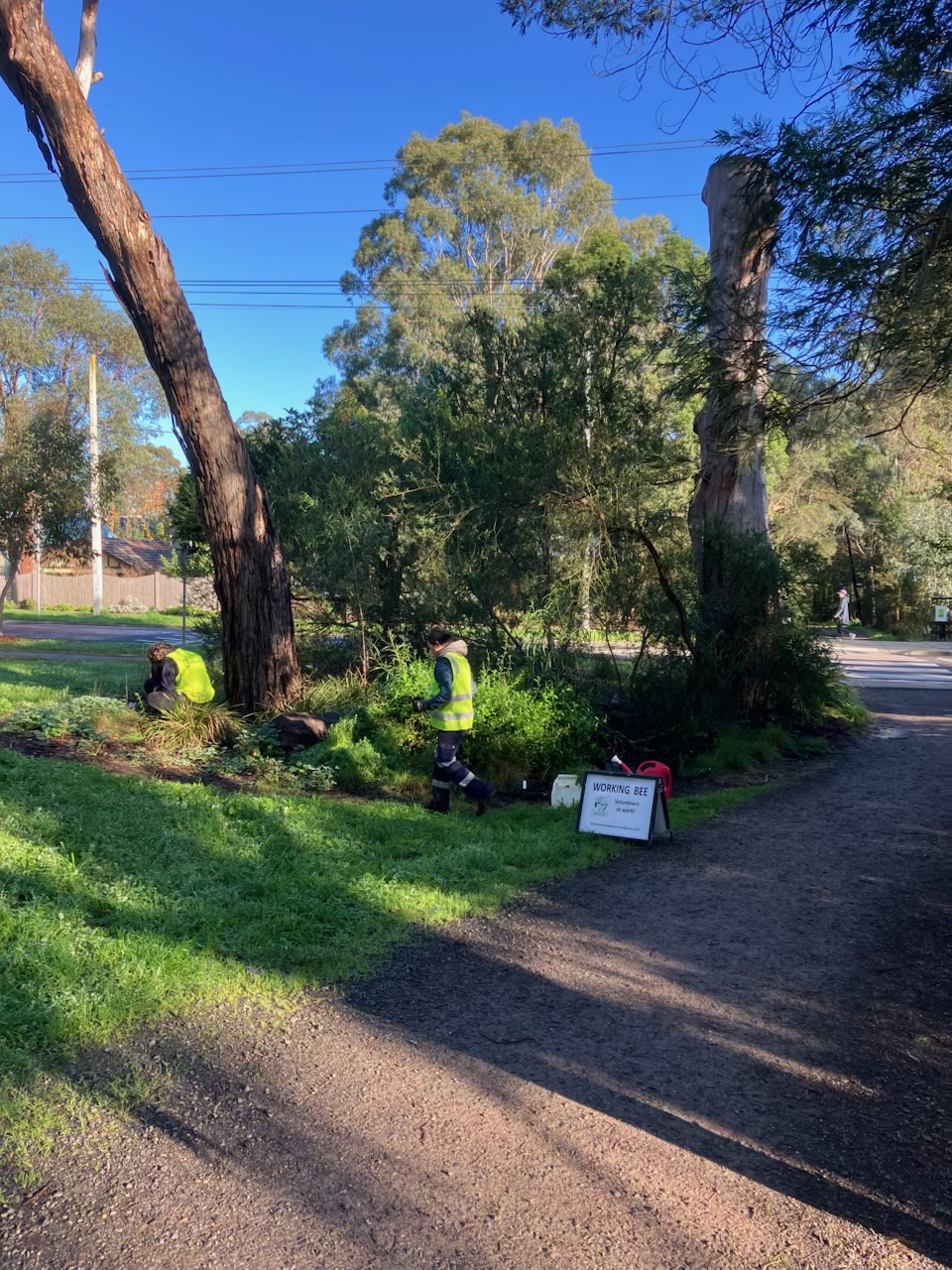
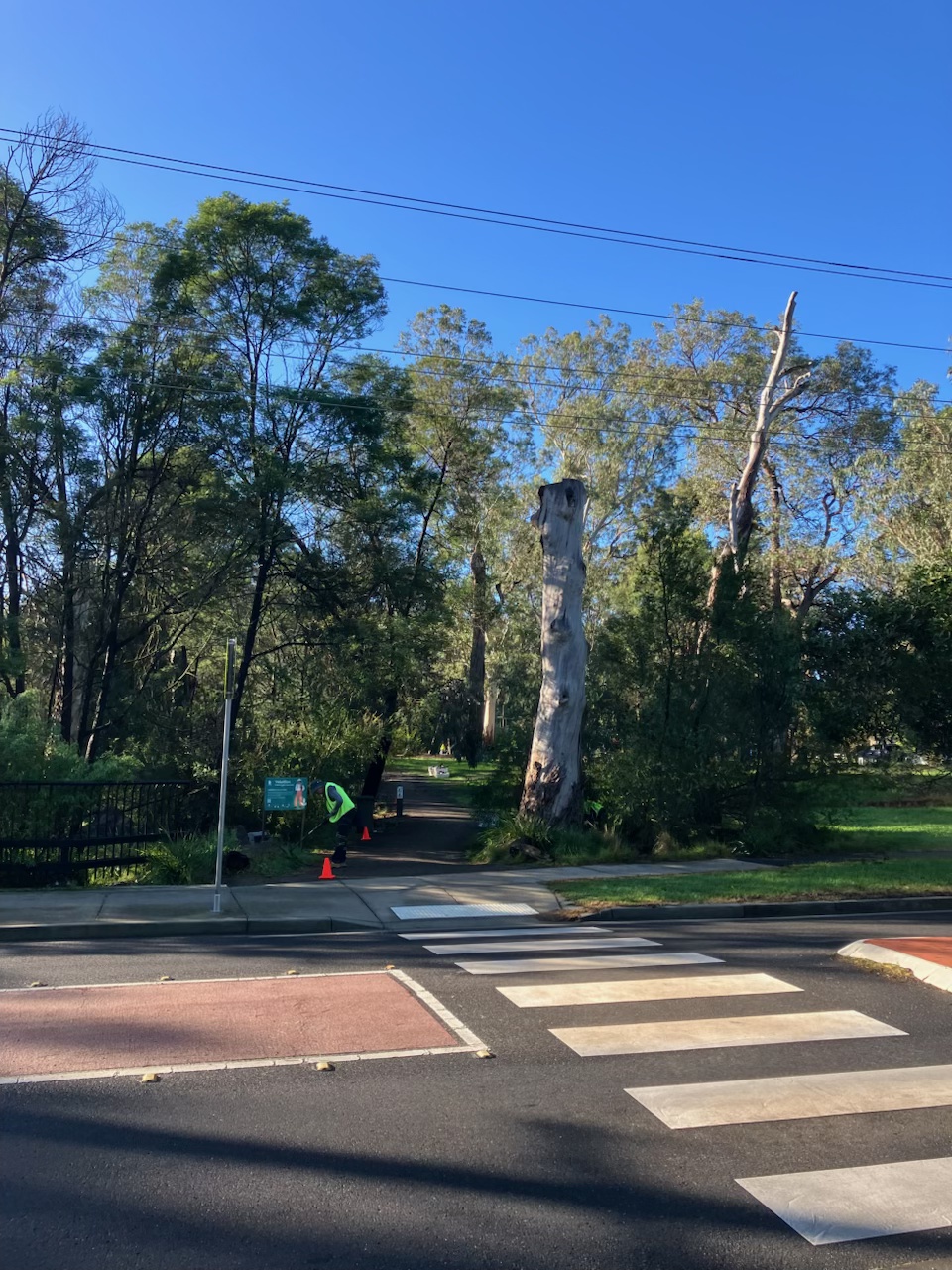
We look forward to seeing you all at our fourth Sunday CWB from 9–11am on 19th July where we plan to plant 300+ native tube stock in a similar part of Furness Park but on the north side of the creek.
To participate or find out more information, please email blackburncreeklands@gmail.com or jump on our socials (see links below).
Bird feeders
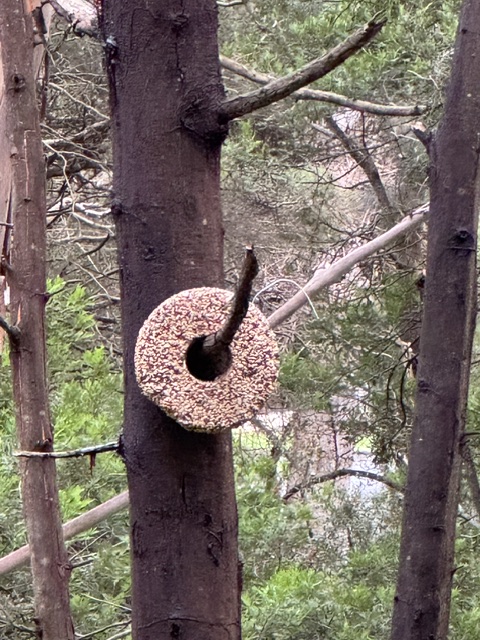
Please do not install bird seed rings or other bird feeders in the Blackburn Creeklands. While they may seem like a kind way to support wildlife, supplementary feeding can do more harm than good. Concentrated food sources, like the one shown above encourage unnatural gatherings of birds, increasing the spread of disease and attracting aggressive species that can outcompete smaller native birds.
Seed can also attract introduced pest species, such as mice and rats, and alter the natural behaviour of wildlife. The Creeklands provides a healthy, natural habitat where birds can find the food they need.
Fortunately, committee removed this one soon after it was installed. If you must purchase one, then please keep it on your own property or even better, purchase and plant indigenous native plants from a reputable supplier such as Bungalook, GreenLink or Kuranga nurseries. Thank you for your co-operation 😉
Noticeboard display – fungi
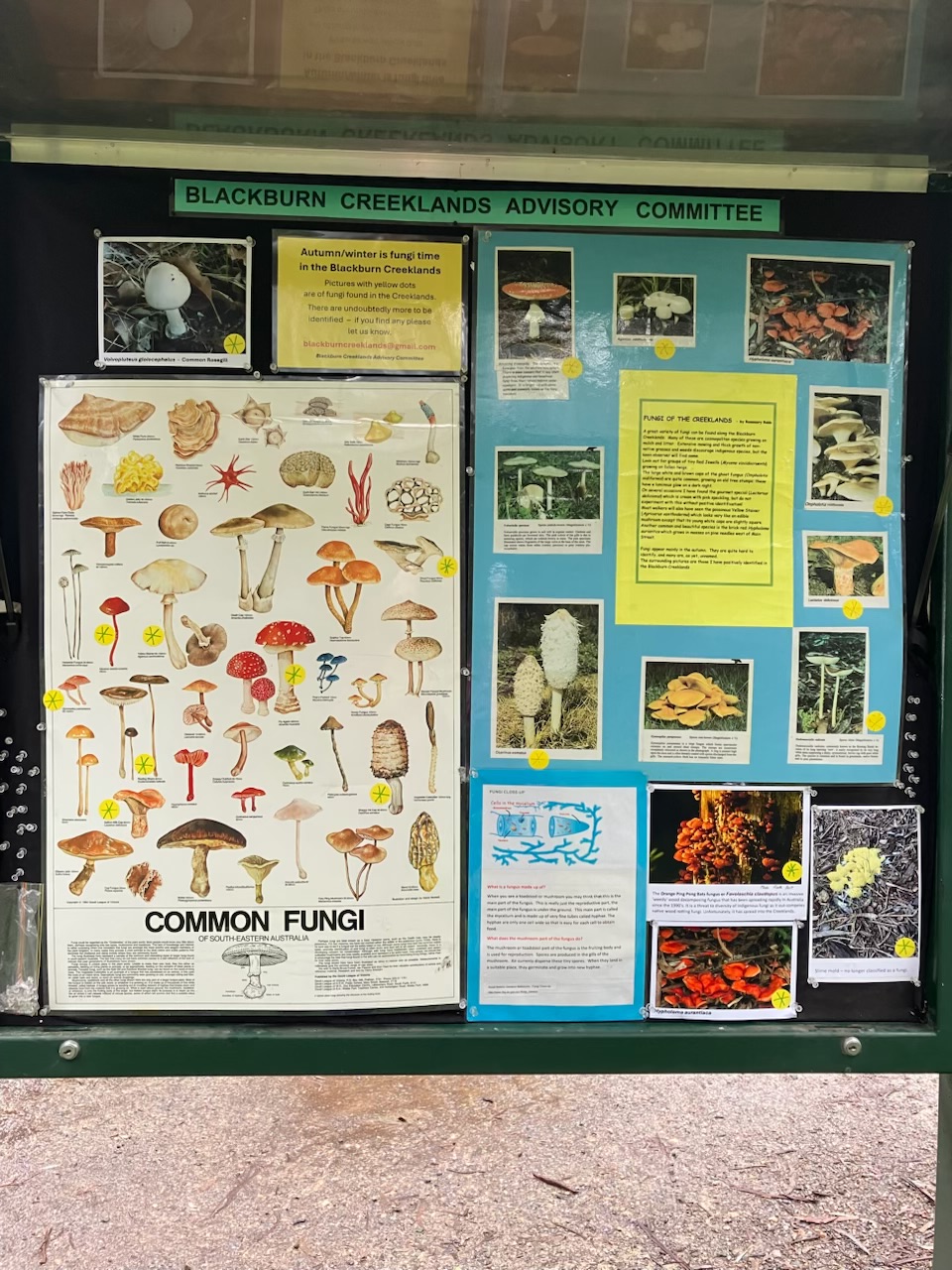
Fungi are an often overlooked but an essential part of the Blackburn Creeklands ecosystem. Hidden within the soil, leaf litter, fallen branches and decaying logs, fungi play a vital role in maintaining the health of the bushland. They act as nature’s recyclers, breaking down dead plant material and returning valuable nutrients to the soil where they can be reused by plants. Many fungi also form beneficial partnerships with the roots of native trees, helping them absorb water and nutrients more efficiently.
The Blackburn Creeklands’ mix of remnant bushland, mature eucalypts, wetlands and revegetated areas provides ideal habitat for a diverse range of fungal species. Following Autumn and winter rains, a variety of mushrooms, bracket fungi and other fruiting bodies emerge throughout the park.
Recent observations tagged with a yellow sticker in the display have included the Ghost Fungus (Omphalotus nidiformis) which is famous for its green glow in the darkness, as well as the invasive Orange Pore Fungus (Favolaschia calocera).
By decomposing organic matter and supporting plant growth, fungi help sustain the rich biodiversity of the Creeklands, making them a crucial but often unseen component of this important urban bushland corridor.
Thank you to Anthea for another fantastic display highlighting the important role fungi plays in our Blackburn Creeklands.
Reducing rubbish and pollution in our waterways
Following on from our pollution story last month, the KooyongKoot Alliance (KKA) is actively working to reduce rubbish and pollution in our waterways.
The KKA is a not-for-profit community-based organisation comprised of 24 Friends Groups in the Gardiners (KooyongKoot) Creek Catchment that runs from Blackburn Lake to the Yarra (Birrarung) River. The Blackburn Creeklands are also a group-member of the KKA.
The KKA supports “Communities working together to heal the KooyongKoot, its waterways and ecosystems”.
Thus far, since the KKA’s inception in 2020, in its efforts to reduce litter and pollution in the KooyongKoot Catchment, the KKA has held more than 30 Clean Up Australia Day events; staged two Clean Waterways Expos with impressive speakers and significant community and stakeholder group representation; and represented the community on the KooyongKoot Regional Collaboration, whose 14 key stakeholders (including five Councils) have developed a Strategic Plan for the catchment. Litter and water quality management are key elements of this plan.
The KKA also formed a Clean Waterways Subcommittee, which has been developing systematic strategies and processes to consistently reduce litter in public spaces and thereby reducing litter and pollution entering streams in the KooyongKoot Catchment that flows into the lower Birrarung River and ultimately into the bay.
More specifically, the Clean Waterways Sub-Committee’s objectives are to work with communities, businesses and statutory bodies to implement targeted education programs to reduce litter at the source, and to develop replicable, ongoing litter and data collection programs on the ground throughout the catchment.
“Replicable” meaning that the KKA is creating a multi-faceted model for reducing litter and pollution that can be broadly applied to in many ‘hotspots’ throughout our catchment.
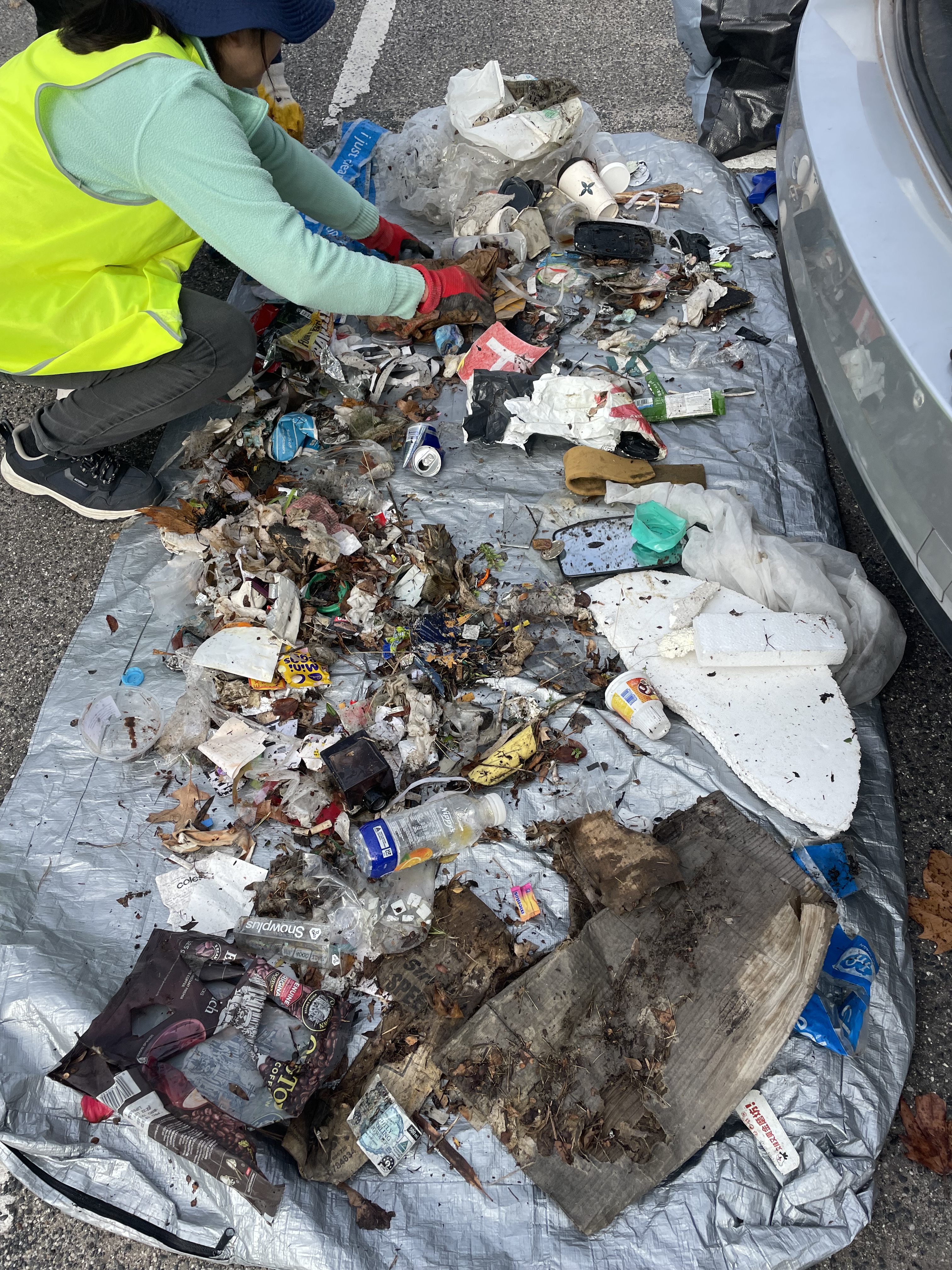
An important part of this is the physical collection of on-the-ground litter and recording of data. We are pleased to announce with the kind support of Whitehorse City Council this group has already commenced clean-up activities in a known litter generation and accumulation hotspot in Box Hill (see photo). Through consultation with various agencies the group will help local businesses and residents to understand how litter and pollution move from our streets into drains and through to waterways.
For more information or to get involved, please contact Mark (0408 354 070) or Graham (0407 994 000) or email CWSC@kka.org.au
El Niño event declared
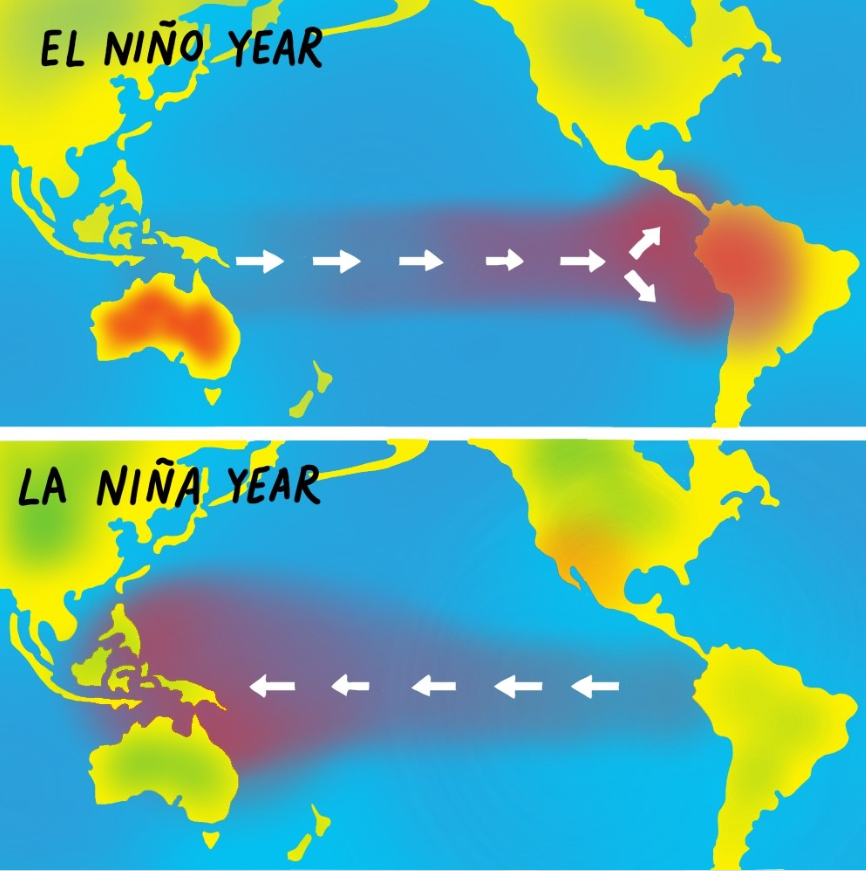
It’s official – the Bureau of Meteorology (BoM) has declared that an El Niño event is on its way (as of mid-June 2026) – threatening us with record high temperatures and dangerous bushfire conditions over summer in Australia. Climate and weather models show it could be one of the worst ever recorded so it’s a good thing we’re getting plenty of rain at present after the quite dry start to the year.
Since most El Niño events peak between November and January, an event starting as early as June will have about six months to intensify.
El Niño events are measured by higher ocean temperatures towards South America which lead to hotter and drier conditions in Australia as rainfall patterns shift eastwards to the Americas (top diagram) whereas La Niña events are also linked to warmer ocean waters around northern Australia and Indonesia which increases the chance of flooding and tropical cyclones (bottom diagram). The climate pattern oscillates between El Niño (Spanish for the son), neutral and La Niña (the daughter) years of variable strength. In La Niña years, Australia receives higher than average rain, particularly in the tropical north.
What does it mean for the park ?
- Our park is located in an urban environment and its narrowness, protection from northerly winds and east-west orientation means that bushfire risks are relatively low (thankfully).
- However, higher temperatures and dryness will impact park vegetation and particularly younger plants.
- Fortunately, we are blessed with lots of canopy trees in the park and its surrounding corridor which provide shade for other flora and fauna, and us! Nevertheless, vegetation loss caused by trees shedding leaves to minimise water loss creates harsher conditions for all species living in the understory.
- Weed growth needs to be managed.
- In very dry times, we may need to water young plants to ensure their survival. Scheduling some watering at future working bees may become necessary. Whitehorse Council has also watered young plants for us from tanks on trucks in more recent times.
Alas, climate change puts us at risk of experiencing more intense El Niño events.
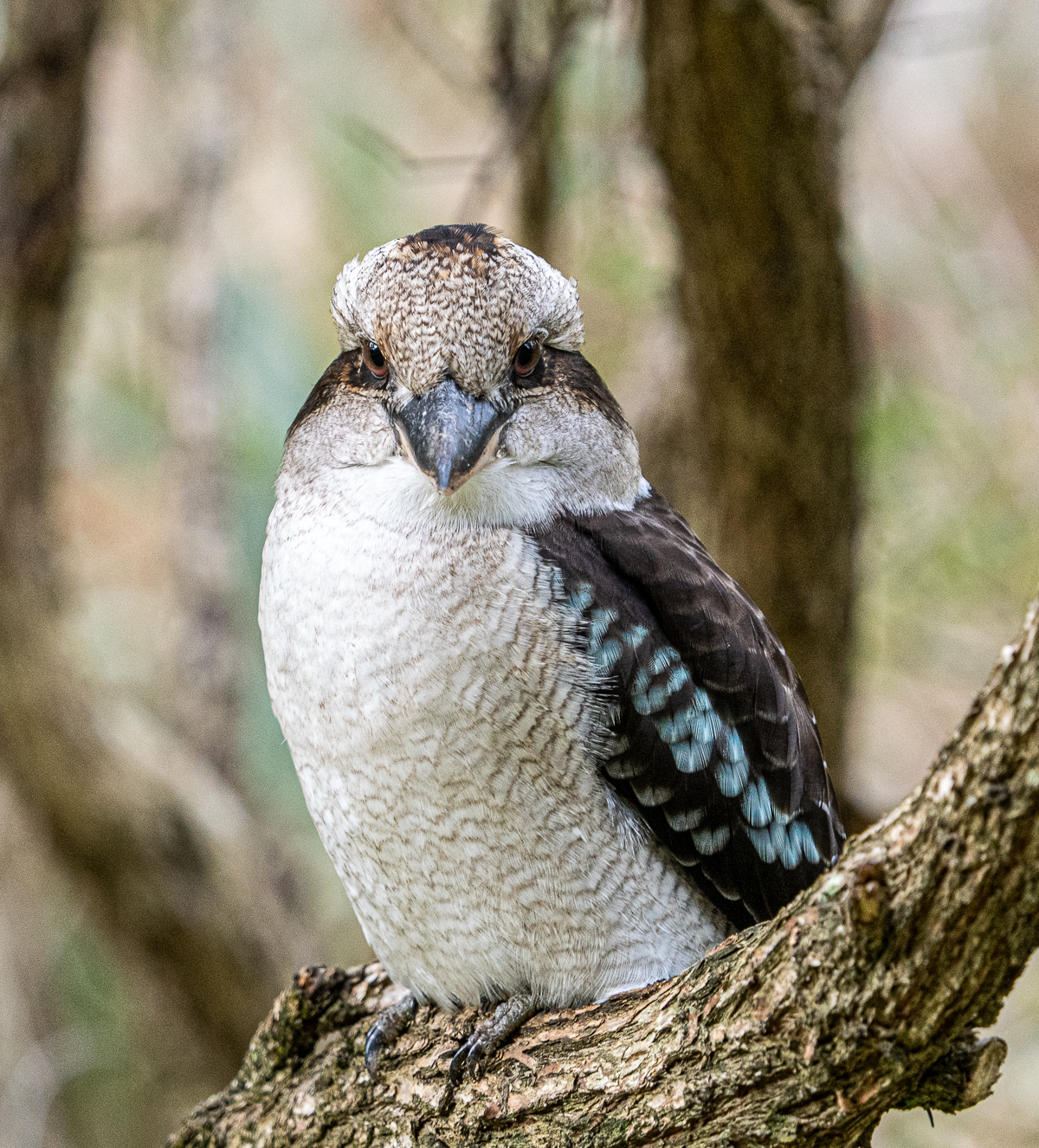
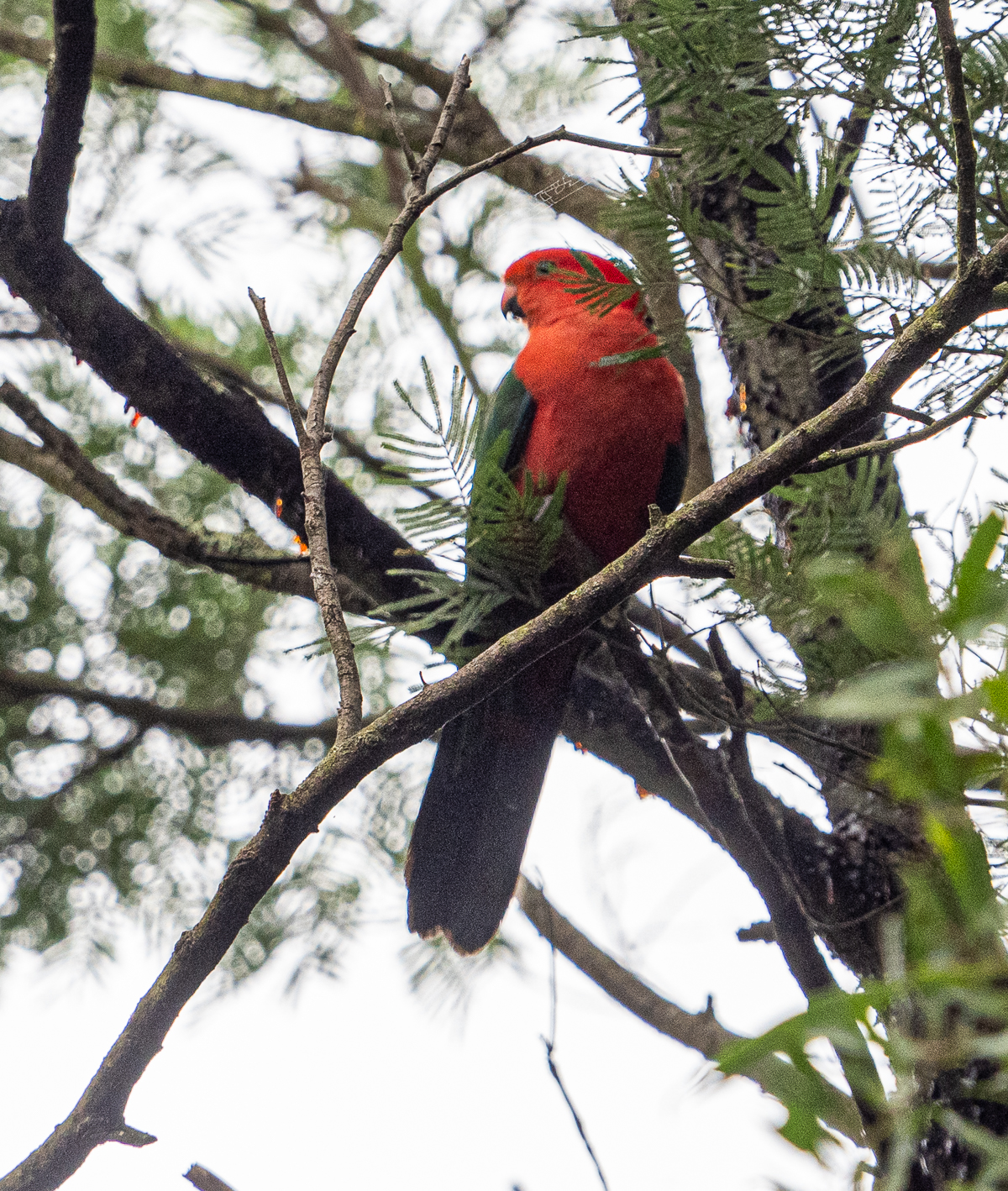
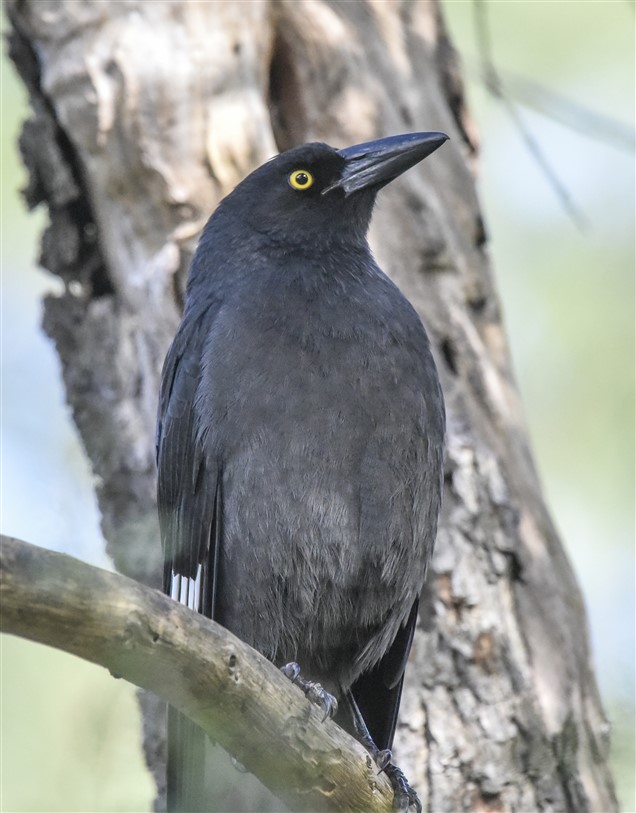
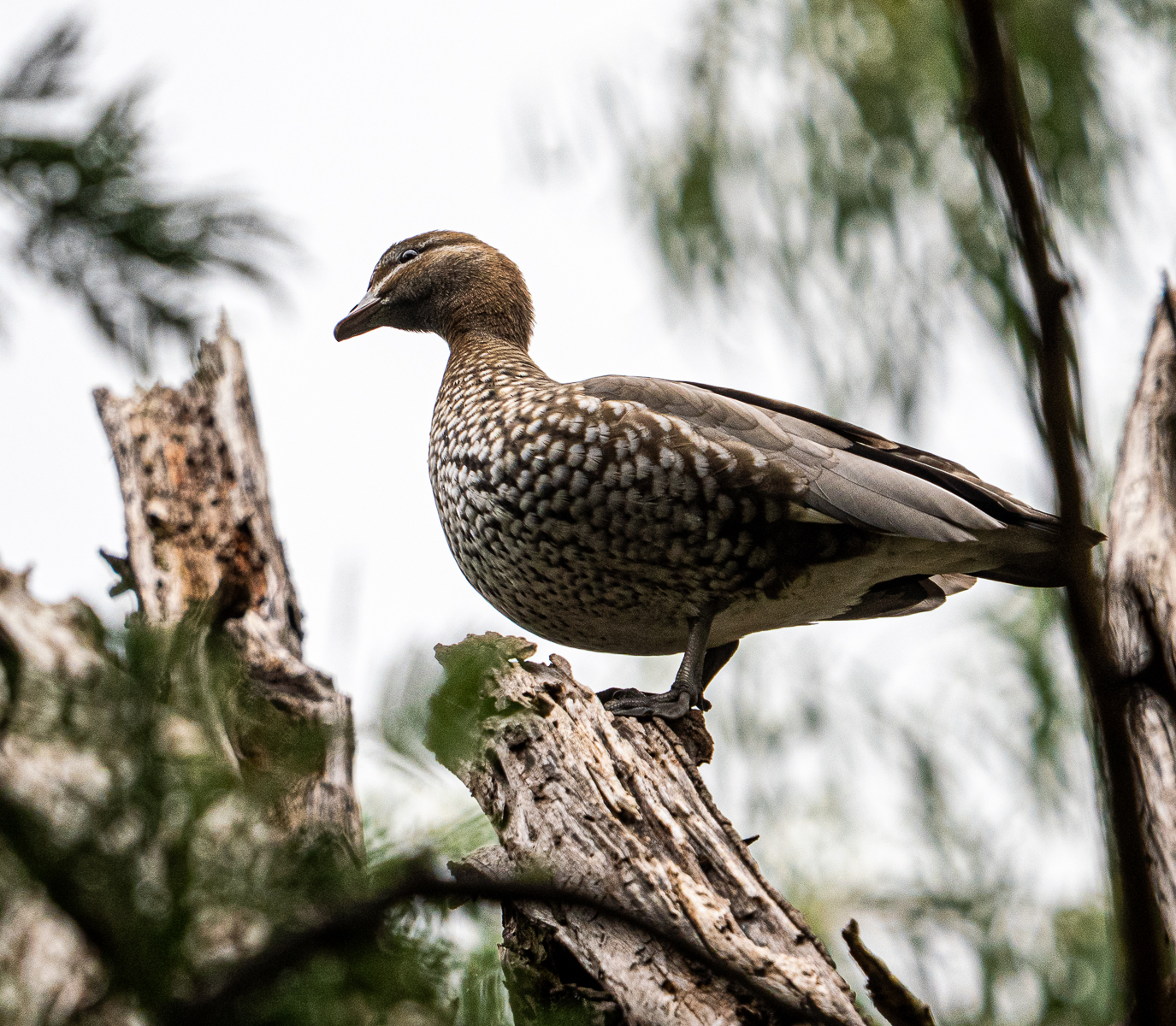
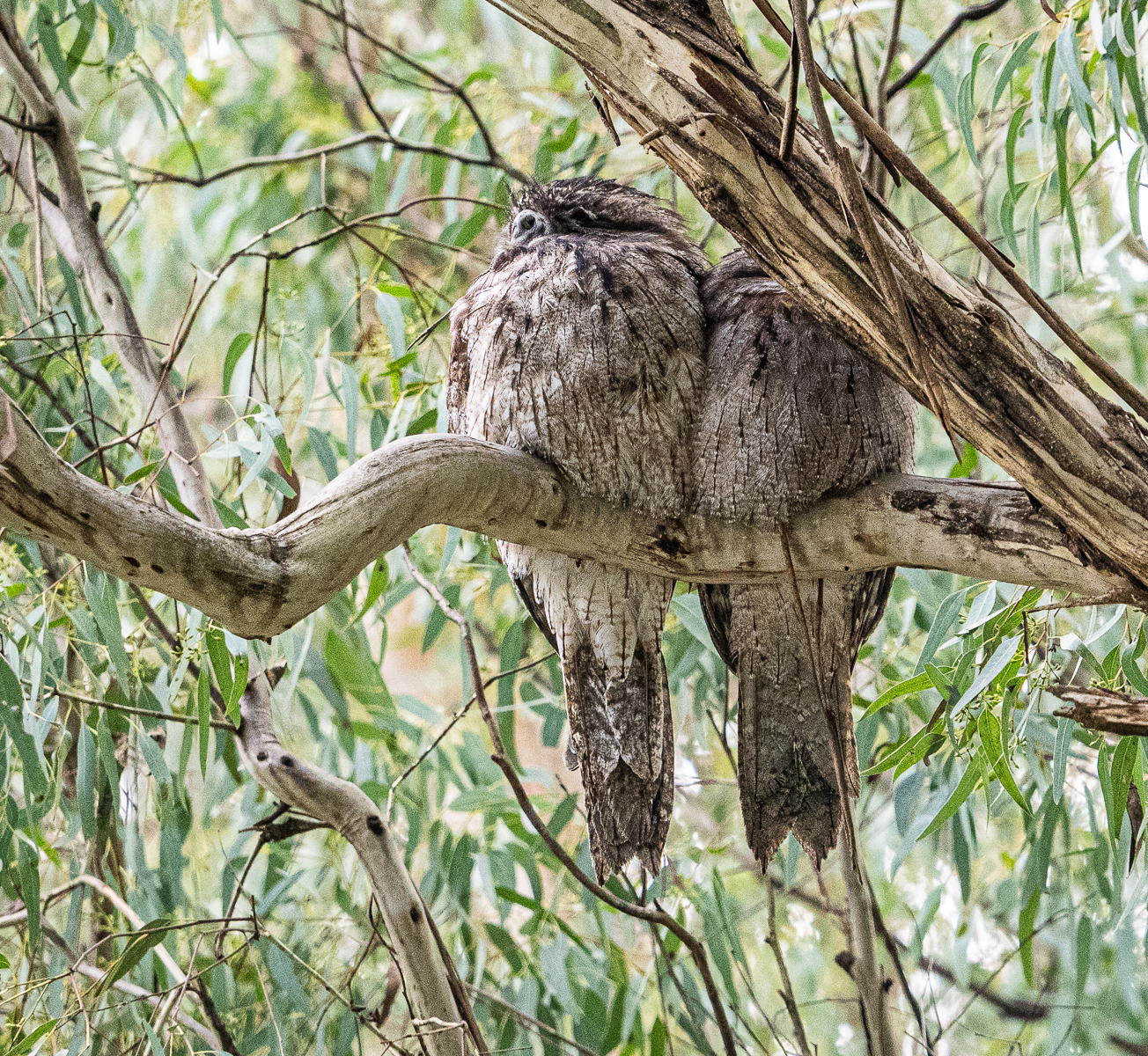
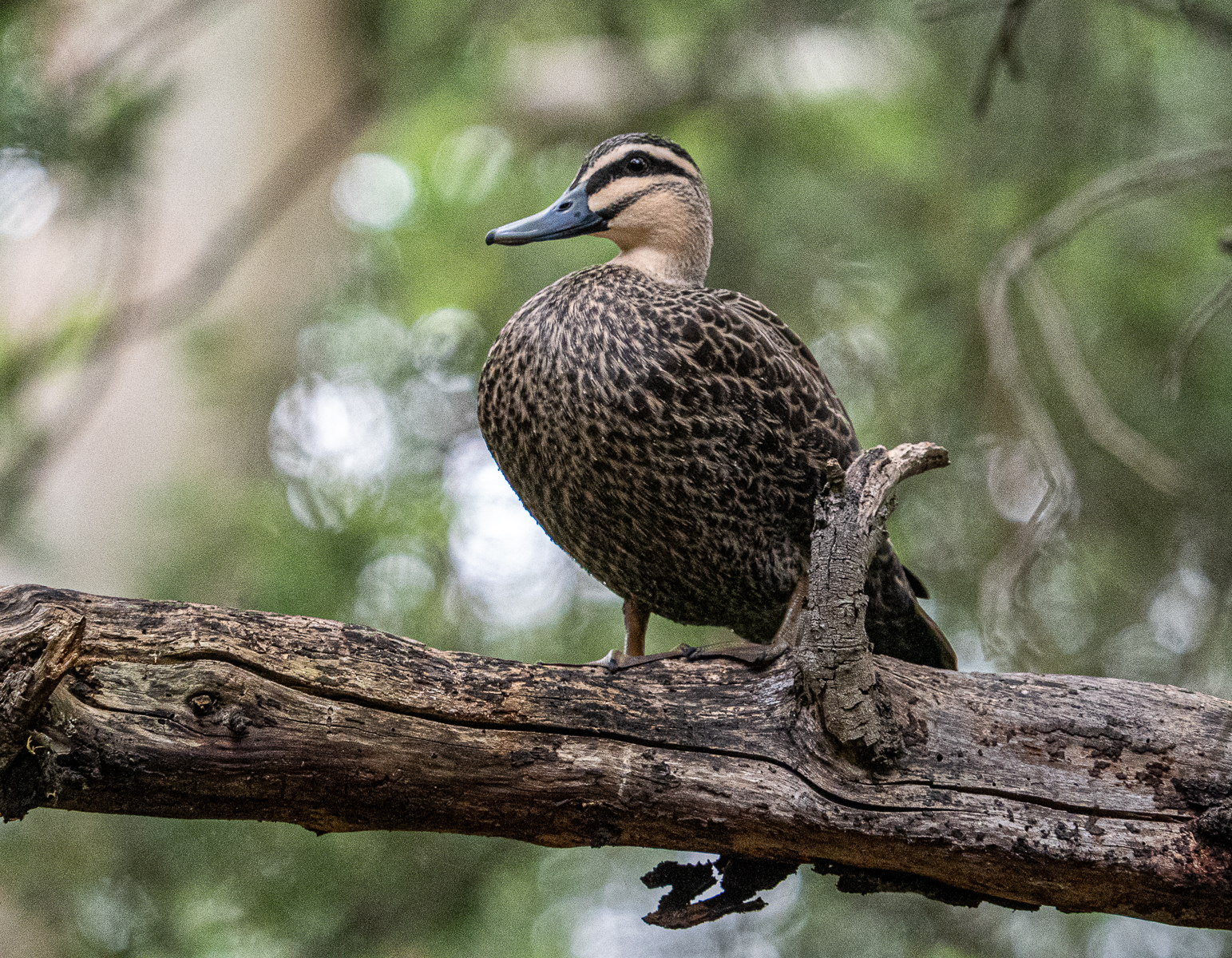
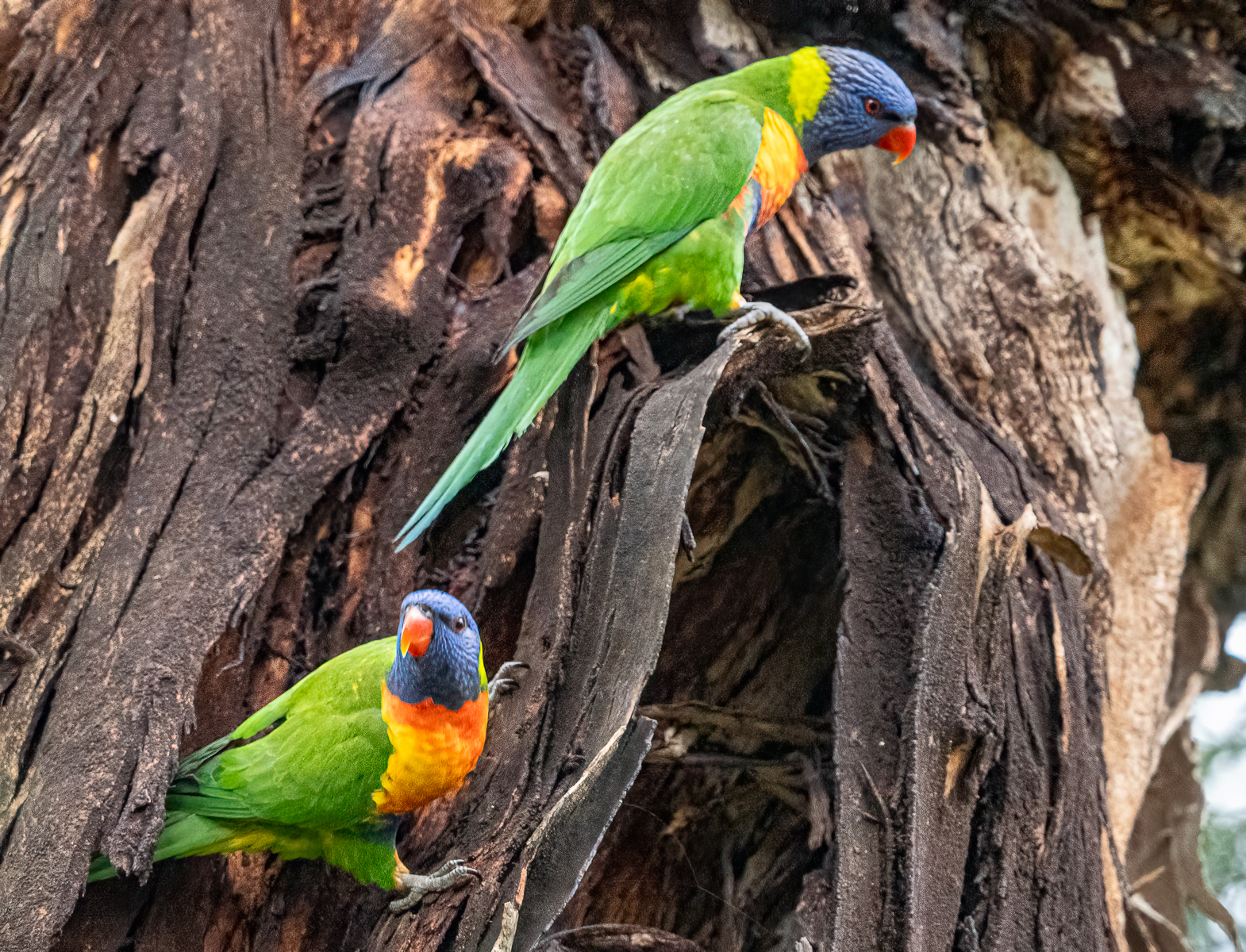
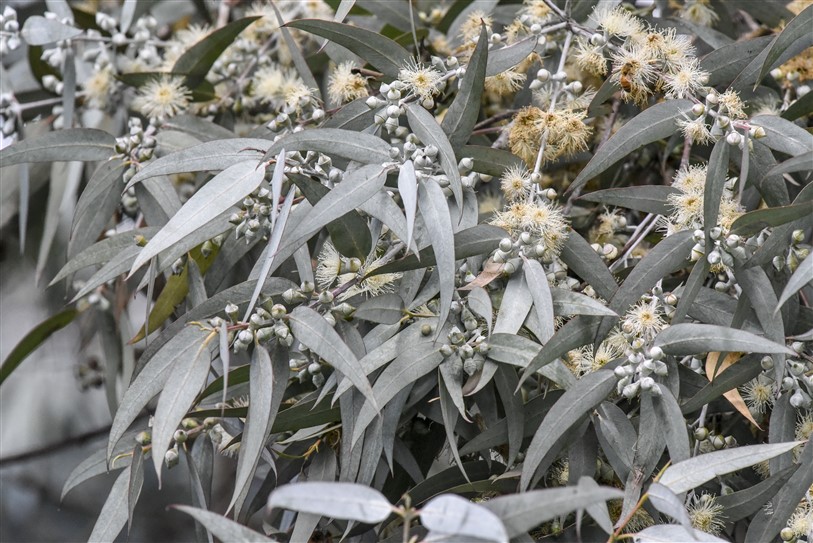
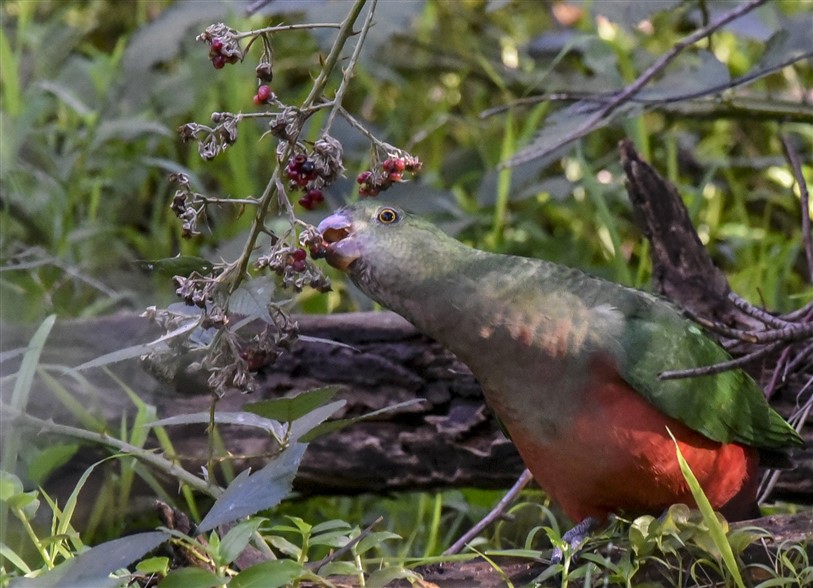
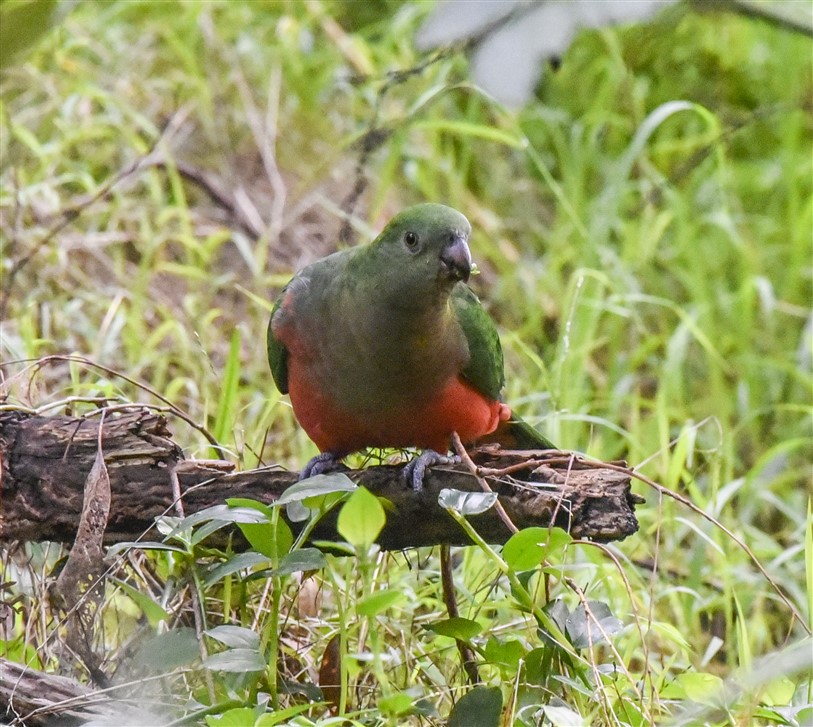
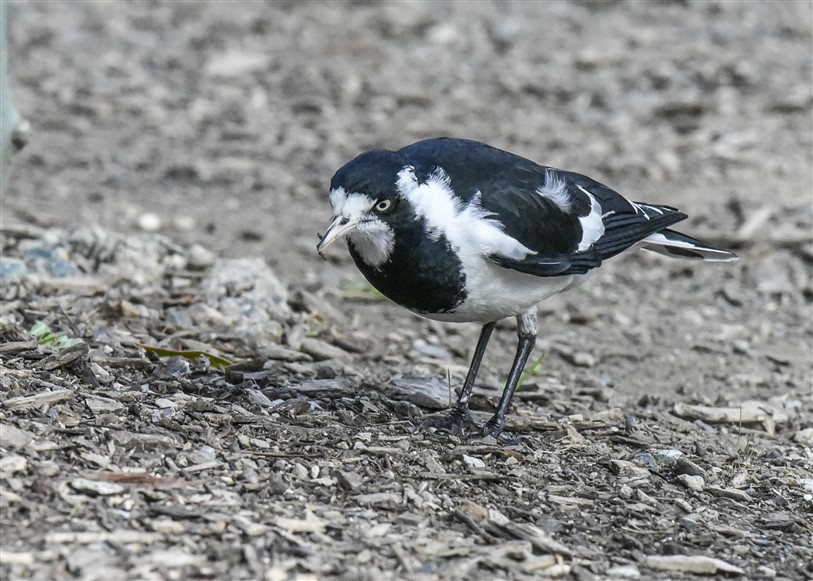
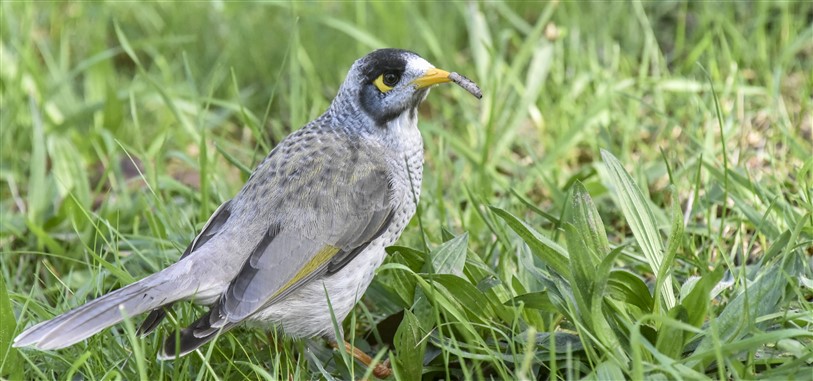
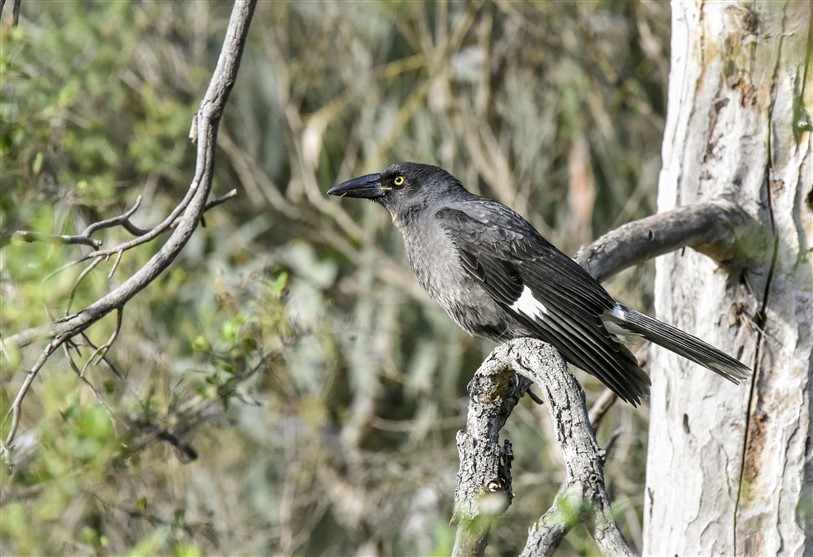
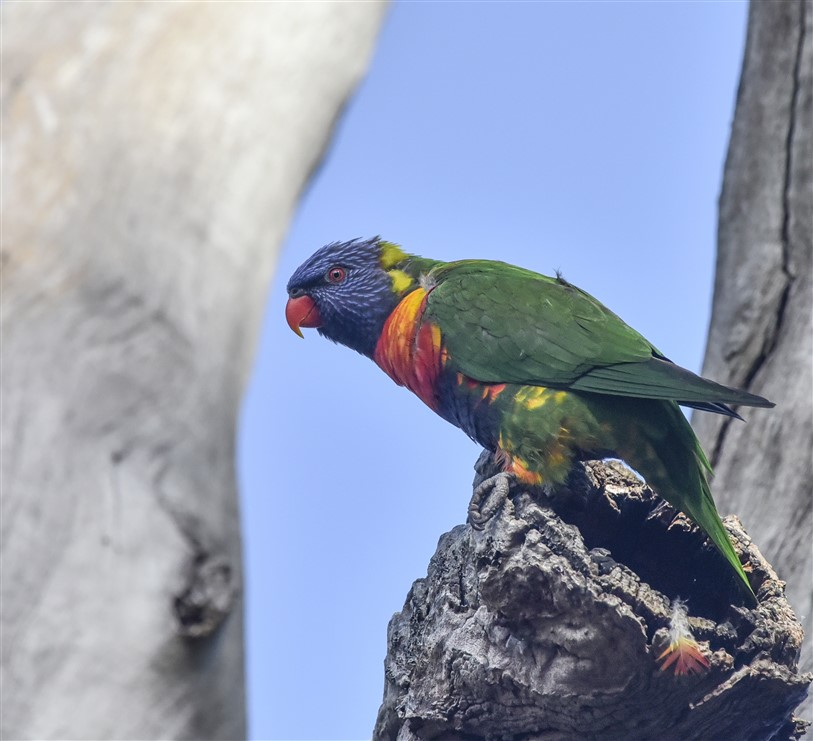
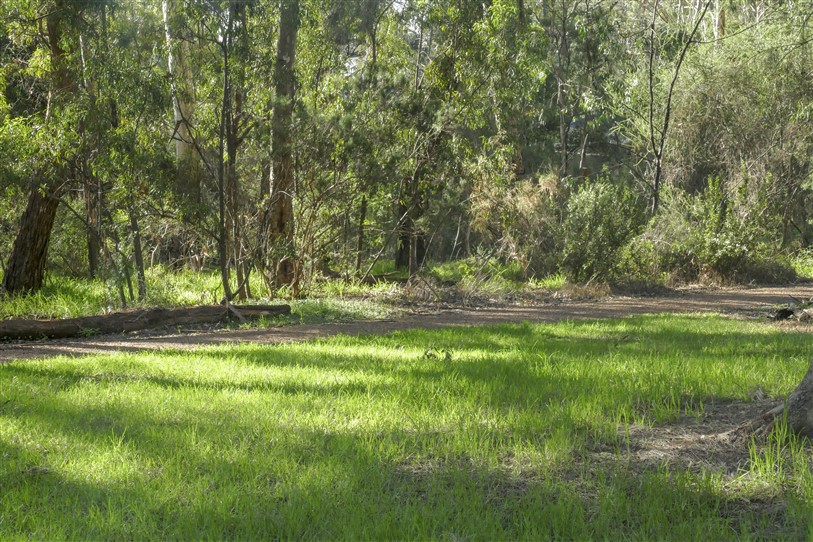
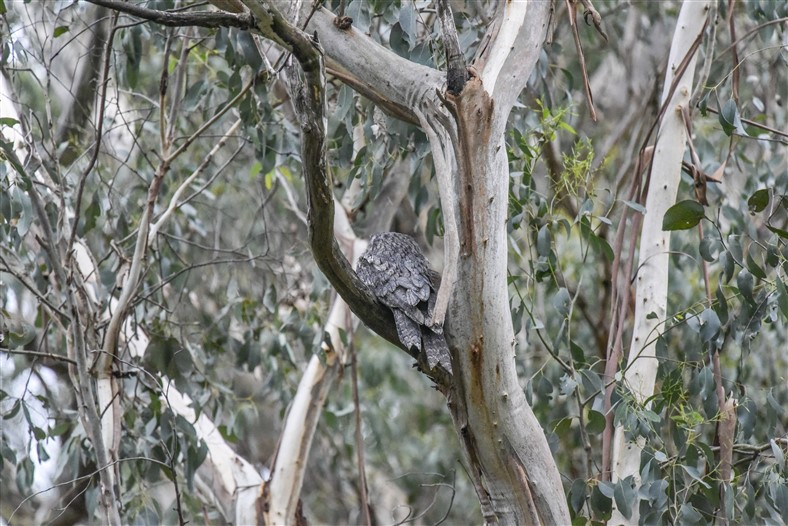
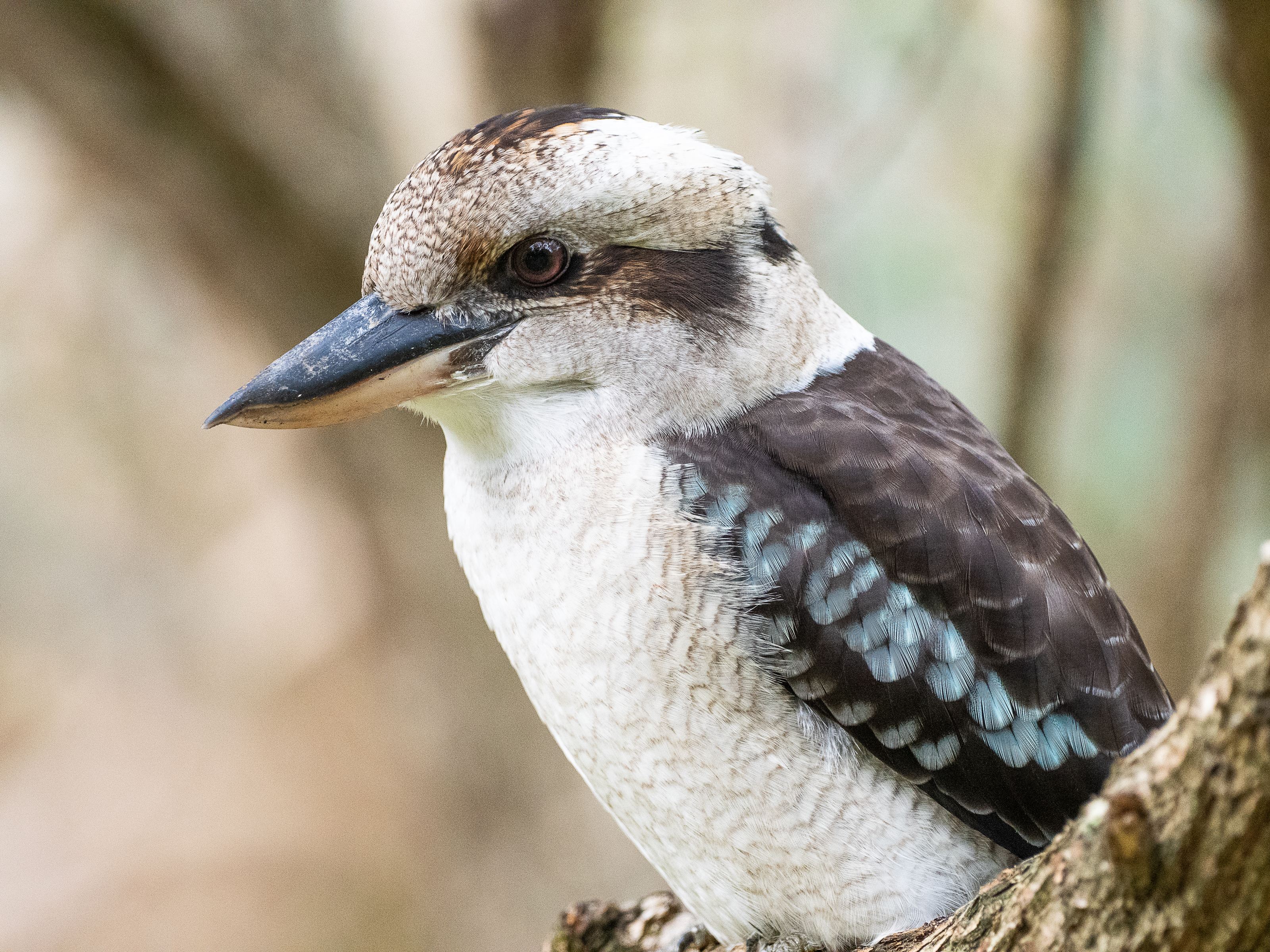
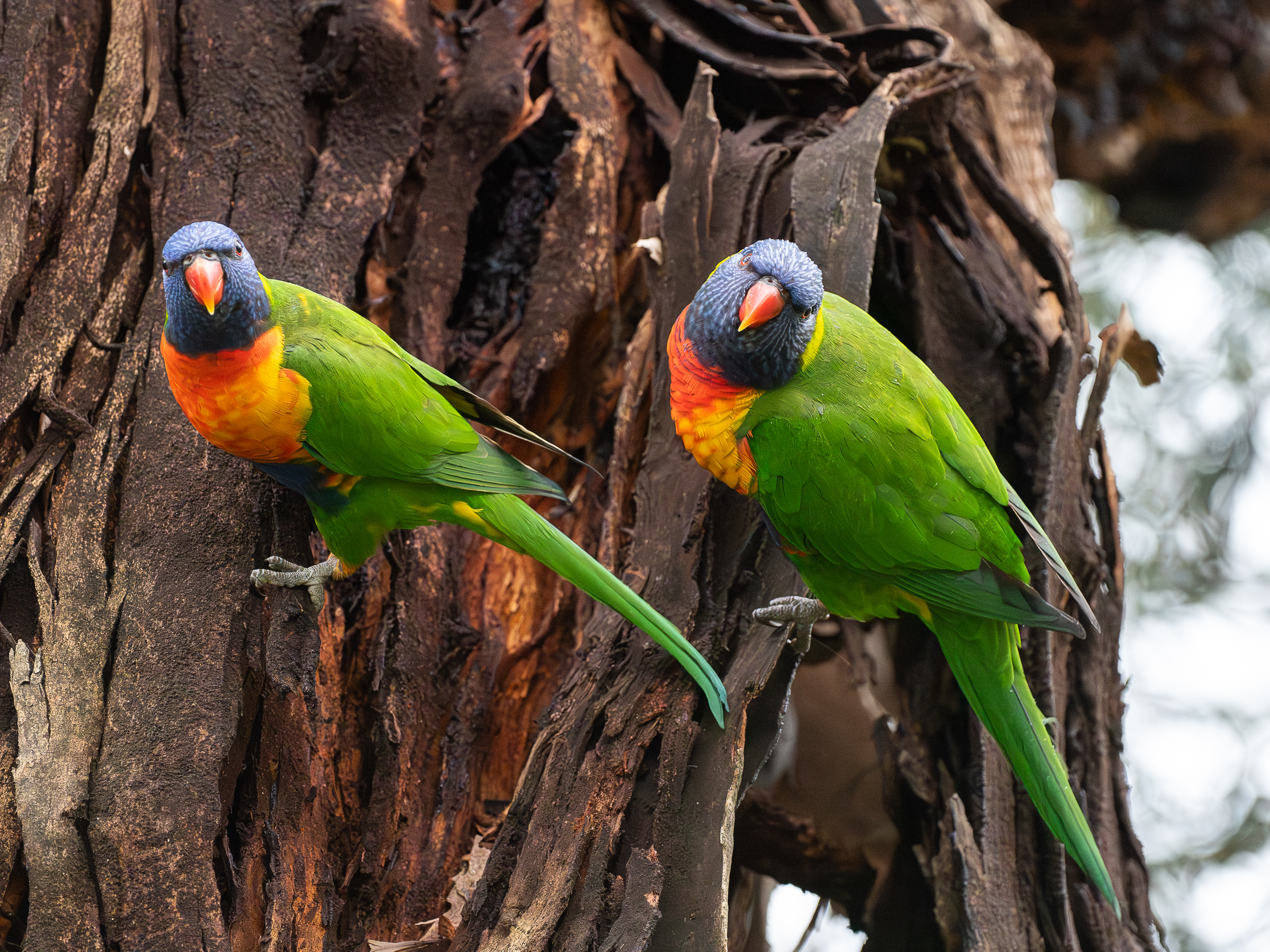
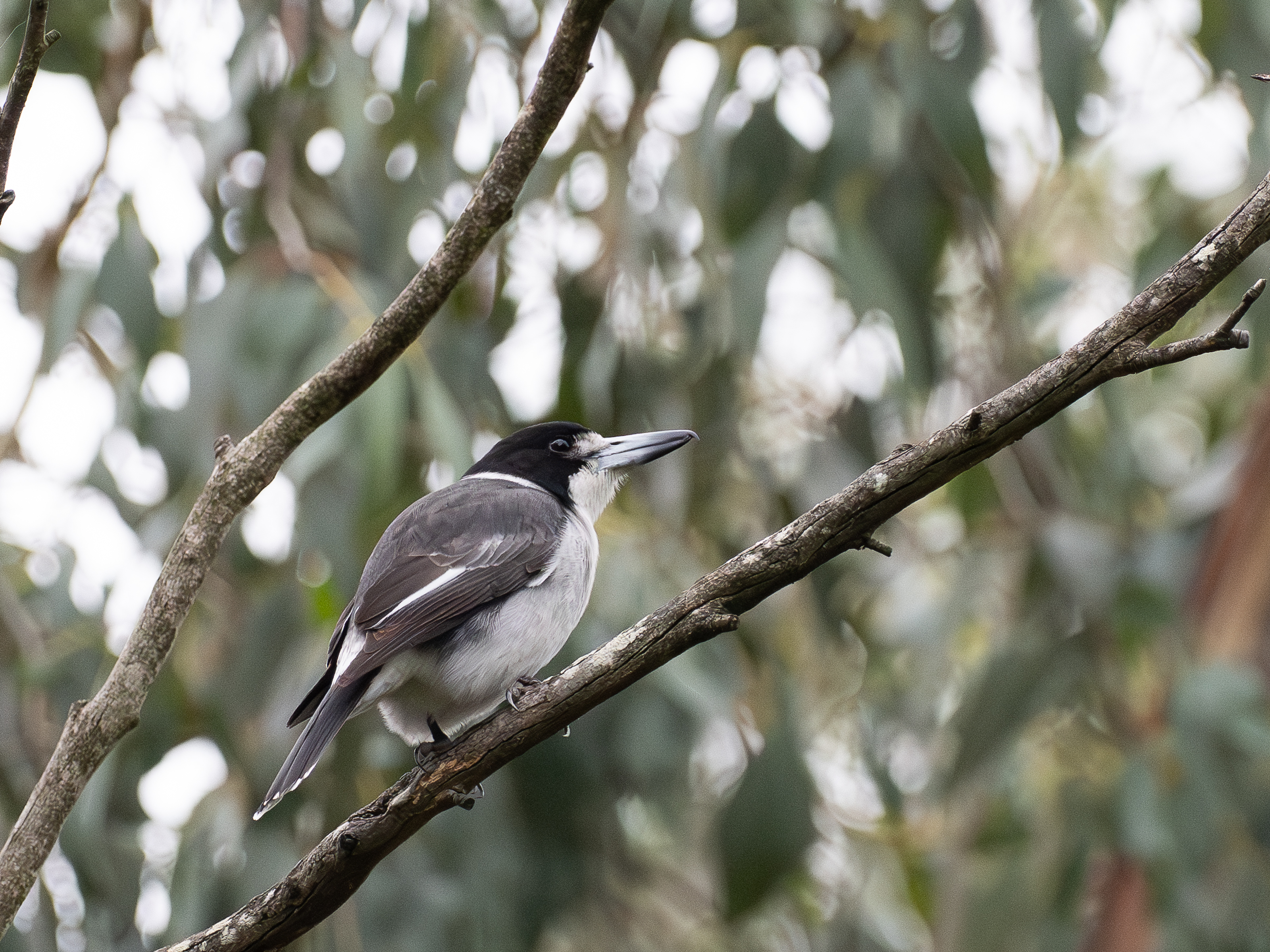
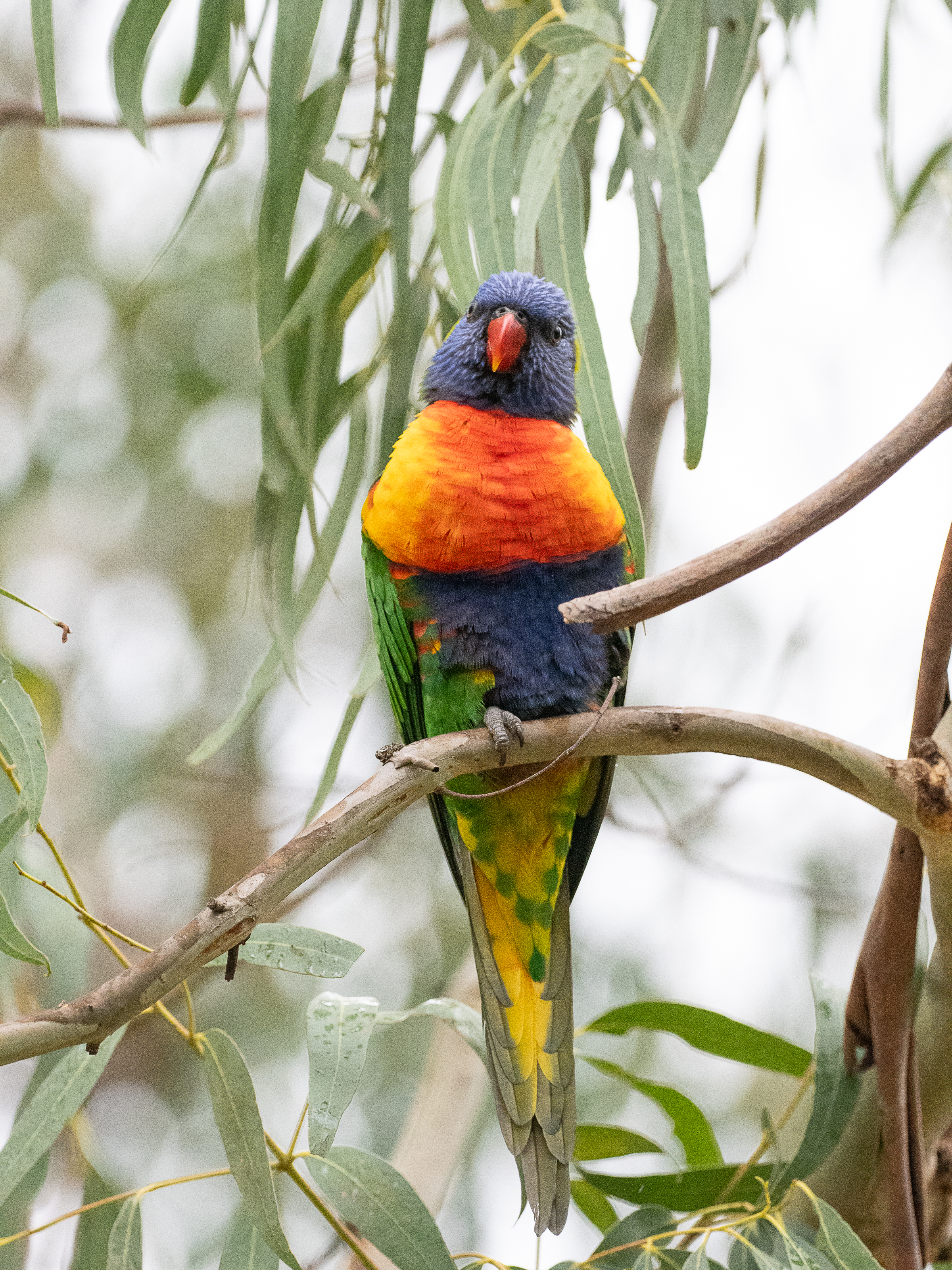
Sightings
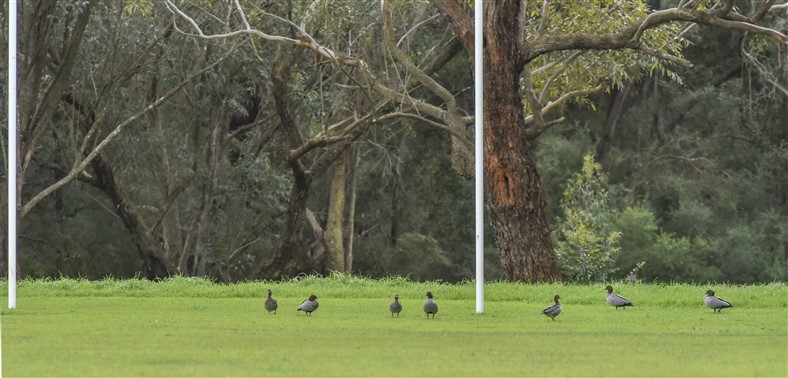
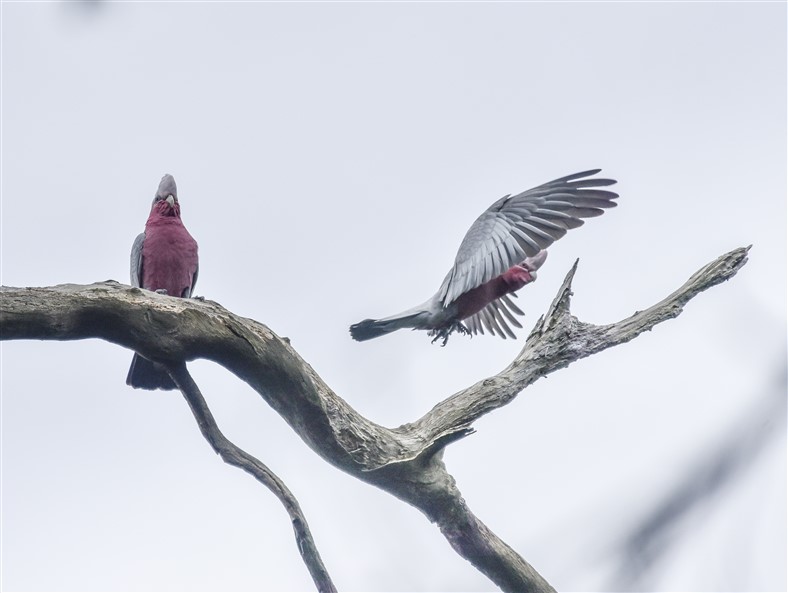
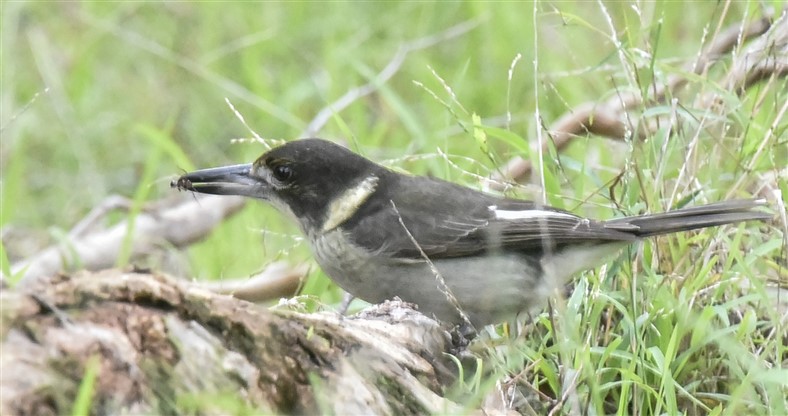
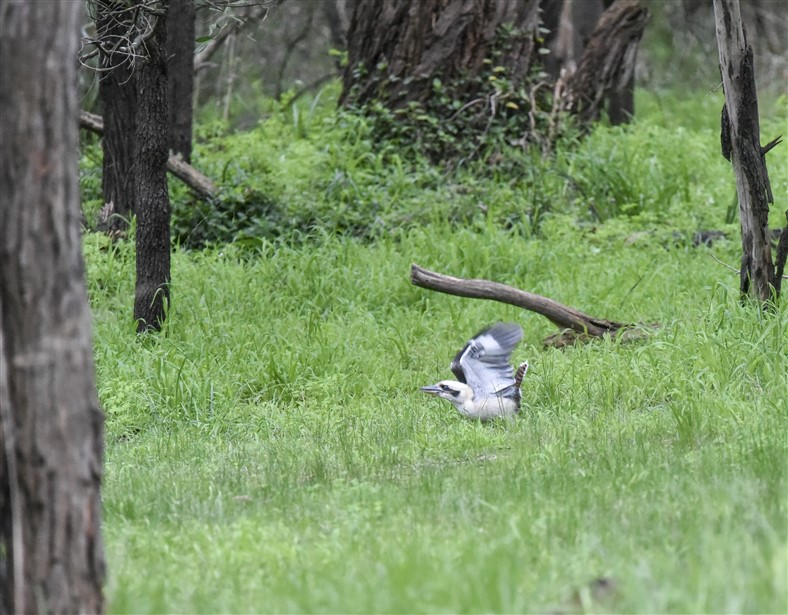
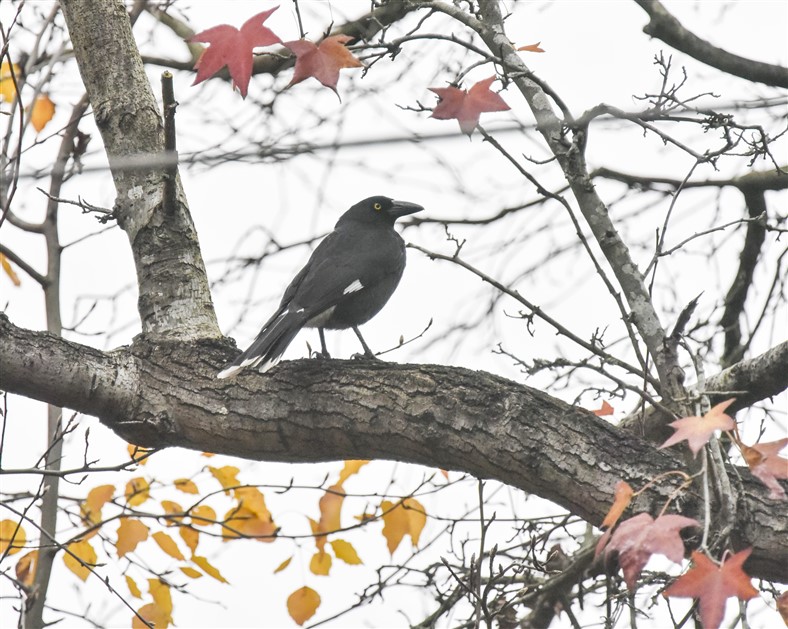
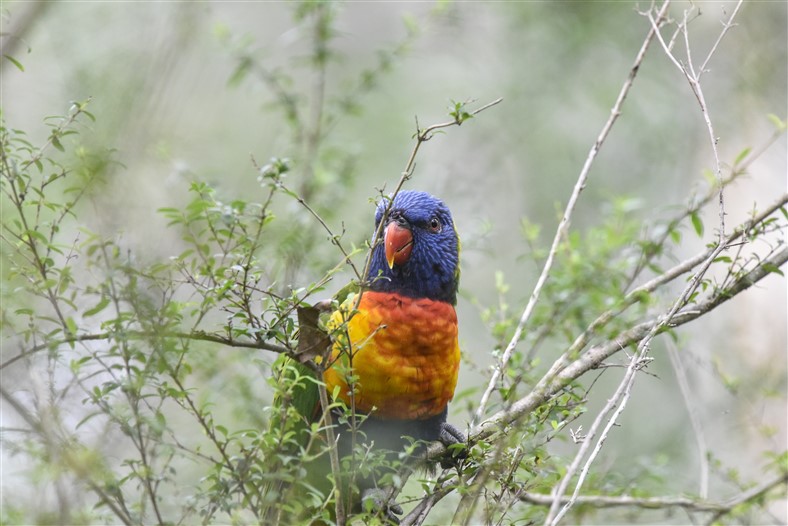
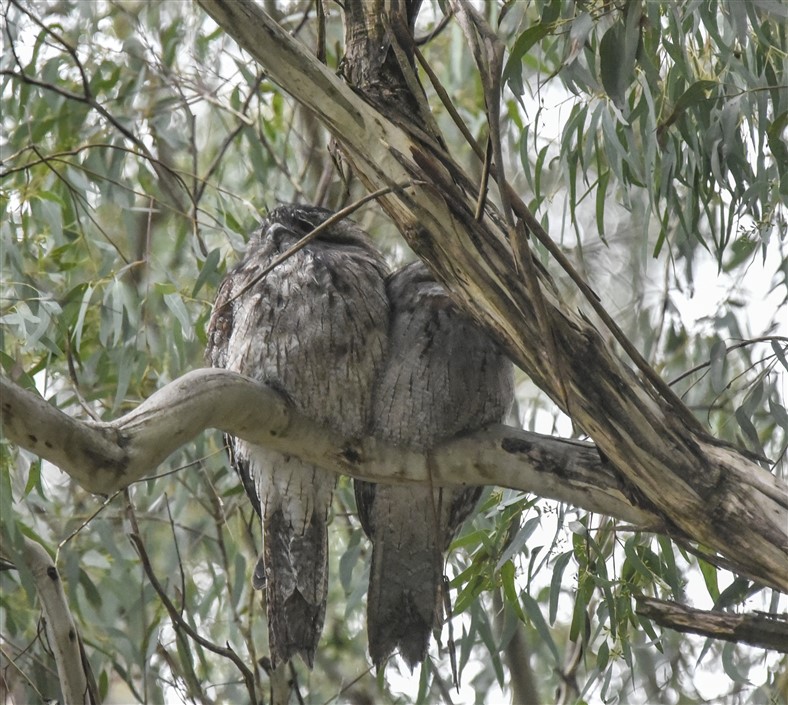
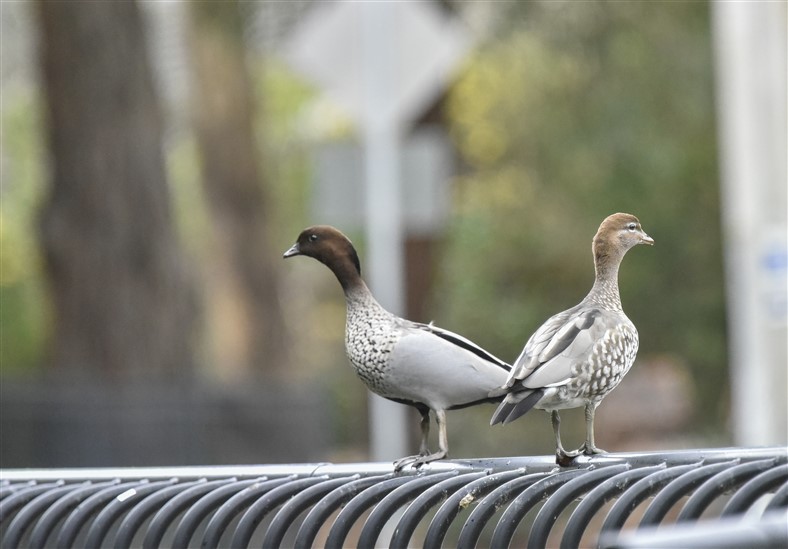
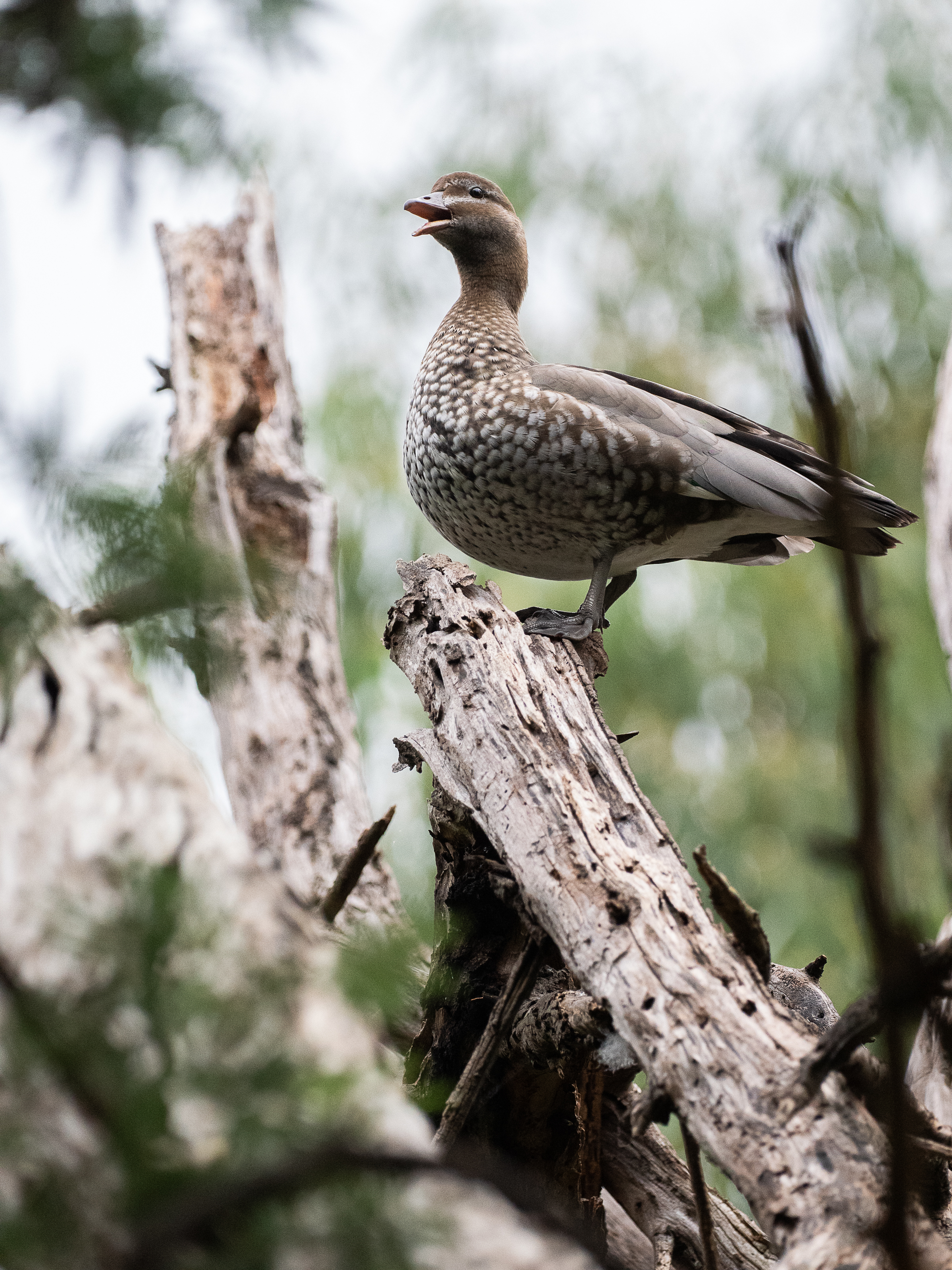
We thank our wonderful photographers for sharing their amazing images with us. If you would like to contribute, please email your photos to: blackburncreeklands@gmail.com .
Photo gallery:
For more information, please contact us on one of the options below:
- Email blackburncreeklands@gmail.com
- Website https://blackburncreeklands.org/
- Facebook https://www.facebook.com/BlackburnCreekies/
- Instagram https://www.instagram.com/blackburncreeklands/
We look forward to seeing you at one of our meetings or friendly activities soon. Stay tuned next month for a wrap up of the Nature Stewards program that a few of our committee members attended over Autumn. Finally, thanks for your input into this month’s newsletter, John and Mark!
Your friends,
Blackburn Creeklands Advisory Committee

